
In short
Global News Podcast - Episode Summary
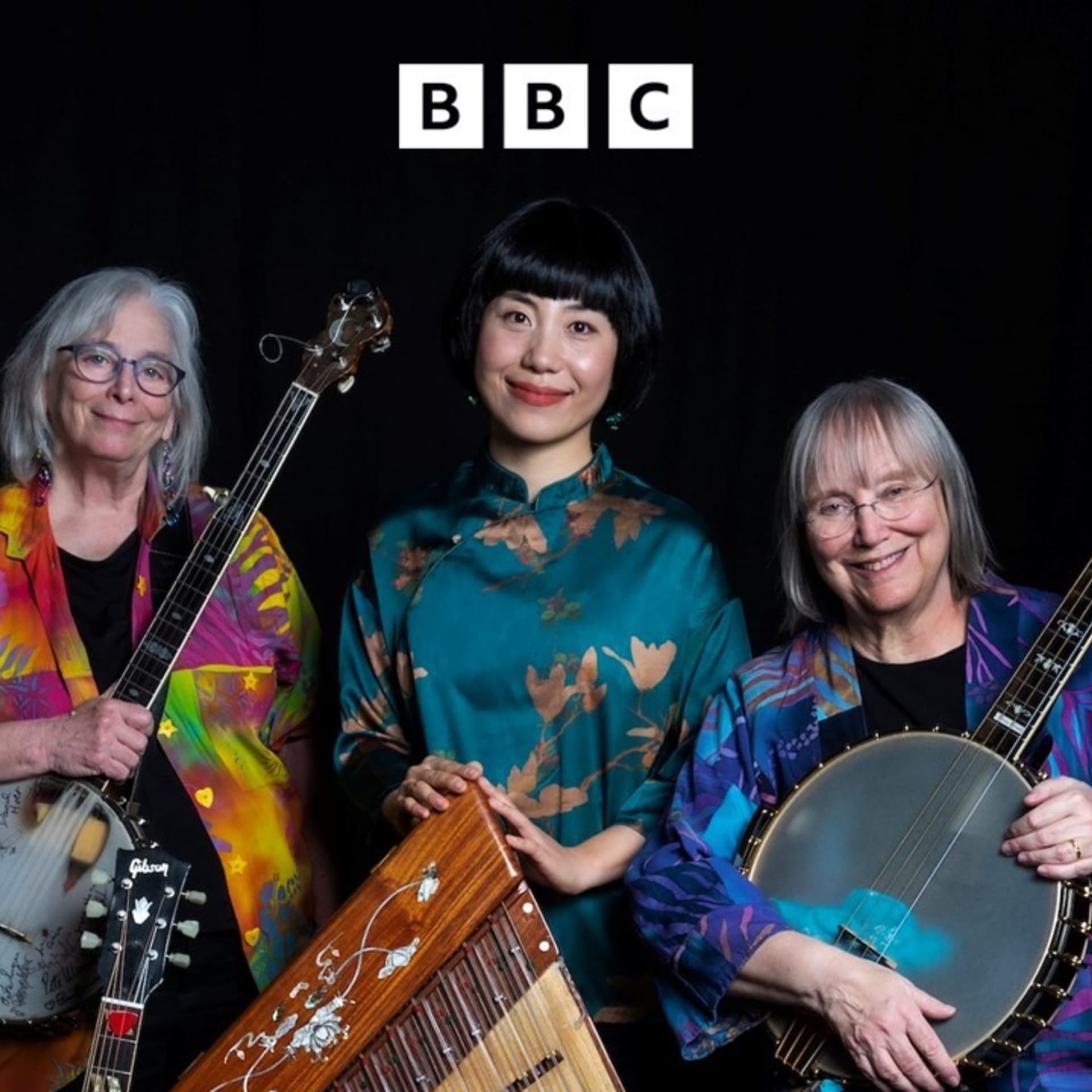
Episode Title: The Happy Pod: The trio bringing countries together with music Presenter: Valerie Sanderson Music Composed by: Iona Hampson
Episode Overview In this episode of The Happy Pod, host Valerie Sanderson discusses diverse stories focused on unity through music, kindness, and community support. The episode features a musical collaboration aimed at easing international tensions, a charity initiative ensuring students can attend prom, and highlights a groundbreaking K-pop performance in Africa.
---
Key Segments
- Musical Collaboration to Bridge Cultural Gaps
- Artists Involved: Cathy Fink, Marcy Markser, Chow Bob Tian
- Project: Album "From China to Appalachia"
- Focus: Fusion of traditional Chinese music with Appalachian folk music.
- Objective: To showcase similarities between cultures and promote unity amidst US-China tensions.
- Key Quote: "We are trying to do a smoothie kind fusion instead of a salad fusion." - Chow Bob Tian
- Meaning: Emphasizes blending and harmony rather than merely combining different elements.
- Charity Initiative: Madrina
- Founder: Stephanie Lakin
- Purpose: Provide free prom dresses and suits to underprivileged students.
- Impact:
- Successfully provided over 1,000 outfits, enabling students to attend prom.
- Stories of personal transformation and community kindness highlighted, including:
- A girl who lost her mother and found a dress that matched her dreams.
- Community Involvement: Dresses are donated by individuals and businesses, creating a supportive network.
- K-Pop's Historic Performance in Africa
- Group: Espa
- Significance: First major K-pop girl band to perform in Africa at the Mawatsin Festival in Morocco.
- Fan Reactions:
- Fans express feelings of validation and connection to the global K-pop community.
- Highlights the growing popularity of K-pop and its outreach beyond traditional markets.
- A Tale of Kindness: Michael Baker's Graduation Night
- Story: After graduating, Michael Baker chose to help at his fast-food job instead of attending a party.
- Outcome: His selfless act went viral, leading to a crowdfunding campaign that raised over $200,000 to support his college education.
- Key Themes: Community support and the impact of selflessness.
- Rejection and Perseverance in the Art World
- Focus: A gallery named Rejects celebrates artists whose works were rejected from prestigious exhibitions.
- Key Insights:
- Artists share experiences of rejection and the importance of resilience.
- Emphasis on embracing rejection as part of the creative journey.
- Notable advice: "If you get rejected, don't let that stop you from doing what you love."
---
Conclusion The episode illustrates how music can foster international unity, how community initiatives can uplift individuals, and how resilience in the face of rejection is essential for personal growth. Each story contributes to a broader narrative of hope, kindness, and the power of shared human experiences.
Contact Information Listeners are encouraged to share stories of community impact by reaching out via email: globalpodcast@bbc.co.uk.
Production Credits
- Producers: Holly Gibbs, Rachel Bulkeley
- Editor: Karen Martin
- Mixer: James Piper
---
*This summary encapsulates the discussions and themes presented in the episode while highlighting key moments and insights.*
Written by AI. May contain mistakes. Listen to the episode to check what was said.
Transcript
Automatic transcript. May contain errors.0:00This BBC podcast is supported by ads outside the UK. If journalism is the first draft of history, what happens if that draft is flawed? In 1999, four Russian apartment buildings were bombed, hundreds killed. But even now, we still don't know for sure who did it. It's a mystery that sparked chilling theories. I'm Helena Merriman, and in a new BBC series, I'm talking to the reporters who first covered this story. What did they miss the first time? The History Bureau, Putin and the Apartment Bombs. Listen on BBC.com or wherever you get your podcasts. Let's start it with a... OK. Ready? Here we go.
0:48You're listening to The Happy Pod. Kwaileo Boke. On the BBC World Service. I'm Valerie Sanderson, and in this edition, And the trio trying to ease international tensions with a musical collaboration. We are all hoping from this fusion to sending some messages to the world. Bringing us together for the things we have in common, as opposed to picking apart the things that we don't. Also, the kindness of the community is immense, really, so that they can enter that room, like everyone else, with their heads held high, with dignity. The fairy godmother making sure everyone can go to the ball and why a musical first meant so much to fans.
1:34When they come to us and step onto stages in our countries, it gives us really a sense of belonging to this global K-pop community.
1:47We begin with three women trying to ease the tensions between their two countries through folk music.
2:04Hold Each Other Up is part of the album From China to Appalachia, a collaboration between the American folk duo Cathy Fink and Marcy Markser and Chow Bob Tian, a musician and singer from Beijing. Well, all the tracks are a fusion of traditional Chinese music and folk from the Appalachian Mountains. So could music be the key to mending China-U.S. relations? The trio, with Kathy on the five-string banjo, Marcy on the cello banjo, and Chao Bob on the Chinese hammered dulcimer, or Yang Quinn, spoke to the Happy Pod's Harry Bly. Kathy and Marcy invited me to their jam session. My English was limited back to then, so I didn't quite understand what a jam session means.
2:50I brought my instrument to there, but I thought it might be some kind of delicious food party called a jam session.
3:08From that jam experience, I first time played an old-time tune. I found the scale is quite similar to some kind of a Chinese pentatonic scale. Chow has now had the opportunity to learn a lot of Appalachian tunes. Then she suggested something that we love to do as a band, which is a call and response. And so my first line of Bell of Lexington goes.
3:42And then Chell wanted to respond to that.
3:52you know we might do call and response for a while then we'll play it all together let's play the a part together one two three four
4:06i imagine you've learned a lot from each other both in terms of of music and technique but but also language and and kathy and marcy it was lovely to hear you joining chow bob in singing in mandarin in the white snake song when chinese people come to our shows and they hear us sing in chinese even if it's not perfect chinese their appreciation is amazing yeah and i feel like that's more of bringing us together for the things we have in common as opposed to picking apart the things that we don't. One of the interesting things about this collaboration for me is that when we get together with Chow, I feel like we just relax.
4:58And I know if I take off and go do something kind of wild, they're going to be right there with me. It means so much to me. We love playing in front of audiences, but it's more like playing at home.
5:20politically the US and China haven't always got on even right now there's this so-called trade war and I'm not going to ask you to comment on that because that's not what this interview's about I think we can all agree that that's for politicians to sort out but what are your hopes for what this album can bring for the people the people of China the music lovers in China and the music lovers in the States. We are all hoping from this fusion to sending some messages to the world, to the US side, to the Chinese side. And if I talk about a fusion, I think we are trying to do a smoothie kind fusion instead of a salad fusion.
6:00Because the salad fusion, you put different things into a bowl, you still can see the different food. But a smoothie fusion, you really mix them into another thing. It works well, it blended well. So that's the goal of us. And also we want to send the smoothie kind of message to the world to let them know, even though we're different, but we are doing the same thing. We're doing one thing together and we can create a beautiful new thing and send it to the world. That's beautiful. Yes. Perfect. A smoothie. That's great. That's a great analogy. I love the smoothie. Yes, I do.
6:51The Chinese alibi Nani Wan performed by Kathy Fink, Marcy Markser and Chow Bob Tian who were speaking there to Harry Bly.
7:03At around 16 years old, it's become a custom in some countries for pupils to go to a school prom, basically a giant party with everyone dressed up to the nines. It's a night of glitz and glamour at a time when students decide what to do next, to continue or change school, to go to college or to start working. But buying a ball gown or suit to wear is costly and some pupils opt out of the prom because they simply can't afford it. That's where Stephanie Lakin comes in. A teacher for 20 years, Stephanie stepped in to get a dress for one of her students who otherwise would not have gone to the prom.
7:37From that experience, she was inspired to set up a charity called Madrina in 2022 to offer free dresses and suits to those who might be left out. It's now given out a thousand prom dresses and many suits, donated by individuals as well as shops and manufacturers. Stephanie Tilby Moore. The kindness of the community is immense, really. People knowing how special that outfit was for them once and being willing to pass that on to a young person who, you know, is really struggling is just a beautiful thing. I'm just like the middle person that shuffles the dress from the person to the person who needs it kind of thing.
8:17Well, I think you're the fairy godmother, really. But how do you choose who should get the dress or the suit? We have a referral system where so majority of our referrals come from schools. They book us in for a pop-up prom boutique in their school hall and they will invite the students who they think are at risk of not attending the school prom because of the cost of an outfit or a suit. Parents can make self-referrals, charities will make referrals as well and so will children's services also. So we've worked with a range of different types of students this year. Some young carers, refugees who are in emergency accommodation.
9:02We've helped some students this year with severe mental health. We've worked with a collection of hospital schools. And Stephanie, you mentioned parents. Have you had experiences with parents who have been quite overwhelmed by what you've done? The pressure for a parent is just immense because you want your daughter or son to go to that prom feeling like a million dollars, just like everyone else. So for some parents, you can see the relief on their face and just in their whole demeanour and body language. And it's just this really special moment when they come out of the changing rooms and they found the outfit.
9:44And just, yeah, the relief for the parent is just so immense. And what have people said to you that's really stuck with you after the event? Oh, yeah, they've been incredibly grateful. I mean, one story that I can think of that's come to mind was this young girl. She'd had a really rough 12 months. her mom had a drug addiction and had sadly died before Christmas and this young particular girl was living with grandparents but unfortunately one of those grandparents passed away at the start of the year and she put on this dress and she came to me and she showed me her phone and And she was like, oh, my goodness, this is this is just what I had on my Pinterest board.
10:33And I just I just burst into tears because, I mean, I'd never met this girl before. I'd literally spent, you know, probably about 15 minutes with her with these dresses. But the fact that the prom was so important to her that she had got a Pinterest board with outfits and dresses that she wanted. And I was part of that journey, able to facilitate that was just such a special moment. And what did she look like on the night? Oh, she was beautiful. She had this beautiful, it was very Cinderella because it was like a blue and she'd gone full on princess and she looked incredible. Your motto is everyone should go to the ball.
11:12What's it like for you when you go to a prom and you see all these people dressed up and they're there because you found them an outfit? It's a real special moment because I know that for a lot of the beneficiaries that we help, they were not going to that prom. The barrier of the dress or the outfit was the one reason. A prom dress is a very different type of dress. And what I never want is for a young person to feel that they are restricted to attend a prom because of financial reasons. because like I said there are dresses and outfits out there for a young person to wear so that they can enter that room quite rightly like everyone else with their heads held high with dignity and feeling satisfied that they've worked really hard they've done their exams and this is the last party that they're going to have with all their schoolmates and to be there and to see or to get photos of the girls or the young men who have got their outfits on, just looking so proud and just so happy to be able to go to the prom is huge.
12:24Stephanie Lakin, is there someone making a difference in your community? We'd love to hear from you. Get in touch with us. The address is globalpodcast at bbc.co.uk. A high school graduate in the US state of Georgia was heading home from his graduation ceremony when he made an unexpected stop, one that's now changed his life. A moment caught on camera has since gone viral, drawing millions of views and an outpouring of support. Our reporter Carla Conte has the story. It was graduation night at Mill Creek High School in the city of Dacula in Georgia. Caps flying, diplomas in hand. But one 18-year-old, Michael Baker, had other plans.
13:05Instead of heading to a party to celebrate the event, Mike Hale went straight by the fast food restaurant where he works to pick up dinner. I wouldn't even clocked in. I just put gloves on and said, which I need help with, basically. That's Mike Hale. When he noticed his co-workers struggling to keep up with the evening rush, he didn't hesitate. He put on an apron, over graduation sash and medals, and got to work. It was a moment of quiet determination, and it might have gone unnoticed, if not for one impressed customer who happened to be watching. There's not a lot of people who are like that.
13:40That's Maria Mendoza, whose own daughter had just graduated from the same school. 13 years of school, you graduate. The last thing I would think is somebody go to work. She couldn't quite believe what she was seeing, so she filmed it. A teenager, freshly graduated, skipping his own party to help out at work. She posted the clip to social media and it went viral. More than 4 million people watched, commented and shared their admiration for the teenager who chose duty over a night off. Motivated by the overwhelming response, Marie and her daughter Jasmine started a crowdfunding campaign to help Mike Hale go to college.
14:21They set the goal to$5 ,000, but donations kept coming and in just a few weeks they raised more than$200 ,000. For Maikel, this was life-changing. He said he was just doing what he thought was right and did not expect to be rewarded for it. I like helping people and not expecting anything back from me. That's just me. He'd originally planned to take a gap year to keep saving for college. But now he's already applied to a technical school and hopes to start this autumn. He'll be studying automotive technology with the goal of becoming a mechanic and one day opening his own shop. Kyla Conti
15:07Coming up in this podcast If you get rejected, don't let that stop you from doing what it is you love doing If you're doing it for the love of doing it, you'll find people that also love what you're doing The artist putting a positive spin on rejection
15:27If journalism is the first draft of history, what happens if that draft is flawed? In 1999, four Russian apartment buildings were bombed, hundreds killed. But even now, we still don't know for sure who did it. It's a mystery that sparked chilling theories. I'm Helena Merriman, and in a new BBC series, I'm talking to the reporters who first covered this story. What did they miss the first time? The History Bureau, Putin and the apartment bombs. Listen on BBC.com or wherever you get your podcasts.
16:07Next to a groundbreaking performance that's brought joy to African fans of one of the world's biggest music genres, K-pop. ESPA have had a string of international hits, with tracks like Girls and My World making it into the top ten in the US, Japan and parts of Europe, as well as South Korea. And now they've become the first major K-pop girl band to perform in Africa, headlining at the Mawatsin Festival in Morocco. Lola Shrur went to meet them. It's one of the biggest nights in the K-pop calendar. Thousands of fans from across the world packed out London's O2 Arena for SM Town Live. So SM Town is finally back in Europe.
16:48The concert series which showcases some of the most popular K-pop stars in the world. The group everyone wanted to see was Esper, who've just made history as the first K-pop girl group to perform in Africa. They told me what it meant to them. Definitely a place I've always wanted to go and I never expected that we could perform there for even a festival. So it was a very exciting experience for us and we hope we can go back one day. It was really happy and historic moments for us. Is it really nice to actually get out there and perform to your fans in person as well? Yeah, it's crazy, especially when it's somewhere that we have not really been before, nor are we familiar with.
17:33So it was a very surreal experience. For years, K-pop bands have prioritised performing in America. But with Espa's performance in Morocco and SMTown Live in London, it shows that the K-pop genre has truly exploded and is reaching more fans than ever. Hi, my name is Rita and I'm 25 years old. And I'm from Morocco. I'm a huge K-pop stan since 2014. I've followed this amazing world for 10 years now. And seeing Espa come to Morocco is truly one of the biggest moments of my life as a fan. EZPA! EZPA! EZPA! EZPA! Heba, a Moroccan fan of EZPA, told me why their performance made her happy. This performance holds a lot of emotional weight for me, and I think for many K-pop stans in Africa.
18:24It's not just about seeing our favourite idols live, it's about feeling seen. Because for so long, African fans who have supported K-pop for years and years were just from afar, watching from outside. We created fan bases, we were streaming songs like everyone else and showing our love online without any direct acknowledgement really So when a group this big like ATEEZ and SBOP, when they come to us and step onto stages in our countries It feels like a bridge is finally being built for us and it gives us really a sense of belonging to this global K-pop community It really validates our passion and it shows that what we've been pouring from this side of the world is finally being seen.
19:10Giselle, Karina, Winter and Ningning's latest record, Dirty Work, racked up over one million pre-orders before its debut.
19:24Dirty Work is a song that we all were very happy with from the start, from the demo. And so we were excited to go on and make this our title song as well. Is it K-pop summer now? Well, I don't know. Is it? I hope so. That'd be fun. If it is a K-pop summer, London's O2 was the season's first big stage.
19:51Lola Schroer reporting. Now to a dancer whose own family history has inspired him to help improve access to clean water. Johannes Radebe is best known for appearing on Strictly Come Dancing here in the UK and in his native South Africa, as well as on the US version Dancing with the Stars. As Alice Adderley reports, he's been visiting a township in his home country to see how new toilets and running water have transformed people's lives there. I want to see how it works. right? Come show me just oh I pull up and great, pull up and great. The sound of dancer and choreographer Johannes Radebe. He took a break from performing to visit two projects in South Africa where he was born.
20:33He was there to see how clean water, decent toilets and resources for hand washing are changing lives in a village and school in Limpopo, the northernmost province. Although Johannes had clean water at home when growing up in Zamdala, south of Johannesburg, his mother would fetch water for her family from a river when she was young. It's a story he remembers well, but never explored the issue further until now. In Limpopo, less than a third of people have piped water inside their home. Many people still use water taken from rivers and springs, and it's often contaminated. The job of fetching water is often done by women and girls.
21:14Together, the Mamburo community laid a 400-metre-long pipe and 20 taps with the support of the charity WaterAid and a local partner. Since getting clean water, people's health has improved. Yohannes spoke to California Ramathamela, a mother of four, who used to spend hours queuing for water. For me, it's very hard to comprehend because, of course, this is not my situation. but you're trying to tell me that in order to just get water you had to wake up at 12 o 'clock at night yeah at night and the only time you can have access to the water is at one o 'clock in the afternoon yeah because of 11 hours 11 hours next johan has visited a secondary school in the vembe district which has seen an improvement in its grades since the 1100 odd pupils have been able to access the taps and toilets.
22:08Before the facilities were built, around 50 pupils a day were missing school because they were suffering from diarrhoea. There were only four chemical toilets available for boys and four for girls. Here's the acting principal, Richard Davhana. The main thing that was reported by the nurses was diarrhoea and we could deduce from that that but it was because of this hygienic condition. After these new facilities, now the numbers have gone down. Now we've got 10 per day. So this has positively impacted our school. Even the results, we are seeing a gradual change on the results of the learners. One of the pupils, Richie Eze, told Johannes how her life has changed for the better.
22:56There's no need for us to stand in the queue anymore because we have many toilets. Even when a girl is in period, it was hard to come to school because there were no doors at the old toilets. But now I can just go and help myself. After helping myself, I go to wash my hands and washing basins. After visiting the facilities, Johanna spoke to some of the other pupils and even did some dancing with them.
23:33Johannes explained why the visit was so important to him. Everybody deserves that, gentlemen. Don't ever forget that, OK? Everybody deserves water. I think it's a basic human right. You know what I'm saying? Don't ever feel that you're privileged. It is something that people must, must have. That report by Alice Adderley. Being rejected at some point for something is a fact of life and for those trying to make it as artists it can be an all-too-regular occurrence. Every year here in London around 18 ,000 people strive for a coveted place at the Royal Academy's Summer Exhibition, the world's largest art show open to applications.
24:15But only 1 ,500 make the cut. So one group of rejects are embracing the fact their work isn't on display. Jacob Evans has been to meet some of them. Thousands of people submitted their artwork to this year's exhibit, but with less than a 10 % chance of getting in, many had to accept missing out. But while their work isn't hanging on the walls of central London, a few kilometres north is a new haven for artwork that didn't make the cut. It's called Rejects, and it's run by Artfriend, an independent gallery founded by Shona Bland. Three years ago, my boyfriend, who's an artist, posted on Instagram that he'd been rejected by the RA Summer Show.
Read the full transcript
24:52I was obviously incredibly disappointed. People normally only post when they're accepted, so it was kind of interesting to see all the comments come in under his reject post, and basically it was like a load of other really incredible artists saying, oh, I've been rejected too, oh, we're all part of this rejects club, and I was like, wow, this is like an exhibition waiting to happen. The walls of the gallery are covered in a range of artworks, from intricate pencil drawings to sculptures and fabric collages. Delphine Le Bourgeois is one of the artists whose work is on display. I've applied for many, many years.
25:26Got rejected many, many times. I only got in once when Grayson Perry was on the jury. What keeps you motivated to apply again? I think, well, the prestige and, yes, again, the footfall, but also now that Shauna has started this reject exhibition, you get the chance to apply to the reject exhibition as well, which is, like, kind of pretty cool. I mean I'm French so I always think about all the impressionist artists who are well known now and famous. They got rejected by the establishment and then they did the Salon des Refusés which is a reject in France and I'm not comparing myself to them but I think it's pretty cool to be a reject in that respect.
26:10For young artists experiencing rejection can be a tough feeling to get used to. Jana is from Manila and now based in London. She applied for the first time last year and again this year. I feel like every rejection is like, you know, what people say, like a redirection. Like if I didn't get rejected from the RA last year, I wouldn't have met Shona from Artfriend. I wouldn't have met all the Artfriends. It's not a bad thing. Like it's just, like I was saying, like redirection. To me, I don't take it personally. I get rejected all the time as an artist, but as well, like in real life, you know, like dating.
26:47I don't know, like trying to be friends with other people. Like, it's just part of life. But even for those who have been successful, the battle continues. Craig Keenan is from the south-west of England and has been accepted into the Royal Academy on several occasions. I tried for years and years to no avail. And then finally, when I did get in, I was overjoyed, super buzzed about it. And then since then, I've been rejected again. But I think it's definitely something that I don't take to personally anymore. At first, I took it quite personally. I was a bit like, oh, what am I doing wrong? Or like, what should I change or whatever?
27:20But I feel like it's a little bit of a lottery, a little bit of a gamble. And if any young artists are listening in, what advice would you have to them? I think you have to embrace the fact that you will be rejected. That is just a given. You know, the art world is truly, truly subjective. So, you know, somebody might love something that you do and someone stood right next to them might hate what you do. It has no bearing or reflection in the quality of what it is that you're doing. It just means that different people see things differently. So I'd say prepare yourself for rejection and almost embrace that somewhat.
27:50If you get rejected, don't let that stop you from doing what it is you love doing. If you're doing it for the love of doing it, you'll find people that also love what you're doing. Great advice there from Craig Keenan, ending that report by Jacob Evans.
28:07And that's it from the Happy Pod for now. We'd love to hear from you about someone who's made a difference in your community. As ever, the address is globalpodcast at bbc.co.uk. And you can now watch some of our interviews on YouTube. Just search for The Happy Pod. This edition was mixed by James Piper. The producers were Holly Gibbs and Rachel Bulkeley. The editor is Karen Martin. I'm Valerie Sanderson. Until next time, bye-bye.
28:41If journalism is the first draft of history, what happens if that draft is flawed? In 1999, four Russian apartment buildings were bombed, hundreds killed. But even now, we still don't know for sure who did it. It's a mystery that sparked chilling theories. I'm Helena Merriman, and in a new BBC series, I'm talking to the reporters who first covered this story. What did they miss the first time? The History Bureau, Putin and the apartment bombs. Listen on bbc.com or wherever you get your podcasts.
From the publisher
The trio hoping to soothe global tensions through musical collaboration. They mix Chinese and American songs to focus on similarities not differences. Also: helping disadvantaged teens go to the prom; and a K-pop first.
Presenter: Valerie Sanderson. Music composed by Iona Hampson