
In short
Global News Podcast: Episode Summary
Episode Title
The Happy Pod: Turning my toddler's tales into tunes
Episode Description In this episode, Stephen Spencer shares how he has transformed his daughter's imaginative stories into catchy tunes, sparking joy and connection worldwide. The episode also features inspiring stories of kindness, technological advancements in medicine, and how poetry is being used in medical education to foster compassion.
---
Key Themes and Highlights
- Songs from Childhood Stories
- Stephen Spencer's Initiative
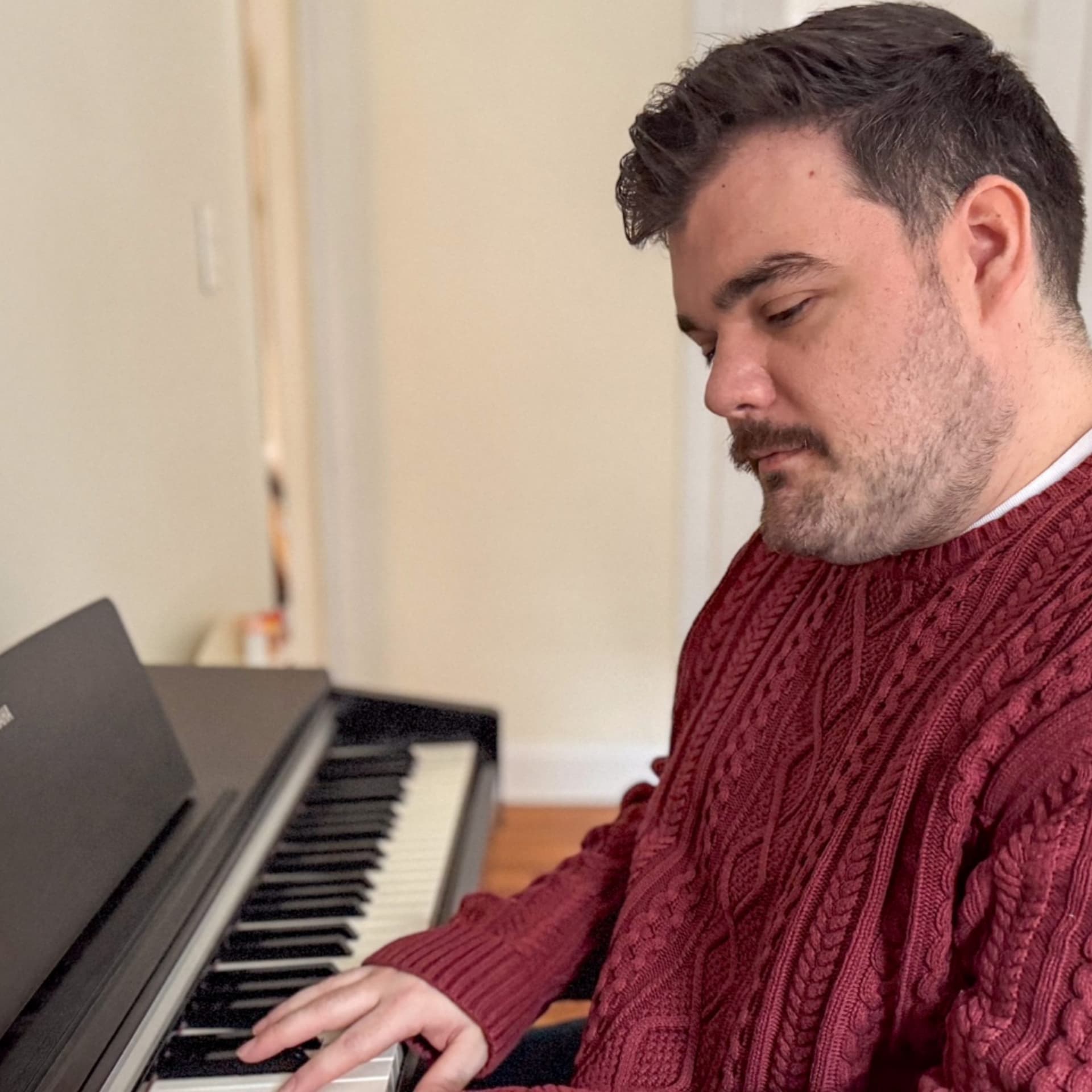
- Stephen Spencer, a composer from New York, captures the enchanting tales told by his three-year-old daughter.
- The transformation of these stories into songs has garnered millions of views on social media.
- The songs evoke various emotions from listeners, ranging from laughter to tears.
- Creative Process
- Spencer emphasizes the importance of preserving his daughter's words as they are, without adult revisions.
- He seeks to document her unique perspective and creativity, offering a nostalgic experience for parents.
- Impact on Listeners
- Feedback from fans reveals that the music has provided comfort and joy during difficult times.
- Spencer expresses gratitude for the positive impact his music has had on others.
- A Life-Changing Encounter
- Ginny and Anita's Story
- A chance conversation on a London underground train leads to Ginny offering to donate her eggs to Anita, who had fertility issues.
- Despite initial concerns, Ginny's husband supports her decision, leading to a successful egg donation and the birth of Christopher.
- The story emphasizes themes of kindness, familial bonds, and the power of human connection.
- Remote Surgery Breakthrough
- Professor Prokar Dasgupta's Surgical Innovation
- The episode features a groundbreaking remote surgery where Professor Dasgupta operated on a patient in Gibraltar from London using robotic technology.
- This tele-surgery is hailed as a significant advancement in medical technology, providing equitable access to healthcare.
- Patient Experience
- Patient Paul Buxton shares his confidence in the remote procedure, highlighting the advantages of having access to expert care regardless of distance.
- The seamless connection during the operation illustrates the potential for future medical practices.
- Poetry in Medical Training
- Teaching Compassion through Poetry
- At the Likong Chang School of Medicine in Singapore, poetry is utilized to enhance future doctors' empathy and understanding of patient experiences.
- Medical students engage with poetry to recognize subtleties in communication and to develop a deeper connection with patients.
- Student Perspectives
- In discussions, students express how poetry helps them navigate the complexities of patient interactions and emphasizes the importance of being vulnerable as medical professionals.
- Curious Animal Tales
- A Fox's Transatlantic Adventure
- A fox unexpectedly finds itself in the cargo hold of a ship, traveling from the UK to the US, and is discovered in New York.
- This light-hearted story highlights the resilience and adaptability of wildlife.
- Musical Dogs Study
- Are Dogs Really Singing?
- Researchers from Tufts and Harvard investigate whether dogs can exhibit musicality by analyzing their howling responses to music.
- The study opens discussions about animal communication and parallels with human musical behavior.
---
Conclusion This episode of the Global News Podcast delivers a blend of uplifting stories, innovative medical advancements, and heartwarming human connections. Through personal anecdotes and scientific exploration, it showcases the beauty of creativity, compassion, and the bonds that tie us together in unexpected ways.
Contact Information
- For contributions or feedback, reach out via email at [globalpodcast@bbc.co.uk](mailto:globalpodcast@bbc.co.uk).
Music Credits
- Music composed by Iona Hampson.
---
*This summary captures the essence and highlights of the podcast episode, providing insights into the various stories and discussions presented.*
Written by AI. May contain mistakes. Listen to the episode to check what was said.
Chapters
Tap a time to open that second in VOMeet Stephen Spencer
1:08 to 3:12
Discussion about Stephen Spencer's creative process and his daughter's influence on his music.
“I'm Holly Gibbs and in this edition, the man turning his three-year-old's tales into tunes.”
Impact of Music on Emotions
3:12 to 6:50
Stephen shares how his songs have affected listeners deeply, fostering emotional connections.
“I'm a songwriter so I've kind of trained myself to hunt for musical material everywhere.”
Life-Changing Encounter on the Tube
6:50 to 9:01
Ginny's story of offering to donate eggs to help a woman facing fertility issues.
“And I just want to read you this comment that's been left under that video.”
The Miracle Baby
9:01 to 13:11
The journey of Christopher, the miracle baby, and the bond formed with Ginny.
“To London next and a life-changing chance encounter.”
The Experience of Remote Surgery
14:03 to 17:52
Learn about the advancements in telesurgery and patient experiences with remote operations.
“And I can see all this from a computer console or a robotic console in 3D HD and move the instruments with my hands and feet.”
Dogs and Musicality
19:05 to 21:40
Explore a study on whether dogs can demonstrate musical abilities like pitch shifting.
“My colleague James Menendez spoke to Professor Arnie Patel from Tufts, who led the study.”
Poetry in Medical Training
21:41 to 26:38
Understand how poetry is used in medical education to foster empathy and communication.
“Well, we've only tested this ancient breeds that are more closely related to wolves genetically that share this genetic similarity.”
The Tale of the Stowaway Fox
26:39 to 28:01
Hear the unusual story of a fox that traveled from the UK to the US in a cargo ship.
“and for more on this story, just search for People Fixing the World wherever you get your BBC podcasts from.”
The Unique Story of the Cargo Animal
28:01 to 28:42
Learn about the surprising resilience and personality of an animal during a long voyage.
“So, you know, there's a personality involved with this animal as well.”
Transcript
Automatic transcript. May contain errors.0:00Anita:This BBC podcast is supported by ads outside the UK.
0:30Ginny:Be your best you all year round. Please visit mentallyhealthynation.org to learn more. We focus on the part of the internet that most people don't know about. It's called the dark web. Undercover in the furthest corners of the dark web, U.S. special agents are on a mission to locate and rescue children from abuse. Move in now. From the BBC World Service, World of Secrets, The Darkest Web follows their shocking investigations. Listen on bbc.com or wherever you get your BBC podcasts.
1:07Stephen Spencer:This is The Happy Pod from the BBC World Service.
1:16Stephen Spencer:I'm Holly Gibbs and in this edition, the man turning his three-year-old's tales into tunes.
1:23Anita:We feel connected to the child in us that was able to speak freely and dream up what they wanted to dream up without fear of being judged or having what they say be immediately evaluated by people around them.
1:35Stephen Spencer:A life-changing conversation on an underground train.
1:38Ginny:She sort of said the only way I can have children is if I have a younger woman donate eggs to me. I was like, wow, I'd love to help someone like that.
1:48Stephen Spencer:And then she just went, would you help me? We find out what happened next. Plus...
1:53Ginny:It brings equity of access. There is a humanitarian role, and we hope now that with the connections being much faster, the robots being much more intelligent, I think this could bring in a new era for patients.
2:05Stephen Spencer:The surgeon who operated on a patient hundreds of kilometres away. And can dogs actually sing?
2:12Ginny:We wanted to test it with an experiment if they were shifting pitch as a way of coordinating what they're doing with another singing voice.
2:24Ginny:And they did.
2:31Stephen Spencer:We start with a rather unusual music style that's been bringing joy to millions of people around the world.
2:49Stephen Spencer:That's Stephen Spencer, a composer from New York, who's been making songs out of the stories his three-year-old daughter tells him. What started as something he posted for his 30-odd followers has turned into a social media sensation, with fans around the world left smiling, laughing or even crying by the catchy tunes and often bizarre lyrics. I caught up with Stephen.
3:21Anita:I'm a songwriter so I've kind of trained myself to hunt for musical material everywhere.
3:35Anita:I've always kind of done that with her baby babblings. And so when she started to develop this kind of narrative impulse, I was really fascinated and just delighted in the fact that she was coming awake and making these amazing stories that had a beginning and a middle and an end and characters and sometimes morals. I wanted to capture them somehow.
4:05Anita:And I also wanted to honor the musicality that I kind of heard in them. They felt like songs to me. And then I also wanted to capture this kind of fleeting moment, bottling up this particular stage in her development.
4:35Stephen Spencer:How involved is your daughter in the process? Does she get final approval?
4:39Anita:She does. She really does. She's actually very, very involved. The way that it works is that I will capture her telling a story somehow. Sometimes, if I'm lucky, I'll capture it in audio.
4:54Anita:Whenever I say something back to her, she will correct it or change it. Or she has lots of opinions about how the story should go. So I'll say something back to her and she's like, no, no, no, you got it all wrong. The stories are alive. They're constantly evolving.
5:12Stephen Spencer:Lots of people online love the fact that you are using her exact words and you're not applying adult grammar or logic to this.
5:21Anita:Again, it's a kind of documentation, right? I really want to capture this moment. so it's not about capturing the essence of the story and translating it for adults or changing it into what I think a story ought to sound like it's about capturing her and honoring her unique way of thinking and making sense of the world I think it also connects to parents, that parents hear those phrases and it takes them right back to when their kids were that age
5:50Stephen Spencer:I'm an important mermaid
5:57Stephen Spencer:As someone that grew up wanting to be a mermaid, it took me right back to being young.
6:03Anita:Parents hear their kids, but kids hear themselves. People hear themselves in these songs. And I think there's something touching there, that she's very free to say what she wants to say, exactly how she wants to say it, and there's no judgment, and there's no correcting, and there's no interrupting.
6:25Anita:When people hear that, I think there's something that we feel connected to the child in us that was able to speak freely and dream up what they wanted to dream up without fear of being judged or having what they say be immediately evaluated by people around them.
6:44Stephen Spencer:And Stephen, you've now had millions of views with one song bringing lots of people to tears, Apple Man.
6:56Stephen Spencer:And I just want to read you this comment that's been left under that video. Somebody said, I spent a weekend in hospital very recently. All of these songs stuck in my head and made me smile. I'm better now through it. People need help sometimes and you helped me. How does that make you feel?
7:14Anita:Wow. I mean, that's incredibly moving. I don't know if I can describe really the feeling. I'm always moved every day by the things that people have said, the way that this music is affecting them. It's kind of overwhelming to think that this music can help somebody through a hard time. I've received messages and comments on similar themes that I'm just kind of blown away by, and I don't really know if I can capture exactly the feeling. It still sort of feels very surreal, but I'm proud of my daughter, and I'm happy that I was able to use this music to connect with people in that way.
7:53Stephen Spencer:And how much joy has it brought you?
7:55Anita:Oh, overwhelming joy. To spread warmth like this, I think, is a gift. I just feel very grateful.
8:11Stephen Spencer:And finally, if you could attach a message to all of these songs and say in 10 years time you play these songs to your daughter what's the main message that you hope that she would take away?
8:23Anita:Wow that's that's an incredible question. I think just I'm listening and no matter what you say I will accept it. There's beauty in whatever whatever it is that you're thinking and the way that you're thinking it is beautiful without me having to do anything at all.
8:44Anita:All you've ever had to be is my daughter and you're nailing it.
8:52Stephen Spencer:Stephen Spencer and we apologise in advance if Appleman is now stuck in your head. To London next and a life-changing chance encounter. Ginny was on an underground train when she started chatting to the woman sitting next to her about children. When Anita told Ginny she had fertility problems, Ginny immediately wanted to help. Frankie McCamley has the story.
9:24Ginny:I got onto the Piccadilly line and was getting to Piccadilly Circus. 30 years ago, Ginny Bogle was on an underground train in central London, going to meet some friends, when a young child started making the passengers laugh. He was just making everybody laugh, his mum laughed. The light entertainment meant Guinea started talking to the woman sitting next to her, Anita. She asked me, she was like, do you have children? So at the time I had my eldest son and he was only about two, three years old at the time. And so I kind of said to her, yeah, I've got a little boy. But weirdly, even though that conversation kind of went on to something else, I came back to it and asked her, do you have any kids?
10:07Ginny:And she sort of said to me, she goes, no, I can't have children at the moment. She goes, we've tried, but for certain reasons, my eggs are too mature and they're dying. So I can't have children. But the only way I can have children is if I have a younger woman donate eggs to me. Ginny says what happened next was a light bulb moment. I was like, wow, I didn't know that was a thing. I'd love to help someone like that. And then she just went, oh my God, would you? Would you help me? After chatting for just a few minutes, the women exchanged contact details. I gave her my number and, yeah, we parted ways.
10:44Ginny:We said goodbye and off I went. And then two days later, I got a call in the evening. Ginny's husband was initially concerned that she was taking such a huge step for a woman she barely knew. My husband was a bit like, why you? Why not anybody else? and I was like, look, just say if we needed help at one point and no one came forward, you know, how would we feel? At least I can help someone this way. But her determination persuaded him to support the idea. She started hormone injections and was able to donate 17 eggs. The 10th IVF embryo worked and Anita became pregnant. Nine months later, Christopher was born.
11:26Ginny:The women didn't have a formal agreement to stay in touch and laws 30 years ago meant Guinea as the egg donor could remain totally anonymous. But both wanted to keep in touch. They exchanged regular emails and Anita's family visited London. But they didn't tell Christopher who the woman he knew as Auntie Guinea really was until he was 26. Growing up, I had no inclination. And the reason they were able to keep it a secret from me was because they're both of Indian origin. And Anita is of Goan origin, whereas Guinea is of Punjabi origin. Now aged 30, Christopher, who is working in Miami, says discovering the truth was a very emotional experience but that it was phenomenal to be considered a miracle baby by his mother who herself went through a difficult process.
12:13Ginny:He also now has a close bond with Guinea and has stayed with her in London. I went to pick him up from the airport and as soon as he saw me, his face kind of lit up and I minded him. We just gave each other a very big hug. The bond is a friendly parental bond, I'd say. He kind of asks me for advice and various things, and then I give him my opinion. As for Christopher, he is enjoying meeting what he feels are his new extended family. He even joined Guinea and her children on a holiday. My life, it's changed it dramatically. I have a much larger family now. Guinea has three children, so they're like family now.
Read the full transcript
12:54Ginny:all their extended family all my cousins in the UK and whatnot are amazing I love them to bits
13:03Anita:and so now I feel like I have like a bonus family and it's it's been a phenomenal experience.
13:11Stephen Spencer:Christopher ending that report by Frankie McCamley. Has a stranger ever changed your life? We'd love to hear from you if so. The address is globalpodcast at bbc.co.uk. Next to an extraordinary operation that could improve access to life-saving surgeries for people around the world. A surgeon carried out a prostate removal on a cancer patient from nearly 2 ,500 kilometres away using a robot. Professor Prokar Dasgupta was in London remotely controlling the machine operating on Paul Buxton in Gibraltar. My colleague Johnny Diamond spoke to them both about the procedure.
13:50Ginny:The robot has tiny little wrists and a 3D HD camera, which magnifies the vision inside the tummy. So the prostate gland, which was removed, actually looks like a football. I know Paul is a football fanatic. And I can see all this from a computer console or a robotic console in 3D HD and move the instruments with my hands and feet. The difference is 20 years ago, I would be in the same room with a robot doing this for a patient, removing his cancer and curing him of it. On this occasion, the difference was that I was 2 ,400 kilometers away using a different robot, but having the same view of Paul's prostate and the inside of his tummy and guiding that robot, literally moving the arms of the robot on a high-speed dedicated fiber line.
14:48Ginny:and I'm really excited and glad that it went well. Procar knows me inside out, really, doesn't he? But we've never actually met face to face. And Paul, I mean, did you care that no one was there? The two consultations I had with Procar at the beginning, it really explained it well, which obviously helped me make my final decision. I had a week to think about it, discuss it with my family, and I found it rather interesting, to be honest with you. And when I put it to a couple of my friends and a couple of the family, they go, you're not going to do that, are you? And that's it, I am, yeah. I'd made my mind up from the first consultation, and nothing was going to sway me.
15:27Ginny:Prokart, was there anything that you missed by not being there? I didn't miss anything, and this is the beauty of it. The connection delay between the London Clinic and Gibraltar was only a fraction of a second. So it felt like I was in Gibraltar. And of course, although this has taken a year of planning, in the end, the only thing that matters to me is patient safety and the doctor-patient relationship. So I reassured him that there would be my team in the operating room in Gibraltar with a surgeon being present who would be able to finish the operation just in case the line or the connection went down.
16:14Ginny:But in reality, that didn't happen. People in Gibraltar, the excellent Gibraltar team have told me it felt like I was in the room myself. To be honest with you, I don't think I realise the gravity of it. When you speak to people like Prokhar and his nurses, they're so calm that it puts your mind at risk as well. Prokot, I mean, things like this have been done before. Is there anything we should take from this specific operation? Yes, absolutely. This is Telesurgery 2.0. We did the first trial in the world between Guy's Hospital and Johns Hopkins putting a needle in the kidney in 2002. But then the technology did not have telesurgical capabilities.
17:00Ginny:The current technology does. So I think this is good for patients as new robots are coming to the market because it brings equity of access. There is a humanitarian role. For example, it has been done between USA and Angola, for example. In China, a vast country, they have even done a trial. And we hope now that with the connections being much faster, the robots being much more intelligent, with such a lot of AI in play, which you can't see, I think this could bring in a new era for patients. It takes so much stress out of, obviously, having a cancer diagnosis is serious. and it's shocking when you first hear it.
17:40Ginny:This option, I recovered in my own home. I have the people around me. It's a game changer for having surgery. And thank you all for putting your faith in us and our team. Thank you. It was well worth it. Thank you.
17:54Stephen Spencer:Paul Buxton and Professor Prokar Dasgupta speaking to Johnny Diamond.
18:05Stephen Spencer:Coming up on this podcast, how learning to appreciate poetry can improve the way trainee doctors interact with patients. You need to be present and you need to be able to give your full attention and you need to be able to hear what the patient is saying but also what they're not saying and read between the lines.
18:31Ginny:We focus on the part of the internet that most people don't know about. It's called the dark web. Undercover in the furthest corners of the dark web, US special agents are on a mission to locate and rescue children from abuse.
18:47Stephen Spencer:Moving in now. Police!
18:49Ginny:From the BBC World Service, World of Secrets, The Darkest Web follows their shocking investigations. Listen on bbc.com or wherever you get your BBC podcasts.
19:05Stephen Spencer:Welcome back to The Happy Pod. Have a listen to this.
19:21Stephen Spencer:that's a dog shifting pitch in response to a song it's not uncommon to see a dog howling along to music but are they just making a noise or actually singing the recording is part of a study by tufts and Harvard universities in the US into whether dogs can actually demonstrate any musicality. My colleague James Menendez spoke to Professor Arnie Patel from Tufts, who led the study. So what are dogs trying to do when they sing?
19:48Ginny:We wanted to test an experiment, if they were shifting pitch, as a way of coordinating what they're doing with another singing voice, which is what we think is one of the fundamentals of human music. We see people doing it all over the world. But was it uniquely human? And does it depend on our sophisticated abilities to imitate complex sounds and speak? And so we were fascinated by the idea that other animals, like wolves, for example, were claimed to shift pitch when they listened to each other howl for functional reasons to make them sound like a larger pack, for example, by detuning their pitches.
20:20Ginny:So we took advantage of that to test dogs who are related to wolves, ancient breed dogs, to see if they would shift a pitch when they were howling along to something that set them off, in this case, popular music, to see if they would shift their pitch up or down when we shifted the music up or down. And they did. And this was a clue that an animal with largely instinctive vocalizations could do this. Right. And just to be clear, so they're not trying to match the pitch of the music, but they are moving it around. And you say, what, that could be that response to try to give others the idea that this is a big pack and not to be messed with.
20:55Ginny:Yeah, that's one way they could do it is actually try and detune their pitches from what they're hearing. Another way, they could come into convergence if they're using it for pro-social reasons, like try to reunite their pack. So these were all speculations, but this was an actual experiment to see if they had this capacity. And if this in principle could say that our own ancestors could have this capacity to sing and coordinate pitch for social reasons, even before we had the ability to speak and imitate complicated sounds. Right. So as you sort of hinted, this may well predate speech. This was another way of learning to communicate and what reinforced those bonds.
21:31Ginny:Yes, to have important social communication in ways that use musical elements before there's even linguistic elements in an animal's communication system. This isn't all dogs, is it? Not all dogs can do that? Well, we've only tested this ancient breeds that are more closely related to wolves genetically that share this genetic similarity. But it would be interesting to test modern breeds as well. There's plenty of videos on the internet of dogs howling along to music. But without doing an experiment, it's hard to know if they're in control or if they're just being instinctive and doing something inflexible.
22:05Stephen Spencer:Professor Arnie Patel from Tufts University. Poetry can mean different things to different people, from a powerful way to communicate emotions to something they were forced to study at school. but at the Likong Chang School of Medicine in Singapore it's being used to train doctors. It's hoped reading and understanding poems will teach students to recognise the nuance in what patients might say to doctors and to have greater empathy and compassion. The BBC's Rita Rahman went along to a class. Doctor, you say there are no halos around the streetlights in Paris and what I see is an aberration caused by old age and affliction.
22:46Stephen Spencer:I tell you it has taken me all my life to arrive at the vision of gas lamps as angels. Dr Tanya Turney listens as second-year student Marcia reads a poem about the French Impressionist artist Claude Monet refusing an operation to correct his eyesight. The poet Lizelle Mueller describes Monet arguing with his doctor, saying that the way he sees the world, blurred edges and all, is what defines him and his art. So if we shift this into a clinical space, when we're explaining procedures to patients and asking for consent, is there a message that you're seeing from this poem? Even though subjectively you might think it might help the patient, but objectively it might be the patient's own choice to not have this operation, which should be respected.
23:36Stephen Spencer:it. Poetry forms part of the school's medical humanities course, which is aimed at producing more compassionate doctors. It's compulsory and has recently been extended into all five years of study. Students come into medical school with a very science background and often want things to have one right answer, things to be black and white. But medicine's not like that. Medicine, and there's uncertainty from all sorts of different directions, and they need to navigate that uncertainty. I found that it was a very enlightening experience,
24:10Ginny:because not only are you sort of forced to slow down and understand the nuance behind every word that you read, you also get to hear the perspectives of everyone else around you.
24:20Stephen Spencer:When they're starting to interact with patients, you need to be present, and you need to be able to give your full attention, and you need to be able to hear what the patient is saying, but also what they're not saying and read between the lines. So the skills that you develop as you're exploring a poem encourage the reading between the lines that they can take into their patient interactions. Can we just look briefly at the first few lines? There's fire references all the way through, with this tongue of flame, the dry mouth, the thirst, when you look in the textbook and it says excessive thirst.
25:02Stephen Spencer:So how unbearable does it sound when you just see the words excessive thirst, whereas this description, it's so powerful. Marsha has even written her own poetry to help her manage the challenges of studying.
25:14Ginny:Medical professionals are often seen as saviours, and so we often have to present ourselves as the strong one. But I do think that we also need to carve out a space for ourselves where we can be open and vulnerable.
25:29Stephen Spencer:Because in order to treat our patients well, we have to be well ourselves. For those that it is a media that they connect with, and it does bring meaning to how they relate to patients, how they relate to themselves, how they understand their own identity as a medical student or a doctor or a human being, To see that, that's my hope and it's a real pleasure when that happens. And student Cheryl is noticeably moved when she tells me how poetry has helped her manage the doctor-patient relationship.
26:04Ginny:We kind of have to unclothe and clothe ourselves, the identity that we put on as a professional when we come to see patients. And the patients, they themselves have an identity that they present to us. But there was a time that I had the opportunity to speak with this very lovely old lady who shared with me the life that she had before she was sick. And I think that really made me see how actually we are not very different because we all have identities outside of our profession and outside of our personal lives as well.
26:38Stephen Spencer:Rita Rahman reporting. and for more on this story, just search for People Fixing the World wherever you get your BBC podcasts from. And we end this episode with the tale of a rather unusual stowaway who travelled from the UK to the US in the hold of a cargo ship. When the vessel carrying cars from Southampton arrived in New York, dock workers were surprised to find an extra passenger, a fox. The animal, a male thought to be around two years old, is being cared for at the Bronx Zoo while awaiting a permanent new home. Keith Lovett is the zoo's director of animal programmes.
27:15Ginny:Surprisingly, it's doing well. You would expect that this animal would be a lot more stressed, maybe thin in weight, but it appears pretty strong at this point. Our animal care teams are monitoring,
27:25Anita:our veterinary teams have looked at the animal and we have a few tests pending that we're waiting for.
27:31Ginny:But all in all, considering what this animal has gone through, it looks to be in pretty good condition. They are very opportunistic feeders. They will eat different types of produce. They will eat different types of protein. They will go after small rodents and stuff like that. So whatever it could get access to, I'm sure it was eating on that. But it's in pretty good body weight. You know, and down in New York, New Jersey, we do have one of the larger ports in the country, if not the world. So there is a lot of wildlife that comes through there. But this is a pretty unique story that this animal was, you know, in the cargo hold for that long doing this well.
28:08Ginny:So, you know, there's a personality involved with this animal as well. So, yeah, this is a pretty unique story. Am I surprised from a species standpoint? No, because they are so opportunistic and they can be a very hardy species. This is why they are so widespread in so many areas. So from a species standpoint, I wasn't terribly surprised. But again, for this animal to get himself locked into the cargo hold of a ship and do, you know, this long voyage and then come, you know, and really not show much wear and tear, if you will, from that voyage. Yeah, that is a little bit surprising. He's not as skittish as you expect this animal to be.
28:45Ginny:He's actually pretty receptive to the animal care staff that's taking care of him. He's not acting terribly shy. So one would assume he had some level of exposure to humans prior.
28:55Stephen Spencer:Keith Lovett.
29:01Stephen Spencer:And that's all from the Happy Pod for now. We'd love to hear from you. As ever, the address is globalpodcast at bbc.co.uk. This edition was produced by Rachel Bulkeley. The editor is Karen Martin. I'm Holly Gibbs. Until next time, goodbye. Bye.
29:47Ginny:Listen on BBC.com or wherever you get your BBC podcasts.
From the publisher
Stephen Spencer has set his daughter's stories to music. What started as something he posted for his few followers has turned into a social media sensation, with fans around the world left smiling, laughing or even crying by the catchy tunes and often bizarre lyrics.
Also: how a chance conversation between two women on a train led to one donating her eggs so the other could have a baby. When Anita revealed her fertility issues, Ginny instantly offered to help.
A surgeon who successfully operated on a patient hundreds of kilometres away says it opens up new possibilities for people around the world. He was able to remotely control a surgical robot in real time, thanks to advances in technology.
In Singapore, medical students are learning to be more compassionate doctors by studying poetry. Those behind the course say it helps the students to understand nuance in how patients are feeling.
Plus are dogs that howl along to music actually singing, and how a sly fox accidentally made a transatlantic voyage.
Our weekly collection of inspiring, uplifting and happy news from around the world.
Presenter: Holly Gibbs. Music composed by Iona Hampson.



