In short
The BBC Global News Podcast covers multiple stories, led by UK-approved trials of a new Ebola vaccine for the worsening outbreak in the Democratic Republic of Congo, plus US-Iran naval blockade escalation, Russia’s fuel shortages from Ukrainian attacks, Japan-Russia espionage and dual-use parts, and additional climate/weather and entertainment updates.
Guests
No recurring podcast guests. Named interviewees/sources include Oxford University researcher Alex Sampson; BBC medical editor Fergus Walsh; correspondent Barbara Platt-Usher; visiting professor Nick Butler; New York Times reporter Jane Bradley; and Sam Neill-related commentators Kate Roger and Colin Patterson.
Key claims
UK trials are first-in-human for a Bundibugio Ebola vaccine using Oxford AstraZeneca COVID platform; volunteers won’t be given Ebola, with immune response monitored for a year. Trump reinstates a US naval blockade on Iran with a 20% cargo charge. Russia lowers fuel standards to Euro 3 due to refinery damage.
Notable examples
50 healthy volunteers in Oxford (18–55); WHO declared Congo Ebola a public health emergency; >700 deaths and Bundibugio kills ~1 in 3. Japan’s weak espionage laws allegedly enable Russian use of Japanese components (90% cited). Sam Neill death at 78; Jurassic Park and The Piano referenced.
Written by AI. May contain mistakes. Listen to the episode to check what was said.
Chapters
Tap a time to open that second in VOEbola Vaccine Trials Approved
1:36 to 2:26
Discussing the approval of new Ebola vaccine trials in the UK.
“Britain approves trials for a new vaccine to tackle the worsening Ebola outbreak in the Democratic Republic of Congo.”
Rapid Development of Ebola Vaccine
2:26 to 6:18
Exploring the technology and urgency behind the Ebola vaccine development.
“authorities say it has spread to two new provinces, but efforts are underway to fight back.”
US Naval Blockade on Iran
6:18 to 9:01
Analyzing the reinstatement of the US naval blockade on Iran.
“Just before we began recording this podcast, President Trump announced that the US was reinstating its naval blockade on Iran.”
Fuel Shortages in Russia
9:01 to 12:32
Examining the effects of Ukrainian attacks on Russian fuel supplies.
“this freedom of shipping through it and so on is just very crucial to both.”
Espionage Concerns in Japan
12:32 to 14:00
Investigating Japan's vulnerabilities to Russian espionage activities.
“Japan says it recognises the need to improve counterintelligence operations after the New York Times reported that Russia was taking advantage of its weak espionage laws.”
Russia's Technology Network in Japan
14:00 to 16:12
Explore how Japan's technology is reaching Russia through middlemen.
“parts repeatedly turning up on the battlefield in Ukraine.”
Russia's Technology Network in Japan
16:52 to 17:52
Explore how Japan's technology is reaching Russia through middlemen.
“The TV's ready, the remotes are ready, the kids' toys are going off, somebody's blasting music in the kitchen, and suddenly everybody needs batteries at the exact same time.”
Wildfires in Spain
19:31 to 21:44
Update on wildfires in Almería and the impact on local communities.
“The Spanish Prime Minister Pedro Sánchez is visiting a wildfire hit region in the southern province of Almería.”
Typhoon Bavi's Impact on China
21:46 to 23:54
Discuss the effects of Typhoon Bavi on China's east coast and the economy.
“Nearly 3 million people in China have had to be evacuated from their homes as a result of Typhoon Bavi, the most powerful storm to hit mainland China this year.”
Tribute to Sam Neill
23:57 to 29:03
Reflecting on the life and career of the late actor Sam Neill.
“Finally the actor Sam Neill has died at the age of 78.”
Transcript
Automatic transcript. May contain errors.0:00This BBC podcast is supported by ads outside the UK.
0:06Do you remember in school when your teacher had a favorite of everything? A favorite marker, a favorite element, and even a favorite student. Who wasn't me, so let's just move on. I want to talk about their real favorite thing. Kleenex tissues. According to teacher lists, Kleenex is the number one facial tissue trusted by teachers. They're silky soft to help prevent skin irritation. And now, with Kleenex Nap & Go, you can take them anywhere. Stock up on the ultimate classroom favorite. For whatever happens next, grab Kleenex. It's called soccer. It's called football. Uh, soccer. Football. Domino's best deal ever lets you get any pizza, including stuffed crust, with any toppings for$9.99.
0:54We can agree on that. Yeah, fully. So, pineapple? Don't ruin it. Get any pizza, including stuffed crust, with any toppings for$9.99. Finally, something everyone can get behind. And if the refs disagree, that's between them and Domino's, which means the only thing left to fight over is who's ordering. Domino's. Price is higher for some locations. Excludes XL and specialty pizzas. Select this offer from$6.15 to$7.26. Online only. Size availability varies by crust type. Max seven toppings. Six for pan and New York-style crust. Minimum purchase required for delivery. Prices, participation, delivery area, and charges may vary.
1:29This is the Global News Podcast from the BBC World Service. Hello, I'm Oliver Conway. We're recording this at 15 hours GMT on Monday the 13th of July. Britain approves trials for a new vaccine to tackle the worsening Ebola outbreak in the Democratic Republic of Congo. President Trump says the US will reinstate its naval blockade of Iran. And Ukrainian attacks cause trouble for drivers in Russia. Also in this podcast... You've got this network of spies operating under Japan's nose and Japanese manufacturers' parts repeatedly turning up on the battlefield in Ukraine. The New York Times says Russia is taking advantage of weak espionage laws in Japan.
2:16In May, the World Health Organization declared the Ebola outbreak in the Democratic Republic of Congo, a public health emergency of international concern. Now the Congolese authorities say it has spread to two new provinces, but efforts are underway to fight back. Regulators in the UK have approved trials of a new vaccine that's been in development since that WHO declaration. It's one of four aimed at countering the Bundibugio species of the virus, but the first to enter human trials. Alex Sampson is one of the researchers at Oxford University. The way we've been able to make this vaccine so quickly, there's a few reasons.
2:52One of these is that we're using the same vaccine technology that we used to make the Oxford AstraZeneca COVID vaccine. We've also got a lot of experience in the team, both using that platform and working on vaccines against different Ebola viruses. And so because of that combined experience, we were able to respond really, really quickly. I got the details from our medical editor, Fergus Walsh. They're using the same vaccine technology that was used during COVID. Hundreds of millions of people had the Oxford AstraZeneca COVID vaccine. It starts with a disabled common cold virus into which you put a scrap of genetic material.
3:27In COVID, it was the spike protein. And with this, it's a tiny, the only surface protein on the Bundibujo Ebola species of virus and goes into the body inside this virus and is delivered to cells. prompts them to start making this scrap of genetic material. That prompts an immune response to produce antibodies and T-cells so that hopefully should the person then come into contact with Ebola at some time in the future, they'll be protected. Now, obviously these volunteers won't be given Ebola, it won't be a challenge trial, but their safety and the immune response that is produced will be monitored to see what level of immune response it produces.
4:16When will they know how effective it is? And if it is effective, when could it be actually seen in use in places like Congo? Within a few months. I mean, this trial, they'll actually monitor them for a year. There'll be another small trial which will start in Africa probably a few weeks later. I think the first doses of this vaccine, and they're looking for 50 healthy volunteers in Oxford aged 18 to 55. There'll be a similar small trial in Africa, which will start a couple of weeks later. Then there'll have to be a larger trial in situ in Africa, which will be in the affected areas. But I think we're talking about in months.
4:58And already the Serum Institute in India, which worked with the Oxford team during COVID, they have speculatively produced more than 600 ,000 doses of this prototype vaccine. They've got them stored ready for potential use. So they've done everything consecutively here so that what used to take months and years, the delays between one trial and another, they all happen pretty much overlapped. so that they're ready to go. And obviously there's a massive need for this. Latest figures today, more than 700 deaths. This Bundi Bujo strain kills about one in three of those infected. If it is rolled out, of course, it will be hard to get it to everyone because there is a lot of scepticism and also the conditions are difficult in Congo.
5:49Yeah, it's a fragile area affected by war. They've got limited healthcare facilities, a lot of movement, displacement of populations. and a lot of distrust of healthcare and officialdom. So it's going to be tricky, but government workers and agencies are doing their best there to try to ensure that they bring the local communities on board here because it's absolutely vital because this is such a deadly virus. Our medical editor, Fergus Walsh. Just before we began recording this podcast, President Trump announced that the US was reinstating its naval blockade on Iran. The dispute over who controls the Strait of Hormuz has intensified, with some of the heaviest exchanges of fire since Iran and the US agreed an interim peace deal last month.
6:38In his social media post, President Trump declared the Strait was open to other countries, safeguarded by the US, but there would be a charge of 20 % on all cargo shipped, effective immediately. Earlier, Iran carried out a barrage of attacks against US military assets in the Middle East after the Americans targeted Iran overnight. I got more details from our correspondent in Jerusalem, Barbara Platt-Usher. As you mentioned, the Iranians have begun to retaliate for the US strikes. They have targeted US assets in Jordan and Kuwait. Both of those countries say they have been intercepting incoming fire.
7:16There's also been reports from Bahrain that air raid sirens have gone off there. So that seems to be what the Iranians are focusing on. Again, retaliating for the U.S. strikes overnight, which were, the Americans say, aimed at trying to degrade Iran's ability to attack international shipping in the Strait of Hormuz. All of this triggered from attacks on ships that began last week. And so this is now the fourth round of retaliatory strikes. The Iranians have not said very much about what was hit in the country. They said there were targets in the south and west. They did say one person was killed and four injured.
7:52The Americans have said they've been targeting things like radar stations and drone and missile sites and so on. But that has not so far prevented the Iranians from being able to, from time to time, fire at the ships in the strait. Now, the oil markets initially seem to shrug off the various ceasefire violations from both Iran and the US. But this is now starting to look a little more serious. It's beginning to look a little bit more permanent, if you can put it that way. Permanent is probably not the right word, but it does look as if it's something that is not going to go away because the interim deal between the U.S.
8:30and Iran was supposed to open the strait to international shipping and then they were going to go on and talk about other issues that could end the war, sort of bring an end to the war permanently. But instead, the Strait of Hormuz has become this major sticking point and the dispute over it has basically stalled any progress on the deal and it means that the ceasefire has been unravelling. So it's not believed at this point yet anyway that either side wants to return to a full-scale war. But this issue, this control of the strait, this freedom of shipping through it and so on is just very crucial to both.
9:05So what we have now is continued escalation. Barbara pled usher in Jerusalem. Meanwhile, Russia has extended emergency rules allowing it to sell lower quality petrol to try to tackle fuel shortages triggered by Ukrainian attacks on its oil infrastructure. The shortages are having a significant impact on daily life in Russia, with limits on how much motorists can buy. One person who works in the Russian car industry sent us this voice note on condition of anonymity. It's read by one of our producers. I've just driven past four stations and there wasn't any petrol at any of them. Where there is fuel available, there are queues stretching for kilometers.
9:45One person I know said he spent 10 hours waiting in line. Some people are going out at night just to get in the queue early. The government has now lowered the requirements for petrol production. They started producing Euro 3 fuel and it can contain 10 or even 15 times more sulfur than modern petrol. Older cars with older engines will probably cope with it. But newer cars are not designed for this kind of fuel. they can have problems and engine damage. Three people I know have already had engine failures. Euro 3 is simply not the right fuel for modern cars. Nick Butler is a visiting professor at King's College London and a former BP executive.
10:23He told Anna Foster what all this means for Russia. I think what you're reporting is evidence of two things. First of all, the success of the Ukrainian drone attacks, which have attacked the key refineries, including the Moscow refinery, over the last few weeks. And the Russians clearly don't have alternative capacity to supply the proper grades of petrol that they need. And the second thing is the extent to which energy is now an energy supply is now a target within conflicts like this and would be a target in any future conflict. And in practical terms, this fuel is not really designed for newer cars.
11:07Cars tend to be built around the type of fuel that they use. And this isn't really what we have now. That's right. I think what the Ukrainians have done is take out the capacity of the newer, the higher quality refineries in Russia. And they're now having to rely on the older refineries, which can only produce this old and dirty form of petrol. I'm not surprised at all that some of the cars are not working. I think it is a real sign of a lack of resilience in Russia. And I think it is going to be economically damaging because as well as what you've reported, the Russians have also banned exports of diesel, which is a significant economic loss for them.
11:49And they're having to import oil products now, according to these reports from India and other people. So I think this is a real setback and a real victory for the Ukrainians. Is there much that Russia can do to help itself without some type of sanctions relief? It's hard to see. You can't build new refineries very quickly. The Moscow refinery, which was damaged, I think last week, is now said to be out of action for the rest of this year. They can only rely on these old refineries. They're probably having to reopen some of them. That's the first level of resilience, but it's not sufficient when the vehicles in Russia need something better to keep running properly.
12:32Nick Butler. Japan says it recognises the need to improve counterintelligence operations after the New York Times reported that Russia was taking advantage of its weak espionage laws. A Japanese government spokesman said greater rigour was needed to stop foreign intelligence activities on Japanese soil. As well as information gathering, the paper says Japan is being exploited as a source of dual-use components, with 90 % of Russian missiles and drones containing Japanese parts. Jane Bradley worked on the investigation. Sean Lay asked her why Japan had become so attractive to Russian spies. There are two main reasons.
13:10One is the country's weak espionage laws, and two is its booming high-tech industry, which basically creates the technology, these dual-use parts that Russia needs to keep its missiles, its drones flying, attacking Ukraine. Japan has been known as a spy paradise for decades, ever since its intelligence capabilities were stripped back by the war's victors after World War II. And since then, kind of Japanese officials have said the laws have kind of been frozen in time. So the current Prime Minister, Takeichi, is currently trying to bolster Japan's intelligence capabilities. But at the same time, where we have all this rhetoric about the importance of national security, about being a very vocal, very early supporter of Ukraine, you've got this network of spies and operating under Japan's nose and Japanese manufacturers parts repeatedly turning up on the battlefield in Ukraine.
14:02Now, you talk about this 20th directorate operating, you say, out of Aeroflot's office in Tokyo, in the heart of the city of Japan, not so very far away from police headquarters. 10 minute walk away. Yeah, it's literally, I was surprised when I went to Tokyo in March to basically try and track down one of the 20th directorate's officers, a guy called Maxine Filchenkov, and he heads up the Russian, the 20th operation in Japan. So we went to track down him and also the network of middlemen businesses, which intelligence officials suspect are helping him get this technology to Russia. Because this stuff isn't necessarily going direct to Russia from Japan, because presumably Japan observes all the sanctions and so on that have been imposed, but it's going to other countries.
14:52Yeah, that's the thinking. So Japan, very early on, I think the first day that Russia invaded Ukraine, actually announced sanctions against Russia. And it actually played a big role in developing this list of dual-use technology, which are under great export restrictions. So it's completely illegal against export rules to directly export it from Japan. So where does it go to? A bunch of middlemen. And the biggest country which received Japan's export is Vietnam. Vietnam has no sanctions against Russia. And it is also, as it happens, the biggest importer of technology to Russia. So the technology does not need to go, as you say, directly from Japan to Russia.
15:32It can go through these transit companies, which in theory don't explicitly break laws. But these companies who are shipping them from Japan do have a responsibility to ensure the end user, the end country is not Russia. Just in the last few moments we have, I mean, some big names here, Nippon, Panasonic, Toshiba. and others. What do the companies say? Yeah, so the companies all deny any wrongdoing and say they very strictly follow all Japan's export rules and sanctions. Nippon itself said that the technology is old and it has not been made by the company for years. But there are questions that remain because 90 % of components Ukraine says it's finding in the battlefield are made by Japanese manufacturers.
16:13Jane Bradley of the New York Times. Still to come on the podcast, I never imagined that I would find a career as an actor. I think I have been extremely blessed because it wasn't something I sought. It just happened by degrees and surprise followed surprise. Tributes are coming in to the Jurassic Park star Sam Neill, who's died at the age of 78.
16:44This is Lele Pons from Suite 305 with Lele Pons. Sweet 305 with Lelepons is brought to you by Duracell. Game day at my house, it's chaos, but the fun kind. The TV's ready, the remotes are ready, the kids' toys are going off, somebody's blasting music in the kitchen, and suddenly everybody needs batteries at the exact same time. That's why I keep my Duracell batteries stocked. They keep for 12 years in storage, so you know they're really good whenever you need them. And Duracell just released limited edition Duracell and Messi battery packs. The design is inspired by Messi's iconic left leg tattoo.
17:18So every battery feels like it comes with an extra kick. The Messi level power for all your everyday devices. From the TV remote to automatic corkscrew, Thuracel keeps us game day ready. Thuracel double and triple A batteries are the only ones built different with power boost ingredients for long lasting performance. So whether you're hosting the whole crew or just trying to survive the halftime chaos, Power your devices with the battery brand Trusted. For all of it, Duracell. Find the limited edition Duracell and messy batteries in the store at Lowe's and Walmart. Or on Amazon. Big transfer news today.
17:56Who's moving? Me. To the couch. With Domino's best deal ever since they just added stuffed crust. Any pizza, any toppings now with stuffed crust for$9.99. It's a long-term contract with no release clause. Only$9.99? Yeah, that sounds like the move. I'm heading straight to Dom. Mmm, my nose. Price is higher for some locations. Excludes, XL, and Specialty Pizzas. Select this offer from 615 through 726. Online only. Size availability varies by crust height. Max 7 toppings, 6 for pan and New York style crust. Minimum purchase required for delivery. Prices, participation, delivery area, and charges may vary.
18:29Hey, it's Ryan Seacrest for Jewel Osco. Save up to 50 % off your favorite self-care brands this summer. Stock up on wellness products like Cortisone 10 Ultra Soothing Cream, Dual Collac Stool Softener Gels, Claritin 24-Hour Allergy Tablets, Nature's Truth Magnesium, Cortisone 10 Cooling Spray, Dual Collac Stimulant Tablets, and Nature's Truth Elderberry Gummies. Enjoy savings on top of savings when you shop in-store or online. For easy pickup or delivery, restrictions apply. See the website for full terms. Possibility means you have a chance. Passion opens the door to all possibilities. When I feel like anything's possible, I feel kind of giddy.
19:07I want to be an astronaut, an artist, an actress, to visit another country. All I need is a backpack and a pair of shoes and I'll find a way. I'm able to do anything I set my mind to. I've never felt like more things are possible than right now. In the right shoes, anything's possible. DSW, countless shoes at brag-worthy prices. Imagine the possibilities.
19:31This is the Global News Podcast. The Spanish Prime Minister Pedro Sánchez is visiting a wildfire hit region in the southern province of Almería. At least 13 people have died and an area of around 7 ,000 hectares, 70 square kilometres, has been burnt. Mr Sánchez has been speaking to the media. We're very saddened about all these neighbours that have died. And I want to say that we've been offered the solidarity of many European governments who also are suffering the consequences of climate change in the form of wildfires or other events. And I think that the cooperation with Europe is also going to be needed in the next few months.
20:19Officials say the blaze has now been stabilised, allowing hundreds of evacuees to return home. I got an update from our Madrid correspondent, Guy Hedgco. The improvement has continued. The conditions are still relatively good in terms of the temperature being lower than it had been in the previous days. There's more humidity, less wind. That means the local government has been able to say that the fire has been stabilised. The regional president of the Andalusia region where Almería is, Juan Mar Moreno, has said that this was the beginning of the end of what had been a terrifying fire, as he put it.
20:56So there does seem to be optimism there. 1 ,400 people who had been evacuated from their homes are slowly being able to return back to their homes. But of course, we do have that death toll of 13 people now. The hope is that the number of dead will not increase any further. How are things looking for the rest of the summer in terms of more fires? Already, it's been a bad summer in terms of fires, in terms of the amount of land that has been burned. It's been well above average. There have been a number of fires burning up in the northeast in Catalonia, some other areas as well, even before this latest fire.
21:33So there is concern that if it does turn out to be a very dry, hot summer, which it looks like being, then it's going to be a very difficult summer in terms of wildfires here in Spain. Guy Hedgco in Madrid. Nearly 3 million people in China have had to be evacuated from their homes as a result of Typhoon Bavi, the most powerful storm to hit mainland China this year. It brought heavy rain and violent winds to the east coast as it made landfall on Sunday. Hundreds of flights and train services were cancelled. Stephen McDonnell in Beijing has the details. The impacts of this typhoon are still being felt right along the length of China, especially on the east coast.
22:14And there's footage coming through showing heavy driving rain, very strong winds and naturally also flooding. Emergency teams have been reaching various cut off towns to rescue people. And then as the floodwaters have receded, the big job of clearing roads, using chainsaws and heavy digging equipment to try and clear a path, certainly for people to be able to get on with their normal lives, but also to allow the emergency teams to reach other cut off parts of the country. Hundreds of flights and train services have been cancelled. And so quite a significant disruption to the economy here. But that said, the Chinese government is pretty good at handling these typhoon, these summer typhoon situations.
23:01And we've not seen, for example, a huge loss of life. However, over the coming days, the sort of fallout from this typhoon has been that this weather system remains. And there could still be heavy rain over the coming days. Now, of course, the longer term scenario is that every summer now, these serious, dangerous weather situations in China are getting worse and worse. And scientists are blaming this on climate change. And it's one of the reasons why it's really focused the attention of the Chinese government to try to do something about it. You know, this is a country, of course, which still building coal fired power stations, but also throwing a lot of effort into renewable energy to try and fix this problem in the long run because this is becoming a serious thing every summer here that the authorities have to deal with these heavy serious weather emergencies.
23:57Stephen McDonnell. Finally the actor Sam Neill has died at the age of 78. He starred in a huge range of Hollywood films including The Piano and The Hunt for Red October but he's probably best known for his role in Jurassic Park. Here he is as Dr Alan Grant describing the deadly velociraptor. You stare at him and he just stares right back and that's when the attack comes not from the front but from the side. The other two raptors you didn't even know were there. Sam Neill spoke to the BBC a few years ago following the release of his autobiography Did I Ever Tell You This? You know how they tell children you should always follow your dreams I came from a small town in well I was born in Northern Ireland initially and then and then a small town in New Zealand well I didn't have dreams particularly I never imagined that I would find a career as an actor let alone an actor on screen so once I started getting work it was a great surprise to me and I continued to be surprised to this day when some when my agent calls up and says something someone wants you to do a series yeah I think I have been extremely blessed because it wasn't something I sought it just sort of happened by degrees and surprise followed surprise I feel really at home on sets it doesn't matter where in the world you are and I really like being in the company of other actors I think actors are the best company in the world so I couldn't think of a better job really Sam Neill himself.
25:36Well, away from the big screen, he also developed an interest in making wine at his vineyard on New Zealand's South Island. Film critic Kate Roger said many Kiwis had embraced the late actor as one of their own and his death had hit the nation hard. Honestly, it's been shock. It's been like we've kind of lost a member of the family. He had that kind of feel about him all across TV and movies, obviously, but his interviews and also his phenomenal presence on Instagram when he's going live from his farm with his pig named after Helena Bonham Carter. He is so accessible. He has such an irrepressible joy and innate Kiwi bloke kindness to him that even if people didn't know him, or Kiwis who'd never met him, they've been saying, you know, they feel like they've lost someone that they've known their whole lives.
26:25We heard more about Sam Neill's death from our entertainment correspondent, Colin Patterson. Really sad story, this one. It was only a few months ago that his family announced he was cancer-free. And in fact, it was three years ago that he revealed in a very public way that he'd been diagnosed with angioimmune oblastic T-cell lymphoma. But his family have been keen to stress this morning that he died cancer-free. So we don't know what he died of, but it wasn't the cancer that had made such headlines three years ago. But I'd like to focus on the acting. and in particular, one year in his career, which basically sums up the way that he had the charisma and the charm and the versatility to do both blockbusters and arthouse films.
27:091993, he was in the film that was the biggest box office hit in the world. Steven Spielberg's Jurassic Park, he played the paleontologist, Dr. Alan Grant. Yes, it was a technological marvel, but he provided real heart at the centre of it. So the biggest film in the world. And also he was in The Piano, Jane Campion's Palm Door Winner. It couldn't have been a more different film. In it, he played a frontiersman. Well, it was a period piece and he was married to a mute woman played by Holly Hunter, who played the piano. When she had an affair on him, he got so angry, he chopped off one of her fingers.
Read the full transcript
27:46So we have Blockbuster, we have Art House in the same year, which really is quite an achievement to win The Palm Door, and of the biggest hit in the world. Yeah, the biggest hit, but he also appeared on the small screen, starring in series, but also popping up here and there in other programmes. Yeah, in particular, the one that a lot of listeners will have seen him in in the last decade, Peaky Blinders. He was in the first two series of that, playing a corrupt police officer from Northern Ireland. And interestingly, he was born in Northern Ireland, because although his father was a New Zealander, he was there on army duty, and he was only eight years old when he moved to New Zealand, although it was Australia which really became his home and where he started his professional career.
28:30And it's a sign of just how revered he is that the Prime Minister of Australia, Anthony Albanese, has paid tribute to him today, saying Sam Neill starred in so many beloved Australian stories and he earned a special place in Australian hearts. Ryan Dry, thoughtful and laconic, Sam fought illness with the same dignity, humour and conviction that he gave strength to his every performance. Colin Paterson on Sam Neill, who's died at the age of 78. And that is all from us for now, but the Global News Podcast will be back very soon. This edition was mixed by Nicola Brough and produced by Adrian White.
29:08Our editor is Karen Martin. I'm Oliver Conway. Until next time, goodbye.
29:20Is the American Dream still possible? I'm Asma Khalid, one of the hosts of the Global Story podcast from the BBC. One of the most successful exports the United States has ever sold the world is the American Dream, that tantalizing promise of a better, freer, richer life. But is it still attainable? I feel like the American Dream is alive, but not well. For more, listen to The Global Story on BBC.com or wherever you get your podcasts. Thank you.
From the publisher
A new vaccine to tackle Ebola will now be tested on people after the UK regulator gave permission for trials to take place. University of Oxford scientists began developing the vaccine - aimed at tackling the Bundibugyo species of the virus - eight weeks ago, when a public health emergency was declared by the World Health Organization. It is the first - out of four vaccines under development - to enter clinical trials. The epidemic, centred on the Democratic Republic of the Congo, has killed more than 700 people.
Also: the dispute over who controls the Strait of Hormuz has intensified with some of the heaviest exchanges of fire since the US and Iran agreed an interim peace deal last month. The Spanish prime minister, Pedro Sánchez, has visited the wildfire zone in the southern province of Almería, where 13 people have died. Almost 3 million people in China have been evacuated from their homes as a result of Typhoon Bavi. The actor Sam Neill, known for films such as Jurassic Park and the Piano, has died at the age of 78.
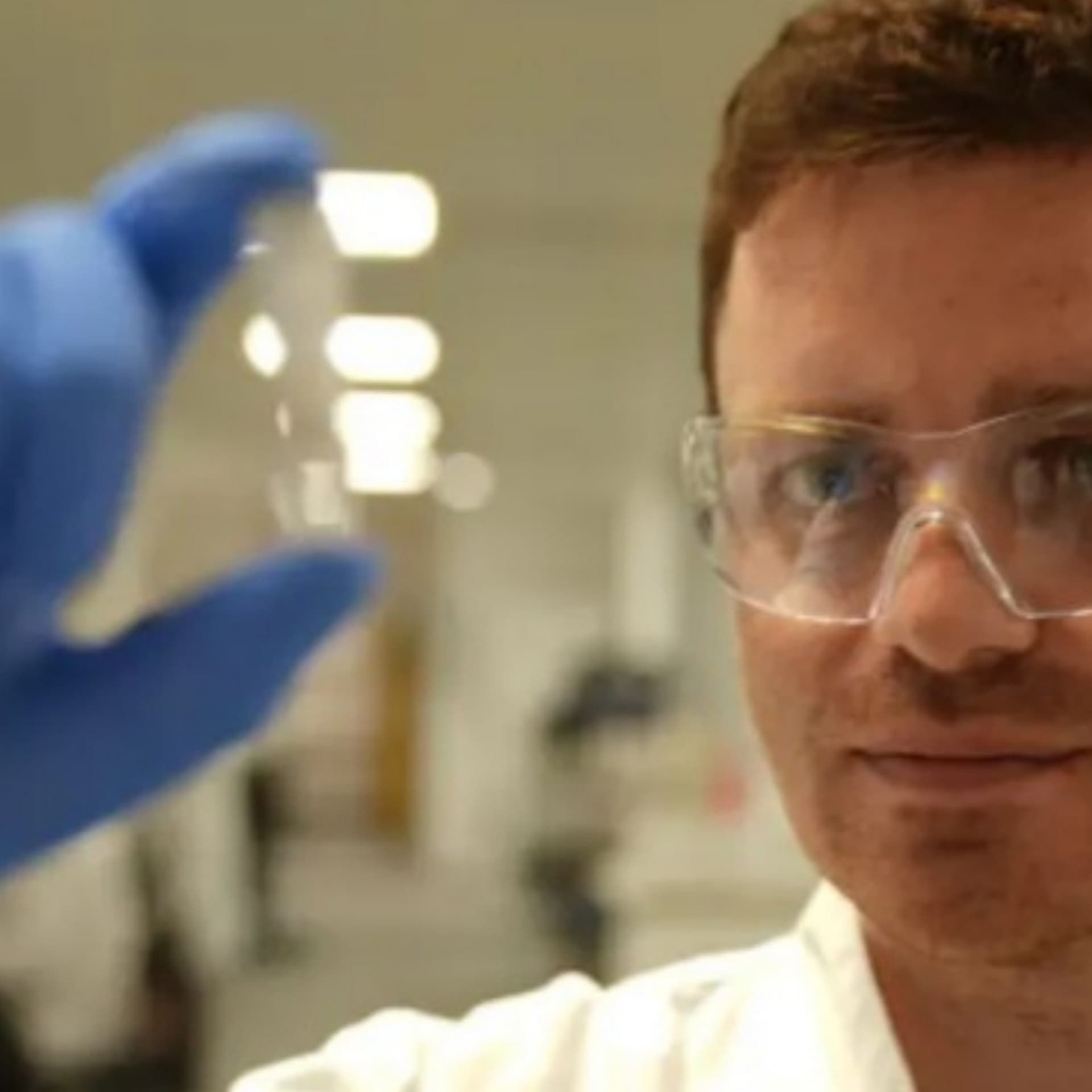
The Global News Podcast brings you the breaking news you need to hear, as it happens. Listen for the latest headlines and current affairs from around the world. Politics, economics, climate, business, technology, health – we cover it all with expert analysis and insight. Get the news that matters, delivered twice a day on weekdays and daily at weekends, plus special bonus episodes reacting to urgent breaking stories. Follow or subscribe now and never miss a moment. Get in touch: globalpodcast@bbc.co.uk Photo: Researcher Alex Sampson holds the experimental Ebola vaccine Credit: BBC/TREVOR LLOYD