In short
Global News Podcast - Episode Summary
Episode Title
Trump Approves Sale of Advanced AI Chips to China
Date
December 9, 2023
---
Overview The episode discusses significant political and economic developments, including President Trump's authorization for the sale of advanced AI chips to China, a $12 billion rescue package for U.S. farmers, and various global news stories, including breakthroughs in cancer treatment and developments in Sudan.
---
Key Topics and Discussions
- Sale of Advanced AI Chips to China
- Decision Overview:
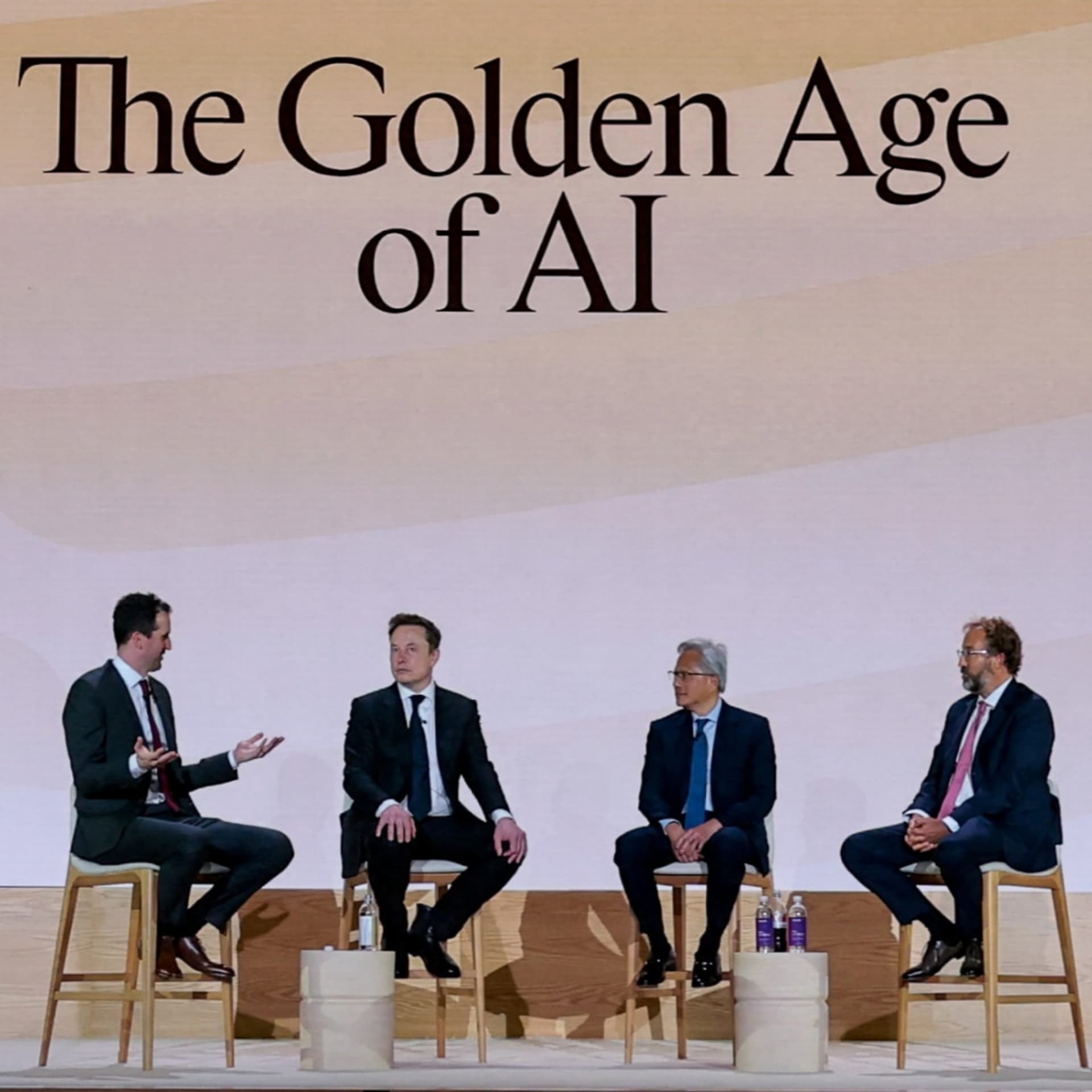
- President Trump has reversed a Biden-era ban, allowing Nvidia to sell advanced AI chips to China.
- The approval includes a 25% government cut from sales.
- Concerns Raised:
- Senator Elizabeth Warren warns that this could enhance China's technological and military capabilities.
- Experts express concerns that the People's Liberation Army may use these chips to develop AI-enabled military systems.
- Industry Perspectives:
- Jensen Wang, CEO of Nvidia, argues that restricting sales could push China to develop its own chip ecosystem, potentially putting them on par with the U.S.
- Impact of Trade Tariffs on U.S. Farmers
- Financial Aid Announcement:
- Trump announces a $12 billion aid package for U.S. farmers adversely affected by trade tariffs.
- Farmers' Reactions:
- Farmers like Barbara Carlback express gratitude for the aid but highlight that their market share has significantly decreased due to tariffs affecting trade with China.
- Concerns about the long-term viability of farming businesses due to rising costs and loss of market access are prevalent.
- Political Implications:
- The aid attempts to maintain support from the agricultural community, which is crucial for Trump’s political base.
- Breakthrough in Blood Cancer Treatment
- Revolutionary Gene Therapy:
- A new treatment developed in London has reportedly cured patients with previously untreatable blood cancers.
- The therapy involves editing the DNA of white blood cells, transforming them into effective cancer-fighting cells.
- Patient Testimony:
- Alyssa Tapley, a treated patient, shares her journey from terminal illness to being cancer-free, emphasizing the life-changing impact of the treatment.
- Sudan's Rapid Support Forces Gain Control
- Conflict Update:
- The paramilitary group Rapid Support Forces claims control over Sudan's largest oil field, disrupting government revenue sources.
- Potential Ramifications:
- The takeover raises questions about the RSF's future plans and its implications for both Sudan and neighboring South Sudan, which relies on oil exports for its economy.
- Entertainment Industry Developments
- Warner Brothers Takeover Battle:
- A competitive bidding scenario emerges for Warner Brothers, with Paramount outbidding Netflix for control.
- Industry Concerns:
- The potential mergers raise fears about job losses and market consolidation in Hollywood.
- Cultural and Technological Innovations
- Discovery of Ancient Pleasure Boat:
- Egyptian archaeologists announce the discovery of a historically significant luxury boat, providing insights into ancient lifestyles.
- Assistive Technology for Visually Impaired:
- A new headset allows John Attenborough, who has limited sight, to experience live football matches visually for the first time, showcasing advancements in accessibility technology.
---
Conclusion The episode encapsulates a range of pressing global issues, from technology and healthcare advancements to the implications of political decisions on agriculture and economic stability. The contrasting stories highlight ongoing challenges and innovations in various sectors, emphasizing the interconnectedness of modern global affairs.
---
Additional Information For more details and to stay updated with breaking news, listeners are encouraged to subscribe to the Global News Podcast. Comments and feedback can be directed to globalpodcast@bbc.co.uk.
---
This structured summary provides an insightful overview of the key discussions and events covered in the podcast episode, maintaining clarity and accessibility for readers.
Written by AI. May contain mistakes. Listen to the episode to check what was said.
Transcript
Automatic transcript. May contain errors.0:00This BBC podcast is supported by ads outside the UK. If journalism is the first draft of history, what happens if that draft is flawed? In 1999, four Russian apartment buildings were bombed, hundreds killed. But even now, we still don't know for sure who did it. It's a mystery that sparked chilling theories. I'm Helena Merriman, and in a new BBC series, I'm talking to the reporters who first covered this story. What did they miss the first time? The History Bureau, Putin and the apartment bombs. Listen on bbc.com or wherever you get your podcasts. This is the Global News Podcast from the BBC World Service.
0:48I'm Pete Ross and in the early hours of Tuesday 9th December, these are our main stories. Donald Trump has approved the sale of advanced AI chips to China, reversing a Biden-era ban brought in because of national security concerns. The US leader has also announced a$12 billion rescue package for American farmers, hard hit by his tariffs. In Sudan, paramilitaries say they've taken control of the country's largest oil field.
1:17Also in this podcast, scientists say a revolutionary treatment for blood cancers is delivering impressive results. A takeover battle is underway for Hollywood's Warner Brothers, and the headset that made it possible for a man with almost no sight to watch a live football match. I don't think there's really words to describe it. It was obviously the first time that I'd ever actually seen players on the pitch with my own eyes. I was able to see what was going on off the ball, the expressions on the faces of supporters.
1:50We begin with a significant announcement from Washington on the sale of advanced US-made AI chips to China. On Monday, President Trump said his administration had given the green light to NVIDIA to sell some of its more powerful AI chips to Beijing. Approval for the H200 chip followed months of haggling between tech industry backers who were in favour of a deal and defence hawks who say the sale of these sorts of chips risk giving China a military and economic advantage. The US president announced the deal in a social media post, saying the US government would take a 25 % cut of the sales and that Beijing had responded positively.
2:29It's a deal that's been brewing for a while, so what's pushed it through now? I put that question to our North American technology correspondent, Lily Jamali. NVIDIA boss Jensen Wang is a big reason why I think it ended up happening. I call him the diplomat-in-chief in Silicon Valley because he is really stuck in the middle of this geopolitical tug of war between the U.S. and China. He has been lobbying the White House. You see him at all kinds of events with President Trump in the U.S. and abroad. And he has also gone to China on a number of occasions in recent months. So I think it's fair to say he helped broker this just last week.
3:05He was in Washington trying to convince not just the White House, but lawmakers to go along with this deal. There, we may see a little bit of resistance from, as you said, people in Congress who don't like this move on national security grounds. What are some of those grounds? Well, I would point you to some of the researchers at Georgetown University. There's the Center for Security and Emerging Technology there, which has been looking into how China might use these most advanced AI chips designed by the United States. They will say that China's People's Liberation Army is using these chips to develop AI-enabled military capabilities.
3:43One analyst I spoke to today said that by making it easier for the Chinese to access these chips, you enable China to more easily use and deploy AI systems for military applications, that there is a battlefield advantage that is up for grabs here. I will also say, you know, it's often the case that China is pointed to as the boogeyman here. You often will see in this debate this concern about, you know, we can't give China an advantage over the U.S. But Jensen Wang has a very different narrative. He is saying if we don't sell these chips and play ball with China, that China is going to develop its own ecosystem for chip design.
4:20They already have done that. And you often will hear him say that they're very close behind, just at a razor's edge, basically behind the US in that technology. And what about Beijing? If we heard any more from them, I mean, will they even buy these chips? Because they're not even the sort of best ones or the most powerful ones that NVIDIA produce. Is that correct? That's right. We actually have heard from only Donald Trump's readout of what President Xi is saying. As far as I have seen and our colleagues at the BBC have seen, we haven't seen confirmation from China itself. But absolutely, this has been part of the tug of war is China also kind of dug in its heels earlier this summer and said to its tech companies, stop using these AI chips, even if they're available.
5:09We need to develop our own ecosystem. Lily Jamali. Farmers in the US have been reacting after President Donald Trump has unveiled a new $12 billion aid package to bail out those hardest hit by his trade policies. US soybean farmers in particular have lost billions from trade disputes with China, which has turned to South American suppliers for soybeans amid the Trump administration's tariffs. Barbara Carlback is a soybean farmer from Iowa. China now doesn't want to buy from us anymore because of the tariffs, so they go to Brazil. Well, that's over 25 % of our market share for soybeans that is now going somewhere else because of the tariffs.
5:52So I'm glad that he said that there's a lot of income from the tariffs so he can pay us off. But in the meantime, your market's destroyed. Bob Wirth has been farming for more than 50 years in southwest Minnesota, running a family business, and said he fears for future generations. Our input costs are going up at a rapid pace, or what we get for our crops when we sell is down. So we are actually losing a fair amount of money every year on every acre. So if we don't do something soon, get some help, we're going to lose a fair amount of young farmers, the ones that will be taking over the agriculture business, and that's very bad.
6:35So are these measures enough to keep farmers on side? I put that question to our North America correspondent, David Willis. Well, this is a community that, of course, generally supports Donald Trump, whose backing helped him secure a second term in the White House, yet his trade policies have hurt them. And the president launched a trade war with China in the spring, of course. Of course, the tariffs he imposed on exports to the United States have cost the agricultural community here billions of dollars, it's estimated, in lost sales at a time when that community is also having to deal with the rising price of such things as fertilizers and tractors and so on.
7:16This$12 billion aid package is an attempt really to make it up to them, make it up to those farmers with one-off payments to those who farm so-called row crops such as corn and soybeans. Now, the Treasury Secretary, Scott Besant, said the payments would provide what he called a liquidity bridge and support farmers until they see the benefits of the Trump administration's trade deals. Now, for his part, Donald Trump told reporters today, we love our farmers. They're great people, the backbone of the country. But he knows that China, as the world's largest importer of soybeans, had been buying up about a quarter of America's soybean exports until his tariffs were introduced.
8:03whereupon it started looking more to Brazil and other South American nations for its supplies of soybeans. And China has since pledged to resume the purchasing of American soybeans. But as we heard earlier, many farmers fear that it will take years for the market in such products to fully recover from this. This is part of a sort of broader issue for the president, isn't it, about how he's doing in the polls with his popularity. And that's kind of linked to the idea that prices for food, one of the things that he promised to drive down, he's not been doing. So, you know, how's that playing into all of this?
8:42Well, you're right. And I mentioned the rising cost of fertilizers and other such products. There is growing dissatisfaction here over the rising cost of living, which some have attributed in part at least to President Trump's economic policies and in particular his trade tariffs. Now, Mr. Trump has dismissed talk of inflation as a hoax and a con job on the part of rival Democrats. And he did appear, however, to soften his message just a little today, acknowledging what he called an affordability problem. And this is an issue that he is expected to confront, in fact, in a speech he's due to deliver in Pennsylvania tomorrow.
9:24and Democrats meanwhile continue to accuse the president of mismanaging the largest economy in the world. David Willis. A group of patients with previously untreatable blood cancers are now disease-free after trying a revolutionary gene therapy that experts say would have been science fiction just a few years ago. The treatment, developed by scientists at Great Ormond Street Hospital in London and University College London involves editing the DNA of white blood cells to turn them into what they call a living drug. Our medical editor Fergus Walsh went to meet one of them. Alyssa, I'm just going to listen to your chest, is that okay?
10:04If you can please breathe in. When she was 13, Alyssa Tapley and her family were faced with a stark choice. Take the offer of a world-first cell therapy for her aggressive leukaemia or choose palliative care. The pioneering treatment worked and three years on her cancer remains undetectable. Alyssa, now 16, reflects on that time. I really did think that I was going to die and I wouldn't be able to grow up and do all the things that every child deserves to be able to do. Obviously, I went from four months straight in Great Ormond Street to now I only come back for medical appointments once a year.
10:53So it's really amazing just how much more freedom that I'm able to have now. The science here is complex. Alyssa was given donor immune cells that had been genetically modified using a new technique called base editing. Among the billions of letters or bases that make up the cell's DNA, scientists made three precise changes and then armed them to fight her cancer. After her cancer was cleared, a bone marrow transplant then rebuilt her immune system. The research was led by Professor Wazim Kazim of UCL and Great Ormond Street Hospital. A few years ago, this would have been science fiction, but now we can actually collect white blood cells from healthy donors and use them for their powerful immune effects by reprogramming them and asking them to go and hunt down leukaemia when they're given back to patients.
11:51The team at Gosch and King's College Hospital have since treated a further eight children and two adults with aggressive T-cell leukaemia, and the results have been published in the New England Journal of Medicine. Dr Robert Chiesa is a consultant in bone marrow transplants at GOSH. 82 % of the patients that would have been otherwise incurable went into a deep remission and managed to go ahead with a bone marrow transplantation. And at last follow-up, almost 70 % of the patients are alive and in complete remission. So given how aggressive this particular form of leukemia is, these are quite striking clinical results.
12:32Yeah. OK, so why don't you try looking at it on a higher magnification then? Oh, that's good. Yeah? Yeah. Perfect. Alyssa can now plan for the future, including how she may be able to help others. I'm looking into doing an apprenticeship in biomedical science, and hopefully one day I'll go into blood cancer research as well, not just for my type of cancer that I had, but for so many others. The same technology that saved Alyssa's life has also been used to successfully treat the blood disorder sickle cell disease and may have potential with other forms of cancer. Fergus Walsh In Sudan, the Paramilitary Rapid Support Forces, or RSF, have said they have seized control of the country's largest oil field and its refinery from the Sudanese army.
13:22This cuts the government forces off from a key source of revenue. The oil field is situated on the border with South Sudan and is also the main processing hub for that country's oil exports, which provide nearly all of its income. Our global affairs reporter Richard Cagaway spoke to my colleague Alex Ritson. This is quite significant because the RSF has stepped up attacks in this South Kodofan region, which is towards the southern border with South Sudan. And for them, they have been targeting various areas within this region because they are rich in oil and also in gold. So this is a major setback for the government.
14:03And the government, which is basically the Sudanese army, has been quite reliant on this facility as a major source of its revenue. What will the RSF's objectives be, having taken control of this oil field? I think that's really the big question. Everybody's wondering really how the RSF is really going to benefit from this. Because they would have control, perhaps, then of this processing facility here. But then how do they export the material, this resource, now to Port Sudan or to the Red Sea for evacuation? So the thing is, there's no other outlet for oil apart from Port Sudan. That's the established infrastructure.
14:51So we don't know whether this is going to be used as a bargaining chip or an attempt even just to economically cripple the Sudanese army, which is based in Khartoum. So it could be just one of the tactics that the RSF is trying to play or use just to frustrate the Sudanese army. Because, of course, as you say, right next to South Sudan, for South Sudan, oil exports are a major part of their economy. It's a country which is on its knees economically anyway. Has this got the potential to do damage to South Sudan because the pipeline runs through Sudan to get to the port? Precisely. So when oil is, you know, sourced from Sudan, then pumped through this facility onwards to Port Sudan on the Red Sea.
15:42Now, Sudan relies on oil exports. Basically, they make up nearly all of its revenues. And so this would really be a major concern for the country, which has really been struggling to service its debt and also economically. So it's going to really have huge ramifications, not only just for Sudan, but also for South Sudan. This is basically its economic lifeline. Richard Kigoi. For more details on that story and any of today's big stories, you can go on YouTube, search for BBC News, click on the logo, then choose podcasts and Global News Podcast. There's a new story available every weekday.
16:24Still to come The discovery of what Egyptologists say was a luxury yacht from ancient times To our great excitement there was a pleasure boat which has never been found before
16:45If journalism is the first draft of history, what happens if that draft is flawed? In 1999, four Russian apartment buildings were bombed, hundreds killed. But even now, we still don't know for sure who did it. It's a mystery that sparked chilling theories. I'm Helena Merriman, and in a new BBC series, I'm talking to the reporters who first covered this story. What did they miss the first time? The History Bureau, Putin and the apartment bombs. Listen on bbc.com or wherever you get your podcasts.
17:24As Syrians were out in the street celebrating on Monday to mark the first year since the fall of the Assad regime, the Syrian president, Ahmed al-Shara, vowed to make a clean break with the past.
17:38Today, as the sun of freedom rises, we're announcing an historic break from the past, an end to the fiction of the Assad regime and a permanent separation from authoritarian rule. towards a new dawn, a dawn of justice and benevolence, of citizenship and coexistence, of innovation and commitment to building a nation. The end of our battle against the former regime is only the start of a new battle, the battle to back up our words with action and keep our promises. The BBC's Luke Jones spoke to Mohammed, a youth worker in Daria, near the capital Damascus, and Selene, a translator in Idlib, about how they were feeling.
18:23I'm 26 years old and this is totally something new to me and I'm so happy. People, everyone is happy and everyone is gifting each other. I have been firstly migrated from Daria in 2012 and now this is my first year in Daria. I'm shocked a little bit. It's a new experience. We are so happy. No people in the prisons now. It's an amazing feeling to us. There are still lots of issues that need to be sorted out in Syria. What is concerning you? What are you worried about? Basically, I'm worried about the sanctions. Are you not concerned that, you know, if you are Alawite, if you're Druze, if you're Christian or Bedouin, you might not be enjoying all the freedoms?
19:03If you will go to the streets, no one will ask you about your identity or ask you for your ID card to celebrate or not. Let's focus on solving our problem. I'm living here in Idlib, so I think everything is, like, all right. I'm not worried about anything else because I feel safe here. How do you feel about your leader, Ahmed al-Shara? Do you rate him? Do you like him? Honestly, yes. But I cannot judge it completely in just one year. They are doing their best, honestly. They are trying to make Syria again globally existent. Many aspects need to be fixed economically. Security issue. We need justice.
19:40I'm from Daria and I need justice for my people who I lost. I know the government, they are doing their best. Luke Jones speaking to Mohammed and Selene. Now, if you think of a luxury yacht, you might conjure an image of a ginormous sleek vessel, perhaps with a helipad out the back, parked off the coast of somewhere like Monaco. But according to underwater archaeologists in Egypt, giant boats used by the very wealthy are nothing new. They say they've discovered, for the first time ever, a large, ornate pleasure boat that dates back 2 ,000 years off the submerged island of Anthyridos. Archaeologists have known about them for years because they were described by ancient authors and depicted in iconography.
20:22But this is the first time one has been found. Professor Frank Goddio is director at the European Institute of Underwater Archaeology and led the search. He spoke to the BBC's Jamie Kumarasamy about the discovery. We found a bow of a boat with a flat bottom. To our great excitement, there was a pleasure bow. There were a lot of those pleasure boats which were used by the normal men of the court and they were used to hunt hippopotamus. Sorry, what are they doing with hippopotamus? They were hunting them. They were hunting them from this boat. Hippopotamuses, yes. I mean, you've found a lot in the time that you've been working off the coast of Egypt, haven't you?
21:07I mean, you've found a whole city. How does this compare finding this boat? Well, we have palaces, we have temples, but we have also shipwrecks. It's quite exciting when you come across a ship, you know, which has been described, but which has never been found before. And you have to leave it there, don't you? You can't bring it up. You have to leave it down there to do further research on it. We take wood samples for the study, for carbon-14 datings, for identification, etc. But we leave the boat down as recommended by UNESCO because bringing that boat on land needs a lot of preservation and very long process.
21:52Does that make the process of trying to find out as much as you can about what was happening on the boat and what it tells us about life back in those ancient times in the early Roman periods of Egypt? Does that make it much more challenging, the fact you have to keep going backwards and forwards, diving down there to find out more? Yes, of course, it's challenging. We have to do everything underwater. We have to take a record of everything we can record with the means of the science of today, of course. What was exciting also on this shipwreck is that we found a Greek inscription on the wood.
22:28And we could, from the style of those Greek inscriptions, we could date very precisely this boat of very early 1st century A.D. From what's been written about this boat, what would the modern-day equivalent be? It was a kind of a yacht, of course. It was a very luxury boat. A super yacht? Yes. But more generally, what can you say that this boat tells us about what life was like in Egypt at that time? It was the time of the glory of the city of Alexandria. It was at the peak of the grandeur and the power of Alexandria. Professor Frank Goddio speaking to Jamie Kumarasamy When Netflix announced its audacious$72 billion bid for the Warner Brothers movie studio and streaming operation on Monday it seemed that it had seized the initiative from Paramount who'd been working on a deal of its own for months However, the race to buy the company is far from over A successful purchase must first make it past regulators a process that can take several months That's given the Paramount boss, David Ellison the opportunity to swoop in with an even bigger bid of$108 billion for the whole company.
23:44Paramount's bid has the support of a private equity firm run by President Trump's son-in-law, Jared Kushner. So what happens next? My colleague, Jamie Kumarasamy, put that question to LA Times' Meg James. Honestly, it's a big mess. What the Warner Board has said is that they're standing behind the Netflix bid, that they were going to provide a proposal to their shareholders, in the next 10 days. So they want to get this wrapped up by Christmas. But really, it's going to be difficult for Paramount to try to get this asset. Although, you know, it is possible. Elon Musk a few years ago succeeded in a hostile takeover.
24:23So there is precedent both ways. And as ever, with so much in America at the moment, there is the Trump factor to take into account. And the president who says he's going to be involved in all of this, what could that mean? Well, I mean, your guess is as good as mine. And today when asked about his son-in-law, Jared Kushner's involvement, he said, oh, I don't know. I haven't talked to him about it. So, you know, stay tuned. It's Hollywood. I mean, there will be another development, but it's pretty raucous at this point. We're talking about it as a big deal, this development, the latest plot twist of Paramount jumping in like this.
24:56But the sale of Warner Brothers Discovery for those who don't know or understand Hollywood like you do, just put that into context. Well, I mean, this deal is really earthshaking here in Hollywood. You have Netflix, which had long been sort of looked at dismissively by media moguls. But it really, over the last 10 years, has upset Hollywood. And then last week, they made a deal to buy one of the most historic and beloved pieces of Hollywood. So you have that going on. You have people in the industry worried about the loss of jobs with any merger. And then you have the Paramount hostile takeover bid today.
25:35And, you know, we don't know if it will go through. One of the concerns that Netflix was going to have to overcome was just the size of how dominant it has become. And so Paramount is hoping to sort of sow seeds of doubt in the Warner investors so that they can claw back what they see as this major prize. LA Times journalist Meg James talking to Jamie Kumarasamy. Leonardo DiCaprio's latest film, One Battle After Another, is leading the charge for next month's Golden Globe Awards with nine nominations. Cynthia Erivo and Ariana Grande are recognised for their work in Wicked for Good. But despite its box office success, the film itself misses out.
26:16In the TV categories, Adolescents, White Lotus and Slow Horses have all been shortlisted. Our entertainment correspondent Lizzo Mazimba has been looking at the nominees. You know what freedom is? No fear. Just like Tom Cruise. The fast-paced comedic drama One Battle After Another follows a former revolutionary being pursued by the authorities. Its nine nominations include Best Musical or Comedy Film, Best Director for Paul Thomas Anderson and Best Actor for Leonardo DiCaprio. Viva la revolution! The family drama's sentimental value has eight nominations. Set in Oslo, the film, which is partly in Norwegian, examines the family dynamics of a famous director and his two daughters.
27:06Sinners, a period vampire drama, and Hamnet, about William Shakespeare and his wife dealing with the loss of their son, are just behind with seven and six nominations respectively. Mama! My boy! He lives not. With Hamannett's two Irish stars, Paul Meskell and Jesse Buckley, both recognised in the acting categories. In TV, the acclaimed Netflix drama Adolescence is one of the most nominated shows. Stephen Graham is recognised in the Best Actor category, Owen Cooper, who turned 16 last week, in the Best Supporting Actor category. Do not tell me when to sit down! while the drama itself is up for Best Limited Series.
Read the full transcript
27:52The awards take place next month. Lizzo Mazimba. Star Trek Next Generation fans will remember Georgie LaForge, the blind crew member with a headset that enabled him to see pretty much like anyone else. That technology is a step closer to reality. John Attenborough is an avid football supporter, but he has no sight in his right eye and very limited sight in his left, so he usually tunes into the commentary for visually impaired supporters. But on Saturday he was able to watch a match properly for the first time. I don't think there's really words to describe it. It was obviously the first time that I'd ever actually seen players on the pitch with my own eyes.
28:33So I was quite overwhelmed with emotions. When I put the headset on I was able to follow the action with my own eyes. I usually listen to the audio descriptive commentary, which is a fantastic service, but it generally just follows the movements of the ball. So I was able to see what was going on off the ball. I was able to see the expressions on faces of supporters sitting at the other side of the stadium. It was just wonderful. So the headset itself is sort of front loaded with cameras in it. And what I have in my hand is like a handheld joystick, almost like a computer game controller. and I can push forward and back to zoom in and out, or I can adjust it left and right to change the brightness, and there's a button to change the colour contrast and things like that.
29:22So the user can actually adjust it to their own visual requirements. So every time you turn your head, you're seeing exactly what a sighted person would see that's directly in front of them. You know, I'm somebody who goes to games most weekends, so being able to actually see what was happening on the pitch from where I was sitting and just move my head and see the surroundings it was just absolutely amazing Wonderful, John Attenborough
29:54And that's all from us for now but there'll be a new edition of the Global News Podcast later If you want to comment on this podcast or the topics covered in it you can send us an email The address is globalpodcast at bbc.co.uk. You can also find us on X at BBC World Service. Use the hashtag Global News Pod. This edition was mixed by Rebecca Miller and produced by Stephen Jensen and Marion Strong. The editor is Karen Martin. I'm Pete Ross. Until next time, goodbye.
30:31If journalism is the first draft of history, what happens if that draft is flawed? In 1999, four Russian apartment buildings were bombed, hundreds killed. But even now, we still don't know for sure who did it. It's a mystery that sparked chilling theories. I'm Helena Merriman, and in a new BBC series, I'm talking to the reporters who first covered this story. What did they miss the first time? The History Bureau, Putin and the apartment bombs. Listen on bbc.com or wherever you get your podcasts.
From the publisher
The US chipmaker, Nvidia has been authorised to sell advanced AI chips to China - in a major reversal of Washington's national security policy. The Democratic Senator, Elizabeth Warren, said the decision risked turbocharging China's bid for technological and military dominance. Donald Trump has also announced a $12bn rescue package for US farmers hit by his tariffs. Also: scientists say a revolutionary treatment for blood cancers is delivering impressive results; Sudan's paramilitary Rapid Support Forces say they've taken control of the country’s largest oil field; a takeover battle is underway for Warner Brothers - as Paramount outbids Netflix; the wreck of an ancient ornate pleasure boat is discovered off the coast of Egypt; and the headset that made it possible for a man with almost no sight to watch a live football match. The Global News Podcast brings you the breaking news you need to hear, as it happens. Listen for the latest headlines and current affairs from around the world. Politics, economics, climate, business, technology, health – we cover it all with expert analysis and insight.