In short
The episode of BBC Global News covers: (1) Trump extending Iran’s deadline to reopen the Strait of Hormuz after a US rescue of a missing aviator; it examines escalating rhetoric, possible civilian-infrastructure targeting, and reactions from US politicians and legal experts.
Key claims
the deadline shifts from Monday to Tuesday; Trump threatens to “blow everything up” and “take over the oil”; analysts warn attacks on power plants/bridges could be war crimes; Iran says Trump is following Netanyahu’s orders.
Notable examples
Schumer calls Trump “unhinged”; Lindsey Graham praises him; Tehran residents describe filling water bottles. (2) Strait of Hormuz’s reduced traffic (5–6 ships/day vs ~130) and economic impact. (3) Autism stigma and limited support in Malawi (St John of God sessions). (4) Kanye West backlash and Wireless festival sponsor pullouts. (5) Viral Gen Z slang art videos by National Gallery curator Alison Luchs. (6) Hungary election: explosives found near Turk Stream pipeline; possible false-flag fears.
Guests
no named podcast guests; only correspondents and reported voices (Will Chalk, Simi Jola Osho, Lee Stoucette, Mikey Kay, Ola Guerin, Nick Thorpe, Florence Piri, Zoe O’Brien, Alison Luchs, Julian Warwicker, Mary King, Michael Viga).
Written by AI. May contain mistakes. Listen to the episode to check what was said.
Chapters
Tap a time to open that second in VOTrump's Aggressive Rhetoric Towards Iran
1:35 to 2:14
Explore Trump's threats and the changing deadline regarding Iran's actions.
“President Trump swears at Iran in a social media post and threatens to destroy its infrastructure after US forces rescued a missing American aviator.”
Political Reactions to Trump's Ultimatum
2:14 to 3:18
Hear responses from U.S. politicians regarding Trump's aggressive stance.
“In the last podcast, we reported that Donald Trump had given Iran until Monday to make a deal or open the Strait of Hormuz, and that the search was continuing for an American aviator whose fighter jet was shot down.”
Concerns About Military Escalation
3:18 to 4:28
Discuss the implications of Trump's threats and concerns over military action.
“It's a question I put to our correspondent in Washington, Simi Jolaosho.”
Public Sentiment on Military Engagement
4:28 to 5:50
Understand the public's opinion on Trump's military strategies and potential war crimes.
“And as the clock ticks down towards this deadline, what sort of reaction is there from other politicians inside the US?”
Voices from Iran on U.S. Threats
5:50 to 8:13
Listen to Iranian residents expressing their fears regarding the conflict.
“No, it's not proving popular with voters here at all.”
Details of the American Aviator's Rescue
8:13 to 11:40
Learn about the complexities involved in rescuing the downed American aviator.
“Our correspondent Lee Stoucette has this assessment.”
Impact of War on the Strait of Hormuz
11:40 to 14:05
Discover how the conflict has affected oil prices and global shipping routes.
“Well, let's get more now on the stretch of water around which this entire war seems to be increasingly centred, the Strait of Hormuz.”
Impact of Conflict on Tourism in Oman
14:05 to 15:06
Discussing the effects of war on tourism and the economy in Oman.
“the idea of any kind of force, American or international, coming to try to take control of the strait, Well, you can see how difficult, if not impossible, that would be.”
Hungary's Election and Security Threats
17:23 to 19:36
Examining a potential false flag operation surrounding Hungary's elections.
“It's 2009 and we're in the German mountains.”
Challenges of Autism in Malawi
19:37 to 23:31
A report on autism management challenges faced in Malawi due to stigma and lack of resources.
“and they're looking to the Serbian authorities to give more details.”
Show all 13 chapters
Kanye West's Controversial Festival Headlining
23:36 to 25:54
Discussion on the backlash against Kanye West's booking for a UK festival due to past statements.
“there have been calls for him to be dropped.”
Museum's Social Media Success
25:56 to 28:00
Exploring how a museum curator engages Gen Z through social media.
“Now, as anyone who's ever chased likes on social media will tell you, there is no set formula for going viral.”
Art's Viral Impact on Museum Attendance
28:00 to 29:10
Discover how viral art content is attracting new visitors to museums.
“As I told people, I figured we'd get a few likes and a few cringes.”
Transcript
Automatic transcript. May contain errors.0:00This BBC podcast is supported by ads outside the UK.
0:30companies don't just start here, they grow here. Not culture or business, culture and business. Puerto Rico. It's not what's next, it's where. Visit investpr.org forward slash business. Today's episode is sponsored by NerdWallet's Smart Money Podcast. Ever Google a money question and end up 12 tabs deep with 12 different answers? This podcast is your shortcut back to clarity. NerdWallet's Smart Money podcast breaks down financial decisions with a team of trusted journalists. They explain the why behind decisions like investing, home buying, and choosing credit cards with clear research-backed insights.
1:11No jargon, no misinformation. Make your next financial move with confidence. Follow NerdWallet's Smart Money podcast on your favorite podcast app. This is the Global News Podcast from the BBC World Service. I'm Will Chalk and in the early hours of Monday the 6th of April, these are our main stories. President Trump swears at Iran in a social media post and threatens to destroy its infrastructure after US forces rescued a missing American aviator. Tehran calls Washington's ultimatums nonsense as the deadline to open the Strait of Hormuz shifts again. Also in this podcast, the challenges of raising a child in a country with little autism awareness.
2:03Neighbours started talking, saying, this child is troublesome. Why isn't she locking her inside the house? And sponsors say no to Kanye West, headlining Britain's wireless festival.
2:20In the last podcast, we reported that Donald Trump had given Iran until Monday to make a deal or open the Strait of Hormuz, and that the search was continuing for an American aviator whose fighter jet was shot down. Well, US forces have now rescued the missing airmen, and we will have more on that mission later. But President Trump has also now shifted the Strait of Hormuz deadline to Tuesday. But there are still mixed messages coming from the White House. On one hand, Mr Trump insists he's in deep negotiations with Tehran and claims there's a good chance a deal will be reached by Tuesday. And yet, in a social media post containing multiple swear words, he once again threatened to unleash hell if the Strait isn't opened.
3:08Tuesday will be power plant day and bridge day all wrapped up in one, he wrote, before calling the Iranian regime crazy bastards. So what can we read from his latest threats and this stronger rhetoric? It's a question I put to our correspondent in Washington, Simi Jolaosho. You can sense the frustration from him and it makes for a slightly uncomfortable read for some people. He includes a swear word. He calls the Iranian regime crazy bastards. And this is the second reminder that he shared this weekend of this 10-day deadline that he gave Iran to reopen the Strait of Hormuz. He's also been speaking to U.S.
3:47media today saying that if they don't make a deal and reopen it fast, that he would consider, quote, blowing everything up and taking over the oil. I think what's also important to note is the reality on the ground, right? The White House has said before that they are negotiating with Iran and then the U.S. struck Iran. And that's how we got here in the first place. So even though President Trump has said that the U.S. and Iran are deep in negotiations, the reality on the ground is that the U.S. has sent more Marines, more paratroopers and more military assets to the Middle East. So I think it's important not to underestimate President Trump making good on his threat.
4:32And as the clock ticks down towards this deadline, what sort of reaction is there from other politicians inside the US? On the Democrat side, you've got the Senate minority leader, Chuck Schumer, who posted after President Trump shared that threat on social media. He said that as Americans head to church to celebrate Easter, the president, quote, is ranting like an unhinged madman on social media. And then he goes on to accuse President Trump of threatening possible war crimes and alienating allies. On the Republican side, we've seen a bit more support from the president. So Republican Senator Lindsey Graham praised President Trump as a great commander in chief and said that Mr.
5:15Trump is deadly serious when it comes to this ultimatum and that he hopes Iran chooses wisely and chooses quickly. We've also seen some reaction from analysts and legal experts here in the US who are expressing concern on whether President Trump goes ahead with his threat to target civilian infrastructure such as Iran's power plants and bridges. Would this constitute a war crime under international law. And also reaction, well, I imagine from voters will be coming with the midterms around the corner, won't it? And this war isn't proving popular with everyone. No, it's not proving popular with voters here at all.
5:56But unfortunately, the Strait of Hormuz, the choke point there, is making it hard for Mr. Trump to end this war and also to end it on his own terms. And the public are seeing that. They're also seeing the spending that's happening with this war alongside the sort of economic disruption that is occurring here, the rising gas prices, especially when affordability has been a huge issue in America over the past couple of years. And now there's an additional sort of growing concern about the risk to U.S. service personnel, particularly with talk of a possible ground invasion. And it's interesting that we're seeing this across the political spectrum, that there's little appetite for another so-called forever war and for further American casualties.
6:43So it'll be interesting to see how that translates during the midterm elections in November. Our correspondent in Washington, Simi Jola Osho. Now, Iran has hit back at those latest comments from President Trump, accusing him of following orders from the Israeli Prime Minister Benjamin Netanyahu. Tehran said, our whole region is going to burn because you insist on following Netanyahu's commands. Now, as we've said many times on this podcast, it is difficult to get information from inside Iran. But a couple of residents from Tehran did manage to send us their thoughts about these threats. This comment from a woman in her 20s has been voiced up by one of our producers.
7:24My mum is filling every bottle she can find in the house with water. I have no idea what we are going to do now. I think more and more people in Iran have realized that Trump doesn't care about them at all. I hate him from the bottom of my heart and those who support him too. A businessman in the capital had this to say. No Iranian can feel good about the destruction of their country's infrastructure. These past few days all of us have been telling each other that maybe by Wednesday or even this weekend we want to be able to do certain things. Maybe we want to even be able to go to our businesses or our shops.
8:06What really matters is that the government should act in the interest of Iranian people. Iran has already fallen behind for years because of sanctions and honestly I don't even know what will happen next. Our correspondent Lee Stoucette has this assessment. With every day that this war drags on, we're constantly asking, who is President Trump relying on for his advice? He was asked by the Wall Street Journal that wouldn't Iranians suffer if he attacks civilian infrastructure. And he said, the people of Iran want me to attack the infrastructure because they've been living in hell. If President Trump attacks the civilian infrastructure of Iran, legal experts have been saying this is possibly going to be war crimes.
8:51What we hear is that the Iranians will then escalate and they will attack civilian infrastructure in the Gulf. So we'll have escalation after escalation. It's really hard to make sense of any of the comments over the past few weeks that President Trump has made about the diplomacy. He keeps saying that there are serious talks. He keeps saying that they're close to a deal. There is no evidence of that. All we have is that there are messages being passed. So our chief international correspondent, lease to set. Donald Trump's latest comments were made in the wake of that dramatic rescue of an American aviator who went missing in southern Iran after his F-15 fighter jet was shot down on Friday.
9:35The president called it one of the most daring search and rescue operations in US history. So how did it happen? Here is our military analyst, Mikey Kay. It's remarkable. The success of extracting an airman as time goes by becomes exponentially less because the Iranians are going to flood the area with all sorts of capability from night vision capability, vehicles, dogs, drones, and man pads, man portable air defense systems. And they're used by troops to basically take out aviation. Aviation is the only way that this crew member could have been extracted. Now, the additional capability that was put in was significant.
10:13Additionally to the combat search and rescue capability, the Americans then deployed two HC-130J Hercules transport aircraft deep into Iraq, talking about 350 to 400 kilometers in. Knowing that there was going to be a significant threat, the Americans literally threw everything at this. So they put two of these HC-130Js onto a forward operating base near Isfahan. And inside those C-130s, there are Little Bird helicopters. And the idea is, is that these two air transport jets, they fly into a forward operating base. They've got special forces on board. They'll take out the two helicopters, which are quite small.
10:50And now that helicopter provides airborne reaction force for the Delta forces to get on and actually go in and locate. Now, the problem where the weapon system operator was located was immediately after he ejected and landed, he went for high ground in the mountainous terrain. But what happened was is that he's got a beacon. He got into a ravine, and so the range of that beacon is significantly diminished. This is where the CIA come in, not only with a misinformation campaign passing the word in Iran that they found the airman when they hadn't, but also they were using a specific capability that the CIA have to geolocate.
11:22Once that's all happened, you now have two C-130s on the ground at the forward operating base that are stuck in the mud effectively. So then you have to launch three more aircraft to extract all of the special forces out, and then they get US aircraft to put bombs onto the two that are stuck to completely destroy it all. Mikey Kay there. Well, let's get more now on the stretch of water around which this entire war seems to be increasingly centred, the Strait of Hormuz. Its closure has had a massive impact. Oil prices have soared and global markets have been in turmoil. Now a handful of ships have been allowed to pass through the strait, including some Omani vessels, and our correspondent, Ola Guerin, was on board one of them.
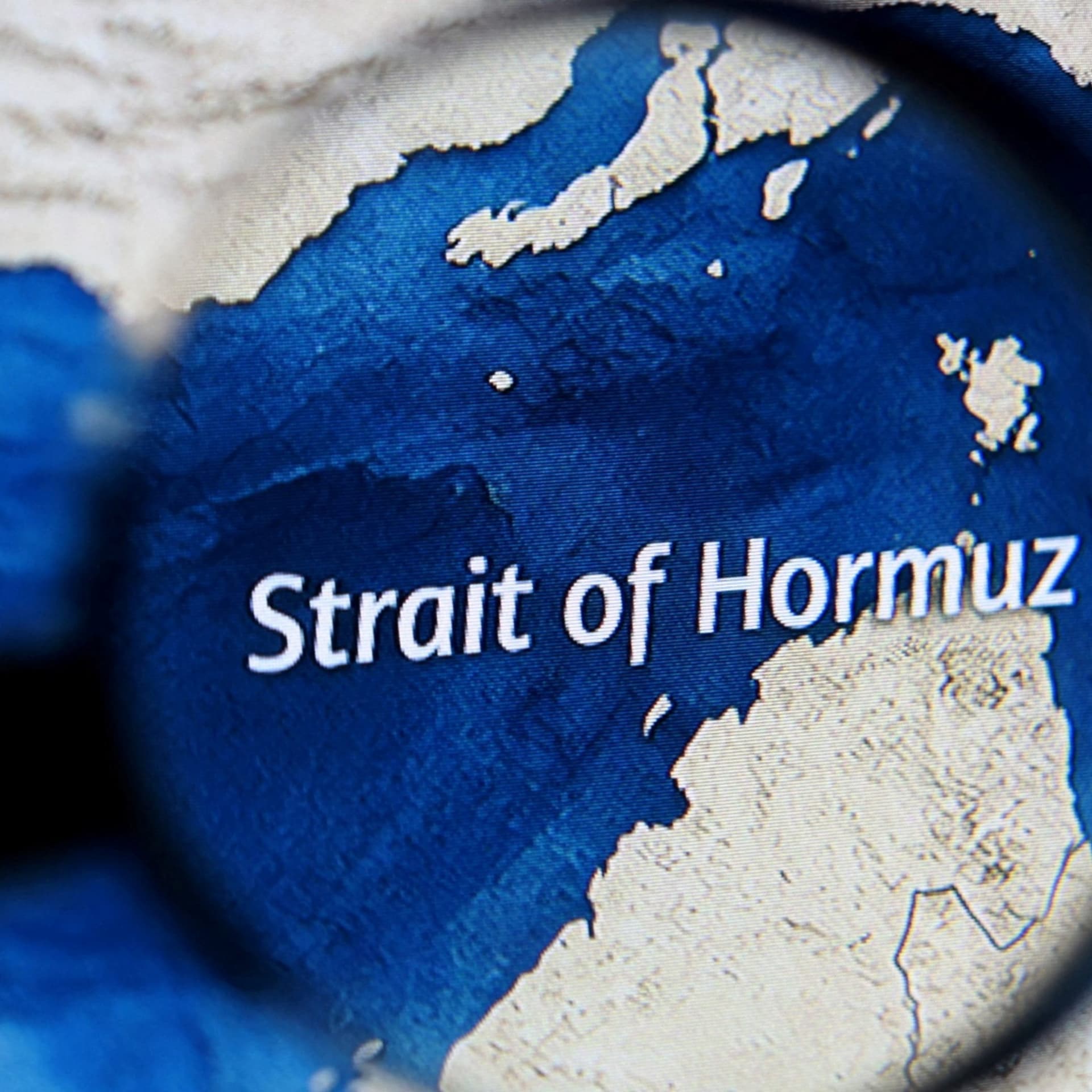
12:08We're sailing along the coast of Oman. The sun is glinting on the waves and there are spectacular cliffs rising up along the water's edge. The area is calm and peaceful, but just a short distance away in Iran, war is raging. Up ahead, there are cargo ships at anchor. They're at the edge of the Strait of Hormuz. Now, this critical artery is normally used for 20 % of the world's oil and liquefied natural gas. Well, not anymore. Since the war began, Iran has put a stranglehold on the Strait of Hormuz. Only five or six ships are being allowed through every day in contrast to about 130 before the war.
13:02And the Iranians are handpicking who is allowed to go through here. In effect, this waterway is now a weapon in the hands of Tehran, perhaps the most powerful weapon they have. By leaving ships stranded here, Iran is reducing the global supply of oil. It's creating shortages. It's driving up prices. It's creating fear among consumers and pressure in the international community. And Iran is hoping that all of that pressure will be applied to Donald Trump to get him to end the war. This is about as close as we can get. There are restrictions imposed by the authorities here in Oman. And there are also risks with trying to pass through the strait.
13:53Ships that are on that waterway can come under attack from Iranian drones and missiles. There are concerns too about mines in the water. And looking out at this exposed area of open sea, the idea of any kind of force, American or international, coming to try to take control of the strait, Well, you can see how difficult, if not impossible, that would be. We've been sailing along the coast here for a few hours now, and normally at this time of year you would see boats full of tourists coming to see the dolphins in the water here. They're a popular tourist attraction. Well, today we've seen plenty of dolphins, but almost no tourists.
14:43There's a dramatic impact, not just on the economy here in Oman, but across the Gulf and across the wider region and the world. This war is bringing a great deal of economic pain and Iran is hoping it can use that pain to push Donald Trump towards a settlement. Orla Guerin. Still to come in this podcast. This God-tears-skibbity sculpture is straight-up chef's kiss. how a 77-year-old museum curator is trying to interest a new generation in the arts.
15:30Chicago talks a lot. Hold on, let me step over here. People are talking too much. We debate about food, deep dish, tavern style, who's got the best beef? We yell across rooms, across blocks, across generations. Yes, nice earrings, Grammy. And now we're doing it on our phones, too. Video calls from the L train, group chats that never shut up. Neighbors texting you the score before your TV catches up. Get a load of this guy. Catch up on a dog. Yeah, we've got thoughts. Because nothing here gets built without conversation. Nothing moves without connection. So if you think you know AT &T, it might be time to rethink that.
16:08Because their network has improved, like, a lot. which means Chicagoans can keep speaking their mind with the top-rated fiber internet in the city. Chicago won't stop talking. Our improved network backs it up. AT &T, connecting changes everything. AT &T Fiber, limited availability in select areas. Top-rated and fastest internet. AT &T Fiber, based on analysis by Ooclip's Pizza Intelligence Data 2H 2025. Ever wonder why we make the choices we do and how to make smarter ones? Introducing Choiceology, an original podcast from Charles Schwab. Join Wharton Professor Katie Milkman, an award-winning behavioral scientist and author of the best-selling book How to Change, as she shares true stories from Nobel laureates, authors, athletes and everyday people about why we do the things we do and how to make better choices to help avoid costly mistakes.
17:01Each episode covers the latest research in behavioural science and dives into themes like the power of self-control, shaping your mindset for success, navigating new beginnings and why starting over can feel so hard. Listen to choiceology at schwab.com slash podcast or wherever you listen. It's 2009 and we're in the German mountains. A man straps himself into a car on the world's most dangerous racetrack. he whispers to himself, It's time to put my balls on the dashboard. As he starts the engine. In 15 minutes, he's in an ambulance, unconscious. In 15 years, he's a billionaire. This is Toto Wolff, Formula One's most powerful team boss and the breakout star of Drive to Survive.
17:47This week on Good Bad Billionaire, how Toto Wolff made his billions. Listen wherever you get your BBC podcasts.
17:57This is the Global News Podcast. With just a week to go before crucial parliamentary elections in Hungary, explosives and detonators have been found close to the Turk Stream gas pipeline just across the border in Serbia. That's the pipeline Hungary depends on for cheap gas from Russia. But according to the opposition and some security experts, the attempted attack is a false flag designed to drum up sympathy for Prime Minister Viktor Orban, whose party is trailing in the polls. There are even fears it could be used as a pretext to cancel next Sunday's elections. Our Budapest reporter Nick Thorpe told us more.
18:37Well, this is a strange story and a very dramatic one in the middle, of course, of this election campaign in Hungary. Basically, two rucksacks full of explosives and detonators were discovered very close, about 20 kilometres from the Hungarian-Serbian border inside Serbia near the village of Tresnovac on Sunday morning. immediately the Serbian president, Aleksandar Vucic, rang his close political ally, Viktor Orban, who called this emergency meeting. So we don't know more about the nature of the explosives, and certainly it comes at a time when experts, and indeed the opposition party here in Hungary, just one week ahead of this crucial election, have been warning of exactly an incident like this, which might, they say, arouse more sympathy for Viktor Orban and his Fidesz party, or might even provide an opportunity for him to postpone or cancel that crucial election next weekend.
19:35But of course, from the Hungarian government side, they're saying this is a serious potential terrorist attack, and they're looking to the Serbian authorities to give more details. But of course, if those details were to include, for example, the possibility that Ukrainian explosives had been discovered in these rucksacks, that would give Budapest an opportunity, another opportunity to point the finger at Kiev. So it's a very tense moment and a very remarkable new incident in this campaign. Nick Thorpe. Now, in general, across the globe, we know more than ever before about autism and how the condition affects the way people perceive the world, communicate and interact with others.
20:17But in places like Malawi, where resources are scarce and support is limited, managing it can be a challenge. Florence Piri reports from Mzuzu in the north of the country. Five-year-old Rachel runs into the kitchen with a yellow plastic plate in her hand. It's dinner time. Her mother Martha dishes up meat stool and msima. It's a thick dough made from maize. Rachel is an amazing child. I felt so guilty that my child could have been dead by now. Rachel spent her first year of life in and out of the hospital. And then at two years old, she was diagnosed with autism. Neighbors started talking, saying, This child is troublesome.
21:05Why isn't she locking her inside the house? The stigma Martha faced from the community made life feel impossible. I felt crushed by the enormous weight. Because of her sickness, I could not find any peace. So I told myself that it would be better if she died. In a state of desperation, Martha planned to poison her child. I had made up my mind that she should die, but my heart wouldn't let me do it. Martha says she wants to share her story to help other parents. In a community centre, elders from different faiths gather on green plastic chairs. They are here for an autism awareness session run by St.
21:52John of God, a local organisation funded mainly by the Catholic Church that helps children with disabilities. Men here believe witchcraft is a root cause of autism. A vicar with a large gold cross around his neck explains how people can bewitch each other. Another man stands up claiming magic is sent to pregnant women. This room is full of community leaders, faith leaders, traditional hearers. Each and every one of them believes autism can be cured in one way or the other. Malawi has two child development doctors for a population of over 22 million people and around three consultant psychiatrists.
22:40Like many other African countries, the word autism does not exist in the national language. Rachel, dressed in her blue and white checkered school uniform, claps her hands in time to the music. She's been going to school at St. John of God for a year. She now takes medication and is learning to speak. My child has changed now. I didn't know I could be this happy because I adore my child now. Martha and Rachel's story is a positive one. But with an estimated 60 million people worldwide on the autistic spectrum, according to the World Health Organization, there are many more living without any support.
23:30That report was by BBC Africa Eye's Florence Piri. Ever since Kanye West was announced as the headliner for a three-day music festival here in the UK, there have been calls for him to be dropped. He is considered one of the most influential and successful rappers of all time, but his past anti-Semitic comments have led to a big backlash. Now, Pepsi has pulled out as a sponsor for this summer's wireless festival here in London, and Diageo has followed suit and there's a growing pressure on others too. Our reporter Zoe O 'Brien asked Londoners what they think. The main sponsor of the Wireless Festival withdrew from its long-standing partnership in the face of fierce criticism.
24:13The pressure on Pepsi to act began to build after Kanye West was announced as the headliner for the event which is held in Finsbury Park in North London. The rapper who had three UK number ones in his heyday last year declared himself a Nazi and retracted an apology he'd made for previous anti-Semitic posts on social media. In January, he said he was sorry and blamed a bipolar episode. It's not good what he said. Fine, I get it. But, you know, he had an episode. Maybe it's not, you know, the right thing and whatnot. You can't just pin everything on an episode. It feels like he's kind of reintegrated into the music scene, kind of cultural life without any kind of real consequence.
24:54So, yeah, I don't think she would perform it. I'm not too sure if now would be the greatest time because it's still too recent after all the things that he has said. And me personally, I feel like he needs a lot of help. Prime Minister Keir Starmer said he was concerned by the booking at London's Finsbury Park. He said anti-Semitism in any form is abhorrent and must be confronted firmly wherever it appears. The largest representative body of Jewish people in the UK said he should not be allowed into the country. This is Michael Viga from the Board of Deputies of British Jews. The vast majority of British people are good, they're not racist, they're not bigots, and I'm sure we'll be very relieved if such a man is not permitted to be in the UK and to perform here.
25:42The BBC understands the Home Office has not yet received an application for Kanye West to enter the UK. the rappers' representatives and the organisers of Wireless Festival Republic have been approached for comment. Zoe O 'Brien. Now, as anyone who's ever chased likes on social media will tell you, there is no set formula for going viral. But it turns out a combination of a 77-year-old museum curator, Gen Z slang, and centuries-old exhibits works pretty well. This God-tears skibbity sculpture is straight up chef's kiss. It was made for Rudolph II, the Holy Roman Emperor of Flexing. That's Alison Looks from the National Gallery of Art in Washington DC, who has become an unexpected star online.
26:33My colleague Julian Warwicker spoke to Alison and her social media producer, Mary King. I had walked through the galleries with some of them talking about the works of art. And they were interested in that. And they asked me, would you be willing to do a video on some of these things in Gen Z slang? And I was kind of puzzled. I don't really know Gen Z slang, except maybe a word or two. And I remember thinking, well, why would anyone want to look at that? But that, okay, if it helps bring these works of art to a new audience, the sculpture and decorative arts and the early works in the collection, It's worth a try.
27:11There's no harm in it. So sure, I'll try it. Mary, how fast a learner was Alison? Oh, my goodness. She was a lightning fast learner, such a talent. And I mean, honestly, she treated it with the seriousness of almost like a linguistic exercise, which honestly is no surprise considering she speaks, Alison, how many languages? I believe four or five. Well, I've studied five languages. I speak them very imperfectly with different degrees. But that's interesting, isn't it? Because that does suggest that there's a part of your brain that's quite receptive to learning some kind of new form of speaking.
27:47That is absolutely true. So, Alison, what did you think when you began to realise that you had actually created quite a stir, a level of interest here that perhaps you weren't anticipating? I was absolutely amazed. You were right. I sure wasn't anticipating it. As I told people, I figured we'd get a few likes and a few cringes. And I was just flabbergasted when these things started to go viral. I don't know what to make of it. What means the most probably to me, to Alison, to all of us is the thousands of comments, a lot of people saying things like, this just sent me down an internet rabbit hole about art, or people even saying, I'm coming to the museum just to see this object or just to see Alison.
Read the full transcript
28:32I mean, that's the point here, isn't it? I was wondering about younger new visitors coming to the museum as a result of this. That's definitely happening, is it? Well, Alison's been recognised, right? Actually, I've been recognised once that I know of. Occasionally, I get a really nice smile from someone, and I wonder if it's because of the videos or if they just happen to be a friendly person. I don't know. Presumably, this continues, does it? I mean, you do it with more and more works of art in the weeks and months to come. Alison, is that the plan? Well, there's no shortage of works of art.
29:02The only problem is narrowing it down. It really is fun. Alison Lux and Mary King. And that is all from us for now. If you want to get in touch, you can email us at globalpodcast at bbc.co.uk. You can also find us on X at BBC World Service. Use the hashtag Global News Pod. Don't forget our sister podcast, The Global Story, goes in-depth and beyond the headlines on One Big Story. This edition of the Global News podcast was mixed by Javid Gilani. The editor is Karen Martin and I am Will Chalk. Until next time, goodbye.
From the publisher
Donald Trump has changed the deadline for Tehran to reopen the Strait of Hormuz to Tuesday, and threatened to bomb Iran's bridges and power plants if his demands are ignored. Tehran has dismissed the warnings as "nonsense". And US forces have rescued the missing American aviator who's fighter jet was shot down in southern Iran. Also: The challenges that autistic children and their parents face in Malawi. Sponsors pull out of Britain's Wireless music festival because Kanye West is headlining. And how one 77-year-old museum curator is trying to get Gen Z into the arts.
The Global News Podcast brings you the breaking news you need to hear, as it happens. Listen for the latest headlines and current affairs from around the world. Politics, economics, climate, business, technology, health – we cover it all with expert analysis and insight. Get the news that matters, delivered twice a day on weekdays and daily at weekends, plus special bonus episodes reacting to urgent breaking stories. Follow or subscribe now and never miss a moment. Get in touch: globalpodcast@bbc.co.uk