In short
Global News Podcast Episode Summary
Podcast Overview Podcast Title: Global News Podcast Description: The Global News Podcast provides breaking news and current affairs from around the world, covering topics like politics, economics, climate, business, technology, and health. The podcast offers expert analysis and insights, delivering news twice a day on weekdays and daily on weekends, along with special bonus episodes.
Episode Title
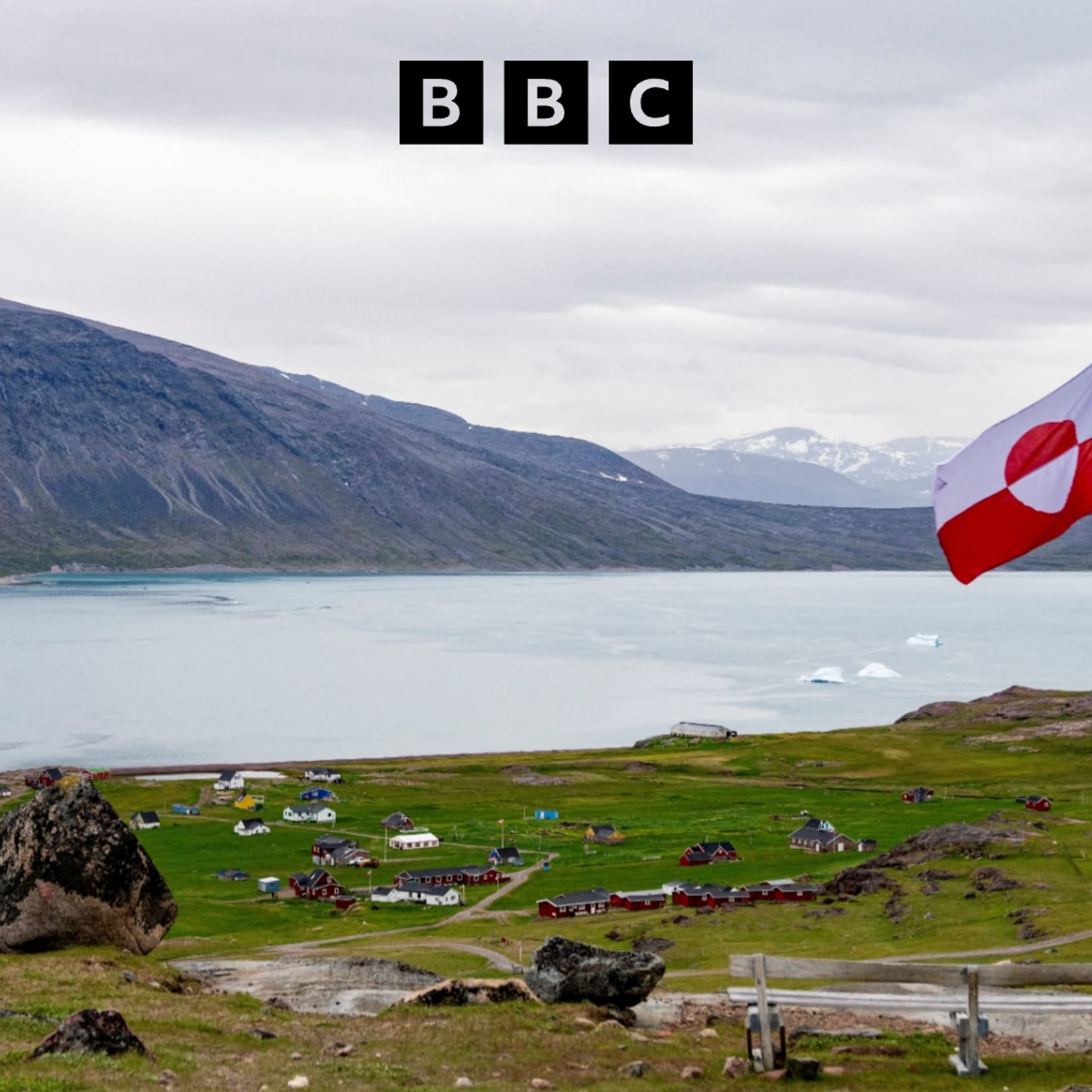
Trump Pushes Back at European Resistance Over Greenland
Main Topics Covered
- Donald Trump's Greenland Controversy
- Trump asserts he will impose tariffs on European nations if Greenland doesn’t become part of the U.S.
- He expresses willingness to consider the use of force in this matter.
- Denmark has increased its military presence in Greenland amid these tensions.
- Ugandan Opposition Leader's Safety Concerns
- Bobi Wine, the Ugandan opposition leader, claims he is in hiding following a police raid at his house.
- He alleges the presidential election was rigged, resulting in the long-time president Yoweri Museveni being declared the winner.
- Syrian Prison Clashes
- Clashes erupt in a Syrian prison holding Islamic State fighters, complicating a recent ceasefire between the Syrian army and Kurdish forces.
- Possible Social Media Ban in Britain
- The UK government is considering a ban on social media for individuals under 16, following Australia’s recent legislation on the same issue.
- Tribute to Valentino Garavani
- The episode pays homage to the late Italian fashion designer Valentino Garavani, marking his contributions to fashion and pop culture.
Detailed Discussions
Donald Trump and Greenland
- Threat of Tariffs:
- Trump emphasizes a 100% commitment to impose tariffs on eight European countries if Greenland is not ceded to the U.S.
- Troubling remarks related to "complete and total control" over Greenland.
- Response from Denmark:
- Denmark has bolstered its military presence in Greenland, primarily aimed at Russian activities rather than U.S. threats.
- Political Reactions:
- Democratic Senator Chris Coons urges Republicans to limit Trump’s tariff threats and consider bipartisan solutions.
- Supporters like Congressman Randy Fine advocate for the annexation of Greenland, linking it to national security.
- Historical Context:
- The discussion shifts to historical U.S. land acquisitions (e.g., Louisiana Purchase, Alaska) as precedents for Trump's intentions.
Ugandan Political Climate
- Bobi Wine's Situation:
- Wine reveals his fears following a police raid intended to capture him, claiming a rigged election process.
- His calls for public uprising against dictatorship resonate with many Ugandans.
Syrian Conflict Updates
- Prison Clashes:
- Reports indicate ongoing fighting around prisons holding ISIS members, raising concerns about the stability of the ceasefire.
- International Dynamics:
- The role of Kurdish forces and the U.S. in the region is highlighted, reminding listeners of the complex geopolitical landscape.
Social Media Regulations in the UK
- Government Consultation:
- The British government launches a consultation on the impact of children's social media use, considering regulation after Australia’s actions.
- Expert Opinions:
- Consultant psychiatrist Professor Matthew Sadlier discusses the dangers of social media for children, advocating for a precautionary ban.
Remembering Valentino Garavani
- Fashion Legacy:
- The segment honors Valentino’s career, his signature style, and his influence on Hollywood and high society fashion.
- Notable dresses worn by celebrities such as Jackie Kennedy and Julia Roberts are highlighted as markers of his impact.
Conclusion This episode of the Global News Podcast encapsulates significant political tensions involving the U.S. and Europe, highlights ongoing crises in Uganda and Syria, discusses potential changes in social media regulations, and pays tribute to a fashion icon. The discussions provide listeners with a comprehensive view of current global affairs, emphasizing both historical context and immediate implications.
Contact Information
- Email: globalpodcast@bbc.co.uk
- Social Media: Use the hashtag #GlobalNewsPod on Twitter to engage with discussions related to the podcast.
Written by AI. May contain mistakes. Listen to the episode to check what was said.
Chapters
Tap a time to open that second in VOThe Flawed Draft of History
0:05 to 0:42
Exploration of how journalism shapes historical narratives and the potential flaws in that process.
“If journalism is the first draft of history, what happens if that draft is flawed?”
Trump and Greenland Controversy
0:47 to 1:29
Discussion on Donald Trump's comments about annexing Greenland and the reactions that followed.
“I'm Alex Ritson and in the early hours of Tuesday 20th January, these are our main stories.”
Political Reactions to Trump's Plans
1:29 to 4:04
Overview of political responses to Trump's Greenland plans from various leaders and experts.
“Uganda's opposition leader Bobby Wine tells the BBC he's been forced into hiding after what he believes was a rigged presidential election.”
Military Presence and Misunderstandings
4:04 to 6:22
Analysis of the military dynamics in Greenland and Trump's potential misunderstandings regarding European exercises.
“Alex, and Donald Trump told the US network NBC that he was 100 % serious about the threat to impose these tariffs on European nations who supported Denmark.”
Historical Context of U.S. Land Acquisitions
6:22 to 9:11
Exploration of the historical purchases made by the U.S. and their implications, including the Louisiana Purchase and Alaska.
“And, of course, last year, Alex, the Financial Times coined the phrase, Trump always chickens out.”
Economic Struggles Amid Growth
9:11 to 11:14
Discussion on the current economic situation in the U.S. and the perceived disparity between statistics and personal experiences.
“Tim Marshall, author of Prisoners of Geography.”
Realities of Rising Costs
11:14 to 13:03
Insights from Americans on the rising cost of living and its impact on daily life.
“What we've seen in recent years differs a little bit from that just general.”
Concerns Over Youth and Social Media
13:03 to 14:06
Discussion on the potential impact of social media on children and the British government's response.
“The then mayor of Rome said in Italy, there is the Pope and there is Valentino.”
The Dangers of Social Media for Children
14:06 to 17:09
Explore the negative impacts of social media on children's development and mental health.
“He told my colleague James Kumarasamy about the threat social media use can pose to young people.”
Ceasefire Deal in Syria and Its Challenges
17:10 to 19:15
Understand the complexities and ongoing tensions following a ceasefire deal in Syria.
“Consultant psychiatrist Professor Matthew Sadlier.”
Show all 14 chapters
The Role of Kurds in the Syrian Conflict
19:16 to 21:19
Learn about the historical significance of the Kurdish forces in the ongoing Syrian conflict.
“They were the ones who captured and held many of the Islamist fighters, and outsiders may look at this, look at Ahmed al-Sharah and say, well, you were an Islamist fighter.”
Bobby Wine's Political Struggle in Uganda
21:20 to 25:16
Dive into Bobby Wine's experiences following the controversial presidential elections in Uganda.
“Bobby Wine says the election was rigged.”
Remembering Valentino Garavani
25:17 to 27:06
A tribute to the life and legacy of renowned fashion designer Valentino Garavani.
“The Italian fashion designer Valentino Garavani Garavani has died aged 93.”
Theories on the Discussion
28:00 to 28:10
A brief mention of theories possibly related to the main topic.
Transcript
Automatic transcript. May contain errors.0:00This BBC podcast is supported by ads outside the UK. If journalism is the first draft of history, what happens if that draft is flawed? In 1999, four Russian apartment buildings were bombed, hundreds killed. But even now, we still don't know for sure who did it. It's a mystery that sparked chilling theories. I'm Helena Merriman, and in a new BBC series, I'm talking to the reporters who first covered this story. What did they miss the first time? The History Bureau. Putin and the apartment bombs. Listen on BBC.com or wherever you get your podcasts. This is the Global News Podcast from the BBC World Service.
0:47I'm Alex Ritson and in the early hours of Tuesday 20th January, these are our main stories. Donald Trump says no comment when asked if he could use force to annex Greenland to the delight of his supporters. We hear from an author who's written extensively on America's history of buying territory at once, plus a special report on the soaring cost of living in the United States. Also in this podcast. I was raided at my house and I was able to escape. But prior to the raid, I got information that there was a plan to attack me at my house and harm me. Uganda's opposition leader Bobby Wine tells the BBC he's been forced into hiding after what he believes was a rigged presidential election.
1:42Donald Trump has told the Norwegian Prime Minister that he can no longer think, in his words, purely of peace and that he wants complete and total control of Greenland. He said he would follow through on his threats to impose tariffs on eight European countries if the autonomous Danish territory doesn't become part of the United States. There is some opposition in America to his plans. The Democratic Senator Chris Coons has urged Republicans to rein in Mr Trump. I think it's important that we try to lower the temperature, that we work across the aisle and find proposals for a path forward that would allow an action by Congress, both to restrain President Trump's misuse of tariffs against NATO allies and to restrict his ability to threaten a NATO ally with force.
2:34And frankly, I'm hopeful that Republican colleagues will be successful in talking President Trump out of this. But if they aren't, we need to be prepared to act in Congress on a bipartisan basis because this is very dangerous. But Mr. Trump has many supporters. Randy Fine is a Republican congressman from Florida who last week introduced a bill to Congress called the Greenland Annexation and Statehood Act. He wants the island to become the 51st state of the US. President Trump is the world's best negotiator. And I think part of the way you negotiate is you negotiate through strength. And that's what he's making clear.
3:12The United States should control Greenland. It's in the Western Hemisphere. It's critical to our national security. It's not critical to Denmark's. And I think that we're already protecting it. We ought to make it part of our family, much like we did with Alaska 100 plus years ago. All this as Denmark boosted its military presence in Greenland on Monday night, sending more soldiers, although they're part of exercises aimed at Russia rather than the United States. There's also another arrival expected soon, aircraft from North American Aerospace Defense Command, a joint US-Canadian military organisation are being sent to the US space base in Greenland for what's being described as long-planned activities.
3:56I asked our North America correspondent David Willis if European resistance to the president's threats would make him listen. No indication of that so far at least, Alex, and Donald Trump told the US network NBC that he was 100 % serious about the threat to impose these tariffs on European nations who supported Denmark. And he was asked to rule out the use of force in order to achieve that end. And he replied simply, no comment. Well, he's due to travel to Switzerland for the World Economic Forum meeting on Tuesday evening, arriving there on Wednesday, where he will, of course, Alex, be very much the centre of attention.
4:42Is there any way we can predict what Mr Trump is going to do next? Well, a key element of his negotiating style is, of course, keeping people guessing, isn't it? He's not afraid to change his mind. That said, he's done so repeatedly in the past, particularly on the issue of trade tariffs. On the Greenland issue, though, Mr Trump so far seems particularly unwavering. And that may be partly because he saw the joint military exercises that several European nations have been taking part in in Greenland over the last few days as a direct challenge to the United States. And he said as much in the message that he posted threatening those new tariffs on Saturday.
5:31And in that message, Mr. Trump accused the countries taking part in those military exercises of playing what he called a very dangerous game. Well, it's since emerged that the president may have misunderstood, may have been misled perhaps about what was going on there in the sense that instead of posing a challenge to the United States, Those exercises were intended instead as a sign that Denmark and its European partners were taking the issue of Arctic security seriously and could be trusted with it. And it's been reported that during a call with Sir Keir Starmer of the UK yesterday, Mr. Trump conceded that he had received bad information about that troop deployment.
6:19So it's almost possible he could change his mind. And, of course, last year, Alex, the Financial Times coined the phrase, Trump always chickens out. And, of course, there are many in Europe who are hoping that he does so this time. David Willis. When President Trump, in his first term, said he wanted to buy Greenland, most people thought it was a bit of a joke. The question has moved through the laughter phase now into anger and bargaining. But, in a bizarre way, President Trump's initial intuition that land, along with the residents, can be bought and sold, is in line with historical practice and has played a large part in the history of the United States.
6:58Tim Marshall is the author of Prisoners of Geography. He spoke to my colleague Evan Davis. We start in 1803. This is the Louisiana Purchase, bought from France. Napoleon's busy fighting the Napoleonic Wars, needs a bit of cash, and thinks, well, that's not worth much, is it, you know, all that area? So he sold it for$15 million. But what it did for the United States was it secured the Mississippi River Basin. That's basically from the Appalachian Mountains right across to the Rockies, which is the best farmland in the world. So it secures the heartland for the Americans and it gets them on the path to the Pacific.
7:38It's one of the main reasons why they are the most powerful country in the world now. OK, the other famous one we should talk about in the history of the US has got to be the purchase of Alaska. 1867,$7.2 million to Russia. Thank you very much. But they called it Seward's Folly. He was the Secretary of State, Sir William Seward, who negotiated this. And people were saying, you've just spent all that money on snow. But just a few decades later, oh, there's a lot of oil underneath that snow. And for your 7.2 million, you've now got a close to$200 billion worth of oil that they've dug out of it. It becomes the 49th state, but also strategically sits on the Bering Strait, dividing the United States from Russia.
8:27The Aleutian Islands were included. They're part of the missile defence system. Very useful. I have two more for you, if you want them. OK, go on. Well, because it's one of these from Denmark, which obviously is ironic. Yeah, tell us about that one. Well, before that, 1898, the Philippines are bought from Spain for 20 million. The Panama Canal Zone, but only the zone, bought in 1903, handed back later. And then, yeah, the US Virgin Islands from Denmark, 25 million dollars. That was in 1917. And then the last bid was Truman, 1953, who offered Denmark 100 million in gold. and the Danes said no thank you, which is of course what they're saying now.
9:11Tim Marshall, author of Prisoners of Geography. Mr Trump might be paying a lot of attention abroad at the moment, but that doesn't mean there aren't issues to deal with at home. One of the biggest is the affordability of everyday items. The US economy is growing faster than most others, inflation is not out of control and stock markets are hitting record highs. But for many Americans, it feels like a struggle to earn enough money to live on. The BBC's Rahul Tandon asks if there is a mismatch between the statistics and the reality of balancing household budgets. This is the issue that is currently at the heart of political debate in the world's largest economy.
9:53So what do the latest figures tell us? When Mr Trump came into office in January of 2025, inflation was at about 3%. Our North of America business correspondent, Samira Hussain. And now it's fluctuated to where we are now at 2.7%. So is inflation high? Well, it's higher than what the Federal Reserve, America's central bank, would want it to be at. They sort of aim for 2%. But it's certainly not the 9 % that we saw at the height of the pandemic under Joe Biden back in June of 2022. In the US, real wages have been rising for a decade. Yet every survey shows us, in spite of that, people still feel worse off.
10:35Let's hear from some shoppers outside a store in Atlanta, Georgia. Under the Trump administration, the price of food has gone up considerably. And sometimes it's even cheaper for us to eat out. My grocery bill has actually doubled. The one that costs me the most is meat. Most people in this country live paycheck to paycheck. They can't really afford higher prices. They barely can pay their rent. Arne Cass is the founder and chief economist of the conservative think tank American Compass, previously worked on the presidential campaigns of Mitt Romney. It reflects a long term building problem with affordability that is leading to people feeling like their budgets are squeezed because they are.
11:14What we've seen in recent years differs a little bit from that just general. You hear your grandpa say that the ice cream cone used to cost a nickel, but of course, what was the hourly wage, right? And so I think what we've seen really in the most recent 30 or 40 years in the United States, though, is that wages have not grown as quickly. And in some places, they've been declining in real terms. And so the research that we've done at American Compass shows that if you look at what your typical, especially male worker earns and how much it costs to provide economic security to a family. It really did used to be the case that you could afford it.
11:53And it really is the case that you can't afford it anymore. Let's hear Donald Trump talking about those issues. When you see energy coming down, like I brought it down and gasoline coming down, that brings everything else down. When gasoline gets to be$1.99 a gallon, everything comes down. The doughnuts come down, the truck that delivers the doughnuts, the stove that makes the doughnuts, the whole thing, it all comes down and it's coming down much faster than anybody can even believe. If you can't buy groceries for your family, you don't care whether inflation's 1 % or 10%, you can't buy groceries for your family.
12:26Liberty Vittar, the data science professor at the Olin Business School. If we look at what people tend to look at to decide if they're doing well financially or not, it's gas and groceries. And what we've seen really since COVID is a great rise, especially in groceries. But who we blame that on, I think, is a bigger question. The US economy is growing faster than most other high-income economies, and its stock market is at record highs. Things on paper look good, but for many Americans, the cost of living crunch is still their number one concern, and solving it is not going to be easy. Rahul Tandon.
13:06Still to come in this podcast. The then mayor of Rome said in Italy, there is the Pope and there is Valentino. Fashion designer to the stars of Hollywood's golden age, Valentino Garavani has died.
13:27Now, could Britain be about to follow Australia and introduce a social media ban for under-16s? The British government is launching a consultation into children's social media use as it considers the issue. It comes just weeks after Australia became the first country in the world to introduce such a ban. Options under consideration include tougher enforcement in schools and restrictions on potentially addictive design features as the government looks at a range of measures to keep children safe online. The consultant psychiatrist Professor Matthew Sadlier advised British MPs pushing for a ban.
14:06He told my colleague James Kumarasamy about the threat social media use can pose to young people. Well, we would see two types of main difficulties and problems with children on social media. First is problems that they get from the process of actually being on an algorithmically driven panel that, you know, encourages usage. We would say that at the moment, statistically, the average 12 year old is spending, give or take, four hours a day looking at a smartphone. Now, that's give or take about a third of their available time, which, you know, if they were continuing that their whole life, that would be 20 solid years of looking at a smartphone.
14:43So that will give them problems in regards to addiction towards the phone. It will give them problems towards language and communication development, poorer academic achievement. And actually a study coming out of New Zealand showed that the longer people spent on phones, the less actually digitally and computer competent they were because they seemed to spend more time in specific products and apps than actually using a computer as a productivity tool. But what about the evidence for a ban as such? I mean, it's only been, what, weeks since that one came into force in Australia. Does the government need to wait for more evidence before assessing whether or not a full ban is the right way forward?
15:26No, not at all. I mean, we need to apply the precautionary principle on this issue. You know, the first paper on the dangers of cigarette smoking was published in about 1911 and bans on cigarettes didn't happen for another 50 years. And look at all the lives we lost in the intervening period. You know, we have to have a precautionary principle. We have enough evidence that these are dangerous to children from the process, as I described, but also the content they're seeing online. The kind of counter argument of banning certain forms of social media, which is that children will always find alternatives which could be perhaps even more dangerous to them than the ones that are out there.
16:05Like we ban alcohol, cigarettes, driving all have age limits. And we know that people break those age limits all the time. But we know by having those statutory age limits, fewer children engage in those dangerous activities than they would if those limits weren't there. Yes, some children may be able to circumvent the rules, but that will be a small fraction of the children that will access these products if they were legal. We know about the dangers that happen. We know the dangers that happen specifically to vulnerable children in regards to exploitation, pornography, cyberbullying. And these are the things that we need to protect children against today.
16:43And, you know, some of the stuff that children are seeing on these platforms cannot be unseen. And the damage that is being done, we're seeing an increase of, you know, 500 % almost of referrals to mental health services. You know, 16 times increase in presentation and eating disorders in 16 to 17 year olds. Like, I'm not sure how much more evidence we need to start to move on this issue. Consultant psychiatrist Professor Matthew Sadlier. It was only on Sunday that the Syrian army and Kurdish-led forces, the SDF, signed a ceasefire deal to end days of clashes in the northeast of the country. Under the deal, the Kurds were meant to give back control of two provinces to the government and fully integrate their fighters into the army.
17:32Now, fresh fighting is taking place between the two sides. Reports say clashes erupted around a prison which holds inmates from the Islamic State group. our Middle East analyst is Sebastian Usher. Over the past few hours, we've seen more reports of clashes. The SDF itself, it's difficult to judge 100 % the veracity of some of the claims they're making. I mean, they said, for example, that one of the prisons, now a key to this area are the prisons where thousands of ISIS members and suspected ISIS members have been held for years under Kurdish control. And that's always been a threat that they've held over the Kurds.
18:10If we go, what will happen to them. So the SDF said that one of those prisons was attacked, that when that happened, prisoners were able to escape. So essentially giving a sense that their control was being taken away from them by groups which were not necessarily, you know, controlled government forces. Now, the government has responded by saying that's not the case. There's actually the SDF, which allowed some of these prisoners to escape. And now they're trying to track them down. So it's very unclear exactly what's going on. But what does seem to be the case is that the ceasefire is not going that smoothly now.
18:48There was a meeting between the SDF leader, Maslum Abdi, and the Syrian president, Ahmad al-Shahar, in Damascus. We haven't heard yet an official announcement about that. But everything that has come out seems to imply that it didn't go well, that Maslow Abdi has gone back to the Kurdish area with the sense that the deal that was agreed on Sunday is no longer a deal that he agrees to. Because historically, the Kurds' role has been really important. They were the ones who captured and held many of the Islamist fighters, and outsiders may look at this, look at Ahmed al-Sharah and say, well, you were an Islamist fighter.
19:27There are people inside Syria and outside who still hold him to that. That's not any more, I think, the point of view that the international community has. And I think particularly importantly for US. Now, it's a US and international coalition, which backed the Kurds and essentially worked with the Kurds in defeating ISIS in Syria. Without those two forces, that wouldn't have happened. So from a Kurdish perspective, this is like history repeating itself. They were talking about betrayal once again, that once again, they have performed a service, they see it at their own expense, loss of the lives of their fighters, etc, for an outside force.
20:06But instead of receiving something in recompense for that, they've been betrayed that the US has essentially decided that it's better to back the central Damascus government, which wants to unify Syria, which is understandable. I mean, Syria is a broken country, and any government will try to bring Syria back and allowing almost a quarter of a country to be under a different leadership is not something that is sustainable in the long run. So the US certainly gave the green light to the government to go in and take a much more proactive stance against the Kurds. Now, if we look across the whole region, there are a large number of Kurds in Iraq, they have a semi autonomous area up in the north, there's a large number in Iran, in the latest Iranian protest, the Kurds played quite a big part in that.
20:56And in Turkey, It's a major issue there. In Turkey, there's been at various times a huge conflict with government forces, the PKK, regarded as terrorists by the government there. So the Kurds are famously one of the biggest ethnic groups in the world who don't have their own state. There's maybe 30 to 40 million in this area. I'm at least analyst Sebastian Asher. to Uganda now where the opposition leader Bobby Wine has told the BBC that he's in hiding because he fears for his safety he says police raided his house but he was able to escape although his family are still there this all follows Thursday's presidential election where the long-time president Yoweri Museveni was declared the winner for the seventh time with more than 70 percent of the vote.
21:48Bobby Wine says the election was rigged. He's been speaking to Catherine Biaru-Hanga. I'm in hiding because I was raided at my house and I was able to escape. But prior to the raid, I got information that there was a plan to attack me at my house and harm me. The people that raided me were police officers and a bunch of other individuals in plain clothes. They jumped over my fence, cut off the electricity and surveillance cameras, and I saw it dangerous for me to stay around. How long do you expect to be in hiding and what could change that for you? I want security to leave my house. I want them to get away from my home because they are occupying my home illegally.
22:40Be sure that I'm not in their hands. Therefore, I can be at large. I can be able to communicate with my people. The head of police in Uganda has said that they're simply providing security to presidential candidates. We've also heard from the police saying that you're actually at home. How would you respond to that? Well, that shows you that whatever the police in Uganda is saying is a lie. they know I'm not in my house but they're lying with a straight face they say they're only providing security to my home but they are blocking everybody to from coming to my house they even blocked food that was meant for my family.
23:21How different is this situation to the previous election because after that election you were kept under house arrest have things changed this time around to make you leave your home as you say? No I'm telling you Catherine I just escaped from my house because I was raided because I heard that they were planning to help me. You have had a 70s son. You have read his recent tweets that's why I have to be careful with myself. He has said in response to one of your tweets that nobody's looking for you. Just tell me about the specific posts that you're concerned about. Please go read his most recent tweet when he said he's looking for me and he's giving me 48 hours to surrender myself to the police as if I'm a criminal.
24:12You've obviously seen the election results. You've spoken about some of the videos that you say show rigging of the ballots in support of the president. according to these results your vote share has dropped do you concede this election and if not what are you planning to do we have said it many times that we reject the pronouncements of the electoral commission we reject those results because they're fake and they don't in any way reflect their voting pattern they are completely different from the results on the polling stations and on the declaration forms. What are you planning to do as a result?
24:56We said what we were planning to do as soon as we started the campaign. We told the people of Uganda that all hope it's in their hands, not in any institution, not in the courts of law, but in the hands of the people of Uganda to rise and rid themselves of this dictatorship. Bobby Wine speaking to Catherine Biaru-Hanga. The Italian fashion designer Valentino Garavani Garavani has died aged 93. Famed for his elegant red dresses, Valentino clothed Hollywood stars, including Audrey Hepburn, Julia Roberts and Elizabeth Taylor, as well as high society and royalty. Our correspondent David Sillito looks back at his life.
25:38I know what two men want. And what do they want? They want to be beautiful. When Jackie Kennedy married Aristotle Onassis, her wedding dress was Valentino. Indeed, in the years before, her morning attire had been made up of six couture Valentino gowns. Princess Diana, Audrey Hepburn, Grace Kelly, Sophia Loren, Valentino Clemente Ludovico Garavani was for decades the go-to name for red carpet glamour. If you wanted to stand out and you had the money, you went to visit Valentino. I used to do 30, 40 drawings in one day, putting the material on top of the girl to see the effect of the blight, and the dress was designed.
26:25His signature colour even has a Pantone trademark, Valentino Red. At his peak he flew only by private jet, his parties were legendary, his home's art-filled opulence. Born near Milan, he'd not grown up with great wealth. But when he set up as a couturier, it coincided with the era of Fellini and La Dolce Vita. When Elizabeth Taylor chose one of his outfits for the premiere of Spartacus, his rise to fame had begun. Forty years later, when Julia Roberts collected her Oscar, she was wearing a black and white Valentino. No one cared that it was a vintage design. Valentino's red carpet glamour was timeless.
27:07David Solito.
27:11And that's all from us for now. But there'll be a new edition of the Global News Podcast later. If you want to comment on this podcast or the topics covered in it, you can send us an email. The address is globalpodcast at bbc.co.uk. You can also find us on X at BBC World Service. Use the hashtag Global News Pod. This edition was mixed by Joe McCartney and the producer was Pete Ross. The editor is Karen Martin. I'm Alex Ritson. Until next time, goodbye.
Read the full transcript
28:10theories. I'm Helena Merriman, and in a new BBC series, I'm talking to the reporters who first covered this story. What did they miss the first time? The History Bureau, Putin and the apartment bombs. Listen on bbc.com or wherever you get your podcasts.
From the publisher
Donald Trump says he will "100%" follow through on his threat to impose further tariffs if a deal isn’t reached over Greenland. He also refuses to rule out the use of force. Denmark has "substantially" increased the number of soldiers deployed to the autonomous Danish territory -- although they're part of exercises aimed at Russia rather than the United States. President Tump has told the Norwegian prime minister that he can no longer think, in his words, "purely of peace", and that he wants "complete and total control" of Greenland. Also: the Ugandan opposition leader, Bobi Wine, tells the BBC that he's had to go into hiding for his safety. Clashes erupt at a Syrian prison holding Islamic State fighters. Could Britain be about to follow Australia and introduce a social media ban for under-16s? And we look back at the life of the Italian fashion designer, Valentino, who has died at the age of 93.
The Global News Podcast brings you the breaking news you need to hear, as it happens. Listen for the latest headlines and current affairs from around the world. Politics, economics, climate, business, technology, health – we cover it all with expert analysis and insight.
Get the news that matters, delivered twice a day on weekdays and daily at weekends, plus special bonus episodes reacting to urgent breaking stories. Follow or subscribe now and never miss a moment.
Get in touch: globalpodcast@bbc.co.uk