
In short
The episode of BBC Global News Podcast covers: (1) U.S.-Iran nuclear/war de-escalation talks, with Trump saying a deal will be signed Sunday; (2) UN-backed condemnation and sanctions over Israeli-linked Jewish settler attacks in the West Bank; (3) Switzerland’s referendum to cap population at 10 million; (4) AI safety/security concerns after Anthropic’s “Claude” tool was taken down; (5) removal of Trump’s name from Washington’s Kennedy Center; (6) documentary “How to Feed a Dictator” about personal chefs to Saddam Hussein, Idi Amin, Pol Pot, Pinochet, and Kim Jong-il; (7) World Cup match results (Brazil vs Morocco 1-1; Qatar vs Switzerland 1-1).
Guests and backgrounds
Joe Inwood (BBC correspondent assessing U.S.-Iran deal); Weira Davis (BBC reporter in Tybee, West Bank); Julia Hamilton (Swiss-based journalist interviewing Caroline Wyatt); Will Chalk (BBC tech reporter interviewing Valerie Sanderson on AI); Thomas Morgan (BBC Washington correspondent); Andrew Neil (documentary director, “How to Feed a Dictator”); John Bennett (BBC correspondent at World Cup in New Jersey).
Key claims and examples
Trump and Pakistan PM Shabazz Sharif say signing is within 24 hours; Iran downplays timing but says a deal is near. Strait of Hormuz opening and lifting blockades/economic restrictions are expected; thorny issues like uranium enrichment, Iranian proxies, and U.S. regional military presence are deferred for 60 days. West Bank: Tybee land set ablaze; villagers confronted by armed settlers; priest Bashar Fawadley describes “Hilltop Youth” outpost mentality; sanctions target alleged enablers. Switzerland: “No to 10 Million” could force measures at 9.5m and EU free-movement exit at 10m; housing queues in Geneva cited. AI: Claude “Fable 5” agentic model removed after U.S. security concerns about bypassing blocks. Kennedy Center: workers remove Trump name after judge ruling; appeals court declined to intervene. Documentary: director says chefs were “decent human beings” trapped by dictatorship; examples include Pinochet chef willing to discuss, Iraq chef hard to interview, Pol Pot chef emotionally preserving denial, and Amin’s chef describing cooking human hearts.
Written by AI. May contain mistakes. Listen to the episode to check what was said.
Chapters
Tap a time to open that second in VOUS-Iran Deal Update
1:33 to 3:47
Discussion on the potential signing of a US-Iran deal and its implications.
“I'm Celia Hatton, and in the early hours of Sunday, the 14th of June, these are our main stories.”
Key Elements of the Potential Deal
3:47 to 4:59
Exploration of the key components and exclusions of the potential US-Iran deal.
“Everyone agrees, it seems, that the Strait of Hormuz will be open as a consequence.”
Assessing the Impact of the Deal
4:59 to 6:33
Analysis of how both sides will present the deal and the expected outcomes.
“When it comes to the signing of a deal, presumably both sides want to present this deal in terms that are favourable to them.”
West Bank Settler Attacks
6:33 to 11:04
Coverage of the ongoing violence and attacks against Palestinians in the West Bank.
“damage to the global economy, and really a destabilising of the region?”
Switzerland's Population Referendum
11:04 to 14:00
Discussion on the Swiss referendum to cap the population and related immigration issues.
“Can or should a country try to put a defined limit on its population?”
Switzerland's Referendum: Economic Implications
14:00 to 14:59
Learn about the potential impact of the Swiss referendum on EU relations.
“And is this, in terms of the campaigning, has it been quite a polarising debate, rather similar to the Brexit referendum here?”
Reflecting on Compromise and Morality
16:03 to 16:34
Exploring the moral dilemmas faced by individuals in dire situations.
“Now through June 23rd, shop for You Save Days and get great savings on all your favorite personal care essentials and earn four times points.”
Reflecting on Compromise and Morality
16:37 to 17:41
Exploring the moral dilemmas faced by individuals in dire situations.
“The people who seem to get more done than everyone else, they're not working longer hours or running on more caffeine.”
AI Tool Claude Fable 5: Launch and Controversy
17:41 to 20:47
Discussion about the release and subsequent removal of the AI tool Claude Fable 5.
“The launch of the AI tool Claude Fable 5 last week was unusual for a number of reasons.”
Trump's Name Removed from Kennedy Center
20:47 to 23:11
Details surrounding the removal of Trump's name from the Kennedy Center.
“Will Chalk speaking to Valerie Sanderson.”
Show all 13 chapters
Documentary: How to Feed a Dictator
23:11 to 27:00
Overview of the documentary exploring chefs' experiences under dictators.
“Well, there are many dangerous jobs in the world, but surely among them must be being a chef for a dictator.”
World Cup Update: Morocco vs Brazil
27:00 to 28:00
Recap of the recent football match between Morocco and Brazil.
“How to Feed a Dictator, speaking to my colleague Julian Warrecker.”
Building World Cup Excitement
28:00 to 28:21
Learn about the growing excitement around the World Cup in New York and New Jersey.
“And how does the atmosphere there compare to other World Cups you've covered?”
Transcript
Automatic transcript. May contain errors.0:00This BBC podcast is supported by ads outside the UK.
0:30with clear research-backed insights. No jargon, no misinformation. Make your next financial move with confidence. Follow NerdWallet's Smart Money Podcast on your favorite podcast app. What's up, y 'all? Summer's got a different tempo. Everything's a little looser, brighter. One plan turns into another. You hear something, you stay a little longer. Next thing you know, you're somewhere you didn't plan to be. It's those in-between moments. That's where the ideas hit. Conversations stretch out, Little memories sneak up on you. Sometimes it's just about what's in your hand. That color. That chill.
1:06The new Tropical Butterfly Refresher from Starbucks. Guava and passion fruit flavors with mango pineapple flavored pearls. Yeah, that feels like summer before you even taste it. Funny how one small stop becomes the best part of the day. Start your summer rhythm with Starbucks. Try the new Tropical Butterfly Refresher from Starbucks.
1:32This is the Global News Podcast from the BBC World Service. I'm Celia Hatton, and in the early hours of Sunday, the 14th of June, these are our main stories. The U.S. around war began in February. Could we reach the first phase of a deal? Our correspondent tells us what's still to be agreed. Plus, international condemnation of ongoing Jewish settler attacks against Palestinians in the West Bank. There is a new mentality for new settlers who want to put a new outpost for themselves and want to occupy more land, want to kick the Palestinians out from Islam. Switzerland votes whether to cap its population at 10 million.
2:16Also in this podcast, Brazil and Morocco go head to head in the Football World Cup.
2:28We begin with optimism from Washington and caution from Iran. President Trump says that both warring countries are scheduled to sign a deal on Sunday, while the Iranians are downplaying claims they're on the brink of signing. Pakistan is a key mediator in efforts to end the U.S.-Iran conflict. And they've also said the deal was expected to be finalized within 24 hours, and they were preparing for the electronic signing. We must acknowledge that we've circled close to this moment before. Over the last few months, the Trump administration has repeatedly said an agreement was imminent. So what's different this time?
3:05Our correspondent Joe Inwood has this assessment. Joe starts with Mr. Trump's latest comments. The fact that he hasn't said we're nearly there. He has said a deal will be signed within 24 hours. and that tallies with basically the same sentiment that's come from Shabazz Sharif, the Prime Minister of Pakistan, who's been mediating, who says a deal will be done in 24 hours. And even the Iranians who have said, we don't think it'll be within 24 hours, but are saying a deal is basically there. This is the first time we've had all three of the major parties involved in these talks all saying, not we think it's almost there, but it is done.
3:43And I think that is why there is a legitimate feeling that this could be different. Do we know what's in this deal? Everyone agrees, it seems, that the Strait of Hormuz will be open as a consequence. That crucial waterway that we've spoken about so many times, that will be opened. Both competing blockades, it seems, will be lifted. There is talk, I think, of some economic restrictions being lifted on Iran. So whether it's some of their assets being unfrozen, there was talk indeed of that already happening from the UAE today, or whether it is going to be some of the sanctions being lifted. So those are the major things.
4:17Really what's important here, I think, is what is not included, because really what we're not getting to are the really, really thorny issues. The things which, before this all started, were posing diplomatic problems for the Americans, things like the nucleophile, what to do with the highly enriched uranium, what to do about proxies from the Iranians' point of view, what to do about American military presence around the region. Well, all of that is not being dealt with in this. And what they're doing is saying, right, we'll open the strait. We won't fight for 60 days. And all the really difficult things that have been massive global diplomatic headaches for years and years and years, we'll deal with those in the next 60 days.
4:58So, yes, this is clearly positive, but it is not the end of the story. When it comes to the signing of a deal, presumably both sides want to present this deal in terms that are favourable to them. Will that also factor into the timing of when a deal is signed? So one of the things that was really interesting is that we've now got from, specifically from Shabazz Sharif, that it is going to be done digitally. So what we won't be getting is the big kind of grand ceremony that we might have expected, which maybe the Pakistanis might have wanted. Because let's be honest, the Pakistanis have done a really, really good job here of bringing these two warring sides together.
5:39They're probably not going to get their big summit moment. In terms of what both sides want to present, you're absolutely right. For both sides, they need to say, we've got some sort of victory here. Now, for the Iranians, many people have said them just surviving this is a victory. They're not going to be getting large compensation packages out, but they might be getting, although, you know, reparations, as they would put it, but they might be getting the unfreezing of assets. They might be getting the lifting of sanctions. The Americans, the really important thing is for Donald Trump to be able to, and in fact, he says it right in the top of his social media post.
6:11He starts off by criticising what's called the JCPOA, the deal that President Obama signed and that he pulled out of. He needs to be able to say at the end of this that the deal he has got is in some way better than that one. And that is the question that many people, critics of the president and former supporters of the president, are asking the past three months. What has been achieved other than vast destruction to Iran, damage to the global economy, and really a destabilising of the region? Because if he hasn't got a better deal, why do it in the first place? Joe Inwood. Staying in the Middle East, a few days ago, a UN commission accused Israeli authorities of being involved in West Bank settler attacks that have injured or killed Palestinians.
6:55Israel rejected the finding, saying the commission had relied on what it called unsubstantiated allegations. The report came as several Western governments, including France, Canada and Britain, imposed sanctions on individuals and networks accused of enabling attacks against Palestinians by Jewish settlers in the occupied West Bank. Weira Davis reports from the West Bank town of Tybee, which in recent weeks has come under regular attack from nearby illegal Jewish outposts. A couple of days ago, this agricultural land just outside the Palestinian village of Tybee in the West Bank It was set ablaze.
7:34The whole mountaintop was on fire. Even now the embers are still smouldering and you can see all the dead wood and burnt bracken. Now nobody knows exactly who was responsible. Palestinians suspect it was Jewish settlers from a nearby illegal newly built outpost trying to encroach on their land. But what is clear is that when the villagers came up here to try and put out the fire They were met by a mob of angry armed settlers, some of whom fired in the air and scared them off. Luckily, this wind didn't take hold. The olive trees just below me were not engulfed by fire. But Palestinians say it's indicative of what they face now nearly every day, from armed settlers who've set up these outposts on the hills all around here.
8:27to the people they hit them they stole in the phones and they destroyed two cars father bashar fawadley is the parish priest here in taipei and says the impact of the increasing settler attacks on his community has been devastating there is a new mentality extremist and fanatic mentality with the new settlers who would to put a new outpost for themselves under the name of Hilltop Youth, and would occupy more land, would kick the Palestinians out from this land. Taipei is also one of the oldest Christian communities in the West Bank. This church dates from the 5th century AD. But locals say the impact of increasing settler violence and settlement activity has had a huge impact on their lifestyle and also their economy.
9:15My family is from Taipei. Our family tree goes back more than 600 years from the town. Madis Khouri is part of the family that runs the famous Taipei Brewery. She says business has been hit hard by recent conflicts and that settler violence intimidates everyone in the village. On the first day of the war on February 28th, it was a Saturday, and there were 30 armed settlers that entered the town, trespassed onto my family's land, stole my cousin's horse and baby horse with the police, Israeli police and the military, and walked out of town. And we couldn't stop them. We couldn't call anyone to help us out.
9:59Out of a population of just 1 ,500, 15 families have left here in the last three years. But the UK and other Western governments recently announced a limited package of sanctions against individuals and bodies that enable settler violence against Palestinians. There's been an explosion of violence by settlers in the West Bank. Nine Palestinians were wounded last week when settlers attacked the town of Huara. Footage from the scene showed masked assailants and at least one soldier beating Palestinians and damaging property.
10:39Israel has criticised the latest sanctions, saying they imposed a political stance on the right of Jews to settle in the land of Israel. But Palestinians and campaign groups say they don't go far enough. In recent months, several Palestinians have been killed and there have been hundreds of settler attacks, which have a devastating impact on the economy and livelihoods of Palestinians here in the West Bank. Weira Davis. To Switzerland now, and a question. Can or should a country try to put a defined limit on its population? That's the question Swiss citizens are being asked to answer on Sunday when they vote in a referendum to decide whether to cap their population at 10 million.
11:22Right now, Switzerland's population stands at just over 9 million people. Julia Hamilton is a journalist based in Switzerland, and she's been speaking to Caroline Wyatt. The voters have been asked to say either yes or no to the proposal called No to 10 Million. It's an immigration initiative which wants to cap the Swiss population at 10 million people by 2050. Right now, the population stands at about 9.1 million. So once the population reaches 9.5 million, then the government will be obliged to take measures if this vote, of course, goes through. And is this really a referendum about levels of immigration?
12:05Well, the right-wing Swiss People's Party, which launched this initiative in the first place, they are arguing that, yes, the immigration had increased in an uncontrolled manner since 2007, and that it could soon exceed the 10 million mark, and that, of course, there is housing, public services are all under strain because of immigration. And what do the polls suggest about support for the measure? I mean, are they showing roughly even levels for yes or for no? Right now, the suggestion is that it's going to be very close. Something like 53 % of people are against and 45 % people are for. And of course, some people are still undecided.
12:47We should be getting results sort of late afternoon on Sunday to find out exactly what the outcome is. What are Swiss voters' main concerns in all of this? Well, so the main concern is that Switzerland's growing population is putting pressure on housing. I myself have spoken to some people who live in Geneva housing estates who said that they have to wait for one, three, five, even sometimes up to 10 years for an apartment. and because there are so many people waiting in queues for these apartments. So it's very difficult to find accommodation. They're also saying that there is pressure in schools and kindergartens and on public services and transport.
13:32So people can feel sometimes, especially in big cities, that there is a problem. But of course, the opponents are saying that the problem is not the immigration itself. The problem is that there is no affordable accommodation available. So there are many questions being discussed in the society about this. And the people who are opposing this initiative, many businesses in Switzerland actually employ foreign staff. And they say that this could be a big blow to the economy and to their ability to hire foreign workers to fill those jobs that requires foreign talent. And is this, in terms of the campaigning, has it been quite a polarising debate, rather similar to the Brexit referendum here?
14:17Actually, it has been likened to a Swiss Brexit in some of the media, because this would potentially isolate Switzerland from the EU. Because not only that, the government would be obliged to take measures once the population reaches 9.5 million. then once it reaches 10 million, then the country will be forced to exit the free movement agreement with the EU. And that, of course, would lead to problems with its biggest trade partner, the European Union. So there have been many discussions about what could happen and what sort of effects this could have on the economy and on the relations with its neighbours as well.
14:59Journalist Julia Hamilton on this weekend's referendum in Switzerland.
15:06Still to come in this podcast, a documentary about the chefs who cooked for brutal dictators like Saddam Hussein, Pol Pot and Idi Amin. Decent human beings can easily find themselves in this compromised situation. It is not the other that ends up doing these awful things. It could be you. It could be me. We'll hear from the documentary's director.
16:03We'll be right back. Download the Moto Casino app today. Hey, it's Ryan Seacrest for Jewel Osco. Now through June 23rd, shop for You Save Days and get great savings on all your favorite personal care essentials and earn four times points. Shop in-store or online and save on items like head and shoulder shampoo, Pantene shampoo, Tres Sime conditioner, L 'Oreal hair dye, Tres Sime hairspray, and Aussie Miracle Curls. And earn four times points to use for future savings on groceries or gas. Offer ends June 23rd. Restrictions apply. Offers may vary. Visit JuleOsco.com for more details. The people who seem to get more done than everyone else, they're not working longer hours or running on more caffeine.
16:42They've just stopped wasting time on the stuff that doesn't move work forward. Switching apps, re-explaining context, hunting for files, those aren't small inefficiencies. They're hours wasted every week. Superhuman Go gives you those hours back. From the makers of Grammarly, Go is an AI chat that sits inside every tab and tool you already use. always available and ready to help you with what you're working on. Ask it to draft something, summarize a long thread, pull up a file or prep you for a meeting. Go handles it without you ever leaving the page you're on. This is what it looks like when AI actually fits into your work instead of adding to it.
17:21It's like having a teammate whose only job is to help you be better at yours. Go keeps up so you can move forward. With Go working with you, you can show off what you do best. See what Superhuman Go can do at superhuman.com. That's superhuman.com.
17:40This is the Global News Podcast. The launch of the AI tool Claude Fable 5 last week was unusual for a number of reasons. The company behind it, Anthropic, had already warned that the software was so powerful its release could have dangerous, even apocalyptic implications. However, it was launched with safety modifications, and now it's been taken down again after the US authorities raised security concerns. Will Chalk told Valerie Sanderson more about why this new software is so powerful and potentially dangerous. Lots of people listening will already be using AI quite a lot. And I think most of us tend to use it for quite mundane things, you know, looking up recipes, maybe editing an image, planning how you're going to decorate your bedroom.
18:27That sort of quite mundane stuff. Claude Fable 5 is designed for levels way above that. So it's what's known as an agentic AI model. So it can take on really quite complicated tasks. So that could be building an entire video game, designing some software, even carrying out scientific research. And it can essentially run its own team of AI bots underneath it. and it can run them over long periods of time with little to no human insight. And that's why Anthropic had been hesitant to release it. They said they tested it and it was scarily good at finding and exploiting problems with security systems.
19:10And it doesn't take a huge leap of imagination to imagine where this could lead. You know, banks, governments, militaries. In theory, someone could use this tool to hack into them. So Anthropic's solution was to essentially limit their own software. So add in security blocks, make it less powerful than it was before putting it out to the public. So that's what happened. But then just days after its release, the Trump administration ordered for it to be taken down for, and I quote, all foreign nationals, both at home and abroad, saying they found ways to get round some of its security blocks. Anthropic said, look, in practice, we're going to have to disable it for everyone because we've got foreign employees.
19:52You know, there's no way of doing that. So what's going to happen next? I mean, could we see it being released again? Well, Anthropic definitely hopes so. They say that these security flaws that were found were only minor vulnerabilities. It's arguing essentially it's being treated unfairly. It's called it a misunderstanding and says it will work to get access back as soon as possible. and just to pour a bit of water on some of the fear and worry here Anthropic is a slightly unusual company in that it has this habit of kind of warning against its own products as it's releasing them so in recent weeks it's called for a pause of AI development it's put out a blog post about the risks of AI generating itself and overtaking humans yet it's always doing this in the same breath as saying how good its products are And this has led some to accuse it of essentially using fear as a sort of hyping up tool to build its own audience.
20:47Will Chalk speaking to Valerie Sanderson. Workers have removed President Trump's name from the Kennedy Center in Washington, complying with the judge's ruling that the performing arts venue can't be renamed without an act of Congress. The centre's board, which is chaired by Mr Trump, voted in December to rename it the Donald J. Trump and the John F. Kennedy Memorial Centre for the Performing Arts. Our correspondent in Washington, Thomas Morgan, said it may not be the end of the saga. An appeals court has declined to intervene at the moment and has said that the removal will carry on and the Trump administration has argued that changing the centre's name could create a bit of confusion if it was overturned in that appeals court at a later date.
21:31But certainly it's coming down for now. There is actually a live stream on YouTube of them taking down the name and changing it back to what it was originally. But, you know, the Kennedy Center is a cultural institution, not only in Washington, but across America, really. Every year they have the Kennedy Center Awards, an annual tribute, recognising performing artists, contributing to American culture. So it is a huge thing here. And it was built back and it opened in the 70s as a kind of living memorial to John F. Kennedy. But kind of since that decision to change its name, which came last year, there has been a lot of criticism.
22:16President Trump, when he came into office, he completely changed the board there. He was then elected chair. It was decided the name would then change. His name would then be put on it along with JFK's name as well. and after that ticket sales completely fell, a number of artists cancelled, planned performances there, the Washington National Opera decided to leave the centre as well and in last year's awards, towards the end of the year, Tom Cruise was scheduled to have an award and he said it was due to a scheduling conflict but there were reports that his decision to decline was also a political one as well.
22:53So arguably this may not be the end of the story but I mean it is a significant story here because, as I say, I think it's well known that President Donald Trump has not been the greatest supporter of the arts. So to have his name on it has angered a lot of people. Taking it down now, those people may be happy, but it may not be the end of the story. Thomas Morgan. Well, there are many dangerous jobs in the world, but surely among them must be being a chef for a dictator. It's the subject of a new documentary being premiered at the Tribeca Film Festival in New York. How to Feed a Dictator looks at the sometimes gruesome experiences of the personal chefs of Saddam Hussein, Idi Amin, Pol Pot, Augusto Pinochet and Kim Jong-il.
23:36Julian Walker spoke to the film's director, Andrew Neil. Preparing food and recipe is a process with steps. I think that dictatorship and genocide and starvation also is a recipe. And so I was using food as a way to draw people in and then trap them a little bit in this, what becomes sort of a horror, living in this uncomfortable space. You know, these decent human beings cooking food alongside the consequences of the system in which they had to work. And how willing were these people to talk about what they did and how they felt about it? Coco Pacheco was completely fine with discussing his feelings about Pinochet.
24:20You know, I mean, there is a sector of the population in Chile that are called Pinochetistas who still believe that Pinochet was a great guy and did all the right things. On the other end of the spectrum, the chef in Iraq, getting him to talk was incredibly difficult. You know, there's a life-threatening situation there. Stepping out of that situation flags you as a risk. That's what happens. You get trapped in these systems. In the case of Atende, he did and almost got killed. I don't think leaving was an option for Keo Samoon in Cambodia. You know, she had been brainwashed by the regime. I don't think she understood that there was an option or that there should be an option.
25:00The Samoon case with Pol Pot is extraordinary because there she is presented with what Pol Pot did. And she doesn't want to believe it, does she? No. 20, 30 years later, she is kind of sticking to the story. Now, that is an act of self-preservation, just morally speaking. I think it's very hard to face the fact that you may have had a hand in an apparatus that did all of these awful things. And humans naturally need to find a way to justify that for themselves. We have to continue on with our life and we find ways to do that. I also think in her case, like Pol Pot was like her father. He paid to have her married.
25:41He fed her. She knew nothing but that from a young age. She was suffering from starvation when she showed up at the Khmer Rouge recruiting center, basically. And, you know, it was an act of survival. Now it's an act of emotional survival. Idi Amin was, it was sometimes claimed, capable of eating human parts. Was that true? I'm pretty sure it was. I'm pretty sure that chef was pretty certain that he was cooking human hearts. It took him a little while to get there in the interview, I think, to basically say as much. But yeah, I think that he was eating human flesh. The idea of forcing someone to cook a human heart, to put someone in that position is what's so perverse.
Read the full transcript
26:28He knew that if he didn't do it, they would kill him. Like right then and there. This is really important to me. These were decent human beings. I liked all of these people I was speaking with. I was deeply disturbed by some of their points of view. I hope the audience also enjoys these, just as human beings, like, likes the characters. Because that's the point. Decent human beings can easily find themselves in this compromised situation. It could be you. It could be me. Andrew Neil, director of the documentary How to Feed a Dictator, speaking to my colleague Julian Warrecker. Now to the men's football World Cup.
27:07Morocco have held the five times World Cup champions Brazil to a one-all draw in an evenly balanced contest. Qatar and Switzerland also ended 1-1. Qatar scored with just two minutes of stoppage time to spare. Correspondent John Bennett was at the New Jersey Stadium for the Brazil-Morocco match. He told me how it went. It was a gripping match, Celia. Morocco put in a brilliant performance in the first half. They took the lead. Brahim Diaz with an exquisite through ball to Ismael Saibari, who chipped the goalkeeper, won nil to Morocco. And the Brazil fans, who outnumbered the Morocco fans in the stadium, it was a sea of yellow.
27:44They were absolutely stunned. But to their credit, Brazil, despite not being at their best, fought back. Vinicius Junior, the star of the team, cutting in on his right foot, a beautiful finish. The second half was a bit less entertaining, but I think 1-1 was a fair result. One of the best games though so far at the World Cup. And how does the atmosphere there compare to other World Cups you've covered? Well, it's starting to build now. The last couple of days, we've had football fever. We saw in Times Square the Brazil and Morocco fans gathering. So the World Cup fever certainly here in New York and New Jersey is building.
28:17John Bennett in New Jersey. And that's all from us for now. If you want to get in touch, you can email us at globalpodcast at bbc.co.uk. You can also find us on X at BBC World Service. Use the hashtag Global News Pod. And don't forget our sister podcast, The Global Story, which goes in-depth and beyond the headlines on one big story. This edition of the Global News Podcast was mixed by Masood Ibrahim Hill, and the producer was Emma Joseph. The editor is Karen Martin. I'm Celia Hatton. Until next time, goodbye.
From the publisher
President Trump says a deal with Iran to end the war is scheduled to be signed on Sunday. His comments echo those of the Pakistani Prime Minister, who's mediating talks between the sides. This has been disputed by an Iranian foreign ministry spokesman, who ruled out signing a memorandum of understanding this soon. Also on this podcast: we report from the occupied West Bank, after international condemnation of ongoing Jewish settler attacks against Palestinians. Switzerland votes whether to cap its population at 10 million. And a new documentary about the chefs who cooked for brutal dictators such as Saddam Hussein, Pol Pot and Idi Amin.
The Global News Podcast brings you the breaking news you need to hear, as it happens. Listen for the latest headlines and current affairs from around the world. Politics, economics, climate, business, technology, health – we cover it all with expert analysis and insight. Get the news that matters, delivered twice a day on weekdays and daily at weekends, plus special bonus episodes reacting to urgent breaking stories. Follow or subscribe now and never miss a moment. Get in touch: globalpodcast@bbc.co.uk
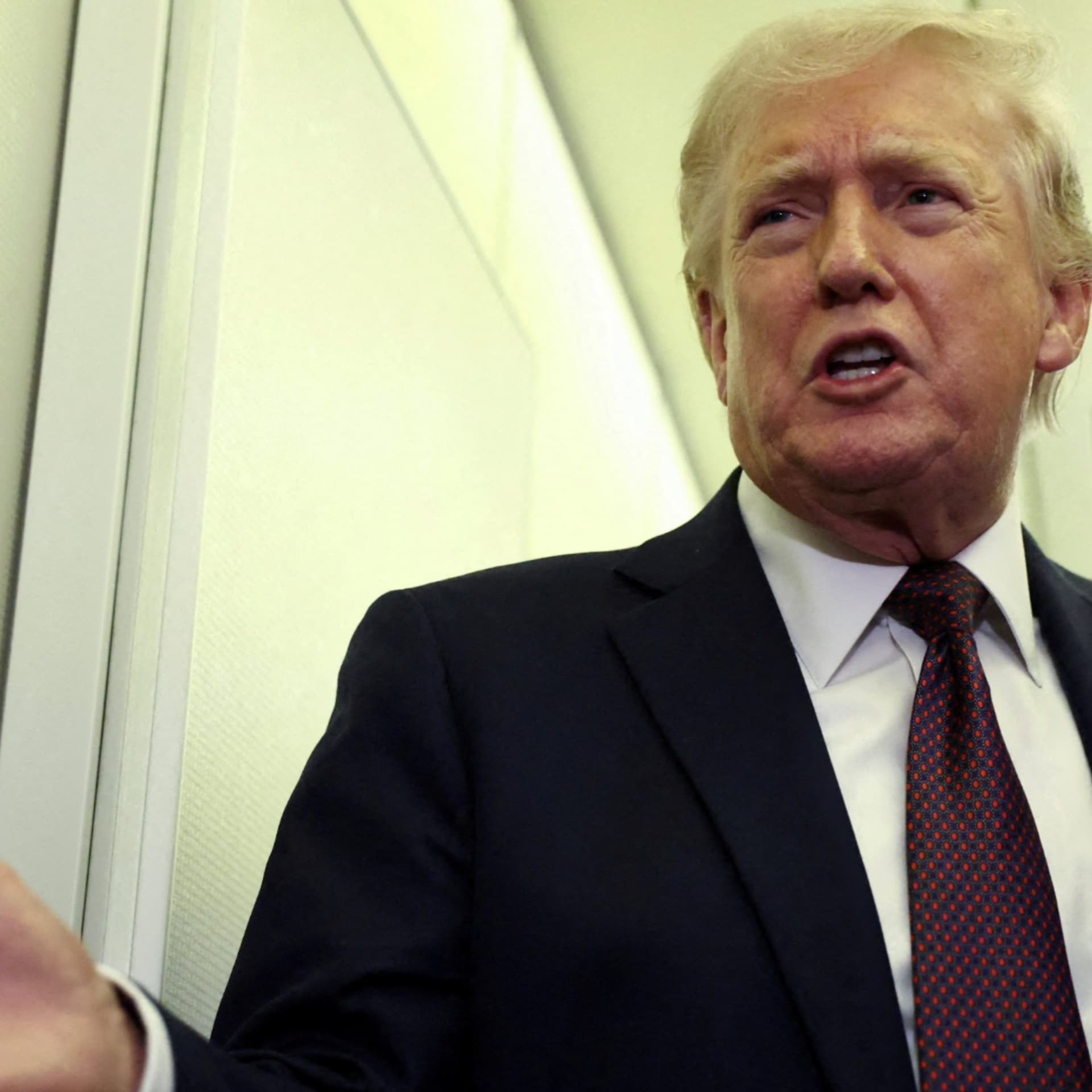
Photo: Trump speaks to reporters at the White House Credit: Shutterstock/Jim Lo Scalzo



