
In short
Global News Podcast - Episode Summary
Episode Title
Trump to sue BBC for 'up to $5bn'
Overview In this episode of the Global News Podcast, key global news stories are discussed, focusing primarily on Donald Trump's impending lawsuit against the BBC for alleged defamation due to an edited documentary, alongside other significant news from the occupied West Bank, AI cybersecurity concerns, and environmental issues stemming from a mining disaster in Brazil.
---
Key Topics Discussed
- Donald Trump's Lawsuit Against the BBC
- Background:
- Trump announced plans to sue the BBC for $1-$5 billion after they apologized for editing a speech he made during the Capitol riots.
- The BBC's edit allegedly distorted Trump’s call to action, leading to claims of him inciting violence.
- Statements by Trump:
- Trump expressed feelings of obligation to pursue legal action, stating that failure to do so would allow such apparent misrepresentation to continue.
- He expressed a desire to uncover the motivations behind the BBC's editing choices.
- Legal Implications:
- The legal battle will hinge upon jurisdiction and the nature of the edited content.
- Discussions involve the balance of press freedom and public interest against allegations of malice in editing.
- Trump's Accusations Against Democrats
- In light of renewed interest in his connections to Jeffrey Epstein, Trump called for investigations into Democrats' ties to Epstein.
- The timing of his accusations is seen as a potential diversion from scrutiny he faces about his past dealings with Epstein.
- Escalating Violence in the Occupied West Bank
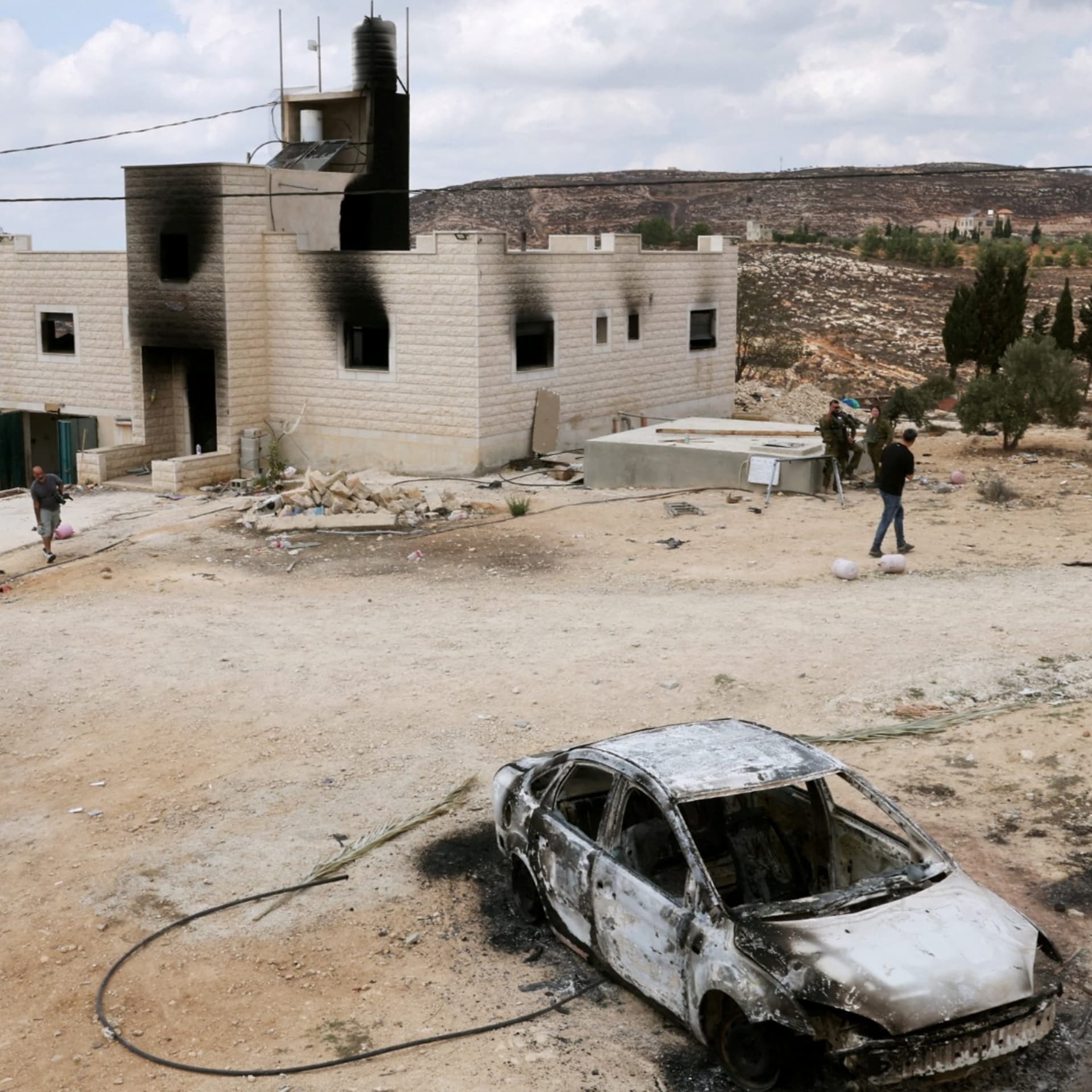
- Reports indicate a surge in violence against Palestinian farmers by Israeli settlers, especially during the olive harvesting season.
- Incidents of arson and physical assaults have been prominently noted, raising concerns about the security of Palestinians in the region.
- AI and Cybersecurity
- Anthropic, an AI company, claims its chatbot has been exploited by Chinese hackers in a cyber espionage campaign.
- Skepticism exists regarding the validity of the claims, with concerns about AI's role in future cybersecurity threats.
- Environmental Disaster in Brazil
- The mining giant BHP has been ruled liable for the catastrophic collapse of the Mariana dam, which resulted in numerous casualties and widespread environmental damage.
- A significant ruling from the UK court may affirm accountability for multinational corporations regarding environmental negligence.
- Film Tourism Industry
- Film tourism has evolved into a multi-million dollar industry, attracting visitors globally to iconic film locations.
- Discussions revolve around balancing tourism's economic benefits with the potential risks of over-tourism and its impact on local communities.
---
Key Takeaways
- Media Accountability: The ongoing legal battle between Trump and the BBC highlights the complexities of media representation, freedom of the press, and accountability for misinformation.
- Political Strategy: Trump's move to investigate Democrats links closely with his ongoing challenges regarding Epstein, showcasing how political narratives are influenced by current events.
- Human Rights Concerns: The increase in violence against Palestinians emphasizes a critical humanitarian crisis that warrants international attention and intervention.
- Emerging Cyber Threats: The intersection of AI technology and cybersecurity raises critical questions about the future of digital safety and the responsibilities of tech companies.
- Corporate Environmental Responsibility: The landmark ruling against BHP sets a precedent for corporate accountability in environmental disasters, especially in contexts of global environmental discourse.
- Cultural Impacts of Film Tourism: The growth of film tourism illustrates the cultural significance of media while also raising awareness of the need for sustainable tourism practices.
---
Conclusion The Global News Podcast provides a comprehensive overview of significant developments in various fields, emphasizing the intricate relationship between political actions, media representation, human rights, technological advancement, and environmental responsibility. The discussions from this episode offer insight into the evolving global landscape and the pressing issues that influence contemporary society.
Written by AI. May contain mistakes. Listen to the episode to check what was said.
Transcript
Automatic transcript. May contain errors.0:00This BBC podcast is supported by ads outside the UK. If journalism is the first draft of history, what happens if that draft is flawed? In 1999, four Russian apartment buildings were bombed, hundreds killed. But even now, we still don't know for sure who did it. It's a mystery that sparked chilling theories. I'm Helena Merriman, and in a new BBC series, I'm talking to the reporters who first covered this story. What did they miss the first time? The History Bureau. Putin and the apartment bombs. Listen on BBC.com or wherever you get your podcasts. This is the Global News Podcast from the BBC World Service.
0:47I'm Charlotte Gallagher and in the early hours of Saturday the 15th of November, these are our main stories. Donald Trump says he will sue the BBC for up to$5 billion, despite the broadcaster apologising for a documentary which edited his speech. The US president also says he will order an investigation into prominent Democrats' alleged links to Jeffrey Epstein. And the mining giant BHP is found liable for Brazil's worst environmental disaster. Also in this podcast, the latest from COP30. and were in the occupied West Bank, where there's been a record number of attacks on Palestinians by Israeli settlers.
1:31The message they want to send is that they can reach anywhere, into cities, into villages, that they can kill civilians, can burn houses and mosques.
1:45Let's start with the ongoing row between the BBC and the US president. Donald Trump has said he will take legal action against the broadcaster. The BBC has already apologised for editing together two parts of Mr Trump's speech on the day of the Capitol riots, which gave the impression he had called for violence. The BBC's Director General and Head of News have resigned over the scandal. Speaking on Air Force One, President Trump told reporters about his plans. We'll sue them for anywhere between a billion and five billion dollars, probably sometime next week. So you're ready to take legal action?
2:20I think I have to do it. I mean, they've even admitted that they cheated. They changed the words coming out of my mouth. Mr Trump has also been speaking to another British broadcaster, GB News. The interviewer, saying that the BBC had apologised but wasn't willing to pay compensation, asked President Trump how far he was willing to go. I'm not looking to get into lawsuits, but I think I have an obligation to do it. This was so egregious. If you don't do it, you don't stop it from happening again. with other people. I think you probably have an obligation. I'd like to find out why they did it, you know, so bad.
2:56Who thinks like this? And I wonder if they've done it. We'll find this out. You know, the nice part about litigation is we'll find out how many times have they done it to other people. Maybe they did it to me quite a bit. So Donald Trump is not backing down. Our correspondent in Washington, Sean Dilley, was watching his interview. He was very unhappy with the BBC. He said he has an obligation that things get found out when there is litigation. And, you know, he said that for him, he just wants to understand who thinks like that. Ultimately, who would edit, you know, the words he used and why. So broadly, what we also learned throughout not just the GB News interview, but his gaggle with journalists on Air Force One.
3:38He said that he would hope that the action would start probably in the next week somewhere in a course in the United States. And it would be for an amount he'd hoped to get between$1 billion and$5 billion. So we are talking quite a lot of money there. And how do you think he seemed in the interview? Going just in terms of how he sounds, I think he probably sounds quite hurt. But he's somebody who does take to heart any personal criticism. In the United States, the media here aren't as interested in this topic as the UK media are. But it so happens that the BBC is already a matter of public debate and its role in public life and politics and beyond.
4:17So I think he's probably had quite an outpouring of supporters when he was sort of agreeing to do his GB News interview and speak to The Telegraph, who first reported about the leaked memo from Michael Prescott and the Panorama programme itself. So I think he sounded like somebody who felt justified in what he was doing. Now, it's rather to judge whether he is justified, he isn't justified. Maybe you take one view on that either way. But he sounded like a man with purpose. And he has been known to sue US networks, hasn't he? Yeah, but not for billions of dollars. I mean, you know, he mentioned CBS News.
4:50And for anybody who's not familiar with that, broadly, some clips were put together of Kamala Harris, his opponent at the last election. And those clips had been put together. he argued in his action against them in a way to make her sound better than she did. They eventually settled for$16 million. He'd settled for$15 million with ABC after one of their staff had falsely said he was adjudicated, guilty of a rape in New York. Of course, it wasn't rape and that was defamatory and that was the settlement there. So, you know, the$1 to$5 billion is what he says he intends to sue for. whether or not that happens is another matter and also before we even go anywhere near any amounts of money the court has to decide firstly do they have jurisdiction to hear the case from the u.s president aimed essentially a media organization based in the united kingdom for a program that was the bbc argue either broadcast in the united kingdom or then geolocked to only be viewable on the iplayer service to the uk in the first place and then if the court says okay we will hear this case, we think we've got jurisdiction.
6:00There are then the arguments as to whether the clips were edited with malice and whether there's freedom of the press and that the president's able to cross that exceptionally higher bar than exists in the UK when media organisations or anyone else are reporting on or discussing opinions based upon matters of public interest and of political speech. That was Sean Dilley. Staying in the US, leading Democrats have accused President Trump of trying to deflect attention from questions about his relationship with the dead sex offender Jeffrey Epstein. That's after Mr. Trump announced he was asking the Attorney General and the FBI to investigate prominent Democrats who he claims spent large portions of their life with Epstein and on his island.
6:45In a social media post, Mr. Trump said all arrows point to the Democrats. Neda Tawfiq reports. The Attorney General Pam Bondi has now said she's going to address this issue with urgency, assigning the U.S. attorney here in New York to carry out what President Donald Trump asked for in that Truth Social post, saying that he wanted not just the Department of Justice, but the FBI to investigate high-profile Democrats like the former President Bill Clinton, the former Treasury Secretary Larry Summers, as well as financial institutions like JPMorgan Chase. And the timing of this, of course, you can't get around.
7:23This comes really after President Trump himself was right in the spotlight. The White House rocked again by this latest release of Epstein files, 20 ,000 plus pages from the Epstein estate. Emails that raised new questions about whether Donald Trump knew more about Epstein's crimes than he let on. Because in private emails, Epstein is seen calling him the dog that never barked about what he saw, saying that President Trump had spent hours with one of Epstein's victims, Virginia Giffray, in Epstein's home, saying that, of course, Donald Trump knew about the girls in another email. And while the president has denied any wrongdoing and there's no evidence to suggest that he was a part at all of Epstein's sex trafficking operation, the president has gone to great lengths to try to make this all go away.
8:19He has called this a hoax. He has rebuked lawmakers from his own party from siding with Democrats. In fact, next week, there will be a vote in the House of Representatives on a bill to release all of the Department of Justice's Epstein files. And the White House had lobbied hard to get Republicans not to support that. But nevertheless, Republicans know that this is important to Donald Trump's base, the MAGA base. And this is not an issue that is going away. That was Neda Taufik. It's currently the olive harvesting season in the occupied West Bank. But this year, olive picking is more dangerous than usual.
9:03Palestinian farmers have been attacked by Israeli settlers while trying to access their crops. There have been reports this week of settlers launching arson attacks against a Palestinian warehouse, a Bedouin village and farmland in the occupied West Bank. Our Middle East correspondent Lucy Williamson reports. I'm just walking up here to the Hamida mosque near Nablus and all along the entrance charred furniture, lecterns, carpets are piled up Dozens of people have arrived here for Friday prayers this morning a day after this mosque was attacked its back wall and window still blackened and scorched The Imam Ahmad Salman found the building burning yesterday the latest in a wave of attacks by Jewish settlers, he says.
9:55The message they want to send is that they can reach anywhere, into cities, into villages, that they can kill civilians, can burn houses and mosques. On the wall outside, there's also a message for Israel's regional army chief, scrawled in Hebrew, we're not afraid of you. Spiralling settler violence over the past six weeks has pushed the occupied West Bank towards a dangerous precipice. Last month alone, the UN registered more than 260 settler attacks that harmed Palestinians or their property, a record high.
10:36Last Friday, in the olive groves around Beta, a Reuters journalist, Ranin Soafta, was brutally beaten with a club while covering the olive harvest. A deep dent in her helmet, clearly showing the force of the blows.
10:53From her hospital bed, she described pleading with her attackers to stop as they carried on beating her. You got it. Come on, don't hit her! Hey! Last month, 55-year-old Afaf Abu Alia was badly beaten by a settler as she lay cowering on the ground after going to harvest olives. A video of the attack caught international attention.
11:25One of them attacked me and started beating me on my head. My mind went blank and I lost consciousness. Now recovering at home, Afaf told me she was still in pain, with 20 stitches in her head and bruises on her arms and legs that left her unable to sleep. The settlers weren't like this at the start of the Gaza war, she told me. Since then, they've escalated more than in all the years before. Israeli forces have long been criticised by human rights groups for standing idly by during settler attacks or even taking part in them. But the level of violence has now triggered warnings from Israel's senior military commanders, who've said it crosses a red line and must be dealt with firmly.
12:11Many hardline settlers see these comments as a betrayal. At the Hamida Mosque, a group of Israeli activists have arrived to support Palestinian residents here. I asked Martin Goldberg about Israeli claims that settler violence is overblown. Everyone's trying to belittle it. Oh, it's just the weeds in the field and that. It's not. They are being supported by the government. One hundred percent. All the local councils are hundred percent behind them, financing them. The head of the settler council here issued a statement this week supporting Israeli forces in arresting what he called the anarchists who harmed soldiers and civilians.
12:54But the West Bank's growing security crisis risks exposing dangerous divisions between Israel's military and political leaders. Extremist settlers say their claim to the land comes from the Bible, but their confidence comes from government support. That was Lucy Williamson reporting. An American artificial intelligence company claims one of its programs has been used by Chinese spies to hack organisations around the world. Anthropix said Claude, its rival to ChatGPT and other chatbots, was part of the first reported AI-orchestrated cyber espionage campaign. But sceptics are questioning the accuracy of that claim, as Joe Tidy explains.
13:39It's the kind of cyber attack that's been feared ever since the rise of generative AI chatbots, the technology that allows us to type in a prompt and get an instant, complex response generated as text or even computer code. Anthropic says it discovered the hack in mid-September and stopped it by cutting off the hackers from their tools. It banned the unknown individuals and alerted the targeted companies and the authorities. The company also analysed how its chatbot Claude had been used, and says the hackers from China managed to trick Claude into carrying out many elements of the hacks autonomously.
14:15Between 80 and 90 % was done without human involvement, they claim. But details on how the hacks were carried out are sparse, and evidence that pointed to Chinese government hackers was not provided by Anthropic. The Chinese embassy in the US told reporters it was not involved. There is a lot of hype in the AI and cyber world about hackers using AI. Critics argue that the tools are not yet capable enough to be a real threat. They also say it serves the companies well to present their products as the answer to a growing fear about AI hacks. Anthropic itself admits that the chatbot made things up during the hack, which would have misled the hackers.
14:53But the overall direction is clear, and Anthropic's report is another step towards a potentially troubling future of AI getting into the wrong hands. That was Joe Tidy. Still to come, how visiting film locations became a multi-million dollar industry. We don't just see that it's US visitors, we see visitors from China, from Europe. So film translates in a way that other stories perhaps don't and bring different communities together.
15:29If journalism is the first draft of history, what happens if that draft is flawed? In 1999, four Russian apartment buildings were bombed, hundreds killed. But even now, we still don't know for sure who did it. It's a mystery that sparked chilling theories. I'm Helena Merriman, and in a new BBC series, I'm talking to the reporters who first covered this story. What did they miss the first time? The History Bureau, Putin and the apartment bombs. Listen on BBC.com or wherever you get your podcasts.
16:07The collapse of the Mariana Dam in southern Brazil 10 years ago was one of the country's worst environmental disasters. 19 people were killed when the dam, used to store waste at an iron ore mine, gave way and unleashed a torrent of toxic mud, which polluted villages and rainforests and destroyed riverside communities. Daniel Gallas was in the area in 2015 to report on the catastrophe for the BBC.
16:38Jairo Cota looks at what is left from his home and the neighbourhood he helped build. This used to be his house and his bar where local residents hung out. Jairo had been slowly investing in it for all his life. It was his entire source of income. But within minutes, everything was entirely washed away by mud. This was a happy, quiet community in the hills of Minas Gerais State, Brazil. But after the accident, everything was taken over by mud. The only things that are still standing are the top floors of that school over there and that church across the other side. Now, one of the world's biggest mining giants, BHP, has been found liable for the disaster.
17:18The mine was run by BHP and a Brazilian company, Vale. On Friday, the High Court in London ruled that BHP was negligent by creating a risk to the dam that was foreseeable. The claimants are seeking$47 billion in compensation. Carolina Leiche is a lawyer representing some of the victims. It is a landmark ruling for several aspects. At this moment, everyone is looking at Brazil because of the COP30. So there's this element, everyone is thinking about the environment. This is a huge collapse. It's probably the worst one we had in Brazilian history. There is the element of 10 years anniversary since it happened.
17:59So the victims, this feels like a good moment for they finally have a positive judgment. Our correspondent, Aini Wells, has been following the case from Brazil. She spoke to Krupa Pardi. The judge in that high court ruling said that the company's continuing to raise the height of the dam when it wasn't safe to do so was, in her words, the direct and immediate cause of the dam's collapse, meaning that under Brazilian law, BHP was liable. Now, this is something which BHP has always denied. They are expected to appeal this ruling. They have, though, accepted the need for compensation. And over the last couple of years, there have been hundreds of thousands of people in Brazil that the company has compensated.
18:43And that's one of the reasons why they argue that this claim in the UK court was not legitimate. They argued that it duplicated proceedings that were happening in Brazil and it is expected that they're going to continue fighting that claim as they appeal this. BHB is an Australian firm. Why, therefore, was this trial carried out here in the UK? Well, the law firm, the British law firm, that was representing hundreds of thousands of different claimants in Brazil, including civilians but also some businesses and local governments, argued that because BHP was headquartered in the UK at the time, that it should be held in London.
19:22And certainly some of the claimants who I'd spoken to said that they felt they might get better justice if it were to be held in the UK courts. It feels quite timely, considering Brazil is currently hosting the COP30 climate summit, to have environmental groups taking on these big corporations. That's right. I'm speaking to you from the COP30 climate summit, which is in the Amazon city of Belem in northern Brazil. And certainly some environmental groups have been calling for more protection against what they see in some cases as irresponsible mining practices. In this case, obviously, as I say, BHP have denied liability.
20:01But certainly some of the environmental groups here are very concerned about the expansion of mining in regions like the Amazon too. Ioni Wells. Well, COP30 is now at the halfway point, and several countries at the meeting are pushing for a roadmap away from fossil fuels, as Matt McGrath reports. Things move slowly at COP gatherings. It took 28 of these annual meetings before fossil fuels were explicitly named as the main cause of climate change. Two years ago in Dubai at COP28, all countries agreed that they would transition away from coal, oil and gas in energy systems. Now here in Brazil, President Lula says the world should go further and develop a roadmap with tangible steps to speed up the move away from fossil energy.
20:49The idea has wide support among rich and poor nations alike, but China, India and Arab countries are firmly opposed. A compromise might see agreement on a path to a roadmap, two years down the line. With a week to go, the mood among countries is unusually positive, with many ascribing that to the absence of the US and President Trump. Matt McGrath. Earlier this year, President Trump shocked the world with a whole slew of tariffs on goods entering the US from around the globe, with a promise to Americans that they would benefit from them. But with the administration facing mounting pressure over rising prices, Mr Trump has now signed an executive order lowering tariffs on a range of food products including coffee, bananas and beef.
21:35That move followed an announcement of a deal to cut US tariffs on Switzerland from 39 % to 15%. Switzerland had had the highest tariffs in Europe. With more on that deal, here's our US business correspondent Michelle Fleury. In the case of Switzerland, it is the result of weeks and weeks of shuttle diplomacy that we've seen. Initially, when Donald Trump surprised the world and said that he was going to slap 39 % tariffs on Switzerland, you saw political leaders from that country sort of immediately jumping on a plane, traveling to Washington, trying to secure meetings with little success. Then what we understand, certainly from reporting in the Wall Street Journal, is that you had business leaders, billionaires from Switzerland coming to try and see what they could do and sort of offering business deals, but also gifts, including a Rolex clock to the president and meetings in the Oval Office.
22:30And ultimately, it seems that all of these efforts have paid off where we now have a trade deal. And effectively, what will happen is that Swiss companies have promised to invest at least $200 billion in the United States, including factories by the end of 2028. Now, this obviously is a big deal because if you're an American consumer and you want to buy watches, chocolate, pharmaceuticals, then hopefully that means you're not going to be hit with higher prices. And for the Alpine nation, it's a very good deal because they now face tariff levels that are going to be closer to what you see, for example, in the EU and only slightly more what the UK will pay.
23:07So it is a sort of win win. And I think it follows a pattern of what we've seen with Donald Trump, with tariffs, how he's using them to kind of secure concessions from other countries, from governments. And yet again, that pattern is being repeated here. That was Michelle Fleury. Finally, have you ever wanted to travel to the place where your favourite movie was shot? Many Lord of the Rings fans go to New Zealand, while those who enjoyed Mamma Mia visit Greece. Film tourism is now a multi-million dollar global business, as Tom Brook has been finding out in London.
23:43Outside Charing Cross Station, I witnessed film tourism in action, joining a group of James Bond enthusiast and our guide, Jonathan Coote, for a two-and-a-half-hour tour, visiting some of Bond's most memorable London locations. Have you come from all over the world? Yes. Ralph Silver in his prison fatigues coming down the stairs behind me there. Excuse me, sir. Can you tell me where I might find Platform 9 and 3 quarters? It's not just Bond films, but all kinds of movies that have inspired walking tours from Harry Potter pictures. How about a drink at my place? Totally innocent, no funny business.
24:20Romantic comedies like Bridget Jones. So who would just like to come along here? You can spread out a little bit further along this wall. How much do movie locations nowadays drive tourism in a way, do you think? I think it's a really great way of seeing London from a different perspective. Generally people will come here to see Buckingham Palace and so forth, but this is a way of seeing little different parts of London which you wouldn't ordinarily visit. because I work for a kind of government organisation. Simon McCaugerty, a director with London and Partners, an organisation that helps promote London globally, knows a lot about film tourism.
24:55Traditional community seems to be breaking down in many parts of the world, but this kind of activity, film tourism, gives people a sense of belonging. Yeah, a sense of belonging, but I think film also can break down barriers. So actually, people who watch Paddington, they may be young, they may be old, they're from all over the world. We don't just see that it's US visitors. We see visitors from China, from Europe. So film translates in a way that other stories perhaps don't and bring different communities together. The Bond tour was well organised. There was a lot of detail, trivia relating to Bond author Ian Fleming and comments on his persona.
25:31A lot to admire in his character. His relationships with women, perhaps not so much. So, this is the shot. But our small group felt rewarded by participation. If anyone fancies recreating it, there is a bit of leeway. You could step out a little bit and do a sort of running motion. This is a tour that really brought out big-time James Bond movie fans. It's nice to have a walk and to see a different side of London and relate it to the James Bond franchise. I'm here with my dad today, and me and my father used to watch them and laugh and certain characters, bad characters, James Bond himself, and we're doing exactly the same again today.
26:15I don't know if anyone recognises where we are at the moment. But there are concerns an association with films might lead to over-tourism with locations becoming overwhelmed or destroyed. Simon McCaugerty again. The big famous films, and we've seen it with the likes of Notting Hill here in London. Residents are so fed up with the constant stream of tourists that some of these quirky, bright coloured homes have faded to black. I think that's where the role of us, the agency promoting London and the destination, is to encourage visitors to be mindful of local residents. Yes, go see the film set, but do it sensitively and then visit other parts of the city.
Read the full transcript
26:52And then the flip side of that is working with the film producers to actually put different locations on the map so that it's not all focused on one area. satisfying as they may be it should be noted that these movie themed walking tours are just a small part of the rapidly growing film tourism business which now generates billions of dollars worldwide let's gather around here we're looking up the stairs here we're up to date now this is no time to die and that was tom brooke and that's all from us for now but there will be a new edition of the Global News Podcast later. If you want to comment on this podcast or the topics covered in it, you can send us an email.
27:34The address is globalpodcast at bbc.co.uk. You can also find us on X at BBC World Service. Use the hashtag Global News Pod. This edition was mixed by Lewis Griffin and the producers were Anna Aslam and Stephen Jensen. The editor is Karen Martin. I'm Charlotte Gallagher. Until next time, goodbye.
27:59If journalism is the first draft of history, what happens if that draft is flawed? In 1999, four Russian apartment buildings were bombed, hundreds killed. But even now, we still don't know for sure who did it. It's a mystery that sparked chilling theories. I'm Helena Merriman, and in a new BBC series, I'm talking to the reporters who first covered this story. What did they miss the first time? The History Bureau, Putin and the Apartment Bombs. Listen on BBC.com or wherever you get your podcasts.
From the publisher
The US President has said he will begin legal action against the BBC within the next few days after receiving an apology but no financial compensation over a misleading edit in a documentary about him. Lawyers representing Donald Trump had asked for a retraction, an apology and a payout after it was revealed that his speech at a rally on 6th January 2021, the day of the Capitol riots, was edited to give the impression he'd made a direct call for violence. Meanwhile, leading Democrats have accused President Trump of trying to deflect attention from questions about his relationship with the late sex offender Jeffrey Epstein, after he announced he was asking the attorney general and FBI to investigate prominent Democrats who he claims "spent large portions of their life with Epstein, and on his island". Also: the BBC speaks to Palestinian farmers who have been attacked by Israeli settlers in the occupied West Bank; the AI company that claims its chatbot has been used by Chinese spies to hack organisations around the world; the mining giant BHP is found responsible for the collapse of the Mariana dam in Brazil ten years ago; and film tourism is a multi-million dollar global business, but is it always a good thing?
The Global News Podcast brings you the breaking news you need to hear, as it happens. Listen for the latest headlines and current affairs from around the world. Politics, economics, climate, business, technology, health – we cover it all with expert analysis and insight. Get the news that matters, delivered twice a day on weekdays and daily at weekends, plus special bonus episodes reacting to urgent breaking stories. Follow or subscribe now and never miss a moment. Get in touch: globalpodcast@bbc.co.uk