In short
Global News Podcast Episode Summary
Episode Title
Trump urges nations to secure Strait of Hormuz
Overview In this episode of the Global News Podcast, significant global news stories are discussed, highlighting international relations, conflict zones, and social unrest.
Key Stories
- Trump Calls for International Naval Support in Strait of Hormuz
- Context: President Trump has urged nations including China, Britain, and others to send warships to secure the Strait of Hormuz, which Iran has largely obstructed, impacting global energy prices.
- Trump's Position:
- Claims Tehran is open to negotiations but insists its terms are unacceptable.
- Emphasizes the urgency of keeping the Strait of Hormuz open, which is vital for the passage of oil and gas.
- Military Movements:
- Reports indicate that a U.S. naval task force, including Marines, is en route to the Gulf.
- Pentagon remains tight-lipped about specific military strategies.
- Public Response: Mixed reactions from U.S. citizens, with rallies both supporting and opposing the military actions.
- Escalation of Conflict in Lebanon
- Israeli Strikes: Israel continues bombing in Lebanon, claiming to have targeted over 100 Hezbollah command centers. The conflict has resulted in significant casualties and displacement.
- UN Warning: UN Secretary-General Antonio Guterres calls for an immediate cessation of hostilities, emphasizing diplomacy over military solutions.
- Iranian Footballers Seeking Asylum Returning Home
- Incident: Several female Iranian footballers who sought asylum in Australia have decided to return to Iran.
- Concerns: Activists worry they may have faced pressure from the Iranian government regarding their decision.
- Public Reaction: Disappointment among the Iranian diaspora in Australia, who had supported the players seeking refuge.
- Internet Outages in Major Russian Cities
- Issue: Significant internet disruptions reported in Moscow and St. Petersburg, affecting communication and essential services.
- Government Explanation: Authorities cite "systemic safety measures" without clear details, raising suspicions of state orchestrated internet control.
- Violent Protests in Cuba
- Protests Erupt: Peaceful anti-government protests turn violent in Cuba due to ongoing power shortages and food scarcity.
- Government Response: Cuban officials describe the unrest as vandalism and have made some arrests.
- Tribute to Jürgen Habermas
- Passing of a Philosopher: Jürgen Habermas, a notable figure in German philosophy, is remembered for his contributions to the concept of the public sphere and democratic discourse.
- The Razzies: Awards for the Worst of Cinema
- Annual Event: The Razzies, recognizing the worst performances in film, are discussed. Notable mention of "War of the Worlds 2025" winning multiple awards.
Key Takeaways
- Geopolitical Tensions: Ongoing confrontations in the Middle East highlight the fragile state of international relations, particularly involving the U.S. and Iran.
- Social Unrest: Protests and unrest in various countries underline the impacts of political and economic grievances on public sentiment.
- Cultural Commentary: The Razzies serve as a reflection of Hollywood's self-awareness and the cultural phenomenon of celebrating failure alongside success.
Conclusion This episode of the Global News Podcast encapsulates critical global issues ranging from military conflicts to social movements, demonstrating the interconnectedness of world events and the ongoing challenges faced by various nations.
---
For feedback or inquiries, contact
globalpodcast@bbc.co.uk.
Written by AI. May contain mistakes. Listen to the episode to check what was said.
Chapters
Tap a time to open that second in VOTrump's Call for Support
1:21 to 2:26
Discussion of Trump's request for nations to help secure the Strait of Hormuz.
“I'm Charlotte Gallagher, and in the early hours of Sunday, the 15th of March, These are our main stories.”
US Military Position
2:26 to 3:41
Exploration of Trump's military stance regarding the Strait of Hormuz.
“He didn't specify what he meant by that, but perhaps a major stumbling block has to do with the narrow but strategically vital stretch of water called the Strait of Hormuz.”
Public Response to Conflict
3:41 to 6:04
Analysis of the mixed public reactions and political responses to the conflict.
“And this is really different to what President Trump was saying only a few days ago.”
International Naval Responses
6:04 to 7:48
Discussion on the potential response from other nations regarding naval support.
“And number two, for this war to last longer than a few weeks.”
Israeli Strikes in Lebanon
7:48 to 8:34
Coverage of Israeli military actions and the humanitarian toll in Lebanon.
“Smoke was seen rising over the Lebanese capital Beirut on Saturday evening as Israeli strikes continued.”
Iranian Footballers' Decisions
8:34 to 10:51
Insight into the decisions of Iranian footballers regarding asylum in Australia.
“the UN Secretary-General Antonio Guterres said an expansion of the war would be good for no one.”
Internet Issues in Russia
10:51 to 13:16
Examination of internet outages affecting major Russian cities.
“Katie Watson is our correspondent in Sydney.”
Internet Control in Russia Post-Ukraine Invasion
14:03 to 16:15
Explore Russia's tightening grip on internet freedoms in the wake of the Ukraine conflict.
“And so local authorities have been encouraging people to pay with cash since card payments were unavailable, or even buy maps to navigate in the city.”
Cuban Protests Against Government
18:55 to 21:08
Analyze the recent anti-government protests in Cuba and their implications.
“Next to Cuba, where in the early hours of Saturday, peaceful anti-government protests turned violent as a Communist Party office in the central city of Morón was attacked.”
Remembering Jürgen Habermas
21:09 to 23:00
Reflect on the life and impact of philosopher Jürgen Habermas.
“Jürgen Habermas, one of the most influential philosophers in post-war Germany, has died.”
Show all 13 chapters
Volunteering in Antarctica: A Unique Experience
23:01 to 25:56
Discover the challenges and joys of working in Antarctica.
“A British scientific charity is looking for volunteers from around the world to work in Antarctica.”
The Razzie Awards: A Look at the Worst in Film
25:57 to 28:03
Examine the annual Razzie Awards and their significance in Hollywood.
“All your privacy is a curtain around your bed.”
Hollywood's Notable Razzie Moments
28:03 to 28:34
Explore how top actors have reacted to being recognized at the Razzies.
“Tom Hanks, Sandra Bullock, Leonardo DiCaprio and even Laurence Olivier have all been panned at one time or another.”
Transcript
Automatic transcript. May contain errors.0:00This BBC podcast is supported by ads outside the UK.
0:30Schwab. Visit schwab.com to learn more. Momentum doesn't appear overnight. It's built, refined, repeated. Puerto Rico has been building it for decades as a US jurisdiction operating under US federal law, regulatory standards and market protections. Here, global companies manufacture life-saving medicines, advanced technologies and critical products at scale. And with competitive tax incentives designed to support investment and expansion, companies don't just start here, They grow here. Not culture or business. Culture and business. Puerto Rico. It's not what's next. It's where. Visit investpr.org forward slash business.
1:14This is the Global News Podcast from the BBC World Service. I'm Charlotte Gallagher, and in the early hours of Sunday, the 15th of March, These are our main stories. Donald Trump urges China, Britain and others to send warships to help secure the Strait of Hormuz, the shipping lane which Iran has largely blocked. Israel continues to batter Lebanon and claims it's wiped out over 100 Hezbollah command centres in Beirut. And more of the female Iranian footballers who sought asylum in Australia decide to go home. Also in this podcast.
1:54President Trump:Many people can't use the most basic services like taxi or delivery or banking apps. And in some cases, bank terminals and ATMs were also affected by these outages. The internet stops working in some major Russian cities. We ask why and what impact it's having.
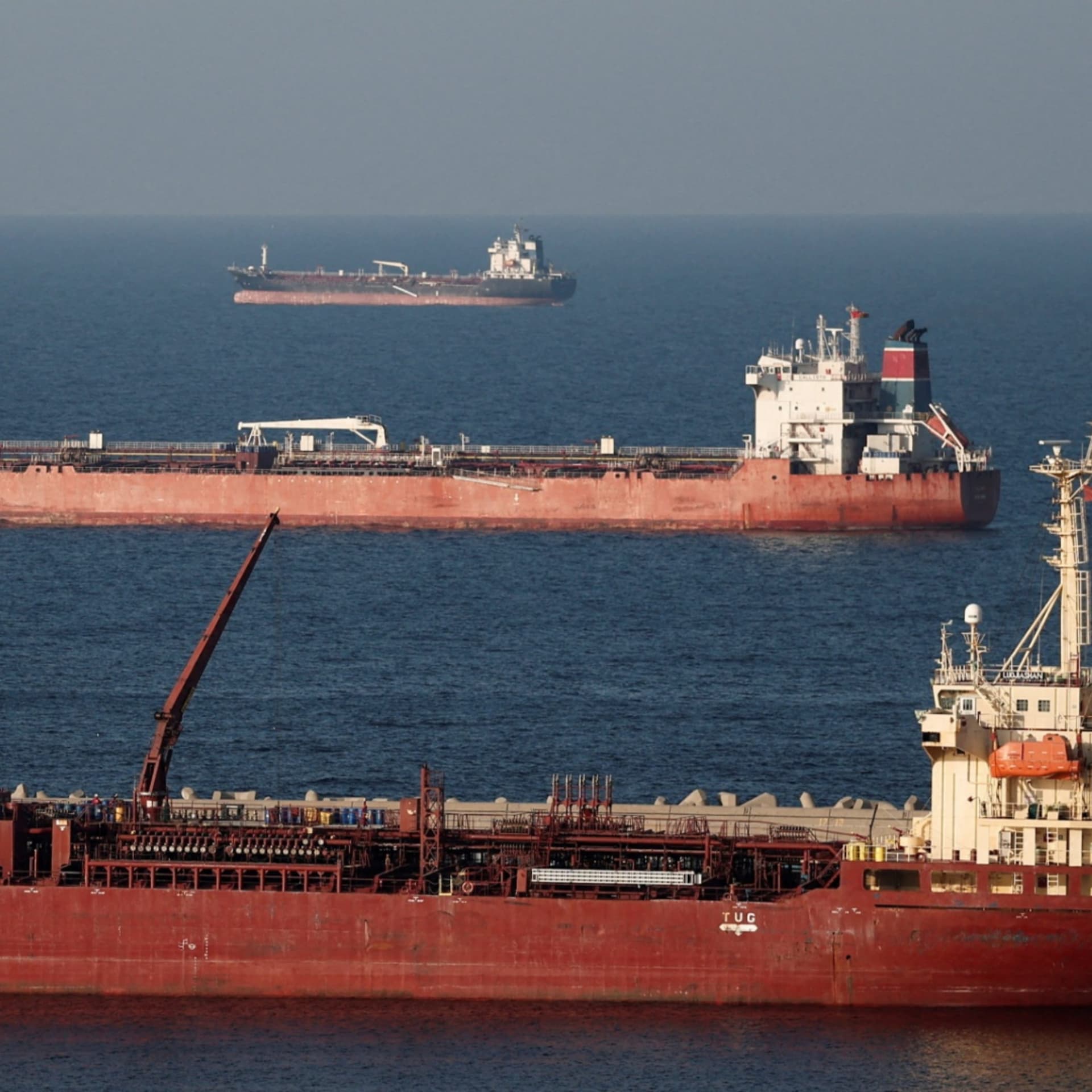
2:17President Trump has told NBC television channel in the US that while Tehran appears ready to make a deal to end the war, its terms aren't good enough yet. He didn't specify what he meant by that, but perhaps a major stumbling block has to do with the narrow but strategically vital stretch of water called the Strait of Hormuz. Tankers carrying about 20 % of the world's liquefied natural gas and even more of its oil pass through it. But Iran has carried out attacks on ships there, traffic is dramatically down and energy prices are up. Donald Trump wants Tehran to let the tankers pass through unhindered.
2:56Until that happens, he's asking countries like China and Britain to help the US keep it open. Our Washington correspondent Simi Jolla Oso told me more. President Trump has urged allies, including the UK, France and other countries like Japan, South Korea and even China to send naval ships to help secure the Strait of Hormuz. He says that the US will secure it one way or the other and that the US will get the strait open, safe and free by means of continued strikes on Iranian ships and boats in the region. But in the same post, he did warn that Iran could still threaten the waterway by using drones, mines and short range missiles.
3:41And this is really different to what President Trump was saying only a few days ago. He was attacking the UK and saying that when Kirsten was considering sending warships, he said, you want to join a war after we've already won. Essentially, we don't need your help. And now he's making this direct appeal for help. Yeah, this is the first time he's sort of taken a firm stance when it comes to the Strait of Hormuz and even appealing to other countries. As you mentioned previously, he's sort of dismissed questions when he's been asked about the strait, saying that things will get better when he's asked whether the US will provide military escorts.
4:20He said, well, if they need to, even when he's been asked about soaring oil prices, he's called it a glitch. So this is the first time he's made a very firm stance with regards to US military action to sort out the situation at the Strait of Hormuz. Has the Pentagon said any more about the next moves by the US military? Because of course, There have been lots of reports that Donald Trump's considering sending thousands of Marines to the region. The US media has been saying that an American naval task force is currently on its way from Japan to the Gulf. And that task force includes several warships, up to 5 ,000 Marines and sailors.
5:02But when the Pentagon has been asked about this, they've declined to comment citing operational security. But this deployment would back to Trump's latest Truth Social post, right? it shows that the US is considering a range of options now in the war, potentially to protect commercial shipping in the region. Number two, potentially increasing action on Haag Island. And what is the US mood about this conflict? The mood here or the response, can I say, from the public here has been very mixed. We've seen rallies in Boston, LA, New York, even here in Washington, just outside the White House. Some of them have been calling for an end to the war and some of them have been pro-Trump rallies.
5:49Democrats have called this the war of choice and said that they want the end goals of the war to be clearly laid out. And Republicans have said that for them, OK, they might support President Trump through this war, but they have a red line. And that's number one, boots on the ground. And number two, for this war to last longer than a few weeks. Simi Jolleoso, let's take a closer look now at President Trump's call to other nations to send warships to secure the Strait of Hormuz. How likely are they to do that? Jonathan Beale is our defence correspondent. He wants countries, including the UK, China, which opposes the war, to send warships to the region to keep the Strait of Hormuz open.
6:32He's clearly worried about the rising price of oil. The point I'd make is that there aren't any US warships at the moment that are escorting tankers through the Strait of Hormuz because a number of tankers have been hit. And it is clearly a dangerous thing to do. We've heard from President Macron recently that he's thinking about sending warships. But again, only, he says, when the fighting has subsided. Britain says it's looking at options, discussing that with allies. But at the moment, I think most countries will conclude it's just too dangerous to put sailors warships in harm's way. Because even though in that same tweet, President Trump said Iran's military capability had been destroyed 100 percent.
7:17We are still seeing Iran using drones and missiles. So the Iranians still probably have capabilities, even though a lot of what they have may have been destroyed. But I think most countries will conclude at the moment that putting warships in that narrow stretch of water, which is only just over 20 kilometres wide, with Iran on one side and what they used to have quite a lot of defensive capabilities, will be a risky, very risky operation that many publics wouldn't swallow. Jonathan Beal. Smoke was seen rising over the Lebanese capital Beirut on Saturday evening as Israeli strikes continued. The Iranian-backed militant group Hezbollah said it had been involved in direct clashes with Israeli forces in southern Lebanon, while Israel says it struck more than 100 Hezbollah command centres in Beirut during the course of the war.
8:09Wura Davis reports from the Lebanese capital. Israeli airstrikes in Lebanon, which began after Hezbollah began firing rockets towards northern Israel in support of Iran, have killed more than 800 people, says the Lebanese Health Ministry, and more than 800 ,000 have been displaced from their homes. Thus far, there have been few serious diplomatic efforts to end the conflict, but after launching a£230 million humanitarian appeal for Lebanon, the UN Secretary-General Antonio Guterres said an expansion of the war would be good for no one. The Lebanese people did not choose this war. They were dragged into it.
8:48And my message to the warring partners is clear. Stop the fighting. Stop the bombing. There is no military solution, only diplomacy, dialogue and full implementation of the UN Charter and Security Council resolutions. Israel is striking several parts of Lebanon, including the eastern Beqar Valley, where it accuses Hezbollah of organising campaigns and storing weapons. We saw the aftermath of an airstrike on a house that had been completely destroyed. Eight people were killed, including several children. Yellow flags and pictures of Iran's Ayatollah Khomeini indicated it was clearly a Hezbollah-supporting home, and where Israel later said there were Hezbollah operatives present.
9:34But a surviving uncle, Hassan Tahan, said that nothing could justify such an action without apparent warning.
9:46Israel is wrong if they think that killing children and civilians will separate us from the resistance. On the contrary, it makes us more loyal to them. I'm even more steadfast in my support now than I was before. Previous full-scale invasions of Lebanon have ended in disaster for Israel, and if it were to try and create a big buffer zone in southern Lebanon, there's no indication for how long an Israeli occupation would last. There is pressure for direct talks between the Israeli and Lebanese governments, but if they happen, they won't include Hezbollah, which says it is determined to carry on its fight against Israel, which it says had also repeatedly breached a previous ceasefire agreement.
10:29We're a Davis. The impact of this war has been felt in some unexpected places. Last week, seven Iranian footballers sought asylum in Australia after staying silent for their national anthem at a football game there. A number of the women were granted humanitarian visas to remain. Now a total of four of them say they will return home to Iran. Katie Watson is our correspondent in Sydney. So do we know why? We don't. I first got wind of this by speaking to some activists overnight
11:01President Trump:who were concerned that there would have been pressure put on them by the Iranian regime, pressure perhaps on their families, But of course, we don't know, you know, the actual ins and outs of this. There's been no communication. But what we do know is, obviously, on Wednesday, there was one woman who had a change of heart about a day after she decided to seek asylum in Australia. Now, the three women who have had the similar change of heart is one of the technical members of the squad, as well as two players. Now, the technical member of the squad actually sought asylum just before getting on a bus to go to the airport.
11:42President Trump:Those players who are also returning to Iran, they were the ones who initially escaped from the hotel on the Monday. But the reasons for it, Iranian diaspora here are very concerned that they've come under pressure and they've had to make a decision on the basis of that. And that said, the Iranian Ministry of Sports have said that, you know, that they will be welcomed back with open arms and have accused Australia's government of playing in Trump's field. And what kind of reaction has there been in Australia to this? Because I know lots of people really wanted the team to stay on in Australia and not go back to Iran.
12:18President Trump:There was a big push from the Iranian diaspora to encourage the women to stay here. There were a lot of efforts made. And I think even before the tournament began, kind of plans put in place to try and encourage the women to feel confident and know that they'd be protected here. And so there will be a lot of disappointment there. But I think also, you know, a lot of worry on the basis of concerns about why indeed they've made that decision. I mean, the authorities here in Australia have said that, you know, they provided ample opportunities to talk to them and make sure that they were talking about their options and knew what their options were.
12:57President Trump:But also understood that, you know, even if the opportunities were there, they couldn't remove the context in which the players are making these difficult decisions. And that's something that has been repeated, that weighing up whether it was better to stay here in Australia or go back to Iran was obviously up to each individual player. Katie Watson. People living in the Russian cities of Moscow and St. Petersburg have reported strange internet problems over the past week. Some say they can't get websites to load or apps won't work. Others say they can't even make phone calls and have had to rely on pages and even walkie-talkies.
13:35Rebecca Kesby asked BBC Russian's Liza Fokht what was going on.
13:39President Trump:Those internet blockages in St. Petersburg, and especially in Moscow over the past week, can only be described as unprecedented. Because in many neighbourhoods, especially the city centre, there has been virtually no mobile internet reception or sometimes even basic phone service. And that means that many people can't use the most basic services like taxi or delivery or banking apps, and in some cases, bank terminals and ATMs were also affected by these outages. And so local authorities have been encouraging people to pay with cash since card payments were unavailable, or even buy maps to navigate in the city.
14:17President Trump:Of course, Russia has been tightening control over the internet for many years now, obviously more so after invading Ukraine with many independent media websites such as BBC Russian or popular messaging and social network apps like Instagram, WhatsApp, YouTube being blocked or slowed down. But this mostly operated under everything that is not prohibited is permitted rule, which is certainly not the case now. So are people suspicious as to what's behind it? I mean, could it be Ukrainian involvement or is it more likely that the Kremlin is behind it? The Kremlin explained these outages by, quote, systemic safety majors, unquote, but provided no specific details.
14:57President Trump:But there's little doubts that Russia's security services that have been the most influential part of the government ever since Russia invaded Ukraine. Many Russian regions have been already experiencing such cutoffs for months, especially the regions on a border with Ukraine, where drone strikes happen on a daily basis. And Moscow has faced these kind of strikes too, and some internet outages too, but never on this scale. And it's a very dramatic shift because ever since invading Ukraine, Russian authorities have been trying to sort of preserve this image of Moscow being a modern developed capital, which is very stable, not affected by the war.
15:35President Trump:And some people describe to me their experience as returning back to the Stone Age. And people are very annoyed by these developments. And you can even see some pro-war, pro-Kremlin bloggers who believe it's a mistake that's going to anger people. And I've heard from some people that they haven't been this scared or anxious since Russia invaded Ukraine. And they compared the situation to the events in Iran or North Korea. And have the authorities said when normal service will be resumed? No, they made no promises whatsoever. Liza Fokt from BBC Russia. Still to come in this podcast. The Razzie for the worst picture of the year goes to War of the Worlds 2025.
16:23The prize no one in Hollywood wants to receive.
16:48confidently write wherever you work. It's the premier writing tool that 93 % of users trust to get more work done. In a world of generic AI, don't sound like everyone else. With Grammarly, you never will. Download Grammarly for free at grammarly.com. Work moves fast. Every email, report, and proposal counts. That's where Grammarly comes in. It's your one place to think, write, and finish. Grammarly's AI agents help you find natural phrasing, fine-tune tone, and confidently write wherever you work. It's the premier writing tool that 93 % of users trust to get more work done. In a world of generic AI, don't sound like everyone else.
17:29With Grammarly, you never will. Download Grammarly for free at Grammarly.com. Ever wonder why we make the choices we do? And how to make smarter ones? Introducing Choiceology, an original podcast from Charles Schwab. Join Wharton Professor Katie Milkman, an award-winning behavioral scientist and author of the best-selling book How to Change, as she shares true stories from Nobel laureates, authors, athletes and everyday people about why we do the things we do and how to make better choices to help avoid costly mistakes. Each episode covers the latest research in behavioral science and dives into themes like the power of self-control, shaping your mindset for success, navigating new beginnings, and why starting over can feel so hard.
18:20Listen to choiceology at schwab.com slash podcast or wherever you listen.
18:35streaming y gaming y trabajar desde casa. Todo por solo$45 al mes cuando agregas Cox Mobile. Incluye equipo de Wi-Fi y garantía de precio de dos años en tu plan. No esperes. Cámbiate hoy a Cox. Requiere Cox Mobile Gig Unlimited. Garantía de precio no incluye impuestos y cargos. Velocidad de datos móviles se reduce después de 20 gigas al mes.
19:01This is the Global News Podcast. Next to Cuba, where in the early hours of Saturday, peaceful anti-government protests turned violent as a Communist Party office in the central city of Morón was attacked.
19:19A video on social media showed a large fire and people throwing rocks through the windows of a building as people shouted liberty. In a post on X, the Cuban president, Miguel Diaz-Canal, said the complaints and demands of the people were legitimate, providing they were conducted with civic responsibility and respect for public order. The protest is being seen as a reaction to the power cuts and food shortages Cuba has been experiencing since the U.S. imposed an oil blockade in January. Cristiana Mesquita works for the AP News Agency in Havana. The authorities say that some people have been arrested during that protest.
19:57They are saying for destruction of property, what they call vandalism. Some they are accused of being drunk and causing a public disruption. Using the usual words that the Cuban government uses on this situation. It wasn't a huge protest, but it's the first one that was somewhat politically oriented. We had seen before isolated, smaller protests, even here in Havana, that were more directed against the power outages, people banging pots and pans. But this certainly looked much more political. You know, Cuba has been under an embargo from the United States and different threats from the United States for over 60 years.
20:54And no government has been toppled yet. Having said that, you know, the president of Cuba admitted that no oil had come to the country for the last three months. And this is affecting every aspect of life in Cuba. so anything can happen. Christiana Mesquita. Jürgen Habermas, one of the most influential philosophers in post-war Germany, has died. He was 96. Known for coining the phrase the public sphere, he was a staunch pacifist and anti-fascist, believing a united Europe was the only remedy for the rise of nationalism. Ariane Kocchi looks back at his life. Often recognised as a public conscience of post-war Germany, Jürgen Habermas was involved in most of the social and philosophical debates of the 20th and 21st centuries.
21:50He is best remembered for his theory of communicative action, in which he argued that human societies are sustained not merely by power or economics, but also by the capacity for rational dialogue and mutual understanding. He championed democracy as a living process of dialogue, which ought to take place outside state control in a free and open discussion, which he called the public sphere. Throughout his life he did as he said, and linked thought and action. He clashed with the then German Chancellor Angela Merkel over her handling of the Eurozone debt crisis in 2010, describing the austerity policies in Greece as toxic and designed to appease financial markets rather than support the Greek people.
22:35Born in 1929 in Düsseldorf, Habermas was enrolled in the Hitler Youth, but he was too young to have taken an active part in the Second World War, and in the 1960s he became the voice of German student protests. Often suspicious of tradition or shared ethnic and national identities, Habermas was a strong proponent of European integration, which he saw as the only remedy for the surge of nationalism. In a time of rising populism, Habermas's ideas of strengthening democracy through public dialogue and legitimate political power are perhaps more relevant than ever. That was Arian Kochie. Now to a very different sort of job.
23:15A British scientific charity is looking for volunteers from around the world to work in Antarctica. The job is in Port Lockroy and includes looking after a museum and more than a thousand penguins and preserving the world's most southerly post office. If that sounds like your dream come true, you better be quick because applications close at midnight GMT on Sunday. The museum's manager, Amanda Barry, told my colleague Justin Webb what it's like to work in Antarctica. I was there for two months and my job was to look after the historic base there, Bransfield House, and to welcome the visitors who would come to buy a postcard from the most southern post office in the world and also to really get a taste of what it was like for the men who worked down there all those years ago.
24:02What was it like? Very remote. I mean, it feels remote for us and the team. I mean, it's 9 ,000 miles away from home. It's in Antarctica, for goodness sake. But for the men there, when they waved goodbye to their ship that had dropped them off, that was it for six months. There would be no more ships that would be coming by. If there was some problem, they had to deal with it themselves. and the only communication they had with the outside world would have been via Morse code. So sending messages to the Falklands, which would be relayed to the UK, or by letter. But the letters could only be sent and received every six months.
24:37So for someone who's thinking of applying, what sort of a person do you have to be? You have to like penguins, I'm guessing. Oh, but it's so easy to like penguins, Justin. I defy anybody not to really fall in love with them. I think you've got to be adventurous, open-minded, have a good sense of humour, you've got to get along with people. It doesn't really matter what you've done before, you know, I mean, having certain skill sets, of course, are great. We run a small gift shop there. So if you've got retail skills, fantastic. If you've got experience with museums, with wildlife, but actually, I had no real experience with museums before, you just got to have an attitude of mind to be open, to be willing to muck in to do whatever it takes.
Read the full transcript
25:19It's such a varied role. It's full on. So you've got to be healthy and fit. But oh, my goodness, it's worth it. Honestly, if you're thinking about doing it, I wouldn't hesitate. Just go for it. I mean, you know, it's a cliche, but life is short and just do it because Antarctica is worth it. And apart from the scenery and obviously the penguins, I'm interested you say social because obviously there are cruise ships coming and going. That's who your customers are, presumably, but it must be a small team. So you've got to be able to deal with the fact that you are in a quite isolated circumstances with a group of people and like it or not, that's your friendship group.
25:55Absolutely. And where you sleep is a mixed bunk room. All your privacy is a curtain around your bed. I always call it a form of extreme camping with a load of strangers. But again, I think the sort of people that are attracted to this sort of role, you just get on with it and you help each other. That's really important. It doesn't actually matter what your role is. You just muck in. Amanda Barry speaking to Justin Webb. Finally, the red carpet's in place. The Oscar statues are ready. And no doubt some nerves are jangling ahead of this year's Academy Awards. It's the glitziest day of the year on the entertainment calendar and success can send careers into orbit.
26:33But not all Hollywood gongs are as coveted as Wendy Urquhart reports. The Razzie for the Worst Picture of the Year goes to War of the Worlds 2025. The Razzies or Golden Raspberry Awards are almost as famous as the Oscars, but for all the wrong reasons, because they represent the best of the worst in the business in the last year. The prime video film War of the Worlds starring Ice Cube swept the board with five raspberries for worst picture, worst actor, worst director, worst screenplay and worst remake. Ouch! You'll be safe from the Queen here. The Queen stole everything from all of us. Disney's Snow White remake scooped worst supporting actor and worst on-screen combo, which went to all seven computer-generated dwarfs in the film.
27:26Elsewhere, Rebel Wilson was named worst actor for Brideheart and Scarlet Rose Stallone was awarded Worst Supporting Actress for the Western film Gunslingers. But she's got a long way to go to catch up with her dad because Sly holds the record for the most worst actor Razzies. There was some good news though. Kate Hudson's Oscar nomination for Song Sung Blue this year earned her the Razzie Redeemer Award which is given to someone whose performance has improved which kind of makes up for being handed the Worst Actress Award in 2021 for music. Kate Hudson isn't the only A-lister to be called out for a poor performance, though.
28:07Tom Hanks, Sandra Bullock, Leonardo DiCaprio and even Laurence Olivier have all been panned at one time or another. Over the years, the Razzies have developed a cult following and rather than hide away to lick their wounds, some of the world's top actors have actually turned up to collect their gongs. So it seems the great and the good are not afraid of being made fun of. If it's only now and again. Wendy Urquhart reporting. And that's all from us for now. If you want to get in touch, you can email us at globalpodcast at bbc.co.uk. You can also find us on X at BBC World Service. Use the hashtag Global News Pod.
28:49Don't forget our sister podcast, The Global Story. This edition of The Global News Podcast was mixed by Holly Smith and produced by Stephen Jensen and Wendy Urquhart. The editor is Karen Martin. I'm Charlotte Gallagher. Until next time, goodbye.
From the publisher
President Trump calls on other nations to send warships to help secure the Strait of Hormuz which Iran has largely blocked, driving up global energy prices. Mr Trump has told a US television channel that while Tehran appears ready to make a deal to end the war, its "terms aren’t good enough yet". The head of the United Nations calls for an end to the fighting between Israel and Hezbollah as Israeli strikes continue in the Lebanese capital. Also: in Cuba, peaceful anti-government protesters turned violent as a Communist Party Office in the centre of the country was attacked; and we hear about the Razzies, the awards actors and film makers would much rather they hadn't won. The Global News Podcast brings you the breaking news you need to hear, as it happens. Listen for the latest headlines and current affairs from around the world. Politics, economics, climate, business, technology, health – we cover it all with expert analysis and insight. Get the news that matters, delivered twice a day on weekdays and daily at weekends, plus special bonus episodes reacting to urgent breaking stories. Follow or subscribe now and never miss a moment. Get in touch: globalpodcast@bbc.co.uk