
In short
Global News Podcast - Episode Summary
Episode Title
Trump warns Iran 'time is running out' for nuclear deal
Episode Overview In this episode, the Global News Podcast covers significant global events, focusing primarily on President Donald Trump's warning to Iran regarding its nuclear program. The podcast discusses the military buildup in the Gulf, the impact of severe flooding in Mozambique, U.S. foreign policy regarding Venezuela, and advancements in dementia diagnosis.
Key Stories
- Trump's Warning to Iran
- Key Points:
- President Trump warned Iran that "time is running out" to negotiate a nuclear deal.
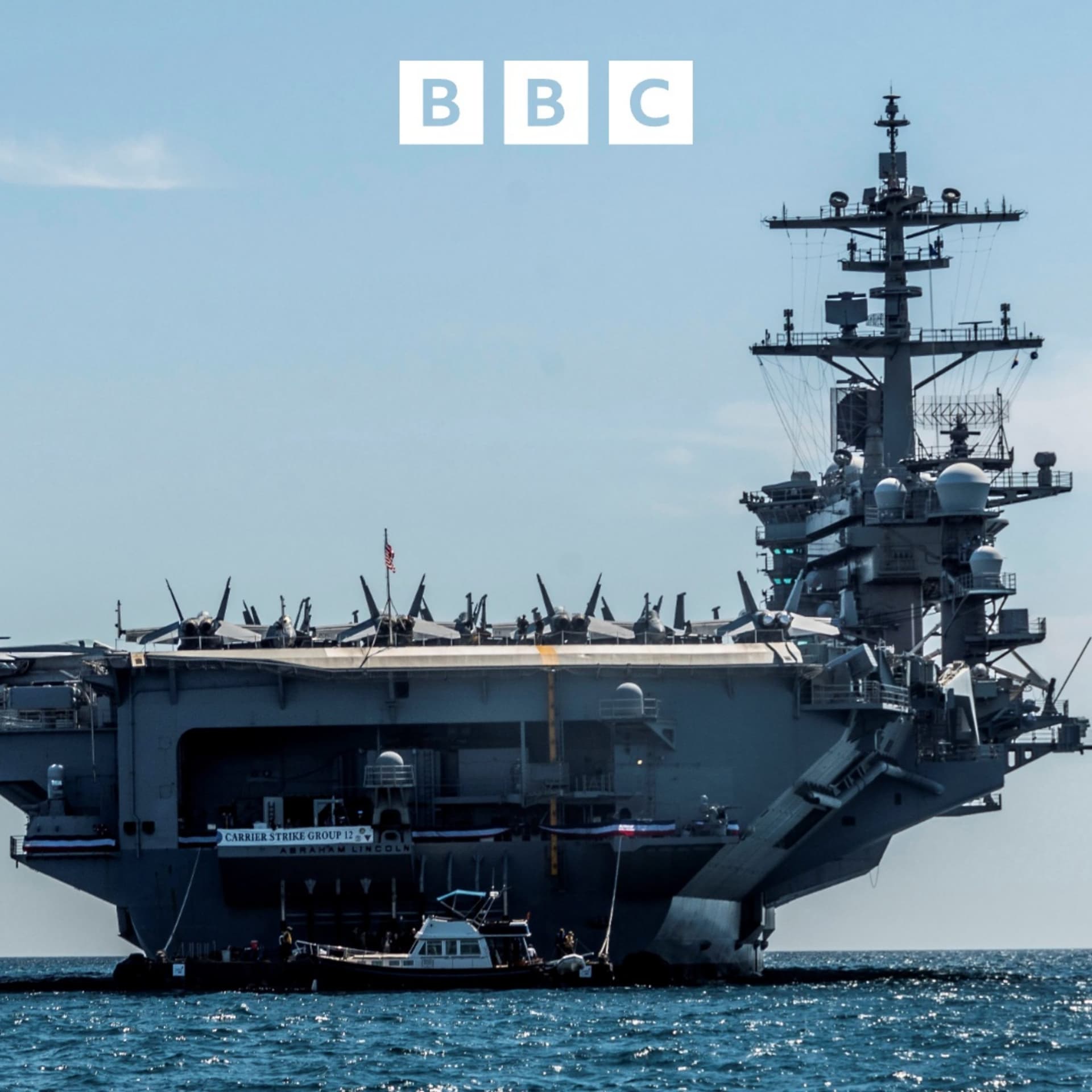
- A "massive armada" of U.S. military forces, including the USS Abraham Lincoln aircraft carrier, is on its way to the Gulf.
- Iran insists its nuclear program is peaceful but has threatened severe retaliation against any U.S. attacks.
- Secretary of State Marco Rubio claims Iran is at its weakest point, attributing its economic collapse to military spending instead of social investment.
- Context:
- This warning comes amidst ongoing protests in Iran, where a government crackdown has led to significant casualties.
- Historical reference made to Trump's previous military actions and unpredictability during his presidency.
- Severe Flooding in Mozambique
- Key Points:
- Mozambique is undergoing a significant cleanup operation after devastating floods affected nearly 700,000 people, causing extensive damage to infrastructure and homes.
- Eyewitness accounts detail the terrifying experience of abandoning homes and the destruction of livelihoods, particularly for farmers.
- Human Impact:
- Displacement and loss of life are significant issues, with survivors pleading for government aid as they face worsening conditions.
- U.S. Policy on Venezuela
- Key Points:
- Secretary of State Marco Rubio defended U.S. actions against Nicolás Maduro, asserting that the situation in Venezuela is improving after the capture of the former president.
- Rubio emphasized cooperation with Maduro's regime for stability and warned of potential military action if necessary.
- Future Outlook:
- There is a focus on establishing a U.S. diplomatic mission in Venezuela and ongoing support for opposition leaders.
- Dementia Diagnosis Innovations
- Key Points:
- Research suggests that changes in language use can help diagnose early signs of dementia, with a particular focus on the works of author Terry Pratchett.
- Statistical analysis revealed a decline in his use of adjectives a decade before his diagnosis, indicating the potential for early detection in others through language patterns.
Additional Notes
- Domestic Issues: The podcast also highlights tensions in the U.S. regarding federal agents' actions leading to the deaths of citizens during immigration enforcement, which has sparked calls for reform.
- Ukraine War Casualties: A U.S. think tank estimates that the Ukraine conflict has led to nearly 2 million casualties, the highest in Europe since WWII.
- Climate Change Court Ruling: A Dutch court ruled against the Netherlands for failing to adequately address climate change impacts on Bonaire, emphasizing the need for better support for vulnerable communities.
Conclusion The episode encapsulates a wide range of pressing global issues, highlighting the interconnectedness of international relations, humanitarian crises, and advancements in health science. The discussions reflect on the complexity of these subjects and their implications for global stability and human rights.
For continuous updates and insights, listeners are encouraged to subscribe to the Global News Podcast through the BBC World Service.
Contact
- Email: globalpodcast@bbc.co.uk
- Follow on X: @BBCWorldService
- Hashtag: #GlobalNewsPod
Written by AI. May contain mistakes. Listen to the episode to check what was said.
Chapters
Tap a time to open that second in VOTrump's Warning to Iran
0:52 to 2:18
Discussion on President Trump's threats to Iran regarding nuclear negotiations.
“President Trump threatens Iran again, warning that a massive armada is on the way and time to negotiate a nuclear deal is running out.”
Military Buildup and Its Implications
2:18 to 4:11
Analysis of the U.S. military presence in the Gulf and its geopolitical implications.
“Trump described as a massive armada, quickly heading towards Iran with great power, enthusiasm and purpose.”
Iran's Protests and Government Response
4:11 to 5:36
Exploration of the protests in Iran and the government's violent response.
“ambassador to Israel, Mike Huckabee, told us what the president wants to see.”
U.S. Strategy Toward Iran and Venezuela
5:36 to 7:42
Discussion on U.S. strategy regarding Iran's nuclear program and Venezuela's political situation.
“Well, I asked our correspondent in Washington, Helena Humphrey, what she made of the comments coming out of the White House.”
Domestic Tensions in the U.S.
7:42 to 10:46
Examination of rising tensions in the U.S. following federal actions in immigration enforcement.
“And this perhaps goes more to the heart of the protester issue.”
Casualty Estimates in the Ukraine War
10:46 to 14:06
Details on casualty estimates from the ongoing conflict in Ukraine.
“And while Marco Rubio, you know, indicated that he expected there to be democratic elections at some point, in terms of the opposition, they won't be happy that he'd really put no timetable on that either.”
Impact of Russian Casualties in Ukraine
14:06 to 16:50
Explore the staggering human cost of the Russia-Ukraine conflict.
“Kristi Noem, who oversees all of these operations and these federal agencies, saying they are prepared to mount an impeachment resolution.”
Devastating Floods in Mozambique
16:50 to 19:42
Hear about the severe impact of flooding and personal stories of loss.
“Still to come on this podcast, a Dutch territory takes the Netherlands to court over climate change.”
Climate Justice for Bonaire
19:42 to 23:26
Delve into a landmark court ruling on climate change in Bonaire.
“Maria Benvida-Levi is the Prime Minister of Mozambique.”
Dementia Detection Through Literature
23:26 to 25:35
Learn how studying Terry Pratchett's works aids early dementia detection.
“Scientists think they found a way to spot the signs of dementia earlier.”
Transcript
Automatic transcript. May contain errors.0:00This BBC podcast is supported by ads outside the UK. If journalism is the first draft of history, what happens if that draft is flawed? In 1999, four Russian apartment buildings were bombed, hundreds killed. But even now, we still don't know for sure who did it. It's a mystery that sparked chilling theories. I'm Helena Merriman, and in a new BBC series, I'm talking to the reporters who first covered this story. What did they miss the first time? The History Bureau, Putin and the apartment bombs. Listen on BBC.com or wherever you get your podcasts. This is the Global News Podcast from the BBC World Service.
0:47I'm Ankur Desai and in the early hours of Thursday the 29th of January, these are our main stories. President Trump threatens Iran again, warning that a massive armada is on the way and time to negotiate a nuclear deal is running out. The US federal agents who killed Alex Preti in Minneapolis are placed on administrative leave. And new estimates of casualty figures in the Ukraine war suggest it's the biggest loss of life in Europe since World War II. Also in this podcast, we hear from people displaced by floods in Mozambique. The water was frightening and we began abandoning our homes and we were not able to recover anything.
1:34And scientists say language can help spot early signs of dementia.
1:43It's a country going through a period of intense and widespread unrest. And early this month, Donald Trump sent a message to Iranians who were protesting against the regime that help is on its way. The regime's lethal crackdown is reported to have killed more than 6 ,000 people. Since then, there have been a slow and steady buildup of U.S. military forces in the Gulf region. And now the U.S. president has warned that time is running out to negotiate a deal on its nuclear program. Ten American warships are now in the region, part of what Mr. Trump described as a massive armada, quickly heading towards Iran with great power, enthusiasm and purpose.
2:25Tehran insists its nuclear program is peaceful and has vowed to retaliate if attacked. Our correspondent, Lise Doucette, is following developments. Time is running out. That is President Trump's stark warning to Iran. What he calls a massive armada is a major buildup of U.S. military might in the Arabian Sea. The USS Abraham Lincoln, a nuclear-powered aircraft carrier, has now moved into these strategic waters, bolstered by destroyers, an attack submarine and thousands of sailors. Fighter jets are also at the ready. The only way to avoid another war, declares Trump, is a new nuclear deal. Iran's mission in New York was quick to respond.
3:11They were ready for dialogue based on mutual respect and interest. If not, they said, they would respond like never before. In previous talks, Mr. Trump's team made maximalist demands that Iran's rulers saw as surrender. Today, the U.S. Secretary of State, Marco Rubio, disparaged Tehran's strength. That regime is probably weaker than it has ever been. And the core problem they face, unlike the protests you saw in the past on some other topics, is that they don't have a way to address the core complaints of the protesters, which is that their economy is in collapse. And the reason why there's economies in collapse is because they spend all their money and all their resources building weapons and sponsoring terrorist groups around the world instead of reinvesting it back into their society.
3:58Mr. Trump has been threatening Iran for many weeks, ever since a wave of unprecedented protests swept across the country and were swiftly crushed with unprecedented lethal force. The U.S. ambassador to Israel, Mike Huckabee, told us what the president wants to see. What he hopes is not that there is a war, but there is a realization on the part of the Iranians that they need to quit slaughtering their own people who are protesting the fact they don't have water and food. Details of that slaughter are still emerging. An exact toll still isn't known. But it keeps rising as more information surfaces as the internet blackout eases.
4:41Human rights lawyer Dr Payam Akhavan told the story of one desperate protester. A young man went to the protests and he didn't return. And his parents then went to the hospital searching for him and eventually ended up in a notorious Kahrizek morgue in which countless numbers of black body bags are piled on top of each other like garbage. And they search through these bodies and miraculously they found their son badly wounded but alive. And he had been pretending to be dead without food and water for almost three days because he realized that if he was alive he could be killed on the spot. Mr.
5:23Trump often boasts that he makes up his mind at the last minute. many are now asking, is that last minute fast approaching? Lise Doucette reporting. Well, I asked our correspondent in Washington, Helena Humphrey, what she made of the comments coming out of the White House. Unpredictability is a hallmark of the Trump presidency, isn't it? So let's just take a look at the facts. What we can say is, yes, there is a clear US military buildup in the Gulf, similar to that posture that we saw ahead of the strike on Venezuela in the case of the seizure of the former president, Nicolas Maduro. And if you use that method, Pastor's prologue here, President Trump has shown us before that he is willing to use force against Iran.
6:09Cast your mind back to last June when the US carried out Operation Midnight Hammer, striking Iranian nuclear facilities. And I think that history makes the current threat from the US president perhaps harder to dismiss. At the same time, there are analysts who say, could this be posturing? Could this be a pressure tactic designed to push Iran back to the negotiating table when it comes to a nuclear deal? But again, on that topic of unpredictability, remember just weeks ago, and as Lise Doucette's piece was referencing there, President Trump had encouraged Iranians to keep protesting during those mass demonstrations.
6:46The quote was, help is on the way. And there was this speculation that the US might intervene. But of course, nothing visible materialised. Yeah, I wanted to pick up on that. Help is on the way was his message to the people of Iran. But his latest comments appear to focus more on the country's nuclear program than the killing of protesters. They do indeed. I mean, President Trump has been speaking about this massive armada in the Gulf, saying it's larger than the naval force he previously deployed off the coast of Venezuela and said that time is running out for discussions over that nuclear deal.
7:20Remember, that was the nuclear deal that was negotiated under President Obama, which Donald Trump essentially ripped up. So were the US to strike, analysts say that Washington has several options. Could it be limited attacks on Iran's military capabilities, perhaps? Would it be something more ambitious and far riskier? And this perhaps goes more to the heart of the protester issue. And that would be targeting the regime itself. And in terms of actual tactics here, you know, if you take a look at Midnight Hammer, that operation, it was short and sharp. This time we are seeing that large buildup of assets though.
7:58Marco Rubio, the Secretary of State has said that this is all defensive in case of American troops in the region are attacked. But at the moment, this is very much to do with wanting to see a nuclear deal as opposed to those deeply concerning images and numbers that we have coming out of Iran right now with regards to those protesters killed. Helena Humphrey reporting. Well, another country that Donald Trump has focused on recently is Venezuela. On Wednesday, the U.S. Secretary of State appeared before Congress to defend the president's decision earlier this month to send elite troops there to seize its leader, Nicolás Maduro.
8:35Marco Rubio said that although Mr. Maduro was now in U.S. custody, the Trump administration hadn't finished the job in Venezuela. Look, at the end of the day, we are dealing with people over there that have spent most of their lives living in a gangster paradise. So it's not going to be like we're going to have this thing turn around overnight. But I think we're making good and decent progress. And we are certainly better off today in Venezuela than we were four weeks ago. And I think and hope and expect that we'll be better off in three months and six months and nine months than we would have been had Maduro still been there.
9:05A correspondent Gary O'Donoghue told Alex Ritson what else Mr. Rubio had to say. We learned some of his thinking about why they chose to keep Delcy Rodriguez and other members of Maduro's regime in power. And that seems to be to do with the question of stability and the risks of internal conflicts and refugees fleeing the country, which could have followed a sort of complete breakdown in the political system. The Secretary of State said they would continue to cooperate and they were getting productive talks with Rodriguez and the rest of the Venezuelan government, but that if things went wrong, they reserved the right to use military force.
9:42And he was very clear about that. We also learned that they're hoping to open a US diplomatic mission there at some point quite soon. And a bit of an indication, I think, about the kind of way the money is going to be used from Venezuela's oil industry. $300 million of that has already gone back to fund payroll inside the government there. And there's still other money and future money that the Americans say will have to be audited properly to make sure it goes to the right places. And it sounds as though there was not unsubtle pressure on Venezuela's new leaders that they need to follow Washington's line?
10:15Oh, yeah. I mean, no subtlety at all. It was a straight-out threat. If they didn't do what was asked of them, they would effectively be faced the same as Nicolas Maduro faced and possibly worse. So there's no question about that. So there's a sort of blunt force threat there. But there's also more strategic pressure being put on the regime. For example, Marco Rubio is meeting Machado, the opposition leader in exile in Washington. Again, a reminder, if you like, to those in Caracas that there are alternatives. And while Marco Rubio, you know, indicated that he expected there to be democratic elections at some point, in terms of the opposition, they won't be happy that he'd really put no timetable on that either.
10:57Gary O'Donoghue. And for the in-depth story of what life is now like inside Venezuela, search for our sister podcast called The Global Story. Meanwhile, the US president also has big issues to deal with domestically at home. Tensions are running high after federal agents shot dead two American citizens during an immigration crackdown. 18-year-old Jackie was born in the US to immigrant parents from El Salvador. She told us life in Minneapolis has ground to a halt. Every day, anyone who needs to work or needs to get groceries or needs to pick up medicine. It's scary because we don't know who's going to come back, who's going to be taken.
11:40It's just like a constant fear that we all live in because ICE agents sometimes don't even care if you are a U.S.-born citizen and they just assume that everybody that's a person of color is illegal. It's just really hard. Democrats in the U.S. Senate have issued a list of demands designed to rein in the actions of ICE agents, which they say must be attached to a funding bill for the Department of Homeland Security. A procedural vote on the bill is due later today. Here's a Senate Democrat leader, Chuck Schumer. We want masks off, body cameras on. federal agents must be prohibited from wearing masks they must be required to use body cameras and they also always have to carry proper identification no more anonymous agents no more secret operatives these are common sense reforms ones that americans know and expect from law enforcement if republicans refuse to support them they are choosing chaos over order plain and simple.
12:50In the days following the killing of Alex Preti in Minneapolis on Saturday, the rhetoric from the Trump administration has seemed to shift. At first, the federal immigration agents had been stopping a would-be assassin who wanted to massacre law enforcement. Now, the agents who shot him have been placed on administrative leave. Our correspondent, Tom Bateman, is in the city. We know these are two federal agents with the Customs and Border Patrol. We know they were involved in the killing of Alex Pretty. We don't know who they are and we don't know when they were placed on administrative leave.
13:27That news leaked. It was then confirmed by officials. But I think it is being read here as a further sign that the administration is prepared to listen to the growing chorus of criticism. And that includes, of course, some senior Republicans who have openly questioned the extent and the nature of this mass deportation drive. But at the same time, we're seeing Mr. Trump continue to defend the operation nationwide. He's been pretty vocal about that in the last 24 hours. And at the same time, now senior Democrats in Congress calling for the resignation of the Homeland Security Secretary, Kristi Noem, who oversees all of these operations and these federal agencies, saying they are prepared to mount an impeachment resolution.
14:16They would, of course, need some Republicans to join them with that in a Republican-controlled Congress. Mr Trump asked would he be removing her from her post. His answer to that, no. Tom Bateman reporting from Minneapolis. Since Russia invaded Ukraine nearly four years ago, it's been difficult to get accurate figures for the number of soldiers killed and injured from both sides. But a US think tank has estimated that by this spring, the total casualty figure that's troops killed, wounded or missing in action will have reached 2 million. It's the biggest loss of life in Europe since the Second World War.
14:52Sasha Schlichter has the details. It's easy to be lulled into thinking that because Russia is advancing at a snail's pace, little is happening on the front line. In fact, Moscow's daily losses average 1 ,000 men. a price President Putin is clearly prepared to pay. Many of the dead are young men from far-flung provinces populated by non-ethnic Russians who went to fight just because the pay-on-offer dwarfed anything they could have hoped to earn at home. That's one of the main reasons discontent inside Russia hasn't been more vocal. As for the extremely high casualty rates, drones, which have emerged as the weapon of the war, have proved to be exceptionally deadly.
15:35Numbers have been notoriously hard to ascertain since Ukraine does not disclose official figures while Russia routinely undercounts its casualties. The Kremlin spokesman, Dmitry Peskov, was, in his typical manner, dismissive of the study. I don't think such reports can or should be considered reliable. That's the first thing. We suggest relying on information provided by the Ministry of Defence. And it is the Ministry of Defence that is authorised to provide information on any losses during a special military operation. It is them and only them. According to the respected Washington Center for Strategic and International Studies, which is behind the latest research, Russia has suffered an estimated 1.2 million casualties, while Ukraine, half that number.
16:30If the trend continues, in a couple of months, the estimated total casualty figure will have reached a staggering two million. Vladimir Putin sees troops as a replenishable resource. But Ukraine, with a much smaller population, is struggling to replace its losses. Sasha Schlichter reporting. Still to come on this podcast, a Dutch territory takes the Netherlands to court over climate change. Now they have to help us, listen to us and work with us so we are not treated as second-hand citizens anymore. We hear from a vegetable farmer on the tiny island.
17:18If journalism is the first draft of history, what happens if that draft is flawed? In 1999, four Russian apartment buildings were bombed, Hundreds killed. But even now, we still don't know for sure who did it. It's a mystery that sparked chilling theories. I'm Helena Merriman, and in a new BBC series, I'm talking to the reporters who first covered this story. What did they miss the first time? The History Bureau, Putin and the apartment bombs. Listen on BBC.com or wherever you get your podcasts.
17:56An intense mop-up operation is underway in Mozambique following weeks of severe flooding brought on by torrential rain. Nearly 700 ,000 people have been forced into temporary shelters and critical infrastructure has been destroyed. BBC Africa's Nomsa Maseko sent this report.
18:17The rain has subsided, but many communities are still inaccessible after roads and bridges collapsed due to the heavy downpours. Authorities have called the recent flooding in Mozambique the worst in decades. Jacqueline Magaya describes her ordeal as water levels started rising. The water was frightening and we began abandoning our homes and we were not able to recover anything. All our clothes are in the water and we only managed to save the children. I lost everything. This is all that is left of me. I hope the government can help me and give me a piece of land, but I no longer have the means to build.
19:08Wading through muddy water that flooded his crops, Lucas Chlengu says his livelihood has been ruined.
19:21This year's floods took many things from the fields, including our belongings in our homes. This year we are going to go hungry all year. We don't have cassava, we don't have corn.
19:36Government resources are limited. Emergency shelters are running out of food. Maria Benvida-Levi is the Prime Minister of Mozambique. We know that at this moment, people have not only lost everything, but are also emotionally weakened and in need of our care, our comfort and our solidarity. The catastrophic floods forced thousands to flee their homes. Many residents were trapped on rooftops as the water rose around them. Helena Nuvunga lost 12 relatives. Those who drowned are direct relatives. They are from my house. They are my in-laws, sister-in-law and aunts, all from the same family. We are asking for help.
20:26I just don't know how these people will be located or how the burial will be done because the cemetery is flooded. it. The threat of waterborne diseases has also increased as the displaced population faces a lack of safe drinking water and sanitation. Nomsa Maseko reporting. A court has ruled that the Netherlands violated human rights by failing to address climate change in Bonaire, a Dutch territory in the Caribbean. The judge said those on the tiny island had been treated differently to other citizens on the European mainland and ordered the government to protect the vulnerable territory. Oni Emerencina, a vegetable farmer on Bon Air, told us he was pleased with the ruling.
21:13He was speaking to Rebecca Kesby. I'm the only farmer in the neighborhood, so all the insects, all the litter, all the iguana, all the birds is coming to my farm because there is no food for them in the forest. The other problem is I don't have water. The sea level is rising, the water from the wells are becoming very salty. In the past, there are very season, there are rainy season, there are drought season, sometimes the rain fell or not. But now it doesn't fall almost at all. When I plant, the plants stay small and they burn because the heat is very severe. So there were two or three years other that you don't get any profits.
21:57So you're one of those that took this case to the courts in the Netherlands and the judge did find it in your favour and said that the people of your island were treated differently from the mainland Netherlands. Do you think that there's been an element of discrimination against the islanders? Yes, they are treated as like second-hand citizens. When we ask for something, they don't agree or they hide behind European laws that say no, they can do that. They didn't help surveys to know what's the problem, how they can help us. And sometimes in the past, they gave us money, only money, without expertise, without machinery.
22:40So I think now they have to come with plans and how they are going to help us. And they have to listen to us and work with us. So we are not treated as second hand citizens anymore. Do you hope that this case may have implications for other people also challenging this through the courts? I think this case has opportunities for all the islands in the Caribbean, not only the islands, over the whole world. So it's also a start case for all the other islands of lands that we have to save this world. Because if we go like we do it now, cutting trees and not helping the world, we don't have in a couple of years no world anymore.
23:26Oni Emerinciana from Bonaire. Scientists think they found a way to spot the signs of dementia earlier. And they've got there by using the works of one of the world's best love fantasy authors. Will Chalk has been looking at the study. Through dozens of novels translated into more than 40 languages, Terry Pratchett's stories have been enjoyed by millions of people around the world. It appears, Vimes, that while stealing themselves for the fracas to come, both the trolls and the dwarfs came into possession of what I assume they thought was beer. But now scientists think his fantasy tales have helped them unlock something else, a greater understanding of the condition the author himself suffered with towards the end of his life, dementia.
24:10I don't like the disease. I can't skim read as I always used to. That's Terry Pratchett speaking to the BBC in 2013, six years after his diagnosis. But researchers at the University of Loughborough here in the UK now think they can spot subtle signs of the condition appearing in his writing from much earlier. We got Terry Pratchett's novels and fed them into a computer a programme that was able to identify different word types. That's Dr Tom Wilcoxon, who's behind the study. He says that whilst other authors who've been analysed have a stable vocabulary well into their 90s, Terry Pratchett is different.
24:48The changes are so subtle that a reader would struggle to notice, but their statistical analysis did. We found that throughout his career, there was a specific cutoff point where his usage of adjectives decreased to a degree, which may have indicated the early stages of dementia. That was actually 10 years before his official diagnosis. So it shows that dementia creeps up on you. Now, you might be thinking, what use is this to those of us who don't have huge back catalogs of novels waiting to be analysed? Well, we might not all be authors, but with every second we spend at work or online, we're building up our own vast, albeit more mundane, back catalogs of things like emails, reports and messages.
25:30so it's hoped this technique might one day help people be diagnosed with dementia sooner whether they write fantasy or not areas of setor square i gather still smell faintly of apples vimes one could come to believe therefore that what they were drinking was in fact a world chalk reporting and that's all from us for now if you want to get in touch you can email us at global podcast at bbc.co.uk. And you can also find us on X at BBC World Service. And you can use the hashtag Global News Pod. This edition of the Global News Podcast was mixed by Zabiullah Korosh. The editor is Karen Martin, and I'm Ankur Desai.
26:12Until next time, goodbye.
Read the full transcript
26:26is flawed. In 1999, four Russian apartment buildings were bombed, hundreds killed. But even now, we still don't know for sure who did it. It's a mystery that sparked chilling theories. I'm Helena Merriman, and in a new BBC series, I'm talking to the reporters who first covered this story. What did they miss the first time? The History Bureau, Putin and the apartment bombs. Listen on BBC.com or wherever you get your podcasts. know
From the publisher
Donald Trump has warned Iran that "time is running out" to negotiate a deal on its nuclear programme following the steady build-up of US military forces in the Gulf. The US president said a "massive armada" was "moving quickly, with great power, enthusiasm, and purpose" towards Iran, referring to a large US naval force. Iran insists its nuclear programme is entirely peaceful, but warned that a new US attack would prompt a response "like never before". Also: We report from Mozambique where an intense clear-up operation is underway following weeks of severe flooding. The US Secretary of State, Marco Rubio, has made a robust defence of the Trump administration's Venezuela policy, weeks after US special forces seized President Nicolás Maduro. And could dementia be diagnosed earlier by looking at changes in the way people use language?
The Global News Podcast brings you the breaking news you need to hear, as it happens. Listen for the latest headlines and current affairs from around the world. Politics, economics, climate, business, technology, health – we cover it all with expert analysis and insight. Get the news that matters, delivered twice a day on weekdays and daily at weekends, plus special bonus episodes reacting to urgent breaking stories. Follow or subscribe now and never miss a moment. Get in touch: globalpodcast@bbc.co.uk