In short
Global News Podcast - Episode Summary
Episode Title
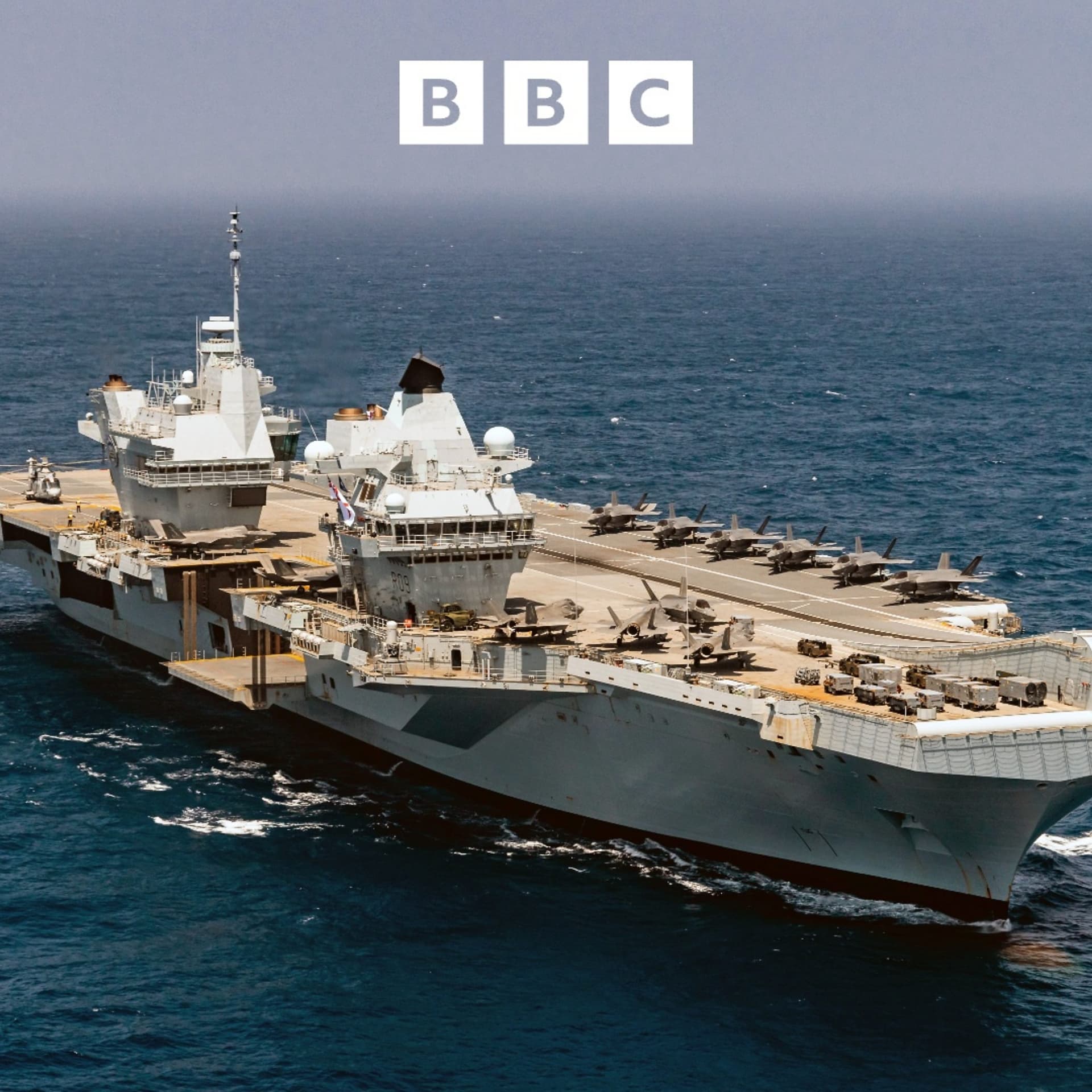
UK weighs up faster rise in defence budget
Episode Overview In this episode of the Global News Podcast, the discussion centers around significant developments in international affairs, particularly focusing on the UK's potential increase in military spending and the geopolitical implications of this decision. Other topics include the ongoing fallout from the death of Russian opposition leader Alexei Navalny, the controversy surrounding Brazil's Rio Carnival, and insights into extraterrestrial life from former US President Barack Obama.
Main Topics Discussed
- UK Defence Budget Increase
- Key Announcement: UK Prime Minister Keir Starmer announced at the Munich Security Conference that the UK is considering a rapid increase in military spending to 3% of public national income. This could equate to an additional $17-$19 billion annually.
- Motivation: The increase is motivated by perceived threats, particularly from Russia, and the need for Europe to enhance its own defense capabilities without reliance on the US.
- Funding Concerns:
- Difficulties in sourcing the necessary funding were highlighted, with options including cutting existing public spending, raising taxes, or borrowing (the latter being unlikely due to current debts).
- Other European nations like Germany and Poland are already increasing their defense budgets, putting pressure on the UK to follow suit.
- Alexei Navalny Poisoning Allegations
- Background: Two years after Navalny’s death in prison, new accusations have emerged stating that he was poisoned with a rare toxin associated with poison dart frogs, as claimed by five European countries.
- Kremlin's Response: The Kremlin dismissed the allegations as baseless, following a longstanding pattern of denial regarding state-sponsored actions against opposition figures.
- Implications for Opposition: The discussion reflected on the lack of organized opposition in Russia and the legacy of Navalny's activism despite his death.
- Brazil's Rio Carnival Controversy
- Political Controversy: A float celebrating President Lula during carnival sparked political uproar, as it was deemed potentially violating regulations against early campaigning prior to elections.
- Cultural Significance: The carnival showcased various themes reflecting Brazilian culture, including tributes to significant figures and social issues.
- Extraterrestrial Life Insights from Barack Obama
- Obama's Remarks: Former President Obama suggested that while he believes in the possibility of extraterrestrial life, he has not seen any evidence of their existence or any government cover-up regarding aliens.
- Scientific Perspectives: Commentary from experts highlighted the importance of distinguishing between popular notions of aliens and the scientific quest for microbial life on other planets.
Key Takeaways
- The UK’s potential defense budget increase reflects broader European security concerns amid rising tensions with Russia.
- The allegations surrounding Navalny's death highlight ongoing issues of state violence and repression in Russia.
- The Rio Carnival serves as a lens for examining political themes in Brazil as election season approaches.
- Former President Obama’s comments on extraterrestrial life bring attention to ongoing scientific inquiries into life beyond Earth.
Additional Notes
- The program intertwines major global events with personal stories, expert analysis, and cultural commentary, providing a well-rounded view of current affairs.
- For listeners interested in deeper analysis beyond the headlines, the podcast also promotes its sister show, The Global Story.
Contact Information
- Email: globalpodcast@bbc.co.uk
- Social Media: Find them on X (formerly Twitter) using the hashtag #GlobalNewsPod.
---
This markdown summary captures the essence of the podcast episode, outlining the critical discussions and implications of the topics addressed.
Written by AI. May contain mistakes. Listen to the episode to check what was said.
Chapters
Tap a time to open that second in VOUK Defence Spending Debate
1:10 to 6:39
Discussion on the UK's defence budget and European security demands.
“I'm Ankur Desai and at 16 Hours GMT on Monday the 16th of February, these are our main stories.”
Navalny's Death and Implications
6:39 to 10:11
Exploration of the fallout from Alexei Navalny's death and accusations against Russia.
“was found dead in a remote prison in the Arctic at the age of 47.”
Epstein Files and Victims' Voices
10:11 to 13:24
Insight into the Epstein files and the experiences of victims.
“The US Department of Justice says it has released all the files required by the Epstein Files Transparency Act.”
Controversial Carnival in Brazil
13:34 to 14:00
Discussion about the political implications of the Rio Carnival and Lula's presence.
“The carnival in Rio de Janeiro is in full swing and millions of people are taking part in the week-long colourful Jamboree.”
Brazil's Carnival and Political Landscape
14:00 to 16:40
Explore the political implications surrounding Lula's presence at Brazil's Carnival.
“and Brazilian candidates or pre-candidates are not allowed to have a campaign before August when the official campaign starts.”
Israel's Land Registration Controversy
17:25 to 21:20
An overview of Israel's recent land registration decision and its implications.
“If there was a big red button that would just demolish the internet, I would smash that button with my forehead.”
AI's Impact on Entertainment Industry
21:20 to 25:35
Discussion on how AI-generated content is affecting Hollywood and intellectual property.
“Of course, the Americans are key players here as well.”
Obama on Aliens and Extraterrestrial Life
25:35 to 28:00
Former President Obama shares his thoughts on the existence of aliens.
“And at the moment, that's a question which is unanswered.”
Exciting Space Missions Ahead
28:00 to 28:10
Learn about upcoming space missions aimed at searching for life in the solar system.
“There's huge numbers of exciting space missions coming up to search for life, simple life elsewhere in our solar system.”
Obama on Aliens and Extraterrestrial Life
28:41 to 28:55
Former President Obama shares his thoughts on the existence of aliens.
Transcript
Automatic transcript. May contain errors.0:00This BBC podcast is supported by ads outside the UK. We focus on the part of the internet that most people don't know about. It's called the dark web. Undercover in the furthest corners of the dark web, US special agents are on a mission to locate and rescue children from abuse. Move in now. Police! From the BBC World Service, World of Secrets, the darkest web follows their shocking investigations. search for world of secrets wherever you get your bbc podcasts if there was a big red button that would just demolish the internet i would smash that button with my forehead from the bbc this is the interface the show that explores how tech is rewiring your week and your world this isn't about quarterly earnings or about tech reviews it's about what technology is actually doing to your work, your politics, your everyday life, and all the bizarre ways people are using the internet.
1:03Listen on BBC.com or wherever you get your podcasts. This is the Global News Podcast from the BBC World Service. I'm Ankur Desai and at 16 Hours GMT on Monday the 16th of February, these are our main stories. The debate hots up over European defence spending. Britain is considering spending more and sooner. Germany says France isn't spending enough. Two years after Alexei Navalny was found dead in prison, the fallout continues from a new allegation that Russia poisoned the opposition leader with a rare toxin linked to dart frogs. And the Chinese tech company ByteDance says it will curb an artificial intelligence video tool after Disney threatened legal action.
1:50Also coming up in this podcast, Arab countries and the European Union have condemned plans to allow parts of the occupied West Bank to be classified as Israeli state land. And over in Brazil, the Rio Carnival has triggered political controversy as a float-paced tribute to the Brazilian president Lula, but also mocks his predecessor, Jair Bolsonaro.
2:18First, the message from many European leaders in recent days has been that the continent needs to stand on its own two feet, as it cannot rely anymore on the United States for its security. Over the weekend, the British Prime Minister, Keir Starmer, told world leaders at the Munich Security Conference in Germany that Europe must be ready to fight to protect its people, values and way of life. He repeated that message today in London. We, the UK and Europe, need to step up when it comes to defence and security. We have a threat of Russian aggression, which is obvious. In a few days' time, it's the four-year anniversary of the start of the conflict in Ukraine.
3:00We want a just and lasting peace, but that will not extinguish the Russian threat. Well, now the BBC has learned that the UK is considering significant increases to its military spending to 3 % of the public national income within the next three years, which would mean extra spending of$17 to$19 billion a year. Other European countries, including Germany and Poland, have already boosted their military budgets. Our diplomatic correspondent James Landau told me why Britain is thinking of bringing forward its planned increase. The British government made some substantial commitments on defence last year.
3:38It had a big strategic defence review. It also made commitments along with other allies at the NATO summit in The Hague. But since then, it has yet to fully explain how it's going to fund all of those commitments. And I think they are realising not just that future commitments are going to be very expensive to meet the threat from Russia and elsewhere, but also existing commitments. Defence inflation is rising as well. So there's a general sense that there's a lot of bills to be paid. And the British government, yes, has made some commitments to increase defence spending. But I think there's a realisation that that might not be enough.
4:19And so they might have to speed it up and spend more faster, to quote the prime minister. At the moment, the plan that I've been reporting, one idea, it's not confirmed and no decision has been taken, is that what they might do is take a spending target, which was to spend 3 % of British national output on defence during the next parliament. The idea would be, let's bring that forward, let's meet that this parliament. All of this is going to cost a huge amount of money. And experts tell me that roughly, because it's very hard to calculate, that this would require about an extra$17 billion of spending every year by the British government.
5:00and that would be very hard to find. And I guess a lot of people will be wondering where that money would come from as well and how much of a difference it would make. Well, it's either from cutting existing spending, from taxing British citizens more or from borrowing. Borrowing unlikely because the British government is already in a substantial amount of debt and deficit to deal with and it has very strict fiscal rules about not borrowing too much. So the British finance treasury would resist that. Taxes, all governments are loath to do that. So thirdly, cutting other pots of public spending.
5:37European leaders were gathered in Munich talking about security and defence. The likes of Germany and Poland, for instance, are they spending more despite this possible outlay from Britain? In Munich, it was very clear and it became very aware that Britain is falling back on defence spending in comparison to its European allies. And that's unusual because normally the UK has been one of the biggest per capita spenders on defence in Europe. But that's falling back. The Germans, as you say, are committed to spending more and faster. The Poles now are well north of 4 % of national output on defence.
6:12The Baltics obviously spend far more per capita because the threat is so acute there. So the UK, I think, will be feeling a little bit of peer pressure from its European allies who are beginning to notice that on big NATO projects and commitments, the UK are coming pretty late to the party. And tough choices, difficult trade-offs are going to have to be made. And that would test any government. James Landale reporting. That's exactly two years since the Russian opposition leader Alexei Navalny was found dead in a remote prison in the Arctic at the age of 47. Supporters have laid flowers at his grave in Moscow, while his mother has called for justice.
6:53On Saturday, five European countries said they have evidence that Russia poisoned Mr Navalny with a rare toxin linked to poison dart frogs. The Kremlin has rejected this, saying the accusations are biased and baseless. This news comes 20 years after the world witnessed the slow, painful and public death of Alexander Litvinenko after he was poisoned in London with the illegal chemical weapon polonium-210. Marina Litvinenko is Alexander's widow. Of course, we're not doubted how Alexei Navalny died. We all knew he was killed. And news about his poisoning brought me back to my days when we knew from beginning, of course, after Sasha's death of my husband, he was poisoned, he was killed by Russia's state.
7:45but we couldn't say this immediately. I should wait for 10 years. Only in 2015, after public inquiry, we can say, yes, it was Russia's state. It was highly likely Putin's order. But now we should not wait for so long to blame Russia again for this murder. Vitaly Shevchenko is BBC Monitoring's Russia editor. I put it to him that it's no surprise the Kremlin has dismissed the finding that Mr Navalny was poisoned. Not at all. It's what they do, really. It's their modus of friend, they deny, deny, deny. There's a whole list of transgressions, violations and outright crimes that Russia has been accused of and denied, sometimes despite overwhelming evidence of Kremlin involvement.
8:35And this list stretches from the use of doping substances, for example, at various sporting events. includes poisoning of some key opponents of the Kremlin, including Alexander Litvinenko, Sergei Skripal, the former Russian security agent, and, yes, Alexei Navalny. And come to think of it, if you are a government that is behind all this, this is what you're going to do. Deny, deny, deny. What is undeniable, though, is that the Kremlin had a very clear motive to silence and possibly to get rid of Alexei Navalny because he was the most effective opponent of Vladimir Putin. As you mentioned, a big opponent of the Kremlin and Mr Putin.
9:22And I guess what is that legacy now, two years on since he died? Has there been a movement to sort of carry on his work? He is remembered. That's one thing that's clear. However, I don't think anyone's been able to fill Alexei Navalny's pretty sizable shoes. Domestically, there's no organised opposition movement within Russia because it's so dangerous. And outside of Russia, it's in disarray and torn apart by squabbles. Vitaly Shevchenko. And you can find out more about the alleged poisoning of Alexei Navalny on YouTube. Just search for BBC News, click on the logo and then choose Podcasts and Global News Podcast.
10:07And there's a news story available every weekday. The US Department of Justice says it has released all the files required by the Epstein Files Transparency Act. But US lawmakers say there are more crucial files that should still be published. Much of the media scrutiny surrounding the files has focused on the prominent politicians and businessmen who are associated with Jeffrey Epstein in some way. including Donald Trump, Bill Gates, Andrew Mountbatten-Windsor and Bill Clinton, though all have denied any involvement in Epstein's crimes. But many victims of Epstein feel they have not been heard.
10:44Dorothea Grunert is the mother of the late Caroline Andriano, the key witness who helped convict Epstein's associate Ghislaine Maxwell for sex trafficking. Caroline was just 14 when she was abused by them and died in 2023 at the age of 36 in what was ruled an accidental overdose. Dorothy told us more about her. She was great. She was fabulous. Very honest, very loving, very caring, very on point. She liked school. She was very artistic. She used to help me with everything. My pride and joy. She was my princess. When did you first hear the name Epstein? When the FBI knocked on my door. I did not have a clue.
11:24I was clueless to anything. She met Jeffrey Epstein through Virginia. Virginia said she had a house-cleaning business and, you know, Carol was going to help her, yada, yada, yada. So, okay, fine. How old was she at this point? Fourteen. Fourteen. What do you now know from her and also from the subsequent investigations about what was happening? I know now that Virginia groomed my daughter along with Maxwell, and that explains a couple of times my daughter came home with bruises and bite marks, and I couldn't understand why. and you know carolyn told she fell down the stairs and i mean i figure oh well maybe she was carrying a vacuum or something okay so she slept i mean i could go along with that doesn't sound too far-fetched for me and then i had to go to manhattan with her to uh district court and meet up with the fbi and so forth i guess i found out in a hurry i was really schooled she gave evidence against gillenna maxwell in her trial for for resisting the trafficking of people like her.
12:27Yes, she did. Yes, she did. You must have been really proud of your daughter to have stood up in that court and to have explained what happened to her and been part of. I mean, not a lot of people have been held to account for what Jeffrey Epstein and those around him did, but Glenn Maxwell certainly was and your daughter was part of it. Oh, I was extremely proud of my daughter for doing that. I mean, that took a lot of courage. It also took me holding her hand to being there with her. When the first incident happened with Jeffrey Epstein in the first court thing, the reporters and all kinds of people started knocking on the door, calling her on the phone, calling my phone, following her, and it was just a mess.
13:07So she was naturally scared to come to Manhattan by herself. So nothing ever stopped. It was still the same going on and on. Then book people calling her to write books, and it was just horrifying. When she turned Maxwell in, I think she kind of thought that was going to be kind of the end. It never ceased. Dorothy Grenat speaking to Luke Jones.
13:34The carnival in Rio de Janeiro is in full swing and millions of people are taking part in the week-long colourful Jamboree. The highlight is the carnival parade in which samba schools compete for the most impressive float and dancing. This year, one school has attracted controversy for choosing to display a 22-metre statue of President Lula da Silva. Daniel Galas is from the BBC's Brazilian service. The big controversy is because Brazil is having elections this year and Brazilian candidates or pre-candidates are not allowed to have a campaign before August when the official campaign starts. Lula is obviously going to run again and he's going to run against the son of Jair Bolsonaro, probably Flávio Bolsonaro, amongst other candidates.
14:18A lot of people are saying that this configures an early campaign and that it could have all sorts of implications in the race. He could be disqualified eventually, that he could face high fines. But on the other hand, what the authorities are saying is that they have no matter on what the samba school wanted to do for its theme. And they decided to do Lula that year. So the parade happened last night. Lula was present. He wasn't in the parade itself. He just watched from the stands. there was talk that maybe his wife, the first lady, would be in the parade. She also watched from the stands. So the government is really trying to be very careful not to give any means for something to happen.
14:58So in terms of some of the other floats, can you give us a flavor of what else we can see or have seen? Yes, well, Samba in Rio is just a magnificent spectacle, very expensive floats, and it's kind of common for people like Lula to be actually one of the themes. Other themes like Rita Lee, she's a rock and roll star in Brazil who died recently. She had one of the parades for her and then was also Neymar Togros, a singer. There was a float parade just about a healer from the Amazon tribes. So there's a lot of Brazilian culture. One of the floats was about black African culture in the south of Brazil.
15:35So they kind of use this one hour long period to tell a story about Brazil with lots of music. the lyrics are written specially for these themes. Then Lula is kind of an interesting one for them because he has a very interesting personal history. He was president of Brazil three times. But had this not been an election year, it would perhaps be seen as normal. But being an election year, then I think that's why the controversy is kind of big now. Just very, very briefly, can you tell us about the police disguising themselves in fancy dress to catch phone thieves? Yes, that's in the street carnival, which is kind of a fun story.
16:10police officers are always around, but this time they were really creative. Some of them dressed up as Ghostbusters, as aliens, as, you know, the Scooby-Doo gang. And so a lot of thieves, it's very common to have, you know, your cell or your mobile phone robbed in this time of year. And the police was just, instead of, you know, being there as police officers, they were there with these very funny costumes and the pictures are hilarious of them doing it. Daniel Gallas. So to come in this podcast, What was the first question you wanted answered when you became president? Where are the aliens? Where are the aliens?
16:49Does former U.S. President Barack Obama really believe there's extraterrestrial life?
17:00We focus on the part of the Internet that most people don't know about. It's called the dark web. Undercover in the furthest corners of the dark web. U.S. special agents are on a mission to locate and rescue children from abuse. Move in now. Police! From the BBC World Service, World of Secrets, the darkest web follows their shocking investigations. Search for World of Secrets wherever you get your BBC podcasts. If there was a big red button that would just demolish the internet, I would smash that button with my forehead. From the BBC, this is the interface. the show that explores how tech is rewiring your week and your world.
17:44This isn't about quarterly earnings or about tech reviews. It's about what technology is actually doing to your work, your politics, your everyday life, and all the bizarre ways people are using the internet. Listen on BBC.com or wherever you get your podcasts.
18:06Israel's cabinet has voted in favour of beginning a process of land registration in the West Bank, a move condemned by Palestinians as de facto annexation and by Arab states as a violation of international law. The European Union called on Israel to reverse its decision, warning it was a new escalation after recent measures aimed at tightening Israeli control over the occupied territory. There's also been condemnation of the move inside Israel by the anti-settlement group Peace Now, as our Middle East correspondent Yolan Nau told my colleague Leila Nathu. What's the Israeli anti-occupation group Peace Now saying that expects a major land grab to follow from this government announcement?
18:49It says that the process is going to require the Palestinian landowners to prove their ownership under conditions that are nearly impossible for them to meet. If they fail to do so, that land is going to be automatically registered in the Israeli state's name. And it says, you know, on top of that, land registration itself is a clear exercise of sovereignty and annexation. So it's prohibited for Israel as an occupying power under international law. Nevertheless, you know, Israel is going ahead with this. You have the foreign ministry just presenting it as something that's administrative, that needs to be done, because since 1967, when Israel captured the West Bank from Jordan in the Middle East war, land registration was frozen for Palestinians.
19:33There was this breakthrough peace still in the 1990s when the Palestinian Authority was created. It began land registration for areas of the West Bank where it had authority, but that still hasn't been possible in the majority of the West Bank. the 60 % which stayed under full Israeli control. But there are some ministers, Yolande, going further in explaining or justifying the move, aren't there? Definitely. They make no secret of the fact that the idea here is to deepen Israeli control over the West Bank. You have the far right, Finance Minister Bezalel Smotrich, who has this responsibility within the Israeli cabinet over settlement policy.
20:10He's a settler himself. He has been moving forward with many aspects of planning and administration for Israeli life in the West Bank. And he has said that his idea is to kill or to bury the idea of a Palestinian state ever being created. Of course, for the Palestinians, it should be the West Bank and Gaza with East Jerusalem as its capital. Just going back to the responsibility of Palestinians to then have to prove their ownership of the land, what sort of documentation would be involved in that? Palestinians will have Jordanian land deeds in many cases, but this is problematic because if you're talking about, you know, how that ended in 1967, new generations of Palestinians have not been able to update or lay claim through inheritance to the land.
20:56you have to show also in some cases continuous cultivation of the land for Palestinians. This again is hard to prove and we've seen how settlers, the Israeli military, different measures taken by Israel in the West Bank are preventing access for Palestinians to many areas and we've got this widespread condemnation around the region. Of course you know some countries in the region pointing out how this could jeopardize President Trump's 20-point peace plan for Gaza. You've got the Jordanian foreign ministry, again, calling on the international community, the Qatari foreign ministry saying this is, it considers Israel's decision, its extension of its illegal plans to deprive the Palestinian people of their rights.
21:36Those are its words. Of course, the Americans are key players here as well. Now, they have previously sort of made clear that they do not support any efforts at annexation of the West Bank. They've said that that cannot happen. But what they have not made clear is, you know, their approach when it comes to all these other steps that have been taken that many, the Palestinians, even an Israeli minister, are calling de facto annexation. Yolanda Nell in Jerusalem speaking to Leila Nathu. Now, if like me, you get sucked into recent videos on social media of Brad Pitt and Tom Cruz fighting, well, for a second, you might have believed they were actually real.
22:15Such is the sophistication of AI. Now these clips on platforms like TikTok have caught the attention of some of the most powerful entertainment studios in the world. It was the threat of legal action by entertainment giants such as Disney that persuaded the Chinese tech company ByteDance to promise curbing an artificial intelligence video tool. The problem from Disney's point of view was that ByteDance generated videos based on real actors and copyrighted characters. Our business reporter Nick Marsh is in Singapore, where ByteDance has its headquarters. ByteDance is one of the biggest players in Chinese technology.
22:52It's probably most famous for TikTok, which it owns and the years long spats that it's had with the US government, Donald Trump trying to get ByteDance to sell TikTok off to a bunch of American investors, concerns about privacy, links to the Chinese government, that sort of thing. Now it is very much in the realm of artificial intelligence and it's developed Sea Dance, its new artificial intelligence model. And the latest version, Sea Dance 2.0, released only a few days ago, has been causing a fair amount of controversy, I think it's fair to say. Yeah, it seems to have really alarmed the big studios like Disney.
23:33It certainly has. It's taken the internet by storm. There's one, there's this Brad Pitt, Tom Cruise fight scene, which is, it's hard to believe it's AI. If you know about these things online, there's also a video of Will Smith very convincingly eating a plate of spaghetti, which is a reference to one of the very early video AI, where Will Smith did not very much look like Will Smith eating a plate of spaghetti. So yeah, massive, massive progress. But you're quite right, the big Hollywood players, so Disney, Paramount Skydance as well, the Motion Picture Association. They have been sending ByteDance cease and desist letters, basically saying that ByteDance is stealing their intellectual property.
24:13We have reached out to ByteDance. They're headquartered here in Singapore, and they told us that the company respects intellectual property rights and it's taking steps to strengthen current safeguards to prevent the unauthorised use of intellectual property, but not really much more detail in terms of how they're going to do that. Yeah, I wanted to just sort of finish on what sort of compromises or promises have been made, but it seems a bit vague at the moment, early days. Yeah, I think the big question really is how is ByteDance training this model? So it owns TikTok. It's a fair assumption to make that the millions and millions of videos, millions of images which are uploaded to TikTok are potentially being mined for content.
24:59There's been suggestions that it's combing through YouTube as well. We don't know that. That's completely unverified. But it's very important to know what these models are being trained on. And I think that's probably what's worrying the big Hollywood studios, that if they spend millions and millions of dollars creating all these, you know, instantly recognisable characters and big film franchises, that an artificial intelligence model can then just mine that for its own content. ByteDance says it's taking steps to do this. We already know that they've already paused the ability for users to upload images of real people.
25:33But the much bigger question is, how is this product basically training itself? And at the moment, that's a question which is unanswered. Nick Marsh in Singapore. Now, it's a US airbase that has come under intense scrutiny and a frequent subject of conspiracy theories, especially when the subject of UFOs comes up. So what is really happening inside Area 51 in the Nevada desert? The former US President Barack Obama, who's one of the very few people given access to this top secret information, has said he does think aliens exist. Frankie McCamley has more. It's a question many of us ponder over.
26:11Are aliens real? And it seems so does the former US President Barack Obama. He thinks they are, despite saying he's never seen one. Here he is speaking to podcast host and YouTuber Brian Tyler Cohen over the weekend. A couple of questions here. Are aliens real? They're real, but I haven't seen them. And they're not being kept in, what is it? Area 51. Area 51. There's no underground facility unless there's this enormous conspiracy and they hid it from the president of the United States. What was the first question you wanted answered when you became president? Where are the aliens? Where are the aliens?
Read the full transcript
26:54It's not quite the cast iron guarantee some people would hope for, but we've heard it from the man who's been privy to secret information most of us would never get to hear. Mr Obama has since clarified his comments. He posted on Instagram, Statistically, the universe is so vast, the odds are good there's life out there. But the distances between solar systems are so great that the chances we've been visited by aliens is low. And I saw no evidence during my presidency that extraterrestrials have made contact with us. Professor Lewis Dartnell is from the University of Westminster in London. He's been speaking to my colleague Anna Foster.
27:33I think aliens is a slightly wooded term. And I think if you hear the word aliens, you might imagine the last Hollywood film you saw of bug-eyed monsters or spaceships flying around. And astrology is much more about life in a more general context. So simple, single-celled, bacteria-like life on the surface of Mars, for example. So that's what I spend most of my time thinking about. And do we know that that sort of thing that you're talking about does exist now? Are we still searching for it? We're still searching for it, but we've not yet found it. There's huge numbers of exciting space missions coming up to search for life, simple life elsewhere in our solar system.
28:06That report from Frankie McCamely. And that's all from us for now. If you want to get in touch, you can email us at globalpodcast at bbc.co.uk. And you can also find us on X at BBC World Service. Use the hashtag Global News Pod. And don't forget our sister podcast, The Global Story, which goes in depth and beyond the headlines on One Big Story. That's available wherever you get your podcasts from. This edition of The Global News Podcast was mixed by Pat Sissons and the producers were Paul Day and Judy Frankel. The editor is Karen Martin and I'm Ankur Desai. Until next time, goodbye.
29:11The Darkest Web follows their shocking investigations. Search for World of Secrets wherever you get your BBC podcasts.
From the publisher
The UK is considering significant increases to its military spending, to three per cent of the public national income within the next three years. The prime minister, Keir Starmer, made the announcement at the Munich Security Conference at the weekend. This would mean additional spending of up to $19bn a year. Also: Supporters of the late Russian opposition leader, Alexei Navalny, have laid flowers at his grave in Moscow while five European countries say they have evidence that Russia poisoned Mr Navalny with a rare toxin linked to the poison dart frog. And why the former US president Barack Obama thinks that aliens exist.
The Global News Podcast brings you the breaking news you need to hear, as it happens. Listen for the latest headlines and current affairs from around the world. Politics, economics, climate, business, technology, health – we cover it all with expert analysis and insight. Get the news that matters, delivered twice a day on weekdays and daily at weekends, plus special bonus episodes reacting to urgent breaking stories. Follow or subscribe now and never miss a moment. Get in touch: globalpodcast@bbc.co.uk