
In short
The episode covers multiple global stories: UN experts accuse Nicaragua’s authorities of crimes against humanity, including enforced disappearances, torture, and arbitrary detention; scientists warn a Super El Niño may soon reach record-breaking warmth with major global weather impacts; Cambridge research finds newborn baby girls look longer at faces than boys; George Lucas’s Lucas Museum of Narrative Art opens in Los Angeles; a debate over golf’s origins is reignited by a Dutch painting; additional segments include Ukraine’s struggle against jet-powered drones, concerns about sex/drug use in robo-taxis, and reintroduction of Scottish wildcats.
Guests (named in transcript)
Mimi Swaby (UN/Nicaragua reporting); Matt McGrath (El Niño climate reporting); George Lucas (museum subject); Tracy Bates (Lucas Museum CEO); Richard Hamilton (golf historian reporting); Yumna Khan (Cambridge study lead); Abdujalil Abdurasulov (Ukraine drones reporting); Helena Burke (robo-taxis workshop reporting); Lorna Gordon (wildcats reporting); Asma Khalid (promotes Global Story).
Written by AI. May contain mistakes. Listen to the episode to check what was said.
Chapters
Tap a time to open that second in VONicaragua's Human Rights Crisis
0:30 to 1:20
Exploring the UN report on Nicaragua's attacks on civilians.
“Listen to Choiceology at schwab.com slash podcast or wherever you listen.”
Investigating Systematic Violence
1:20 to 2:36
Details on the coordinated violence against political dissent in Nicaragua.
“A UN report accuses the Nicaraguan authorities of systematically attacking civilians.”
Daniel Ortega's Authoritarian Control
2:36 to 4:28
Discussion of Ortega's consolidation of power and the ban on elections.
“This new report by UN Experts accuses Nicaraguan, the state institution, the authorities of committing crimes against humanity to crush any dissent in the country and essentially control the population.”
Opposition and Exile
4:28 to 5:55
The plight of Nicaraguan leaders and opposition under Ortega's regime.
“maintain himself in power as long as he can.”
Global Effects of El Nino
6:00 to 8:46
Analysis of how the current El Nino is affecting global weather patterns.
“is still a few weeks from its peak, But it is already breaking records, according to the British Met Office.”
George Lucas's Museum of Narrative Art
8:46 to 11:59
Overview of the opening and features of the Lucas Museum.
“Star Wars creator George Lucas has spent the past 20 years planning a museum to house his vast art collection.”
The Origins of Golf
11:59 to 14:00
Exploration of the historical debate around the invention of golf.
“It's long thought to have started in Scotland, but the debate over its origins has been reignited by the purchase of a painting in the Netherlands, a 17th-century picture called Golf Players on the Ice.”
Exploring the Origins of Golf
14:00 to 15:08
Learn about the historical roots and evolution of golf.
“Historians argue about whether sticker ball games originated in one country or another.”
Introduction to Upcoming Topics
15:08 to 15:51
Hear about the diverse topics ahead in the podcast.
“Efforts to revive the only native cats still found in the wild in Britain.”
Research on Newborns and Social Interest
15:51 to 17:54
Examine a study on how newborns engage differently based on gender.
“You're listening to The Global News Podcast.”
Show all 16 chapters
The Nature vs. Nurture Debate
17:54 to 20:05
Understand how both biological and environmental factors shape behaviors.
“And what does this tell us about the old nature v nurture argument?”
Ukraine's Defense Against New Drone Threats
20:05 to 22:26
Learn about Ukraine's advancements in technology to combat drone attacks.
“Ukraine's president, Vladimir Zelensky, is due to meet President Trump on the sidelines of the UN General Assembly in New York.”
Challenges of Driverless Taxis
22:26 to 25:13
Explore the societal implications of driverless cars and passenger behavior.
“And out of them, six companies, members of Brevan, already deployed to the combat.”
Efforts to Revive Scottish Wildcats
25:13 to 27:45
Discover conservation efforts to reintroduce wildcats in Scotland.
“But a bus today will have a driver which can serve as a safeguard from misbehavior, which will be gone in the future.”
Monitoring the Reintroduced Wildcats
27:45 to 28:02
Learn about the ongoing monitoring and future strategies for wildcats.
“The cats live in grassy shrubland with a forest edge and the population, while small, is growing.”
Wildcat Conservation Efforts in Scotland
28:02 to 29:19
Learn about the challenges and strategies for restoring wildcat populations in Scotland.
“We've had an enormous amount of success here.”
Transcript
Automatic transcript. May contain errors.0:00This BBC podcast is supported by ads outside the UK.
0:30Listen to Choiceology at schwab.com slash podcast or wherever you listen.
1:08This is the Global News Podcast from the BBC World Service. Hello, I'm Oliver Conway. We're recording this at 14 Hours GMT on Tuesday the 22nd of September. A UN report accuses the Nicaraguan authorities of systematically attacking civilians. Scientists say the current Super El Nino is approaching record-breaking levels, weeks before its peak. And new research suggests baby girls are more sociable than boys. Also in this podcast... It looks like it's from a galaxy far, far away. But the Lucas Museum of Narrative Art is right here on Earth. George Lucas's art collection goes on display. And... Given the amount of images on tiles, on drawings, on prints, in this painting, You can imagine that the game of golf as we know it nowadays, it started out in the Netherlands.
1:59Who really invented the game of golf?
2:05Nicaragua had a troubled history in the 20th century, with decades of dictatorship followed by the US-backed Contra War. That ended in 1990, but UN experts say crimes are being committed once again against civilians in Nicaragua. The UN report accuses the authorities of disappearances, torture and arbitrary detention. In July, Nicaragua's long-term ruler, Daniel Ortega, a former revolutionary leader, banned elections. I heard more from our global affairs reporter, Mimi Swaby. This new report by UN Experts accuses Nicaraguan, the state institution, the authorities of committing crimes against humanity to crush any dissent in the country and essentially control the population.
2:47They say authorities have coordinated enforced disappearances, torture and arbitrary detentions of any political opponents, all being part of this widespread and very systemic crackdown on civilians. It went on to say that actually since 2023, the authorities have shifted towards a long term use of these enforced disemperiences and nationwide police raids aimed at basically eliminating any remaining pockets of dissent in the country and solidifying the absolute power that President Daniel Ortega has shared with his co-president, his wife, Rosario Murillo. So they have expanded these raids to new targets to include church members, indigenous leaders and former state as well as military officials.
3:30And this is on top of the verified disappearances the UN experts have confirmed since 2018 being more than 160. And that is the date, a very significant date in Nicaragua is when a wave of anti-government protests rippled across the country, the largest in years. that left more than 300 people dead and led to a mass exodus in the country as well of Nicaraguans. Now, are we seeing a return of the dirty war, at least the tactics seen then? Because Daniel Ortega was in power, left-wing leader, when his government was destabilised by the US-backed Contras. We're definitely seeing an iron fist get even stronger.
4:09Daniel Ortega in July came out and said there will no longer be elections in the country, as he put it, to stop the opposition from seizing the government again. In September, we then saw the Congress pass a constitutional reform, which essentially would ban the opposition parties from taking part in that election. So again, solidifying the fact that he is going to maintain himself in power as long as he can. This unsurprisingly has received a lot of criticism from the wider region as well as global leaders. The authoritarian leader, though, is also being accused by this report as well as other organisations of essentially exercising centralised control over the very institutions, the police, the courts, the prisons that are meant to protect people from abuse.
4:52So he not only has concrete control over the government, but over the whole country, according to reports, and is being blamed for the deaths of custody of at least eight people since 2018 who were detained on political grounds. And we've heard again in this report how dire the situation is in prisons with the lack of health care and gender-based violence being rife among women too. And why now? He's been in power for a long time. Is there any opposition to his rule? There is very little opposition. He has cut off ties with the US. US is a long-time foe, not cut off ties, but he's got distance himself even further again with this move in September, this congressional reform, again, distancing himself from that backing.
5:34He's leaning towards China as a stronger ally. But on the ground, he's been in power for nearly 20 years. There's very little opposition in the country. The majority have been exiled. Any Nicaraguan leaders or politicians, lawmakers, figures in public life who I speak to are routinely outside the country due to fear of oppression and oppression for their families in the country if they have any left's air. Mimi Swaby. The El Nino weather pattern in the Pacific Ocean is still a few weeks from its peak, But it is already breaking records, according to the British Met Office. However, that conclusion hasn't yet been confirmed by all climate scientists, as our environment correspondent Matt McGrath explained.
6:16There's a pretty much great consensus among scientists that this El Nino is likely to be the strongest we've seen possibly ever on record. But whether or not this is actually breaking records right now is still a bit unclear, because scientists use a number of different measures to actually record how warm this El Nino is versus the rest of the ocean and versus the historic temperatures that pertained a few decades ago. So on some of these measures, it's close to our breaking a record. On others, it's quite a bit away. I think the direction of travel is very clear here. Scientists have signaled for a long time they believe this to be the strongest they'll see at this particular time in the record.
6:56and it hasn't reached the peak of the event just yet. So I think it's likely to break records across the board. We may or may not be there just yet. What sort of temperatures are we talking about and what does it all mean? So the way that you measure an El Nino is once the temperatures of the waters in the centre of the Pacific go about a half a degree above the long-term average, that's the start of an El Nino. Once they get above one degree, you're starting to get into more serious territory. above two degrees, then it's called a very strong El Nino. Now, we had the two degree mark go past a few months ago.
7:31It's been a strong El Nino for the last couple of months. The latest data show that it's around three degrees warmer than the long-term average. But how much precisely it is above the long-term average, we're not quite sure as yet. The fear, I guess, from scientists is that this will continue and that projections would show that it's somewhere between three and four degrees above average. Now, that is a phenomenal amount of heat and a phenomenal impact on the world. We've never really seen anything like that before. And what the impacts will be across the world, we're still not sure. But it'll be later this year and definitely in the middle of next year when we'll see the impact of all that heat much more clearly.
8:08Yeah, what kind of thing could it be? More rain, more heat? All of the above. We're already seeing in some places in the monsoon areas perhaps less rain than normal. in other places. In parts of California, they're preparing for greater deluges. We're likely to see greater floods and downpours. We're seeing the Panama Canal not at its peak or restricting traffic because of lower water levels. So all around the world, there'll be different impacts, impacts on food production, impacts on droughts, on heat and on floods. But by the middle of next year, we'll see probably the bigger impact, which is on overall global temperatures, which will be expected to be break records by some distance.
8:45Our environment correspondent, Matt McGrath. Star Wars creator George Lucas has spent the past 20 years planning a museum to house his vast art collection. It finally opens today following a star-studded party over the weekend with Steven Spielberg and Oprah Winfrey among the guests. The BBC's Regan Morris couldn't make it to the party but she did get a sneak peek at the museum. It looks like it's from a galaxy far, far away. But the Lucas Museum of Narrative Art is right here on Earth, in South Los Angeles, not too far from Hollywood. The new billion-dollar museum houses a starfighter. I'm standing right underneath it.
9:24It's got original C-3PO and R2-D2 droids and Luke Skywalker's Landspeeder, some of the most iconic Star Wars memorabilia imaginable. But this is not a Star Wars museum. The movie art takes up a fraction of the space in this collection from George Lucas, the man who brought us both Star Wars and Indiana Jones movies. The museum is dedicated to the history of visual storytelling, from cave paintings to ancient sculptures to Norman Rockwell to Banksy street art graffiti. George Lucas says it bothered him that illustrators he worked with on movies were not considered serious artists and that their work was rarely displayed in museums.
10:03It's something that I felt very, very strongly about in terms of honoring illustrators. People who, artists, I think, who illustrate stories that are already written. And most of the stories are myths. They're not real. But the illustrations make them real. And as a result, in the beginning, especially for the few thousand years, that was the only way you could tell a story. was with pictures. Hi. Thank you for being here. Thank you so much for doing this. Tracy Bates, CEO of the Lucas Museum. I know this is not a Star Wars museum, but when I walk into this building, it does feel like I'm entering a spaceship.
10:44How do you describe the Lucas Museum? There's always been a plan that the building itself would be an art, it would be a sculpture, so that future generations, hopefully especially children, would look at the building and say, that looks really important, The art in it must be really important. We never put a value on any of the artists here. There's no hierarchy around the entire gallery space. We have a Van Gogh, we have a Picasso, we have many deemed incredible artists, but the thread through all of it is it's a story. So narrative art is a story in one frame, so you'll be able to look at it and understand a story.
11:22You don't need wall text to explain that. And does George call it a Star Wars museum? What he does want to make sure is that people understand that it isn't just a Star Wars museum. It is only 7 % of our entire gallery hang is Star Wars. George Lucas is known for creating worlds adored by fans around the world. It took him nearly 20 years to build this museum. And it's transformed the skyline of South Los Angeles. And transfixed those of us lucky enough to get a sneak peek inside. A report by Regan Morris. Now, who invented golf? It's long thought to have started in Scotland, but the debate over its origins has been reignited by the purchase of a painting in the Netherlands, a 17th-century picture called Golf Players on the Ice.
12:13That's golf with a C. Richard Hamilton reports. While it's generally accepted that the modern form of golf developed in Scotland from the 15th century onwards, The upcoming exhibition of Hendrik Averkamp's painting, Kolf Players on the Ice, has resurrected discussions about its earliest origins. The painting is considered a masterpiece and costs two museums, the Rijksmuseum in Amsterdam and the Moritzhaus in The Hague, $13 million in a joint purchase. Judith Niesen is Head of Collections and Research at the Moritzhaus. We can never, never be sure, But there is already mentioning of this game in the 1300s, which is quite early.
13:00Given the amount of images we know already from the 16th, 17th century, at least it was really popular in the Netherlands and maybe even more popular than it was in Scotland. So we tend to say it was invented here and there is a whole lot of variety in the way it was played already back then. But what I can imagine is it was really popular and given the amount of images we know on tiles, on drawings, on prints, in this painting, it is the subject of the painting, you can imagine that it started out, the game of golf as we know it nowadays, it started out in the Netherlands. Other Dutch historians have been even more adamant that golf was invented in the Netherlands, with some saying it actually began in the year 1297.
13:48But Professor Neil Miller, who's a golf historian and author of the book Early Golf, Royal Myths and Ancient Histories, is dismissive of that claim. There's absolutely no contemporary evidence for that. The two games are quite similar. Historians argue about whether sticker ball games originated in one country or another. Golf in Holland undoubtedly will have influenced golf in Scotland, but I'm sure it happened the other way as well. And what is sometimes overlooked is that golf has a clear written history in Scotland that dates back long before paintings such as this. Golf was banned in Scotland in a Scottish Act of Parliament in 1457, so that tells us that golf must have been played in Scotland earlier than the mid-15th century.
14:39The origins of golf have long been lost in the mists of time, with some suggesting the Romans or even the ancient Chinese played an early form of the game. And no doubt the arguments will continue long into the night over a glass of whiskey, perhaps as long as the search for the perfect swing or how long a putt should be before you concede it to your opponent. Richard Hamilton. And still to come in this podcast...
15:14Efforts to revive the only native cats still found in the wild in Britain.
15:26Why does the world want American surrogates? I'm Asma Khalid and I host the Global Story podcast from the BBC. Paying someone to carry a pregnancy is banned in most of Europe and large parts of Asia as well. But here in the US, business is booming, though as the popularity has grown, so too has the public debate around the ethics of it all. For more, listen to The Global Story on BBC.com or wherever you get your podcasts.
15:59You're listening to The Global News Podcast. Baby girls tend to be more people-focused than boys from the very first hours of their lives. That's according to research from Cambridge University, which also found that newborn boys generally show more interest in objects. The study was led by Yumna Khan from the Autism Research Centre in Cambridge. In the experiment, we recruited newborn infants as soon after they were born as possible into the study. And as soon as they were awake and alert, we showed them a video clip of on one side of the screen, a moving face, and on the other side of the screen, a moving object.
16:38We basically found that regardless of their sex, newborn infants preferred to look at the face, which we believe is due to an innate social interest in humans and faces from birth. But what was really interesting was that we found that girls, on average, looked proportionately longer at the human face compared to boys, whereas boys, on average, looked proportionately longer at the object. And why do you think that is? There's been quite a lot of discussion about this in the scientific community. We know that sex differences are shaped by numerous, numerous different factors, such as upbringing, gender socialisation, environmental factors.
17:24But there have also been theories that some early biological factors might play a role. For example, during pregnancy, males are exposed to higher levels of testosterone compared to females. This is what creates sex differences in the body, but it's also hypothesized to create sex differences in the brain and behavior. So when we looked at these newborn babies, because it was so soon after birth, Our findings suggest that potentially these early prenatal biological factors might be playing some sort of a role in shaping sex differences. And what does this tell us about the old nature v nurture argument?
18:05I always say it's not nature versus nurture, but rather it's nature and nurture. Both nature and nurture play important roles in shaping sex differences. We know definitely that nurture plays a very, very large role. But what this research suggests is that nature, early biological factors, might also play somewhat of a role. Now, it's very important to note we did not directly test that, but this is the conclusion that we're reaching based on how early that we find these differences. so we hypothesise that yes these early biological factors might be playing some sort of a role but we need more research to confirm that it is definitely indeed these prenatal factors rather than other external factors.
18:54The fact that girls tend to favour looking at faces more than boys just after birth does that play out later in life as they develop? This is something that we will better be able to understand from longitudinal research, which we are planning at the moment. But what our hypothesis is right now is that we know later in infancy, girls acquire language and communication skills faster than boys on average. So what might be happening here is this social interest from birth might be facilitating the development of earlier social and communication skills in females faster. And does this say anything about the greater incidence of autism that tends to be found among boys rather than girls?
19:40Yes, that is possible. And again, that's something that we will better be able to understand through future research. But one theory is that if males on average, let's say, show reduced social interest compared to females from early life, then they might be at a higher likelihood of developing autism compared to females. Yumna Khan from the University of Cambridge. Ukraine's president, Vladimir Zelensky, is due to meet President Trump on the sidelines of the UN General Assembly in New York. It comes amid fears that Russia is planning to intensify attacks on Ukraine's heating and power facilities ahead of the winter.
20:18To make matters worse, Russia has stepped up its use of jet-powered drones in recent months, and these are proving much harder to shoot down. Our reporter, Abdujalil Abdurasulov, joined Ukrainian air defence units trying to combat this new threat.
20:36A missile shoots into the sky, leaving a long, white tail behind. Seconds pass very slowly.
20:47Destroyed, reports a Ukrainian soldier having spotted in a distance a blank plume of smoke from the explosion. His unit has successfully shot down a Russian jet-powered drone.
21:04These new drones are much harder to intercept, so for now Ukrainian forces primarily use fighter jets or Western-provided air defense systems to stop them. They might be very effective, but far too costly to use against a much cheaper threat. Antenna video-periodavacar. Accumulator. Soldiers from the 96th Air Defense Brigade show me their drone interceptors regarded a breakthrough technology just a year ago. A bullet-shaped device helped the Ukrainian military to shoot down up to 95 % of Russian drones. But it's simply too slow against the new type of threat, says the crew commander, Madzy. The speed of jet-powered drones is 300 to 500 kilometers per hour, which is twice as fast as our interceptors.
22:03This is like a cat-and-mouse game. We are inventing something. Russia is trying to invent counteraction and vice versa. Andrey Gritsenyuk, the head of Brave One, Ukraine's main defense technology alliance. And right now, more than 20 companies are building very fast drone interceptors on different levels of readiness. And out of them, six companies, members of Brevan, already deployed to the combat. And how effective are they? We have already a number of successfully destroyed Shahid and Bandarals. So we see that the trend is positive. To deal with new threats, Ukraine is also trying to convert old weapons they no longer make.
22:54Soldiers from the Bilotserkva Air Defense Regiment are driving their anti-aircraft missile system called Osa intercover. This giant Soviet armored vehicle on wheels is a lucrative target for Russian drones. It helps to defend Ukrainian cities from airstrikes. The problem is that there are massive shortages of ammunition for OSA. However, Ukraine has developed a new type of missile that can be used by this old system. And they are fast enough to shoot down Russian jet-powered drones. Volodymyr, a crew member, explains. The new missiles performed well. The first launches were not very successful, but then they were improved.
23:38and now they work even better than Soviet missiles. Ukrainian engineers believe that it's only a matter of time before they effectively shoot down jet-powered drones on a regular basis. But the challenge of this war is to predict and prepare for future threats that do not exist yet. Abdujalil, Abdurasulov reporting from Ukraine. Now, you may have heard of the Mile High Club, but it seems amorous couples are getting together in ground-based forms of transport too, specifically robo-taxis. In fact, researchers are meeting in the Swedish city of Gothenburg to work out ways of making driverless cabs less enticing venues for backseat romance.
24:19Our reporter Helena Burke has been investigating. There's still only a handful of cities that have approved the use of driverless cars on their roads in the US, China and the UAE. But in those cities, apparently this is a bit of a problem. The researchers say that the issue is that being alone makes passengers feel like they're in a private space. even though they're not. And people wanting to have sex in self-driving cars has apparently become a bit of a bucket list item, like joining the Mile High Club. The researchers say that the problem with this is that it makes the driverless car seem like a space where inappropriate behaviour is okay.
24:53So not only does it normalise sex inside these taxis, but also things like drug use or crime. Dr. Pavlo Bazalinski from Idhofen University of Technology says this will only become a bigger issue as driverless taxis become a part of the public transport infrastructure. In the future, cars and shuttles will likely be used by multiple people, just like buses today. But a bus today will have a driver which can serve as a safeguard from misbehavior, which will be gone in the future. Research shows that that is likely to happen. So the current idea of our endeavor is to see how we can prevent bystanders from being hurt.
Read the full transcript
25:34And what can be done to prevent this kind of thing? Well, that's exactly what this group of engineers, tech experts and psychologists are trying to figure out at this workshop in Gothenburg. Dr. Baselinski does already have a few ideas, though. Some obvious things which come up, if you ask my colleagues and people around me in these conferences, like cameras, some physical barriers perhaps coming here and there in a shared vehicle. But it's quite unclear yet. So they're still quite early in the process of trying to figure out what it means. Some of the other suggestions made by researchers include making the cars transparent or even installing a light that starts to flash if it senses inappropriate behaviour inside the car.
26:17For now, though, Waymo, which is the largest manufacturer of driverless taxis, has said that anyone caught having sex inside their vehicles will be immediately removed and permanently banned. Helena Burke there. They are the only native cats still found in the wild in Britain, though wild cats have long been considered functionally extinct, with surviving populations too small and heavily interbred with domestic cats to recover on their own. But a small population has now been successfully reintroduced to the Cairngore Mountains in Scotland, as Lorna Gordon reports. The call of a Scottish wild cat.
26:54They're critically endangered, but for the past few years, experts have been breeding them for release into the cairn gorms. Luckily the cats are not aware that we're watching them all the time, but yet it is a bit like Big Brother for cats. From behind a large bank of screens in a small windowless room, Estelle Morgan, who is the animal team leader for the Saving Wildcats Partnership, is keeping an eye on her charges. So this is Cranican, and he has fathered a number of kittens that have gone on to be released into the wild. With 72 cameras, it is quite a surveillance programme. We want to know what are the cats actually doing, what are they actually like when that was there.
27:31Are they able to climb? Are they able to pounce? Are they active at natural times? The behavioural side tells us if that cat maybe has the potential to survive in the wild. 46 wildcats have so far been released into the flats and foothills here in the Cairngorms. The cats live in grassy shrubland with a forest edge and the population, while small, is growing. and the plan to reintroduce wildcats to other areas in Scotland aims to build on the work being done here. Dr Martin Gaywood is Species Projects Manager for Nature Scott. We've had an enormous amount of success here. It's only the first step.
28:10In order to restore the wildcats to the whole of Scotland, we need to plan long term and we need to plan at a big scale. Traffic, disease and interbreeding all have the potential to limit wildcat numbers, as does climate change. The new national strategy aims to spread the risk by having wildcat populations in multiple areas, as Dr Helen Sen, Head of Conservation and Science at the Royal Zoological Society of Scotland, explains. The plan is to find new release sites for this species. You know, we've had some really big climate incidents here in the Strath over the last couple of years. We've had some major storms and flooding incidents.
28:46We've also had, unfortunately, a very significant forest fire in the north of the release area. and all of these things have the potential to impact the population. Even after they're released, the wildcats now roaming the Cairngorms continue to be monitored, a tracker on a collar which will eventually drop off, sending back information. The hope is that in years to come, this precious and elusive species of cat will, with a little help, make its home not just here in the Cairngorms, but throughout Scotland. That report by our Scotland correspondent Lorna Gordon And that's all from us for now but we'll be back very soon If you want to get in touch you can email us at globalpodcast at bbc.co.uk and you can also watch our episodes in full by searching for the Global News Podcast on YouTube This edition was mixed by Robin Schroeder and produced by Adrienne White Our editor is Karen Martin I'm Oliver Conway Until next time, goodbye
29:55Why does the world want American surrogates? I'm Asma Khalid, and I host the Global Story podcast from the BBC. Paying someone to carry a pregnancy is banned in most of Europe, and large parts of Asia as well. But here in the U.S., business is booming, though as the popularity has grown, so too has the public debate around the ethics of it all. For more, listen to The Global Story on BBC.com or wherever you get your podcasts.
From the publisher
Nicaraguan authorities are alleged to have carried out enforced disappearances, torture and arbitrary detention of political opponents as part of widespread and systematic attacks on civilians. Also: weather experts warn that the El Niño developing in the Pacific Ocean is already the strongest ever recorded. The Star Wars museum, housing George Lucas' vast art collection, finally opens in Los Angeles. The purchase of a 17th-century painting in the Netherlands reignites debate about the origins of golf. A study by the University of Cambridge reveals baby girls tend to be more people-focused than boys from the first hours of their lives. How to make driverless cabs less enticing venues for backseat romance. And wildcats, long considered functionally extinct, are being successfully reintroduced to the Cairngorm Mountains in Scotland.
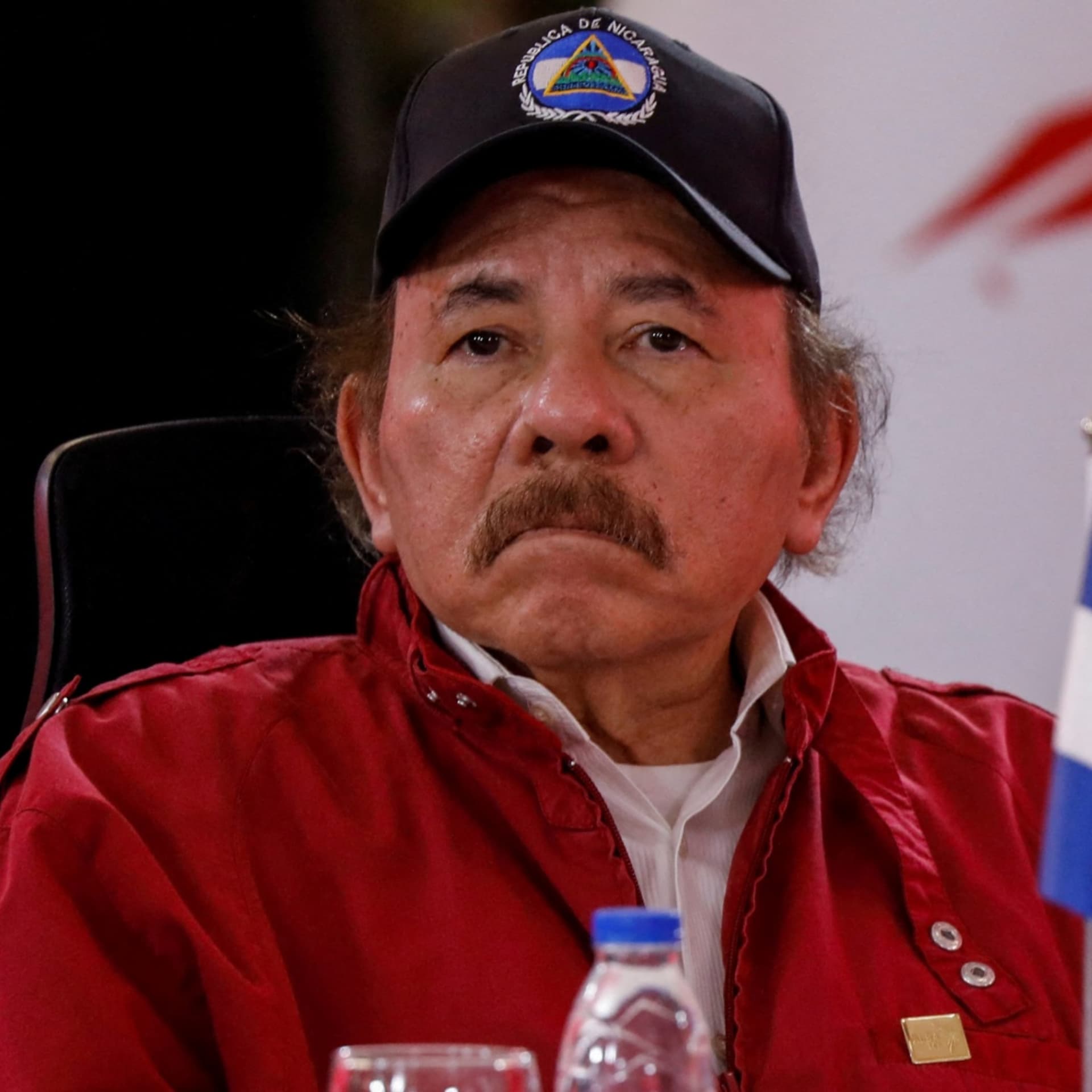
The Global News Podcast brings you the breaking news you need to hear, as it happens. Listen for the latest headlines and current affairs from around the world. Politics, economics, climate, business, technology, health – we cover it all with expert analysis and insight. Get the news that matters, delivered twice a day on weekdays and daily at weekends, plus special bonus episodes reacting to urgent breaking stories. Follow or subscribe now and never miss a moment. Get in touch: globalpodcast@bbc.co.uk Photo: Nicaragua's President Daniel Ortega with a Nicaraguan flag. Credit: Leonardo Fernández Viloria - Reuters