
In short
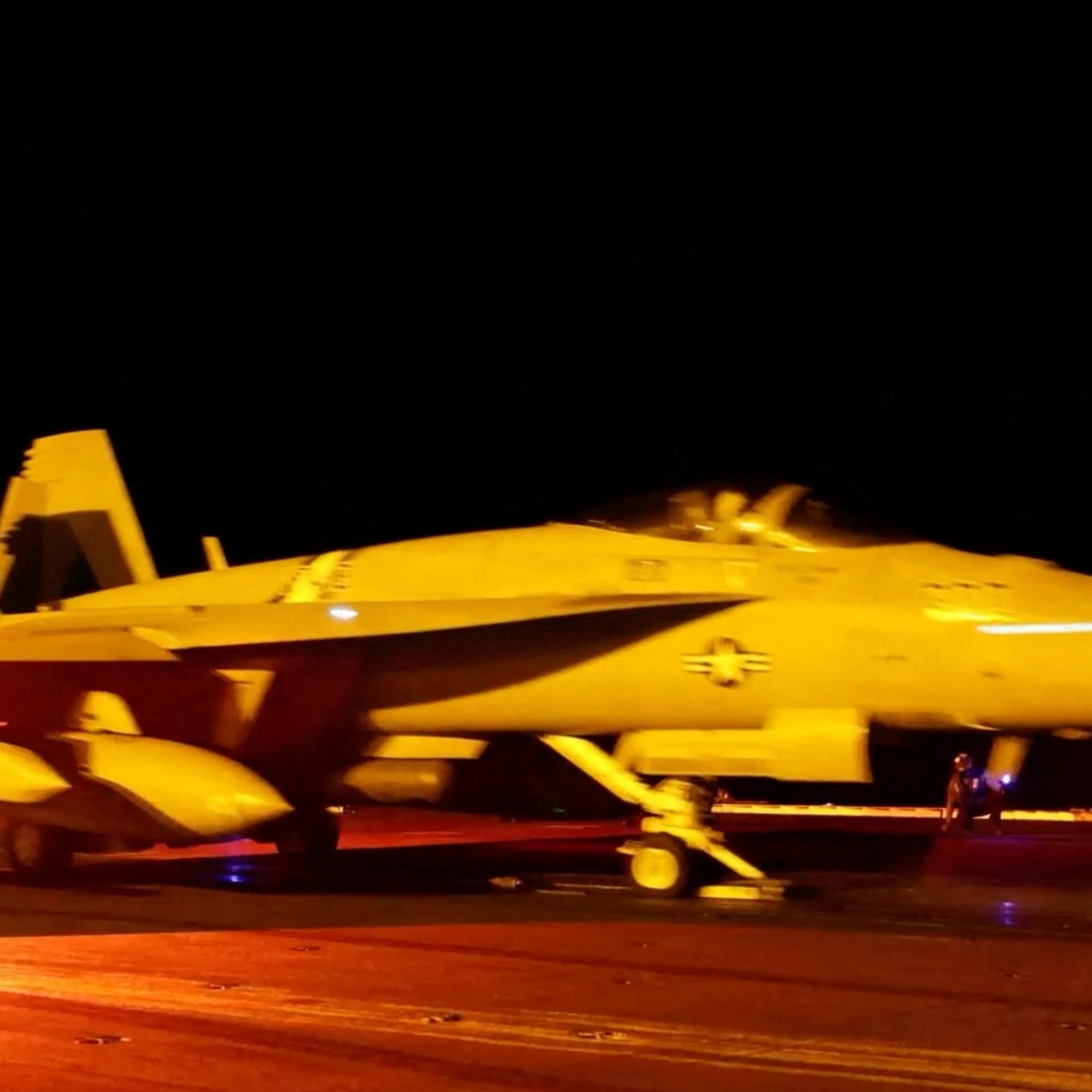
This BBC Global News Podcast episode covers multiple world headlines. Main topic: US-Iran escalation after US strikes resumed following a month-long lull. Iran’s Red Crescent says a US hit struck a house hosting a wedding in southern Iran, killing four (including a child) and injuring dozens; the US says it does not target civilians. White House spokesman Koush Desai claims Iran’s navy/air defenses and economy have been “wiped out,” and argues retaliation would be “orders of magnitude stronger.” State Department correspondent Tom Bateman describes targeted telecoms and a pattern of strikes and retaliations, while noting US munitions strain (e.g., Tomahawks, Patriot missiles) and possible political/electoral pressures.
Other segments
USS Abraham Lincoln docks in Thailand after 250 days at sea with reported mental health and supply issues; Germany accuses Russia over the Leipzig airport drone attack, with Putin alleging planted evidence; Australia expands drone shark surveillance after fatal attacks (e.g., Coogee Beach); Nepal/Tibet glacier avalanche floods—scientists cite warning-system failures; Austria’s headscarf ban for girls under 14—minister Claudia Bauer argues “European values,” while an Islamic educator criticizes forced marginalization; US Lindsay Clancy trial—postpartum psychosis vs calculated intent; BBC investigation into why Chinese EVs dominate via battery/software supply chains and price (with debate over subsidies and tariffs).
Written by AI. May contain mistakes. Listen to the episode to check what was said.
Chapters
Tap a time to open that second in VOUS Military Strikes in Iran
0:51 to 1:29
Discussion of recent US military strikes in Iran and their consequences.
“Imagine buying a toy for your kid, but it doesn't come with batteries.”
US Military Strikes in Iran
1:40 to 2:26
Discussion of recent US military strikes in Iran and their consequences.
“I'm Nick Mars and in the early hours of Wednesday, the 2nd of September, these are our main stories.”
Civilian Impact of Military Actions
2:26 to 3:56
Exploring the impact of US strikes on civilians, including a wedding incident.
“There's a big great white shark out there.”
Analysis of US Strategy and Iran's Response
3:56 to 6:15
Discussion on the effectiveness of US military strategy and Iran's capabilities.
“And so when you just look at the fact that its industrial base has also been wiped out, Iran's positions are so much weaker.”
USS Abraham Lincoln Arrives in Thailand
6:15 to 8:12
Reports on the USS Abraham Lincoln's arrival and conditions faced by servicemen.
“And in their view, it is enough to keep, you know, using these insurgency tactics against ships, firing the odd drone or rocket threatening shipping.”
Germany Blames Russia for Drone Attack
8:12 to 10:49
Germany's accusations against Russia regarding a drone attack at Leipzig airport.
“Our Southeast Asia correspondent Jonathan Head is in Patia.”
Putin's Escalating Military Strategies
10:49 to 12:49
Analysis of President Putin's military strategies and implications for Europe.
“circumvent Western sanctions following its full-scale invasion of Ukraine in 2022.”
Australia's Shark Drone Initiative
12:49 to 14:03
Exploration of Australia's new drone initiative aimed at preventing shark attacks.
“In this podcast, we often hear of drones being used in modern warfare for surveillance.”
Shark Attack Prevention Measures in Australia
14:03 to 17:02
Learn about Australia's new drone surveillance and monitoring systems to prevent shark attacks.
“So after that left hook she did lose that arm and those graphic accounts of what happened they really fueled this sense of public outrage across New South Wales.”
Flash Floods in Nepal and Tibet
17:36 to 20:22
Examine the devastating impact of flash floods and the need for better warning systems.
“Is the hit Netflix show Emily in Paris just harmless escapist TV?”
Show all 17 chapters
Austria's Headscarf Ban for Young Girls
20:22 to 25:32
Explore the implications of Austria's law banning headscarves for girls under 14.
“To Austria now, where a new law that bans girls under the age of 14 from wearing an Islamic headscarf in schools has just come into force.”
Trial of Lindsay Clancy
25:32 to 28:00
Understand the complexities of the Lindsay Clancy trial and the arguments from both sides.
“In the United States, jurors in the trial of Lindsay Clancy, the woman accused of murdering her three children in 2023, have been sent back to deliberate.”
Mental Illness and Legal Defense
28:00 to 28:38
Discussion on the implications of mental illness in legal cases.
“diagnosis in the medical books that psychiatrists use, but it's well accepted within the psychiatrist community that it is a diagnosis.”
China's Dominance in Electric Vehicles
28:38 to 29:53
Exploring how China has become a leader in the electric vehicle market.
“It's become the world's biggest exporter of EVs, despite being largely shut out of the US market.”
Battery Technology and Manufacturing
29:53 to 30:36
Insights into battery technology and its impact on EV manufacturing costs.
“The interesting thing is about 91 % of the materials that go into batteries are refined in China.”
Perceptions of Chinese EV Subsidies
30:36 to 31:43
Examining the claims of government subsidies for Chinese electric vehicles.
“Some argue that China is effectively dumping state-subsidised vehicles in the EU and the UK in order to gain market share and that these prices would not be sustainable.”
Impact of Tariffs on the EV Market
31:43 to 32:58
Analysis of tariffs on Chinese EVs and their implications for consumers.
“They have picked up all the markets that the Americans and the Europeans have left.”
Transcript
Automatic transcript. May contain errors.0:00This BBC podcast is supported by ads outside the UK.
0:30We do the things we do. And how to make better choices to help avoid costly mistakes. Each episode covers the latest research in behavioral science and dives into themes like the power of self-control, shaping your mindset for success, navigating new beginnings, and why starting over can feel so hard. Listen to choiceology at schwab.com slash podcast or wherever you listen. Imagine buying a toy for your kid, but it doesn't come with batteries. That sucks. But honestly, it's even worse when you buy business software. You end up with fragmented, disconnected systems that cost a fortune and don't talk to each other.
1:12Odoo completely changes that. Odoo comes fully complete, with all your business apps perfectly integrated and working together seamlessly. It's everything your business needs in one place, saving you time, headaches and serious money. Stop paying for missing pieces. Go to odoo.com. That's O-D-O-O dot com to learn more. This is the Global News Podcast from the BBC World Service. I'm Nick Mars and in the early hours of Wednesday, the 2nd of September, these are our main stories. Iran says US forces have hit a wedding in the south, killing four people and injuring dozens more, as the aerial campaign ramps up again following a month-long lull.
1:565 ,000 US servicemen will shortly step on land for the first time in nine months as their aircraft carrier, the USS Abraham Lincoln, docks in Thailand. Our climate editor on how many saw the early signs lead into Nepal's devastating floods. Also in this podcast, President Putin accuses Germany of planting evidence to blame Russia for an attempted drone attack last month at Leipzig airport. And... Hey guys, we recommend get out ASAP. There's a big great white shark out there. Don't go out. He's just about to jump out on top of it. The multi-million dollar scheme trying to keep Australia's swimmers safe.
2:44Last week, Washington said it would begin a campaign of sanctions against some of Iran's main trading partners. It was an attempt to bring Tehran to the negotiating table at a time when there was a lull in the military action between the two sides. Now, just a week later, with the new sanctions still largely at the planning stage, military strikes have restarted and are escalating. On Sunday, there was a US attack on Iranian rocket launchers in the Strait of Hormuz. It triggered a round of Iranian retaliations at US airbases in Jordan. Now the US has carried out a larger wave of strikes at targets along the Gulf Coast.
3:22The Iranian Red Crescent says one hit a house where a wedding was taking place, killing four people. In response to that, the US military said it does not target civilians. White House spokesman Koush Desai gave this assessment of the overall military strategy. President Trump has made it very clear that Iran should stand out and should not provoke the United States to retaliate because it will be met with the retaliation of orders of magnitude stronger. So when you look at the overall situation here, Iran's navy has been wiped out, its air force has been wiped out, its air defences have been wiped out.
3:56The Iranian economy is in disarray. you've had Iranian political leaders themselves admit that they're dealing with inflation, with supply shortages, even with petroleum, which is interesting for a country that has some of the largest oil reserves in the world. And so when you just look at the fact that its industrial base has also been wiped out, Iran's positions are so much weaker. And the United States maintains the upper hand here as it has from the beginning of this conflict. For more on the latest US attacks, I spoke to our State Department correspondent, Tom Bateman. There's been several different locations targeted along that southern coastline of Iran in the Strait of Hormuz.
4:29One of what appears to be most serious incidents that we've been talking about, where you have local officials in the Red Crescent in Syriac saying that a wedding ceremony was struck by shrapnel. It appears to be the Americans having targeted a telecoms tower. Now, what those local officials are saying is that at least four people were killed, including a child, and up to 50 people wounded from that. Now, we put those reports to the White House and the Pentagon. We've had no official word from them, although one military official is saying that they are aware of the reports which originated from Iranian state media and says the US military never targets civilians.
5:06It may be part of the reason why we had very belligerent language from the Iranians saying that they were going to respond forcefully to these American strikes and that was then followed by what appears to be missile fire from Iran once again over towards Jordan where there are US military bases. It seems that a pattern is emerging. The US strikes, it warns Iran not to, Tehran ignores that, carries out strikes, etc, etc. This is a strategy that perhaps is not working for Donald Trump. It's not working, either in a military sense or in a political and strategic sense. Because remember, six months ago, this all began with the stated intention by Mr.
5:46Trump that he would destroy and prevent Iran ever developing a nuclear program. But the problem that Mr. Trump has is the Iranians still have enough fighting power to create enough of a problem for the Americans that they have not been able either to achieve that wider objective about the nuclear program, nor a problem they didn't have at the start, which is control of the Strait of Hormuz. And the calculation on the Iranian side is they clearly believe that the Americans won't have the staying power because of how stretched the American military has become. And in their view, it is enough to keep, you know, using these insurgency tactics against ships, firing the odd drone or rocket threatening shipping.
6:26And that then, you know, by trying to prevent that, the Americans are bombing the Iranians and you then leads to these cycles of escalation, which are now seeing fatalities. So, you know, trying to contain this has proved almost impossible for Mr. Trump. You mentioned there, Tom, how stretched the US military is, particularly the Navy. Tell us a little bit more about that. Well, I mean, it's become clear over the course of the last few months that the pressure that the war itself put on American munitions was great, and that it has drained a significant number of very valuable munitions, things like Tomahawk missiles, things like Patriot air defence missiles, to the extent that America has had to draw on stockpiles elsewhere in the world.
7:13Now, the problem with that is that you have other parts of the US military, according to some recent reporting over the weekend, who have become concerned about the vulnerability that it creates in terms of America's ability to project its forces globally. And of course, the more the Iranians sense that that is an issue for the US military, the more leverage they feel it gives them to keep this military element of the campaign going because they also know about America's electoral timetable that Mr Trump and the Republican Party have midterm elections coming up where, according to some of the polling, they could fare very, very badly because of the effect this is having on the price of petrol, the price of gasoline in America.
7:53That was Tom Bateman. Well, after nine months at sea, the aircraft carrier USS Abraham Lincoln has arrived at the port of Pattaya in Thailand. The extended time away from land was mostly spent in the Middle East due to the conflict with Iran. There have been reports of deteriorating mental health conditions amongst the 5 ,000 servicemen on board and shortages of supplies. Our Southeast Asia correspondent Jonathan Head is in Patia. Once they dock, they're laying on special minibuses for these sailors. I mean, they have had a record-breaking 250 days without any port breaks at all. everyone knows that conditions on board carriers are stressful, particularly during combat.
8:36They've been involved in combat most of the time in the war against Iran. So we have had these reports coming out of significantly deteriorating conditions. That includes mental stress for the crews on board, shortages of supplies, mail not arriving, broken toilets, generally conditions that the sailors have found even worse than normal. Now, that's been reported in U.S. military media and by relatives. The U.S. Navy has insisted that the sailors are adequately supported, but they've acknowledged it's been very, very tough indeed. So once they dock, and I imagine it might take them a little bit longer to actually get into dock, those crew members are badly in need of a break.
9:16And, of course, they've come to Patti, a place that's famous for leisure. I mean, this was pretty much a sleepy fishing village until it was built up by US troops coming during the Vietnam War and using it for rest and recreation. It's become this incredibly lively, rowdy, large city offering every imaginable kind of entertainment. And that's what's in store for these sailors now. Jonathan Haidt. After weeks of indecision, Germany has said Russia was responsible for last month's attempted drone attack at Leipzig airport. The Russian embassy in Berlin has said the allegation is absurd and President Putin has accused Germany of planting evidence to blame Russia.
9:54In the incident, which happened at the beginning of August, a drone carrying an explosive device was discovered at the airport in eastern Germany, close to Ukrainian cargo planes. The German foreign minister, Johann von der Full, said he would order the closure of the Russian consulate in Bonn.
10:18The dangerous behaviour of the Russian Federation is part of a long series of attempts at destabilisation, threats, sabotage and aggression towards Europe. With the attempted attack on Leipzig, the Russian leadership has in fact made a deliberate decision to cause further significant damage to our already severely strained bilateral relationship. He also announced tighter entry controls for Russian nationals and vowed to increase pressure on Moscow's shadow fleet. Those are old tankers used by Russia to circumvent Western sanctions following its full-scale invasion of Ukraine in 2022. President Putin has called the German sanctions against Russia a new era.
10:59Arkady Ostrovsky is the Russia and Eastern Europe editor of The Economist. I think everybody has no illusions about what's going on here and Russia is now targeting military factories and will probably also target logistic hubs that supply Ukraine with weapons. It's not a surprise, really, because the Russians see that Europe is a side in the conflict. It's not an observant. It's not just financing the war. It's actually supplying Ukraine with weapons. Some of the drones and missiles are made in Europe. And if those drones are hitting Russian cities and obviously Germany is not at war and Europe is not at war with Russia.
11:42It's a legitimate target. I don't think it's a huge surprise and it kind of shows how meek the German reaction is going to be in kind of diplomatic terms. Nobody wants an open confrontation but this exchange, this escalation was expected. Putin is doing it. I think what's happening is that Putin has been in this situation of kind of a stalemate for months, and you could argue for years now on the battlefield, losing tens of thousands of men without actually making much progress. Now, that is not cost free. He feels probably it's draining economic and political resources. He's losing that kind of silent ascent, if you like, toward the elites are grumbling.
12:25And I think he feels that he needs to escalate because the settlement, the peace deal, he can't accept because, you know, he thinks that would be weak on this term. So I think what we had, the inertia scenario, is just not going to continue. I think there is going to be a step up both in attacks on Ukraine and in attacks in Europe. Arkady Ostrovsky there. In this podcast, we often hear of drones being used in modern warfare for surveillance. and to be frank, killing people. But now a new initiative in Australia is using them to try to save people. Stephanie Prentice is following this and she told me more.
13:05So Nick, the Australian state of New South Wales, it's been rolling out this$85 million strategy to try and stop shark attacks. In its latest plans, it's going to massively expand drone surveillance of beaches. They're calling it a dawn to dusk operation. It's all been triggered by a series of serious shark attacks, including one at Coogee Beach, where someone called Leah Stewart, she was a regular swimmer following safety precautions, and she fought off a four-meter-long great white shark. Eventually, people were able to drag her to shore on a surfboard, and she told local media about how she survived, including Channel 9.
13:46It was huge, and its teeth, its black little beady eyes, we were looking face to face and it got to the point where it was about 30 centimetres from my face. Like I've got to try and punch it. And in that moment I thought well which limb am I willing to lose? I'm right-handed. So I decided let's do a left hook. So after that left hook she did lose that arm and those graphic accounts of what happened they really fueled this sense of public outrage across New South Wales. So if you remember, there was a series of incidents back in January, and we saw four attacks in 48 hours, including the death of a 12 year old boy.
14:28It's all led to basically a more strategic approach now from authorities. So we've got 97 beaches being tightly monitored. We've seen drone operators getting to beaches really early as the sun comes up, sweeping the waters before the morning swimmers arrive. And it's kind of a more advanced version of a community system we've seen online. The most famous in Australia is called Drone Shark. In fact, let's quickly listen to that team at work. Massive. Whoa. Hey guys, we've got a big great white out there. We recommend get out ASAP. There's a big great white shark out there. Boy, don't go out. No, don't go out.
15:09He was just about to jump out on top of it. Oh, my goodness. So, yeah, literally someone who was about to jump on this huge great white shark that was passing by. They managed to speak to him using a megaphone. Yes. So they're basically it's a community service. They're just shouting at people to get out the water, to get away from sharks. The new government system and drones, it's more advanced. So these drones can hover over swimmers. They can emit alarms that they can give verbal instructions. And we'll also see them in beaches where drones weren't allowed before. And there's also going to be more listening stations around Sydney Harbour.
15:41So they alert people when tag sharks like great whites, bull sharks, tiger sharks pass by. And the government are also trailing more techie schemes. So there's an AI component to identify sharks faster, eventually a plan to have autonomous drones. So basically we're seeing a pretty fast implementation of a multi-layed approach to what seems to be a growing problem for Australia's swimmers and surfers. Stephanie Prentice. Still to come in this podcast, in Austria, a law banning headscarves in schools for girls under 14 has come into effect. The headscarf is not just a harmless piece of fabric. A headscarf worn by a girl, an eight-year-old girl, for instance, is a symbol of oppression.
16:37September 29th. Save on all your favorite personal care essentials and earn four times the points. Shop in-store or online for items from your favorite brands like Native, Pantene, Crest, Always, Gillette, Oral-B, and Tampax and earn four times the points. Points can be redeemed for discounts on future purchases on groceries and gas. Get these deals before they're gone. Offer ends September 29th. Restrictions apply. Offers may vary. Visit Jewelosco.com for more details. Self-directed investing. trading, full-service wealth management, automated investing, financial planning, thematic investing, retirement planning.
17:14Phew! And to think, that's just a small taste of what Schwab offers. Because Schwab knows that when it comes to your finances, choice matters. No matter your goals, investing style, life stage or experience, Schwab has everything you need, all in one place, so you can invest your way. Visit schwab.com to learn more. Is the hit Netflix show Emily in Paris just harmless escapist TV? Or is Emily ruining Paris? I'm Asma Khalid and I host the Global Story podcast from the BBC. The president of France has described the show as super positive for his country, soft power through cinema. But is TV tourism good for a city?
17:58For more, listen to the Global Story on BBC.com or wherever you get your podcasts. Decisions made in Washington can affect your portfolio every day. But what policy changes should investors be watching? Washington Wise is an original podcast from Charles Schwab that unpacks the stories making news in Washington right now and how they may affect your finances and portfolio. Listen at schwab.com slash Washington Wise. That's schwab.com slash Washington Wise.
18:36This is the Global News Podcast. More than 1 ,000 people are now confirmed to have died in the flash floods in Nepal and Tibet, and nearly 4 ,000 people remain unaccounted for. People were caught unawares by the sudden floods, but scientists investigating the incident say there were signs of growing instability on the mountainside that collapsed in the days before the disaster. They say better warning systems could have saved lives further downstream. Our climate editor, Justin Rowlett, has this assessment. Satellite images suggest the surface of the glacier involved in the avalanche in Nepal had begun to move more quickly in the days before the disaster.
19:16The rapid assessment by an international team of scientists says there were other signs that the mountainside was becoming unstable. The meltwater turned brown and a crack developed in the surrounding rock. The scientists say these clues were identified in hindsight and don't mean the avalanche could necessarily have been predicted. But the report author Jacob Steiner says the monitoring of glaciers can be effective. This is the case in Switzerland where a sensor constantly monitors the velocity of a glacier and if it suddenly speeds up, it sends a warning to an expert who then has to look at those images and has to judge whether there is an imminent threat and whether down the road below that measure needs to be blocked or not.
19:59There was no such warning system at the site in Nepal. The scientists say the avalanche moved far too fast to warn those closest to it. But further downstream, the flood took 10 minutes or more to arrive. They say a comprehensive early warning system could have used that window and potentially saved a significant number of lives. Justin Rowlat. To Austria now, where a new law that bans girls under the age of 14 from wearing an Islamic headscarf in schools has just come into force. In 2020, a similar headscarf ban for girls under 10 was struck down by the Constitutional Court because it specifically targeted Muslims.
20:39If a student violates the ban, they must have a series of discussions with school authorities and their legal guardians. If there are repeated violations, the Child and Youth Welfare Agency must be notified. And as a last resort, families or guardians could be fined. The Austrian government argues that the ban empowers young girls. Claudia Bauer is Minister for Europe, Integration and Family in the Austrian government. She spoke to Rajini Vajenafen about why this ban is being implemented. The headscarf is not just a harmless piece of fabric, A headscarf worn by a girl, an eight-year-old girl, for instance, is a symbol of oppression.
21:22Women are veiled wherever extreme Islam is on the rise. And therefore, Austria has passed the ban. Minister, that is a huge generalisation. There are many young Muslim women around the world who choose to wear the headscarf and are not in any way associated with extremism. For us, it is important to protect children, especially young girls. Schools should be a safe space where values such as equality, individual freedom and also social integration are taught. Where is your evidence that young girls are being made to wear headscarves? I think it is important that schools stay a safe place. How is wearing a headscarf not safe for a young girl who chooses to wear one?
22:08We talk to a lot of psychologists, for instance, And they see that when girls begin wearing a headscarf in a phase where the body is developing, the personality is developing at the beginning of puberty, for instance, then they begin to stand in the second row as well in classroom. We want to live in a country where girls and men and boys are able to grow up freely. We want to give them time to decide on their own how they handle the headscarf. And they shall decide at the age of religious maturity, which is in Austria at the age of 14. You talk about empowerment and choice. A survey that I've seen suggests that 93 % of Muslim women actually oppose this legislation.
22:56Well, I can understand that, but I think it is important that we stand for European values, for equality. Is that a code word for un-Islamic values, though? That's what some would argue, because this is targeting Muslims. That's what opponents of this say. No, definitely not. It is important that we stand for European values. And one of them is the equal treatment of girls and boys, of men and women. And I think that starts at a very early age. And I think no eight-year-old girl belong under a hat scarf. Well, critics of the ban argue that it fuels anti-Muslim sentiment and marginalises children.
23:37Karla Amina Bagajati supervises and organises Islamic education in public and private schools in Austria. She gave us her reaction to the ban. As many Muslims in Austria, I feel very concerned, especially as we have seen so many heads-carved debates before, and try to be very patient and dialogue-oriented to clear up as many misunderstandings as possible. If somebody has a certain view on a religious practice, a negative view, to take this as a kind of explanation and excuse to say no to it, to forbid it officially. It's not possible. Parents are very concerned and disappointed because they feel patronized rather than empowered.
24:31If we want empowerment, it can't work by forcing something. We have reports that the children even show signs of feeling not well, anxieties. We have reports of parents who say, I try to convince my daughter to put off the headscarf and to tell her, well, don't feel yourself embarrassed and no need for religious worries. It's under force and don't worry. But nevertheless, the children don't want to. And in the end, the law punishes the parents. The children feel that their parents are under this pressure. And we have parents who say, we want to guarantee a kind of bringing up where there is no pressure.
25:26And now I'm forced to pressure my child. That was Carla Amina Bagajati. In the United States, jurors in the trial of Lindsay Clancy, the woman accused of murdering her three children in 2023, have been sent back to deliberate. That's after they told the judge they were deadlocked and unable to come up with a unanimous verdict. Her lawyer argues she was suffering from postpartum psychosis at the time and therefore could not distinguish right from wrong. The prosecution argues she made a calculated intentional decision to kill them. The judge has ordered the jury to keep trying. I brought you back out because I know that this was a long trial.
26:09All right. I know there were over 80 witnesses. There were over 300 exhibits. And but because of that, I'm going to ask you to go back out, keeping in mind all the instructions that I gave you to go out and to continue your deliberations at this time. Jeremy Siegel is a presenter at WGBH News. That's a public broadcaster in Boston. He's been following the case and gave us this update. I think the fact that they haven't been able to come to a decision and told the judge that they're deadlocked is indicative of just how difficult this decision will be for jurors. They've been hearing testimony for weeks.
26:52And as you mentioned, the prosecution says that Lindsay Clancy, the mother who's on trial here, should have criminal responsibility for killing her three children. The interesting feature of this trial here is that neither the prosecution nor the defense say that Clancy did not kill her children. They're both in agreement here, but where they differ is on her state of mind at the time of the killing. So jurors have heard from prosecutors and their witnesses time and time again that while Clancy may have suffered from mental illness and been severely depressed in the postpartum state after having her child, that she was in a clear state of mind where she was able to calculate and commit these murders.
Read the full transcript
27:36Where the defense differs is that they agree that she did kill the children, but that she was in the throes of postpartum psychosis, which is a rare and somewhat unknown in medical fields diagnosis that is very dangerous and carries a significant risk of both infanticide and suicide. It involves hallucinations, lots of confusion, and it's not a technical diagnosis in the medical books that psychiatrists use, but it's well accepted within the psychiatrist community that it is a diagnosis. So the prosecution says that she may have been mentally ill, but she wasn't in the throes of psychosis. The defense says that she should not be considered criminally liable because she was in the throes of psychosis and is using an insanity defence, as it's called here.
28:27Jeremy Siegel. The American company Tesla was an early world leader in the electric vehicle market. But the country that's currently making the running in that sector is China. It's become the world's biggest exporter of EVs, despite being largely shut out of the US market. Nearly a fifth of all EVs sold in Britain are Chinese. So what's the secret of this success and why are Chinese electric vehicles so cheap? The BBC's Felicity Hanna has been investigating. Here we are. It plays a little tune every time you get in. It's very cheery. Very cheery. It's a little welcome to your car. This is Emma and she's not the only driver who wanted an electric vehicle and opted for a Chinese model.
29:13So I chose an EV primarily for the sustainability, but also, to be honest, for the fact that they are just so cheap. 18 % of electric vehicles, or EVs, sold in the UK are manufactured in China. In Western Europe, it's also hitting a record high. Chinese vehicles are competing on technology, size and availability. But perhaps more than anything else, they're competing on price. Andy Palmer has been described as the godfather of EVs for his work at Nissan on the Leaf, and he now runs the consultancy Palmer Automotive. They've got this advantage in battery technology and they've got this advantage in software technology.
29:53The interesting thing is about 91 % of the materials that go into batteries are refined in China. So they really have the supply chain sewn up. It means it's relatively easy to manufacture there as well. If you look at making an EV and you exclude the battery and let's exclude the fuel tank just to be fair on an internal combustion engine, the cost of manufacturing an EV is lower, except for the battery. The battery technology is key. So they're cheap, they're innovative, but are they ethical? A frequent criticism of Chinese car manufacturers is that the quality, innovation and price competitiveness has only been possible because of the support provided by Beijing.
30:36Some argue that China is effectively dumping state-subsidised vehicles in the EU and the UK in order to gain market share and that these prices would not be sustainable. While that is an accusation, however, that has been strongly disputed by the car makers themselves, Dr Brian Gu is co-president of the Chinese EV maker Xpeng. I don't think the Chinese government is supporting every player. In fact, there are probably more competitors in China than outside of China. I would say the Chinese company's success is because they came out of the most competitive market, I would say the fittest gym, using that analogy, and bring that technology, the efficiency and the cost competitiveness to markets outside of China.
31:18So do you think that those accusations that Chinese EV makers are dumping vehicles are genuine concerns from those governments? We don't agree with the assessment that China is producing excess capacity. In fact, we don't have enough capacity in China to produce and satisfy our demands. Chinese models are not just disrupting markets. They're also creating demand in new markets. Here's Professor Alex Close of EuroEV, a European importer and distributor of Chinese electric vehicles. They have picked up all the markets that the Americans and the Europeans have left. I used to work for Ford. Ford had a real big plant in Brazil.
32:00Now, suddenly, Ford wasn't that successful profitability-wise in Brazil anymore, so they decided to leave. And what happened? BYD picked it up. And now BYD is the battery electric vehicle of Brazil. We are seeing governments respond to this. So, for example, there are tariffs on Chinese EVs coming into Europe, which make them seem more expensive. Do you think that's fair to consumers? The European car industry, I think, shouldn't vanish, but it needs to transform. It is unfair, but at times it might be necessary to help an industry over a time of change. But what's really important is to make the change happen.
32:42European governments are understandably anxious about their homegrown car makers and their workforces. It's a concern shared by the US, which has leveled tariffs of 100 % on Chinese-made vehicles. The question is whether drivers will share those concerns, or if they simply want to get behind the wheel of a much cheaper car. Felicity Hanna And that's all for us for now If you want to get in touch you can email us at globalpodcast at bbc.co.uk You can also find us on X at BBC World Service Use the hashtag globalnewspot And don't forget our sister podcast The Global Story which goes in-depth and beyond the headlines on one big story This edition of the Global News Podcast was mixed by Nicky Brough The producer was Alice Adderley The editor is Karen Martin.
33:33I'm Nick Miles. And until next time, goodbye.
From the publisher
The Iranian Red Crescent says four people including a child were killed by US strikes on a wedding in southern Iran as fighting escalates. It said over 50 people were wounded when shrapnel hit a residence in Sirik county, which lies on the Strait of Hormuz. The US military said it was aware of the reports but that it never targeted civilians. Iran launched retaliatory attacks at US bases in the region, with strikes reported in Bahrain, Kuwait and Jordan. Also, President Putin accuses Germany's leader of trying to shore up his position by blaming Russia for a series of hybrid attacks on infrastructure. A new law in Austria that bans girls under the age of 14 from wearing an Islamic headscarf in schools comes into force. Why Chinese electric vehicles are so cheap. And the drone technology being used to save people from shark attacks.
The Global News Podcast brings you the breaking news you need to hear, as it happens. Listen for the latest headlines and current affairs from around the world. Politics, economics, climate, business, technology, health – we cover it all with expert analysis and insight. Get the news that matters, delivered twice a day on weekdays and daily at weekends, plus special bonus episodes reacting to urgent breaking stories. Follow or subscribe now and never miss a moment. Get in touch: globalpodcast@bbc.co.uk
Image description: A military aircraft ready to take off as US forces carry out strikes on Iranian military target. Credit: US Central Command via Reuters



