In short
Global News Podcast Episode Summary
Episode Title
US allies reject Trump's call for help in Strait of Hormuz
Episode Description In this episode, the podcast discusses U.S. President Donald Trump's repeated calls for international support in securing the Strait of Hormuz amid rising tensions and fuel shortages. The episode covers various global incidents including the humanitarian crisis in Lebanon, the impact of a fuel blockade on Cuba, AI-enhanced financial scams, and a breakthrough in Parkinson's disease treatment using recycled plastics.
---
Main Stories
U.S. Call for International Support
- Context: President Trump has urged NATO allies, particularly the UK and Germany, to assist in securing the Strait of Hormuz, a critical oil shipping route.
- Reactions: Many allies have shown reluctance to engage militarily, emphasizing NATO’s defensive nature.
- Statements: Trump expressed disappointment over allies' lack of eagerness to contribute, particularly highlighting the UK and Germany.
- Global Oil Prices: The tensions and attacks on oil tankers have led to rising fuel prices, raising concerns about the cost of living.
Humanitarian Crisis in Lebanon
- Situation: Over 800,000 people displaced due to Israeli bombardments targeting Hezbollah.
- Reports: Destruction of homes and the struggle of displaced individuals to access basic needs.
Fuel Crisis in Cuba
- Impact of U.S. Blockade: Cuba faces a total electricity grid collapse amid a fuel blockade by the U.S.
- Daily Life: Citizens report severe shortages affecting their livelihoods and access to basic services.
AI-Enhanced Scams
- Statistics: AI-facilitated financial scams have become five times more profitable than traditional methods, resulting in significant global losses.
- Expert Insight: Kelly Richmond Pope discusses the vulnerabilities introduced by AI, making individuals susceptible to sophisticated scams.
Breakthrough in Parkinson's Treatment
- Research Development: Scientists at the University of Edinburgh have developed a method to convert plastic waste into levodopa, a key Parkinson's medication.
- Environmental Impact: This innovation could help address plastic pollution while advancing medical treatments.
Chelsea Football Club Fine
- Financial Misconduct: Chelsea FC fined over $14 million for breaking financial rules regarding undisclosed payments to agents.
- Comparison: The fine raises questions about fairness compared to other clubs that received harsher penalties.
Tribute to Margareta Magnusson
- Legacy: The author of "The Gentle Art of Swedish Death Cleaning" passed away at age 92, promoting the idea of organizing belongings to lessen the burden on loved ones after death.
---
Key Takeaways
- International Relations: Trump's approach to U.S. alliances is increasingly strained, particularly regarding military commitments.
- Humanitarian Concerns: The crises in Lebanon and Cuba highlight ongoing global humanitarian emergencies exacerbated by geopolitical tensions.
- Technological Challenges: The rise of AI in fraud underscores the need for individuals and institutions to adapt to new security challenges.
- Sustainability in Medicine: Innovations in recycling plastics for medical use signify a potential shift in manufacturing and environmental responsibility.
- Financial Accountability in Sports: The Chelsea FC case raises important discussions about transparency and fairness in sports finance.
---
Conclusion This episode of the Global News Podcast encapsulates significant global events affecting nations, economies, and individual lives. The interplay between politics, technology, and humanitarian issues continues to shape our world, highlighting the complexities and challenges faced today.
For further engagement, listeners can contact the podcast via email at globalpodcast@bbc.co.uk or follow on social media.
---
Additional Resources
- [BBC News YouTube Channel](https://www.youtube.com/user/BBCNews)
- Related Podcast: [The Global Story](https://www.bbc.co.uk/programmes/p06rj9xz) for in-depth analysis on major news topics.
Written by AI. May contain mistakes. Listen to the episode to check what was said.
Chapters
Tap a time to open that second in VOTrump's Call for Naval Support
2:24 to 3:10
Discussion on Trump's appeal to allies for naval support in the Strait of Hormuz.
“And the English Premier League club Chelsea is hit with a record fine for breaking football's financial rules.”
Global Response to Oil Crisis
3:10 to 6:04
Analysis of the international response to rising tensions and oil prices.
“I always said, you know, the problem with NATO is we'll always be there for them, but they'll never be there for us.”
Impact of War on Gulf Alliances
6:04 to 8:13
Exploration of changing alliances in the Gulf and economic implications of the war.
“given what's happened to global oil prices, to the stranglehold that the Iranians have managed to maintain around the Strait of Hormuz.”
Economic Effects of War on India
8:13 to 10:41
Impact of rising oil prices on Indian restaurants and households due to LPG shortages.
“Let's take a closer look now at the economic impact of the war as those oil and gas prices rise.”
Lebanon's Crisis Amid War
10:41 to 14:01
Report on the humanitarian crisis in Lebanon due to ongoing Israeli strikes.
“So you can understand why this is critical.”
Cuba's Electricity Crisis Amid Fuel Blockade
14:01 to 14:28
Learn about the dire electricity situation in Cuba due to a U.S. fuel blockade.
“and the Lebanese are definitely bracing themselves for its consequences.”
Impact of Power Outages on Daily Life in Cuba
14:28 to 15:40
Explore how the electricity crisis affects daily life for Cubans.
“Last month, Washington imposed a near total fuel blockade on Cuba, and it's having a big impact.”
Public Sentiment in Cuba: Blame and Discontent
15:40 to 16:34
Understand the mixed sentiments towards the U.S. and Cuban government amid the crisis.
“and, you know, everyday life, economic life, certainly, but even everyday life has pretty much come to a standstill.”
Trump's Vision for Cuba's Future
16:34 to 17:15
Hear Donald Trump's statements regarding Cuba and its governance.
“That shows you that there is considerable sort of anti-government sentiment as well.”
Cuban Government's Response to U.S. Pressure
17:15 to 18:14
Learn about the Cuban government's attempts to cope with U.S. pressure and internal challenges.
“Around about the same time as that, the Cuban government was saying that it would allow Cubans living abroad to invest back in the country, back in Cuba.”
Show all 18 chapters
The Rise of AI in Financial Fraud
21:28 to 22:31
Examine how AI is transforming financial fraud and its implications.
“That's K-A-C-H-A-V-A dot com, code NEWS.”
Victim Stories: The Impact of AI Fraud
22:31 to 23:36
Hear a victim's experience with AI-driven romance fraud.
“And he said, well, you'll have to pay me because I love you.”
Challenges in Combating AI-Enhanced Fraud
23:36 to 25:40
Understand the difficulties in combating AI-driven fraud and its consequences.
“When you think about AI powered voice cloning, deep fake videos and video calls, AI allowing you to create very, very personal phishing and spear phishing type campaigns to victimize people.”
Innovative Use of Plastic Waste in Medicine
25:40 to 27:20
Discover how researchers are transforming plastic waste into Parkinson's disease treatment.
“Scientists say that they found an extraordinary new use for one of the planet's biggest pollutants, plastic.”
Chelsea Football Club's Financial Scandal
27:20 to 28:00
Learn about Chelsea's record fine for financial rule violations and its implications.
“There's been a record broken on the world's most famous footballing stage, England's Premier League.”
Chelsea's Financial Dilemma
28:00 to 29:40
Explore Chelsea's financial issues and the implications of a recent ruling.
“many of the players who helped them win those trophies have been signed through secret payments to unregistered agents.”
Swedish Death Cleaning Explained
29:40 to 31:30
Learn about the concept of Swedish death cleaning and its cultural significance.
“Now, getting your affairs in order as you approach the end of your life is something that many people try to do.”
Living Exuberantly Near the End
31:30 to 32:48
Discover the advice from Jane Magnusson about embracing life and indulgence.
“And I told him and then he was silent for a while.”
Transcript
Automatic transcript. May contain errors.0:00This BBC podcast is supported by ads outside the UK.
0:29Schwab. Visit schwab.com to learn more. This podcast is sponsored by Pocket Hose. I'm a mom and a homeowner, so I feel like I'm always outside using a hose for something. And I used to go through a new hose every year because of kinks and tangles. I'm definitely not gentle with my hose. I drag it across the driveway, around the yard, and I just wanted something that's easy and durable. That's why the Pocket Hose Ballistic has honestly been such a great upgrade for me. It's super lightweight, easy to manage, and easy to store. You turn the water on and it grows, and when you turn the water off, it shrinks back down to pocket size.
1:05And I love that it's reinforced with a liquid crystal polymer used in bulletproof vests, so it feels really tough and long-lasting. For a limited time, when you purchase a new Pocket Hose Ballistic, you'll get a free 360-degree rotating pocket pivot and a free thumb drive nozzle. Go to pockethose.com slash podcast. That's pockethose.com slash podcast for your two free gifts with purchase. Pockethose.com slash podcast.
1:35This is the Global News Podcast from the BBC World Service. I'm Nick Miles, and in the early hours of Tuesday, the 17th of March, these are our main stories. President Trump repeats his call to allies for keeping the straight off Hormuz open, but its falling on deaf ears. In Lebanon, more than 800 ,000 people have been forced to flee their homes and towns because of Israeli bombardments. The growing toll of daily life in Cuba from the US fuel blockade. Also in this podcast. Some people do find it weird, but I mean, we're also Swedes. We have Bergman, we have I am death, we have all these things.
2:17after the death of the woman who brought us Swedish death cleaning, a tribute to her work from her daughter. And the English Premier League club Chelsea is hit with a record fine for breaking football's financial rules.
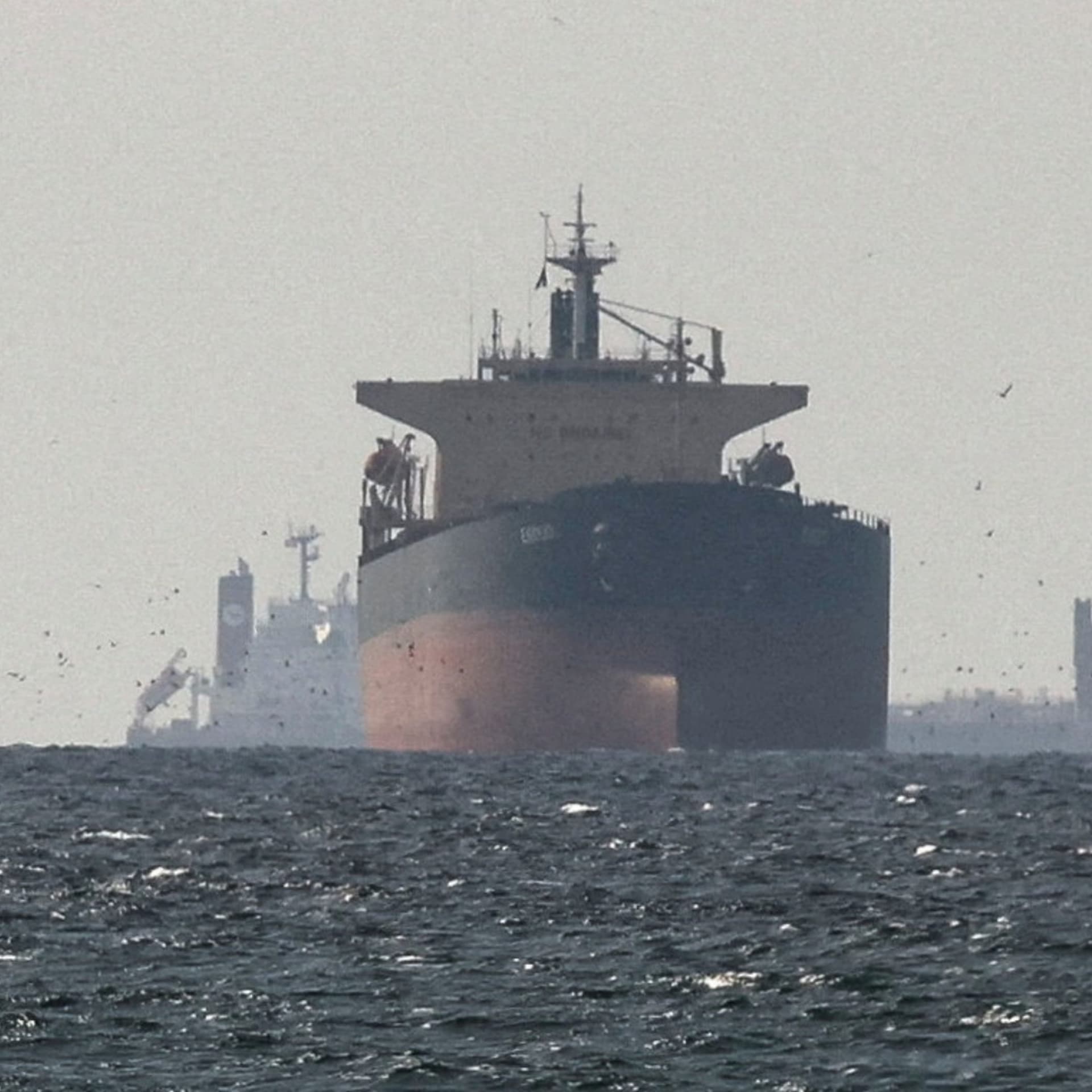
2:35All is not going the way Donald Trump was hoping for in the war with Iran. Iranian attacks on commercial oil tankers in the Strait of Hormuz have dramatically reduced the amount of oil and natural gas passing through that narrow stretch of water. And that means fuel prices are rising and governments and the rest of us are worried about what that means for the cost of living. So how is that going to change? Well, President Trump has again called on leaders from Europe and beyond to send naval vessels to secure the straits. But there is increasing resistance to that. More on that in a moment. But first, this was the US President in the White House on Monday.
3:12I always said, you know, the problem with NATO is we'll always be there for them, but they'll never be there for us. And when I hear the U.K., which we sort of considered the Rolls Royce of allies, right, wouldn't you say? They were the oldest and they were going to be there. And I say it would be really helpful if you'd send over a couple of ships. And if you have some mind sweepers, which they do, be very helpful. And the prime minister is a nice man. I think he's a very nice guy. He says, well, I'd like to ask my team. I said, you don't have to worry about a team. You don't have a team. You're the prime minister.
3:49You can make a decision. So it was very disappointing. And then after we obliterated them and destroyed their military, the whole thing, and it became a much safer zone, he said, we're going to send over two aircraft carriers. I said, I don't want them anymore. Well, he went on to say that China and Japan should be thanking him and helping out, amongst others. Many of the countries, South Korea gets a tremendous percentage of their oil and therefore their energy from the straits and or as they call it, the strait. And they should be not only thanking us, they should be helping us. What does surprise me is that they're not eager to help.
4:34Back in Europe, after a meeting of EU foreign ministers, the bloc's foreign policy chief, Kaya Callas, said there was no appetite to send military vessels to the Gulf. The German Chancellor, Friedrich Metz, agreed. NATO is a defensive alliance, not an interventionist one. And that is why NATO has absolutely no role to play here. Our State Department correspondent, Tom Bateman, has been following what he says is a frustrated president over the past few days. He named the UK once again and really singling out the UK, I think, here is an example in his view of how countries were not showing the kind of commitment that he was calling for.
5:12He also alluded, I think, to Germany. He talked about a country that has 45 ,000 US troops on its soil that's been, you know, that have been there for many decades. And the US is protecting this country. And he implied they're not going to help either. And he's pretty unhappy about that. There was a sort of veiled threat, really, because he said, and he said this on Air Force One and he repeated it, that he would remember the countries that, in his view, are not willing to help here. He said that he spoke to about seven countries that they've got in mind for this apparent coalition to keep the Strait of Hormuz open.
5:44At very best, the U.S. is getting a lukewarm response from just a few countries over this. There is a kind of guarded noncommittal from some and then an outright rejection from others, particularly Germany. And I think what you're seeing here is clearly the strategy for the Americans is going pretty badly wrong here, given what's happened to global oil prices, to the stranglehold that the Iranians have managed to maintain around the Strait of Hormuz. And this is Mr. Trump now turning to America's traditional allies, having spent really many months insulting quite a few of them. And there's no kind of clear, quick solution for Mr Trump, which is why his political opponents, I think, have been pointing to, in their view, the lack of a coherent plan in the run up to this, given it was clear the kinds of things the Iranians would try and do.
6:33As we heard there from Tom, a lot of uncertainty about what America's plan for this war is. Our international editor, Jeremy Bowen, has been looking at what could happen next. Wars often act as catalysts, speeding up changes that were probably going to happen anyway, but then they get this turbo boost behind them. So if you look at the Gulf, first of all, and we're seeing all the damage and those pictures coming out of it, loads more fires. Those Gulf countries have had serious differences between each other, amongst each other. But now I think, and this is what I'm hearing, is that there's a sense now that they're going to have to reassess.
7:09Yes, of course, they will keep close to America as much as they can. But the word I'm hearing is things like diversify. We need to diversify our alliances because where has this alliance with America actually got us? How have they protected us? Where does this security alliance work? And, of course, always waiting in the wings, China has shown a lot of interest in the Gulf in the past. And stronger language coming from the Europeans, from the EU, from the Germans, Boris Pistorius, the defence minister. this is not our war, we didn't start it. You know, the split is back in a big way. And I think that now that they've decided, they've concluded that appeasing Trump doesn't work, it makes it easier to say no.
7:51And one more thing, and that is Iran itself. It's been known for a long time that the Strait of Hormuz is a choke point in the world. But the conventional wisdom always was that the Iranians would not try and block it because they need it too. But actually, I think they're being shown now that however weak they get, as long as the regime is still there, survival is of course their absolute priority. Jeremy Bowen. Let's take a closer look now at the economic impact of the war as those oil and gas prices rise. That in turn is hitting petrol prices, heating costs and family budgets around the world.
8:25In India, because of a liquefied petroleum gas shortage, street food stalls and restaurants are even changing their menus. Biryani is one of Kolkata's most famous dishes. Slow cooked, for hours it is energy intensive and the restaurant owners are feeling the heat.
8:47Our work is with commercial gas cylinders and due to the ongoing scarcity we just can't find any right now. The stock we have will only last us a couple more days at most. Since our restaurant is known for its biryani, we cannot stop serving that by any means. But there are some special dishes that are made to order. They have stopped those dishes completely. There are several people who work in this restaurant. Their livelihood is dependent on this. I have enough to suffice for the next two or three days. There's a beautiful bazaar here during Eid. If the gas supply issue doesn't get resolved before then, all the shops here will shut down.
9:26But Iran has now allowed two Indian ships carrying LPG to pass through the Strait of Hormuz, with one arriving safely at Gujarat's Munda port on Monday and the other scheduled to reach on Tuesday. Our correspondent in Delhi, Aronadon Mukherjee, has more. Well, this is certainly going to be a big relief, given that the Indian government, as early as last evening in a briefing, in a press briefing, had said that the situation regarding LPG is a matter of concern, even though there is no need to panic. But, you know, these kind of supplies that are coming in at a very crucial time will definitely be a big breather.
10:04It also demonstrates, as the Indian government is trying to pitch it to be, the ability for the establishment to still have some sort of diplomatic channels available with Iran. That's what the foreign minister also mentioned in his recent interview to the Financial Times, which came out yesterday, where there are some sort of diplomatic conversations that are going on, which are allowing these tankers to pass through. So at least two of them have managed to cross over. You know, this is coming amidst reports of, in some points in India, people queuing up for their LPG cylinders. It is critical because still 300 million users are consumers of LPG.
10:38So households, many of them depend on it. Many small eateries, small businesses depend on it as well. So you can understand why this is critical. Having said this, the question still remains, you've got some tankers in, what about the future? What about the next few weeks? because this is going to be a critical issue. So it doesn't solve the problem, but it definitely helps a little bit in the current pressure circumstance. The second big front in the war in the Middle East continues to be Lebanon, where Israel is still firing a barrage of air and artillery strikes on the south. And where the Israeli military has now confirmed it has begun what it calls limited ground operations, concentrating on targets associated with Hezbollah.
11:17The Lebanese health ministry says Israeli attacks in the first two weeks of this war have killed 850 people. The BBC's Karine Torbay in the Lebanese capital Beirut described the situation to my colleague Paul Henley. Over 800 ,000 people at the moment are displaced away from their houses. A lot of houses have been completely destroyed. Whole buildings in some cases are completely reduced to rubble. These people first had to endure this for a lot of them for the second time in two years, you can imagine it's a very, very difficult and challenging situation. The left was nothing on them. And they are just counting on the very little support and aid they can receive either from the UN agencies, from the government, from local NGOs.
12:09But all of it doesn't really add up to even, you know, the very basics. It's just merely surviving on whatever little they can get. And all the signs are that the disruption is going to continue. The IDF says it's conducting new ground operations, but it describes its offensive as limited and targeted. It's not going to be limited and targeted if they involve the number of reservists potentially being called up, is it? Well, they are calling up so many different units as well to take part in, they call it as a defensive limited operation, ground operation. But in fact, there are lots of questions in Lebanon and lots of concerns and uncertainty whether this could be the start of something much bigger and much more dangerous, like long term occupation of large parts of the country.
13:01But this doesn't seem to be a walk in the park for the Israelis. They have been trying for the last few days to hold more positions inside Lebanon, to consolidate already existing positions in the country, and to advance further deep into the south of Lebanon. It doesn't seem to be quite easy because they're met with lots of resistance from Hezbollah that is launching two types of attacks against the Israeli forces. The first type of attacks is basically launching rockets towards Israeli positions and Israeli towns in Israel, and also attacking troops, Israeli troops in Lebanon, or as they are trying to get in Lebanon.
13:45And we have had reports of man-to-man confrontations in some cases, and clashes. So it doesn't seem to be easy, but it seems to be a grand and big operation that the Israelis are bracing themselves for and the Lebanese are definitely bracing themselves for its consequences. Corrine Torbay. And we have more on the US-Israeli war with Iran on our YouTube channel. Search for BBC News on YouTube and you'll find Global News Podcast in the podcast section there. There's a news story available every weekday. President Trump and a number of US presidents before him have been very explicit in their calls for a change of government in Havana.
14:28Last month, Washington imposed a near total fuel blockade on Cuba, and it's having a big impact. Early on Monday, there was the first total collapse of the island's electricity grid. Since last night, it has been 24 hours without electricity. On some days, we have gone without for 17 hours, depending on how the connection to the system is and how the systems are doing. It will be two or three days without electricity, and what little we have to eat spoils. Nobody says anything, and nobody has answers for anything. We can't do anything. I eat in the dark, I have breakfast in the dark, I shower in the dark, always everything in the dark, all night.
15:12What else can I say? I got more from BBC Monitoring's Pascal Fletcher, a former Cuba-based reporter who's now in Miami. I wouldn't want to minimize in any way the sort of the really dire situation that exists there. If you can just imagine, you know, everything that you take for granted in your daily life, electricity, water, piped water, pumped water, food, medicines, even the most basic, aspirins, going to the doctor, public transport, everything for, you know, a couple of for several weeks now and even longer has been really seriously affected by this. and, you know, everyday life, economic life, certainly, but even everyday life has pretty much come to a standstill.
15:51A few moments ago, we heard one Cuban resident saying nobody tells us anything and nobody knows anything. Do people blame the Americans for this or the Cuban government? I think you'll find a bit of both, certainly. You know, obviously, there are people who still support the system and they will tend to emphasise, if you like, the measures being taken by the US administration, you know, the shut off, particularly of oil supplies. But it's also true that, you know, it's very visible, considerable discontent about the situation. And this has sometimes exploded into, you know, targeting the actual, you know, existing government.
16:25We did see on Friday an attack on a Communist Party municipal committee in a town in central Cuba, Morón. And that was significant. That shows you and, you know, shouts of things like freedom and down with communism, graffiti on the walls. That shows you that there is considerable sort of anti-government sentiment as well. Pascal, as people coped on Monday without electricity, Donald Trump was asked about how he saw the future of Cuba. Let's hear what he had to say. You know, all my life, I've been hearing about the United States and Cuba. When will the United States do it? I do believe I'll be the honor of having the honor of taking Cuba.
17:04That'd be good. That's a big the honour. Taking Cuba. Taking Cuba in some form, yeah. Taking Cuba. I mean, whether I free it, take it, I think I can do anything I want with it. Around about the same time as that, the Cuban government was saying that it would allow Cubans living abroad to invest back in the country, back in Cuba. Do you see that as a coincidence that that was happening at the same time as this blockade? No, it's certainly not a coincidence. The, you know, the Cuban government and is seeking to respond. We've already had some announcements of prisoner releases, although they didn't want to link it to US pressure.
17:41But certainly they're probably facing the most pressure they have for decades, maybe back since, you know, the collapse of the Soviet Union. When I actually was in Cuba, and even then we went back to, you know, ox carts and bicycles. But of course the resilience of the system, you know, we're 25 years on, is much weaker now. There's much less political support. So, you know, it really is a much worse situation. But certainly they are trying to sort of, you know, make some kind of gestures. But I think, you know, with what Trump's saying, we don't really know what's going to happen next. Pascal Fletcher.
18:17Still to come in this podcast. Feels like just the start for what could be a really exciting point for, you know, industry and for the way that we use these bacteria. Researchers find an extraordinary new use for old plastic, helping to treat Parkinson's disease.
18:55a new client. There are no monthly account fees or minimums, and you get free instant withdrawals to eligible accounts 24-7, so you always have access to your money when you need it. And when you're ready to invest, you can transfer your cash to one of Wealthfront's expert-built portfolios in just minutes. More than 1 million people already use Wealthfront to save and build wealth with confidence. Get started today at Wealthfront.com. 3.3 % base APY via Program Banks as of January 30, 2026. It is representative variable, requires no minimum, and is earned on funds swept to program banks. Instant withdrawal subject to conditions boost up to$150 ,000.
19:29Cash account offered by Wealthfront Brokerage LLC member FINRA SIPC, not a bank. Investing involves risk, including possible loss of principal investment advisory services provided by Wealthfront Advisors LLC and SEC registered investment advisor. Puerto Rico is having a moment of global attention. As companies reshore and rethink supply chains, they're choosing a U.S. jurisdiction operating under federal law with competitive tax incentives designed for long-term growth, not culture or business, culture and business. Puerto Rico. It's not what's next, it's where. Visit investpr.org forward slash business.
20:04This message comes from Schwab. At Schwab, how you invest is your choice, not theirs. That's why when it comes to managing your wealth, Schwab gives you more choices. You can invest and trade on your own, plus get advice and more comprehensive wealth solutions to help meet your unique needs. With award-winning service, low costs, and transparent advice, you can manage your wealth your way at Schwab. Visit schwab.com to learn more. Craving the coffee flavor you love, but without the caffeine? Cachava's got you covered with their newest coffee flavor. This all-in-one nutrition shake delivers bold, authentic flavor crafted from premium decaffeinated Brazilian beans.
20:44Quality nutrition shouldn't be complicated. Just two scoops of cachava's all-in-one nutrition shake, and you've got 25 grams of protein, 6 grams of fiber, greens, and so much more. Whether you're craving that coffee taste to kickstart your morning ritual, or as a nutrient-packed reward to round out your afternoon, cachava keeps you fueled and satisfied wherever your day takes you. Plus, it actually tastes delicious. No fillers, no nonsense. Just the good stuff your body craves. And for the times you feel like switching it up, you've got seven flavors to choose from, all with the highest quality ingredients.
21:18Treat yourself to the flavor and nutrition your body craves. Go to cachava.com and use code NEWS. New customers get 15 % off their first order. That's K-A-C-H-A-V-A dot com, code NEWS.
21:36There are, it seems, fewer and fewer areas of life untouched by artificial intelligence. And in case there was any doubt, we can now definitely add fraud to that list. New figures from the International Criminal Police Organisation, or Interpol, show that AI-enhanced duping is now almost five times more profitable than traditional methods. An estimated$442 billion were lost worldwide last year to financial fraud, much of it orchestrated in part by AI. The BBC spoke to one victim from England, Sarah, not her real name, who was a victim of romance fraud. Not long after the death of her husband, Sarah fell for someone online who claimed to be an American serviceman.
22:22Soon afterwards, he started asking her for money. Eventually, she lost over$120 ,000. Her voice is spoken by an actor. And he said, well, you'll have to pay me because I love you. And I said, well, it's a bit too soon to say I love you. And he's like, well, I do love you because, you know, you're my only woman. Then one particular day, he messaged me and said, oh, just to let you know, but my son has died in a car crash, but I need money to pay for the hospital. And then this year he was sort of saying, you know, I want to come over this, that and the other. And I said, no, because technically I have lost£90 ,000 to you and I can't give you any more.
23:03Kelly Richmond Pope is a professor of accounting at DePaul University in Chicago. She told my colleague Vishla Sripathma what types of fraud we should be particularly looking out for. We are still, as a population, very trusting. And I think what has happened is technology has allowed us to be even easier to be manipulated. And when I think about the prevalence of AI use in fraud techniques, it's quite startling. When you think about AI powered voice cloning, deep fake videos and video calls, AI allowing you to create very, very personal phishing and spear phishing type campaigns to victimize people.
23:52I mean, AI has really made it easier for us to become victims and for us to not be able to detect the red flags that we once might have been able to detect very, very quickly. I often think about myself. I do a lot of speaking and my voice is places. So it would be very easy for someone to sound like me and probably using some type of AI tool to create all the social media characteristics that you could become me and sound like me and maybe get through someone's security protocol. So I think we are at a very, very vulnerable place, all of us. And I don't know that we know how to really protect ourselves any longer.
24:35It's interesting because businesses, particularly financial services, for example, will be really keen on developing security systems. Do you think that's possible in the way that people that are trying to scam people out their money are becoming more sophisticated? Do you think businesses are able to develop their security technology at the same pace? I think that it is easier to rein in controls when you're only talking about security measures. But the minute you put a person, a human being in that equation, that's the issue. I mean, how do you tell a senior citizen who picks up the phone that it's not their grandchild that might be traveling abroad, that they don't need$5 ,000 wired to them?
Read the full transcript
25:26So I think there are some things that can happen that organisations, that financial institutions can do. But I think the minute you put a human being in the equation, all bets are off. It's a little bit harder to manage and control. Kelly Richmond Pope there. Scientists say that they found an extraordinary new use for one of the planet's biggest pollutants, plastic. Researchers at the University of Edinburgh in Scotland had developed a way to turn discarded plastic bottles into a key medicine used to treat Parkinson's disease. With more details, here's Lucy Acheson. Around 50 million tonnes of polyethylene terephthalate, the plastic widely used in food and drink packaging, is thrown away every year.
26:09Now scientists at the University of Edinburgh say they've found a way to convert that waste into levodopa, the gold standard treatment for Parkinson's disease, which helps restore dopamine levels in the brain and improve motor function. The process uses specially engineered E. coli bacteria. First, the plastic is broken down into its basic chemical building blocks. The bacteria then transform those compounds through a series of biological reactions, producing the medicine in just over a day and at room temperature. Researchers say that makes it far less energy intensive than conventional pharmaceutical manufacturing.
26:45Professor Stephen Wallace, who led the study, says this could be the beginning of a new era. This is part of a sort of emerging technology that's called engineering biology. And we're only really sort of getting to grips with the potential that this technology could have for the future. It feels like just the start for what could be a really exciting point for industry and for the way that we use these bacteria. The team is now working with industry partners to see if the process can be scaled up. If it can, scientists say plastic waste could one day become a valuable raw material, helping to produce medicines while tackling one of the world's biggest environmental problems.
27:20Lucy Acheson. There's been a record broken on the world's most famous footballing stage, England's Premier League. Except it's not a record those involved will be particularly proud of. Chelsea Football Club has been fined more than$14 million, the league's biggest ever fine, for breaking financial rules. Our reporter Will Chalk told me this is to do with a period when Chelsea were riding high. Yeah, very much so. One fans will remember fondly, between 2011 and 2018, you've got manager Jose Mourinho, a club legend. He was in his second spell in charge and they won six trophies. Except, according to this 28-page ruling from the Premier League, many of the players who helped them win those trophies have been signed through secret payments to unregistered agents.
28:08So this ruling found the club have made 36 payments, adding up to more than$60 million. And they mainly went to third parties in the British Virgin Islands. Will, in a league worth tens of billions of dollars, many people might say that a$14 million fine is a drop in the ocean. Yeah, they well might. But the Premier League does say there are mitigating circumstances. So these are things like the fact that the club's current owners, Blue Co., reported themselves for investigation after noticing the discrepancies when they bought the club from the previous owner, Russian businessman Roman Abramovich.
28:45And because of this, and I think the most crucial thing for most Chelsea fans, they've managed to avoid a points deduction or a ban on signing new players for now. Football finance expert Kieran Maguire from the University of Liverpool says that is unlikely to go down well with other clubs who have been sanctioned. If I was a fan of Everton or Nottingham Forest or Leicester, all of whom have had significant points deductions in the last two or three years, I would be asking why have Chelsea not suffered a points deduction? And I think the Premier League's response to that is that you only get a points deduction if you've lost more than£105 million over three years.
29:24And even if you put these payments into Chelsea's books, Chelsea actually never went above that limit. Now, as we've just heard, this is just one of the clubs whose financial dealings are under the spotlight at the moment. So this story and this issue not going anywhere anytime soon. Will Chalk. Now, getting your affairs in order as you approach the end of your life is something that many people try to do. It's a deeply personal and private act, but one that Margarietta Magnusson became famous for popularising. Ms Magnusson, a writer from Sweden who herself has just died at the age of 92, brought out the best-selling book The Gentle Art of Swedish Death Cleaning back in 2017.
30:06The central idea was organising possessions to avoid burdening loved ones. Here she is talking about it on a TV documentary. The standing is death cleaning. You want to get rid of a lot of things that you have collected or have in your home for a long time. One day when you're not around anymore, your family would have to take care of all that stuff. I don't think that's fair, really. Margarietta's daughter, the filmmaker Jane Magnusson, has been speaking to Sean Lay. It's not weird at all because we will all die. She was very open to talking about it because she didn't want it to be a shock and she was working with her own death and demise for many, many years, getting rid of all her stuff.
30:51She's been death cleaning for as long as I remember. And it's something a lot of women in her age group does in Sweden. But nobody ever talks about what old women do because they kind of disappear. So nobody ever talked about death cleaning. And I was seeing a friend of mine in New York who's a publisher at Penguin. He was kind of frantic about his father having amassed a huge amount of stuff and that he's going to have to take a vacation just to take care of it. And then I said, well, I don't have that problem. And he said, how come? And I said, well, my mother is death cleaning. And he asked, what is that?
31:31And I told him and then he was silent for a while. And then he said, hmm, I think there's a book in that. Not just a book, but what turned into a publishing sensation. How would you sum up the concept of Swedish death cleaning? Be sure to get rid of your stuff so nobody else has to do it when you're dead. So it's a kind of kindness to the next generation. And yet things are memories, aren't they? It's a bit of a wrench. Was it a wrench for her too sometimes? No, I don't think so. I mean, it was a problem if she didn't get enough time to death clean every day because she really liked doing that.
32:06She also liked going through old letters and photographs and memories and diaries and all kinds of things because then she got to remember these things one last time before she chucked them out the window. I was intrigued to see that this was one book she published, but she then published another book titled The Swedish Way of Exuberant Living, which sounds very intriguing. It's advice to how to live your life when it's nearing the end. It's things like eat a lot of chocolate. She was a very skinny woman, but she loved chocolate, and she was like, oh, well, I'm almost dead. I've always wanted to eat more chocolate, and I'm going to do that until I die.
32:48Sound advice. That was Jane Magnusson. And that's all from us for now. But if you want to get in touch, you can email us at globalpodcast at bbc.co.uk. You can also find us on X at BBC World Service. Use the hashtag Global News Pod. And don't forget our sister podcast, The Global Story, which goes in-depth and beyond the headlines on one big story. This edition of the Global News Podcast was mixed by Rebecca Miller. The producers were Guy Pitt and Stephanie Zacherson. The editor is Karen Martin. I'm Nick Miles. And until next time, goodbye.
33:43five people experience some form of depression no matter the season or time of year. At the American Psychiatric Association Foundation, our vision is to build a mentally healthy nation for all because we want you to live your best life and be your best you all year round. Please visit mentallyhealthynation.org to learn more.
From the publisher
The US President has repeated his call for other nations, particularly Nato allies, to help secure the Strait of Hormuz. Donald Trump says he has been surprised more world leaders were not "eager" to be involved in securing the key oil shipping route. Meanwhile, India has secured the safe passage of tankers carrying liquified petroleum gas, or LPG. Street vendors and biryani restaurant owners in Kolkata tell us how the current fuel shortages are threatening their livelihoods. And the Israeli military has now confirmed it has begun what it calls "limited ground operations" in Lebanon, as 800 000 people have been forced to flee their homes.
Also: amidst a near total fuel blockade by the US, Cuba has experienced an electricity grid collapse. New figures from Interpol show that AI-enhanced scams are now almost five times more profitable than traditional methods. Researchers in Scotland have developed a way to turn discarded plastic bottles into a key medicine used to treat Parkinson's disease. Chelsea Football Club has been fined more than $14m, the Premier League's biggest ever fine, for breaking financial rules. Margareta Magnusson, who popularised the Swedish practice of Death Cleaning, has died at the age of 92.