In short
The BBC Global News Podcast covers (1) Trump’s claimed U.S.-Denmark-Greenland security deal giving the U.S. “total/permanent” control over Greenland’s security, with unclear details from Danish/Greenland officials; (2) a new U.S. law expanding sanctions on Russia, including targeting Russia’s energy industry and potentially sanctioning third-country buyers; (3) California Governor Gavin Newsom’s proposed AI safety panel, including discussion of a “kill switch”; (4) Turkey’s LGBTQ crackdown; (5) Warren Buffett stepping down from Berkshire Hathaway; (6) Asian Games anthem/organization controversies; (7) a British duo attempting to finish the complex WWII board game Campaign for North Africa.
Guests/backgrounds
Sarah Smith (BBC North America editor, Washington); Daniel Bush (BBC Washington correspondent); Callie Hayes (BBC tech reporter, San Francisco); Emily Withers (journalist in Turkey); James Menendez (interviewer; FT correspondent Amelia Pollard); Carla Conte (reporter on Asian Games); Pete Ross (reporter on board game).
Key claims/examples
Sanctions bill targets Putin associates and oligarchs and could impose 100% sanctions on countries like China/India buying Russian oil/gas (not automatic). Greenland deal details disputed; diplomacy reportedly months-long after earlier annexation threats. Newsom wants third-party AI model testing; kill-switch idea opposed by tech firms. Turkey: Pride banned since 2015; 160+ detained; raids on LGBTQ bars; rainbow flags confiscated; Erdogan calls LGBTQ people “perverts.” Buffett: Howard becomes chairman; Greg Abel CEO. Asian Games: wrong anthem played (North Korea) vs South Korea; organizers also cut costs, causing delays and cramped housing. Board game: Campaign for North Africa reportedly takes decades; logistics-heavy rules (e.g., pasta water/evaporation).
Written by AI. May contain mistakes. Listen to the episode to check what was said.
Chapters
Tap a time to open that second in VOTrump's Greenland Security Agreement
1:28 to 2:21
Discussion on Trump's agreement for U.S. security control over Greenland.
“President Trump says he's reached an agreement with Greenland and Denmark that he says gives the U.S.”
Sanctions Bill Against Russia
2:21 to 2:54
Exploration of new sanctions imposed on Russia by President Trump.
“In a surprise diplomatic development, Donald Trump says the United States, Denmark and Greenland have reached a security deal for Greenland, a Danish territory.”
Impact of Sanctions on Energy Buyers
2:54 to 4:41
Analysis of how the sanctions target energy buyers and their implications.
“and gives the president the tools to try to force Moscow to end its war on Ukraine.”
Business Deals with Putin
4:41 to 6:01
Discussion about Trump's potential business deals with Putin amidst sanctions.
“This was a bill that has taken a year to get through Congress and eventually got a lot of bipartisan support.”
Media Bans at the White House
6:01 to 7:16
Trump's ban on certain media organizations from the White House is analyzed.
“the idea that some of these deals could be put in place before a peace in Ukraine had been established, but with it being contingent on the idea that he would be moving towards that.”
Greenland Agreement Details
7:16 to 9:30
Details of the U.S., Denmark, and Greenland agreement on security.
“He did mention the possibility that he might want to go on and ban other organizations.”
Geopolitical Implications of Greenland Deal
9:30 to 10:12
Discussion on the geopolitical reasons behind Trump's interest in Greenland.
“Why was Donald Trump so fixated on Greenland?”
AI Safety Panel in California
10:12 to 11:58
California's initiative to enhance AI safety regulations is discussed.
“For weeks now, we've heard warning after warning about artificial intelligence and the potential threat it poses to humanity.”
Debate on AI Regulation
11:58 to 14:00
The ongoing debate on AI regulation and the challenges it faces.
“starting to take seriously is this idea of a quote unquote kill switch, which sounds very dramatic, and it kind of is.”
California's Future with Newsom's Departure
14:00 to 14:12
Discussing the potential changes in California as Newsom leaves office.
“but they're kind of coming at this from the same group of people.”
Show all 20 chapters
Warren Buffett's Investment Philosophy
14:12 to 14:28
Exploring Buffett's approach to long-term value investing and his retirement.
“He has proselytized for years the notion of long term value investing.”
Dave Ramsey's Take on Economic Responsibility
15:43 to 16:05
Dave Ramsey discusses personal responsibility in financial crises.
“Can politicians improve our economic fortunes?”
Behavioral Science Insights
16:05 to 16:42
Exploring behavioral science research and its implications for decision-making.
“For the full interview, listen to The Global Story on bbc.com or wherever you listen.”
Crackdown on LGBTQ+ Rights in Turkey
17:09 to 20:56
Reporting on recent detentions and government actions against the LGBTQ+ community in Turkey.
“Protesters outside Turkey's embassy in London on Friday.”
Warren Buffett's Succession Plan
20:56 to 22:08
Discussing Buffett's retirement and the future leadership of Berkshire Hathaway.
“He'll remain a member of the board while his son Howard becomes the new chairman, overseeing what's now a huge conglomerate worth more than a trillion dollars.”
Value Investing in a Changing Market
22:08 to 26:02
Analyzing the relevance of Buffett's long-term investing in today's volatile market.
“investment correspondent for the Financial Times.”
Controversies at the Asian Games
26:02 to 27:57
Reporting on the mishaps and controversies at this year's Asian Games in Japan.
“investment correspondent for the Financial Times.”
The Complexity of Campaign for North Africa
28:05 to 29:48
Explore the intricate world of the board game Campaign for North Africa.
“They won their match against Bangladesh 5-0.”
Preparing for the Long Game
29:48 to 31:48
Learn about the challenges and preparations involved in playing a complex board game.
“Given just how much detail the game goes into, it's perhaps not surprising that no one has ever seen it through to the end.”
The Question of Why
31:48 to 32:12
Discover the motivations behind undertaking such a daunting gaming challenge.
“We'll hopefully speed that up a little bit, but if we get it done in less than 10 years, we've done very well.”
Transcript
Automatic transcript. May contain errors.0:00This BBC podcast is supported by ads outside the UK.
0:30we do the things we do, and how to make better choices to help avoid costly mistakes. Each episode covers the latest research in behavioral science and dives into themes like the power of self-control, shaping your mindset for success, navigating new beginnings, and why starting over can feel so hard. Listen to choiceology at schwab.com slash podcast, or wherever you listen. If you are currently overpaying on software to run your business, remember this number, 10 ,000. That's the number of new businesses that join Odoo per month. Join Odoo today at odoo.com. That's O-D-O-O dot com. This is the Global News Podcast from the BBC World Service.
1:21I'm Celia Hatton, and in the early hours of Saturday, September 19th, these are our main stories. President Trump says he's reached an agreement with Greenland and Denmark that he says gives the U.S. permanent control over security in Greenland. Mr. Trump also signed into law a bill that gives him more powers to impose trade sanctions on countries that buy energy from Russia to get Moscow to stop its war on Ukraine. And the governor of California, Gavin Newsom, wants more safety rules around AI, perhaps even a kill switch. Also in this podcast. If anyone finds that fun, I'm not sure they understand games and the conventional definition.
2:05A board game that's being played in England that's so complex no one has ever finished in.
2:16We'll begin in Washington, where there's been a series of announcements from the White House. In a surprise diplomatic development, Donald Trump says the United States, Denmark and Greenland have reached a security deal for Greenland, a Danish territory. And in another potentially important move, Mr. Trump has banned a number of major media organizations from the White House. We'll get to both of those stories in a moment. But first, the president has signed into law a bill that allows him to impose tough new sanctions on Russia, in addition to severe trade sanctions on countries that buy energy from Russia.
2:53The bill was championed by the Republican Senator Lindsey Graham before he died in July, and gives the president the tools to try to force Moscow to end its war on Ukraine. So how will this legislation allow President Trump to pressure Russia? Our North America editor Sarah Smith joined us from Washington. This allows for the most stringent sanctions on Russia since Donald Trump came back into office. It targets President Putin, some of his fellow ministers and associates and some Russian oligarchs personally. But the really big and what Congress thinks effective part of this bill is it allows President Trump to target Russia's energy industry, which is, of course, what has allowed them to pay for a lot of the assault on Ukraine.
3:37And it does this by giving the president the authority to place sanctions on other countries, third countries that are the biggest purchasers of Russian oil and gas. So other nations who are keeping Russia afloat by buying their energy could face 100 percent sanctions on goods that they are exporting to the United States. But it doesn't trigger that automatically. What it does is allow President Trump to make the choice as to whether he wants to do that on the biggest purchasers of Russian energy. Now, they include countries like China and India. And there are lots of other reasons why he may not want to impose punitive sanctions on those countries.
4:16It's interesting you bring up China, Sarah, because it's one of the biggest purchasers of Russian energy. This comes at an interesting time, doesn't it? Donald Trump is signing this bill just days before a high-stakes meeting with Xi Jinping next week, China's leader. Are we expecting the president to use this new bill against countries like China? Neither the president nor the White House have said if or when he would attempt to use these measures. This was a bill that has taken a year to get through Congress and eventually got a lot of bipartisan support. It was initiated by the late Senator Lindsey Graham, and it's in his memory that it's now been passed.
4:53The president has said supportive things about it before, but given us no indication whether he intends to use these powers. I would be very surprised if he were to put additional sanctions on China before or during the state visit from President Xi, which is taking place at the end of next week. Well, at the same time as having these extra powers to sanction Russia and some of Russia's energy buyers, there are also reports in The New York Times that Mr. Trump is willing to offer Vladimir Putin business deals to get him to stop the fighting. What more do we know about this carrots and sticks measure?
5:28We know that the Times is reporting that Donald Trump's envoys, Steve Wyckoff, the real estate magnate, and his son-in-law Jared Kushner, who have been in Moscow talking to President Putin, were offering some business deals, talking about the possibility of signing some before a deal with Ukraine had been done. So it has always been on the table. It's always been known that Donald Trump and Vladimir Putin are both very keen to reestablish a business relationship. What we're told, his envoys were talking about in order to try and persuade Vladimir Putin to move closer towards doing a peace deal.
6:01the idea that some of these deals could be put in place before a peace in Ukraine had been established, but with it being contingent on the idea that he would be moving towards that. And Sarah, we are speaking to you on a big day for the White House press pool. President Trump appears to have banned three news organizations, CNN, Politico and MSNOW, from reporting from the White House. What more do you know? Well, he announced this in a Truth Social post on social media, saying that he was sick of their constant fake news reporting. and that these three media organisations would be banned from the White House.
6:34And then he took questions in the Oval Office from some other reporters who were in there and didn't give us a huge amount of detail. So we don't know whether these organisations are banned from the grounds of the White House and from the press briefing room, or whether it is only from the Oval Office, from press conferences and travelling with President Trump on Air Force One. He also said there was no particular reason why he was doing this now. There was no individual story that he was taking objection to that had prompted him to do this move. He just said that the constant negative and fake reporting had annoyed him so much he wanted to take this action because he said it was diminishing his Republican Party.
7:15And of course, it is worth remembering that we're only a few weeks away from some crucial midterm elections. He did mention the possibility that he might want to go on and ban other organizations. he mentioned off the top of his head when he was asked about it, the New York Times, the Washington Post, and ourselves and the BBC, all of whom he said were purveyors of fake news, but he doesn't appear to be making a move in that direction at the moment. Our North America editor, Sarah Smith. And now to that other White House announcement that I mentioned. For months, President Trump has been threatening to annex Greenland if the US failed to secure complete control over the Danish territory's security.
7:54Now comes news from the White House that an agreement has been reached with Greenland and Denmark over a way forward. Though, as we'll hear, just what has been agreed is unclear. Our Washington correspondent, Daniel Bush, told me more. The details of this agreement, Celia, are still pretty unclear. According to President Trump and his Truth Social Post, this is a sweeping agreement that gives the U.S. total control, as President Trump put it, over Greenland's security. However, the officials in Denmark and Greenland, their initial statements were a little more circumspect. They applauded this deal, said that it was good for Arctic security, but stopped short of confirming what President Trump had said, that this would give America unprecedented control of the territory.
8:39It's interesting, Daniel. I mean, there were a lot of tensions around this issue earlier in Donald Trump's second term. Now it seems like this agreement has come out of the blue almost. Is this a win for quiet diplomacy? This has certainly been playing out behind the scenes. And I know from sources that quietly in private, the U.S., Greenland and Denmark have actually been working on this diplomacy track now for months after President Trump threatened to somehow annex Greenland by force earlier this year. That caused a huge diplomatic row. But since then, the sides have been working quietly again to try and reach some sort of a deal.
9:14And it seems that they were able to make progress out of the public spotlight by keeping these talks in private, secret, if you will, to try and reach some sort of an agreement. Now they've done that. But again, the details remain unclear about what exactly what kind of control gives the U.S. over the territory. Why was Donald Trump so fixated on Greenland? This has been an issue that he's been interested in from the very beginning of his presidency, going all the way back to his first term. And now at the start of his second term, especially when he entered office, he was fixated on trying to expand U.S.
9:46territory and in some other way sort of leave his legacy, his mark on foreign affairs. So that was part of this. He's also been told by multiple U.S. officials in his orbit that this is important for national security reasons to protect U.S. interests in the Arctic against threats from China and Russia. So there's geopolitics at play as well as President Trump's own sort of views on his legacy and his ability to expand American power abroad. Danielle Bush in Washington. For weeks now, we've heard warning after warning about artificial intelligence and the potential threat it poses to humanity.
10:23Many of the world's biggest AI companies are based in California, and now the state's Democratic governor, Gavin Newsom, has announced he's setting up a panel to look at ways to strengthen safety rules around the technology, including the possibility of what's being called a kill switch. In a video posted to social media, he called on Mike Johnson, the Republican House Speaker in Washington, to do the same. We're going to convene experts to figure out the right path forward. California will do what it can, but this nation needs to get in the game. Washington, D.C. needs to do its job. Remarkably, they left for a summer break.
11:04Mike Johnson should return from vacation and follow California's lead by passing national legislation. Get it done. Earlier in the week, Donald Trump said that fears about the safety of AI are a hoax and rejected calls for greater safeguards. Callie Hayes is our tech reporter in San Francisco. She told me more about what this panel in California might be exploring. I think some of the key things that they would be looking at would be one, getting third parties to come in and actually look at these models as they're developed, the models or the basis of, you know, things like AI chatbots. So just getting having somebody that is not inside one of these companies coming in and being able to look at what is going into the training and saying, hey, that's maybe not the best idea, or don't you think that behavior is weird, that kind of a thing.
11:57But one of the biggest things that I think that people are starting to take seriously is this idea of a quote unquote kill switch, which sounds very dramatic, and it kind of is. But basically, governments and authorities want some way to actually force an AI company to turn off or shut down an AI tool that has started acting improperly. Do you think that this panel could reach any kind of agreement on this huge issue? Tech bosses appear to be very split on how much regulation they'd like to see happen when it comes to AI. I think any kind of broad agreement would be next to impossible. I think they would definitely also fight tooth and nail against the idea of a kill switch.
12:42They really do not want outside people being able to tell them what to do when. But that said, the cynical side of me coming out, there are things that there is already agreement on with regards to like what needs to be done with AI safety. And this idea of third parties coming in and actually looking at the models and having a say in what goes into them is actually gaining a lot of traction. And I think there has already kind of turned up a consensus that this would be a good idea. But President Trump doesn't appear keen to regulate the market at all. And we also have to remember that President Trump and Gavin Newsom, the governor of California, are political rivals.
13:24They are political rivals, but it's funny that they tend to listen to the same people. I mean, Trump definitely has been vehement that he does not want to have any involvement in regulating AI at all. and he has a lot of very powerful, very wealthy people in tech speaking to him directly quite often and kind of pleading their case that they really can handle this themselves. But Newsom definitely has ties to big tech. He has ties to Meta. He has ties to Google. He takes money from these places. So they are political rivals, but they're kind of coming at this from the same group of people. So it will be interesting to see where California actually ends up landing on this, especially as Newsom is leaving office.
14:12Callie Hayes. Still to come in this podcast. He has proselytized for years the notion of long term value investing. So the whole idea is to hold on to companies and investments for decades. The sage of Omaha, Warren Buffett, is stepping down from the investment company he's led for more than six decades.
14:43John Deere is putting in work and putting up highlights. Oh man, look at those passes. Tillage, planting, harvesting. Three years in and these pre-owned machines are still at the top of their game. We're talking reliability, performance, and long-term potential. And get this, these veteran machines can pick up the latest precision tech with ease. You know it. And fans ready to add John Deere certified pre-owned equipment and more options to their lineup can shop at machinefinder.com. Booyah!
15:32style, life stage or experience, Schwab has everything you need, all in one place, so you can invest your way. Visit schwab.com to learn more. Can politicians improve our economic fortunes? Dave Ramsey says no. I'm Tristan Redmond from The Global Story, and I've been speaking to the massively popular US money guru who says, if there's a financial crisis, it's on us. When you borrow on credit cards and take out a$1 ,200 car payment on a freaking Range Rover. You've destroyed your life, not the president. For the full interview, listen to The Global Story on bbc.com or wherever you listen.
16:30true stories from Nobel laureates, authors, athletes, and everyday people about why we do the things we do, and how to make better choices to help avoid costly mistakes. Each episode covers the latest research in behavioral science and dives into themes like the power of self-control, shaping your mindset for success, navigating new beginnings, and why starting over can feel so hard. Listen to choiceology at schwab.com slash podcast or wherever you listen.
17:08This is the Global News Podcast.
17:18Protesters outside Turkey's embassy in London on Friday. They're angry at a crackdown on the LGBTQ community ordered by the Turkish president Recep Tayyip Erdogan. Hundreds of people have been detained across Turkey this week following sweeping government raids. Emily Withers is a journalist covering the story in Turkey. She spoke to Sean Lay. Well, I should start by saying, Sean, that life has been pretty tough for LGBTQI plus people here for some time. So Pride, for example, in this country has been banned since 2015. Turkey doesn't recognise same-sex marriage, but same-sex relations are not illegal here.
17:58But what we saw over the weekend and into the start of this week is really unprecedented. This is a massive crackdown on this community. So over 160 people were detained. Associations were raided. Bars, which are LGBTQ plus friendly, were raided. And then there was this footage that was released from the Justice Ministry, which showed police officers searching offices and confiscating rainbow flags, they say, to protect children and family. And then later in this week, when some of these court cases started happening, these people were being held in pretrial detention. There were small protests outside courtrooms in Ankara and Istanbul.
18:40And the authorities then arrested over 100 people that had come out to show solidarity. So these events have really sent a chill through the LGBTQ plus society here that life for them is about to get a lot harder. Last year, President Recep Tayyip Erdogan designated 2025 as the year of the family, encouraging people to have more children. Is he kind of blaming the LGBTQ community in some way for the fact that the birth rate in Turkey has been falling? Yes, that's right. So like many countries around the world, people in Turkey are not having as many babies as the government would like. So there's been this year of the family last year.
19:20That's now been extended by the government here. So it's a decade where they're going to be pushing people to have at least three children. And they've partly blamed the drop in people having children here on the LGBTQ plus community. Erdogan has made many speeches over the last year or so where he has warned that society risks moral decay and that this decay is spreading from individuals to families and then from families to society. The language that the politicians use here now against this community is really quite shocking. It is effectively hate speech. I mean, President Tayyip Erdogan has called LGBTQI people perverts.
20:00We also heard this week from the justice minister. He made a statement on his social media account that he had let all police force operations know in the country that they had to look out for any activity that might endanger children, might endanger the family. And we have just seen the language around this community tightening, life getting harder for them, people being attacked more, they say, on the street. I mean, just this week, I went to an LGBTQ plus friendly bar. I watched a band play that was made up of queer and trans people. And they said that they used to play in venues all around the country.
20:38And they're now really struggling to find places to perform because bars just simply won't have them. Emily Withers. Father Time always wins. The words of the billionaire investor and philanthropist Warren Buffett in a note to shareholders announcing that he's stepping down as chairman of Berkshire Hathaway, the firm he took control of 61 years ago. Mr. Buffett is now 96 years old. He'll remain a member of the board while his son Howard becomes the new chairman, overseeing what's now a huge conglomerate worth more than a trillion dollars. Here's the Sage of Omaha, as he's often called, speaking to the BBC a few years ago.
21:20The first books I read on investment were actually in my dad's office. Pretty soon I read all the books in the office and read some of them more than once. My dad had various nicknames for me. He'd call me Fireball sometimes because I'd start little businesses. He didn't care about money at all. He believed very much in having an inner scorecard and never worry about what other people are thinking about you. You know, just if you know why you're doing what you're doing, that's good enough. I admired everything about him to the extent that I was absorbing lessons from him without knowing it. And the idea that all eyes have equal value is something that all three of his children felt since I can remember.
22:06Amelia Pollard is the U.S. investment correspondent for the Financial Times. She spoke to James Menendez about Warren Buffett's retirement. Warren Buffett's been planning his succession for decades. And even back in 2011, Howard spoke publicly on 60 Minutes about what that plan would look like and knew even then that this was the eventual role he would take on with the company. What can you tell us about Howard? I mean, is he able to fill his father's very big shoes? Yeah, I mean, I think an important distinction here is that Howard's becoming, you know, head of the board, but Greg Abel is already CEO and took on that role at the beginning of the year.
22:47So the vision is basically to have Abel running the capital allocation and the business side of things, you know, all of the operations and the sprawling conglomerate, you know, that is probably the most famous company in the US at this point or one of them. And then Howard's job is more to steward the culture and values of Berkshire. And so, you know, Berkshire is a really unique company in that there's a cult-like group of shareholders and investors, you know, that travel to Omaha every year for the annual shareholder meeting. And that is part of the responsibility that Howard will take on. And obviously, you know, the Buffett name is synonymous at this point with Berkshire Hathaway.
23:25So I think to some extent, it's to have a sense of continuity for investors and shareholders and who's leading the company behind the scenes. The Buffett name is also synonymous with a sort of certain style of investing. I mean, for those who don't follow the ins and outs of Berkshire Hathaway, I mean, why did Warren Buffett become such a big name? So he has proselytized for years the notion of long term value investing. So the whole idea is to hold on to companies and investments for decades, to think about the long-term evolution of the economy and not about what quick hit wonders might be popular this year or this month.
24:07And that has really been the spirit and the ethos of the company for many, many years and has really brought on legions of shareholders, investors to also subscribe to that philosophy. Obviously, in 2026, that sort of philosophy has a lot more resonance. And, you know, it's quite unique in the age of crypto and AI and, you know, the world we've seen now, which, you know, the S &P 500 and the broader stock market is so intensely driven by these high value, high growth AI and tech companies. And, you know, Berkshire is a bit antithetical to that model and is in much more the longer term camp. Yes.
24:46And has that meant that the company has suffered relative to others? I mean, it has underperformed compared to the main S &P 500 index, hasn't it? By quite a margin. Is that a problem? It has this year. And, you know, I think there are a lot of eyes on Berkshire stock price. You know, the investors that I've spoken to today and in recent months have all said that, you know, they are believers in the long term plan here and think that, you know, Berkshire and historically Buffett and now Greg Abel, you know, are stewards of their money. And they believe that there's a longer term vision beyond just what the stock market's doing this year.
25:24I mean, obviously, there's been intense growth with the S &P 500 index this year. And the broader market, there's also been a lot of volatility. So I think that there is the camp of shareholders that have, you know, are still believers in Berkshire and what's to come, I think, believe that, you know, to not just focus on what the stock and the shares have done. And this year, many of them have held shares since the 70s or 80s and 90s. And they want to see, you know, what Greg Abel can do in passing the baton from Warren to this new era. And haven't been, from my understanding so far, you know, too quick to judge on the share price alone.
Read the full transcript
26:02Amelia Pollard, U.S. investment correspondent for the Financial Times. Well, it's happened before, of course, sometimes with embarrassing results. But officials at the Asian Games in Japan had to apologize quickly after they played the wrong national anthem ahead of a field hockey match. And not any anthem, but the North Korean one, when the team on the pitch were from South Korea. Carla Conte reports. Lined up before the match, the players from the South Korean men's hockey team looked around in confusion as the wrong anthem rang out around the arena, while others, not realizing what had happened, kept a hand on their chest.
26:41The stadium announcer was quick to apologize for the mistake. We're really sorry, terribly sorry. National Anthem for Republic of Korea. We played a different song. This comes off the back of an earlier incident in the Asian Games, where a Japanese warlord, Toyotomi Hideyoshi, was featured during a welcoming ceremony in Nagoya. This prompted South Korea's Olympic Committee to file a complaint with the organizers, as Hideyoshi's invasions of Korea in the 16th century remain a sensitive chapter for Seoul. But these are just the latest of a number of controversies emerging from this year's Asian Games, where organizers have sought to cut costs by ditching the traditional athlete's village.
27:25Instead, some 17 ,000 competitors and officials are being housed in alternative accommodations, including an Italian cruise ship and shipping container-style cabins. This has led to massive delays and chaos for the teams arriving from all over Asia, with players experiencing grueling waits upon arrival and some being forced to sleep on the floor while their rooms were being prepared. Basketball players also voiced their discomfort, with athletes over two metres tall complaining that their beds were not big enough to accommodate them. Carla Conti with that report. And we should add that hearing the wrong national anthem didn't ruin things for the South Korean men's field hockey team.
28:05They won their match against Bangladesh 5-0. Now, let's stick to the topic of games, but games of another kind. Some believe the board game Monopoly takes too long to play because it can go on for hours or even days with no clear winner. But there's another game that's so detailed and complex that it's almost certain that no one has ever completed it. The game in question is called Campaign for North Africa and two friends in Britain have taken on the task of playing the game to its conclusion something they estimate could take several years or even decades. The newsroom's Pete Ross picks up the story.
28:46You've perhaps been there. Someone gets a new board game, maybe for Christmas and one of the family takes it upon themselves to read the rules and explain them to everybody else. You're hopefully up and playing within a few minutes. until everyone gets bored or falls out. If you're very lucky, you might play to the end. Well, what about a game that's so convoluted and cumbersome that it can take years just to learn the rules? I think why we were mad enough to do it, I think if we understood war games better or the scale of it, we might have been scared off. That's Andrew Tager. He and James Purcell, two friends from Newcastle-upon-Tyne in the north of England, have spent nearly two years mastering the rules and getting ready to play the game which covers the conflict in North Africa during the Second World War.
29:29Only now are the pair confident they know the rules of the military strategy game first released in the 1970s well enough to start playing for real. The two are, it'll come as no surprise, board game enthusiasts. And while discussing their hobby with a friend one night, they learned about a game that legend claimed had never been completed, explains James. And we thought nothing of it until a few weeks later, one of us said to the other, If you've been thinking about that game a lot and over the course of the next couple of hours decided we were going to buy the game, play the game in its entirety and record a podcast alongside it so that we had a reason to stay on topic and really accountable to finish it.
30:09Given just how much detail the game goes into, it's perhaps not surprising that no one has ever seen it through to the end. Much of the time playing the game is spent on logistical concerns. Do your troops have enough ammunition? And don't forget to supply them with sufficient rations as you keep track of food and water supplies. It can all get a bit much, says James. I've had many a times where I've been invited to a social event and I've had to tell them that I can't because I've got to go and play a game that I don't particularly enjoy playing and fill out some spreadsheets. If you're playing as an Italian unit, you'll need more water than troops from other nations as you need it, according to the rules, to boil pasta.
30:48And that water can also evaporate at varying rates depending on how hot or cold the weather is that turn. And those are just some of the less puzzling rules. There's small moments like the air combat is quite fun, where you get to have dogfights between planes. But since most of it is just a logistics simulator, I think if anyone finds that fun, I'm not sure they understand games and the conventional definition. James there again. There's an awful lot to get your head around, but if you fancy playing yourself and need guidance or help with the rules, there aren't many resources out there. The game itself has been out of print for years, and its publisher went out of business some time ago.
31:28The game's designer, Richard Berg, who admitted he'd never finished the game, died in 2019. So Richard and Andrew will be pretty much on their own when they begin playing the game for real later this month. But they'll have plenty of time to learn the game while they play, as Andrew explains. At our current pace, it's probably going to be about two decades. We'll hopefully speed that up a little bit, but if we get it done in less than 10 years, we've done very well. Given their one practice game, which in comparison took just a few weeks to complete, ended in a draw, they'll be hoping for a more satisfying conclusion.
32:02I think the main question I get is why? Like, just why are you doing this? And I don't have a great answer. Just don't ask if they're up for a rematch. Pete Ross. And that's all from us for now. If you want to get in touch, you can email us at globalpodcast at bbc.co.uk. You can also find us on X at BBC World Service. Use the hashtag Global News Pod. And don't forget our sister podcast, The Global Story, which goes in-depth and beyond the headlines on one big story. This edition of The Global News Podcast was mixed by Johnny Hall. The editor is Karen Martin. I'm Celia Hatton. Until next time, goodbye.
32:44Thank you.
From the publisher
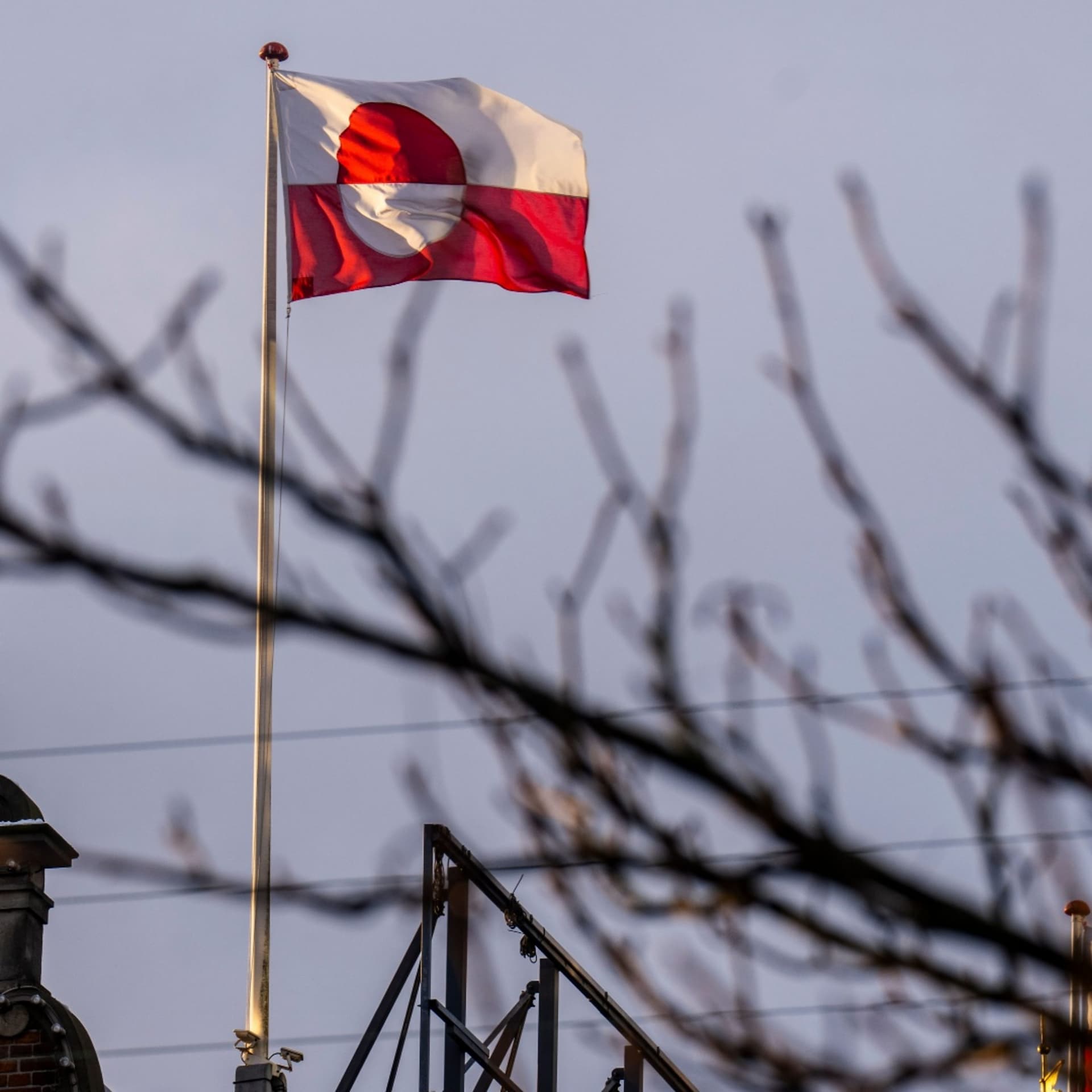
The US and Denmark announce a deal on Greenland's security, resolving a diplomatic dispute sparked by President Donald Trump's threats to seize the territory by force. In a post on social media, Mr Trump said the deal would mean "no US adversary can ever have a base in Greenland". Greenland and Denmark have said the deal strengthens security in the Arctic and is good for the Nato military alliance.
Also: President Trump has signed a bill authorising sweeping new sanctions on Russia, designed to increase economic pressure on Moscow because of its war in Ukraine. California Governor Gavin Newsom orders research into AI ‘kill switch’ in response to safety fears. Warren Buffett steps down from the investment company he's led for more than six decades. Organisers apologise for playing the North Korean national anthem for the South Korean men's hockey team at the Asian Games in Japan. And can two friends complete a board game that's so complex, no one has ever finished it?
The Global News Podcast brings you the breaking news you need to hear, as it happens. Listen for the latest headlines and current affairs from around the world. Politics, economics, climate, business, technology, health – we cover it all with expert analysis and insight. Get the news that matters, delivered twice a day on weekdays and daily at weekends, plus special bonus episodes reacting to urgent breaking stories. Follow or subscribe now and never miss a moment. Get in touch: globalpodcast@bbc.co.uk Photo: The Greenlandic flag flies on the Tivoli Castle in Tivoli in Copenhagen, Denmark, 08 January 2026. Credit: EPA Shutterstock