
In short
The episode covers: US-Iran tensions over the Strait of Hormuz; Nigeria’s rescue of abducted schoolchildren; Russian drone/bomb attacks on Zaporizhia; Apple suing OpenAI for alleged trade-secret theft; slowing deforestation in Brazil’s Amazon; Spain’s World Cup win over Belgium and upcoming semi-final vs France; a new long-neck dinosaur species from Thailand; and South Korea’s Buddhist temple matchmaking retreats to boost birth rates.
Guests
none named as recurring hosts/guests; correspondents include Peter Bowes (North America), Makwachi Okafor (West Africa), Vitaly Shevchenko (Ukraine), Lily Jamali (tech, San Francisco), Mimi Swaby (Brazil), Shima Khalil (World Cup, Los Angeles), Paul Henley (dino segment), Jack Lovegrove (Natural History Museum, London), and Jake Kwon (Seoul). Key claims/examples: US demands Iran publicly guarantee Hormuz is open and stop firing on commercial ships; Nigeria says 25+ kids and teachers rescued in Oyo State, with no ransom and several abductors captured; Zaporizhia residents describe daily drone/bomb damage and shelter measures; Apple alleges former employees (including OpenAI hardware head Tang Tan) took confidential iPhone-related info; Brazil deforestation fell to a decade low via enforcement and satellite monitoring; Spain beat Belgium 2-1 with a substitute winner; Thailand fossils yield Euragosaurus kailasinsensis (up to 20m neck); temple retreats at Dong Hwa-sa run since 2023 with ~50–60% match rate.
Written by AI. May contain mistakes. Listen to the episode to check what was said.
Chapters
Tap a time to open that second in VOUS Demands Iran Acknowledge Strait of Hormuz
0:00 to 0:48
Discussion on US demands for Iran regarding the Strait of Hormuz after recent tensions.
“This BBC podcast is supported by ads outside the UK.”
US Demands Iran Acknowledge Strait of Hormuz
1:48 to 4:35
Discussion on US demands for Iran regarding the Strait of Hormuz after recent tensions.
“When the US and Iran signed their Memorandum of Understanding around three weeks ago, it was meant to extend the ceasefire between the two countries while talks continued on a final agreement.”
Rescue of Kidnapped Schoolchildren in Nigeria
4:35 to 7:10
Report on the rescue of over 25 schoolchildren and teachers in Nigeria.
“What's the consequences if Iran refuses to make this public statement, Peter?”
Ongoing Kidnappings and Government Response
7:10 to 9:09
Insights into ongoing kidnappings in Nigeria and the government's military response.
“Right now, the entire presidency is definitely very happy because this is coming just a few months to the next presidential election.”
Escalating Attacks in Zaporizhia, Ukraine
9:09 to 12:26
Report on the increasing Russian drone attacks in Zaporizhia and local impacts.
“There has been a dramatic increase in Russian attacks on the southeastern Ukrainian city of Zaporizhia.”
Apple Sues OpenAI Over Trade Secrets
12:26 to 14:00
Details on Apple's lawsuit against OpenAI alleging theft of trade secrets.
“Next to a legal row between two giants of the tech world, Apple has filed a lawsuit against OpenAI, accusing the artificial intelligence company of stealing trade secrets.”
Apple's AI Strategy and OpenAI's Ambitions
14:00 to 15:04
Explore the shifting dynamics in AI partnerships, focusing on Apple's transition from OpenAI to Google's Gemini.
“remember that they kicked off this whole AI thing in 2022 with ChatGPT.”
The Global Story: Made in China
15:04 to 17:00
Learn about the origins and evolution of the phrase 'made in China' and its implications in the global economy.
“It belongs to a group known as the Momenchisaurids, which actually had the longest necks of any sauropods.”
Deforestation in the Brazilian Amazon
17:21 to 19:43
Understand the recent improvements in deforestation rates in Brazil and the political implications ahead of elections.
“Bolsonaro, and his plans for the rainforest are much more radical.”
Men's Football World Cup Update
19:43 to 22:20
Get the latest on Spain's performance in the Men's Football World Cup and the upcoming semi-finals against France.
“Now let's get an update on the Men's Football World Cup.”
Show all 13 chapters
Discovery of a New Dinosaur Species in Thailand
22:20 to 24:41
Learn about the discovery of Euragosaurus kailasinsensis and its significance in paleontology.
“from fossils found in Kailasin province in the northeast of the country.”
South Korea's Matchmaking Retreats
24:41 to 28:02
Explore how Buddhist temples in South Korea are addressing declining birth rates with innovative matchmaking retreats.
“Now, it's a problem that's left governments in parts of the world scratching their heads.”
Evening Reflections at the Temple
28:02 to 28:46
Listeners will learn about the social dynamics and interactions among couples at a temple event.
“The host reminds them that there is no bedtime and the night in the temple can be full of surprises.”
Transcript
Automatic transcript. May contain errors.0:00This BBC podcast is supported by ads outside the UK.
0:30And to think, that's just a small taste of what Schwab offers. Because Schwab knows that when it comes to your finances, choice matters. No matter your goals, investing style, life stage or experience, Schwab has everything you need, all in one place, so you can invest your way. Visit schwab.com to learn more.
1:00I'm Keith Adams and in the early hours of Saturday 11th July, these are our main stories. The US demands that Iran publicly acknowledges the Strait of Hormuz is open and pledges to stop firing on commercial ships. There's relief in Nigeria over the rescue of more than 25 schoolchildren and their teachers who were abducted by gunmen in May. And new figures show that deforestation in the Brazilian Amazon has slowed. Also in this podcast, we'll have the latest from the World Cup and we listen in on a matchmaking retreat in South Korea. I think I want to have some baby and family, you know. I'd really like to care somebody and that's why I came here with some cookies and I really want to wish to make a family with good people.
1:48All that and more to come.
1:54When the US and Iran signed their Memorandum of Understanding around three weeks ago, it was meant to extend the ceasefire between the two countries while talks continued on a final agreement. One of the key points was that the Strait of Hormuz would reopen to traffic. But it hasn't been that simple. There have been several exchanges of fire, and it sometimes seemed that the war was breaking out again. Now, senior officials in Washington are demanding that Iran's leadership publicly state that the Strait of Hormuz is open to commercial ships. Our North America correspondent Peter Bowes told us more about what they said.
2:30This all emerged, Keith, from a briefing call by senior US officials with a small group of reporters, including a colleague from the BBC's US partner CBS, and they were talking about the current state of play with Iran. The officials said that we are in a wait-and-see moment and that the next couple of days will be interesting, but they said that they won't wait forever. And crucially, they said a message had been sent to Iran's leadership, conveyed through regional mediators, and that message demands that Tehran publicly acknowledges that the Strait of Hormuz is open and that it also promises to stop firing on commercial ships.
3:10And that, of course, was the reason why the US launched two nights of strikes back on Iranian sites in the south of the country earlier this week. The Trump administration saying that Iran had violated that memorandum of understanding that it signed, as you say, three weeks ago by repeatedly attacking those vessels in and around the state. It seems as if now officials want some sort of guarantee and they want it quickly that this won't happen again. So this is an effort to get the talks back on track. Where have we got to with the talks? Do we know if they've achieved anything? Well, from this briefing, they said that the talks will indeed continue, although the ceasefire is no longer in place, and the president made that clear earlier in the day.
3:55And officials said that the US is making progress in negotiating with senior Iranian leaders, and the hope is that if there is a continued de-escalation of tensions, that that will help these talks make further progress. However, the officials implied that they don't have a great confidence in Iran's ability to honour a nuclear deal, which is ultimately why President Trump says this war started in the first place. No confidence in agreeing that if they can't even stop shooting at ships. But according to these officials, the US is hopeful that, to quote them, sensible people will prevail. What's the consequences if Iran refuses to make this public statement, Peter?
4:40Do we know? That wasn't immediately spelt out if there isn't any kind of public statement in the coming hours or coming days. But it's been very clear from what President Trump has been saying over the last two or three days, that if there is a repeat of shooting at commercial vessels in the Strait of Hormuz, that the US will attack back and strike. I think the phrase was, if they strike once, we will strike 20 times. So the president making it pretty clear that the United States is in no mood for these attacks on vessels continuing and that it will respond. Peter Bowes in Washington. There's some good news from Nigeria.
5:19The presidency says all the children and teachers who were kidnapped from a school in Oyo State in May have been rescued. The incident caused particular concern because the authorities in the southwestern region blamed the attack on jihadists. Most jihadist violence has historically been concentrated in the country's northeast. A video shared online appears to show a large group of children and a teacher thanking the security forces and President Bola Tinubu for their rescue. We understand your commitment to our safety and we appreciate all you did for us. Thank you very much. And every security operating, they tried so much.
6:01And that is why we are still alive now. We are very grateful to you. Thank you. God bless you, sir. While our West Africa reporter Makwachi Okafor is in Lagos, he told me more about their release. The numbers we have from the police says over 25 kids were adopted and about seven teachers. Now, from the videos and pictures that's been put out, they were quite young. Some of them were actually younger than seven years old or thereabout. These are just schoolchildren who had gone to school on a regular day and were adopted. And now we're hearing that finally they have been released. How did the release come about?
6:42They didn't give out so much detail, but the way it seems, it seems like it was more military. And that's because the president's spokesperson said there was no ransom paid and there was no agreement made between the government and their adopters. He also noted that seven people, part of their adopters, have been captured and they are now in custody. And even the kingpin of the kidnap gang have also been captured. So this is a sort of big win for the president, I'm guessing. Oh, it is. And that is because this particular school adoption that happened in Oyo State became quite a huge riling call for the critics of the presidency because it happened in a region that is the southern part of the country where we hardly hear of such attacks, and particularly not even by jihadists, as the authorities had said it happened.
7:30You know, we hear lots of school abductions happening up north, and this spreading down south became quite a huge concern, causing protests in the country and even riot groups demanding for more protection for schools and for school children. Right now, the entire presidency is definitely very happy because this is coming just a few months to the next presidential election. It is, as you say, it's at the other end of the country from Borno State. Are there other school children and teachers being held there still? You're absolutely right. On the day of this adoption that happened in Oyo, three schools in Borno State were struck.
8:09Over 30 school kids were taken. Some of the parents who've spoken to said some of them were as young as three years old. And even some teachers were also taken. Up until now, we haven't heard any news of their release. And just a few weeks ago, in the same local government area, some secondary school children were writing their national exams. Their school was attacked and over 30 of them were taken. Some of them got released, like about 10 of them, but the other 30 have remained in captivity. And do people think that the government is doing enough now to tackle these attacks? There's been lots of criticism mounted on the government.
8:47However, after this Oyo school reduction happened, military were deployed to the affected areas, both in Borneo and in Oyo. The government have said over and over that they are doing more and more and they are ramping up operations, including working with international partners like the United States and carrying out airstrikes and land operations in the region. Makwachi Okofor. There has been a dramatic increase in Russian attacks on the southeastern Ukrainian city of Zaporizhia. Drones and bombs have inflicted severe damage to infrastructure, residential housing and have killed many civilians.
9:24Our correspondent Vitaly Shevchenko has this report. Tuesday the 30th of June was a very busy and stressful day for Anna Holovchenko, an IT specialist in Zaporizhia. It started early, very early. I woke up at five in the morning because of explosions. Glide bombs were hitting the suburbs. I had a look at what was going on, cursed, and turned over to go back to sleep, because it was so early. Then there was another wave. At about six, Shahed drones started flying overhead and they started to shoot them down. It got pretty loud. That's when I realised I'm not getting any more sleep and started to get ready for work.
10:06And things did not get easier for Anna from then on. The internet disappeared at work after a drone strike cut a cable. A Shahed crashed nearby with a massive bang. And then there were more bomb strikes. That's just another ordinary day in Zaporizhia, she told me. Over the past few weeks, security there has deteriorated sharply. Numerous buses, petrol stations, schools, government offices and residential houses have been hit by Russian drones and bombs. The local council has had to meet in an underground bunker. Zaporizhia's acting mayor, Regina Kharchenko, told me that the authorities are building more shelters, putting up anti-drone nets and applying anti-shatter film to windows and schools, hospitals and other public buildings.
10:57Personally, I'm very afraid. I was sitting here in my office last Monday, listening to all the explosions. My window was shaking. When it got too loud, I took cover in the toilet. That's how we live. I live in an ordinary high rise on the seventh floor. I've got no personal bunker with 10 bodyguards in it with drone detectors. People are trying to stay in safe locations. If we know the night is going to be tough, we sleep on the floor in the corridor with no windows. Attacks on Zaporizhia intensified in early June, even though Ukrainian forces had pushed Russian troops a few kilometres away from the city.
11:37The Russians appear to have found better ways of getting their drones to Zaporizhia and avoiding Ukrainian jamming. Towards the end of my conversation with Anna, I asked her if she has ever considered leaving her city. The thought has occurred to me. It may sound strange, but I don't think the situation is critical yet. We've got food, fuel, everything. Why would I leave? Maybe I'm not easily scared. We're just trying to stay safe and we're doing all we can to survive until our victory. Hundreds of thousands of local residents like Anna are staying put for now. They're hoping that Zaporizhia will not become yet another city like Bahmut or Avdiyevka, destroyed by Russia.
12:26Vitaly Shevchenko. Next to a legal row between two giants of the tech world, Apple has filed a lawsuit against OpenAI, accusing the artificial intelligence company of stealing trade secrets. Our North America technology correspondent, Lily Jamali, gave me the details. Apple is saying that some of its former employees took confidential company information to OpenAI as part of the AI giant's push into consumer devices. So some of the people named in this suit include former Apple executives, including someone named Tang Tan, who now heads up hardware at OpenAI. Apple claims he directed the iPhone maker's employees who were interviewing at OpenAI to bring actual parts of things they were working on at Apple with them.
13:14Another allegation I saw is that some of these Apple employees who knew they were going to be leaving, going to OpenAI, emailed themselves confidential documents as they were on their way out the door. A spokesperson for OpenAI did get back to us. They say they have, quote, no interest in other companies' trade secrets. But what is so striking is that it's Apple whose commitment to keeping their unreleased products under wraps is really the stuff of Silicon Valley lore. And what we're seeing here is an allegation of a flagrant breach of trust. But these two companies, they were in a major partnership, weren't they, just a couple of years ago?
13:48How has that kind of gone wrong? They were. Absolutely, they were. The partnership had Apple integrating OpenAI's flagship product, ChatGPT, into the iPhone operating system. This was a really big deal because it happened as OpenAI was riding high, where their reputation was really peaking. remember that they kicked off this whole AI thing in 2022 with ChatGPT. So Apple picking them was a big vote of confidence. Two years later, that partnership has fizzled. When Apple, they're set to launch their new Siri voice assistant in a couple of months. When that comes out, it will be powered by Google's AI product, Gemini, not ChatGPT.
14:27And this lawsuit leaves little doubt about how Apple feels about OpenAI as a company. Can you tell us what's at stake here? Why does Does OpenAI want to get into the hardware market? AI is so competitive right now, and hardware is one way to create what's known as a walled garden. People might recognize that term from Apple, which has done this very well. They keep you in their devices as well as some of their software, too. It's all integrated. So I think for most of us, there's not a big difference between the latest version of AI tools offered by different companies. But hardware can keep customers loyal.
15:00There's big money at stake, and OpenAI wants a piece of that. Lily Jamali in San Francisco.
15:10Still to come in this podcast. It belongs to a group known as the Momenchisaurids, which actually had the longest necks of any sauropods. So it's one of the longest neck of the long-necked dinosaurs. We'll hear about a new species of dinosaur discovered in Thailand.
15:33When you hear the phrase made in China, what do you think? I'm Tristan Redman. And I'm Asma Khalid. And together we host the Global Story podcast from the BBC. And today on our show, we look at the origins and evolution of made in China, because it actually wasn't inevitable. What we're talking about is the world's largest communist nation is at the beating heart of the capitalist system. For more, listen to The Global Story on bbc.com or wherever you get your podcasts.
16:24regulatory affairs takes a non-partisan look at the stories that matter most to investors, including policy initiatives for retirement savings, taxes and trade, inflation concerns, the Federal Reserve, and how regulatory developments can affect companies, sectors, and even the entire market. Mike and his guests offer their perspective on how policy changes could affect what you do with your portfolio. Download the latest episode and follow at schwab.com slash Washington Wise or wherever you listen.
16:59This is the Global News Podcast. Deforestation in the Brazilian Amazon is slowing down. It fell in the first half of this year to its lowest level in a decade. The president, Luiz Inacio Lula da Silva, has vowed to stop it altogether by 2030 if he's re-elected, but he'll be running against Flavio Bolsonaro, the son of the former president Jair Bolsonaro, and his plans for the rainforest are much more radical. Our global affairs reporter Mimi Swaby told me how this reduction in deforestation had been achieved. President Luis Inacio Lula Silva came into office promising to really cut down on illegal deforestation and protect indigenous lands and reserves, and he has achieved many of those goals through increasing enforcement of environmental agencies, increasing inspections, increasing satellite monitoring.
17:52So basically increasing efforts on all fronts to protect these areas. He has also protected indigenous lands and reserves, but he still is kind of working towards that promise he has to eradicate illegal deforestation by 2030. Deforestation legally has been managed to some degree, but the illegal aspect is harder to control and also harder to quash. And it's a big political issue, isn't it? It is. The current president, Lula da Silva, is very much kind of on the green agenda, whereas his main rival for the upcoming elections, Flavio Bolsonaro, is pushing for increased land development as well as mining.
18:30And this is something we saw with his father, Jair Bolsonaro, in 2022. An area around 13 times the size of New York City was cleared. that is massive. In the first six months of this year, an area nearly double the size of New York City was cleared. So that is a huge, huge difference. Jair Bolsonaro really was the mindset of cut the trees down, get all the resources from the Amazon and capitalise on it. And it's thought that his son, Flavio, will have the same agenda. So these October elections really do carry quite a large weight when it comes to both political aspect of Brazil and also the environmental.
19:06But the Amazon, I mean, I've heard it described before as the lungs of the world. So it's a massive global issue, isn't it, as well? Hugely. Any rainforest holds a lot of carbon and that plays a vital role in regulating the climate. So climate change and deforestation go hand in hand, along with many other factors. OK, so two New York cities being deforested is better news than it was, but we need new trees, right? Many people say, yes, more trees need to be planted in the Amazon to preserve it. Many will also see it as just as a pot of wealth waiting to be used. That was Mimi Swaby. Now let's get an update on the Men's Football World Cup.
19:49Spain have been among the favourites since the tournament kicked off, and on Friday they really lived up to that billion. They beat Belgium 2-1 and will now go on to face France in the semi-finals in what promises to be a cracking match. I asked our correspondent Shima Khalil if Belgium had put up a good fight. Belgium really did not make it very easy for the European champions to get their way. The Red Devils stayed organised, they were relentless, they punished a defence lapse with this beautiful header from de Quetelieri but you know Spain are Spain, they found another way and for a second match in a row now.
20:24Mikel Marino came off the bench and he scored the winner. There were two substitute appearances in a row, two hugely important goals in a row. And I think this is the magic of La Roja, the fact that they can open a game very, very late. And now this goal has put them in the semifinals again. And you were lucky enough to be in the stadium, Shima. What was the atmosphere like and after the match? Do you know what? I think my hearing is recovering a little bit from all the cheering and the roaring. The thing about the Los Angeles Stadium is that the acoustics there are amazing and there's nothing to match that huge cheer and roar when a team scores and the fans are on their feet.
21:01And that winning goal from Mikel Moreno was just absolute magic to witness. But now La Roja fans know who they're up against. They know that France is an absolute force, led, of course, by Kylian Mbappé. So I asked a number of fans what they thought about the match, but also the prospect of going up against France. We are so happy to win today and we will for sure win against France. With one goal, we are going to win. I'm so sure of that. Kylian Mbappé is not going to let you win with one goal. I was scared of Kylian Mbappé. Who's Kylian Mbappé? Who's Kylian Mbappé? We are waiting for him. We will be there.
21:40So it's going to be Lamin-Yemal against Kylian Mbappé in that Spain-France semi-final. Who's your money on then, Shaima? I was going to say, don't ask me who I think is going to be a favourite. I'm sorry you have to tell us right now who's going to win. Look, this is the boy wonder that is La Minyamal against one of the game's biggest and most established superstars, that is Kylian Mbappé. It's Spain's flowing possession against France's pace, their fluency, their devastating counterattacks. I think what we're going to get is a lot of quality and a lot of fans are telling me they need goals and they need lots of them.
22:15My money is on Spain. Shaima Khalil in Los Angeles. Paleontologists in Thailand say they've discovered a new species of dinosaur from fossils found in Kailasin province in the northeast of the country. The plant-eating dinosaur, named Euragosaurus kailasinsensis, is thought to have lived about 150 million years ago. It had an unusually long neck and measured up to 20 metres in length. Jack Lovegrove is a PhD researcher who studies dinosaurs at the Natural History Museum here in London. He told Paul Henley more about this new species. This new dinosaur, Uragosaurus, belongs to a group of dinosaurs known as the sauropods, which are the long-necked iconic dinosaurs like Diplodocus brontosaurus.
23:00It belongs to a group known as the Mementosaurids, which actually had the longest necks of any sauropods. So it's one of the longest necks of the long-necked dinosaurs. So what's cool about this dinosaur is that despite only finding one vertebrae from the back, scientists have been able to figure out not just what group of dinosaurs it belongs to but that it is a new species and give it a new name. And it's significant as it's the first Mementosaurid to be named from Thailand and it's only the second one to be named from outside China. So it shows that this group that we previously thought might have been restricted to China, East Asia is actually more widely distributed.
23:38I know you weren't part of the team that discovered these remains or this fossil but you have read the paper in detail. Tell us about the paleontologist operation to find it. My understanding from reading about this is that actually, initially, the fossil site was discovered by a local farmer. So this is something that happens a lot in paleontology because there's not a huge amount of paleontologists and we can't be everywhere. But often it's members of the public find stuff, report it, and then paleontologists are able to come along and make these important discoveries. And what's cool about the locality that this dinosaur comes from is that as well as this one bone from this new dinosaur, there was a whole array of other things.
24:16So pterosaurs, crocodiles, fish, all mixed together in this one locality. The dating is still a little bit up in the air based on comparisons with other faunas. As I mentioned, this is a group that we know from China from the end of the Jurassic, these momentous saurids. We think that this was probably latest Jurassic, but I don't think they yet have radiometric dating on this formation. But we're pretty sure it's late Triassic, maybe earliest Cretaceous. Jack Lovegrove talking there. Now, it's a problem that's left governments in parts of the world scratching their heads. How to deal with decreasing birth rates?
24:51Well, in South Korea, Buddhist temples have stepped in to help by hosting special dating retreats to boost population growth. These bimonthly matchmaking sessions started three years ago, and today births are bouncing back. Not only that, interest among young people in dating and marriage is soaring. Our correspondent in Seoul, Jake Kwon, headed to a secluded mountainside temple to meet the singles looking for love. We're at Dong Hwa-sa, a Buddhist temple in the south of the country. And here there are 12 men and 12 women, very busy talking to each other. This is 나는 Jeoll-lo, or I'm Going to the Temple, a two-day matchmaking retreat organized by the country's largest Buddhist group.
Read the full transcript
25:37It began in 2023, inspired by a hit dating show. That year, South Korea recorded the lowest birth rate in the world. The host, Yu Chol-ju, made it his work to bring young men and women together. Buddhists have always been the first to take action when our country was in trouble. Low births are a national crisis. We had to do something about it. The day began with awkward introductions and ice breaking round in the courtyard. I think I want to have some baby and family, you know. I'd really like to care somebody. This is Enyo. He surprised everyone with pastries he baked the night before. And that's why I came here with some cookies.
26:22And I really want to wish to make a family with good people. Another participant, Son Ye Ji, says she always wanted to get married in her 20s. I used to work in a big city and had many friends and things to do. But since I moved to the provinces, it's not easy to date. Everyone at work is older. After lunch, it's the talent showcase time. And I'm in the room with 24 participants. And these people were selected out of the 1 ,600 who applied. and organizers have selected them based on how serious they are about finding their partner. And I can tell.
27:02Enyo sings a love song while Sun Yeji dances to a K-pop number.
27:09One woman plays a flute she had learned just for this event. Everyone is sincere as if this is their only shot at love.
27:20And that's because dating can be hard in South Korea People typically meet romantic partners through school or sogeting A blind date set up by friends But failing that small talk in big cities is rare Drinking is down and dating apps never really took off And before they can catch their breath It's already time for women to pick their partner for the dinner date Son Yeji picked Mino, a 32-year-old civil servant whose soft-spoken demeanor proved quite popular with women, while Enyo, who had a strong start, did not get picked. I feel a little bit sad, you know, because the results are quite bad.
27:57Okay, you're not letting your spirit down. I'm still going to try. Yeah. The sun has gone down and we're nearing the end of the day. The host reminds them that there is no bedtime and the night in the temple can be full of surprises. To Sonyeji's dismay, Minho is taken on a date by another woman. And in the morning, eight couples emerge. The organizer says he sees about 50 to 60 percent match rate. So today, this is a success. Everyone was so interesting and nice. Oh, I loved it. We stayed up until 3 a.m. last night just yapping. You're okay? You didn't find a husband today? Yeah, I made great friends here.
28:46Jake Kwan with that report.
28:51And that's all from us for now. If you want to get in touch, you can email us at globalpodcast at bbc.co.uk. You can also find us on X at BBC World Service. Use the hashtag Global News Pod. And don't forget our sister podcast, The Global Story, which goes in-depth and beyond the headlines on one big story. This edition of the Global News Podcast was mixed by Darcy O 'Brie and the producer was Emma Joseph. The editor is Karen Martin. I'm Keith Adams. Until next time, goodbye.
From the publisher
The US demands a public guarantee from Iran that the Strait of Hormuz is open and that ships will not be targeted as they pass through, to ensure that talks can move forward. President Trump says both sides have agreed to continue talks, despite the escalation in hostilities. Mediators from Qatar are travelling to Iran to try to salvage the fragile peace deal.
Also: there's relief in Nigeria after all the children and teachers who were kidnapped from a school in Oyo State in May are rescued. We have a special report about the increasing number of Russian drones and bombs that are killing civilians and causing severe damage in the Ukrainian city of Zaporizhzhia. Apple files a lawsuit against OpenAI, accusing the artificial intelligence company of stealing trade secrets. Deforestation is slowing down in the Brazilian Amazon, but the presidential election in October could be crucial in determining its future. Spain beat France to reach the semi-final of the men's football World Cup. Palaeontologists in Thailand discover a new species of dinosaur, and we visit a Buddhist temple in South Korea that's hosting dating retreats to help boost population growth.
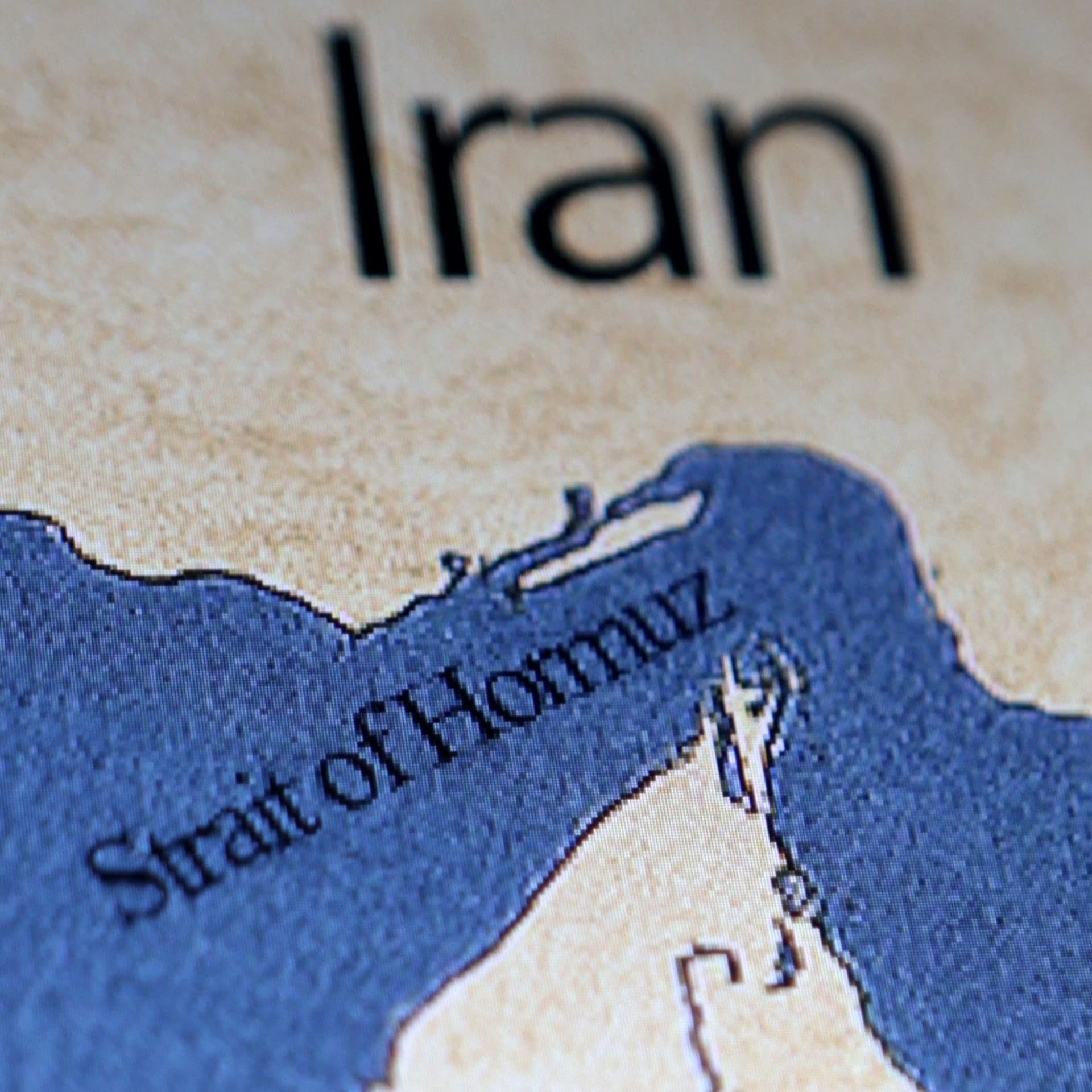
The Global News Podcast brings you the breaking news you need to hear, as it happens. Listen for the latest headlines and current affairs from around the world. Politics, economics, climate, business, technology, health – we cover it all with expert analysis and insight. Get the news that matters, delivered twice a day on weekdays and daily at weekends, plus special bonus episodes reacting to urgent breaking stories. Follow or subscribe now and never miss a moment. Get in touch: globalpodcast@bbc.co.uk Photo: Map of the Strait of Hormuz and Iran taken June 22, 2025. Credit: REUTERS/Dado Ruvic