
In short
The episode covers (1) the US–Iran peace deal, with US Vice President J.D. Vance defending it against claims of excessive concessions; (2) a UK by-election in Makerfield, Greater Manchester, and what it could mean for Labour leadership; (3) Cuba’s sweeping liberal economic reforms amid a near-total US fuel blockade; plus shorter segments on honeybee nutrition, NATO defence reviews, Obama Center opening, immersive art in Cardiff, and a Sotheby’s auction of an Elizabeth I amber pendant.
Guests (named)
Geraldine Wright (Oxford entomology professor) on honeybees; Jeremy Bowen (BBC international editor) on Iran talks; Rob Watson (BBC political correspondent) on the by-election; Will Grant (BBC correspondent) on Cuba reforms; Jessica Parker (BBC correspondent) on NATO; Caitlin Huey Burns (CBS) on Obama Center; Howell Griffiths (reporter) on immersive art; Katie Razzle (culture editor) on the auction; Christopher Mason (Sotheby’s sculpture head) on the pendant.
Key claims & examples
Vance says millions of barrels of oil have flowed through the Strait of Hormuz and that Iran’s nuclear/enrichment and conventional military capacity were “completely destroyed,” while Iran’s Supreme Leader Ali Khamenei calls the US deal “desperate” and insists Iran must retain uranium enrichment (down-blending acceptable). A major spoiler is Lebanon: the memorandum links any Gulf ceasefire to a full Lebanon ceasefire after Hezbollah fired six missiles into Israel following attacks on Iran (Feb 28), with thousands of Lebanese killed. Burnham’s Makerfield win is framed as a potential Labour leadership challenge to Keir Starmer and a possible counter to the Reform Party. Cuba’s reforms are described as expanding private sector and foreign investment, decentralizing, and lifting price caps, driven by hardship from rolling blackouts, hunger, and the US fuel blockade.
Written by AI. May contain mistakes. Listen to the episode to check what was said.
Chapters
Tap a time to open that second in VOUS-Iran Deal Overview
1:44 to 2:52
Discussion on the recent US-Iran deal and its implications.
“I'm Nick Miles, and in the early hours of Friday the 19th of June, these are our main stories.”
Iran's Perspective
2:52 to 4:03
Iran's supreme leader shares his view on the US-Iran deal.
“that the accord is already beginning to bear fruit.”
Negotiation Challenges
4:03 to 5:35
Analysis of the challenges facing the US and Iran in negotiations.
“In the previous podcast, we heard the BBC's Leeds Doucette's take on the deal.”
Hezbollah's Role
5:35 to 7:08
Examination of Hezbollah's involvement in the Lebanon conflict.
“But the principle of being able to enrich, even if the next series of enrichment is put off by five years or even more, that for them is really important.”
Consequences of the War
7:08 to 8:31
Discussion on the ramifications of the recent war in the region.
“So with so many moving parts, this initial 60 days of negotiations, which are due to start in Switzerland on Friday, I believe, might not even last the distance.”
By-Election Significance
8:31 to 10:45
Analysis of the by-election in Greater Manchester and its implications.
“It is not often that the Global News podcast reports on a by-election in Greater Manchester in Northern England, but the Makerfield poll could shape the future of British politics, and the results are in.”
Challenges for Labour Party
10:45 to 12:10
Discussion on the Labour Party's challenges and future leadership.
“His claim will absolutely be, look, I have had nothing to do with the Starmer government, which is immensely unpopular.”
Cuba's Economic Reforms
12:10 to 14:00
Overview of the sweeping economic reforms announced in Cuba.
“He's seen as one of those more sort of hopeful, sunnier, likeable politicians.”
Cuban Economic Changes and Public Sentiment
14:00 to 16:18
Explore the potential economic changes in Cuba and public reactions.
“the acceptance of tourism as the motor of the economy and so on.”
Honeybees' Diet and Parental Care
16:18 to 18:26
Discover how honeybees intelligently regulate their diet for larvae.
“Will Grant, to the business of bees now, and it turns out that honeybees are cleverer than we knew at regulating their diet.”
Show all 15 chapters
US Review of NATO Relations
21:01 to 23:26
Learn about the US assessment of NATO alliances and future defense.
“While the US has been preoccupied by the war with Iran, it's also been assessing its relationship with its European partners.”
Barack Obama's Presidential Center Opening
23:26 to 26:19
Insights into the opening of Obama's center and its significance.
“who wasn't invited, joined a star-studded line-up for the opening of Barack Obama's presidential centre in Chicago, which includes a public library and a museum with a replica of his Oval Office.”
International Competition for Immersive Art
26:21 to 28:00
Explore the world of immersive art and the finalists in Cardiff.
“Now, going to an immersive art exhibition is a very different experience from just looking at a painting on a wall.”
Immersive Art and Claudette Colvin's Story
28:00 to 29:56
Learn about the immersive art piece that brings Claudette Colvin's story to life.
“You're starting to live, think and breathe like a black person in 1950s Alabama.”
Auction of Elizabeth I's Amber Pendant
29:56 to 30:58
Discover the significance of an amber pendant of Queen Elizabeth I set for auction.
“The rule of Queen Elizabeth I in 16th century England was marked by a flourishing of the dramatic arts, think William Shakespeare.”
Transcript
Automatic transcript. May contain errors.0:00Jeremy Bowen:This BBC podcast is supported by ads outside the UK.
0:30Jeremy Bowen:The new tropical butterfly refresher from Starbucks. Guava and passion fruit flavors with mango pineapple flavored pearls. Yeah, that feels like summer before you even taste it. Funny how one small stop becomes the best part of the day. Start your summer rhythm with Starbucks. Try the new tropical butterfly refresher from Starbucks. Running a business shouldn't feel like surviving a software group project. One app for accounting, another for inventory, another for sales, and somehow none of them talk to each other. That's where Odoo comes in, an all-in-one business management software that brings every part of your business together, from sales and accounting to inventory and marketing, all in one powerful platform.
1:17Jeremy Bowen:No messy integrations, no bouncing between tabs, and best of all, no spreadsheets. Stop managing software and start managing your business with one unified system. Try for free today at odoo.com slash iHeartRadio. That's odoo.com slash iHeartRadio. This is the Global News Podcast from the BBC World Service. I'm Nick Miles, and in the early hours of Friday the 19th of June, these are our main stories. The U.S. Vice President defends the U.S.-Iran deal against accusations that it gives too many concessions to Iran. Iran says Washington only agreed to the deal out of desperation. In Britain, the winner of a by-election could spell trouble for the British Prime Minister.
2:04Andy Burnham is now expected to challenge Keir Starmer for the top job. Also in this podcast, a pivotal moment in Cuba as the president introduces sweeping liberal economic reforms and how honeybeams refine their diet to create the right mix of food for their larvae. Their solution to this problem is not dissimilar to the one that we use to feed our own children. They create glandular secretion, which is the same as milk.
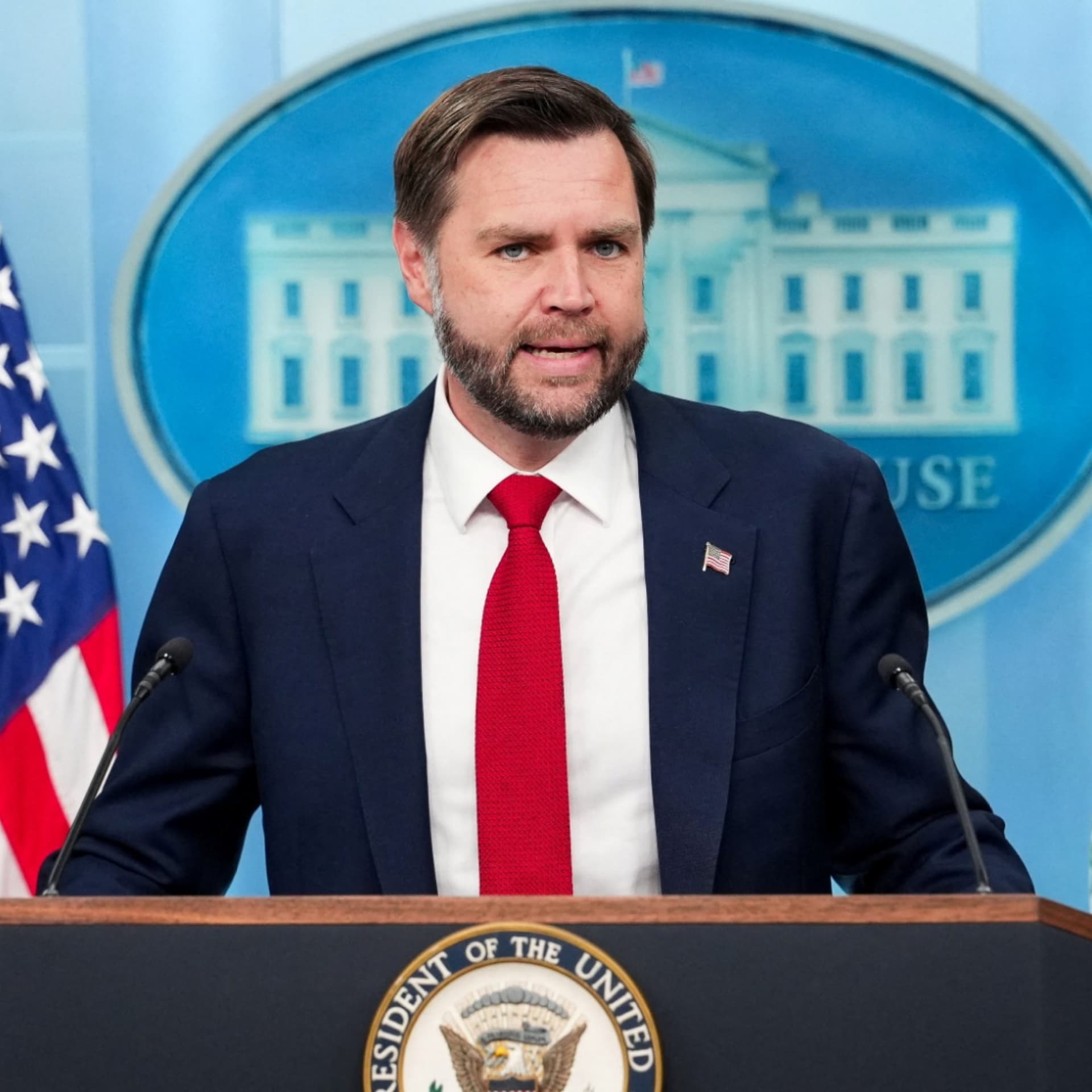
2:38We start with more reaction to the Iran-US Memorandum of Understanding that was signed digitally more than 24 hours ago. The Trump administration has faced accusations that it made far too many concessions to Tehran. But the vice president has told a news conference that the accord is already beginning to bear fruit. J.D. Vance says millions of barrels of oil have already flowed through the Strait of Hormuz. And the Trump administration is firmly in control of negotiations in the days to come. Whether the Iranians comply with the rest of the deal or not, their nuclear program has been completely destroyed.
3:12Their capacity for enrichment, the facilities at which they were using to develop enrichment and develop a potential nuclear weapon, those facilities are still destroyed. Their conventional military is still destroyed. Their capacity to threaten their neighbours is still largely gone. And now we see whether they are willing to comply with the next step of the president's peace plan. That is not how Iran's supreme leader, the Ayatollah Mojhabar Khamenei, sees it. In a statement which has been voiced by one of our producers, he said Washington only agreed to the deal because it was desperate. In the course of reaching this stage, the officials in charge,
3:47Jeremy Bowen:out of sincere concern and goodwill, made extensive efforts. And of course, it was the American president who, out of desperation, used all kinds of leverage to bring this about. I, as a matter of principle, held a different view. However, out of the commitment that the esteemed Iranian president, as the head of the Supreme National Security Council, gave to me regarding the safeguarding of the rights of the Iranian nation and the resistance front, and his explicit acceptance of that responsibility, I granted my permission. In the previous podcast, we heard the BBC's Leeds Doucette's take on the deal.
4:24I got more analysis from our international editor, Jeremy Bowen. So who's got the upper hand going into the next stage of talks?
4:31Jeremy Bowen:I think that if you go point by point through the Memorandum of Understanding, a pretty logical reading of it would suggest that Iran is probably ahead. And that is because the framework is, in a sense, a picture of the strategic defeat that the Americans have had. Many tactical victories, and that's why they have depleted Iran's capacity in so many ways. But Iran used a weapon it hasn't really used before, which is to block the Strait of Hormuz. and they discovered that having a chokehold on the world economy is actually an immensely powerful position to be in and Trump needs to do something about that and this requires concessions.
5:11The Supreme Leader of Iran has said we will not give in to excessive demands and these talks are going to follow. What is excessive in Tehran's mind?
5:20Jeremy Bowen:A key for them is that they retain the right to enrich uranium. I think it's pretty clear that they will accept what's known as a down blending of their enriched uranium, including the uranium which is enriched to close to weapons grade. It's essentially diluted. But the principle of being able to enrich, even if the next series of enrichment is put off by five years or even more, that for them is really important. And if they can get a really attractive economic package, lots of sanctions relief, total sanctions relief is being promised, actually. Iranian funds unfrozen, that sort of thing, then that makes it attractive.
5:59Jeremy Bowen:But you know what? There are loads of spoilers. That's the issue. And talk us through one of those spoilers, which isn't specific to Iran and the United States. It refers to Lebanon, which is also part of this memorandum of understanding. Yes. When the Americans and the Israelis attacked Iran on the 28th of February, Hezbollah, who are a long-term ally and proxy in some ways of Iran sent six missiles into Israel. And I know that the Lebanese army and various people in Lebanon said, we know you're going to respond, try and be proportionate about it. In fact, there was a massive offensive getting on for 4 ,000 Lebanese, most of whom I think are civilians, have been killed.
6:42Jeremy Bowen:Incredible damage done in the south. I was down there in the last few days. So at Iran's insistence, the memorandum of understanding includes a phrase saying that if there's going to be a ceasefire in the Gulf, there has to be a full ceasefire in Lebanon. Israel will not accept that. They will not accept that because they want to have a free hand in Lebanon. They say it's very important for their security. And that is why there is friction right now between the Netanyahu government and the Trump White House. So with so many moving parts, this initial 60 days of negotiations, which are due to start in Switzerland on Friday, I believe, might not even last the distance.
7:18Jeremy Bowen:It might not. But I think that both the Americans and the Iranians have got some quite good reasons to try to keep this thing going. The Americans, because Trump wants out of the war. And for some time, people who have been opposed to the war have been saying that there is no military solution, there has to be diplomacy. And you can argue that maybe this is one way of doing it, that these kinds of concessions to Iran that are in the memorandum of understanding were discussed in the past. And ironically, terrible irony, a deadly irony, is that it gets them back to where they were the day before the war started, i.e.
7:52Jeremy Bowen:on the 27th of February. They were in Geneva, the Iranians and the Americans. They were talking about the nuclear issue, and the Strait of Hormuz was open. What's going to happen now? They're back in Switzerland. The Strait is going to reopen. So it's a very legitimate question to ask, what on earth was this terrible war all about? Thousands of people killed, mostly, I think, civilians. massive economic damage, a huge amount of uncertainty generated and will continue to be generated. I think you can say that it was a huge blunder by the Americans, egged on by the Israelis, and we are working our way now through the consequences.
8:31Jeremy Bowen. It is not often that the Global News podcast reports on a by-election in Greater Manchester in Northern England, but the Makerfield poll could shape the future of British politics, and the results are in. I do hereby declare that Andy Burnham is duly elected. Thank you. As an MP for the governing Labour Party, Andy Burnham can now return to Parliament. More significantly, he's been touted as someone who is likely to challenge the Prime Minister, Keir Starmer, for the top job, something that Mr Burnham seemed to indicate implicitly but clearly in his victory speech. Everyone knows that politics isn't working.
9:13Everyone can feel that the country isn't where it should be Tonight could, just could, be the turning point
9:22Jeremy Bowen:From here on I will give everything I have got to make it so To ensure the name Makerfield is forever synonymous With bringing about the change this country needs Bringing back something we've lost Hope, hope for the future So how important is this result? I got more from our political correspondent Rob Watson. The significance is massive for the Labour Party and indeed for the country Nick and that is because his victory here means he is an MP again and that means that he is probably going to spark a process that leads to Britain getting its seventh Prime Minister. Yes, seventh, Nick, Prime Minister in 10 years, because he has been very clear that he intends to use getting back into Parliament, which is required if you want to be the leader of the Labour Party, as a platform to challenge Zakir Starmer's leadership.
10:16And he was talking about it could be a turning point for the country, a turning point, perhaps turning the tide against the rise of the Reform Party, the right-wing Reform Party that has been taking lots of votes away from particularly the Labour Party. Yes, and that's why he's been described as the last best hope of the liberal left, Nick, because his claim for the leadership of the Labour Party, and he's going to sort of appear, if you like, like one of those medieval armies sweeping down from the north to bring about change in London. His claim will absolutely be, look, I have had nothing to do with the Starmer government, which is immensely unpopular.
10:53And I'm the guy that beat populist reform, which has been threatening Labour all over the country, particularly in its traditional heartlands of white working class people in northern towns and cities. So that will absolutely be his selling point to Labour MPs. Now, we don't want to get ahead of ourselves. He hasn't announced a leadership challenge yet. and perhaps he'll try to convince Keir Starmer before he does that to stand aside because nobody wants a cantankerous vitriolic leadership race, do they, particularly now. But even if he does get to number 10, the challenges facing him will be huge economically.
11:26As you say, Nick, we are absolutely galloping ahead of ourselves. And I think the next big question is, will Starmer go quietly or will he put up a fight? We don't know. We might find that out in the next 24, 48 hours. But you're absolutely right. I mean, there's all sorts of reasons to be doubtful. I mean, there must be a reason people would argue why Britain may be having seven prime ministers in 10 years, and that is that it's very difficult to govern. There are these huge challenges, economic stagnation. Britain is now a sort of a low-growth, high-debt economy. It has lots of social challenges, particular concern over immigration, concerns over social cohesion, and a sort of gloomy sense that nothing in the country works.
12:07And in many ways, that is perhaps what Andy Burnham has to offer. He's seen as one of those more sort of hopeful, sunnier, likeable politicians. But whether that's enough to turn around Britain's many challenges is the big question. Rob Watson. The Cuban Communist Party has announced a series of sweeping economic reforms. It's not really a course of action that Havana chose willingly. Washington imposed a near total fuel blockade on the island about five months ago. The Cuban government hopes its changes might just encourage the US to back off a bit. The president of Cuba, Miguel Diaz-Canel, told his parliament why the reforms were needed.
12:48Jeremy Bowen:Reality imposes urgent and necessary changes upon us. And when the life of the people becomes so hard, the first duty of the Communist Party and the revolutionary government is not to better explain the crisis, but to change what needs to be changed in order to overcome it. This was the reaction of some people in the Cuban capital, Havana. This is indeed a delicate moment for the revolution. We are experiencing times unlike anything we have ever faced before. But I have faith in the country's leaders and in the people. I think that this time they know what they have to do. There's no need to talk so much.
13:25They know what they need to do. Bring the prices down, because believe it or not, the people are sad. Our correspondent in the region, Will Grant, told me more about the proposals.
13:33Jeremy Bowen:They really are very, very important. I mean, this is some sweeping free market reforms as far as the Cuban Communist Party is concerned. They haven't been this far before, as far as I can see. They have made piecemeal changes here, there and everywhere over the years since Fidel Castro first fell ill in 2006, was replaced by his brother Raul Castro in 2008, and was sort of forced by circumstance and the state of the economy into some economic liberalisation. the acceptance of tourism as the motor of the economy and so on. This would potentially go much, much further than that. It would give far greater free reign to the private sector, increased foreign direct investment, including from Cuban Americans based in the United States.
14:19Jeremy Bowen:So symbolically, of course, that's very, very important. The idea is that there'd be decentralization. So Havana would step back from controlling the municipalities quite so tightly. There would be less central control of state-run entities. The idea is the free market would be able to blossom a bit more. There wouldn't be price caps. Things of this nature, which have distorted the Cuban economy for so many decades, would be lifted. So do you think this is a real ideological change on the part of the Cuban government, or is it just because it's worried about this fuel blockade from America and what else might happen down the line?
14:56Jeremy Bowen:Of course, there's an element of sort of self-preservation here. But at the same time, the Cuban economy was in deep, deep trouble for many, many years before Donald Trump came to power for the second time. Cuban people have been dissatisfied with the direction of the revolution for years, have been calling for wholesale change, particularly in the economy. While the Trump administration's policy is undoubtedly forcing the hand of President Miguel Díaz-Canela. The truth of the matter is they're faced with very little choice. They've doubled down on the Cuban communist project a number of occasions when their backs have been against the wall economically in the past and it simply hasn't served them well.
15:37Just a point, Will, about how people are reacting to this news of possible big sweeping economic changes. It'll be welcome news for many people because people are really struggling, aren't they?
15:49Jeremy Bowen:I've been a quite large number of times to Cuba this year. The one thing you constantly hear now is people saying, whatever's coming, it's got to be better than this. They certainly know the status quo with rolling blackouts, with minute pensions, with hunger, with endemic poverty, is just not working for the vast majority of Cubans anymore. And while they certainly blame the Trump administration, they also most clearly blame their government as well and do want to see that change now. Will Grant, to the business of bees now, and it turns out that honeybees are cleverer than we knew at regulating their diet.
16:28They need pollen to feed their larvae, but they don't always get the right essential amino acids from the pollen that is most accessible. So they refine their diet to create the right mix of food for the larvae. Very smart indeed. Well, Geraldine Wright, a professor of entomology at the University of Oxford in the UK, told us more about how the honeybees were able to change the food they create. Their solution to this problem is not dissimilar to the one that we use to feed our own children. They create glandular secretion, which is the same as milk. And mammals produce milk to feed their babies.
17:07and milk has the proteins that help the baby to grow. And it's the same for honeybees. The royal jelly or the other types of secretions that they give to the larvae in the colony are the main food of the larvae for the first three to five days of their life. Later in their life, they get some pollen in diet, but they get this sort of pure milk, for lack of a better word, for those three days. And they grow very quickly as a result. Honeybees, their main source of protein is floral pollen. In the study, we found that the plant proteins that are in floral pollen were not balanced with respect to specific amino acids, the branched chain amino acids, which are really important for animal tissue.
17:47And we have the same issue in our diet. If we eat diets that are made of plant proteins, some of these diets are deficient in specific amino acids and they can cause malnutrition in humans too. So a human mother also feeds on many different things and her body produces casein and whey in her breast milk and that's what she feeds to her children. And the same goes for the bees. The worker bees eat the pollen and they convert it into the proteins that are found in the royal jelly. They feed that to the larvae. But it's sometimes at their own cost because they have to try to produce these proteins even when the pollen protein doesn't have all the essential amino acids that they need.
18:26Geraldine Wright. Still to come in this podcast. It's been nicknamed the Obama Lisk. And there's this very weird, enigmatic granite tower. It's been likened by some to a Klingon prison. We hear about the opening of the Obama Presidential Center in Chicago.
18:51Your energy is gone, your hunger is loud, and your plans aren't feeding you. So what are you still doing here? Cool off with a refreshing large Big Dulp drink at 7-Eleven. Cold, refreshing, and made the way you like it. It's available at 7-Eleven and just 59 cents with seven rewards. Visit your local Chicago 7-Eleven and satisfy that craving today. Valid through 62326. While supplies last, participating stores see after full terms.
19:22Big transfer news today. Who's moving? Me. To the couch. with Domino's best deal ever since they just added stuffed crust. Any pizza, any toppings, now with stuffed crust for$9.99. It's a long-term contract with no release clause. Only$9.99? Yeah, that sounds like the move. I'm heading straight to Domino's. Price is higher for some locations. Excludes XL and specialty pizzas. Select this offer from 615 through 726. Online only. Size availability varies by crust type. Max 7 toppings, 6 for hand in New York style crust. Minimum purchase required for delivery. Prices, participation, delivery area, and charges may vary.
19:56Hey, it's Ryan Seacrest for Jewel Osco. For you, save days are here now through June 23rd. Find hot deals throughout the store and earn four times a point. Look for in-store tags to earn on eligible items from Kinder, Ghost Energy, Cottonelle, Ben & Jerry's, and Popsicle. Then clip the offer in the app for automatic event-long savings. Stack up those rewards to save even more. Enjoy savings on top of savings when you shop in-store or online for easy pickup or delivery. Restrictions apply. See the website for full terms and conditions.
20:55Visit Julesosco.com for more details.
21:01While the US has been preoccupied by the war with Iran, it's also been assessing its relationship with its European partners. Now the US Defence Secretary, Pete Hegseth, has announced a review of America's relationship with its NATO allies within six months. He warned that some countries will fail and others will pass with flying colours. speaking at a meeting of NATO defence ministers in Brussels. Mr Hegseth said European nations in the alliance must move fast to take primary responsibility for the defence of the continent. From Brussels, our correspondent Jessica Parker reports. Pete Hegseth was blunt and blistering.
21:40The hesitancy or failure by some allies to support US strikes on Iran, he claimed, had been shameful. While NATO, he said, now needed to focus on hard power and Europe needed to lead on its own defence. It's being billed as NATO 3.0, a big upgrade, Mr. Hegseth argues, on what came before. NATO 2.0 was an era of distraction, de-industrialization and demilitarization. It was an era of free riding. And those were lost years that we're not going back to. The criticisms from the Trump administration are familiar. What's new is the announcement that the U.S. will carry out a six-month review of its military presence in Europe.
22:20It comes as the US has already decided to cut some contributions to a pool of high readiness troops and assets. This was the first NATO ministerial meeting for the new UK Defence Secretary, Dan Jarvis, whose predecessor John Healy quit, saying the government's funding plan fell well short, something I put to Mr Jarvis at a news conference. Do you agree? Will you be fighting for more? And how are you going to pay for it if so? It's my job to make sure that we've got the resources to equip our armed forces to do the job that we ask of them. That is a responsibility that I take very seriously, not least because I have stood in their shoes myself.
Read the full transcript
23:00Allies are under growing pressure to set out how they'll meet future defence spending targets. NATO Secretary-General Mark Rutter is determined to sell NATO 3.0 as an example of better burden sharing rather than American disengagement as the alliance prepares for a leader summit in July. Jessica Parker. Almost all the living US ex-presidents, with the absence of Donald Trump, who wasn't invited, joined a star-studded line-up for the opening of Barack Obama's presidential centre in Chicago, which includes a public library and a museum with a replica of his Oval Office. The former president and his wife, Michelle, have very deep connections to the city.
23:41The building, however, has had mixed reviews. The architecture critic Oliver Wainwright describes what it looks like. It's been nicknamed the Obama-lisk because it rises above the south side of Chicago like a kind of truncated obelisk. There's this very weird, enigmatic granite tower rising to 70 metres, very few windows, and has this kind of chiselled shape. It's been likened by some to a Klingon prison because it definitely has the kind of sci-fi quality. And to me, it has a slightly kind of funereal air, you know, almost seems like a bar mausoleum where you might go to see his kind of perfectly preserved body lying in state.
24:21CBS's Caitlin Huey Burns was at the opening ceremony. This has been 10 years in the making and it cost about$850 million to create this whole complex. Right now where I'm standing, we're standing along a public garden that will be open for the public to walk around. And we're also standing on top of a portion of the center, which is a Chicago public library branch. Behind me is the museum, nearly four stories tall. And you'll see in there memorabilia from Obama's two terms, his Nobel Peace Prize. It's not actually a presidential library. All of his archives from his administration are actually not housed here.
25:07So that makes this a little bit different from others. But as far as today's event goes, we heard from the former first lady, Michelle Obama, and her speech talking about her husband's legacy as president was so heartfelt that the former president himself appeared to be emotional. And the former president acknowledged why this setting was so important to put his presidential library here. This is the south side of Chicago, a place where he started in public service, where he met his now wife, Michelle Obama, and where Michelle Obama grew up. And we also heard from several musical guests, from Bono to Bruce Springsteen, John Legend, as well as Obama's favorite, Stevie Wonder.
25:53But what was notable about the speeches today, too, were that while they were looking at kind of the legacy of the Obama administration, it also was notable for the contrast, even subtly, that it was trying to draw with the current administration in terms of visions for the future. Michelle Obama herself had a line about what it means to be an American. And that seemed intentional. Caitlin Huey Burns. Now, going to an immersive art exhibition is a very different experience from just looking at a painting on a wall. Visitors often step inside meticulously designed spaces, blending visuals and sound together with many other things.
26:35The world's first international competition for immersive art is being held in the Welsh capital, Cardiff. Howell Griffith went to see the finalists.
26:48In a brightly lit room that looks a bit like the set of a game show A small group of us are about to take part in a piece of immersive art
27:04Individual mobile phones await First a click and swipe our way through what looks like a film except as we watch the device, it's also watching us. The artist behind it is Karen Palmer. I create films that watch you back using artificial intelligence and facial recognition. Consensus Gentium is set in the near future world of bias AI and surveillance. And the film branches in real time depending on where you look on the screen. It responds depending on your emotional state. and your focus.
27:42Jeremy Bowen:Access, consensus, gentlemen. The term immersive art will be unfamiliar, off-putting even for some. Graeme Farrow from the Wales Millennium Centre says there has been some confusion, but creating an international prize should help give it a focus. If you ask somebody to come and review one of these pieces, you don't know whether you're inviting a theatre critic or an art critic or a gamer, critic and so it hasn't established itself as an art that hasn't quite found its place yet so this is part of why we're doing it is so that it can find a place and it can be an opportunity for audiences audiences don't have the opportunity to see this stuff there are lots of artworks that are happening on smaller scales that are telling brilliant interesting stories
28:38Now it's happening. You're starting to live, think and breathe like a black person in 1950s Alabama. The prize-winning work is Coloured, which, with use of headsets and holograms, tells the story of Claudette Colvin, a 15-year-old black girl who, in March 1955, refused to give up her seat to a white passenger on an Alabama bus. Unlike Rosa Parks, who made the same defiant act nine months later, Claudette's story is largely unknown. Artist Stéphane Fouquinos hopes immersion brings it alive.
29:15Jeremy Bowen:Everyone is their own director in a way because you can move along the space. You have real benches, you have window frames or door frames. And on top of this, you have all the holograms that are adding. but you are free to walk like as you please in this space. So I think the device pushes you into emotionally, I think, being part of Claudette's story and not being just an audience. Already big in Asia and several European capitals, the hope is that the price will gradually make immersive art a little more mainstream here too. Howell Griffiths reporting. The rule of Queen Elizabeth I in 16th century England was marked by a flourishing of the dramatic arts, think William Shakespeare.
30:05But the period that marked her reign was also a time of creativity in painting and sculpture. Now an exquisitely carved amber pendant of the Queen is to be sold at auction at Sotheby's with an estimated price of$650 ,000. Our culture editor, Katie Razzle, has been finding out more. The tiny three-dimensional portrait carved in white amber depicts England's last Tudor monarch as a mature woman, wearing a diadem and ruff, and is believed to have been carved from a portrait made in Elizabeth's lifetime by Isaac Oliver, which is in the Victoria and Albert Museum. The image of the Queen is inset into a heart-shaped pendant of yellow amber.
30:45On the reverse side is a beautiful painting of a parrot, a symbol of virginity. Christopher Mason is European Head of Sculpture at Sotheby's in London. This portrait is particularly important because it's the only portrait of Elizabeth I in amber. It is an exceptional micro-carved cameo depicting the Virgin Queen. It has been set into an amber heart, which acts as a lens magnifying the portrait. We're beyond excited about this. The exquisite object is believed to be the only known Tudor portrait encased in amber, which at the time was believed to have protective properties and was prized across Europe.
31:24It's thought the cameo may have been a diplomatic gift to Elizabeth from the Prussian court. It may also have been given as a present by her personally. Its rarity makes it difficult to determine what it might fetch at auction, but some estimate it could reach as much as half a million pounds. Katie Razzle. And that is all from us for now, but if you want to get in touch, you can email us at globalpodcast at bbc.co.uk. You can also find us on X at BBC World Service. Use the hashtag Global News Pod. And don't forget our sister podcast, The Global Story, which goes in-depth and beyond the headlines on one big story.
32:05This edition of the Global News Podcast was mixed by Darcy O 'Brie and the producers were Marion Strong and Stephen Jensen. The editor is Karen Martin. I'm Nick Mars and until next time, goodbye.
32:25Who's actually won the Iran war? I'm Tristan Redman. And I'm Asma Khaled. And together we host the Global Story podcast from the BBC. The US and Iran say they've struck a deal to end the war. But a key question is what's actually been achieved by nearly four months of fighting. And is the situation better, worse or the same for the region and Iran? For the full story, check out The Global Story on BBC.com or wherever you get your podcasts.
From the publisher
JD Vance defends the Iran deal against criticism that it gives too many concessions to Tehran. The Iranian supreme leader says the US signed it "out of desperation". We get our international editor Jeremy Bowen's assessment. Also: Andy Burnham, a rival to the British prime minister Keir Starmer, wins the crucial Makerfield by-election; Cuba announces economic reforms under US pressure; the Obama Presidential Center in Chicago divides opinion; how honeybees make baby food; and we visit the world's first international competition for immersive art.
The Global News Podcast brings you the breaking news you need to hear, as it happens. Listen for the latest headlines and current affairs from around the world. Politics, economics, climate, business, technology, health – we cover it all with expert analysis and insight. Get the news that matters, delivered twice a day on weekdays and daily at weekends, plus special bonus episodes reacting to urgent breaking stories. Follow or subscribe now and never miss a moment. Get in touch: globalpodcast@bbc.co.uk Photo: U.S. Vice President JD Vance holds a press briefing at the White House in Washington. Credit: Reuters/Eric Lee