
In short
Global News Podcast roundup led by escalating US-Iran conflict: seventh consecutive US night of strikes aimed at degrading Iran’s military; Iran says it targets US military assets abroad and warns of “full-scale offensive” if attacks continue. Strait of Hormuz shipping disruption is reported (IRGC claims mines hit tankers; US Central Command calls it false). Iran’s war-linked electricity shortfalls worsen heatwave conditions. Other stories: US Homeland Security orders voter-roll checks in four states; South Africa intensifies immigration crackdown as migrants gather outside embassies; Barbados mourns cricketer Garfield Sobers; Bayeux Tapestry returns to the UK; Mexican wave origin; plus football World Cup final preview.
Guests
Nick Johnson (BBC correspondent in Washington); Kashair Junaidi (BBC Persian, energy/power impacts); Gary O’Donoghue (Washington correspondent on voter-roll claims); Richard Kagoi/Celia Hatton (South Africa immigration reporting); Clive Myrie (Sobers legacy); Katie Razzle (Bayeux Tapestry report); George Henderson (“Crazy George,” Mexican wave).
Written by AI. May contain mistakes. Listen to the episode to check what was said.
Chapters
Tap a time to open that second in VOMain Stories Overview
0:00 to 0:48
A summary of the major news stories, including US strikes on Iran.
“This BBC podcast is supported by ads outside the UK.”
Main Stories Overview
1:04 to 2:10
A summary of the major news stories, including US strikes on Iran.
“There's been a renewed American bombardment of Iran for the seventh day in a row but how much more can the Iranians take?”
US Attacks on Iran Continue
2:10 to 3:56
Discussion on the ongoing US military strikes on Iran and Iranian responses.
“The US military says it's concluded another round of strikes on Iran, marking a full week of nightly American attacks.”
Implications of the Strikes
3:56 to 5:48
Exploring the implications of US attacks and the possibility of peace talks.
“Now, Iran has also said that it's targeted US military interests in Jordan, Syria, Kuwait and Bahrain.”
Iran's Energy Crisis
5:48 to 7:42
Insight into Iran's energy supply challenges during the conflict.
“And now two oil tankers, according to Iran's Revolutionary Guard, have hit mines there.”
Regional Tensions Post-Strikes
7:42 to 10:52
Examining the regional fallout and tensions resulting from Iran's actions.
“in terms of electricity production, Iran lacks 20 % of the demand.”
Election Security Concerns
10:52 to 13:16
Discussion of US election security and claims of electoral fraud.
“Homeland Security Secretary Mark Wayne Mullen has asked election officials in four states to check voter rolls for people who aren't American citizens.”
Bayeux Tapestry Returns to UK
13:16 to 14:00
Coverage of the Bayeux tapestry's return to England after nearly a thousand years.
“Now, the bio tapestry has been returned to England for the first time in nearly a thousand years.”
Bayer Tapestry at the British Museum
14:00 to 18:36
Learn about the display of the Bayer Tapestry and its significance.
“I'm outside the gallery at the British Museum, and I'm putting on a blue plastic apron, very fetching, and some blue plastic shoe covers.”
Crisis for Migrant Workers in South Africa
18:44 to 27:08
Examine the situation of migrant workers seeking repatriation amid crackdowns.
“to create professional quality cookware, knives, and kitchen tools.”
Show all 13 chapters
Legacy of Garfield Sobers
27:08 to 28:00
Reflect on the impact of cricketer Garfield Sobers on Caribbean identity.
“in the men's football world cup final in New York this Sunday and if you're watching you're likely to see a Mexican wave.”
The Origin of the Wave and Its Global Impact
28:00 to 29:17
Learn about the creation of the wave at sporting events and its evolution worldwide.
“So I organized three sections where I could actually scream loud enough to hear me.”
Listener Engagement and Juliet Emails
29:18 to 30:13
Discover how listener emails about a shared name led to an influx of responses.
“But as you know, we do like hearing from you on the Global News podcast.”
Transcript
Automatic transcript. May contain errors.0:00This BBC podcast is supported by ads outside the UK.
0:30And to think, that's just a small taste of what Schwab offers. Because Schwab knows that when it comes to your finances, choice matters. No matter your goals, investing style, life stage or experience, Schwab has everything you need, all in one place, so you can invest your way. Visit schwab.com to learn more. This is the Global News Podcast from the BBC World Service. I'm Will Chalk and in the early hours of Saturday the 18th of July these are our main stories There's been a renewed American bombardment of Iran for the seventh day in a row but how much more can the Iranians take? The head of the US Department of Homeland Security has instructed election officials in four states to check voter rolls for foreign nationals And crowds of desperate migrant workers gather outside embassies in South Africa, calling for help to return home after threats intensify against them.
1:34Also in this podcast, Barbados declares a day of national mourning for one of the greatest cricketers of all time. Garfield Sobers has died at the age of 89. And this tells a story of destruction and invasion. But what it also tells is a story of the fate of two nations, two peoples that are forever entwined. After nearly a thousand years, the ultimate symbol of Britain and France's turbulent past, the Bayeux Tapestry, arrives back in the UK.
2:10We start in the Middle East with what's becoming an all too familiar story. The US military says it's concluded another round of strikes on Iran, marking a full week of nightly American attacks. US Central Command says the attacks hit several targets aimed at degrading Iran's military capabilities. Earlier, Tehran accused the US of striking civilian infrastructure, though. In response, Iran says it's targeted US military assets in Kuwait and Bahrain, as well as in Jordan and Syria. and on Iranian state television. General Moshen Rezaei, a senior advisor to Iran's supreme leader, warned that if U.S.
2:49attacks persist, there'll be more to come.
2:56If the U.S. attacks continue for another two or three days, we will enter a phase of full-scale offensive and destructive attacks. What does that mean? It means that Iran will no longer limit itself to mere retaliation and no political border will be safe from Iran's offensive powers. We will hear more of the Iranian perspective in a moment but first to our correspondent in Washington Nick Johnson. I think it's fair to say that this is another sign of an escalation between Washington and Tehran. We've heard that according to Iran that Washington has attacked what it It claims to be civilian infrastructure inside the country, including a railway station, bridges and an airport.
3:46But we've actually heard from a White House spokesperson who maintained that the US had only been attacking military targets inside Iran. Now, Iran has also said that it's targeted US military interests in Jordan, Syria, Kuwait and Bahrain. And actually in Bahrain, Tehran claims to have completely destroyed the country's main AI centre. So as US Central Command says, this has been a seventh consecutive night of strikes. And what it has said over the last week, it said the same thing. It said in an attempt to continue to degrade Iran's military capability. Right. So as this keeps going, then, what exactly is the US aiming to achieve, especially given the context of these peace talks?
4:35I mean, does this mean that they are completely off the table? Well, Donald Trump has said repeatedly or a number of times over the past week, hasn't he, that the ceasefire is over. And he's referring to this memorandum of understanding that was signed between Iran and the US last month. And that memorandum of understanding is meant to last 60 days. And during that 60 days is meant to be an agreement of an end to hostilities while further peace talks are ironed out. And it leads to a long term peace agreement. Now, those hostilities have clearly resumed in some way or another. As far as we're concerned, as far as we understand, no US delegation has been talking to an Iranian delegation.
5:15However, there was an Iranian delegation that met for talks with Qatar in a name that reducing or de-escalating what's been going on in the last few days or so. But both countries seem to want to leave the door open for talks. We heard from the White House Press Secretary Caroline Leavitt yesterday saying that Iran wants to talk and the US would be willing to talk as well. So there is that door very slightly open for talks. Having said that, it doesn't feel like we're closer to those talks right now with these nights of consecutive tit-for-tat strikes. Meanwhile, the Strait of Hormuz traffic pretty much ground to a halt there again.
5:51And now two oil tankers, according to Iran's Revolutionary Guard, have hit mines there. And there are reports of explosions as well. Yeah, this is something we've heard from Iran in the last couple of hours. They say that two oil tankers which were trying to pass through a minefield south of the Strait of Hormuz caught fire and exploded. Now, both Iran and the US have been trying to control the Strait of Hormuz. And a minefield has been laid to the south of where Iran wants ships to go, which is nearer its waters. and yes you're right we've also heard reports of explosions in the central Iranian city of Yaz which is about halfway between the Strait of Hormuz and Tehran.
6:33Now we've had nothing from the US on this but it's kind of a signal that strikes are happening deeper inside Iran. Nick Johnson in Washington and we can actually bring you an update on those oil tankers that Nick was talking about that the IRGC claimed had hit mines and exploded the US Central Command has now dismissed those claims as false. Iranian state TV has reported that energy facilities are among the targets that have been hit by US strikes. And this matters because in the height of summer, temperatures can top 50 degrees Celsius. But citizens are being told to reduce their use of electricity and, crucially, air conditioning, despite the stifling heat as the power grid comes under additional strain.
7:19Kashair Junaidi from BBC Persian told me more. Iran has been facing this chronic imbalance in providing its population with their energy demands. First of all, let's not forget, Iran is a major producer of fossil fuels. But because of years of mismanagement and lack of investment for upgrading its infrastructure due to the sanctions, in terms of electricity production, Iran lacks 20 % of the demand. The production does not meet the demand of the society, especially during these hot days in the summer where everyone turns on their ACs for long hours. Now, this chronic imbalance has turned into an acute crisis because of this war.
8:03And places in southern Iran were like under constant bombardment on the Persian Gulf Coast, in Khuzestan province, Sistan, Malachistan. These people face high temperatures during these days of the year. For instance, Ahwaz, which has been attacked in the past eight or nine nights. Today, the highest temperature was 47 degrees Celsius. That's 116 Fahrenheit. It's a hot day. And these people have to face hours of power cuts. So people are living in very harsh conditions in these places. But this is not new. This existed last year as well. The country is facing this chronic imbalance of energy production.
8:44And that's putting a lot of pressure on the people. Right. And we heard at the start of the program, Hashir, from an Iranian advisor saying that if these strikes continue, they're going to do a full scale Iranian offensive. Do we know what that might practically mean? Well, we heard these words from Major General Mohsen Rezaei. He's the highest ranking Iranian officer, but he has no place in the chain of command. He just has this nominal title of advisor just because of his years commanding the IRGC during the Iran-Iraq war. But let's not forget, Iran's relations with its southern neighbors in the Persian Gulf has been damaged.
9:26First of all, the relations were not in very good terms even before the war. But because of Iran's attacks on their soil, Iran says it's hitting American facilities, American bases. But of course, these countries are not happy with the ongoing drone and missile attacks that is incoming from Iran. Some countries like the UAE, they have a more belligerent reaction to Iran. There are reports that the UAE Air Force has attacked several positions in Iran in previous weeks or previous days. But other countries like Qatar, who have a friendlier relation with Iran, who mediate between Iran and the U.S., they are not happy as well.
10:06And this war has helped increase the tension across the Persian Gulf. I have to mention that Badr al-Busaidi, the foreign minister of Oman, a few days ago wrote an op-ed in the Le Monde newspaper in France. And he was asking that regional security arrangements have to be rewritten after this war, mentioning that years of Arab policy towards containing the Islamic Republic has failed. And after this war is over, there is a need for an inclusive regional security between all these countries, including Iran. Now, if Iran could mend the relationship with these countries after the war, that's the question that we have to see.
10:52Kashair Jenedi from BBC Persian. The U.S. Homeland Security Secretary Mark Wayne Mullen has asked election officials in four states to check voter rolls for people who aren't American citizens. after Donald Trump made unsubstantiated claims of electoral fraud. Mr Mullins said his department had identified 250 ,000 non-U.S. citizens on the rolls. He also warned that if individual states refuse to work with the government on election security, their funding will be withheld. We're informing our states and we're going to secure our elections. States must be aware of the real threats for voter registration and the system breaches.
11:36And I do want to reemphasize the system breaches. Our machines are vulnerable. There are steps that can be made right now that can secure those. One leading Democrat described Mr Trump's claims as bogus. Our Washington correspondent Gary O'Donoghue has more. Well, they're all democratic states. They're all blue states. They include California. And what the Homeland Security Secretary said today is that there's around a quarter of a million people in those states who are illegal migrants who are on the voter registration roll and shouldn't be on it. And he wants those rolls cleaned up. He also says that across half of America, there's something like 400 ,000 dead people still on voter registration rolls, although the evidence is that very few dead people actually vote.
12:26There were four in Georgia, I think, at the last election, maybe two in Michigan, and one of those had voted before he then died. So the evidence for that is pretty small. And there's also these accusations against China, in particular from the president, about interfering in the 2020 election, having access to voter registration rolls, which, of course, you can buy in the United States. They're up for sale from individual states, and some of them give them away for free. Two things here. One, the accusations against China come at a really crucial, sensitive time as trade negotiations continue in a possible visit from President Xi in September.
13:04And secondly, the accusations domestically setting up what many of Donald Trump's opponents say is his attempt or his future attempt to undermine the midterm elections in November. Gary O'Donoghue there. Now, the bio tapestry has been returned to England for the first time in nearly a thousand years. And you can only imagine how relieved everyone is that there are no visible signs of damage after its journey from France. The 70 metre long embroidered cloth dates back to the 11th century and famously depicts the events leading up to the Norman conquest of England and the pivotal Battle of Hastings in 1066.
13:43It's standard fare for every schoolchild in the UK. Now, that event saw William of Normandy defeat the Anglo-Saxon King Harold Godwinson to become the first Norman King of England. The tapestry will be on public display for nine months from September, but our culture editor Katie Razzle went to the British Museum a little early to take a look.
14:07I'm outside the gallery at the British Museum, and I'm putting on a blue plastic apron, very fetching, and some blue plastic shoe covers. because they are taking every precaution when it comes to the safety of the Bayer tapestry. Shall we go and have a look? Merci vraiment. Et voilà. George Osborne, the British Museum Chair and former Chancellor, is showing the French Culture Minister the tapestry to check the prized medieval masterpiece has not been damaged and try to reassure those in France who thought it was too precious to loan. We have had a team of French and British experts who have done an amazing job in transporting this very, very delicate item across the channel and unfurling it here for us.
14:51Yes, we have looked after it, so it's there for all time. Catherine Pegar, the French minister, tells me she's moved to be here and to see the tapestry from so close. And will the French public be reassured that the tapestry is safe here in Britain? She told me, of course the French public can feel confident about the safety of the precious work. Every care is being taken, she said, and it is in a wonderful condition. That, she believes, will reassure the sceptics. It speaks to a long-standing relationship between Britain and France. Of course, this tells a story of destruction and invasion. but what it also tells is a story of the fate of two nations, two peoples that are forever entwined.
15:40There's a kind of frenemy-love-hate relationship between the British and the French because we're so close, we're neighbours. The Normans have their backs of their heads shaven to show the difference. Curator Michael Lewis is pointing out part of one exposed panel of the tapestry to the French minister. He dispatches these... Do we know who made it? We don't know who made it, really. We have a pretty good guess that it was made by English women, a Norman patron, but there's lots of pieces in the puzzle that I think modern science could help us with in the future. This is an absolutely vast room and of course it has to be because right along the full length of it is this specially commissioned glass display case that has to hold the 70 meter long buyer tapestry.
16:22When visitors come to see the exhibition they'll actually start up high on a mezzanine which means they'll be able to look down and for I'm told the first time in the history of the tapestry being on display they will be able to see the full length of it in one go they'll then come down the whole visit will only take 40 minutes and they will move along the scene by scene this story of the norman conquest that tells us so much about our shared history with france a million people are going to walk along here over the next year and for people who haven't got a ticket yet don't worry there will be more chances to apply you sold out 24 hours the first ticket sold out.
17:02You said, don't worry, you will be able to get tickets. But how? We've still got hundreds of thousands of tickets to go on sale. This is not like Glastonbury, where there's like one moment, you have to get your ticket, and it's all over one weekend. This is an exhibition that's going to run until next July, and we're going to be selling tranches of tickets, hundreds of thousands of tickets that are going to come on sale in the autumn, at the end of the year. So there will be plenty more opportunities. It's cheaper than the Crown Jewels. And I would say even more impressive. George Osborne ending that report by Katie Razzle.
17:39Still to come in this podcast. We had the Olympics in 84 and I did a wave there and all the Mexican people saw it. They took it back to Mexico and they started doing it there. As the Football World Cup final approaches, we hear the story behind the Mexican wave.
18:06What does possibility mean to you? Um, that's a hard question. Something that you can strive for. That I'm able to do anything I set my mind to. You're confident in yourself and you believe in yourself. Stuff that you could achieve. I feel excited at evening is possible when you're more confident. Shoes are a huge part of that. They are the most important part of my style. You can, like, express yourself. In the right shoes. Anything is possible. DSW. Countless shoes at brag-worthy prices. Imagine the possibilities. This podcast is sponsored by Made In Cookware. Made In partners with multi-generational artisans and some of the world's best chefs to create professional quality cookware, knives, and kitchen tools.
18:48Their products are trusted in Michelin-starred restaurants worldwide and designed to perform just as well in your kitchen. From five-ply stainless clad to carbon steel, every piece is built to last and made to actually make you a better cook. Discover award-winning cookware at madeincookware.com. How did a boycott Jimmy become a billionaire from posting videos? On Good Bad Billionaire, we're going to find out how the world's most popular YouTuber, Mr Beast, made his fortune. He's buried himself in a coffin for days, counted to 100 ,000 on camera, and even recreated Squid Games, all in an attempt to go viral on the internet.
19:26But it all started when he gave a homeless man$10 ,000. So is he a philanthropist reshaping capitalism? Or is he just the king of the attention economy? Find out on Good Bad Billionaire. Listen on BBC.com or wherever you get your podcasts. Decisions made in Washington can affect your portfolio every day. But what policy changes should investors be watching? Washington Wise is an original podcast from Charles Schwab that unpacks the stories making news in Washington right now and how they may affect your finances and portfolio. Listen at schwab.com slash Washington Wise. That's schwab.com slash Washington Wise.
20:11This is the Global News Podcast. Growing crowds have been gathering outside some embassies in South Africa as hundreds of desperate migrant workers seek help to go back to their home countries. The push to leave is happening as South African authorities intensify a nationwide immigration crackdown following a growing backlash against immigrants from other African nations. Some governments are struggling to meet the growing demand for their citizens to be repatriated. Our global affairs reporter Richard Kagoi told Celia Hatton more about what's been happening. There's a lot of anxiety, especially amongst the foreign nationals from different parts of Africa who are still gathering outside the missions in Pretoria.
20:54You would remember that there was an official deadline that had been set up by these anti-migrants groups that are holding a protest towards June 30th. So a lot of people who didn't find their way out of the country are still flocking to the missions, you know, in Pretoria. So they've come from different parts of South Africa. And what they're seeking is just assistance to be taken back to their home country. So notably, we still have large crowds of people from, you know, at the Nigerian High Commission and also Malawi as well. And we're talking about hundreds. And, you know, buses are bringing hundreds and hundreds more who are still finding their way to this mission.
21:35So they are very distressed. They're desperately making this plea to be assisted. These are people who can't quite afford an air ticket. Countries like Nigeria, it's far away. You need an air ticket, probably for people upwards in Malawi. They have to take a bus route through Zimbabwe. So it's quite costly. They can't afford it. And one of those people is Miriam Langa, who lived in Johannesburg for nine years, you know, cleaning houses. She made enough money to feed herself and one of her children. All the rest of her family stayed home in Malawi. Yet she no longer feels safer in South Africa.
22:07There I was saying, it's not all right. They're fighting and they were telling us that we are going to fight you until you leave here. and even your houses, we are going to break your houses until you leave here. So to say the truth, we were in fear. For the South African authorities, what they've been saying is that they are basically cracking down on illegal immigration. So they're targeting people who are in the country, their status is irregular, so they're not documented. They're saying they're going to be intensifying this so far. They say about 53 ,000 people have been deported or repatriated back to their home countries, as well as also even at the same time, they're saying that they have arrested about 8 ,000 people just in the past 14 days.
22:48Basically, they're just doing immigration enforcement. And these are part of the grievances that have been raised by the various anti-immigration groups or movements across South Africa. So the Department of Home Affairs says that, however, that they warn South Africans not to take immigration matters into their own hands. Albert Matsaongi is a home affairs provincial manager. The numbers themselves have reflected that we've got quite a lot of people that do not really respect the immigration laws of our country. It also teaches us that some other things that we also have to strengthen, we have to make sure that we strengthen our border processes.
23:23And Richard, in South Africa, are there any businesses or industries that are being hurt by this crackdown on immigration? Yes, you would say so, because if you look at South Africa, it's huge on manufacturing. We're looking at retail services. And we're also looking at businessmen who have invested, especially in the agricultural sector. So you're talking about people working in the wine farms down in the Western Cape. And so you'd have also people supporting the transport industry, especially what we call the local taxi business in South Africa. So there's about 14-seater vans, which normally ferry passengers.
24:01And so they're quite reliant, especially on these people who can't quite afford a personal car to be able to move around. Richard Kigoi there in Nairobi. A national day of mourning has been declared in Barbados for one of the greatest cricketers of all time, Garfield Sobers, who's died at the age of 89. He could basically do it all. A top order batsman, a bowler who could switch between spin and seam and a decent fielder too. He also made history in 1968 when he became the first cricketer to hit six sixes in a single first class over. His career became a symbol of hope for many people from the Caribbean, at a time when islands were gaining their independence from Britain and trying to forge a new future.
24:45The BBC's Clive Myrie, whose parents emigrated from the Caribbean to Britain, told Ben Thompson what Garfield Sobers and the West Indies cricket team meant to him. It was the sport that was taken to the Caribbean by the Colonials, the colonial master, which was Britain. sport and cricket in particular is completely meshed into the fabric of what it means to be West Indian. Yeah, and that's the thing is that we often talk about sport being a unifying force, but in this case, that was really true. It was absolutely because these islands did think about what the future would be like if they tried to survive as a unified entity, as it were.
25:28So you would have the Caribbean islands or the West Indies as a political entity, not just a sporting entity. And however, you have rivalries. You have the Jamaicans thinking that they're far superior to the Bajans and the Bajans thinking they're superior to the Trinidadians on whatever. And as a result, that political unity fell apart. But they realized that when it came to sports, that's something they could coalesce around. And as a result, the West Indies went on to become, as I say one of the most amazing and successful sporting teams in the history of the planet. And so that's what it meant to the islands themselves, bringing them together.
26:04What did it mean for the Caribbean's place in the rest of the world and how other people around the world saw those islands at that time? Oh yeah, as I say, that sense of pride was instilled as a result of the success of the cricket team and that pride was instilled in those West Indians who travelled around the world, including the Windrush generation who came here between 1948 and the early 1970s. And that sense of pride was in every single household across Britain, including my own, my kid brother. I say kid brother. He's what, 58, 59. He is called Garfield. He was named after Sir Garfield Sobers.
Read the full transcript
26:41You know, Sir Garfield Sobers is his name, along with Viv Richards and Sir Clive Lloyd and Gordon Greenwich and Brian Lara. These are names that would reverberate around every single West Indian household every summer whenever they played particularly if they played England and the hope obviously was that they would beat the old colonial master. Clive Myrie reflecting on the legacy of the late Garfield Sobers. Now Argentina and Spain are going to face each other in the men's football world cup final in New York this Sunday and if you're watching you're likely to see a Mexican wave. It's quite hard to describe crowd movements, but here we go.
27:19It's where the crowd stands up, throw their hands in the air, and it moves like a ripple effect around the stadium. You've probably seen one. You might have even been part of one. But despite the name, the man credited with inventing it is actually an American cheerleader. 82-year-old George Henderson, known as Crazy George, told us how it started. It was 1981. It was a playoff game, but the Oakland A's against the New York Yankees. I had this cheer that I'd already been doing in small venues like high school rallies. I knew what I wanted, but nobody had ever seen it before. So I had to figure out to get 47 ,000 fans to know what I know.
28:01So I organized three sections where I could actually scream loud enough to hear me. And that third time I started it, it went all the way around the stadium, all three decks. When I first invented it, I didn't have a name for it. And somehow people just started to call it the wave and it started to spread around the United States. We had the Olympics in 84, the LA Olympics. And I did a wave there and all the Mexican people saw it. They took it back to Mexico and they started doing there. Now the World Cup comes to Mexico. And that was 1986. Every venue in Mexico for soccer was doing the wave. It was televised around the world, and everybody started calling it the Mexican wave.
28:55Almost every venue that I've seen so far, it seems like they've done a wave at the World Cup. It does interconnect everybody in a common goal to show their support for their team. It makes the fans feel like they're part of the game. Crazy George Henderson there, inventor of the Mexican wave. Well, that is almost it for now. But as you know, we do like hearing from you on the Global News podcast. A few episodes ago, we heard from two women, both called Juliet, both based in Luxembourg, who both listened to this podcast. And that has led to what I'll describe as an avalanche of Juliet-based emails.
29:37We have one from Juliet in New Zealand who said, I listened to the latest podcast just now and was touched to hear about Juliet from Luxembourg. My name is also Juliet and I listen to this podcast every morning on my way to work in Wellington, New Zealand. I like to keep up with what's happening in the world and have always respected the BBC having originally grown up in the UK. We also have one from Neil Parsons here in the UK. He wrote in to tell us that the collective noun of Juliet's is a balcony. If you would like to get in touch, it doesn't have to be about the name Juliet. You can talk to us about other things as well.
30:12Drop us an email. We're at globalpodcast at bbc.co.uk. That's all from us for now. This edition of the Global News Podcast was mixed by Sid Dundon and produced by Emma Joseph. The editor is Karen Martin and I'm Will Chalk. Until next time, goodbye.
From the publisher
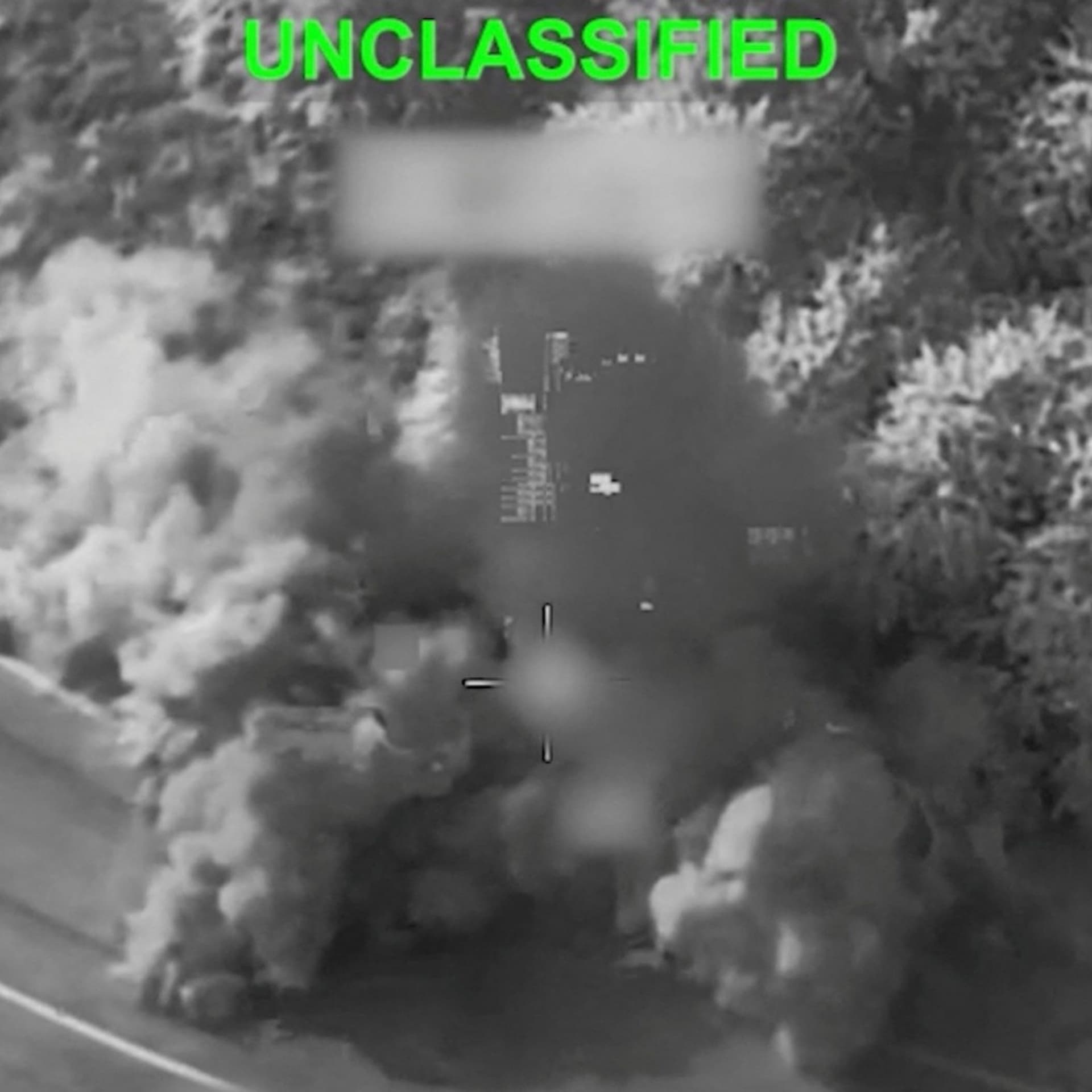
Iranian state media have reported explosions in different parts of the country, after the United States military carried out a fresh wave of attacks. The cities of Ahvaz, Yazd, and Bandar Abbas, and islands in the Strait of Hormuz were reportedly targeted. Iran's military says it targeted US bases in Jordan, Kuwait, Bahrain and Saudi Arabia in response.
Also: The US Department of Homeland Security has instructed election officials to check voter rolls for foreign nationals in four states. It comes a day after President Trump repeated unsubstantiated claims of widespread voter fraud. Crowds of desperate migrant workers gather outside embassies in South Africa, calling for help to return home, after threats intensify against them. Barbados declares a day of national mourning for one of the greatest cricketers of all time - Garfield Sobers - who has died at the age of 89. And the Bayeux Tapestry is unveiled after arriving back in Britain for the first time in almost 1000 years.
The Global News Podcast brings you the breaking news you need to hear, as it happens. Listen for the latest headlines and current affairs from around the world. Politics, economics, climate, business, technology, health – we cover it all with expert analysis and insight. Get the news that matters, delivered twice a day on weekdays and daily at weekends, plus special bonus episodes reacting to urgent breaking stories. Follow or subscribe now and never miss a moment. Get in touch: globalpodcast@bbc.co.uk Photo: Video screenshot shows smoke rising after what the US claims is a strike in Iran on July 16. Location and date not verified. Credit: US Central Command via Reuters