In short
This Global News Podcast episode covers: (1) Venezuela earthquake response: two strong earthquakes west of Caracas killed 235+ (200+ confirmed dead), with thousands missing. US pledges $150m aid plus two military ships, transport planes, and helicopters; $50m for NGOs (including World Food Programme, International Medical Corps, Samaritans) and $100m to the UN office coordinating relief. Key claim: dismantling USAID (employees dismissed/absorbed into the State Department) may thin US disaster-response capacity, making aid “improvised.” Notable example: Chacao municipality on a fault line; hospitals lack supplies/medicines. Guests/backgrounds: Rebecca Bill Chavez (former Deputy U.S. Assistant Secretary of Defense under Obama) and Hal Griffith (Washington correspondent). (2) US immigration legal rulings (Supreme Court ends TPS for Haitians/Syrians; may affect asylum seekers). (3) UK royal finances (King Charles $17m private income tax; Buckingham Palace not used as residence). (4) Vesuvius “Vesuvius Challenge” AI/X-ray reading of burned papyri (Brent Seales, Univ. Kentucky). (5) Exoplanet “super-puff” planets (George Dransfield, Oxford). (6) Kenya Gen Z protest anniversary (Mwanezi Ahmed; reporter Richard Kagoe). (7) World Cup tournament math and Cape Verde football (David Spiegelhalter; Paul Njie; coach Silvia Nadeo; federation president Mario Semedo).
Written by AI. May contain mistakes. Listen to the episode to check what was said.
Chapters
Tap a time to open that second in VOVenezuela Earthquake Update
0:57 to 1:46
Overview of the devastating earthquakes in Venezuela and ongoing rescue efforts.
“More than 200 people are now confirmed dead after two strong earthquakes devastated Venezuela.”
On-the-Ground Report from Venezuela
1:46 to 3:00
Report from reporter Vanessa Silva on the impact of the earthquakes in Caracas.
“following Wednesday's devastating back-to-back earthquakes.”
Challenges in the Humanitarian Response
3:00 to 4:03
Discussion with Dr. Pedro Javier Fernandez on the humanitarian challenges in Venezuela.
“We have to remember that Venezuela is in the context of a humanitarian complex emergency.”
US Aid and Political Dynamics
4:03 to 5:09
Analysis of the US pledge of aid and the political implications for Venezuela.
“The United States has pledged to contribute$150 million in aid and to supply two military ships, transport planes and helicopters to help with relief efforts.”
Future Aid Needs and Concerns
5:09 to 8:37
Discussion on the expected needs for ongoing aid in light of the recent disaster.
“I think it is compared to some other nations.”
US Supreme Court Rulings on Immigration
8:37 to 11:16
Details on the US Supreme Court ruling affecting Haitian and Syrian immigrants.
“Supreme Court has ruled that Donald Trump can end legal protection for Haitians and Syrians and potentially deport hundreds of thousands of them.”
Upcoming 250th Independence Day Celebration
11:16 to 11:47
Announcement regarding a special podcast for the 250th anniversary of the US.
Royal Finances and Buckingham Palace Decisions
11:47 to 13:34
Discussion on the British royal family's tax contributions and living arrangements.
“but those in the Netherlands, Norway, Sweden and the United Kingdom do make voluntary tax contributions on private income, although those details are rarely made public until now.”
Royal Family Transparency
14:03 to 15:40
Explore how recent events are prompting the royal family to be more transparent about finances.
“particularly after the situation with Andrew Mountbatten-Windsor moving and losing his titles, it's kind of opened up a closer look at the way royalty works.”
Discovery of Exoplanets
15:41 to 17:57
Learn about the discovery of two unusual exoplanets and their implications for astronomy.
“Researchers say that the two super puff planets orbit a star that's more than a thousand light years away.”
Show all 14 chapters
AI and Ancient Scrolls
17:58 to 19:50
Discover how AI is being used to read ancient papyrus scrolls damaged by volcanic eruption.
“and the diversity of the outcomes of planet formation.”
Kenyan Protests Anniversary
21:02 to 23:20
Examine the recent demonstrations in Kenya commemorating anti-government protests.
“Demonstrations have been held in several cities across Kenya to honour those killed during the Gen Z anti-government protests two years ago.”
Cape Verde's World Cup Journey
23:21 to 28:00
Follow Cape Verde's impressive performance in the Men's Football World Cup.
“Now, it sounds like an impossible challenge.”
Cape Verde's Journey in the World Cup
28:00 to 32:24
Learn about Cape Verde's underdog story and their preparations for the World Cup.
“Yeah, ironically, Algeria was the team that was eliminated because of Germany and Austria signing a non-aggression pact in 1982.”
Transcript
Automatic transcript. May contain errors.0:00This BBC podcast is supported by ads outside the UK.
0:30Snapdragon. That's how. How many streaming subscriptions do you have? Is it the same for your business? Avoid it by having all your business on one platform. Try Odoo for free at odoo.com. That's O-D-O-O dot com. This is the Global News Podcast from the BBC World Service. I'm Chris Barrow and in the early hours of Friday the 26th of June, these are our main stories. More than 200 people are now confirmed dead after two strong earthquakes devastated Venezuela. Search and rescue efforts are continuing, thousands are still missing, and the US has promised millions of dollars in aid. Here in the UK, it's been revealed that King Charles and Queen Camilla won't move into Buckingham Palace when a$500 million refurbishment is completed next year.
1:20Also in this podcast... We're using x-rays to be able to see inside, and then software, including AI, to be able to actually read the evidence of the ink from the interior. Researchers have managed to read a scroll that was burned to a crisp in the eruption of Mount Vesuvius nearly 2 ,000 years ago.
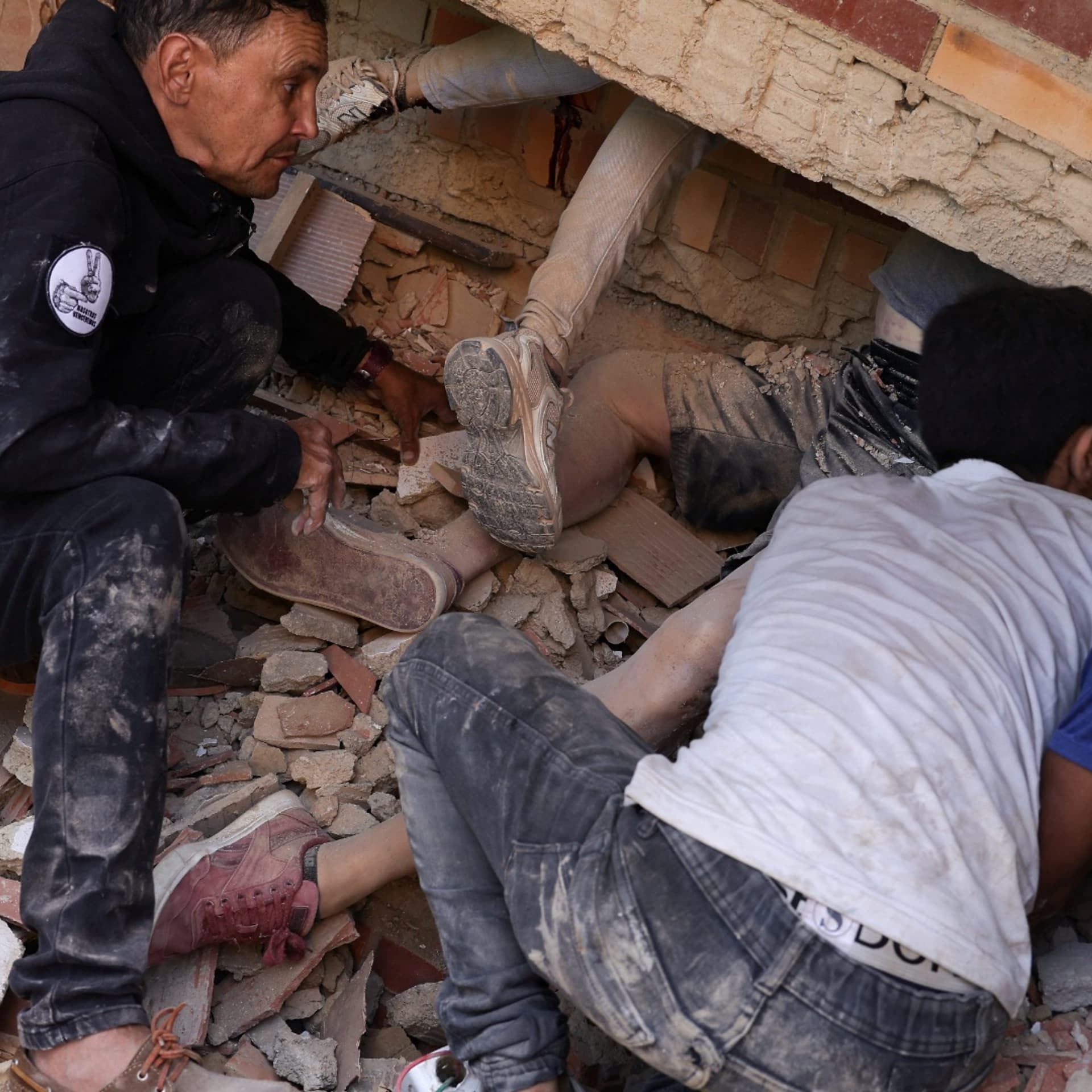
1:42A massive rescue operation is gathering pace in northern Venezuela following Wednesday's devastating back-to-back earthquakes. The confirmed number of deaths has now risen to 235 and thousands are still missing. Specialist rescue teams from the US, Mexico, Qatar, Spain and the UN are searching for survivors in the rubble of collapsed buildings. The epicentre of the tremors was to the west of the capital, Caracas. Our reporter Vanessa Silva is in the city. I'm right now in the Chacao municipality. This is one of the areas most affected in the city. since it's the point where the geological fault line runs through.
2:22This area was affecting during the earthquake that hit the city in 1967 and is affecting now. The damage that were at that moment are now being repeated and we can see buildings collapse. We know that at least four in this municipality, I was around two of them where many people from the government rescue teams are gathering there. Also heavy machinery trying to remove the concrete in the hope that look for survivors. Dr Pedro Javier Fernandez, who's involved in the humanitarian effort, told us about some of the challenges. We have to remember that Venezuela is in the context of a humanitarian complex emergency.
3:13All our hospitals lack supplies, lack medicines. We are not able to provide medical attention to our people in a normal day. Now, with this tragedy, the emergency is even bigger and it's more difficult to face than in other countries because not only the needs are more, the structure of the hospitals and the lack of medical equipment makes it even harder to provide medical attention. The response to this disaster is a big test for the government of Delce Rodriguez and for the Trump administration. Since the US military intervention in January, when the Venezuelan president, Nicolas Maduro, was abducted and flown to the United States, his former deputy has been running the country, but is heavily dependent on decisions taken far away in Washington.
4:03The United States has pledged to contribute$150 million in aid and to supply two military ships, transport planes and helicopters to help with relief efforts. But how all that pans out will be closely watched. Until last year, it would have been the aid agency USAID that responded to a disaster like this. But as part of spending cuts masterminded by Elon Musk, Many of its employees were dismissed and those left were absorbed into the State Department. Rebecca Bill Chavez was Deputy U.S. Assistant Secretary of Defense under President Barack Obama. There is a lot of muscle memory in USAID about how to react to these sorts of natural disasters.
4:43So that is gone. And it's going to be interesting because the capacity now at the State Department, It's much thinner. It could very easily become very improvised. Something else that USAID had was that it had long-term partnerships with organisations like the UN, with the International Committee of the Red Cross. So it's going to be very telling, I think, to see. It's going to be a challenge. I asked our Washington correspondent, Hal Griffith, whether the American aid is a significant amount. I think it is compared to some other nations. Whether it will be enough, I doubt it will be the only amount that they will need to spend.
5:24As you said, a total of$150 million. Now,$50 million of that will go towards NGO spending in the area, partly to the World Food Programme, to International Medical Corps, to Samaritans, as per as people who have a presence already, and then a further 100 million contributed to the UN office, which is coordinating the international response. So while it is a start, I'm sure more will be needed globally, but certainly there may be even an expectation that the White House will be prepared to spend even more in the coming days. Yeah, I imagine that in Caracas, with the US having intervened so strongly at the beginning of the year and removing Nicolas Maduro, that they would be looking to the United States to say, come on, we're sort of deferring to you now.
6:09Yeah, when you consider the US took control of domestic politics in Venezuela in January and then control of its oil sales since then, then perhaps there's a need for the US to be seen domestically, to be stepping in and owning this and responding to the disaster. Now, for his part, the Defence Secretary, Pete Hexer, said that when lives of our friends are on the line, America moves. So clearly, casting this as a relationship, a friendship, and a bond between the two countries where they can call on each other. And we know that Secretary of State Rubio spoke to the interim president, Delcey Rodriguez, in the hours straight after the earthquake, pledging support.
6:48She responded on social media to thank him and also responded directly to a message from President Trump saying that it was, you know, something that the nation would never forget, that helping hand being extended to the Venezuelan people during difficult times. So from her part and her administration's point of view, the interim administration, we must remember in Caracas, they want to keep this relationship healthy and happy in their time of need. I wanted to ask you about what the reality of this help will look like now that USAID has been dismantled. That was the organisation which would have picked up on this.
7:28We talked about some of the cuts that Elon Musk made to staff. Their employees were dismissed. So how is the reality of this now on the ground working out now that USAID is no more? Yeah, it's almost 12 months since the US Agency for International Development closed its doors. And we were told at the time by President Trump that the spending should be more aligned with America first. Now, arguably in Venezuela, there is no situation where his worldview might fit with that in that they want to remodel the politics and the economy in Venezuela. And they're in a time of need. So this money, the new money being pledged, can be seen as that sort of reshaping domestically of the political situation.
8:13Clearly, there was need there before the earthquake. However, we've heard at the BBC from people talking about the healthcare crisis in Venezuela, which is already under strain before the earthquake. And so, you know, you can see how, as we said at the start of this conversation, more than the original 150 million may be met if that need is going to be met as well. Howard Griffith in Washington. The U.S. Supreme Court has ruled that Donald Trump can end legal protection for Haitians and Syrians and potentially deport hundreds of thousands of them. A second ruling also clears the way for the administration to turn back asylum seekers at the U.S.-Mexico border.
8:53Our correspondent in Washington, Bernda Bussman, told Valerie Sanderson why Haitians and Syrians were originally given this legal protection. Temporary protected status is a program that started way back in 1990, And essentially, it's granted to individuals from very specific countries that are pre-approved by the U.S. government who are unable to accommodate many of these migrants because of war, natural disasters, for example. So Haitians were granted temporary protected status, or TPS, as it's known, initially after the major earthquake that took place in 2010. Syrians, for their part, many of them received temporary protected status after the country's civil war began in 2012.
9:31But those who aren't the only nationalities that have received this status, but they're the ones that are subject to the Supreme Court's ruling. And why is President Trump so keen on getting rid of this legal protection? Well, President Trump, of course, has a very hard line view towards immigration from other countries. He, in particular, has repeatedly spoken against Haiti. And more broadly, the Trump administration is of the view that temporary protected status was always meant to be temporary. Now, the initial policy is for 18 months, but that's subject to extensions. And many of the Haitians, for example, have been here now since 2010, 2011.
10:08And there are many other cases of nationalities that have been here for very extended time frames. The Trump administration really wanted to end this because they no longer saw it as being a temporary measure, as in the name. But what is the wider implication of this ruling? Because many of these people who've been there, as you said, since 2010 will have children born in the U.S. Well, that's a huge complication, of course. If children are born in the U.S., they are American citizens. Now, that's also something that the Supreme Court is debating, and we're expecting a ruling on that any day or any week now.
10:41But this could create a situation, for example, in which families are separated. The Trump administration has shown a willingness to do that. And it could create a situation where TPS recipients from other countries could also face the same. There's TPS recipients from places in Africa, for example, Sudan, South Sudan, rather, Ethiopia, Myanmar, Ukraine, El Salvador. Several countries around the world could now feasibly, because there's a legal precedent, they could also, in theory, be facing expulsion and potentially family separation if they have children or American spouses. Bernd de Bussmann.
11:15on the 4th of July this year the United States will celebrate its 250th birthday marking the anniversary of the adoption of the Declaration of Independence in 1776 and in the run-up to the celebrations we'll have a special podcast looking at the state of America today and if you have thoughts or questions on that subject we would love to hear from you please email us it's globalpodcast at bbc.co.uk and if you can include a voice note that would be fantastic. Thank you so much. Now, royal families the world over are not legally obliged to pay tax, but those in the Netherlands, Norway, Sweden and the United Kingdom do make voluntary tax contributions on private income, although those details are rarely made public until now.
12:02The annual accounts for the British royal family show that King Charles paid$17 million on his private income in the last financial year. Prince William paid$10 million. It's also been revealed that the King and Queen Camilla won't move into Buckingham Palace once costly renovations are completed next year. Our senior royal correspondent Daniela Ralph spoke to me from outside Buckingham Palace. It's been 10 years since the start of the refurbishment of Buckingham Palace and it has cost just under 500 million dollars. There's been new cabling, refurbishment of all the rooms, electricity has been looked at, the plumbing, everything has been modernised but now it will not have this building a royal resident because the king and queen have decided not to move in here and it will be the first time that a monarch has not permanently resided at Buckingham Palace since the reign of Queen Victoria so it is a really significant moment.
12:57It's also a really personal decision on the part of the king and queen they will stay at Clarence House which is just across the road from Buckingham Palace it's where they have both lived for more than 20 years It's much smaller, it's much homelier, it's a cosier building. And I think two people in their late 70s just did not want, personally, the upheaval of moving themselves and their staff to a whole new building. But Buckingham Palace will remain very much monarchy HQ and the business of royalty will still be focused in the building. So there'll be grand events, state dinners, banquets at Buckingham Palace.
13:30It's just the king and the queen will not permanently live there. A cynical person might say that the King's tax bill was revealed at the same time and in the same announcement as this to try and perhaps soften the blow. Is there some suspicion that that's the case, or do you think that it is really the King just wanting to be more transparent about his finances? I think he definitely wants to be more transparent about his finances. You can always wonder quite what is the thinking and the timing of royal announcements, but this has come because basically there has been such scrutiny over royal finances in the past few months, particularly after the situation with Andrew Mountbatten-Windsor moving and losing his titles, it's kind of opened up a closer look at the way royalty works.
14:13And I think both Buckingham Palace for the King and Kensington Palace for Prince William were very understanding of that and knew that they need to perhaps give more to show transparency and openness and accountability. So that is behind us getting those figures for the amount of tax that both the King and Prince William are paying for the first time. It is part of a strategy from Buckingham Palace to be more open. The slight problem with that is that although we now have the figures, which is new information, we don't have any detailed understanding of how they reached those figures and the breakdown of how they got to those tax bills.
14:50We understand that the King is in the top 100 taxpayers in the UK, which really puts him up there on the list. Does that kind of knowledge change the public's opinion of the royals? I don't think so necessarily, but I think there is a definite shift in mood around what the public want to know about the royal family. The sense of the royal family being a little bit at arm's length, in the distance, something that just sits there, that's always been there. That mood is shifting. I think there is a bit of a clamour in some places to understand more of how they work, how they are paid for. are they value for money which is why we're getting a little bit more of the financial information now around tax and around how they are publicly funded through a mechanism called the sovereign grant if you don't like the monarchy are you going to change your mind because you know how much tax the king and prince william pay probably not but it is a shift and a move to a degree of greater openness daniela ralph astronomers have discovered two planets outside our solar system known as exoplanets both of them are about the size of Jupiter, but less dense than candy floss.
15:57Researchers say that the two super puff planets orbit a star that's more than a thousand light years away. Their atmospheres are thought to be rich in hydrogen and helium, according to the study published by the British Royal Astronomical Society. James Kamarasamy has been speaking to George Dransfield, an astrophysicist from the University of Oxford and lead author of the study. Super puff planet is a planet that's really, really big but very under dense for its size so i mean you know things that are roughly the size of jupiter we might expect them to be the density of jupiter but these things are about 20 times lighter than jupiter itself um so it's a very very surprising find two of them together yeah exactly so i mean we've discovered so far about 6 300 odd planets of those about 37 of them are superpuffs but only four other systems contain more than one superpuff so this system is really special because it's not just multiple superpuffs but they're the biggest ones you've ever found and the star is nice and bright so that means that we can actually do a deep dive to you know investigate the system further and that i was going to say the brightness is that how you found them because the star nice and bright but what more than a thousand light years away yes definitely over a thousand light years away.
17:14The brightness of the star helped, but we actually discovered them using the transit method, which is when a planet passes in front of the star along our line of sight and blocks out a small amount of light temporarily. So we get that dip in brightness that allows us to infer the presence of a planet. Interesting. I'm not sure if this is your turn of phrase, but it's a rather lovely one that they are comparable to a nice blob of shaving foam. That is indeed my turn of phrase. Yeah, if you squirted some shaving foam into your hand, then that's the kind of density that we're talking about for these planets overall.
17:49Wow. And what do we learn from them? Whenever we find something that's an outlier, that doesn't kind of fit our understanding of planet formation, it allows us to kind of extend our understanding of how planets can form and the diversity of the outcomes of planet formation. I mean, if you look at the solar system only, then you really wouldn't think planets are that diverse. But exoplanets have shown us that some very weird and wonderful things can happen out there. And super puffs, especially double super puffs, they're huge outliers. So it really allows us to understand our place in the cosmos.
18:26George Stransfield, who's an astrophysicist from Oxford University. And still to come in this podcast. This training centre is living proof that it was built with the future in mind. We look at how the tiny nation of Cape Verde has invested in football as its exceptional run at the Men's Football World Cup continues.
19:08burning the midnight oil. Get maximum performance, even when unplugged. Finally, the freedom to move across the room or across the world is here. Snapdragon, that's how. Hey, it's Ryan Seacrest for Jewel Osco. Save up to 50 % off your favorite self-care brands this summer. Stock up on wellness products like Cortisone 10 Ultra Soothing Cream, Dual Colax Stool Softener Gels, Claritin 24-Hour Allergy Tablets, Nature's Truth Magnesium, Cortisone 10 Cooling Spray Dual Colax Stimulant Tablets and Nature's Truth Elderberry Gummies Enjoy savings on top of savings when you shop in-store or online for easy pickup or delivery.
19:48Restrictions apply. See the website for full terms. Today's episode is sponsored by NerdWallet's Smart Money Podcast. Personal finance can feel like a pop quiz you didn't study for. This podcast is your study guide. On NerdWallet's Smart Money Podcast, you'll hear from trusted journalists who explain the why behind major financial decisions. You'll get research-backed insights and clear pros and cons, whether you're planning a big purchase or just want to grow your wealth. Make your next financial move with confidence. Follow NerdWallet's Smart Money Podcast on your favorite podcast app. Bro, from the show last night to this drive, why is it never chill?
20:24Because this is our life. Backstage, on the road, it's loud, messy, real. And that's the best part. Whole crew, no plan, just moving. Good thing Nissan builds for that kind of chaos. Not just test tracks, real life scenes, late nights, road trips, all of it. That's why it holds up. Nissan was ranked number one in initial quality among mainstream brands by J.D. Power. Yeah, you can tell. 2026 Nissan Rogue built for what really happens. For J.D. Power 2025 US Initial Quality Study Award information, visit jdpower.com slash awards. Awards based on 2025 model year, newer models may be shown. This is the Global News Podcast.
21:07Demonstrations have been held in several cities across Kenya to honour those killed during the Gen Z anti-government protests two years ago. Security was tightened in the capital Nairobi, where police fired tear gas outside the central police station after detaining activists. One of the protesters, Mwanezi Ahmed, said it was important to remember the anniversary. I'm here today because we have a responsibility. We have a responsibility to our country, to our ancestors, to those who came before us, to the youth who are murdered here on these streets, murdered for the simple reason that they were asking for a better Kenya.
21:45Our reporter Richard Kagoe is in Nairobi. There was a heavy deployment across Nairobi and especially around the Central Business District. We had Antirata police who had positioned themselves in key locations. They mounted barricades, restricted the flow of traffic into the city centre. Central of Nairobi was quite deserted. Shops were closed. Employers told workers to work from home. Schools are also equally closed, despite the assurances by the government that everything will be OK. And so there was this tension that was really permeating in the air since morning, because out of abundance of caution, a lot of people decided to stay away because of how the events of last year, marking the first anniversary of the protest, turned out.
22:37Turned out very bloody. The whole protest became very chaotic, very violent because of clashes between demonstrators and the police. And that's basically the situation in Nairobi. But there are also demonstrations in other parts of the country, in the coastal city of Mombasa. There were processions that were done there, various marches across the city, though they passed on now very peacefully. And also in central Kenya, there was a bit of an incident where a couple of demonstrators were also arrested. But largely, you would say, in some areas, especially the western part of the country, it was really business as usual.
23:14A lot of people didn't quite regard the anniversary commemorations. Richard Kagoe. Now, it sounds like an impossible challenge. how to read a 2 ,000-year-old papyrus scroll that was burnt to a crisp when Mount Vesuvius erupted in what's modern-day Italy. Now, though, with the help of AI, a team have managed to virtually unroll the scroll from the library of a luxury Roman villa in Herculaneum. It's one of hundreds of incredibly fragile roles that the Vesuvius Challenge Project are working on. Brent Seals is a professor of computer science at the University of Kentucky and one of the founders of the project.
23:51You don't have just the volcanic damage, but you have aging for 2 ,000 years, the archaeology. And then the last 250 years, I mean, bless everyone's heart, but people did the best they could at trying to hold off and not everything got preserved. I mean, a lot of things are fragmentary or even completely destroyed. So we're operating on three or four hundred of the worst of the worst, which is why we're using x-rays to be able to see inside. and then software, including AI, to be able to actually read the evidence of the ink from the interior. You can map the entire internal structure using what's called x-ray tomography.
24:32It's essentially a three-dimensional map of everything inside the scroll, but at a very, very fine resolution. And once you get that, you can see where all of the folds are, not just the outer ones, right, but the interior wraps. And then the software lets us localize those folds and unwrap them. We can actually read coherent, complete manuscripts. What we've found are original books that were on the shelf in AD 79 when the volcano exploded. First of all, we have some titles and authors that no one expected. For example, Philodemus on the Gods, book eight. But, you know, it's kind of a shocking surprise to realize Philodemus wrote a series of at least eight books on the gods.
25:19It's a little bit like, you know, realizing that there were more Harry Potter books than just the first two. I mean, it's an esoteric world, right, of ancient literature and classical study. But that's the kind of stunning thing that's coming out now. Professor Brent Seals. Now, you may or may not be interested in football, but the Men's Football World Cup is underway at the moment, and it's a fascinating case study in tournament design. Normally, for the maths to work nicely, you want a number like 32 or 16, because it halves and halves again until you're left with two teams in the final. But this World Cup has started off with 48 teams.
25:58So to get back to a nice number like 32, you've got to knock out 16 of them, which is pretty awkward. And there's a match on Saturday between Austria and Algeria that's taking place that both sides probably want to lose so that their draw for the rest of the tournament is better. There was also a famous match in 1982, West Germany versus Austria again. Both teams wanted Germany to win by one or two goals. The statistician David Spiegelhalter has been telling Evan Davis why 48 teams is just not a good number. I should first of all say I'm not particularly interested in football, but this is absolutely gripping.
26:34Austria and Algeria are currently second and third in Group J, both on three points, Austria ahead and goal difference. But the point is that the winner of the match will end up a runner up in Group J, and they will have to play Spain in the first round of the knockout competition when they're down to 32, which isn't a match that either team particularly want to face. And the loser of the match will end up in third place. But because of this odd 48 teams doesn't go nicely and they want to get 48 down to 32, out of the 12 third place teams, they're letting eight go through. The top eight of the third place teams go through into the knockout round and they will play winners of other groups.
27:18So, you know, they're quite a tough matches they're going to have when they do go through. The point is that it could be in the best interests of both Austria and Algeria to lose in that case and just become a high place, third place team. There have been lots of situations before where oddities come up about tactical play. But the thing that FIFA did after that Germany-Austria game back in 82 is they said that the last game in each heat, those games are going to be played simultaneously. So you don't really know necessarily what your rank is going to be in the group because something is going on simultaneous to the game you're playing.
Read the full transcript
27:52It's a little bit more complicated where you've got a third place team coming in. It's harder to make it tense right to the end of the group. I think that's really what's going on here. Yeah, ironically, Algeria was the team that was eliminated because of Germany and Austria signing a non-aggression pact in 1982. And it's always rankled in Algeria. So personally, I think they're going to be playing to win, even if it means facing Spain. But I've been checking all the rules. And as far as I can see, there's nothing in the FIFA disciplinary code that teams have to try to win. If they unlawfully try to fix the match, then obviously that's against the rules.
28:29But there's nothing in the actual disciplinary code. But there is a fair play code that says they're supposed to play to win until the final whistle. Now we know. Meanwhile, underdogs Cape Verde have become something of a World Cup sensation after holding football giants Spain and Uruguay to a draw. Their next match is against Saudi Arabia on Friday, and it's an important one because it will determine whether they go forward to the knockout stage of the tournament. The BBC's Paul Ngie has been to see how the team trains. At a training facility in the capital prior, young aspiring players are honing their football skills.
29:10They are passing the ball to one another, controlling, shooting and running around separate parts of a refurbished artificial pitch. Several years ago, football was mostly played on the bare ground. But thanks to the technical support and funding from FIFA, some sports facilities here were more denised. One control, one attempt, so now do two attempts. Let's go. Bola Prafrente Academy founder and head coach Silvia Nadeo says such projects are laudable.
29:45This training centre is living proof that it was built with the future in mind. I started working here in 2010, two years or so after the place was opened. I founded the academy and today kids that were here back then at the age of eight and nine are now part of the Blue Sharks team. I never stopped offering training here. I've been doing this for 15 years and haven't trained players in any other facility.
30:11Among the key players in the academy is a 12-year-old striker called Gianluca Markolin, who Coach Nedjo describes as a rare case. He may look small for his age, but I'm told he's quick, dribbles well, and has impressive goal-scoring abilities.
30:32Football has always been a dream. While growing up, I saw many players playing. I got inspired, I started playing, then I decided to join Bola Frente Academy. The player that inspired me the most since I started playing is Messi. I like him a lot. Without the academy, I wouldn't have played in tournaments, I wouldn't have won the prizes that I got. I believe without it, I wouldn't be the person that I am today. Academies play a crucial role in nurturing young players in the country. But despite efforts from the government and the Football Federation, Analysts say more needs to be done to develop the sport locally, including making the football league more professional.
31:14Mario Semedo, president of the Cape Verdean Football Federation, tells me he's got a plan.
31:24I think it will not just create motivation around local football, but another advantage of our World Cup participation is that we will also invest part of the FIFA bonus into developing local football. We will boost training, especially in football academies, and improve local competitions. So this is how we can leverage our World Cup participation.
31:49Cape Verde's exploits were perceptible during the World Cup qualifiers where they urged continental football giants Cameroon. But few people would have imagined they would hold behemoths Spain and Uruguay to a draw at the global tournament. The Blue Sharks play against Saudi Arabia on Friday in a crucial game to book a ticket to the second round. Although the outcome is hard to tell, both sides will likely approach the game with much more intensity. That's Paul Njie reporting. And that's all from us for now. if you'd like to get in touch though do email us at global podcast at bbc.co.uk you can also find us on x at bbc world service just use the hashtag global news pod and don't forget our sister podcast the global story which goes in depth and beyond the headlines on one big story this edition of the global news podcast was mixed by charlotta hadroyd talzimska and produced by paul day and Wendy Urquhart.
32:50The editor is Karen Martin. I'm Chris Barrow. And until next time, goodbye.
33:02Take the leash off your laptop with the processor that gives you long battery life. Work on the go. Jump between back to back calls. Stay locked in from brewing morning coffee to burning the midnight oil. Get maximum performance, even when unplugged. Finally, the freedom to move across the room or across the world is here. Snapdragon. That's how.
From the publisher
The Trump administration is deploying military assets and a specialised team, as well as millions of dollars in financial aid to help relief efforts in Venezuela. The country's health minister says at least 235 people are now known to have died in Wednesday's powerful earthquakes, and large numbers of people are still unaccounted for. Also: hundreds arrested across Kenya as demonstrators mark two years since a deadly crackdown on youth-led protests. King Charles and Queen Camilla won't move into Buckingham Palace when a $500m refurbishment is completed next year. Scientists discover twin "super-puff" planets that are less dense than candy floss. Researchers manage to read a scroll that was burnt to a crisp in the eruption of Mount Vesuvius nearly 2000 years ago. And we look at how the tiny nation of Cape Verde has invested in football... as its exceptional run at the Men's Football World Cup continues.
The Global News Podcast brings you the breaking news you need to hear, as it happens. Listen for the latest headlines and current affairs from around the world. Politics, economics, climate, business, technology, health – we cover it all with expert analysis and insight. Get the news that matters, delivered twice a day on weekdays and daily at weekends, plus special bonus episodes reacting to urgent breaking stories. Follow or subscribe now and never miss a moment. Get in touch: globalpodcast@bbc.co.uk Photo: People work to rescue casualties from the rubble of a building in La Guaira after earthquakes hit Venezuela Credit: REUTERS/Gaby Oraa