In short
The episode covers multiple global stories. In the West Bank, Palestinians fear for children’s safety after an increase in settler attacks; examples include a 14-year-old shot dead near school gates in Almogaya, and UN-described patterns of settlers targeting Palestinian children. The British government is preparing sanctions, reportedly including a ban on products from Jewish settlements; Israel warns retaliation and calls it hostile. In Odessa, Ukraine’s third-largest city, councillors consider banning Russian in arts and public life; guests describe Russian as widely spoken, while some argue language is a wartime weapon. The Eiffel Tower staff strike over reports that women were told to avoid interacting with a conservative Hindu group (BAPS). Other segments: French wine losses from heat/drought; US Open influencer disruptions and Wimbledon’s stricter rules; 3D-printed ultrasound scans for blind parents; and King Charles clarifying Harry and Meghan are not working royals.
Guests/backgrounds
Lucy Williamson (BBC correspondent, West Bank); Paul Adams (BBC diplomatic correspondent); Tim Huell (BBC reporter, Odessa); Daniela Relf (royal correspondent); Mimi Swaby (global affairs reporter, Eiffel Tower); Evan Davis (host); Gabrielle Vise-Voene (wine expert); Stephanie Prentiss (reporter, tennis/influencers); Rachel Lloyd (Guide Dogs, ultrasound 3D pilot); Rhys and Sophie Finnegan-Knight (blind parents using the scheme); Boris Barsky (Odessa comic actor); Artem Kartashov (lawyer involved in decolonising Odessa); Natalia Mikhalenko (photographer); Anastasia Pilyavsky (anthropologist campaigning on language issues); Jenny Bond (royal commentator).
Written by AI. May contain mistakes. Listen to the episode to check what was said.
Chapters
Tap a time to open that second in VOIntroduction to Current Events
0:30 to 2:14
Overview of significant stories including settler attacks and UK sanctions.
“Listen to Choiceology at schwab.com slash podcast or wherever you listen.”
Safety Concerns in the West Bank
2:14 to 4:21
Discussion of the dangers faced by Palestinian children in schools due to settler violence.
“We'll hear the details in a moment, but first to the West Bank itself and a village south of Nablus, where our correspondent Lucy Williamson has been speaking to Palestinians worried about their children's safety.”
UK Government's Stance on Settlements
4:21 to 8:05
Analysis of the British government's planned sanctions on Israeli settlements.
“A security camera shows him spotting Israeli settlers nearby, the family running for shelter as gunshots are heard.”
Cultural Tensions in Odessa
8:05 to 11:58
Exploration of the language policy and cultural identity in Odessa amidst the war.
“But on Wednesday, councillors there are due to vote on a proposal to ban Russian from the arts, public institutions and entertainment venues.”
Harry and Meghan's Royal Status
11:58 to 14:46
Updates about the Duke and Duchess of Sussex and their relationship with the royal family.
“If the Duke and Duchess of Sussex hope to be welcomed back into the royal fold on their return to the UK, they'll have been disappointed by the clarification from King Charles.”
Loud Influencers and Sports Etiquette
14:46 to 15:49
Exploration of how influencers are impacting sports events and etiquette.
“And now we're doing it on our phones, too.”
Loud Influencers and Sports Etiquette
17:00 to 17:56
Exploration of how influencers are impacting sports events and etiquette.
“Three years in, and these pre-owned machines are still at the top of their game.”
Eiffel Tower Controversy
18:03 to 20:10
Discussion on the controversy surrounding a conservative group visiting the Eiffel Tower.
“You're listening to the Global News Podcast.”
Impact of Climate on French Wine
20:10 to 23:03
Analysis of climate impacts on the French wine industry and production forecasts.
“and also said that he personally will make sure that it is amended.”
Disruption at the US Open Tennis
23:03 to 25:44
Discussion on how influencers disrupted the US Open and Wimbledon’s response.
“Yeah, champagne probably down 48 percent, burgundy 33 percent.”
Show all 12 chapters
3D Ultrasound for Sight Loss
25:44 to 28:00
Introduction of a new scheme allowing visually impaired parents to experience ultrasounds.
“Seeing your baby for the first time on an ultrasound screen is a moment many parents treasure.”
Inclusive Experiences for Blind Parents
28:00 to 28:59
Learn how innovative solutions are making parenting more inclusive for visually impaired individuals.
“If anyone's seen a baby scan before, they'll appreciate that.”
Transcript
Automatic transcript. May contain errors.0:00This BBC podcast is supported by ads outside the UK.
0:30Listen to Choiceology at schwab.com slash podcast or wherever you listen.
1:008th of September. Palestinians in the occupied West Bank fear for their children's lives at school after an increase in settler attacks. Will Ukraine's third largest city, Odessa, crack down on the Russian language, even though it's spoken by most residents there? And staff at the Eiffel Tower go on strike after bosses agree to make the site a women-free zone for a visit by a conservative Hindu group. Also in this podcast, King Charles makes it clear that Harry and Meghan's return to Britain doesn't make them working royals again. And... When I saw it and re-spelled it, it felt like this was the first time we were actually doing it together, which was amazing.
1:39It's so nice to have that before our babies actually with us as well. Yeah, exactly. 3D prints of ultrasound scans for parents who can't see.
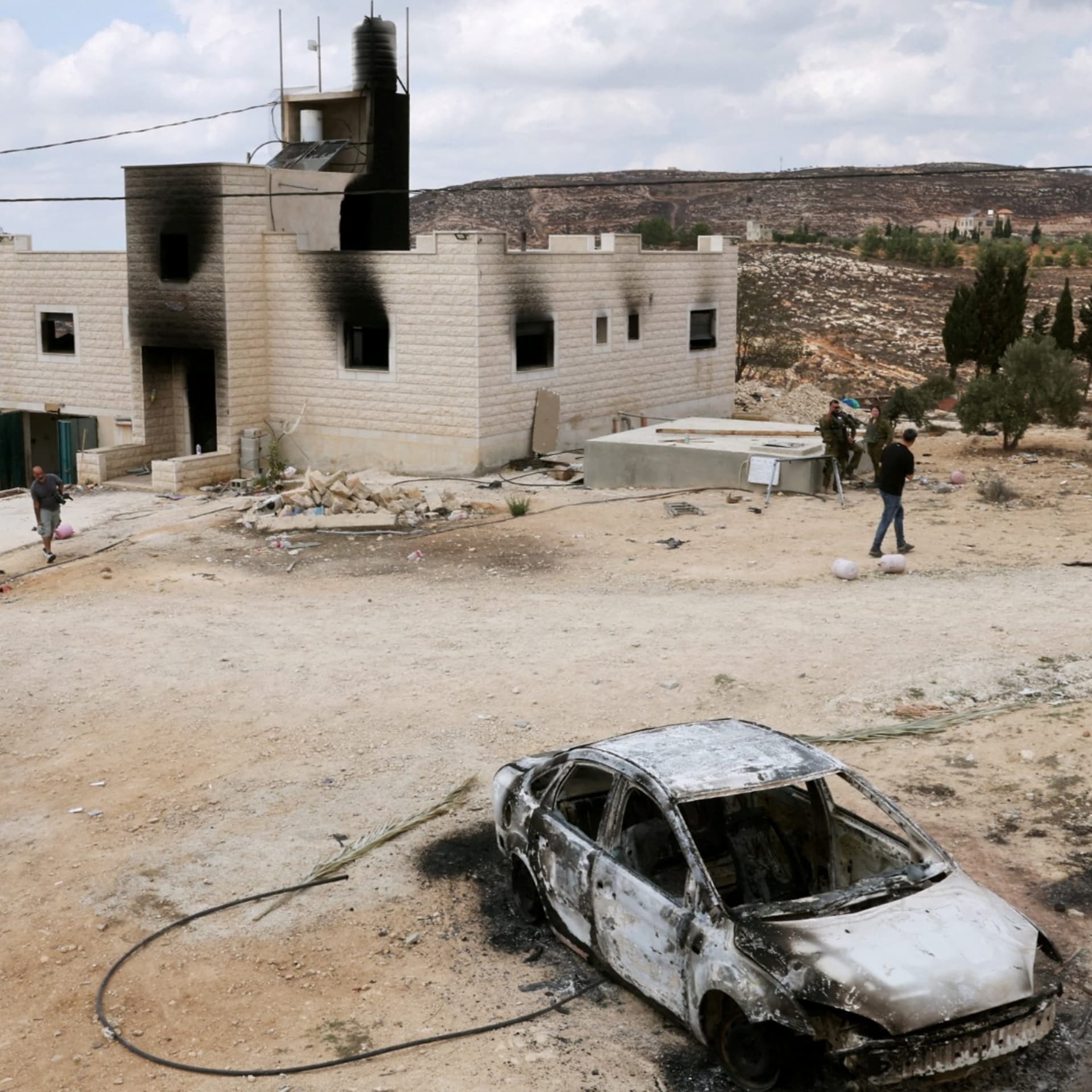
1:52Israeli settlements on occupied Palestinian land are considered illegal under international law, and a huge barrier to any future peace deal. Criticism over expansion plans has grown amid a rise in attacks by Jewish extremist settlers on Palestinians in the occupied West Bank. Now the British government is preparing to announce sanctions on Israeli settlements there. We'll hear the details in a moment, but first to the West Bank itself and a village south of Nablus, where our correspondent Lucy Williamson has been speaking to Palestinians worried about their children's safety. Not everyone came back to school in Almogaya this year.
2:30Three pupils here killed in the past few months. And those who did return found changes. The school itself, freshly ringed with barbed wire. In April, a 14-year-old pupil was shot dead by a settler outside the school gates, along with the brother of a teacher. Israel's army said an off-duty reservist had fired at suspects after stones were thrown. Over the summer, two more pupils were killed by Israeli forces after settlers entered the village.
3:06The first lecture of the day. If you see settlers or soldiers, don't shout, don't approach, don't react. We're just a couple of hours into the school year here and already I'm watching settlers take their sheep through the fields just on the other side of the road, residents say settlers have been coming further and further into the village every day. As they have done in all the West Bank, they want us to leave the school, to go inside the village. We are not going to leave our school. We are going to study inside our school. We are not going to leave this place. Outside, a few parents stand guard during classes.
3:51on the road, ambulance crews. One said injuries from settler attacks here, including injured children, had risen this year after Israeli soldiers had begun protecting settlers during assaults. A UN commission has described a pattern of settlers intentionally targeting Palestinian children as part of a strategy to drive Palestinians off their land. In July, nine-year-old Salim was shot in the arm while playing on his family farm outside Al-Murraya. A security camera shows him spotting Israeli settlers nearby, the family running for shelter as gunshots are heard.
4:38The bullet still lodged in his arm. All Israeli settlements are illegal under international law, but growing violence by by some settlers has increased pressure on Israel, including from the UK. And Palestinian families who have watched the outposts here expand are now watching their kids. Our Middle East correspondent Lucy Williamson. The measures expected to be announced by the British government on Tuesday include a reported ban on all products made in the Jewish settlements. The Israeli government has warned that it will retaliate. I heard more from our diplomatic correspondent Paul Adams.
5:16For the first time, the British government is going to move beyond a position which it's had for decades, which is that Jewish settlements in the occupied West Bank are illegal, contrary to international law, moving beyond that to a position now where the British government will say that any products grown or manufactured in those settlements will be banned. It's something that campaigners have been pushing for for a long time. The government in the past has been reluctant to go down that route, sometimes arguing that it will be difficult to enforce. It'll be difficult to establish what is and is not the product of a Jewish settlement, as opposed to coming from Israel proper.
5:52But I think that the government, having last year recognized the state of Palestine, feels that it is now necessary to start taking action, which shows not just a rhetorical support for Palestinian aspirations, but also that the British government should be seen to be punishing what it sees as an increasingly untenable situation in the West Bank with the expansion of Jewish settlements and, of course, what we've seen in recent weeks, a real outbreak of settler violence. And how is this likely to go down with the Israeli government? The Israelis have been furious about this ever since the rumours started flying, which was actually several weeks ago that the government was moving in this direction.
6:38They believe that This is pandering to Palestinian terrorism. You heard the U.S. ambassador to Israel, Mike Huckabee, talking about this government being infected with Jew hatred. This is something that both in Washington and in Israel will be seen as a hostile move. So far, the White House hasn't actually said anything, even though this is now starting to leak out. Certainly, Israel is not going to be happy about this because it is part of a growing international move of sanctions and isolation with other countries, Spain, Ireland, Norway, the Netherlands, all going down a similar route. Is it likely to make the Israeli government change course at all?
7:17I don't think anyone thinks that that is likely. This government, under Prime Minister Benjamin Netanyahu, has been expanding settlements at a pretty furious pace. Let's not forget that there's an Israeli election coming up in which standing up for Israel's biblical rights, as the government would argue, is a matter of faith and also of political necessity, perhaps, for Benjamin Netanyahu. He can't be seen by his political opponents and those on the right in general to be weak on the subject as central as this. So if anything, it's probably going to put Israeli backs up and stiffen Israeli resolve.
7:53I think the government here knows that that is likely to be the Israeli reaction, but feels this is action that it has to take nonetheless. Our diplomatic correspondent Paul Adams. Russian is the first language of the overwhelming majority of people in Ukraine's third largest city, Odessa. But on Wednesday, councillors there are due to vote on a proposal to ban Russian from the arts, public institutions and entertainment venues. Millions of people across Ukraine, including many fighting the invaders, speak Russian. But it's seen by some as the language of the enemy. So what's the view in Odessa?
8:30Tim Huell has been to find out. It's a muggy summer night in Odessa. Russia is launching missiles at the city every few hours, but the mask theatre is packed. Veteran comic actor Boris Barsky, with his trademark wax moustache, keeps the audience rolling in the aisles with classic Odessa humour in the main language of its streets, Russian. He's allowed to use it on stage because this is a private theatre, but he's been fined for writing coffee in Russian on the cafe menu. Signs in the language are banned, part of a complex web of restrictions he thinks are absurd.
9:13This isn't even like Orwell or Kafka. It's just total madness. Now he's worried that a proposed moratorium on Russian language content in the public sphere may even extend to songs.
9:34More songs have been written about Odessa than any other city. How can you cut them out of our lives? But lawyer Artem Kartashov, who's helped the council to decolonise Odessa, changing Soviet and Tsarist-era memorials and street names, says there's a problem with Russian songs in wartime. By the Russian-speaking music or something else, Russians tried to deconstruct Ukrainian identity or tried to influence especially on the young people. Language was instrumentalised by the Russian Federation as a weapon. Photographer Natalia Mikhalenko agrees. She grew up speaking Russian but switched to Ukrainian when she learnt about Russia's centuries-long repression of Ukrainian culture.
10:20Now, when everyday people are killed, it's very hard to hear Russian language. I think it's because of trauma. The most radical people are the people who are lost relatives.
10:42Ukrainians already used for most purposes, except private conversation in Odessa. Guides, advertising excursions have switched to it, for example, as the law says everyone must use it at work. Ukrainian and Russian are closely related, and most Odessans understand both. But Anastasia Pilyavsky, an anthropologist who's founded a group campaigning for more open discussion of language issues, says that's not the point. The question is not really one of language, but it's one of liberty, right? Because Ukraine has been fighting for freedom. For most Ukrainians, diversity is not a frill. This is what they're fighting for.
11:21This is the reason for this war, right? If you put it on hold, there's nothing to fight for. It's not clear yet whether the council will approve a moratorium on Russian in the public sphere or what exactly that would mean in practice for Boris Barsky's theatre. At the end of his performances, he salutes jesters, his fellow actors, who defend the country by keeping it laughing. and then its ultimate defenders, its armed forces. He wants Ukraine to win, but he thinks his country can fight Russia without needing to fight Russian too. That report from Odessa by Tim Huell. If the Duke and Duchess of Sussex hope to be welcomed back into the royal fold on their return to the UK, they'll have been disappointed by the clarification from King Charles.
12:10A letter sent on his behalf to a number of institutions in Britain states that Harry and Meghan will not be undertaking any activities as working royals, only as private citizens. The couple, who spent the past six years living in California, moved back here last month. Our royal correspondent, Daniela Relf, told us more. The return of the Duke and Duchess of Sussex has thrown up some unexpected moments over the past couple of weeks, and this letter is another one of those. It also comes at the same time as we have seen some new images of Prince Harry on social media of him visiting a TV and podcast studio in London.
12:47It is the first sighting we have had of him since returning to the UK with his family. But that letter, which has been written by one of the most senior royal officials on behalf of the king, makes it clear that Harry and Meghan's status is unchanged. It stresses that their titles of His and Her Royal Highness will still not be used because they are non-working royals. It describes their charity work as being undertaken only in a private capacity. And on Harry and Meghan's security provision, it says that is a matter for the relevant police authority. The letter has been sent to a number of public bodies and organisations, including government departments and the military.
13:25and it is the royal household asserting its position on Harry and Meghan, which is that they will not be doing any kind of official royal duties. And why now? Well, because over the next few weeks, we are likely to see senior members of the royal family out on royal duty at the same time as the Sussexes are doing their own charity engagements. So this letter was about offering clarity on their status. Daniela Ralph. So where does this leave the royal family's relationship with the Sussexes? Here's royal commentator Jenny Bond. I think the royal family now feel, and I think William has a say in this, you know, that they are now drawing a line under Harry and Meghan's status and they will be out and about doing their best to get us and the public to focus on what they are up to.
14:09Whether they will succeed is quite another question because they can say it as much as they want that Harry and Meghan are not working royals and they can say it as much as they want that they cannot be half in and half out, but I think they are. I think this is really what Harry and Meghan have achieved. As the statement makes clear, they can undertake their charitable work in a private capacity and they can also pursue their commercial interests as they wish. To me, it seems all in name, half in and half out. Royal commentator Jenny Bond. And still to come on this podcast. Obviously, if you come to a sporting event, you have to respect the sport, especially like the etiquette i think it has to be managed a lot better our loud influencers ruining tennis tournaments
15:06chicago talks a lot hold on let me step over here people are talking too much we debate about food deep dish tavern style who's got the best beef we yell across rooms across blocks across generations Yes, nice earrings, Grammy. And now we're doing it on our phones, too. Video calls from the L train, group chats that never shut up. Neighbors texting you the score before your TV catches up. Come on! Get a load of this guy. Catch up on a dog. Yeah, we've got thoughts. Too loud? In Chicago, you're gonna hear it. Because nothing here gets built without conversation. Nothing moves without connection.
15:44So if you think you know AT &T, it might be time to rethink that. because their network has improved, like, a lot. So Chicago can keep speaking its mind with AT &T Wireless and AT &T Fiber. Chicago won't stop talking. Our improved network backs it up. AT &T, connecting changes everything. AT &T Fiber, limited availability in select areas. Decisions made in Washington can affect your portfolio every day. But what policy changes should investors be watching? Listen to Washington Wise, an original podcast for investors from Charles Schwab, to hear the stories making news in Washington right now. Host Mike Townsend, Charles Schwab's Managing Director for Legislative and Regulatory Affairs, takes a non-partisan look at the stories that matter most to investors, including policy initiatives for retirement savings, taxes and trade, inflation concerns, the Federal Reserve, and how regulatory developments can affect companies, sectors, and even the entire market.
16:45Mike and his guests offer their perspective on how policy changes could affect what you do with your portfolio. Download the latest episode and follow at schwab.com slash Washington Wise or wherever you listen. John Deere is putting in work and putting up highlights. Oh man, look at those passes. Tillage, planting, harvesting. Three years in, and these pre-owned machines are still at the top of their game. We're talking reliability, performance, and long-term potential. And get this, these veteran machines can pick up the latest precision tech with ease. You know it, and fans ready to add John Deere certified pre-owned equipment and more options to their lineup can shop at machinefinder.com.
17:27Booyah!
17:37Phew, and to think, that's just a small taste of what Schwab offers. Because Schwab knows that when it comes to your finances, choice matters. No matter your goals, investing style, life stage or experience, Schwab has everything you need, all in one place, so you can invest your way. Visit schwab.com to learn more.
18:03You're listening to the Global News Podcast. The Eiffel Tower was closed on Monday as a result of a row over a visit by a conservative Hindu group with links to the Indian Prime Minister. About 100 members from the BAPS organisation toured the attraction on Saturday. But women working there were apparently told to make themselves scarce to avoid interacting with the group. Staff later went on strike in protest. Our global affairs reporter Mimi Swaby told me what happened. So the operator of the Neffield Tower said a group had requested a private viewing on Saturday and this group was made up of about 100 members or people linked to the BAPS group and they part of a delegation which was a wider group where representatives were in Paris for events linked to the inauguration of a Hindu temple.
18:51Now, the group went into the tourist hotspot and they had their visit organised with the request to limit interaction with women. Now, the operator of the Eiffel Tower acknowledged these conditions should not have been accepted. However, they were and female employees were asked to leave their position, step out of sight and then were replaced by their male counterparts. And this unsurprisingly left them incredibly shocked. And we heard from a workers' union that during the course of the weekend, this shock turned to anger, really sparking outrage among staff and then drawing criticism from the wider public and French politicians.
19:28Yeah. Tell us more about the reaction. So the president of the National Assembly has said that welcoming others never means giving up French values and that in France, women are fully present in public life and no one tells them to become invisible. And it's really the sidelining and the replacement of FEMA staff during this visit, which has caused a lot of anger and debate, especially online as well. We've heard from the mayor of Paris, Emmanuel Gregoire. He expressed support for the strike in a post on social media on X and described the exclusion of the FEMA workers as unacceptable. He said the discontent they had was legitimate.
20:03He stood with them. He also said that this incident was contrary to the values that the Eiffel Tower stands for. and also said that he personally will make sure that it is amended. An investigation is launched as soon as possible. In a statement as well from the trade union, a similar sentiment that they condemned the workplace instructions that led to female employees being sidelined, again that word being sidelined and then replaced by male colleagues. So all in a similar vein, but a lot of anger across the board from trade unions to the mayor of Paris and the president of the National Assembly being a few examples.
20:37Mimi Swaby. It's been a terrible year for the French wine industry. Champagne production is half what it was last year. The cause is a by now familiar one, severe heat and drought, which has damaged vines and grapes. Evan Davis heard more from wine expert Gabrielle Visavonna. The French Ministry of Agriculture published its harvest estimate at 33.9 million hectolitres, which is the lowest not in 30 years, but in 70 years. And these estimates generally are pretty optimistic. So the situation is bad and obviously linked to the climate. Yeah, now two questions. One is about the taste of the wine.
21:17Is it a good vintage? This we will know only afterwards, but generally vintages that are dry, vintages in which the vines are challenged, make pretty good vintages, but the quantities are going to be very poor. Do you expect higher prices, maybe even a slightly better wine, but just much less of it? In the last two years, 2025 and 2026, the climate, economically speaking, is very different because there's a huge decrease in consumption. And because the consumers as well are a little bit tired to have these corrections in prices that never go down afterwards. So I think it might not be the case because the market would backfire.
21:56So they don't have the pricing power to say, oh, well, we're selling less, but it's a more scarce resource. You pay a little bit more for it this year. I doubt it because if we take the two very last bad vintages, 2017, 2021, the climate was pretty different and the bulk price and the fine wine prices climbed and the exports heat a record in 2022. Today, we have a lot of problems that have been settling down. World consumption since 2018 has decreased 14%. China, it was a market, we were betting on it big time, and it decreased 73 % since 2018. The US first market since 2013 is super unstable.
22:39In the last 18 months, there were five different tariff regimes that were adopted by Trump administration. The young generation, they think it's cool to be sober. And there's this health movement that has been arming wine consumption a lot. So I don't think a price correction would be a good idea, at least for people who bet on volumes. I think they will be very, very annoyed by the situation. Yeah, champagne probably down 48 percent, burgundy 33 percent. So, yeah, it's a big decrease. Gabriel Vise-Voene talking to Evan Davis. Noisy influencers at this year's US Open tennis have been accused of disrupting play, drawing the anger of players and spectators alike.
23:23Now, the All England Lawn Tennis Club has announced curbs on content creators at its tournament at Wimbledon next year. It's an apparent U-turn on its policy of inviting them along to try to bring younger people to the sport. Stephanie Prentiss reports. OK, guys, we're back. Did you miss us? Because we missed you. From spectators live streaming to filming dance routines during points, The US Open tennis tournament was undeniably rowdier than usual over the weekend. It came to a head when a group doing a photo shoot in a hospitality suite turned on a ring light as two-time champion Naomi Osaka was serving, prompting a rare reprimand from the umpire and later from Osaka herself.
24:09I think obviously if you come to a sporting event, you have to respect the sport, especially like the etiquette. I mean, I feel like it could be a good thing for people to make the sport of tennis popular to their specific audience. But I think it has to be managed a lot better, especially in the situation like my first round match. Fellow player Coco Goff said brands inviting influencers have to be responsible for them. Any venue you come to, you have to follow the etiquette towards it. I think it may be on some of the brands too, maybe to have a sign plastered or something in the suite so that they know.
24:48This was all being watched by another famous tournament, Wimbledon in the UK, who've decided it's game set and match for content creators. I just watch it now, I don't want to speak because I want to be quiet. Wimbledon is famous for promoting a quiet atmosphere with spectators unable to leave their seats during play, let alone shoot a lip syncing video. and it has previously accommodated brands bringing creators in. Does the viral strawberries and creams at Wimbledon actually have 10 strawberries in them? Well, guys, I did. Now it says it will not accredit influencers alongside traditional media at next summer's tournament.
Read the full transcript
25:28And it's also banning key pieces of their kit like lighting rigs. Some influencers have responded saying tennis needs to adapt to modern times. Others say anyone attending has to educate themselves and play by the rules. Stephanie Prentice. Seeing your baby for the first time on an ultrasound screen is a moment many parents treasure. A new pilot scheme here in the UK will allow people living with sight loss to experience it too. It turns the scans into 3D printed models, allowing expectant parents to feel the shape and features of their unborn child. Rachel Lloyd is from the organisation Guide Dogs, which is running the initiative.
26:10The scans are so visual. It's a photograph, it's a screen. It's very, very tricky to describe. So having something tactile is so meaningful and it means that actually people are part of that experience and everybody's included. Soon-to-be parents Rhys and Sophie Finnegan-Knight say the technology has transformed their pregnancy experience. It was absolutely unreal. We didn't really know what to expect. It's hard to imagine what, you know, an embryo really looks like for me. I've been blind since I was a teenager, really. As far as I've been told, it just looks like a carrot or a potato or whatever vegetable of the week you're on.
26:48No. So it was just, it was amazing. It was, you know, the amount of detail that they've managed to get in the scan, you know, being able to really feel the little, you know, facets of the face and then, you know, the little, like, bum sticking out and the legs kind of curling around. It's just amazing. I couldn't really believe the amount of detail they'd managed to get on there. I think becoming a parent is scary, you know, whether you're sighted or blind. And you just want to hoover up as much information as possible about your baby. And I think that's what those early scans. I was quite surprised at how hard I found those because, you know, I'm a very, I love being blind.
27:24You know, I'm really proud of being blind and I'm very used to living my life in a different way. I was very surprised when we went to that scan. and I found it really difficult because it's just such a visual experience. And, you know, you show the scan to your family and friends and everyone comments on what they can see and, you know, oh, that looks like you or it's got a big head like you. And I couldn't really join in with that and that was kind of harder than I thought. So, yeah, getting this and having that little adaptation has just been really special, hasn't it? Yeah, so I'm very used to describing things to Rhys on a daily basis.
27:56So we went to the scan and I'm not medically trained. I don't know what I'm looking at. If anyone's seen a baby scan before, they'll appreciate that. It's basically just blobs on a screen. And, yeah, Rhys was saying, what can you see? I was trying to talk through it, and I just... It didn't feel like we were experiencing it together fully. So we were more focused on hearing that heartbeat, which we had to wait a little bit longer for. But with this, it felt like we were experiencing it, and we opened the box and felt... When I saw it and Rhys felt it, it felt like this was the first time we were actually doing it together, which was amazing.
28:31It's so nice to have that before, you know, our babies actually with us as well. Yeah, exactly. Stuff like this is so important because it feels like such a small thing, but it just means so much. And I think also just having these kind of conversations, you know, people with sight loss are having babies every day and, you know, just having little bits like this that make that process a bit more inclusive and a bit more accessible for blind parents or grandparents or relatives or whatever is just a massive bonus, I think. Rhys and Sophie Finnegan-Knight. And that is all from us for now, but the Global News Podcast will be back very soon.
29:09This edition was mixed by Louis Griffin and produced by Stephanie Zacherson and Siobhan Leahy. Our editors, Karen Martin. I'm Oliver Conway. Until next time, goodbye.
From the publisher
Palestinians in the occupied West Bank are terrified for their children's lives at school after an increase in attacks by Jewish extremist settlers. Three pupils at a school south of Nablus have been killed since April. Ambulance crews have been stationed on the road outside the school, while several parents have volunteered to stand outside the gates. Meanwhile, the UK is to ban Israeli goods from West Bank settlements as part of a new policy towards Israel.
Also: in Ukraine's third-largest city, Odesa, councillors are voting to crack down on the Russian language - even though it's spoken by most residents. Staff at the Eiffel Tower in Paris go on strike after bosses agree to make the site a women-free zone for a visit by a conservative Hindu group. King Charles makes it clear that Harry and Meghan's return to Britain doesn't make them working royals. We ask if loud influencers are ruining tennis tournaments. And in the UK, blind parents are being given 3D prints of ultrasound scans to improve their pregnancy experiences.
The Global News Podcast brings you the breaking news you need to hear, as it happens. Listen for the latest headlines and current affairs from around the world. Politics, economics, climate, business, technology, health – we cover it all with expert analysis and insight. Get the news that matters, delivered twice a day on weekdays and daily at weekends, plus special bonus episodes reacting to urgent breaking stories. Follow or subscribe now and never miss a moment. Get in touch: globalpodcast@bbc.co.uk
Photo: School children in al-Mughayyir Credit: BBC