
In short
Global News Podcast Episode Summary
Episode Title: Why Venezuela Moves Towards Freeing Political Prisoners Date: [Not specified] Podcast Description: The Global News Podcast provides daily breaking news and current affairs from around the world, covering a range of topics including politics, economics, climate, technology, and health.
Episode Highlights
Venezuela
Movement Towards Amnesty
- Political Context:
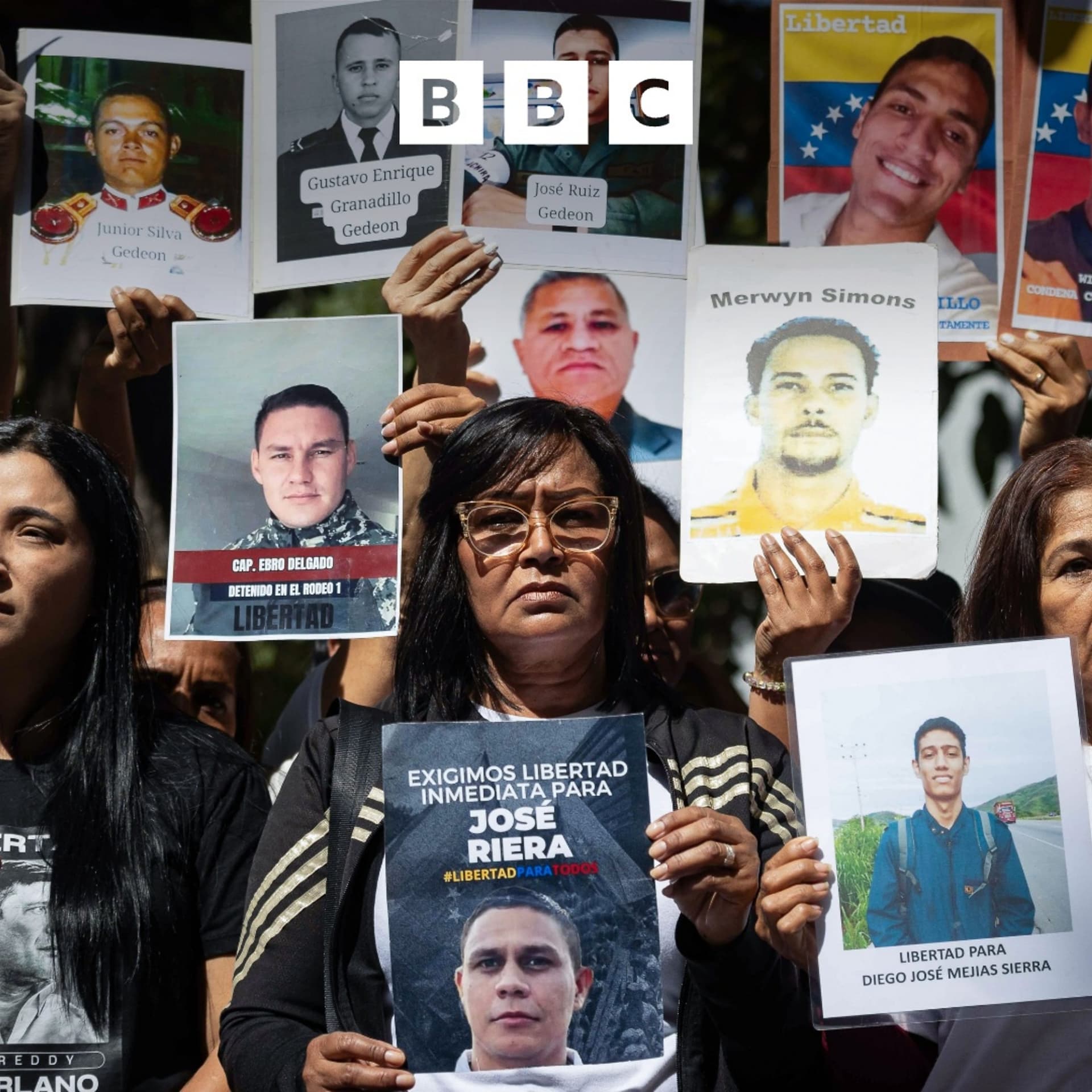
- Families of political prisoners rally in Caracas for their release.
- Venezuelan lawmakers approve the initial step of an amnesty bill introduced by interim leader Delcy Rodríguez.
- The bill aims to free hundreds of opposition figures, journalists, and human rights activists detained under previous regimes.
- Key Voices:
- Manuel Labrador, son of a political prisoner, expresses hope and strength derived from the legislative move.
- Luis Fajardo, a BBC analyst, notes this is an important initial step but emphasizes the need for further legislative processes before becoming law.
- U.S. Influence:
- The move aligns with U.S. demands for political change in Venezuela, potentially helping the U.S. government deflect criticism about the effectiveness of its military interventions.
- Concerns:
- Questions arise about the loyalty of the judiciary to Nicolás Maduro and the duality of governmental responses to U.S. pressures.
---
Norway
Scandal Involving Former Prime Minister
- Revelations:
- Connections between prominent Norwegian figures and Jeffrey Epstein come to light, prompting police investigations into former Prime Minister Torbjörn Jagland.
- Details of the Investigation:
- Jagland is scrutinized for potential corrupt practices linked to his roles in European governance and the Nobel Committee.
- Public apologies issued by Jagland amid growing media scrutiny.
- Wider Impact:
- The scandal has rocked Norway's trust in its political elite, with implications for the Crown Princess and other high-profile figures.
---
China
Innovative Cervical Cancer Testing
- Research Findings:
- Scientists develop a less invasive cervical cancer test using menstrual blood, showing accuracy comparable to traditional smear tests.
- Study Insights:
- The method involves a cotton pad that collects menstrual blood, which is then analyzed for HPV.
- High accuracy rates reported, especially in negative results.
- Expert Opinions:
- Fiona Osgun from Cancer Research UK expresses optimism about innovation in screening methods to encourage more women to participate in testing.
---
South Africa
Impact of U.S. Aid Cuts on HIV Prevention
- Current Situation:
- Cuts to U.S. foreign aid have severely impacted South Africa's HIV programs, particularly in mobile clinics.
- Local Voices:
- Testimonials from women relying on mobile clinics highlight the critical need for accessible healthcare.
- Government Response:
- Minister of Health Dr. Aaron Motsualedi discusses the necessity of adapting to the loss of U.S. support and seeks alternative funding sources.
---
Finland
Priority Traffic System for Emergency Vehicles
- System Implementation:
- Finland is set to roll out a new traffic management system allowing emergency vehicles to have green lights at intersections.
- Technology Details:
- Emergency vehicle transponders will communicate with traffic management systems to streamline traffic flow.
---
Art Auction
Michelangelo Drawing Surfaces
- Auction Highlight:
- A small chalk drawing by Michelangelo fetches $23 million at an auction after being recognized from a submitted photo.
- Historical Significance:
- The drawing, believed to be a study for the Sistine Chapel, is one of very few Michelangelo drawings remaining.
---
Winter Olympics and Ski Jumping Controversy
- Allegations of Cheating:
- Male ski jumpers are accused of using hyaluronic acid injections to enhance their physical attributes before measurements for suits.
- Potential Investigations:
- The World Anti-Doping Agency (WADA) is compelled to investigate these claims due to their implications for sports integrity.
---
Key Takeaways
- Political Developments:
- Venezuela's potential political reforms demonstrate the ongoing struggle for human rights amidst international scrutiny.
- Scandals Affecting Trust:
- Norway's political scandal highlights the fragility of public trust in governance.
- Innovative Health Solutions:
- Advances in cervical cancer testing could lead to increased participation in essential health screenings.
- Global Health Concerns:
- U.S. aid cuts are jeopardizing HIV prevention efforts in South Africa, emphasizing the need for sustained global health investment.
- Cultural and Economic Impact:
- The auction of Michelangelo's drawing underscores the intersection of art, history, and market dynamics.
---
Contact Information: For inquiries, email globalpodcast@bbc.co.uk or follow on X at BBC World Service using the hashtag #GlobalNewsPod.
Written by AI. May contain mistakes. Listen to the episode to check what was said.
Chapters
Tap a time to open that second in VOVenezuela's Political Prisoners
0:45 to 2:09
Discussing the situation of political prisoners and recent legislative actions in Venezuela.
“Listen on BBC.com or wherever you get your podcasts.”
Analysis of Legislative Changes
2:09 to 4:59
Analyzing the implications of the new bill for political prisoners in Venezuela.
“Those chants come from outside Venezuela's Supreme Court in Caracas, where families of political prisoners were calling for their release on Thursday evening.”
Norway's Epstein Scandal
4:59 to 10:00
Exploring the fallout in Norway from the Epstein files and its implications.
“That is a crucial question, not only about the judiciary, but about all institutions in Venezuela.”
Innovations in Cervical Cancer Testing
10:00 to 13:33
Reviewing new research on less invasive cervical cancer testing methods using menstrual blood.
“Many women find cervical smear tests for cancer painful, intrusive and inconvenient and put off going to the doctor to have it done.”
Impact of US Foreign Aid Cuts on South Africa
15:00 to 17:41
Discussion on the effects of U.S. foreign aid cuts on HIV programs in South Africa.
“Listen on BBC.com or wherever you get your podcasts.”
Concerns Over HIV Infection Rates
17:42 to 19:38
Experts highlight the potential increase in HIV infections due to funding cuts.
“Why should the world care about HIV funding here?”
Emergency Vehicle Traffic Management
19:39 to 21:32
Introduction to automated traffic management systems for emergency vehicles in Finland.
“Now, any emergency worker will tell you that time is critical when it comes to getting to the scene of an accident or a fire.”
The Michelangelo Auction Surprise
21:33 to 24:39
The story behind an auctioned Michelangelo drawing that surprised the auction house.
“A small chalk drawing of a foot from the early 16th century has just sold at auction for$23 million.”
WADA's Investigation into Ski Jumping Practices
24:40 to 26:46
Discussion of controversial practices in ski jumping and WADA's response.
“Now, the Winter Olympics in the Italian Alps officially kick off today.”
Transcript
Automatic transcript. May contain errors.0:00This BBC podcast is supported by ads outside the UK. I am Nina Khrushcheva, the great-granddaughter of Nikita Khrushchev, the leader of the Soviet Union in 1962. And I'm Max Kennedy, the nephew of U.S. President John F. Kennedy. We explore what was a terrifying moment in history. The story of the Cuban Missile Crisis. How close the world came to nuclear war. And what they had to do to pull it back from the brink. The bomb, Kennedy and Khrushchev. All episodes available now, wherever you get your BBC podcasts.
1:01Listen on BBC.com or wherever you get your podcasts.
1:31in Norway after several high society figures are found in the Epstein files. A former prime minister is now being investigated by the police. And have scientists in China found a less invasive way to test for cervical cancer? Also in this podcast. More material, you know, a greater surface area in the suit, it can quite dramatically affect how far a ski jumper can fly. Controversy at the Winter Olympics, the strange way some ski jumpers might be cheating.
2:09We start this podcast in Venezuela.
2:18Those chants come from outside Venezuela's Supreme Court in Caracas, where families of political prisoners were calling for their release on Thursday evening. Earlier, lawmakers unanimously backed a bill introduced by the country's interim leader, Delcy Rodriguez, marking a first step towards freeing hundreds of opposition figures, journalists and human rights activists. Among those watching was Manuel Labrador, whose father, a former regional lawmaker, has been in prison since 2024. This gives us a lot of hope amid the uncertainty. It has given us more hope and strength to continue with this struggle that we all share.
2:58There are people here whose relatives have been unjustly imprisoned for years, and today we want everyone to be free, not just a few, but all of us, with our relatives back on the streets. Well, BBC Monitoring's Latin America analyst Luis Fajardo has been following developments from Miami. As you mentioned, it is a first step, and an important first step, it would seem like, towards meeting one of the main demands of the Venezuelan opposition. Of course, they have been denouncing for many years that there are hundreds of political prisoners still being held in Venezuelan jails. And this certainly seems to be a first move in that direction.
3:37Of course, there is a process that would still need to happen for this bill to become a law. There is a period of public consultation and another reading by the national legislature. So there are still some steps that would need to occur before this actually becomes a law. But it's certainly a move that has been applauded, has been welcomed by many people in Venezuela who have been demanding that the U.S. intervention should start to result in real political changes in Venezuela. And it is a move that aligns with the U.S. demands, I suppose. Certainly, the U.S. government has been saying that one of their big demands is precisely this, that prisoners are released.
4:19And it's also going to help the U.S. government deflect criticism of some commentators who have said that the situation after the U.S. military intervention had not changed that dramatically in many senses. The fact that the Chavista apparatus, the Chavista government was still very much in charge and still continuing with practices that had been condemned, but of course internally and in the international community as well. So it is going to be an argument used by the US government as well to suggest that things are indeed changing, maybe slowly, but they seem to be changing to some degree in Venezuela.
4:58But isn't the judiciary in Venezuela still loyal to Nicolas Maduro? That is a crucial question, not only about the judiciary, but about all institutions in Venezuela. There seems to be, in some cases, an apparent duality in cases where the government seems to be obeying US demands and some cases in which it still operates the way it has been operating before. So it is still unclear how much autonomy this government still has and how much it is only following US orders. Luis Fajardo. To Norway next, which is being rocked by scandal after revelations from the Jeffrey Epstein files. The documents have revealed relationships between the late convicted sex offender and a number of people in the country's elite, including the Crown Princess, an ambassador, and now police have opened a corruption investigation into the former Prime Minister, Torbjörn Jaglund.
5:53Paul Karl Lundset, head of the Economic Crime Unit, explains why they've taken this step. Information that's emerged in the so-called Epstein files has provided reasonable grounds to investigate whether any crime has been committed. There are indications that there have been potential beneficial transfers to him in his positions as Secretary General of the Council of Europe and Chair of the Nobel Committee. Well, the BBC's Stephanie Zacherson told me what we know so far. So this is to Norway, one of many people's most known, most trusted senior political figures. Torbjorn Jörgland, he served as Prime Minister of the Labour government in the 90s.
6:37He was Secretary General of the Council of Europe for 10 years. He was chair of the Norwegian Nobel Committee in 2009 to 2015, which obviously awards the Peace Prize. So very prominent figure. And since the latest tranche of the Epstein files were released about a week ago, there have been very vocal calls to launch investigations into his dealings and his connections with a late sex offender. It has emerged, for instance, that he requested Jeffrey Epstein's help with a property purchase, that Torben Jagland with his family had planned to go on a holiday to Epstein's island, although that appears to have been cancelled before it happened.
7:22And to be very clear, he has not been charged with a crime here. But this investigation is now being opened by Norwegian police. And he has also made a public apology and admitted to what he called an error of judgment. So what happens now? So Örkokrim, which is the Economic Crime Unit, they have labelled this potentially aggravated corruption. So what they will be looking into is investigating whether any gifts, travel or potential loans were received in connection with Torbjorn Jagland's positions. Now they're requesting documents from Jagland, his lawyers. And it was also quite a complicated matter because of Jagland's previous role at the Council of Europe, he currently enjoys immunity.
8:10So the current Norwegian government, including the foreign minister and the prime minister, So they have had to send a request to lift that immunity so that the police can conduct a full investigation. And I watched an interview with Jarglund's lawyer who was interviewed on Norwegian TV on Thursday evening. He said that he's convinced Jarglund will be proven to not have done anything unlawful. He welcomed an investigation by the police and he said it's better that they do a proper investigation rather than the Norwegian media, which obviously over the last couple of days have been reporting extensively on this.
8:45And this is just one story, isn't it, involving Norway and the Epstein files? I mean, it's had a really big impact in the country. It has indeed. It's been quite a historically shocking week for Norwegians. We had the revelations of the crown princess, the future queen of Norway, crown princess Metemarit, having had extensive contact. She appears in the documents, I believe, more than a thousand times. There's extensive text messages, plannings of holidays, lots of conversations between the two. She has also had to make a public apology. But in the kind of context in Norway currently, there's a lot of people that say this is really proof that her judgment is not up to par to be the future queen of Norway.
9:32And we have also seen a very prominent ambassador that has been suspended from her roles because it appears that she had close connections with Epstein, including him potentially leaving her child millions of dollars in his will. And now we have this investigation opened into a former prime minister. So yes, the Epstein documents, the contents of them, that's reverberating around the globe. But in Norway, it has been a quite shocking week. Stephanie Zachrisson. Many women find cervical smear tests for cancer painful, intrusive and inconvenient and put off going to the doctor to have it done. But scientists in China have identified what they say is a potential alternative by testing menstrual blood for signs of cancer.
10:21The researchers found this way of testing was nearly as good at picking up people who had the disease as other methods. Our health correspondent, Sophie Hutchinson, explains how the study was carried out. Scientists developed what they describe as a mini pad, and it's a piece of sterile cotton which sticks onto a sanitary pad. And once that piece of cotton has collected about two thirds of menstrual blood, The women put it into a container, into a solution called cell preservation solution, and then put it in the post, sending it off to a lab where it was then tested for HPV, the human papillomavirus, which causes almost all of the cervical cancers that we know about.
11:06the research was done in wuhan in china and the women who took part were aged 20 to 54 there were more than 3 000 of them and there have been other research programs but on a much smaller scale like programs in hospitals and things like that that showed there might be some positive results but they wanted to broaden it out to a kind of community project if you like and at the same time as these women sending off results in this way from their menstrual blood. They were also tested in conventional ways. And so those two different types of tests were compared with each other. And they just showed amazingly positive results.
11:43I mean, the accuracy was similar to that of, you know, your typical test that you get when you go to your GP. And in fact, the negative results, so that's women with no signs of the virus, were 99.9 % accurate, so identical to the standard tests in a clinic. So there is a real desire to change things for women and try and protect more women but obviously it's still going to take quite a bit more work. Sophie Hutchinson. Fiona Osgan from the charity Cancer Research UK said she was encouraged by the results and hopeful that less invasive tests could be developed in the future. Some of the big barriers that we see are either having had a painful experience in the past or being worried about experiencing pain when you go for your cervical screening which is a really understandable kind of off-putting reason for people not to want to go but we we would always advise people to talk to the nurse or doctor that's doing your screening explain if you've had an experience in the past that means that you might be a bit more worried about anything or have any specific concerns and there are other barriers as well so some of the more practical ones around kind of getting time off work child care trying to get to the GP or other clinic setting where you're having your screening done and things like both the transport and the cost of that being barriers for people and for some people as well there are kind of cultural barriers so for certain ethnic minorities in particular there can be kind of stigmas around and testing for HPV and kind of having tests that involve kind of an intimate area of the body can be a really kind of big barrier for people taking part so it's quite a wide spectrum it's really important that you know screening programs aren't static like all of medicine it's not something that is a kind of one and done we need to constantly be innovating researching, understanding how we can improve things, how we can make things more accessible and better for the people that are taking part.
13:32So research like this is really important to kind of take into consideration as a screening programme stays relevant and evolves. Fiona Osgun from Cancer Research UK. Still to come in this podcast. 10 million is the bid, 18 million, 19 million is bid, 20 million, 21 million is bid now. Huge sums for a tiny drawing of a foot. But then it was a Michelangelo, even if the seller didn't know it at first.
14:08I am Nina Khrushcheva, the great-granddaughter of Nikita Khrushchev, the leader of the Soviet Union in 1962. And I'm Max Kennedy, the nephew of US President John F. Kennedy. We explore what was a terrifying moment in history. The story of the Cuban Missile Crisis. How close the world came to nuclear war. And what they had to do to pull it back from the brink. The bomb, Kennedy and Khrushchev. All episodes available now, wherever you get your BBC podcasts. America is changing. And so is the world. But what's happening in America isn't just a cause of global upheaval. It's also a symptom of disruption that's happening everywhere.
14:51I'm Asma Khalid in Washington, D.C. I'm Tristan Redman in London, and this is The Global Story. Every weekday, we'll bring you a story from this intersection, where the world and America meet. Listen on BBC.com or wherever you get your podcasts. The Interview. The best conversations from across the BBC. Today we are spending trivians on war and peanuts on peace. With the people shaping our world. You're making decisions that will have long-term consequences for the levels of greenhouse gases in the atmosphere. Wind power in the United States has been subsidised for 33 years. Solar for 25 years.
15:31That's enough! The interview from the BBC World Service. Listen now wherever you get your BBC podcasts.
15:43This is the Global News Podcast. It's been one year since the United States announced sweeping cuts to its foreign aid programme and one of the major casualties was South Africa, particularly its HIV and AIDS programmes. Our Africa correspondent Mayini Jones has been meeting some of those who are on the country's front line fighting the virus and sent this report. I'm in Cape Town in Philippi Village, one of the toughest townships in the country And there are a couple of mobile clinics here run by the Desmond Tutu Foundation. It's midweek, so relatively quiet, but there's a small group of women sitting in the shade, waiting outside the mobile clinic to receive preventative HIV medicine.
16:25I spoke to a couple of them. I'm S.A. 2. I'm 28 years old. How helpful is it to have clinics that come within communities like Filippi? It's very helpful because you don't have to walk that much. You don't have to use money for taxes and all that. A lot of mobile clinics were sponsored by America and a year ago the US government announced that they were going to cut their funding. It was not a good idea. We were not happy. Why did you want to be on preventative medicine? Anything can happen. You can't even trust the guys that are dating now. You can use a condom, but the condom can disappoint.
17:04Hello, my name is Okuse. I'm 19 years old. Do you think that if there are no more mobile clinics and people just have to go to public hospitals, do you think more people will not go and catch HIV? That would be a big problem because a lot of people don't like going to the clinic. You have to wait and stuff, so people wouldn't go to the clinic. This is the CAB injection for PrEP. In areas like Philippi, clinics like these are essential. It's one of the reasons researchers are worried that cuts could lead to a surge in new infections. The impact was profound because it was so sudden. Professor Helen Rees heads WITRHI, one of the world's leading HIV research institutes.
17:45When you suddenly withdraw funding and you have to suddenly withdraw services, it's going to have a huge impact on the well-being of people living with HIV, but also an impact on what's happening with the whole outbreak in South Africa. Why should the world care about HIV funding here? Well, HIV is a unique disease because it affects the person's, the individual's immune system if they're not on treatment. If we don't keep focusing on HIV globally, we could allow a large number of people to acquire HIV. For the world, that is bad news. If we're worried about pandemics, we do not want millions of people who are immunocompromised.
18:29It's not just HIV prevention that's been impacted by the funding cuts. South African researchers are global leaders in the field, partly due to US funding. But the government says they can no longer rely on America. Dr Aaron Matsualedi is the Minister of Health. At any rate, you are aware that the US has moved. There's no chance of them going back. They have adopted a new policy called America First Global Health Policy, which I believe, frankly speaking, no nation on earth that respect itself should accede to. We all know what CREP is. It also protects you from HIV. Dr. Motswaleidi hopes the government will announce more HIV funding in its upcoming budget.
19:14It's also working with other donors to fill the gap left by the U.S. Through the global fund, it's secured 900 ,000 doses of lenacapovir, a new twice-yearly shot that gives complete immunity against HIV. It's due to be rolled out within months, but researchers say more will be needed to stop new infections from growing. For communities in the Philippines and across South Africa, this will be essential. So how do you insert it? Mayenie Jones. Now, any emergency worker will tell you that time is critical when it comes to getting to the scene of an accident or a fire. A handful of countries, including South Korea and the Netherlands, already have priority traffic systems, where lights automatically switch to green to allow emergency vehicles to pass through busy junctions.
20:02Finland will soon become the latest country to join that list after a successful trial on its roads. Technology journalist Gareth Mitchell told us how this automated system will work. What they're doing, ingeniously, is putting together some technology that makes sure all the traffic signals along the route of the emergency vehicle, that the lights turn green at each of the intersections as the vehicles approach. So what's going on is that this is FinTraffic, which runs traffic control and management in Finland. And they've been telling me that the technology involves a number of different components, including transponders on the emergency vehicles.
20:40So they're only activated when the blue lights are on. But when you have a blue light situation, the transponder transmits the vehicle's location to the centralised traffic management system. And so from there, then, a whole load of very clever software then sequences the traffic lights to create what they call a green wave. You know, it's a very satisfying wave of green lights that just open up in front of the emergency vehicles. But of course, the other thing that has to happen is making sure that the opposing vehicles stop in time. You know, you can't literally just have lights just turning red all of a sudden because it's going to cause chaos.
21:13So because they have this transponder system that can give the traffic management computers enough warning of the vehicle approaching, it means there's plenty of time to gradually turn the light red at the intersections so that opposing vehicles can stop safely to allow those emergency vehicles to power on through. Gareth Mitchell. A small chalk drawing of a foot from the early 16th century has just sold at auction for$23 million. Nothing extraordinary about that because it's by the Renaissance master Michelangelo. It's believed to be a study for a figure in the Sistine Chapel in the Vatican. But what is extraordinary is that the unsuspecting owner had submitted a photo of the sketch for an auction estimate online with no idea of what it truly was.
22:01Andrew Fletcher is the global head of Old Masters at Christie's in New York, which sold the item. He told my colleague James Menendez about the drawing's journey from online portal to auction house sensation. The drawing is a very recent discovery from 2025. It was sent in to Christie's estimate request portal system and as an anonymous drawing and was immediately recognized by my colleague in the drawings department who jumped on a plane to San Francisco, brought it back with her that night, took it to the Met within a few days and basically took it from anonymous drawing to being a drawing by Michelangelo for the Sistine ceiling in the space of a couple of months.
22:42It's a study in red chalk for the right foot of the Libyan Sybil at the east end of the Sistine ceiling, one of the last figures Michelangelo painted. There are very, very few drawings for the Sistine ceiling left in existence because Michelangelo famously had several bonfires of his drawings. And while he would have made a drawing for pretty much every limb, hand, foot, head on the Sistine ceiling, and therefore there would have been 100 or even 1000 such drawings, only about 50 remain today. And none of them are in private hands or have come to auction, I should say. So incredibly rare. And just to pick you up what you said at the beginning, I mean, does it happen very often that a Michelangelo is sent through your sort of online portal, which presumably people send things in on spec saying, you know, I've got this, you know, is it worth anything?
23:32I mean, has that happened before? Well, through the estimate request portal, that has not happened before as far as I'm aware. But what I would also say, Christie's did discover another Michelangelo three years ago, which we sold in Paris for about 20 million euros. And that again was hiding unrecognised as a Michelangelo. So we've got quite a good recent history with these drawings by Michelangelo. So that was not for the Sistine ceiling, however. And it's gone for way beyond its estimate, which again points to the rarity value of these drawings. Absolutely. I mean, genuinely, that was in my 23 years in the business, my favourite auction moment that we've just had.
24:10We had, I think, at least eight people on the telephone bidding, several in the room. I think we had a couple online. And it took, what did it take? 45 minutes, I think, which is, you know, kind of an exceptional length of time for a lot to sell. But, you know, it started at a million and 45 minutes later, the hammer went down at$23.1 million. So it was a really, really exciting auction room and there was a huge round of applause at the end. You could feel the tension deflate as soon as the hammer hit the rostrum. Andrew Fletcher from Christie's Auction House. Now, the Winter Olympics in the Italian Alps officially kick off today.
24:46But ahead of the opening ceremony on Friday evening, there's a somewhat bizarre story making the rounds. The World Anti-Doping Agency, or WADA, has had to weigh in about claims that male ski jumpers have been artificially enhancing the size of their genitals with injections of hyaluronic acid. That's before having their suit measurements taken. Apparently a bigger ski suit gives the jumper more lift. WADA says that it will have to investigate such tactics if any evidence is found that it actually happened. But how would this strange practice really help them? Matt Lawton is a sports correspondent for the Times of London newspaper.
25:25There's a long history in ski jumping of this kind of manipulation. There was a situation at the World Championships last year with the Norwegians involving the Olympic champion where they actually tried to manipulate the suits by adjusting the seams of their suits. Because the fact of the matter is, if you have more material, a greater surface area in the suit, it can quite dramatically affect how far a ski jumper can fly. You might wear some kind of prosthetic or you might, you know, one of the suggestions is that the athletes have put clay into their underwear to make that region larger. You know, there is an obvious incentive for doing this because there's a scientific study that we've quoted today which says that an extra two centimetres of circumference in terms of the suit can equate to an extra five metres from the 90-metre jump.
26:23Now, one of the reasons that WADA exists, it's not just about catching people for cheating, it's about athlete welfare. This is the first time it's been put to WADA. This is very much the genesis of potential story. But we're told Banker, the president of WADA, did respond and said, OK, he had a slightly bright smile on his face, but he said, look, we might have to look at this. Matt Lawton from The Times. And that's all from us for now. If you want to get in touch, you can email us at globalpodcast at bbc.co.uk. You can also find us on X at BBC World Service. Use the hashtag Global News Pod. And don't forget our sister podcast, The Global Story, which goes in-depth and beyond the headlines on One Big Story, available wherever you get your podcasts.
27:09This edition of The Global News Podcast was mixed by Chris Ablakwa and the producers were Guy Pitt and Stephanie Zacherson. The editor is Karen Martin. I'm Keith Adams. Until next time, goodbye.
27:29I am Nina Khrushcheva, the great-granddaughter of Nikita Khrushchev, the leader of the Soviet Union in 1962. And I'm Max Kennedy, the nephew of US President John F. Kennedy. we explore what was a terrifying moment in history. The story of the Cuban Missile Crisis. How close the world came to nuclear war. And what they had to do to pull it back from the brink. The bomb, Kennedy and Khrushchev. All episodes available now, wherever you get your BBC podcasts.
From the publisher
In Venezuela, families of political prisoners have been rallying outside the Supreme Court in Caracas, chanting for the release of their loved ones. Lawmakers in the country have approved the first step of an amnesty bill introduced by the interim leader, Delcy Rodríguez, in a move towards freeing hundreds of opposition politicians, journalists and human rights activists detained under previous governments.
Also: scandal in Norway as police launch corruption investigation into the former Prime Minister Thorbjørn Jagland's ties to the late sex offender Jeffrey Epstein. Scientists in China find a potential alternative to conventional cervical cancer tests. We find out how South Africa's fight against HIV has been affected by the sweeping cuts to the United States foreign aid programme. Finland becomes the latest country to adopt a priority traffic system, allowing lights to turn green for emergency vehicles. How a previously unknown Michelangelo drawing became an auction sensation. And - why ski jumpers are being accused of a very unusual form of cheating in the run-up to the Winter Olympics.
The Global News Podcast brings you the breaking news you need to hear, as it happens. Listen for the latest headlines and current affairs from around the world. Politics, economics, climate, business, technology, health – we cover it all with expert analysis and insight. Get the news that matters, delivered twice a day on weekdays and daily at weekends, plus special bonus episodes reacting to urgent breaking stories. Follow or subscribe now and never miss a moment. Get in touch: globalpodcast@bbc.co.uk
Photo credit: Ronald Pena



