In short
Dan Hicks’ book Every Monument Must Fall argues that museums, universities, and archaeology/anthropology are entangled with colonial violence and racism, shaping “monumentality” (what is remembered) through selective preservation, display, and naming. He contrasts “retaining and explaining” with removing/reshaping practices, and says change is inevitable: institutions choose what remains.
Guest backgrounds
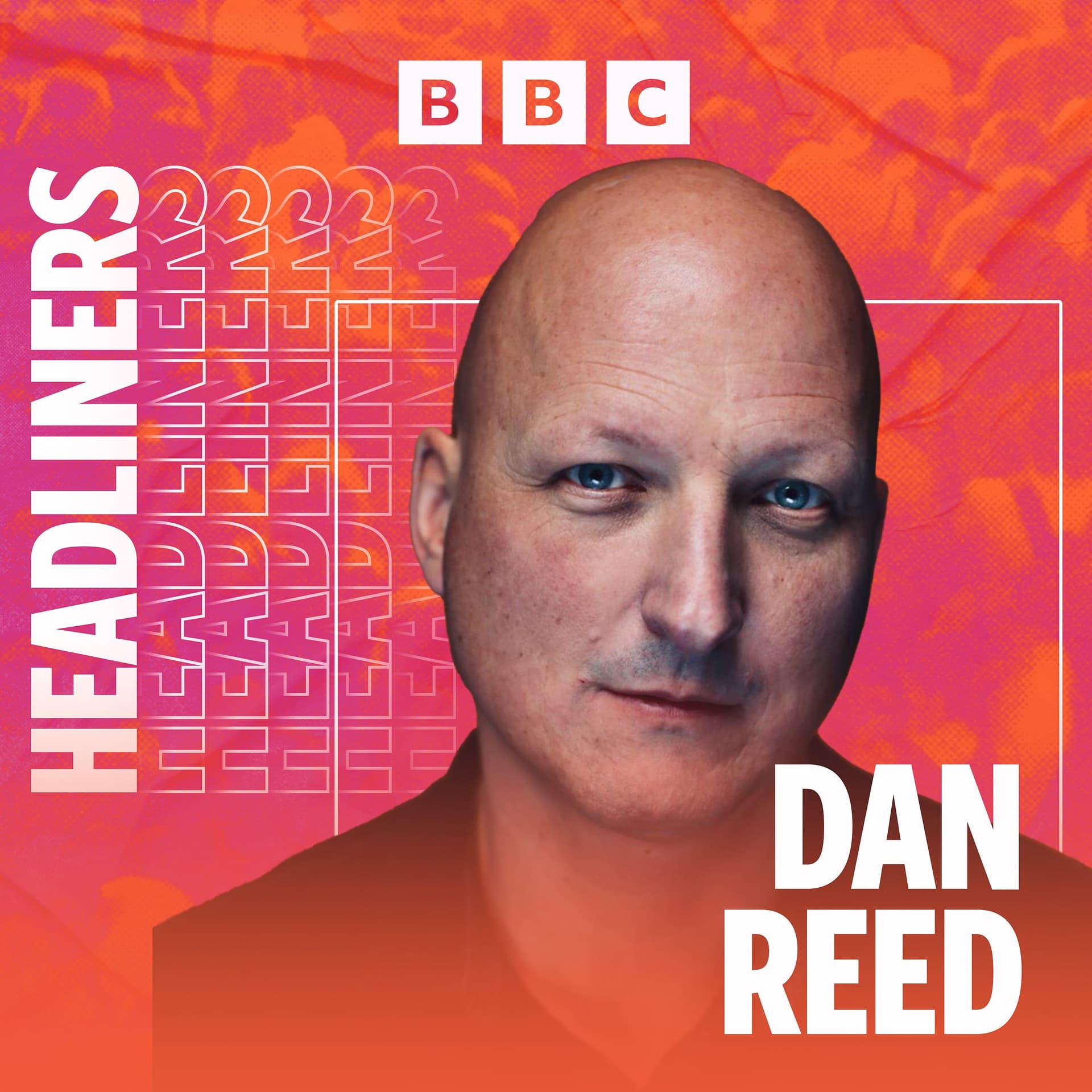
Professor Dan Hicks is an archaeologist, curator, and author. He is a contemporary archaeology professor at Oxford University and curator of world archaeology at the Pitt Rivers Museum in Oxford.
Key claims
Archaeology begins in the present by studying what survives; anthropology has shifted from documenting colonised cultures to questioning who counts as human and challenging Eurocentric lenses. “Memory culture” and monuments can freeze change via fear of backlash (“anticipatory obedience”). Museums’ visual culture can dehumanise people, including through human remains and looted objects.
Notable examples
Pitt Rivers’ militarism; an Oxford college skull turned into a lacquered “goblet” (sailed off and polished; identity unknown); National Trust backlash; Rhodes Must Fall and Cecil Rhodes’ statue at Oriel College; Benin Bronzes restitution; Dorman Long Tower dynamited vs Oxford Rhodes-related listing.
Written by AI. May contain mistakes. Listen to the episode to check what was said.
Chapters
Tap a time to open that second in VOFoundational Principles of Archaeology
3:13 to 5:04
Explore the evolution of archaeology and its impact on history.
“Professor Dan Hicks, it's great to see you and thank you so much for agreeing to be on my Headliners podcast.”
Understanding Anthropology's Foundations
5:06 to 7:31
Delve into how anthropology has shifted in its understanding of humanity.
“sort of came to see archaeology as the opposite of history because in history often what we do is we think ourselves back into the past and we move sort of forward from that moment of time.”
Myths in Archaeology and Anthropology
7:43 to 9:16
Discuss the historical myths in archaeology and anthropology and their implications.
“Are there foundational lies in both disciplines or did both disciplines become infected by a kind of myth making that then became fact?”
The Lives of Pitt Rivers and an Anonymized Skull
9:18 to 13:22
Examine the contrasting histories of Pitt Rivers and an unnamed individual in a skull.
“So there are two humans that thread their way through this book.”
Cultural Memory and Anticipatory Obedience
13:29 to 14:01
Explore the concept of memory culture and its implications for societal change.
“We don't in the UK, I mean, I guess we have a memory culture, but we don't actually call it memory culture.”
Cultural Memory and Historical Context
14:01 to 27:40
Explore how cultural memory shapes our understanding of history and monuments.
“And I think moving between those sort of debates is really important for us in the UK to get outside of, you know, how other cultures, other ways of thinking about these paths.”
The Role of Myths in Society
28:29 to 29:54
Explore how myths influence our understanding of history and identity.
“the idea that they have to have a more nuanced and deeper understanding of history when so much of what binds us, Professor, is collective storytelling.”
Navigating Historical Narratives
29:54 to 32:25
Discuss the complexities of historical narratives and their societal impacts.
“There's the work of African-American writers like like Sadia Hartman, who have introduced what they call fabulation.”
The Concept of Collective Narcissism
32:25 to 34:57
Analyze the idea of collective narcissism in relation to British history.
“That is at the heart of this framing of a culture war from the start, because that idea that we've all got to be upbeat about everything or that there are two sides to everything.”
The Evolution of Racism
34:57 to 37:18
Understand the historical evolution of racism and its manifestations today.
“Yeah, I mean, I'd go a little bit further, maybe.”
Show all 22 chapters
Monuments and Their Cultural Impact
37:18 to 39:04
Examine how monuments can reflect and shape cultural narratives.
“Ipswich happens to have a big one, Edinburgh and so on.”
Fallism and Restitution Movements
39:04 to 42:01
Discover the historical context and future of fallism and restitution movements.
“And you just mentioned roads must fall, and that's, of course, Cecil Rhodes.”
The Legacy of Cultural Movements
42:01 to 44:43
Discussing the historical context and significance of restitution and decolonization movements.
“The first returns were made as early as 1938.”
Cultural Identity and Historical Narratives
44:44 to 47:17
Exploring the relationship between cultural identity and historical narratives in museums.
“that was about essentially whether any white people were involved in this incident.”
Critique of Museum Practices
47:18 to 49:35
Examining the role and responsibilities of curators in contemporary museum practices.
“Have you become increasingly conflicted in your role and your position?”
The Role of Museums in Society
49:36 to 52:25
Discussing the importance of museums in reflecting societal changes and cultural dialogues.
“And his argument was that he felt that historically, historians would have seen the pyramids of Giza as an extraordinary example of architecture from a civilization that was way in advance of its years.”
Racial Narratives in Museum History
52:26 to 54:48
Analyzing how racial narratives have influenced museum collections and interpretations.
“I mean, there was a good reason right the way from, you know, Napoleon onwards why, you know, these images of civilization were taken in such large numbers, whether it's the Rosetta Stone or whether it's other items.”
Contemporary Challenges in Heritage Preservation
54:49 to 56:01
Addressing modern challenges in heritage preservation and societal values.
“without conservation, without maintenance, every monument will fall.”
Intervention in Heritage Decisions
56:01 to 58:34
Learn about the contentious decisions regarding historical monuments and their preservation.
“Months later, not so many months later, in Oxford, she intervened again.”
The Politics of Memory and Culture
58:35 to 1:00:46
Explore how political ideologies influence the narratives we uphold in society.
“It is a gap that is being filled by left wing academics.”
The Nature of Monumentality
1:00:47 to 1:03:18
Understand the various forms of monuments and their significance beyond statues.
“in a democratic way, what we inherit from the past, who we remember, who does the remembering, and why.”
Reflections on Heritage and Memory
1:03:19 to 1:04:16
Reflect on the implications of how we perceive and remember cultural heritage.
“is that there are many different forms of monumentality.”
Transcript
Automatic transcript. May contain errors.0:00This BBC podcast is supported by ads outside the UK. September's always busy. Whole Foods Market can help. Their September Stock Up event makes it easy to load your pantry and freezer with flavourful, nourishing food. Even better, there are hundreds of sales. Get dinner going with canned soups and veggies. Lean on frozen pizzas, pastas and seafood everyone loves. Their Build Your Own Family Meals feeds four for just$35. Stock up at Whole Foods Market. This advertisement feature is paid and presented by GoTurkiye. Everyone takes the ferry in Istanbul. It's how the city gets from one side to the other.
0:41But stay on board a little longer and you arrive at the Prince's Islands, a cluster of nine islands southeast of Istanbul in the Sea of Marmara. Once places of exile for royals, today they're something else entirely. And on the island of Biyukhada, local businesswoman Meena Akhtar and her family have been enjoying the unique pace of life here for generations. Biyukhada is a place where time stands still. And as soon as you step onto the island, you feel at peace and you feel relaxed. Walking around, exploring different beaches, I think it's just wonderful for anyone who's interested in beautiful places.
1:18Just an hour from the hustle and bustle of the city, yet a world away, the Prince's Islands are a place where doing less somehow feels like more. Plan your next detour at goturkia.com today.
1:44Hello and welcome to Headliners with Nihal Arthanaika. Today's guest is the archaeologist, curator and author, Professor Dan Hicks. And it's a deep one. His new book is called Every Monument Must Fall. And it's an exploration of how museums, universities and other cultural institutions are deeply connected with colonial violence and racism. The book examines how such institutions have deep conflicts over art and heritage, connected to the building of statues, the warehousing of stolen art and disciplines like archaeology and anthropology. It's so weird that in art and culture and heritage, we're told that things can't ever change, not least because if you just look out of your window, you will see applications for listed building consent and the buildings changing and the ideas shifting in the seminar rooms all the time.
2:32So the world is always changing. And that's really why the book is not called All the Monuments Must Fall. It's called Every Monument Will Fall because we choose which monuments are going to remain and which are going to be removed over time. Things change. And of course, things that can count as a monument are ideas as much as they are physical things. And as a professor of contemporary archaeology at Oxford University and as curator of world archaeology at the Pitt Rivers Museum in Oxford, Dan Hicks certainly knows what he's talking about.
3:13Professor Dan Hicks, it's great to see you and thank you so much for agreeing to be on my Headliners podcast. I want to start by asking you, what are the foundational principles of two academic pursuits? Firstly, what are the foundational principles of archaeology and how have they changed in your mind over time of perhaps what you thought they were and what they've kind of become? And the second one would be the foundational principles of anthropology. And if indeed those have changed in your mind over time. So let's start with archaeology. Sure, absolutely. And so nice to be here now. So yeah, so I work across the four A's, what I call the four A's.
4:10And so that's archaeology, anthropology, art and architecture. And those disciplines are interrelated in certain ways. And those interrelations have a history. so I'm interested in how they formed as you know subjects in the later 19th century when I started out in archaeology in the 1990s I was you know digging holes in advance of you know roads being built and so you know houses being built and so forth and I guess I started off originally I think a lot of us thought that we were doing environmentalism that we were trying to mitigate the sort of impact of how holes were being dug and things were being lost and you know destroyed but then it was always well how do we you know tell a history with that is this history is this are these resources for writing history and over the years I guess I sort of came to see archaeology as the opposite of history because in history often what we do is we think ourselves back into the past and we move sort of forward from that moment of time.
5:18It makes sense. It's how a narrative works. But archaeology is something that begins actually in the present and with the most recent layer, and we dig down. So what that means is that archaeology in some ways is all about what survives. It's the science of human duration. It's about what is left from the past. And that really gives it a different nuance as compared with history. It's about how things survive, who survives, what histories or what voices can. And actually, sometimes when you're working with the recent past, because I work on archaeology in terms of the recent past and the near present, that's about whose histories are not in the history books, but they are there in the fragments that sort of survive.
6:07And how do you piece those histories sort of together? Or how do you understand the fragmentation as a part of that history? And then foundational principles of anthropology. And if your ideas changed. So anthropology, obviously, at the heart of that sort of name is this word anthropos, the idea that it's about man or about humanity. So in some ways, over the years, ever since the discipline that was invented in the 1860s, 1870s, it was all about really, you know, ever since then, it's about, well, who is that figure? Who is that figure of the human? And is it man with all of the sort of heteronormative and the patriarchal and the inherited imperial sort of framings that maybe, you know, come with that image?
7:00Or is it something wider? So really anthropology today is about all of the possibilities of humanity, but also who counts as human. That's a part of it as well. So it originally in the 19th century was all about documenting other cultures that were being colonised. Now, really, if you put the two together, archaeology and anthropology, that's what's so amazing about these subjects, is it's about the whole of the human past and every culture on the planet as well. So at their best, these are disciplines that are able to celebrate the diversity of ways of seeing, ways of thinking, ways of understanding that are outside of a Eurocentric lens.
7:43Are there foundational lies in both disciplines or did both disciplines become infected by a kind of myth making that then became fact? So I'm really interested in, you know, how these disciplines or actually more generally art and culture as ideas were put to work in a fairly, you know, tight sort of timeframe for the purposes of forms of cultural supremacism or ideologies of empire that are out of step with our time. So, yeah, over the years, you know, in between, let's say, the 1870s, 1880s and the early part of the 20th century, these are disciplines that were, you know, put to work. I mean, most famously, you know, we think of how the Nazis used archaeology in order to tell the lies about Aryan culture.
8:41But there are other sort of aspects of that as well that were a bit earlier that relate to the relationship in between archaeology and anthropology and empire. So in our museums and in our monumental cultures in this country, but around the world, some of those ideas sort of persist and some of those attitudes persist. And so in the book, what I really wanted to do was to try to understand those histories. And they're histories that sometimes, you know, we're told is part of a culture war. But, you know, where does that idea come from and what's the prehistory of that idea? That was at the heart of the idea of writing it.
9:18So there are two humans that thread their way through this book. One is Augustus Henry Lane Fox Pitt Rivers, who has a huge amount written about him. We know a lot about him. Lion eyes celebrated. And then there's another human who has been reduced to a skull. And we know nothing about this person other than potentially they were a slave in the Caribbean. just tell us about why these two humans form in very much sense the spine of this book and start with Augustus Henry Lane Fox Pitt Rivers so he's the man whose name is above the door of the museum in which I work the Pitt Rivers Museum in Oxford he was a soldier and he was the founder of archaeology he was the first in spectre of ancient monuments in the UK.
10:18So he has this critical role in terms of how we think about monuments like Stonehenge, but also other forms of how we save the past. He was a key individual in the history of anthropology as a discipline. He was a Yorkshireman. He lived in London for most of his life. He inherited a vast amount of money in the 1880s. And with that money, he inherited this name, Pitt Rivers. And so at one point he was understood as the richest man in England outside of the normal landed gentry. And he had a big estate on the Wiltshire Dorset border in the south of England. What I'm interested in, or what I have to be interested in really, because I have worked in that museum with his name above the door for 18 years now, is how his militarism intersected with his ideas about objects and cultures, which is what we teach in that museum and in our disciplines of archaeology and anthropology in the present.
11:23So his name's also, in order to come to the second person, that human skull, which was being used at an Oxford college over dinner until as recently as 2015,
11:41that skull has been sawn off and lacquered and polished and sort of turned into a sort of a goblet. And around the silver rim, there is somebody's name, but it's not the name of the person whose skull that is. It's the name Pitt Rivers. And it's not even the name of the man that we've just mentioned. It's the name of the grandson, who also inherited the name, who was a fascist in the war. He was incarcerated in the 1940s. And he gave that item, that person, if you like, the part of somebody's body to the college in 1946. It was the first thing he did after he was legally allowed to return to Oxford after the war.
12:29So I was very interested in really, you know, who is this person? I was asked in 2019 to look into this history for the college and it seemed to me right from the first instant you know that this is about a history of who gets remembered and who doesn't whose name is above the door whose name is erased and anonymized who is actually not only their names are raised but their body is sort of posthumously dehumanized in this way that I think is a metaphor for things that are happening in our institutions and museums, art and culture, academic fields all the time. So I'm really sort of trying to tell these histories and these intertwined lives in order to try and make a wider point, which is about who we remember and who we don't, who gets remembered, who decides who is remembered, and how we think about, you know, what the Germans call memory culture, Erinnerungskultur, they call it in Germany.
13:29We don't in the UK, I mean, I guess we have a memory culture, but we don't actually call it memory culture. And so thinking about memory in those ways. Talking of German, and I'd like to thank my son's friend who's doing A-level German for helping me with the pronunciation on this. Vorall sei Lander gehorsam. What does that mean? Vorall sei Lander gehorsam. Anticipatory obedience, I believe. Yeah, that's right. I mean, there's a lot to be learned from the conversations that are happening on these issues in France, Germany, North America, the continent of Africa, India, around the world. And I think moving between those sort of debates is really important for us in the UK to get outside of, you know, how other cultures, other ways of thinking about these paths.
14:21And in the German case, yeah, this idea of how people can be obedient to what they imagine is going to be a problem around sort of culture or around memory. It was a word that was sort of put forward in the context of the Nazis. that people in some ways, it wasn't that all of the things that happened were direct, you know, edicts from Himmler or whoever, from Goebbels, that often actually this was about the idea that we mustn't upset people, the idea that we have to agree with an idea that hasn't even quite been said. What that sort of leads to often is a sort of a freezing of any change, a holding holding on to the, you know, sort of a, how to put it, like a worry that your institution is going to be next up.
15:11And so you keep your head down and maybe you don't do something that you would have done otherwise because of a fear of putting yourself in or your institution in the line of fire. And I think there are, as you're implying, I guess this is why you ask about it, you know, at the end of the book I do sort of talk a little bit about how that might be something that's happening in the present, whether it's in a sort of Trumpian era or in terms of the rise of the far right elsewhere in the world. But also as well, of course, the vitriolic attacks that took place on the National Trust when they had the temerity to actually look at the history of these grand edifices that came under their care.
15:56and what kind of shockwaves did that send through the community that you're part of, which is about memory? So it was awful for many people and for the people involved at the National Trust and for many of the people who were working with them. But it was awful for society at large as well because it was the first shot above the bow in a new phase of the so-called culture war, or what I would rather say is a war on culture, an attempt to weaponise culture, which has a long history, which is bound up with ideas of the National Trust and sort of monuments and the past. And I think that thing about memory is central, because when it was being said that to write these histories or to be open about the links in between the National Trust houses and histories of empire and enslavement and so forth, that this was an attack upon individuals or families.
17:00That was a mixing up of the man and the monument. It was a mixing up of history and memory in such interesting ways. Because in many ways, this is about what stories we wish to tell in those spaces. Who are the audience? Who gets to tell these histories? What was weird about it was that there was an attempt to say that by understanding more about this history, it was a cancellation of other narratives, of other histories, which, of course, actually it never was. It was about understanding the full histories of these institutions. So, yeah, I think what we're seeing in those instances is the same mixing up of the man and the monument or the site and the family as you see when people talk about, you know, the removal of Edward Colston in, you know, Bristol, where so often it was all about, well, sort of Edward Colston right or wrong, remembering that, or actually not remembering, that he was a man who lived in the 17th century, early 18th century, and that image was from 1895.
18:08It was from he'd been dead longer at that point than he had ever been alive. And so it was about the memory of Colston. It was about an image of Colston, an object, rather than himself. So we often end up having to say, and of course, I mean, these monuments were designed to mix up the man and the monument in those ways so that they would seem to be eternal. It's the same in some ways for the way in which the National Trust sort of can be weaponised or can be thought about. But yeah, that work was never about attacking the trust. It was undertaken by the trust in order to understand those histories better.
18:50Why is it, Professor, that I should be denied the right to see the skull? The right to see the skull. That's an interesting phraseology. so the skull you know you know is owned by the college at the moment and we can go into the history of you know actually how it is that you know people or people's body parts can be not only owned but actually bought and sold under the law at the moment and one thing the book does is it calls for an end to the sale or the trafficking in our auction houses and elsewhere in sort of dead bodies. It's amazing that we have banned the sale of ivory in this country, but you can still, you know, go down to Sotheby's and you can bid on a skull in exactly the same way that Augustus Pitt Rivers did in 1884, which is how it ended up in Worcester College.
19:47Worcester College themselves are not a museum and they're trying to do the right thing. You know, they eventually, after 70 years of this abuse rightly ended the use of this individual, of this person over dinner, and they put the skull into a box. But then it becomes a question about sort of what happens next. So part of the dehumanisation of this person is that we don't know where they came from. We can make some interpretations, and there's some evidence that helps us understand what that history might be and the physical anthropologists have advised that it was a woman in terms of the form and the shape of the skull we know from a radio carbon date that was undertaken by the college that the person's died sometime around 1790 to 1800 that sort of time frame and so there's a bit there are these little fragments of evidence about who this person is but what happens next I mean, that's up to the college.
20:53And their sense, I think absolutely rightly, in terms of the ethics of this, was that after so much abuse over the years, over more than 200 years of being used in this way, that to put their image out there or to invite people around to look at this sort of person's body really isn't actually going to help anybody. there is a set of sort of wider issues in our museums over whether any human remains ought to be on display uh and there are different opinions there i mean my opinion is that it's a case-by-case basis and that actually is a very different conversation about you know sort of ancestral remains that were dug up from the neolithic in the uk that's a decision for you know british people thinking about prehistory as compared with sort of let's say other other ancestors where it might be something where somebody, where there is a group of descendants somewhere in the world who want their ancestor back so they can rebury them.
21:50So there's a whole set of issues there. But fundamentally, a part of how this violence works is visual. There's a visual culture that goes with that sort of dehumanisation of people. And so I think absolutely rightly what the College have said is they're not issuing photos, they're not inviting people around to have a look. You know, I wonder whether we can do better as a society when there are human remains in boxes in museums or universities or indeed infirmary collections in hospitals, if we can do better than just saying we're going to leave them in the box forever. But right now, that's where the sector is and that's where the ethical guidance lies.
22:37So does this buy into an argument that those on the right would have, which is that there are people who are trying to erase history? so we are unlikely to ever know the identity of that skull that became a cup with silver and Latin attached to it that Oxford Dons would firstly drink wine from and then after it was leaking they used it to pass chocolates around but one thing that it could be is a very public symbol of the dehumanisation, the barbarity of colonialism and supremacism placed not as an ornament, but as a warning from history of what happens. And that, you could argue, would be a useful way of displaying with context what that skull represents.
23:42Exactly. Well, that would be the retain and explain argument, wouldn't it? So we keep things exactly the same as they are, just add a little label at the bottom or we contextualize ongoing sort of dehumanizing sort of practices so you could imagine a version of that in an oxford college where you would just read out a little yeah maybe in latin you would read out a little account of you know why what we're about is wrong and then just keep on doing it right i mean that's where the logic if we're not careful that's that's where the logic might lead uh but more seriously you know uh when i wrote my last book, which was about restitution, the British museums, I started to give mottos to my books and to use mottos in them.
24:24And this book's got two mottos. One motto is to stay with the fragments. Sometimes these histories are so fragmented that that attempt, that absolutely natural attempt to try to piece everything sort of together and to make the dead living and to put things right. Actually, sometimes that's not possible. And the second motto is sometimes the gap is the monument. And sometimes if you remove a practice or a statue, or even you remove something from the reading list, which is out of step or just wrong in terms of our times, that isn't a loss. It can be a gain. The space, it can be the exact opposite.
25:07The gap can open up. So you've got more space for other voices, other conversations. You're not forced to have the same memories, the same attitudes as some people who were living in the 1890s or the 1930s who had a particular worldview that may not be your own or may be out of step with our time. So yeah, I think in that sense, we need to be, you know, this is what the book really tries to do, to say that there are conversations over ancestral remains in our institutions. There are conversations over monuments in the streets. There are conversations over how we shape our academic sort of disciplines in the library or the classroom.
25:51All those actually can come sort of together in different ways. And we can ultimately argue for culture and art, something that would be entirely non-contentious for so many other fields. Imagine that there was a practice that was inherited by an institution or a profession that was hurtful from the 19th century. Let's imagine this was in criminal justice. And someone comes along and either says, look, that's wrong because the science shows it's wrong. Or they say, as you know, this is hurting people. This is out of step with our times. Imagine if they were told, no, you can't change that because that's how we've always done it.
26:30It's so weird that in art and culture and heritage, we're told that things can't ever change. Not least because if you just look out of your window, not least in a city like Oxford, you will see applications for listed building consent and the buildings changing and the ideas shifting in the seminar rooms all the time. So the world is always changing. And that's really why the book is not called All the Monuments Must Fall. it's called every monument willful because we choose which monuments are going to remain and which are going to be removed over time things change and of course things that can count as a monument are ideas as much as they are physical things
27:40We'll see you next time. loves. Their build your own family meals feeds four for just$35. Stock up at Whole Foods Market. There's a whole new way to make it Merino because Mike Anderson Chevrolet is now Merino Chevrolet. Celebrate our grand opening with end of summer savings. Drive home a new Chevrolet Trax with 0 % APR or lease a new Equinox for$359.99 a month for 36 months. Make it easy, make it fast, and make it Merino. Shop online at merinochevrolet.com. Together, let's drive. Financing available on approved credit through GMS. $2 ,995 due at signing. $0 security deposit. Offers expire August 31st, 26th.
28:28What is a successful way of marketing to people the idea that they have to have a more nuanced and deeper understanding of history when so much of what binds us, Professor, is collective storytelling. And that collective storytelling can often be built on myths. and people need those myths in order to tether them to a sense of identity. Absolutely. So there's a section early in the book about an anthropologist, a French anthropologist called Lévi-Strauss, who wrote an article once called How Myths Die. Because myths do die. We don't hold the same myths now as the ancient Greeks, you know or in the medieval period or whatever myths exactly like science are things that change all the time and so managing how myths change is actually surely a central part of how any society operates so we tell myths to ourselves about war about empire about who we are and where we came from and where we're going and that's obviously a good thing you know but it's only a good thing if myths are able to change and we can retell them.
29:54So that's why in this book, even though it's a book that comes from archaeology and anthropology, there's a lot more in it than you might imagine of Ursula Le Guin and of writers like Maggie Nelson, who are interested in the relationship in between nonfiction and fiction. There's the work of African-American writers like like Sadia Hartman, who have introduced what they call fabulation. And they're using the critical fabulation, as they call it, in order to write histories that seem impossible. So of course, a part of academic work is something that can not only, well, number one, you can recognise that the past is filled with silences.
30:42And those silences are not simply gaps. They're often silences that have been made. But also sometimes you can fill that silence with your imagination. You can fill it with a good myth, but you can make sure that that myth is actually fitting for its time. So this isn't a book about science in some ways, in a very boring way, but it is instead about what I'd call the science of human duration, how ideas and people survive. But the changes that academics are asking people to make are changes that it feels are asking them to recalibrate quite often very simplistic ideas of good. versus evil, Churchill good, Empire good.
31:44These kinds of stories and myths that we were brought up on. And academia, when you say change, it sounds neutral, but it's not neutral. The change is undermining some of the pillars, the foundational pillars that we use to make us feel patriotic and proud. Yeah, it's interesting in that list that it was, as you pointed out, you know, Churchill good, empire good. It's hard to find the bad. It's hard to say, oh, we have a collective myth that X is bad, maybe wars that we've sort of defeated. I mean, maybe fascism, one hope, would be on that list. but still what that tells us is that a part of the myth making or the mode of mythology or the mode of what in the book I call monumentality because there are many many ways of building monuments or thinking about the past and many different memory cultures that's the whole whole point we can remember in a whole load of different ways the one we have at the moment in the UK is just relentlessly positive about certain figures and then just silent on others so i'm often told by people oh god why can't you just be a bit more positive why can't this why does this all have to be so why can't you tell a good all the good things about about the university of oxford and the pit rivers museum and archaeology and anthropology and art for god's sake and statues why would you you know you know why would you attack why are you on the attack and of course That is the mistake.
33:16That is at the heart of this framing of a culture war from the start, because that idea that we've all got to be upbeat about everything or that there are two sides to everything. There aren't two sides to some things there. We don't want a balance sheet approach to racism. We don't want a balance sheet approach to massacres in the colonial past. What then happens when you've got a discipline that was put to use in order to try to build myths that made it seem like those massacres were OK? And so in the book, I talk about the ideologies that came about in anthropology and archaeology, that indigenous people were just going to die out because of the superiority of European cultures, because we had machine guns and they had sort of bows and arrows.
34:05That is the logic of it that's at the heart of it. So we have to, you know, I'm not going to say that that is part of our inheritance or our heritage, which is good or bad. And I think that whole framing of is it good or bad, that whole idea that this is about morals is entirely wrongheaded. Ultimately, this is about understanding the past, but it's about doing so in the present. It's about the present. I mean, I'm currently writing my second book and I came across this term, which was linked to Brexit, about collective narcissism and the British sense of collective narcissism. And that feels relevant to a conversation about people who refuse to accept that there are aspects of British history which are incredibly problematic and need further investigation.
Read the full transcript
34:56Do you think that that's relevant, that term, collective narcissism? Yeah, I mean, I'd go a little bit further, maybe. I'd say that there is a snowflakery to those who call woke at every opportunity whenever they hear a narrative with which they feel personally uncomfortable. normally personally uncomfortable because what's being touched upon is a form of racism that we're not used to talking about so in my disciplines we're very used to talking about the co-option of science in the middle of the 19th century for the fake racial science and so the the racist lies that were often a part of the displays in natural history museums that said that there are different species of human that tried to naturalise inequality based on the size of people's heads.
35:54Skulls, of course, were very important in that. This is phrenology and eugenics. Phrenology and what turns into eugenics, exactly. And so that's about the use of science for forms of racism that were linked into empire. Soon after that, and this is one thing that the book gets into, there was another phase of racism, because racism, like everything else, has got a history, you know. And in the history of racism, there's what Fanon called, Frantz Fanon, who's one of the thinkers that I use in some parts of the book, he called it cultural racism. And this was the idea of different cultures as being superior above others.
36:34So that idea of cultural racism runs into the present in different ways. It meant that there are things in our museums that are not just about whiteness, they're about cultural whiteness. And all of those words that we inherit around that, the idea of the primitive, the idea of the barbaric, indeed the idea of civilization itself, were part of that set of ideas that were there in the late 19th century that were seeking to do that work. That isn't to say that we can't use the word civilization or culture, but it means we need to understand the history of those words and maybe rephrase them for the present.
37:12Certainly holding onto the idea of sort of primitive cultures as different from civilised ones was part of what a museum like the Pitt Rivers was arguably founded for in 1884, but also scores of other museums like it, because there were so many of these world culture museums, ethnological museums across Europe, across North America, in the UK, so many of the local museums in our towns and cities, from Liverpool to Bristol. Ipswich happens to have a big one, Edinburgh and so on. I mean, there's maybe 30 or 40 of these institutions across the UK, which were built for that purpose. So you could go to the Civic Museum in town, go to Birmingham and have a look at items from another culture.
37:59A less advanced culture would be the idea. Often the weapons were things that were on display in order to tell yourself the story or be told the story, the civilisation is real. And so that's about understanding different histories of racism. That's about understanding how art and culture sort of can be part of that. So when the Rosemar's Fall movement sort of happened in Oxford in 2015, one of the things that many of us learned from those activists, which I had never, I mean, really, it came out of the blue for me. I'd never thought about this. the idea that a monument that a statue could hurt people that a museum display that displays looted art was something that actually in a really genuine way could seek to keep people out of the museum or as the university as a whole or could be there in order to celebrate a past that's hurtful in the present so understanding how art and culture has been weaponized in that way is a key part, I think, of understanding and sort of remaking what archaeology, anthropology, museums and monuments are all about in the present.
39:07What does it say about Oxford now? And you just mentioned roads must fall, and that's, of course, Cecil Rhodes. What does it say about Oxford that he still sits proudly on the facade of an Oxford college, his statue? Yeah, exactly. I mean, you have to look at him on the bus. If you're on the top deck of the bus as you come in from East Oxford, there he is outside Oriel College. So it's not actually only a question for what they call gown. It's for town as well. It's for the city. It's for the people that live in Oxford as well as simply for the university. and I think what's interesting there is that a decision was made in 2020 that Cecil Rhodes would be removed and the gap would open up and different histories could be told and that was a decision that was reaffirmed by the college in 2021 and then very slowly nothing happened.
40:12So we're now in a situation, which I describe in the book are the conditions under which this book is able to be written, that you have an unfallen road. You have had an institution that has made a decision, but they got a tap on the shoulder from the former culture secretary, or they were worried about a donor in some other part of the university. Who knows? Actually, no one knows in public what went on. But at the moment, what you've got is Rhodes not fallen, but maybe the falling is in some ways in process. And here's where the hope lies, because I've looked into a whole series of examples of fallism, which is a longstanding African and indigenous led movement that goes right the way back to Algeria in the 1960s, and to Zambia, where Cecil Rhodes fell in 1962 at independence, and to Zimbabwe, where Rhodes was removed in 1980 at the point of independence, and to 2015 in South Africa, where a big image of him at the heart of the University of Cape Town was removed.
41:22And that was the beginning of the so-called Rhodes Must Fall campaign. In all those cases, these were campaigns that had already lasted quite a long time. It turns out it takes maybe 10 or 20, maybe 30 or 40 years for a statue to fall. But eventually, because of intergenerational movements, it does. It's the same with restitution. Restitution, when it came for these instances of the Benin Bronzes that everyone's been talking about, and I wrote my last book about, when they began to be returned in 2021, 2022, that was not out of the blue. That was a history. The first returns were made as early as 1938.
42:06And so restitution, like fallism, was a longstanding African-led movement. So in this book, what I was really interested in and where the hope lies is that whether it's for fallism in the streets with monuments, whether it's restitution in museums with objects, or whether it's the wider arguments over what people call the decolonisation of knowledge that happens in the classrooms, in the lecture rooms, in what books we choose to read, all those things, all those movements are seeking to address what's a very specific legacy, which in the book I call militarist realism, which was the use of art and culture between, say 1870 and 1920.
42:48It's a sort of proto-fascist history of the use of culture for forms of cultural supremacism. But the point is you can undo that infrastructure. You can make a change over time. These are long-term movements though. Is there any link at all, Professor, between the reaction to the abolition of slavery and then an emergence of a liberal humanism that says that human beings are of equal value the pushback against that and it's no coincidence that we're talking about the you know the mid to late 1800s when you start seeing these things about racial superiority. Is there any link between that and what we see today in the war on culture and the pushback against those who would say that these people were racists?
43:53Is there a direct line of ideology? So there are many, many lines in the genealogy of the culture war, but the most important one in this case, I think, is the one that's been highlighted by a Jamaican writer called Sylvia Winter. And Sylvia Winter, whose work was absolutely central to writing about what she calls the idea of man. She talks about man one and man two, these images of man that were invented in different ways in the Renaissance, and then remade in the 19th century. She connects that to something that happened in LA in the 1990s. It was called NHI, No Humans Involved, NHI. So what that was about was that when LAPD were responding to incidents, they had this code that was about essentially whether any white people were involved in this incident.
44:51And NHI was a way to say that there were no humans involved, i.e. no white people involved. And That was their sort of code word. And she seeks to historicise that. She seeks to say that idea of who is human and who isn't in terms of what she's talking about there, which is the abolition of the police, that history of abolition, what's being abolished? What are you trying to undo? And what does that sort of mean in the first place? This is about forms of sort of racial economies. It's about forms of who gets to count as human that have these long histories. So, yeah, they find themselves right up into the present.
45:25And for the culture war or the war on culture or the weaponisation of culture as we have it in the UK, I think similar things are going on. There is a concern about whose voices are going to be listened to when it comes to reshaping heritage. So when in a museum, you know, like the Pitt Rivers or elsewhere, you talk about the co-curation rather than the curation of exhibits. that this is about a form of sort of thinking about museums where you care for people more than for things, where you're not simply going to be the authority as the creator and you bring your own expertise, but there's other forms of expertise from stakeholders and audiences, from the communities outside.
46:07As I said earlier, I learned a lot from the activists who were taking the time to point something out at the Pitt Rivers about the loot on display. so it's all about you know i think how we undo that is sort of fighting back against that attack that says only certain voices are ones that should be listened to so part of what i have to do as a writer as a as a white male you know middle-aged man sort of working in an elite institution which is maybe where most of the privilege comes from actually more than anything is is actually the weight of the institution, what I need to do is to find ways where I can not simply centre myself in these conversations, but I can not simply take up space, but I can try and open up those sort of dialogues.
46:54So a lot of the book, for that reason, uses the second person. A lot of it is written in the vocative or the invocative. This is the voice in which you would write where you're addressing the dead or maybe you're saying a prayer hopefully by the end of the book i really hope and a couple of people have told me that the you that appears the you and me and the you moves around who is the you in the book by the end hopefully it includes the reader and that's the because we have to rewrite these histories you know together so that's the yeah that's the challenge and that's a part of what this work is all about not to state my sort of privilege or or positionality alone, but in some ways to try to undermine what that privilege and the positionality is.
47:41Have you become increasingly conflicted in your role and your position? In our museums, a part of the work of the curator is to keep things the same. In that way, we share something in common with the conservator, that a part of our job is to make sure that the moths aren't eating the fabrics and the metalwork isn't rusting away. But sometimes in our museums, there's been a sort of a mission creep through which we've started to imagine that our job in the museum is to keep things the same and thereby to stop the world from changing around it. But of course, the world has changed around institutions like the British Museum, like the Pitt Rivers Museum, you know, like the National Trust.
48:30so we either you know bury our head in the sand which is one option and we see that happening in some of our national museums at the moment or you look at what institutional change looks like and here I think the university museums and the reason that they're under attack often is that the university museums are the are a part of the place where these conversations can be had because every year we're inspired by a new generation of students who ask all the important questions and are teaching us as much as we're teaching them. But also we are, you know, a part of our job is to actually seek to understand what these institutions are and where they come from.
49:14So our university museums and indeed our world culture museums in general have never been more important than they are now. Our whole memory cultures, how we think about monuments, has never been more important, but that doesn't mean that we have to keep things exactly the same.
49:32My son and I had a conversation about your book yesterday evening and one of the debates we had was whether the placing of these objects from around the world in museums is a celebration of civilisation that are of equal value to our own Western civilization, or whether they are still an almost Orientalist attitude towards a strange and exotic past that is not equal to Western civilization. And his argument was that he felt that historically, historians would have seen the pyramids of Giza as an extraordinary example of architecture from a civilization that was way in advance of its years. And my argument to him, just to push back, was that I'm not sure in the 19th century they did see it that way.
50:52And they certainly wouldn't have seen it as something that meant that people of other cultures, certainly in Africa, were of equal value to those of white British people. I'd like to get your take on that. Absolutely. Well, and so a lot of the thinkers that I talk about in the book, actually not least Augustus Pitt Rivers himself, wrote a lot about that. that. So we can go back to their lectures and we can find out what they thought. It's not a mystery. They wrote it all down, often in fairly racist terms, but... And proudly so. Exactly. But a part of what that narrative was, was that their idea of cultural evolution was not always things getting better all the time.
51:36They also talked about the degeneration of cultures. They said sometimes, and they often implied this was because of ethnic mixing and miscegenation and all those racist tropes were in there, but sometimes a great civilization would fall, and therefore the inheritor of civilization overall should have the role of saving those objects. So that was a part of the justification that was put for the attack upon Benin City in Nigeria in 1897 and the taking of the Benin bronzes. Of course, it was an appreciation of these amazing artworks, but it was an attack upon the living royal and religious traditions that were part of that culture because they were seen to be degenerate in the present.
52:30It was the same for Egypt. I mean, there was a good reason right the way from, you know, Napoleon onwards why, you know, these images of civilization were taken in such large numbers, whether it's the Rosetta Stone or whether it's other items. I mean, just go to the British Museum or the V &A and you'll see them. So a part of that narrative was always about a sort of a European exceptionalism or indeed a British exceptionalism, that we are the inheritors of something called civilization. I have to say, you know, one of the saddest things is that we see a return of that narrative in the mouths of Elon Musk and people like that.
53:08The idea that there is something called civilization, which has to be cared for, has to be fought for, has to be defended. And a lot of that has involved the taking of objects from other people and the warehousing of them in our museums. So, yeah, that's where the link happens between ideas of culture and improvement. Victorian improvement narratives were not simply about sort of everything always getting better. They had to say, oh, no, these people have to be exterminated or will inevitably be exterminated and die out because their culture isn't as good as it used to be. That was always a part of the thinking.
53:44It's not as good as it used to be, but also is inferior to ours. exactly because the mantle or the yeah the baton has been passed you know normally via you know some part of germany or some part of italy you know from the ancient world into the present and and so this is you know this is how in the present day in our museums you still get some people that will talk about egypt as if it's part of europe rather than an african civilization you know with a long bronze age history and a pre-dynastic history so it's all about the co-option of those cultures in order to tell a narrative about the present, but linked into that, a sort of manifest destiny idea that civilisation is always going to get better.
54:27That was all about at the time, it was about the rallying of the troops to say, oh, it's okay to go and machine gun 15 ,000 people at the Battle of Omdurman in Sudan, or it's okay to nick the Benin bronzes or to do whatever they were. Professor, when you write, without preservation, without conservation, without maintenance, every monument will fall. Let them fall then, when they are out of step with the times, when they no longer reflect where society wants to be going. But that's interesting because not all of society is going in that direction that is intimated in those sentences. in fact certain sections society are going in the complete opposite direction well they say they are but there was a very you know telling incident that happened when i don't know if you remember when the culture secretary was someone called uh nadine dorries back in so i come from a long line of uh coal miners in the northeast of england my father was a coal miner and his father was a coal miner in the Durham coal fields and so was his father.
55:44And his father, so my great grandfather, in the 1920s worked in a pit that was taken over by a company called Dorman Long. And when Nadine Dorries became the culture minister in September 2021, Within 36 hours of her being in post, she had ordered the emergency unlisting of a site of a building that was known as the Dorman Long Tower on Teesside, which was this enormously important icon of industrial heritage for many who have links with the Northeast. And overnight, it was dynamited. It was removed. Months later, not so many months later, in Oxford, she intervened again. and it was a second occasion where she contradicted the expert guidance of historic England.
56:36Historic England had said that there should be a preservation of the Dormenong Tower after a grassroots sort of campaign. In Oxford they had said that there was a memorial to Cecil Road so not the statue but round the corner there's a funny little sort of a plaque that says that as an undergraduate, he had some rooms in this building. And Historic England had said, actually, this isn't of any significance. And so it shouldn't be listed. She emergency listed that monument, so it had to stay. So there was yet another Rhodes monument was sort of protected. What that reminds you is that there was a culture minister at that point who herself was making decisions that as a society, we're always making, that some things will be kept and some won't.
57:20But she ideologically wished to hold on to one image of the 20th century, which was empire, and actually remove, actually literally dynamite another one, which was industrial heritage. Now, I have links, obviously, with both of those places. I was born in Durham, and I work, and I was educated at the University of Oxford. So that felt personal at that point. And that was part of the context of sort of writing this book was, look, you know, we have established ways of managing heritage. We have experts. And a part of what those experts at Historic England and elsewhere do is they look at heritage value.
58:01They look at what the community values. When an institution or a community wish to hold on to something, have it protected or to have it removed, that's a democratic right for us to reshape our memory culture. In those instances, it was being imposed upon us, someone else's memories, and Nadine Dorries, and what she wanted to remember. So I think it's important that we remember, you know, the world is always changing. We need to talk openly and transparently about how we decide what we keep and what we won't. And therefore, every monument will fall unless we decide that we want to hold on to it.
58:37But the problem is, is that with the fragments, the spaces that exist between the fragments, the gaps between our understanding, the narrative from the right is that the people filling those gaps are, quote unquote, leftist, liberal, as if somehow that's a pejorative term, woke, and that they have an agenda. So the gap is not an innocuous gap. It is a gap that is being filled by left wing academics. So exactly. That is that is the approach. It's a Trumpian approach that came in circa 2014 to 15. It's how he won the first election. It was sort of tried out here by some of the some of the Conservative Party.
59:29It's being, I'm sure, trialled at the moment by Reform UK. What it's about is wedge politics and an attempt to reawaken a longstanding war on culture. I mean, they're not thinking this stuff up themselves. They're understanding it from history because it's been hardwired into our institutions for the past 130, 140 years. from the proto-fascist uses of culture that really, you know, co-opted things that you and I really care about, art and culture and museums and so on. So that idea that by, you know, changing things or putting things right, you're attacking those institutions. Like I say, I can't imagine, I mean, okay, maybe there are some academic disciplines.
1:00:16I mean, maybe Latin doesn't change. I don't know. I reckon even Latin sort of changes over time, how you teach Latin, how you read Latin. But certainly when it comes to the sciences, biology and physics, or to medicine, or to law, the world is constantly changing. So why would it be that art and heritage would be things where we're told if we want to make any changes or to manage change or to see a democratic change, that that would somehow be an attack from the left? What it is, I hope, is a rebalancing of how we talk about in a democratic way, what we inherit from the past, who we remember, who does the remembering, and why.
1:00:59So these are about the myths or the stories that we tell ourselves as a nation, as a society, as an institution, as a workplace. And so they should be, but they shouldn't just be held onto. And there's a very odd ideology that was always part of this, that these things were set up in order to feel like they were vulnerable at one point in the book i talk about this idea that sort of even in terms of the disciplinary knowledge even ideas in your head you feel you're encouraged you know to think of these things as things that need to be preserved and fought for maybe at some point because because they might be under attack there's an amazing bit in the book where i talk about this imagined attack upon the british museum that they thought chartists were going to do in 1848.
1:01:45And all the curators are given rifles and muskets and swords, and they barricade the British Museum up, and they're there to hold back the hordes. And of course, the hordes never come. No one's attacking the British Museum. But even back then in 1848, and the head of trustees at that time was the Tory MP for Oxford University, at a time when there was such a thing. And, you know, there he was on the front line, you know, encouraging people to fight. So that idea that the British Museum or other parts of our culture was under attack when it wasn't, was part of this history all along. One of my favourite quotes is by Gloria Steinem, who says, the truth will set you free, but before that it will piss you off.
1:02:36And I wonder, while using that quote Is that what is the emancipation That you believe we will feel When we accept that every monument will fall And it has been ever thus Therefore, fighting for a statue to remain is actually out of step with history. It's not a given that a monument will stand in perpetuity. So one thing that I make an argument for in the book is that there are many different forms of monumentality. So it isn't only a statue. You've got prehistoric sites like Stonehenge, burial mounds like the west kennet long barrow from the neolithic you've got in some indigenous communities even sort of natural sites a lake or a mountain might be a monument in some really meaningful sense so we need to think about monumentality in all its different forms and we need to hold on to the hope that we can actually you know reshape our regimes of monumentality that we inherit from the past and we can think about sort of therefore other ways of remembering other ways of sort of seeing those those histories professor dan hicks the conversation has been every bit as fascinating as the book every monument will fall a story of remembering and forgetting and thank you thank you for spending time with me to expand my thinking around these subjects Yeah, it was great to talk.
1:04:25Thanks so much, Nehal.
1:04:29Thanks for listening to today's show with Professor Dan Hicks. I hope like me, you've learned something today. It has certainly made me think differently. And actually what we hold on to in terms of statues and their symbolism. It's just another story. And in some ways, just another piece of propaganda. It has no right to exist. It has no right to stand. Let's keep that debate going and not, as some would like us to do, just shut it down. I'll be back next week with another brand new conversation with you. I hope you can join me.
1:05:12On BBC Sounds, this is Sports Strangest Crimes. From the man who tried to buy cricket. One night, one game, winner take off, 20 US million dollars. The kidnap of a superhorse. It must have been terrifying. Of course it was. How we got through all of that? An ill-advised errand changing F1 forever. It will haunt the people involved for as long as they live. A trillion-dollar takeover which never took off. Broadsters of this level, they will never stop. The mysterious death of a superstar cyclist. Entering the world of professional cycling was like joining the mafia. And teammates becoming bitter enemies at one of the biggest football clubs in the world.
1:05:52betrayal plot we've gone beyond women's football in france sports strangest crimes listen on bbc sounds
1:06:07the murder of tupac shakur has generated nearly 30 years of rumors conspiracy theories and unanswered questions now the mythology is about to meet the courtroom as the trial gets underway and Nevada prosecutors try and solve the mystery of who killed Tupac and what really happened on the Las Vegas Strip that night in 1996. It's time to separate fact from fiction. I'm Anushka Matanda-Doughty and for the BBC's Fame Under Fire podcast, I'll be inside the courtroom every day and I'm bringing you with me. Join me for Fame Under Fire, the Tupac murder trial, the testimony, the arguments, the moments that matter and all the legal analysis.
1:06:41Listen on bbc.com or wherever you get your podcasts.
1:06:47you
From the publisher
Archaeologist and anthropologist, Dan Hicks, joins Nihal for an in-depth conversation.
Nihal Arthanayake presents his Sunday evening show and podcast, featuring exclusive in-depth interviews with headline guests across entertainment, sport, culture and politics.