In short
Tim Minchin discusses aging, parenting, determinism, guilt and privilege, and how social media and news consumption radicalize people and replace real conversation with outrage and “moral brand” signaling. He argues that proximity (real human contact) reduces bigotry, while algorithms and performative activism deepen dehumanization. He also reflects on how his work aims to be hopeful and community-building.
Guest backgrounds
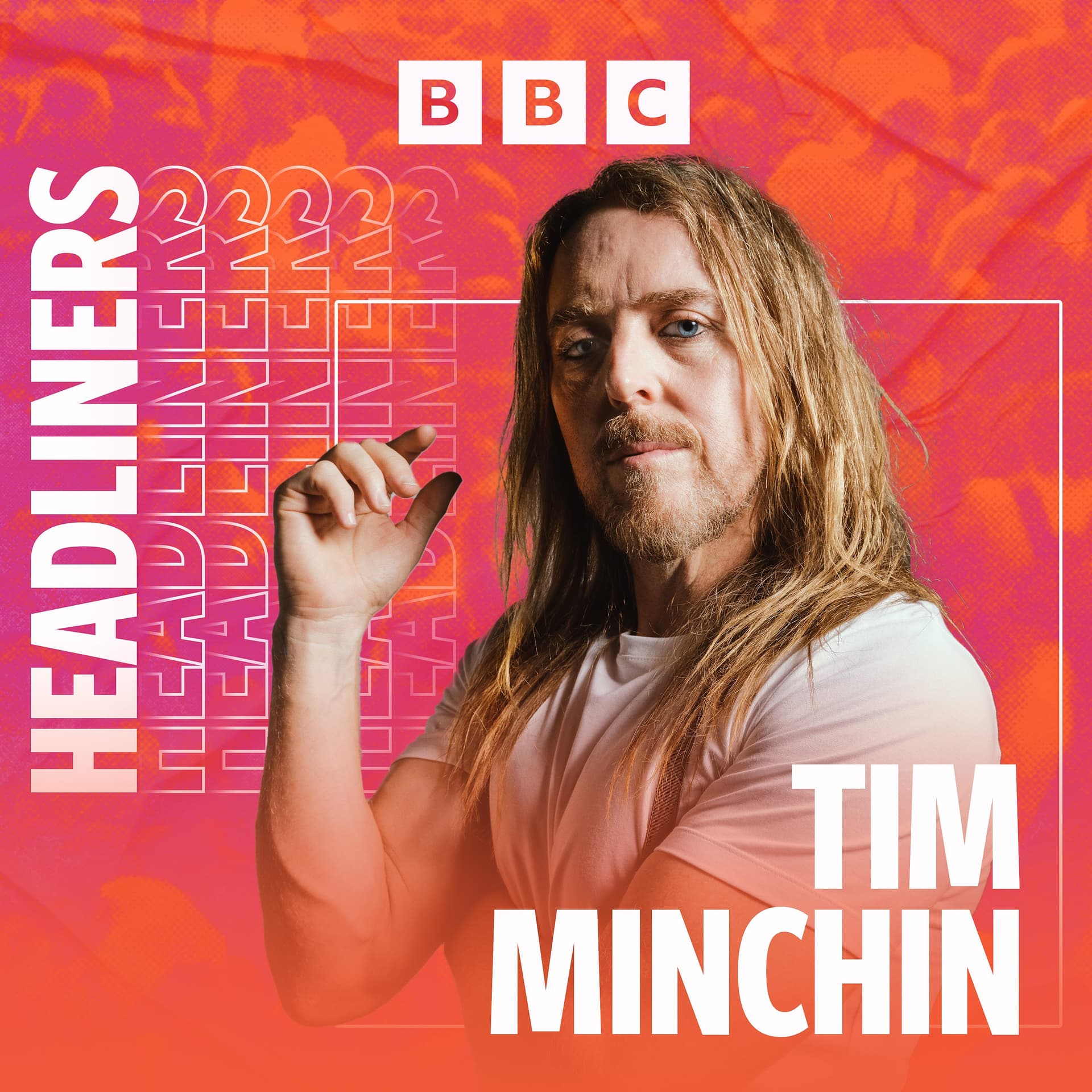
Tim Minchin is a comedian, actor, composer, and writer (described as a polymath). He talks about his upbringing as a brown kid in a white, homophobic period in England/Australia, his family and “tribe” of close relatives, and his career shaped by music and public life. Host Nihal Arthanaike frames this as her last “Headliners” episode.
Key claims
Social media outrage boosts personal moral brands; online “conversations” aren’t real conversations. Algorithms create dehumanization and confirmation bias. Sharing others’ suffering is only morally good if it leads to action. Feeling safe is a core form of privilege.
Notable examples
Dinner with Stephen Fry, Richard Dawkins, and a tech billionaire; fundraising about 150k for Médecins Sans Frontières; his musicals Groundhog Day, Matilda, and Upright; “proximity is the enemy of bigotry”; opioid-vaccine correlation discussed via Michael Lewis; Whole Foods ad segment is unrelated filler.
Written by AI. May contain mistakes. Listen to the episode to check what was said.
Chapters
Tap a time to open that second in VODinner with Icons
1:32 to 2:20
Tim shares a memorable dinner with Stephen Fry and Richard Dawkins.
“I just want you to sit back or walk casually and listen to this wide-ranging conversation that he and I had, which covered so many bases, from having dinner with Stephen Fry, Richard Dawkins, and a tech billionaire.”
Reflections on Aging and Family
2:20 to 4:10
Tim discusses aging, family dynamics, and the importance of being present.
“So nice that you were my last one Well let's see It might be the worst ever What do you want from me?”
Navigating Social Media and Politics
4:10 to 6:16
Exploration of social media's impact on political discourse and personal activism.
“that's good more interesting if your orthodoxy is hardened and you began to refuse to accept that you were wrong about things.”
The Illusion of Online Conversations
6:16 to 9:14
Discussion on the limitations of conversations in the age of social media.
“I don't believe there are sides of politics.”
Understanding Proximity and Connection
9:14 to 14:00
Tim explains the importance of human connection beyond digital interactions.
“Because I didn't quite understand what they weren't.”
The Impact of Social Media on Conversations
14:00 to 16:32
Discussing how social media has shifted our ability to have meaningful conversations.
“When I first touched, I mean, immediately, you're a human and we've made a connection and you're looking at me in the eye and you're doing everything I need to feel safe.”
Tim Minchin's Musical Journey and Evolution
16:32 to 20:34
Tim Minchin reflects on his musical career and personal changes over the years.
“You can incrementally move towards the truth.”
Searching for Identity and Belonging
20:34 to 24:54
Exploring childhood experiences of identity and the search for a tribe.
“I went to a school with a lot of Asian kids, Eastern Asian, what we call Asian kids, like Singaporean, Malaysian, Chinese kids.”
The Complexities of Integration and Privilege
24:54 to 27:06
Discussing the nuances of integration and the concept of privilege in society.
“Because when they come for you, it doesn't matter how integrated you were or how assimilated you were.”
The Nature of People and Community Values
27:06 to 28:00
Examining the nature of people beyond labels and the importance of community values.
“It's why I'm so furious with a lot of progressives because you're just like you're just showing us how angry you are and it's real.”
Show all 23 chapters
Navigating Moral Complexity
28:00 to 30:25
Explore the complexities of morality and kindness in a divided world.
“He might have grown up in a church where he thinks being gay is wrong, but he's like, they can do what they want.”
Understanding Perspectives on Vaccination
30:57 to 38:49
Delve into the nuances of public health views and social behavior.
“And I think it goes back to what you were saying before about that kind of proximity is the enemy of bigotry.”
Reflections on Luck and Humility
38:50 to 42:01
Discuss the relationship between success, luck, and personal humility.
“because you were a minority in a country that was racist.”
Navigating Guilt and Enjoying Life
42:01 to 46:01
Exploring the balance between enjoying personal success and feeling guilt about others' struggles.
“of this particular series and because we're both 50-ish, it's like – see, I gave you five years there.”
The Impact of News on Mental Health
46:01 to 50:01
Discussing the effects of consuming constant news on mental well-being and the importance of media diet.
“It's something I've really thought about a lot over the last year.”
Art, Optimism, and Community
50:01 to 54:31
Examining the role of art in fostering hope and building community among fans.
“Now, have you read Rick Rubin's book, The Creative Act?”
The Role of Art in Personal Connection
54:31 to 56:00
Reflecting on how artistic work can create profound connections and support within communities.
“Do you see what you create as a helpful distraction?”
Exploring Fame and Art
56:00 to 58:05
Tim Minchin discusses the complexities of fame and the responsibilities that come with it.
“oh, I saw Jesus Christ Superstar and I want to know more about this guy.”
Family Dynamics with Fame
58:05 to 1:00:37
Minchin reflects on the impact of his public persona on his family's life and their unique perspectives.
“Yeah, I don't think you want to be a kid with a high profile parent.”
Children's Perspectives on Fame
1:00:37 to 1:02:08
Tim shares how his children perceive his stage presence and the challenges of being a public figure.
“You know, like the kids at high school bullying her and her friends.”
Conversations with Thought Leaders
1:02:08 to 1:04:50
Minchin recounts his experiences engaging with influential figures like Richard Dawkins and Stephen Fry.
“She was really proud of me and liked the gig.”
The Nature of Public Discourse
1:04:50 to 1:08:59
The discussion shifts towards the challenges and nuances of engaging in public conversations.
“I wanted to make you talk more, but, you know.”
The Need for New Challenges
1:10:02 to 1:11:04
Tim Minchin discusses the importance of seeking new challenges and perspectives.
“I need something that excites me and invigorates me.”
Transcript
Automatic transcript. May contain errors.0:00Tim Minchin:This BBC podcast is supported by ads outside the UK.
0:05Nihal Arthanayake:Pop quiz. What's in your kid's lunchbox?
0:08Tim Minchin:At Whole Foods Market, they've already done the studying. Over 300 food ingredients are banned from their shelves. No hydrogenated fats in the peanut butter and no high fructose corn syrup in the cookies. And for sandwiches, there are no synthetic nitrates or nitrites in any of their deli meat. So you can pack lunchboxes with peace of mind. Get back to school ready at Whole Foods Market. Unlock big savings now at Menards. Add style and security to your home with high-quality Schlag door locks. Whether you're looking for a traditional interior passage lock or a Wi-Fi-compatible electronic entry lock, Menards has you covered with more than 200 options of Schlag door locks in stock.
0:49Tim Minchin:Save big in our huge in-stock selection of Schlag door locks. Plus, check out our weekly flyer on menards.com for all the great deals happening now. Save big money at Bernard.
1:05Nihal Arthanayake:BBC Sounds. Music, radio, podcasts. Headliners with Nihal Arthanaike.
1:14Tim Minchin:Hello and welcome to my very last Headliners with Nihal Arthanaike. And today's guest is a really special one. He's a comedian, an actor, a composer, a writer. Well, he's a polymath. And his name is Tim Minchin. I just want you to sit back or walk casually and listen to this wide-ranging conversation that he and I had, which covered so many bases, from having dinner with Stephen Fry, Richard Dawkins, and a tech billionaire.
1:49Nihal Arthanayake:Stephen with his six-foot-six and his voice. and Richard, who you'd expect to be the didactic sort of, just sitting at the end of the table, just sort of smiling, just going, and he leans over, he goes, oh, it's lovely when Stephen gets going, isn't it? And I'm like, it was so amazing. I was just like, clock this moment. I was like, stop drinking wine or you won't remember this night.
2:11Tim Minchin:Like, clock this moment. It was amazing. To talking about what it's like to have Tim Minchin as your dad. Weird, huh?
2:30Tim Minchin:So nice that you were my last one
2:33Nihal Arthanayake:Well let's see It might be the worst ever What do you want from me? Do you want
2:41Tim Minchin:I don't know, I've been thinking about that a lot actually How old are you? 54 Yeah You're 49? Yeah, 50 in October How are you feeling about that?
2:51Nihal Arthanayake:And it depends when you get me, just like how I feel about everything depends on whether I'm short on calories or sleep or not seeing my kids for 10 weeks. So right now I feel vulnerable about everything because I'm tired. But the short answer is really good. I'm very pretty good at the moment in my life because my kids are okay. My kids are sort of out the tough side of their teenage years. How old are they? My daughter turns 19 at the end of the year. My boy's just turned 16. Okay. And they've had their struggles and they're teachers of getting to our age as it starts. You start, you know, so-and-so's got bowel cancer and so-and-so died last week.
3:38Nihal Arthanayake:And my mum died reasonably young, reasonably recently at sort of 74. And you think, okay, that's 20 years more for you. That's not long. And so you just, I've settled into a like this theoretical thing that is the theme of Groundhog Day, the musical. It's the theme of a lot of what I write that I understand to be true, that you have to be present to your blessings and not spend your whole life gnashing your teeth about what's wrong. It feels visceral for me now. And I'm like, oh, I think I can do that. I think I can lean into my blessings a bit. So what are your mantras? How have they changed?
4:16Nihal Arthanayake:I don't know if they're the right words for how I see the world I think I've always well you tell me first can you tell me and this is your last podcast of this era of your life what are you hoping for more of
4:36Tim Minchin:I just think life gets more exciting oh do you? that's good more interesting if your orthodoxy is hardened and you began to refuse to accept that you were wrong about things.
4:51Nihal Arthanayake:Did you feel like, I don't suppose you ever felt like that would be you, but the fear is you don't know it's going to be you, I suppose. Yes. Yeah, because I think it's... You think, well, not me. My whole sort of, you definitely fear you're going to get stuck in your rut, But that would be weird for me because my entire world philosophy is about adjusting your views when new evidence comes to hand, you know. And I think it's profound and it's my identity, you know. But I also think there's something nice for me. I feel like the camera's just zooming out a bit because you've seen a few decades go by.
5:30Nihal Arthanayake:You've seen people react to certain things. You've seen how good-hearted people go wrong by not considering the unintended consequences of their personal and political and sort of cultural instincts. And I just feel like I'm a little more able, and it's all in the Cat Stevens song, which he wrote when he was 25 or whatever, you know, like to see the bigger arc. And that just brings you a little bit of peace, even though the world's incredibly distressing. And I think I'm enjoying that. I agree. There's plenty to be excited about, but also there's something I'm getting a little bit more access to being able to be a bit more at peace instead of feeling like there's a fight to run into all the time.
6:16Tim Minchin:But what about how unsettling it is to see people now, especially if they're hardened by social media, to kind of see the progresses that we all made as somehow being an attack on them. so they retrench and they try and fight back so whether it be anti-lgbt or whether it be just kind of increased people being drawn towards people who practice and preach misogyny because you and i have kids the same age my son turns 18 in november my daughter is 16 right and i just i thought they were going to grow up in a much better world
7:02Nihal Arthanayake:well maybe that's naive well i actually think you just defined it as you know you said especially if they're entrenched in social media i think that's just the story of our time i don't you can take out the especially the the poison of our time is the the binary forces of social the forces of social media that allow us to dehumanize those who we disagree with and stuff and i i don't know where we would sit if we had this conversation, but I'm as cross with the, not as cross with, I'm as frustrated by the people on my side of politics. I don't believe there are sides of politics. My natural allies, the people who still call themselves left but are totally unconcerned by liberalism, totally unconcerned by educational privilege or the working classes, totally unconcerned by labor laws or labor freedoms, totally unconcerned about freedom of belief and freedom of speech.
8:05Nihal Arthanayake:So they're not left, but they are progressive like I am in terms of minorities and stuff. But the way we behave to one another is terrible. And I think you've just got to get off. We've just got to get through. It just has to not exist. The algorithms that promote outrage and make people have a memified understanding of history and politics and geopolitical trauma. And that promotes really, more than anything, people use the trauma of the world to boost their brand. Yes. And that is just poison. Me included. When it was first, I'd be like, I care about this issue. But there's no utility to my declaring.
8:55Nihal Arthanayake:The only utility to my declaring my allegiance is brand boosting. It's like I, too, am really open-minded or whatever. So how has that changed your behaviors then? Because what you're admitting to is kind of performative activism. It's what are they called? Virtue signaling, yeah. Right. I think it's mostly. And when I first got accused of virtue signaling, I went, how dare you? Because I didn't quite understand what they weren't. What it sounds like when you say someone's virtue signaling is you're saying you don't really believe that. You don't really care about that. You're just signaling your virtue.
9:27Nihal Arthanayake:That's not the point. You really care and you really believe. It's just there's no utility to it. All you're doing is firming up your tribal allegiance and making people who don't agree with you feel like you're their enemy. So what I've done is got off social media and, you know, like I'm just off. I don't talk about politics on social media. I don't think it's helpful. My last tour raised, this tour I've just finished, I think we raised 150 grand for Médecins Sans Frontieres. I haven't even, I'm speaking about it now because you asked, what do I do? That's not, I'm not to be patted on the back for that.
9:59Nihal Arthanayake:I talk about it at night because I can raise that money because I get the audience, I get my more well-heeled audience members to buy these expensive seats and we give all the money away. And so rather than saying anything which does nothing, I just do that. For example, that's just a small example, and that's a huge privilege that I'm able to do that. But I don't know. I'm just a middle-aged white guy saying, you know, kids these days, it is doing damage to our entire human species, the confirmation bias algorithm that just makes us think what we already think harder. So back to what you said about, I'd love to send you back onto the thing you were saying about you feared you would get more entrenched, but you feel like you're not.
10:51Tim Minchin:Yeah. How do you talk to your kids about it who are talking about trenches? They're digital natives. They've never really known a world without this, whereas you and I can compare and contrast, but they can't.
11:06Nihal Arthanayake:I think our kids will, within a decade, be the kids in their 20s for whom looking at your phone at a party is like smoking in a lift. I think it will be shameful. I think this idea that most of so-called political activism online is just boosting your personal moral brand will become pervasive and understood. and people will be aware of it in themselves and therefore judgmental of others doing it. And I think I like to think that it will basically become seen as a health hazard to have algorithms that boost the most outraged opinions about everything and might become illegal. And I'm very happy to be wrong about it.
11:54Nihal Arthanayake:Well, I'm not happy. I think I may be wrong about all this, but we can have social media without the retweet buttons, without the outrage boosting, the clickbait nature of it. Are you as worried about it as I am? Yes.
12:08Tim Minchin:In the way I'm worried about it? Yes. I wrote a book about the art of conversation and there was a whole chapter really about how we're not having conversations and people fool themselves into thinking they're having a conversation on social media. They're not.
12:25Nihal Arthanayake:Yes. So you remember when it started happening, It's democracy is going to be around the world in, by 2015, it was end of history thinking. By 2015, we all thought there will be no more despots. There can't be. The people are rising up. They can inform each other. They have access to the beliefs of others. And we privileged Westerners now can stand in the shoes of someone fighting for their rights in Somalia or Egypt. and it felt so good, but we made a terrible mistake because we understand that proximity is the enemy of bigotry, right? And I sound like I'm lecturing you. You'll be way ahead of me on all these conversations, but I just took it.
13:09Nihal Arthanayake:My second book is about that phrase, actually, which is, yeah. Right, so proximity is the enemy of bigotry, and we know that. We know that when you put Muslim kids and Jewish kids in the same school, It all dissolves. All the history and pain doesn't dissolve.
13:27Tim Minchin:Well, you understand about what commonality you have.
13:30Nihal Arthanayake:Because you're seeing the human. And we thought social media was a requisite avatar for proximity. We thought this is like being across a table from someone and we underestimated our evolution. It is not like being. In fact, we need to see our fellow mammals' eyes and see their body language. Maybe we're smelling each other. I don't know. I'm not a very smell-sensitive guy, but there's something going on between you and I now. When I first touched, I mean, immediately, you're a human and we've made a connection and you're looking at me in the eye and you're doing everything I need to feel safe.
14:12Nihal Arthanayake:and we could now have a real, I'm sure we could find stuff to disagree on and it might be really hard but I wouldn't say, well, the trouble with you is you're just a filthy bigot. It would be like we would be constantly looking for ways to make it okay that we are disagreeing in this space. And social media did the opposite of what we thought it would do. It made us incredibly capable of dehumanising someone for the slightest misstep away from our shibboleths or our worldviews. And isn't it a massive disappointment? But we know it now and we just need to stop pretending we can have conversations, like useful conversations.
14:52Nihal Arthanayake:I'm not talking about online. I mean, within those algorithms, the lesser angels of our nature that make us feel angry and defensive and incapable of just sticking a knife wherever we think there's danger.
15:04Tim Minchin:How different are you ideologically a person to that person who wrote those songs that have gone into making Time Machine? That person, that Tim Minchin who was in his 20s
15:16Nihal Arthanayake:I love you for just getting it to my album, this is what I'm meant to be talking to This is why you're a professional, you must never stop You're not going to retire are you?
15:26Tim Minchin:No, I'm not going to retire Since he's thinking about rock and roll nerds and rubies and people like that And I'm thinking, who is that guy? And how different are you to that guy? When you look at him, when you go through over those songs again.
15:39Nihal Arthanayake:I don't think I'm ideologically different because I've always been, for a long time, maybe because I went to a boys' private school in a sort of homophobic period. And no, I don't hate those guys. I certainly am very aware of the privilege of that education. but I something I think partly just the way I'm wired partly the way I was brought up and partly my experiences just like every attribute of everyone's personality ever I am allergic to tribes and I so so my fundamental my sort of philosophical and ideological DNA is one of like, um, just trying to get to the truth of a thing, um, as accurate as I can, knowing that the truth is always slightly out of reach, but you can incrementally move.
16:35Nihal Arthanayake:It's the scientific method. You can incrementally move towards the truth. If you are constantly ready for disconfirming information, you know, like I'm that nerd. Um, I mean, the reason the songs that have ended up on the album have ended up there is because they've stood the test of time, not so much politically, cause there's no political songs, but musically and sort of lyrically, I don't think they've dated and I don't think they reveal the... I haven't put the songs that make me cringe on this record. They are the songs, most of them came with me through my career and have been played at the Albert Hall and, you know, Not Perfect and You Grew On Me and Rock and Roll Nerd and Dark Side, half of them.
17:15Nihal Arthanayake:But the other half are songs that haven't really seen the light of day, but I'm like, there you go, 21-year-old Tim, that was a good effort. I don't think they reveal anything about the ways in which I've changed, particularly. I mean, I've changed, but not in a fundamental way about how I see the world, but I've changed because I've been through a bunch of stuff I never expected to go through, just including the trauma of mild fame and having kids who have had difficulties and public shaming and stuff that changes your wiring as we know now and um um success um is its own has its own pros and cons and wealth has its own pros and cons and stuff stuff that i never thought i would have to grapple with so i'm a different cat what about you well is there anything radically different that you that you want to disavow about 25 21 year old you like oh i'm glad no one knows i thought that no no it's a bit worrying isn't it yeah i know right it is like have you evolved i mean we've evolved for sure but was there a tribe you wanted to be a part of at this boy's private school
18:31Tim Minchin:that you just weren't allowed to be in because of who you are did you crave were there tribes and part of your allergy to tribes is because you were rejected do you feel like that is there is that coming from a place hip hop came to me so I was a brown kid in a white school at a time just coming out of the most kind of racist skinheads they were called the National Front you know they were chasing people they had a very catchy song called oh when the lights are flashing we'll go P word bashing very catchy probably wouldn't make it into one of your musicals I like to think
Read the full transcript
19:05Nihal Arthanayake:I wouldn't have done that duty although I've used some words but I've used them for the opposite intent. Yeah, exactly. Probably I wouldn't.
19:14Tim Minchin:Yeah, so, and then hip hop came along, hip hop culture. And what hip hop culture did was make, suddenly if you had melanin, it was cool because all the people that were your heroes were black and Hispanic and they were from New York. And so suddenly, and I could rap and I could freestyle rap. So I could battle in playgrounds. So I was given a tribe and then I was 18 when Public Enemy released Fight the Power and Chuck D changed my life. I mean, he really did. He really did. So I, but before that, my God, Tim, I was searching for a tribe because you were this little brown kid in a white environment.
19:51Nihal Arthanayake:I'm not that. So what am I? Like, how do I get to have a, and I never had, so I never had that problem because I was always the zero. I was, I mean, I'm. Were you a sporty kid? Yeah. You were? Yeah. Could you play cricket and rugby and all that stuff? I played almost high level field hockey actually. Right. My hockey family, yeah. Right.
20:11Tim Minchin:So that means then that there was a level of acceptance at school, right?
20:15Nihal Arthanayake:Because of that. I was fine. I was sort of, I was a bit cheeky in class, which I wasn't a popular kid because I didn't play footy and cricket. I played hockey and basketball. Right. Okay. I was a drama kid. I didn't get the lead roles, but I was always all right at that. At some point, I started playing a bit of piano and that didn't get me any cred. I got kicked out of the music school and stuff, but. An in-betweener. I was an in-betweener. I had an interesting group of friends. I went to a school with a lot of Asian kids, Eastern Asian, what we call Asian kids, like Singaporean, Malaysian, Chinese kids.
20:49Nihal Arthanayake:I played sport five times a week. I played hockey all the time. And I'm one of four siblings. And so my tribe is my family. I have all these cousins. I'm one of four kids. We've always all been close. We've always all, we've all got an arts degree. We all played hockey. We all talk to each other all day, every day on a thread. We're not like, we love each other. We're so cute. We're just like, that's our tribe. And I think maybe that's why I've never needed another one.
21:17Tim Minchin:That's a great insulation against the world, isn't it? Wow.
21:18Nihal Arthanayake:Well, it's in my song. I say in White Wine in the Sun, which is perhaps really the song that will outlive me. I say to my two-week-old daughter, and you can't know now, but you will learn someday that wherever you are and whatever you face, these are the people who make you feel safe in the world. And when I think about how safe I feel in the world, and I don't think I ever took it for granted, but certainly to give a shout out to social media and the lives you're exposed to and the fact that it does can connect you to other people's experiences, but also through art and all the ways in which as a grown-up I've become more and more and more aware of the many, many ways in which I have privilege.
22:01Nihal Arthanayake:to use that word uncynically. I realize my, I think privilege is often misdiagnosed, you know, it's wealth or, I mean, you can, I know more mentally unwell wealthy people than middle-class people or even working-class people. I know more, I know people who are wealthy and abused and all that. Privilege is about safety. I have now met the King of England and the most famous Hollywood stars and I'm personal friends with some of the most brilliant minds on the planet. You know, I've got to become friends with astrophysicists and geneticists and authors and I've just never felt overawed. I've never felt uncomfortable.
22:46Nihal Arthanayake:I've never felt like I don't belong. And I don't know how much is a good education and not that I'm particular, I've just It's hugely to do with just feeling safe growing up. And I don't suppose as a brown kid in the 80s in England, you can say that.
23:06Tim Minchin:And sadly, because of what's happening here, I don't know if you see, and obviously there were riots last summer. I'm feeling less safe. Right? I'm feeling less safe. You know, my mum is an immigrant. My wife is an immigrant. You're an immigrant. Yeah. Right? Oh, I was born here. Right? Yeah. You were born in Northampton, to be fair. Yeah. But I'm just lucky. Yeah. But, you know, I guess you probably, I don't know. People would identify you as Australian perhaps before they do at Northampton. But, you know, last summer we were in Sri Lanka and my wife's friend who's white, my wife was going to stay on in Sri Lanka.
23:43Tim Minchin:We were going to come back and the riots were happening. And my wife's friend who's white was crying down the phone to my wife in Sri Lanka saying, don't let them come home. don't let me and my children who were born here and I was born here come back to this country my dad lived through whatever my mum and dad had to deal with but in 2024 cities in this country actually maybe not maybe smaller towns but places were erupting in racist violence where people of my skin tone were being told to leave work early for your own safety they were telling their kids don't go down to the shops, don't go out into the town centers in this country.
24:29Tim Minchin:Now, that has had a profound effect on me. I have to say, Tim, it has had a profound effect on me. Because my second book is all about integration. And the people on the right will constantly talk about they need to be more integrated. But I was talking to a Jewish friend of mine, and he was saying that there are sections of the Jewish community, quite orthodox ones, who say, we're not going to integrate. Because when they come for you, it doesn't matter how integrated you were or how assimilated you were. They will just come for you. And it makes no difference. So you should live your authentic self.
25:06Tim Minchin:And I know in your book, you write about authenticity. You write about the value of living your authentic life. But then we're caught between this thing of, if we integrate, Nadia Hussein won Bake Off. she did a thing about Christmas cooking for the Daily Mail and people complained, what is a Muslim doing talking about cooking in the Daily Mail? What is a Muslim doing doing that? At the same time being told as Muslims you must integrate.
25:34Nihal Arthanayake:It's wild.
25:37Tim Minchin:There's so much to unpick here. No, I know. I feel like I'm making you do a therapy session on me.
25:42Nihal Arthanayake:No, I just feel so, it's just despair. I mean, you just can't believe, you know, remember the 90s? It looked like it was all heading in the right direction. Yeah, right. Right. I think social media is a radicalizing medium. Yes. And it radicalizes people in all directions. Somehow we've stopped reaching people. Somehow those people up north, you know, I don't believe in evil. You don't believe in evil. All we are is meat computers spitting out our inputs, right? I don't believe in free will. Those people are just manifestations of their inputs. The educated liberal classes have severed the connection.
26:38Nihal Arthanayake:I mean, what has happened? Why have we gone backwards? I mean, there's a lot more immigration. there's a lot more first generation immigrants than there were in our northern cities. The words we use, the narratives, the, I mean, surely it's just, it's really just a story of media, isn't it? But I mean, I'm a utilitarian above everything, not a philosophical utilitarian in a pure sense, but I, my brain always goes, what can we do? What is the pragmatic outcomes? It's why I'm so furious with a lot of progressives because you're just like you're just showing us how angry you are and it's real. But how's that going to help?
27:20Nihal Arthanayake:How is calling that woman a turf or calling that person a bigot? You've lost them now. I talk about it on stage. As soon as you tell someone they are something they don't recognize in themselves, you've lost them forever.
27:31Tim Minchin:And also once you use that part of who they are to define all of who they are, which is not helpful at all.
27:39Nihal Arthanayake:Of course. And of course those racists up north are, you know, I use this example right now. Who knows who will hate me for this. But I've said to friends of mine, you know, super liberal, really, really like me, progressive, like concerned with minority identity. I said, there is a guy in middle America sitting on his porch, a gun-loving, Trump-voting, red hat, middle American, poorly educated guy who is a better person than you. Definitely. Heaps of them. By any measure, that actually matters. Homophobic. He might have grown up in a church where he thinks being gay is wrong, but he's like, they can do what they want.
28:27Nihal Arthanayake:but they, you know, marriage is secret and I don't care as long as I don't have to hear about it. Like, okay, that's non-ideal, but he volunteers at his local thing. He gives money to the poor lady down the thing. He's an amazing granddad. He coaches the local baseball team. He's worked really hard at a job that, you know, by any real pragmatic measure, there is one of those guys with all those beliefs that you loathe and you'd like to see him squashed into the ground for being a bigot, who is, in terms of his community and what he puts into the world, a morally better person than you, who spends your time using your two degrees and your£120 ,000 income on posting black squares when you don't have any connection to that community and saying to people, I believe this, and then going on with your holidays to Ibiza.
29:19Nihal Arthanayake:I'm not judging anyone. I'm just saying humility in your, just because you know what words to say, because you've got the education, and you haven't been poisoned by a conservative religion or whatever, what do you do? Who are you? Who are you to someone that you disagree with? Kindness is meaningless if you can't be kind to someone whose ideas you hate. I mean, most of the world have ideas I abhor. Most of the world is homophobic. Most of the world is religious. I think religion is poison. I mean, it depends how it manifests itself. But broadly, we just got to... Anyway, that feels like I'm trying to mitigate the horror of what you, the experience you were sharing with me.
30:05Nihal Arthanayake:And I'm not. I just don't know what else to do with my despair, but try and look at what we can do to try and reach across these divides.
30:25Tim Minchin:Over 300 food ingredients are banned from their shelves. No hydrogenated fats in the peanut butter and no high fructose corn syrup in the cookies. And for sandwiches, there are no synthetic nitrates or nitrites in any of their deli meat. So you can pack lunch boxes with peace of mind. Get back to school ready at Whole Foods Market.
30:57Tim Minchin:And I think it goes back to what you were saying before about that kind of proximity is the enemy of bigotry. Michael Lewis, who wrote The Big Short, said something really fascinating to me once. Well, he says lots of fascinating things. He's a super bright guy. But he said that he was at one of these LA dinner parties and everyone around the table, Tim, was saying how stupid the people were who were refusing to take the COVID vaccine. Like what idiots they were in the middle of America where they were just like anti-vax and all this.
31:28Nihal Arthanayake:And by the way, that's the last thing. That was the moment where I went, I am just performing my smartness. It was around then Brexit and stuff where I was like, these people are ill-educated. And that was when I got off Twitter. I went, oh, Minchin, you have to check yourself the way you are being smart and right on social media to no utilitarian end. Right. Sorry. Yeah, no, but that's exactly right. I noticed at least, at least eventually.
31:57Tim Minchin:Michael Lewis turned to these people and said, you do realize there's a correlation between these people in the middle America, anti-vaccine and the opioid epidemic. So they were told by the medical establishment that opioids would help them, right? So then when the medical establishment tells them then to take a vaccine that has not been gone through the same time period as other vaccines, for instance, they rebelled against that. Now, why can you not understand that? Because I hadn't thought of that.
32:28Nihal Arthanayake:Because no one knows everything, right? And this is the more you know, the harder it is to be fundamentalist, right? that this is part of aging.
32:43Tim Minchin:Yes.
32:44Nihal Arthanayake:Just the more you know, the harder it is to have extreme views. You can be really passionate about things, but everything is mitigated by detail. And so that, I hadn't thought of it until then. I had actually read about that correlation, but I had forgotten. I mean, immediately you go, opioid epidemic correlates with the vaccine, And your brain goes, and that's just opening the door to a room that is in a house of stuff you don't know. And we are so keen to wave our flag. Yes. And look, I cannot pretend that I have not built a career on being smart and right about stuff. I always think if every rhetorical question was a question, we'd be in a better place.
33:32Nihal Arthanayake:So every time someone goes like, why the hell would you not take the vaccine? If it was, why the hell would you not take the vaccine? You know, migration. Well, what is it with people and migration? Stop asking questions knowing the answer already and start asking them with the humility that you don't know the answer already. And look, every time I say something like this, it's a note to self. I'm not preaching. This is me recognizing human tendency to, I mean, you know, Just so your listeners don't think I'm like, I've always done this right.
34:09Tim Minchin:No.
34:13Nihal Arthanayake:Yeah, if every rhetorical question was an actual question.
34:17Tim Minchin:What aspects of how you see the world are working progress in the sense that you think to yourself, I think that probably needs to change about me? or are you content to say, I'm content with who I am?
34:37Nihal Arthanayake:It depends what facet of, you know, there's things I'm at peace with. I really like people and there's things I'm proud of. I've, you know, I've done a lot of things over the last 20 or 30 years and I think I've been very respectful. like I haven't got a trail of enemies or any, you know, like I. Well, kindness is important to you, right? Yeah, hugely important.
35:09Nihal Arthanayake:And I think, you know, I could have been a better dad and all that, but not, you know, just not any, like I just, I think my kids are great and I'm proud of my marriage and it's uncommon, this relationship. You've been together since you were 17? Yeah. But that's not something to be proud of. I'm just lucky about that.
35:30Tim Minchin:Oh, I think it is. Well, it's a choice that I...
35:33Nihal Arthanayake:You've had to work at it. I have, but I inherited those values, you know, right? I was taught that that's what's important and I agree. But my self-talk is pretty brutal. I mean, you don't get to do all the things I've done unless there's a voice in your head saying, do better, you know, do more.
35:56Tim Minchin:but is that voice still happening when Matilda's blowing up and the world is at your feet? Is that voice still there or does that voice disappear then and then it only comes back when Larrikins doesn't get commissioned by Dreamworks? No, it doesn't correlate like that.
36:11Nihal Arthanayake:It's wiring my... So it's always there. Yeah, but not in a bad way. It's just maybe in a bad way. In a way that I've noticed and I'm trying to get better at. Like, what do I have to achieve to stop the voice saying, you know, that's not good enough? Or not that, just you can do better. But that's good, right? To push you, right?
36:33Tim Minchin:I mean, that's the creative process.
36:35Nihal Arthanayake:People don't have to like everything I've ever done. They don't have to like anything I've ever done. But I don't, any accusations that I'm phoning it in or that I'm making lazy stuff. I mean, I'm putting out an album of 30-year-old songs. That's pretty lazy. But I gave them a good re-recording. No, and that's not laziness. That's just an offer. I'm not touting it as a revolutionary record. But I'm very, very lucky. I love my job. The great, this will all sound, as an offer to you that I'd like to hear you reflect on. I've had a lot of feelings of, because I don't believe in free will, I don't believe that one should be credited for one's successes or particularly blamed for one's failures.
37:24Nihal Arthanayake:That's part of the philosophical underpinning to why I'm like the guy in America or the people up north. We are just manifesting what we've been given. And I'm very, very lucky. And I've been given a good brain and good family, which isn't to say I've done everything right. But I have struggled to figure out what to do with feeling lucky because it feels like it's inappropriate to be happy with your luck when you know someone else was unlucky.
37:57Nihal Arthanayake:How do you look at the world and go, I'm the luckiest person in the world. I'm educated and healthy and wealthy and, you know, yay, let's go on a yacht. I mean, my brain goes, well, it's unacceptable. and then I go buy quite a big house, you know, and I do a bit of charity but not enough and, you know, I give a bit away but not enough. I'm getting better at it actually and maybe this is the sort of thing that comes with age that looks like conservatism or looks like apathy or looks like I don't care, but I just, you know, since my mum died I think it's been a big thing and since getting off social media I've given myself space to not spend all day thinking.
38:38Nihal Arthanayake:So it comes right back to what I was saying about like, you know, really loving what I have. Do you think, I mean, you come from a different background because you were a minority in a country that was racist. So maybe you don't have as much survivor guilt, but do you have sort of, what do you do with your guilt?
39:01Tim Minchin:Well, the thing about it is if you were embedded in hip hop culture like I was, you kind of have a mantra which almost says, Tim, now is not the time to be humble.
39:14Nihal Arthanayake:Well, yeah. I got brought up in the opposite culture, not just in Australia, but in my family. You never say you're proud. You never perform your. But rappers don't continue like that. No, they don't. That's very different. It's quite the opposite. And that's American culture as well.
39:28Tim Minchin:Yeah, it is. But I am in my own head, but also because lots of people have told me, pound for pound, one of the best interviewers in the country, if not the world. Right. I will say that. Yeah. And I have a body of work, hours and hours and hours and hours and hours of research, questioning, curiosity that makes me brilliant at what I do. And that is an anathema for some people to hear someone say that out loud. How dare you say that? Be humble. Be modest. Don't say that.
40:06Nihal Arthanayake:I can't bear false modesty. I love hearing you say that because you either are or you're not. And it's pretty easy to back that up, you know. And I would find it harder to say that stuff. But I mean, my career is bonkers.
40:24Tim Minchin:But you are brilliant at what you do. Right. You are. But it's an objective factor that you are brilliant at what you do. Yes, there is luck involved in your journey and my journey without question. But there is no way that you could exploit that luck if you weren't hardworking and talented.
40:40Nihal Arthanayake:Yeah. Right. But my capacity to work hard and my talent and neither are things that I made up myself. They came to me culturally and they came to me neurologically. And I mean, this is a conversation about determinism, which we can't do today. but we're not, there's no major division in our worldviews. I just, all that being the case, I know you to not be a man who thinks, oh, well, I worked hard and I got here. Why aren't you working hard? You poor person on the street. I know that you don't, that's not how you unpack it. You don't go, anyone could get where I get. They've just got to work hard.
41:16Nihal Arthanayake:Nearly no one could get, nearly no one was born with a brain as good as you. You would have one of the best comprehension and cogitation organs in your noggin that's ever been on the planet. You'd be top 0.1 percentile, like all of us, me too. I mean, mostly people can't do what we do, can't speak like this. They don't have the cultural inputs and they just don't have the pound for pound brain. This is privilege, just being able to structure sentences and formulate ideas on the run and express them. It's just a bit unfair. And you know that even though you know how hard you've worked and you know what you overcame.
41:57Nihal Arthanayake:And somewhere in there is a conversation. I'm not getting to a good question. I'm not getting to a good – somewhere in there is just because it's your last of this particular series and because we're both 50-ish, it's like – see, I gave you five years there. It's just at this time in my life I'm getting better at not feeling guilty and I feel scared that that means I'm going to be more apathetic. I don't think it will. I just have to enjoy my life. And look, I do, but I've had to work on enjoying the spoils. I'm not talking about having a fancy car. That's not my thing. I did a nice reno on my home, but I'm not talking about the spoils of wealth.
42:43Nihal Arthanayake:I'm talking about just the spoils of having been lucky to have healthy kids and live near the beach. and I'm just, that's taken a bit of work for me. Maybe I need to have had more hip hop in my youth.
42:55Tim Minchin:The fact that your parents loved you gave you an upbringing that was full of curiosity and access to resources that others couldn't. Your guilt at that happening has no material effect on anyone who was poor. Completely useless.
43:14Nihal Arthanayake:Right, right. And that I feel passionately about. So it's selfish. I had a tough conversation with a podcast journalist where she was Lebanese-Australian expressing, I mean it's a big story, but expressing on this podcast her incredible distress about what she was seeing coming out of the Middle East and stuff. And you can tell I sort of want to ask, and I just sort of said to her, to what extent is how you're consuming this 24 hours a day pain, to what extent are you able to leverage that into action that will make a difference? So I have this theory that people, not theory, but it's a truth that people don't like because it sounds like I'm advocating head in the sand, but it is not fundamentally morally good and this is another note to self.
44:14Nihal Arthanayake:I've had to tell myself this. It is not a fundamental a priori moral good to share the suffering of everyone in pain in the world. It is only good to the extent that you can leverage your empathy to action. So if watching the, you know, Ukraine, Sudan, Gaza, 24 hours a day makes you give more money away, makes you gather with friends to the protest government makes you whatever, effectively try and help, then sure. But if all it does is make you incredibly distressed, angry, cynical, it makes you incapable of noticing that most of the world is at peace, miraculously, sapiens, eight billion sapiens, that mostly progress is being made, that mostly people are kinder to one another, that mostly racism is on the wane, that mostly sexism is on the wane, that homophobia is, if it absolutely corrupts your ability to see the beauty in the world, and worse, if it means you are unable to be happy and kind to model to your children happiness and kindness, you're unable to notice that your neighbor down the road who's slightly annoying nevertheless can't get up her stairs anymore, unable to make you do good in your community, in the places you can control, then it might not be a moral good.
45:42Nihal Arthanayake:You might need to find a way to break your belief that simply sharing in others' suffering is in itself positive. And that's something I've had to work on because I think I was getting into a bit of that.
46:01Tim Minchin:That's so true. a long time ago I said stop watching the news ration it and do not feel guilty for rationing it because your mental health deteriorating has no material effect on those people
46:19Nihal Arthanayake:literally just affects your kids and your partner and your dog and I've done that now I'm off all the socials I still put content
46:28Tim Minchin:how often do you access news
46:31Nihal Arthanayake:So it's about autonomy to me. It's something I've really thought about a lot over the last year. I was in a situation like most people on the planet now where I was getting information that I wasn't choosing to get. I was just getting 24-hour news through my socials at a time, any time of day or night because I was addicted to this bloody device. I could be taking on board some horror or some complexity or some, and of course it's the worst stuff in the world that keeps coming down. So I'm trying to take power back. So I would read something of the news every day, but because I don't have socials, I have to click on, I'm just signed up to, you can judge me on my diet, New York Times, Guardian, Sydney Morning Herald, ABC Australia.
47:18Nihal Arthanayake:That's all. I wish I could have them all, but I'm not going to pay for 100 subscriptions. And I might read maybe four times a week. Maybe I would read news for two hours a week, which isn't much, right? But it's probably enough for you to know what's going on. And is that not enough? That's enough. Well, it depends what you're doing with it, right?
47:50Tim Minchin:But, okay, let's interrogate those four news sources and ask, is there confirmation bias involved in all of that?
47:57Nihal Arthanayake:Well, I mean, ABC's, or BBC as well. I mean, I also, yes, should I read more right-wing news sources? Should you have Fox? And I have to admit, I only see Trump when he said something absolutely outrageous, chopped out. I have never spent the time to actually listen to him to a whole diatribe to see if there's anything in there that makes sense. I just have a clownish, cartoonish version of himself. And I think he is a cartoon. Have you ever heard him talk about his brother's addiction? No.
48:32Tim Minchin:It's really, really powerful. Yeah. He talks about his elder brother's alcoholism. Yeah, right. And the effect it had on him. He did a podcast with Theo Von. Oh, wow. Right? And they talked a lot about addiction. and Theo Von talked a lot about the opioid crisis and how it affected the white working class communities he came from. And so it's interesting that people are saying that Trump's tariffs on Canada and China are nothing to do with opioid crisis. It's all to do with just flexing. But when you listen to that conversation, and I'm not saying for a second because people will criticize me for it, that he's doing it because he really wants to stop opioid addiction happening.
49:18Tim Minchin:But when you listen to that conversation, it's the only conversation I've ever heard with President Trump where he's being a human.
49:24Nihal Arthanayake:Yeah, that's an extraordinary. I think he's a broken unit, but there's no doubt I do not have, I have not done that work. I have not opened the door to find out what, But I definitely, by instinct, when I hear someone I disagree with, I have trained and am good at going, okay, I disagree with that, but I wonder how you got there. But I can't watch Fox News. I just can't. But, you know.
49:54Tim Minchin:But why? And that's another thing. Why should you? Our time is so precious.
49:58Nihal Arthanayake:Yeah, well, this is what it comes down to. Like, I've got 20 years if I die at my mum's age. I mean, you've got to enjoy your life.
50:07Tim Minchin:Now, have you read Rick Rubin's book, The Creative Act?
50:10Nihal Arthanayake:No, I haven't, but everyone tells me I have to. I'm not very interested in artists, though.
50:15Tim Minchin:It's really interesting. No, but it's interesting what he says about art, and I've really taken this on board, which is about, he says surround yourself with greatness when it comes to art. So I decided to go, right, yeah, I've got to.
50:26Nihal Arthanayake:So you got me on the podcast.
50:27Tim Minchin:Indeed. Yeah, yeah. I mean, I looked up greatness and there was a picture of you in the documentary. And so I started listening to a load of Miles Davis because I'd never listened to Miles Davis. Really? At length. No. You hip hop kids.
50:42Nihal Arthanayake:Come on. This is Black America's, you know, genius.
50:47Tim Minchin:A genius. Right. Like genius.
50:49Nihal Arthanayake:Yeah.
50:50Tim Minchin:It's your point you made earlier on, actually. There is so much joy in the world. There's so much greatness and genius and something that uplifts us and beauty. and if I spent my time on Fox, that's time I'm not spending imbibing.
51:07Nihal Arthanayake:Similarly, that's the time I spent on the BBC or Guardian. But any time anyone spends staring at a thread on their phone is lost as well. I mean, this is, you know, we just sound like a couple of middle-aged folks. No, but I do it too. I'm addicted to it. Yeah, so I would love to be one of the things that started you on getting off it altogether.
51:28Tim Minchin:I mean, your book, you know, within its 65 pages of glory, one of the things was about exercise. You know, I've really thought about exercise and I don't like it. I don't want to run. You don't need to because you're hot.
51:47Nihal Arthanayake:If I don't exercise, I'm just like.
51:50Tim Minchin:But I do. My dad died at 62 of a heart attack. Right. Right. My mom has type 2 diabetes. is, you know, South Asians are more likely to have high blood pressure. Mate, you're a mess. High cholesterol. Shall we go for a jog? Dude, seriously. No, I'll probably kill you. Yeah, you would kill me. You would. This would be not only my last Headlines podcast, but my last ever broadcast of anything.
52:10Nihal Arthanayake:Why do people die after they talk to Tim? What's going on?
52:13Tim Minchin:Because he takes them out for a jog. Yeah. You know, but I am conscious of, I so do that. When I see someone has died on the news and they're like 82, I'm like, I've got 32 years.
52:25Nihal Arthanayake:Yeah, yeah, that's right. I feel like time's short. The other thing I've, it's connected to everything I've been saying about letting go of guilt and not thinking there's a priori moral good in sharing suffering and all these things. Stuff feels dire at the moment. I'm trying to unpack whether it mostly feels dire because of how we communicate or whether it mostly feels dire because it's getting dire. And I think it's actually chicken and eggy. I think, you know, the medium is the message. The way we, if we all spend all our days on a radicalizing algorithm, the world's going to get worse. It's not just, the medium is not reflecting the reality.
53:06Nihal Arthanayake:The medium is creating the reality, right? All this stuff. What I am sure of is that never has the world got better through a mass movement of cynicism.
53:19No.
53:20Nihal Arthanayake:And so you get slammed, especially when you have all the privilege, when you're a cis het straight, educated white guy. I go, be optimistic. And people are easy for you to say. And I'm like, it probably is easy for me to say. And yet I'm still right. If we cannot find optimism, we're screwed. And it feels hard. It feels hard while you're on your phone all day getting fed the most horrible stuff in the world all day, every day. how can we be optimistic as communities? And how do we take on the job of trying to reach out across divides, trying to see the human in someone whose ideas you find inhuman?
54:01Nihal Arthanayake:How do we do all that if we feel cynical? And I don't know how, and again, I sound like I'm preaching. I'm just reflecting on myself and the human race. It says, I want to be an optimistic person in the world. I don't want to put out sugary art, but I want to put out art that has hope. And I think for 15 years since I kind of pivoted from being a comedian to doing all these other things, I've mostly put out work that is pretty hopeful and sort of heart led. Do you see what you create as a helpful distraction? No, I think it's profound, life changing brilliance. It can be both simultaneously. It's hard for me to tell how, like Matilda the musicals had 12 million people see it.
54:48Nihal Arthanayake:And for a significant percentage of young women in this country, their first ever experience of the theatre was hearing a character whose words I generated saying, If it's not right, you've got to put it right. And sometimes you have to be a little bit naughty and advocating for education and books and reading and stories and the power of stories and the power of standing up for, you know, I take pride in that. I also have an extraordinary community of fans, many of whom, for various reasons, I have a lot of neurodivergent fans, a lot of fans, like fandom is often correlated with people. if you're a super fan of something that's probably a bit to do with wanting to escape.
55:38Nihal Arthanayake:And I have this community of fans who my work has brought them together and they look after each other. And I got this incredible email this morning about how one of my fans had basically not left the house for years. She and her mum kind of care for each other and there's disability and chronic illness and I think some mental disability. and she got on my fan website, Facebook page and sort of said, oh, I saw Jesus Christ Superstar and I want to know more about this guy. And basically now, cut forward a few years, she's been to see me five times and they just wrapped her up and it's very hard for her to get places and my fandom just got around this person.
56:20And this is one of many, many stories of people who, so I have sources of extreme pride and I don't know, and it's about.
56:31Nihal Arthanayake:Do you feel guilty about them? No, no, it's glorious. And I get to meet them and I can't give them all the time in the world, but no, no, I think that's what art is for. It's what community is for. I mean, really, it's hard when you've got to where I've got. You're a bit separate from reality. People look at me different and talk to me different and either revere or revile me, and it's just the nature of being in the public eye, and people will hear this podcast and someone will take offence at something I said and take it out of context, and it's like, it's gross. But I think across my career, I've put out enough good ideas in my songs and in Groundhog Day and Upright and Matilda that people take solace and see beauty in it and use them as intellectual jumping off points and community building sort of fulcrum.
57:33Nihal Arthanayake:And I have a lot to be... I had no expectations that I would get anywhere near where I've got. No, not even a dream that I would write for the Western. I mean, not even a sniff of a dream. It's so far beyond what I hoped. So, yeah, so if I can't spend the next 20 years, like, feeling good, I'm a dick.
58:01Tim Minchin:What's the, if there is any, collateral damage with sharing your husband or your dad with the world? Oh, yeah. Yeah, I don't think you want to be a kid with a high profile parent. But not even high profile, highly successful. And those two things are not necessarily the same thing. So that sets a benchmark very, very high for what they may well be expected to achieve in life.
58:28Nihal Arthanayake:Yeah. So I've had a really great career, but no one's ever been interested in my house or my kids or my fashion sense. or I'm a very boring, I'm one of the very, very lucky people. You know, I might get called a celebrity, but I'm not a celebrity. I'm an artist, if I may use that term. It took me a long time to let myself say that. And I'm really known for my work. And my work includes public discourse and books and stuff, but no one comes sniffing around for what I'm doing in my personal life. I'm so lucky. So in that way, I'm proud that my kids don't ever have to deal with that stuff. Hopefully.
59:07Nihal Arthanayake:You know, my boy's probably a muso. My girl's an actor and a philosophy student.
59:13Tim Minchin:Oh, well. It's a lot. That's terrifying. My son's a philosophy student and he runs rings around me. Like he comes out with this stuff.
59:22Nihal Arthanayake:Yeah.
59:23Tim Minchin:Utilitarianism. Oh, you should put them together. Oh, my gosh. It is like wild. Yeah. When you get into this conversation with them now, because, of course, they learn the constructs of debate and logic. Oh, my God.
59:34Nihal Arthanayake:And they're good at taking on information.
59:39Nihal Arthanayake:Earlier on you talked about kids and how they've been brought up in this digital world and I said I think they're going to solve it. I also think brought up, my kids are not extremists. My daughter especially, she's on the autism spectrum so she has a profile that could lead to black and white thinking. And she, it's not my, her life is not mine to tell, but she's had plenty of experiences that might make her want to be deeply in a tribe. And she's gay as well. But also lots and lots of friends that would make her inclined to be radical in particular areas. And she is just a monster at objectivity.
1:00:29Nihal Arthanayake:She is neurologically designed. And she can step back. She's amazing. Like she is so able to say, oh, well, that guy who wolf whistled and was disgusting to me on a train probably hasn't been very well educated. And I wonder what happened there. You know, like the kids at high school bullying her and her friends.
1:00:50Tim Minchin:That must make you quite emotional. I think it's amazing.
1:00:53Nihal Arthanayake:I mean, we brought them up like that. Yeah. To not think it's a war, that mostly people who have opinions that are bigoted or whatever are just less privileged than you. But it's her. She's got there, you know.
1:01:13Tim Minchin:But can they make – but you can disassociate yourself from the Tim Minchin who puts eyeliner on, goes on a stage. And that's not dad, right? Or is that dad? That's still a version of dad.
1:01:24Nihal Arthanayake:It's interesting, despite the fact that Violet especially is so logical, they find me being on stage and sitting in a crowd with thousands of people, they don't like it. Violet was really articulate about this actually in February when I did the warm-up show for this tour that I've just finished. She said, I'll tell you what it is. She's 18 now. She sort of put her finger on it. She said, the thing is, there is no other situation in my entire life where you've been 10 meters away and I'm not allowed to walk over and sit next to you and hug you and say hi. And suddenly I'm surrounded by all these people and I'm not, there's a wall between us.
1:02:03Nihal Arthanayake:I'm not allowed to come and sit next to you on the piano stool. And it's just, she just, it's like someone's stolen your dad, you know. She's so amazing. And she's not bothered by it. She was really proud of me and liked the gig. But she's like, it's weird.
1:02:19Tim Minchin:I did an in conversation with Richard Dawkins on stage at the Royal Festival Hall. How long ago? Oh, months ago. But post-stroke. Yeah, yeah, yeah. So we did it. Do you love him? He's amazing. He's such an interesting guy. I mean, but how intimidating it was for me to walk on stage in front of whatever, two and a half thousand people at the Royal Festival Hall with Richard Dawkins. Yeah. That's one of the occasions where I've just... You don't need to be intimidated. No, that was, well, he did say. If you get onto genetics, you should be intimidated.
1:02:52Nihal Arthanayake:But your capacity to speak to the docs is like, he's absolutely brilliant and actually really big hearted and beautiful.
1:03:00Tim Minchin:But he did say to me that. You're a better speaker. He said someone in America who'd hosted one of those talks had blagged it. And I was like, who goes into a conversation on stage in front of afterwards? Actually, he said to me, you'd really done your research and you're very good. But who goes into a conversation with Richard Dawkins blagging me?
1:03:20Nihal Arthanayake:Bonkers, yeah. I once interviewed Stephen Fry and I was slightly underprepared. That was tough.
1:03:25Tim Minchin:Why would you do that to him?
1:03:27Nihal Arthanayake:People's understanding of Richard is, it comes from, again, the memification of history. Yeah, just watching him and Jordan Peterson.
1:03:35Tim Minchin:Yeah, whatever.
1:03:36Nihal Arthanayake:And he's very funny when he's frustrated with illogic. I mean, he has an interesting neuro profile. But I had dinner with him and Stephen Fry once in LA. What? And some tech billionaire. And Stephen, I don't think he would mind me speaking about him. When Stephen, we all think Stephen's beautiful and soft and he is beautiful and soft. But when Stephen Fry hears something that he doesn't agree with, that's illogical, he can get very sort of agitated, you know, because these guys have interesting big brains And they go, but, you know, and it's incredibly, but I remember being at this dinner and Stephen just like, and this tech billionaire, like having an argument about, like a beautiful argument about autonomous cars or something.
1:04:22Nihal Arthanayake:And they were on either side of some, you know, debate. And Stephen with his six foot six and his voice, you haven't taken it. And Richard, who you'd expect to be the didactic sort of just sitting at the end of the table, just sort of smiling, just go. And he leans over. He goes, oh, it's lovely when Stephen gets going, isn't it? And I'm like, it was so amazing. I was just like, clock this moment. I was like, stop drinking wine or you won't remember this night. Like clock this moment. It was amazing. Amazing. Thank you. I feel like we, man, what? I wanted to make you talk more, but, you know. No, that's not the purpose of headliners.
1:05:02Nihal Arthanayake:I find it very hard to, I think one of the outcomes of being in the public eye and being someone that people have realized if you ask me the right question, I find it very, very hard not to answer. I can't do the kind of, let's just talk about my record. I am so interested in conversations that I have no self-protection when it comes to journalists and stuff. Fine on a podcast, but when it's journos who are going to take your words, I just give them too much rope to hang me with. Not that I'm mistreated, but I think one of the outcomes of being in the public eye and being someone who likes to express ideas is I'm so – and because my ideas are kind of about nuance and stuff, I find it very hard to give short answers because I see all these pitfalls and I go, right, if I'm going to talk about this, I have to keep going for 10 minutes.
1:05:48Nihal Arthanayake:Otherwise, I won't quite have encompassed what I actually think because what I actually think has this. And I think I'm just becoming – I've got a song called Talk Too Much and Stay Too Long. I mean, I think I'm becoming unbearable. Have you ever met Dr. John Cooper Clark, the poet?
1:06:02Tim Minchin:No, I haven't. I mean, I just did an in-conversation with him. Oh, in an hour, I asked him probably three or four questions. I mean, it was amazing. No, but it was incredible because we always circle back. We always circle back, right? And also as well, this is not the tweetification of conversation here.
1:06:24Nihal Arthanayake:No, it's the opposite.
1:06:25Tim Minchin:Right? The whole point of doing podcasts is so we don't, I'm not relying on you. This isn't the Tate program on Radio 4 where you've got seven minutes and you've just got to get the sell on the album and the tour.
1:06:35Nihal Arthanayake:It might be. It's interesting. It's almost like it's a natural digital response. Like in the same space, while people have got smaller and smaller, you know, more rabid, short, un-nuanced opinions on one side of the digital space, this art form, this medium has arisen. That is like people are happy to listen to two hours or something.
1:06:55Tim Minchin:Oh, and then some. Do you ever listen to Lex Friedman?
1:06:58Nihal Arthanayake:No. Oh, yes, I have once, yeah. They just go for as long as they go.
1:07:02Tim Minchin:Three and a half hours. Lex Friedman and Ezra Klein.
1:07:05Nihal Arthanayake:Yeah, and you listen to it over six days. Exactly, right? It's like reading a book that someone's written. Yes. It's a thesis.
1:07:12Tim Minchin:Yes.
1:07:12Nihal Arthanayake:And you have to be in the moment for that, right?
1:07:15Tim Minchin:You have to be.
1:07:16Nihal Arthanayake:Well, congratulations on your amazing podcast. Thank you. And on getting to the end of something so that you can start something else.
1:07:23Tim Minchin:Yes. I did my first stand-up gig Oh
1:07:26Nihal Arthanayake:Over the weekend Oh God
1:07:28Tim Minchin:What a rush Yes
1:07:30Nihal Arthanayake:Oh dear Yeah I know Another one bites the dust
1:07:33Tim Minchin:I know And I will come away from this definitely buzzing
1:07:36Nihal Arthanayake:Oh good Right I just feel like you never I mean I don't feel like we've scraped the surface
1:07:43Tim Minchin:Well of course we haven't Of course we haven't
1:07:45Nihal Arthanayake:But you know I don't know whether I said anything entertaining Or maybe I said one thing that might make one person sort of think about something The fear is we're just people trying to perform our intelligence to one another It's the only time I've ever gone to see a psychologist I'm like, we're just trying to make each other think we're smart This is a complete waste of time
1:08:07Tim Minchin:Yeah, but that's the whole I know you've been into kind of Sam Harris for a long time But when you're looking at, you know, Mehdi Hassan verses or Piers Morgan verses I don't tend to get much light from any of those interactions I get a lot of noise but I don't get much light and I'm totally like I'm a moth I'm just drawn to the light
1:08:31Nihal Arthanayake:like I'm not drawn to the light and I think that's something I've got to take as part of my like I want to be an optimistic person putting beauty into the world thing is letting myself not feel like my job is to check my privilege and be really sober I mean, I have, I think one of the things that my public profile has made me do is be super careful. And I definitely need to get my sense of humour back a bit. I'm sure a lot of my fans agree. I mean, on stage, I'm fine. I'm so careful. I've had to be too careful. I didn't allow you to be today. No. Right?
1:09:05Tim Minchin:You didn't start with, what is it with aeroplane food? I wasn't bowling and you batting in that way. No. Right? I loved it. It's a beautiful chat. Yeah, I loved it too.
1:09:16Nihal Arthanayake:You've got such an amazing vibe.
1:09:18Tim Minchin:What a way to end this era. Thank you so much.
1:09:22Nihal Arthanayake:Bye. Tune in next week for absolutely nothing.
1:09:30Tim Minchin:Silence. Avoid where once there was conversation.
1:09:39Tim Minchin:Thank you for listening to my conversation with Tim Minchin. and thank you for listening to all the headliners podcasts that I've put out, not just in the last year, but in my time presenting Daytime on Five Live and the hundreds of people that I had the honour of having a conversation with. That archive, of course, will continue to exist and you can access it at BBC Sounds. But for me, I need new challenges. I need something that excites me and invigorates me. Perhaps it's just that kind of feeling. When you've had enough of something and you feel that a new chapter is definitely necessary. Thank you for being such great listeners.
1:10:20Tim Minchin:Thank you for interacting with me on my social media. Continue to do that because, of course, I will keep it moving. I'm not stopping and I don't look backwards. So thank you so much for listening. Thank you so much for engaging. and I hope and pray that through listening, your own worldview has been altered in some way, as it has when I've had conversations with people and my worldview has changed. And keep being curious, keep challenging your orthodoxies and don't listen to people who give you simple solutions for complex problems. They're probably trying to monetise that for their own gain.
1:11:04Thank you.
1:11:34Tim Minchin:he did.
1:11:35Nihal Arthanayake:South African cricket captain Hansi Cronier and three teammates have been accused of match fixing.
1:11:40Tim Minchin:I'm Mark Butcher, former England cricketer. Join me for sports' strangest crimes. Hansi Cronier, fall from grace. Listen on BBC Sounds.
From the publisher
Nihal Arthanayake speaks to comedian, actor, musician and writer Tim Minchin in the final podcast in the Headliners series.
Listen back to more exclusive in-depth interviews with headline guests across entertainment, sport, culture and politics on the Headliners feed on BBC Sounds.