In short
Kasim Ali’s debut novel Who Will Remain? and what it means to be a British Pakistani man in Birmingham’s Al-Amarock, including dehumanising media rhetoric (Suella Braverman), the burden of “representing” a minority, and the moral complexity of crime/drug dealing and gang violence.
Guests
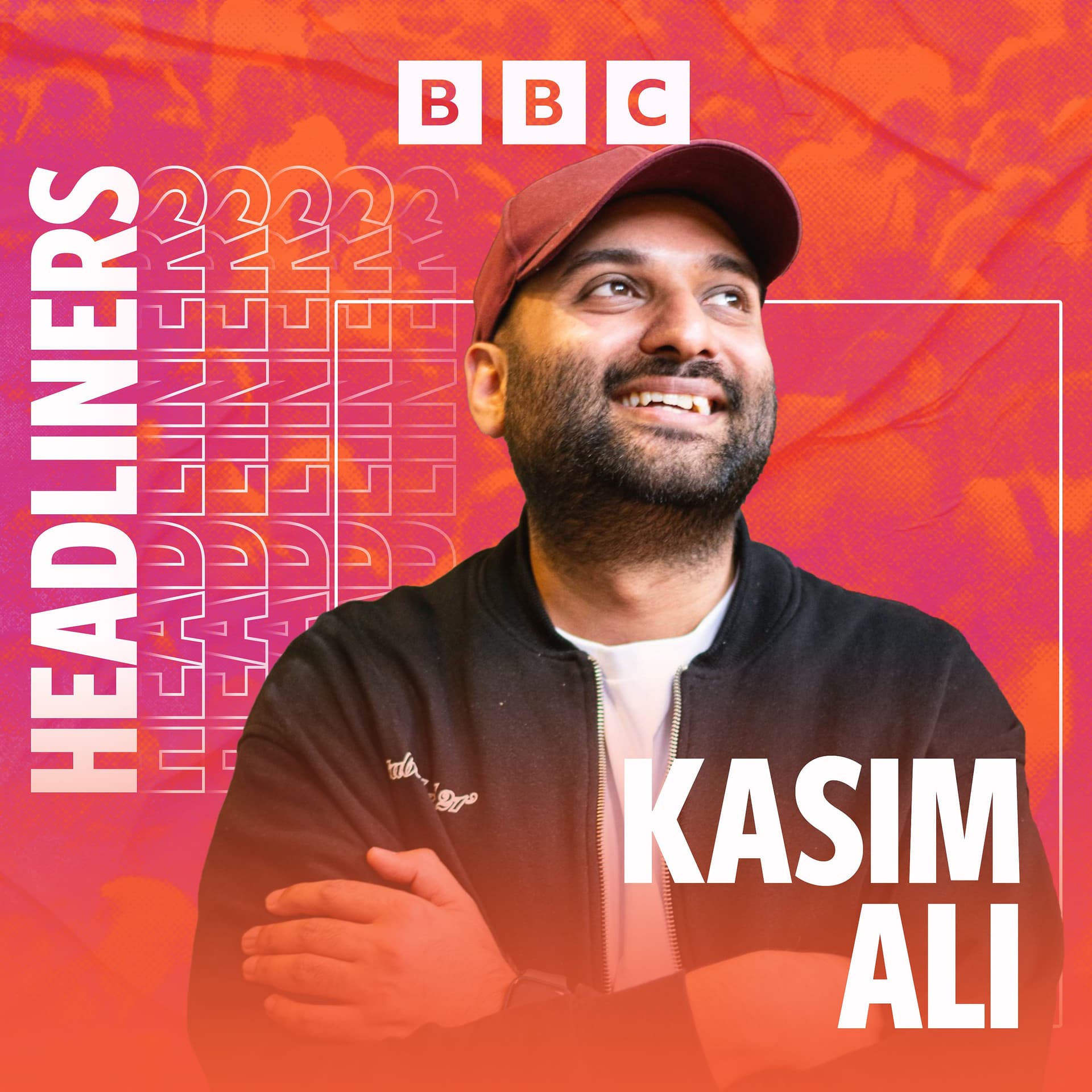
Kasim Ali (author/editor; grew up in Al-Amarock, Birmingham; works in publishing; wrote Who Will Remain? about young men’s decisions and consequences). Host: Nihal Arthanaike (BBC presenter).
Key claims
Braverman’s 2023 line that British Pakistani men’s values clash with British values feels like anger and dehumanisation; identity politics can be used to avoid discussing power and policies. Publishing often “sees” race or gender first, creating double dehumanisation. Drug dealing is framed as survival and family support, not pure immorality; society simplifies “selling drugs = bad people” and ignores context and rehabilitation.
Notable examples
Amir (fictional protagonist) and family/community pressures; Kasim’s family critique after the book (a relative said it gave “white people” ammunition); schoolkids on a train reacting to the name “Qasim Ali”; a childhood story of a neighbour feared to be targeted by gangs; youth-services account of children as young as 10–12 being asked to run drugs.
Written by AI. May contain mistakes. Listen to the episode to check what was said.
Chapters
Tap a time to open that second in VOExploring Complex Realities of Drug Selling
2:15 to 3:40
Kasim discusses the motivations behind drug selling and the societal context.
“and that's what we need to be his story is fiction about a young man called Amir who grew up in the Alam Rock area of Birmingham and Kasim writes about what it's like to be a young British Pakistani in that environment.”
The Impact of Suella Braverman's Statement
3:40 to 6:00
Kasim reacts to a controversial statement by Suella Braverman about British Pakistani men.
“That's a failing of us to not have, you know, a shred of humanity for these people.”
Dehumanization in Publishing
6:00 to 8:43
Kasim shares his experiences of dehumanization in the publishing industry.
“And the thing about it is, and what makes, I think, some white British people feel OK about hearing words such as that, is the person delivering it, Suella Braverman, is a woman of colour.”
Navigating Identity and Intersectionality
8:43 to 12:42
Kasim discusses the complexities of his identity as a Pakistani man in publishing.
“It's still very difficult when you're having those conversations with people and they see you as a Pakistani person.”
Distraction from Important Conversations
12:42 to 14:00
The conversation touches on broader societal distractions and the importance of focus.
“But it does feel this kind of double blind situation where you're just you don't know where to be or how to be.”
The Burden of Representation
14:00 to 24:20
Explore the challenges Qasim Ali faces as a South Asian author regarding representation of his community.
“So now suddenly he's not talking about what Israel is doing.”
Speaking Truth to Power
25:00 to 28:00
Qasim Ali discusses the importance of addressing flaws within communities rather than concealing them.
“Be the first to listen to your favourite shows like Evil Genius, Good Bad Billionaire, and You're Dead to Me with a subscription to BBC Podcasts Premium on Apple Podcasts.”
Navigating Doubts in Storytelling
28:00 to 30:05
Kasim Ali discusses his intentions and fears in writing about dark themes in his novel.
“And maybe that's super naive and maybe it's too, you know, too big a dream.”
Voices of the Community on Grooming Gangs
30:05 to 34:48
The conversation shifts to the complexities of British Pakistani perspectives on grooming gangs.
“but it felt as if I had struck on something that was actually saying something and not something that was so scared of saying something, it ended up saying nothing at all.”
Cultural Identity and Language Politics
34:48 to 36:51
Exploring cultural identity and the politics surrounding language among British Pakistanis.
“This entire time, what have we been talking about?”
Show all 13 chapters
Consequences of Choices in 'Who Will Remain'
36:51 to 42:00
Kasim Ali discusses the narrative and themes of choices and consequences in his book.
“Now suddenly we're discussing language and the ethics of language.”
Understanding Violence and Community
42:00 to 48:30
Kasim Ali reflects on the violence in his community and the complexities of growing up in such an environment.
“have those privileges and the violence that exists just outside their door.”
The Complexity of Drug Selling
48:30 to 52:38
Kasim discusses the nuanced reasons behind drug dealing and the societal failures that contribute to it.
“I mean, if you're an old Etonian running the Conservative Party or any number of kind of privately educated people, where are you going to even think and relate to that?”
Transcript
Automatic transcript. May contain errors.0:00This BBC podcast is supported by ads outside the UK. Prep for a busy week with Whole Foods Market. Start your day with fully cooked breakfast sausages from Amy Liu, 365 brand frozen waffles with no bleached flours, and of course Whole Foods Market eggs, which are all cage-free or better. In the evening, bring home a build-your-own family meal that feeds four for just$35. Choose one entree and two sides. Shop smarter, not harder at Whole Foods Market.
0:57Headliners with Nihal Arthanaike. British Pakistani males hold cultural values totally at odds with British values. That's what the politician Suela Braverman said to Sky News in 2023. And it is pretty much the opening page of author Qasem Ali's novel, Who Will Remain? What follows, I think, is for you, if you're not British Asian, one of the most revelatory conversations you will listen to about what it feels to be a British Pakistani male. Now, the author Kasim and I cover so much ground, very open, very honest, very provocative conversation, which I think may make you feel uncomfortable at points.
1:57But as Gloria Steinem said, the truth will set you free. But before that, it will piss you off. now what I loved about this conversation was just how honest we could both be with each other and that's what we need to be his story is fiction about a young man called Amir who grew up in the Alam Rock area of Birmingham and Kasim writes about what it's like to be a young British Pakistani in that environment. And if fiction is nothing else, it is an empathy bridge, which allows us to inhabit other people's lived experiences. And through that, have a deeper understanding of the world around us. So listen in.
2:55That is just the way that I grew up, with all these things happening around me all sorts of violence um gang related violence and so now when I'm here in London and I'm listening to people talk about well why do people make these decisions why do they decide to do these things you know oh gosh I don't understand I just think well of course you don't understand because you didn't live it you know to me that's just a way of living that's that's that's just how we lived and it kind of frustrates me that people you know make sort of moral conclusions about others based on their behaviors and they remove all of that context one of the things i wanted to do in this book was talk about the complexity of selling drugs it's not just about money it's not just about power for some people it's how they pay their bills it's how they pay their mortgages it's how they take care of their families and for us with privilege and i include myself as part of that now i work in publishing i have this accent you know i've published a book um i have a car in south london for god's sake i'm privileged but But for us to look at that decision of selling drugs and to just attribute complete immorality to it, that's a failing on our part.
4:03That's a failing of us to not have, you know, a shred of humanity for these people.
4:17Kasim, it's great to have you here. I want to start, and I don't often start a conversation with a Suella Bravman quote, but it is at the beginning of your book. And it is worth really interrogating and investigating how that would make you feel. And Suella Bravman on Sky News in 2023 said, British Pakistani males hold cultural values totally at odds with British values. How did that make you feel? It made me feel very angry when she said that. I first came across the clip on Twitter. I will always call it Twitter. I'm not calling it X. And I just felt very angry. I felt very, very angry at the fact that she had said that.
5:01And I don't believe she got any pushback or not much pushback from the person she was talking to on Sky News. And so this clip went sort of viral on Twitter, but also between me and my friends sort of asking each other, I can't believe she's just said something like this. But then when I sort of, you know, take a step back and I look at the view of the British media landscape, Actually, well, of course you could say something like this and get away with it, right? Because there's so much stuff being said about South Asian people, South Asian men, Muslim men in particular, that is just alongside this rhetoric.
5:33And so it's unsurprising, but like deeply infuriating, because how could you just, how could you, how could you say something like that about a group of, I mean, like I'm a British Pakistani man. My dad is, my brother is. We are three completely different people. I couldn't even say something like that about the three of us who all lived in the same household for such a long time. How could you say something like that about an entire group of people of which there are so many? It just makes me so angry. I'd like you to tell white British people what it feels like to be dehumanised, to hear quotes like that.
6:09And the thing about it is, and what makes, I think, some white British people feel OK about hearing words such as that, is the person delivering it, Suella Braverman, is a woman of colour. Yes. And that almost gives her a licence to say it and for some white British people to go, oh, well, you know, look, she's saying it. Yes, I mean, this leaning that the Conservative Party has done it quite a bit, right? So like when Rishi Sunak becomes prime minister, suddenly we're supposed to have a conversation about how he's the first South Asian person to become prime minister, as opposed to everything else he did.
6:45And it just really detracts from everything. And it sort of, to me, has always felt as if it exposes the hollowness, the hollowness of like identity politics anyway. Because if now what we're doing is concentrating on the color of someone's skin, their race and their religion, their ethnicity, then suddenly we're not talking about what they're actually bringing to the table, what they're actually wanting to do with those positions of power. So to me, what it feels like, I mean, I work in publishing, which is an incredibly insular industry. Everybody knows everybody. It's very small, especially here in Britain.
7:17And it's filled with much like journalism. It's filled with a lot of middle class people who have Oxford and Cambridge educations who all know each other. And, you know, they all sort of boost each other up. And so when I entered there as a working class, you know, very poor person from Alam Rock, Birmingham, them. I felt like I didn't belong at all. And what I also felt was this element of dehumanization that you're talking about, which is they don't look at you as a person. They look at you as a group of people. They look at you as you belong to this sort of person. So I'm going to treat you like this because of what I've learned from people like Suella Bravaman who say things like this.
7:56And it just makes you feel slightly, I used to feel slightly crazy because I would sit in meetings and people would say things and you'd think well how could you say something like that but i can't say anything because i'm so junior and then you'd get ignored if you did say something but then also sort of be vilified if you did and isolated and it just all of these things would happen to you based on the fact that you are not white based on the fact that you are muslim based on the fact that you just don't look like them it's it's it's just it's like a day-to-day thing it happens every single day.
8:32And after a certain point, you just become so numb to it. But it doesn't get any easier, really. And even now, I'm like 31. At the end of August, I've been working in publishing for nearly 10 years at this point. It's still very difficult when you're having those conversations with people and they see you as a Pakistani person. That's what they see you as first. Not the editor who has published this many things. Not the person who has this career. Not an author who has published this book and been at this place and whatever it might be, they see you as Pakistani first. And that is just, yeah, it feels very condescending, makes you feel really small, makes you feel like you're not worthy of being there in the first place.
9:10It's really interesting, right? When you, especially when you're an author and you say certain things and, you know, as a non-white author, I feel as if all I'm trying to do is just represent myself. That's it. That's it. I just want to see myself, you know, I want to see a name like mine. and I want to see characters like me. That's literally it. I want to write about what is important to me just the same way that other literary fiction writers do. But then because you're dealing with race, somehow they come at you because you're not grateful enough. You should be grateful to have the kind of position you have.
9:44And that sort of just removes all of the hard work that you've done to get to that point and suddenly makes it about like, you're not grateful to be here. Well, I am grateful, but also it's hard work and I want to talk about these things and I should be able to the same way that white people get to talk about their things. What's really interesting about publishing specifically, and that's the industry I work in not being an author, is that it's an industry that is overwhelmingly female. There's a lot of women working in publishing. It attracts a lot of women. And so I actually have the opposite to you within this industry, which is whenever I talk about being non-white or Muslim and what that feels like when you're in a room and you're in a meeting or you're trying to buy a book or whatever it might be, I get a lot of women who say to me, but you don't know what it feels like to be a woman, you're a man.
10:32And so suddenly my race becomes a non-entity. Suddenly my race is pushed aside. It's always felt to me that they've never been able to see that. I remember once a senior editor, she and I were having a conversation and she sort of suggested to me, I can get quite impassioned when I'm talking about the books I work on. you know you know you as an editor you feel very impassioned about your authors and it was at a sort of Christmas party and she said to me you know you're quite loud you're quite loud when you talk in meetings and you should be aware of the fact that you talk over women or that you don't allow women to speak up and I took this on and I said you know I'm really sorry it's sort of my my passion you know when I'm talking about an author of my own I can get quite loud I can get quite you know ah and then she sort of said well you know as a woman in this industry it's really difficult when men do that.
11:22And I thought, okay, but I'm going to take a step back here and accept that, but also say to you, have you considered what it's like for me as a Pakistani man, sitting in a room full of white people, men and women, majority women, but men too. And this look of utter, I guess she had an epiphany at that point, just a sudden realization where I think she realized that she was talking to a brown man. She wasn't just talking to a man. And she sort of took this. I felt like she's taking the step back and she said, oh, I'm sorry. I guess I wasn't thinking about that when I was talking to you just now.
11:55And then she like apologized quite a lot. And I had to sort of say, no, no, no, I'm not trying to get you. This isn't a gotcha moment. This is just my sort of questioning. But I will always think about that whenever I'm having a conversation with a white woman in publishing, because I think what they see first is my gender and my sex. They do not see my race, which is also in its way another kind of dehumanization, right? Because now they're not seeing this part of me that is actually a really important part of me. So on one hand, you are in these situations where people just see that you're Pakistani.
12:27And on the other hand, it's something that they don't even want to consider because they just see that you're a man. And then you're like, well, I'm all of these things and I'm complicated, just like you are. And I and it can lead to some. Yeah. I don't know if gaslighting is the right term to be using, because I don't think they're doing it intentionally. But it does feel this kind of double blind situation where you're just you don't know where to be or how to be. But also as well, and this is something that Omar El Akkad said to me, the author of One Day Everyone Will Have Always Been Against This.
13:00And he said that quite often what they're trying to do is not find commonality. They're just trying to shut you down. They're just trying to keep you quiet. I mean, he puts it in the context of saying he's constantly asked to condemn Hamas. And he would, of course, because he's not for any type of murderous regime, whether that be what the Netanyahu regime has done to tens of thousands of Palestinians. or the terrible, terrible terrorist attack that took place on October the 7th. But his argument is that when he's asked that question, it's not about asking him to condemn. It's about trying to silence him.
13:58It's a distraction too also, right? So now suddenly he's not talking about what Israel is doing. Now he's suddenly having to talk about what Hamas has done and how he condemns them. And it's also, it's that Toni Morrison quote about, you know, I can't, I'm going to ruin her words. I'm going to butcher that quote completely. But something around how being asked to defend yourself is a distraction from the work. If you're constantly having to defend yourself, if you're constantly having to say, but this, but this, but this, well, then we're never going to get to the whole point of the conversation, which is in this very specific case, what Israel is doing.
14:32Instead, now we're talking about Hamas, right? And that is something that happens in publishing quite often. This book is so fascinating and it's so good. It was interesting that when I was on a train, a group of school kids got on and they were getting off at Lancaster to go to school and there were a lot of hijabis. And it was really interesting that to note them, because I had your book on the table unopened at that point, and just them seeing Qasim Ali, you could see that they were, they just were drawn to the name and how much of a difference that makes. How aware are you? Well, of course you're aware because you're a smart guy, but what is your attitude to the fact that having your name in bold, Qasim Ali, has a power, but also as well your concern of being defined by that?
15:33yeah it's um the thing is i read a lot of books and i work in publishing i'm an editor i edit authors i can see on a day-to-day basis how little there is of people like me right so when you're talking about pakistani authors i can think of a handful of names it's and then south asian you can broaden that out a little bit but not too much muslim names maybe you get a little bit more broader but not too much and so i know on a day-to-day basis how few of me there are in the world and so i'm incredibly grateful to be able to have a book that says that says my name's so big i remember when they sent the cover through and i emailed my editor back and i went whoa my name's really big i'll be sure we want to have it that big and she was like yes absolutely we want to have it this big and asimara she is south asian she's fri lankan you know and so there's that element there i may have met her i met her i think at the nibbies oh yes she won an award i think last year or the year before i can't quite remember when she's she's she's a powerhouse and she's south asian she's one of the very visibly non-white people in this industry doing really good work and so yeah having my name big sort of terrified me a little bit um why because well okay yeah let's interrogate so you were just about say because okay but why that's interesting because your name You're proud of it.
16:52You're fiercely, proudly South Asian, Muslim, British Pakistani. Why? For a couple of reasons. One being that I sort of want the work to speak for itself. Right. That's just a very simple answer. I want the work to speak for itself. I'm a big believer of I think it's Roland Barthes who says the author is dead. The author is dead. The book has been written. You read it and you have an experience with it. But I also understand that in today's world and the kind of author I am, the stuff I'm writing about, that's just completely impossible, right? The author is not dead. The author is very much here.
17:30And people are going to want answers from me to the questions that they have. They're going to want me to talk about things. They're going to want me to, you know, speak about why I made certain choices, like the location or the things that happen in the book. And so that is terrifying because I don't want it to feel that I do have the answers. I can only speak to what my intention was. I can't speak to the greatest sensibility of South Asian men across the country. I can't even speak to the sensibility of South Asian men in my own household, like I was saying before. But you are suddenly, because you are part of a minority, expected to represent that entire minority.
18:03And that is terrifying because for two reasons. One, you don't want to say something that the people against your group of people are going to take and run with. Right. You don't want to mess something up and give them ammunition. on the other hand you don't want to say something that your own people are going to say well that's not how i feel so why would you say that in the first place it is impossible to represent these people and it's a with my first book that came out a few years ago it was a really big thing that just kept rearing its head over and over again you know sort of feeling like i had let muslims down i had let pakistani muslims down british pakistani muslims down by saying the wrong thing by saying it a different way, by not giving them the representation they wanted.
18:46And it drove me into a huge existential spiral, where at one point I sort of decided that I wasn't going to be an author anymore before I'd written the second book and sort of wanted to step away from everything. It felt like too much, the burden of this representation. So it is terrifying, but also at the same time, I look at that book and I feel so proud of it. And I think about the fact that, you know, if this, you know, if I was like a 15, 16 year old right now, going to Waterstones to look around and I saw this book on a table or on a shelf and I saw my name on it I would just feel such joy and excitement and be like who is this person they have the same name as me or they have the same name as my dad or my brother or my uncle like I recognize that name I recognize this person who is that and I have goosebumps even just talking about that now because I just hope that that happens for even if it happens for just one person in this country I I would be, that's incredible.
19:39So then let's get specific on why people felt, are you talking about Good Intentions here, your debut novel? Yes, my first book, yes. So specifically, why is it that some people felt that you'd let British Pakistanis down? What was the accusation? I will give you a very specific example from my own family. so I went home for Eid after the book had been announced and we'd sold it and my family are not massive readers but you know they were proud of the book I went to Eid and a sort of distant relative came up to me and said I've heard about this book deal and I was ready to do the whole I know can you believe it it's so crazy and he immediately just said I think it's really disappointing that you would write about us in such a negative way they already have they meaning media they meaning white people they meaning the world they already have so many things that they don't like about us and you've just given them another thing because good intentions is about anti-black racism within the south asian community and then he just walked away he didn't let me answer he didn't let me say anything he just walked away i haven't spoken to him since he's a distant relative we don't really see much of him but i remember standing there in my cousin's house and it's the summer i'm in the garden there are all these kids running around me playing and I don't know what to do with myself.
21:06I'm just stood there and I'm panicking because I'm thinking I've just signed this contract and I thought I was doing a really good thing by talking about a really pernicious issue in the South Asian community. But maybe what I've done is just, I've given white people more ammunition to dislike us. Maybe I've done a really bad thing and that stayed with me for a very long time. And then when the book was published, I received more of that critique, but I also received critique about the way that the Pakistani Muslim characters were portrayed. They weren't very strict with their religion. They were a little looser, the way that I am, the way that friends of mine are, to various degrees, as I think a lot of people are.
21:44There were critiques about these characters having sex before marriage or smoking weed or whatever it might be, or not praying enough or not going to the mosque enough or not reading Quran enough. and it just felt suddenly as if I had done this thing I had worked really hard to get to this point published this book with a really big publisher as well and done the work and thought I was doing a good thing and then was being told by the very people I thought I was writing for that I had let them down a lot which is you know partly why I had that existential spiral I just didn't know what kind of writer I was and I didn't know if I'd done a good thing I thought I'd done a really bad thing.
22:22How did you overcome that if indeed you have? I sorry I'm just laughing because it's um it's been a long time I took a year off essentially um I told my editor I no longer wanted to publish a second book yet took some time spoke to my agent very much said you know I just need the space and then just had a big old conversation myself like what kind of writer do you want to be what is your voice worth in today's world what is it that you You want people to feel when you read, you know, the book, whatever the second book might be. And I sort of realized over much, much thinking, a lot of thinking that I want to write about me.
23:04I want to write about the place I come from, Alamrock, Birmingham. I want to write about the people who look like me, the people who come from that place too. And I'm going to write about things that are really important to me. So the conversations I have with my friends, the worries I have about young men from Alamrock. And so that's where this book came from. And I think that has been my guiding light this entire time, is that whenever I feel the sense of, have I done the right thing? I have to remind myself it's not about doing the right thing, because there is no such thing as doing the right thing.
23:34When you're publishing a work of literary fiction really like this, it's more about, have I stayed true to what my intentions were at the beginning? And am I proud of this book? Can I get to a point where this book is published and I still stand by it? And so far, the answer has been yes to all of those questions, which is good. But that's sort of how I pushed myself through it. I had to give up this worrying about what other people wanted from me and what did I want for myself. And also, you're representing you. You can only ever represent you. I can't be the voice of the entire British Sri Lankan community.
24:15I'll let Ramesh be that. and even he can't and nor would he want to be and I know him well enough to say that
24:33Prep for a busy week with Whole Foods Market Start your day with fully cooked breakfast sausages from Amy Liu 365 brand frozen waffles with no bleached flours and of course Whole Foods Market eggs which are all cage-free or better. In the evening, bring home a build-your-own family meal that feeds four for just$35. Choose one entree and two sides. Shop smarter, not harder, at Whole Foods Market. Get more with BBC Podcasts, wherever you listen. Be the first to listen to your favourite shows like Evil Genius, Good Bad Billionaire, and You're Dead to Me with a subscription to BBC Podcasts Premium on Apple Podcasts.
25:12You can also enjoy a range of our podcasts ad-free with an Amazon Music subscription.
25:22Allow us to have flaws. Allow us to be imperfect. Allow us to make terrible mistakes that we do. I mean, you'll probably know I hosted a phone-in show for the BBC Asian Network for some years and it was incredible, the conversations that we had about so many of the taboos that exist across the British Asian communities. So alcoholism in the Punjabi communities, caste discrimination in certain communities, colorism, anti-black racism, all of these things that we talked about. Because we have to be confident enough as a community to say we need to sort our own house out. I think the worry is, and here I'll use my mother as an example, actually, because I think this is like maybe the perfect allegory.
26:22Whenever anything went wrong in our family, right? Say, I don't know, some of us had had a fight or something like my brother got detention, something small, something trivial. My mom would pretend to the rest of the family that we were perfect, right? so she so say you know for example her and my dad if i had a massive fight where i eat my dad hasn't turned up because he's really angry at my mom for this stupid fight they've had she would create lies and tell everybody that you know things are perfect he's just somewhere else wherever it might be and i used to say to her like why don't you just tell them the truth why don't you just tell them the truth like you know you've had this argument whatever it's fine don't worry about it he's just off licking his wounds whatever and she would always say to me you're too honest you have to figure out how to lie to people and that has been you know a problem of mine a flaw of mine is that i'm too honest i speak too openly but i think that is kind of the problem with us as a community too if i can be so broad here is that we're so worried about appearing imperfect to everybody else we're so worried about giving them ammunition right so worried about oh we're already being portrayed in this way we should be perfect we should be perfect that actually just means we don't talk about anything we don't talk about anything and we just like get crushed and the pressure of all the weight of these things are unsaid um and then when someone does i feel like the the the feeling is that oh you broke rank you broke loyalty right you've gone over to that side now you hate us too and what i was trying to say with you know the people i spoke to about that first book was it's not that i hate us it's that actually i care so deeply for us that I want us to be able to talk about the things that are flawed within us so then we can heal them.
28:03And maybe that's super naive and maybe it's too, you know, too big a dream. I'm not sure. But that's that's my intention always with the stuff that I write about. Did you keep returning to this idea of Amir, who is, of course, at the heart of who will remain? and his cousin, Succub, his older brother, Bilal, this kind of troubled part of Birmingham, Alan Rock, can be a trouble place, can also be a place of extreme joy. Did you keep circling back to this story, despite perhaps voices in your head saying, don't write about the darkness, don't write about crime, don't write about negativity? Or were you set on a course from the very beginning that you did not waver from?
28:59No, I had a lot of doubts. I wanted to write about young men. I wanted to write about what it felt like to be in Al-Amaroc and the decisions that young men are faced with and the consequences of those. But God, for so long, I was like, am I doing a bad thing here? Am I just outing us? Am I saying that everybody is like this? Am I giving ammunition? Ammunition, I think, is the right word for it. It comes up quite often when I talk about these things. Am I giving ammunition to those who want it, to those who already think a certain way? To the swell of bravaments of this world, right? That's the quote at the front of my book, because I guess I'm trying to say to people, I'm aware of what British Pakistani men, specifically in the instance of this book, are portrayed as, and I'm trying to do something here with that.
Read the full transcript
29:42I hope that comes across. But no, I was terrified. I was terrified for a very long time. And then I sort of just thought, actually, I'm just going to have to do it. I can't just sit here and think about it day in, day out for months and months and months and not do anything. Why not just write the book and see how that feels? And when I wrote the book, that very first draft, which is very different to this draft, edits happened, many edits, but it felt as if I had struck on something that was actually saying something and not something that was so scared of saying something, it ended up saying nothing at all.
30:13One of the voices that is seldom, if ever heard, whether it be on phone-in shows or political programs, even though it's a big political story, is the issue of how Pakistanis themselves feel about the grooming gangs and the different conversations that are had with your friends who are British Pakistanis. or your relatives, male relatives who are British Pakistani. I don't feel like we ever hear that voice saying, look, we were disgusted by this as you in the same way that you're disgusted with white grooming gangs and white rapists and white criminals, right? I don't really ever hear that conversation out loud.
31:11What is that conversation, Karsin? I mean, I can only speak to the ones that I've had. I don't, yeah, I always want to make sure I'm not generalizing here. But I mean, it's just exactly what you just said, right? We're like disgusted by it. And beyond that, we're also sort of, you know, the men in my family are sort of appalled at the fact that they would A, ever do this because it is so against our moral compass, right? Whether that's one set out by our culture or by our religion or by both, really. It's so against our moral compass. It's something so far away from our reality that we cannot even imagine it in my family, in Alamrock, the people I know there.
31:52But it's also the sense of like, not only have you done something that's so immoral, but also you've done something that just means our lives in this country get harder. You know, like we talk about, I don't know if this is the immigrant sensibility. I don't know if this is a South Asian culture. I don't know if it's Islam as a whole. But we talk about like a social responsibility to each other, right? We have a social responsibility to one another always, always, always. When I grew up, you know, way before any of the news stories about Palestine that are happening right now, we used to fundraise for Palestine.
32:26We went to protests. We hosted all manner of events because we had a social responsibility to this group of people halfway across the world who we don't know. We're Pakistani. They're Palestinian. We don't know anybody there. But we have a social responsibility to that group of people because they're Muslims like us. And we recognize the oppression. We recognize what is happening over there isn't right. We want to be there for them. In the same way, we have a social responsibility to other British Pakistani Muslims to be specific across the country. And so when we were raised, like my mom would always talk about, you know, you act in a way that is befitting of the rest of your people, right?
33:05Not selfishly, not individualistically, but you're thinking about what your name is, what your face looks like, who you represent. That is how I was raised. That is how the men in my family are raised. That's what we think about whenever we're trying to, you know, go about this life of ours. And so that's also part of the appalling nature of this for us is that not only have you done something immoral, but you've also like let us all down collectively. You've taken away from the community, you know. And so it's really interesting you say that because obviously I'm aware of where that quote from Svella Brovman has come from, what she was talking about, the context.
33:41and I did want to throw something in there about you know where that conversation is politically but I never found the right way for these characters to talk about it you know these characters are possibly some it just felt like I was shoehorning something in and as an author I don't want my reader to feel like they're being monologues and I guess I also thought I hope I have a long healthy career as an author ahead of me maybe that's something to tackle in another book I mean part of me feels guilty that I've brought a British Pakistani author on to talk about his new novel Who Will Remain and I've spoken about grooming gangs which do not feature in this book at all right no but the the quote at the front that you read out that is from that context so it makes sense but also I guess I feel good about being able to say what I just said you know you've given me an opportunity to be a voice on it in a way that I don't think other people have been.
34:38So I'm grateful for that moment to be able to say what I, and to also, I guess, speak for the men of my family and my community who are not going to be given this kind of platform. This entire time, what have we been talking about? British, Pakistani men. British is part of that, just as much as Pakistan is. And, you know, it's, it's... Well, you're more British in many ways than you are Pakistani in the sense that you go to Lahore, Islamabad, in seconds they know that you're not born and bred in Pakistan. Absolutely. I mean, yeah, I mean, let's just say my Urdu speaking capabilities are not as good as my grandma would have wanted.
35:17But no, you go to Pakistan, they can tell immediately by looking at you. And so the handful of times I've been to Pakistan, you often just feel like you're this strange creature. You know, you're regarded as South Asian in Britain, but then you go to Pakistan and they're all like, well, you're just like a white guy. You're a coconut. Because you're from Britain, basically, and you just get treated differently there too. It's just so fascinating. Well, that's interesting because they probably, they might try and edit out the word coconut because it's become a racist term that people have been prosecuted for saying about, and this is people of colour saying this about other people of colour, can be prosecuted for saying that word.
35:57god you know it's such a small word to me like it's something that me and my family have used disparagingly towards each other over the years i mean like as little jokes here and there right constantly i work in publishing for god's sake everybody in my family calls me one of those i'm not sure you don't have a brummie accent at all no i don't have a that's an interesting story i grew up with an american accent but that's that's to be told later on I just yeah I don't I don't they've called me an Oreo they've called me a coconut they've called me you know a white boy in brown skin they've called me all kinds of things and it's like you know coming from them it's just it's just a joke it's just a little you know like I'm not taking it so seriously I'm not going to start you know so again it's not the distraction it's like well that's actually not the conversation we should be having we should be having the conversation around like the rise of totalitarianism in this country.
36:51Now suddenly we're discussing language and the ethics of language. It's ridiculous to me. It feels so, it almost feels as if, I think Ash Sarka said something along this line of thinking, because she's had this book come out recently, Minority Rule, and she said something about how it feels as if the right have taken identity politics and really run with it, right? And so now they've got all of us running around in circles talking about the use of language, whereas what we should be talking about is all the policies they're putting into place and the things that they're doing across the world in our name and with taxpayers' money and the rise of the right.
37:23But we're not talking about that anymore. We're talking about whether or not you can call someone a coconut. It just drives me crazy sometimes. Let's get back to Who Will Remain, your novel, and this idea of a family, of secrets, of loss and of revenge. Why was this narrative arc the one that you wanted to write? I think it's really interesting that you just used the word revenge, actually. I think that's the first time anyone's used that, but there is an element of that to this book. I guess I wanted to just write about, I mean, there's a plethora of ideas I'm trying to figure out through this book.
38:08But really the driving force for it was what decisions are young men forced to make? What are the consequences of those decisions? Right. And I think we've been writing, you know, that's the story all this time. And I wanted to be very specific about it. I wanted to go into the community that I'm from. I was born and raised in Alam Rock, lived there for 18 years before I left for university and haven't really been back since, if I'm being completely honest, for many reasons. and I just wanted to you know talk about the young men that I know that are left there the decisions I know that they're making what their lives sort of look like the pressures external and internal from this community that on one hand can be very wonderful safe and loving you know like when I was growing up I knew that if I was walking on any road or street there would be a relative there who would take me in offer me food give me a phone call you know like they'd do anything for me but on the other hand is the pressure of being inside this sort of panopticon right of our own making everybody is watching you you can't make a mistake you can't make a fault you can't do anything wrong you have to sort of live for them that's that's that's a lot of pressure and it kind of makes you feel slightly insane um so you want to write about all those things and so the the narrative itself to me the plot is important because it's this ticking time bomb, I would say, of like, what is about to happen to Ahmed, right?
39:32Where does he go? Who does he become? But it's also just not that important to me, because what I'm more interested in is like exploring these relationships between each other, these pressures between parents and children and family and your role in it and the society around you and your friends and all manner of things. I'm not sure if I answered the question, but that is sort of where I was. Yeah. It does. Interesting that no one else has brought up the word revenge. Yeah, no, it's not. It's not come up, but it's it's. And, you know, I don't know if I would have said it before you've just said it.
40:06But now that you've said it, I'm thinking that does explain a lot of the driving force of this book. Because you can't. You can't let it go. Saqib's death cannot just be ignored. no no there are rules yeah absolutely it's it's it's it's it's just sorry revenge is just such an interesting word and now i'm thinking about like you've just kind of you've kind of just given me something i think and actually just just saying that it's you know his cousin sarkib is is is murdered at the very beginning i've been saying killed this entire time but actually i think murdered is the right word in this sort of inter-gang violence which happens so often around Birmingham when I was doing sort of research for this book and trying to you know familiarize myself with the landscape as it is now as opposed to what I knew 10 years ago the amount of articles that come up in the Birmingham Mail about somebody being stabbed are just you know incredibly depressing and they're all the same sort of person they're all the same sort of young man from the same sort of inner city suburb borough whatever you want to call it he's murdered and Ahmed is sort of trying to figure out what to do in the wake of that.
41:21And there is an element of revenge to it. It might not be revenge in the sense that Ahmed goes after who did this stabbing, this murdering, this killing of his cousin, but it is revenge in the sense that Ahmed is trying to figure out what his life looks like in the wake of this and pursuing all of these choices, the consequences of which will reverberate for a very long time, I think.
41:45I always find it funny when I watch kind of people who've been brought up and continue to live in privilege being so judgmental about people who do not have those privileges and the violence that exists just outside their door. I remember speaking to an extraordinary man called Nigel Travis who runs Moss Side Fire Station Boxing Club and he said to me I'll never forget it he said I'm not teaching these kids how to fight they know how to fight they have to fight every day out on these streets I'm teaching them about respect respect for each other respect for the gym respect for themselves and I thought that was so powerful And I remember doing a show once from a pupil referral unit and the police officer that was stationed there full time.
42:44This school has a full time police officer in it in South London. Said not one of these kids. Is immune from knife crime. Not one of them. Like, what have we done? To allow people to live like that. to be thrown to the wolves every time they open their front door? I mean, we've ignored them, right? I mean, I remember when I was growing up, this almost sounds like a childhood fairy tale, across the road from where we lived, from where my parents still live, there was a family who the mom had the same name as my mom. And so it was quite funny. They became friends. They had exactly the same name.
43:32And the woman across the road also had a son who had the same name as me. And so there was a running joke that we were sort of mirrors of each other. Right. Here is a woman. Here's her son. Here's a woman. Here's her son. They have the same names. Except one day when I was very, very young, I think I was around 11 or 12. But, you know, I'm South Asian. I look a little bit older than I am. Right. I'm a bit taller. I'm a bit broader. And my mom didn't let me out for quite a while, a few days. And the reason for that was because the Kasim across the road was involved in gangs and somebody had put a hit out on him.
44:10And my mom was terrified that they may see me in the road. Somebody may say my name and they would think that it was me. and so I was kept inside for a little while that is just the way that I grew up with all these things happening around me all sorts of violence gang related violence and so now when I'm here in London and I'm listening to people talk about well why do people make these decisions why do they decide to do these things you know oh gosh I don't understand I just think well of course you don't understand because you didn't live it you know to me that's just a way of living that's That's just how we lived.
44:45And it kind of frustrates me that people, you know, make sort of moral conclusions about others based on their behaviors and they remove all of that context. One of the things I wanted to do in this book was talk about the complexity of selling drugs. It's not just about money. It's not just about power. For some people, it's how they pay their bills. It's how they pay their mortgages. It's how they take care of their families. and for us with privilege and I include myself as part of that now I work in publishing I have this accent you know I published a book um I have a car in South London for God's sake I'm privileged but for us to look at that decision of selling drugs and to just attribute complete immorality to it that's a failing on our part that's a failing of us to not have you know a shred of humanity for these people and and so I wanted to talk about that too because as a kid I was sort of I was completely enamored with selling drugs because I wanted money.
45:41We were so poor. And I used to see these young men walk around wearing these fancy clothes and these watches and they would drive these cars and, you know, they'd own these big houses. And I wanted that so badly, but I was too much of a coward. I was terrified of the violence. Right. So I was scared that someone was going to stab me. So I never did. but I was so envious of them and so I always think about that I think about the fact that I can't look at these people as if like even saying that these people as if I'm so above them or so different to them I can't look at who I was as a kid and the people I grew up with and the people are still there and judge them just because I don't have that life now I wanted it so badly when I was a kid I was talking to someone who works in youth services and they were telling me about this boy who deals drugs and he doesn't want to deal drugs.
46:32And he's now got kids who are like 10, 11, 12, asking him for work to help be drug runners because they live in such abject poverty that often it's the only way they can feed their families at that age. Imagine that, the trauma of that, a child going out on the street to sell drugs. Yeah, they'll have some cash in a shoebox under their bed or whatever, able to buy a tech fleece tracksuit or have a Gucci bag around their shoulders. And this young person is saying how guilty they feel that they are employing 10, 11, 12-year-olds. who are coming to them begging for work so that they can buy food.
47:30I mean, that's wild that we live in a country, what is it, the fourth or fifth biggest economy in the world, and that's happening. Yeah, and then we want to criminalise them, you know? Well, we have to criminalise people who commit crimes, but we also have to have a system that believes in rehabilitation, and also we need to have a system that understands that this does not exist in a vacuum. This doesn't just happen because these are bad kids, right? This happens because they've got poor parental outcomes. They've got perhaps terrible schooling outcomes. They're perhaps excluded from school. COVID had a huge issue around people smoking weed and becoming addicted to weed.
48:16I've heard stories where 11-year-olds are coming in and they have spice in their vapes. and they're so stoned that they have to be taken out. I mean, if you're an old Etonian running the Conservative Party or any number of kind of privately educated people, where are you going to even think and relate to that? I mean, that's unfair because I think Rory Stewart, when Rory Stewart was in government and was the prisons minister, he did absolutely understand the power of rehabilitation and understand that criminality doesn't just happen because someone gets up one day and thinks, oh, you know what, I'm going to go and burglar someone's house.
49:02You know. And Lord Timpson, actually, Lord Timpson has proved through Timpson's, the company, of course, that was set up by his family, that employs many. He calls it people with prison experience. He doesn't say ex-offenders. He talks about those employees as people with prison experience. So there are sensible people out there. There are, there are, but there have, I think the sort of, I don't know, the resounding thought around this is just very, it's too simplistic. It's too simplistic. It's too, selling drugs is bad, therefore people who sell drugs are bad. And it's not, it's just, we're more complicated than that.
49:46Not the, of course, the nice middle class people that take all that cocaine. No, of course not. Right. Of course not. Not the people who are actually buying it, but the people who are selling out the bad ones. And it's just, I don't know. I just think it's such a shame because growing up in Alam Rock, you are so aware of the fact that this community has a reputation, right? A reputation for doing all manner of bad things. And yet I look around and I'm like, yeah, but like my two aunties have had long, brilliant careers working in the NHS. we have doctors in the family and lawyers and teachers and we have people who work very good careers and have very stable lives and yet we don't talk about them and that's the sort of it's the thing that I kind of want to I'm trying to figure out through my writing maybe and I'm not sure if I do it if I've done it entirely by this book but maybe it's not something that I'm ever going to land on and say I've finished figuring it out now but it's this sort of complicated nature of well yes these things happen but they happen to people and by people who are like massively complicated and why is it that we just remove all of that complication is it is it easier to just think of them like that is it just simpler to deal with them if they become it's again it's that dehumanization thing you were talking about before they're no longer people they're drug dealers they're no longer people they're members of a gang do you know what I mean and it's just I don't know if my life was slightly different if I was slightly more courageous I might have become one of quote unquote those people right I would still be the same person I am now which is to say still you know capable of all the things i'm capable of but maybe i would have become one of those people and so what does that mean does that mean that i lose all complexity that i own now no it's not it just it just makes me deeply frustrated and deeply sad um and i find myself having these conversations with people in publishing all the time because they come from these spaces are not like the space i come from and they're always you know confused when i tell them that i do because they say well you don't sound like it and how could something how could a place like that produce a person like you which is just such a ridiculous yeah ridiculous thing to say um but i have them all the time where i'm just trying to get people to understand everything is complicated people are human we should give them that decency i found i sound so naive when i say that but it's truly what i believe and it's something i really deeply wanted to explore here if i can get you on armor side if i can get you to understand all the pressures in his life, internal, external, family, friends, education, money, soccer dying, his brother leaving, etc.
52:17If I can get you to understand that this person makes this decision, not based on, like you said, he woke up one day and decided to be a bad guy, but because of all these things happening, then maybe I can get you to empathize with him. And if I can get you to empathize with him, then maybe you can empathize with other people like him. You know, that's kind of my hope. Maybe it's all grandiose, but that's my hope. Kasim Ali thank you so much for being on Headliners Podcast it's been a real pleasure to catch up with you bro thank you for listening to another episode of Headliners big thank you to Kasim for joining me I think there is so much in that conversation that you could talk to me about there may well be moments of it that annoy you that provoke you and it is not my intention certainly to annoy you, to provoke you, yes, because I think that, you know, we have to have our orthodoxies challenged and crumbled at times.
53:17If you're enjoying Headliners, please subscribe. We haven't got that many left to do, actually, but subscribe anyway because there are hundreds that you can listen to long after I've left the BBC. Share it with your friends and let them know that they are missing out on some extraordinary conversations. And we will be back next week with more of those. I'll see you then.
53:44On BBC Sounds, sporting giants. Delve deep into the lives and careers of some of the biggest names in sports. And hear from those who know them best, including Pep Guardiola. He is looking always for the profession. Andy Murray. It was something that he'd worked towards all of his career. And Kean Mbappé. When I saw him the first time play, I said, we have a play here. Sporting Giants. Listen on BBC Sounds. Get more with BBC Podcasts, wherever you listen. Be the first to listen to your favourite shows, like Evil Genius, Good Bad Billionaire and You're Dead to Me, with a subscription to BBC Podcasts Premium on Apple Podcasts.
54:29You can also enjoy a range of our podcasts ad-free with an Amazon Music subscription. you
From the publisher
The author, Kasim Ali, joins Nihal for an in-depth conversation.
Nihal Arthanayake presents his Sunday evening show and podcast, featuring exclusive in-depth interviews with headline guests across entertainment, sport, culture and politics.