Ask ChatGPT


 HealthTech Hour
4 Aug 2026 · 50m · 31 chapters
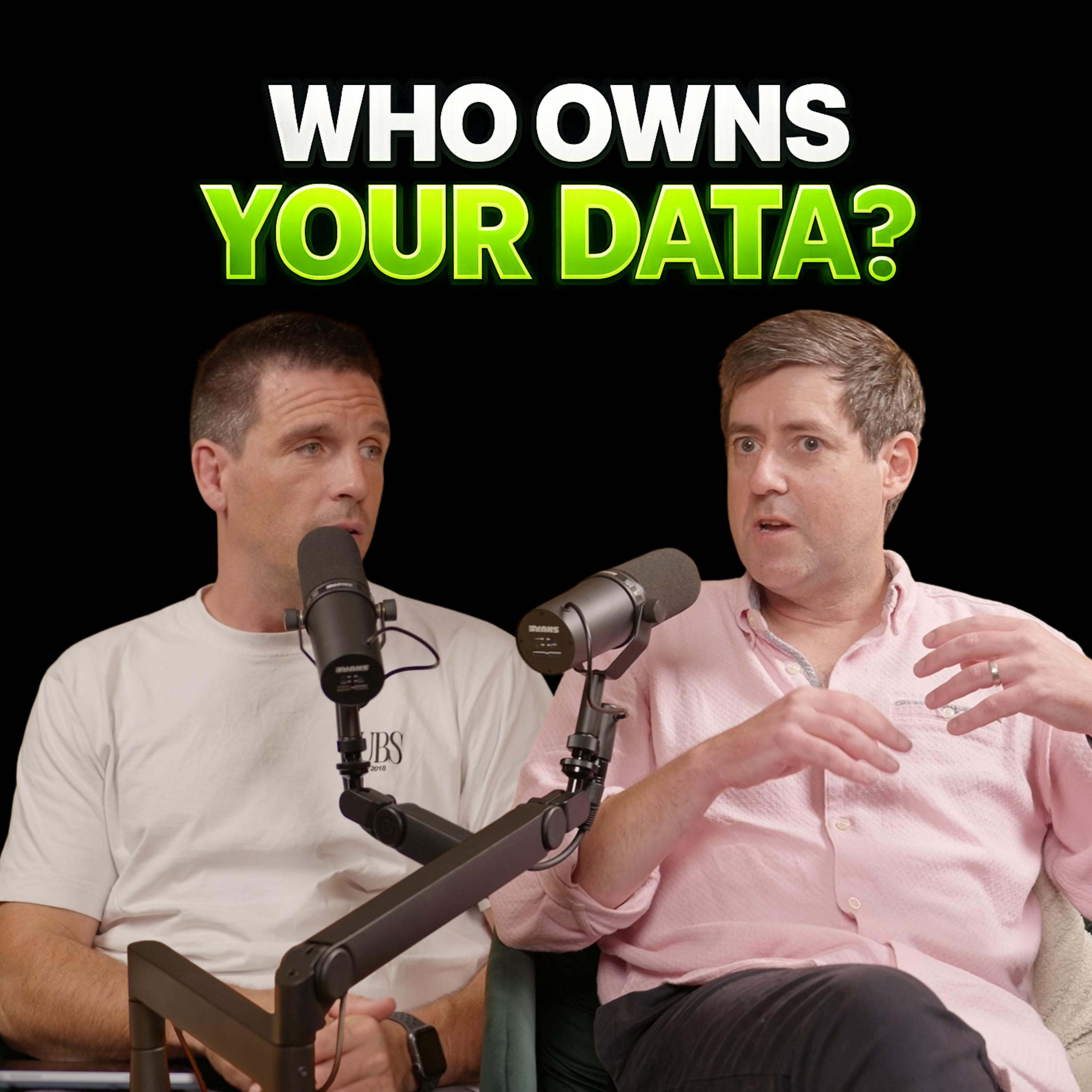
Who owns UK health data, why it’s fragmented (GP vs hospital records), and how to share it safely for better care and research. The episode critiques the UK debate around national federated data platforms (NHS England’s Federated Data Platform, “FDP”), including controversy around Palantir, and argues for clinician-led, privacy-enhanced approaches using synthetic data.
Matthew Whitty is director of commercial partnerships at MDClone (self-service data analytics for safer collaboration and research). He previously served as ex-director of innovation, research and life sciences at NHS England.
Patients often assume there’s a single patient record and don’t know who owns their data. Trust and motivation drive whether public-private collaboration works. De-identified data can still be re-identified (e.g., UK Biobank). Synthetic data can enable safer collaboration by removing linkage risk.
UK Biobank data appearing on GitHub and being sold on Alibaba; a tragic allergic reaction case where hospitals lacked primary care records; community pharmacy access concerns; Manchester Foundation Trust engagement on “data donor” benefits.
Written by AI. May contain mistakes.
Exploring the complexities of health data ownership and access.
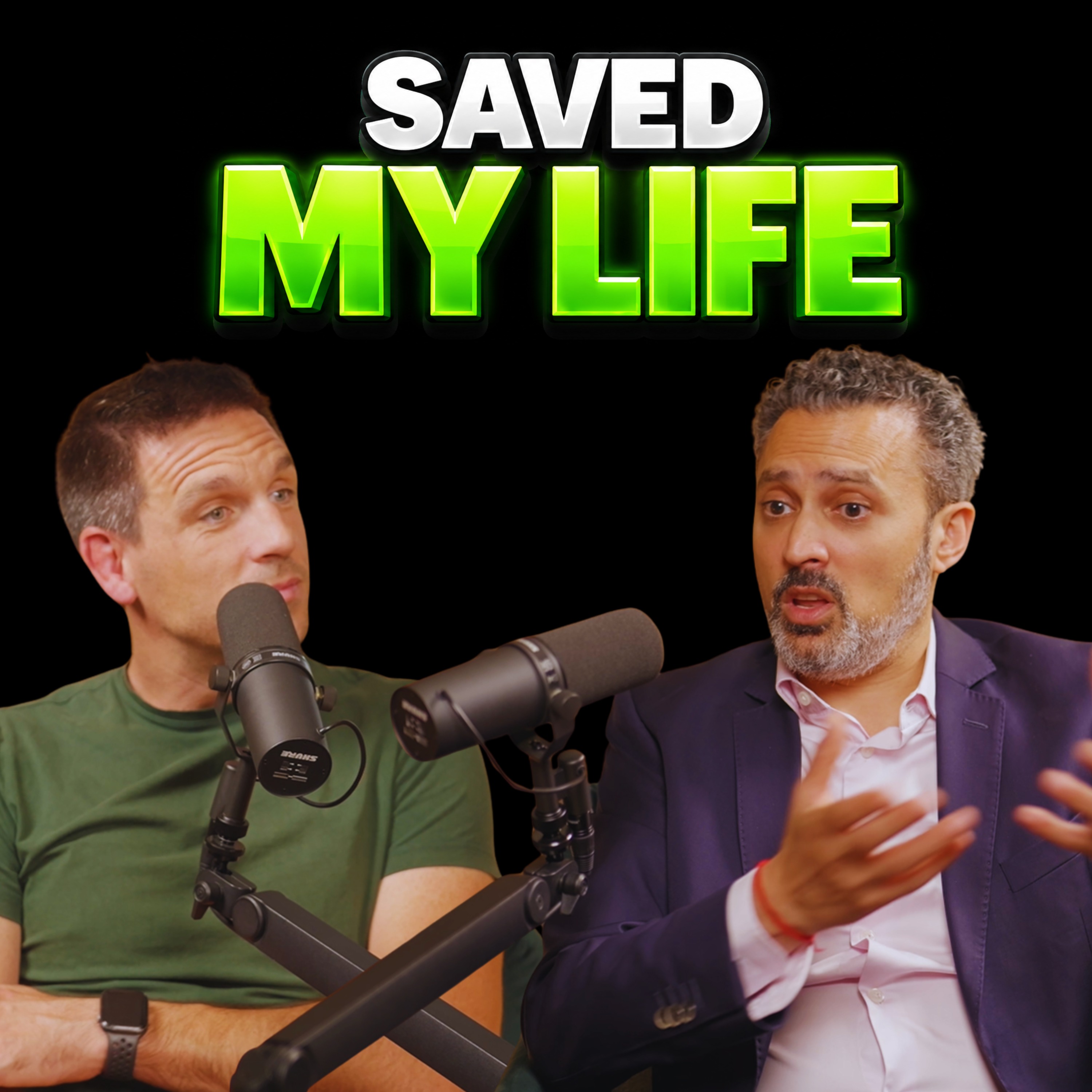
“Who even owns their health data right now?”
Introducing Matt Whitty, discussing his career journey and expertise.
“It's really great to get Matt on the show.”
Matt discusses his shift from a hospital pharmacist to a central innovation lead.
“working at the intersection between government industry, academia, regulatory systems and patient groups.”
Matt shares insights on the vision and strategies of NHS England.
“so I could see a real kind of changing direction around the time that I joined and I was kind of keen to play my part.”
Discussing the complexities and public perception of NHS collaboration with private entities.
“The NHS doesn't make surgical improvements, gloves, etc.”
Examining how the public views health data ownership and sharing.
“You know, what is it that each party is bringing to the collaboration?”
Learn about contrasting perspectives in health data access from recent news.
“And I remember seeing two juxtaposition news articles in the days before we got our news from Twitter.”
Explore the complexities of the debate surrounding patient data accessibility.
“often seen it's almost like the similar groups that sometime end up cycling through these arguments against each other.”
Understand global similarities in health data usage challenges across countries.
“Because you're not just the UK, you're in the US and things like that.”
Gain insights into the Federated Data Platform's goals and functions.
“but kind of keeping it local, but having a way for organisations to kind of learn from each other to improve direct care and to support planning for the patients in those areas.”
Discover how MD Clone enhances data access for clinicians.
“But I don't know if that's, I'm sort of taking a bit of an extrapolation there.”
Learn about the importance of managing NHS health data and fostering collaboration.
“And I guess my kind of view on it would be, one, I think it's definitely right that we should enable clinicians working hospitals to have better ways to kind of join up care for the patients that they serve.”
Examine public concerns regarding the involvement of Palantir with NHS data.
“Why then do you think people have been so against the Palantir deal?”
Discuss the competitive landscape for health tech solutions in the UK.
“I think it probably links into some of the comments of the leadership there.”
Explore the dynamics between regional and national health data initiatives.
“I think, and, you know, going through the procurement process, I think there were other consortia or groups of technology companies coming together to try and...”
Understand how political factors influence conversations around health data.
“I think they end up sort of converging, then unconverging, diverging.”
Learn why a single patient record is essential for healthcare improvement.
Explore the need for accurate data systems in healthcare and their potential benefits.
Discuss the significance of the single patient record in influencing patient behavior.
Understand the challenges in supporting healthcare solutions amidst political scrutiny.
Highlight the importance of maintaining a positive perspective on NHS capabilities.
“And I think that, I mean, I think now one of the things I always say where I'm an MD clone now is that I get to run into all the problems I didn't fix in my last job when I was at NHS England.”
Examine the difficulties faced by health tech companies transitioning from grants to sustained business.
“We've got the Health Data Research Service that's been announced with£600 million worth of funding from government and Wellcome Trust.”
Analyze the role of funding programs in supporting health tech startups and their execution.
Learn about the complexities of NHS decision-making processes and funding qualifications.
“So it's just more around how we could improve the efficiency around that.”
Discuss the need for early decision-making in healthcare to avoid prolonged assessments.
“So kind of a lot of what it did was like, how can we kind of make this a logical suite of go to this entity for this type of funding in trying to solve this kind of problem?”
Explore the potential advancements in health data research and its implications for patient care.
“And I think that sort of, you know, an early go, no go decision on a lot of this stuff would have been great.”
Understand how organizations can leverage data to speed up research processes.
“So clinician led quality improvement, faster research, safer collaboration across the ecosystem there.”
Learn about the risks of data breaches and the challenges of using patient data responsibly.
“So I think now when you, some of the early questions that you're looking to answer, you know, you just sometimes just want to know, have you got the right patients there?”
Learn about the risks of re-identification in de-identified health data and the benefits of using synthetic data to mitigate those risks.
“and they were saying that some of the data had got onto, some of the de-identified patient data from Biobank had got onto GitHub.”
Discover the importance of sandbox environments in driving health tech innovation and collaboration among healthcare organizations.
“Like I said, I love anything that helps innovation scale.”
Understand the implications of abolishing NHS England and the challenges associated with integrating healthcare governance.
“I think MD Clone should be in the conversation.”

Get the gist, explore an idea or ask about something said.
 Claude
On HealthTech Hour, what are the key points of this episode?
Searching your listeningAutomatic transcript. May contain errors.
0:00Who even owns their health data right now? That they sort of assume that there already is a single patient record. Your GP owns that particular record, but then your hospital might have a separate one and da da da da da. Some of the data had got onto, some of the de-identified patient data from Biobank had got onto GitHub. Yeah. Some of it was being sold on Alibaba. Yeah. And various places like that. That's about as bad of data breach as you could get. Isn't it awful that the hospital didn't have access to this patient's primary care record? Isn't it awful that this private sector community pharmacy is going to get hold of your health data?
0:31And I remember thinking this is a really unusual kind of editorial kind of flow because it's really the same kind of problem. I think the criticisms I've seen of Palantir, who are the company that won the FTP, tend to be around some of the personal opinions of the leadership there, particularly around sort of the NHS as an entity. Hello and welcome to this week's Health Tech Hour with me, Steve Roost. Each week we bring you the best news, views and interviews with the leaders, clinicians, CEOs, founders, journalists, investors, the list goes on, of people that are changing the UK healthcare system and changing the global healthcare system and building the future of health.
1:17As regular listeners know, I am a CEO and founder of a health tech business myself, which is called PocDoc. And PocDoc is leading the way in cardiovascular screening outside of a GP surgery. We work with 40 % of the NHS at this point, and we are the number one diagnostic test on the high street. So if you are open to learning more about your heart health, having a cardiovascular checkup, please go to pocdoc.co and you can look at our healthy heart check. And thank you so much to Poc Doc for supporting the show as always. Thank you to everyone who's listening live on the amazing UK Health Radio.
1:56We love, love, love UK Health Radio as a live platform. Johan and the team do an amazing job. It's not just the Health Tech Hour that's on UK Health Radio. There are tons of other great shows. So I would recommend checking them out. Thank you also if you are listening on any of the podcast channels, your podcast channel of choice. We are on all of them and we get downloads in over 50 countries every single month, which absolutely blows my mind. From Vietnam to Venezuela, from Saudi Arabia to another country beginning with Spain that, you know, escaped me at that point in time. but we are basically the world cup of the expanded world cup format of health tech our podcasts.
2:36Thank you. If you're watching on YouTube, thank you. If you are watching on the Instagram channels at health tech hour or my own Instagram channel, which is called Steve Roost. So thank you very much to everyone for joining us. And thank you very much to my guest today. Who's Matt Whitty, who, and I'm going to get this right. Cause I wrote it down before the show, who is the director of commercial partnerships at MD clone. which focuses on self-service data analytics in order to drive safer collaboration and better research. And also, Matt is the ex-director of innovation, research and life sciences at NHS England.
3:13It's great to have him on the show. He's a real thinker in the space. And there's a huge amount, if anyone's been paying attention, as a lot of you have done over the last two to three years, in and around this area of centralized data, the ethics around it, the efficacy around it, what it could unlock, what it can't unlock, what we have to be careful of. It's really great to get Matt on the show. So Matt, welcome to the show. How are you? Yeah, I'm very well, thanks. Delighted to be here. And I love the World Cup reference as well. So it's nice to be part of the World Cup. Yeah, I don't know quite when, yeah, exactly.
3:44I know I saw Infantino's talking about the 64-nation World Cup. So that's kind of where we are every month. So yeah, I thought I would just get that one slipped in. So let's kind of get down to basics because you have kind of a real track record of being in the nexus of really interesting, innovative things, whether that's NHS England or in what you're doing now. And so how did you end up in that position? Yeah, I guess I had those positions rather. Sorry. Yeah, I guess I had a bit of an interesting career career journey, really. So I started in the NHS as a pharmacist. So I was a hospital pharmacist.
4:19I was a frontline clinician working in a hospital. and at the time I just thought that was my career. I'd progressed through the hospital doing different roles or maybe specialising in a particular area. But I decided that I wanted to do a little bit more. I wanted to understand how the health system worked, not just the hospital itself. So I guess I first started to get itchy feet and start to think about doing something differently, thinking about moving away from how to support individual patients to how to support a system working. So I moved into working for commissioning organisations to kind of get that more rounded view.
4:53I then moved into consultancy. So I worked for one of the big four and then worked for myself. So again, kind of got a different experience about kind of working with people from different backgrounds, different skills. And then moved into a national role at NHS England. So I really wanted to kind of make that impact at scale. And, you know, at the time, there was no better place to do that, really. So I moved into exactly, as you say, working at the intersection between government industry, academia, regulatory systems and patient groups. So it's a fascinating place to work. There's a lot to unpick there.
5:29So I think you kind of glossed over what is a relatively uncommon path from hospital pharmacist or pharmacist or clinician into a central innovation lead. That doesn't, in my experience, that doesn't tend to happen that often. And so why were you the, maybe you weren't the exception and you say you'll you'll tell me that it happens all the time but what was it that drove you to make that leap so i think i think probably the main the main thing is well it's probably two things one um i'm quite a curious person so i'm very curious about sort of new areas and kind of expanding it or what if this happened or what if this this was a little bit different or could i apply skills that i've learned in one area in a slightly different sector or domain so i've always kind of been a bit like that and then probably the second thing is that career-wise, I've never really been able to plan my career more than about three to five years ahead, just because things move so fast or, you know, my interest sort of, you know, develops in a new area, really.
6:28So I guess that kind of combination of curiosity and medium-term, not long-term planning, I'd say. And did people think you were kind of crazy or did they sort of get it when you were trying to make those moves? No, mostly people thought I was a bit crazy. Yeah, I bet. And, you know, I'd have conversations and people would say, you know, what are you doing now? and what's your career now? And, you know, I've had different training as well. So I did some legal training as well. So there's sort of a, I've always been interested in doing slightly different things. Mostly at the time people thought I was crazy, but I've always thought they've been calculated risks.
7:00And when you moved to NHS England, which is in the process of being disbanded, we're not quite sure whether, I don't know quite exactly where we are, but that's, I believe that the decision was definitely taken. the legislation to enable that definitely passed? It's going through. It's passing, I think. Yes. And I think it's next year sometime, early next year. Right. When you joined, what was the kind of hypothesis around NHS England? What was the vision? What attracted you there? So I think one of the things that attracted me there, there was a, I think it was called the five-year forward view.
7:42There was a sort of a long-term strategy document. research and innovation, which are really important to me, were really kind of central tenants of that plan. And I quite liked that nationally the NHS and government were thinking a bit differently. There was, you know, a much more openness to collaborate with industry and with academia, and these are things that I'd seen as barriers earlier in my career where, you know, either in the NHS where there was, where it maybe wasn't as open to industry or where there were sort of tensions between different parts of the NHS or academia in the NHS. so I could see a real kind of changing direction around the time that I joined and I was kind of keen to play my part.
8:23And what is your, seeing as you just mentioned it there, where do you land now that you're outside of NHS England? Where do you stand on this issue of, and I'll give you my view after you give yours, I'm not just going to leave you out there to try and hang you out there to try. there is a tension between this concept of a public nhs and the the private sector capital p capital s what's your take on this whole thing because it comes up all the time in the media and i'll just be curious about your view seeing as you've worked at that nexus yeah i mean it's it's fascinating really and i and i guess i've always been on more kind of the pro collaboration side just ideologically that's where i where i've sat really because i just don't think the nhs can do all the things on its own you know we're not developing our own hardware we can develop some software and clinicians you know have come up with some fantastic ideas for their own software but we're not doing all of it you know we haven't got developed our own cloud infrastructure we haven't um developed lots of things you know new medicines its own medicines yeah exactly you know so all of these things we need the skills the um the facilities the external funding sources there isn't enough money for the government or the nhs to develop all of these things so i've always wanted to play my part in kind of getting the best of those different sectors into into the hands of clinicians and in front of patients and what do you think this anti-privatization of the nhs sort of meme or trope is really about because i i think that most people understand conceptually what you just said i think which is well the nhs doesn't make drugs the nhs doesn't make medicines The NHS doesn't do this.
10:05The NHS doesn't make surgical improvements, gloves, etc. So it has to work with private companies. So I don't think this anti-privatisation is about that, but I'm not quite sure what it is about. So I haven't quite found the answer and I've been looking for the best part of a quarter of a century. I think fundamentally it comes down to trust and motivation. And I think that there's a fear that if there's, you know, seem to be excessive profiteering or if the benefits of, you know, the innovations or the IP or the learning, if that isn't being fed back in to the health system or some other parts of society in terms of more people in work or another part of the national infrastructure being improved.
10:49I think that's where people start to see the trust and the motivations, the lower trust and the distrust of the motivation. So I think that is some of the reason. So I think, you know, some of the places where I've seen the collaborations work well, high degree of trust, very clear understanding of the motivations of each party. You know, what is it that each party is bringing to the collaboration? operation so those ones tend to work tend to work a bit better but it's still it's still tough so do you think it's really more around i'll use the water companies generically yeah as an example without i don't specifically know which water companies but none of them seem brilliant to be honest right now but the the idea that the kind of asset itself is being um milked in an extractive way that then diminishes the quality of the provision of the service in the first place while profiteering some sort of slightly mysterious nebulous group of people who may or may not even be based in the UK?
11:50I think that's very, very, very much it. And I think, you know, in the area I'm working now with health data, it's sort of even more real for patients because you're talking about, you know, some of the most sensitive data that people have about them, about their medical conditions or the conditions of their loved ones. So people know there's a value attached to it. And when you ask them, most of the time, most of the surveys, when people ask about how would you like your day to be used? What would you like it to be used for? What do you think about data sharing between healthcare organizations?
12:21You know, it's very common for answers to for those surveys to come back as to say, one, aren't you doing this already? Yeah. Two, of course, I don't mind you doing it, but I want the benefit to come back into either me or the organization or the system or some public good to come from this. And I was having a conversation with Manchester Foundation Trust recently, and they've done a lot of work engaging with their population across Greater Manchester about this. And they've been looking at sort of the, you know, what are the options for being like a data donor? What's kind of the benefits if patients are happy to give their data, either from wearables or whatever it may be?
12:59You know, what is it that they're getting back? How can they be clear about what they're contributing to the community across Manchester? So I think there are some really interesting areas around that. I think one of the areas that has, I don't know why, but it doesn't, it hasn't been explained, I don't believe, to the general population at large is who even owns their health data right now. Right. Like the concept that like as to your point, I would I would think and in fact, I know having spoken to lots of people that they sort of assume that there already is a single patient record that they sort of like, well, that why wouldn't that be?
13:36the case that would make lots of sense so then when you start to kind of unpick it for people and it's like well no actually your gp owns that particular record but then your hospital might have a separate one and they start to they just don't start to kind of question this the sanity of that stuff yeah and it's and it's fascinating and i think that um i think you know i'm speaking about myself in in when i was in the nhs as well i don't think we've done a very good job of explaining that in the conversations. And I remember seeing two juxtaposition news articles in the days before we got our news from Twitter.
14:13And the first article was a really tragic case of a patient that had died after suffering an allergic reaction. They were on holiday, they went to a hospital, they were given an antibiotic that they were allergic to, they went to anaphylactic shock. And the general tone of that news article was, isn't it awful that the hospital didn't have access to this patient's primary care record because they would have known this and the patient wouldn't have tragically died. Next news article, literally the next news article, was talking about information sharing with a community pharmacy. And the general tone of that one was, isn't it awful that this private sector community pharmacy is going to get hold of your health data?
14:49And I remember thinking this is a really unusual kind of editorial kind of flow because it's really the same kind of problem. But I wonder whether that, and we have, by the way, dear listeners, we didn't plan this segue, but it now looks like we may have done, but we didn't. But I think that highlights the conflict of the current debate in the UK about patient data right there in those two things, which is on the one hand, there's, and actually I've often seen it's almost like the similar groups that sometime end up cycling through these arguments against each other. And it seems very cyclical.
15:26So like, for example, like you said, one day it might be this and then the other day it might be the opposite. And so they're trying to almost reconcile sometimes completely irreconcilable positions into a framework. It seems very fraught at the moment. Yeah. And I think that the fraughtness tends to be when you kind of forget that, like, what is the patient journey we're trying to enable through all of this? And I think if that's kind of the focus of it, those conversations are 10 times easier than if you come in from a different angle or if it's not clearly articulated in that way. And so how does kind of in your role at MD Clone, how have you guys kind of approached this?
16:03Because you're not just the UK, you're in the US and things like that. So you must, there must be a sort of, I'd be curious about what the non-UK versus UK sort of view is around this. So interestingly, it's so firstly on the international comparison, I'd say there's far more similarities than differences when I look across the different health systems, not in terms of the way they're set up or funded or expectations or outcomes. But in terms of the challenges of using health data, it's really, really similar across across different different countries. You know, everywhere wants to protect patient data as best they can.
16:35Everywhere is sensitive to kind of getting the conversation right about how that's used. everyone recognizes there's value in kind of learning from each patient journey you know you know my personal view is that each patient's journey should be an opportunity to improve care for the next patients um and i well that would that that if if you were running a business that is what you use customer interactions to do yeah exactly so if you if you take out the idea that this is health just for a second which i know that we can't so you've got to put it back in at some point but if you took it out in theory each customer interaction teaches you something that you can then improve the delivery of whatever it is you're trying to deliver completely completely and this is the things that people would expect in all other aspects of life and the companies they interact with or the systems they interact with what has been done because some term that gets thrown around a lot it's quite a kind of buzzword at the moment is ftp so um you know not not it means um federated data platform so like is that the answer and if so what is that Or is that just kind of like a well-meaning plan that isn't really going to come to fruition?
17:38And, you know, then we'll come on because, yeah, what's your kind of take on this whole thing? Yes, I think the so the Federated Data Platform was a nationally commissioned platform commissioned by NHS England a few years ago with the aim of joining up health data across multiple sites, but kind of keeping it local, but having a way for organisations to kind of learn from each other to improve direct care and to support planning for the patients in those areas. So that was what it was set up for. And I guess at MD Clone, we do something similar for some of the ways. So one of the things that we do with our platform is that we've effectively got an Ask Me Anything platform for clinicians working within a hospital to be able to extract the data from the clinical systems, to be able to analyze it within the platform easily without technical skills.
18:25The alternative way for doing this would be for a clinician to ask the business intelligence team for information and then there'd be a back and forth and that might take weeks or months. By which point you might get the information after the time to act has already gone. So we're kind of an on-demand way for clinicians to be able to access that themselves. So we kind of solve the problem that the FTP solves for those kind of internal hospital use cases in a slightly different way. I'd say the bit that we also do differently is that we've got additional privacy enhancements built in, kind of thinking back to kind of the trust conversation that we had earlier.
18:59So one of the things that we can do in the platform is that we enable hospitals to develop, to create their own synthetic data. So what I mean by that is data that is fake patient data generated from the original data loaded into the platform. So the advantage of this is that it gives you extra privacy. So there's no one-to-one linkage between. There's no identifiers, right? Exactly. Exactly. So this unlocks sort of safer collaboration across the ecosystem. So this could be a hospital working with its academic partners, and they can do so much more safely on synthetic data because there's a lower risk of being re-identified.
19:39And do you, so it sounds like to me that the concept of the FTP, the hypothesis behind it, you agree with, I think. But I don't know if that's, I'm sort of taking a bit of an extrapolation there. Yeah, so I'll answer it in two parts because it's a really tricky area. So I completely think that the NHS should have much more joined up use of data. And I think we need safer ways for organizations to collaborate on their data across the systems. I think the criticisms I've seen of Palantir, who are the company that won the FTP, tend to be around some of the personal opinions of the leadership there, particularly around sort of the NHS as an entity.
20:25Because they commissioned it, you mean? So I think they've previously been sort of, I can't remember the exact quote, but there were quotes around, you know, that were anti the NHS. Oh, okay. The founders' positions were anti-NHS. Oh, like sort of like the NHS. I'm not saying they said this just for clarity. I'm saying something like they sort of referred to as social, you know, like socialism type sort of trope. Yeah, that kind of thing. So I think there's sort of a group of arguments around kind of that. There's arguments around sovereignty and actually whether, you know, non-British companies should kind of be part of the ecosystem around certain types of infrastructure.
21:13so there's sort of a group of people that are maybe looking at it from if you from that angle so that that's the sort of angle where people are sort of communicating that the nhs health data is an unbelievable resource effectively it's a national resource because we're one of the few well are we the largest per capita single health care system in the world potentially i think we are i think we are right probably yeah if i had i'm just guessing um certainly public so it's like an unbelievable resource that we should be managing, controlling, monetizing for the benefit of the UK and its patients.
21:51Exactly. And I guess my kind of view on it would be, one, I think it's definitely right that we should enable clinicians working hospitals to have better ways to kind of join up care for the patients that they serve. And that's one of the things that the FDP was looking to do. Two, I also think nationally it's perfectly fine for government or NHS England or whatever follows NHS England to commission things nationally and to go out and use their monopsony buying power to get great deals on technology that they think can help solve their aims, as long as it's done through due process and all of those kind of things.
22:27So I don't have any issues with that at all. So I think that's really important. Why then do you think people have been so against the Palantir deal? I mean, when I say people, I mean, I see articles in the health trades and also in the national media almost universally. I haven't seen many, if any, articles or people outside of Palantir itself speaking positively about it. What do you think is going on? I think it probably links into some of the comments of the leadership there. I think it's probably also some people who just generally don't like external companies coming into the NHS. I think also the range of sectors that the winner of that tender works in.
23:22So not just working in health and particularly military use can be a bit controversial for some people. So I think those are some of the things I've seen people talk about. And why, put it very bluntly, do you think an American company, sorry, let me dial it back. I have seen, I think, lots of businesses, UK businesses say at least that they could do the same thing. I'm not an expert in this space, right? It's not my area. But I feel like there's quite a few players. So what do you think, why didn't one of them get it? Is there truly a skills gap or an aptitude gap or a quality gap between where the UK equivalents are to something like Palantir?
24:07If you strip out all the politics and all of the noise, is there genuinely like an actual technical gap? I don't think there is. Okay. I think, and, you know, going through the procurement process, I think there were other consortia or groups of technology companies coming together to try and... Okay. So I don't think it was... Oh, so it wasn't a one-horse race? It was an actual tender? There was a tender, yeah. Oh, right. I didn't know that. Well, that's... Do you know what? That's weird because everything that I read almost makes it look like there wasn't a tender. Yeah, no, there definitely was a tender.
24:38So I don't know the details of one was selected over the other, but there was definitely a tender. I mean, the one thing I would say with Palantir is that they did win, you know, they have won other similar big contracts in other countries as well. They are good at winning this type of work. And leaving aside the Palantir thing, are you a favorite, because there are regions like Greater Manchester and Northeast North Cumbria and probably others that I'm not aware of, who have gone ahead and developed their own regional FTP, irrespective of the national FTP. So they've invested their own cash, resources, time, effort, et cetera, into that.
25:13So where do you stand on this regional versus national? Or do those things kind of end up merging at some point? Or like, how does that happen? Or have we duplicated efforts? I think they end up sort of converging, then unconverging, diverging. So from memory, I think when the FTP was going out, it was seen as very much a, it's being bought nationally. you can use it locally if you want but you may have other solutions that better suit your needs okay and then i think the national message changed a bit too you must use it right and then so i think over time you know the the organizations locally that are making these decisions so you're making decisions over many many years um and you're often don't want to kind of undo what you've already done or you've already invested in or you might not be able to um so so i think it sort of diverges and converges uh throughout really well i think what and what's interesting is that and this i think this is happening probably outside of the media i haven't really heard much about this but regions want to use their local fdps to bring in research funding from pharma from others right using so in a weird way they're sort of in the market of leveraging that asset already yeah and i think that's a key point so certainly um ming tang who was the former um chief data and analytics officer for nhs england um who was leading the uh the work around the fdp and she was always very clear that the fdp was not for research purposes it wasn't for sort of collaboration and innovation kind of purposes it was much more direct care and operational planning almost like bi for the if the nhs was the company yeah it's bi for the benchmarking planning those kind of thing so they were always very clear that that wasn't one of the areas they wanted the ft interesting i didn't know that so yeah so and it's where you know where i am now md clone is one of the areas where we were able to differentiate because we do enable organizations to do that in the uk and uh and elsewhere as well so so at some point did this kind of purpose kind of diverge as well i i don't somehow i don't know if it's formally no it definitely i don't yeah i don't think it's formal yeah there's so i mean there's so much noise around it it's difficult to know exactly and it's very politicized now right yeah hugely so hugely so which i don't i mean do you do you believe that's helpful or unhelpful i sort of know where i am on it but i mean i think i think it makes it messier to have the conversation you know is it you know what is the problem you're trying to solve is it the right technology to do it can it do it is it working what have we learned from it those are the kind of things we should be really focusing on and i think some of the noise um can make that very difficult to kind of focus on that and those are the the more important conversations to have in my view yeah i agree um it's i i just i can't get around beyond the fact that you you need a single patient record right or you need to be moving towards that for lots of different reasons and then you separately the system can only improve itself based off of accurate data yes so you need a way to surface that internally yes and whether that's called ftp or whatever the name is yeah that needs that that's something that will really benefit hospitals and primary care and yeah everybody um and then you've got a national versus regional thing and then you've got whether it's who who helps you develop it um i don't think there's necessarily any real you know other things that come into it and and in terms of the last bit as to who helps you well if you run a tender process then then that tender process is open to scrutiny and challenge and all kinds of different things in theory if that process is run correctly exactly right and i think i think this is only going to become even more important particularly on the the um the single patient record so obviously the single patient record is coming um you know we've got the nhs online trust that was um just created yeah the online hospital so yes the online hospital um and you know i think in terms of sort of the behavior of patients as consumers in terms of sort of going to sort of online digital health companies to access medicines or treatments or diagnostics we're seeing a sort of an increase in that as well in in the uk and everywhere so all of these things you need underpinning them sort of good ways to share information so that you can have a better way of understanding like what is happening to that patience yeah yeah it's tricky that did you i don't believe that you you should be choosing healthcare solutions based off of media headlines completely agree i think i might puts you in a very tricky position i'm not saying the palantir is the right thing or the wrong thing by the way i don't know i don't know the deal don't know the tender not my area um but creating an environment where it's almost politically impossible yes for somebody to support that i don't believe is helpful in a in a sort of a place where we need to have more discourse agreed agreed and i i think it's slightly changing so there's there's been an increase in focus now on um what is the impact it's having so i'm starting to see much more of that kind of conversation um which i think is which i think is helpful um for for the national conversation yeah because there was that art where i don't i don't think necessarily anyone involved in that helped themselves with that article where it sort of said that there were all of these benefits and then sort of had to row back on some of that i think there's too much negativity in the uk okay there's there's two around the healthcare system there's there's there's a lot of sort of pointing at problems and there's not enough kind of thinking about positivity and things like that so i think the thing that you said earlier which which i've also experienced more broadly is that compared to other healthcare systems like it or not ours is actually quite good in a lot of these areas like you know and so like where do you kind of fall on on on on this sort of idea of needing to inject more positivity or what's your kind of take on the whole thing well i think i'm a pretty optimistic person anyway so i kind of like that that optimism and driving i think uh working some of the jobs i've had, that's been kind of quite crucial to my own health and well-being, I'd say.
31:25So I am positive. And I think that, I mean, I think now one of the things I always say where I'm an MD clone now is that I get to run into all the problems I didn't fix in my last job when I was at NHS England. And I think a lot of the friction you see when you're selling into the NHS, some of it is intentional and needed. So you do need safeguards and ways of doing things correctly and assessing whether things are the right to do. So there's always going to be a certain amount of friction, and we're talking about healthcare, and you can't just kind of move fast and break things in healthcare in the same way that you can in other sectors.
31:59But I see a lot of the friction that nobody wants. It's just accidental friction. So it's resubmitting information multiple times just because the processes don't line up. It's being asked the same question over and over again. It's delays just because people get distracted. All the process is painful. So I do see that frustration being more of a shared frustration and sort of almost kind of recognizing that when you're going through these processes that actually each party has kind of the same kind of issues but just coming from a different point of view can be helpful and kind of move away from some of that negativity into some of that positivity.
32:36I think there are reasons to be positive in the NHS. You know, we've got, you know, as you mentioned, the single patient record I think is a fantastic thing. We've got the Health Data Research Service that's been announced with£600 million worth of funding from government and Wellcome Trust. So I think there's really, really good reasons to be optimistic about healthcare in the UK. Yeah, I agree. I get frustrated with, well, first of all, like you, I'm an optimistic person and I don't believe negativity, being negative helps anything. and actually the more you moan and complain the more you almost create that reality for yourself you know that everything is bad and things like that um you know the one i like to say all the time is i didn't start off in health i've worked in other industries and this industry is the only one where the government is investing hundreds of millions of pounds a year in agencies and things to actually help businesses scale like good good luck if you want to go out and sell payroll software to you know smes like no one's helping you yeah you know that's straight out product market fit marketing sales like you you know the market will decide on that one there's no one helping you there's no grant funding yeah you know so sometimes i feel like people are too quick to kind of dismiss those things i'm not saying it's easy it really isn't but i don't believe the nhs is any harder than any other b2b enterprise vertical yeah and i think on that actually as well with the I certainly wouldn't think about my NHS England role, particularly around the grant funding, because there are so many grant opportunities.
34:12Sometimes there's almost too many grant opportunities. And actually one of the things that I used to think when, you know, innovators or health tech companies were trying to get into the NHS was like, the grants are there. They're great for specific purposes, developing a new feature or testing or refining the product or checking it works, whatever it may be. But if I become your customer, you've got a problem as a business because I'm not going to sustain it long term and if you're not using that grant money wisely to actually do the things that you need to develop and refine the product um that is going to be a bit of a trap yeah i always say that the nhs is actually really good at doing phase ones really good yeah really really good they they in in all kinds of places you can find you know five ten twenty thirty thousand pounds forty thousand pounds for phase ones in all kinds of different disease areas and use cases clinical non-clinical the real challenge is transitioning from those when they're positive into phase twos and then into business as usual that's the real challenge and all i would as much as i love an innovation passport and i love you know innovation hubs and and all of these different things all they really focus on is really making it easier to land phase ones and it's that transition into bau where you over from the innovative bucket into commissioning bucket and it goes to the you know cfo or the investment committee or whatever at the icb or whoever you ultimately sell into those are very very different decision sets and very very different people and so that would be where i would love to see more time effort investment support because that's really non-intuitive I agree and I think the innovation passport has got the potential to solve some of that as well so sort of a decision made by in one area being applicable for multiple organizations so a second organization Inshallah, Inshallah if that's how that gets taken up That would be fantastic and when I was at NHS England we set up a program we ran a program called the NHS Clinical Entrepreneurs Program Yep, Tony Young, shout out Tony Young Hey Tony, hey Tony and we had a sort of a spin out of that program called the insights program which was looking at sort of a number of different nhs organizations who were keen to do exactly that to try and reduce it as well and i think that's great and i think i think that's what that's exactly what i mean about there's a really high number of people and quite a lot of money that's going into the system to help businesses sell into the system, which you don't get in any other vertical.
36:53It doesn't really happen. So it's just more around how we could improve the efficiency around that. But the issue that you've got is there's so many different businesses at so many different stages and everyone's sort of saying, hey, you should help me first, help me first. And it's just tricky. Yeah, and certainly when I was at NHS England, a lot of the role I was doing was trying to line up and kind of make sense of some of those funding programs. So obviously there was sort of NHS England-led funding, some of which was my own, and it might have been for things like the AI in Health and Care Award, which is a funding program for AI technologies.
37:22It might have been working with the National Institute for Health Research on some of their investment programs or for the small business research initiative. So kind of a lot of what it did was like, how can we kind of make this a logical suite of go to this entity for this type of funding in trying to solve this kind of problem? And these are our needs as a non-dollative investor, basically. Yeah, I think the system could do a better job of qualifying out things that it doesn't care about. Yes. Yeah. I mean, a quick no is always better than no. Yeah, I just feel like it is full of really pretty much nice people who genuinely want to help.
38:02And most people working in health have a product or service that does help in some way. So no one wants to really be like negative about it. And so you end up in the kind of maybe zone where actually there's just stuff that the system in any given regions just literally doesn't care about right now. You could argue that they should care. Yeah. That's fine. But they just don't. Yeah. So it's, I don't know, just I feel like sometimes things get sustained a bit longer than maybe than they should do. Yeah. And I think that sort of, you know, an early go, no go decision on a lot of this stuff would have been great.
38:38I probably should have done that. Yeah, but it's hard because everyone cares and everyone wants. And for the most part, everything that everyone's doing is net positive. It's not like anyone's, you know, there's no clinical issue that isn't urgent. Yes, yes. Really, in the grand scheme of things, particularly not if you're a patient. It's just that the system has sort of a rank ordered list of priorities. So what's the kind of future hold for MDClone? What's getting you excited about the next, just not my mic away, the next three to five years? So, I mean, I'm really excited about the single patient record.
39:13I'm really excited about the Health Data Research Service and where this goes. So I see lots of kind of really important kind of strategic decisions have been made by government and by NHS England that are really looking to maximise the way in which data supports patient care and research and innovation. So I'm excited about kind of the direction of travel that we've seen. Obviously, the proof will be in the pudding. We've got a fantastic piece of work and a partnership that we're working on with Manchester Foundation Trust at the moment across all of the areas I mentioned. So clinician led quality improvement, faster research, safer collaboration across the ecosystem there.
39:49So, yeah, looking to collaborate with Manchester Foundation Trust and with other NHS partners over the next few years and doing it both at kind of bigger scale. because I really do think that, particularly on the research side, this is an internationally competitive field. The competition isn't the hospital down the road in the way it is. We are on an international game. And from a research perspective, we're taking a lower share of research than we ever have. Is that right? Yeah, even though we've got, particularly for sort of the phase three and phase four. Is that right? I didn't know that.
40:22So we're getting a declining share. Why is that, do you think? I think it's the rise of other bigger markets that are able to do faster or maybe they've got a different kind of social contract with their population about what data can be used. And I think speed has been a bit of a challenge for us as well. So we've always had kind of good quality research, very, very high quality research, fantastic world-class academic institutions. But I'd say the speed that we can do here is not as fast as other places. And that's something that I'm excited that MDClone could help with as well because of the way in which we can help organisations get use of the data they already hold.
40:58Yeah, so how does it speed stuff up? So I think now when you, some of the early questions that you're looking to answer, you know, you just sometimes just want to know, have you got the right patients there? Have you got a sufficient number of patients here? So having a way of doing that without having to go back and forth with the BI team can be really helpful. I think on synthetic data as well, it's a really good kind of first enabler. So one of the challenges that we see is if you think about kind of using real patient data, that's, you know, high bars are needed around that. Huge safety risk.
41:30Then you see around de-identified data. So that's where the identifiers are stripped out. And that would be gold standard ways for data sharing in the US and the UK and in Europe and really, really everywhere. But we've known with de-identified data that even though it's self, there's no identifiable data in there. With additional data, you can start to re-identify that patient record. Right. So we saw, you know, potential examples of this recently with UK Biobank. Yeah, I was going to mention there was a couple of really bad ones there. So UK Biobank, there was an article in The Guardian, I think, and they were saying that some of the data had got onto, some of the de-identified patient data from Biobank had got onto GitHub.
42:07Some of it was being sold on Alibaba and various places like that. Let me just so we're clear, that's about as bad of data breach as you could get. Yeah. To find patient data being sold on a marketplace is about as bad as you could hope to get. I would say so. I would also say that, firstly, I mean, what UK Biobank does is a fantastic institution. It's really, really important. Actually, we work globally and we could see kind of the shockwave or some of this in other places. The data there was de-identified data. The challenge is that that can be re-identified if additional data is, if it can be triangulated with additional data.
42:44So there was another article by Polly Toynbee who was talking about this. I don't know if you saw this, but she was saying in support of UK Biobank, you know, I'm in the UK hey, Biobank, it's an important institution. My data's in there. It's all de-identified. I'm a cancer survivor. I had surgery. And then all of a sudden, you're starting to add in additional data points. So one, you're in the data set. Two, you've had a particular type of diagnosis. Three, you've had a particular type of treatment. So the more of those things you add in, the higher risk of re-identification. And this has been known for years.
43:14So one of the great things that we can enable organizations to do is to generate synthetic data. So most organizations that we work with load de-identified data into the platform. all behind the organization's firewall we're not touching the data and then they can generate synthetic data from that so it kind of removes the risk of that re-identification and just to agree just to get just to get into this this concept of synthetic data because this has been around for a really long time really really long time so it underpins well it underpins a huge amount of machine learning and ai and not not just in health just in in the concept of the generation of synthetic data to increase the data set so that your model can be trained and improved basically you take real data and then you use it to synthesize more data that looks like the real data so that you can get a more accurate model um how does that how did you actually do that so you so you've you've got patient data where you've de-identified it obviously no name no postcode no date of birth and whatever other things that we strip out what what then needs to be synthesized you just copy it over and create a new record of the same thing so like what actually happened there's an algorithm that kind of matches the patterns within the data so it's the patterns that you're looking for okay in within the data um and as well as kind of the algorithm that that does that there's also um additional techniques that we use md clones so we've got obfuscation techniques uh we will remove um outliers from the from the data we will suppress small numbers if the outputs are too too small as well so there's sort of multiple layers of privacy and i think the the thing that i'd sort of say that i've sort of seen over the last few years is that I've had lots of interesting conversations about synthetic data versus other sort of privacy enhancements or real data.
44:53I think the real question is, why not use synthetic data first where you can? Yeah. Because there's no risk. Zero risk. Particularly when you combine it with a tool where you can, like ours, like our Adams platform, which means that you can get this on demand straight away and save the real data or the data of identified data where you really need that kind of patient level data. And you touched on machine learning. It's a big sort of increasing area that we're seeing for use around kind of training algorithms. We've done work with the FDA in the US on training algorithms on synthetic data that we've enabled them to generate.
45:30And it's an increasing area, I think, that the UK is looking at. I know MHRA is looking at sort of more kind of sandbox environments as well. I mean, I think one of those creating sandbox environments is I've talked to a number of people is like if you really wanted to accelerate the pace of health tech in the UK, create some sandbox environments where people can API in and they can use synthetic data that's from trusts or ICBs or both or primary care and just let people go at it before they need to engage in any regulatory process. Completely. Like I said, I love anything that helps innovation scale.
46:09I really do. Innovator passports and so on and so forth. But actually, I feel like sometimes those are easier things to solve than the real underlying environmental conditional things, market conditional things that are actually really hard but actually would have a huge... If you wanted to create the UK as the number one place to build digital health or health tech, having sandbox environments that somehow plug into large data lakes of synthetic healthcare data, every single health tech business would go here. Completely agree. Every single one. It wouldn't even be close because there wouldn't even be any other market.
46:46Because even in the US, all the data is owned at the hospital level. And each hospital is really like closed walls. So you'd get a lot of those guys coming over and doing it. Yes, yeah, we would. we would and we've got you know we've got a really diverse population here as well huge yeah so we've got we've got 70 million people i mean that's that's that's a massive population just of of of of huge like differences in in in socioeconomic group in ethnicity and uh it would be amazing but that's quite hard to solve it is i mean i i've and i've done some thinking about this obviously with my md clone hat on and you know i'm thinking you know if you get you know sort of five hospitals collaborating together in a way and with all of the safety and the governance around the data that becomes sort of a you know an important national asset if you get 10 that becomes a world-leading asset it's nearly 5 million people right give or take depends on the who you get right uh yeah you can probably get you probably get yeah three to five right yeah you know yeah i i can i agree so how do we make that happen matt well i think well i think i mean obviously i think that uh you know regulators and hdr you know mhra and hrs are kind of exploring this as well but you You know, obviously, I think they should, you know, they should they should run a run a competition.
47:53I think we should. I think MD Clone should be in the conversation. You should. You should. I've got two more questions. So what do you think of the decision to abolish NHS England? So it's it's interesting. And I think there's sort of there's two parts to it. I think the one is the decision itself and two is the way the decision was communicated. So, you know, it was so I think on the decision itself, I think it's a completely understandable decision. You know, I did see duplication when I worked at NHS England between some of the work that the Department of Health or NHS England was doing. And I can see politically why if you're the Secretary of State for Health, but you've got effectively an arm's length body that you're on the hook for doing it, but you've got very limited tools to manage it.
48:39That is politically difficult, politically difficult situation to do. So I can sort of see why they did it. I certainly saw the duplication. I think the challenge they've got now is that if you bring it in-house, all of a sudden you don't have the excuse. You are accountable for it. You're on the hook. So there is that you all of a sudden you don't have that almost political deniability because you are the person. So, yeah, and I suspect these things will fluctuate as we see in health care over sort of 10, 15 years. There'll probably be some outsourcing of some elements of it to maybe, I don't know, for life services or something will be spun out of it again.
49:14And so I think we're very much in kind of centralizing and whether that remains under Burnham longer term, I don't know, because, you know, given his role in devolution. Who knows? You have to see. Yeah. Who knows? But I think, well, I think we could talk about this for ages. We're going to have to close the show. But I would say word of warning, devolution in health is not all it's cracked up to be in my experience. You know, I think careful what you wish for. I can't wait for the next podcast to go. Yeah, I mean, I feel like we could do another one, but I've been spending a lot of time outside of England at the moment.
49:46And, you know, to the point I made earlier, England's NHS may not necessarily stack up quite as badly as people think to other healthcare systems. Let's just put it that way. Right. So, Matt, thank you so much for coming on the show. And thank you to everyone for listening. Matt, thank you very much. Thank you. Absolute pleasure. Brilliant. Thank you to everyone for listening. We'll be back again next week with another show.
Health data, the single patient record, Palantir, the Federated Data Platform, UK Biobank, synthetic data — Matthew Whitty, former Director of Innovation at NHS England, on who really owns your health data and why the NHS still can't join it up.
Matt's career has spanned hospital pharmacy, commissioning, consultancy and national policy, giving him a rare view from the intersection of government, industry, academia and patient care. In this episode, Steve gets into why the data debate is really about trust, and what it'll take to unlock the NHS's most valuable asset safely.
We discuss:
0:00 Who owns your health data? 0:55 Intro 4:00 From hospital pharmacist to NHS England innovation lead 8:45 The public vs private NHS debate 13:19 Who owns your data & the UK Biobank breach 17:24 The Federated Data Platform & Palantir, explained 33:30 Why healthtech gets support no other industry does 43:18 Synthetic data & sandboxes 48:00 Abolishing NHS England & reasons for optimism
Follow HealthTech Hour for more conversations with the founders, operators and builders shaping the future of UK health and tech. HealthTech Hour Socials: https://linktr.ee/healthtechhour