Ask ChatGPT
 HealthTech Hour
20 Oct 2026 · 49m · 18 chapters

The episode argues that AI can improve both clinical outcomes and patient well-being, and that the next 2–3 years could modernize the NHS if tech debt, data curation, and regulation keep pace. It also covers how transparency changes behavior, why single patient records are hard to implement, and how AI adoption (especially ambient voice tech) spreads when clinicians see immediate value.
Sara Siegel, Deloitte’s global healthcare sector leader. UK resident/citizen since 2003; previously worked on healthcare projects in the US (consumer health, biopharma) and later joined major UK healthcare work. She helped support UK government negotiations on the prescription pricing regime (PPRS) for branded drugs, including profit-cap and clawback mechanics and schemes for ultra-orphan and pediatric drugs.
AI pilots reduced readmissions and missed screening appointments; patients reported higher well-being after AI calls. Transparency (e.g., anonymized GP generic-prescribing “dot plots”) changed prescribing behavior. Single patient records are a “brilliant idea” but require solving “how” amid local/regional systems and sovereignty issues.
Canada pilot with an AI avatar for post-discharge calls (100% coverage; patients felt better; readmission/infection issues addressed). Ambient voice technology adoption in GP settings (clinicians save “pajama time,” maintain eye contact; spread beyond NHS). NHS generic prescribing transparency exercise.
Written by AI. May contain mistakes.
Learn how patients feel better after interacting with AI in healthcare.
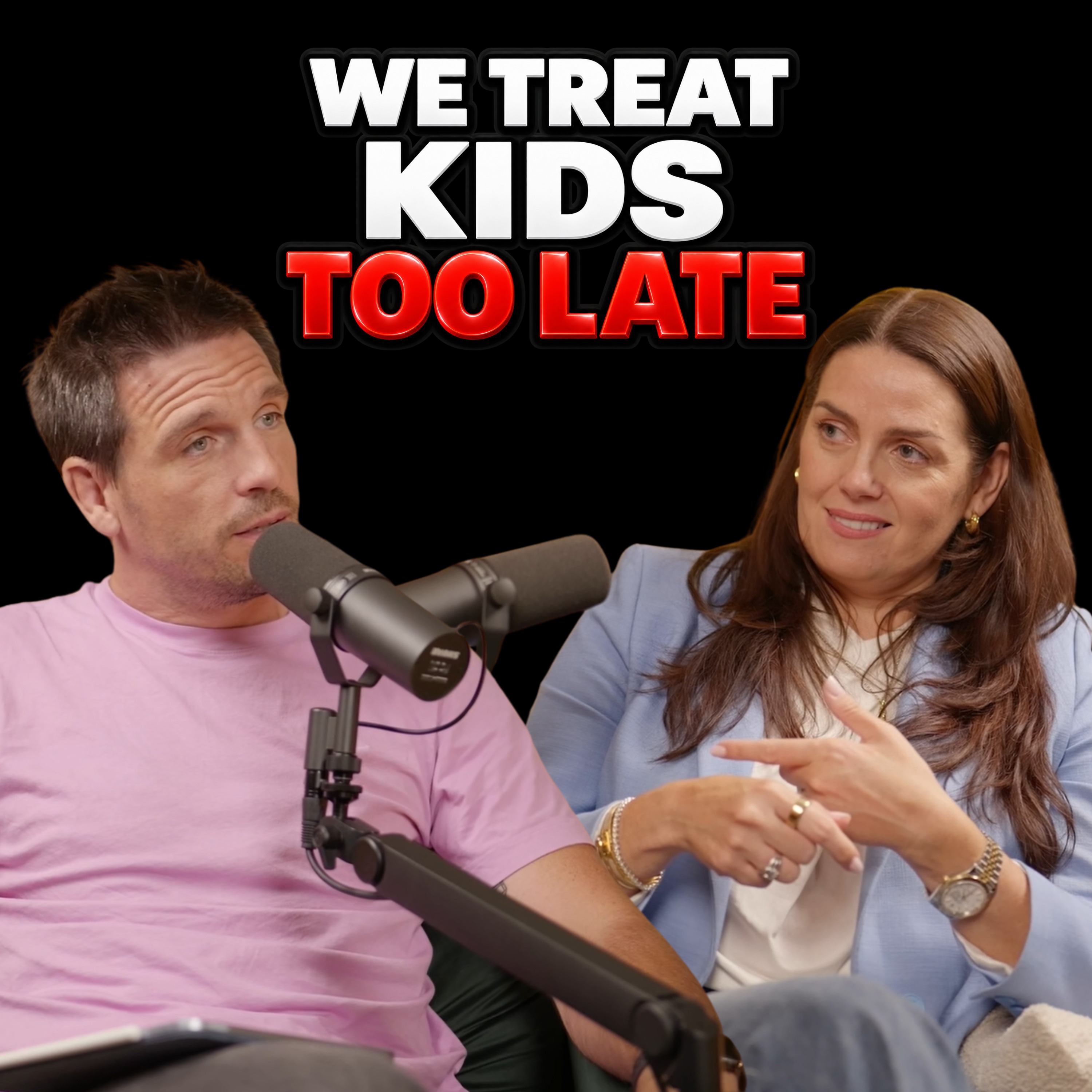
“The patients reported higher feelings of well-being after speaking to the AI.”
Meet Sara Siegel, a leader in healthcare consulting at Deloitte.
“And thank you, as always, to POCDOC for supporting the show.”
Explore Sara's journey and her insights into the consulting world.
“Can I make one quick clarification for your audience?”
Sara discusses her shift into healthcare and her impressions of the NHS.
“So what was your kind of transition like into...”
Learn about the challenges of modernizing healthcare systems.
“I was completely enamored, and I still am, of the NHS.”
Sara emphasizes the importance of identifying viable solutions in healthcare.
“Did you know about it before you started the project?”
Explore the role of transparency and data in healthcare improvement.
“And how does that, because I mean, look, our show, this show, The Health Tech Hour, is all about positivity in the future.”
Discuss the complexities of implementing a single patient record in healthcare.
“But that project conceptually strikes me as speaking directly to the value add of a delight or, you know, there are other consulting companies available, obviously.”
Understand the advantages of a single patient record for research and patient care.
“And so do we throw the baby out with the bathwater?”
Learn about the impact of AI and technology on clinician-patient interactions.
“I'm willing to bet that the clinical pathways that we follow, even depending on the surgeon that we get assigned to, are going to be slightly different.”
Discussion on the importance of technology solutions for healthcare challenges.
“thing's been adopted wholesale basically.”
Exploring a successful pilot program using AI avatars for patient follow-ups.
“Let's go back a bit to the international question, because I know that's something that we talked about before.”
Examining the complexities of regulating AI as a medical device.
“And that is something that you think should be scaled to other systems?”
Discussion on how healthcare can better collaborate with technology companies.
“Well, nobody else wants to do that, really, because that will slow them down massively.”
Discussion on innovative health care models involving tech collaboration.
“sovereignty and ownership and open APIs.”
Insights on the changing landscape of patient interaction with healthcare services.
“three years as far as your role concerned and global health and things like that?”
How Deloitte aids small health tech startups and fosters innovation.
“So, I mean, I personally have a real soft spot for small health tech startups.”
Sara shares her personal motto for navigating tough situations.

Get the gist, explore an idea or ask about something said.
 Claude
On HealthTech Hour, what are the key points of this episode?
Searching your listeningAutomatic transcript. May contain errors.
0:00Sara Siegel: The patients reported higher feelings of well-being after speaking to the AI. It's delivering better clinical outcomes, right? Readmissions are down, misscreening appointments are down. It's solving all the clinical problems it was there to do, and it's providing this added benefit, which we hadn't anticipated. The prize is going to be in making our clinical processes, you know, slicker, higher quality, more efficient triage treatment. People, they always ask, what's the best health system?
0:24Steve Roest: Yeah.
0:24Sara Siegel: Health systems that seem to have key elements figured out. I was completely enamored, and I still am, of the NHS.
0:31Steve Roest: I think the next two or three years are going to be the most exciting time we have seen in healthcare in the last 20 years that I've been in the sector.
0:40Sara Siegel: We've never had at our fingertips access the sorts of powerful tools that we have now.
0:47Steve Roest: Hello and welcome to this week's Health Tech Hour with me, Steve Roost. Each week we bring you the best news, views and interviews with the leaders, CEOs, clinicians, founders, investors, journalists, the list goes on, people that are changing the face of healthcare in the UK and beyond. As regular listeners and viewers will know, I am a founder and CEO of a health tech venture myself, the venture being called PocDoc. PocDoc's flagship product, the Healthy Heart Check, has now been done by someone in every single UK postcode area within two and a half years of launch. And the POCDOC Healthy Heart Check is the number one tool the NHS uses outside of a GP surgery to screen for cardiovascular risk.
1:30Steve Roest: We're super proud about the progress with POCDOC. If you'd like to know more, go to POCDOC.co. That's P-O-C-D-O-C.co. And thank you, as always, to POCDOC for supporting the show. Thank you also to all of you who are listening live on UK Health Radio. We love, love, love being on UK Health Radio. Thank you to Johan and all of his crew for making that possible. um uk health radio has a ton of other presenters doing all kinds of different content so i'd recommend that you you listen and you check them all out and we're really super grateful to johan for having us on on the live platform thank you if you're listening on any of the podcast channels also if you're watching us on our youtube channel health tech hour on our instagram channel health tech hour or on my own instagram which is steve roost um we love having you here we have downloads now from people in over 50 countries and we just crossed the 1 million views mark for the last 30 days so thank you so much for um for delivering that we we love the fact that you're part of the community we really appreciate your your time and your attention so thank you so much right on to today's show we haven't ever had anyone from this sector on the show so i love having doing firsts we have um sarah siegel who is the global health care sector leader at deloitte 20, 25 year veteran within healthcare and healthcare change and really big system, big system change.
2:56Steve Roest: One of the things that we're going to get into that Sarah mentioned before the show was that she was instrumental in helping the UK government change the way that the NHS pays for drugs, prescription drugs is part of a major project that she did. And that was one of the first things that she did in healthcare, which is super interesting. So I'm really interested to get into this. We always love having new and exciting and different perspectives on the program. As a founder in this space, we know already that Deloitte and others, but to be fair, Deloitte probably is the leader in the UK about trying to bridge the gap between traditional consulting and helping innovation thrive, particularly within a healthcare space.
3:32Steve Roest: So it's great to talk to you, Sarah. Welcome to the show. How are you?
3:35Sara Siegel: Thank you, Steve. It's great to be here. Great. Can I make one quick clarification for your audience? Please. Yes. Despite the global title and American accent, I am resident and citizen of the UK.
3:45Steve Roest: Oh, congrats. You made the right decision. Well, I mean, you know, it depends on how long have you been? Have you always been a citizen or did that happen at some point?
3:52Sara Siegel: I moved here after business school in 2003. And then when I was pregnant with my first son, I thought, oh, we better we better be legal. So yeah.
4:03Steve Roest: OK, cool. And you've been working in health care for a while.
4:07Sara Siegel: Pretty much since I moved to the UK. When I was still in the US, I did a few healthcare projects, some consumer health, some biopharma. But working with the NHS was my real introduction to healthcare when I got here.
4:19Steve Roest: Okay. And going back before that, how would you explain the world of consulting to people? We're a broad church, see? So people probably heard the name, maybe seen it sponsor some stuff. But what is it? And why do companies use them?
4:34Sara Siegel: Okay. Maybe I'll start by telling you what I thought it was and how I started.
4:39Steve Roest: That's good.
4:39Sara Siegel: So I went to university like many people do. And coming to my senior year or my final year in American University, I didn't know what I wanted to do. So my hypothesis was I'll join one of these consultancies and that will help me work for lots of different companies. In so doing, I'll find the company that I like and I'll go work there. That was what was in my head. So that didn't happen. I'm still in consulting. But consulting or professional services, as it's more widely known, is another really broad church. This is services provided to all sorts of companies and governments on a range of topics.
5:14Sara Siegel: So for Deloitte, which is very, very large, it is tax, it is audit, it is support with M &A, and it is a lot of consultative services, which could be help with an organization's strategy. It could be help approving efficiency or operations. There is a lot of work to implement and optimize technology.
5:32Steve Roest: And why do you think that organizations tend to work with consultants like this, as opposed to self-solving?
5:42Sara Siegel: There's a lot of reasons why organizations do. I think there are different reasons why they should. So firstly, why they should is if they are seeking to do something which is either beyond a skill set that they have or beyond the sort of capacity that they have. So, for example, to bring it to healthcare, hospitals implement electronic medical records. You know, the two biggest globally are Epic and Oracle. Most hospitals do not have a ready band of teams inside their hospital who are intimate with these software packages and can train up their managers and clinicians. That's a short-term need while they're implementing a tool that they should bring in from the outside and not pay for on an ongoing basis.
6:23Sara Siegel: I mean, that's a very good use case for...
6:27Steve Roest: Right. So they need something to be installed. They don't necessarily have the capacity to install it. They don't want to keep people on. Okay, that makes sense. Okay. So what was your kind of transition like into... When you said what did you think it was was different to what it is? What was that kind of transition like?
6:44Sara Siegel: I guess I had a really good first couple of years of my career in that I got to do a very large set of different projects. So I worked for a big automotive manufacturer. I worked for a big U.S. telecom. I worked for a university. I worked for a Canadian bank. And I did, as I hypothesized, get to see the inside of a lot of different organizations. but what was happening was I was realizing that I loved what I was doing which was always getting to answer a new question always getting to work with a different team always getting to see the inside of another new organization and I think this didn't dawn on me consciously until many years later but what had dawned on me subconsciously was I actually enjoyed that more than going and
7:28Steve Roest: being in one place right okay and then your story as to how you kind of transitioned across into health we were talking about before the show is kind of interesting.
7:38Sara Siegel: Okay.
7:39Steve Roest: Oh, and by the way, I just want to thank you for the banana muffins. You're the first guest to have bought us actually some food to the show. So just future guests that was greatly appreciated was not was noted.
7:51Sara Siegel: I'm hoping for a very kind edit.
7:52Steve Roest: Yeah, there's no edit that we love. We loved it. Anyway. We don't edit.
7:57Sara Siegel: Oh, I did get some time at the weekend to bake, which I find very cathartic. But to your question, so I was working on a project for a French building materials company in a basement in a town called Valley Forge, Pennsylvania. And I was negotiating prices to ship sheet glass across the country.
8:19Steve Roest: All right.
8:19Sara Siegel: And I was working 14 hour days. And let's just say I wasn't having a great time. And I just thought, what is this all about? Yeah. Is this really how I want to be spending my time? And then fortuitously, the next project that I was put on, as you mentioned in your intro, was to support UKGov in negotiating what was then called PPRS, which is the prescription pricing regime for all branded drugs in the UK, which was amazing because what the
8:44Steve Roest: UK government does is it asks all of the major biopharmas to come together behind their industry body, the ABPI, to negotiate what at the time was a five-year deal, and it's a profit maximization scheme instead of a pricing scheme.
8:57Sara Siegel: What's the difference? Well, the UK government doesn't set a price for a branded drug, a Lipitor or whatever, but it sets a profit cap. And so the companies have to figure out their mix of their different products and SKUs to try to stay within that cap. And if they go over it, then there's a clawback mechanism.
9:13Steve Roest: Wait, hold on. So just, we're quite a technical geeky show sometimes. So we're quite happy to dig into details. So basically what you're saying is that, and sorry, and was this the case before you involved in the project or was this the project kind of thing?
9:27Sara Siegel: This was not anything to do with my doing. I was there to assess, to assist. As I said before, you know, this is where, you know, extra person power is needed when there's a big negotiation like this. The government sets up this scheme. They brought us in to help with analytics.
9:41Steve Roest: Okay. Because I was going to, that was going to be my question is like, to be able to execute on that, you've got to have really good data, right? Because does all the drug companies have to declare their profit, presumably?
9:52Sara Siegel: Yeah.
9:53Steve Roest: So is it all secret because no one really wants their profit data? Or maybe it's public because they're public companies. I don't know. Like, how does it go?
10:01Sara Siegel: All of this was negotiated before I arrived. This was the renewal of a scheme which already existed. And the term that I worked on it, new elements were added. For example, in the money saved for the UK citizen patient, an ultra-orphan drug scheme was implemented. A pediatric drug scheme was implemented to create funding for research for these categories.
10:22Steve Roest: Right.
10:23Sara Siegel: So summing it all up, it was a complicated project. It felt hugely valuable to be doing that work. It was intellectually interesting. We were saving money for the taxpayer. We were improving healthcare for millions of people.
10:36Steve Roest: You probably didn't have too much interaction with the NHS at that point.
10:39Sara Siegel: No.
10:40Steve Roest: So what were your first impressions?
10:42Sara Siegel: I was completely enamored, and I still am, of the NHS. Obviously, it has problems, and we all work to solve those problems. But compared to the system in the US, I just thought it was incredible. So every citizen or resident or, you know, frankly, even, you know, people who just happen to be here can walk into an A &E and get treated for whatever ails them free at the point of need. In the U.S., health care is either the second or the third cause of personal bankruptcy.
11:09Steve Roest: Wow.
11:10Sara Siegel: Health care costs are incredibly sky high. And even though there are big government programs like Medicare for the old and Medicaid for those who don't make enough money to have insurance, there are huge holes. And there are people who aren't eligible for insurance, who may be working very hard, maybe working several jobs. And it's a very complicated system in the U.S. And it's something which creates a lot of stress amongst the population. It also creates a lot of poor health outcomes. So when I got here and saw the NHS, I thought it was amazing. And I did see that it could be better. And I thought that was a worthy cause to work for.
11:42Steve Roest: Did you know about it before you started the project? Or were you kind of like learning and you were like, wait, what? That's how it works? Like, wait, what? What was your kind of ramp up on that?
11:55Sara Siegel: It was a steep learning curve. I guess my first 6, 9, 12, even 18 months here, I was learning so much. Healthcare is a hugely complicated world, full of acronyms. And layering on top of that I'd come from a different country so I had to learn the system of government here as well um yeah there was a lot of learning I bet and so then your journey in health kind of began
12:17Steve Roest: right and you've never really moved away from it I've never looked back because I realized that I
12:22Sara Siegel: could marry sort of my love of solving business problems with sort of having a something which was purposeful and felt like worth working hard for and health care is complicated enough I mean you'll know this from your own venture, that we never get bored, do we?
12:37Steve Roest: No, there's always another, I mean, there's always patients to look after. There's always clinicians. There's always problems to solve for sure. Um, you know, and as, as populations grow and health priorities shift and things like that, then yeah, it's always busy. I think it's a fair, fair way to explain it. And so what throughout that period of the things that you sort of, the big trends that you've ended up focusing on and thinking about in this space?
13:02Sara Siegel: There are so many trends to think about.
13:04Steve Roest: I suppose the thing that I've always been very interested in is how can we modernize health care so that we can improve quality, improve access, reduce variability, the sort of big things that we always want to focus on.
13:18Sara Siegel: And especially, I mean, as citizens, we just noticed this, right? In all walks of our life, in our grocery shopping, in our banking, in our media consumption, things now feel very slick and modern and digitized. But when we have an interaction with healthcare, it feels like it's from 10 years ago sometimes. And things aren't as digital. We find our information isn't all there. We find we're still on paper or scanned paper. We find ourselves waiting in queues where we think that this could be avoided. I always look at process like this could be avoided. So I've always just thought we can do better.
13:54Sara Siegel: And I understand why healthcare has been slower to modernize in this country and in others than other sectors of society. But I also see, especially now with all of the new technology we have at our fingertips, a very exciting future.
14:08Steve Roest: And how does that, because I mean, look, our show, this show, The Health Tech Hour, is all about positivity in the future. And, you know, how do we get to the future faster and, you know, while still maintaining patient safety and things like that. but what do you think are some of the big there's a lot of the and we see this at pocdoc where everyone knows about the concerns around cardiovascular disease type 2 diabetes chronic kidney disease a lot of these things are known and actually one of the areas where we've had a huge amount of success is by calling out the fact that these things are known and then highlighting what we think are the obstacles to solving them as opposed to continuously trying to make people aware that the problem is the problem i feel like everyone knows what the problems are and the issues is around how can you create some positive realism about the actual problem that needs to be solved.
14:54Sara Siegel: Or just put some solutions in front of people and say, what about this? Do you want to have a go at this? Because I totally agree. We talk about the problem all the time. And yes, it is important to understand. It's important to have a baseline. But it's important to, and that sounds like Ted Lasso, but to believe, right? To have something that you're focusing on in terms of where you're trying to get to and to have a picture of the future. and um i don't know there's so many examples that i could give but i've seen change happen really rapidly uh in health care in the nhs and not always just with tech but just sometimes with um showing people data and just with transparency so an old school example years and years ago
15:36Steve Roest: um we were looking at gp prescribing and trying to get rates of generic prescribing up
15:43Sara Siegel: and there was a big discussion about how to do this.
15:46Steve Roest: And just for the broad church of our listeners, that's good because generics are cheaper than branded. Exactly. So it lowers the overall cost of the drugs to their healthcare system.
15:53Sara Siegel: But chemically equivalent, so they should have the same clinical outcome. Much discussion about what to do. In the end, we had done a bunch of analysis, which basically just showed the rates of generic prescribing across a series of categories of drugs, GP practice by GP practice. And then the client looked at it and sort of said, could we just anonymize this and put a dot showing each GP where they sat on this chart? And we were like, yeah. Did that. And the bell curve flattened. It didn't say change anything. We just said, here's where you are. And it was just that transparency, just giving people information and knowledge changed behavior.
16:31Sara Siegel: There is that famous example about putting prices on things in an inventory stock room would change behavior about how many things you would request done a surgery i didn't know that whatever there's all kinds of information like that and i just think that's that's one tool like nudge theory kind of yeah exactly and i think it's hard because the nhs is so big and so sprawling you know targets are always used and i understand why but i also think that there's lots of choices that people would make on their own if they had more information
16:58Steve Roest: we had penny dash on who i know that you know i'm chair of nhs england a few shows ago and um she was amazing really authentic it's always a bit of a gamble when you get senior folk on about whether or not they can be authentic but penny absolutely smashed it so i know one of the you and her have similar feelings about some of this why can't we just do uh why can't we just do this kind of thing one of the things that that penny and i spoke about quite some length was this um electronic health record single patient record long mooted long discussed it seems like a lot of people are in violent agreement about it.
17:37Steve Roest: And yet, you know, here we are. But that project conceptually strikes me as speaking directly to the value add of a delight or, you know, there are other consulting companies available, obviously. But that strikes me as a kind of a really meaty issue. So what's your sort of take on this whole thing? You know, help us understand where you think this is. Sure.
18:02Sara Siegel: A single patient record is a brilliant idea. I don't think anyone's going to argue with that. The issue that people are sort of grappling with is the how question. If you ask even healthcare leaders outside the UK about this, they would assume that there already is a joined up longitudinal healthcare record for all 60 million citizens and that it's being used for research, for day-to-day care management, for population health. But that, as we know, is not the case. And it's very complicated to do, both from a technology perspective, from a sovereignty perspective, and also because since the National Program for IT years and years ago, the pendulum has swung the other way.
18:43Sara Siegel: And there's been a great deal of freedom given to individual organizations to make their own choices for technology. And what has resulted is a lot of different things springing up around the country. So for a national single patient record to take hold, you also need, I would say, to take account of what's been happening locally and regionally.
19:01Steve Roest: Because a lot of the regions have gone ahead and developed it. Greater Manchester is one.
19:05Sara Siegel: I would call out London and Greater Manchester. They both have very different but very developed, we can call them single patient records.
19:12Steve Roest: Yeah. Shout out Greater Manchester and London.
19:14Sara Siegel: Shout out.
19:14Steve Roest: Shout out.
19:16Sara Siegel: Yes, exactly. And so do we throw the baby out with the bathwater? There's been great work done there. Or do we try to plumb it all together? but we have to help some of the areas of the country that haven't done all that work. They shouldn't be left behind. Which tech vendors do we choose? It's not a simple question.
19:29Steve Roest: Well, and it raises, so I have a huge amount of love for the teams in Greater Manchester and London. So PocDoc just launched with some work in Greater Manchester with the British Heart Foundation and the Health Innovation Network up there. So, you know, in London, we're doing quite a bit as well. So I've got a lot of love for those regions. The thing that strikes me around some of this single patient record thing is, was buried in the sort of list of reasons why you would do it, which I think is something that isn't necessarily aware is that part of the benefit of having a single patient record is around the research benefits.
20:01Steve Roest: And those research benefits can accrue to the system and to the government, but they can also accrue to pharmaceutical organizations, right? You know, and so it's the single patient record is as much a state asset as it could be a revenue generating asset for the state, hypothetically in a safe way?
20:20Sara Siegel: Yes.
20:21Steve Roest: Or is that a conspiracy theory? I don't know. I think that's a great thing, by the way, because I think that you can't...
20:26Sara Siegel: Great thing. You know how difficult it is for pharma companies to find eligible patients?
20:30Steve Roest: It's really hard. Yeah.
20:31Sara Siegel: If you are a patient sick with a disease and approved treatments weren't working for you, I don't know about you, but I would want to be found for a relevant clinical trial.
20:40Steve Roest: Yep.
20:40Sara Siegel: That's the sort of thing that we could do a lot better on.
20:43Steve Roest: Yeah.
20:43Sara Siegel: Because we have the data. It's sitting right there.
20:45Steve Roest: Yeah. Yeah. No, I agree. So, you know, back in February, my wife was diagnosed with cancer and she with breast cancer. Yeah. And she luckily she she has an oncology background. But even for her to try and do the research to find out where the trials were was actually very difficult. So, yeah, I think there's a win, win, win.
21:02Sara Siegel: I mean, the cost per patient for a clinical trial is sky high. And it's now that we've got AI at the front end of R &D for pharma. This is the real bottleneck.
21:11Steve Roest: Yeah, it could be really powerful. And I think those regions are now at the forefront. but then it kind of it creates does it create conflict with the national i don't really understand how that sort of all fits together these are all choices that need to be made you need a consulting company to come in and help you bring this all stuff together i think i do think
21:29Sara Siegel: that looking at spans of control and health care is super interesting because one of the questions i get asked a lot and penny actually spoke about this her interview was brilliant i was a bit
21:37Steve Roest: intimidated coming on no you're doing great she didn't bring muffins though penny so if you're listening. You didn't bring any muffins next time, Penny.
21:44Sara Siegel: One of the things I find super interesting because I do, I'm very lucky. I do get to travel a lot. I do get to see a lot of different health systems. And when people, they always ask, what's the best health system? And that's not really a question that you can answer. But I will say that in my travels, health systems that seem to have key elements figured out very well do tend to be smaller.
22:03Steve Roest: Yes.
22:03Sara Siegel: If you go to Israel, Hong Kong, Estonia, Singapore. You know, you're looking at a million, two million, three million, your sub 10 million population, right? And these are guys that have been able to digitize in a cohesive way. They do have what we would probably call a single patient record. It is easier for, to our last question, pharma companies to get access to patients. They are able to do more holistic screening and population health in a consistent way. So it does beg the question, When you have a population this big, 60 million people, what is the right span of control?
22:38Steve Roest: What is it about a bigger population that makes it harder? Because I agree with you, right? I completely agree with that kind of assessment, which is, again, you've got more experience about traveling internationally and looking into these things, obviously, than I do. Ask this penny, clearly. but you know the the smaller populations seem to have better sort of digital first single patient record type setups but is it just is it kind of exponentially harder the larger the population is or is it sort of a straight line or what what is it that drives that complexity other than just like
23:15Sara Siegel: more people i'm not sure what the slope of the curve is no yeah you haven't we haven't plotted
23:20Steve Roest: it.
23:21Sara Siegel: I haven't plotted that. But I do think there is something about how when it's in any organization, right, you always need to break up into smaller groups. And the NHS is always grappling with this. We're always reorganizing, right? SDPs, ICBs, 28 SHAs, seven regions, trying to figure out what the right spans of control are. It's a really difficult line to draw.
23:41Steve Roest: Framing it like that basically makes you think that maybe this restructuring is just about trying to continuously land on the right span of control. I've not thought about that before.
23:49Sara Siegel: But I think it's a Venn diagram, right? Like there's overlapping issues that we're trying to solve for. Spans of control and having good grip and control is one of them. The right footprint to implement technology on is another one. Clinical governance is another one. And I would say, and there's probably two or three more I haven't mentioned, that all of those different factors don't have to have the same spans of control, which makes the problem more complex.
24:10Steve Roest: Yes. Yeah, exactly. They may not be the same at all. Yeah, that's interesting.
24:15Sara Siegel: Like I don't see, and I'm not a clinician, but I don't see why our national clinical directors shouldn't set clinical pathway policy, getting it right first time, all these programs nationally for the whole country. I don't see a need for clinical variation.
24:27Steve Roest: Wait, do they not? They do. No, it's not a trick. Do they, there's variation, is there?
24:33Sara Siegel: Of course. If you and I both have to have a knee replacement and you go to Newcastle and, you know, I go to Milton Keynes.
24:41Steve Roest: Okay. Both great places.
24:42Sara Siegel: Both great places. Not picking out these hospitals at all. I'm willing to bet that the clinical pathways that we follow, even depending on the surgeon that we get assigned to, are going to be slightly different.
24:52Steve Roest: Interesting.
24:53Sara Siegel: And then the next question that arises from that is to what level of granularity should those things be nailed down? These are all great open questions that clinicians, you know, not me should answer, but to that spans of control point.
25:04Steve Roest: Yeah. Interesting. Because I know that NICE publishes clinical pathways on its website, right? So there are, and to be fair, surgery is not an area that I spend a lot of time looking at. So take that as a moot point or as a caveat. But are you saying that NICE sort of publishes these kind of meta pathways, but then they're interpreted potentially differently in different ways locally? Is that sort of...
25:31Sara Siegel: Not meaning to get into like the depths of the pathways. No, no, I'm just curious. Just wondering about sort of spans of control and how things should be done to the best possible effect, because variation is an issue. And if you talk to clinical staff, especially nurses and people who work shifts and work at different places, they will say things are done differently in different places and it's confusing. And that creates clinical risk.
25:52Steve Roest: That does.
25:53Sara Siegel: I think that is, you know, the point to be made there. The second point to be made there is back to technology. Now that we have all these new tools at our disposal, how could we think about clinical processes in a way where we can simplify them both for the clinician and the patient, reduce variability, increase speed and improve quality?
26:13Steve Roest: So what's stopping that happening? Because like in theory, those are good things that everyone probably is in violent agreement about needing to do.
26:19Sara Siegel: So I think it is starting to happen. So back to the sort of believe and be positive point. I think it is starting to happen. And this is another discussion that I think needs to happen locally at the coalface with clinicians, but also sponsored nationally. And one of the things that I get to spend time on is spending time with the big tech vendors as well as spending time with NHS leaders. And to the extent that I can, you know, trying to bridge gaps where they exist. And what I would say is there's a ton of technology now that can aid clinicians, which can help with the challenges I've just laid out.
26:53Sara Siegel: And the first thing which has happened, which I think we've all seen, which has been really positive, is a wide skepticism on AI shifting to be more positive with ambient voice technology.
27:03Steve Roest: Yeah, AVT, you guys are crushing it.
27:05Sara Siegel: I don't know who the you guys are, but clinicians love it. It's saving pajama time. They're actually having eye contact with their patients. and patients feel are having a better quality experience it's win-win-win yeah and i think
27:17Steve Roest: what's interesting about that so there's like i mean the main players i'm going to forget some but you've got tortoise also an nia company like poc doc shout out dom you got heidi then you got tandem um then there's another one which i can't remember that's the blue blue bird blackbird baby bird something like that anyway um and the the thing i love about that story is that that was I think it's a really good example around tech adoption because it was frontline staff that adopted it organically and GP surgeries and other providers were paying out of pocket to do it. I think it's a really great example of how you can get this spread and then you look and then the national system and the regulatory system is sort of playing catch up to the fact that this thing's been adopted wholesale basically.
28:03Sara Siegel: Yeah but back to our like very early point in the interview i think when something's put in front of individuals and they see a solution and it's good yeah they'll go for it so that's that's the job and that's just one example and i think it's probably part of my job is to put more of these examples in front of nhs leaders and
28:21Steve Roest: they'll know what to do and do you think that there's in every type of for every problem right of which of which of every problem where a technology solution could be a solution do you believe that there is a solution that can scale organically like avt to the problem of like oh my god it's really pain in the ass to actually have to write notes and creates risk and there's duplication and so on so do you think there is something out there for every issue i mean i know it's a big question that's a big question i have no idea something for every issue but i do think
28:49Sara Siegel: if you sat down with um with an nhs manager or a clinician and said like what's really bugging you give me your top three you could probably put options in front of that person and they could say, wow, yes, this is something that could help me in my job. This could help. And also for patients. Something that's boggled my mind for years is why do we go to A &E and wait in line? Why don't we know A, where to go and how long the wait's going to be? So if my son has a fever and I live in central London, it would be great to know within 10 minutes, tube or bus of my house, where should I go and how long the wait is and what are the appropriate outlets like again all data that exists that we don't readily put in the hands of patients I know this is being worked on
29:36Steve Roest: and I think it's very exciting oh is it is this this online hospital stuff what is it is that
29:39Sara Siegel: different uh NHS online I believe is going to start with a couple of clinical pathways okay but I do believe that again big cities like London and Manchester are working on some of these
29:48Steve Roest: customizations for their local population oh what so that you can see kind of which which A &E is busy and where to go.
29:54Sara Siegel: I mean, that's an example. I think navigation services are something that would help patients. So I just wanted to raise the point that in addition to helping clinicians who, you know, we do need to make their jobs more enjoyable, do you need to keep them in the NHS? I think it's also important that we start empowering patients as well.
30:09Steve Roest: Makes sense. Let's go back a bit to the international question, because I know that's something that we talked about before. And it was definitely something that Penny was quite interested in off the back of, I think, me asking, so this is one of the things that I've, having done the show now for 155 episodes or whatever this is um and and you know been around in the industry for a while my background also not in health is what one of the things i've noticed that i try and sort of fight against is this um nhs is broken type of yeah trope and it's like well actually what that implies a judgment and a judgment implies a comparison so who are we comparing ourselves to what is this comparative set um and i think it's a really interesting question because there I don't believe there are many people that really would swap if you look any kind of country with a similar population level that you would swap their healthcare system for the NHS that readily but I don't know what you're I totally agree and I don't think that's
31:04Sara Siegel: a helpful comparison either because every country is structured so differently it's not that's not useful what's useful is what are good things happening in other places that are applicable to the NHS and, you know, should we be looking at them? So for example, in Canada, which is a system not entirely like the NHS, but with many, many similarities, we've got some really cool pilots running where we have an AI avatar doing outbound calling to elderly patients post-discharge after a surgical episode. And I was very dubious about this pilot because I thought older people wouldn't want to talk to a computer.
31:41Steve Roest: Do they know it's a computer?
31:42Sara Siegel: Yes. And it's purposely made to look not real.
31:46Steve Roest: Okay.
31:46Sara Siegel: So it's not like a Simpsons cartoon, but it doesn't look like you or me. Okay. So it's very obvious.
31:51Steve Roest: It's not a human.
31:52Sara Siegel: Not a human. But she has a face which has expressions and it does mirror your expressions. So she shows emotion and empathy. Anyway, I was dubious. I thought that would be too sci-fi, but it's gone super well. And the issue it was solving was there weren't always humans doing the outbound calling post-discharge.
32:13Steve Roest: Yeah, there's a resource issue.
32:15Sara Siegel: There were readmits that could have been prevented, infections that could have been prevented, you can imagine. Now we have 100 % coverage of the outbound calling. We're covering all the clinical issues. We're rooting into other questions that patients had. The time they're spending on the phone is something like two or three X as long as they were spending with the humans.
32:35Steve Roest: Oh, right. Is that because the basic is that is the hypothesis behind that basically that the AI doesn't get bored?
32:40Sara Siegel: And it has all day, right?
32:42Steve Roest: It doesn't have Christmas. Yeah.
32:43Sara Siegel: No. And the most astounding thing is that we did a survey afterwards because it was a pilot and we wanted to measure, you know, all elements. The patients reported higher feelings of well-being after speaking to the AI. I found it really surprising. And I think it is about the amount of time that they spent on the phone. The topics covered were broader than just the clinical checklist that maybe the human had covered before. And the AI will stay on and listen to the individual talk about their garden or their cat. And I think similar to the UK, we have a lot of people living alone. And that feeling of connection, even though it's not with an actual human, which is why I feel a little morally confused about that, it did make them feel better, which I guess is the point.
33:26Steve Roest: But it's what's interesting is like, I mean, AI is throwing up all kinds of quasi-philosophical and existential questions, but it's sort of, is it the fact that it works enough, if that makes sense, as in it delivers a higher, it doesn't matter how, right? It's actually working and delivering a higher level of well-being. So that means it's a good solution.
33:47Sara Siegel: But even without that, it's delivering better clinical outcomes, right? Readmissions are down, misscreening appointments are down, it's solving all the clinical problems it was there to do. And it's providing this added benefit, which we hadn't anticipated.
34:00Steve Roest: And that is something that you think should be scaled to other systems?
34:04Sara Siegel: I think that is just one of probably 100 potential use cases that we should be considering. Now, obviously, this is a clinical use case. And I think this is going to be one of the sticky issues that tech issues, governments, health systems -
34:19Steve Roest: Is it a regulate? Is it a med device?
34:21Sara Siegel: To grapple with. So different countries have different rules on this. They tend to be sort of aligned. You'll know that in this country, we've just done something for AVT, giving a bit more space. So I think this is a very fluid and evolving sort of area of regulation. But invariably, AI is going to come into the realm of software as a medical device. It's already here. Yes, it is. Even though it's super helpful for admin and back office, you know the real prize is going to be in making our clinical processes you know slicker higher
34:52Steve Roest: quality more efficient triage treatment etc the thing that makes me nervous about that is the regular so we're what's known as an in vitro diagnostic device so we've been through all the regulations you've done it yeah we've done all of this the uk eu we're about to submit to the fda by the way the fda is the absolute standout notified body in the world so congrats to the fda They're absolutely incredible.
35:16Sara Siegel: And shout out to Lawrence Talon and the MHRA for hiring half the FDA. Is that what they did?
35:21Steve Roest: Is that what they did? Because they'd left. Interesting. Great job, MHRA. But my concern is that they've got a mountain to climb, a real mountain to climb to try and keep up with or even get close to being able to regulate aspects of this. in a logical, sensible way that on the one hand, because regulation fundamentally should be about providing a level of clinical safety to the patient and clinicians using it. Being able to actually do that in a way that is sensible, logical, I think is just really hard in this space, particularly when it's non-deterministic. So using generative AI or agentic AI, less so, because that's a bit more about process type stuff.
36:10Steve Roest: But it's hard. It's really hard.
36:13Sara Siegel: I mean, this is a massive simplification, but I was lucky enough to get to serve on the MHRA's commission on AI, which is just wrapped up.
36:21Steve Roest: Oh, cool.
36:21Sara Siegel: And they had a whole subgroup for vendors, for technology vendors, and they really were great at sort of soliciting opinions.
36:28Steve Roest: Yeah, I remember that, actually.
36:29Sara Siegel: You know, how can we get you guys to keep innovating without slowing down too much, but also keep everything safe? is the massively simplified exam question. And again, I think the hypothesis was using pharma as an example. You know, they have a yellow card system for once a product's already on the market where you can flag issues. And so the discussion really turns to for software as a medical device, can we create stage gates where we feel that products or organizations have a level of safety and then let them put products on the market but retain a lot of oversight? and continuous reporting and some kind of yellow card-esque system to report things back so that we can keep progressing and not wait for some final approval and then you're free to run.
37:18Sara Siegel: It's just not going to be like that because AI is just going to evolve constantly. So all of that to say, it is massively complicated, but I think they are doing the right things by -
37:28Steve Roest: They're trying at least. Yeah, a listening advice. I mean, the concern that I have is if you go down the medical device route and if it's a medical device that's that's a couple of years in regulatory right by which point what's happened to the world so you sort of end up with what i'd wanted so abt is a really good example where there's one provider and i won't i won't name them because i don't want to do anything about the market but there's one provider that's very specifically taken a route to try and um force everyone to be a medical device so they've gone down the route of kind of creating right That's their angle to try and win, which is to try and force everyone else's solution to be a medical device because they were the first medical device in AVT.
38:11Steve Roest: Well, nobody else wants to do that, really, because that will slow them down massively. So there's this tension where if they can convince, and again, I'm not an AVT expert, so I don't know what's going on, but if they can convince the NHS institutions to implement some kind of governance that says any AVT solution has to be a medical device, then they're going to win by default.
38:30Sara Siegel: Then they get a moat.
38:30Steve Roest: Then they get a moat. but nobody else wants to do that and these other solutions are going absolutely gangbusters so i
38:37Sara Siegel: think it's it's it's tricky right it's a huge issue and i mean a lot of those that's a funny market because some of those companies are like microsoft and dragon and they're really big companies and some of them like heidi and tortoise they actually are kind of getting bigger but they are smaller they're startups so you have this really interesting dichotomy in that market i think software as a medical device is also really interesting with big big tech because a lot of the frontier labs are getting very close to the edge of what would be software as a medical
39:01Steve Roest: device oh if they're not already across it i'd be shocked but is it them or is it the people
39:07Sara Siegel: within healthcare providers who are using tools to create assets for themselves at what level
39:13Steve Roest: does that need to be technically if you really want to geek out on the actual regulation of it as software as a medical device has to be deterministic right now in in everyone's rulebook even the fda's rulebook and so i i don't know how you you move away from being able to be deterministic but by definition the software the ai models aren't deterministic they're kind of like almost there like you probably get roughly the same response but you can't guarantee it you know so it's very i don't know it's very grave it's gonna be super exciting but i would just look i'm a big believer in regulation and and introducing that safety but allowing people to grow.
39:52Steve Roest: But that's just such a narrow needle to thread with this. Yeah, I agree.
39:56Sara Siegel: I think it's an important time to be a health regulator. And I wish them all the best.
40:01Steve Roest: I really do.
40:02Sara Siegel: I think the other thing I would say just on this topic is I do get to spend a lot of time with the big tech players. I was out in Silicon Valley two weeks ago, spent time with Anthropic, with Google, with Salesforce, heard from a lot of the bankers that support these companies in the public markets, talking about the underlying fundamentals of these companies. And we obviously work with them in the UK and in lots of other countries as well. And what I would say is there's huge, huge interest to work in healthcare, to customize, to invest disproportionately, I would say. And having said that, I would say to NHS leaders, we can ask big tech for things.
40:40Sara Siegel: We can be bold and say, we need ABCDE from you, and this is what we want to do together. And I think coming at it in more of a partnership approach and less of a vendor supplier kind of mindset would be a
40:53Steve Roest: great place to be it would be good sometimes that's a hard political one isn't it though sure because they get i feel bad sometimes because i think a conversation is always better if you can have a conversation it's always better and you're going to have a discussion but the nhs has gotten slapped so many times for seeming to cozy up or whatever phrase you want with technology and so on and so forth. I think it's hard for them to, I just think they're conflicted. I'm sure they'd love to get around the table and have that chat and to try and work on the art of the possible. But then are they going to feature in some kind of expose?
41:28Steve Roest: You know, it's hard.
41:29Sara Siegel: That is what needs to be managed.
41:32Steve Roest: But is that where like companies like Deloitte come in? Because you can bridge it, right?
41:35Sara Siegel: That's where we can help. Because I guess without putting too fine a point on it, to paraphrase, you know, what some colleagues from the NHS would say, they feel a bit like Maybe their data is being held captive by some big tech vendors right now. They feel locked into contracts. These are the sorts of things that we, collective we, need to help solve for. And I don't think they're insurmountable. And I think that would help with that problem because if you felt like you had agency, you had switchability, you had multiple vendors in some kind of consortium, so you were keeping competitive tension, you had placed all your asks on them in terms of data sovereignty and ownership and open APIs.
42:14Sara Siegel: and whatever else you want, then that conversation is different because you're getting what you need from your supplier.
42:21Steve Roest: And is there any kind of like comparator for that type of relationship in any other country with big tech? I'm just curious. Does that like, that sounds great. But I don't know if that's based on anything like that you've seen elsewhere, maybe.
42:36Sara Siegel: Sure. So I think there's lots and lots of different models. Things that are springing up now because the landscape is so complex and you need multiple parties to get something big and complicated done is lots of joint ventures, special purpose vehicles, even charities that will involve a selection of health care providers, a partner like ourselves, one or two of the big tech vendors working together to get something done. So an example of that is we have something in the U.S. called KIA, which is the Cancer AI Alliance, which is four major cancer centers, Google, NVIDIA, ourselves, and it's a charity.
43:13Sara Siegel: The idea is federated learning. All the data stays sovereign inside the cancer organizations, but they can each learn from each other, both in terms of diagnostic and treatment pathways for the major cancer tumor types. so that's sort of a model which is in a traditional sort of contracting you know supplier model yeah where we're working to solve a big problem you know what like in theory the government isn't
43:36Steve Roest: necessarily because the government it's the nhs institutions that do the procurement so i just wonder whether there's a role for certain government departments to be able to try and broker some of these discussions and things like that i don't know there's a lot to think about it's a lot in there yeah there really is so what are you looking forward to in the next two or three years as far as your role concerned and global health and things like that? What are you excited about?
43:59Sara Siegel: I think the next two or three years are going to be the most exciting time we have seen in healthcare in the last 20 years that I've been in the sector. We've never had at our fingertips access the sorts of powerful tools that we have now. And we just need a little bit of help fixing our tech debt, data curation to take advantage of this. And of course, good regulation, which we already spoke about. I would say that in three years from now, let's say 2030-ish, as patients, we will be interacting with the NHS in a totally different way to what we see today.
44:34Steve Roest: Really? Give us some examples.
44:37Sara Siegel: I think using the NHS app or similar, we'll be able to modify our appointments, easily check our results, not have the TPP app and the Epic MyChart app and five other things in my little health folder on my phone, I think I will probably be able to have a shared care record with my elderly parents who don't live in this country, but if they did, check in on them, create a constellation of carers around them where we're all checking in on them. I think we will be able to compare. This is a big one. This might not be true, but I would love, let me rephrase. I would love to be able to compare volumes and clinical outcomes of surgeons on major pathways.
45:16Sara Siegel: Ooh, league table type stuff. Yeah.
45:18Steve Roest: Wow. that data exists it exists that data i'm big on transparency of data yeah that would be yeah i know that's been talked about for a while that would be cool i think and i mean look they've done the nhs should take a lot of credit for the nhs app they built a really good platform to build on so i agree with that and um how yeah i know deloitte also plays quite a lot of a big role in around the innovation ecosystem particularly in the uk so how does that kind of how do you help innovative businesses sort of access and grow and things like that?
45:51Sara Siegel: Yeah, sure. So, I mean, I personally have a real soft spot for small health tech startups. You know, PocDoc and others are solving great problems. It doesn't take a huge tech behemoth to get to the heart of an issue. The tricky thing is Deloitte's a big organization. You know, really, you should use Deloitte when you have a big multivariant complex problem. So one of the things that we're able to do is work in partnership with big tech vendors to help small startups. So again, in a joint or co-funding model, we can help startups with all kinds of things, different technical issues, scaling, operational problems, go lives, et cetera.
46:28Sara Siegel: And those are projects that I know the startups love help with because they're -
46:32Steve Roest: Startups need a lot of help.
46:33Sara Siegel: They are just very busy. Everyone's making the coffee, doing the exec presentations, everything. And our teams love it too, because we love working with startups. And I think startups have a huge role to play
46:44Steve Roest: in the innovation agenda yeah and what but it's it's not that common you know so that's what i love about delight and we've been involved with some delight things and maybe involved in some delight things in the future potentially who knows um and the but but i think it's really noted that you try so there's a delight for example cardiovascular disease um what that has a really cool title which i can't remember what it is but it's basically um it will come to me in a second there's basically a working group to try and prevent cardiovascular disease um and they bring together all kinds of really important, exciting people.
47:15Steve Roest: And it's just a, you guys really try.
47:17Sara Siegel: That's what I mean.
47:18Steve Roest: You actually try.
47:19Sara Siegel: And our healthcare team works in the healthcare team for a reason. As we talked about earlier, everyone is there because of purpose. We also have an absolute huge number of clinicians of all sorts. And we have a really strong clinical network, both here in the UK and globally. And, and yeah, I mean, if you ask anyone on our team, they will have a story as to why they chose to work in this sector. And I think that's the best way to do your job because every day you're coming to work doing something that you want to do and it means something to you
47:45Steve Roest: good well look on that note we've come to the last bit of the show so i ask everyone that comes on the show throughout all the difficult times the tough bits what's your kind of self-talk or your motto that you go to um that you want to share with the listeners because it might help them get through what they're dealing with like a pay it forward kind of concept but with words wow deep okay
48:08Sara Siegel: Okay, something I've learned over the years, because the more you live, the more you work, the more you go through hard things and good things happen too. Whenever I'm in a really tough situation, I think of the other tough situations that I have weathered, both professionally and personally. And I just tell myself, you did that, you can do this.
48:29Steve Roest: Great. I agree with that one. Bit like this too shall pass, or you've done this before.
48:33Sara Siegel: Yeah, you're tough enough.
48:34Steve Roest: You're tough enough. Right. Sarah, thank you so much for coming on the show. Thank you, Steve. Thank you for coming on and thanks to everyone for listening. We'll be back again next week.
AI in healthcare, the future of the NHS, digital health and the single patient record - Sarah Siegel, Global Healthcare Sector Leader at Deloitte, on the AI that left patients feeling better than a human call, and what the NHS can learn from the rest of the world.
What if an AI could make patients feel better than a phone call from a person? In a Canadian pilot, elderly patients recovering from surgery stayed on the phone with an AI avatar two to three times longer than with human callers, and reported higher wellbeing afterwards. Steve Roest sits down with Sarah Siegel, who swapped 14-hour days shipping sheet glass in Pennsylvania for a career in healthcare, to unpack why it worked, why she still feels “a little morally confused” about it, and why she believes the next few years will be the most exciting in healthcare for two decades.
In this episode:
0:00 The AI that made patients feel better 0:47 Intro 2:32 Meet Sara Siegel, Deloitte's global healthcare leader 4:20 What consultants actually do, and when to hire one 7:31 From sheet glass in Pennsylvania to UK drug pricing 10:36 Why she fell for the NHS 12:54 Why healthcare still feels ten years behind 16:58 The single patient record: brilliant idea, hard "how" 21:44 Why smaller health systems get digital right 26:53 Ambient voice tech: the AI clinicians love 31:17 The AI avatar calling patients after surgery 34:04 Can regulation keep up with AI? 40:02 Big tech, partnerships and data held captive 43:52 The next three years: "the most exciting time" 45:39 How Deloitte helps health tech startups 47:46 "You did that. You can do this."
🎧 Follow HealthTech Hour so you never miss an episode. New conversations bi-weekly with the founders, clinicians, journalists and leaders shaping the future of healthcare. Also live on UK Health Radio.