Ask ChatGPT


 Here's the Scoop
11 Nov 2026 · 30m · 13 chapters
Veterans Day coverage plus three major investigations: a measles surge and vaccination drop; a U.S. probe into NVIDIA CEO Jensen Huang’s alleged affair with a woman believed by intelligence agencies to be a Chinese spy; and how sports support wounded warriors’ recovery.
Erica Edwards, NBC News health/medical reporter. Kelly Elmlinger, Army veteran medic (Iraq/Afghanistan; later amputee after rare soft-tissue cancer) and Paralympic triathlete and Wounded Warrior Project ambassador. Jared Perlow, NBC News AI reporter.
Measles cases exceed 5,100 this year; 35-year high; 8 deaths. Three-quarters of U.S. counties are below 95% vaccination threshold; outbreaks in rural areas and close-knit religious communities; Lancaster County, PA down to 87.6%. Pennsylvania reports 97 pregnant measles cases; an Amish midwife (anti-vax) says she can’t legally vaccinate but is urging isolation/education. NVIDIA: FBI/DOJ National Security Division investigating Huang and Alice Huang (Megaspeed) amid chip-smuggling concerns; chips not sold in mainland China but may be routed via Southeast Asia. Commerce Department Megaspeed probe paused after NVIDIA general counsel outreach. Independent board investigation led by former prosecutor Jun H. Kim.
Written by AI. May contain mistakes.
Discussion on how the current generation is changing perceptions about amputees.
“I'll just say this about our generation, and I think we're pushing the boundaries in a good way of making people realize that your life isn't over once you're an amputee.”
Discussing Kelly Elmlinger's experience as an amputee and her service.
“And we're starting to piece together the timeline of what the U.S.”
Detailing the alarming rise of measles cases in the U.S. and investigation into vaccination rates.
“It's a really alarming time for public health in general, especially when it comes to something that we actually had under control for a very long time.”
Exploring NBC's investigation into declining vaccination rates and its implications.
“I mean, just in Pennsylvania, for example.”
Analyzing how rural religious communities are affected by vaccine hesitancy.
“Well, first it has to be said that measles doesn't know a particular religion, right?”
Discussion of the role of misinformation in vaccine acceptance, particularly in Amish communities.
“You know, they might not have Facebook or Instagram, but there's still certainly a lot of word of mouth, a lot of misinformation spreading.”
What losing measles elimination status means for public health in America.
“I think it's difficult to watch a mother grieve a baby that she lost, most likely due to measles.”
Overview of the investigation into Jensen Wang's affair and its implications.
“Upfront payment of$45 for three months,$90 for six months, or$180 for a 12-month plan required.”
Discussing the implications of NVIDIA chips potentially being smuggled into China.
“This is coming after the president told reporters earlier in the week that the FBI is also investigating his affair.”
Learn about the investigations surrounding NVIDIA's CEO and chip smuggling concerns.
“Were NVIDIA's chips being sold in China at this point?”
Explore the challenges veterans face and the role of sports in recovery through Kelly Elmlinger's story.
“Or how the only copy of a Wu-Tang Clan album got auctioned for millions of dollars by the Department of Justice?”
Explore how adaptive sports serve as a crucial rehabilitation tool for veterans.
“That's where I could go to the chaos went away.”
Discuss the care veterans receive regarding prosthetics and the stereotypes they face.
“What I mean by that is you were an athlete before.”

Get the gist, explore an idea or ask about something said.
 Claude
On Here's the Scoop, what are the key points of this episode?
Searching your listeningAutomatic transcript. May contain errors.
0:00I'll just say this about our generation, and I think we're pushing the boundaries in a good way of making people realize that your life isn't over once you're an amputee. Hi, everybody, and welcome to Here's the Scoop from NBC News. I'm Yasmin Bastugian. So today on the show, it's Veterans Day. We actually spoke to Kelly Elmlinger. She is an Army veteran who worked with amputees during her service. Kelly actually lost her own leg after her service was completed. And we talk about how she recovered from an experience like that and what we all need to remember on this Veterans Day. We are also continuing to follow the affairs saga of Jensen Wang, the CEO of NVIDIA.
0:48And we're starting to piece together the timeline of what the U.S. government knew when. And if these investigations, both led by the U.S. government along with NVIDIA, are actually going to be fair, considering the amount of influence, power and money, really, that Jensen Wang has.
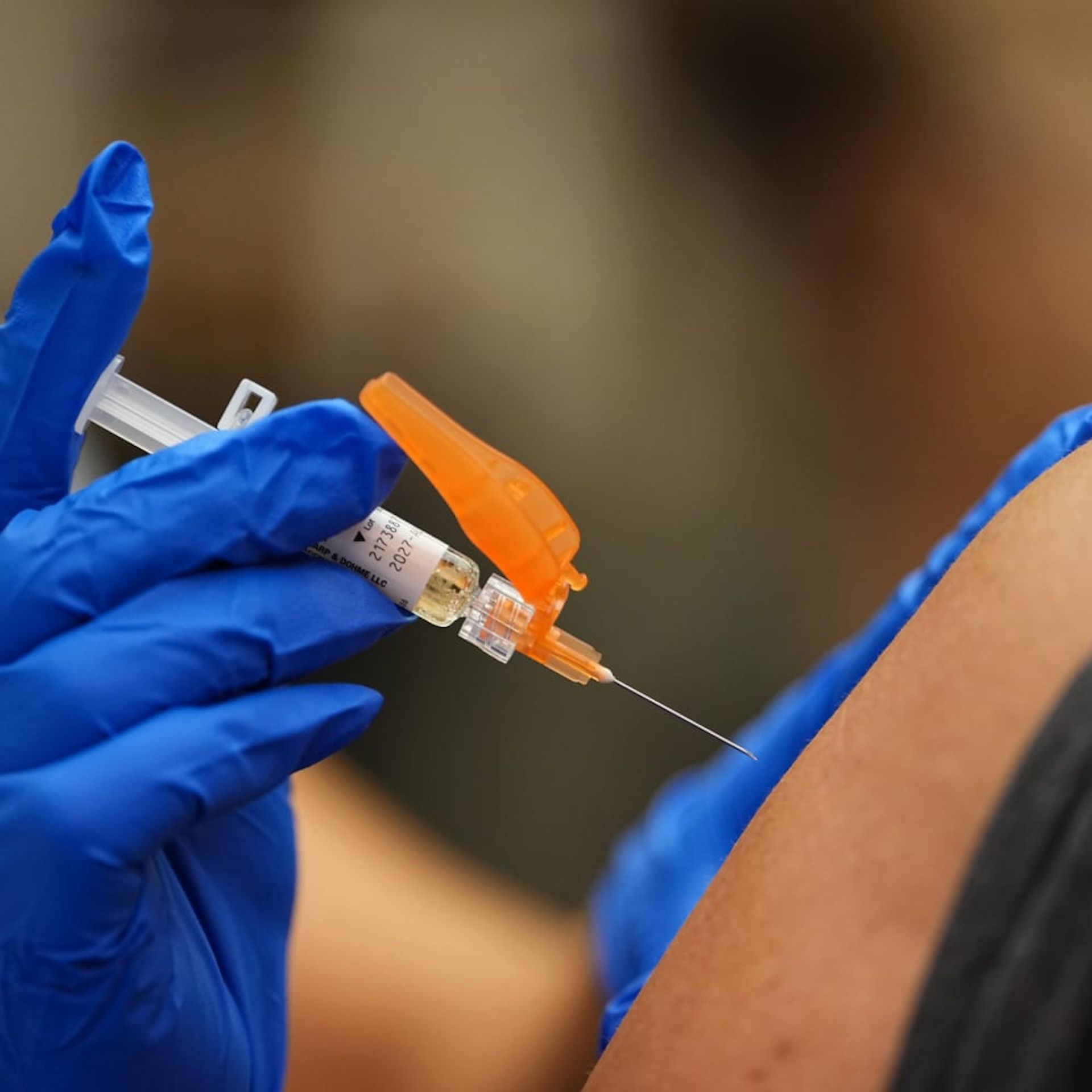
1:09Up first, though. So, measles is surging across the United States with cases hitting a 35-year high. Over 5 ,100 cases have been reported just this year, according to the CDC. Eight people have died also this year, three within the past week per state health department data. These outbreaks, they've gotten so severe that the Pan American Health Organization could remove the U.S.'s measles elimination status this week, meaning that the United States has lost control of the spread of this disease. So NBC News has launched its own investigation into these measles outbreaks and the alarming drop in childhood vaccination rates.
1:48Here with this new data, we have NBC News Health and medical reporter Erica Edwards. Hi, Erica. Hi, good to be here. Great to have you. It's a really alarming time for public health in general, especially when it comes to something that we actually had under control for a very long time. So I talked about this NBC investigation that was launched called the Vaccine Divide, in which the health unit here at NBC News kind of looked into the potential of America actually losing this measles-free status after two-plus decades, 26 years to be exact. Tell us about what you found in this investigation.
2:23Yeah. So first of all, experts say it takes a community to have 95 % vaccination rate protection to help stop outbreaks. Okay. That's what we had overall for so long. There's always been little pockets of under-vaccinated communities. But overall, we had a really good high level of immunization. What we found now is that three-quarters of U.S. counties who track this data are now below that threshold. Three-quarters of U.S. counties. Three-quarters of U.S. counties across the country. Correct. And we built this map. It's interactive. You can go to your own county to see where the vaccination rate is.
2:59I was shocked at my own county is now below that threshold. And I think a lot of people will feel the same way when they go to their own backyard to see how low rates have gotten. Where are we seeing some of the biggest outbreaks? We are seeing the biggest outbreaks in these smaller, more rural areas. A lot of outbreaks in really close-knit religious communities. Now, they historically tend to have lower vaccination rates. But when you all of a sudden get a lot of people no longer vaccinating. The anti-vax trend. They historically had lower vaccination rates is what you're saying. For the most part.
3:33And I don't mean to generalize, but yeah, a lot of sort of distrust in government, things like that. But now when you see these rates going down across the board, they lose protection too. They've been shielded for a long time by the rest of us, you know, getting vaccinated and sort of stopping these outbreaks when, you know, a case would come in from someone traveling overseas. We were able to stop those outbreaks. Now they've gotten out of control. I mean, just in Pennsylvania, for example. Before the pandemic, more than 95%, that magic number. Now, Lancaster County in particular, now down to 87.6%.
4:08That virus is just going wild. And what exactly is driving this surge? Is it the fact that less and less people are being vaccinated that are outside of these kind of small religious insular communities? There's no question. Okay. Measles is the most contagious virus on the planet that we know of. The vaccine is one of the most effective vaccines, 97 % effective, usually for life. So when you start getting these more and more people who are unprotected, it just takes one case to get into a community before it starts. I mean, the measles virus can hang in the air for two hours after an infected person has walked through.
4:45Oh, yeah. So tell me about Lancaster, PA, because you spent some time there. And you mentioned again, right, this is very prevalent, especially in these like small rural religious communities. there was an Amish community in which you spent some time in. What did you find happening there when it came to the measles outbreak? Yeah. Well, first it has to be said that measles doesn't know a particular religion, right? If you're unvaccinated, you're at risk. So I talked to some older Amish adults whose kids are grown. They said, boy, back in my day, we vaccinated our kids. It was just the thing to do.
5:14This is a community that really prides itself. It values on taking care of one another. So, you know, 30, 40 years ago, there was a lot more acceptance of vaccines just like what we're seeing across the board, though. You know, in the 90s and the early 2000s, especially with the advent of social media, it just made misinformation spread even more. And so we're seeing that across the board, but especially so in these communities. And when you had parents, you know, 20, 30 years ago who didn't vaccinate their kids, guess what? Those kids also didn't get vaccinated. They didn't get vaccinated. And they're not vaccinating their own children now.
5:49Correct, but also they're now old enough to have kids of their own. And these are pregnant women who now have measles. We've never seen that before in the U.S. As of today, the Department of Health in Pennsylvania has 97 pregnant women who've had measles during this outbreak. I talked with a midwife there who said she has seen dozens herself. How dangerous is that? It's very dangerous. What is the journey that that community in particular took that now the younger generations are not vaccinating? You know, they might not have Facebook or Instagram, but there's still certainly a lot of word of mouth, a lot of misinformation spreading.
6:24It has to be said that in 2021, our health secretary, Robert F. Kennedy Jr., was in Lancaster County, Pennsylvania, made an hour-long plus speech that I watched the other day talking about the dangers of vaccines. The majority of people in attendance were Amish. I want to talk about this midwife that you spoke to, right? Because you spoke to this woman who is a midwife. And for those that don't know, midwives essentially are people that help you birth your child. At home. At home. So you spoke to a midwife in this community who was anti-vax for a long time, right? Has how many children? She has one child.
6:59She had a child 40 years ago. At the time, she was searching for answers to learn more about vaccines. She said that she didn't really get satisfactory answers from her own doctor. She made the decision not to vaccinate her child. She's a big Kennedy supporter. Being in this outbreak, however, she has seen the devastating effects it's having on the women she serves. It's easy to read a statistic. I think it's difficult to watch a mother grieve a baby that she lost, most likely due to measles. So she believes people should now be vaccinated for measles. Absolutely. And she's really vocal about trying to get the State Department of Health, anybody to give her that authority to administer these vaccines.
7:42It's against the law in the state of Pennsylvania. It's against the law in most states for traditional midwives to give vaccines. But she's trying to get the state to engage with her. This community is not a community that subscribes readily to mainstream medicine. 90 % of Amish folks have home births, so they go to their midwives, whom they trust. We have long conversations at the kitchen table about health. They know that we're all very holistically minded by virtue of what we do in life, right? So we are their trusted practitioners. She's now doing her best to educate, to, you know, encourage isolation when families are sick.
8:24The one thing she cannot do is give the shot. So I mentioned earlier that the Pan American Health Organization is actually meeting this week. If the United States loses its measles elimination status, what does that mean? Like, what happens? Yeah. So it's not like our lives are magically going to change if and when that happens, right? What it means is that we have had a massive public health setback in this country. You mentioned earlier, we've had this under control for 26 years. Now it is clearly out of control. It's going to take a massive effort to stop this runaway train and turn things around.
9:00The CDC hosted some public health groups at their Atlanta headquarters a couple of weeks ago to try to figure out how to get out of this mess. There was agreement, including with CDC Director Erica Schwartz, that vaccines will need to be part of a strong, unified, national approach. But there's a lot of skepticism, right, of whether she actually has that power, that voice to lead that effort. Well, part of the surge that we are seeing is directly connected to the Make America Healthy Again movement. It's directly connected to RFK Jr. and his policies as the Health and Human Services Secretary.
9:36So where is he standing on the potential for the United States in losing this status? He was notably absent from that meeting I just mentioned. He has said on occasion that the measles vaccine is the best way to prevent measles spread. But that's really it. Erica Edwards, thank you. All right, we're going to take a very quick break. But when we are back, the investigation is growing into the NVIDIA CEO's affair with an alleged Chinese spy. The focus of the DOJ's probe is coming up next. And also, while you wait, leave us some feedback in the comments or reviews, and maybe we'll read it on the show.
10:13I'll see you on the other side.
10:33Whatever's in the public domain. Give it a try at mintmobile.com slash switch. Upfront payment of$45 for three months,$90 for six months, or$180 for a 12-month plan required. $15 per month equivalent. Taxes and fees extra. New customer offer for initial plan term only. Greater than 50 gigabytes may slow when network is busy. See terms. Over the years, I've met people whose lives were changed forever in a single moment. In my new podcast, Before and After, I explore what happens after that decisive moment. Personal, powerful conversations with Colin Kaepernick, Jeremy Renner, Gabby Giffords, and others.
11:08Join me wherever you get your podcasts. Listen to all episodes of Before and After with Lester Holt now, wherever you get your podcasts.
11:23And we're back with Here's the Scoop from NBC News. So the pressure on AI giant NVIDIA, it keeps growing after the revelation that CEO Jensen Wong had an affair with a woman U.S. intelligence agencies believe is a Chinese spy. So on Tuesday, NVIDIA announced that its board has hired a former top federal prosecutor to oversee an independent investigation into Wong's relationship. This is coming after the president told reporters earlier in the week that the FBI is also investigating his affair. And we'll look into it. I know the FBI is looking into it in terms of something else. And I think that he'll be in good shape.
12:02So what could these investigations mean for the future of NVIDIA and Jensen Wang's role in the company? For this, I want to bring in NBC News AI reporter Jared Perlow. Hello. Great to see you. Good to see you, as always. Okay, so let's talk about this investigation that the president said the FBI is now carrying out when it comes to Jensen Wong and this affair that he had with this alleged Chinese spy. It's led by the Justice Department's National Security Division. What do we know about the scope of this thing? The investigations seem like they've been percolating for several months at least.
12:37But all the news is just breaking now, and we're trying to figure out exactly who's involved, at what stage, who knew what, when, where, why, and how. Yeah, and that's why you're here. Right, essentially. So what we know is that a source familiar with the matter told NBC News that the FBI is investigating Jensen Huang, who's CEO of NVIDIA, his relationship with Alice Huang, who is a former director of the Singaporean company called Megaspeed. Megaspeed essentially is a data center company that operates in Singapore. So it's not a Chinese company, but Alice Huang seems to have previously worked for a Chinese company that then launched this spinoff in Singapore.
13:17And so people are wondering essentially whether Megaspeed acts as a sort of shell company, a front company, or a forwarding company to receive NVIDIA's chips and then send them along to China. Now, why is the FBI involved in the relationship between Alice and Jensen? Well, they're exploring, it seems like, whether that relationship might have caused Jensen or NVIDIA to steer chips to mega speed or whether there was information passed between Jensen and Alice Huang that the Chinese government might have been interested in. On purpose or not on purpose even. Right. Potentially. Exactly. And of course, I just want to reiterate that Jensen said recently, he told President Trump earlier this week, that he had no idea that Alice Huang was a spy or alleged to be a spy working with China's spy services.
14:06Were NVIDIA's chips being sold in China at this point? Because they had been barred from being sold in China, at least the fastest ones, right? Right. Yeah. So NVIDIA's chips are not allowed to be sold in mainland China. But what is legal, continues to be legal, is for companies in Southeast Asian countries like Singapore, like Malaysia, like Indonesia, for NVIDIA to sell chips to companies there. But when I talk with my sources, there are big concerns about chip smuggling. So those companies in Singapore, Indonesia, and Malaysia will receive those chips. But what happens once they're there? Do they actually stay in those data centers or do they then get forwarded to mainland China?
14:41So the question is, like, was Megaspeed taking in potentially these NVIDIA chips, these fast NVIDIA chips, and then shuttling them into China, right? Exactly. And there was an investigation that was launched by the Commerce Department here in the United States looking into just that. Exactly. Right? But then NVIDIA finds out that this investigation is happening or they're looking into Megaspeed, and they reach out to the Commerce Department. And the Commerce Department then says, wait a minute, we're going to put this investigation on hold, and then it's referred to the DOJ. Do we know what that reach out was about, what was said between NVIDIA and the Commerce Department, like and why they then referred it to the DOJ?
15:18Yeah. So this, again, I just want to set the stage here, is a separate group of investigations, right? Because this is not the— Before the—before kind of the revelation of this affair. Right. So this is not related to spying or the role of the relationship between Alice Huang and Jensen Huang in particular. Instead, there were these investigations from the Commerce Department and the Justice Department starting at least in 2024, if not earlier, into Megaspeed. And so what my reporting has shown is that, as you mentioned, the Commerce Department was essentially working alongside the Justice Department because the Justice Department takes the lead.
15:54They take the point in these criminal investigations. But then we have reporting that shows that NVIDIA's general counsel, representative from NVIDIA, reached out to the investigators, the federal law enforcement investigators from the Commerce Department, and said, essentially, I heard you're looking into Megaspeed. What's going on there? That spooked the investigators from the Commerce Department because they're just working on this mega speed investigation. So why all of a sudden is NVIDIA's general counsel reaching out to us? We don't like how that looks. So we're going to escalate the matter and ask our boss exactly what's happening there.
16:28And then the director of this unit, it's the Bureau of Industry and Security within the Commerce Department, drops the investigation because the Justice Department had heard that there is this outreach from NVIDIA. And they said, that seems a little unusual. That seems a little untoward. And so we want the Commerce Department to stop its investigation, to pause its investigation. The Justice Department is going to take it from here on out. By the way, I do want to know a spokesperson for the Commerce Department's Bureau of Industry and Security, BIS, said BIS enforces aggressively across the board, including with respect to chip smuggling, and enforcement is at an all-time high.
17:06If we talk about the internal investigation, Jensen Wong is the co-founder CEO of NVIDIA, right? He has two kids that are working for the company. He is the reason that NVIDIA is NVIDIA. There's this internal investigation now launched being led by the former acting U.S. attorney of the Southern District of New York, Jun H. Kim. But if you consider the role that Jensen Huang has at this company, how can we trust they would then come out and say, well, there was some wrongdoing here and we're removing this guy from the top of the company even though he has made trillions and trillions of dollars?
17:40Right. I mean, Jensen Huang, founder, CEO of NVIDIA, he started the company back in 1993. Many Wall Street analysts say you can't separate the two. Jensen Huang is NVIDIA. So could you have an NVIDIA without Jensen at the helm? It's possible, but there's no clear succession plan. In terms of our ability to rely on the independent investigation, many of my sources see this appointment of Jun Kim as this very good sign because he's part of this very high-powered Wall Street law firm. He has been involved in very high-profile investigations before. Or it's not someone that you would hire if you wanted investigation in name only.
18:16Because I think the NVIDIA board and NVIDIA shareholders realize NVIDIA, it's not some backwater company. It's by some counts either the world's most valuable or second most valuable company. And so they want to make sure that whatever investigation happens is trustworthy. And then you have this New York Times reporting about the timeline of who knew what went within the U.S. government. Right. So Secretary of State Marco Rubio got a heads up, according to the New York Times, that they were investigating the potential of this woman, Alice Wong, who is the head of Megaspeed, the Singaporean company, as an alleged Chinese spy having an affair with the top dog at NVIDIA, right?
19:00Donald Trump is on a plane on Air Force One in May, headed to China. Marco Rubio pulls the president aside and says, hey, here's what's happening. What more do we know about that? We know that Jensen then got on the plane at a pit stop in Alaska. So, again, this is all breaking news over the past couple of days. I think the White House is trying to figure out exactly how to message this. President Trump was confronted with this fact and kind of demurred. You know, the timeline doesn't really seem to add up here. We're adding our own reporting to it. But I think the critical question to be asking here is whether Trump was briefed on this and why he made the decision to allow Jensen to join that delegation to China to come back on the plane.
19:46And continue to be basically like the top dog AI whisperer for the president over the last six months since he may have received this knowledge. Right. We know, for example, that President Trump and Jensen talk often on the phone. Even just a couple days ago, they said, you know, they had a conversation. But at the same time, Jensen's also still carrying on his day-to-day duties as CEO of NVIDIA. You know, there's reporting saying that he showed up on Monday and took all of his normal meetings and addressed the matter and then said, well, let's get back down to business. Let's make the best chips that we can.
20:18Awkward. I'm going to let you get back to the phones with your sources, Jared Polo. I'm hearing some buzzes coming through, yeah. Back to the switchboard. Thank you, Jared. Thank you so much. All right, coming up, we're going to hear from a former Army medic about her work helping other wounded warriors transition back to civilian life. What's next?
20:42This holiday, all plans, even unlimited, are just$15 a month. A holiday deal this good obviously deserves an enormously expensive holiday song, like all I want. Right. Okay, we can afford that. You know what? Forget the music budget. We're going to stick with whatever's in the public domain. Give it a try at mintmobile.com slash switch. Upfront payment of$45 for three months,$90 for six months, or$180 for a 12-month plan required. $15 per month equivalent. Taxes and fees extra. New customer offer for initial plan term only. Greater than 50 gigabytes may slow when network is busy. See terms. Want to know how Russian pranksters tricked a top government official?
21:16Or how the only copy of a Wu-Tang Clan album got auctioned for millions of dollars by the Department of Justice? The answers are out there. The trick is getting the government to share them. I'm investigative journalist Jason Leopold. I spend most of my days getting documents from the government. I'm attorney Matt Topic, and I fight them in court to open their files when they don't want to. From Bloomberg and No Smiling, this is Disclosure, a podcast about prying loose government secrets. To listen early and ad-free on Apple Podcasts, subscribe now at Bloomberg.com backslash podcast offer. Hi, I'm Kate Snow, NBC News anchor and host of the NBC News podcast, The Drink.
21:53This month, I'm having a non-alcoholic Guinness with filmmaker, actor, and writer Ed Burns. You know him from movies like Saving Private Ryan and 27 Dresses, but you will not believe what it took to get his first movie made, including tracking down legendary actor-director Robert Redford. Ed and I talk about how he built his career on his own terms and the staying power of independent filmmaking. And of course, I had to ask, what's the secret to his decades-long marriage to supermodel Christy Turlington? We talk about all of it. I hope you'll join us for the drink, listen, and follow wherever you get your podcasts.
22:33And we're back with Here's the Scoop from NBC News. So today is Veterans Day. It's a day to celebrate and to honor those who have served in the military. It is also a time to kind of reflect on the challenges that a lot of veterans face when they return home and they are transitioning back to their civilian life, their normal lives. So Kelly Elmlinger is deeply familiar with these challenges. She was deployed as an Army medic to Iraq and Afghanistan three times during her 20 years of active duty, routinely flying into crash sites to help evacuate wounded soldiers. Back stateside, she continued to do that work, rehabilitating soldiers, recovering from these catastrophic injuries, amputations, and severe burns.
23:16But everything for Kelly changed in 2013. She was diagnosed with a rare cancer that affects soft tissue and ultimately led to her own leg being amputated. To talk more about how that experience shaped her work and how she is marking this Veterans Day as an ambassador with the Wounded Warrior Project. Kelly is joining me now. Hi. Hi. You were treating members of the military who were amputees, right, who lost limbs during battle, during war. and then you come home and that happens to you, but in a different way because you got cancer. What was it like for you, that experience, having seen them go through that and being there to help them and then you going through it yourself?
24:05It's very unique because I became a patient on my own floor. And I started off with this medic track and then I went into nursing because I wanted to take all that experience that I had as a medic on the battlefield, the understanding of what it was like to be in this type of environment being deployed, and give that experience back to the patients. Because I truly believe that they deserved grace, and how can I be the best teammate for them and help them get through what is most likely their worst moment in life? And to have that same and similar thing happen, likely the tumor that I had in my leg that ultimately led to a below-knee amputation is probably from toxic exposure.
24:58So I first noticed the symptoms after my initial deployment to Afghanistan. And I feel pretty fortunate because it did not metastasize. It did not spread. So you think it was likely because of what you were exposed to when you were deployed overseas? Yes. If you look at one of the main reasons for this tumor and its exposures to toxins, but regardless of the origin, when I was diagnosed, I immediately was just like, I know the road that I'm going down. I know that my life is forever changed. I know this is not going to be easy. I initially tried limb salvage, and then amputation was just best for me.
25:40That part, that was easy because I got to see what these other individuals were able to do on prosthetics, and I was not getting to that point, hanging on to a leg. But just because that choice was easy doesn't mean that the rest of it was not. It was incredibly hard. You know, in other folks that I've spoken to who have lost limbs and whether it be due to cancer or to, you know, war, there's a real sense of feeling alone in that battle. Did kind of like your work now with Wounded Warrior, working on the floor with all of these vets, like having been there in battle with them, did that take that feeling away?
26:24Yes. I think with so many people and narrowing it down to myself, like personally becoming an amputee, like what can I do to help educate others? Yeah. What can I do to help those of us who aren't amputees not feel so alone? I had a mental health provider tell me, you know, people will see you as you see yourself. I didn't really ever see myself as an amputee. I saw myself as like a community member. Like I'm still a mother. Like I'm still a runner. I'm still an athlete. I'm still all these other things. Sure, like you can see that like I'm missing a leg when I have shorts on. So it's clear I'm an amputee.
27:07But in some ways it's like I don't wrap my identity around having a missing leg. And many of us don't. Many of us just want to live our lives. Sports is a huge part of your life. Big. You are a Paralympic triathlete. You have multiple gold medals. How has sports played in your kind of rehabilitation and your recovery and continuing to kind of like live the life that you live now? So we have to go back to the beginning. I mean, sports for me as a kid, like that was a survival tool. I really struggled with having a sense of acceptance and just being able to be vulnerable as a kid. You know, I didn't really, I was a black sheep.
27:58I didn't fit in with the family. So, but sports, I fit in with sports. That's where I could go to the chaos went away. I could have control of that area. It was quiet time for me to sort through my thoughts. and the military helped because it gave me some of those things that I was searching for that I didn't have in childhood so I didn't miss sports as much but once I got injured and now I'm like they're just like oh no like you have this thing going on your leg we don't really know and I had a procedure done before that so now they're concerned they're just like go home and sit on the couch and I'm like I don't go home and sit on the couch that's about me so I was struggling big time because I was like, where do I put all these emotions?
28:39Yeah. Where do I, this is like - For mental recovery and like mental strength. I'm not doing well. Yeah. And I would like to heavily emphasize was not doing well. Yeah. And then when I did get healthy enough to be introduced to adaptive sports, immediately adaptive sports equaled safe. And then with the military, specifically the army, like there's a huge emphasis on sports being a rehabilitation tool. And I didn't know until you're there, right? You don't know until you're there. And then it's like, I'll say yes to this and I get the opportunity to do this. And the next thing you know, I'm doing a mini triathlon sponsored by Wounded Warrior Project.
29:16Oh, now Wounded Warrior Project does this. Oh, they have an emphasis on sports. And, you know, I just saw the emphasis on sports. Then I get into something like Wounded Warrior Project. I'm like, oh, they have all these other resources. But, you know, initially what caught me was their emphasis on sports. And I mean, that's ultimately what led to two times and now looking to go to be named to a third time of Team USA. I think. Oh, my gosh, that's incredible. I also think it's just like important to note that like it just shows that oftentimes with this kind of stuff, it comes from within. What I mean by that is you were an athlete before.
29:52You're an athlete in the middle. You're an athlete now. Yeah. Right. I want to ask you about the Department of Veteran Affairs because they care for tens of thousands of vets with limb loss. But there are some groups that feel as if they don't do a good enough job for those post-9-11 combat veterans who are generally more active and younger. Do veterans with amputations, do they get the care you feel like that they need right now? Are they getting the care that they need? So I'm going to speak on my experience. I feel like I've gotten the care that I need, specifically when it comes to prosthetics.
30:32But I've also been in a community where there are a lot of amputees. I retired out of San Antonio, and that's just a significant hub for a lot of adaptive sports. Got it. Resources for military, things like that. So I'll just say this about our generation. And I think we're pushing the boundaries in a good way of, you know, making people realize that, like, your life, you know, isn't over once you're an amputee. I think sometimes there's this stereotype where you're an amputee, so you're going to be in the wheelchair, you're going to be scooting around with one leg, and, you know, this disabled veteran look.
31:14And I think that's the other thing that I like is I have a lot of teammates who are not veterans, but it's so hard for them to get insurance to help out with prosthetics. So I don't know if it's necessarily just a VA issue. I think it's an issue nationwide to be like, we deserve to have more and we're going to push and we're going to show you. That's part of it is like what I do is like I want to show you that like, you know, these things are – it's benefiting me. If I didn't have those sports legs and be able to participate in sports and if you were to say, no, you can't have a bike leg. You can't have a run leg.
31:51I don't know if you would have a Kelly here today. That's the other thing. It's like how much, you know, how much money, you know, are we willing to be like, no, we're not going to spend that on a prosthetic. Well, that may cost you a life. Kelly Elminger, thank you for your service. Thank you. All right. That is going to do it for us at Here's the Scoop from NBC News. I'm Yasmin Vasugan. We'll be back tomorrow with whatever the day may bring. And if you like what you heard, subscribe wherever you get your podcasts. And you can also subscribe to our daily newsletter, The Inside Scoop. It's a deeper dive on the main stories of the day that comes out every weeknight straight to your inbox.
32:27You can sign up for The Inside Scoop as part of our paid subscription at NBCNews.com. We'll see you tomorrow.
32:46Monday on NBC. U.S. Marshall! All new Line of Fire, the thrilling new crime drama. The world sees us as heroes, but they don't know what the job really costs. One family of federal agents. It's one thing to put yourself in danger. It's different when it's your family. Balances duty to their country. An assassin is still out there. Stop! And each other. How do you protect the world and the people you love at the same time? Every case hits home on Line of Fire, Monday on NBC.
Over 5,100 cases of measles have been reported nationwide in the last year, according to the Centers for Disease Control and Prevention — and the U.S. could be poised to lose its measles elimination status with the Pan American Health Organization. NBC News health and medical reporter Erika Edwards details NBC News’ vaccination data investigation, how the disease is suddenly surging after 26 years of having it under control and why some anti-vaccine activists are rethinking their approach.
Plus, the FBI and Nvidia have announced they are conducting separate investigations into CEO Jensen Huang’s alleged affair with Alice Huang, a former director at Singaporean tech company Megaspeed, who is now accused of being a Chinese spy. NBC News AI reporter Jared Perlo explains how they are connected to a previous Commerce Department investigation into how Nvidia chips got into China and why there will likely be more investigations into Jensen Huang to come.
Finally, former Army medic and Paralympic triathlete Kelly Elmlinger’s journey as an amputee has led her to the Wounded Warrior Project, a veterans service organization where she is an ambassador. She joins “Here’s the Scoop” to discuss not letting the world — or herself — put her in a box and what we should take away this Veterans Day.
Hosted by Simplecast, an AdsWizz company. See pcm.adswizz.com for information about our collection and use of personal data for advertising.