Ask ChatGPT


 Here's the Scoop
5 Nov 2026 · 25m · 9 chapters

How Democrats’ midterm win could affect U.S. policy toward Iran, Middle East flashpoints, and Ukraine; whether Secretary of Defense Pete Hegseth may be fired amid investigations and impeachment talk; and an NBC producer’s story of early Alzheimer detection and treatment.
Richard Engel, NBC News chief foreign correspondent, interviews about Iran/Israel and Ukraine politics. Courtney Kuby, NBC News senior national security correspondent, discusses Hegseth replacement scenarios. Susan Kroll, NBC senior coordinating producer, shares her Alzheimer prevention clinic experience.
Iran officials say they don’t want war and cite terms for a deal; Engel notes Iran says the Strait of Hormuz could open in 48 hours. Netanyahu’s midterm-linked “toughness” campaign may affect coalition-building. Zelensky says he’s hopeful for more U.S. aid and was “betrayed” by a Trump-Putin “diesel deal.” Kuby cites reports Trump is considering replacing Hegseth, asking him to curtail travel, and impeachment articles being prepared. Kroll describes FDA-cleared Alzheimer blood testing (amyloid/tau “off the charts”), Weill Cornell prevention clinic, amyloid PET, and anti-amyloid infusions; her amyloid score reportedly fell from 86 to 4, with “situation resolved,” plus ongoing monitoring.
Written by AI. May contain mistakes.
How Democrats' midterms results may affect foreign relations, especially with Iran and Ukraine.
“Up first, though, even President Trump has admitted that the war with Iran and higher energy prices were huge factors in Democrats' midterms blowout.”
Discussion on Netanyahu's future and the implications of the midterms on Israeli politics.
“He was pointing to some of the candidates that just won in the midterms.”
Examining the rumors and potential implications for Secretary of Defense Pete Hegseth.
“That is what the presumptive next speaker of the House, Hakeem Jeffries, tweeted this morning.”
Discussion on the potential appointment of Hegseth and the implications for Trump's influence.
“Or he's outright replaced by the president.”
Introduction to a personal story about early Alzheimer's detection and treatments.
“We're going to take one more quick break.”
Susan Kroll shares her journey with Alzheimer's detection after her mother's diagnosis.
“And together, we've helped thousands of Morning Brew subscribers grow in their careers.”
Discussion on the tests performed and the results that led to lifestyle changes.
“And since a later in life diagnosis can often mean an increased risk for kids, Sue decided to get tested as well.”
Experience with treatment, including lifestyle changes and significant test results.
“If by any chance you get a cancellation, please let me in.”
Sue discusses why she wanted to share her story and the implications for others.
“Everybody was shocked by how effective that it was in me.”

Get the gist, explore an idea or ask about something said.
 Claude
On Here's the Scoop, what are the key points of this episode?
Searching your listeningAutomatic transcript. May contain errors.
0:00Courtney Kube: I don't know why it never dawned on me that it was actually going to show that I, like, had Alzheimer's in my body. But all of a sudden I found out and I was like, do I need to quit? What am I going to do?
0:13Richard Engel: Hi, everybody, and welcome to Here's the Scoop from NBC News. I'm Yasmin DeSugin. So today on the show, one of my very dear colleagues here at NBC talks about how she has been able to lower her risk of Alzheimer's with the help of this new treatment. And she's going to talk about how getting an early diagnosis has actually changed her trajectory. Plus, Secretary of Defense Pete Hegseth has been under fire, and it's not friendly. Are his days in the administration actually numbered?
0:46Richard Engel: Up first, though, even President Trump has admitted that the war with Iran and higher energy prices were huge factors in Democrats' midterms blowout. And foreign leaders are also taking note. In a post on Ex-Iran, Speaker of the Parliament, Mohamed Khalibov said, quote, Americans said no to war and we endorse this message. But do foreign leaders really think a Democrat-led Congress is going to change the dynamics and flashpoints like the Middle East and Ukraine? For this, I want to bring in NBC News Chief Foreign Correspondent Richard Engel. Hi, Richard. Great to be with you. How are you? I'm good.
1:20Richard Engel: It's really good to have you. I want to start with Iran if we can, right? Because I talked about what we heard from the Speaker of Parliament. And then, though, we also heard from the Supreme Leader who said something of a little bit of a different message, essentially saying that those that are hoping that a change of political parties is going to make a difference are, quote, seriously wrong. What are you sensing kind of the vibe, the energy is over in Iran with the change of hands when it comes to the House and the Senate? Everyone is asking that question. And I've been speaking with officials, government officials in Iran.
1:54Richard Engel: I've been speaking with people in Iran. And I've been talking to diplomats, journalists, analysts, academics. And Iran has made it very clear. They don't really want to go back to war. They would rather work out some sort of deal. They keep talking about it. We could open the Strait of Hormuz in 48 hours. We can come to a deal. But they have terms. And they keep mentioning their terms. But the sense I get from the statements, the one that you just read, for example, from Galibath, who's the most powerful person in the country, arguably, on the political side, by the fact that he said that Americans voted for peace and we support that statement or that sentiment, I think says quite a bit.
2:37Richard Engel: Is there a sense at all, because there's something reporting that has indicated that the president and possibly Prime Minister Netanyahu is dealing with his own election right now, they could strike Iran in the next two months, especially before Congress changes hands here in the United States. And maybe that has actually been fast-tracked because of the midterm results. It's possible. You would think that after you get such pushback from the public that it would give President Trump pause, right? That would be the natural assumption. But the fact that the military hardware is still heading that way, President Trump still talks about the war with Iran as an existential necessity.
3:19Richard Engel: Netanyahu is in a bind, but he is also still prime minister. But there are indications that his own military is not keen to open a new— Not in lockstep with him. Is not keen to reopen a new front, a hot direct war with Iran, potentially without the United States, when it was seen as such an overtly political act. It leads me to my next question, which is Bibi's political future, Prime Minister Benjamin Netanyahu's political future, because he is tied up in trying to, right now, build this coalition. The election results have been certified. if he's unable to form a coalition, then the Gadi Eisenkot has to form a coalition.
3:58Richard Engel: If they're unable to, this goes to another election, right? And Israel was like top of mind for a lot of voters in this election. The Iran war was top of mind for a lot of voters. Israel's war with Gaza as well, especially when you look at a lot of these exit polls. Do these midterm election results affect Prime Minister Benjamin Netanyahu's political future considering how closely tied he was and continues to be with President Trump? A hundred percent, because his campaign was based on the sort of toughness stance that Israel is under threat from global anti-Semitism, from anti-Semitism. He was pointing to some of the candidates that just won in the midterms.
4:42Richard Engel: He was saying that Israel is under threat from Iran, Israel is under threat from Hamas, from Hezbollah, from everyone, that the only one in Israel capable of managing these threats is himself. And he pointed to President Trump, his strong alliance with President Trump, as a selling point. There were pictures of Netanyahu and Trump together, shoulder to shoulder, lining the road from the airport to Tel Aviv every few hundred yards. So he was certainly counting on the Trump factor to help him through. He's been backed into a corner. He's having to form a coalition. He lost seats. So he's having to reach out more.
5:21Richard Engel: He doesn't have perfect lockstep relationship with his military right now. So when you have these two personalities still in power, but each facing domestic constraints, how are they going to react? And the Iranians don't know. So something that was not necessarily a part of the midterms as much as Israel, for instance, in the war with Iran is Ukraine. But it certainly is going to factor in to this new Congress especially. Ukrainian President Zelensky actually said in an interview on Wednesday that he's hopeful the midterm results are going to lead to more aid from the U.S. and also that he's, quote unquote, grateful to the Republicans.
5:56Richard Engel: But the Democrats speak very clearly about supporting Ukraine and providing assistance to Ukraine. But you couple that with these talks that are supposed to be happening, these negotiations that are supposed to be happening between officials of the Trump administration, Russia, Ukraine, next week. So how do they navigate through that considering there is this, you know, Democratic House and Senate on the way that could potentially provide additional aid to Ukraine that they have been asking for over the last two years? So Ukraine is in a weak position. Europe has been taking more of the responsibility, but the U.S.
6:30Richard Engel: can and does still provide a lot. It provides intelligence, provides this comm system, provides early warning for attacks. So you saw a few weeks ago, right before the midterms, President Zelensky talking very tough. He was very, I think you can say, annoyed or even incensed that President Trump did this diesel deal with Putin. and he said that Trump is betraying the United States. How do you feel? Betrayed. This was strongly. Now he's saying, well, you know, the Democrats openly speak about this, but hopefully Trump will do a little more. He also realizes that he's got two more years of dealing with Trump.
7:11Richard Engel: So he can't just openly come out and say, oh, I'm so happy with these results. Can't wait for the Democrats because then he could be, I don't want to say, cutting off the hand that feeds him because the hand isn't feeding him that much, but he's still an important source of food and important hand. Richard Engel, thank you, my friend. Absolutely, Azna. All right, coming up, Democrats say they're going to investigate Secretary of Defense Pete Hegseth, but could he lose his job before they take control of Congress in January? That's next. And while you're listening to the ads, go ahead, hit the subscribe button.
7:43Richard Engel: If you already are a subscriber, remember to rate and review the show. It's a great way to help more listeners find us. We'll see you on the other side.
7:55Richard Engel: Tyler Reddick here from 2311 Racing. And Bubba Wallace. You know what's the worst part of a race? A rain delay. Sitting around and waiting for the track to dry is dull. But instead of waiting, we hang out with Chumba Casino. Social casino slots, bingo, solitaire, plenty of fun to keep us entertained. So why let a rain delay slow you down? Play now at ChumbaCasino.com.
8:18Courtney Kube: Let's Chumba! No purchase necessary. VGW Group Voidware prohibited by law. C-T-N-C's 21 Plus, sponsored by Jumba Casino.
8:26Richard Engel: When an intruder approaches a home, they expect a camera. What they don't expect... Stop. This is SimpliSafe. Police are on the way. Using smart AI cameras, live U.S.-based agents help deter intruders in under 30 seconds. Don't just record a break-in. Stop it from ever happening. Plan starting around$1 a day. Right now, get 70 % off your new system with professional monitoring at simplisafe.com.
8:58Richard Engel: And we're back with Here's the Scoop from NBC News. So here's a question. Why is Pete Hegseth still around? That is what the presumptive next speaker of the House, Hakeem Jeffries, tweeted this morning. And apparently it's also on President Trump's mind as well. So two people familiar with the matter are telling NBC News that the president has been considering replacing the secretary of defense. For this, I want to bring in NBC News senior national security correspondent, Courtney Kuby. Hi, Court. Hi, Yaz. How are you? I'm good. Okay, so let's talk about Hegseth here because it's not the first time that we've heard of rumors of potential replacement of secretary of war, secretary of defense, whatever you want to call him, Pete Hegseth.
9:42Richard Engel: And I do want to note that the president said earlier this week that Hegseth was doing a good job and denied that he was planning a replacement. But nonetheless, is there a possibility he is potentially on his way out now? Yeah, I mean, there's—look, there have been rumors for several weeks, if not months now, that somebody is going to be blamed for what's happened with the war in Iran and that Pete Hegseth may be the one in President Trump's cabinet who takes that blame. Now, yesterday, when the vice president, J.D. Vance, put out this long statement that essentially said the war is to blame for the GOP taking such a beating in the midterms this year.
10:20Richard Engel: Well, that only accelerate any kind of rumors that someone's going to have to be the fall guy here. And Secretary of Defense Pete Hegseth is the one who was pushing for continued strikes. He was the one who was selling the war. He was the one who was painting a rosy picture of the success that the U.S. military was having that in many cases has proven not to be completely true. So the belief was he's the one who could potentially face that. Now, President Trump continues to say, look, I'm not going to get rid of Hegseth. I like him. He's doing a great job. But keep in mind, President Trump tends to say that everyone is doing a great job and he's not going to get rid of them until the moment he decides to fire them.
10:58Richard Engel: So I don't know that we can believe that that is a real indicator of anything other than exactly how the president feels at that exact moment. What are some indicators, Court, that the president potentially is not happy with Secretary of Defense Hegseth? So, I mean, even just this week, we learned that not only has he been calling around to people and asking, should he replace Secretary Hegseth and who he should choose if, in fact, he were to replace him, But we learned that the White House has told the Pentagon and the secretary himself that he needs to curtail his travel for the next few weeks.
11:31Richard Engel: We don't exactly know why, but that's generally not a good sign. Keep in mind, it's plausible that it's because they may restart combat operations in Iran. But at this point, we don't believe that's the reason why they've asked him to stop his travel. And then one sort of just big indicator from this week was when many cabinet members and people close to the president were in the East Room watching the election results on Tuesday night, Secretary Hegseth was in D.C., according to a defense official, but he wasn't at the White House. Also, not to mention like this idea of potential impeachments.
12:04Richard Engel: We have talked in the aftermath of the results coming out of the midterms. Once the Democrats take control of Congress come January, if in fact they're going to be planning as part of their agenda impeachment proceedings, whether it be the president of the United States and or cabinet members that they feel as if should be impeached. And I'm looking at thinking of Secretary of Defense Pete Hegseth. So is there a possibility that ahead of any potential impeachment proceedings there, the president could say, you know what, let's just replace him? So absolutely. So the impeachment is a really interesting idea here, right?
12:38Richard Engel: So Congressman Thomas Massey, outgoing congressman, Republican, he lost his primary. Secretary of Defense Pete Hegseth campaigned for his opponent in the primary who ended up beating him. He has introduced articles of impeachment. He has said he will reintroduce them when the Congress comes back in session as early as next week. The real question is, is this actually something that would hurt Defense Secretary Pete Hegseth? There is widespread belief that he would, the House would actually impeach him. If it's now, before the Senate turns over, it's not clear if they would have the votes to impeach him in the Senate.
13:12Richard Engel: What this would do, though, is give Pete Hegseth a huge platform. And it makes him a martyr. And what Hegseth has liked to do in the past when he has gotten criticized, which, by the way, he has had a lot of criticism during his time as defense secretary. He turns it around and says, these are efforts to go after President Trump. And I'm taking the slings and arrows for the president because I believe in him and I'm his defender and I'm a warrior. So that gives him a platform. And it may only make him more popular with MAGA if, in fact, the Hill impeaches him. Let's play out a few scenarios. He stays.
13:48Richard Engel: they move to impeach him in a new Congress after January. He is seen potentially as what you say is like a martyr, right? Or he is impeached by this Republican Congress with a lot of YOLOs still there left, i.e. the Thomas Masseys of the world. Or he's outright replaced by the president. And if that happens, though, is there even a timeline in place for the president to have a replacement with the votes necessary to get that replacement over the finish line. So if he, if the president wants to replace him and put someone through a confirmation process, the most optimistic option is to put someone in before the Congress turns over in January.
14:30Richard Engel: Right. But keep another thing in mind. President Trump loves a good acting. There are a lot of senior people who have been confirmed in the Pentagon already who could slide in as acting secretary of defense. They could serve that for a few months without ever going through the confirmation process. And then they can just keep putting in new actings. We saw that happen during Trump's first term. He made Pat Shanahan, the acting secretary of defense after Secretary Mattis resigned. I could see a scenario where we just keep having actings if it seems clear that they can't get someone else through confirmation.
15:03Richard Engel: Hegseth came from a weekend television at Fox News. He's now the secretary of defense here for the United States of America. he has mentioned that he wants to stay in politics. If in fact he is ousted, where does Hegseth actually land court? So, you know, we had a story like more than a year ago now about the idea of him going to the Tennessee Senate. So Marsha Blackburn, who just won the governorship, she was expected to win for some time now. She was just reelected to a six-year term. And so she still has, what, more than five years or so left on that term. If she holds out and doesn't resign her Senate seat until January when she's sworn in as governor, she gets to select her successor.
15:42Richard Engel: She gets to appoint the person who takes the Senate seat. We know that Secretary Hegseth has essentially lobbied for that as a possibility. It would be a sort of a soft landing for him out of the Pentagon. It would also set him up for another job that would potentially launch him into a presidential or a vice presidential run for 2028, which we know he's been talking about. We've got some report. We've had reporting on that as well. One big thing that has changed since our story first came out now more than a year ago is Marsha Blackburn is in a different spot. President Trump does not have the influence that he had a year or so ago.
16:17Richard Engel: And we've been told, according to people who are close to Senator Blackburn, that she's got other people who are potentially in mind to appoint for this seat. And she doesn't feel like she has to give it to Pete Hegseth. One big concern, he has not made any friends in the Senate. He has very few people there. He has refused to speak to Democrats. He has refused over and over and over for months to provide information to the senators as he is obligated to do by law. And there are a lot of people, even on the Republican side in the Senate, who are not a fan of Pete Hegseth and he would have to be their colleague.
16:55Richard Engel: So that would be potentially, that might be something that would factor into Senator Blackburn's decision about who she's going to put in that position. Courtney Kuby, thank you. Thanks, Yaz. We're going to take one more quick break. And when we are back, how early Alzheimer detection and some new treatments is helping one of my colleagues keep the disease at bay. Her story is next. I'll see you on the other side.
17:21Richard Engel: When an intruder approaches a home, they expect a camera. What they don't expect. Stop. This is SimpliSafe. Police are on the way. Using smart AI cameras, live U.S.-based agents help deter intruders in under 30 seconds. Don't just record a break-in, stop it from ever happening. Plan starting around a dollar a day. Right now, get 70 % off your new system with professional monitoring at simplisafe.com. 30 seconds response time requires monitoring plan with outdoor protection starting at$49.99 a month. Visit simplisafe.com for alarm license information. Let's face it, modern work life is complicated.
17:54Richard Engel: But good news, we're here for you. I'm Kayla Lopez. And I'm Kyle Hege. And together, we've helped thousands of Morning Brew subscribers grow in their careers. And now, as the co-host of Per My Last Email, we're bringing that advice straight to you each week with hot takes and tactics on how to succeed in every area of work. Whether that's figuring out if you're being underpaid. Or how to stand out in a remote work environment. So join us each week on Per My Last Email on Spotify, Apple, YouTube, or wherever you get your podcasts. Hey, everyone. I'm Dylan Dreyer, co-host of the third hour of today and mom to three wild boys.
18:27Richard Engel: I've learned a lot in my years as a parent, mostly that I don't have it all figured out yet. And I'm not the only one. This is my new podcast, The Parent Chat. Each week, I sit down with someone new for honest conversation and real-world advice about parenting. I am over here just, like, winging it. Hey, I'm just trying not to screw my own kids up. I'm not giving you advice on how to screw yourself. Search The Parent Chat on YouTube and wherever you get your podcasts.
18:54Richard Engel: And we're back with Here's the Scoop from NBC News. So we all know that prevention is the best medicine when it comes to staying healthy. And that has come true for one of my colleagues here at NBC News in a very unexpected way. So a couple of years ago, senior coordinating producer Susan Kroll's mom was diagnosed with Alzheimer's disease. And since a later in life diagnosis can often mean an increased risk for kids, Sue decided to get tested as well. What happened next has been a whole entire journey. And I'm grateful to have Sue with us now to share her story. Hi, Sue.
19:25Courtney Kube: Thank you for having me. This is an unexpected journey, as you said, but here we are.
19:30Richard Engel: So oftentimes you and I are outside some courthouse somewhere or some huge breaking news situation. Something glamorous. Yeah, and you're coordinating like 17 crews and 15 correspondents and all the like. And now you're the story because of this incredible kind of likely life-changing journey that you have been on. So tell me about taking the first test. Like, why did you decide to take this test initially?
19:55Courtney Kube: Well, so I found out that my mom actually, when I found out she had Alzheimer's, she had two copies of the APOE4 gene, which is the gene that means you're more likely to have Alzheimer's. Okay. Were you experiencing any symptoms at this point? I would say, I don't think so. I don't know when. There was a point where I realized that my memory wasn't as good, that I felt like maybe it's brain fog. We hear about brain fog. Yeah, I know.
20:29Richard Engel: Perimenopause, menopause, middle-aged woman, like, is it Alzheimer's or am I just having brain fog?
20:34Courtney Kube: Correct. Yeah. And I thought, there's times that I forget words. I've always been horrible at names. We can't add that to the list. But there's words. And am I searching for something? And there were times that I just wondered and worried a little bit. But it wasn't that bad, you know? And everybody always makes excuses for you. We do for each other. Oh, it's no big deal. I have the same problem. Oh, everybody else does too. And we do that to each other, which is sweet and kind and probably true. But then you don't really know, do you?
21:03Richard Engel: So you took that information and you were like, okay, I've already been researching my mom's situation. I got to find out what's going on with me now, right?
21:11Courtney Kube: The next big step is when the Alzheimer's blood test came out. That is different than the DNA test for the APOE. Last May of 2025, the first ever Alzheimer's blood test was cleared by the FDA. That was huge. There'd never been one before. As I'm studying and researching, all of a sudden a blood test is going to come out. And I was like, I need to get this blood test. It's there that I found out that the two main biomarkers that carry Alzheimer's, which is amyloid and tau, were both off the charts.
21:46Richard Engel: Got it.
21:46Courtney Kube: I was scared because it was like, what does this mean? I don't know why. It never dawned on me that it was actually going to show that I, like, had Alzheimer's in my body. But all of a sudden I found out and I was like, do I need to quit? What am I going to do? I was worried about my brain. My mother obviously can't care for me. I'm working. I'm an only child. Do I need to go get into a memory care facility? Like, what's happening? And so I started reaching out to doctors that I knew to say who were the best doctors in New York City. So then you get into this trial. This is not a trial. At this point, it's just an Alzheimer's prevention clinic at Weill Cornell.
22:25Courtney Kube: Okay. Year and a half wait. I was like, I can't wait a year and a half. So I start reaching out to everybody that I can. Help me, help me, help me. I plead to them, please let me in. I'm 58 years old. I'm actually cognitively, I'm highly cognitive, you know? My brain is working well, but it runs in my family. And I live 10 blocks away. If by any chance you get a cancellation, please let me in. Three days later, the phone rang. Wow. Wow.
22:49Richard Engel: And how did it change your lifestyle, being a part of this prevention clinic?
22:53Courtney Kube: So, they, by my first meeting with them, they gave me a new diet and a new exercise regimen. They had an hour and a half cognitive test. And when the doctor actually saw the blood test, she said, I need to get you an amyloid PET scan to find out if there's actually amyloid on your brain. And what is that? What is amyloid? Amyloid is a sticky substance that's on our brains that gets into like all the cracks and all the rest of it. And that's like one of the two hallmarks of Alzheimer's disease.
23:23Richard Engel: So it's kind of like the beginnings of what a neurologist would see that Alzheimer's is incoming. Correct. So you're making these lifestyle changes, right? You learn that in this prevention clinic that you become a part of. And then also there is this infusion that you begin.
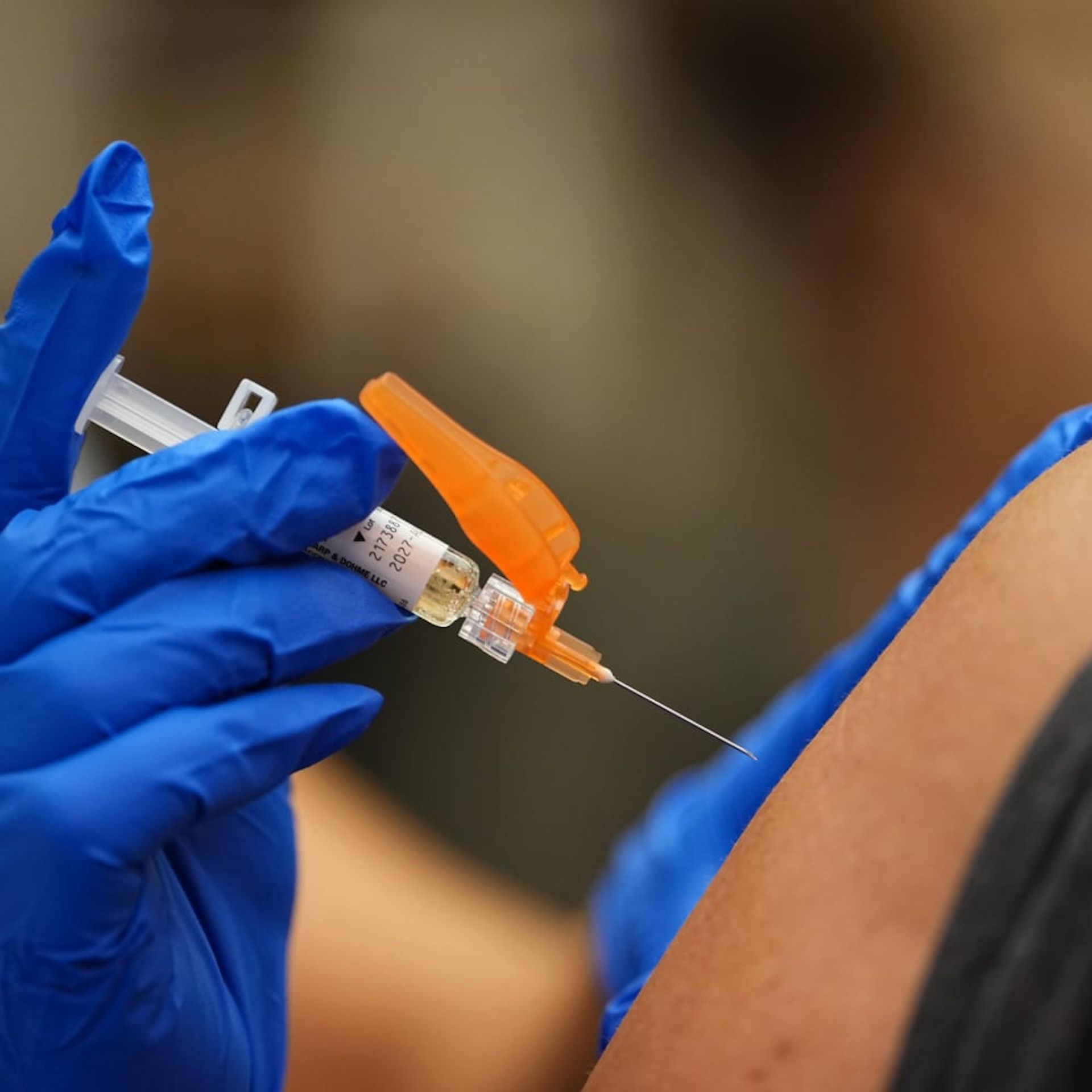
23:38Courtney Kube: So once they discovered that I had amyloid on all four quadrants of my brain already, I knew from also my research that there are two infusions out there. They're called anti-amyloid drugs. They were just approved by the FDA or cleared by the FDA in 2024 and 2023. So they, too, haven't been out long. Okay. What we learned about that is that they're 30 % effective amongst people that have full-blown Alzheimer's. They slow it down by a bit. But then if you're a little further or earlier on, they're like 60%. Wow. And so what my doctor said is that we're hoping because you are young that these are going to be effective.
24:17Courtney Kube: You get anywhere from six months to 18 months worth of treatments in six-month blocks. And she said, we'll test you after six months.
24:26Richard Engel: So there's like the scoring that is done when it comes to, there's a score that is done when it comes to like having these markers for Alzheimer's?
24:35Courtney Kube: I didn't know that. I didn't know about the amyloid number until I saw it come through on my MyChart after I got my PET scan after my sixth infusion. It said on there, your amyloid went from an 86 to a 4. I never even heard the number 86 and then to a 4. I don't actually know. It's called a seneloid number. I don't know. My guess is that I think it goes much higher is my understanding. Nobody's been able to tell me that. But whatever it was, my doctors called it jaw-dropping. Everybody was shocked by how effective that it was in me. And they said, you're done with the treatment. That's it. That's all you needed.
25:12Courtney Kube: Like, four is how much you have in you. Like, four is completely a normal number. I went down. They said, it literally said in my chart, the situation has been resolved.
25:22Richard Engel: I cried. Well, what does that mean then? Like, does that mean that you no longer are at risk for developing Alzheimer's? I'm at risk.
25:28Courtney Kube: I'm at risk. We have every factor in the world that shows that I'm at risk. But what it did is it took the Alzheimer's in my body back down to zero. We hit reset, and now we are doing all the right things. We're on the diet. We're on the exercise. And at that point is when I joined the trial that you spoke about. And that's when I'm now being monitored. I get blood tests every six to eight weeks. They are learning from me. They are fine-tuning along the way. I've only had four blood tests so far. but I will be a part of the study for the next four years. My doctors have pretty much said to me, we're going to be following you for the next 20 years.
26:02Courtney Kube: There are not a lot of people out there like me. Why did you want to share your story? I knew that I was basically the first person in my situation because of all the research that I did myself. There is nobody that was kind of like midstream and in their 50s that already had it growing in their body that took it back down to normal levels to be able to say, here I am. I'm okay. Please help yourself. So here we are. And hopefully that's not going to be what gets me. Hopefully it's something else.
26:36Richard Engel: Sucral, my friend, thank you.
26:38Courtney Kube: Love you. Thank you. Thanks for letting me share this story.
26:43Richard Engel: That is going to do it for us. Here's The Scoop from NBC News. I'm Yasmin Basugin. We'll be back tomorrow with whatever the day may bring. And if you like what you heard, subscribe wherever you get your podcasts. And you can also subscribe to our daily newsletter, The Inside Scoop. It's a deeper dive on the main stories of the day that comes out every weeknight straight to your inbox. You can sign up for The Inside Scoop as part of our paid subscription at NBCNews.com. We'll see you tomorrow.
27:17Richard Engel: Traditional home security only alerts you after a break-in. And that's too late. SimpliSafe is changing that. Stop. This is SimpliSafe. Police are on the way. We don't just alert. We help stop crime before it starts. Plan starting around a dollar a day. Right now, get 70 % off your new system with professional monitoring at simplisafe.com slash sxm. SimpliSafe. Ahead of crime in real time. Outdoor deterrence plans start at$49.99 a month. Visit simplisafe.com slash licenses for alarm license information.
The war in Iran and the resulting surge in energy prices helped fuel the Democrats’ blowout midterms victory. But will the new Congress actually be able to change the trajectory of the war? NBC News chief foreign correspondent Richard Engel explains how the midterm results are reverberating among U.S. friends and adversaries in Iran, Israel and Ukraine.
Meanwhile, as even members of the Trump administration blame the war in Iran for the midterm losses, rumors continue to swirl about Pete Hegseth’s future as defense secretary. NBC News senior national security correspondent Courtney Kube decodes the White House’s signals and explains how the threats of Hegseth’s impeachment could factor into President Trump’s decision.
Finally, after her mother was diagnosed with Alzheimer’s disease, NBC News senior coordinating producer Sue Kroll began looking into her own risk. What she discovered led to early testing, treatment and a remarkable result. She shares her deeply personal journey and what she hopes others can learn from it.
Hosted by Simplecast, an AdsWizz company. See pcm.adswizz.com for information about our collection and use of personal data for advertising.