Ask ChatGPT


 Here's the Scoop
12 Nov 2026 · 27m · 8 chapters
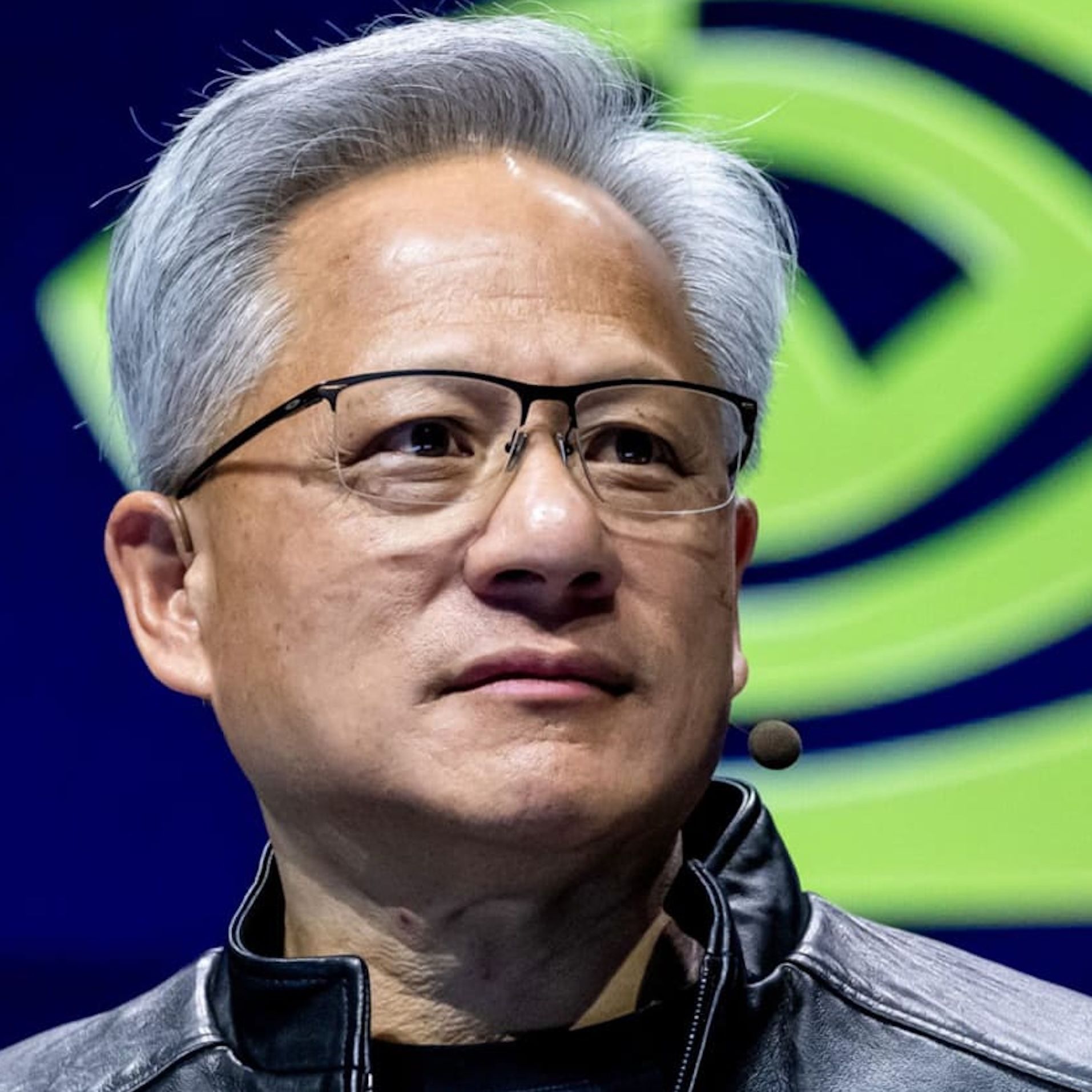
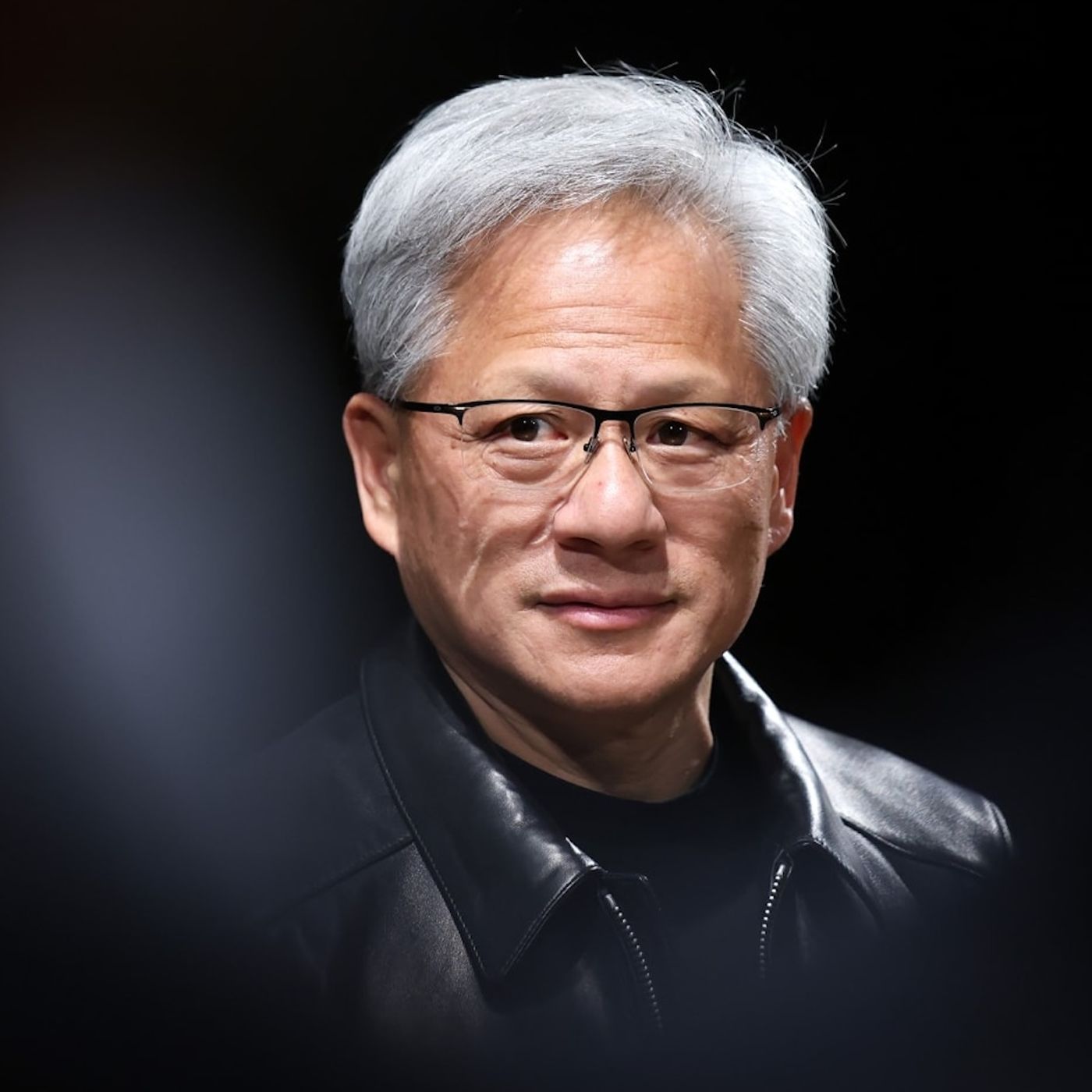
The episode of NBC News’ “Here’s the Scoop” covers three stories: Nvidia’s leadership crisis after CEO Jensen Huang’s resignation amid reported extramarital affairs and allegations involving a Chinese spy; the impact on AI funding and chip supply as interim CEO Colette Kress (CFO, 13 years at Nvidia) takes over; and Mississippi’s historic Senate upset where Democrat Scott Colom (defeating incumbent Cindy Hyde-Smith) flips the chamber to Democratic control (55 seats).
Jared Perlow, NBC News AI reporter (on Nvidia reporting); Priscilla Thompson, NBC News correspondent in Jackson, Mississippi (on Colom’s victory and voter dynamics); Missy Mazzoli, composer of the Met Opera’s “Lincoln and the Bardo” (first female Met world-premiere composer; live-streaming on YouTube).
Nvidia’s alleged $10B investment cycle with Anthropic; Mississippi provisional ballot issues in Hinds County; Colom’s “pick another protein” viral ad response.
Written by AI. May contain mistakes.
Discussion on Jensen Huang's resignation and its implications for NVIDIA.
“Up first, though, can there be an NVIDIA without CEO Jensen Wong?”
Insight into Colette Kress as interim CEO and potential successors.
“That was then shortly followed by news that the board was going to meet to discuss Jensen's future.”
Examination of how NVIDIA's uncertainty affects AI startups and funding.
“And I think that was part of the play here.”
Discussion on investigations facing NVIDIA and their corporate strategy.
“I've had a couple people— We don't know if that cycle is broken.”
Coverage of Scott Cologne's historic win as Mississippi's first Black senator.
“So after over a week of waiting on the Mississippi Senate race call, it is now official.”
Interview with composer Missy Mazzoli about her groundbreaking opera.
“So I don't know if you've ever heard of George Saunders' 2017 novel, Lincoln and the Bardo.”
Learn about opera's accessibility and emotional resonance across cultures.
“But, you know, being there live with these singers and in your community, I think, is really, is always going to be special.”
Learn about opera's accessibility and emotional resonance across cultures.
“Real talent is defined by what people can do, not where they learn to do it.”

Get the gist, explore an idea or ask about something said.
 Claude
On Here's the Scoop, what are the key points of this episode?
Searching your listeningAutomatic transcript. May contain errors.
0:00I could have never predicted that it would sell out the Met. That sounds insane. That's a crazy dream. Hi, everybody, and welcome to Here's the Scoop from NBC News. I'm Yasmin Basugin. So today on the show, the Metropolitan Opera, for the first time ever, is live streaming a show, Lincoln and the Bardo. I actually spoke with the composer, the first female composer, to world premiere an opera for the Met. So that conversation is coming up. Plus, we are talking about the historic moment out of Mississippi and a win for the Democratic senator there, Senator-elect Scott Cologne, which will now take Democratic control of the Senate to 55 seats.
0:44So what does this actually mean for voters?
0:50Up first, though, can there be an NVIDIA without CEO Jensen Wong? We're about to find out. Wang resigned this morning amidst multiple scandals, including the revelation that he allegedly had an affair with a businesswoman who U.S. intelligence agencies believe to be a Chinese spy, and that he reportedly had a relationship with one of his subordinates. So NVIDIA's stock has been on a downward spiral all week. This morning, NVIDIA's board put a new interim leadership team in place to try and stop the hemorrhaging. But can the company built, run, controlled by Jensen Wang actually recover? even with new leadership in charge?
1:28And what does the fallout mean for AI as a whole? For this, I'm going to bring back NBC News AI reporter Jared Perlow. Hi, Jared. Hasn't been that long. Long time no see. Long time no see. It's been kind of less than 24 hours. I know. For better or for worse. Let's pick up where we left off. Let's do it. So walk me through the reporting from yesterday evening or so, when suddenly the board then gathers for NVIDIA for an emergency meeting to discuss whether or not they're going to replace Jensen Wong as CEO of NVIDIA because of new reporting from The New York Times to what we know today in which he has now resigned.
2:15Yeah, it feels like we have lived, or at least I have lived, through maybe 17 news cycles in the span of maybe 24 hours. Yeah. So when we chatted, I think it was yesterday, we knew that there had been at least one allegation that Jensen had been involved in an extramarital relationship. But then as the day progressed, there was reporting from The New York Times that cited five anonymous sources saying that he had also engaged with one of his direct reports, who was a vice president of health care for the company. Okay. That was then shortly followed by news that the board was going to meet to discuss Jensen's future.
2:56And at the time, we weren't sure whether that was to or whether they would be discussing kicking Jensen out of the company, whether it would be having him step back. Because keep in mind, he had continued on in his day-to-day role as CEO. He had been holding meetings. He'd been operating the company as normal. You know, I was up very late, you know, trying to get in contact with board members, trying to understand exactly what had happened. What we know is that throughout the progress of the board meeting, it had also come out that the company NVIDIA was looking at hiring an external talent search company, according to Bloomberg, because they were interested in doing some sort of headhunting to see, well, who could replace Jensen if indeed he did step down?
3:38And then there were always these swirling considerations over whether somebody from outside would take over the reins or whether they would promote somebody from within. But again, NVIDIA had a very unique corporate structure. Jensen had around 60 direct reports, which is, as I understand it, I've never been CEO, but is a crazy number of direct reports. So there wasn't really a succession plan in store. Which seemed like maybe it was on purpose. Right. So they did choose a interim successor. Yes. Colette Kress. Indeed. She is the company's executive vice president and chief financial officer that will now serve as interim CEO.
4:16What more do we know about her history at the company? Has she been there a long time? Does she have a good relationship with Jensen Huang? Yes. We think she has a good relationship with Jensen Huang. She's been there for 13 years. She seems to be a steady voice on Wall Street. So this seems like a very considered play from the NVIDIA board because they didn't want to spook investors. They didn't want to spook the markets. Again, NVIDIA just a couple of months ago was the world's most valuable company. So it was sitting at the top of the stock markets. And I think it has a very high level of sway over what the entire stock market does.
4:48So Colette has been a familiar voice on earnings calls. She has, you know, I think very strong relationships with an array of Wall Street bankers. And I think that was part of the play here. But, of course, that's the story today. The next question becomes who succeeds the current interim CEO. Is it her? It might be her. We've been hearing lots of rumblings, and this has been my phone call adventure of the day. Lay it out there. Because it seems like there have been a couple other voices from the tech universe who might be able to slot in, who know the tech world very well. Like? Like Tim Cook, for example.
5:26Oh. So Tim Cook, former CEO of Apple who took over for Steve Jobs, he's been rumored, you know, he's, I guess, on the free market as CEOs go now because he's no longer at Apple. And his name had been floating around. I'd had several calls with people who had mentioned his name. But also we saw that President Trump issued a truth social post today or a truth. I forget how to attribute it and said that Tim Cook would be a great person for the job. Now, I don't know if that will strong arm Tim Cook into taking the job, but that certainly is an option out there. And then I've heard various rumors of other former tech CEOs of other large, you know, top 10 tech companies in the globe or in the world who have been approached, but seem like mostly rumors for now.
6:15NVIDIA was not just like a player in the industry. They were also investors in the industry, right? Correct. So when you have this uncertainty with a company like NVIDIA, which was arguably the leader, what does that do to the development of AI right now? It's unclear exactly where we go from here, but we know that NVIDIA was one of the biggest providers of funding to a range of AI startups. Data compiled by this organization called DealBook showed that NVIDIA was involved in 53 different offerings, financial offerings, for companies valued at$100 million or more. And that was the most of any company out there, essentially saying NVIDIA is giving seed funding or giving funding to more organizations than any other individual company.
7:03So if you suddenly have a change of heart of corporate strategy, it's very possible that the fleet of young AI startups out there, they're going to have a much harder time getting funding from this previously reliable player. And of course, there are these notions and questions about circular financing in the AI world, right? So it was reported that NVIDIA was about to invest on the order of$10 billion into Anthropik's upcoming IPO. Of course, it's advantageous for NVIDIA to invest in a company like Anthropic because if Anthropic continues to survive, then they can buy more NVIDIA chips. Right, they need NVIDIA.
7:36Exactly. And then NVIDIA has more money to give to other companies, etc. But now that that cycle is broken, potentially, we don't exactly know where we go from here. I've had a couple people— We don't know if that cycle is broken. We don't, but we know that the person who was the kingmaker, the chief chip allocator, the person with all the connections is no longer there. And I, just about 30 minutes ago, I was on the phone with someone who said that Neoclouds, which are kind of the next generation of data center providers, they're going to have a lot harder of a time finding funding because NVIDIA is no longer, well, because Jensen's no longer in the captain's chair.
8:12Could this be the bubble bursting? It could be.
8:43and has cast aspersions or, you know, cast doubt on efforts to slow down the pace of AI. And now that he's no longer on the scene, it seems like there is now suddenly a window opening. What I would also say is we're seeing a range of investigations be piled onto NVIDIA like we haven't seen before. Internal investigations, federal criminal investigations related to perhaps not NVIDIA, but some of its business partners. and then there is going to be a host of congressional investigations. So some breaking news today that we heard from representatives on Capitol Hill is that Jensen is in discussions or has already agreed to brief several House committees on NVIDIA's dealings with China and also how Jensen himself interacted with this supposed Chinese spy.
9:30Jared, I'm going to let you go make some more phone calls and hopefully you come back with more information next time you're on the show. Switchboard is lighting up faster than ever. You said that yesterday too. I know. Jared Perlow, thank you. Thanks. All right, we're going to take a very quick break. And when we are back, Mississippi elected the state's first Black senator in over 150 years. How voters made even more history in the deep red state that's next. And while you wait for the ads to finish, share this episode with a friend and then tell them all the things that you learned from the show.
10:01We'll see you on the other side.
10:08Want to know how Russian pranksters tricked a top government official? Or how the only copy of a Wu-Tang Clan album got auctioned for millions of dollars by the Department of Justice? The answers are out there. The trick is getting the government to share them. I'm investigative journalist Jason Leopold. I spend most of my days getting documents from the government. I'm attorney Matt Topic, and I fight them in court to open their files when they don't want to. From Bloomberg and No Smiling, this is Disclosure, a podcast about prying loose government secrets. To listen early and ad-free on Apple Podcasts, subscribe now at Bloomberg.com backslash podcast offer.
11:08And we're back with Here's the Scoop from NBC News. So after over a week of waiting on the Mississippi Senate race call, it is now official. Democrat Scott Cologne has defeated incumbent Republican Cindy Hyde-Smith. It was not only this massive upset, but also a historic outcome for the state. Cologne is going to become Mississippi's first black U.S. senator since the post-Civil War Reconstruction era. and the first Democratic senator in 44 years. The last one went to Washington just weeks before Cologne was actually born. So how did he turn deep red Mississippi blue? To answer that question, I've got NBC News correspondent Priscilla Thompson, who's on the ground for us in Jackson, Mississippi, and was actually at the victory party last night for Scott Cologne.
11:56Hi, Priscilla. Hey, yes. It's really good to have you. So you were at this victory party last night, right? What was the energy like? Yeah, so he hosted his victory party in front of the chapel at Tougaloo College, a historically black college here in Jackson. And, I mean, as a black person, I feel like I can say this. It felt like a family reunion. There was dancing. People were line dancing. He had a choir on stage that sang first the national anthem, the Star-Spangled Banner, and then the black national anthem, Lift Every Voice and Sing.
12:35And when he took the stage, first of all, his walkout song is a hip-hop song called Winners. And then he takes the stage and he talks about the power of prayer and the first black senator from all those years ago, Reconstruction, more than 150 years ago that we were talking about. For people that don't know, the first African-American to be a United States senator was from the great state of Mississippi. His name was Hiram Rebels. But he also started bringing up the names of some of these, like, Mississippi civil rights giants. Medgar Evers, Fannie Lou Hamer. And just talking about sort of like walking in those footsteps.
13:17And just the impossibility of all of this. That a lot of people didn't think it was possible. When he hosted his first event where there were only 10 people who showed up. But he had to keep the faith. I couldn't get donors to answer the phone. They did not believe a moment like this was possible. But I kept the faith. And of course, there he was last night claiming victory, saying that he was going to be a senator for all of Mississippi. But that it really was those folks in the room who knocked doors and did all those things to make this happen for him and to drive out those voters. It's such a historic moment coming at a really, it seems, pivotal time.
13:55Also, this blue tsunami, right? Now they've got 55 Senate seats, Democrats, potentially 56 if they win Alaska as well. The thing is, we waited a week and a half for this, right? I mean, the margins were razor thin. And there was a lot of back and forth. Who was actually going to pull through? Was it going to be the incumbent Cindy Hyde-Smith or was it going to be Scott Cullum? And now at the end, still with a razor thin margin, he was able to pull through. What do you suspect, having now spent some time there, got him across the finish line? Yeah, I mean, incredibly close. Like, they have spent the past week giving people the chance to sort of cure those provisional ballots that were filled out and show an ID and try to get those ballots counted.
14:44And also, you know, the mail-in absentee ballots that were received by Election Day, like, getting those in. And, I mean, it was yesterday we were in the Hines County offices. They were finally scanning those ballots. And that's where we expected like the big drop was going to come from. I'll tell you, in Hines County, it was like two thirds of the provisional ballots were rejected because people either voted in the wrong county or in the wrong precinct or they weren't registered to vote. And a good number of those came from Jackson State and some of the college campuses. But it speaks to what you saw, which was like him driving out this turnout among young people.
15:20And of course, he had the viral ad of, you know, the incumbent Cindy Hyde-Smith saying, pick another protein. Price of beef continuing to go up. You know, you have so many proteins to choose from. Pick another protein? Shit, I'd rather pick another senator instead. Everybody seemed to be watching on social media. Let's stay in his identity for a moment, right? And talking about the historic nature of this win, the first black senator since Reconstruction. How much of him winning was a reflection of the Supreme Court decisions when it came to the Voting Rights Act redistricting as well? Have you heard that from folks there on the ground as to why it is they wanted to see someone like Scott Cologne win this race?
16:04Yeah. So I do think that was a part of it, especially because we saw what happened, right? Right. The Voting Rights Act was gutted. And then Mississippi and Republican leaders here were working to potentially draw out the only black congressional district in this state. And you heard from voters at town hall meetings specifically or in particular black voters talking about like what that would do and what that would mean for them to no longer have a majority black district. People were upset. And it was older black folks who had parents or who themselves had lived through some of these civil rights moments and fought for that right to vote in the Voting Rights Act.
16:40But of course, also is sort of the climate in the country right now. Right. Like Mississippi is one of the poorest states in our country. And so when you talk about gas prices and the price of beef, the price of meat, the cost of living, health care was another thing that he would talk about a lot. And I think that, too, really galvanized voters, because while nearly 40 percent of the state is black, like he couldn't have done it with black voters alone. Right. He had to build a coalition. And I think we saw that. The irony of this thing, for folks that don't know, is incumbent Senator Cindy Hyde-Smith blocked Scott Cologne from being on the bench.
17:17And in the early days of this election, there is a moment in which you see her saying, I blocked him from the judgeship, and now you're blocking him from becoming a senator. Well, in fact, that did not turn out to be true because Mississippians, in fact, voted in favor of him going to Washington. How are Republicans reacting to this now historic win? Yeah, that quote did not age well. And, you know, the other thing to think about is that he had said, like, had he been a federal judge, he may never have even run for Senate. So it's a very sort of full circle moment there. But, you know, there was concern that because this race was so close, we might see legal battles playing out in the aftermath of this.
18:03And I'd even asked Colom about this earlier in the week before this race was called. And he said, like, that is not going to be good for our state. That's not going to be good for the people of Mississippi. I hope that Republicans can put party aside and just, you know, get behind me and let's move forward. And that's kind of what has happened. So Cindy Hyde-Smith called. She conceded. She released a video saying that she accepted that this was what Mississippi voters had decided and that she wished him well. Also, the governor here, a Republican, has said that he congratulated Cologne, looks forward to working with him and sort of finding a path forward.
18:37And so it has not been this potential legal battle and court battle or any of sort of the protracted issues that we might have expected. But it seems like it's sort of wrapped up and he's going to be the one going to D.C. And he says that he just wants to get to work for the people of Mississippi. Priscilla Thompson, thank you for being there. Thanks, Yas. All right, we're going to take a very quick break. And when we are back, we're talking to a composer who is making history at the Metropolitan Opera here in New York and on YouTube this weekend. Stay with us.
19:15Well, here we are. Good morning. Al Roker here. That's from the very first Today Show in 1952. And we've been starting the day together ever since. Good morning. Welcome to Today. For 75 years, we've woken up to breaking news, lent a helping hand, and met some pretty incredible people along the way. Oh, it has been such a fun morning on the closet. For generations, you've welcomed us to your neck of the woods, and we'll keep welcoming you into ours. Tomorrow morning and every morning, we are today. Let's face it, modern work life is complicated. But good news, we're here for you. I'm Kayla Lopez.
19:51And I'm Kyle Hege. And together, we've helped thousands of Morning Brew subscribers grow in their careers. And now, as the co-host of Per My Last Email, we're bringing that advice straight to you each week with hot takes and tactics on how to succeed in every area of work. Whether that's figuring out if you're being underpaid. Or how to stand out in a remote work environment. So join us each week on Per My Last Email on Spotify, Apple, YouTube, or wherever you get your podcasts. Hey everyone, I'm Dylan Dreyer, co-host of the third hour of today and mom to three wild boys. I've learned a lot in my years as a parent, mostly that I don't have it all figured out yet.
20:25And I'm not the only one. This is my new podcast, The Parent Chat. Each week, I sit down with someone new for honest conversation and real-world advice about parenting. I am over here just like winging it. Hey, I'm just trying not to screw my own kids up. I'm not giving you advice on how not to screw yours up. Search The Parent Chat on YouTube and wherever you get your podcasts.
20:48And we're back with Here's the Scoop from NBC News. So I don't know if you've ever heard of George Saunders' 2017 novel, Lincoln and the Bardo. It's about Abraham Lincoln mourning the death of his son, set in the Bardo, which is a place between death and rebirth. It was a massive bestseller, won the Booker Prize as well. Well, now there is this opera adaptation of the book, and tickets for the world premiere run at the Metropolitan Opera have been sold out for weeks.
21:22Here's why. It was composed by Missy Mazzoli, the first woman ever to world premiere a new composition at the Met Opera in its nearly 150-year history. and it'll also be the first Met Opera to stream on YouTube this weekend. So for this, I want to bring in the composer herself, Missy Mazzoli. Hi. Hi. How are you? Very good. Thanks for having me. Huge success. Congratulations, by the way, on the show. Thank you so much. Especially ahead of what will be this groundbreaking moment in which it's going to be live streamed on YouTube, reaching so many more audiences than opera really has ever reached before.
22:00Did you expect this show to resonate as much as it has, selling out, for instance, at the Met? I could have never predicted that it would sell out the Met. That sounds insane. That's a crazy dream. But I did know that the novel really resonated with me and many other people. And it has all the elements of a project that could reach a broad audience. So the figure of Abraham Lincoln. It's funny, but it's also tragic. It's populated. The world of the opera and the book are populated by these ghosts who don't realize or don't want to admit that they're dead. There's this boy in the center of it with the ghost of Willie Lincoln.
22:40And so it just has a little bit of everything. So I'm really thrilled that it's gone as far as it has. So why did you choose Lincoln and the Bardo? Because I know that the Met basically came to you, right? And they said, write an opera for us. Yes. And you said, okay, I'll write an opera and I'm going to write Lincoln and the Bardo. Yes. That was my one idea in the meeting. So I'm really happy that they said yes. Were you ready to give the idea? Did you know this was coming? Yeah. Well, the night before this meeting, I called my librettist, Royce Favrick, who's my closest collaborator. He writes the words.
23:13I write the music. We've been working together for, you know, over almost two decades. He said, oh, just say Lincoln and the Bardo, like that we should really adapt it. and it has it's a massive book there are 166 characters in the book and we knew that the met stage is one of the few stages for opera in this country that could handle a massive amount of people and could really bring it to life so you and I are kind of both of this like mtv generation right like rock punk all the things how do you how do you include that how do you like translate that into the work? Yeah, I don't think musically you'd hear my opera and think, oh yeah, she listened to a ton of MTV growing up.
23:54That is totally true. But I think it's in the ethos and the way that I approach making art, which is to tell the truth always, to be fearless, to not be censored, you know, to just wear my heart on my sleeve, wear my politics on my sleeve and just, you know, speak the truth to people. And that's what I feel punk rock does and rock music does in this very raw, beautiful way. And that's what I think opera does as well. You also have like, I mean, the show is a show. You have pyrotechnics, right? You have like fantastical, huge creatures. Puppets. Amazing puppets by James Ortiz, who's a puppet designer who's incredible.
24:30Amazing choreography by Rajafather Kelly, who's, you know, one of my favorite choreographers. What was the inspiration behind that? Is it like the bigger, the better? Is it the more? Yeah, well, our director, Liliana Blaine-Cruz, is, you know, just incredible. And she's a maximalist. So she fills the stage with color and excitement. There are literal explosions and fireworks on the stage during the opera. There's puppets. There's always a million things to look at. And that really fits this story. And it's super entertaining. Like we, bottom line is like opera is entertainment. And I don't think that's a bad word.
25:05I don't think that that dumbs it down at all. We wanted a spectacularly entertaining piece of theater. So, you know, we talked a little bit about how one of the big themes of the book is death. And obviously the death of President Abraham Lincoln's son and being trapped in this limbo world between death and rebirth. And I know that your dad passed away in 2024. I'm really sorry about that. No, thank you. And subsequently, you became a death doula. Have you been able to kind of weave your experiences of the loss of your father, learning this new skill of being a death doula, which for people that don't know, essentially guides people through the process of dying, right?
25:45Yes, definitely. I have to give a shout out to my teacher, Elua Arthur, an amazing death doula, who has a company called Going With Grace. I took her course, and it really changed my life. So in that sense, it changed everything that I do. It has affected my life in every aspect of my life. And I think that losing my father gave me a new window into grief. The kinds of things we say to ourselves in private moments, in mourning, I really, my heart just broke open through that experience. And there's an aria that Willie Lincoln sings at the end where he realizes that he's dead and he sings, all is allowed me now.
26:24And so for him, death is this, he's all of a sudden he's free. He's free from sickness. He's free from the confines of being just a little kid. He's like, I can run down to the party. I can fly out the window. I can eat chunks of cake. And so I've carried that with me when I think about my dad. I think all is allowed you now. You are free of illness. You are free of your earthly body. and I really feel like he's with me. I mean, it sounds so cliche, but I do feel like he would have loved this and in a way, this is me honoring him through this work. It's dedicated to him. That's beautiful. Yeah, thank you.
26:56You know, one of the tough things about opera is it's not as widely seen. It's not as widely, people don't come to see operas as much as they would necessarily like a Broadway show, for instance, right? If we're comparing the two. What's interesting recently is there have been kind of strides to make opera more inclusive more widely available. Mayor Mamdani is kind of on board with that. Back in September, he launched this Opera for All campaign, giving away 70 ,000 free tickets to New Yorkers. And then obviously now the Mets doing something similar with this streaming on Saturdays. But there is something to be said for like the specialness of opera, right?
27:34And if it's so readily available, then is it still special? Oh yeah, definitely. I think that, you know, I think bringing in a wider audience is essential and kind of getting out of this perception that opera is an elitist art form. I think that really hurts the art form. Got it. And I think that there is something so incredible about gathering in a space together live, not on a screen, although everyone should watch the live stream on Saturday. But, you know, being there live with these singers and in your community, I think, is really, is always going to be special. So there's no danger in losing that.
28:11And the specialness of opera does not depend on price. It does not depend on some obscure plot or it doesn't, it's not about feeling smart or feeling like, feeling elite. You know, it's for everybody. It always has been historically. It can evoke a feeling in every single person no matter where you're from or who you are. Absolutely. Opera is written by people who are writing about the human experience, who want to connect with people about that human experience. And that's true of me. That's true of Verdi. It's true of Puccini, Mozart. We're trying to connect with people through this shared experience.
28:44Best of luck on Saturday night. Thank you so much. This is History in the Making. Thank you. Missy Mazzoli, thank you. Thank you. All right. That is going to do it for us at Here's the Scoop from NBC News. I'm Yasmin Basugin. We'll be back tomorrow with whatever the day may bring. And if you like what you heard, subscribe wherever you get your podcasts. And you can also subscribe to our daily newsletter, The Inside Scoop. It's a deeper dive on the main stories of the day that comes out every weeknight straight to your inbox. You can sign up for The Inside Scoop as part of our paid subscription at NBCNews.com.
29:15We'll see you tomorrow.
29:30Real talent is defined by what people can do, not where they learn to do it. So by stopping at the education section of a resume, you might throw away the perfect hire. Skills First Hiring helps you see talent others miss, like more than 70 million stars, skilled through alternative routes. Let their story unfold and gain a competitive advantage, because hiring managers who start with skills are 60 % more likely to find a successful hire. Hire Skills First. Learn why at tearthepaperceiling.org. Brought to you by Opportunity at Work and the Ad Council.
Nvidia CEO Jensen Huang announced his resignation this morning, following reports of an affair with a woman U.S. intelligence agencies believe is a Chinese spy and another with a subordinate at the company. NBC News AI reporter Jared Perlo explains how Nvidia is trying to right the ship and the potential ripple effects on the industry writ large.
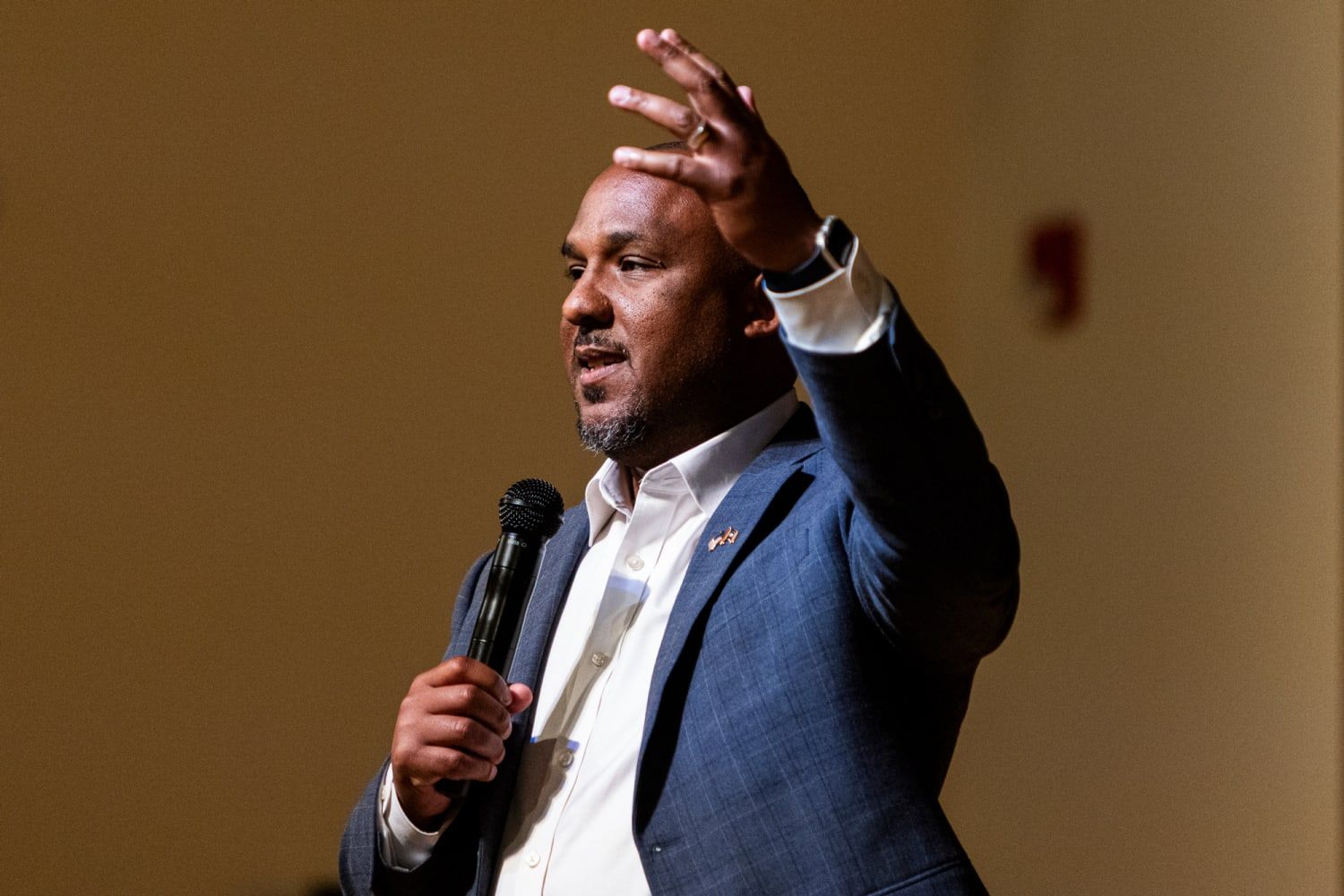
Plus, after over a week of vote-tallying, Mississippi Democrat Scott Colom has defeated incumbent Sen. Cindy Hyde-Smith. His victory is a major upset and a milestone for the state, which has not had a Black senator since the Reconstruction. But what turned deep red Mississippi blue? NBC News correspondent Priscilla Thompson shares why voters turned out for Colom.
And for the first time ever, the Metropolitan Opera will livestream its production of “Lincoln in the Bardo” on YouTube. The show is based on the award-winning 2017 George Saunders novel about Abraham Lincoln mourning the death of his son, set in the space between death and rebirth. Composer Missy Mazzoli talks about how becoming a “death doula” shaped her approach to the work and why opera is more universal than most people think.
Hosted by Simplecast, an AdsWizz company. See pcm.adswizz.com for information about our collection and use of personal data for advertising.