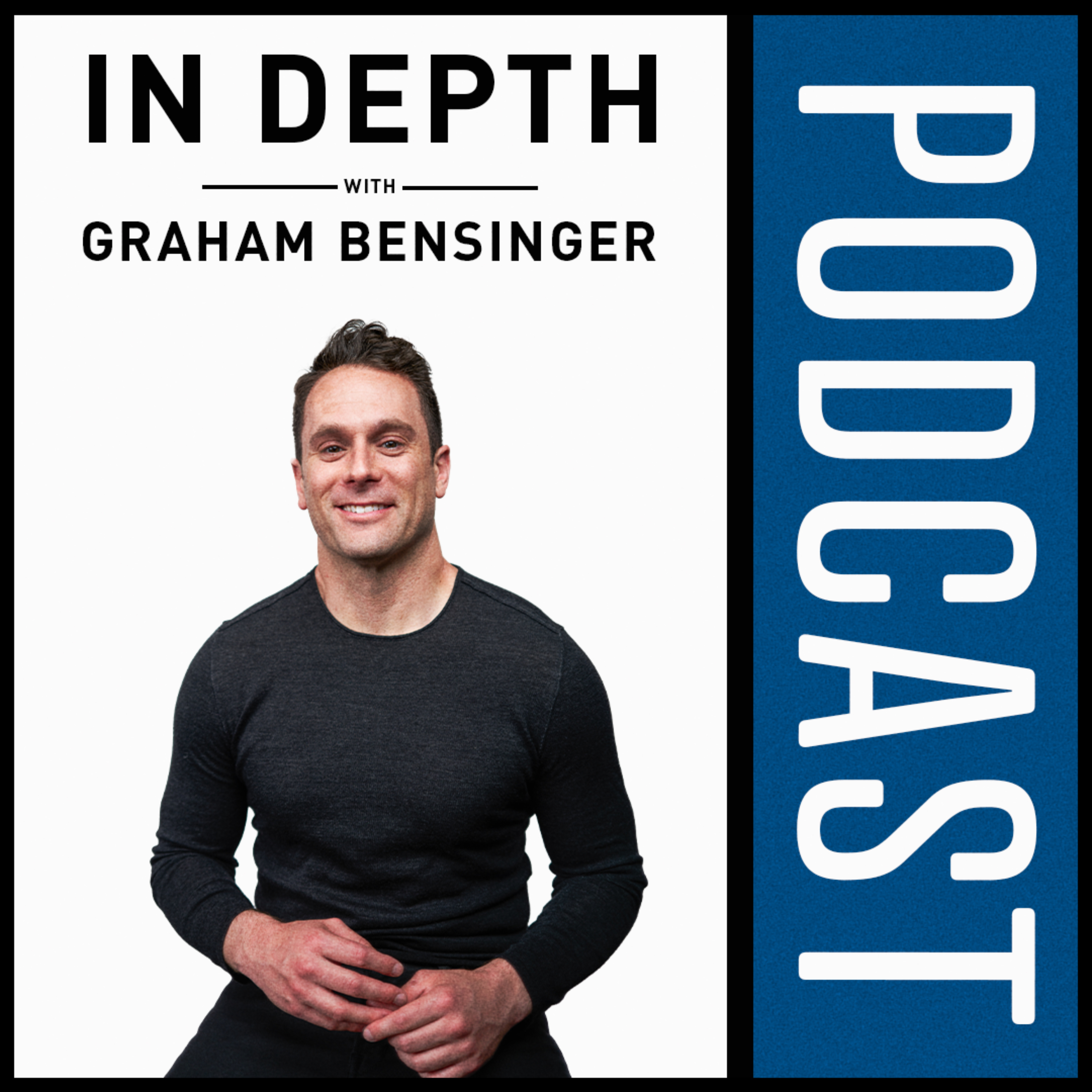
 In Depth With Graham Bensinger
30 Jun 2025 · 1h 24m

 Add vo to ChatGPT or Claude to ask about everything you hear
vo listened to this episode to put together the overview and transcript, so there may be the odd mistake.
Albert Pujols discusses his life story and career, focusing on faith, childhood in the Dominican Republic, moving to the U.S., and the mission work of the Pujols Family Foundation. He also addresses injuries, motivation, baseball routines, and his views on the steroid era and PED allegations.
The episode is primarily an interview with Albert Pujols. No other named guests appear in the provided transcript (the host is not identified by name).
Dominican-born MLB star (three-time MVP, six-time Silver Slugger, two-time World Series champion). Raised largely by his grandmother after his parents separated; later moved to Missouri as a teenager and learned English while playing baseball. Known for faith-based outlook and long-running community work.
0:00Propel Fitness Water with Gatorade electrolytes, zero sugar and vitamins. Propel hydrates better than water to help you get the most out of your workout and get back to your best self. What propels you? Propel with Gatorade electrolytes. When you've got a job to do, Lowe's knows how to help you keep it moving. Milo's Pro Rewards members save more with member volume discounts on eligible orders through a quote of$2 ,000 or more. Plus, save time with job site delivery on select purchases. Not a member? Join for free today. Exclusions, more terms, and restrictions apply. Can't be combined with any other discount, including but not limited to contract and or special pricing.
0:40Loyalty programs subject to terms and conditions. Details at lowes.com slash terms. Subject to change. This week on the In-Depth Podcast, Albert Pujols. Good to see you, bro. And thanks for taking the time really to come now and do this. a three-time MVP, six-time Silver Slugger, and two-time World Series champion. Pujols was a dominant force on the field, quickly becoming a household name when he first arrived in the majors back in 2001. You have to be cocky, and you know, when I got drafted, I knew that I had talent to play in this level. When I met up with Pujols in 2019, he opened up about his tough upbringing in the Dominican Republic.
1:25You'd have to bring him home drunk. Probably that's why I'm in touch. I don't drink and I don't smoke, like I don't do any of that. His faith-driven approach throughout his career. I thank God for that talent and this platform that he has given me, man. And his contentious departure from the Cardinals. The last thing that I wish I would never do for anybody is getting on my knee and begging them. But we began our conversation by talking about his foundation and how he gives back to others in the Dominican and around the globe.
1:58All right, so I want to start off talking about charity. Why did you decide to create your foundation in the first place? Well, I think it was the right time. You know, I remember Ta Perry, you know, who he came in 2004, I believe, to me and Deidre and kind of present the whole project. At that time, I don't think we were ready for to start it. I mean, we did some things with the community, the Down Central community of St. Louis, like around the area, sponsor some of the golf tournaments and all that and kind of be in the face. But it took us about a whole year to think about and to process. And I can look back right now, maybe 13, 14 years later, and thank God really that we didn't start it, that we really searched and prayed and we were grateful about it.
2:53And May of 5.05, that's when we pretty much decided to make that call. And I believe that that was the right time. That's when God really put that in our heart. Your long-term goals for it or what? Well, really do what we have done so far. I mean, I was so amazed how much just within a few years the foundation was growing. I mean, within a year, we were making mission trips down to the Dominican Republic, you know, treating, you know, between 1 ,500 and 3 ,000 people, giving food. And, you know, it's still up today that we still support Davate. And every time I go, I kind of rewind and go back 13 years when we first put our footstep in that ground in the Dominican Republic.
3:49And Bate Aleman, it was like a dirt field, and now they have a really beautiful field and nothing around. Just different programs that we have set, not just in the Bate, but different other area. And, you know, my dream and my goal is continue to try to that platform that we already have set in this community in Bataya Aleman, kind of take it to the other ones because there is different areas in the Dominican Republic that need help. And I think that's what's going to take this to the next level in the Dominican Republic. When you've been to the Dominican, what have you seen in terms of when you've gone in to the varying areas to help?
4:34Well, what I have seen, first of all, I need to give a lot of pride and thanks to all the doctors and the group of people that we take down there. You know, Homer Sadiq and Jen. I mean, there's so many people. Jen Mueller, who's pretty much, those are like our captain. They put the teams together for us. to go down to the DR since day one. I mean, you're talking about dentists and doctors that close their office for a week. You know how much money they're giving away? You know, like just having their time and just close it up and then go down there and go down to the DR, man, and pretty much just work from, you know, 6 a.m.
5:13to 6 o 'clock, 7 o 'clock at night. I mean, up going. We maybe have one day where we can be relaxed, maybe the last day, but they're like, why would you? We don't come here to relax. as we come here to work. I mean, and you appreciate that. You appreciate that when those people like, you know, it's not about something, you know, with money is great, giving money is great because this is, you know, what's moving the foundation. But I think when you have those people donating their time too, it's just a pressure. Because, you know, all the volunteers and all the events, you know, we've done a hundred, probably 110, 120 events a year.
5:49You know, it takes a lot of bodies, you know, moving. and uh so what do you see when you're there what i see when i'm there man it's just the grow the grow the happiness the the the what about the challenges the prayer well the challenges are always challenged there's always tough i mean you're talking about people sleeping in and the floor you know then one year we decide uh we donated close to 300 400 mattress in bed that was one of the projects that we did because we saw that i mean you you were talking about like places that not even a puppy or dog you wanted to sleep. I mean, another project that we've done is that baseball, batte baseball, where we have different talents come out of there, you know, and just give them the hope that they're probably weren't looking.
6:40We brought, I believe, a couple of kids already to the United States where one of them had to have heart surgery, another one we saved their leg with cancer. I mean, just different challenge, man. But with the support of so many people, not just in St. Louis, but around the country, I don't think we were able to reach this goal. What did you see firsthand from having a daughter with Down syndrome that made you want to make that one of the focuses of your foundation as well? I think it's an easy call. You know, I saw the need, that we needed it. And, you know, being in 2001 in St. Louis, they didn't have that much support.
7:19And it was an easy call for me to just jump aboard for four or five years before I started our foundation. Then we took cover pretty much and started doing our own program for these kids and adults with Down syndrome. And, you know, it's just beautiful. That's my passion. I love taking into baseball. I thank God for that talent and this platform that he has given me, man. But I think to be able to go to one of these events like the prong or the basketball game, I'm like, I turn like a little kid back again, you know, because I have so much joy. What's the highlight of the basketball game for you?
7:56For me, it's obviously having other kids making shots, you know, and then afterwards they win, you know, winning. We like, I think I believe we like 8-0, you know, we win every year. But I think just to give them an opportunity, and Todd is so good about creating different programs. I love how you're competitive with him. You know, but I think it's so good because Todd, you know, and Jen, they're so good about every year trying to just give them opportunity to this family that they probably would have never had. And that's what the Pools Family Foundation is all about. What's the highlight of prom for you?
8:36Dancing. Dancing with these kids. I mean, you need to make one of those days. I don't know. You probably have seen videos. You're drenched with sweat by the end of the... Well, they're fight. So one year, I just come from knee injuries. I just had surgery like three weeks before the prong, or two weeks before the prong, bro. And I'm telling you, I was just standing up and dancing. My knee has swelled up like the next day because I was dancing. I mean, we're taking turns, you know, and I enjoy that, man. I enjoy that because that's the difference that we want to make in the community. And I believe that that's the call.
9:11That's the call that God has given us. And like I say, we're still in St. Louis. There's the headquarter. I know I'm wearing a different uniform, but that doesn't change anything. That doesn't change the love that I have for that city. That doesn't change. And I'm going to continue to say this until the day I die. But I was a little boy when I came to St. Louis. I left a man because I learned so much from that city and from my fans and the support that they give me, not just in my career, but off the field. And I think, to me, that's more important than anything that I have accomplished in the field.
9:45I want to take you back to when you were growing up. Rough upbringing. It's remarkable how much success you've been able to have, given where you came from. I want to go back to when you were three. Your parents get divorced, and your mom decides to leave and doesn't come back. What do you know about that? Well, she came around, but I think, you know, I've been talking, I have talked to my mom, you know, and we cleaned there, you know. But I think, you know, talking to her, you know, it takes me back. Like, why did that happen? No, it wasn't like she left and just like, whatever. I was raised by my grandma, you know, my dad's mom.
10:27And, you know, you talk to my grandma and she always say that I'm the younger or 11, the 11th child that she has. So I'm the youngest one. But I think it was the, like my family at that time, I think it was better for me to be with my dad than with my mom. You know? What? Because the economy, like better, you know, it was going to be, my dad probably would have, he was going to give me a better education. I mean, bringing food for me every day and stuff like that. Like we were in a better position at that time than where my mother was. and I think that's how I look back. But, you know, that hasn't changed the love that I have for my dad and that hasn't changed the love that I have for my mom.
11:14I think, you know, no child wants to be, you know, separate from their mom and dad. They want their dad and their mom to be together. But sometimes, you know, you go through those things, but I think that didn't stop the plan that the Lord has in my life. How do you think it affected you not having your mom around early on? You know, it wasn't like she never came around. She, you know, she came around. She came around, you know, once. And, you know, when I was like five, six, eight years old, like I would have spent the weekend with her and all that, like stuff like that. Yeah, so it wasn't like she was gone forever, you know.
11:54No, she came around, you know, and she was there. She was there for me too, just like my dad. Obviously, like I told you, my dad, family, part of the family, we were in a better situation at that time, you know, money-wise and living-wise than where she was. But at the end of the day, I think, you know, you always regret things that can happen. But if I had to go back and I had to go again, I mean, you wanted better things. But, you know, I don't regret anything because it has made me who I am today. Was there a point in which you guys made the decision to reconnect? Oh, we were with my mom? Yeah.
12:30I always, I mean, she was just in the Dominican right now, and she was standing in my house. So I have a great relationship with my mom. And I have a great relationship with my dad. And I love dearly. I love both of them. So, you know, like I say, I don't wish anybody, you know, this, but I believe that that didn't stop the plan that the Lord has in my life, you know. And that's how I look at it. So your dad had a day job as a painter, played softball as well. To what extent are those some of your earliest memories on the ball field with your dad? Yes, it was fun because they used to have double hitter, you know, every weekend pretty much.
13:12And I would have grabbed the glove sometime. You know, I was five, six years old grabbing the glove. And my dad was a pitcher, one of the best softball pitchers in the DR. And I remember he pitched the first game. And I would have asked him, like, Dad, can you hit me some ground? Like he would be so tired, sweating, and he would hit me ground balls, you know, and like I'd be in shortstop taking ground balls from him. Like in between games, you know, you only have like a 20-minute break. But stuff like that, you know, it was a fun time, fun time with my dad, you know. How much credit do you give him for your early success?
13:47Everything. Everything. I gave after the Lord, like everything I gave my dad, you know, because not just my dad, my whole family. My whole family has been supported from my grandma to my grandpa, you know, who passed. You know, he never got a chance to see me playing in the big leagues. I wish he would have had that chance. You know, he passed in 1993, three years before I came to the state. But, like, I think if there's anybody that would enjoy my success and my career, even more than my dad or my mom, or even myself, would have been my grandpa. because my grandpa was a great player. He loved the game of baseball, and I think that's what motivates everybody to play the sport of baseball.
14:31And so your dad had a day job as a painter, but work, I understand, was kind of scarce. And to what extent would he have to leave for periods of time looking for steady work? Yeah, it was tough. It was tough. But sometime when he would have worked in the city, you know, I would go with him during the weekend or after school and try to help him out. I'd be coming home, I was probably 11 or 12 years old, 10 years old, just helping him out as much as I could and spending time. I'm the only child that my dad had, so I like the price. Everything at that time that he did, it was just for me, for me and nobody else.
15:16and even to this day right now, you know. So I really have a great relationship with him, and I thank him so much because he was the one that pushed me to get better in this game, and he was always around. You've been pretty open about this. I think when you're like 9, 10 years old after games, he was known to have a few drinks, and you'd have to bring him home drunk. How do you think that impacted you? I mean, it was hard, but I think, you know, like I say, that didn't change anything. You know, it was part of, hey, when you go to a baseball game, you know, and you on the weekend and hang out and play stuff.
15:56I mean, you know, people have extra drink, whatever. And, you know, but I think, you know, it was something that helped me in my life. And probably that's why I haven't touched, you know, knocking wood. You know, I don't drink and I don't smoke. Like, I don't do any of that. Do you think that's why? That's probably why I haven't, you know, choose that. Like I never tried to have alcohol. I don't have any problem with that, but like that doesn't drive me, you know. And that might be the impact, you know, seeing my dad like that. Because I read a quote you gave where you remembered thinking then that if you had a son, you wanted to make sure that he wasn't having to take you home after drinking.
16:36Yeah, to do that. But at the end of the day, I think that that didn't change anything. You know, I think my dad, besides that, he was the perfect dad. You know, he's still the perfect dad for me because he was always there and gave me the love that I needed, the shoes that I needed for baseball, the food that I needed, like everything that I needed, my dad was always there giving it to me. I mean, I always believe that education comes from our family. and I had a great, even though I was moving, bouncing from place to places as I was growing up, I had such great people around me, great family and great friends.
17:18They helped me along the way, you know, because I could have shoes. I had different paths that I could have shoes, you know, and my focus was always I want to become somebody. I want to be a baseball player or an engineer, something bro to help my family because just like I was there you know 21 years ago and see you know how poor our country is I wanted to be somebody in the future that can help our family and that's the opportunity that God has given me you know I'd be able to help my family the way that I wanted to and my dad and my grandma and everybody and I thank God for that. Your dad's mom, your grandma, America.
18:02How would you best explain the role that she played in your life? Awesome. I was her baby. She protected me with everything. Even when I got in trouble and my dad or my grandpa wanted to spank me, she was always, even to this day right now, like, you know, nobody can say anything around her about me. Like she, she's just a pressure, a pressure woman and obviously she had a rough life herself. She had to raise 10 kids with my grandpa and had it rough, had it rough too. But it's just like everybody, man, if you want to reach your goal or be somebody you have to work hard for. And she never took any easy path.
18:48She had to work hard with my grandpa. and she raised, you know, 10 beautiful kids, my aunts and my uncles, and they raised me the right way. I go back to the education, give me the education that I needed because it started as a young boy, you know. It doesn't start like when you are growing up education, you know, it started as a young boy and that's what I have. I have those people around me that surround me, whether it was my aunt, cousin, uncle, you know, my dad, my mom, my grandma, everybody. They were always there for me, just helping me. What do you think you learned from her? She loved to help people.
19:29Like, I remember my dad or even my grandma, like, giving food to the neighbors, you know, when they didn't have to. And they did just help the neighbors out, you know. When it wasn't like they had a lot to give. No, and they were trying to help. And then my grandma was the same way and my grandpa. So I think that was really easy for me to learn that. And I saw that as a little boy. And it's like it was automatic, you know, for me to if I see something at me somewhere, I'm going after. Because I believe that at the end of the day, God has given me so much. I can't take anything with me. And I had a quote somebody say the other day that we should praise people when they're alive.
20:16Sometimes we focus on pray people when they pass. And I have thought of that so many times. There's no way until we lose somebody to appreciate that person. Let's do it when they're alive. And I think sometimes we lose that focus. And, you know, I can think about my grandpa and my grandma, you know, to give them the best education. And, you know, when you see that, it's like, it's automatically meant to you. You learn that and you become, you know, who you become. And you always, there's one quote, you never forget where you come from. Why decided to move to the U.S.? My aunt Esmeralda and Alfredo, they came, I believe, 87, 86, 87.
21:16So my dad's sister, she's the oldest of the girl. She moved to the United States. She got her paper. She applied for papers, and she was the first one that came to the United States. And as you come to the United States, you always know that you leave family behind, and you want to help your family. So as soon as she came to the state, she applied for the papers and, you know, applied to bring my grandma and my grandpa, who was the first one that came. Then when my grandma and my grandpa came, then they started applying to bring their kids, you know, and our whole family. So pretty much it was like a puzzle, you know.
21:56And there was another end, and her husband, then another end, another end. So my dad and myself, we were the last one, 1996, they came to the United States. But it wasn't like I choose. It was like that's where my family was coming. And, you know, and it was to give us a better life. But it always started from my end, Esmeralda and Alfredo, who I give. I mean, I die for those people. I die for everybody in my family. But just for them, you know, for them to do that. And that's, you know, and I go back, man. It's like I see sometimes a hotel and thinking about my life. It's like, man, this old guy's plan, you know.
22:39Tell about the shooting you saw. That was part of the reason you decided to move from New York to Independence, Missouri. Yeah, part of that. But my grandma was already in Missouri waiting for me. So, but I think one thing, one great move that my grandma, at that time, my grandpa was already, you know, he passed away. So it was my grandma with my aunt, Esmeralda, and Alfredo. and I think she came one summer to Independence, Missouri and visited her, Wilfredo, who's my dad's brother, and she fell in love with the country, and she fell in love with the state, I'm sorry, and she's like, this is where I want to raise my kids, bring my kids, bring my grandkids, you know, and I think it was the best move because you look at it, to bring everybody in my family to the United States and trying to find a job in New York, that would be rough.
23:39So imagine, it's hard to find one person to find a job. Imagine 10 or 11 in your family plus their spouse. It would be tough. So I believe she moved that summer. After that summer of 96, she moved in the winter to Independence, Missouri. And that's kind of it wasn't just because the shooting i think it was part of my grandma once again looking for her family and the best for her family uh moved there and i think it was the best move for everybody but without getting into specifics that really impacted you understandably so the shooting yeah no it was it was tough i mean you're talking about i'm 16 years old and seeing that i mean it's it's hard you know but you know it was a long time ago Sometimes I think about it, but I don't even remember all the details.
24:33After you and your father moved to Independence, Missouri, I understand you felt lonely. How so? It was hard, bro, because going to high school, I was like a year and a half from graduating down in the Dominican. And now you come into the United States and now you have to kind of repeat, you know, you know, going to school and repeat the class. And because at that time I didn't know any English. So it was it was hard. But I'm one of those guys, man, that if something drives me to I go after and I go after hard. So I knew that I needed to learn the language to be able to communicate, to be able to take classes by myself.
25:21Man, I started taking classes with Mrs. Stanky, who was my English teacher. And she didn't know any Spanish. I didn't know any English. Well, I love that. You're an English teacher who's supposed to be tutoring you in this. And it was like, but you know what, bro? It took three months, man. and I went after and three months it was, you know, I'd really learned how to communicate. When you're a kid, you can pick up things really quick. So I don't know, I'm really smart when it comes to that. Like I have, I memorize things really good. I mean, and all that stuff. And it was, she put a lot of work into, to help me out because she knew how hard I wanted to learn the language.
26:05And it was a challenge, man. It was a challenge, being in school and, you know, I know a lot of people were laughing at me because I didn't know the language. Yeah, and you know what? But it's just, you know, we are kids, man, and going to high school, it happens in every high school. How much did they make fun of you? A lot, but you know what? I had a good friend of mine up to right now, Chris Franca. He was in the baseball team, and he helped me out along the way too. What would they say when they're making fun of you? No, it just, you know, because I wouldn't understand, And, you know, sometimes, you know, I would say something that wasn't correct and they laughed, you know.
26:42But I think. Okay, what about your last name? I would have to imagine you come over like you don't have an American last name. It's kind of like you get crap for that. No, not really. I think I had to help people how to pronounce it, you know, how to say my last name, you know. But I look at it like, man, you know, those were a great time. You know, that was a great time in my life. And once again, God always had a plan for me, putting great people along the way. Because, you know, Chris, who was the shortstop in high school, Fort Osage High School, he moved to third base. And he was one of our best pitchers, too.
27:21And he's one of my best friends, too, from high school that I'm still in touch with. And I get to enjoy every time I go to Kansas City to spend time with Hank and his family. But he really helped me out and took me under his wing. I would say. So that kind of like environment with my friends in high school also helped me out, you know, to learn the language. How often did you have proper baseball equipment growing up?
27:54Never. Never. I had to borrow from my neighbor. I had to pay five bucks, you know, to one of my friends who let me borrow the glove i understand i had to take it from my dad and i had it i had to recreate it you know and play with milk how would you do it you get the cardboard obviously you smash it down and you would have you know obviously put a hole on top after you smash it down so you open it and the side open a big crack and then on top you just open a hole and that's that's where your finger goes so you just kind of grab it like this and you know i would have play catch with that. I would tell you, it's really easy, you know, but easier to make.
28:34But it was, I would have been creative with that. I would have been creative with a license plate. You know, we got a, we have a game called La Plaquita, which is the license plate game. And you would have, it's four people, it takes four people, two bottles each size, one bottling in the other side and one bottling in this side. So you play three outs. so if you knock that play down which you you know obviously make it small and then it stands up the license plate that's an out you know but then if you hit a home run you know then you can you just bounce you score runs kind of like cricket like that going like back and forth kind of that's how we play ball and cricket you like really don't run as much but we call that game la plaquita and i play it in the street you know with with some of my friends and once again It's almost like baseball, but you wouldn't use a regular bat.
29:29You would have used a broomstick. Same thing, another game that I played was La Vitilla, which is the water cap, the big battered water. It comes with that green cap sometime and the blue one. You would have taken that out, and then you peel it up. You had a broomstick, and you just throw it and kind of play. So we were creative with games. and you know games there are really famous down in the Dominican Republic I go and I see people playing the games and the DR. How much did your wedding cost and where do you get the money from? Propel Fitness Water with Gatorade electrolytes, zero sugar and vitamins.
30:11Propel hydrates better than water to help you get the most out of your workout and get back to your best self.
30:21What When you've got a job to do, Lowe's knows how to help you keep it moving. My Lowe's Pro Rewards members save more with member volume discounts on eligible orders through a quote of$2 ,000 or more. Plus, save time with job site delivery on select purchases. Not a member? Join for free today. Exclusions, more terms, and restrictions apply. Can't be combined with any other discount, including but not limited to contract and or special pricing. Loyalty programs subject to terms and conditions. Details at Lowe's.com slash terms. Subject to change.
30:53Oh, I don't know,$150 probably? Yeah. And by counting, I remember Diddy got so mad because somebody showed up. Oh, because somebody didn't show up? Somebody showed up, and it was extra money that we had to pay that we didn't have. But, you know what, man, it was, I think it was$150 or something like that. Class A ball, there's a bench-clearing brawl. How painful was the$100 fine that you got? Really painful, because when you were making$252 with 52 cents, I think, and you take$100 fine, you know, and then you have your wife in an apartment, you know, with, you know, getting ready to give birth to AJ, my second one, having Bella, it was tough.
31:49But you know what, at that time, dude, if I had to pay it again, I'd pay it because you were sticking up for your team. And that's something that I think as a player, you never forget. This is your family. And you spend more time with your teammates than what you spend with your really family. And it was just something that we saw it coming because we have problems with them when it happens in their field. And then when they came to us, they broke one of our prospect leg at home play, and you knew that we had to do something. And we went at him, and I remember Chris Duncan. He was in the team with me that year.
32:34I was the third baseman. He was the first baseman. And we were kind of the two big guys. Everybody else were pretty small. So, but, you know, you had to do what you had to do at that time. I mean, you're not going to try to stay in the dugout and, like, not worry about paying the fine. Why did your wife, Dee Dee, want to declare bankruptcy, and why did you talk her out of it? Well, I just talked her out of it because I believe, you know, you had to be cocky. And, you know, when I got drafted, I knew that I had talent to play in this level. I even told one of my uncle, Wilkins, we went to a Royal game in 1996 or 97.
33:16This is probably the summer of 97 where I saw Benji Molina and I believe I saw Gene Emel making that famous diving catch when they were wearing the Angels, the Disneyland uniform and that famous diving catch running back, you know, like this, like Willie Mays. I said that he dove for, I was at that game. And the whole reason I was at that game, because my summer coach had like a season ticket in that year. He won all the game. He gave it to me. He's like, hey, I'm not going to go to the game. You want to go? I'm like, yeah, I'll take it. So that was my first big league game that I won. And I remember I told my uncle, Wilkins, listen, he asked me, do you think you can play with these guys?
34:06I'm like, give me the bag. I'll show you. You know, like I work hard for her. You know, I work hard for her. I train hard, and that was my attitude. So when that time came, I knew that if I put all that work and I put things together, so I told her to give me time, to let me go play, give me time, and then don't do it. How would you explain the difference when all of a sudden you're then making the major league minimum salary and how life-changing that was. You know, everything happens so quick, you know, to get drafted, to go to, you know, introspectionally, then full year in 2000, and then minorly in Peoria.
34:47And then from there, get caught to A-ball, high A, Potomac, and then AAA, you know, and be one of the heroes in AAA to hit the World Cup 100 to send the team to the World Series. Bro, you would have given me, like, in a script or a plain paper and read that down, I like write that down. I don't think I can even put it. That's the whole story together. So and then the next year in 2001, you know, get invited to the spring training and I wasn't even supposed to play or even get any of our bats. And making the ball club that year, I was it was unbelievable. So I just think happened so quick in my life that it wasn't even time for me to think about it.
35:32But just play the game the way you know how to play the game. And that's it. Up to this day, that's the attitude that I have. Like, I think sometimes, don't get me wrong, I think sometimes about how quick all that stuff, you know, but that year, I wasn't even thinking. I was just enjoying that I was in the big leagues. And having guys like Mike Martini, Placido Polanco, J.D. Drew, Woody Williams, Daryl Kyle, Mark McWire, I mean, Gene Emmons, I mean, guys like that that really helped me along the way and showed me Bobby Ball, who was there last night, who I thank everybody there for pulling that hamstring because that's the whole reason I made the ball club, because he got hurt.
36:20But having those guys kind of took me under the wing and showed me, listen, kid, you belong here. Just play your game. You belong here. Man, it was just a fun summer. And on top of that, you know, winning rookie of the year, I mean, it was amazing. How difficult is it to maintain the same level of motivation now as opposed to when you were coming up and had yet to achieve any of the success? Still the same, man. The same motivation that I had since I was in the minor league. The same motivation I had since before I even signed. Same motivation. And then my family, you know, they motivate me every day.
36:59I just have AJ here, you know, and he's like, you know, giving me his blessing, you know, about, hey, man, go out there, tear it up, you know. Like, that's what drives you, man, you know, to have the success that you had. And, you know, winning, winning, winning, that's what you play for, racing that championship, man, and be hungry. and I can tell you that even through the injuries and through the stuff that I've gone through since I left St. Louis, it's been hard with all that, but I really, there's no one moment that comes to my head and say, you know, I'm just, I'm just, I'm leaving, you know, I'm leaving.
37:43I mean, I get sick and tired of being hurt in hand surgery, but like, I still enjoy the game. I love it. I love to come to the ballpark early Because remember, I still am wearing a uniform that I represent and I respect. And also I have a lot of young players. They're looking up to me and they're like observing how I kind of do things around. And be blessed to have one of the best players in the game, Mike Trauk and my team too, who was kind of like my shadow, following me around and asking questions that wants to get better. And he kind of reminded me, myself, that I was the same way, you know, with asking questions.
38:29I wanted to get better so quick, and this and that. Mike is the same way. Tell about the Wash U test you participated in, comparing you to Babe Ruth. Oh, that was back in St. Louis. Man, I don't remember much about it. Oh, I know that they put me a bunch of wires all over the place, and somehow I think I was either equal or better than Hank, I guess. I don't remember. I can't, you know, I don't want to say things that I don't remember. But off-the-chart results. Yeah, it was really off. It was just everybody were saying, like, we've done so many tests, and this is no, this is impossible. You know, boy, it was off-the-chart.
39:11How much time do you spend each day on game day watching videos? You know, back then we used to have the VCR, so you had to wait until you get to the stadium to do that. But now the technology has advanced so much that you can't even watch the picture on your phone and your iPad. And when I wake up in the morning, I take the kids to school if they're in school, and then I come home, have breakfast. You know, and I'm watching the picture that I'm facing and the whole bullpen. And, you know, it's just so easy right now with technology that you don't have to go to the ballpark. You can just watch it at home.
39:52And by the time you get to the ballpark, you just do whatever you have to do, whether it's treatment, whether it's getting a cuttop or hottop to get ready to go get loose and do the little routine that I did this morning. That's kind of the same routine that I do the season before game. I understand you always have a plan going into an at bat. Well, you have a plan. That's why you do the scouting, and you have a plan how you want to approach the pitcher. You know, he's throwing the sinker, or his best pitch is the curveball, stuff like that. Or this is how he pitched to me last time I faced him.
40:25He has success. Now I need to make an adjustment because this game is about, just like every sport, it's about making an adjustment, especially more in baseball because you got so many scouting, scouts, scouting the game that maybe you play in Oakland the next day and we play in Seattle and their scouts understand that they're ready. You know, when you go to Oakland, they're going to have that scouting report against you. And then if you didn't have a good success in that series or by versa, if you had a success, they're going to try to pitch you different. So it's always kind of like, it's hard to describe because I don't want to give my secrets, but it's more like you know you have to be ready to make an adjustment even after you even during the your bats because they probably are not pitching you the way that you thought that they were going to pitch to you.
41:16And you're aware of an umpire's like strike zone going into you know a particular game as well like if an umpire has a wide strike zone or tight strike zone. Yeah you look at that Yeah, but you cannot control that. Those guys want to be the best. So I don't judge those guys, the umpires. I think if it's up to me, I would love for them to just foul, foul, fair, fair. Take the instant replay out and just, hey, let's go back to old style, how this guy let the umpire have the benefit of the doubt. Right, but as long as there are a million cameras now. It's not going to go back. So your first 11 seasons with the Cardinals, I mean, best 11 seasons in the history of baseball, you come to the Angels, obviously drop off in productivity.
42:12What do you think accounts for that and how challenging was that for you personally? Well, I think, you know, as you know, the injuries. I mean, I save, I guess, all the injuries that I didn't have in St. Louis for this team, you know. but I know it comes with age so too yeah but it's just you know you adjust yourself to your program I think that the hardest part it was that same year I had it right away lower half problem which my stents are really unique and it require a lot of my legs and I had a obviously right hand I'm a right leg surgery knee surgery and then from there it was just man it was just one after another then you had the plantar fasciitis you had a foot surgery and it was like everything the lower half and I don't care how great of a hitter you are you can be the best player in the game in my trial right now if he started having problems with that lower half it just it just switch it just change your swing so I had it now kind of reinvent a swing where you know I can take that stress out on my leg and, you know, to try to perform.
43:26But then still driving 100 runs and hitting 30 runs. Yes, my on base or my batting average is not what I want, but I'm still driving 100 runs. What's going on with that, you know? If in the next three years I drive 100 and something plus runs and hit 30 hundred runs, I think I'd be pretty close to Barry Bonds and then probably break Hank Herring record for RBIs, you know? So it's like, you know, but right now there's so much looking on that baseball saying and this and that. You know what, dude? What helped us win is scoring runs and driving runs. And I think I'm an elite producer when it comes to that.
44:04I was talking to Tony La Russa the other day, your longtime manager with the Cardinals, and he said people don't give Albert enough credit for the injuries he's, like, played through. And Mike Trout actually said the same thing in that people didn't realize. I mean, at some point you've basically been hitting on one leg. Yeah. And, you know, I'm going to say this because there are so many people that say it there. But they're like, bro, what you have accomplished even in one leg over the year, like there's nobody else that I don't think can do it. Even my hitting coach is saying that, you know.
44:37But, you know, I'm fully healthy right now. Hopefully I can stay healthy for the next three years of this contract and see where the Lord is taking me. And, you know, my goal is the same goal that I have when I sign this contract, try to win a championship, you know, for the city of Anaheim. Simply due to age, though, like what's that realization process like for you that physically you might be less able of doing the things that your brain's telling your body to do? See, but when you train to a level that I train, like, you don't think like that. I'm probably old in baseball because I'm 39, but I'm young in life.
45:21I feel strong. I take care of my body really well. I train really hard. I don't overdo things. I listen to my body a lot. And you know what? If you can do that, then you put all that together, and all you can do is take it out there in the field. I wish you can see when you're going to get hurt and injury and you can avoid it, but you cannot. I mean, you can be, I use this illustration, you can be walking in your house, you know, or even walking in the street and twisting ankle and you don't even have to play a sport. So imagine now you're playing 162 games plus 30 in spring training, plus 14 during the playoff, I mean, it's a lot of gains and you had to maintain yourself.
46:13And I think that's why I put the ball in the work and the offseason because that's what's going to carry me into a deep season. And that's how it's been. And no matter my age or whatever, I don't think like that. I know what I need to do. Of course, I understand that the programs had to change, but the same attitude and just tweak little things here and there with my trainer. We've done that, and I feel really good about myself. The hardest part of transitioning leagues for you was what? For me, it was the travel, bro. Being in the central in St. Louis, it's like you bounce Cincinnati, Milwaukee.
46:53I think the oldest trip, it was Houston, which it was like hour and 45 minutes. Man, and when you come here out west, my first year, man, and I didn't realize this until somebody told me about it. But, bro, you had about 20 more thousand miles than what I was traveling in St. Louis. What? Flying, 20 more thousand miles flying. And that month of April, I ain't lying to you, I felt like it was September. And I was in one of the best shape ever. But I felt like it was September. They're league, they pitch you a little bit different, but you get adjusted to that. But to me, the challenging part was, you know, the changing time, the three hours different, going from the east to west and had to play the next day, knowing that now you have to travel at 10 o 'clock in the morning and your day off and you don't have a full day off.
47:46Like you get into the city and you just barely have time to eat and then go to bed, you know? It's tough like that. So there's never been any reason to believe you've achieved your numbers in anything but an honest, clean way. But I'm curious to get your thoughts on the steroid era because it was, you know, like the tail end of it when you were coming into the league. What impact, positive and negative, do you think it had on the game of baseball? Hey, listen, I think, you know, the best thing is the Major League Baseball created a program that nobody can sneak it anymore. I mean, you see all the suspension, and they're going hard at it.
48:25They knew that there was an issue happening in our gang, and they cleaned all that up. But like I say, I mean, I don't judge people. I think, you know, you make your own decision, and if you choose to do something that you cannot violate our league, hey, you're going to get penalized. It's like if you're going in the highway, and you see 65 miles per hour, and you go 75, 80, and you get pulled over. What do you think is going to happen? You know, you're going to get a ticket, right? So it's like, you know, if you're on a highway and it's 65 miles per hour and you go 75, 80, you're breaking the load, right?
49:04You're going to get a ticket. And then if you opting out, try to be disrespectfully believed, they might throw you in jail. Well, it's the same thing, you know? I mean, people that have choose that, I mean, they're going to get penalized. So, you know, I think at the end of the day, you know, I don't judge. I don't really joke. I look at myself first before I have to judge somebody else. But obviously we know there is a problem. But Major League Baseball has done a great job. It was like 34 years between 60 home run seasons, Ruth to Maris. 37 years, Maris to Maguire. And then there were six 60 home run seasons during a three-year period beginning in 1998.
49:45There were like three players who had achieved 60 home runs in a season in the whole history of baseball prior to 2002. And then that number triples to nine from then. How do you view numbers that were put up during that era? You know what, Brody? You still have to hit that baseball. So I mean, I think - I know, but as somebody that's done it ethically and honest like yourself, to what extent does it at all bother you when you've done it the right way and then there are others that haven't that have gotten some of the same accolades? See, but it's hard because I haven't seen those people do it.
50:36I mean, you can look and say, oh, this guy, this guy. But you know what? At the end of the day, man, I go back where my job is, you know, the same love that God showed me every day and my family. I had to love those people, too. And they're human. So they made their choice. They made their mistake. You know, one of my best friends who I respect, Robinson Cano, I was the first one to call. And I said, listen, man, I love you. Our relationship is not going to change. I'm here for you. You made a mistake, bro, and you're going to have to clean it up. You know, I listen, the guy made a mistake. That doesn't mean that the guy is a bad person.
51:14And I respect Robinson. I respect his game. You know, hey, listen, he made a mistake. He made a mistake, you know, but I don't want to turn my back on him. You know, and that could be in any, anybody else, you know, because that's the same thing that you need to look at. The love that the guy has for me is the same love that he has for him. And, you know, he got his suspension. He lost a lot of money. So guys taking that chance and they know that they're going to get cut. At the end of the day, I go back to where Major League Baseball has done a great job and the player association made sure that they put in a great program and, you know, to clean our game and it's happening.
51:55For what it's worth, there were three years where in the MVP race, you finished only behind people that were alleged to have taken, you know, PED. See, but that said, they think that they are taken, but they haven't proved. Until you don't have the proof, you can speculate and say, this guy may be this guy, maybe, but when you have the proof in your hand, that's when you can blame somebody and say, you know what, this guy, I had that. If you knew they had, would it bother you? I don't, you know, bro, there's no one moment that I look back and say, I wish this, I wish I have enjoyed my career since day one.
52:39And I'm so thankful and grateful of what I have accomplished in my career and in my life, that there's no regret, there's no award that I wish I would have won. I have accomplished pretty much everything, everything that a baseball player can accomplish. Thank you to my King, Jesus. You know, they have given me this platform and the ability. and after him, my family and my teammates and coaches, they have helped me along the way. So that's how I can put it to you. Explain the role that faith plays in your life. Everything, everything. You know, God is everything to me. He has shown me his mercy, his grace, and the best gift that he has given me is salvation.
53:26You know, when I got to, you know, accepting in my life and knowing that I have eternal life through Him, a personal relationship with Him. It's not about being a Christian. It's not about being, it's not about religious. It's about having a personal relationship with Christ. But that doesn't make me perfect. I have learned the hard way. I have made mistakes. But knowing that when I come to Him, He doesn't judge us. He doesn't look at us and be mad at us. He receives us with love. and I have learned so much, you know, in my life about how to treat other people the same way that Christ loved. You know, and I believe at the end of the day or at the end of my career, that's going to be the most important thing for me, you know.
54:18Yes, the legacy of being a baseball player and great, that's great, man. But being a strong Christian who serve the community and when I'm facing him or being with him, like that he can look at me and say, what have you done with the gift that I gave you? The gift is not the$300 million that I'm making again, the three MVP, the World Series. That's not the gift. The platform, that's not the gift. It's that Bible, man, that Bible. That's the gift that he has given me, you know, his word, so I can spread it and talk about the good news of Jesus Christ. And that's my job. It took me a while to learn it, but I'm at the point that I'm going to quit now.
55:06And we have our chapel this morning, and I'm telling those young guys, we were talking about creation, and how God has created everything. And I told them about the last creation that he made. It was us. The Lord make us in his image. And then what he did after that, he rest. So he said the best thing for last, and it was to give us life in his image. What do you remember from the first time you went to church with your wife, Didi? Oh, I remember, you know, at that time, my English was so, so, so I still had to wear, you know, an earpiece during service so I can get translated in Spanish. So I pretty much just, you know, start asking questions.
55:54And, you know, there was like two weeks ago, and I said, babe, you know, what is it? When the pastor at the end of the survey, he made the article and said the prayer of salvation, you know, to give the life to Christ. And she pretty much explained to me about it. She was like, listen, I'm going to keep it real simple to you because you probably won't understand, but there's a hell and there's a heaven. And I told her, I'm like, well, I don't want to go to hell. I want to go to heaven. So the week after that, we went back to church and Pastor Jeff Adam Grieber, great, great servant, Kansas City Baptist Temple in Kansas City.
56:35And he touched me and touched me. And I think, you know, after the service, he did the same thing. And I just woke up with her and surrounded myself to the king and just have him take control of my life. And that means what? Just accepting, that you're accepting as your Lord, that you're accepting, that you know that he died on that cross for our sin, that he took everybody's sin, you know, upon hanging on that cross. And then you know that he gave you that eternal life. And through that, I had learned along my way. And I was a young believer back then, but like having guys like J.D. Drew, Wooden Wheeler, Mike Martini, like the way that those guys were handling their life, it was more than just going to church.
57:26You know, you can see Christ in them, but you can see the joy. And I was a young believer. I was like, you're still going to church. But man, you know, I think it was after 2001, 2002, being in St. Louis, Christian Family Day, that they asked me to share my testimony, and I didn't know what to share. And I think that's where my turning point was, man. It was like more than just going to church and do your duty. It was about having a personal relationship with him, you know, with Christ. It was more than just the religious. And, you know, it's been great. And, you know, it hasn't been perfect, but I know that I won't change a thing.
58:10I understand in 2006 when you won the World Series with the Cardinals, it wasn't the World Series. It was the highlight of your year, but rather flying back on a plane with a teammate and leading him to Christ. Yeah. My good little brother, Yadiel Molina, we were in San Diego. And Rick Horton was, I see Rick Horton by the window. I see Yari and Mido, and then I sit over here, and we left him to the Lord to accept him, to accept Christ. I mean, that you need to turn, you know, from your sins and let the Lord take control and just share with him, you know, the things, you know, that God has done in my life, and he has seen it, and just the way that I handle myself.
58:56Like I say, it doesn't make me perfect. You know, I have made mistakes many, many times, but knowing that, you know, I have somebody that gets my back all the time and they loves me like nobody else on this earth. And then when you put hand before your family, before your wife, before your career, you know, like that's the guy that I love. Then no matter what I have here, nothing is more important. Nothing, not even my kids are more important than the relationship that I have with him. And so when I got to that point, I understood that really well. And, you know, but that was my highlight to him.
59:33Because I remember when Jaddy got to the big leagues and having a spring training, his father, that was alive at that time, told me and his mother, he's like, he is my baby, and I want you to take care of him. And from that moment on, Jaddy's been like my little brother. Even though we are apart, he's in the center and I'm west, but I was checking on him and making sure that he's okay. And we still, I just saw him last month. We were in Florida together working out. And I enjoy it. Those are the relationships that you built in this game, bro, that you don't, that's like the pressure time. So pressure that you take with you when you retire.
1:00:20Along the way of winning a World Series, of course, they're great memories. The most satisfying moment from your career would be what? Oh, man. She won in that trophy, you know. You know, besides getting to the big leagues, I accomplished that championship, you know, being able to raise that trophy in 2006. I want to talk to you about some notable moments from your career. Only Babe Ruth, Hank Aaron, Alex Rodriguez have ever achieved 2 ,000 RBIs. What does that mean to you? Propel Fitness Water with Gatorade electrolytes, zero sugar, and vitamins. Propel hydrates better than water to help you get the most out of your workout and get back to your best self.
1:01:03What propels you? Propel with Gatorade electrolytes. When you've got a job to do, Lowe's knows how to help you keep it moving. Milo's Pro Rewards members save more with member volume discounts on eligible orders through a quote of$2 ,000 or more. Plus, save time with job site delivery on select purchases. Not a member? Join for free today. Exclusions, more terms, and restrictions apply. Can't be combined with any other discount, including but not limited to contract and or special pricing. Loyalty programs subject to terms and conditions. Details at Lowe's.com slash terms. Subject to change. It's just when you name those three guys to put myself in that list, it's pretty special.
1:01:48but that's not my target. That's not what I'm playing this game for. I'm playing this game to try to win a championship and to try to make everybody around me better because if I can do that, they're going to make me better. I'm aware of the list that I'm around and that I have accomplished, but I really have separated those things until I'm probably done playing the game. You've passed 3 ,000 hits now. You're also passed 600 home runs. I was talking to your teammate Mike Trout, who's really, since you, the only other person ever to start a career on is much of a tear. And he said it's the 600 home run milestone that sticks out the most to him, just being there for that.
1:02:41Take me through that at bat. No, it was great, man. And I remember we were going on a road trip. We were playing Minnesota, and it was a Saturday night game. We were facing Irving Santana. And I really, there was a moment. If there's one thing in my career, two moments, that I really wanted to do something in my stadium so special for my fans because I believe that they deserve it to see history. It was a 603 ,000 hits. obviously 3 ,000 hits I end up hitting in the next night at Seattle but I really the 600 man I really want to do it with I want to do it my stadium I want the fans to celebrate not just in Anaheim but across across the United States which everybody celebrates everybody knows me from friend and family they have supported my career they have enjoyed every moment and they I cried too every strikeout and hurt that I've been through all this year.
1:03:41But it was a slider. He got me one-two, and he threw me a slider kind of hanging, and I just probably put the best swing of the night and did it in style, you know, with a grand slam. But that was a moment that I really, really enjoyed pretty much because I accomplished something pretty special that only a handful of guys had done it. And I did it in our stadium where I wanted to do it for our fans. Game five, 2005 National League Championship Series, ninth inning, playing the Astros. They only need one more out to go to the World Series. Cardinals are down two, and you're up. Take me through what you recall.
1:04:30As you know, it was in their stadium, and it was so loud and it was great rival because the year before we beat them for us to go to the World Series and we're back in the NLCS again within at their stadium. They're ready to pop champagne. You look at the dugout and there were a couple of players like, you know, like celebrating and I'm in first base kind of like, Lord, give me another opportunity. Let me have another opportunity. One more at bat, one more at bat. And I think I was coming fifth in that and I think it was the eighth hitter then the pitcher then Eckstein and Jimmy and myself so right away they make two out and Eckstein really really had a great our back kind of like infield hit Jimmy got a great great great walk great our back and here I come and I remember putting my glove down man I felt it in my gut like I you know when you feel something that you're gonna do something special or the you're asking the Lord to put you in the situation, and then now you're feeling it, and you are in that situation, but I felt that I was gonna be, I was asking to make the last out for the team, and I got my choice.
1:05:45I went and I put my glove, I normally never, never in my career had done this. Putting my glove down, and then go get my bat right away, my helmet and sit, like especially, well not never, but if I'm hitting fifth, or even fourth, and that inning, like I never put my glove right away. And there was something in my mouth was telling you, you better be ready, you're going to hit. And I sprint, man, across that diamond and put that glove down my half. Boom, boom, boom, boom, my batting glove, grab my helmet and sit down. And every time we go to Houston, I sit down in the same spot because it reminds me that moment.
1:06:20And I just sit in there and I knew, man, I knew that I was going to get that at bat. I didn't know that I was going to do anything special like that. that was extra bonus but I knew that I what I was asking I was gonna get it so after Jimmy walk I knew the Brad ledge was gonna go to his best pitch which he was a slider and he threw me that first patient I think I swan it was one in the dirt and after that like I knew I had it and this pitch was another slider hanging man and once again just like the 600 you know that rest of history I hit it out of the ballpark I know a lot of people talk about a hundred for for For me, it was just another 100 because we didn't accomplish what we wanted to.
1:07:04And that was to win the series, to go to the World Series. And they did. So they deserve all that credit. I talked to your longtime manager, Tony La Russa, the other day. And he said, first, I have to say, if Albert was going to go anywhere besides the Cardinals, there's no better place to go than working for Angels owner, Artie Moreno. Yes. But he said he was, quote, most bummed because if I would have stayed on another year, I believe Albert and the DeWitts, meaning Cardinals ownership, would have come to some accommodation, meaning agreement. Your reaction to that? That's when I really realized that it is about business, this game.
1:07:44And, you know, it was a tough decision. But I really pray about it. I really pray about it. And what I have received from this side, from our ownership, Artie and Carol Moreno, without even throwing a baseball in that stadium, because my only time that I was in Anaheim was at the All-Star Game in 2010. But I think what they showed to me, it was like probably what I was looking from the DeWeb family. And, you know, if I had to do it again and I prayed and that happened, that same situation, I believed that I made the right decision. I believed that Artie Moreno and Carol wanted me really bad because they weren't even in that picture.
1:08:32I remember Artie and Carol, they were at the movie theater, and he came out to talk to me 30 minutes after I was done with my prayer and say, we want you. This is what we got. And I made a decision that night, you know. I talked to my wife, and I didn't want to wait another day. I wanted to really have a peaceful Christmas. I didn't want to have to wait after the year, and I'm really grateful. It was a cool story about Artie Moreno trying to recruit you. I mean, he stepped out of the movie theater, was talking to your agent, Danny Lozano, and he's like, no, I want to get Albert on the phone now, as opposed to waiting for Dan to call him back with you.
1:09:11But, look, I mean, I've talked to enough people close to you now that I know leaving the Cardinals was a painful process for you. I mean, you walked out there. I'm not going to lie to you. It was, man. I mean, half of your life, pretty much. I mean, you're in that city. I mean, in the fence and great, you know. Yes, your dream is to try to only finish with one uniform, you know, and be the dead or jitter and this and that. But, you know what, man? This game has changed. And it was in the process, you know, that we ended up winning a World Series. And they had their opportunity in 2008, 2009. I ended up winning back-to-back MVP.
1:09:50So they had their first crack. They had their first shot. You know, we could have done something a long time ago before I hit a free agent, you know. But they decided to wait until I was a free agent. And that was their choice. And correct me if I'm wrong. You walk off the field game seven after winning the World Series. and the Cardinals basically never even call you. Yeah, it took a while. Why do you think that was reflecting back on it? I don't know. I don't know. I'm glad I get this opportunity to clarify because the fans in St. Louis think that it's all about the money that I can to the Angels.
1:10:23I'm like, if you do the math, I came to California and I'm going to make less money than if I were to stay with the Cardinals. Like, you know, because of task purpose and everything. And I had another team that were offered me a lot. I mean, like a big, big contract. The Marlins, right? Yeah, and I didn't want to go. I didn't feel like that wasn't in my heart. And correct me if I'm wrong, but you would have taken substantially less money to stay with the Cardinals. The issue with you is the long-term commitment. Well, I think that was the thing. And, you know, as the Duet and Moe and Dan were saying, they want me to be a long-time Cardinals.
1:11:10And I felt that, you know, the approach that they took wasn't showing me that they want me to be a long-time Cardinal. But, you know what, man, this thing is over. I don't want to sit here and go back and try to say something that made them mad. I'm going back to St. Louis this year, and I'm excited about going back and play in front of probably the best city to play this game of baseball, best fans, you know. So I really don't. And I want to ask you that in a sec, but just one last question. I don't really, you know, I don't really want to hold that. When you were in it, though, at that time, when you had yet to make a decision, how was it affecting you, the process?
1:11:55Oh, I got to the point where I got frustrated. And I called Danny and I told him, I'm done, dude. like this is the best that I, you know, that I, I mean, the last thing that I, which I would never do for anybody is getting on my knee and begging them, you know, and that was the last thing that I have, and I wasn't going to do that. I don't want to humiliate myself like that. So, but I felt, like I say, they made the right decision. They felt that they want to move along, and we move along, and I'm happy right here. I got three more years left here and hopefully I can bring a championship to the city because, you know, there's no better side of fashion than when it was serious.
1:12:40I'd imagine your wife was the first person you told of what you were wanting to do. She was actually in bed and I had to wake her up and tell her because I remember I got on my knee and I asked the Lord and said, Lord, you know, I have done everything that's in my hands. Now it's take control because I can't handle this anymore, this back and forth talking and promising and this. Now nothing was moving. And, man, 30 minutes later, I got that call from Artie, and just that was the confirmation, you know, from God, I believe. And listen, I can look back at my career right now, and with the injuries that I have, man, it's probably the best move that I made in my career.
1:13:23She was really upset because, you know, she really wanted to, just like me and myself, we wanted to be in St. Louis, but she was happy that after meeting Artie and Carol Moreno, you know, the decision and the commitment that they make to our family, you know, you have to respect that. Dede, tough lady, I understand. Yeah, she won the next day. She was more frustrated. Oh, yeah, she was. She went out there the next day or the next week and talked about it, And I know people get mad at in St. Louis, and just like every wife, they're going to defend their husband. Obviously, whatever me and the Cardinal went through, those things are private, but we know, and he knows, God knows, the things that went down.
1:14:08And I know a lot of people wanted to throw rocks and wanted to wear a burning jersey and win, you know, because that's their reaction. I feel sad for those people that react that way. But you know what? I look at it and I'm like, they probably weren't my true fans. Because if they loved me because I was wearing a Cardinals uniform, then that was the wrong motive. Because they should love Albert Pujols, not just because he was a decent player, but also the things that I've done in the community and be a great man. That is more important than just whatever I have accomplished in the field. And I can understand the frustration.
1:14:49I've probably done the same thing, But you know what? I think they're overreacting. The 2 % probably of the 100 % fans that we have, they react that way. And the 98%, you know, they were excited and they were mad. You know, the Cardinals that didn't sign me too. Yeah, and in fairness to them, it's probably hard to know what is and isn't, you know, true when you're just a fan and reading, you know, half-truths. But I can tell you that if I had to be in the same shoes, buddy, I wouldn't change it. I would make the same. I would go to my Lord and make the same decision that I did because, like I told you earlier, Artie and Carol Moreno made a commitment, you know, without me trying to baseball put in your uniform.
1:15:36Your very early days with the Angels, while I understand they were treating you incredibly well, I also heard that, like, it might have actually been a lower point for you right after you got to the team because you're still heartbroken, your wife and kids are still in St. Louis, you're lonely. How much truth is there to that? No, it was tough. It was hard, man. I was living in a small apartment, and Deidre came and, you know, find a house. And she's like, first of all, we need to find you a house. You need to get out of here, you know. You need to get out of this apartment. So we ended up buying and have purchased a house that we still live on it.
1:16:18And then, you know, it was tough. But I think it wasn't just thinking about, because I had a great spring, man. I had a great spring training, too, that year. And it was just part of that, I think maybe the pressure, a little bit of pressure with the contract and through people, you know. You felt it. I worked it. Yeah. Who doesn't? You don't think Harper and my shadow are going to feel that pressure? Trouty, when he signed the biggest probably contract ever in the history, everybody felt that. If there's somebody that says to you, bro, that they don't feel that pressure, they're lying and straight in your face.
1:16:57We are human, and we have feelings, and we go through that. I mean, did we get over? Of course. So that year, the funny thing is that I had a bad start, but then I'm still driving 30 and drive 108, and hit 285. I didn't hit a home run in April, and I didn't hit a home run in September. So in four months, I had a... That was my season. But then I was disappointed because we didn't make the playoff, and that's what I played for. Yeah.
1:17:31Didi, first date at the Cheesecake Factory. What do you remember from it? Wow, man, that was a long time ago. So I just go out and have dinner, you know, after probably a week that she was calling. And, you know, after I gave her my number and we couldn't communicate. But we just went out to Cheesecake Factory and, you know, went out and have dinner. And, you know, I give her a kiss and we hang out that night. You know, then when I believe we went to her house and picked Bella. and just, you know, just enjoy. And then from there, we just went, I think we went the whole year seeing each other, you know, like we were just, we just connect right away, you know, from that moment.
1:18:22What do you think made you guys connect? I don't know, the love that we have for each other. And then, you know, two after she's playing to me, because that was the first time that I heard about the Down syndrome. situation and you know I fell in love with my little girl. What do you think made you lean in to a situation like that as opposed to you know running the other way because you know here she is you know you're on one of your early few dates I think and she says by the way I have a daughter with Down syndrome who's only weeks old. Well if I had to say right now knowing what I know through Christ, it's like that was the Lord's plan that he has for me.
1:19:09And I would have to say that it was meant to be, man. We were meant to be connected. And, you know, it's just been great. Yeah. She's talked about faith before she had Izzy. You know, she said she was partying too hard. Then she has Izzy, starts partying again a little bit, and then meets you. What was able to change? I don't know. I think that's a question for her. It'd be hard for me to answer that. But you helped. But I guess the way that I played sport, I was still in high school. I didn't drink. I didn't smoke. I didn't like to go out to party. And, you know, I guess she saw the, I guess, education that I have for the sport and everything.
1:20:06And maybe that changed her. But I think that would be a good question to ask her. I can't really speak for her. So you have five kids. Now, at what point is each in their lives? Well, they're doing great. I mean, I think you get a chance to see AJ last night. He's an 18-year-old. He committed himself to go to Vanguard University for golf. Then we had Sophia doing gymnastics. She's 13. Then Ezra, who's turned nine last month. He loves baseball. He loves everything. I think he's going to be a basketball player. He loves basketball, too. And then who runs the house in control? Esther Grace, my six-year-old.
1:20:48Oh, yeah? She's a beauty. What does she do to run the house? Well, she's just a bossy, just like Mommy. You know, she's really bossy, but she's beautiful. You know, I can't even wait until we're done, so I can call them to FaceTime them. But she just, you know, she knows that she's the younger one, and she's, like, trying to catch up with Ezra and Sophia. And it's just fun. Just five beautiful kids. I'm blessed. Biggest challenge, having five kids? I kind of understood their personality. You know, it's really challenging and knowing, you know, what they like. You know, they've been kind of, I won't say living in my shadow, but like this, you know, being traveling for 20 years and, you know, the job that that does.
1:21:43And, you know, he's obviously a famous baseball player. players um you know just all that like to explain to them all that stuff and you say listen you just be you just be you and and try to especially with AJ I remember my biggest challenge with him he wanted to be a baseball player so bad but I I think it kind of got to him he was great player and you know he was a good little player and it was kind of like he felt that pressure you know that he wants to be as good as that and he wants to and he kind of got to him and I remember the time that he told me that I don't want to play baseball I wanted to play golf and he was like thank you lord you know because I saw that release on him that they was getting baseball was getting to him and now he is a great golfer he wants to go pro I told him that he has to work hard and then you know just but I think the biggest thing is just find their their personality and and supporting on everything.
1:22:45You know, I could easily say, no, AJ, you need to be a baseball player. You need to be like, no, I'm not that kind of dad, man. It's whatever sport they choose. One thing that we know, that we don't bounce them from sport to sport. They have to choose one thing, you know, and that's something that we've done since they've been young. How do you find the balance between making sure you provide your children with all the opportunities you never had without going overboard to dampen the motivation. Yeah, well, they understand. I think Dita and I, we splen them. We had talks with them. They see how mom and dad, you know, kind of lead their lifestyle, and they understand really well to this point.
1:23:34So, you know, and then the best thing as a dad, You just make sure you open, you know. You want your kids to know that mom and dad are their best friend. And, you know, if there's any problem that they'll go through, hey, come to that and communicate. Communication is huge, especially with your kids at a young age. Mike Trout, what impresses you about him? Best players in the game. It's just amazing. Young kid who wants to get better, which is scary. really humble great teammate comes from a great family and has the same heart that I have and wants to win just like I want to win so we always talk about it I'm like dude I wish you can you imagine if me and you together in my prime time and you now in your prime time like how scary we like we we joke around like that you know but uh it's pretty special and I'm thankful and blessed to wear the same uniform that my trials were.
1:24:38He talked to me a lot yesterday about the role that you played in mentoring him when he first came into the league because your first year with the Angels was, you know, his first year with the Angels. In what ways were you trying to mentor him? The same way, you know, just probably when he was putting a little bit of pressure on himself or, you know, try to do too much and just stuff like that. take it under your wing, just the same way the guys were, took me under the wing, you know, and just, just help them out with pitching or approach and talk about hitting, just treat him the same way that I have treat everybody that make that ball club since then.
1:25:20It's like, listen, you belong here. You're just not a clue. You belong here and you're going to help us to win. And that's the same way, man. And Trouty is, it's a really, really, besides being a great player, like a great athlete, just a fun person, man. He's just a great, great kid, and I enjoy it. You know, really smiling every day, and man, he plays against the right way. Even the foul ball he runs, you know, it's just they play the right way, and I'm thankful, and I would tell my grandkids when he's in the, you know, in the Hall of Fame, getting into the Hall of Fame, like I play with that kid.
1:25:58I play with him, and I mentor him a little bit and blessed, and hopefully me and Hank can accomplish what we want as a trophy. Thank you very much. Thank you, brother. Appreciate it. Good to see you, bro. And thanks for taking the time, really, to come down. Thanks for listening to my chat with Albert Pujols. To watch us hit the batting cages, head over to youtube.com slash Graham Bensinger. Please remember to rate, review, subscribe. It helps us a lot in continuing to grow this podcast.
1:26:29This episode is brought to you by State Farm. No two football players are exactly alike, and the same is true off the field. That's why State Farm gets to know you, so they can help personalize coverage for your life and budget. Like a good neighbor, State Farm is there. Before this, there's this. As you celebrate the game, take a deeper look at its roots. The people grow in the grass, paving the lots, welding the goalposts, inspecting every football. The hardworking people that make every Sunday possible. Carhartt is proud to outfit the crews behind the game. Visit carhartt.com slash join the trades to learn more.
In this extensive, nearly 90-minute interview, former MLB slugger Albert Pujols opens up about his tough upbringing in the Dominican Republic - from tending to his father when he drank too much to his mother leaving the family when Albert was only three years old. He also discusses his faith-driven approach to befriending PED users and addresses his contentious departure from the St. Louis Cardinals following the 2011 World Series. Recorded in 2019.
Scan the code with your iPhone camera
Listen in the app.