Ask ChatGPT
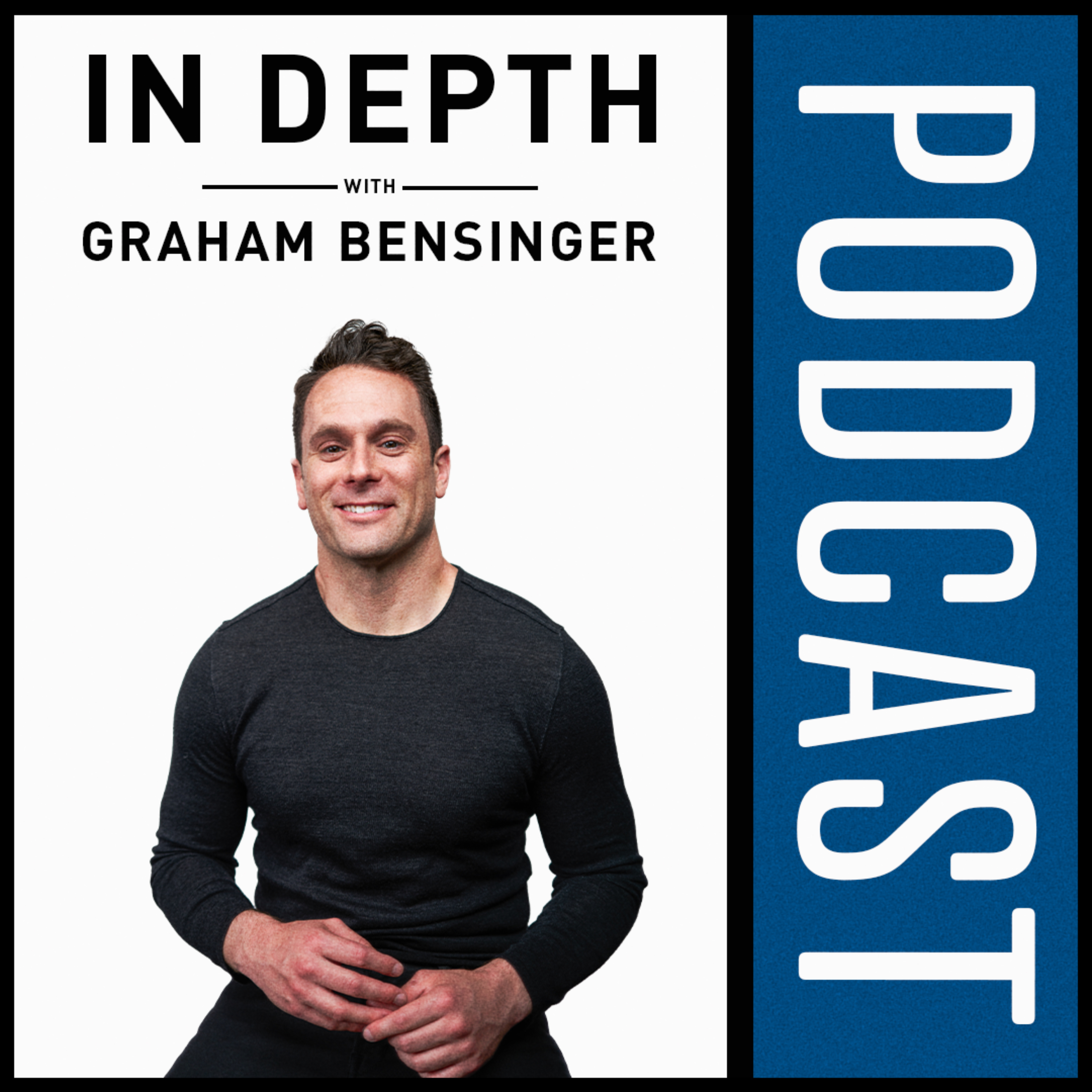
 In Depth With Graham Bensinger
16 Jun 2025 · 1h 22m · 39 chapters

Lindsey Vonn reflects on her life and career—childhood, Olympic pressure, injuries, retirement, and a possible 2026 comeback—then discusses her foundation and her efforts to improve U.S. ski racing, especially for women.
The episode’s guest is Lindsey Vonn, a three-time Olympic medalist and ski racing champion. She speaks from her home near Salt Lake City and discusses her training history, injuries, and post-retirement work.
Written by AI. May contain mistakes.
Explore Lindsey Vonn's transition from Vail to Utah after retirement.
“It can help you with practically anything on the web, like restoring a vintage motorcycle from a 50-page restoration block, or finally break down that long article you've had open for weeks.”
Explore Lindsey Vonn's transition from Vail to Utah after retirement.
“She also looked back on her early days of training.”
Lindsey shares the struggles her mother faced during her birth and how it inspired her.
“but what was involved with finding this place?”
Understand the dynamics of growing up as the oldest of five siblings in a busy household.
“My mom is just, like I said, she's an inspiration to me.”
Discover Lindsey's early dreams of becoming an exceptional skier.
“I mean, my parents were working full time and I was, of course, skiing and traveling most of the time.”
Learn about the family's decision to move to Vail for Lindsey's skiing career.
“It was the best ski racing program in the country and obviously it had mountains.”
Lindsey discusses the emotional impact of her family's sacrifices for her skiing career.
“And you guys would occasionally sleep on the ground in the condo?”
Explore the financial difficulties the family faced while supporting Lindsey's skiing.
“It's just, you know, everyone feels like it was all worth it in the end.”
Hear about the valuable advice Lindsey received about being herself in skiing.
“Yeah, my mom was was definitely good at at finding deals like she's always she's like a salesperson.”
Lindsey reflects on how she overcame doubts from coaches and critics early in her career.
Lindsey Vonn shares her early struggles with self-doubt and how it fueled her to succeed.
“And, I mean, that was literally right outside my door, and I could hear it crystal clear, and that was very traumatic for me as a 16-year-old.”
Lindsey discusses her transformation into a stronger athlete through rigorous training and growth.
“It took me quite a while to still prove myself to them for some reason.”
She reflects on her mental toughness and the challenges of self-criticism as an athlete.
“So if you're not winning, then kind of what's the point?”
Lindsey grapples with her definition of success and the pressure of meeting high expectations.
“I mean, I'm still, you know, I have a lot to work on, but I think I've, you know, after skiing, I think I've accepted that I have had success in my career.”
Exploring the exhilarating freedom and adrenaline of ski racing, Lindsey expresses her love for the sport.
“You said once before, all I've ever wanted to do is ski fast.”
She explains the importance of visualization in her training and how it contributed to her success.
“Um, but I don't ever think about it because I enjoy every moment of it.”
Lindsey reflects on her family's support and the emotional impact of her Olympic achievements.
“And you said, once I visualize a course, I never forget it.”
Lindsey shares her journey of mending her relationship with her father post-Olympics.
“But, you know, I think it was like six years for you where you guys didn't talk.”
Lindsey discusses the complexities of family inclusion in marriage and personal relationships.
“And she told me about how when she was with her ex-husband and she's like, look, it's my fault.”
Lindsey reflects on the impact of her grandfather's passing and the importance of family ties.
“It took a little while, but it was pretty quick, like a couple weeks, you know.”
She shares lessons learned from her grandfather about wit, humor, and hard work.
“I mean, I talked to him on FaceTime like two days before he died.”
Lindsey describes how skiing served as an escape during her divorce, allowing her to regain control.
“He worked in construction his entire life, I believe.”
She discusses the evolution of her self-confidence and the importance of making her own decisions.
“Ski racing is the place that I can go and I can not think about anything else in the world.”
Lindsey talks about her experience petitioning to race against men and the challenges she faced.
“You petitioned to compete against the men on the World Cup circuit.”
She reflects on the perception of female athletes in skiing and her own competitiveness.
Lindsey Vonn discusses the perception of women's skiing and the resistance to competing with men.
“No, those guys are way too strong and powerful and I can't do what they do on skis.”
Vonn shares her thoughts on media portrayal of Mikaela Shiffrin as the greatest skier and its implications.
“And I accept that, you know, she's not responsible for what other people write about her.”
Vonn reflects on her relationship with Mikaela Shiffrin and the importance of mentorship in sports.
“we didn't have a challenge relationship she just she had her own thing and she didn't really want to be involved or have my help or have anyone's help for that matter so um and everyone has their own path.”
Vonn discusses her efforts to improve the U.S. ski racing system and challenges female athletes face.
“We don't really have a lot of athletes coming up in the ranks, especially on the women's side.”
A detailed account of Vonn's injuries throughout her career, highlighting the physical toll of ski racing.
“I want to take you from injuries in retirement to then the production company and foundation in the remaining time I have with you.”
Vonn shares her harrowing experience with nerve damage and the rehabilitation process that followed.
“Yeah, most of those that I just rattled off are all surgeries.”
Lindsey Vonn discusses her tough recovery process after a severe injury.
“I just have to work hard to get it back.”
Lindsey Vonn shares her struggles with the decision to retire from skiing.
“I didn't know what would happen, but I knew that that would have been a great opportunity for me to have another chance at Olympic medal.”
Lindsey talks about her life after skiing and discovering new passions.
“So how many times, like I don't know, is there maximum knee replacements you can have?”
Lindsey discusses the loneliness of being an elite athlete and her experiences after retirement.
“having time to myself and with my family and, um, you know, I can go on vacation whenever I want.”
Learn about Lindsey's experience taking a course at Harvard Business School and its impact on her business acumen.
“The deeper you get into it, like the more time you're away, the deeper you dig in on your life revolving around skiing.”
Discover how Lindsey's foundation has made significant positive impacts on the lives of young girls.
“that's new it can help you with practically anything on the web like restoring a vintage motorcycle from a 50-page restoration block or finally break down that long article you've had open for weeks.”
Explore how Lindsey's foundation connects young girls with role models and provides support.
“What about her story resonated with you so much?”
Lindsey Vonn shares emotional moments from her past and the interview experience.
“Ski Center of Excellence, go to youtube.com slash Graham Bensinger.”

Get the gist, explore an idea or ask about something said.
 Claude
On In Depth With Graham Bensinger, what are the key points of this episode?
Searching your listeningAutomatic transcript. May contain errors.
0:01This episode is brought to you by Google Chrome. You think you know a browser, but Gemini and Chrome, that's new. It can help you with practically anything on the web, like restoring a vintage motorcycle from a 50-page restoration block, or finally break down that long article you've had open for weeks. Gemini and Chrome is here for it. Ready to make anything online make sense? There's no place like Chrome. Check responses set up required, compatibility and availability varies 18+. Jägermeister knows that there's people who watch the game and people who know the game. Knowers, no rivalries aren't heated.
0:33They're ice cold. They know rankings change. Traditions don't. And they know that when you drink Jägermeister on game day, you drink it ice cold. Otherwise, you just don't know the game. So drink it ice cold or don't drink it at all. Jägermeister, damn that's cold. Drink responsibly. Jägermeister liqueur, 35 % alcohol by volume. imported by Mass Jägermeister U.S. White Plains, New York. This week on the In-Depth Podcast, ski racing champion Lindsey Vonn. I'm an adrenaline junkie. You know, I love going fast. I love pushing myself to the limit. The three-time Olympic medalist is eyeing a comeback for the 2026 Games after initially retiring in February 2019.
1:17We chatted at her home just outside of Salt Lake City the following year as she was grappling with potentially never skiing competitively again. It's kind of traumatic. It's like something died. She also looked back on her early days of training. A lot of coaches tried to change my technique and say that I'm not good enough. Discussed the thrill of reaching the sport's ultimate peak. When I won the Olympics, it was probably one of the greatest runs of my career and I think the most intense amount of pressure. And explained how she found a new purpose through her foundation. I mean, you take a child that wants to kill herself, and I can help her.
1:57But our conversation began with Vaughn reflecting on her childhood.
2:06If I can't, if I don't look at you in the eye, it's because it's bright. It is very bright. It's like almost deceiving how. Yeah. Yeah. It's very. intense son here in Utah. All right, well, first, before we get into your life, tell us about where we are. We're at my new house in Utah. I was living in Vail, obviously, for pretty much most of my childhood, and I just felt like I needed a change, you know, after retirement. I felt like Vail just reminded me of all of my hospital visits. I think I was at the Vail Hospital more times than not, and I knew everyone by their first names, which is not a good sign.
2:53So I just felt like I needed a little change of scenery, and got a place here in Utah. My good friends are here. My friend Claire Brown, who's running my production company, is here. So a lot of reasons to be in Utah right now. And we're going to talk about that some later, but what was involved with finding this place? You know, I was just looking for another mountain home that, you know I could escape to basically I love the mountains and I just I wanted to have that piece of me still even though I didn't really want to be in Colorado anymore so hard to find this one or like when you saw this one did you immediately know this was it actually yeah this was the first house I looked at the first house you looked yeah I'm pretty good at Zillow like Zillow is my wheelhouse so I can usually weed it down to the top three houses and then within those three I usually find my house I'm like I'm very um like I need good energy and and I can tell usually with the layout what I like and what I don't like and this house actually reminds me of my house in Vail um but I think for me also I wanted a little bit more privacy um and so I got what is it 24 acres so that works yeah so my dogs can now run around and i mean i still have to keep an eye on them because there's a lot of animals around moose and bobcats yeah yep but uh this is my new sanctuary and my new uh retreat um all right so i want to take you back to your earliest days and obviously challenging pregnancy for your mom.
4:37If she had a stroke while giving birth to me and there was a 50-50 chance that she would survive. My mom was in the hospital for, I don't know, six to eight weeks. Thankfully we all made it through. And then my mom, who's an incredible warrior, then had four children. My mom is just, like I said, she's an inspiration to me. Whenever I've been injured, I always look to her and I say, well, she can't recover from what happened to her and I can, so I should just probably put that into consideration and realize that I'm very lucky and not complain and do the work and get better. What did the recovery process entail for her to get back to where she is now?
5:17I mean, she's still trying to find ways to walk normally. She has a limp in her leg. Oftentimes with strokes, there's always one part of your body, usually one half of your body that is impaired after the stroke and she had she couldn't push off of her foot she kind of had dropped foot and she's still swimming and like she's still trying to keep it activated but it just she did like electro stimulation she's had surgery on her foot she's really tried to make it better but nothing's really done the trick so but for me it doesn't matter if she gets, I mean, she's my mom. I love her no matter what.
5:58So what was it like growing up with four siblings? It was chaotic. And I was the oldest and I was like, you know, the captain of the ship. And, you know, we always did dumb stuff, you know, I choreographed like dances and we would put on like shows and like we would dress up and do photo shoots. Like we were just kind of, I was in charge of four kids, you know, which is should never put me in charge of four kids. Were you a good older sister? I was pretty good, but you should ask them. They probably say I torture them. I was, no, I liked kind of being motherly with them and taking care of them.
6:40I mean, I made them lunches for school. When I got my license, I would drive them to school and pick them up. Like I really took it on myself to take care of them as much as I could. I mean, my parents were working full time and I was, of course, skiing and traveling most of the time. But I always tried to do my part and help whenever I could. So when you're seven years old, your teacher asks you to write down your goals or your dreams. What do you remember? I said I wanted to be the greatest skier of all time. And it was just weird. I don't know where that came from because I had never really, from my memory, I don't remember, you know, wanting to do that at that age.
7:19Or I didn't really have any visual examples. You know, I never really watched skiing except for the Olympics. It wasn't on mainstream TV. So I don't know really where that came from. But growing up, I always practiced my signature, too. It was like, I'm going to be famous one day. And I'm going to, you know, have a really pretty signature. and um is your signature the same now as it was when you were practicing yeah which is weird I don't know my always I mean my dad he always he's a lawyer and he had beautiful handwriting and I just tried to always be like him and so I copied it and that's kind of how I signed my name what do you remember from when the idea first came about that you needed to go to Vail my dad had the idea to go to Vail.
8:01It was the best ski racing program in the country and obviously it had mountains. In Minnesota we didn't. And so he knew that if I wanted to you know grow and expand as a ski racer I needed the mountains. So Vail to him was like a logical choice. I started going out there with my mother I think when I was 11. Drove 18 hours from Minnesota and we would stay there for a month or two, race, train, and then come back. And then eventually, you know, my mom didn't like being away from the kids. And I felt like it was splitting up our family between Minnesota and Colorado. And so we all moved out to Colorado, but then my dad was still working in Minnesota.
8:40So either way, like it was just a really hard situation for all of us. But. And you guys would occasionally sleep on the ground in the condo? Is that. Yeah. You know, when we were originally, When we originally moved to Vail with the whole family, we were in a small townhome condo, and there was only two bedrooms for the kids, and there was five kids. So the boys always slept in a room, and then Karin, Laura, and I shared a room. And there's only two beds. We would draw straws. Somehow I may or may not have always had the longer straw, so Laura and Karin may or may not have always been on the ground.
9:21but we definitely had our moments where we were all on the floor. How did you and your siblings find out the Minnesota house was sold? My parents just had to make a decision based on finances and they just said, you know, we sold our house. And we're like, what? You know, we didn't, you know, we're kids. We think that our opinion really matters. but they needed to make a decision for the family, and they did that. And we were definitely shocked, very shocked. How did you guys handle it? We didn't handle it very well. I think we were all crying pretty intensely. And my siblings missed their friends and their school.
10:07And ski racing was my dream. It was never really their dream. So in that way, I felt exceptionally guilty because, you know, they they didn't ask for it. I mean, yes, living in Vail was an incredible opportunity and it's a beautiful place and no one should complain about living in Vail. But, you know, I think they just they miss their home in Minnesota. And and I felt like I kind of took that away from them in a way. And guilt even I mean, even then, when you're that young, you were that aware. to yeah because i mean it was the decision was made for my career and that was pretty clear so i knew from a very early age that uh there's a lot of expectation on me how much pressure did that cause you to feel i mean i always wanted to succeed for myself but there was I think always in the back of my mind that feeling of you know I have to do this to you know for my family to prove that that they made the right decision and and I deserve you know to to have the family make these decisions because I am going to be you know good one day and so I always had that in the back of my mind and I think that's why you know when I won the Olympics it was so emotional for me because that is what our family gave up everything for so that I could succeed and and win that gold medal and and it was um you said it almost validated the yeah 100 % I mean I felt a lot of joy but I would say more relief than anything else you know because that had been the ultimate goal that we had set out to do and we finally did it and it was you know everyone was crying it was it was like waterworks and siblings have a hard time having that conversation organization as well.
12:02It's just, you know, everyone feels like it was all worth it in the end. The early, like, financial challenges associated with just the pursuit of your dreams. I think I read somewhere you said there were rules the family put on buying groceries after you guys moved to Vail, right? Yeah, I mean, you know, my mom, my mom's just, she's like a coupon cutter. She loves coupons and like we're always trying to save money wherever we could. And, you know, I wouldn't say there were rules, but I think there was always, you know, a sense that we needed to make sure we were smart about what we did. And. Yeah, my mom was was definitely good at at finding deals like she's always she's like a salesperson.
12:52And like if there's a sale anywhere in the vicinity, she's going to find it. And like that's where we're going to go. How about best advice you got as a young skier? I'd say best advice is just to be yourself. You know, Eric Seiler always said that I'm fast the way I am. My old coach in Minnesota. And a lot of coaches tried to change my technique and say that I'm not good enough or, you know, the way you ski isn't ever going to be good. and he just said the reason why you ski that way is that's who you are that's what your body is and you can't change it so I always stuck to my guns and never really changed it and yes it got me into trouble I crashed in a lot of races but it also won me a lot of races so in the end I think Eric was right and that stuck with you from when he told you that early on yeah and I think it applies to everything honestly you know um there's only one of yourself so you just gotta be who you are and accept it and and um not let anyone try to change you you're 16 17 years old on the u.s ski team and you overhear people in the hallway talking about how she's never going to be anything My coaches, I overheard them, and they, yeah, they said that Julie Mancuso is going to be the next best thing, and I wasn't going anywhere, and they should just put all their money on her because she's going to go to the 2002 Olympics and not me.
14:25And, I mean, that was literally right outside my door, and I could hear it crystal clear, and that was very traumatic for me as a 16-year-old. How did it affect you at the time? historically in my life, any person that tells me that I can't do something, I'm going to work as hard as I possibly can to prove them wrong. So in a way, I think it motivated me. And I proved them wrong. I was in the Olympics. I had the best U.S. women's results of the whole Games. And somehow that didn't actually validate anything to them, but for me it was... It didn't? No. It took me quite a while to still prove myself to them for some reason.
15:07I don't know. They just didn't really think that I was, I had the body. At the time, I was, you know, incredibly skinny. I was like a size two jean. And, okay, yeah, I see that maybe I wasn't the right body type at the time. But I definitely grew into my body. And I think I turned out to have pretty good genetics for downhill skiing in the end. Well, on that front, I read that you trained so hard that I think you said something like you weren't even the same human that made the Olympic debut in 2002. Yeah, I definitely was a different person then. I think every year I've gotten stronger and smarter as an athlete, as a person.
15:49You know, I've always tried to keep my mind open to learning and growing. and um and yeah I've I've I've always tried to be better and because of that I've I've gotten so much stronger and and you know I've changed so much since that time I I'm definitely not the same person that I was and I'm glad I'm not because I was you know stupid 16 year old that you know I wasn't in great shape you know I thought I was but compared to now it's like you know it's it's just different when you're a kid you know you have a lot to learn and thankfully I feel like I learned quite a bit in the last couple of years what did your dad used to tell you about how there are only two places in a race yeah I mean you're either first or last it's like you know bottom line and uh it's not that he didn't accept you know not winning it was just that ultimately the goal is to win.
16:47So if you're not winning, then kind of what's the point? And so I kind of got to that stage in my career where I was, I had plateaued. I didn't, I wasn't really, I wasn't making any progress. And that's when I kind of really bought into physical training. I went to Monaco, hired this trainer. I've never been pushed so hard in my entire life. to this day. I don't even think I've been pushed that hard. It was almost like Navy SEALs training. Like it was, you know, waters for wussies and, you know, it's like it was old school, you know, push yourself to the max, like run until I tell you to stop.
17:24I'm surprised I didn't puke because I felt like I was going to puke all the time, but that was kind of, you're constantly in a state of complete exhaustion and you have to still push yourself beyond that. And helpful. I think it definitely toughened me up quite a bit. You know, he'd always call me fat and like, you know, it was just kind of, I was definitely a much different person coming out of those training camps with him. And now I know, you know, what my limits are. And I feel like that made me have a perspective that I don't think very many people have. I don't think many athletes are going to military boot camps because that's definitely what I felt like I did.
18:10And so, like I said, it just gave me a different perspective on what hard work really is and what my limits are as an athlete and mentally what my limits are. How hard are you on yourself? I'm definitely the hardest critic. I'm pretty hard to please. I have a hard time saying that I did a good job at something. Working on that in therapy. Has it helped? Yeah, it definitely has. I mean, I'm still, you know, I have a lot to work on, but I think I've, you know, after skiing, I think I've accepted that I have had success in my career. and even though it wasn't, you know, the pinnacle of, you know, I didn't beat the record four wins shy of that, I still need to accept that I did something that no one else has done.
19:03And that's just, I don't know, it's weird. I don't really, I still feel like a failure at times. Because of that? Yeah, yeah, because of that. But, I mean, and this is coming from somebody who knows very little about, you know, skiing outside of preparing for the interview. But you accomplished what you did competing in five different disciplines, right, versus the record that was set was in two. So, I mean, you could, most people can make the strong argument that regardless of the record, you're still the greatest skier ever to live, independent of gender. Well, thank you. I appreciate that. I don't know, I think there's always going to be a question because I didn't break the record and I can't say that I have the most wins of anybody and without being able to say that I feel like I can't really say I'm the greatest.
20:03Whenever I won one thing I wanted to win the next and you know it wasn't that I set out to do all these things but I just kept wanting more and more and more and nothing was ever really good enough so to your point as I I don't really accept success and, again, therapy. You said once before, all I've ever wanted to do is ski fast. I'm an adrenaline junkie. I love going fast. I love pushing myself to the limit. I love the freedom of ski racing. There's no one out there judging you. It's not a contest. It's whoever's fastest from point A to point B wins. I feel like I can push myself, and I can't push myself like that.
20:52Maybe in the gym I can to an extent, but it's not the same feeling. Skiing is just very freeing and invigorating and very difficult now that I don't have that because that was always my outlet. And so, I don't know. Driving my car fast isn't really helping either. So, trying to. I understand you're known to do that too, whether it was on like European mountain roads when you were skiing or like grabbing the wheel when your mom's driving. Yeah, I mean, my mom, yeah, I had many trips with my mom where I had my driving permit and I was doing 18 hour drives. And I'm like, mom, you drive too slow. I can't, you can't drive.
21:36I'm going to drive the whole way. How about the fastest you've ever gone on skis? In training, I was clocked at 84. but I think it's probably around there, 85, 86 is top speed. If you're on the highway, stick your head out the window, obviously not if you're driving, but stick your head out the window and that's kind of how it feels with the wind in your face when you're skiing down the mountain. And then jump out and that'll feel like what it feels like for us when we crash. How key is avoiding thinking about the danger element to it? Even though I've been injured many times, I love it so much.
22:13There's nothing about it that frightens me. You know, I love like the faster I go, the more fun I'm having. Um, and crashing is just a part of our job. You know, that's, that's always been the risk inherent risk. That's always been there. Um, but I don't ever think about it because I enjoy every moment of it. And you know, the downs also make you appreciate the highs a lot more as well. So it's all about perspective. And he's not thinking about the danger unique to you or consistent among all elite you know I mean it's the same for all of us you know there's people that have been paralyzed lost their legs there's people that have died you know those are the risks that we take and everyone knows that describe how you'll run a race in your mind I mean I visualize every course that I've ever run I learned it at actually in Vail we used to kind of watch we used to watch Lake Louise which is I think one of the reasons why I was always so good at Lake Louise is when I was a kid we used to watch the race on TV which is one of the few races that was on TV and we were told then to visualize that course after we watched it and And they would time us to see how accurate, like it really, like how close you could be to the actual time that they skied.
23:36Really? Yeah. And then we would do that with courses that we would run on Gold Peak. And same thing, we would try to be as close as possible to our actual times. And, of course, you can fake it. You know, you can pretend. But I always really tried to, you know, be as accurate as possible. and I challenged myself in that way. And it really transitioned so well for me when I got to the World Cup. I mean, you have to know exactly where you're going at all times. And the moment you forget or, you know, you are a little bit too far left off the jump, then you're going to crash. So I'm lucky that I was taught that, but also that I picked up on it quickly and it really came naturally to me.
24:23And you said, once I visualize a course, I never forget it. Yeah. I mean, at least the World Cups, because I've run them a million times. But I'd say when I was a kid, I probably don't remember those courses. I'm a little too old for that now. I mean, how clear would the World Cup ones be in your mind? Oh, crystal clear. Yeah. I mean, like, I've run it thousands of times in my head. So I could do it right now. It's pretty easy. Your first Olympic race, your mom at the time called it the best day of her life. Aw, she did? Why? I think for our family, making it to the Olympics and winning at the Olympics, those are things that we all worked for as a family.
25:07You know, we've all sacrificed for it. So I think it was a proud moment for our entire family when I did make it. Because like I said, it became worth it. I mean, I think it was always worth it to them, you know, towards the end. But I think winning the Olympics just solidified it. The gold medal in the downhill at the Vancouver Olympics, you just sort of blacked out, apparently, according to you. Yeah. I mean, you know, when I won the Olympics, it was probably one of the greatest runs of my career. And I think the most intense amount of pressure. And I was definitely, you know, in the zone to the point where I have zero recollection of anything.
25:49I remember the start, and I remember almost crashing by the finish because my shin was hurting so bad. And then I remember seeing my name in green, which means you're winning, and then I freaked out. Your dad. Complicated relationship. You called winning the Olympic gold the highlight of your career, but I guess you've since said you wanted to call your dad at the time, but you didn't. Why not? at the time you know things weren't great between us and um it's unfortunate because that was definitely one of the best moments of my life and i wanted to share that with him but i'm just happy that things with my dad are good now so we were uh we taped an episode with lewis hamilton where he he's a good friend talked about you know going through something similar with his dad and it It wasn't until recently that they patched things up.
26:47But, you know, I think it was like six years for you where you guys didn't talk. What was the point in which at the time, based on whatever you're thinking was then, you made the decision best for me to just cut things off? You know, I was married and we had just kind of gone our separate ways. and when I got divorced then you know I obviously called my dad he's a lawyer and it was hard at first but we definitely worked our way back into it and eventually built up our relationship to what it is now. And he said that at the time he called emailed. I didn't see any of those you didn't see any of them I don't yeah I didn't see any of them but that's not to say that he didn't write them I just didn't see them because you had him him blocked or you just don't know if that actually happened I know why but I can't really tell you so they were probably deleted So that's interesting because I know I keep throwing out names.
27:57We taped an episode with Danica Patrick not too long ago at her vineyard in Napa. Nice. And she told me about how when she was with her ex-husband and she's like, look, it's my fault. I allowed it to happen. But unbeknownst to me, he kind of pushed my family out. To what extent anything. anything similar for you? Yeah, I mean, I think it's marriage can be interesting. You know, I think everyone wants to include both sides of their family when they get married. You know, that's ideal. Sometimes it doesn't work that way. And, you know, for whatever reason over time, it eventually gets to kind of a point where it's difficult to go back, you know, and, you know similar maybe not similar to Danica but I think you know we were in a tough position because we were working together and yeah it was just it was hard I I guess I didn't really see it kind of eventually over time became what it was and And, you know, I was also, I was married at 22.
29:15So, like, what did I know? I was so hyper-focused on skiing that I didn't really see a lot of other things that were going on. And it's unfortunate, but you live and you learn, you move on, and here I am. How quickly did things get back to normal once you guys reconnected? It took a little while, but it was pretty quick, like a couple weeks, you know. a couple weeks is nothing yeah it was good it was i mean i think we both had a mutual understanding of certain things and uh you know your family he's my dad so you know it's pretty easy to rebuild a relationship with your father i did wonder though when you guys haven't talked for a while and then all of a sudden he gets a call from you asking for legal advice which was, well, I mean, it's kind of like, Dad, help me out.
30:07Well, you know, I think anytime, you know, you're in a hard spot, your family is always going to be there for you. And, you know, of course, my siblings have always been so supportive and helped me in so many ways. And, you know, my parents as well, you know, when I really need them, they're always there. And I think the same goes for me as well. Well, anyone in my family needs anything. I'm always there. How would you best explain the role your dad's played in your life? You know, my dad's always been, he's been kind of the figurehead of our family. You know, he definitely helped me get to where I am in my career.
30:53I would never have been, I mean, I wouldn't have started skiing, you know, if he hadn't taught me. And he was always, yeah, he was like the leader of the pack. You know, he was a lawyer. He helped my career. He helped everyone in our family. And he was a dad. How do you think your grandpa Don's passing impacted the desire to reconnect with your dad? I think my grandfather's passing helped not just my dad, but with everybody. You know, I just had a different perspective. And I mean, you know, you always know that your grandparents are going to pass away at some point, but it still was unexpected.
31:44I mean, I talked to him on FaceTime like two days before he died. and um I just when he died I went through as funeral I went through all of the pictures that they had and of the family and all these Polaroids and I was like a number one I need to be better communicating and and you know have more time for my family because one thing I do a lot is I'm really really busy and I like being busy um and I just need to sometimes take a break and enjoy the time that I have with my family and also I want to take more pictures like I realize that you know we've got a million pictures on our phone but I never actually had any pictures of you know any of these experiences that I've had and I've never printed them out and you know they kind of get forgotten and so now I take tons of Polaroid pictures and got albums and albums full and you know it just kind of makes you reflect and you see things like unless you have you know like your Facebook memories that pop up you know like what happened 10 years ago you don't like you don't really look back that often and I like having my Polaroids out so I can look back and really appreciate you know what's happened and and where I am now.
32:59What do you think you learned from your grandpa? One thing my grandpa always was, was very witty. You know, my grandpa was, he always had these like one liners. He just would zing you and you wouldn't even see it coming. But he just like, like, oh, how's it going, grandpa? He's like, well, I'm above ground. It's a great day. I'm like, what? And that was like, you know, 15 years ago. And he's like, if it don't hurt, it don't work. And like, he always like random stuff. he was like he always said something about like oh well he had like a bunch of he had so many it just he would catch you off guard you know I would try to be like nice and like you know I think he was tired from working and I'm kind of you know going for a hug and then he just like zing me I'm like you know I think and he always had like he had a nub finger his index finger on his right hand he um it was he lost it during like he was an engineer and something happened I think it got run over by whatever it was you almost had that in common with your thumb I know like my my hands are so messed up um I definitely take after him in that way but he would always like shake his nub finger at you and like make you feel like you did something wrong and then he would like make a joke and laugh and I think I don't know for some reason my sister Karin and I always do that and my brother read actually my my dad always does that he always has like you know he's very charismatic and always can like light up a room and that's definitely one thing i think that we all have in common i don't think i light up the room like my grandpa my dad do my sister does but um i usually i'm kind i'm not always but i'm i can be funny yeah my siblings say i'm not that funny, but I definitely think that I'm funny and I take after my grandpa, I think.
34:56He worked in construction his entire life, I believe. What do you think that taught you about work ethic? Oh, I mean, between my grandpa, my grandma, my dad, I mean, there was no shortage. And my mom, there's no shortage of examples of hard work. You know, I spent pretty much every summer growing up at my grandparents' house. And, you know, he was gone before I woke up. He probably left the house at 5 o 'clock in the morning. My grandma would be up with him, made him his coffee and his bagged lunch, and he would go to the shop, and I wouldn't see him again until 5 or 6 at night. He'd come home, smell of oil and grease, and just be filthy.
35:38He always wore his Oshkosh-Bagosh overalls. That was, like, his thing. White T-shirt, Oshkosh-Bagosh overalls. and he just came home always tired and smelling of like sweat and hard work and I never once heard him complain. He had triple bypass surgery and then he went out and kept working again. Like that is just like we're stubborn and we work and we work and we work until like we are running to the ground. That's kind of our mentality. How was it when you were going through your divorce that you managed to have the greatest season ever by a woman in World Cup history? Because I was using ski racing as an escape.
36:24Ski racing is the place that I can go and I can not think about anything else in the world. And so no matter what happens in my life, divorce, family, whatever it is, I can always go skiing and only be skiing. You know, be in the moment, not have anything on my mind, but enjoying what I'm doing. And you said back then for the first time in your life, you realized you were skiing solely for yourself. It's always been me in the starting gate. But I think, you know, others' expectations and, you know, how things kind of were dictated to me and the way that, you know, I trained and, you know, how I approached everything, that was not...
37:07Because if it wasn't your ex, it was your dad before that. That was, yeah, or my coaches. You know, I'd never had enough confidence in myself to say, no, that's not what I want to do. I want to do something else. And so I finally, you know, realized that I'm the one that's there. I'm the one that's putting in the work. I'm the one that's risking my life. I became in control of my life on the hill and off the hill as well. You know, I have been like the most not confident, confident person. My friends have told me that many times. They're like, you're the most unconfident, confident person I know.
37:47And it's because I was always very timid off the hill. You know, I'm not really socially outgoing. You know, I would prefer just to stay at home. And so it just took me, it took that for me to realize that I'm in control of myself. I have the confidence to do what I want to do. I don't need to be in the shadows, you know. I can be who I am and be proud of it. And how do you think that then impacted like future, whether relationships or how you manage people that got involved in your career? I think I just made sure that, you know, my decisions were mine and mine alone. and I get advice from other people but I made sure that no one was dictating anything to me and that helped me I think once you set the boundaries in relationships early on then it's pretty easy but you know if you're timid and you don't set those boundaries then it can creep up and you eventually get to the point where you know you're not making decisions someone else is and what do you mean you're timid like you don't strike me as somebody that's like afraid to speak up for yourself.
39:08I'm a pushover. Yeah. I have a really hard time saying no. Hence why I'm doing this interview. Oh. Oops. That was a good one-liner. That was an easy tee of thought. Your grandpa would be proud. You are kind of funny. He would be. He would be proud of that one. That was a good one. Skiing against the men. You petitioned to compete against the men on the World Cup circuit. Why decide to do it? I had been training with the men since probably 2011, and I never usually timed with them because I'm like, ah, you know, I don't want to lower my confidence, you know, and get my ass kicked and then, you know, not feel good about the training sessions.
39:49A couple of times we did, we did like video analysis, and I was like right there with Axel, arguably one of the greatest downhill skiers of all time. And I was like 200s or 300s behind him. I was like, holy s***, you know? I could could I be competitive with the men and you know some of my coaches were kind of joking about it I'm like it was an interesting concept you know what a way to to push myself because that's why I trained with them to begin with is because they're much better than I am and I want to learn from them and I want to be a better ski racer so I was like well this would be the ultimate you know it's like what Billie Jean did or what Annika Sornstan did it's like you know it's not so much that you want to beat the guys it's that you want to be a better athlete that's what annika always told me and i you just have to be really persistent you know you have to really do your research and come up with you know a good solution and i i tried that but no one like my my plan never really got past the front door i don't even think they even read my petition and they said really clearly states and the the international ski federation rules that um women's world cup is for women and men's world cup is for men and um they're like you can four run like well what does for running do like it's i want to i would start last you know i want to be you know i don't want to have it be for running and then i'm running first and it's like well you're for running so it doesn't really count you know i wanted to i wanted to be a race you wanted to i wanted to see i want do I where do I stack up you know am I you know 10 seconds off am I five seconds off am I like kind of in the mix um but unfortunately I never got that opportunity I tried until the end but also in the end I was so battered that I don't think I would have been even remotely as competitive as I would have beforehand so um why do you think they like denied the petition outright I think some guys were worried that I would beat them I mean I got a lot of support from a lot of people Axel and the Norwegian team was one of them they were definitely wanted me to try it but so I mean I would train with the Canadian guys sometimes and like they always had a bet that whoever got beat by me would have to do the dishes that day and like there are people doing the dishes trust me so um you know I just don't think they like the idea of a woman racing with men it just you know it's always been the perception that women's ski racing is so much inferior to men that you know how could you compete and so they were very close-minded to the idea how do you think you would have fared i have no idea which is why i wanted to do it you know maybe i would get 30th maybe i'll get 50th i like i don't know you think you could have won no i absolutely don't think I could have won.
42:47No, those guys are way too strong and powerful and I can't do what they do on skis. I want to. If we, you know, did, you know, that's why I wanted to do Lake Louise because I actually, I think would have much better chance racing that, but, you know, put me in Kitspeel and Vang and I'd probably, you know, knowing myself, I'd probably kill myself, you know, I'd try too hard and then I'd do something stupid. So, I mean, how short-sighted was that though on the the federation's part to not allow it i mean just for no other reason than exposure that's what i mean the canadian federation was all for it because obviously it was in lake louise and they thought it was a great idea it's just the mentality of ski racing you know a lot of male athletes were like this is a joke you know she's a woman like she has no chance like what this is just for pr and i was like there's a lot of things i could do for pr that you know don't involve me trying to petition like there's a lot of work that went that was involved with trying to do this and um so i don't know i just think it's closed-mindedness maybe michaela schifrin uh when outside magazine declared her the greatest skier ever uh why did it bother you well you know she is the greatest slalom skier you know ever that's without question um but you know I think there's a lot of sensationalization that media does a lot and you know they take one thing and then they kind of generalize it and it becomes something totally different and you know that was at the time I was still racing I was still winning and it's it's great for her but I feel like it was pretty disrespectful to me um and that's not really journalism you know that's that's not a that's just not how I would do things.
44:38You know, that's, but that's media. And I accept that, you know, she's not responsible for what other people write about her. What did you do after they did the story? I don't know. I tweeted something probably. I'm like, I usually don't like it. It's not that it bothers me. It just, you know, I felt like it just wasn't accurate and it's not being honest. and say it. She's the greatest long skier of all time. Just say that. It's not that hard. Don't make it something that it's not yet. I've been told that you guys have at least somewhat of a challenged relationship, and I don't know if that's the case now or if that was the case earlier on, but I was going to ask, we did a taping with Brett Favre, and he was talking to me about how him and Aaron Rodgers are close now, but when Aaron was his backup on the Packers, he said, Look, not my job to mentor Aaron Rodgers.
45:39I was kind of the opposite, though. Okay. I wanted to. The first day she came to train with us, I said, I know when you first come onto the team, it can be challenging, and you don't know anybody. and then just I'm my door is always open I'm I'm here to help you know I've repeatedly you know tried to you know we we always help each other with our course reports and I think I just I don't we didn't have a challenge relationship she just she had her own thing and she didn't really want to be involved or have my help or have anyone's help for that matter so um and everyone has their own path. I don't hate on that.
46:18That's totally fine, you know, but I think it was more of a challenge, you know, operating within our team because, you know, we had kind of our setup and we always lean on each other and, you know, she was kind of wanted to be on her own and that's maybe where that perception came from, but not really for me, more so with the entire team. To what extent has that dynamic changed since you're... It hasn't. It hasn't? No. Why do you think that is? I mean, I can't speak for anybody else but myself. I think that, you know, like I said, everyone has their own approach, and hers is different from anyone else's, and that's why maybe she's successful.
47:05But I also think as a professional athlete and, you know, someone who's the greatest of all time, And it's your responsibility to help others. Like you're in a role that you could positively impact so many people. And I don't feel like that's being utilized in the way that it could be. Really? What would you do differently? I should be a part of the team. You know, but that's how I operate. Like I said, nothing against her, but I have a different viewpoint. And maybe that's just because I'm older and I've experienced a lot. I've experienced not being welcome in a team. I've experienced being welcome I've I've kind of have a I have a full 360 perspective and you know as I was kind of the leader of the team for a while and and it's a you know I I know the feeling of not being not being involved in the team to the point that like you're winning and your teammates aren't in the finish area and I also know the feeling of being a leader and including everyone and being a team and having your team in the finish area.
48:10What do you think of the current state of U.S. ski racing? Well, I'm actually working with them right now to try to help the state of U.S. skiing. We don't really have a lot of athletes coming up in the ranks, especially on the women's side. I'm trying to figure out why that is and where the holes are in our system. I'm also trying to help the college athletes who have World Cup spots but aren't on the U.S. ski team. They don't have any support. They don't have any funding. They have really nothing. And so I'm kind of trying my best to, you know, help get them funding and help with organization.
48:56And I don't know how necessarily to make it better, but I'm trying step by step to do that. What do you think the biggest challenges are that they're facing? I think most female athletes, especially skiers, they quit. You know, it's not fun or it's too expensive. In Europe, you pay 15 euros and you got a lift ticket for the whole day. Here it's like 150. You know, so it's quite a difference economically. Yeah, I mean, I have a lot of concerns. I mean, I don't think that, I think that there's issues within the team currently. I think there's issues with the development team. I think, you know, they have some people that are trying to change that, but there are other people that I don't agree on there.
49:41I don't agree with how they're approaching it, and I don't agree with the way the athletes are treated, and I think that's causing, you know, a lot of people to quit, and it feels unattainable to them. I want to take you from injuries in retirement to then the production company and foundation in the remaining time I have with you. But first on the injury front, name all the injuries that you can remember getting. um yeah i've had two acls mcl i'd say probably four tibial plateau fractures on my right leg two on my left lcl on my left meniscus repair meniscus meniscotomy what was it well they cut your meniscus out um i've had humorous fracture spile fracture uh i've still got the plate and the rods in my arm.
50:43I've sliced my thumb. I've broken my finger at the Olympics. I've broken my ankle. Had a lot of concussions. Broke my wrist. I don't know. I think that's kind of it. How many concussions do you think you're getting? I don't even, I can't even count. I mean, just kind of, I crash a lot, so a lot. What about surgeries? Yeah, most of those that I just rattled off are all surgeries. It was just the broken ankle and broken wrist that didn't require surgery. If I could, I wanted to name a few and just get you to recall what comes to mind. The first one being your right knee bending inward sharply, and you talked about an odd sensation where almost your body was going over the tips of your skis.
51:34That was the Schlattming 2013, where I tore my MCL, ACL, typical plateau fracture, yeah. Ski stopped in the snow when I landed on the jump, and it was disgusting. Are you aware of what's going on in the moment, or is the pain such that? You don't really feel the pain necessarily while you're falling. That's kind of when you come to a stop, and then it's either sharp or it's not. And usually you know right away if you're in one. If you're in one, you know that you're in one. And so in that situation, when you come to a stop... I knew my season was over. I didn't know how long I would be out, but I knew it was out.
52:21How about November 2016? You severely fracture the humerus bone in your right arm in a training crash. That one was pretty gross because, you know, I crashed. It wasn't anything crazy. I just got my arm kind of stuck behind me and I fell onto it. And of course, when I crash, I always check my knees first. You know, am I good? My knees are good. Yep. Everything's good. and then I tried to get up and I tried to like move my arm you know to push off and like I would move my shoulder but the rest of my arm didn't move with it and I could like I could feel like the bone it was absolutely disgusting like I could feel that there are pieces of bone like I can't really describe it um it felt like my arm wasn't attached to me like I had this 15 pounds of weight that was not associated with my body um and then there was there wasn't enough snow to have the trail go all the way to the bottom so we had to evacuate me on a truck in a truck on a dirt road and uh i was in so much pain my physical therapist lindsey winninger had to keep hitting my face to keep me awake um and i had oxygen and we didn't something happened that day.
53:47The medical pack wasn't there, so we didn't have any pain meds. And by the time I got to the hospital, it had been about an hour and a half since my crash, and my nerve had popped out. What does that mean, your nerve had popped out? So, like, your nerve, so I had a spinal fracture. So it was, like, three chunks, like, three pieces of my bone, and it was kind of twisted around. And your nerve kind of runs up on the side of it, and it had popped like popped out and popped in between the bones so the bones were hitting on the nerve and that's why I was in so much pain and because it had taken so long to get to the hospital it had been a lot of a lot of damage to the nerve and I woke up from my surgery and I had no function or feeling in my my hand and I said I asked the doctor I'm like did you guys put some sort of nerve block because you know normally when you do knee surgery you have a nerve block you can't fit your leg and that's normal I said did you guys put a nerve block in and they're like okay this is worse than we thought Lindsay you have nerve damage we don't know how long it's going to take or if it's going to come back you know nerves are very hard to predict because they're the one of one of the slowest parts of your body to heal and so um I thank god for Lindsay Winninger because she she stayed up all night she did a bunch of research she found different techniques that we could use to try to rehab it and took like two months but she got me back and like I mean I had I had a stroke hand you know I it was curled up I couldn't I couldn't hold anything I couldn't I couldn't move it like I had I was trying to just after like three weeks I was just trying to flick something.
55:42I think it's really easy, but I couldn't do it. And no matter how hard I thought about doing it, it just wouldn't do anything. What are you thinking at the time? That was one of the most scary injuries that I've ever had because it's not like I get a surgery and I'm going to be fine. I just have to work hard to get it back. This was I don't know if it's coming back. And I've never had that experience before. normally in my life there's nothing that hard work can't fix and I really wanted to be able to write and put a hair tie on and feed myself and didn't know if that was going to be possible but we kind of did the opposite of what we the doctors told us we instead of icing it that's what you're normally supposed to do we go in a hot tub because heat stimulates healing and it stimulated swelling, but for the nerve, it was better to be in a hot tub.
56:40So we did all of our training in a hot tub. It was a long process, but definitely one of the worst, like scariest, most painful injuries. What was the point you realized you were going to get through it? When I could write my name. But it still, I got so tired because it was mentally draining. I literally, my brain hurt. It was so tired from focusing on like just holding the pencil in my hand But when I could start to like actually write and I could feed myself I Was pretty good eyeliner though on my left hand my left hand That was one thing that I was pretty impressed with myself. I'm like wow I could I'm close to being ambidextrous, but not really but at least I got my eyeliner when your trainer got pissed off at you for the broken arm pull-up uh doesn't really faze me very much where you yeah it's like that's you know i i always take doctor suggestion as like a suggestion and a negotiation as instead of like this is what it has to be so i'm like uh i know that you told me i should be in this walking boot for six weeks but i think four weeks is probably going to be pretty good for me you know i i like to and i usually get them to negotiate down you know I'm like uh that sounds a little too long like you know what do you get a doctor to negotiate that I mean medical advice is medical okay so it's like so you peer pressure totally totally uh you missed the 2014 Olympics because of injury but it was painful to watch very painful because I had done really well I had won I think I won the race um like the the raced before the Olympics the year before and it was a good hill for me and I was just like this episode is brought to you by google chrome you think you know a browser but gemini and chrome that's new it can help you with practically anything on the web like restoring a vintage motorcycle from a 50-page restoration block or finally break down that long article you've had open for weeks gemini and chrome is here for it ready to make anything online make sense there's no place like chrome check responses set up required compatibility and availability varies 18 plus How do you guarantee your Jägermeister is always ice cold?
58:57Well, you could move to Antarctica. Sure, frostbite is a thing. Your dating apps won't let you set your radius to 3 ,000 miles. And your neighbor is an emperor penguin who honks outside your igloo. Or you could just keep your Jägermeister in the freezer. Drink it cold or don't drink it at all. Jägermeister. Damn, that's cold. Drink responsibly. Jägermeister liqueur 35 % alcohol by volume. Imported by Mass Jägermeister U.S. White Plains, New York.
59:27form of torture for sure for me anyways it was i mean i mean that bad what like what are you thinking when you're well i mean you know for the olympics you work hard for four years you know obviously we have races and it's not just every four years but at the same time people in the u.s forget that too that you know the world cup might not be as significant in in the the states but it is like it is everything yeah i think that's one of the biggest misconceptions and not just with skiing but with most olympic sports they're like oh what do you do for the next three years i'm like well it's actually a race all the time um but you know it still is a large window you know you have four years that you're working hard for the olympics and i was in my prime you know and uh you never know what things will be like in another four years you know am i going to be too old to compete.
1:00:23So I just didn't know. I didn't know what would happen, but I knew that that would have been a great opportunity for me to have another chance at Olympic medal. And I didn't have that. But, you know, everything happens for a reason. Taught me a lot about myself. And I can handle a lot, apparently. Long-term damage to the body. How much, if at all, did you think about it during your career? I didn't really think about it, but now I think about it. Do you? Yeah. I mean, I'm in pain all the time. Like I work out not because, I mean, I love working out and I think it, it, it helps me, you know, get over ski racing, but I also have to work out.
1:01:09If I don't work out, my knee is an extreme pain. Like I have a hard time walking the dogs for 10 minutes. because if I don't strengthen my muscles around my knee, then it's bone on bone right now. And if I'm not strong enough, then it's unreal painful. And that's just one of many joints and injuries that I've had. So I'm really not looking forward to what things look like in 20 years. I'm thinking about how long do I wait until I get a knee replacement. You know, this is life now, so how do I manage this to live with as little pain as possible? And I'm trying to make it through because if I had even a partial knee replacement, I need another replacement in 10 years.
1:02:03So how many times, like I don't know, is there maximum knee replacements you can have? Like I don't know that. I've already had more stem cell injections than anyone they've ever done, and it's not really helping. So I don't really know what my options are at this point, but I'm hoping that someone comes up with something. Retirement. You had said around the time that you were retiring, I don't know that I can win anymore, and that's why I'm retiring. Explain that. Yeah, I just didn't physically I didn't know if I could do it anymore, you know, and if I'm not winning, then why am I putting my body at risk?
1:02:44It's already damaged enough as it is. So kind of what's the point? You'd said the night before your final race, it's really scary to think about not having something I love so much, but I also want a future. yeah i mean it's that's exactly how i felt and i still feel you know it's i still have to look forward to the future you know at what point is the the risk outweigh the reward and i had reached that point um i knew that would happen eventually you know every athlete does but it doesn't make it easier to accept um and i want to ski when i with my kids you know I would like to go on a longer than 10-minute walk with my dogs, you know.
1:03:35And so that's why I stopped, because I am too damaged. I know mentally that I could still win. I could still win today. But the engine's broken, you know. There's no mechanic that can fix it good enough to be able to compete at a level that I'm confident I can win at. Do you really believe that? Yeah, physically. And I'm one of many athletes that has experienced the same thing. I mean, I know athletes that are over, on a scale of 1 to 10, they're at 12. I'm paying every day. So I'm not at a 12 yet, but I don't want to get there. Right. It's not a fun life. Why don't you ski anymore now? um because mentally i still feel like i could win you know mentally i'm still there and and i'm not i'm still not over it you know i want to ski for fun and i know i will eventually but it's just not it's kind of traumatic it's like something died someone died you know ski racing is dead to me because i can never go back to it so it's like more it's a weird it's kind of a weird concept I guess but I'm like morning ski racing because I can never do it again I was gonna say what do you mean you still aren't over it yeah because I never can do it again something I've had my entire life think about I've done it since I was two and a half years old and now it's gone I mean you can still do it but it but because it's not at the competitive level it's like if you're a formula one driver is it going to be really that fun to drive a prius no you know what i mean it's not the same it'll never be the same how long do you think you stay away i mean before you get to the point where you can you know go out for a run like casually i don't know we'll see how i feel well i'm not really putting any timeline on it whenever i feel like i want to go skiing i well.
1:05:44I mean, I'm here in the mountains for a reason, but I'm just taking it one step at a time and I'll get there when I get there. You said before, when I don't ski, I have a hard time being happy. Why? I think that's changed a bit now. You know, I think I was just too dependent on skiing. Uh, and you know, you're, when you're ski racing, you're like any sport you get, you're in a bubble, you know, you, your world revolves around training, eating, sleeping, racing, training, eating, sleeping. It's, it's, it is what it is. Um, and so now, you know, there's a life outside of that and I'm finding so much more fulfillment in other things, just like having time to myself and with my family and, um, you know, I can go on vacation whenever I want.
1:06:39I can, I can, I can do whatever it is I want to do is start my own business, start my production company. You know, there's a lot more to life than being in the bubble of being an athlete. What was the hardest point for you, the transition and how'd you ultimately get through it? um i would say it was the first year after retirement was hard um and i think it's just like i said it's a you know you're you're it's getting used to having something not there anymore um and it's i was depressed and you know it's just it was a really hard time but you know I'm lucky that I had PK and I had my family I had my dogs of course my dogs that really helped me a lot to kind of get over that hump and that's like selling the place in Vail tied in with that as well you're talking about a bit earlier the amount of days and time that I spent in my house in Vail in bed you know with I have the like Tempur-Pedic like thing where the legs come up like so I'm just sitting there you know like I'm 95 years old and the amount of time that I spent in that position in that house I I couldn't get past it I'm like I can't all I think about is being injured I love the town of Vail and everyone there has been so supportive of me and but it just it was too many memories that I just would rather put behind me people probably are unaware of how like lonely being an elite athlete can be exceptionally lonely I mean that's why I got a dog how many dogs can you have three dogs and I've become becoming like the crazy dog lady so I had to you know call it quits at three but you know you win and there's all this excitement and you know everyone's like oh this is great and then you go home and it's you're in an empty hotel room in a foreign country and like who do i call
1:08:54i don't know it's just you're by yourself and there's not enough you know netflix amazon shows to you know make you forget that how many christmases were you by yourself? I mean, I missed my birthday and Christmas every year from the time I was 15 until 27, maybe. I mean, I celebrated most of my Christmases. I celebrated with my friend Maria, who I raced with, Maria Reich, hopeful Reich. She was married. And that was nice because her family was always welcoming, but it's different. Like they have raclette for Christmas. That's definitely not what we do here. And they like celebrate the night before Christmas, like Christmas Eve and not Christmas Day.
1:09:47And it just is different. Like it was awesome, but it wasn't home. And eventually that wears on you. I mean, there's only, it's like you eventually need to be around family and friends at some point. When I was kind of in my heyday, I was traveling from October until end of March. You know, that's a lot of time, and that wears on you. The deeper you get into it, like the more time you're away, the deeper you dig in on your life revolving around skiing. And that's, you have to focus on that, you know. Be very simple-minded, not let your thoughts wander. So tell me about the four-day Harvard Business School course that you took.
1:10:30That was awesome. It was probably one of the best experiences I've had. you know outside of like skiing um because I I miss school you know I was only I was like a part-time student um when I was in high school um at the Vail High School Battle Mountain High School and then I did most of it online because I didn't meet the state requirements for attendance ironically um so you know I didn't really have a school experience I never went to college and And that was one of the things my dad always wanted me to do is go to college. I'm like, well, you know, dad, I'm 34 years old. Like, am I really going to go to college now?
1:11:11And I was really excited because I was like, I got into Harvard, even though it's a four day business program. But I bought a Harvard sweatshirt and I was like so proud of it. And my professor, Anita, is like one of the probably one of the greatest people. I mean, she's she's so good at what she does. and she's just such a nice person and it made me feel really comfortable because I was very nervous um I mean it's really intimidating going to Harvard especially having not really graduated like a normal high school and not going to college I'm like when I got accepted I I she called me I'm like are you sure that I got in because like I don't I don't really have that much education so I went and it was yeah I met so many amazing people I learned a lot about myself about actually the knowledge that I do have.
1:12:04Because I run my own business, you know, my brand, my social media, that's all done by me. And, I mean, of course, I've had my agents, Sue and Mark, I've been working with them since I was 17. But at the same time, you know, I'm directing the ship and where things are going, and I realize that I have a lot more knowledge than I thought I did. so it was a very validating and educational experience for me. Was there something that you most took away from that experience? I expanded my mind a lot you know I thought I was pretty ahead of things as far as like you know how I'm building my business and and I realized that wow I have a lot to learn still I mean I knew I had a lot to learn that's I went to the class, but everyone, it was interesting, you know, there's a case study and you think that everyone has the same answer, but everyone has a totally different perspective.
1:13:03And that just opened my eyes up to different perspectives and how you can approach things differently and, you know, how that can change the course of your business or your life for that matter. Your production company, how long has it been in the works for? um i'd say two years when working on it and you know i've grew up with claire brown who's um running my production company and so we came up with opre productions and can't tell you yet but we have a really big project coming up um and uh it's really exciting anything that you can tell i really want to i i tried to get permission to say but i can't assuming like that happens in the the way you want, what would that mean?
1:13:50We want to tell stories that haven't been told and also that are personally engaging to us. I want to tell stories like the first female downhill skier. I mean, there's a lot of women that are not going to be alive very long. You know, want to get these stories out there and really empower people, especially women. And how did that documentary that you did about your final season impact the desire on your end to do this? Well, it just showed me how impactful it can be. I mean, so many people came up to me after the HBO documentary and said, you know, wow, I didn't know you went through all that with your injuries.
1:14:28You know, I had an ACL injury or I had, you know, this injury. You know, how can I recover from it? Or, you know, I relate so much to your, you know, to everything you're going through. And hearing those inspirational stories from other people who've watched a documentary really showed me that it's so much more than ski racing and did i read you're working on something with robert redford yeah what's involved with that uh he's the best um yeah it's in the works we're a resident out here yeah he's close nearby um but yeah we've been working on that project for a long time now and you know one thing i've learned is that movies take a lot longer to produce than than I ever imagined.
1:15:14Lastly, in the production company front, like long-term, what do you want to achieve with it? I just want to inspire people. I want to share stories that are powerful and emotional and like the little guy that no one tells stories about. Like my friend Alice McInnis, she's had more surgeries than I had. She grew up racing with my sister, and she's still racing. She's shattered pretty much every bone in her body. I think there's maybe just like one part of her leg that doesn't have a metal rod in it. She was fourth in the Olympics in Pyeongchang, and no one talks about her story, or she's fifth.
1:15:54No one talks about her story, but that's a story that I want to tell because she is an incredibly strong woman, and if no one's going to tell it, then I will. How did you get the idea for the foundation? I met Peekaboo Street when I was nine at a ski shop in Minnesota, and because I met her, I said to myself, I want to be her. And what she did is really what drove me to want to be in the Olympics. And so I thought, you know, if one person can inspire my life by meeting her for a minute and a half, you know, what can I do, what positive impact can I make if I spend a whole day with a child? You know, what can I inspire them to do?
1:16:35We want to empower kids, we want to inspire them. I have strong girls camps where we teach them about goal setting, like self-confidence, how to change a negative thought into a positive one. I have scholarships. I have free community programs. So we're just trying to encourage kids to believe in themselves. We have a bunch of STEM kids, STEM girls. There's very, very few women and girls in STEM, so we're encouraging that. We want to break barriers. We want kids to, we want to open doors for them to show them that they can do it. Tell about the scholarship fund. Yeah, so we actually, Dick's Sporting Goods gave us like half a million dollars.
1:17:17And so we've been able to use that in so many different ways and so positively. It's like, it makes me so happy because I never thought that it could fulfill me that much to help others. but it's I feel like everyone's put on the earth for a certain reason and I thought I was ski racing for a long time and ski racing is just a vehicle for me to do other things that are more positive and where I can help people so it's small right now but my sister Laura runs it and we're trying to help you You know, kids become astronauts, become neuroscientists. Like, we've had so many kids that you would never think that they wanted to do at, you know, 13 or 14 years old.
1:18:10And we're helping them do that. And what made you have that realization? After I started my foundation, you know, seeing the impact, like I had it. I had a girl, a young girl who cut herself. and after my camp she stopped doing it and like that made me so happy and I was like this is what I'm here for I mean you you take a child that wants to kill herself and I can help her this episode is brought to you by google chrome you think you know a browser but gemini and chrome that's new it can help you with practically anything on the web like restoring a vintage motorcycle from a 50-page restoration block or finally break down that long article you've had open for weeks.
1:18:53Gemini and Chrome is here for it. Ready to make anything online make sense? There's no place like Chrome. Check responses set up required compatibility and availability varies 18 plus. How do you guarantee your Jägermeister is always ice cold? Well, you could move to Antarctica. Sure, frostbite is a thing. Your dating apps won't let you set your radius to 3 ,000 miles. And your neighbor is an emperor penguin who honks outside your igloo. Or you could just keep your Jägermeister in the freezer. Drink it cold or don't drink it at all. Jägermeister. Damn, that's cold. Drink responsibly. Jägermeister liqueur, 35 % alcohol by volume.
1:19:31Imported by Mass Jägermeister, US White Plains, New York.
1:19:39Sorry. What about her story resonated with you so much? I don't know. I mean, it's like... What is a ski razor? have to do with you know some kid who's underprivileged you know it just I was like that's how I can help people sorry
1:20:04it's okay I mean it makes me emotional because
1:20:12it's it's powerful and you know I I never set out to do I I just wanted to ski fast you know and if I can help one person which which I felt like I did you know then it's it means something it's more than just winning you know it's not about breaking records although for me it's meant so much to me my whole life but in the end you know what value were you bringing to the world and I felt like I found that valley. How did you find out the impact that your foundation had on her? She was brought to me by a friend
1:20:58and she came to my strong girls camp and afterward we stayed in touch. We had exchanged cell phone numbers and I don't know. she just we always wrote each other and she was like you know I stopped cutting myself I don't I want to I want to live and that makes me happy because I I want like I don't want a kid to want to take their own life that it has to be the most gratifying feeling in the world to like actually it is that's why I'm crying it's like you know
1:21:45it's making an impact and that's what makes me happy is you know who cares if I blew my knee out five million times you know one I helped one girl not want to kill herself tell about career day and what you do with that I love career day because you know it's the same concept as is you know me meeting peekaboo and inspiring me is is you know through covid you know kids aren't able to go to school you know they feel like they're they're depressed and down and it's like what you know they don't have anything to look forward to and so i thought well what if i can connect you know these girls and their heroes on zoom and you know help them stay positive and help them continue to work hard to whatever it is they want to do.
1:22:36And I mean, I had an astronaut on there with one of our scholarship winners who wants to be an aerospace engineer, which is awesome. I wanted something for them, for the kids to look at, you know, and say, okay, you know, there is still future. I can still do something even though we're trapped indoors and, you know, everything seems to be, I don't know, I felt really depressed just being trapped inside. And so I felt like maybe this can help a little bit. And I know that the girls that were on the call, I helped a lot, but I hope that it inspired other girls as well. You know, it's like women impacting women, you know, strong women who have broken barriers and defied stereotypes and then helping them, the other the young generation you know do the same and do even more with that It's pretty it's pretty cool.
1:23:34And then lastly in the foundation front And I know I asked you a similar question about the production company, but just long-term Goals with it. The goal is to help as many children as possible in whatever way that is Whether it's scholarships or programs, you know, I want to I've been partnering with other Scott with other foundations to kind of help them like find my way to help as many people as possible and there's not you know one definitive path to that I don't know how I'll you know get there but the goal just is to help thank you very much thank you was that uh too painful no it was good I just like waterworks central thanks for listening to my 2020 chat with Lindsay Vaughn to see our hike around her 24-acre property, plus our workout at the U.S.
1:24:26Ski Center of Excellence, go to youtube.com slash Graham Bensinger. And I might also add, if you really want to see me look like an idiot while attempting to work out next to a world-class athlete, I'd encourage you to check out the video on our YouTube page. As always, thanks for listening. If you get a chance, give us a rating and review.
1:25:19We'll see you next time. Make your move. Order on the Sweetgreen app.
1:25:52art.com slash join the trades to learn more.
This week on the In Depth podcast, ski legend Lindsey Vonn reflects on her career, the emotional toll of her retirement and her passion for helping others through her mental health foundation. She opens up about her relationships with family and loved ones, revisits memories from her early training days and shares the thrill of winning Olympic gold.