
In short
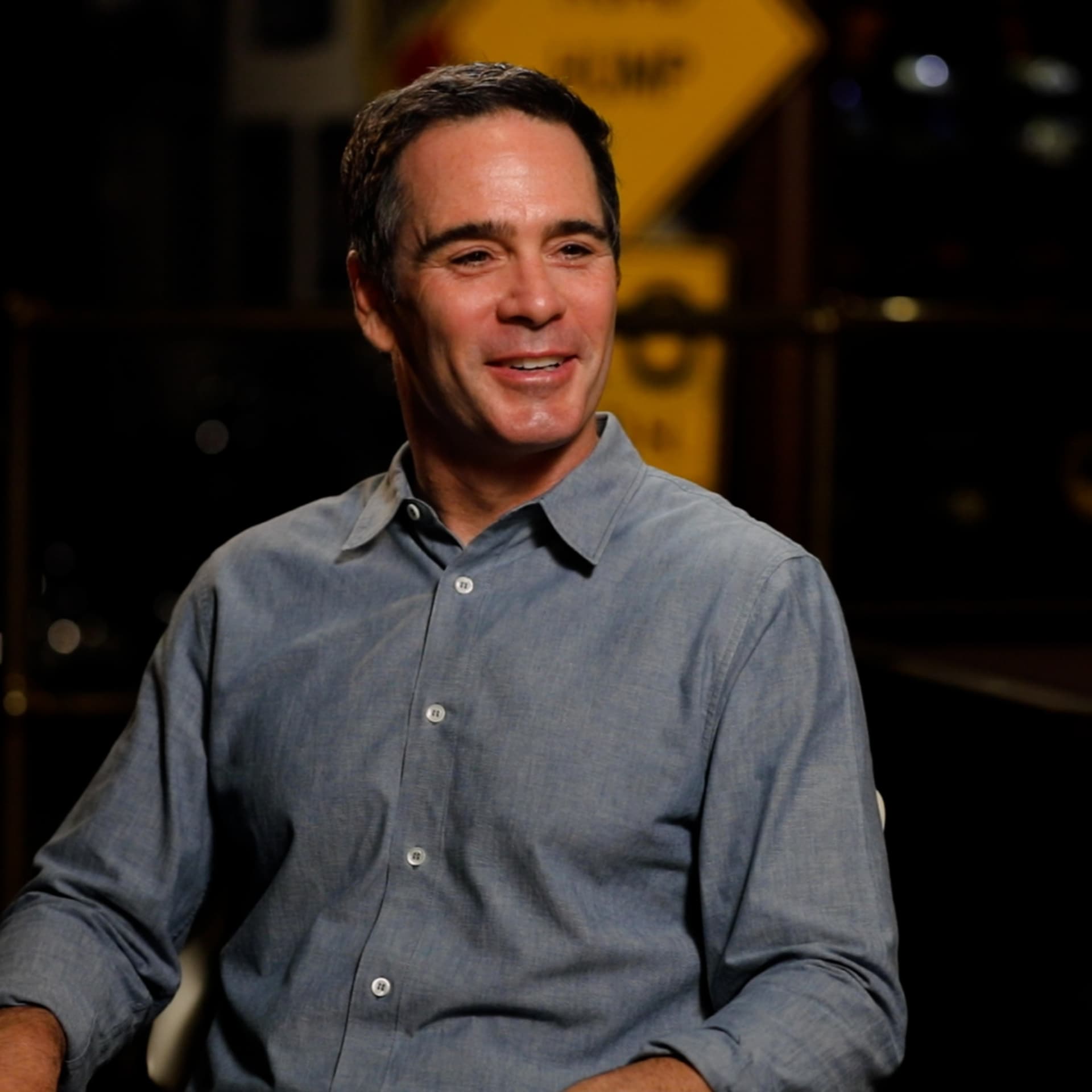
Jimmie Johnson discusses fear and motivation in elite racing, his transition from motorcycles to cars, the role of family and mental training, and major career turning points and crashes.
Guest backgrounds
Jimmie Johnson is a seven-time NASCAR Cup Series champion. He grew up in El Cajon, California, in a motocross culture tied to his family’s Kawasaki motorcycle shop. He later raced IndyCar and now competes in IMSA/endurance events. The episode also references key figures from his career: Chevrolet’s driver development, the Herzog family, Rick Hendrick and Hendrick Motorsports, and crew chief Chad Knaus.
Key claims
Fear before competition is “almost debilitating,” but he manages it by stepping into the moment; waiting is the hardest part. Sustained success depends on stability (marriage, team consistency, testing culture) and communication. He credits spouse Shani’s support and professional therapy for helping him separate “work Jimmy” from “home Jimmy.” He says his best racing metric is leaving the track feeling he did his best, not stats.
Notable examples
an eighth-birthday motorcycle crash leading to knee surgery; winning a heat race at age 16 and earning a promised party; Jeff Gordon recruiting him to Hendrick after Chevrolet guidance; the Alltel brake-failure crash where he survived due to soft walls; the Baja 1000 crash after falling asleep; and a late-career breakdown with Chad Knaus that led to separation.
Written by AI. May contain mistakes. Listen to the episode to check what was said.
Chapters
Tap a time to open that second in VOGrowing Up in Racing
0:00 to 0:26
Jimmie Johnson shares memories of his childhood weekends at the racetrack.
“As soccer takes center stage this summer, Comcast helps bring the experience home to America.”
Growing Up in Racing
1:59 to 3:40
Jimmie Johnson shares memories of his childhood weekends at the racetrack.
“I think it's Barona Track, Barona Oaks Racetrack.”
Fear and the Drive to Race
3:43 to 4:49
Explore the fear Jimmie felt as a child before races and how it shaped his career.
“Describe the fear you would have as a kid before a race.”
Injuries and Challenges in Racing
4:51 to 7:57
Jimmie recounts specific injuries he faced and how they impacted his racing journey.
“Yeah, I think of recent times in the week leading into a championship, the day before the championship, the hours before you fire the engines to go racing.”
The Influence of Parenting on Racing
8:07 to 9:53
Discussing the impact of his parents' approach on Jimmie's racing career.
“I was a bit naive in thinking that because everything that I had hoped to race or would want to race that was safer to race involved a roll cage and a car, and that cost a lot more money than a dirt bike.”
Celebrating Early Racing Success
10:03 to 11:00
Jimmie shares a memorable celebration after winning his first truck race.
“Mind you, I think I'm 16 at this point racing against heroes like Ivan Stewart, Rick Johnson, Walker Evans, these iconic names of motorsport.”
Transitioning to TV and Racing Career Growth
11:27 to 14:00
Jimmie discusses his brief interest in TV reporting and how it led to racing opportunities.
“It was pretty chaotic and a lot of vehicles parked in our little yard and on the street.”
Early Influences and Career Guidance
14:00 to 15:06
Learn how Chevrolet and the Herzogs shaped Jimmie Johnson's racing career.
“I wasn't going to be around the racing scene.”
Family Roots in Racing
15:06 to 19:24
Explore Jimmie Johnson's family background and how it influenced his racing journey.
“So we almost made it all the way together.”
Lessons from Childhood and Parenting
19:24 to 21:04
Understand the work ethic instilled in Jimmie Johnson from his parents and how he applies it to his children.
“It took work to maintain those vehicles.”
Show all 35 chapters
Career Breakthroughs and Challenges
21:04 to 23:16
Discover key moments in Jimmie Johnson's career, including his introduction to Jeff Gordon.
“And then he, all of a sudden, you find yourself in the hauler with him.”
The Competitive Dynamic with Jeff Gordon
23:16 to 27:42
Learn about the competitive relationship between Jimmie Johnson and Jeff Gordon, including key tense moments.
“let alone I think it was maybe a month, month and a half later, I had a signed contract with Hendrick Motorsports.”
Teammate Tensions: A Defining Moment
28:00 to 29:00
Learn about a pivotal moment of tension between Jimmie Johnson and his teammate that required intervention from their team owner.
“And is there a time you can remember where it was most tense between the two of you?”
The Perfectionist Mindset in Racing
29:00 to 30:28
Explore Jimmie's thoughts on perfectionism and how he copes with racing pressures.
“I would say in knowing when I get it right.”
Balancing Personal Life and Racing Ambitions
30:28 to 31:45
Discover how Jimmie balances family life with his racing career and the role of support systems.
“simulator or even have a chance to drive the track it brings all that back and I just get into that visualization space.”
The Key to Success: Relationships in Racing
31:45 to 34:26
Learn about the importance of stable relationships and team dynamics in achieving racing success.
“And I've worked up this theory in my own mind that it's due to who's around them.”
Navigating Challenges with Crew Chief Chad Knauss
34:26 to 36:58
Hear Jimmie's experience working with Chad Knauss and the challenges that strained their relationship.
“got to a point in time where there wasn't a vertical move for him, left the company, and then was brought back to be my crew chief.”
The Breaking Point: Arguments and Personal Stakes
36:58 to 39:07
Understand the moments that led to the breaking point in Jimmie's relationship with Chad Knauss.
“And after a while I got tired of doing that so I started firing back.”
Healing and Professional Help: A New Chapter
39:07 to 42:06
Learn how therapy and professional help aided Jimmie and Chad in navigating their relationship after conflict.
“Hendricks splitting us up, you know, we, even though it was tough, we were still very honest with each other through the breakup and through the next chapter for both of us.”
Striking a Balance: Personal and Professional Lives
42:06 to 44:11
Jimmie Johnson discusses the emotional dynamics of managing his personal and professional life.
“I always felt like there was work, Jimmy and home, Jimmy.”
Mental Clarity Through Physical Training
44:11 to 46:34
Exploring how physical workouts help Jimmie manage stress and mental organization.
“It was a great outlet to burn off frustration.”
Adapting Workouts for Different Racing Forms
46:34 to 47:49
Jimmie shares how he adjusts his training for NASCAR versus IndyCar.
“For NASCAR, the races are four hours long.”
Future Athletic Goals and Challenges
47:49 to 48:32
Jimmie reveals his bucket list of athletic endeavors and upcoming races.
“I've always wanted to do a full Ironman.”
Reflections on Serious Crashes
48:32 to 52:53
Jimmie recounts two significant crashes and the lessons learned from them.
“I probably need to look at the calendar.”
Charlie Meatball Productions: A New Venture
52:53 to 56:00
Jimmie discusses his new production company and creative aspirations.
“going to be out of a job so literally after that moment we used a term in dirt racing about flipping and getting upside down.”
Exploring New Ventures in Film and Storytelling
56:00 to 58:10
Jimmie Johnson discusses his new production company and upcoming documentary projects.
“really anything, as you probably so well know with your career path.”
Financial Journey and Investment Insights
58:10 to 1:00:40
Jimmie shares insights on his financial decisions, including real estate and art investments.
“Business interest has been pretty plain, honestly.”
Reflections on Retirement from NASCAR
1:00:40 to 1:03:20
Jimmie Johnson reflects on his retirement, the pressures of competition, and personal challenges.
“And I literally took it back to the dock, put it on the trailer, called the guy back and said, I can't have this thing about killed myself.”
Economic Changes in NASCAR and Their Impact
1:03:20 to 1:07:20
Jimmie discusses the economic shifts in NASCAR and their influence on drivers, including his experiences.
“took this weight off my shoulders that I didn't know was really there.”
Support and Solidarity During Social Issues
1:07:20 to 1:10:04
Jimmie recounts his experience standing in solidarity with Bubba Wallace during a significant moment in NASCAR.
“And I really thought that when I was done with NASCAR, I was just going to dabble in racing.”
Supporting Bubba Wallace: A Moment of Unity
1:10:04 to 1:11:56
Learn about Jimmie Johnson's experience standing in solidarity with Bubba Wallace during a pivotal NASCAR moment.
“And I just reached out to Bubba and said, hey, man, if you don't mind, I want to come stand with you during the National Anthem.”
The Frustration of False Positives
1:11:56 to 1:13:03
Jimmie Johnson shares his frustrations surrounding a false positive COVID-19 test and its implications for his racing.
“You know, obviously, 20 people have gone through far more, you know, significant stuff during the pandemic than not being able to race.”
Dreaming of Formula One
1:13:03 to 1:15:02
Explore Jimmie Johnson's aspirations and challenges regarding a potential career in Formula One racing.
“And what I regret the most is not going back and taking a second test.”
Transition to IndyCar: New Opportunities
1:15:02 to 1:16:54
Discover Jimmie Johnson's transition to IndyCar and his experiences driving an open-wheel car.
“And even if you didn't have to come up through the European racing circuit to get the license, what would you be doing to yourself?”
Commitment to Ovals and the Indy 500
1:16:54 to 1:18:22
Learn about Jimmie Johnson's commitment to racing ovals and his ambition to compete in the Indy 500.
“A likelihood it continues beyond the two years.”
Transcript
Automatic transcript. May contain errors.0:00As soccer takes center stage this summer, Comcast helps bring the experience home to America. As the exclusive Spanish-language home of the tournament in the U.S., Telemundo is set to present its most expansive coverage ever. 700 hours of programming, live on-site presence at all 104 matches, and with multi-view and real-time 4K, Xfinity will deliver the most innovative and immersive sports viewing experience for fans watching on Telemundo, Peacock, Fox, and FS1. Learn more at ComcastCorporation.com.
0:32Athletic Brewing Company crafts award-winning non-alcoholic beers for those who want to be part of every round. With over 185 flavor awards, they're exceptional NA beers that fit your lifestyle and any social occasion. Summer's full of good times, and athletic fits right in. Go to athleticbrewing.com to have brews delivered to your door, or find them at a bar, restaurant, or store near you. Near Beer. Athletic Brewing Company. Fit for all times.
1:00This week on the In-Depth Podcast, we travel coast to coast with racing legend Jimmy Johnson. 48 on three. One, two, three. 48! First in California, we saw the seven-time NASCAR champ testing his luck in a new motorsport, IndyCar. Then in North Carolina, Johnson reveals why he said goodbye to NASCAR after 19 seasons. There's just some moments of frustration of like, I don't know what I'm doing this for. And how his drive for greatness isn't always fueled by what you might think. The fear going in is always pretty intense and almost debilitating. Once I take that step forward and I'm in the moment, the reward is so high, that's always kept me coming back.
1:42Plus, a crash that nearly changed the course of his life. Cars crash often and, you know, some are going to be bad, but that's really the first time when I just thought it was over and kind of went limp in the car. And without further ado, here's my chat with Jimmy Johnson. I wanted to start by taking you back to when you were a kid growing up. I think it's Barona Track, Barona Oaks Racetrack. What do you recall from helping out where your parents were working? It was just what we did. And I noticed that other families had different hobbies on the weekends. For us, we would load up our van. We had a little enclosed trailer, put the bikes in, take our sleeping bags and drive to the racetrack on a Saturday midday.
2:28My parents would work and get the track ready, spend the night, wake up Sunday morning and ride our motos and race. Away home Sunday night, hit a pizza place, you know, have some pizza, play Pac-Man, Galaga and to the house. And that was just our weekend routine. You remember what you dressed up at for career day at Crest Elementary? Oh, I don't. Anything I could do wearing my motorcycle gear, I think I did. So that's probably it. I mean, you knew even back then that was what you wanted to do. Racing was when I was young and honestly in El Cajon, California, that was the hub for motocross racers in the 60s, 70s, 80s, 90s.
3:14Now it's moved a little further north in the kind of San Bernardino area. but El Cajon is where all the champions came from and where everybody moved to to ride the tracks and be around and learn. So I just grew up in the epicenter of motorcycle racing. All of my heroes were on two wheels. My earliest papers that I wrote in school were about being a motocross racer. And over time, it transitioned to four wheels and then to stock cars and all that or Indy cars and stock cars. But the early days, it was all about two wheels. Describe the fear you would have as a kid before a race. there's always a fear of of wondering um you know you live on the ragged edge around the lap doesn't matter what you're riding or driving even today even today okay because i remember talking to you about it a little before yeah yeah there's always um a spot or two on the track that that you're working on or that's challenging you and for me an indie car it's been the whole lap so uh very you know i'm falling back to my younger years and remembering that feeling but And you like that, right?
4:18Ahead of it, no. While I'm in it, yes. And that's been something I've tried to teach my kids as they work through whatever it might be right now. If it's horse showing and competing in the horse world that they are. Or just trying to read a paper at school in front of the class. The fear going in is always pretty intense and almost debilitating. But I found that once I take that step forward and I'm in the moment that I manage and deal with it much more. And then on the backside, the reward is so high. That's always kept me coming back. You said almost debilitating. How so? Yeah, I think of recent times in the week leading into a championship, the day before the championship, the hours before you fire the engines to go racing.
5:04The weight of the moment, for myself, the thinking and overthinking, I mean, it just is an energy drain of epic proportion and paralyzing. And I've literally had to run through my head, like, step out of the motorhome, walk two driver introductions, get in the car, fire the engine, and walk myself through it. And it's wild. Fire the engine. And all of a sudden, I'll wake back up and it's time to go. And that's part of why it's important to you to stay busy right before a race? Yeah, yeah, yeah. I've found many different ways to help myself through that overthinking period of time that literally just zaps the energy out of you and you've got nothing.
5:41Which then when there was a 10-minute wait at the racetrack at Laguna Seca, that probably didn't help when you're already out. Waiting is the hardest part. That's the best way to summarize it. So when you were a kid, you also had this fear, I understand, of just falling off the bike and getting run over right after the start, right? Yeah. And then one time it happened. It did. First turns on motorcycles are the trickiest part. And on my eighth birthday, first corner, I fall. Well, which story are you talking about? There's actually a few times I've been. Oh, are there? Yeah, yeah. Okay. I mean, what comes to mind?
6:20Well, there was a time in Oklahoma for the many nationals. I fell and a rider rode over kind of my side of my chest and my armpit, which was day one of like seven days we were there racing in the summer. And that was painful in many ways and long lasting. There was a crash the first turn of a race at Barona Oaks, my local track, which then led to a few laps later and me crashing and breaking my knee and having reconstructive knee surgery. And that was your eighth birthday? Eighth birthday. Yeah. Did that help in getting over any fears or did that only kind of reinforce? That's a good question.
7:01I don't recall that one affecting me any other than just being highly annoyed that I was in a cast for months and months after with all the procedures that needed to be done. But in my two-wheel days, what really got me the most, it wasn't the first turn or being run over so much. I was on a small bike, and the jumps were built for bigger bikes. And some of the faster kids in my class were brave enough to try these. And I just didn't have that bravery to send it off the jumps. And at a certain point in my career on bikes, it kind of held me back and kept me from moving forward. I think if you're 12 years old, your dad makes you just stop racing because I think people you guys knew were getting injured.
7:44I was super injury prone. I broke so many bones. Had reconstructive knee surgery being probably the worst. There were some fatalities in and around the sport with kids at a young age from head injuries. Broken bones, very common. An occasional helicopter ride out for kids at the racetrack. and that would always put it in perspective. How did you feel when your dad made you stop? I was pretty bummed, but I just sensed that it wasn't the end of my racing. I was a bit naive in thinking that because everything that I had hoped to race or would want to race that was safer to race involved a roll cage and a car, and that cost a lot more money than a dirt bike.
8:24And ultimately, I knew we couldn't afford those things. But my last injury, I broke both feet and seven toes. And literally, my dad's like, I can't do this to you anymore. When he said that, I mean, you're just like, fine. Yeah, I got it because it was the end of the season at a regional event for the regional championship of California. And was riding well and doing well in position to win, actually fell, bike landed on me, smashed my feet. So after that was fine. But when the season started back and we weren't getting ready like a lot of our friends were, that's when when the reality kind of sank in.
9:03How key was the fact that your parents didn't push you, you think, in your continued interest in sport? It was a big part of it. And I remember watching other parents, you know, push hard. I mean, so hard that I recall my dad jumping in a truck with another father and going for a drive just because he didn't like what he saw. And I remember some of those moments and just feeling sorry for some of these kids that had the overly aggressive parents pushing them. And my parents took a much different approach. And I think, you know, I experienced some burnout through my younger years because we raced so often and traveled so much.
9:44But, you know, I look back at these prodigies, if you will, that hit burnout at 14 and just walked away from the sport altogether. Your first truck race when I think it was at San Diego Stadium, I heard you had quite the celebration after that. I did. I won the heat race. Mind you, I think I'm 16 at this point racing against heroes like Ivan Stewart, Rick Johnson, Walker Evans, these iconic names of motorsport. Here I am as a teenager racing in my hometown stadium. I win the heat race, and I had to deal with my dad that if I won, I could have a party at the house. Because you've apparently been asking forever to have a boat.
10:30Yeah, leave the racetrack like that and have everybody back. I mean, we're teenagers, so my dad's like, no, no chance. And your dad was telling me he's like, I mean, we did enough of a place that was big. He's like, we have one bathroom. One bathroom. Small, small place out in rural San Diego area. how they ever going to find us. And my dad threw out this, you know, what he thought was an unobtainable goal. You win, we're going. And it happened and they handed me the microphone in front of 50 ,000 people in a packed stadium and I said, party at my house. And this episode is brought to you by Google Chrome.
11:04You think you know a browser, but Gemini and Chrome, that's new. It can help you with practically anything on the web, like restoring a vintage motorcycle from a 50-page restoration block, or finally break down that long article you've had open for weeks. Gemini and Chrome is here for it. Ready to make anything online make sense? There's no place like Chrome. Check responses set up required compatibility and availability varies 18+. What was the scene the next morning? It was pretty chaotic and a lot of vehicles parked in our little yard and on the street. People wandering around that we didn't know.
11:38And I'm still perplexed today how people knew how to get to our house. I was told to ask you the only time you ever won a Dr. Pepper. Yes, Dr. Pepper is the sign of a strong night out. That's going to code with me and my dad of what the next morning's like. Tell about the detail shop that you owned. And I understand for the life of you, you can never get Jimmy to wash a car. Yeah, of course, when my parents asked me to wash their car, I wasn't interested. but my best friend growing up his dad wanted to sell one of their vehicles and Brandon and I detailed his dad's car and it first person through to look at it sold and his dad was was so impressed with how good of a job we did he threw out the suggestion man you guys a little extra spending money you're in high school you've got your own you know cars and can drive around why don't you guys start a detailing business just to stay busy in the summer and after school.
12:38So we started it up and had a little trailer that we pulled behind my pickup truck, went to businesses, knocked on doors, and it was just tough. But we made it work and we're teenagers, so it wasn't all that important. But then we had somebody we knew that had a used car lot and noticed he had some extra space and struck a deal with him to set up a permanent spot. We would detail his cars during the week and then try to get some extra business in the door and had that going for a little while. How did it work out? You know, it was, it kept us plenty busy. And for our demands at the time, we're making plenty of money.
13:15But right in that window of time is when things professionally really were taking off for me, required a ton of travel to the Midwest. And my friend Brandon, we called it CJ's Auto Detailing. His last name was Clendenin. So that's how we got CJ's. It really just became Clendenin's. and he was doing all the work and I was off chasing my dream. Correct me if I'm wrong, at some point you had interest in being a TV reporter? More. Or a fleeting interest? Yeah, I mean, it was an opportunity. And honestly, I knew that being relevant in our sport was key, however that was to take place. And the stadium racing I was competing in, that series went under.
13:58And I wasn't going to be on television. I wasn't going to be around the racing scene. and Chevrolet was guiding my career. And they're like, why don't you come do pit road reporting for us in the Midwest? And it's one, it paid. Two, it had me on TV. Three, I could network. And off I went. And that was literally a blessing that I didn't see in advance. That's where I got to know the Herzogs so well. And the following year, I ended up in their truck racing their truck. And it was first Chevrolet guiding your career, then the Herzogs get involved, and then Hendrick after that. Yeah, I was so thankful that Chevy wanted to develop drivers and car owners.
14:36So I was on the path and being guided. Once I met the Herzogs and got to know them through the year of commentating, I spoke to the head of Chevrolet Racing about going racing with the Herzogs. And they wanted to grow teams and help them grow all the way to the NASCAR Winston Cup Series. And that was my aspiration at the time as well. So they put us together and literally grew us from the off-road racing program that I was in all the way to Busch Grand National, which is the second tier in NASCAR racing. So we almost made it all the way together. Tell about your grandparents' motorcycle shop. It was before my time, but K &R, Ken and Ruth Kawasaki was the motorcycle shop in El Cajon.
15:19My dad ran the service department, and that was our connection to all the things that we did. summer winter from riding dirt bikes in the winter some of the summer to go into the local rivers and riding jet skis and all the stuff that we did but my dad's mechanical um you know ability was really kind of developed there and he didn't race professionally but but was in racing because of the motorcycle shop so it was really kind of the starting point for my career if not for vietnam how do you think your dad would have fared as a professional racer yeah he was just getting a start and was drafted to the Vietnam War.
16:00And when he returned, it just, that opportunity kind of passed him up with the manufacturer that was interested. And it was time to go to work. And my grandparents had the motorcycle shop. So that was, showed up, went to work. You ever talked to him about that? A little bit. And it's been some time and be interested to know if his point of view has changed a lot on it, but, you know, his, he really felt like that was probably the better pathway that the pro, pro motorcycle racing opportunity. There's so many, so few men that get through or get that opportunity that I felt like he was real happy with the path.
16:37So I believe he drove a truck. I think your mom drove a bus at some point. How do you think their professional experiences influenced you? Yeah, mom being a school bus driver, dad was a heavy equipment operator, and then over the years in his connections to motorsports, ended up working for BF Goodrich Tires and looking after one of their semis, taking around the country to all the races. Through watching them get up really early to go to work, work countless hours to then spend any spare moments they had on their children and taking them racing and help us, you know, chase Our dreams just showed me how hard you have to work to get ahead.
17:19And it's not that we were ever ahead. My parents worked their tails off for a low wage, if you will. I mean, do you think that made you learn what you didn't want to do? No. No, they were both very happy and content with their lives and proud of what they could provide and work their butts off. And I think that that was all instilled in me and the way I work and I can't sit still. And I've always outworked the people I've raced against or been around. I think I got that because of their journey. What do you think you learned from each of them? My dad was, you know, put a smile on your face and even when you don't want to and work through it.
18:03And then my mom, very much just the kindness. And both are very kind, but there's no one like mom. And my mom has the biggest heart. So I think the balance of those two are who I am today. How tight was money? Way tighter than I realized. When I was officially a professional race car driver, the first year I asked my parents who did their taxes, and they sent me to their tax person. And I was then informed that I was making more money than my parents at 16. So it was kind of an eye-opening experience. But you didn't see it at the time? I didn't. And anything we wanted, we had. And we were very simple-minded.
18:44We just wanted to ride our dirt bikes and then in the summer go play on the water in the lakes and rivers. We didn't have the nicest house, but we worked hard on it. And through my dad's connections and construction, we continued to upgrade our house. It didn't have enough rooms, right? No, it didn't. First, it was just four of us. And then we built a garage so that my dad could be a professional, kind of be a crew chief and look after a racing vehicle. and then when my youngest brother was born we needed another room so next to the garage they built this little shed this little room for me and that was that was my my spot and your youngest brother 10 years younger you're being yeah i was pleasant surprise a bit more than that as i recall uh on the edge of going into high school and our parents sitting us down and saying by the way uh you're gonna have a baby brother soon and i was like what you're kidding me there's no way so as you mentioned didn't have the fanciest house but you guys had all of the toys yeah How do you think that impacted you?
19:39It took work to maintain those vehicles. So my spare time was dedicated to trying to help and take care of that stuff. But I think most importantly, my parents had a line in the sand that your behavior, your grades, how you're conducting care of yourself, all of that equals these toys that you love so much. And I'm trying to now kind of replicate that with my kids. granted our means are much different and we have access to far more but you better get the basics right as a student, as a sibling, as a child and do all of that to earn that opportunity. By the way how do you go about figuring out the balance between for your kids making sure they have all the opportunities available to them but without kind of dampening the motivation?
20:32we're constantly asking ourselves how to do that but just remembering my childhood my wife remembering hers and trying to keep it simple is really the foundation of it so i mean chores like our kids have chores our kids we have a star chart with extra credit that they do they get a star and stars total to something just trying to the bank accounts already just really trying to build that like you work you apply yourself you commit it equals this you you know and you continue to build on that and what are the it's like what do you do with the star chart uh star chart is so in addition to chores there's a star chart for behavioral things um and even even chores around the house if you do more you get a star and we throw a star up there and as those total up we agree to what what opportunity they opportunity that they total to and then they get to cash in Jeff Gordon, number 24 car, I think it's the only piece of merchandise you ever bought when you were a kid.
21:35It sat, I believe, above your bed. Mind you, it was a waterbed. Nothing like the 80s. And then he, all of a sudden, you find yourself in the hauler with him. I mean, there was a little more to it than that. But what do you remember from that conversation? We were informed that our sponsor wasn't coming back. and they advised me to go out and look and see if I could find a job for the next year. So I was out pounding on doors trying to make something happen and all of my opportunities meant leaving Chevrolet. And Jeff left Ford to go to Chevrolet and had this just amazing career and I felt like he had the answer.
22:13So then I stalked him at the racetrack at the driver's meeting, introduced myself, asked him for some time, and he invited me back to his hauler to chat. He was already impressed, though, with you. I had no clue. Yeah, I had no clue he even knew who I was. So he'd been watching. Mr. Hendrick knew who I was via Chevrolet. And then more importantly, Mr. Hendrick's son, Ricky Hendrick, was a very close friend. And I had no idea that Ricky had been singing my praises to his dad and to Jeff. So when I go to leave the transporter, Jeff stops me and says, hey, you're not going to believe this. But I know who you are.
22:51We've been talking about you internally for a while. and we're talking about starting a fourth team at Hendrick, and your name's the only name that's come up. So don't get too excited, but we might have a solution to your problem. And what are you thinking when he says that? My head exploded on the spot. I mean, I couldn't even believe it. I mean, year one of racing a NASCAR. The opportunity wasn't for a few years later, but I had not run really well. I'm learning these tracks and cars, and I couldn't believe I was on the radar, let alone I think it was maybe a month, month and a half later, I had a signed contract with Hendrick Motorsports.
23:24Whether that moment or another, was there one where you felt like you could just take a breath, that the hard work was finally paying off? There were different stages. I really felt like when the Herzogs took me to the Bush Series, which is now called the Xfinity Series, from a financial standpoint, that was new territory for me, and I felt like it brought some stability. So that was a breathtaking because I made a choice to not go to school. You know, and you jump off that ledge, you don't know where your future is going to go and how you're going to be able to really provide. So there was a small breathtaking then, you know, and then many along the way.
24:05Getting the contract with Hendrick was a nice deep breath. But now I've got to prove myself. And I didn't have a lot of time in stock cars. And I felt at the time the world was kind of against me and Hendrick. I'd won one race in the Saturday shows, and now I'm given the golden ticket to drive for Rick Hendrick. How am I going to do? What's that look like? It's a tough conversation the head of Lowe's had with you at a conference room table with Hendrick sitting and looking on when you're basically a kid. Luckily, Mr. Tillman, the look he saw in my eyes was fear, and he thought it was confidence.
24:44So sitting at that boardroom table, having the meeting, he basically stared me down and asked me if I could win. And of course, I was going to respond with yes. But I took a minute to compose or took a second to compose myself, catch my breath and made sure that my voice didn't quiver. And that came out as confidence. I got the job. Because they weren't happy because they'd been in NASCAR and they weren't winning. Yeah, they had a long, long kind of history in the sport, had come close to winning with some major teams. and Lowe's was just skyrocketing his company and the then CEO was building this winning environment and he needed his race car to win on Sundays.
25:23Why do you think the relationship with Jeff has lasted? We have so much in common and we don't see much of each other. Nowadays, we're so busy and running in different directions. You guys also had fun in your younger days together. We had a lot of fun. He was just newly divorced when I came onto the scene and going racing and his means and ability and desire to see the world worked perfect with my single life schedule. And on that journey, I met my wife. He helped introduce me to my wife. Sorry, how about best time you can remember having with him? Remember? That's probably the key word. There were a couple trips that we, I know New York was really special to me because that's where I met my wife and really spent time and got to enjoy the city and find the spots that I like in the city.
26:09But there were some summer trips to France and Italy that were just mind-blowing. I mean, to stroll over there in my early 20s, Shani and I together with Jeff, checking out various parts of the world was pretty wild. It's not always, though, that teammates, especially in racing, get along. So what do you think made it work? I think we both had a lot in common with our journey. to NASCAR and to where we were. And then I think timing, like where I was in life, although I'm a little bit younger than him and, you know, with him being married and divorced and then wanting to travel and see and experience, you know, we just had a lot in common because I was in a very similar place in my life.
26:57I just, you know, had the fortune of making NASCAR Winston Cup Series money and could travel. And we just had a lot in common, you know, and off we went. Although interestingly, I understand it wasn't until he retired that you felt most comfortable in your own skin. How so? He was such a mentor to me inside and out of the car. You know, the business side of going racing was something I had not had a lot of exposure to. Then the competition side creeps in and now I'm racing him for wins, racing him for championships. And that's always the toughest part as teammates. I mean, you might generally like someone, but But on Sundays, you got to put the helmet on and go to work.
27:37Your buddy is now, in a sense, your enemy. And he's taking food off the table from you. Because he probably would have won more if not for you. Yes, yes. And we had some tense moments in our competing years, especially when you get to probably 07, 08. I'd won a championship or two. In there, 08 or 09, we literally, it was between Jeff and I fighting for the championship. And is there a time you can remember where it was most tense between the two of you? We started leaning on each other, bumping each other, and I overreacted to a moment in Texas. And as we came down the front straightaway, I turned into him and just slammed into the side of his car.
Read the full transcript
28:16And we were both pretty sensitive to anything that happened on track. And then Mr. Hendricks sat us both down and had a conversation and kind of reeled it back in. Really? What did he say? I can't recall exactly, but he does a very good job of delivering his point in a few words. And in typical Mr. Hendrick fashion, laid it out there. And I honestly, once I saw the video, what happened, I knew how wrong I was. But there was a lot leading up to that moment. And he just opened the door for Jeff and I to kind of talk through it. And I think that conversation is very common amongst teammates. I mean, it's hard to not want to beat your teammate, especially when you're both fighting for wins week in and week out.
28:59You know, the tension that comes with that is pretty intense. In what ways are you a perfectionist? I would say in knowing when I get it right. Through my journey and moving through vehicles and series as quickly as I did, stats weren't something that I could hang my hat on. It was me leaving the track feeling like I did my best. And that's the thing I had to identify with at a young age and carried through Cup and ironically doing that all over again right now in IndyCar. Like what consumes your thoughts on a day in, day out basis? It's, you know, there's a lot going on in life now. So, you know, balance of work life, family life.
29:43but in that headspace of racing I had a swim coach teach me how to really visualize my my start my stroke my turn so I've adapted that to my my car racing stuff and depending on the upcoming race or the race that I just had as I'm building my notes or preparing for the next one I literally drive laps in my head sometimes in bed too right that's the best way to fall asleep for me just sit there and run laps in my head it's funny because i'll micromanage in my thought the lap and i'll make a mistake and i'll start over and so i keep working my way around whatever the track is and then before i know i'm asleep is there a specific track that you most commonly go to or a lot of times it's a track that i just left as i'm working on my notes to prepare for the upcoming race and then the upcoming race when i dive back into those notes when i'm able to drive in the simulator or even have a chance to drive the track it brings all that back and I just get into that visualization space.
30:39And does Shani know what you're doing? I'm sure I've told her about it but I don't know if she realizes how many nights I've fallen asleep to that. There's not some like look you get where she knows you're off in Never Never Land. You bring up a good point. Around race weekends even my friends know that there's fun Jimmy and there's race Jimmy and when I go into race Jimmy I'm definitely much more inside my head and less social. How do you beat yourself up? I think on mistakes that I've made, some are visible, some are not. You know, there are habits usually driven by fear in a race car that just get under my skin that, you know, I used the brake too much or I held onto the brake pedal too long or I didn't go back to the gas soon enough because fear was holding me back.
31:22And I'll start beating myself up on that. Like, man, let go. Like, you just got to send it. You know, as anybody gets older, responsibility increases. Yeah. Most often personal life becomes more consuming. How, if at all, do you think that impacts pursuit of excellence? There are older athletes now that are highly successful. And I've worked up this theory in my own mind that it's due to who's around them. first and foremost, their spouse and the support they have from their spouse. And Shani's support and understanding of what makes me me and chasing my dream. None of this would have happened at the level that it has or continue to take place if it wasn't for her support.
32:09I'm as excited today to go racing as I am. I was when I was a teenager. And I don't think that's that's very common. And it has so much to do with the people that are around you. But do you think it's possible to have sustained success long term and also have the kind of success that you want to have in personal life too? I think it's possible. I mean, is that ever a battle for somebody like you? It's all work in progress. And I think communication is key. But again, I pull it back to the most important person is your spouse and their buy-in and their support. And I wish I was a little bit better of an example of winning championships still right now today.
32:58But to win seven, you know, I've got into my 40s to win my seventh. We had children. I think that's a really good example of it. But currently it's Tom Brady. You know, you continue to hear these stories about he's the first one in the building, the last one out. He's working with second string guys. He's working with the kicking team. He is so embedded and great in that team. That's what it takes to continue to operate at a high level. I don't know him personally, so I don't know his family life, but it certainly appears that he's in a very good place and has that support at home, which allows him to spend the time that he needs.
33:31The seven championships that you won, what role do you think the fact that you had a lot of consistency among people that worked for the team played into the success that you guys had? For me, it is the foundation. I've only driven for a couple team owners. Sponsorship-wise, there's just a couple through my entire career. 17 years of marriage. I am the one that wants and needs a stable environment. So to drive for Rick Hendrick for all those years, to have Chad Knauss at the helm for all those years, that was the best environment for me to succeed. Why do you think the relationship with Chad worked?
34:08We were in a very similar space starting off very hungry. Because that was your opportunity for both of you. For both of us. You each felt that, right? He had been in CUP a year or two prior to me. So our starting points aren't necessarily the same. But he started off sweeping the floor at Hendrick, right? He started at Hendrick, tried to climb up through the ranks, got to a point in time where there wasn't a vertical move for him, left the company, and then was brought back to be my crew chief. So, you know, his hunger was, you know, our hunger together was unmatched by anyone else in the sport.
34:43And honestly, through the years, we changed the sport in so many ways due to our desire and work ethic. And also, we should unmatch not just at the time, but in history, right? Testing was such a part of our success. And that's going to the racetrack and spending a day or two there to learn the track, update the car, bring, you know, engineer new ideas for the car. And many drivers and teams want to do the bare minimum of testing. And at Hendrick, we had the resources to test all the time. And Chad and I literally would. It made our communication better. It made our team better. We certainly found and engineered more tricks to the car and made the cars faster.
35:23But, and that was our sauce. we would test and practice and try over and over and over and we both wanted it. How was the relationship unique? We quickly had so much in common that a friendship, more than a work relationship started, like a friendship started. And then with the amount of trust we developed within one another and the success we were having kind of built that trust, he became my, you know, my third sibling. Like we truly have that connection like brothers. I mean, I hear enough stories about him that I can understand he can be a reasonably difficult individual. That's fair. You know, later in my career, I had a harder time with the pressure that he was successful with putting on me in my early days.
36:12We all grow. And I think the mistake we both made at the end of our time together was maybe not evolving enough within our relationship to the new us. And when times got tough, Chad reverted back to the crew chief that he was when we first started. Which was what? Micromanaging, you know, explaining where I was making mistakes, what I needed to do, how I needed to work on it. And what are you thinking when he's doing that? I mean, don't you want to tell him to like F off? I did. And that was kind of the start of the decay over probably a five or eight year period of time. And he and I both so wish we could go back and correct that.
36:50Because now looking back on it, it was a defense mechanism for him and he was only doing it because he cared. And I just got tired of hearing it. And he's really good at hitting you with a laser verbally. And after a while I got tired of doing that so I started firing back. And then we got so caught up - What would you say? I'm sure there's some audio you can find of us just melting down. He would push hard enough, and then I would just start in the car while racing, instead of being focused on the job, I would start thinking about what the hell I was gonna say to him. Your dad was saying he was a spotter, and he was literally working right next to Chad, as Chad would be destroying you on the radio.
37:31And he's like, it was just so uncomfortable. people were like, how can you let them talk to you that way? But the trust we had for one another, I would say 80 % of it, it was just a brutal truth. And honestly, even though it hurt, even though it pissed me off at times, that brutal honesty is what made us get better. And just at the end, if we could have handled it in a different way with one another, we could have stayed together through the end of our careers and potentially got the A. So you think that was the mistake, Like not knowing when to get out and just saying we had success, time to move on earlier.
38:08Mr. Hendrick's amazing at the human dynamics and helping people. And he tried and he had to sit down with. Like the Mickey Mouse cookies or something? Yeah, the milk and cookie story to literally professional help in a man that I still spend time with talking to today that was a huge help to Chad and I over the years. But we just couldn't correct it, sadly enough, those last couple of years. And last question on that front. Was there a moment or an argument that took place where you just knew in your head at that point, this is done? Yeah. And ultimately, Mr. Hendrick made the call. He's like, you guys are just fighting too much.
38:49And I assume we've kind of embarrassed him. In NASCAR, everyone listens, including your sponsors. So the way we were behaving wasn't ideal. but it got although it's kind of entertaining for somebody who was called vanilla for so long or any haters you know they love watching the meltdown and listening to the meltdown but we were at the uh the charlotte track in may for the the coke 600 and chad's way of motivating and really kind of hit me hard with things it crossed the line got personal and when it got personal that's when i was like wow okay what did he say gosh it's hard to remember and I'm so bad at this stuff but questioning my my commitment to the team we were just returning from a winter of living in Aspen that's the first time we'd been to Colorado and stayed for a long stretch we just won the championship we come back start the 2017 season and that really really got under Chad's skin that I I wanted to be in Aspen and not in Charlotte and things started to get personal then and in him questioning where my heart was with the team and the time and effort I wanted to spend and be with the team was really kind of that starting fracture point how did you guys repair it we didn't sadly but you're you're reasonably close again now, right?
40:15Yes. I think working through Mr. Hendricks splitting us up, you know, we, even though it was tough, we were still very honest with each other through the breakup and through the next chapter for both of us. And, you know, that, that honesty and respect and bond that we have just kind of worked its way through. And now we're at a spot that is really amazing. I'm running in the IMSA series and some endurance races in the IMSA series. Mr. Hendrick's involved and Chad is involved as well. And we're working together again. So it's come full circle and it's really just been out of the respect for one another and the honesty that we've had.
40:53You mentioned a guy that helped you both in working through it. A therapist of some capacity, right? Yeah. Like how did he help?
41:09he's it was interesting because i i assumed you you go get professional help and you lay down on a couch and um you know the process is a certain way but for uh for you know what we went through um we spent very little time hashing out what happened and just assumed that we're going to put our best foot forward and this is how we do it so it was very little reflection and very little finger pointing of you said this no no you did that it was like it's a mess this is how we're going to get better and and it really helped us for a while and I would say um as far back as probably 2013 is when when we really had some professional help um and it got us to you know winning the championship in 2016 and then things kind of unraveled from there um but it was it was a big help.
41:59And a lot of, a lot of things learned in that moment has helped me just with life in general, my personal life. How so? I always felt like there was work, Jimmy and home, Jimmy. And I quickly realized that we are who we are. You know, there are different stressors on, on each side, but we all process, analyze, handle, react in the same way. It doesn't matter if it's personal or professional. And that's something that I thought, no, I'm just mad at work. I don't bring at home. Yeah, right. I don't overreact just at work on the radio with Chad. Yeah. You know, I'm overreacting here with my personal life as well.
42:34Are there tools that you learned or developed through the therapist that you found really helpful? Awareness, listening, and I'm sure I can still be better at that. I'm sure Shani would agree. That's just a male thing. Yeah. Hearing. And we all know as guys, you know, when you finally do listen, slow down and listen and let soak in there's you're like ah got it do you think she could tell a noticeable difference in you after you started going i i think so i mean she she lived through you know all of those emotions um and they were all extreme from extreme frustration to extreme elation and championships and um we've been joking since i haven't been on the cup scene um for for a year now but the journey that I would go through on a Friday, Saturday, Sunday, and she'd be in the bus waiting for me.
43:27I'd come back from a Friday practice. We're terrible, and Chad and I are fighting, and this is wrong, that's wrong. All of a sudden, Sunday afternoon, we're in Victory Lane holding up a trophy, and we figured it out. So just the emotional extremes that took place, she witnessed it all and has helped me navigate a ton of that. She gets far less credit than she ever deserves for really helping guide me through all of that stuff. She was the brunt end in dealing with those emotions from week to week, month to month, year to year. But she definitely would say that the professional help did have an effect.
44:05And then certainly professionally and personally and applying those things to my personal life. How did you find working out helped you mentally? It helped me deal with the stress. It was a great outlet to burn off frustration. I mean, still to still today. Yeah. Yeah. And then probably, I mean, one of the key parts of what makes you, you, right. Yeah. It's a great stress relief. It, um, and once I burn off that frustration, the mental clarity, and then just, I go back into my visualization skills that I learned and start thinking about a track, a car and the setup, whatever it might be. So I get my brain organized there if there are things going on you know in the workspace outside of the car personal life I just get organized so if I when I train the first part is burning through frustration then after that my brain starts getting organized really yeah and you know people kind of questioned whether it made sense to do a big bike race before a professional race that you had and you've made the point before that actually you found it helped you oh yeah If anyone's worked to run a marathon or a triathlon, any of these longer distance endurance races, you learn just how committed you have to be, how painful it is, the mental challenge that comes with it, preparation.
45:29Those four things are the same four challenges that you experience in your professional life. It doesn't matter if it's car racing. I think more did apply because it's a physical event in both elements. But the more committed I was on training and preparing for a triathlon or a marathon, the more organized I was professionally. It was wild how similar the two worlds were mentally once I got into it. How did you find you needed to tweak your workouts from NASCAR to IndyCar? IndyCar is much more upper body focused and a lot higher heart rate. For me, I have a low heart rate. And the longer the event, the more aerobic the event is, I'm just better at endurance events.
46:11When you shorten the distance and the heart rate goes up, that's against other competitors in my age group. That's never been my strength. So the IndyCar side has been fun to kind of address that and work on that and try to get uncomfortable. Like how have you done it? I mean, like what did you switch up? It's much more strength focused with a higher heart rate. For NASCAR, the races are four hours long. going on a four-hour bike ride and staying hydrated and having energy from nutrition. And then the mental commitment to sit on the bike for four hours was much like a cup race. But for IndyCar, 10K efforts, being on a rowing machine and doing 20-minute intervals on the rowing machine or a skier machine, the really high heart rate, shorter bursts of energy really is what IndyCar needs.
47:01How many marathons and triathlons have you done? One marathon. I'd say 10 half marathons and then 170.3 triathlon and then a bunch of sprints and an Olympic distance triathlons. And what's on your bucket list of kind of athletic endeavors to still do? New York Marathon is on my hit list. You've done the Boston. Done Boston. New York's on my list. Anytime soon? I thought I'd be doing that this year or next, but I don't know how I'm going to fit it in with my IndyCar and IMSA obligations. Pretty taxed as it is, and the training is a little more unique for IndyCar and away from the marathon, long-distance stuff.
47:47So it might be a few years out there. What else? I mean, there have to be. I've always wanted to do a full Ironman. And I haven't been in the pool in a few years, so that seems really far away to consciously go after that. But I loved a mountain bike. And with having a home in Colorado, there are a few big mountain bike races there, like the Lendl 100. And that's been high on my hit list, too. With Lance? Yeah, I mean, I don't think he's ridden it in a few years. Probably five or six different buddies that I mountain bike with on a regular basis all did it. And I'm on a text chain with all those guys and watching them get ready and the harassment and then the harassment following the events have been pretty cool.
48:30And I look forward to doing that one. How long before you think you end up doing it? It's in August, end of August. I probably need to look at the calendar. I feel like with the amount of time I spend in Colorado in the summer, I could at least, I might not ride the time I want to ride, but I could at least finish it. A couple of crashes I wanted to bring up, and you've covered these plenty of times before, but the first one being the Alltel car crash where the brakes give out. What do you remember from that? Cars, you crash often, and some are going to be bad, but that's really the first time when I just thought it was over and kind of went limp in the car.
49:08And thankfully, I did because preparing for the impact and lowering my head as I did and going limp was the best thing for me. this crash took place before soft walls were mandatory and before we had any of the mandatory restraint systems in the car to prevent a basal skull fracture, which is the injury that killed five drivers and the fifth being Dale Earnhardt Sr. So I was fortunate that I did hit a soft wall just out of luck and the track put some foam barriers in that corner. And on my way flying into those foam barriers, I thought the foam was concrete and that's what led to me going limp in the car and thankfully it was a series of soft walls and I was able to walk away from that crash.
49:51What do you remember thinking it's it's happening? It was and then I knew the the racetrack went to the right and I tried to make the turn and I was into the grass and lost control of the car at that point and I had no brakes when I first when I went to slow the car down the brake pedal went to the floor had brake failure and 150 miles an hour with no brakes. The Baja 1000. Yes. and you lose control of your truck. Baja was a wild experience because I literally woke up crashing. Sounds crazy, but - What do you mean? I fell asleep. It's probably three or four in the morning. Been in this rough terrain, bouncing around, easy to stay awake.
50:32Finally got onto a smooth road, a nice long straightaway, and I just got too comfortable and nodded off. And I woke up just before I went off the road, and there was a sharp 90 degree turn. and tried to hit the brakes, went straight off the road. And as I was going off the road, there was a huge boulder. And I hit this boulder and the vehicle went straight up into the air. And I recall seeing the headlights just shooting into the darkness. And I had no idea what I was gonna land on. And I was just coming out of a mountain range, how far I was gonna fall. And thankfully it was just a steep embankment and tumbled off into the darkness out there.
51:10What do you remember thinking about out there? Because you were out there for a while. It was probably a full day before we had the truck onto a trailer to take it away. What's wild is this is a 95, so communications weren't like they are today. And then the team itself has vehicles that leapfrogged the race truck going down the race course. Just in case you're not in radio communication, they can keep up with you. My chase truck, as it's called, got into a fender bender in a small little Mexican town, and my chase crew was arrested and put in jail. So when I crashed, the vehicle that was supposed to find me, those guys are busy emptying their pockets and giving away everything they could to get out of jail.
51:57I mean, I don't know if more was made of this than that actually existed, but it caused you to reflect on kind of what you wanted to do? No, that was a big moment. I mean, I think I was 19 at the time. Earlier that year, I had a huge crash. There was another mistake made at literally mile one of a 400-mile race where I destroyed the truck. The off-road stadium truck racing that I'd been competing in, really fast. But every time I was in position to win, I flipped the truck and crashed again and made a mistake. So all of this led up to the Baja 1000, that big crash. and I knew going into that race that my job was in question the next year and here I am again with a totaled race truck almost killed my co-writer the crash all the all the impact was on his side and I had you know give it a day to sit there and think about the aggression I had and I was going to be out of a job so literally after that moment we used a term in dirt racing about flipping and getting upside down.
53:00I still had years of off-road racing following that, and I never got upside down again. And I went from being a guy that would always be known to run the fastest lap, but never see a checkered flag, to a guy that then was seeing plenty of checkered flags, and I started winning championships. So what changed? Just a long conversation with myself about stop it. Like, identify with 100%. And I was comfortable on the other side of 100%. And dialing in at 100 % was everything. How well do you remember the embrace with your dad after that when you guys met back up? It was huge. And he told me before the race, you know, he had a dream.
53:40Be careful. I'm like, you're crazy. And as I was sitting there in the darkness, vehicles would come by and I would stop them. Hey, we've crashed. We're fine. My dad's in the next pit. And everybody knew my dad. Please tell him I'm OK. And it was 60 miles away. I forgot to tell my dad. So as I don't arrive, my dad knew this mountain range, knew that I've been in a crash. No one is reporting anything. Communication is so minimal. And he had to sit there with all of that for a long, long time. So when I saw him, there was a big embrace. Do you remember what he said? No, I remember tears and I don't see tears very often with him.
54:16And from you too, right? Oh yeah, oh yeah. No, I was hanging on. And yeah, I had tears as well, but I'll never forget his face walking up to him. and just seeing the relief, you know? And what's wild is I see him and I'm running to him. It's like, once again, dad's right. Like, you know, parents are always right. You never want to admit it when you're a teenager, but he was right. Tell about Charlie Meatballs. His name? Well, actually, I guess it's Animal Anna production company, right? Oh, yeah, yeah, gosh. Yeah, you're right. Production company. I was going more towards the production. I've always had an interest in photography and also have always loved documentaries.
54:59Wait, I should ask, though. It's your pet, right? Yes. So when we decided to start the production company and we were looking for a name, we recently just added a pet to our household and the kid's named Charlie Meatball. And we sat in on a meeting kicking off the production company and the icon of Charlie's face pops up in Charlie Meatball Productions. And as I dug in more and looked around at production company names, they're kind of off the wall and interesting and thought, man, it works, let's do it. What made you decide you wanted to go down that path? I've been very fortunate to be surrounded with very smart people and people that are willing to take some risk and get out there and try to develop companies.
55:43And along the path, the folks at Oxagon knew my interests and saw an opportunity to start a production company. And we've been working hard. COVID has not been easy on green lighting, documentaries, really anything, as you probably so well know with your career path. So we have a few projects that we've been working on, including one of my own with all the content collection we've done through my career. I have years and years of video and still images. We have a book that's coming out that really documents probably 15 years of images that we've been able to take. I've had professional photographers come to tracks and just collect stuff.
56:30All of that's just been kind of a passion and burning in the background. And when Oxagon knew about all this stuff, that's when the idea of a production company came together to formalize it. What else do you have interest in doing with it? I love docus and really finding interesting stories to tell. Again, I thought I would have a bit more free time right now. Yeah, I was going to say, is this something that you can spend any decent amount of time with right now? I have some good partners. We've purchased some life rights to a few interesting stories. And more than anything, we're waiting for budgets for 22 to kind of come along and see if there are opportunities with any of the platforms.
57:07We have one that's close, and we're negotiating hard on right now. What obviously without giving details like like what makes you say you're close? We bought life rights to a very interesting man named Randy Lanier. He he was a race car driver for a long period of time and pretty talented. But his cars were always unsponsored. And so there is a great question as to how can you go racing without sponsors? and then he was arrested for trafficking marijuana and bringing it into Florida. So there's a very interesting story to be told with his journey from Virginia to Florida, getting caught up in the drug trafficking scene, then going racing and winning some of the most marquee events, being an IndyCar driver, then, of course, being arrested, his journey through incarceration, and then now where he is in life.
58:03So we've been negotiating with the studio now for a while, and I think we're at the final stages of it. What are your business interests? Business interest has been pretty plain, honestly. I felt like I've taken so much risk in the car and have been able to earn at a pretty incredible rate that it was more about preservation and making smart moves. So, and again, through contacts, people I've met along the way, we have a lot of commercial real estate. So it's nothing flashy. We own a lot of dirt and buildings and then try to find tenants to come in and do long-term leases. And what part of the world?
58:43There's more here in the South, but I have stuff in Michigan, some in Florida, some in Texas. But I'd say primarily on the East Coast and more of the Southeast. What about long-term? That's kind of the long-term. the play honestly is amassing, building equity into the properties and the buildings and having the right tenants that are in there. So I think it's been a great move to preserve and then also give me the long-term runway. How about best and worst financial decision you ever made? Right now, I would say some of the art we've purchased has been our best investments. And with Shani's interest, and I've had an interest in collecting, but we've bought some art.
59:36We have a few that if you just look at the multiple that it's increased by, you just scratch your head. It's been pretty awesome. And over what period of time? It depends on the artist's journey and their path and where they are in their career. Some as early as four years, others probably 10 or 15 years. And then honestly, the worst decisions I've made has been with boats. Oh, wait, what's this? I actually heard like your first big purchase after you started making money was one for the Colorado River. Pickle Fork boat with a big engine on the back, a little lightweight boat that traps air under it.
1:00:12That's why it's called a pickle fork. And it gets up and dances on the water and goes way too fast. That one wasn't overly expensive. When I moved to North Carolina, I was driving in the Xfinity Series. The first purchase, again, that I made was a boat, but a bigger and faster one. This one now has three engines on the back. And the second time I drove it, I about crashed it. I was running along at 120 and hit a wake. And when I hit the wake, the boat went airborne, and all the air trapped under the boat almost blew it over. And I literally took it back to the dock, put it on the trailer, called the guy back and said, I can't have this thing about killed myself.
1:00:51And then I found out how quickly a boat depreciates when you take it off the lot. So I took a bath on that one. How about best financial advice you ever got? I've had access to meet so many people and to really lean in on those relationships and contacts. And then that's led me to the commercial real estate side, which I think has worked really well for us over the years. Before you made it big, how did you find smart ways to save money? Smart ways to save money. I guess there's the question mark of can I expense this or not? Am I really working? Does this work today or not? Is this work today or not?
1:01:34But I just grew up in a very frugal environment figuring out how to make things work. And my dad, thankfully, instilled the notion in me that when you buy something, you go buy it. And you don't finance it. If you can't buy it and pay for it, you shouldn't buy it. And I recall trying to get my first home loan. And I went in and I had one thing in mind. And the amount of money that I could put down, which was almost three quarters of the purchase of the home, they're like, hold up. I mean, you can have so much more of a home. And for a split second, I thought, really? I can have a big house on the lake?
1:02:14And I'm like, no, no, hold on, hold on. Don't do that. So within that and really understanding the value of owning something, I think has been probably the best thing I was taught. Retirement. Describe the feeling when you knew it was over in NASCAR. The grind, more than anything, had kind of changed me. And I wasn't holding up to the core values that I kind of held for myself. And I was just grumpy for the last, you know, last couple of years. And, you know, the breakup with Chad and moving on was was probably the peak of it. There was some excitement and starting over and working through developing the team and bringing it back to its form.
1:02:57The last two years were there was some new excitement that came on. The last year that I was in the car, Cliff Daniels came on board and he's somebody that had a lot of history with. and I could see the team we were building. But even with all of that excitement and commitment from the individuals on the team that I have so much respect for and care for, making the decision and saying it out loud that I was going to retire or stop NASCAR took this weight off my shoulders that I didn't know was really there. And what was the feeling you first had where you started to know personally before you even articulated it to anybody?
1:03:34I thought it and said it plenty of times to my wife in moments of frustration, and she just let it pass. And then... When was the first? Gosh, I would say probably 17. Okay. Maybe even 15 or 16. You know, there's just some moments of frustration of like, what am I doing this for? Like, I don't have to do this. You know, I don't need to be this pissed off at times, right? Like, I don't need to do it. And then we'd win a race. And you're like, oh, that was just, you know, an overreaction. I'm good. Then you stop winning races and you don't have that moment to kind of reset. Changes things. And it became more serious.
1:04:20And I was saying it more regularly. Was it hard to know that that would kind of deprive you of the ability to keep going after eight? It was never about the number of championships for me. I couldn't believe that I won one, five, six, seven. I just couldn't believe it. My goal was to win a race. So I cleared that hurdle in year one. That put pressure on me that was part of the grind. And then I realized subconsciously what was weighing on me. What was it about that that made you realize it? There's a window of time where we could essentially win at will. and we always knew we were going to make the playoffs and we always knew we were going to be a championship threat.
1:05:03And then when that starts to slip and you can't reapply and make up that difference, the team, you know, there was a point where it was like, well, we'll just work hard and we'll figure it out. And it continued to work over and over. And when that started to fade, you know, that's kind of an eye-opening moment. So we were talking about economics earlier, and you look at NASCAR since 2015. Jeff Gordon, Tony Stewart, Dale Jr., Carl Edwards, Danica, Matt Kenseth, you go on, you know, all retired during that period. How much do you think economics played into that? NASCAR's been going through quite a bit of change since Tony, even prior to Tony's retirement.
1:05:48The playoffs have changed a couple of times. The rules continue to change. And a lot of that is to help the bottom line. And ultimately, the bottom line has moved so much because the way fans consume our sport has changed a lot in the last 15 years or more. I would say that through earnings and potential for a team, it's been down probably 50%. 50? Yeah. I would say that from a driver contract standpoint, from 2015 to where it is now, is probably half. Even for the top drivers? For the top drivers, yeah. And what starts that whole process is the tune-in numbers. Tune-in numbers drive the sponsorship numbers.
1:06:29That obviously drives the purse and then certainly the sponsorship on a given car that a driver shares in. And then for the top drivers, when all of a sudden you have the realization to be a 50 % pay cut, you've already had success and you're thinking about the grind in the 38 weeks, it gets to the point where it's like, why? Yeah, I mean, it might weigh in on some. I was very aware of my investments and what they earn in a year. And even at 50%, there's no way those investments were going to come close to that. So I always knew it was my greatest source of income. But I was fortunate to not need to stick around for pay.
1:07:13and really once I recognized the grind and how it kind of snuffed out that flame in me, you know, it was time to move on. And I really thought that when I was done with NASCAR, I was just going to dabble in racing. I had no idea what was about to all start. And on the financial front, what impact does that have on kind of the non-top drivers? The great fortune being a top driver and a 50 % reduction, you know, it's still a big number. and is the sport has been evolving and actually kind of on a downturn. And now I believe it is ticking up. But on that downturn, the guys on the bottom side, I've heard rumors where these drivers can't afford permanent or temporary insurance, which is just kind of standard issue in a sport with so much risk.
1:08:01And you hear drivers, I can't afford it. I'm not going to do it. If you were running the sport and you could make, you know, any changes you wanted, what would you do? I've always firmly felt that there's just too much racing in NASCAR. That's my opinion. And I've had that conversation with executives at NASCAR and, you know, there's varying opinions. But I just feel like, you know, from February to November is a long stretch. and I personally have close friends that had an experience where the tracking at home, close to home, had one event. When it went to two races at that track, they stopped going.
1:08:45Reducing the schedule down to 25, 28 races, I think, would be the ideal way to go about it. But just the kind of pandemic year, how strange was it on the sports front, not having the family around? It was wild. I mean, it was my final year, you know, a year that we planned to celebrate as a family. We told the school that, hey, the kids aren't going to be around much because this is dad's last year. But at the track, there was the bubble and the family couldn't, my family couldn't travel. And this celebration of my career, you know, I feel in some ways we didn't get to have our family experience that we wanted to in that final year.
1:09:24Obviously, the height of social issues during the pandemic, you were at the forefront of that in NASCAR. If you don't mind, just from what you recall from when you found out about the alleged noose to before that race started, take me through what you remember. Yeah, the discovery, I think, happened in the afternoon, and then it hit the press during the evening. Next day, we're racing. I had already gone to bed and wasn't aware of what had happened. So I wake up in the morning, I'm traveling to Talladega for the race. I understand what's all going on. And I just reached out to Bubba and said, hey, man, if you don't mind, I want to come stand with you during the National Anthem.
1:10:12I just thought that would be a friend thing to do to show my support to Bubba. And then that word got out. And before I knew it, I had drivers and team managers all saying, you know, hey, we want to do that as well. Within a few hours, it evolved into what it did. And we all decided to push his car from where it was on the starting grid down to the head of the field and show our support as an industry for Bubba. You know, just a crazy set of circumstances. And we were at the track the day before, and with an airplane flying above, pulling a Confederate flag, there were parades going on and protests outside the Talladega racetrack as well.
1:10:57It was just a very heated environment. And then the noose showing up in the garage stall, you know, just kind of tipped the scales at that point. And regardless, the FBI found out the noose wasn't there for that reason or not. How powerful was that moment on the track that day to be in it and seeing the sport coming together like that? So powerful. And people walking that I wasn't sure where they stood. I wasn't sure what their feelings were. You work next to so many people in the sport, you just don't know. And you see these people in passing. But, I mean, everybody came out and pushed that car, got behind the car.
1:11:40I mean, it was incredible to see. It's such a powerful moment. When I found out that the noose wasn't there for the reasons we thought it was, I had such relief, and it was wild how the reaction was for others. But what do you mean? You know, the controversy that followed and people that thought the sport was trying to make something of it or remember just all the charged energy and atmosphere around around that period of time and um you know i wish nascar handled things a little differently with their press release i think a few words would have changed if a legend noose was in there would have been different but the backlash that followed was so different than the relief that i personally had thinking thank god you know thank god there wasn't a noose in bubba's uh garage stall right and also So good that the year caused some positive change in NASCAR.
1:12:35Correct. The positive asymptomatic COVID test. How frustrating was that? And I ask that, too. You know, obviously, 20 people have gone through far more, you know, significant stuff during the pandemic than not being able to race. But, I mean, for you and kind of your year and your streak. Yeah. Still today, I'm not sure if I ever had it. I had a false positive. And what I regret the most is not going back and taking a second test. Why didn't you? It was so new. And we were trying to be so cautious. And my wife was positive as well. And that's how it started to me. That I just assumed that I had had it and didn't think that a chance of a false positive could exist.
1:13:26trying to do the right thing. You know, we instantly go into quarantine mode. This is Friday afternoon. I get this news. Monday morning, I'm negative. Tuesday morning, I'm negative. I mean, I just, I think I had a false positive. Describe what that night before the race was like, the race that you would have otherwise been competing in. I was still under the assumption that I was positive. Granted, I didn't have any symptoms. So I'm thinking, wow, I'm so lucky to be asymptomatic. Yeah. Now, Monday morning when I got the call back and heard that it was negative, then I hit the ceiling and was furious.
1:14:01Oh, really? Oh, absolutely. I mean, thinking I might have COVID-19 and the concern, pandemic and all of that, it wasn't easy to watch the race, but it was what it was. It was a reality I had to accept. I want to jump ahead to IndyCar, but preceding that, the impact that the Formula One ride in Bahrain had on you. Being in an open-wheel car, high downforce car, just blew my mind when I had a chance to drive the McLaren F1 car in Bahrain. And I started asking around if there was a way to get to Formula One. That was something that really interests you. Yeah, I knew that Formula One was owned by a U.S.-based company.
1:14:45I know the need for an American-based driver in Formula One. And once I realized what it took to receive the license, that you have to kind of come up through the European racing series to earn enough points to earn the license to drive a Formula One car, I was like, it's not going to work. But I looked around, and that really got me thinking about driving open-wheel cars. And even if you didn't have to come up through the European racing circuit to get the license, what would you be doing to yourself? You would have just been stopping NASCAR because of the grind, and then you're going to possibly go to Formula One.
1:15:20I mean, it's I'm sure it's a grind. It's such a premier form of racing, but it's only like 20 races. So, you know, in my eyes, it's almost half. I mean, global travel schedules. I mean, and that's one of the thing that fuels fuels my wife and I is travel. And so to think about working globally and traveling all these amazing places seemed seem pretty cool. Was she on board with the idea at the time? Absolutely. Yeah, if we could pull it off. Yeah, global racing, absolutely. So you started looking into that, realized it wasn't going to happen, and then your head turns towards IndyCar. It does, and at the time, the CEO of McLaren, Zach Brown, was open to me pursuing the path of Formula One, and then they also have an IndyCar.
1:16:09And in the beginning, that was really my first opportunity to drive an IndyCar. was the McLaren IndyCar. And then my situation for the Brickyard 400 coincided with the timing of the test session. The pandemic hits, McLaren's not able to take me to the track and test the car. I've known Chip Ganassi for a long time and he's like, hey man, just come give it a try. See what you think. So then that ended up being my first time driving the IndyCar. And again, just the experience of a single seater, open wheel car, high downforce. That's when I found my energy to pursue this. Because up until that point, I really thought that full-time racing or such premier high-level racing was behind me.
1:16:55A likelihood it continues beyond the two years. I'm all about it. I'm actively trying to figure out how to end up in 23 and beyond, just having so much fun doing it. What's like involved with making that happen? Having a seat available with the team. So wherever the team's plans are heading, and then clearly having the corporate support to do so. So my commitment's there, my family's buy-in and commitment's there. It's really just the team and sponsor pieces. Have you now committed in your head to running the ovals? I'm at a really good place with it. And my family is following where I am. And I've thankfully been very honest with my wife through it all.
1:17:41And to have the two test sessions, I'm in a really good place with it. But now is the hard part, and that's team and sponsors getting all that stuff worked out. I was convinced ovals weren't for me to start this process and sign a two-year deal. So now it's kind of complicated mid-contract to sort it all out and see what the team's capable of doing. Because it'd be nice to be on there next season. Yes. Yeah, I would love to be in the Indy 500 next season. And then if I'm running the 500, there's an argument. I would have a better 500 if I was to run the race before, which is Texas. And then if you run those two tracks, those are the fastest tracks.
1:18:20I may as well run the other ones. So there's still a lot to be sorted out, but I'm as close as I've ever been to running an oval, and especially the Indy 500. Thank you very much. Thanks, buddy. Hope you enjoyed the conversation with Jimmy Johnson. for more racing content, a tour of Johnson's Trophy Studded Charlotte Warehouse, and a ride along with Mario Andretti, head over to youtube.com slash Graham Bensinger. As always, we really appreciate your feedback, and let us know who else you'd like to see or hear on the next show. Thanks again for listening.
From the publisher
Seven-time NASCAR Series Cup champion Jimmie Johnson invites Graham to an IndyCar race in California and to his personal warehouse of memorabilia in Charlotte for an In Depth conversation. The elite race car driver candidly talks of “the grind” that led to his 2020 exit from NASCAR, his thoughts on how to help save the struggling sport and a Formula 1 test drive that fueled his pivot into IndyCar racing.


