
In short
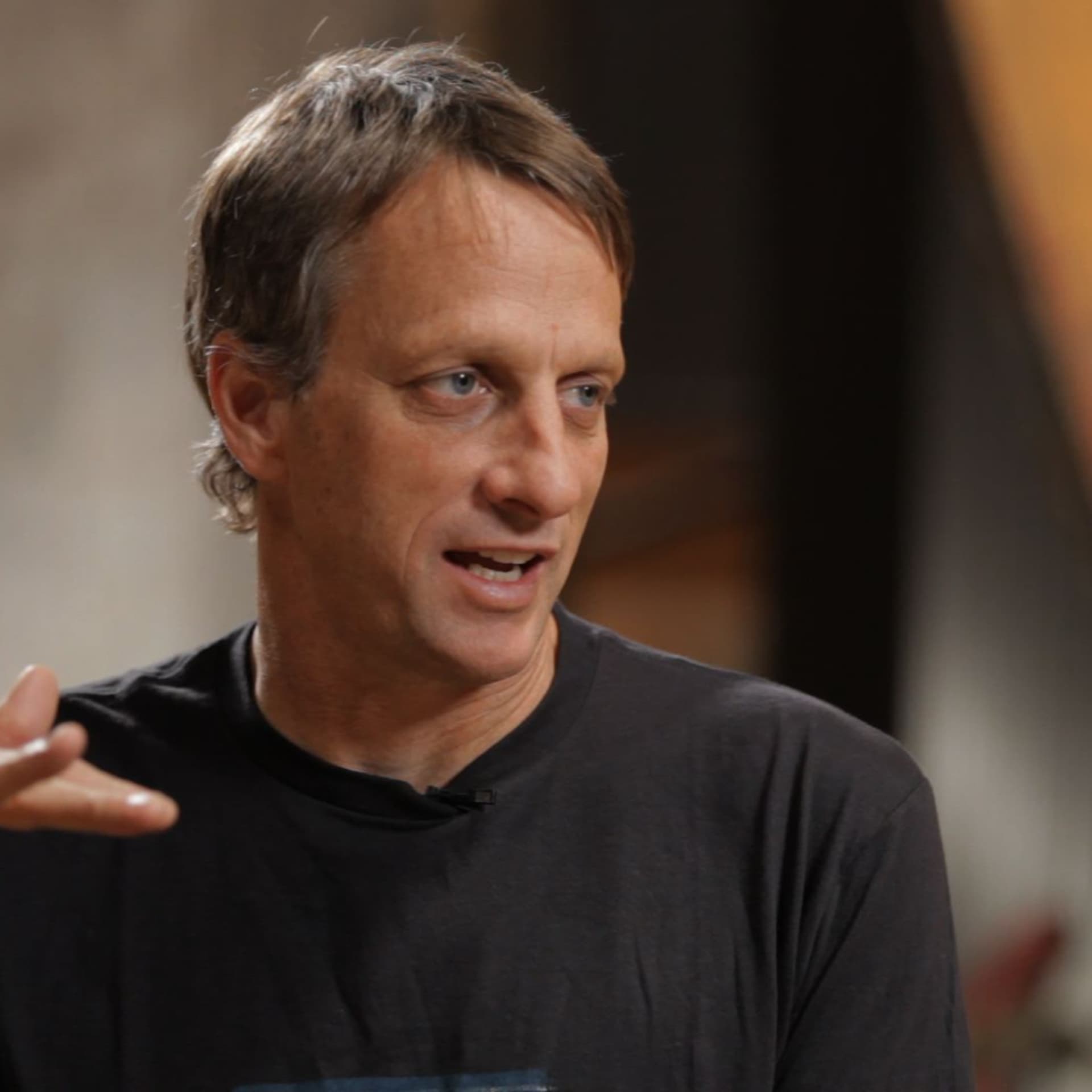
Tony Hawk discusses landing the 900, the mindset behind skateboarding, the pressure of perfection, major injuries, and how he built a skateboarding business empire (Birdhouse, foundation, media, and the video game franchise).
Guests
Tony Hawk (iconic professional skateboarder). Host/interviewer: Graham Bensinger (In-Depth with Graham Bensinger). No other guests are clearly identified in the transcript.
Guest background
Hawk is a lifelong vert/skateboarding pioneer who chased the 900 for years, later founded Birdhouse Skateboards and Tony Hawk Inc., and created the Tony Hawk Foundation to fund public skate parks.
Key claims
- Skateboarding is “art” and subjective, so competition is “strange.”
- Perfectionism drove him: if he didn’t perform at his top level, he’d be disappointed even after winning.
- The 900 required consistent spin/height and “blind” commitment to the landing.
- Competition pressure and later financial decline pushed him to start Birdhouse and diversify into media/video games.
Notable examples
- Broken pelvis (Nov 2003) after a loop-ramp accident during “Wild Boys” with Steve-O and Chris Pontius.
- Brazil food poisoning leading to lockjaw and performing a demo anyway.
- Stalker incident in Norfolk, VA; and a near-arrest van-on-fire stunt.
- Birdhouse nearly failed for two years; X Games (1995) helped it take off.
- Tony Hawk Pro Skater franchise sold over $1B; he declined an Activision buyout.
Written by AI. May contain mistakes. Listen to the episode to check what was said.
Chapters
Tap a time to open that second in VOThe Nature of Skateboarding
1:16 to 2:28
Tony discusses the individualistic and artistic nature of skateboarding.
“and even if I won the event, I would walk away disappointed.”
The Competitive Spirit Among Skaters
2:28 to 3:40
Tony shares insights on competition and collaboration in skating.
The Quest for the 900
3:40 to 4:59
Tony details the journey and mindset behind landing the 900 trick.
“And you said you would have been basically thrilled if he landed it.”
Lessons from Skateboarding
4:59 to 6:28
Tony reflects on self-confidence, tolerance, and diversity in skating.
The Commitment to Practice
6:28 to 8:14
Tony discusses his intense practice routines during his career.
“a skater and you're expected to perform and you tolerate it in some way at the time in your life where you believe you were the best you've ever been, how much would you practice in an average day?”
Overcoming Injuries
8:14 to 11:20
Tony recounts his worst injury and the psychological impact of recovery.
“for a lot of years because I was striving to get better for myself, not that I was striving to get better than my competitors.”
Overcoming Injuries
12:16 to 12:40
Tony recounts his worst injury and the psychological impact of recovery.
“Hey, it's Bill from the Bill Simmons podcast.”
Funny Stories from Brazil
12:46 to 14:04
Tony shares a humorous experience involving food poisoning in Brazil.
“Choice Hotels gets you more of the experiences you value.”
Food Poisoning in Brazil
14:04 to 14:50
Tony recalls a harrowing experience with food poisoning before a skate demo.
“The spaghetti at the hotel restaurant in Brazil.”
Stalker Encounter in Norfolk
14:50 to 18:41
Tony describes an unsettling encounter with fans that escalated to stalking.
“7 000 people and announce that i'm not going to skate and they all started chanting son of a bitch in Portuguese at me, which I didn't know what they were saying.”
Show all 32 chapters
Van Fire Incident
18:41 to 20:26
A wild night where Tony and friends lit a van on fire while skating.
“The last one being the time you and some friends lit the van on fire and almost got arrested.”
Navigating Team Sports vs. Skating
20:26 to 24:34
Tony reflects on his lack of interest in team sports and his passion for skating.
“Growing up, why were you uninterested in team sports, per se?”
Rising Fame and Challenges
24:34 to 26:08
Tony discusses the challenges of newfound fame while still in high school.
“and that you know that stayed true with me.”
The Pressure of Competition
26:08 to 28:04
Tony opens up about the pressures of competition and the toll it took on him.
“You are the best skater you've ever been to date, making the most money you've ever made to date, yet you were severely depressed.”
Navigating a Career Shift Away from Competition
28:04 to 28:21
Tony Hawk discusses his thoughts on removing himself from competition while remaining a pro skater.
The Pressure of Competitions
29:19 to 30:49
Tony shares how competition affected his enjoyment of skating and his comeback perspective.
“this is what everyone's talking about everything's on the table this is what champions come to take this is what everyone came to see no do-overs no second chances no more mr nice guy this is winner take all.”
Financial Struggles in Skateboarding
30:51 to 33:18
Tony Hawk discusses the financial hardships he faced as competitions dried up.
“By a long shot, you know because I was doing stuff that was Experimental and stuff that I wasn't really confident with but but I could pull it through somehow and if it didn't happened, then I didn't do well at all.”
Starting Birdhouse Skateboards
33:19 to 36:15
Tony shares the story behind founding Birdhouse during a tough time in skateboarding.
“I think your then wife was a manicurist, and at one point she started making more money than you.”
The Impact of the X Games on Birdhouse
36:15 to 37:49
Tony reflects on how the X Games helped Birdhouse Skateboards gain visibility and success.
“How personally gratifying was it the first time the company actually made a profit?”
Tony Hawk Foundation and Community Impact
37:50 to 40:08
Tony discusses the mission of his foundation to support public skate parks in underserved areas.
“And then as skating came back in the upswing, we were sitting on top because we had established ourselves there.”
The Influence of Video Games on Skateboarding
40:08 to 42:00
Tony describes how the video game franchise reshaped his career and the skateboarding landscape.
“You know, I worked very hard on it and I wanted to make it authentic and make it fun to play.”
The Evolution of a Skateboarding Game
42:00 to 45:20
Tony Hawk discusses the impact of his skateboarding video game and his involvement in its development.
“And we were four years into it with our fourth game.”
Retirement from Competition
45:42 to 49:31
Tony Hawk reflects on his decision to retire from competitive skating and the misconceptions around it.
“Don't miss the return of Marvel Television's Daredevil Born Again.”
The Challenge of the 900 Trick
49:32 to 53:18
Tony Hawk shares the challenges and significance of landing the 900 trick in skateboarding.
“How would you best explain the significance of landing that trick?”
The Moment of Triumph
53:19 to 56:01
Tony Hawk recounts the emotions and experiences surrounding landing the 900 at the X Games.
“When I was young, to consider a 30-foot ramp, firstly, sounds frightening.”
Tony Hawk's Life-Changing 900 Trick
56:01 to 56:44
Learn how landing the 900 trick transformed Tony Hawk's life and career.
The Impact of the 900 on Fans and Skateboarding
56:44 to 57:41
Discover how the 900 inspired a new generation of skateboarders.
“And for me, it was just, it was a huge relief.”
Remembering Tony's Father
57:41 to 59:11
Hear Tony reflect on the influence and support of his late father.
“To what extent did that get to you at the time?”
A Touching Conversation with His Dad
59:11 to 1:00:34
Learn about a heartfelt conversation between Tony and his father during tough times.
“And, I mean, he's somebody who presumably just meant the world to you.”
A Touching Conversation with His Dad
1:02:00 to 1:02:55
Learn about a heartfelt conversation between Tony and his father during tough times.
“Patients with these conditions before injection are at highest risk.”
Skateboarding's Place in the Olympics
1:03:31 to 1:05:58
Explore Tony's views on skateboarding's role and acceptance in the Olympics.
“How much, how important it is to be present and to be engaged, you know, in what your kids are doing.”
Tony's Predictions for Skateboarding in the Olympics
1:05:58 to 1:07:02
Hear Tony Hawk's predictions on skateboarding's future in the Olympic Games.
“Because usually it has to be a group that they've already recognized.”
Transcript
Automatic transcript. May contain errors.0:03This summer serve up the cookout classics, Heinz ketchup and Kraft singles. Every good burger needs a layer of perfectly melty cheese and thick, rich ketchup. We all know it's not a cookout without Heinz and Kraft. We are live from Fetty's house.
0:20Tony Hawk:Guests are gathering around the TV, even with a big storm outside. Are we worried about the feet? Nope, they have Xfinity Wi-Fi. Get reliable fiber-powered gig Wi-Fi with Peacock included to stream the beautiful game this summer. Xfinity, imagine that. Restrictions apply. New gig internet customers only. Actual speeds vary. Offer for Peacock Premium with ads currently at$10.99 a month value and limited to Xfinity internet members with newer upgraded gig speed or faster service. Activation required to access content. Peacock must be activated within the first 90 days. Management of existing subscriptions may be required to avoid multiple subscriptions and duplicate charges.
0:46Third-party built subscriptions continue until canceled. This week on the In-Depth with Graham Bensinger podcast, Tony Hawk, the most iconic skateboarder of all time, Hawk has pushed the limits of action sports. How did landing that change your life?
1:02Tony Hawk:People would stop me on the street in airports. You're the guy, 900. Like, how do you even know what 900 is? I went to California to meet up with Hawk back in 2012, where he opened up about his quest to be the best. If I didn't perform at my top level, and even if I won the event, I would walk away disappointed. Revealed the struggles he faced along the way. I was eating Top Ramen and Taco Bell and Peanut Butter and Julee sandwiches for a good two years. It explained how a video game changed his life. I actually had moms come up to me and say, I didn't know Tony Hawk was a real person. I thought it was just the name of video game character.
1:40But we begin with his unique perspective on skateboarding and why he does not view it like a traditional sport. As I mentioned, I kind of wanted to start off by talking to you about mentality and mindset. But you said something that I found interesting when I was preparing for the interview, in that skateboarding is not a competitive sport. How so?
2:01Tony Hawk:Well, I think by nature, skating is an individual pursuit. And it is very much an art form, as it is a sport. I mean, because it's so subjective, to put it into competition is strange because you're judging art against art. but at the same time that is easier for the sort of outsider to understand is the competition aspect and and how do we gauge who's better and who's best and and once you really start living in in the skating world you can never say who's best because it's all about style and it's all about preference and it's not about who is exactly the fastest who is exactly the highest but i mean skateboarders themselves aren't competitive with each other i think they're i think that they yeah I think they're competitive with each other on some level I mean there's definitely there's always a quest to do the next big trick and who's going to get to it and you know if there's a if there's a certain skate spot who did who did the newest thing down it and so there is that aspect but I feel like it's more of a collective effort I mean definitely some guys are more more like jock prone than others and they're more about well that's who I am and you suck and whatever but i think that collectively there is this push to keep evolving skating and i mean i guess the best example for me is is when when people were trying to do 900 on the skateboard which is you know i did it first but there were about five of us that had been gunning for it for probably a good four years or five years and it was more like one of us is going to get it and it's going to be great that it's done.
3:37And that was interesting. It's interesting you say that because I remember in your book, you talked about how, you know, before you did it, before you ended up actually successfully landing it, I forget the skater, but he called some of the leading skateboard photographers out, you know, saying he was going to do it on this day. Oh, yeah. And you said you would have been basically thrilled if he landed it. And I'm thinking when I'm reading this, what do you mean? You've been trying to make this happen for a decade.
4:05Tony Hawk:Don't you want to be the first? It was because the quest had gone on so long and we had been put through so much just in terms of. Exactly. I mean, that's why you want to be first. Yeah, but still. But there's also a mentality, I think, in skating as well. There's a mentality and it probably goes across other sports and other activities. if it has been done it's much easier to get to to for you to do it because you know it's possible and as much as I love chasing a new thing and testing limits if I know that someone's done it it's a lot easier for me to go okay let's make this one this is possible I'm capable of it when a trick like that that seems that was such a milestone the you know the top four or five best most qualified guys to do it can't do it you start to question is it really possible and that was what we're going through and it was fine it was like one of us had to just shake it up and say it is possible here it is I did it and and basically after I did it not long after about two or three other guys did it you said skateboarding's taught you about tolerance diversity self-confidence in what ways um well definitely uh uh it's taught me about self-confidence because you it's up to you to make something happen it's up to you to create that next move or to accomplish whatever you have in mind it's not because your coach told you to do it or made you practice at this time or or uh you know said that your your team is not going to win if you don't perform like this it's more like you you have to take it upon yourself and you have to perform you have to do it because you truly want to and you you have to believe in your skills to do it um in terms of tolerance i think uh well skating is so diverse now especially uh you know it it doesn't it resonates across so many different types of cultures and um social and economic boundaries and it's just you know it's a common language for so many people across the world and so I guess I hate to say tolerance because we we embrace new styles we embrace the different types but at the same time you can be put into situations that are not ideal but you're a skater and you're expected to perform and you tolerate it in some way at the time in your life where you believe you were the best you've ever been, how much would you practice in an average day?
6:41Tony Hawk:My teenage years, I spent the majority of the day at the skate park. I mean, I'd get out of school, and I would go straight there, and I'd be there until at least dark, if not later. So I was skating a good three to four hours a day, probably five days a week. And even when I was at my top, I mean, I still like to think that I'm performing at a top level, and I could still do a lot of the tricks that I used to do, most of them actually. But like 10 years ago, I was performing nonstop. I was doing pretty big exhibitions on a regular basis, you know, three or four times a week sometimes. And so those usually lasted about two to three hours.
7:21Tony Hawk:So I was skating just as much. It was just more in a public forum. Somebody close to you said that when you were coming up, you were really never satisfied with yourself. How true? I think that's very true. I put high expectations on myself when I was young. I still do. And if I didn't meet those expectations, I was always disappointed. And I think that's what helped me in my competitive career because when I would compete, if I performed at my best, I was happy. And it didn't really matter how I placed because I knew that was the best I could do. If I didn't perform at my top level and even if I won the event, I would walk away disappointed.
8:04Tony Hawk:Really? Yeah. And having that drive to want to do it perfectly or the best that I could definitely kept me ahead of the competition for a lot of years because I was striving to get better for myself, not that I was striving to get better than my competitors. How much would you obsess almost over mistakes that you make? Oh, that's all I would think about. If there was something I really wanted to do, it consumed my mind. And if it was something that I was not successful at, then I would be probably just frustrated through the day, you know, like someone who didn't get their cup of coffee or whatever it was, just it was always nagging at me.
8:42And a lot of plans would fall by the wayside
8:47Tony Hawk:because I had to get back out there and skate and try it. Your worst injury to date? My worst injury was broken pelvis. November 2003. Take me through what happened. Ah, well basically. I can tell it's an enjoyable memory. Yeah, it was probably the worst skating day ever. We did a five week US tour and I was invited to participate in Wild Boys, which is basically a Jackass spinoff. Okay. A couple of the guys in Jackass. Was that like Steve-O? It was Steve-O and Chris Pontius. Okay. And they were doing, it was more animal oriented. And they said, we have this chimp that can skate. And do you guys want to skate with this chimp at Bob Bernquist, who is a fellow pro, at his house.
9:31Tony Hawk:And I was like, yeah, that sounds awesome. I'll take my kids and see the skating chimp. And so we wore chimp costumes, and we were skating. And Bob has a loop ramp, which is basically a full 360. You go all the way upside down, like a roller coaster, which is something that we had on our tour. We had a loop ramp on our tour. We were doing it every night. And you said nothing hurts your back more than the loop ramp, right? Well, it wasn't then it was fine because like I said we I was almost almost like we took it for granted We were so cocky with it. It was it became easy. It almost became boring in the show because we would we would Lower it from the ceiling and everyone was like, oh, it's crazy It's a loop and then we go through and they're like, that's it And then the next day I go through it the next to go through it.
10:16Tony Hawk:Yeah, so it became just sort of this this easy thing for us The problem was Bob has this loop that's been out in the weather for years no one rides it because it's frightening to learn how to do it and so it's just different than the one that we were skating and as we were skating doing the stuff through the day he said hey we should do the loop I said yeah let's do it and I should have known because my first attempt I started coming off the wall about at 12 o 'clock and just fell and knee slid my way through it and it would the problem was the starting ramp was too slow and so I tried to over compensate on the starting ramp and that sent me into sort of a wrong position for the loop and I ended up shooting out immediately at the loop and flying through the middle of it landing on my on my hip and on my head fractured skull broken pelvis broken thumb knocked out woke up in the ambulance and realized that should not take the loop for granted that one was pretty ugly and definitely life-threatening like I said I hit my head really hard and so I didn't take it lightly but in all honesty the pelvis you don't realize you know it's the center of your body and so much of your movements are based on your pelvis it took me about almost six months to really start skating again well and it took me a full year to gain my confidence back of tricks that I used to take for granted.
11:48Tony Hawk:Why? Because you just feel so fragile and you feel like maybe I'll fall. What if I hit? What if I hit my hip again? What if I knock this loose? And every time that I would hit my hip or my leg at all during that time, I could feel the shift in there because the fracture was so deep that I could sort of feel that movement. And it just gave me pause. It took me a long time before I did 900s again, I'll tell you that. Hey, it's Bill from the Bill Simmons podcast. FIFA World Cup 26 fans, listen up. As the official beer sponsor of the FIFA World Cup 26, Michelob Ultra is giving away$1 million worth of FIFA World Cup 26 tickets and prizes.
12:28Tony Hawk:Enter now at MichelobUltra.com slash superior access slash FIFA World Cup 26. Michelob Ultra FIFA World Cup 26, superior access, no purchase necessary. Open US Residence 21 Plus begins on December 1st, 2025, ends on July 31st, 2026, multiple entry periods. Visit www.micelobUltra.com slash superior access slash FIFA World Cup 26 for free entry, entry deadlines, prizes, and details. I wrote a little song to remind you. Choice Hotels gets you more of the experiences you value. The Cambria Hotel's got it all. A rooftop bar, have a ball. Bring a date, your squad, or even your mom. Book direct at choicehotels.com.
13:01Do you wonder, even if you feel fine now, you know, 10 years down the line is the age, if you're going to feel it?
13:07Tony Hawk:I do, yeah, a little bit. But to be honest, I've noticed that just staying active is what has kept me the most limber and the most healthy. if I take any time off for whatever reason, even if it's an injury or if it's just for family purposes, getting back is much harder to do and getting in that groove and feeling like I can handle that sort of endurance. And so I guess I'm one of the litmus tests for how, you know, at what age can you keep doing this on a professional level. And so I guess I'm doing okay for that. Or the litmus test. But the kind of injuries that a guy like Travis Pastrana and Matt Hoffman endure are not really on the same level as stuff that I've had to deal with.
13:50Tony Hawk:So I don't know what it's like to have metal plates all over and, you know, literally synthetic ligaments and things like that. And so they're on a whole different level of dealing with pain. I read your autobiography and there were some funny stories in the book and I just wanted to run through some of the moments and get you to kind of recall the story. Okay. The spaghetti at the hotel restaurant in Brazil. The first time I went to Brazil, we were staying in a pretty sketchy area in Sao Paulo in a hotel that basically locked their doors at 10 p.m. so no one could get in or out because it was in such a bad area.
14:31Tony Hawk:and we didn't know our uh our handlers or the people that sent us there were were kind of mia for most of the day so we were stuck in the hotel and so i went and got spaghetti at the hotel thinking that was perfectly fine and ended up getting the most violent food poisoning that i've ever had um had to miss our first demo had to they they requested that i get up in front of about 7 000 people and announce that i'm not going to skate and they all started chanting son of a bitch in Portuguese at me, which I didn't know what they were saying. Right. And then the next day, they realized it was so bad that they took me to a doctor, but just to this doctor that lived in an apartment, like to his house.
15:17Tony Hawk:And he gave me shots that I had no idea what they were, you know, nor did I, was I in a state of mind to care. I was so out of it. And he ended up giving me, I don't know what kind of shots he gave me, but he had dirty needles, so I got lockjaw. So I had to figure out how to deal with lockjaw for a couple days. And there was a press conference, wasn't there? There was a press conference that night, and my jaw would clench up sometimes, but then other times my lips would sort of point upward like this. No control. So I'm doing these interviews like this. I don't know what was happening to me physiology like there's it made no sense none of it and then I learned later like you know I was in a very dangerous situation to be getting lockjaw and ended up performing that night you know in the middle of sort of this dream state that I was in but it was the only time that I wasn't constantly vomiting and I made it through I remember the whole the whole that whole day seemed like a dream and everyone said I skated well I don't remember any of it.
16:29Two more the first one being the run-in with the sisters in Norfolk Virginia.
16:38Tony Hawk:I think that was my first experience with stalkers. Really? Yeah there was a girl that had been writing me fan letters and I was getting a bit of fan letters at the time sort of late 80s and I didn't think that much of it and she said oh we're gonna see you at this contest in Norfolk okay and then when I got there when I got there this where you get like locked in the hotel room and the guy with the busted arm yeah well when I got there I was I was staying on this one floor and these two girls were sort of following me from the elevator and they were watching me go in my room and you know I said hi and come to realize later that they were actually staying there because they found out where I was staying they bribed the the front counter to tell them what floor I was on so they could stay on the same floor and then basically just tried to hang out with me as much as possible whenever I was in my room because they knew that was when they actually had some sort of access and I think that I ended up going to their room one one point because they offered me a drink and I went to the room and the next thing I know there's a guy pounding on the door with what sounds like a hammer um and it's this guy uh he's just he's just slamming the door like he's gonna break it down and I was like who's that and she's like oh that's my old boyfriend he followed me here like so now I'm stuck in this thing like you're stalking me I don't even know who you really are and your boyfriend wants to kill me because you're stalking me like I can't I'm out of here so I just left and the next day I was going in the elevator and this guy walks in and he's got a cast and he's looking at me I was like how's it going he's like you're Tony so yeah and he said his name and I recognized the name like oh oh you did that last night he broke his arm trying to break down the door I changed hotel rooms I changed hotels Good call.
18:42The last one being the time you and some friends lit the van on fire and almost got arrested.
18:49Tony Hawk:Oh, yeah. Maybe you should have gotten arrested. There were a couple guys that skated for Birdhouse at the time. They kind of had their own vibe going with the skating they were doing. And they were known for doing car stunts. They would take this van and jump it down hedges. Their videos were chaos, and they invited me to sort of participate one night. And the first thing they do, they pick me up, they get on the freeway, and they start lighting a fire in between the seats in the front to freak me out. And it did, like mission accomplished. And then they wanted to go to where these office buildings were, and they wanted to jump from parking lot to parking lot, like this pretty big gap, I'd say about 7 feet and probably 10 feet long, 7 feet high, 10 feet long, and they were just going to jump it.
19:47Tony Hawk:And I actually just decided I wanted to watch. I didn't want to be in the van for that one. And so as soon as they were about to do it, this cop pulled up and said, what are you guys doing? And we said, oh, we're shooting skateboard photos because we had skateboards in the van. And they said, well, we just had complaints that there was a van like this and it was on fire driving down the highway. So, no, that wasn't us. No, no, we're just skating. And, yeah, good thing. Meanwhile, all they probably have to do is check out the van. Yeah, all they have to do is peek their head inside of it and smell it.
20:17Tony Hawk:It smelled like a campfire. Right. So that was the last time I hung out with Jeremy and Heath. I want to take you back to when you were growing up. Growing up, why were you uninterested in team sports, per se? It wasn't that I wasn't interested. I did it because I just thought that's what everyone does and my friends were doing it. And so I wasn't disinterested. I just didn't like that. Well, for one, I didn't like that the team was relying on my performance or that I was relying on the team's performance for my own success. And that, you know, but that's just team sports. And obviously that's an important skill to learn or that's an important philosophy to have is teamwork.
21:03Tony Hawk:But for me, I never felt like I was getting that much better at any of those sports to justify doing it year after year. You know, my basketball game didn't improve that much. My baseball, like I was good at baseball, but I wasn't getting exponentially better or at any rate that I could measure each year. And so when I found skating, every time I went skating, I knew I was getting better at it. And I didn't have to listen to anyone for my practice schedule or have to rely on anyone for my success. and that was it. That's what I wanted to do once I found it. The first time you went to a skate park, you said was really the first time you kind of felt content as a kid.
21:41Tony Hawk:Well, when I was skating and I would see skate magazines and I'd see the guys going down the street and things and so I knew there was potential. But when I went to the skate park the first time, I literally saw guys flying out of empty swimming pools and I thought that's what I want to do. I want to fly like that. I want to learn whatever they're doing right there, that's what I want to do and I took every step towards doing that in high school how much did you get picked on in high school my early years I mean that's that was my existence was just getting picked on for being too small for being a skater for being scrawny for being nerdy you know it was like I was I was in the advanced placement classes so I was already a nerd I skated which was even like lower on the totem pole of cool back then so I just had three strikes against me I was tiny and so uh I uh I just was kind of a ghost what would the guys do to you oh they would just like sometimes just pick me out swing me around um just start yelling skater it was really embarrassing yeah I mean and definitely um put a damper on any chances I had with girls at the time Yeah, except you get to your senior year and things kind of all change.
22:58It's kind of your F you to the jocks.
23:02Tony Hawk:In school, even through my later years in high school, there was still this stigma about skating. And because I had sort of grown up there, they knew I had some sense of success. But it was still this thing that was like obscure skater kid. And so I didn't really get much attention from, say, girls in high school. there were a couple because they hung out at the skate park and they knew what I did or my you know or my success it was when I would leave and go away on the weekends to big skate events that suddenly I was like oh they're this is cool people do like this yeah girls will talk to you and then all of a sudden though I mean you get to senior year you're one of the best skaters in the world at that time senior year of high school you have your own national television commercial that everybody's seeing people find out at 18 years old you buy your own house so I mean what was I mean just in your own little bubble in high school that kind of change in popularity like for you it was uh it was strange it was it was it was definitely challenging because suddenly I had all this freedom um I was living on my own while I was still a senior in high school you know that's very challenging to try to focus on your school work and I guess what I learned then very quickly is who your real friends are because all of a sudden these people that wouldn't give me the time of day or look my way were interested in hanging out with me or what I was doing and I knew immediately that it was fake.
24:31Tony Hawk:I knew it was just because they saw some sense of fame there and it was pretty easy to figure out what was real and what wasn't and that you know that stayed true with me. That was a lesson I learned very quickly. How's having your own house at 18 years old? It's tricky. It's tricky to keep people away because everyone thinks that you have the party house no matter what. You probably did your fair share. Oh, yeah, for sure. Yeah, I had three roommates and only one of them was in school. And the other ones were in their 20s and living like bachelors. Right. So it was definitely challenging. but I knew I wanted to graduate.
25:15Tony Hawk:I knew how important it was for my parents because skating was still uncertain of a future. And so I wanted to obviously have an education, but I also wanted to make my parents proud of that. And once I graduated, things kind of exploded with opportunity and I was gone. I was on tour for most of the year. um you know the the competition prize money got bigger the royalties were getting bigger the sponsorships the endorsements um it really exploded and i was thankful that i i was thankful that i was in a position to pursue that and that my parents didn't put that much pressure on me to go to college because that would have you know those those years were the biggest in the 80s and had I been following an educational path instead, I would have not enjoyed any of that.
26:10You're in your early 20s. You're making six figures annually. You are the best skater you've ever been to date, making the most money you've ever made to date, yet you were severely depressed. In what ways?
26:25Tony Hawk:I was, my depression, it wasn't that I was depressed. I was disheartened with competition. The only way that you really were recognized as a skater then was your competitive record. And mine was stellar. I mean, I was winning most of the events. I think I won like 72 out of the 100 that I entered at that time. But that became my existence and that became what everyone expected of me. And if I performed any less, if I got second, then in their eyes I had failed. I had lost. And why did that bother you? Um, because it just didn't, it's not. And you say it became unbearable. Yeah, it just, because it took the fun out of it for me.
27:10Tony Hawk:It was more that I was just performing it to everyone else's expectations. And I wasn't really enjoying the process. You know, like my competitors would say, hey, look, I'm just hope I get second place. And to me, they just put me on this separate island that I didn't want to be on. I wanted to be, I wanted to have camaraderie. I wanted to be with those guys and skate with them and not be put on a pedestal. And it's just hard. Rodney Mullen, who also went through a very similar thing, he was one of the top competitors in freestyle, he put it best when he says it's like you were building this house for yourself and instead of enjoying the house, all you do is sit around and protect it and not let anyone get in it.
27:58you know it's like a bad kafka story or something you said you did a lot of like soul searching before you went and talked to your brother about how you were feeling at the time what were you
28:09Tony Hawk:thinking about i wanted to figure out how i could remove myself from competition and still be a pro skater and that had not been done yet um because if you're not going to compete the magazines aren't going to cover you, your sponsors are likely to drop you, and the kids who are buying your products are going to forget about you. And there was no such thing as a video skater back then. That hadn't really come into play yet. There was no YouTube. The skate videos were usually based on the best guys in the competitions. And so I went and talked to Stacey.
28:51Windows 11 PC. And for a limited time, college students get the best of both worlds. Get the Unreal College deal. Everything you need to study and play with select Windows 11 PCs. Eligible students get a year of Microsoft 365 Premium and a year of Xbox Game Pass Ultimate with a custom color Xbox wireless controller. Learn more at windows.com slash student offer. While supplies last, ends June 30th. Terms at aka.ms slash college PC. this is what everyone's talking about everything's on the table this is what champions come to take
Read the full transcript
29:27Tony Hawk:this is what everyone came to see no do-overs no second chances no more mr nice guy this is winner take all. The NBA Finals continue on ABC and the ESPN app. Who was your boss at the time? Stacy Peralta was my coach and I actually had my brother come with me as backup and he, you know, he approached Stacy and said, look, Tony's really having a problem with the competitions. It's, you know, it's kind of wrecking him. It's ruining the fun of skating. And I told him that and so So he said, well, you know, I understand. Maybe you might want to take a break, but don't give it up completely because you may want to come back.
30:15Tony Hawk:You may, you know, you may enjoy it. And I don't know if we're going to be able to sustain your career if you're not competing. And I did take a break. I stopped competing for a while, almost a year, maybe a little less. And when I came back to it, I came back with sort of a fresh perspective that I don't really care how it lays out. I'm gonna go and do my best and I'm gonna take chances that I maybe hadn't taken before and if that puts puts me in last place then I so be it But if if it's if I succeed I'm gonna be on this whole other level of skating Mm-hmm, and that's what happened. I mean and the contest that I won then I won By a long shot, you know because I was doing stuff that was Experimental and stuff that I wasn't really confident with but but I could pull it through somehow and if it didn't happened, then I didn't do well at all.
31:06Tony Hawk:And I stopped caring about the end results so much. Very quickly, though, there was an enormous drop-off in the skating world. And I only bring this up for purposes of just speaking to how big of a financial drop-off it was. I think when you were like 21 years old, you made something like$150 ,000. Speaking to the financial drop-off, year after that and the year after that what did you make oh i i mean every year after let's see when i was about uh 22 years old 21 every year my my salary was was being cut in half pretty much cut in half yeah and in terms of board royalties or team salaries and things like that um the the competitions were drying up the prize money was getting smaller in those few competitions.
31:58And it's not as if you were getting worse I mean you were continuing.
32:01Tony Hawk:No I was still learning I was still improving. How much of a financial bind did you put yourself in as the money began to kind of dry up? It was tricky I was dealing with two mortgages I was just starting a family and I was still trying to skate and you know basically like doing everything I could to make skating a career still. And I really pulled back on all expenses. And I was eating Top Ramen and Taco Bell and peanut butter and jelly sandwiches for a good two years. Really? Yeah. Refinanced my house, sold it at a loss, moved into my original house, my duplex that I grew up, that I was living in in high school and with a family now.
32:52Tony Hawk:But at the same time, even though I was making those adjustments, I never felt like I was struggling because I still got to skate for a living. And that was the dream realized. And it wasn't a dream that was necessarily available to us when I was younger. To dream about being the best skater in those days just meant that you got free gear and a sponsor. But, I mean, big change in lifestyle for you at the time. Big change in lifestyle for sure. I think your then wife was a manicurist, and at one point she started making more money than you. I think you briefly considered taking a job in computer programming.
33:30What was the lowest point of that time? I think the lowest point in that time for me was agreeing to do exhibitions in amusement park parking lots.
33:49Tony Hawk:for$100 a day, three shows a day, and traveling to St. Louis or to Dallas to go do that, and staying there for five days to do that. I mean, that was literally just to pay the bills. Because it wasn't something I was necessarily enjoying. The ramp was not amazing. You know, the setup was not amazing. We were treated like sort of the bastard children of the amusement park, first of all. And - Sleeping many to a hotel? four people to a hotel room yeah um and so i it wasn't like i i i don't know it's hard to explain like i still love that i got to skate that was it you know and that that's what i had to do it was more just born out of necessity that's what i had to do if i wanted to make a living skating i had to do things like that and you end up making an interesting move because here you are you're essentially on the other side of broke skateboarding or skating is a career looks like or the sport just kind of looks like it's going under sponsorships are going away why decide to start your own company amid all of that um well the my style of skating at the time as as skating was taking a dive my style of skating was definitely taking a worse dive like I was a vert skater.
35:10Tony Hawk:I skated big ramps. And that was a fairly specialized style back then. It used to be more popular than street skating. It was actually, well, it was around longer than street skating anyway. I mean, is it thinking, I'm screwed regardless, so why not? I'll give it a shot. Or did you kind of see the light at the end of the tunnel? I wanted to continue to be in the skate industry. And I wanted to do something on my own. The skate companies at that time, they started shifting their direction and their marketing. It was more about, it was less about, look at how good our skaters are. It was more about, look how lame all you other companies are.
35:50Tony Hawk:And I thought, why can't we just promote good skating? And I decided that's what I'm going to do. I'm going to create my own team. So I handpicked some of the best riders then and said, look, we're going to make this thing. It's not what everyone else is doing. It's going to be based on we're going to highlight you guys and your amazing skills and not worry about what everyone else is doing. And so that's when I took my biggest risk for sure. Pretty much all the money I had saved at the time I dumped into starting a company. And you created the company Birdhouse. Birdhouse Skateboards. How personally gratifying was it the first time the company actually made a profit?
36:30Tony Hawk:To be honest, the company struggled for about two years, and we almost gave up twice. There was a time when my partner and I both said, we may have to just throw in the towel. This isn't working. We're barely covering salaries. I think at one point we had to put more money into it, and I didn't really have that much money to put into it. And it wasn't until, to be honest, it wasn't until we started in 92. In 1995, the first X Games happened. And it was very strange and experimental and a little disjointed. You know, it was like we were highlighted with bungee jumping and sky surfing and skateboarding.
37:11Tony Hawk:I didn't know what the connection was, but they said it was extreme. So, okay, whatever it takes to be, you know, back in competition, that was fine with me. and I got back in. I started competing again. The very next year of X Games is when we saw Birdhouse start to take off and that was the moment of validation for us both. We're like, we endured this because we believed in it and we hoped and almost expected skating to come back and to come back in full swing, but we thought it would happen sooner and now we're on top because we had one of the best teams. we had placed ourselves as a brand at a time when skating was very small, so it wasn't hard to get noticed.
37:56Tony Hawk:And then as skating came back in the upswing, we were sitting on top because we had established ourselves there. We're doing the interview from your offices. What's housed in this building? Well, this building, this is Tony Hawk Incorporated. It houses Birdhouse Skateboards, Tony Hawk Foundation, our foundation for public skate parks. TH events, which we do exhibitions, we do the Boom Boom Huck Jam Tour. We do, you know, this ramp is portable. We take it around the world and skate on it for big crowds. We have 900 Films, which does film production. We have our own YouTube channel, Ride Channel, which is all skate content.
38:36Tony Hawk:And other than that, a lot of design and a lot of scheduling here. You own companies that market clothes, shoes, films, skateboards, gear, events. You're involved in retail, video games, obviously. How about the work that is most personally satisfying that your businesses do? The stuff that is closest to my heart is doing the Foundation for Public Skate Parks. And basically, we try to help to fund public skate parks in low-income areas where there's a lot of at-risk youth that maybe don't have much outlets for activities, but choose to skateboard and don't have many support in doing so. And there are way more than people imagine.
39:22Tony Hawk:You know, people choose to skate everywhere. And so our foundation gives communities resources and funding and the tools to get a park going in their area. And to date, we've given way over$4 million. We've helped to fund over 500 skate parks. and going to the old grand openings that I've only attended a number of them, like a handful of them, but seeing the faces and seeing the excitement and the validation of their own efforts because we try to empower the communities that have already got the ball rolling. It's not like we just wave a magic wand and decide which city gets a park. We actually want them to feel like they have ownership of it.
40:05Tony Hawk:And to go to the grand openings and see the faces of the kids is that's the best how did the video game franchise impact your success um video games changed my life uh no question you know they they brought me a level of success that i'd never dreamed possible um in any chosen uh field you know i just never thought that i could have skating resonate so far and with so much reach through through something like that I'm extremely proud of it. You know, I worked very hard on it and I wanted to make it authentic and make it fun to play. Being a video gamer as well, I knew what would be fun to play in video games as well as what would be fun for skaters.
40:51Tony Hawk:And, you know, I got so many different opportunities because of that, because of the success of it in terms of endorsements and appearances and even just like name recognition. and I actually had moms come up to me and say, I didn't know Tony Hawk was a real person. I thought it was just the name of video game character. My little sister hates sports and it was the only video game she used to want to play. Yeah, well, like I said, I was really proud of our game. And honestly, I thought we just made a novelty game. I was excited to get to do a video game, but I thought it was something that skaters would appreciate and maybe be inspired to buy a video game console so they could play it.
41:34Tony Hawk:And that would be the end of it. So those were kind of your expectations preceding the release of the initial game. How would you put into context the success of the franchise? The franchise, I mean, it sold over a billion dollars in units. Or not units, but in sales. There was a point when, I think when we released our fourth game, the first and second and maybe third games were still in the top ten. of sales. And we were four years into it with our fourth game. It was unbelievable. You know, it was just nothing I ever imagined. And I think I knew we were on to something when, as the game was starting to be released, there were a few friends of mine that were in the same boat where they loved skating, but they also were very much into video games.
42:28Tony Hawk:And I actually gave them advanced copies of it. And I was like, don't show anybody this, but here's the game. and obviously they didn't just keep it to themselves but showed others and it became known as in the skate industry it became known as the game have you played the game that's all you know that and to have to have it referred to like that I knew we had something pretty big because those guys knew video games as well as skating Activision offered you a buyout at some point that would have enabled them to use your name and likeness in conjunction with the game for perpetuity. Explain the thinking that went into the decision you made on that front.
43:10Tony Hawk:You know, I don't remember the exact details of that, but I do remember my agent calling me at the time. Heck of a move looking back, but it was a gamble. Yeah, well, my agent called me at the time and they said, hey, Activision is offering for a buyout of advanced royalties and whatnot if you want money right now and I think it was I want to say it was a hundred thousand dollars but I think it was less and I said what's the advantage of that and he said well if you don't want to if you don't want to take a gamble that the game doesn't do well you know this could be a lot of money if it doesn't sell that much and I had just bought a new house um I was doing pretty well with birdhouse uh you know I was comfortable I wasn't struggling and I said I want to ride it out I believe in this you know i put my i put my heart and soul into this thing and and i really want to see what happens with it he said okay it's just you know if maybe you need some money right now i don't know if you're buying another house or whatever i just bought a house and because i could tell he was kind of leaning towards getting the money and i said i really don't want to do that yet and uh i mean thank god i didn't do that does the agent still get the percentage of the royalty no he left that agency not long after that i don't know if he was pushed out but we stopped working together.
44:28They'd send you a game apparently every few weeks or a new updated version of it when they were in the process of designing it. How would you contribute to that process?
44:38Tony Hawk:I would play the game every probably two weeks I would get the version they're working on and I would just play it as much as I possibly could and give them suggestions for this trick should look more like this, this challenge should be different, this guy doesn't look this way, or this spot should be included. It was all very detail-oriented. I wasn't a programmer or anything, but I definitely wanted it to feel right and feel authentic. When you finally find your thing, you want the whole world to know about that thing. So you use a thing called Canva to make it an even bigger and better thing.
45:20Whether you want to create flyers for that thing, make presentations for that thing, or design merch for that thing, you can do anything. So people can see your thing, feel your thing, love your thing. The next thing you know, it's a thing. Canva, the thing that makes anything a thing. Where is Daredevil? A minor. Don't miss the return of Marvel Television's Daredevil Born Again. So what's next?
45:50Tony Hawk:I've been liberated. We're going to take this city back. Over Medicaid. In an all new season, now streaming only on Disney+. They're hunting us. It's time we started hunting them. I can work with them. This should be tons of fun. Marvel Television's Daredevil Born Again, now streaming only on Disney+. Retirement from competition. You said, quote, I don't want all the pressure of competing anymore. all the scrutiny. When I decided to stop competing, it was 1999. I had done it for 20 years of my life. And it basically was my existence. You know, like I said, in the 80s, that's all there was was competition.
46:32Tony Hawk:And I felt like I was reaching a stage that there might be more opportunity outside of competition. And I would like to chase that and see what is possible with skateboarding and how far we can take this. and in 1999 I pretty much decided the beginning of the year that was going to be my last year of competition and then the X Games I did the first 900 I had probably one of my best years in terms of other competitions you know across the board and I thought that's it that was a good out that's good end to the competition and the hardest thing was that because I left on such a high note all people thought was that I was leaving completely.
47:15Tony Hawk:I was retiring. And that was the hardest title to defend because people say, you're retired. Well, no, I'm not retiring. I'm just doing all these other things that I can do now with my schedule because I'm not chasing these competition points all year. Well, then it's different if you're a baseball player or a football player. It's way different. And in skateboarding... Because you can retire, just to make the distinction, you can retire from competition, but you can still skate in the exhibition and skate all the time. And be even more successful. Right. Whereas if you retire from baseball or football, that's it.
47:48That's it.
47:48Tony Hawk:You're not playing pickup games down the street or for thousands of people. Right. Yeah, it's just a different sport. But there are many professional skateboarders that don't compete ever now and never have, you know. But they're not put with this label of retired because they never did compete. But they're some of the most popular. You know, guys like Andrew Reynolds, guys like Jamie Thomas. These are names that resonate, but they have nothing to do with competition because they perform at a top level. They make incredible videos. They get coverage in the magazines, and people know their names.
48:21At 18 years old, you were quoted as saying maybe you could see yourself doing it for another five years. What do you think changed?
48:31Tony Hawk:um well the the idea that you had to quit skating into your adult life was always put on us because of the the generation before us they had to quit because they weren't able to make a living at it so once they reached an age of responsibility they had to get jobs you know skating was not going to provide for them um when i was in my 20s skating started to take a dive and i realized well that's the position i'm in i'm not going to be able to do this into my adult life because I can't I can't make a living at it and I'm gonna have to do something else and that's when I started doing video editing on the side sort of freelance as skating came back in a big way in its biggest way in the late 90s I was still actively doing it I was starting to compete I did really well I I realized I could do this into my adult life because the opportunity was there and i think that's what changed is is the opportunity the uh most satisfying moment from your professional uh skating career would be what uh most satisfying mom was making 900 for sure because it was something that i wanted for so long and i had tried and failed for a good five years before i finally made one and the fact that i made in what then was the biggest venue on live TV.
49:53Tony Hawk:That's not something that was ever in my head that I had to do it there, but the fact that it did work out there, it was a big deal, and I feel like it definitely raised the profile of skateboarding and action sports in general. How would you best explain the significance of landing that trick? It was the culmination of a list of tricks that I always wanted to do in my lifetime that I thought were possible and stuff that I had been carving out. I'd check one off, I'd get this one. Okay, what's next? I want to do this, and eventually I'd get it. 900 was a trick that I had been chasing, been trying, been killing myself doing, and never came through.
50:36Tony Hawk:And I'd never tried a trick and failed at something for so long. In 1986, the first time you tried the 900, or then you don't try it again for another decade. Why the brick? Well, I kind of tried it in 86. I tried to spin my body. I got almost around. I didn't keep my board with me and realize it was just too scary. And then around 95, when I was really hitting my stride in competition and in skating, I thought, okay, maybe I've been spinning 720s for the last 10 years um or more and maybe i can start trying it and i actually did start trying it and started actively pursuing it um it was it just took it was because that break because i wasn't skating that much and there was too much to risk in that time to chase this trick that seemed impossible the most challenging part of not only landing it but perfecting the 900.
51:43Tony Hawk:The most challenging part is consistent spin, consistent height and consistent spin. And nowadays... And what if somebody like me who knows nothing about skating... Well, okay, the most challenging part of a 900 is committing yourself to spinning two and a half times. Two and a half times mid-air. Yeah, one and a half is there's a moment where you're completely blind to your landing zone. and that is one of the most frightening things that you can think of when you first start skating is that you can't see where you're going to land but you have to trust that you will come around to it. When you do a 900...
52:19Tony Hawk:And how high up are you? On a 540 you have to be at least four or five feet above the ramp. On a 900 you've got to be more like six feet unless you're able to spin amazingly fast. But the thing about a 900 is you're blind to your landing zone twice. And that doesn't mean you get to spot it halfway between. That just means you have to feel the spin in your body. It's like the sixth sense. You just have to know where you are in space without seeing it. And that's the most challenging thing is to commit yourself to that spin when you really have no idea how you're going to end up. Nowadays, with the advent of bigger ramps, mega ramps, and things like that, the kids who can do spins, they learn 900s.
53:10Tony Hawk:They learn 900s pretty quickly because they have a lot of airtime. And I think it's great. I think it's great that we've evolved that much, that there are these bigger ramps. There is this opportunity. I mean, are you kidding me? When I was young, to consider a 30-foot ramp, firstly, sounds frightening. But secondly, no one's going to build that. No one's got the money or the resources to do something like that. And now that kind of everything exists at a skate camp. You can take your kid to the skate camp and ride the 30 foot ramp. Have fun. At those 99, or the 99X games, after you're attempting the 900, and it wasn't the first time you got it, the 12th try, but after the first time, second time, third time, as you're repeatedly trying it time after time and unable to land it, what's going through your head?
54:06Tony Hawk:Well, every other time that I had set out to do it, I had it in my head that this is the day. I'm going to do it this day. And I probably tried it way more than 12. I probably tried it more like 20 or 30 times on those days. And on those other days, maybe one out of four felt like it was going to work. At the X Games during that event, every time I tried it, my spin was consistent. My height was the same. And I felt like something's working now. Something is, there's a technique that I've figured out right here and now that I can do this consistently and do it the same every time. And that's what allowed me to finally make it was that the one time I tried it, the next time I tried it, it was coming around the same.
54:51Tony Hawk:The next time I tried it, it was coming around the same. And then I realized, well, if I just adjust my weight into my back foot a little bit as I spin, I can probably come out of this and not fall forward like I have in the past. That 12th attempt that you end up landing at the X Games, take me through as much of that as you can recall. The event was the best trick event. We got 20 minutes to do whatever we could. Best trick. One trick, that's all it takes. And my best trick at that time in my life was a Varel 720, which is basically a 720 spin with spinning the board an extra 180 which means the board does a 900 and your body does a 720 that was the best trick I knew I'd only done it once in my life and early in the event I made I made a barrel seven that's my best trick where do I go from here and I thought well then I'll start trying 900 so that is the next best trick that I would like to do it really my intention was just to show the crowd oh this is what you know one day this will happen um and like i said once i started spinning it my spin was consistent i was spotting the landing our time ran out i didn't care i just wanted to make the trick i didn't care if it counted you know i was this was my moment this was this was my focus it was my obsession for so many years um when i finally did make it and i was riding up there i really didn't believe that i made it i was riding along the flat I was on the next wall and it wasn't until I looked up and saw my peers all rushing the ramp towards me that I realized that it actually had worked because my I was when I finally looked up I wasn't facing the crowd I was facing the people I was skating with or against and all of them were running towards me and I thought that's it I really did it it happened I can't believe that that's it.
56:44Tony Hawk:And for me, it was just, it was a huge relief. That was it. It was like, oh, it's done. Yeah, I don't have to do it anymore. It's over. That trick, I can put it to bed. That was it. I didn't think of, you know, that people were watching it at home or that that was inspiring somehow. It was just like, oh, finally. How did landing that change your life?
57:08Tony Hawk:people would stop me on the street in airports and and and visibly be be excited you're the guy 900 like how do you even know what 900 is right like this you know these people that are stopping me they don't even know what skateboarding is all about and they know what a 900 is and and you know that that was exciting to me but I didn't realize how much resonance it had and that it inspired kids to pick up skateboarding. I mean, there were a lot of kids that told me they'd started skating the next day. That's amazing to me. You said something to, you know, paraphrasing, but to the effect of, it seemed as if every person in the world saw me land that 900, except though the one person I most wanted to see me land it and that being, you know, your late father.
58:02To what extent did that get to you at the time?
58:07Tony Hawk:Well, my dad passed away in 1995. He was a huge proponent of skateboarding. He was always supportive of what I was doing. He helped to form the sanctioning body for skate events in the late 80s because no one else was taking the incentive to do that. National Skateboard Association, which is now World Cup, which actually runs X Games events. and he saw the first X Games on TV in 1995 and for him that was a huge moment that skateboarding was on ESPN you know they they were giving it some they were giving it some value you know and they were giving it some airtime and he thought wow skating's really come of age it's on ESPN It's on network TV.
58:53Tony Hawk:And for him, that was a big deal. And he just never saw how big it got. And so much of it was because of his support. And so the fact that he didn't get to see the X Games in 1999, that was hard. There was a touching story you tell in your book about him. And, I mean, he's somebody who presumably just meant the world to you. And, I mean, seems to be just a great guy, but beat up his body a decent amount over the years, it seemed like. You know, he survived two heart attacks, was overweight, diabetic. While he was in the middle of his, literally, his second heart attack, you're compelled to open up to him.
59:40Why did you feel that way at the time?
59:42Tony Hawk:Well, it was hard. you know he was not one he was not very emotional and it wasn't like we got a lot of support that way you know it wasn't no one there was no a lot of I love you's or anything like that you know it was just more um I could tell he was proud of what I was doing and I could tell that he was supportive obviously but we just never really bared our souls to each other like that and and um and I wanted him to know that I did appreciate all these things I did because I kind of took it for granted when I was a kid. I mean, at some point I thought it was intrusive that he was doing these things and I couldn't get away from him when I would go to a compete.
1:00:19Tony Hawk:You know, he was the guy that was standing there running the boards or whatever it was. And so, um, you know, when, when it was looking pretty rough, um, he seemed like he might be having a third heart attack. Uh, I wanted him to know that I appreciate him, you know, and then I was sorry if I never didn't, if I didn't show that as much um and it was around that time of the the famous bud light commercials you know like yeah but you can't have my bud light and that's what he told me he said well thanks but you can't have my bud light how well do you recall the conversation you had with him when you were on the road touring and he was you know terminally ill with cancer um well i remember my brother was at a surf event in south africa um he was working for surfer magazine at the time i was on tour in europe and he had just been diagnosed with with terminal lung cancer um and he told us both to to just do our thing don't stop what we're doing for him you know he's gonna he's gonna get through this however he can get through it even if it means the worst ending, but don't stop our lives.
1:01:37Tony Hawk:Like he would feel bad if he made us stop what we were doing. And so when we were home, we made time to be with him as much as possible. And then when things started looking really bad, I canceled the trip because, you know, it was just, I'm not going to go away. I'm not going to be on tour while my dad literally dies. chronic migraine 15 or more headache days a month each lasting four hours or more can make me feel like a spectator in my own life botox on a botulinum toxin a prevents headaches in adults with chronic migraine it's not for those with 14 or fewer headache days a month it's the number one prescribed branded chronic migraine preventive treatment prescription botox is injected by your doctor effects of botox may spread hours to weeks after injection causing serious symptoms alert your doctor right away as difficulty swallowing speaking breathing eye problems or muscle weakness can be signs of a life-threatening condition.
1:02:30Patients with these conditions before injection are at highest risk. Side effects may include allergic reactions, neck and injection site pain, fatigue, and headache. Allergic reactions can include rash, welts, asthma symptoms, and dizziness. Don't receive Botox if there's a skin infection. Tell your doctor your medical history, muscle or nerve conditions, including ALS Lou Gehrig's disease, myasthenia gravis or Lambert-Eaton syndrome, and medications, including botulinum toxins, as these may increase the risk of serious side effects. Why wait? Ask your doctor, visit BotoxChronicMigraine.com, or call 1-800-44-BOTOX to learn more.
1:03:01Spring just hits different. One day, cold mud. The next, warm sunshine. But the hardworking men and women in Carhartt don't wait for the forecast to get to work. Hatching roads, clearing trails, planting crops. Their hands turn this season's uncertainty into possibility. So get out there. Spring into action. We've got you covered for whatever the season throws your way. Carhartt, made possible. What's being a father now taught you about your father? How much, how important it is to be present and to be engaged, you know, in what your kids are doing.
1:03:44Tony Hawk:Not just because you're home or on your computer, that doesn't mean you're really with them and you're doing things with them, but to actually take interest and enjoy it and help if you can. You once said that the Olympics need skateboarding more than skateboarding needs the Olympics. Explain why you feel that way. I feel like the Summer Olympic Games don't have a cool factor in the way that they have it with snowboarding in the Winter Games. That's just the truth. I mean, snowboarding in the first winter, the first time snowboarding was in the Winter Games in Nagano, it was the bastard child of the, you know, everyone's making fun of it.
1:04:22Tony Hawk:oh, these guys, they test positive for weed and this and that. And, you know, they look crazy. And it was more like they're being made fun of. Four years later, it's one of the highlights of the programming. And then four years later, it is the biggest event in Vancouver, the snowboarding halfpipe finals. And because, you know, I appreciate Olympic sports. I appreciate athletes. But kids aren't, they don't want to watch ice skating. You know, they don't want to watch swimming. I'm sorry. The kids are, they're of a new generation, action, MTV. They want to watch skateboarding. It seems just from the limited knowledge I have of it that the two issues are, one, a lack of a universally accepted governing body.
1:05:11Tony Hawk:Yeah, I do know enough that the skateboarding industry itself formed a body called the International Skate Federation and have every year held international championships and have chapters of national governing organizations all over the world. So they have proactively gotten that piece in place, knowing that that's what the IOC requires. Right, because to your point, the IOC requires the regularly organized world championships and then a minimum of 70 countries on all five continents. Yeah, so that is all pretty much taken care of. I think the sticking issue is what is the group that will oversee the competitive side?
1:05:58Tony Hawk:Because usually it has to be a group that they've already recognized. and there's no organization that fits directly with skateboarding. I think they were trying to swoop it in with cycling at one point and they're hoping that the ISF can do just that if they get recognized enough. I don't know. It's so much red tape though. And to be honest, I got tired of championing for it. I want it to happen and if they want it to happen, it's going to happen in some form. Skating, even if it's just exhibition form, They need it. They need, like, their audience is not getting any younger. What do you think the likelihood is that skateboarding is in the Olympics eventually?
1:06:41Tony Hawk:I'm pretty certain it'll be in 2020. I would like to see it in 2016. I mean, any, I mean, you have to put a percentage on. A percentage. I'll say 50 % that it's going to happen in 2016 and 100 % in 2020. 100 % in 2020. I think so, yeah. Okay, cool. Really a pleasure, Tony. All right, thank you. Thanks for making the time. Yeah, sure, thanks for having me. Thanks for listening to my interview with skateboarding legend Tony Hawk. To check out more from our chat, go to youtube.com slash Graham Bensinger. And one quick note before you leave, please consider giving the podcast a rating and review. Those go a really long way in helping us reach new listeners.
1:07:28Thanks again. you
From the publisher
Graham sits down with skateboarding legend, Tony Hawk, to discuss skating as a future Olympic sport, video game successes, obsessing over and accomplishing skateboarding’s holy grail and the difficulty of not having his father around to see it.


