
In short
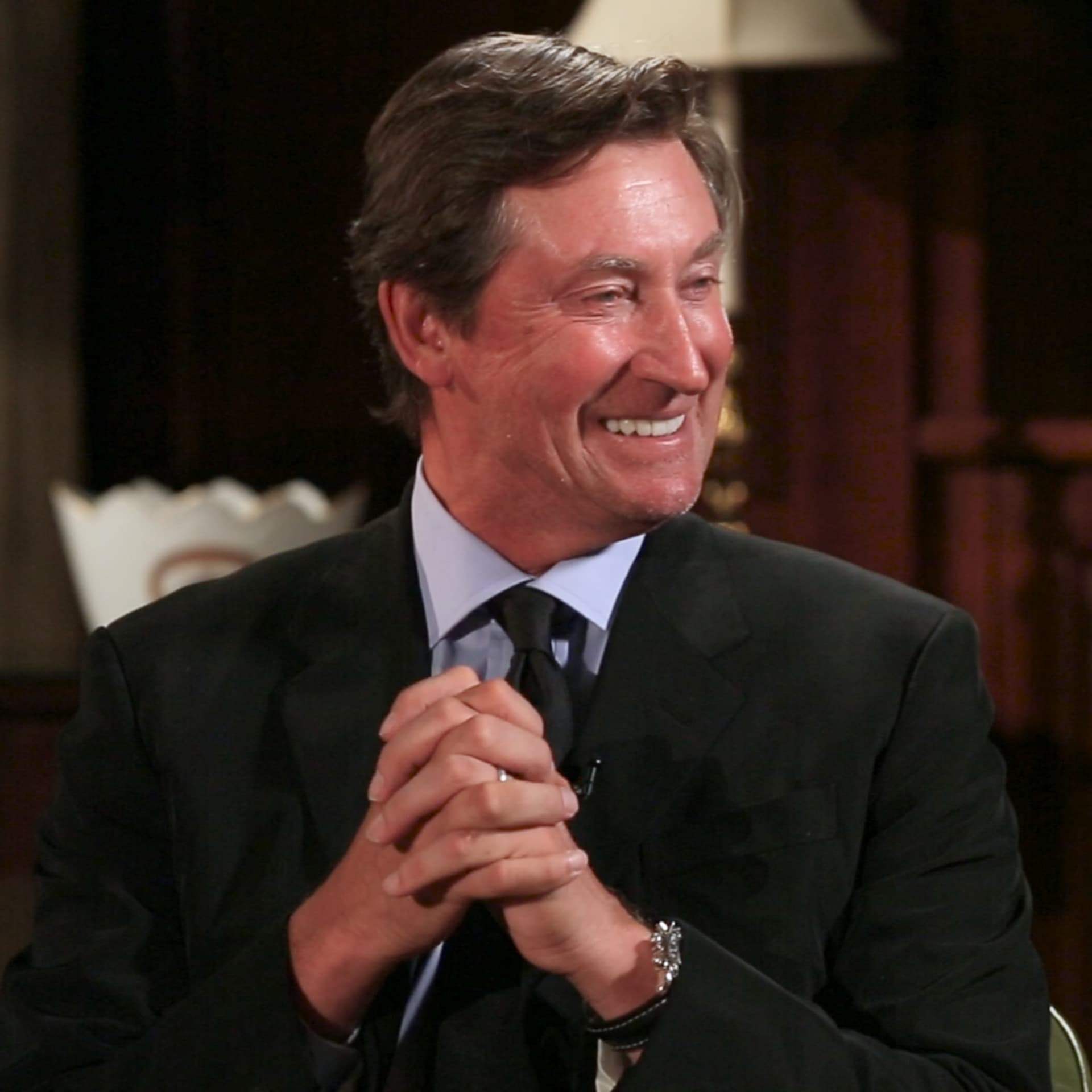
Wayne Gretzky’s 2016 interview (In-Depth Podcast) on how he became an elite hockey player—driven by his parents’ support, relentless preparation, and specific routines—plus reflections on key career moments, retirement, and family.
Guest backgrounds
Wayne Gretzky, Hockey Hall of Famer and four-time Stanley Cup champion; discussed his father’s blue-collar background (Bell Telephone worker) and his mother as the family foundation. He also references his son-in-law and golfer Dustin Johnson.
Key claims
Gretzky credits his father and mother as the reasons he made the NHL, emphasizing “failing to prepare is preparing to fail.” He says he never changed his pregame routine (including dressing order) and that tiny equipment differences can throw him off. He describes a “catch-22” where playing better when his father was in the building also signaled he needed to improve. He claims his father’s near-fatal brain aneurysm led to major life changes (quitting smoking; taking up golf and photography).
Notable examples
tennis-ball stickhandling drills; building backyard rinks; starting to play behind the net after being encouraged to watch Bobby Clarke; the 1981 Canada Cup lunch with Prime Minister Trudeau; the 1987 Canada Cup two-on-one goal setup with Mario Lemieux; learning from the Islanders’ locker-room celebration after losing the 1984/83 Stanley Cup Final; scoring five goals to reach 50 in 50 games; his father’s 1991 aneurysm recovery.
Written by AI. May contain mistakes. Listen to the episode to check what was said.
Chapters
Tap a time to open that second in VOWayne Gretzky's Work Ethic and Early Childhood
1:21 to 2:08
Explore Gretzky's early life, work ethic, and challenges as a child prodigy.
“But he had me doing it for hours on hours with tennis balls.”
The Role of Family Support in Development
2:08 to 4:00
Understand the importance of family support and preparation in achieving success.
“The first question I'd have for you is explain the origins of the line, failing to prepare is preparing to fail.”
Gretzky's Pre-game Routine and Diet
4:00 to 6:06
Learn about Gretzky's consistent pre-game routine and unexpected diet choices.
“And so practice and preparation were a huge part of what he sort of drilled into my brain from the time I was four, five, six years old.”
Sensitivity to Equipment and Early Career
6:06 to 9:22
Delve into Gretzky's sensitivity to equipment changes and his early career experiences.
“And with that comes, you know, you can say it's superstition.”
Challenges Faced as a Young Athlete
9:22 to 14:00
Examine the challenges Gretzky faced playing against older competitors and how he adapted.
“I understand when you were playing in the NHL, you could tell if the stick was an eighth of an inch shorter or a quarter of an ounce off or the Bauer skate blades were just minimally different.”
Adapting My Game: Behind the Net
14:00 to 15:04
Learn how Wayne Gretzky evolved his playing style by innovating behind the net.
“And it was him that encouraged me to watch Bobby Clark because Bobby Clark wasn't known to be a big guy at the time playing in the NHL.”
Childhood Inspirations: From Fan to Player
15:04 to 16:48
Discover how childhood experiences and fandom inspired Gretzky's hockey journey.
“You, I think, humbly mentioned when you were six, you only scored one goal, but I failed to mention, fast forward, you know, four years when you're playing against the same guys.”
Building the Backyard Rink
16:48 to 18:06
Explore the creative ways Gretzky's father built a backyard rink for practice.
“And so that really, those kind of things really inspired me to one day dream big of wanting to play in the NHL.”
Visualizing the Game: Drawing Rinks
18:06 to 19:16
Learn about Gretzky's unique method of enhancing his game awareness while watching hockey on TV.
“And consequently, he always had the best ice around.”
The Impact of Family on My Career
19:16 to 20:46
Understand the crucial role Gretzky's parents played in his journey to the NHL.
“look, you know, what you should do is take out a big diagram, build the rink, and you should watch the game.”
Show all 43 chapters
Lessons from a Tough Loss
20:46 to 23:34
Hear how a tough early loss taught Gretzky about dedication and preparation.
“I never skated in the off season, never went to hockey schools.”
Dad's Health Crisis: A Life-Changing Event
23:34 to 26:04
Explore the emotional impact of Gretzky's father's near-fatal brain aneurysm.
“all the way back because of that lesson that my dad taught me when I was 10.”
Recovery and New Perspectives
26:04 to 28:00
Learn about the recovery journey of Gretzky's father and its profound effects on their family.
“a lot of people smoked and it was part of our society.”
Family Challenges and Personal Growth
28:00 to 29:00
Hear Wayne Gretzky discuss his father's health struggles and the impact on family dynamics.
“So I didn't have the day-to-day interactions or frustrations that they had to go through.”
Shifts in Interests After Recovery
29:00 to 30:40
Wayne shares how his father's recovery led to changed hobbies and a different perspective on life.
“you could see the energy level and his personality start to come back.”
Sacrifices Made for Hockey
30:40 to 32:20
Wayne reflects on the sacrifices his parents made to support his hockey career.
“or when I was coaching or part of a team.”
First Paycheck and Lessons Learned
32:20 to 34:20
Gretzky discusses his early jobs and the lessons he learned about hard work and responsibility.
“That was our life, and we loved every minute of it.”
Memorable Moments from the Canada Cup
34:20 to 36:20
Wayne shares his experiences as a young player during the 1981 Canada Cup.
“And, you know, obviously it encouraged me to become the best athlete I could become.”
Myths of a Jail Incident
36:20 to 37:50
Gretzky clarifies a myth about a prank involving a police incident during junior hockey.
“Being only 19 years old, that's really what I had in my life was hockey.”
Navigating Early Contracts
37:50 to 40:00
He discusses the decision-making process behind signing his first long-term contract.
“And then they had these police guys that they had on site show up and they were going to arrest us.”
Team Dynamics in the 1987 Canada Cup
40:00 to 42:01
Wayne explains the team dynamics and challenges faced during the 1987 Canada Cup.
“we could have contract talks and that could change, and ultimately that's what happened.”
The Two-on-One Strategy with Mario
42:01 to 43:36
Wayne discusses his strategy with Mario Lemieux during crucial plays.
“his shot is probably harder and better than mine.”
Lessons from Losing in the Stanley Cup
43:36 to 47:08
Wayne reflects on the challenges and lessons learned after losing to the Islanders.
“I think he would have been fine had he not been there in 87.”
The Pressure of Scoring 50 Goals
47:08 to 49:18
Wayne shares the anxiety and excitement surrounding his chase for 50 goals in 50 games.
“And, you know, from there it becomes leadership.”
The Pressure of Scoring 50 Goals
49:51 to 50:15
Wayne shares the anxiety and excitement surrounding his chase for 50 goals in 50 games.
“Hey, it's Bill from the Bill Simmons Podcast.”
Family and Trade Talks After the Cup
50:23 to 55:10
Wayne recounts the emotional conversations with his dad regarding trade rumors after winning the Stanley Cup.
“Your dad got choked up when he was telling me the story because he said you told him you were calling before speaking to the press.”
The Call About the Trade
55:10 to 56:01
Wayne describes the moment he learned about the potential trade and his feelings toward it.
“We narrowed it down to about four teams because the team wasn't going to make a deal unless I would sign an extension, obviously.”
Wayne's Emotional Trade and Edmonton Legacy
56:01 to 1:01:54
Wayne Gretzky shares his feelings around being traded and the impact of his time in Edmonton.
“But when you were in the office that day, you know, you're with the Kings owner, the Oilers owner calls not knowing you're there.”
A Royal Wedding in Edmonton
1:01:54 to 1:06:36
Wayne recounts his wedding day in Edmonton and the community's involvement.
“were outside the chapel in which you got married?”
Family Ties and Supporting Young Athletes
1:06:36 to 1:10:05
Wayne discusses family, his daughter's engagement to a professional athlete, and the importance of support in sports.
“Your daughter's soon-to-be husband's PGA Tour star, Dustin Johnson.”
Controlling One's Destiny
1:10:05 to 1:11:29
Wayne discusses the importance of self-determination in sports and personal growth.
“And I think that really shook him up to a point where, as Janet had said to him one night, you know, don't put your fate in anybody else's hands.”
The Edge Between Great and Best
1:11:31 to 1:12:28
Gretzky reflects on the characteristics that separate great athletes from the best.
“And I just think from his point of view, he just finally said, okay, I'm not going to be content winning once a year.”
Analyzing Gretzky's Unique Skills
1:12:29 to 1:13:37
Wayne dives into the qualities that made him a standout player despite physical limitations.
Nurturing Talent in a Competitive Era
1:13:38 to 1:16:46
Gretzky shares insights on being part of a legendary team and the importance of coaching.
“maybe the most amazing stats that if you took away all your NHL goals, you would still be the leader in points in the NHL.”
Growing Up as Wayne Gretzky
1:16:47 to 1:19:16
Wayne recounts his childhood experiences navigating fame and competition in sports.
“He thought that was the way hockey should be played, and so he coached us that way.”
Transitioning to Life in Toronto
1:19:17 to 1:23:48
Gretzky talks about moving to Toronto for hockey and the challenges of leaving home.
“Listen, when you're a little town, it's all the same kids on the ball team.”
Anonymity in High School
1:23:49 to 1:24:00
Wayne shares a memorable experience of blending in at school despite his hockey background.
“because I became much more of a normal child and blended in.”
Finding Normalcy in High School
1:24:00 to 1:26:43
Wayne Gretzky shares his experience of being a star athlete while trying to fit in as a regular high school student.
“You score four goals in a game, and one of your Toronto friends just unknowingly goes to the game and comes up to you the next day asking if that's you and what do you say?”
The Transition to Junior Hockey
1:26:43 to 1:28:52
Gretzky discusses his transition from high school to junior hockey amidst media scrutiny and challenges.
“and become a normal student for an entire year.”
Retirement Reflections
1:28:52 to 1:31:46
Gretzky reflects on recognizing his peak performance and the decision to retire from professional hockey.
“Why did you decide to retire when you did?”
Life After Hockey
1:31:46 to 1:34:06
Gretzky shares how he filled the void left by hockey and the joys of supporting his children.
“It was like three hours a day, and I was doing it with a couple of the Young Coyote players, and I was really having fun.”
Current Endeavors and Interests
1:34:06 to 1:35:32
Wayne discusses his current projects including interviews, restaurants, and staying involved in hockey.
“Whatever your kids are doing, you pull for them, and you support them, and you pray for them, and you want them to succeed.”
Writing '99' and Its Insights
1:35:32 to 1:37:55
Gretzky details the process and motivation behind writing his book '99', reflecting on hockey's history.
“What was involved with writing the book 99?”
Transcript
Automatic transcript. May contain errors.0:00We are live from Fetty's house. Guests are gathering around the TV, even with a big storm outside. Are we worried about the fee? Nope, they have Xfinity Wi-Fi. Get reliable fiber-powered gig Wi-Fi with Peacock included to stream the beautiful game this summer. Xfinity, imagine that. Restrictions apply. New gig internet customers only. Actual speeds vary. Offer for Peacock Premium with ads currently at$10.99 a month value and limited to Xfinity internet members with newer upgraded gig speed or faster service. Activation required to access content. Peacock must be activated within first 90 days.
0:24Management of existing subscriptions may be required to avoid multiple subscriptions and duplicate charges. Third-party built subscriptions continue until canceled. This episode is brought to you by Fox one. Watch all 104 matches of the FIFA world cup live in 4k for just$19.99 a month with three days free. Build your own multi-view, choose up to three streams and follow player spotlights. Stay on top of every moment with live stats, highlights and instant replays. The FIFA world cup streaming live on Fox one offers a subject to change. See Fox.com for complete terms and conditions. This week on the In-Depth Podcast, the greatest hockey player of all time, Wayne Gretzky.
1:07In our September 2016 interview, the Hall of Famer revealed the tireless work ethic that took him to the top. I remember when I was four and five and six, he used to have me do these stick handling drills and in and out of pylons and all that kind of stuff. But he had me doing it for hours on hours with tennis balls. The challenges growing up as a child prodigy. Explain why it got to a point early on you just didn't like being Wayne Grisky. Like anything else, the negative people are always the loudest. And where he found his greatest motivation. I did always play a lot better when my dad was in the building, but it was also a sign of they don't think I'm playing well right now.
1:47The great one also reflects on his retirement. How do you replace the satisfaction now that you got? No, you don't. And how his son-in-law and golfer Dustin Johnson has rekindled the thrill of his playing days. You're pulling so badly and wanting somebody to win so desperately that your stomach hurts when you're watching. And now to our chat with Wayne Gretzky.
2:15The first question I'd have for you is explain the origins of the line, failing to prepare is preparing to fail. Well, it's pretty simple. You know, when I was a kid, you know, we grew up in a normal house like everyone else. My dad was a hardworking, blue-collar, bell telephone worker, and my mother was a stay-at-home mother that raised five children. So we didn't really have a whole lot in the sense of finances, but what we had a whole lot was tremendous support from both parents in whatever endeavors we wanted to participate in, whether it be ice hockey, baseball, box lacrosse, etc. And my dad was a big believer that sports for kids was such a great avenue in a sense that it taught you so much about life, you know, how to work hard, how to be unselfish, how to have teammates, how to understand what losing is, understanding winning under pressure.
3:21and all those things that you do in sports are going to be part of the real world one day and part of the real life. And more importantly, he always felt that if kids participated, it kept them away from free time. And he always felt that free time was a reason for kids getting themselves into trouble and doing things they probably shouldn't be doing at 14, 15, 16. So that was his big thing. And with that, he used to say to me all the time, he didn't understand or know why I was blessed with so much God-given talent. But he really drilled into me that I was fortunate and I was lucky and not to waste it.
4:00And so practice and preparation were a huge part of what he sort of drilled into my brain from the time I was four, five, six years old. and the fortunate thing for me was I had a love and a passion. I didn't practice sort of to become the next Gordie Howe or Bobby Orr. I practiced and did the things I did because I loved it. And of course, like every other kid, you have this dream of playing in the NHL, but that dream is really tough to make into reality. So my preparation was always as good as I could make it and always, I at least knew that each and every game that I went into, I was physically and mentally gonna be at the best I could possibly be at.
4:49I want to talk to you about your dad and growing up, coming up, but I also wanted to touch on, first, just your playing days, and you had some kind of, it seemed like, quirks when you were playing, one of which was your pregame routine and getting dressed the same way for every game. Explain that. Well, listen, my dad was a big believer that part of being a good athlete was not just practice and not just physically preparing, but to be mentally prepared, whether it be the proper rest the day before or the day of, proper nutrition, proper diet. He really was a big believer that if you didn't have the proper meal the night before, that physically you couldn't be at your best.
5:40And so from a young age, even at six when I was playing minor hockey, the day before and the day of, he made sure that I ate properly. And that didn't mean, you know, hot dog or french fries. That meant having either whether it was pasta or chicken or steak or potatoes. He was a big believer in that. And so I never changed my routine my entire career, my entire life. And with that comes, you know, you can say it's superstition. You can say it's routine, how you get dressed. And I got dressed the same way all the time. I always got dressed on the right side, my right sock, my right chin pad, my right elbow pad, my right skate.
6:23Just, you know, you can say it's superstition, but it's partly routine also. You were talking about your diet. And, I mean, stats speak for themselves. you're the most dominant athlete of any sport ever. And I would have thought when reading about you, you had this really unique, specific diet. But then I saw you would sometimes have four hot dogs before a game with onions and mustard or pie or Diet Coke. It just wasn't the diet you would expect for the normal person. driving for somebody with your ability. Well, first of all, he was a big believer that having steak and potato, a vegetable, a salad was the most important meal.
7:13Whether it be the night before, lunchtime of, he was a really big believer that you needed to get those carbohydrates and all that in your body a good 12 to 24 hours before you participated, whether I was playing box lacrosse or baseball or ice hockey. So, you know, when I played junior hockey, we went to school. We went to school at 3.15, 3.30. So you don't really get a whole lot of time to eat. You race home. At that point in time, first 7 o 'clock or 7.30 game, I was eating steak and potato and all that at 4.30, 5 o 'clock before I went to the arena. So when I turned pro at 17, obviously the schedule and the lifestyle is completely different.
8:00There's no school. You skate in the morning. You have a light skate to prepare for that night. And generally, guys eat somewhere between 12.30 and 1.30. And then sort of rest or sleep or nap or whatever you do to get ready for the game. But I always found that by 4.35 o 'clock, I was starving because my routine was I used to eat at 4.35. So I would eat at 12 till 30 like everyone else, but I always found that by five o 'clock I was hungry. So depending on what city we're in, if it was Chicago, there'd be pizza in the building, if it was Quebec City, there'd be hot dogs, and some cities it was sandwiches.
8:37And in those days we didn't have power bars, and we didn't have Gatorade or Powerade, you know, the energy drinks. And for me, I drank Diet Coke. I found that to be the same sort of stimulation as an energy drink. And we had chocolate bars. We didn't have power bars. So if I had a Snickers or any kind of a chocolate bar, I found that that gave me energy. And sometimes it lasted throughout the game, and then other times I'd be hungry after the first period or the second period, and I'd have a half a sandwich or just something to give me that little bit of energy. and I never changed from the time I was six.
9:16So I think my body, physically and mentally, I just got so used to it, I had to have it. I understand when you were playing in the NHL, you could tell if the stick was an eighth of an inch shorter or a quarter of an ounce off or the Bauer skate blades were just minimally different. How true is that? It's pretty true. It's like, you know, anything else becomes second nature to you because that's your life. I mean, I was in skates as much as I was in probably walking shoes. I was holding a hockey stick as much as I was wearing a toque. You just get so comfortable and so used to it. And, you know, it's no different than probably a baseball player, you know, George Brett, the feel of his baseball bat.
10:01Whether it's a guy like Jack Nicklaus with his golf club. If you do it every single day and you grow up doing it all the time, it just becomes second nature to you. It's not something that I can sit here and say I'm an expert on, but I was an expert on my own equipment and what I felt comfortable with, whether it was my skates, my shin pads, my hockey stick. Consequently, you get so used to it that if there's any kind of a minimal change, it's recognizable and so it kind of throws you off. Although when you were five years old, you could have played against the 10-year-olds, you were prevented from doing so.
10:38So at six years old, you were playing against the 10-year-olds. At 14 years old, you were playing against, I think, some 20-year-olds. What do you think allowed you to do that? Oh, first of all, when I was five, when I tried out for the team, In those days, minor hockey, I think it's called Adam now, it was called novice. That was the first team you played on, 9 and 10 year olds. So if I was going to make a team, a travel team, that was the team I had to make. What do they say when a little 5 year old shows up to practice? Well, I think they were in shock because I actually made the team. and I just thought, I just think they thought I was a smaller player because when they asked my dad for my birth certificate they kind of chuckled and said you know he can't play.
11:30He's too young which is pretty unique and we were, I can remember like almost like it was yesterday my dad and I sitting there and saying you can't play. So there was some discussion. There was a little town about 10 minutes outside of our town that I could have played on that team, but I had I played on that team at five I would have had to stay on that team throughout my minor hockey career and At five and six and seven it would have been okay But you know by the time I got older it wouldn't have been the right fit for me because they were basically a level below My hometown so basically went from double-a I would have been playing a hockey which wouldn't have been good for me So we chose to not play that year I went back the next year and I made the team and probably the success I had on that team and I didn't play a lot I scored one goal wasn't like I dominated and lit it up but I scored one goal my first year and I think that was the stepping stone for for my life in the sense that at six I was playing with ten-year-olds and against ten-year-olds who are much stronger and faster bigger and so I had to use my hockey sense and my hockey knowledge and obviously as you grow and age, it becomes even better and more aware.
12:48So when I was 14 and they said, you know, you can come and play on this junior team and I went and watched the practice and I was really unsure to be honest. I didn't know if I could sustain and play against 19, 18, 19, 20-year-olds. The coach actually talked me into it and said you could play at this level and I want you to be part of this. And so a lot like when I was six playing against a 10-year-old, I had to use my hockey knowledge and my hockey sense because, again, I wasn't as physically strong. I wasn't as big or fast. A junior B coach that I had at that time was the guy who really changed my career in the sense that he was the guy that told me to watch Bobby Clark play.
13:36And in those days, the centermen were guys like Phil Esposito and John Beliveau, and they were sort of this big, rugged, strong centermen that could consequently stand in the middle of the ice and stand in front of the goalie and not get pushed around. You were my size. At Junior B, I think I was 5 '7", 115 pounds. I was a little guy. And it was him that encouraged me to watch Bobby Clark because Bobby Clark wasn't known to be a big guy at the time playing in the NHL. winning MVPs and Stanley Cups and scoring titles. So that's when I changed my whole game and started playing out of the corner and playing behind the net, which was relatively new for anybody to defend against because nobody had really ever gone behind the net.
14:21Everything used to be in front of the net. I sort of worked on that for two years as a junior, and then I went and played major junior A in Sault Ste. Marie and continued on playing from sort of the corner and behind the net and sort of perfected it by the time I got to Edmonton and WHA. It was something that I was very comfortable with, and yet for people defending me, nobody had really seen that a whole lot because everything used to transpire from the blue line to the front of the net. So I was able to grow my game, use my hockey sense, and practice what made me the player I became by starting doing it at the age of 14, and that was something that really helped me throughout my entire career.
15:04And I want to back up momentarily. You, I think, humbly mentioned when you were six, you only scored one goal, but I failed to mention, fast forward, you know, four years when you're playing against the same guys. Now, as a 10-year-old playing against 10-year-olds, you scored, what, something like 378 goals, so it picked up quickly. Tell about Wally Coliseum and why you used to pretend that was Maple Leafs Garden. Well listen, when you grow up in southern Ontario, it's really sort of ingrained into us that we're all Maple Leaf fans and we watch Hockey Night in Canada and every Saturday night the Maple Leafs were on.
15:48And in those days they used to come on at 8 o 'clock, which was relatively late. and I was a huge Cordy Howe fan and so if the Detroit Red Wings were in town and they were playing, my dad would let me watch the entire game but if it was anybody else, I could only watch the first two periods and then have to go to bed but, you know, as kids, we all dreamed of one day playing in Maple Leaf Gardens. It was like our sort of church. It was our everything if you're a hockey player. My first game I ever went to in 1968 I was with my grandmother and we sat in the very last row of Maple Leaf Gardens and we got there at 7 o 'clock and watched the warm up, I watched the game, I watched the three stars and I just kept thinking how great it was and how wonderful it was.
16:40And yet we sat in the very last row, but I still loved every second of it and can remember it like it was yesterday. And so that really, those kind of things really inspired me to one day dream big of wanting to play in the NHL. And so my whole belief was that I had a love and a passion. I mean, I truly enjoyed just skating by myself in the backyard for hours on hours. And I never looked at it like I was practicing or I was becoming a better player. I looked at it that that was my thrill and that was my fun that I really truly could just skate out there by myself for hours on hours. And for whatever reason, nobody could understand it.
17:27But that was my fun. And your dad had a unique way of making the hockey rink in the backyard. Well, like everybody else, when I first started skating, we went to local parks that were frozen ice outside. And my grandmother had a river that ran through the back of her farm. And periodically I would skate on that when I was younger. and my dad always says that a necessity wasn't because he wanted to make me an NHL player but the fact that I could be out there for hours and hours and he would be freezing that he could watch me for skate for hours and hours from the kitchen and be warm inside and that's how he originally decided to build a rink in the backyard and he always built one of the best outdoor rinks around he always had the ice four and a half five inches thick and you know he would begin by just watering it like everybody else, but he would take a sprinkler head at night and he'd have the sprinkler head going for a couple hours.
18:23And consequently, he always had the best ice around. Explain what you would do when watching a game on television as a kid with drawing the rink on a piece of paper and how that benefited you. Well, my dad was always a really strong thinker of the game. I remember when I was four and five and six he used to have me do these stick handling drills and in and out of pylons and all that kind of stuff. But he had me doing it for hours on hours with tennis balls. And his theory was that the tennis ball would bounce a little bit more than the puck. So if you could control the tennis ball you're going to be so much more comfortable and be so much more at ease stick handling and carrying a puck.
19:08So for hours and hours I would skate and do drills of tennis balls at a young age. And then watching the games, he used to say to me, look, you know, what you should do is take out a big diagram, build the rink, and you should watch the game. And by watching the game and not looking down, you're going to create some more peripheral vision, and you're going to grow your sense of where the puck is on the ice at all times. And so I would sit there every game, basically, when I was a youngster and follow the puck without looking down onto the sheet. And as time went on, obviously, I got better and better at it.
19:47Probably was drawn on the floor half the time at the beginning. But as time went on, I sort of mastered it pretty well. How would you best explain the role your dad played in your life? Well, it was everything. My mom and dad were the reason that I made the NHL. You know, fathers get most credit for athletes, and deservingly so, they get a lot of the credit. But, you know, my mother was probably as important or maybe even more important in the sense that she was the foundation of our family and of our household. But my dad always said, you know, the good Lord has blessed you for whatever reason.
20:26and you're getting a great opportunity to get out and see the world and create some great memories and some great thrills in your lifetime, and I'd hate to see you sort of throw it away. I remember the biggest lesson, or one of the biggest lessons I ever learned, was the year I scored the 400 goals. I was a kid that as soon as hockey season was over, I couldn't wait for baseball and box lacrosse, and basically I took my equipment and I threw it downstairs at the end of sort of middle of April and didn't get it back up there until Labor Day. I never skated in the off season, never went to hockey schools.
21:03I didn't do any of that. I guess they probably call it cross training now, but back in those days, it was just like, oh, I'm going to do track now. I'm going to do baseball. Your dream was being a Detroit Tigers player anyway. Yeah, I loved baseball as much or more than I even enjoyed the game of hockey. So it was about, oh, three or four days after our season had ended, in one of the towns, which was a half hour from our town that we never really played against for whatever reason, they wanted to play an exhibition game. And so the coach came over and he said, you know, we'll play this game as long as Wayne's going to play.
21:38If Wayne doesn't play, you know, we're not going to do the game. And so my dad said, do you want to play? And I said, yeah, okay, I'll play. So we went down, it was like a Sunday afternoon and got in the arena, and it wasn't a big arena, But it was jam-packed, probably 1 ,000 to 1 ,100 people that were jammed into this little old minor hockey rink. And we got beat 8-1. It wasn't a very good game by any means. I remember we got in the car, and my dad said, you know, what do you think? And I said, well, you know, what are you going to do? Last game we lost 8-1. Not a real big deal. and you know in a nice way my dad said to me you know you can't be like that and I remember thinking what do you mean he said you ruined your whole year I said how could I ruin my whole year and he said for whatever reason the good lord has chosen you and each and every time you play people want to see what the fuss and what everything is all about and you can't afford not to be ready to play the best you can play each and every night and so it was a lesson I learned because as I went on and started playing with the Oilers, we'd go to exhibition games in places like San Antonio, in those days Miami and Dallas, and places they didn't have National Hockey League teams.
22:59We would fill those buildings and people would come in from everywhere to see us play. It was a great lesson for me because when I got into those games, I understood what people wanted to see. And so I prepared for each and every game, like it was the Stanley Cup final game, whether it was an exhibition game at the end of September or Game 7 of the Stanley Cup playoffs in May. I know in my heart that I physically and mentally did the best I could to play as good as I could play that night. Now, listen, I had a lot of bad games, but I know in my heart that I prepared for each and every game all the way back because of that lesson that my dad taught me when I was 10.
23:37I think it was when you were with the Oilers, if there was an important game coming up, sometimes they would call your dad to try and get him to come to the game because they believed you just played even a little better when your father was in attendance. It was always a catch-22 because when I would come out for the morning skate, if I saw my dad, obviously I was thrilled he was there, and I did always play a lot better when my dad was in the building, but it was also a sign of, okay, geez, they don't think I'm playing well right now. I better get going. So it was kind of a catch-22. It was a little bit of a kick in the butt also.
24:11So in 1991, later on, your father suffers a near-fatal brain aneurysm. How did you find out? We were actually playing that night, and as my routine was, it was, you know, I ate lunch around 12, 12.15, and I generally lied down for an hour, an hour and a half. Sometimes I slept, sometimes I didn't. and generally I got up around 3 o 'clock and got dressed and went to the arena. What had transpired in that moment was around 1 o 'clock, I could hear my wife running up the stairs and kind of flew open the door. For people who are around the athletes, they understand that there's sort of an hour-and-a-half period there.
24:58Everybody's quiet and nobody wakes anybody up because they're getting ready. but it was obviously pretty quick and loud and running through and she said to you your dad's in the hospital and so we got on a plane that day and I missed the game that night and we flew home and you know it's an amazing story because you know my dad worried about everything that transpired in his entire family his friends and part of you know any kind of injury like that is a lot to do with stress and for my dad he was seven days basically in a coma and two or three years in a clinic maybe even four years in a clinic and then the last year when they released him he was at home and used to have to have signs in the house for him to remember where the washroom was and where the kitchen was and it's an amazing story because if you saw my dad today you wouldn't even know he had an injury.
25:57And, you know, it's probably added 20, 25 years to his life because as the case for a lot of people in the 50s and early 60s, a lot of people smoked and it was part of our society. And, you know, he smoked probably a pack of cigarettes a day. Since his brain aneurysm, obviously he hasn't had a cigarette and he hasn't smoked. And because of that, he's probably lived 20, 25 years longer. So in life, everything happens for a reason. He's one of the most renowned Canadians in Canadian history because he's good to everybody and people in Canada understand and realize that he's just got a big heart.
26:38And for my dad, his riches are his family and friends and money has never been a big issue with my dad. Well, it was amazing too. I was talking to him the other day and we talked for about an hour and probably a dozen times during the course of an hour, people came to the house asking to see trophies or for autographs or stuff like that. So the conversation was interrupted a bunch, but I just thought it was amazing how accommodating he was. But then, too, when speaking about what transpired there, he's like, really? I mean, it turned out great because my therapist is now my son-in-law, So even something that was so tough, he put a positive spin on.
27:21But it was also interesting. He was saying when he first came out of the operation, he was speaking Ukrainian, the first language he learned, didn't know how to tie his shoes or open a door, didn't recognize you or any of your siblings. What did that recovery process entail for him? Well, listen, I think it was a lot tougher for my mom, obviously. It was tougher for my sister and my brothers because they were actually there in that area full time. For me, I still had to get on and play and fulfill my responsibility of being an NHL hockey player. So I didn't have the day-to-day interactions or frustrations that they had to go through.
28:08but I was a good sort of person for them in a sense that I could see the changes in him because I could maybe wouldn't see him for a month or three months or four months and I could see the changes whereas when they were with him every day they didn't see the gradual changes but it was tough for my mom it was really hard for my mom you know she They got married when she was 18, and my dad, like most people, that was her life. And so it was really difficult for my mom. But, you know, once he got through that sort of four-year period, and then they started to wean him off of the drugs that he had to take to prevent further heart attacks or aneurysms, once he sort of started coming off that medication, you could see the energy level and his personality start to come back.
29:08Now, ironically, with a brain aneurysm, things change in life. And for him, he changed in a sense that his beliefs in life and him as a person didn't change, but his passions and his hobbies that he loved to do completely changed. Really? Oh, completely. My dad never played golf. When he came back, he started picking up and playing a little bit of golf. My dad never went anywhere without a camera in his hand. We used to go to All-Star games, and in those days, they'd have sort of an event Monday night, and the game was Tuesday. And Tuesday morning, they'd do a team picture, and Monday night, everybody was a black tie event.
29:56You know, the players were really genuinely excited to see my dad with his camera, because he was the one person that the next year he'd given them the pictures that he'd taken the year before. He was very thorough about it, and it was a big passion of his. And he loved to fish. My dad was a huge fisherman, and it was one of those things where, you know, when you're a kid, your dad wants to fish with you. But by the time I was about 13, I finally looked at my dad and said, I hate fishing. I'm never going to do it again. And so when he came out of his coma, he never really picked up fishing again.
Read the full transcript
30:28He never picked up his camera again. But the good things, like I said, you know, he quit smoking. And I think he's more at ease. He doesn't worry so much about the wins and losses when I was playing or when I was coaching or part of a team. He enjoys it when we win, but he doesn't stress like he used to stress over it, that there was games where he would basically leave the arena and kind of go outside because he couldn't watch sometimes because it was so stressful for him. Was it hard how much of the memory that was lost considering all the hockey? Was it hard for us? Right. I mean, for you. Not really because we were just thrilled that he was still around.
31:12We were fortunate. We felt like we were lucky that he was still with us, although his likes and passions and hobbies had changed, he really hadn't changed as a person, but his likes and dislikes had changed a little bit. He was telling me for a while when you were growing up, I think he was making like$40 a week, and occasionally he'd go to the market where his mother, your grandma, worked to ask for$10 to be able to afford, to buy you a$5,$6 stick, and then have a few extra dollars to support the family. How much do you think your parents sacrificed to support hockey? Yeah, everything. You know, as you said, I was sort of community helped in the sense that both grandparents, my mom's side and my dad's side, helped out.
32:02My dad couldn't afford a new pair of skates for me. One of my grandparents inevitably helped out. Every now and then an uncle or cousin would help out. We didn't go on family vacations because we really couldn't afford it. Our family vacations were going to hockey games and baseball games. But we didn't want for anything else. That was our life, and we loved every minute of it. But, yeah, we're no different than a thousand other stories of kids in North America or even Europe that came over that made the NHL that didn't have as much as other kids. but we were rich in support and love, and to me that meant more than financial dollars.
32:45So a year earlier, I think you're getting paid$5 an hour filling potholes with gravel, and then all of a sudden you sign a multi-year contract where you get a$250 ,000 signing bonus plus another$100 ,000 in the first year. What does your dad say to you when you ask for some money from that to buy a car? You know, it's interesting because when I was a kid, you know, 12 and 13 and 14, and I understood that we didn't have a whole lot, but that was okay. I didn't want for anything, but I can remember sort of 12, 13, 14 saying, should I get a summer job? And my dad always said, no, you know, you've got your whole life to work.
33:28When you're a kid, be a kid. but if you're going to be a kid and train and be the best athlete you can be, that's your responsibility and make sure you don't fake it. Make sure you put in time. And so I always thought that and then when I turned 16, I remember he said, okay, you can work this summer. I remember I got a job. I think I was making about$4 an hour but I really enjoyed it. I was throwing gravel onto holes on the roads and highways, and somebody else would tar it. And I remember thinking, well, why can't I tar it? Why do I throw the gravel? But I worked for about eight weeks, and I remember my last day, I remember my dad saying to me, I guess you want to become a professional hockey player.
34:14I said, yeah, I guess I do. But it was a great learning experience for me. I'm glad I did it. And, you know, obviously it encouraged me to become the best athlete I could become. Yeah, and like everyone else, I was in shock, and I didn't see that coming when Nelson Scalbania and WHA came along and offered me this ransom of money, and I didn't anticipate it. So when I did sign, I remember I said, I've got to buy a car. I had just gotten my license because my dad wouldn't let me get my driver's license until I was 17. So I had just gotten it in about February or March of that year. And I remember saying to my dad, I need to buy a car.
34:57And he said, all right, here's$5 ,000. Get whatever you can. So I bought an old used Trans Am, and I was the happiest kid in the world. And you didn't need the more money? I think I paid$3 ,600 for it, but I was more happy than anybody. I want to run through some notable moments and just get you to recall what went on. How about 1981 Canada Cup lunch with the Canadian prime minister? Yeah, you know, the Canada Cup in 81 was so unique because I was a baby. I was 19 years old, and I was playing with guys like Larry Robinson and Dennis Botvin and Guy Lafleur. My goodness, the list goes on and on.
35:40And here was this kid who had been watching them on TV two or three years earlier, watching them play in the NHL and watching them play for Canada, thinking, wow, what am I doing here? You know, it was a long tournament. In those days, it was a long event. We would start training camp early July, maybe July 4th or 5th, and do almost a four-week training camp, which was two hours of skating in the morning, two hours in the afternoon, and then bike ride after that. And we did that every day for probably 21, 22 days. And then three or four pre-tournament games, and then an entire tournament, and then a final.
36:18So it was a long sort of summer for us to be prepared for hockey. Being only 19 years old, that's really what I had in my life was hockey. But, you know, there's other players that had families and kids. And unfortunately, when we lost, you know, we'd been there a long time. A lot of the guys wanted to leave and get out of there. They wanted to go home, which is perfectly natural. So there's only two or three of us that ended up, because we thought we were going to be the champions and have this trophy, we were having a luncheon with the Prime Minister Trudeau of Canada. And there was only three or four of us that ended up staying in town.
36:55I remember thinking, gee, should I stay for this? And my dad said, you're not going anywhere. You're going to that lunch. I said, okay. Which I'm very happy that I went to. We ended up having a wonderful time. It was only three or four of us with the Prime Minister, and we got some great one-on-one time with him. How about getting thrown in jail with only a jock and a hockey sock on your head? No, that's a little bit of a myth. What? Is it? Yeah. It wasn't your autobiography. Yeah, but the story gets bigger and bigger. Okay. No, so when I was playing junior hockey. They pulled a prank on you. Yeah, and we were in overcoats and running shoes and shorts and T-shirts, and we were put into this van, and we were taken to a high school football game, and we were told we were going to be running across the field.
37:46and, you know, it was all a threat. Nothing ever transpired of it. And then they had these police guys that they had on site show up and they were going to arrest us. And we never really did get down to a police station. But trust me, they did enough to scare the crap out of me without having us to go anywhere. When you were, I think, 18 years old, you were asked to sign a 20-year contract. Right. 20 years. What did you start to do when you were getting ready to sign? and the contract had you kind of chicken out? I was really lucky. When I turned pro, I had a group of older players that really, obviously when we were at the arena, they treated me like a teammate.
38:26But away from the arena, they treated me like a son. I played with a guy named Jimmy Nielsen, and I was doing some high school classes, and I used to pick his daughter up to take her to school because we had some classes together. So one of my teammates and his child, we were in some same classes. So I got very close to them, and I had a real big belief in them and respect for them, not only as players but as people. When I was offered the contract, you know, you've got to remember I came from, you know, a blue-collar family, and when you get offered that kind of money, you're sort of like, I was always the guy that said, you know what, security is a big thing.
39:07Although it's not going to change me, I'm going to work even that much harder. but some of the older players that I was playing with thought that I was going to be underpaid and felt that, you know what, in three years you're probably going to be upset that you signed this deal and I sat down and talked to my dad. My dad was a really big advocate of it also. He felt that this was a great win-win for not only the team but for me personally and so ultimately I ended up signing it but before I was going to sign it, A couple of the players said to me, you know, put a different name on there. Don't sign your name, and then afterwards you can work it all out.
39:45And I just felt like, you know what, I had sort of given my word that I wanted to do the deal. And when I did the deal, and I'm glad I did it, in those days things were different. I knew that if I played well, I knew that if I went to another level that, you know, we could have contract talks and that could change, and ultimately that's what happened. The 1987 Canada Cup. You went off apparently on Mario Lemieux in practice one day. Explain the situation and why you did it. Well, that's not necessarily true. Players who know me know that I've played with them. I don't think I've ever gone off on anybody, except when Marty stole my Diet Cokes here and there.
40:35You know, Mario was a young kid, And as I was in 1981, you know, you're in awe. And I was in awe, and so probably was Mario in 87. We didn't play together the first four or five games, and we were really bad. Not really bad, but we weren't what we were supposed to be. It was supposed to be this big buildup. It was gonna be Canada against Russia in the finals, or at that time, the Soviet Union. and we had stumbled along for two and a half three weeks in this tournament we had a big powwow myself and mark messier and ray bork with at that time i think the gms were bobby clark and sarah savard and cliff fletcher talked about what we can do to make it more comfortable and make things better.
41:27And so we were able to do that and at the arena the next day Mike had called us in and said you know I'm going to play you and Mario together. And I said that's fine. And so what had happened was the first game we played together him and I got a two-on-one and I gave him a pass and Mario's got such great hands like Mike Bossie or Brett Hall he never misses. And he passed it back to me. Now, although I was a goal scorer and scored a lot of goals, quite frankly, I would tell you that, you know, if Mario's got an opportunity to snap a puck from the slot, his shot is probably harder and better than mine.
42:08Consequently, I wanted him to be the shooter. So when we got back to the bench, I said, listen, Mario, you know, if we ever get two-on-ones, you know, just believe me, you're going to be the shooter, you're going to score the goal because, quite frankly, you're a better goal scorer than I am. And so that was a conversation I really had with him. and what made that such a big story was ultimately how we won the final game when we had a two-on-one and I gave him the pass. And I knew when I gave him the pass I was never going to get it back. And I remember saying to him when he scored the goal, I said, oh, my gosh, that was one of the greatest goals I was ever part of.
42:43And Coach Mike Keenan credits that as the tournament where Mario really became the player that he ultimately. He would have been the player he became. obviously like me in 81 when you're around guys like Guy Lafleur and Robinson and guys like that you become a better player and you watch how they practice and you watch how they became winners and you know sometimes you got to see it firsthand in order to really comprehend it pure talent and ability just doesn't do that you got to see you got to gain this knowledge and so I got it in 81 and And Mark Messier got big parts of it also and guys like that.
43:23And then Mario was the benefactor of that in 87 and helped make him or helped become the player he became. But listen, Marlon Mew was still one of the greatest players who ever lived. I think he would have been fine had he not been there in 87. Speaking of that knowledge, though, walking past the Islanders' locker room after the team beats you to win the Stanley Cup finals. What did you take away from that? Well, it was really difficult because first and foremost, in that year, we had had such a great playoff. And we were flying on all cylinders. I mean, we were a really good team. What we lacked, though, was knowledge and experience.
44:09And in 84, I guess it was 83, we played the very first game. We had home ice advantage. We played the first game in Edmonton, and I don't know the exact number or the correct number, but I believe the shots were something like 53 to 18. Billy Smith was sensational, stood on his head, and we lost 2-0. And we weren't experienced enough or smart enough to rebound or regroup from that 2-0 loss. their experience and their patience was really evident, not so much in Game 1, but more so in Game 2. Because in Game 2, we lost, I believe, 6-3, if my memory is correct. And what made the game so unique was that Mike Bossie got food poisoning that day, and Mike Bossie didn't dress that night.
45:03And the three guys on that team, other than Billy Smith, that were so imperative to the group were obviously Mike Bossie, Brian Trotje and Dennis Potvin. So by taking Mike Bossie out of the lineup, we felt, okay, this is our opportunity to jump back into the series. What transpired in the game was something that I can remember like yesterday. They just thoroughly dominated us. They played their best game up until that point in the series. They threw a guy into the lineup who wasn't even addressed in game one. and a kid named, I think his name was Anders Kaluur, and he scored three goals that night, and we got beat 6-3.
45:44And before we knew it, we were down two games to none, and Mike Bossie hadn't even played in both games. That set us on our ear. It taught us a lot. It showed us a lot. And so when we went to the island, obviously we lost game three. And then, you know, game four, we still had, obviously, belief in our group because at that point in time, all the pressure was off of us. and I remember losing game four and in the island the way the arena works is that you got to walk by their locker room from your locker room to get onto the bus and I remember saying to Kevin Lowe oh my god this is going to be the worst walk of my life and what what we saw and what we witnessed was completely different than what we sort of had thought in our minds was going to and obviously there was jubilation in their locker room.
46:37Obviously there was excitement and they were a great franchise. I think that was their fourth cup. But it really wasn't the players themselves that were overly celebrating. The players themselves were pretty banged up and pretty quiet, to say the least, because that's where we learned the difference between winning and losing. Winning is hard and it's tough and it's physically and mentally demanding. and losing is relatively simpler and it's quite frankly easier. And so it was a great lesson for our franchise. And, you know, from there it becomes leadership. And we had a really good coach in Glenn Sather.
47:16When we got back to Edmonton in our exit meetings, he talked about what we had to change and yet how proud he was of our team. But we weren't going to be in a panic situation that we were going to learn from this and become a better team from it. And I think everybody took that to heart. And obviously his leadership was a big part of what mentally the players started focusing on right from the time we left the arena in June until when we got back in September. When you scored five goals in a game, bringing your total to 50 goals in 39 games, what did you say to your dad when you called him immediately after getting off your ass?
47:54Well, in those days, things were different. You know, you never knew if, because all the games weren't on TV. You don't know if they got it on the satellite dish or if they were able to see it. So immediately after the game, I wanted to call. Obviously, I knew he probably heard. Even if he wasn't watching the game, he had friends, obviously, in Edmonton that were probably calling him after the second period and updating him. Yeah, and, you know, I just said, hey, it was a big night. It was a good night. You get a much more animated person than I was talking to. He was like, what took you so long?
48:28Oh, really? Yeah. But I remember driving to the arena that night, and I'd had, you know, obviously it had been a great year for our team, and obviously I was at a pretty good pace when I was driving to the arena, 45 goals in 38 games. And Kevin Lowe and I used to drive to the rink together all the time, and I was very edgy and very nervous. And I remember I said to Kevin, I said, oh, my God. I said, I can't get this close and not get 50 goals in 50 games. Now, I wasn't thinking 39. I wasn't thinking 40. I was thinking I got to get 50 and 50. And I remember saying to Kevin, I got 12 games to get five goals.
49:07I can't be the guy known, because Rocket Richard and Bossy had done it, I can't be known as the guy that got almost there and then choked. So I was so nervous going to that game. And Philadelphia at the time was a really tough team to play against. They were really disciplined defensively. and there was a difference between the East and the West. The West was a little bit more wide open, and the Eastern teams were obviously a little more defensive-minded, and Pete Peters was a very good goalie, and Pat Quinn was a really good coach, and it was always hard for me to play against Bobby Clark, but I always got excited to play against him.
49:39And it was just when I scored the first goal from the puck went off boards from behind the net, I remember I said to Paul Coffey, I said, okay, I got a good feeling about tonight. Things are going to be lucky. Hey, it's Bill from the Bill Simmons Podcast. FIFA World Cup 26 fans, listen up. As the official beer sponsor of the FIFA World Cup 26, Michelob Ultra is giving away$1 million worth of FIFA World Cup 26 tickets and prizes. Enter now at MichelobUltra.com slash superior access slash FIFA World Cup 26. Michelob Ultra FIFA World Cup 26, superior access, no purchase necessary. Open U.S. Residence 21 Plus begins on December 1st, 2025, ends on July 31st, 2026, multiple entry periods.
50:15Visit www.micelobUltra.com slash superior access slash FIFA World Cup 26 for free entry, entry deadlines, prizes, and details. And I don't know if you would expect this. Your dad got choked up when he was telling me the story because he said you told him you were calling before speaking to the press. And he said it just goes to show you how Wayne always put family first. Well, listen, he was a big believer that the media and the press were a big part of the game of hockey, sports in general. and so for him to say it was nice you call me before you talked to the media was probably a big deal for me because normally he'd say get out there and talk to everybody all right so after you won your fourth stanley cup in uh five years what's the shocking news your dad ends up telling you that night well listen um obviously it was a huge year for us because we'd come off september winning the Canada Cup when that was so exciting.
51:20Hockey was parallel to that of the 72 Summit Series. And, you know, there'll never be a replica of 1972, but as close as we could ever get to that sort of enthusiasm and style of play was that of 87. So it was an exciting year. We got off to a great start. It was fun. I got hurt. It was just an accidental on free play, hurt my knee and I missed six weeks. First time I really had missed a length amount of time in a season, but as it turned out, because I'd played so much hockey, the 81 Canada Cup, the 84, the 87 Canada Cup, we'd gone to the Stanley Cup Final, five out of six years, I'd played so much hockey.
52:04And in those days we'd played 14 exhibition games. So I'd played a ton of hockey, and so it was probably the best thing that could happen to me was that I got a little bit of a break and I ended up with about a five-and-a-half, six-week break. And when I came back, I felt fresher and I felt stronger and I felt better. Obviously, you know, we were the best team that year and we basically won four straight in the final and we had a really strong, solid group of guys. Fortunate enough to play with so many Hall of Famers and so many great, unselfish players, and it was exciting. And to win the fourth time, it never gets monotonous, although we were saying, well, this is something we could get used to.
52:46And it was obviously very exciting. And I remember by the fourth time you win the Stanley Cup, everything sort of changes. And I don't mean this to be egotistical, but you win the first Stanley Cup, everybody's sort of helter-skelter. Nobody really knows what's going on or where do you go or who takes the cup. By the fourth cup, everything's sort of more mellow and much more organized, and players are a little bit more subdued, although obviously really excited. And so we had, I think we had like a big family, friends, team sort of get-together dinner, and it was at that point in time my dad sort of whispered in the ear that there had been talk that teams were maybe going to trade for me, and I thought he was out of his mind, and I didn't believe that was realistic.
53:35And so that was the end of it. And as the night went on, we went home, and I got a phone call at home. In those days, people had phones in their houses. I had a phone call from the first contract that was ever offered by Nelson Scalbania, and he asked me how I'd like to become a Vancouver Canuck and be part owner, and I said, I don't even know what you're talking about. So once he'd made that call, I knew there was some sort of traction to the story. and I knew there was something behind it. What do you remember from being in the office of the then King's owner when the Oilers owner calls and doesn't know you're in the office?
54:17Well, listen, I knew by that point in time I was going to get traded, and, you know, business is business, and even for me at that time, I didn't understand it completely. You know, I felt that, you know, obviously the biggest reason I got traded is I wouldn't sign an extension. And it wasn't that I wouldn't sign. It was more on the basis of, look, let me play the year out. And at the end of the year, whatever fair micro value is, I don't want to go anywhere, quite frankly. And from his side of things, he didn't want that to happen. He said, basically, if you don't sign, you know, I got to move you.
54:54At that point in time, obviously, I didn't understand it, partly because I was younger and, quite frankly, didn't understand that side of the business. But in saying all that, the biggest myth of all was the fact that my family and my wife wanted me to be traded to LA. That was so not true. We narrowed it down to about four teams because the team wasn't going to make a deal unless I would sign an extension, obviously. They weren't going to give up a lot and a lot of money if I wasn't going to sign. and so as we talked about it we narrowed it down I think there's three or four teams involved and my wife had sort of suggested Detroit and she felt that that was the right place for me to go and that's the right place for me to play it was my dad who stepped in and said you know there's only one Gordie Howe the Red Wings are fine that franchise is everything they're going to be and they're going to be successful.
55:49Wanting to try something unique and different and go to LA. And at that point in time, you know, Bruce had been so good to me and so excited about getting me that I felt like, all right, you know, this will be a great challenge. Now, let me tell you, the first exhibition game I played when I looked in the stands and there was about 9 ,000 people in the arena for a Saturday night exhibition game, I'm thinking, what have I done and what have I got myself into because I'd come from arguably one of the greatest teams ever and arguably one of the most exciting franchises that ever put together a team a lot of Hall of Famers and really exciting team to a team that finished 20th out of 21 teams that was a big drop so I knew we had a tremendous amount of work ahead of us but I was thrilled with the opportunity and quite frankly I was scared to death.
56:40But when you were in the office that day, you know, you're with the Kings owner, the Oilers owner calls not knowing you're there. What did you hear? And at the time, how did that make you feel? No, he basically said I was like every other player and he was going to trade me because I wasn't going to sign a contract with him. And that sort of probably elevated my level of, okay, we got to move on here and I'm going to get traded. At that point in time, like every athlete, you think that you're untouchable in a franchise, but he looked at me as one of 20 players, and I understood that now. At that time, I didn't understand it at all.
57:16Were you in that? I mean, it seemed like you kind of went out of your way to be overly nice with how you handled things in that press conference where the trade was... Well, because, yeah, because I was treated incredibly well, not only by the organization and not only by ownership and the coaches. I mean, they were hard on me. The coaches got to be hard on you. That's what makes you a better athlete. There were some times I wasn't too happy about that, but that's what made me the player I became. But all in all, the memories and the friendships I had and the people I met in Edmonton, the fans I've met, it was hard.
57:54It was difficult for when they told me, okay, we're going to trade him. Basically, he's out of here. and that was difficult for me. Glenn Saylor was the one guy, though, that tried to talk me out of it, and he was the one guy that said, I can stop this and I can kill this. Basically, he stepped in and said all that, but by that point in time, I felt like that ship had sailed. After you were traded, I think the Oilers owner suggested publicly that your tears in the press conference were fake. Did it bother you? Oh, sure, it crushed me. How it all ended? Yeah, yeah, it crushed me, and probably I said some things about him or to him that crushed him because the emotions were really high.
58:34But, you know, he went through a hard, difficult time when he traded me, and he probably knew more than anybody how hard it was going to be. So he's defending himself and his integrity. Now that I look back at it, I understand it. I understand where he's coming from at the time. I didn't have a whole lot of sympathy for it, but at this point in time in my life, you know, I understand the entire package. To what extent were you surprised by how severe the public reaction was? I wasn't surprised because, you know, Edmontonians treated me like a son. I always say that, you know, Mark Messi is an Edmonton boy and he's their son.
59:10And I was from Toronto area and I was their adopted son. I made so many friendships and I like to think we gave them a lot of great memories. One of the things that is kind of funny now when I go to Edmonton periodically, People will say, you know, my grandparents told me you were a pretty good player. They used to watch you play, and I think, oh, my God, how old am I getting? Used to be, you know, I saw you play or my kids saw you play. Now, my grandparents said you were pretty good. So I got treated so well there. Never had a problem or an issue. Nobody treated me any different than anyone else in that city.
59:45People would say to me all the time, how did you get around? Where did you go? I went everywhere. Nobody ever bothered me. Sure, people wanted autographs or the odd picture, but nobody ever bugged me to a point where I'd say, I can't go there, there's too many people. I went to theaters, I went to movies, I went to junior hockey games and sat in the stands. People treated me just incredibly well, and that was the hardest part about leaving, is I was treated so well. And you received an amazing standing ovation the first time you came back to play the Oilers in Edmonton. What you said the hardest thing you ever had to do in hockey was play the Oilers.
1:00:20Listen, the first game I went back was so difficult. A, because first and foremost, the guys on the other team, we'd won championships together, we were best friends together, we saw families grow together, our parents were all best friends, whether it was Mr. or Mrs. Messi or my mom and dad or the coffees. you know, say there was a big believer in the families being together. After games, parents would ride on the team bus back to the hotel. It wasn't one of these, oh, it's just the players can be on the team bus. He really incorporated the family, so that part was hard for me. Secondly, Edmonton's different than most cities, and that's not a big, huge city.
1:01:04So 90 % of the games, it was the same people sitting in the same seats. I could look across the ice and for four people sitting there, I saw those same four people almost 35 out of 40 games. So they became like friends, not just fans, they became friends. So going in there, and they treated me well, and I like to think I played hard for them, so it was a two-way street. So going in there, I knew it was going to be the hardest thing I ever did. So the first game was relatively not easy, but it was nice because there was a lot of niceties that went with that first time back. After that, for me, it was the hardest place I ever played in.
1:01:41I hated it. I never liked it. I never got over it. From the first game to the last game, the last shift I played there, I just was never very comfortable at ever being an opponent playing in Edmonton. Your family and your wedding, how true is it that something like 10 ,000 people were outside the chapel in which you got married? Well, first of all, you've got to understand, it's a huge hockey city. It's a huge sports city. So the people that we had at the wedding, the people who were going to be there, obviously a lot of the Oiler players, some NHL guys, people like Gordie Howe and Vladislav Treschek, people who were my friends over the years.
1:02:26And Edmontonians love hockey, and they want to see them. And so part of the attraction was for people to see these different athletes and celebrities that might be at the wedding. and then of course the wedding itself. So, you know, again, nobody bothered me. Nobody got in the way. People were genuinely nice. People were very appreciative. And it was one of those, it was a beautiful day for not only myself, but for my grandmothers who were both there and obviously my mom and dad and Janet's mom. It looked like a royal wedding. No, it wasn't quite a day. But it was fun. You know, I had done so many favors in town for different charity events and stuff like that.
1:03:07So, you know, people that I had done favors for in the years sort of stepped up. And like the Edmonton Orchestra said, we want to play in the church. And a couple of my friends said, we want to sing. And the people who donated a couple old cars to take the wedding party away were people I'd done charity events in town and donated their cars. So it became like a city event in that everybody was sort of involved because it is a small community and everybody helps each other. It turned out to be a wonderful day. Although I don't think she remembers it, you and your now wife Janet first met, I think, in 1981 at Dance Fever, and then you guys later had a chance to talk at a Lakers-Celtics game, during which yesterday I think you grabbed beers after the game.
1:03:53Is it true that that night you knew you were in love with her? Well, I don't know if that night, but yeah, we got along very well the very first time. We sort of sat and actually chatted with each other, and our, you know, mindset was very similar, and our goals were the same in life in that, you know, family was number one importance, and our careers were important, but, you know, we both wanted to have kids and a family. So when you start off a night where you're both on the same page, obviously it makes life that much more simple. but it was true we went to we met in 81 I did this show called Dance Fever and obviously she's a tremendous dancer and she was really good at it and I was a horrible dancer and it's probably one of the most feared moments I had in my life is you know you had to walk out on stage and dance for like eight seconds and it was she she one time asked me what happens to my rhythm when I take my skates off and I said I really don't know but so how'd you do I did awful but and then you were to judge these kids who were dancing and of course I was going to give every one of them a 10 no matter what because I don't know anything about dancing so I did I think I'd give everybody a 10 but that's when we first met and then over the years I think we ran in each other a couple times at different charity events and then we went to the the Lakers Celtic game we're both big basketball fans in a sense that we loved watching the Celtic Lakers final like everyone else and we just happened to be at the same game she was with a friend and i was with alan thick and we ended up going for a bite to eat after and the rest is history what's this i hear that you proposed over the phone yeah you know sort of jackie robinson i saw that in this movie um we were in edmonton together and she was going to do this video for a workout video and she was going to be gone for five or six weeks.
1:05:46And it was just one of those things where when you're chatting on the phone, basically it was like, well, why don't we get married? And so we just said, yeah, why wait? And we did it over the phone, obviously. And when she came back to Edmonton, obviously we had a proper dinner and proper event to get ready. But it was interesting. I had really not told anybody. and I told one of my teammates one night, and one of the waiters, I guess, overheard it, and it was the next morning, it was on the news, and I said, oh, my God, how'd this get on the news? And you could call into the radio station for the biggest tip of the day or the biggest tip of the month, and this guy won the, I said, I hope you win tip of the year.
1:06:30It's worth it. So anyway, that's kind of how it leaked out. We didn't plan on it leaking out until she got back, but it happened. Your daughter's soon-to-be husband's PGA Tour star, Dustin Johnson. What's it like having another professional athlete in the family? Well, first of all, we're really lucky. We're very proud of all of our kids and proud in the sense that the greatest compliment you can have as a parent is when people say, you know, your kids are so polite and they're so nice and they're so thoughtful. And that's the best compliment you can have as a parent about your children. And for us, we're lucky.
1:07:04We have three older kids, two younger ones who are still at home. And obviously the two older kids, Ty and Paulina. Paulina's engaged with Dustin, as you said, and Ty's got a wonderful girlfriend that's around a lot for the last couple of years. So we're lucky in that our kids who are branching out now are bringing people around us that are very, very nice. And for Dustin, obviously he's at a whole different level in his career right now. He's been a wonderful father and he's been tremendous to have around our family. And we like to think we've helped him a little bit. But we never thought or I never thought once I retired that I'd have the same sense or the same feeling going into tournaments.
1:07:49That you're pulling so badly and wanting somebody to win so desperately that your stomach hurts when you're watching. and probably the same feeling that my wife and my dad had when they watched me play hockey games when we were in the championship games. Really? I mean, you feel the same way? Sometimes I have to turn away if he's got a putt or sometimes I get nervous if he's got a shot. But that's because you want someone to do so well. That's because you're pulling for them so badly that you get this anxiety inside you that you want them to be so successful. and listen he's an elite athlete he's an elite golfer obviously and he's got the ability to go to even another level I believe and good for him much like anybody at points in their life he went through some tough times in 2014 and he has publicly said you were one of the key people in his life then and has been very complimentary of your role in all of that.
1:08:54What was important to you to pass along during that period? Listen, in life, nobody's perfect. And, you know, everyone has, in some point in time in their life, come to that sort of fork in the road where you got to make a decision, okay, is this what I really want to do? Or am I happy sort of bumping along? And I think for Dustin, that's really what happened to him. He got to a point in his life where he said, you know what, I don't want to just be an average player, I want to be the best player I can become. And from my point of view and Janet's point of view, we just gave him sort of that support and that belief that every athlete needs.
1:09:33I don't care which athlete you are, even the greatest athletes in the world have to have that confidence. And if you don't have that confidence, then it doesn't matter how talented you are. And I think he really came to that realization on his own. And from what I saw and from what I know of him and being around him, and obviously I I was around him a lot. I think really his life changed more so than being around Janet and I and Paulina. When he was disappointed he didn't make the President's Cup team, I believe, in 2013, when he was ninth player and he didn't get picked. He wasn't a captain's pick.
1:10:09And I think that really shook him up to a point where, as Janet had said to him one night, you know, don't put your fate in anybody else's hands. Control your own destiny. And I think that's when he really made the decision as a professional athlete, I'm going to control my own destiny from now on. And from that point on, he just became a different, probably, person and a more complete golfer than he is today. He's a special athlete. More importantly, we love him to death. He's just a wonderful young man. Which has to make the success he's now having all this leader. Oh, it's so much fun because we personally saw the effort and the work and the commitment that he's put into it and the time.
1:10:53There's a lot of great athletes in the world. And my dad always said, no matter how good you think you are, there's somebody out there that's better than you are. So you better be ready the best you can possibly be or you're going to be on the receiving end of that loss. And I think for Dustin, everyone knew how good he was. And I think that the last person maybe to understand or realize to what level he could get to is maybe himself. Why do you think that was? Some people just takes longer to learn. Every athlete's different. Some athletes learn it at 20. Some athletes learn it at 25. Some athletes learn it at 30.
1:11:31And I just think from his point of view, he just finally said, okay, I'm not going to be content winning once a year. I want to go out there and win a lot. And I think he's put in so much work now, not just from golf but physically getting ready to play golf. He's in better shape than he's ever been in. And as I told him in Pittsburgh this year when he's played so well and won the U.S. Open, physically that's about as good a shape as I've ever seen him in. He's always been known to be in great shape as an athlete, and I think he's even gone to another level now. What do you think the difference is between great and the best?
1:12:10oh it's a fine line but i think the and i said this very uh i say this a lot the greatest athletes who ever played in any sport that they're in save their best for the most crucial and most pressure scenario and i always relate to when i was a younger kid and a guy that was a fan of every sport and watched other athletes and I always said this that if it was game seven of a baseball game you could not get George Brett out George Brett was the greatest clutch hitter ever saw as a baseball player if it was game seven of NBA finals you wanted to see Larry Bird and Magic Johnson play because they both could dominate I thought that John McEnroe the bigger the game the bigger the tennis match the different level that he would go do and more importantly those players loved it you could see by the look in their eyes and in their faces it wasn't work to them that's when they were having their most fun and that's when they were having their most enjoyment was the bigger the game and the bigger the situation the the next level that they would rise to and for me that's what i've always admired and that's why i've always said that guy's a good player but that guy's a great player and you hold obviously so many nhl records and i think I think probably what's most impressive isn't the number of records, but the gap between you and the person who's second, maybe the most amazing stats that if you took away all your NHL goals, you would still be the leader in points in the NHL.
1:13:49But I was interested to read you a quote that somebody said and get your thoughts. And it's that, quote, I always say he's the greatest player ever because he wasn't strong. As a matter of fact, he was kind of weak. He wasn't fast. He was just an average skater. His shot wasn't that great. He wasn't quick. There was no one thing you could point at and say, that's what makes him great. But he could put it all together like nobody else could. What do you think? Who said that? Hockey. My dad? Yeah.
1:14:27Well, listen, it goes back to what I said from the very beginning. When I was six, I never changed my style of play. And I was fortunate enough that I worked on my craft from the time I was five years old to the time I retired at 39. And I knew what I had. I wasn't fast and I wasn't strong and I didn't have the hardest shot. But he's right. I did put it together in a sense that if there was a loose puck, I could get to a loose puck. My ability to have tremendous balance on my skates. You know, I was hard to knock off the puck because I had great balance. Shooting the puck, I didn't necessarily have the hardest shot, but I could tell you, I could hit the exact spot that I wanted to shoot the puck to.
1:15:14So for me, those things all made me the player that I was. And then the preparation for a game. And I said this recently. We were really well coached in Edmonton. And yet I think that one of the big pluses for the Oilers and for the organization was that guys like myself and Mark Messier and Glenn Anderson and Yuri Curry and Paul Coffey, all guys who became Hall of Famers, we were like sponges. We wanted to be directed and we wanted to be coached and we wanted to be told. And we listened to it. And we took that direction as this is going to make us a better team and better players. And so all that cultivated into what we became.
1:15:56And I like to think that we were all a big part of that. And the era I played in, let's face it, I came in at the right time. Timing in life is a big part of it, too. There was 21-team league when I came in. Probably would have been very difficult for me to make a six-team league. I got one year sort of a stepping stone where I played in that WHA that wasn't as good as the NHL, but it was better than the American League level, so that helped me. The players that they put around us, Hall of Famers like Messi, Anderson, Coffey, Curry, and the style of play. Glenn Sather idolized and worshipped the Winnipeg Jets of the WHA days between 75 and 78 with Bobby Hull and Kent Nielsen and Anders Hedberg and Alf Nielsen.
1:16:47He thought that was the way hockey should be played, and so he coached us that way. The game is different today. These players are bigger, they're faster, they're stronger, the goaltending's different. Who knows if I could even have played in this era, but I'd like to think that somehow I would have found a way. Tell about the trading jackets with the teammate and why there are people probably somewhere out there that think you can't spell your name right? Yeah, I forgot about that. Well, you know, back in the 70s, probably even in the 80s, the world was a bigger place. You know, we didn't have a lot of TV cameras and a lot of pictures and all that goes with that.
1:17:32You know, I was kidding with my kids the other day because we were driving to an event, and they can pull it up on their phone, and it tells you how to drive right to that event. Whereas we'd go to hockey tournaments, and we'd stop at gas stations and 7-Elevens. You know where this arena is, or you know where this ballpark is. That's how we found our way around. And so you hear these myths about other kids. Oh, watch out for this kid. He's this. And this kid is going to be sensational. He's this. And because although it was a bigger province, Ontario, a lot of the best teams ended up in sort of the same tournaments, whether it was a tournament an hour away or two hours away or three hours away.
1:18:13So it was always the same eight or nine, ten really good teams from Ontario that sort of squared off in these events. And ultimately, we usually got to the semifinals or finals. We had a really good team. We had five kids on my 10-year-old team that actually spent time in the National Hockey League, which is pretty remarkable for a town of only 50 ,000 people. But our goaltender, Greg Stephan, who played in the NHL, we looked a lot alike. We all had blonde hair. In those days, it was a big thing. You had your number on your jacket. So we traded jackets going into the arena. I said, you go into the arena first.
1:18:44I said, you go get bugged, and I'm just going to walk in. So we switched jackets. He said, I'm never going to do that again because nobody had really ever seen me, but they all assumed that I was him because he had my jacket and I was number nine on. Right. So it was kind of funny. And so he was handed you to the autographs. Yeah, he said, we're never doing that again. So explain why it got to a point early on, 12, 13 years old, where you just didn't like being Wayne Gretzky. I don't think it was a question I didn't like being Wayne Gretzky. I didn't like being everything that went on around being Wayne Gretzky in that sense that the kids were great.
1:19:22Listen, when you're a little town, it's all the same kids on the ball team. mostly all the same kids on the hockey team, and a lot of the same kids on the box lacrosse team. So there was a good 10 or 11 of the 15 on each team that just played together on every team. So the kids and I, we really got along well. We had no issues, and actually the year I scored 400 goals is really ironic because the coach, who at the time was my uncle, my mom's brother, he came in one day and he said, I'm going to put you on defense. You're going to play defense. And I remember I was almost in tears and talking to my mom and dad at a dinner table with my uncle, and I don't want to play defense.
1:20:05And my uncle said, but listen to why I'm going to play you on defense. And I said, okay. We had three lines of forwards, nine kids, and we had two sets of defense. And he said, you know, I can play you every second shift, and nobody's going to be upset. Parents aren't going to complain. Kids aren't going to be upset. and I said I started thinking about it I said wow this is yeah a great idea I like this and so I played defense that year because I could play every second shift and what happened was the very first exhibition game we had one of the four defensemen I'll never forget the first period he broke his leg sliding into the boards accidentally broke his legs and basic leg and basically missed almost the entire year, six, seven months.
1:20:51So everybody said at that time, who are you going to add to the team for your other defensemen? My uncle said, we're not going to add anybody. So I basically could play the whole game without taking anybody's ice time. So it worked out really well. And so the kids and I were fine, like I said. And as time went on, parents would get envious. And some of the coaches I had at 13, 14 didn't like maybe the style of the play that I played. And although it might have only been a few people, those few people, what were they saying? Like anything else, the negative people, always the loudest, you know, that I was overrated and I was spoiled and I'm not going to make it past 15.
1:21:34So I just, I remember out of the blue, I got this phone call from a friend that I'd known forever. And he said, how would you like to play in Toronto? And I said, absolutely, I'm in. And so I said to my dad, after he called me, I said, hey, I'm going to go play in Toronto. And my dad kind of laughed. But as time went on that summer, he came down a couple times and explained to my dad what would be good for me. And as time went on, my dad started really thinking, OK, this might be the right thing to do. Let him kind of go be a normal high school student and normal kid and playing. And my dad really felt that I would struggle, not struggle, but be more of an average player playing in Toronto where there's so many good players and so many good teams.
1:22:16I think he felt like it would obviously, you know, progress me and make me a better player, but that I'd be more like one of the players instead of this sort of spotlight kid. And I think ultimately he just said, you know, okay, this is probably the right thing to do. And ironically enough, when I went to Toronto the first day to meet and see the people I was going to live with, I had never met before. And obviously I ended up spending two years with them. They had one son who was two years older than me who I periodically still see. But they became like second parents for me because they became legal guardians and almost like an adoption.
1:23:01and so obviously they became very close and became like second parents to me. And this was an hour away from home? It was an hour away from home and it was tough. The first three months or four months was really difficult. I wouldn't wish it on anybody. You were, I think, crying a lot. And how hard was it not only on you but your parents to make the decision to let you go? Now I look back at it and I understand how difficult it was for them. It was probably harder for them than it was even for me. because then I obviously went through it with my own kids. You have your kids and you want them home all the time.
1:23:35So I understood it was probably harder for them. It was probably even more difficult for my mom than even my dad. But it turned out to be probably the best thing I ever did in my life and probably the most important thing I ever did because I became much more of a normal child and blended in. People who went to high school the first year I was there didn't even know I played ice hockey. Except there, I think there was a moment, and this might have been later on, but I thought this was interesting. You score four goals in a game, and one of your Toronto friends just unknowingly goes to the game and comes up to you the next day asking if that's you and what do you say?
1:24:14Well, it was ironic because to this day I'm still friends with him, and he was my closest friend in high school. And I didn't know a lot of kids there because I'd just moved to Toronto. It was a big city and a big school. I think we had 900 kids in our school. And we became friends, but he never played hockey, and he was a football player, and I never played football, obviously, and I didn't know much about it. And he didn't know much about hockey, but one of his brother's friends was playing junior A hockey. So we went to see the game, it was a playoff game, and I actually played in the game.
1:24:45I think I scored three goals that night. And he asked me the next day at school, he said, was that you? And I said, yeah, but don't tell anybody. But the secret kind of got out of the bag of a couple months later. But you were kind of being serious. because you just didn't want that attention because of what you've been through. I really enjoyed myself in high school. I was just a normal 14-year-old that was going to high school. I had created some friends there and good friendships, and I was having fun at school, and I was enjoying the people I was around. People really didn't look at me as this person who was in newspapers every day and in media every day.
1:25:19And what really happened was when I went in September, they told me I couldn't play, and we went to court. So there was a lot of media that when I was in court trying to fight this that I could do it. Because kids in the past had done it. They were taking a stand that they weren't going to allow this anymore. And so, you know, we lost. And then I said, well, what's plan B? And they said, well, we can take it to another level. And I said, no, I'm not enjoying going to court. This is kind of silly to me. I don't want to do this. And so I had three choices, and one was to go home. Two was to play high school hockey, and at the time high school hockey wasn't great in Canada.
1:26:04It was just okay. I felt like that would be a real step backwards for me. And three, play junior hockey. Obviously I chose the junior hockey route, but as this all transpired in sort of September, October, November, I remember the school that I was supposed to go to, the teachers were on strike. So really nobody knew I was in Toronto at the time and nobody knew I was actually living in this area. So when I started back up in school, it was early January, that's when the media had kind of died down and people really didn't put it together. So I was able to kind of slip into the school and become a normal student for an entire year.
1:26:45So it was funny because I was such a big passer and believer in the game of hockey, passing the puck and all that. Excuse me. And I was playing high school basketball, and the coach used to get mad at me because I'd throw up the basket. Every time I got the ball, I threw the ball, and I'd never pass it. And finally one time he said to me, why don't you play basketball like you play hockey? I said, I didn't even know you knew I played hockey. So anyway, I ended up, after that first year, obviously people started to be aware of who I was. I want to jump around some of the remaining moments I have with you.
1:27:20First, retirement. At what point in your career did you realize you had peaked, and how did you handle knowing your performance was starting to decline? I don't think as an athlete you ever think you've peaked. I think you always believe that you're better at that age than you were. it's kind of a funny thing about professional athletes I really believe at 39 when I retired that mentally I was a better player physically I was a better player with the knowledge that I had I was a better player physical testing we would do before training camp or halfway through the year my grades and my marks were better than they were when I was 21.
1:28:10But you don't have the same mindset at 39 that you do at 21. And so, as I say to people, you know, when I was 21 years old, physical fitness testing, I did nine sit-ups and ten push-ups and scored 92 goals. I was 38 years old in training camp, and I did the same testing. I did 125 push-ups and 150 sit-ups and scored nine goals. So how does that relate to anything, right? So, you know, I think you become a smarter athlete as you get older, but your sense of urgency is probably, as a professional hockey player, different for everybody. But from my point of view, I think from between the age of 34 and 33 was when I became the best player that I was in my career.
1:28:52Why did you decide to retire when you did? It was pretty simple. Well, for me it wasn't a hard decision, to be quite honest. In the sense that the game itself and playing for the Rangers and the organization, living in Manhattan, I loved every second of it. Mark Messier once said that there's not one thing about the game of hockey I don't love. And I was the same way, whether it was a hard practice after a bad loss, team meeting with the coaches, being together with the guys, riding on the team bus, traveling together, getting ready for a big game, playing in those big games. Everything about the game I loved.
1:29:32But from my point of view, I knew I was done because the older you get as a professional athlete, the more time that you have to put in in the offseason. Your commitment has to be nothing but short of excellent. And so I was fortunate enough that at about the age of 29, I ran into a kid named Billy Blanks, who was a real big fitness guy in California and a real big believer in kickboxing and tie bow and training. And so he kind of took me under his wing in the off season. I used to train every morning from about 6.30 to 9.30, each and every day, whether it was on a rowing machine, whether it was tie bow, whether it was weight lifting, we would do something pretty much on average of six days a week.
1:30:14And the year that I retired, I just said, you know, I mentally don't have the capacity to put that time in and that work ethic that I need to get ready for the next season. If I could just come back to the next season and start training camp, I would play. But I knew that physically and mentally I didn't have the strength and the willpower to want to put that time in that I needed to put in to be successful as a professional athlete. And I think it was the day before your final game, the Rangers owner offers you a check for a million dollars just to consider playing another year. You could have kept the million dollars and you considered it.
1:30:54Probably the dumbest thing I've ever done, right? Without question. You know, I always tell people this. There's nothing like playing in Manhattan. It really is special. And the Ranger organization is one of the greatest organizations in all of pro sports. and the Dolan family were nothing but just incredible, not only to me but to my family and my wife. And the day before I was announcing my retirement, Mr. Dolan said, just give it seven days, and if you still want to retire in seven days, you can keep the money. And I said to him, I said, you know, in good conscience, I just can't take your money because I know I'm done.
1:31:28But that's how classy their organization was. They were just, I can't say enough good things about him personally and about that organization. At any point since you've retired, has the thought of coming back across your mind? Geez, I think one time, about two or three years after I was retired, I was training at this fitness institute in Phoenix. And I was training pretty hard. It was like three hours a day, and I was doing it with a couple of the Young Coyote players, and I was really having fun. And I remember it was about four weeks into it. And after, I do remember, after the second day, I was so sore, I had to get a massage for two hours because my body was so sore from not having done it for like two or three years.
1:32:14And I started getting phone calls from some Canadian media friends like, hey, what are you doing? And I said, trust me, I am not coming back. That's not part of the plan. I'm just doing this for fun. I'm doing it to get in shape. I'm really enjoying myself. I'm 42 years old. that's not the recipe for a comeback in this day and age. So I never crossed my mind to come back, although I tell you, people say to me, do you miss it? And I say, absolutely, I wish I could still play. I wish I could be out there. Unfortunately, as a professional athlete, at the age of 40, you're an old man, but in the real world, you're a youngster.
1:32:50So do I miss it? Immensely. And do I wish I could still play? Yeah, but I know I'm not good enough to play. and so for me periodically whether it's once or twice a year I'll play and I'll play in the odd outdoor old-timer game and things like that I'm not a big believer in old-timers hockey I'm not a big backer of that but every now and then when they play the outdoor games and I think it's good for the communities I did one in Edmonton I'm gonna do one in Winnipeg there's one in St. Louis I just think they're good for the communities themselves and they raise a a lot of awareness for the sport, and they raise a lot of money for charity.
1:33:26But to play just every day in old-timer games, that's not for me. When you retired from hockey as player and even later as an owner and coach, you were still, by all standards, a young man. How do you replace the satisfaction now that you got from the game? No, you don't. I tell people this all the time. There's no way to replace the high and the excitement and enthusiasm I had as a professional hockey player. That's without question not replaceable. So you can't even try to. And if you try to, you're in trouble. The closest thing you can get to is, like my mom and dad, you live your life through your kids.
1:34:06Whatever your kids are doing, you pull for them, and you support them, and you pray for them, and you want them to succeed. And that's your high, and that's your excitement, and that's your enthusiasm. So that's kind of how you look for your vice. But nothing replaces the thrill of playing hockey. What's an average day entail for you today? Come and do interviews with you. The highlight, obviously. This is the highlight. I'm actually, and I never do a lot of this stuff, but I'm actually going to go, I guess you'd say videotape, because they don't film an episode of The Simpsons this afternoon, which will be fun.
1:34:37Yeah, I'm looking forward to it. So I keep busy, you know, and like next week I'll be going to the World Cup, and I have a restaurant in Toronto, and, you know, I work for a couple companies that I'll do a couple events for and go see some hockey games. But I keep relatively busy, and I don't go to a lot of hockey games. When I do go to games, usually it's when I'm at home in St. Louis. I like to go down the arena there because it's convenient for me, and they treat me really nicely there. The ownership is great to me and I treat care of my family and friends. If I'm in Toronto every now and then or I go to Edmonton for a game, but I go to only three or four hockey games a year.
1:35:12I don't go to a lot of games, and I enjoy watching them, but I just don't have a lot of time to go to games now. But I watch a lot on TV. I love watching the games. I have a great deal of respect for the athletes of today, and I think they've done a great job of not only playing our game, but helping sell our sport and taking it to another level. So I have a lot of respect for all of them. What was involved with writing the book 99? So, you know, for me, the people who know me, there's nothing in life I love more than the game of hockey. I mean, I know everything about the game. I grew up studying it.
1:35:50I idolized it. I used to go to the Hockey Hall of Fame and walk around for hours and hours just staring at equipment and players and names and stories. And so I just felt like, you know what, this is the 99th anniversary of the National Hockey League. Let's do something real fun and talk about the NHL. And so it's basically broken down in different elements. sort of the early years of the National Hockey League and sort of how it started and how we went from two periods to three periods, how the All-Star Game sort of started and came about. And then to me as sort of a youngster, growing up and going to my first NHL game, watching the games on TV, collecting hockey cards, idolizing players like Gordie Howe and Bobby Hall, Bobby Orr.
1:36:36and then fortunately being lucky enough to play in the NHL and talking about Canada Cups and winning Stanley Cups and then of course being in LA and then New York and St. Louis and then sort of me as a fan now watching the games and being part of the Olympics in 2002 and winning a gold medal and things like that so it's just sort of a history of the game itself from sort of different directions of not knowing obviously the beginning part because it wasn't alive but then as a kid and then as a player and then post being a player that really how great our game it is and how nice the people are in the game and just fun history of the national hockey league itself what's the process of writing a book like for you long and then the process itself when it's done that's the beginning because then you got to go out and people want to talk about it and hear about it and that's the good thing.
1:37:33But it's a long process. It was almost two years of sitting down and coming up with ideas and thoughts and stories. And obviously I'm not a full-fledged writer, but it's my words and my thoughts and my ideas and sort of put them together and collaborate and get them on paper and sort of try to make it flow from beginning to end of what I had sort of envisioned in my mind of what I wanted kids. I wanted kids to kind of pick up the book and say, well, that's pretty cool about the NHL or one day I hope I can play in the NHL. So that was kind of the process. Really a pleasure. Thank you very much.
1:38:06Thank you. Thanks for doing this. Oh, my pleasure. That does it for my chat with Wayne Gretzky. To see more of our day with the great one, including him demonstrating the practice routine his dad taught him, go to youtube.com slash Graham Bensinger. And if you get a chance, give us a rating and review. Thanks again for listening.
From the publisher
Graham talks with hockey legend Wayne Gretzky. In this 2016 interview, “The Great One” lives up to his moniker as he shares stories of his incredible dedication to the game ever since he was five years old. Gretzky credits his father for helping him skyrocket through junior hockey, discusses the inner workings of one of the most controversial trades in NHL history and why he decided to hang up his skates and retire after 20 historic seasons.


