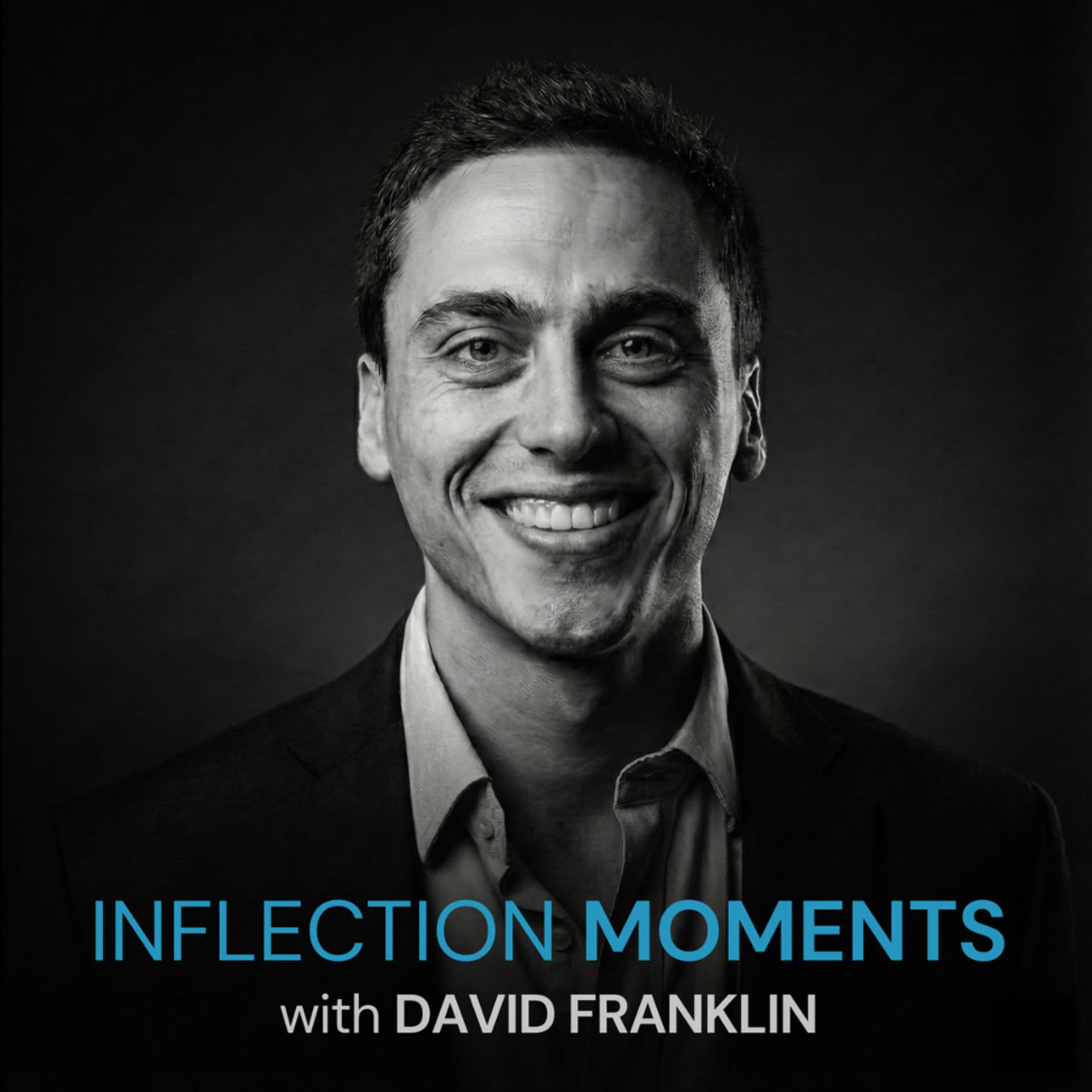

In short
Jeff Bezos’ “Day One” operating system, told through five inflection points that shaped Amazon from an online bookstore to AWS and a customer-locked retail utility.
Guest backgrounds
No guests are named in the transcript; the host is David Franklin.
Key claims
Bezos chooses regret minimization over “safe” careers; pursues “get big fast” to outrun Barnes & Noble; decouples self-worth from the stock price during the 2000 crash; builds customer loyalty via Prime despite CFO objections; fixes “hairball” internal code with an API mandate, then monetizes infrastructure as AWS.
Notable examples
2,300% web growth data from Matrix News (1994) leading to books; quitting D.E. Shaw after a Central Park decision framework; Barnes & Noble’s lawsuit over “Earth’s largest bookstore” and Amazon’s public counter-moves including an IPO; Lehman analyst Ravi Surya’s “insolvent” report and Bezos’ “I am not the stock price” rule; Prime’s $79/year two-day shipping launch (Feb 2005) and customer spend jump (~$400 to ~$1,500/year); AWS launch with S3 and EC2 (2006) enabling startups like Airbnb/Uber to avoid building their own data centers.
Written by AI. May contain mistakes. Listen to the episode to check what was said.
Chapters
Tap a time to open that second in VOThe Genesis of Jeff Bezos and Amazon
0:40 to 3:00
Discussion on Jeff Bezos' early career, vision for Amazon, and the significance of his journey.
“if it hadn't been for Sol Price, Jim Senegal, and Sam Walton.”
The Regret Minimization Framework
3:00 to 4:40
Exploration of Bezos' decision-making process through his regret minimization framework.
“And by the end of this episode, I promise you, you'll have a new set of tools.”
Leaving D.E. Shaw: A Leap of Faith
4:40 to 7:20
Detailing Bezos' departure from D.E. Shaw and the emotional support from his wife.
“It's filled with computer scientists, mathematicians, astrophysicists, and PhDs.”
Establishing Amazon: The Beginning
7:20 to 10:00
Narrative of Bezos' early days establishing Amazon and his innovative vision.
“Books are the only product category in the world with millions of unique SKUs.”
The Early Success of Amazon
10:00 to 14:00
Discussion on Amazon's initial live launch and rapid growth trajectory.
“He tries to use his standard decision-making tools.”
Jeff Bezos and the Early Days of Amazon
14:00 to 22:30
Learn about the tumultuous early days of Amazon and Jeff Bezos's vision.
“The office is in a sketchy part of downtown Seattle near a heroin needle exchange.”
The Dot-Com Bubble Burst and Bezos's Leadership
22:30 to 28:00
Discover how Jeff Bezos navigated the challenges of the dot-com bubble burst.
“And we're going to fast forward three years.”
Jeff Bezos' Philosophy on Stock Price
28:00 to 29:58
Learn about Jeff Bezos' approach to stock prices and financial metrics.
“He writes one sentence on the whiteboard in big, bold letters.”
Transforming Amazon's Financial Focus
29:58 to 30:58
Discover how Jeff Bezos shifted Amazon's focus to cash flow and operational excellence.
“Customer satisfaction scores were higher than ever.”
Survival and Competitive Advantage Post-Crash
30:58 to 32:08
Understand how Amazon emerged stronger after the market crash and learned critical lessons.
“And here's the most important part of this story.”
Show all 18 chapters
Evolving Amazon's Customer Relationship
32:08 to 33:36
Examine Jeff Bezos' vision to transform Amazon into an indispensable utility for customers.
“the bank that issued the report saying Amazon would die is bankrupt and gone.”
The Birth of Amazon Prime
33:36 to 39:51
Learn the story behind the creation of Amazon Prime and its impact on customer behavior.
“So much so that he wants to make it irresponsible for a customer to shop anywhere else.”
The API Mandate and Its Significance
39:51 to 42:00
Discover Jeff Bezos' API mandate and its implications for Amazon's engineering practices.
“He realized that if you give customers a superpower, the ability to get anything they want in two days for free, they'll reward you with their loyalty forever.”
The API Mandate: A Radical Change at Amazon
42:00 to 43:39
Learn about Jeff Bezos's radical approach to restructuring Amazon's engineering practices through the API mandate.
“to other retailers like Target and Marks & Spencers.”
The Birth of Amazon Web Services
43:40 to 46:33
Discover how Jeff Bezos transformed Amazon's infrastructure expertise into a groundbreaking business opportunity with AWS.
“Andy Jassy, who was Jeff's shadow, his chief of staff at the time, is there.”
Lessons from Jeff Bezos's Leadership
46:34 to 54:10
Explore the three defining traits of Jeff Bezos that contributed to Amazon's success: misunderstanding tolerance, customer obsession, and flexible vision.
“Jeff took a cost center, IT, and turned it into a profit center.”
The Philosophy of Day One
54:11 to 56:01
Understand Jeff Bezos's concept of 'Day One' and how it reflects a mindset of perpetual innovation and risk-taking.
“that can survive a 90 % stock crash, ignore the skeptics, break the laws of finance, and invent entirely new industries from scratch.”
The Impact of Jeff Bezos' Decisions
56:01 to 56:32
Explore how Jeff Bezos' willingness to take risks shaped Amazon and the tech landscape.
“He'd be a very rich, very successful, anonymous retired banker.”
Transcript
Automatic transcript. May contain errors.0:00Today, we conclude our mini-series on the kings of mass market retail. As a reminder, each episode is intentionally structured one after another because each person inspires the next and each one uses these principles to build incrementally larger companies. So far in our mini-series, we've explored Sol Price, the founder of FedMart and Price Club, Jim Senegal, co-founder of the$400 billion behemoth Costco, and Sam Walton, founder of the largest retail business in America, Walmart. If you haven't listened to these episodes,
0:33Jeff Bezos:I'd strongly encourage you to stop and go back and listen to them. Because if Jeff Bezos were here right now, he would tell you that the lifeblood of Amazon would not have existed if it hadn't been for Sol Price, Jim Senegal, and Sam Walton. But for those of you who are binging through this and want the next piece of the action, let's do it. Today, we're focusing on someone who barely needs an introduction, Jeff Bezos. Jeff Bezos is the founder and former CEO of Amazon, the company he started as an online bookstore in 1994 and scaled into a global platform spanning e-commerce, cloud computing, logistics, and media worth trillions of dollars and employing more than a million people worldwide.
1:14He bet early on the power of the internet, accepted years of losses, and relentlessly
1:18Jeff Bezos:reinvested into infrastructure and new businesses like AWS, which went on to become one of the most profitable enterprise software platforms in history. For founders and investors, Jeff's story is a blueprint for long-term high conviction execution. It shows how a simple customer promise, low prices, vast selection, and fast delivery can guide thousands of decisions, how to use experiments and small teams to keep innovating at scale, and how a willingness to endure short-term pain in pursuit of a compounding moat can structurally change entire industries over time. And it's worth stressing something here.
1:56Most of us know the Jeff Bezos of today, the guy in the aviator sunglasses, stepping off his$500 million super yacht, or the guy launching himself into space on a blue origin rocket, wearing a cowboy hat and laughing like a maniac as he floats in zero gravity. He's become a caricature of extreme wealth and power to many people. He's a villain, the symbol of monopoly, of inequality and ruthless capitalism. He's the guy who destroyed Main Street. But that's not the Jeff Bezos I want to talk about today. I want to talk about the Jeff Bezos who is terrified. The Jeff Bezos who is misunderstood. The Jeff Bezos who nearly went bankrupt, not once, but multiple times.
2:37The Jeff Bezos who is laughed at by the titans of industry. I want to talk about that guy.
2:42Jeff Bezos:In this episode, we're going to deconstruct the operating system of Jeff Bezos' brain. We're going to break down the five critical inflection points, the five do or die moments that took Amazon from a freezing garage in Bellevue to the everything store. These aren't just stories. They're case studies in high stakes decision making. And by the end of this episode, I promise you, you'll have a new set of tools. You'll understand how to look at a rapid growth curve and not just watch it, but ride it. You understood how to be misunderstood for long periods of time without losing your mind. This is the story of how to build a future, one door desk at a time.
3:19So let's dive in.
3:20Jeff Bezos:Welcome to Inflection Moments. I'm David Franklin, and you and I are about to dive into something fascinating. You know that moment when everything changes for an entrepreneur? When one decision, one pivot, one breakthrough suddenly shifts their entire trajectory. That's what we're hunting for today. If you're building something, if you're that founder grinding it out, making those impossible decisions that keep you up at night, this episode is for you. Because today, we're going inside the mind of one of the most successful entrepreneurs in history to uncover the exact moments that transformed their journey from ordinary to extraordinary.
3:55Here's what we're doing. We're dissecting the five most pivotal inflection points in their career. But more importantly, we're uncovering the strategic thinking behind each decision, the kind of insight that separates It's the builders from the dreamers. Ready? Let's get started.
4:17Let's go back to the spring of 1994. I want you to picture the environment Jeff Bezos is living in. It's midtown Manhattan. He's working at the headquarters of D.E.
4:25Jeff Bezos:Shaw and co. Now D.E. Shaw is not your typical wall street fan. If you walk into a normal investment bank in the 1994, like Goldman Sachs and Morgan Stanley, it's loud. It's aggressive. It's full of guys in suspenders yelling bye, bye, bye, bye, bye into telephones. It's traditional sales culture. But D.E. Shaw is different. It's a quant fund. It's a fortress of solitude. It's filled with computer scientists, mathematicians, astrophysicists, and PhDs. The founder, David Shaw, is a former computer science professor from Columbia University. He's a visionary who believes that computers, not humans, should be making investment decisions.
5:03The office is quiet. It's cerebral. It's intensely intellectual. And Jeff fits in perfectly. He's a Princeton grad with degrees in both computer science and electrical engineering. He's not a salesman. He's an engineer. He's analytical, precise, and brilliant. And he's rising through the ranks at meteoric speed. At just 30 years old, he's a senior vice president, one of four of them at the entire firm. He is effectively David Shaw's lieutenant. He has everything. He has money, prestige. He's got the intellectual challenge. He has a job that most people on Wall Street would kill for. So one day, David Shaw calls Jeff into his office.
5:44He has a special assignment for him. He says, Jeff, I want you to look into this new thing called the internet. See if there are any business opportunities there for us. So Jeff starts digging. He starts reading everything he can find. He goes into research mode. And that is when he finds the number. He's reading a newsletter called Matrix News, which is run by a guy named John Corterman. It's a very niche, very geeky publication that tracks the growth of data networks. And in the February 1994 issue, there's a graph. It shows the growth of pocket traffic on the World Wide Web. And the line on the graph isn't curving up gently.
6:21It's going straight up like a rocket. It shows that web usage is growing at 2 ,300 % a year. and Jeff freezes. He stares at that number and as he later said he goes things just don't grow that fast. It's highly unusual and that started me thinking what kind of business plan would make sense in the context of that growth. So at this point Jeff realizes that this isn't just a trend it's a complete paradigm shift. It's a once in a species event. He compares it to the Cambrian explosion. He realizes that the internet is about to change everything about humans interact, communicate, and transact. So his engineer brain starts kicking into gear.
7:05He starts making a list. He writes down the top 20 mail order businesses in the world. He looks at apparel, he looks at electronics, and he looks at music. And then he looks at books. So why books? Not because he loves reading, although he does, but because of the data. Books are the only product category in the world with millions of unique SKUs. There are 3 million books in print in 1994. He looks at the biggest physical bookstores in the world, the Barnes & Noble Superstores.
7:36Jeff Bezos:The biggest one carries maybe 150 ,000 titles. So he does the math, 150 ,000 versus 3 million. He realizes that a physical store can only hold about 5 % of the available books. But a virtual store, a store on this new internet thing, It could hold everything. It could be the first store in history with unlimited shelf space. It could offer a selection that no physical competitor could ever match. So he builds a deck. He runs the numbers. He gets excited because he can see the future so clearly. So Jeff takes the idea to David Shaw. Now remember the relationship here. David Shaw is not just a boss.
8:19He's a mentor to Jeff. He's a father figure. He's someone Bezos respects immensely. So Jeff sits down in Shaw's office and pitches him. David, this is it. This is the everything store. We should build this. This 2 ,300 % growth is a wave we have to catch. So Shaw listens. He looks at the data, he nods, and he sees logic. And then he says something that cuts deep. He says, you know, Jeff, this actually sounds like a really good idea, but I think it would be a better idea for somebody who didn't already have a good job. So let that sink in. So Shaw is hitting him with the golden handcuffs. He's saying, Jeff, you have too much to lose.
9:01You have the salary. You have the bonus. You have the career. Why would you risk all of that to sell books out of a garage? It's the ultimate rational argument. So Shaw tells him, don't decide now. I want you to take 48 hours. Go away. Think about it. Talk to your wife. Really think about what you're giving up. So Jeff goes home. He talks to his wife, Mackenzie. Now, Mackenzie is not a business person. She's a novelist.
9:27Jeff Bezos:She was actually Jeff's research associate at DE Shaw. That's how they met. She knows him better than anyone. She tells him, Jeff, I'm not a business person. I can't tell you if the business plan is good, but I hear the passion in your voice. I see how you look when you talk about this. I'm 100 % supportive. I'd rather be married to a guy with a failed startup than a guy who wonders what if for the rest of his life. That is a huge green light, but Jeff still has to wrestle with his own logic. So he goes for a walk in Central Park. It's just him, the trees, and the noise of the city. He walks for two hours, just looping through the park.
10:02He tries to use his standard decision-making tools. So he tries to calculate the expected value here. He goes, if I stay at D.E. Shaw, I have a 100 % chance of making a few million. If I start Amazon, I have a 90 % chance of making nothing and a 10 % chance of making hundreds of millions. When you run the math, the rational choice is to stay. The risk-adjusted return of a startup is terrible compared to the guaranteed partner track of the top hedge fund. If he uses a normal framework, he stays. He keeps the suit and he keeps the bonus. But he decides to change the framework and he stops thinking about the risk of failure.
10:39and he starts thinking about the risk of regret and with that he invents a mental model that he calls the regret minimization framework and here is exactly how he describes that moment in an
10:51Jeff Bezos:interview years later he says i wanted to project myself forward to age 80 and say okay now i'm looking back at my life i want to have minimized the number of regrets i have i knew that when i was 80 i was not going to regret having tried this i was not going to regret trying to participate in this thing called the internet that I thought was going to be a really big deal. I knew that if I failed, I wouldn't regret that. But I knew the one thing I might regret is not ever having tried. I knew that would haunt me every day. So that's a profound shift in perspective. He realized that regret is almost never about the things that you did and failed at.
11:29You don't regret the startup that went bust. You don't regret the girl you asked out who said, no, you get over those things. the things that haunt you, the things that make you wake up at 3am when you're 80 years old are the acts of omission, the path not taken, the what if, the ghost of the person you could have been. When he looked at the decision through the lens of his 80 year old self, the confusion evaporated. The decision became binary. It became incredibly easy. The financial risk didn't matter anymore. The humiliation of failure didn't matter anymore. The only thing that mattered was avoiding that haunting feeling of I missed the wave.
12:05So Jeff walks back into David Shaw's office the next day and quits. And Shaw's disappointed. He tries to talk him out of it one last time, but he sees the look in Jeff's eye. He knows that he's lost him. He shakes his hand and wishes him luck. Jeff doesn't wait. He doesn't spend six months planning and he doesn't try to raise a venture capital around first. He just goes. He packs his bags. He flies to Fort Worth, Texas to pick up his dad's old Chevy Blazer and on July 4th weekend, 1994, he and Mackenzie start driving north. They make a pit stop at the Grand Canyon. They stand on the rim, look into the abyss and watch the sunrise.
12:44And it's a poetic moment, this, because he's staring into the unknown. Then they get back in the car and he keeps typing the business plan. They ultimately arrive in Seattle. They rent the house in Bellevue. They recruit their first employee, a brilliant programmer named Cheryl Khafan, who Jeff calls the most important person in the history of Amazon besides me. They set up the servers in the garage.
13:05Jeff Bezos:They run those orange extension cores to the kitchen because the servers, these big sunspark stations, are sucking up so much power they keep blowing the fuses. And on July 16th, 1995, the site goes live. They invite 300 beta testers, mostly family and friends. They don't do any marketing, no ads, no PR. within 30 days without spending a dime on advertising they've sold books in all 50 states and 45 different countries the bell on the computer the one that rings every time an order comes in ding ding ding after the first week they have to turn it off it's ringing so constantly that nobody can get any work done it's just one long continuous ding the wave was real the 2300 growth was real and because he used the regret minimization framework because he chose to avoid regret rather than avoid failure he caught it this is the first lesson of jeff bezos when you're facing a fork in the road don't ask which path is safer ask which path will i regret not taking when i'm 80 and usually the answer is the scary one
14:20okay inflection point number two now and it's now late 96 early 1997 amazon's live it's working the bell has been turned off but the orders are pouring in revenue is climbing they did nearly 60 million dollars of sales in 1996 for a company that started in a garage two years ago that is incredible but let's be honest about what amazon looks like at the moment It's still tiny. It's scrappy. The office is in a sketchy part of downtown Seattle near a heroin needle exchange.
14:50Jeff Bezos:The elevators in the building are broken half the time. It smells like stale coffee, sweat, and panic. And inside, it's chaos. The desks are still doors. The servers are overloaded. The software is held together with duct tape and prayers. And most importantly, nobody in the real world takes them seriously yet. So the retail giants, Amazon is a joke. It's a nerd store and it's a novelty. But Jeff isn't laughing. He's deadly serious. He's done the math on the internet and he understands something that nobody else understands yet. He understands the power law of the web. He knows that on the internet, geography doesn't matter.
15:28In the physical world, you can have a successful bookstore in Seattle and a successful bookstore in New York and they don't compete with each other. But on the internet, there is only one store. the store that wins the customer's trust first wins everything. He calls this first mover advantage and his desire is simple. He wants to capture the entire market. He wants to be the default.
15:51Jeff Bezos:He wants to be the first place people think of when they think of books. And he tells his team, we have to reach escape velocity. If we don't get big fast, the gravity of the incumbents will put us back down and crush us. And there's a very specific incumbent he's terrified of, a Goliath. It's Barnes and Noble. Now, if you're too young to remember the 1990s, you have to understand Barnes and Noble was a monster. They were the category killer. They're the Walmart of books. They had hundreds of massive superstores across America. They had the best supply chain, the deepest pockets, the best brand, and the most ruthless dealership.
16:28Their chairman, Leonard Ruggio, was a street fighter from Brooklyn. He had crushed independent in bookstores all over the country. He was not a guy you messed with. For two years, Barnes and Noble ignored Amazon. They thought who buys books on a computer, but then they woke up. In late 96, Leonard Riggio and his brother, Stefan, the CEO, start making a noise. They announced that they're going to launch their own website, barnesandnoble.com.
16:55Jeff Bezos:They go to the press and they start trash talking. Leonard tells the reporter, Amazon is just the middleman. We are the book people. We have the warehouses. We have the relationships. We're going to crush them. And then they sue. In early 1997, Barnes & Noble files a lawsuit against Amazon in federal court. They claim that Amazon's tagline, Earth's largest bookstore, is false advertising. Their argument is, you aren't a bookstore. You are a broker. You don't have the books in stock. We have the books. Therefore, we're the largest bookstore. This is a direct shot at them. It's a declaration of war and the media eats it up.
17:33They love this narrative. The headlines are brutal. Barnes and Noble's coming to eat your lunch. Amazon.toast. Why the smart money is betting on the big guys. And with that, investors start panicking. They call Jeff and scream at him. They go, Jeff, what are you going to do? They have$3 billion in revenue. You have 15 million. They can undercut your prices. They can outspend you on marketing 100 to 1. They can bleed you dry. This is the moment where most founders would fold. When a multi-billion dollar competitor sues you and launches a clone of your product, the rational response is to be terrified.
18:10But Jeff doesn't fold. He doubles down. He realizes that he can't compete with Barnes & Noble on their terms. If he tries to play the profitability game, he loses. If he tries to play the physical assets game, he loses too. So he decides to change the game entirely. He decides that the only way to survive is to run so fast that the giant can't catch him. So he coins a mantra that becomes the religion of the company. Get big fast.
18:37Jeff Bezos:So he calls an all hands meeting. He stands up in front of his terrified employees who are reading these headlines every day. And he says, look, Barnes and Noble is a formidable competitor. They're smart. They're well-funded, but we should be afraid of our customers, not our competitors. our customers are the ones who send us money if we focus on them we will be fine but privately he makes a strategic pivot he decides to burn the boats he tells his board we are going to make bold not timid investment decisions we're going to lower prices even if it hurts our margins we're going to spend every dollar we have on growth we're going to ignore profitability completely This is radical.
19:20Jeff Bezos:In 1997, companies were supposed to make money. Bezos is saying, no, we're going to lose money on purpose. He decides to use the lawsuit as a weapon. Instead of settling quietly, he fights it publicly. He realizes that every time Barnes & Noble sues him, they're mentioning Amazon's name in the New York Times. They're telling the world that Amazon is their biggest threat. He basically uses Barnes & Noble's own marketing budget to build his brand. It's like a judo move. And then he does something even crazier. He decides to IPO. Now, Amazon is not ready to go public. It's been in business for less than three years.
19:56Jeff Bezos:It's losing money. But Jeff knows he needs a war chest. He needs cash to fight the Goliath. So in May 1997, he takes Amazon public. During the IPO roadshow, he's brutally, almost recklessly honest with the bankers. He tells them, we're going to lose money for a long time. If you want a company that's going to pay dividends next quarter, do not buy this stock. And he writes his famous 1997 shareholder letter. You can go read it today. It's like the Magna Carta of Amazon. In it, he lays out his philosophy. He writes, we will continue to make investment decisions in light of long-term market leadership considerations rather than short-term profitability consideration or short-term Wall Street reactions.
20:37He basically tells Wall Street, I don't care what you think. I'm playing a different game. and playing a 20-year game. And the strategy works. Barnes & Noble finally launches their website in May 1997. But it's a disaster. Because they're a big bureaucratic company,
20:55Jeff Bezos:they still have all this internal conflict. Their physical stores hate the website because it undercuts their prices. So they don't promote the website in the stores. They treat it like a stepchild. And the website itself is clunky. It's slow. But most importantly, it's too late. By the time Barnes and Noble get their act together, Amazon has already reached escape velocity. In 1996, Amazon sales were$15.7 million. In 1997, they jumped to$148 million. In 1998, they explode to$610 million. That is not growth. That's an explosion. Amazon grew so fast that the Goliath couldn't catch them. They outran the shark.
Read the full transcript
21:37They captured the customer's credit card, their shipping address, and their trust. And the get big fast mentality didn't just save them from Barnes & Noble.
21:45Jeff Bezos:It created the infrastructure for everything that came later. Because they were forced to build massive servers to handle the traffic, they learned distributed computing. The war with Barnes & Noble forged Amazon's DNA. It taught them that speed is the only defense. It taught them that in the digital world, if you aren't the predator, you're the prey. And it taught Jeff that if you're willing to be misunderstood, if you're willing to lose money while everyone calls you crazy, you can win the long game. But the war wasn't over. In fact, the biggest threat wasn't a competitor. The biggest threat was coming from the market itself.
22:17Because three years later, the bubble would burst and Amazon would face its near-death experience.
22:30Okay, inflation point number three now. And we're going to fast forward three years. It's now the year 2000.
22:36Jeff Bezos:The world has changed completely. If 1997 was the wild west, then 1999 was the gold rush. The dot-com bubble has inflated to insane proportions. Any company with a dot-com at the end of its name is suddenly worth billions of dollars. People are quitting their jobs as doctors and lawyers to day trade tech stocks. Taxi drivers are giving you stock tips. It's a mania. And Jeff Bezos is the king of this mania. In December, 99 time magazine names him person of the year. He's on the cover. He looks like a young and nerdy emperor. The headline calls him the king of the e-commerce revolution. Amazon stock hits an all-time high of$113 a share.
23:18Jeff Bezos:Bezos is a multi-billionaire on paper. He's the richest man under 40 in America. The company has expanded beyond books. They're selling music, DVDs, electronics, toys. the vision of the everything store is happening. But underneath the surface, there's a rot. The company is burning cash at a terrifying rate. They built millions of square feet of warehouse space that they aren't using. They've hired thousands of people. They've spent millions on advertising. And then the music stops. In March 2000, the dotcom bubble bursts. It's not a slow leak. It's an explosion. The NASDAQ collapses. Investors realize that most Most of these internet companies have no revenue, no profits and no business model and panic sets in one by one.
24:05The darlings of the internet start to die. Pets.com goes bankrupt. Webvan goes bankrupt. E toys goes bankrupt. Billions of dollars evaporates in weeks. So Jeff's desire shifts instantly. He's no longer trying to get big fast. He's simply trying to survive. He realizes that the capital markets, the investors who've been funding his losses for five years are closing the tap and he needs to stop the bleeding.
24:31Jeff Bezos:But the world isn't just ignoring Amazon, it's attacking Amazon. The narrative shifts overnight. The same media that called him a genius in 99 is now calling him a fraud in 2000. They say Amazon is just another bubble company that's going to zero. And then the hammer drops. On June 23rd, 2000, a bond analyst at Lehman Brothers named Ravi Surya releases a report. Now, usually analyst reports are boring. They're full of jargon and hedging. Nobody reads them except other analysts. But this report is different. It's a 28-page assassination. Ravi Surya doesn't look at the vanity metrics like revenue growth or customer count.
25:13Jeff Bezos:He looks at the balance sheet. He looks at the convertible bonds Amazon sold to raise money and he looks at the cash burn. and he concludes that Amazon has extremely weak and deteriorating credit. And he writes in his own words, current assets will be less than current liabilities by the third quarter and the company will run out of cash within four quarters. He basically says Amazon is insolvent. It's a Ponzi scheme and it's going to die. He rates the bond as a void and predicts bankruptcy. The report goes viral on Wall Street. It's the first time a major analyst has called the emperor naked.
25:51And the market reacts instantly. Amazon stock price goes into freefall. It drops from$113 to$100 to$50 to$20 and it keeps going. And eventually it bottoms out at$6 a share. I want you to imagine that. You lose 95 % of your company's value in less than 12 months.
26:13Jeff Bezos:If you'd invested a hundred grand in Amazon stock, it's now worth five grand. Now imagine the atmosphere inside the company. Amazon pays its employees very low cash salaries. The whole compensation model is built on stock options. The employees were working 80 hour weeks because they thought they were going to be rich. They were counting on that stock for their mortgages, for their kids' college funds, for their retirement, and they're watching it evaporate. The break rooms are quiet. People are crying in the bathrooms. Every computer screen in the office has a stock ticker in the corner. People are checking the price every five minutes.
26:49Jeff Bezos:Down another dollar. Down another 50 cents. The press is also relentless. They call in a new nickname for the company. They call it Amazon.com. Jay Leno is even making jokes about Amazon going out of business in his monologue on The Tonight Show. Jeff is receiving hate mail. He's being sued by shareholders. His board members are getting calls from furious investors demanding that they fire him. This is the moment. I mean, this is the moment where the company should have died, but it's also the moment that separates the good CEOs from the great ones. Most CEOs in this situation would panic. They would try to pump the stock.
27:25Jeff Bezos:They'd go on CNBC and promise huge profits to calm the market. It amounts a massive stock buyback to prop up the price, and they'd probably pivot the business model to do something safer. But Jeff does the opposite. it. He realizes that Ravi Surya is technically right about the cash ban, but wrong about the business. He knows that the underlying physics of the business are working, even if the balance sheet looks ugly. So he goes on the offensive internally. He calls an all hands meeting at the company headquarters. The mood is grim. It's like a funeral. He walks onto the stage. He's wearing his signature blue dress shirt and khakis.
28:01He grabs a marker. He writes one sentence on the whiteboard in big, bold letters. I am not the stock price. He turns to the room and he says something that's become legendary.
28:13Jeff Bezos:When the stock is up 30 % in a month, don't feel 30 % smarter because you aren't. And when the stock is down 30 % in a month, don't feel 30 % dumber because you aren't. He tells them the stock market is a voting machine in the short term, but it's a weighing machine in the long term. Right now, the market is voting against us, but the weighing machine, the actual business is getting heavier every day. He issues a new rule, no checking the stock price. He tells managers, if you catch your team checking the stock price, tell them they are wasting their time. Tell them to spend that time improving the customer experience.
28:51Jeff Bezos:Then he shifts the entire financial focus of the company. Before this moment, Amazon talked about revenue and gross merchandise value. That's what growth companies talk about. But now Jeff becomes obsessed with a new metric, free cash flow per share. It's the purest sense of underlying value in a company. He realizes that earnings, accounting profits, is a vanity metric that can be manipulated. But cash flow is the truth. Cash flow is oxygen. And as long as you have cash, you can't die. He gets disciplined, brutally disciplined. He shuts down underperforming distribution centers. He cancels projects.
29:32And then he does the hardest thing of all. He lays off 15 % of the workforce, 1 ,300 people. It's the first layoff in company history.
29:41Jeff Bezos:It's painful. It breaks the family culture of the early days. People are crying as they pack their boxes. Jeff hates it, but he knows it's necessary to save the ship. he focuses the entire company on operational excellence he tells the team get the crap out of our processes they start measuring everything how many seconds does it take to pack a box how much tape we're using how many steps is a picker taking the warehouse they turn the chaotic mess of get big fast into a finely tuned machine they adopt six sigma and lean manufacturing techniques they become obsessed with efficiency and the result of all this is that jeff was right While the stock was sitting at$6 and the world was laughing, the internal metrics were skyrocketing.
30:26Jeff Bezos:Customer satisfaction scores were higher than ever. Units sold were up. Cost per order was down drastically. Invent returns were speeding up. The business was actually getting healthier every day, even though the stock chart looked like death. Jeff ignored the scoreboard and focused on the game. Amazon didn't run out of cash. They turned the corner. In fact, in the fourth quarter of 2001, Amazon posted its first ever quarterly profit. It was tiny,$5 million or one cent per share, but it was a profit. It proved the model worked and it proved Ravi Surya wrong. And here's the most important part of this story.
31:04Because the crash killed everyone, Amazon was left alone. E-Toys was gone. Circuit City was dying.
31:11Jeff Bezos:Borders was struggling. The crash cleared the field. It wiped out all the pretenders who were just burning cash without a real business model. When the dust settled, Amazon was the last man standing in the rubble. They had the entire e-commerce market to themselves for the next decade. If the bubble hadn't burst, Amazon might have based stiff competition from well-funded rivals, but the crash starved the competition of capital, while Amazon had just enough to survive. This inflection point taught Jeff the most important lesson of his career. decouple your self-worth from external validation. He learned that the market knows nothing.
31:48The press knows nothing. The only thing that knows the truth is the data. If he'd listened to the market in 2000, he would have quit. He would have sold the company. He would have pivoted, but he didn't. He looked at the whiteboard. He looked at the customer and he kept building.
32:04Jeff Bezos:And that is why today Amazon is worth trillions of dollars and Lehman Brothers, the bank that issued the report saying Amazon would die is bankrupt and gone. Talk about irony.
32:22Jeff Bezos:Okay, inflection point number four now, and it's 2004. The Amazon.com era is over. The company has survived the crash. They're profitable. They've proven the skeptics wrong. They're selling books, music, DVDs, electronics, toys, kitchenware. They're a legitimate, successful retailer. The stock has recovered from$6 to about$40. And Jeff is a billionaire again. But inside Amazon, the mood isn't celebratory. It's anxious. Jeff is restless. He's looking at the landscape and he sees storm clouds. Google is growing like a weed. Their search engine is becoming the starting point for every internet session.
32:59Jeff Bezos:Jeff worries that Google will become the front door to the internet and Amazon will just be a room inside Google's house. eBay is massive. Walmart is finally waking up to e-commerce. So Jeff realizes that Amazon is still just a transactional business. People shop on Amazon when they need a specific book or a specific DVD, but they don't love Amazon. They don't have a habit of using Amazon. If Walmart offers the same book for 50 cents less, the customer will leave. There's no loyalty. There's no moat. So Jeff wants to create an unbreakable bond with the customer. He wants to change the fundamental nature of the relationship.
33:34Jeff Bezos:He wants to transform Amazon from a store you visit into a utility you subscribe to. So much so that he wants to make it irresponsible for a customer to shop anywhere else. It's worth repeating that. Again, he wants to make it irresponsible for a customer to shop anywhere else. But there's a massive barrier standing in the way. It's friction, specifically the friction of shipping costs. In 2004, buying online is still annoying. You go to Amazon, you find a book you want for$15, you add it to your cart, you go to checkout and then you see it. Shipping and handling,$3.99. That$3.99 feels like a tax.
34:11It feels like a penalty. It makes you hesitate. It makes you think, maybe we'll just drive to the bookstore and pick it up.
34:18Jeff Bezos:Jeff hates this friction. He knows that shipping costs are the number one reason for cart abandonment. He'd already tried Super Saver Shipping, where if you spend$25, you get free shipping. It worked, but it was slow. It took five to seven days and it didn't feel magical. Instead, Jeff wants fast free shipping. He wants it to feel like teleportation. One day, an engineer named Charlie Ward drops an idea into the digital suggestion box on the internal intranet. Now, Charlie Ward is not a logistics expert. He's a software engineer. He's just a guy who writes code. His idea is simple. What if we created a shipping club?
34:55Jeff Bezos:What if customers paid a flat fee upfront, like a subscription, and in exchange, they got free two-day shipping on everything for a year? Jeff sees this idea. And unlike most CEOs who would ignore a suggestion from a random engineer, Jeff becomes obsessed with it. He falls in love with the concept immediately, and he calls it Prime. He convenes a SWOT team to build it, but immediately he runs into a wall, his own finance team. The finance team, led by CFO Tom Skutak, hates the idea. They absolutely despise it. They run the numbers, they build the models, and they come to Jeff with a stack of spreadsheets that all say the same thing.
35:32Jeff, this is financial suicide. Let's look at the math that they were looking at. Expedited shipping, two-day air, is expensive.
35:40Jeff Bezos:It costs Amazon about$8 a package to ship something in two days via UPS or FedEx. Bezos wants to charge$79 a year for the membership. So do the math. If a customer signs up for$79 and shipping costs$8 per package, Amazon breaks even after just 10 orders. But who is going to sign up for Prime? The power users. The people who buy a lot of stuff. The people who order 20, 30, 50 times a year. The finance team argues, Jeff, you're creating a self-selection problem. The only people who will buy this are the people who are going to abuse it. If a guy buys a$15 book and we pay$8 to ship it, we lose money instantly.
36:17Jeff Bezos:If he buys$50 a year, we lose hundreds of dollars on him. They tell him, we're going to bleed cash on every single package. We're going to bankrupt the company. It defies all retail logic. You're subsidizing your most expensive, most demanding customers. You're accelerating your losses. The board of directors are skeptical. The logic is irrefutable. The math says no. So Jeff listens to the math. He looks at the spreadsheets. He understands the logic perfectly. And then he ignores it. He says, I don't care about the math. I care about the psychology. He understands something that the accountants don't.
36:52Jeff Bezos:He understands that humans are not rational calculators. He understands that shipping costs are a psychological barrier, not just a financial one. He knows that if he can flip a switch in the customer's brain, if he can change their mindset from should I pay for shipping on this item? So I might as well buy this because the shipping is free. He changes everything. He tells the team, I want to draw a moat around our best customers. I want to change their behavior. I want them to stop looking at the price of the item and just look at the convenience. He picks the price point,$79. To Jeff,$79 felt right.
37:26Jeff Bezos:It felt like a real commitment, but low enough that people would impulse buy it. It was a pure gut call. He tells the team, launch it. He gives them a seemingly impossible deadline. He wants it launched, not months, but in weeks. So the engineering team has to scramble to rewrite the checkout code. Amazon launches Prime in February 2005. At first, the finance team looks like they were dead right. It's a bloodbath. Shipping costs explode. The company's margins compress and the stock takes a hit. Wall Street hates it. They say Amazon is giving away the store. They're desperate. But then the flywheel starts spinning and it starts spinning faster than anyone, even Jeff could have imagined.
38:08Jeff Bezos:Once a customer pays that$79, a switch flips in their brain. They want to get their money's worth. They stop shopping at Target. They stop driving to Walmart. They stop looking at Google Shopping to compare prices. They start buying everything on Amazon. I need batteries. Amazon. I need a toaster. Amazon. I need socks. Amazon. I need a single tube of toothpaste. Amazon. And the data starts coming in. Before Prime, the average customer spent about$400 a year on Amazon. After joining Prime, that same customer spent$1 ,500 a year. Their purchase frequency went from five times a year to 50 times a year.
38:45Jeff Bezos:Yes, Amazon was losing money on the shipping, but they were making it up on the volume. And more importantly, they were making it up because they didn't have to spend any money on marketing to acquire that customer again. The customer was locked in. They were off the market. Prime transformed Amazon from a store you visit into a utility you subscribe to. It became like electricity or water. You just use it. Today, there are over 200 million Prime members worldwide. It generates over$35 billion a year in subscription fees alone before you even count the products they buy. It's the most successful membership program in the history of capitalism.
39:22Jeff Bezos:It's the reason Amazon is impossible to disrupt. When Walmart finally tried to launch a competitor Walmart Plus, it was 15 years too late. The moat was already filled with alligators. This inflection point teaches us a critical lesson about innovation. Sometimes you have to break the math, to build the psychology. If Jeff had listened to the spreadsheet, Prime never would have happened. He had to trust his intuition about human behavior over the hard data of the finance team. He realized that if you give customers a superpower, the ability to get anything they want in two days for free, they'll reward you with their loyalty forever.
40:00Jeff Bezos:Prime was just the second most important invention of the 2000s because while Prime was securing the retail business, a small team of engineers was working on something in the background, Something weird. Something that had nothing to do with selling books. Something that would eventually become more value than the entire retail empire combined.
40:24Jeff Bezos:Okay, final inflection point now. It's the early 2000s. While the world is focused on Amazon the retailer, the company that sells books and diapers and runs warehouses, there's a completely different drama unfolding inside the engineering department. Amazon is growing fast. but its own internal technology is a disaster. It's what engineers call a hairball, a tangled mess of spaghetti code. Meanwhile, Jeff wants speed. He wants Amazon to be able to launch new features, new categories, and new websites instantly. He wants to be able to launch Amazon Japan or Amazon Jewelry in a week, not a year.
40:59Jeff Bezos:But the infrastructure is broken. Every time a team wants to build a new feature, let's say a recommendation engine for shoes, they have to rebuild the entire infrastructure from scratch. They have to provision their own servers, set up their own databases, configure their own storage, write their own network protocols, and it takes months just to get to the starting line. So Jeff is frustrated. He looks at his brilliant engineers, some of the smartest computer scientists in the world, and he realizes that they're spending 70 % of their time on plumbing and only 30 % of their time on the actual product.
41:30Jeff Bezos:He calls this undifferentiated heavy lifting. He compared it to a factory in the year 1900. Back then, if you wanted to build a brewery, you also had to build your own power plant. You had to have a steam engine. You had to hire an electrician. It was expensive. It was hard, and it didn't make your beer taste any better. Jeff says, we're doing the same thing. We're building our own power plant for every single project. The breaking point comes when Amazon tries to launch a service called Merchant.com. The idea was to license Amazon's e-commerce technology to other retailers like Target and Marks & Spencers.
42:03Jeff Bezos:But when they tried to separate the code to give it to Target, they realized they can't. It's so deeply intertwined that they can't untangle it. The project is a nightmare. So Jeff does something radical. He doesn't just ask the engineers to fix it. He issues a mandate, a decree. Sometime around 2002, he sends an email to the entire engineering organization. It has become legendary in Silicon Valley. It's known as the API mandate. The email basically says this. First, all teams will henceforth expose their data and functionality through service interfaces, APIs. Second, teams must communicate with each other only through these interfaces.
42:43Jeff Bezos:No direct linking, no backdoors, no reading another team's database. Third, there will be no other form of inter-process communication allowed. Fourth, all service interfaces, without exception, must be designed from the ground up to be externalizable. That is to say, the team must plan and design to be able to expose the interface to developers in the outside world. No exceptions. And fifth, anyone who doesn't do this will be fired. And then he signs it. Have a nice day. This is the nuclear option. It forces the entire company to rebuild itself from the inside out. It forces them to adopt a service-oriented architecture.
43:22Jeff Bezos:It's painful. It takes years. Engineers hate it. It slows everything down in the short term, but it works. It turns Amazon's messy code into a set of clean modular building blocks. Then the second penny drops. In the summer of 2003, Jeff hosts an executive retreat at his house on Lake Washington. Andy Jassy, who was Jeff's shadow, his chief of staff at the time, is there. They do an exercise. What is Amazon actually good at? They list the obvious things. We're good at retail. We're good at logistics. But then they realize something else. We're really, really good at running infrastructure. We're good at managing data centers.
44:01Jeff Bezos:We're good at scaling databases. We're good at undifferentiated heavy lifting. So Jeff has a light bulb moment. He says, we have developed this expertise to run our own business. Why don't we turn this into a product? Why don't we sell these infrastructure primitives, you know, storage, compute, database to other developers? He says, we're going to build the electric grid for the internet. it. He asked Andy Jassy to leave his role as a shadow and go build this business. It's a crazy idea. Amazon is a bookstore. It's a retailer. It has no business selling server space. So they launched Amazon Web Services AWS in 2006.
44:37Jeff Bezos:They launched with two simple products, S3, Simple Storage Service, which is a plan to store files. And the second is EC2, Elastic Compute Cloud, a place to rent virtual servers. The reaction from the business world is silence. Wall Street is confused. They say, what is this? Why is the bookstore renting out servers? This is a distraction. They should be focused on selling more books. Their margins are already razor thin. Businessweek runs a cover story wondering if Amazon has lost its way. But in Silicon Valley, the reaction is very different. It spreads like wildfire. Suddenly, two guys in a garage don't need to raise$5 million to buy servers and hire a sales admin.
45:16Jeff Bezos:They can just put a credit card into AWS and pay 10 cents an hour for a server. It democratizes innovation. It unleashes the startup boom of the 2010s. Startups like Airbnb, Pinterest, Uber, Netflix, and Lyft build their entire businesses on top of AWS. They don't build their own data centers. They just plug into Amazon's grid. And the incumbents, you know, Google, Microsoft, IBM, they ignore it. They look at AWS and say, that's a toy. It's a hobbyist. No serious enterprise will ever put their data on Amazon servers. In fact, Jeff famously said, we faced no like-minded competition for seven years.
45:54Jeff Bezos:It's unbelievable. Usually when you invent something good, you get copied in two years. We got seven years. Because Amazon was a bookstore, Google didn't see them as a threat. They let Amazon run the table. By the time Google and Microsoft woke up and launched their own clouds, you know, as you're in Google cloud, AWS was already the standard. They had a seven year headstart today. AWS is a monster. It generates a hundred billion dollars in revenue a year. It generates the vast majority of Amazon's operating profit. It powers the internet. If AWS goes down, half the web goes dark. Talk about the irony, the undifferentiated heavy lifting, the boring plumbing that was slowing them down became their most valuable asset.
46:37Jeff Bezos:Jeff took a cost center, IT, and turned it into a profit center. And this is the ultimate example of day one thinking. A day two company would have said, we're a retailer. Let's stick to retail. A day one company says, we have this capability. Let's invent something new. Without AWS, Amazon would just be a low margin retailer fighting with Walmart. With AWS, it's the most powerful technology company in the world. And it all started because Jeff Bezos got tired of his engineers spending too much time configuring servers.
47:16Jeff Bezos:So we've just walked through five incredible inflection points. When you take a step back and look at these moments together, when you look at the mosaic of Jeff Bezos' career, you know, what do you see? What are the patterns? What's the operating system running inside his brain? For me, I see three distinct powerful threads that tie all of this together. These are the common threads that make Jeff different from almost any other CEO in history. The first one is the willingness to be understood for long periods of time. This is, without a doubt, the single most defining trait of Jeff Bezos. It's his superpower.
47:50Jeff Bezos:Most human beings crave validation. It's hardwired into our biology. We want our parents to be proud of us. We want our peers to respect us. We want the stock market to applaud us. We want the media to call us geniuses. When the people criticize us, our instinct is to defend ourselves, to explain and to conform. But Jeff has seemingly surgically removed this part of his brain. He doesn't just tolerate being misunderstood. He expects it. He believes that it's a necessary precondition for invention. Here's a famous quote. You know, if you want to invent, you have to be willing to be misunderstood for long periods of time.
48:25Jeff Bezos:Think about the evidence that we just went through. When he quit D.E. Shaw, his own boss told him he was crazy. He was misunderstood. When he launched Get Big Fast and lost money on purpose, Wall Street called him reckless. Again, he was misunderstood. When the stock crashed in 2000, the media called him Amazon.com. Again, misunderstood. When he launched Prime, his own CFO told him it was financial suicide. Again, misunderstood. When he launched AWS, Businessweek asked him if he'd lost his mind. Again, misunderstood. Again. And the list goes on. When he launched the Kindle, people mocked it. You know, why would I read an ugly gray screen when I can read a paper book?
49:00Jeff Bezos:When he launched Amazon Marketplace and invited third-party sellers on the platform, people said, you're inviting your competitors into your store. You're crazy. In every single one of these cases, the conventional wisdom was X and Bezos did Y. And in every single case, he had to endure years, sometimes a decade of criticism before the world caught up to him. Jeff has a supernatural ability to internalize his own scorecard. He doesn't look at the external scorecard, you know, the stock price and the press. He looks at the internal scoreboard, the inputs, the customer data, and the thesis. If you're a founder or a creator or a leader, that is the hardest lesson to learn.
49:39Jeff Bezos:You have to build a callus around your ego. You have to be okay with looking like a fool in the short term to look like a genius in the long term. The second common thread is obsession with customers, not competitors. This sounds like a cliche. Every company says customer first. It's on every corporate poster in every break room in America. But Jeff actually means it and he practices it with a religious fanaticism. Most companies are competitor focused. Pepsi is focused on Coke. Ford is focused on GM. Microsoft is focused on Google. They watch what the competitor does and then they try to do it slightly better or slightly cheaper.
50:17Jeff Bezos:They're reactive. They're looking sideways. but Jeff realizes very early on that if you focus on competitors you can only be good as they are you are limited by their imagination but if you focus on customers you're limitless and the reason is because customers are never satisfied Jeff famously said this customers are always beautifully wonderfully dissatisfied even when they report being happy and business is great even when they don't know it yet, they want something better. He realizes that the customer is the ultimate forcing function for innovation. Do customers ask for Prime? No. Nobody sent him an email saying, I'd like to pay you$79 a year for free shipping.
50:58Jeff Bezos:But he knew that customers always want things faster and cheaper. Do customers ask for AWS? No. But he knew that developers always want to move faster and pay less for infrastructure. Jeff works backwards from the customer's permanent, invariant needs. He says, I very frequently get the question, what's going to change in the next 10 years? That's a very interesting question. I almost never get the question, what's not going to change in the next 10 years? And I submit to you that the second question is actually the more important of the two. He knows that 10 years from now, customers will not want higher prices.
51:34Jeff Bezos:Customers will not want slower delivery. Customers will not want less selection. Because those things are immutable, he can invest billions of dollars into them with zero risk. By anchoring his strategy to the customer, he liberates himself from the rat race of watching the competition. While Barnes & Noble was watching Amazon, Amazon was watching the customer, and that's why Amazon won. The third common thread is be stubborn on vision, but flexible on details. This is the essence of the day one mentality. Jeff is incredibly rigid about where he's going, but he's incredibly fluid about how to get there.
52:10Jeff Bezos:As an example, let's look at the everything store vision. He had that idea in 1994. He wanted to sell everything to everyone. That was the North Star. He never wavered from that for 30 years. But the details of how to get there, he failed constantly and he was always willing to kill a bad idea and try a new one. Think about this. You know, think about auctions. Remember when Amazon tried to compete with eBay? They launched Amazon auctions. It failed miserably and nobody used it. So he pivoted. He launched Z Shops, which was a way for small businesses to set up their own little storefronts on Amazon.
52:43Jeff Bezos:That failed too. It was a ghost town. So he pivoted again. He launched Amazon Marketplace, where third-party products are listed right next to Amazon's product on the same page. That worked. Today, it's 60 % of their sales. If he'd been stubborn on the details, he would have stuck with auctions and ridden it into the ground. If he'd been flexible on the vision, he would have quit after auctions failed and said, I guess we're just a bookstore. but he combined the two. He kept the vision, the everything store, but changed the path. Auctions, Z shops, marketplace. We see this pattern everywhere. Think about the Fire Phone.
53:17Jeff Bezos:That was a massive failure. That was$170 million write-off, but the technology, you know, voice recognition became Alexa. The vision, owning the interface remained, but the detail, you know, phone versus the speaker, that changed. Think about Amazon Wallet. That failed, but Amazon pay is huge. Like so many other entrepreneurs that we've profiled on Inflection Moments, Jeff treats failure as data. He doesn't take it personally. He sees it as an experiment that doesn't work, which gets him one step closer to the experiment that will work. Most people are the opposite. They're stubborn on the details.
53:51Jeff Bezos:I have to do it my way, but they're flexible on the vision. As soon as it gets hard, they lower their ambition. Jeff teaches us to hold the vision tight but hold the plan loose. So when you combine these three threads, be willing to be misunderstood, obsess over customers, not competitors, be stubborn on vision, flexible on details, you get a machine that can survive a 90 % stock crash, ignore the skeptics, break the laws of finance, and invent entirely new industries from scratch. You get day one.
54:28Jeff Bezos:So here's what keeps coming back to me about Jeff Bezos' story. It's the concept of day one. Every single year for over two decades, Jeff ended his annual letter to shareholders with the exact same sentence. He would attach a copy of his original 1997 letter, the one where he laid out his philosophy, and he would write, It remains day one. For a long time, it's easy to think of this as just some catchy slogan, a bit of corporate cheerleading. But the more you study Jeff, you realize it's a philosophy of survival. Jeff has a very specific definition of day two. He once wrote, day two is stasis, followed by irrelevance, followed by excruciating, painful decline, followed by death.
55:10And that is why it is always day one. Think about that. stasis, irrelevance, decline, death. That is the natural entropy of the universe.
55:20Jeff Bezos:Every organization, every empire, every person eventually moves to day two. We get comfortable, we get risk averse, we start protecting what we have instead of inventing what's next. We stop looking for the regret minimization moments because we have too much to lose. Jeff spent 30 years fighting a war against gravity. He managed to keep a massive bureaucratic organization acting like a hungry underdog in a garage. He managed to keep a company with one and a half million employees terrified of stasis. That is his true legacy. Not the money, not the rockets, but the proof that you can choose to stay in day one forever if you have the discipline to be misunderstood.
56:00Jeff Bezos:If Jeff had waited for the math to work, he would still be sitting in a hedge fund office in New York City. He'd be a very rich, very successful, anonymous retired banker. And we We wouldn't have Amazon, we wouldn't have AWS, we wouldn't have the world we live in today. But Jeff didn't wait for the math. He drove the car to Seattle and he made the math work.
56:27Jeff Bezos:If you enjoyed this deep dive into the mind of Jeff Bezos, please subscribe and share with a friend. And to bring this full circle, think of the person that you would want in the passenger seat of your Chevy Blazer while you drive across the country to start something crazy. send it to them. Thanks for listening. We'll talk soon.
57:10Jeff Bezos:If you're interested in insights, ideas, and lessons from some of the world's greatest entrepreneurs, sign up for our newsletter. The link is in the show notes. Until next time, keep building and talk soon.
From the publisher
Jeff Bezos is the founder and former CEO of Amazon, the company that began as an online bookstore and evolved into one of the most influential businesses on Earth, spanning e-commerce, cloud computing, logistics, and space exploration. His episode on Inflection Moments explores how a Princeton-trained engineer, walking away from a comfortable Wall Street career, built a company that redefined convenience, scale, and long-term thinking.
Bezos’s story runs from driving cross-country to start Amazon in a Seattle garage, to surviving the dot-com crash, to architecting a relentless culture of experimentation rooted in the mantra “It’s always Day 1.” What began with books quickly expanded into the “everything store,” powered by customer obsession and an unflinching willingness to reinvest profits into infrastructure, logistics, and innovation, culminating in cloud computing’s breakthrough with AWS. Beyond technology, Bezos’s leadership style, which includes long-term thinking, operational rigor, and a tolerance for failure, turned Amazon into a blueprint for compounding scale through discipline and invention.
His story is worth studying because it demonstrates the ultimate founder paradox: how to be both visionary and ruthlessly pragmatic at once. For founders, the takeaways include how to anchor decisions in customer value rather than competitors, how to think in decades instead of quarters, and how to use mechanisms (not slogans) to embed culture into execution. For investors, Bezos’s arc is the modern case study in compounding through reinvestment, proving that the greatest returns often accrue to those willing to look wrong for a very long time.
Chapters
(00:00) Introduction
(04:17) Inflection Point #1: Regret Minimization
(14:20) Inflection Point #2: Get Big Fast
(22:30) Inflection Point #3: The Crash
(32:23) Inflection Point #4: Prime
(40:25) Inflection Point #5: AWS
(47:17) Common Threads
(54:29) Concluding Remarks
Connect
Follow our channels below if you're interested in insights, ideas, and lessons from the greatest entrepreneurs in history:
Newsletter: www.inflectionmoments.com
LinkedIn: linkedin.com/in/david-franklin8456/
Spotify: https://open.spotify.com/show/0aqoOm53QLcOgyOkXFXNkO?si=a6474541e17f4db7
Apple Podcasts: https://podcasts.apple.com/us/podcast/inflection-moments/id1841530808
YouTube: @InflectionMoments
If you're enjoying the episodes, make sure to like the video and subscribe to the channel so you never miss an episode.