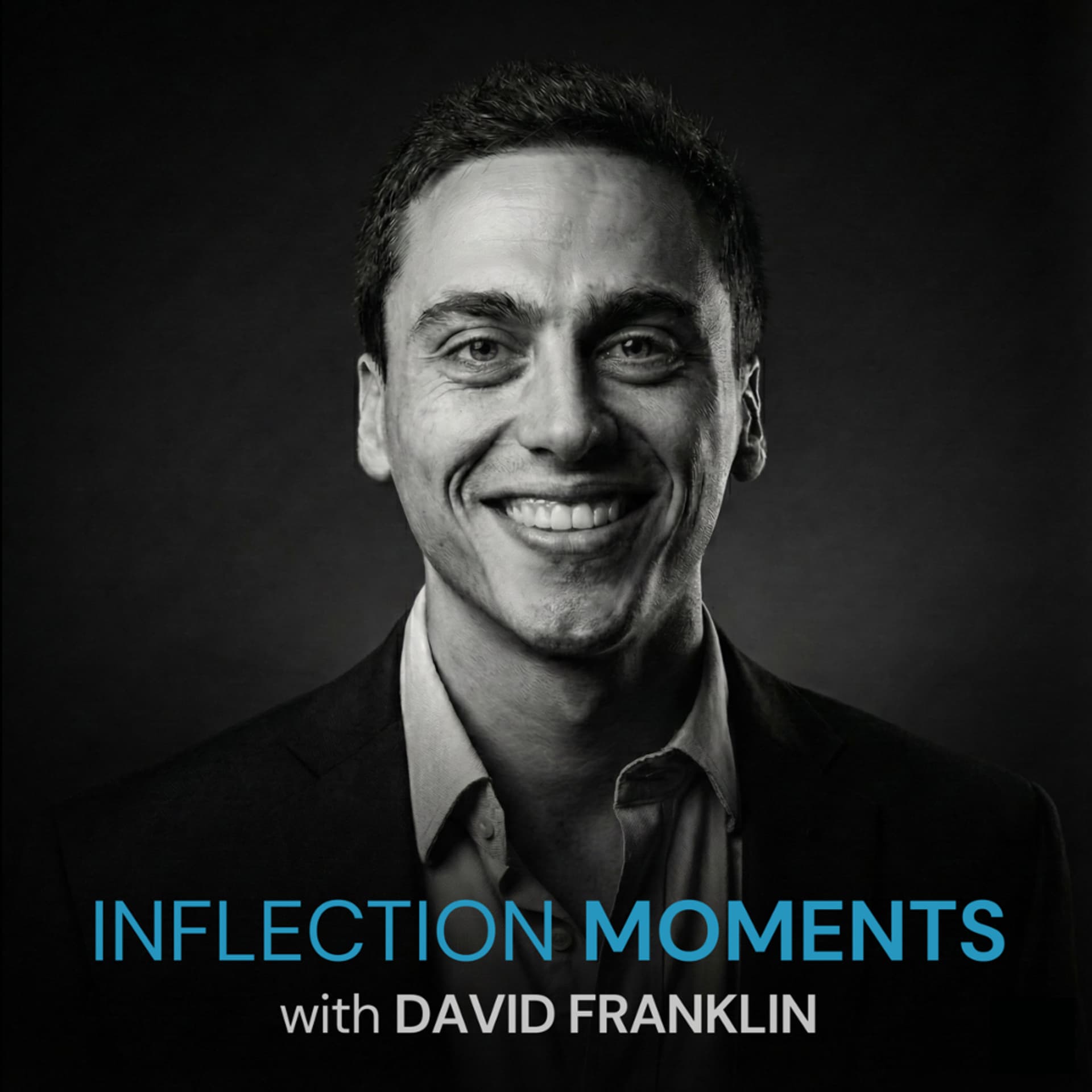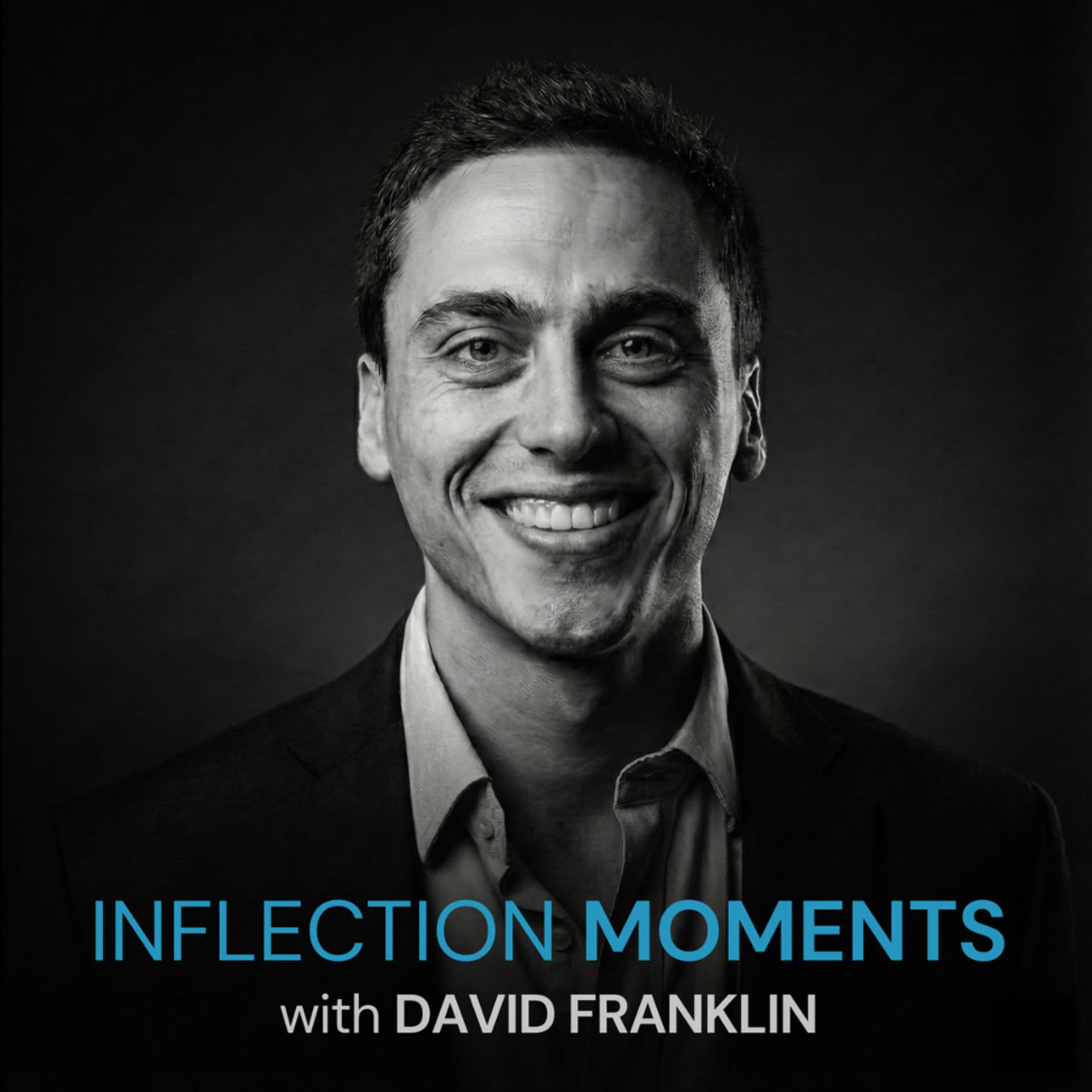

In short
Michael Dell’s five “inflection points” from dorm-room PCs Limited (direct-to-consumer) to rebuilding Dell after growth and product failures, exiting retail, pivoting from PCs to enterprise infrastructure via going private and the EMC/VMware acquisition, and benefiting from AI infrastructure demand.
Guest backgrounds
No guest is named; the episode is hosted by David Franklin and focuses on Michael Dell’s career.
Key claims
Dell’s advantage came from build-to-order, direct customer relationships, and extreme inventory discipline (7 days vs industry 70). Growth can hide “sins” until profitability/cash flow break. Durable strategy requires subtraction (what not to do) and preempting future competitors by becoming them first.
Notable examples
1983 data-driven direct mail to newlyweds; 1993 notebook disaster and earnings misses; 1994 pulling Dell from retail while launching Dell.com (online sales ramp); 2013 leveraged buyout vs Carl Icahn; 2015–2016 EMC/VMware deal; 2023 Broadcom VMware acquisition and later AI server boom.
Written by AI. May contain mistakes. Listen to the episode to check what was said.
Chapters
Tap a time to open that second in VOUnderstanding Inflection Points
1:26 to 2:24
Explore the significance of pivotal moments in an entrepreneur's journey.
“I'm David Franklin, and you and I are about to dive into something fascinating.”
Inflection Point 1: The Birth of PCs Limited
2:24 to 5:50
Discover how Michael Dell's early entrepreneurial ventures led to the creation of his company.
“Okay, inflection point number one, and it's 1983 in Houston, Texas.”
Innovative Business Model Emergence
5:50 to 8:52
Learn how Dell's innovative approach to selling computers changed the industry.
“Around Thanksgiving of 1983, his parents make him promise to stop the computer business and focus on school.”
Inflection Point 2: Navigating Growth Challenges
8:52 to 14:00
Examine the challenges Dell faced during rapid growth and how he overcame them.
“Okay, inflection point number two, and we're going to fast forward to 1992.”
Dell's Remarkable Growth and Strategic Shift
14:00 to 19:22
Learn about Dell's significant growth in the 90s and its shift to a direct sales model.
“That is essentially what Dell builds, except at a billion dollar scale.”
The Challenges of Transformation in a Changing Market
19:22 to 24:42
Understand the strategic challenges Michael Dell faced during the company's market transformation.
“Pulling out of retail looks like a retreat.”
The Bold Acquisition of EMC and Its Implications
24:42 to 28:00
Explore the ambitious acquisition of EMC and its impact on Dell's future.
“That is what gut is when it's working properly.”
The Complex Merger and Its Stakes
28:00 to 30:11
Understanding the challenges and strategic complexities of Dell's acquisition of EMC.
“They'll be the ones selling the servers, the storage, the virtualization software, the security, and the services that make all of it run.”
Michael Dell's Vision and Disruption
30:11 to 31:28
Exploring Michael Dell's foresight in creating a competitor within his company.
“Now, here's the mental model I really want you to sit with, because this one is extraordinary.”
Financial Gains and AI Infrastructure
31:28 to 32:46
Examining the financial outcomes of Dell's strategy and the impact of AI.
“Everything a large enterprise needs to run its digital operations.”
Show all 14 chapters
Curiosity as a Competitive Advantage
32:46 to 35:07
How Michael Dell's curiosity drives his success and business decisions.
“that powers the AI data centers being built by every major tech company.”
The Power of Subtraction in Business
35:07 to 36:18
Dell's approach to focusing on core competencies by removing distractions.
“It just requires asking why does it work this way?”
Embracing Self-Disruption
36:18 to 38:03
Dell's philosophy on continuous transformation and self-disruption in business.
“of all, and in some ways, the most actionable.”
Learning from Crises
38:03 to 39:55
Michael Dell's perspective on crises as opportunities for growth and learning.
“He says, a corporation is a living organism.”
Transcript
Automatic transcript. May contain errors.0:00On this week's episode of Inflection Moments, we're focusing on Michael Dell's story, and here's why. Michael is one of the clearest examples of a founder who turned a scrappy dorm room idea into a global technology powerhouse, then later had to reinvent that same company when the world shifted under his feet. As the founder of Dell, he helped pioneer the direct-to-consumer PC model, built one of the fastest-growing companies in history, and then led one of the boldest corporate transformations ever attempted, taking his own company private, re-architecting it, and re-emerging as a new kind of infrastructure giant.
0:34For founders and investors, Michael's story is about seeing what everyone else can't, having the conviction to do what conventional wisdom says won't work, and being willing to blow up your own model before someone else does it for you. His career is worth studying because it shows how a founder can build, nearly lose, and then recreate an institution by pairing this operational intensity with courage, using structure, ownership, and deal-making as tools to reset the trajectory of a business that the market had already written off. So here's what you and I are going to do today. We're going to walk through five key turning points in Michael Dell's life and career, moments where his decisions have a disproportionate impact on everything that comes after.
1:14And at the end, you and I are going to zoom out and pull together the common threads and the ideas that you can actually steal for your own company or investing career, whether you're running a startup while steering a large established business. All right, let's get into it. Welcome to Inflection Moments. I'm David Franklin, and you and I are about to dive into something fascinating. You know that moment when everything changes for an entrepreneur? When one decision, one pivot, one breakthrough suddenly shifts their entire trajectory. That's what we're hunting for today. If you're building something, if you're that founder grinding it out, making those impossible decisions that keep you up at night, this episode is for you, because today, we're going inside the mind of one of the most successful entrepreneurs in history to uncover the exact moments that transformed their journey from ordinary to extraordinary.
2:02Here's what we're doing. We're dissecting the five most pivotal inflection points in their career, but more importantly, we're uncovering the strategic thinking behind each decision, the kind of insight that separates the builders from the dreamers. Ready? Let's get started.
2:24Okay, inflection point number one, and it's 1983 in Houston, Texas. Michael Dell is 18 years old, enrolled as a pre-med freshman at the University of Texas in Austin. His father is an orthodontist. His mother is a financial consultant and stockbroker. The family expectation is crystal clear. Michael is going to become a doctor. He's going to be sensible. He's going to be responsible. The problem is that Michael can't stop taking things apart. It starts at a young age. He gets his first Apple computer at 15 years old. The moment his parents hand it to him, and I love this, he immediately disassembles it.
3:02Not to play with it, not to show it off. He takes it apart to see how it works. His parents are infuriated, but Michael is fascinated. By his early teens, he's already using money from part-time jobs to invest in stocks and precious metals. At 12, he sees that stamp dealers are making good money, so he and his friends put together a catalog of their own stamp collections and sell them by a mail order. He makes$2 ,000. At 17, he takes a job-selling newspaper subscription to the Houston Post. But here's the thing. Everyone else is doing cold calls. But Michael looks at the data differently. He figures out that newly married couples are statistically the most likely to buy a newspaper subscription.
3:41So he files FOIA requests at the county courthouse, gets the marriage license records and builds a direct mail campaign targeting newlyweds. He makes$18 ,000 that year, more than some of his high school teachers. He uses the money to buy a new computer and a BMW. So keep that story in your head because it matters later. Now we're in Austin, 1983, and in his first year at UT while he's supposed to be studying biology, Michael discovers something extraordinary. He starts buying IBM PCs from retail stores, upgrading them, adding more memory, better hard drives, and selling them to local businesses and professionals at a price 10 to 15 % below retail.
4:20And business is booming. Here's what Dell understands that almost nobody else in the industry does. He looks inside the IBM PC and realizes the IBM name is on the outside, but there's no IBM on the inside. The components are made by third-party manufacturers. Anybody can buy those components, and he's running the mental mess. IBM buys parts maybe$600,$700, they sell to retailers for around$2 ,000 the retailers mark it up again and sell it to customers for$3 ,000 meanwhile the person behind the counter at the store often barely knows what a CPU is so Michael talks about this in his own words he says I would read about improvements in technology in Byte magazine but then it would take a year or more before you could actually buy it so I was kind of a frustrated customer thinking hey where is all this stuff that I keep reading about and kind of thought what if you could sell directly to the end customer and do it way more efficiently with better service Just sit with that for a second.
5:14That's a teenager looking at an industry-wide markup and going, wait, why does it have to work this way? So by the end of 1983, Dell is running an operation out of his dorm room doing$80 ,000 a month in computer upgrades. $80 ,000 a month as a freshman in a dorm room. And his parents eventually figured this out for themselves. They show up for a surprise visit and Dell has to stash computer parts in a friend's room. His father looks at him in the eye and says, get your priorities straight. What do you want to do with your life? And Michael says, I want to compete with IBM. His father does not find this funny.
5:52Around Thanksgiving of 1983, his parents make him promise to stop the computer business and focus on school. Michael agrees. But here's what I love about this moment. That promise lasts exactly 10 days. But in those 10 days, something crystallizes in his mind. And as he tells it in the Academy of Achievement interview, He says, it was during that time that I decided that I was going to start a company. So actually, my parents telling me to stop doing it is probably what caused the company to get created. If they hadn't done that, it might have just been a hobby. Think about that for a second. The constraints around Michael become the catalyst for him doing this.
6:28The forced pause turns a hobby into his mission. It's so smart. So Michael negotiates a deal with his parents. He'll take a semester leave of absence from UT in the fall of 1984, give the business a real shot, and if it doesn't work, he'll go back to school. It's the kind of arrangement that only sounds reasonable in retrospect when you know how it ends. On May 3rd, 1984, from room 2713 in Dobie Hall at the University of Texas at Austin, Michael incorporates a company called PCs Limited with$1 ,000 in startup capital. His manufacturing facility is three guys with screwdrivers sitting at six-foot tables.
7:05He starts advertising in trade magazines. He's selling upgraded IBM computers, custom configured, direct to the consumer. No middleman, no retail markup. Just you tell me what you need. I'll build it. I'll ship it to you and I'll support it. And here's the thing that I find fascinating about this moment. And I think it's one of the most underrated business insights in the Dell story. The business isn't born for some grand vision of changing the world. In fact, Dell talks about this himself. He says, we didn't start building to the customer's order because we saw some massive paradigm in the future.
7:35We started that way because we didn't have the capital to mass produce. So this model means that they're so capital light, they have to wait for orders before building. And in doing so, they accidentally invent one of the most powerful business models in the history of commerce. How insane is that? So by the end of the first official year of business, PCs Limited, which becomes Dell Computer Corporation in 1987, does$6 million in revenue. By 1986, just three years after starting, he does more than$60 million. And the door that Michael agreed to leave open at UT, he never needs to walk back through it.
8:12In 1988, Dell Computer Corporation goes public on the NASDAQ, raising$30 million at 850 a share with a market cap at IPO of$85 million. Michael is 23 years old. the single most important thing to understand about this inflection point is the mental habit underneath it del is wired from childhood to look past the surface to take things apart and say why does it work this way could it work better he sees a three thousand dollar computer and asks why it costs that everyone else accepts the answer but michael pulls the computer apart and realizes the question is worth billions. That habit of questioning, that's the thread that runs through everything that follows.
9:03Okay, inflection point number two, and we're going to fast forward to 1992. Dell Computer is on fire at this point. The company has made it onto the 14500 list, and at 27 years old, Michael Dell becomes the youngest CEO in 14500 history. Let me say that again, 27 years old, the youngest CEO in 14500 history. The press is writing glowing profiles, revenue is soaring, Dell is everywhere. And then, without warning, it nearly all falls apart. At this point, Michael wants everything. They want to become the biggest PC company in the world. They're pushing into new product categories, expanding internationally, launching a notebook computer line, the goal Dell sets at the end of 1986 is a billion dollars in revenue by 1992, which they not only hit, they blow past it.
9:52Set big goals, they always say. Dell sets them and then doubles them. But here's what's wrong underneath all this growth. The company is growing so fast that the systems, the processes, the management infrastructure can't keep up. And Michael has a confession in direct from Dell that I think is one of the most honest things any CEO has ever written. He says that the enormous growth itself became the problem because it blinded him to the more important measures of profitability and cash flow. In other words, growth was covering up a lot of sins. In 1993, the crisis hits. Michael is pushed aggressively into the notebook computer market and the notebook line is a disaster.
10:30Delayed projects, cancelled models, massive write downs. In May 93, Della announces its first ever quarterly earnings missed. Profits down 48 % year over year. The company is bleeding. Analysts are shocked and the stock craters. And then it gets worse. In July 93, Dell warns of its first ever quarterly loss. Restructuring charges are between$75 million and$85 million, a possible default on its line of credit. Dell Computer Corp, the darling of Wall Street, the company that was going to take on IBM is now being whispered out as a company that might not survive. So let's analyze what went wrong here.
11:08Michael tried to do too many things at once, too many notebook configurations, too many markets, too much inventory, too fast. As Michael later write in Play Nice But Win, growth covers up a lot of sins, but when the growth stops, all the sins become visible at once. This is where it gets really interesting because what Michael does next, this is the moment that defines everything. What Michael does in response to this crisis reveals something fundamental about how he thinks. Most founders in this position double down. They keep pushing. They make excuses. They find the resources. They find the external reasons for the failure.
11:44Michael does the exact opposite. He brings in a new layer of management. And crucially, he reorients the entire company around data and profitability rather than just revenue growth. And he writes directly about this. Michael says, we began to realize that it's as important to figure out what you're not going to do as it is know what you're going to do. So listen to that again. We began to realize that it's as important to figure out what you're not going to do as it is to know what you are going to do. For a 28-year-old CEO of a rocket ship company to look at everything he has built and say, we need to stop doing some of this, that takes a very specific kind of intellectual courage.
12:20Most people at that stage would rather push harder than cut back, but Michael cuts back. The notebook line gets slashed to a single model. They pull back from this complexity. They focus everything on their core direct sales model, and they build something that will become one of the most important moats in the history of manufacturing, a supply chain so lean and so efficient that it defies belief. Here's the number that tells the whole story, and it blew my mind when I first came across it. At the time, industry standard was to hold 70 days of inventory. Companies were building computers they hoped someone would buy, warehousing them, and watching them lose 1 % of their value every single week they sat on the shelf.
12:59Dell slashes this. They build to order. Nothing gets made until a customer actually buys it. Suppliers are brought in so close to Dell's factories that components arrive just hours before they're needed. By the time this model is fully operational, Dell is carrying just seven days of inventory. Seven days versus the industry's 70. Think about what that means competitively. When Intel launches a new chip, Dell can start selling computers with that chip almost immediately. Their competitors are still trying to sell the previous generation sitting in their warehouses. And because Dell collect payments from customers before it actually has to pay suppliers, it actually generates cash as it grows.
13:37As the investment community will know, this is a classic negative cash conversion cycle. The faster Dell grows, the more cash it generates. It's counterintuitive in the extreme, and it becomes an almost unassailable structural advantage. Think about it like this. Imagine a restaurant where customers pay you up front when they order, but you don't have to pay for the ingredients until two weeks later. The more orders you take, the more cash you have sitting in your account. That is essentially what Dell builds, except at a billion dollar scale. So the result of all this is that by 1994, Dell Computer is back and more focused than ever.
14:11Revenue grows from$3.5 billion in 1994 to$25 billion by 1999. That is not a mistake. $3.5 billion to$25 billion in five years. A growth rate of more than 60 % annually. By 2001, Dell is the largest personal computer maker in the world. The near-death by growth in 92 to 94 turns out to be this inflection point in which the real Dell is forged. The undisciplined rocket ship becomes a precision machine. The crisis doesn't break Dell, but it focuses him. and that focus, that discipline, that obsession with doing fewer things but better, that becomes one of the defining traits of everything he does for the next 30 years.
14:52And Michael says it himself. He says, if you want to sustain excellence over a long time, you'd better come up with a system that works well. So again, anyone can sprint for a little while, but you can't sprint for 40 years. I think about that a lot.
15:12okay inflection point number three and it's july 94 dal computer is recovering from its near-death experience revenues rebuilding and michael calls a press conference to make an announcement that leaves the entire industry bewildered he's pulling dal computers out of every retail store in america Comp USA, Best Buy, Sam's Club, Price, Costco, all of it gone. Now maybe you're thinking at this point, is this an admission of defeat? Because that's exactly what the analysts are asking. And I want to explain why they're completely wrong. So here's what's really going on. By 94, the retail channel is generating around 10 % of Dell's revenue at its peak, but it's losing money.
15:51As Michael tells the LA Times at the time, he says, we've been losing money of late in that channel. This is a no or low return business. For us, it's been losing money for some time, but the conflict goes deeper than P &L. Think about what retail actually means for a company like Dell. When you sell through a retailer, you have to pre-build the computers. You have to forecast what configurations customers all want. You have to ship inventory to stores and hope customers buy it. When Intel updates a chip and drops prices, you're stuck with yesterday's machines on the shelf, losing value by the week.
16:22And Michael is quoted in the New York Times talking about this. He says, the traditional retailing is too sluggish for a rapidly evolving product like computers, which have a brief shelf life. If you have chips on the shelf from 30 days ago, if a manufacturer has 70 days of inventory, you can't respond swiftly to changes. There's a philosophical conflict here too. And this is the part I really want you to sit with. Dell's whole model, the thing that makes it Dell, is the direct relationship with a customer. Build to order. Know exactly what they want. Get paid before you build. When you put a computer in a store, you lose all of that.
16:55You can't know who bought it. You can't follow up. You can't learn. You give up your single biggest competitive advantage in exchange for shelf space. The critics say that Michael is leaving revenue on the table. You're ceding ground to Compaq and IBM. And they're right. For a moment. Dell's market share shifts, Gateway, which also does direct sales, briefly passes Dell. But Dell is making this decision from a completely different lens. Everyone else is playing the game of how do we sell the most computers right now. But Dell is playing the game of what model wins in the long run. He's not competing for shelf space.
17:32Instead, he's betting on the future of how customers will buy things. And here's where it gets remarkable. In 94, the same year Dell pulls out of retail, the company launches www.dell.com. In 96, two years before Amazon is even profitable, Dell adds e-commerce capabilities to the site. On the first day with no advertising, no promotion of any kind, the website sells 30 to 50 computers. By December 96, Dell is doing a million dollars a day in online sales. By 97, the daily rate is$3 million. And by the end of the decade, it's$18 million a day. Again,$18 million a day online in the late 90s. Keep in mind what$18 million a day online meant at that time.
18:18Amazon was still losing money every quarter. The concept of buying something significant, not just a book, but a computer online was still considered radical. But Dell had already spent years building the customer's trust and buying a computer over the phone direct from the manufacturer. The internet was the same model. It was just a phone call with a keyboard. Dell himself says it perfectly. He says, I had no idea this thing called the internet would come along and make it real easy for people to buy things online and connect, but absolutely felt that over time more and more people would be knowledgeable enough to buy on the phone.
18:51So Michael prepared for a world that hadn't arrived yet, and when it arrived, he was already there waiting for it. The result of all this, as we explained in the last inflection point, is that between 1994 and 1999, Dell's revenue grows from$3.5 billion to$25 billion. It becomes the first company to record a million dollars in daily online sales long before that was a meaningful benchmark for any company. It turns over inventory 60 times a year while competitors struggle with overstock. What I love about this inflection point is the lesson hidden in it. Pulling out of retail looks like a retreat.
19:24It looks like weakness. But Michael is actually doing something way harder. He's choosing what not to do. The 93 crisis taught him that doing fewer things better beats doing many things adequately. That retail pullout is the lesson applied at the strategic level. The direct model is his core mode. Everything that dilutes it is a distraction, even if that distraction generates revenue in the short term. Again, to repeat the phrase that we said in the earlier infraction point, it's easy to decide what you're going to do. The hard thing is deciding what you're not going to do.
20:04Okay, inflection point number four now, and we're in the early 2010s. And this is where things get really dramatic. Dell is no longer the fastest growing company in the world. It's still massive, over$50 billion in annual revenue, but the PC market is in structural decline. Tablets, smartphones, the iPad is eating notebooks for breakfast. Consumers are spending their money on mobile devices, not desktop PCs. and Dell is still a PC company. Roughly 60 % of its operating income comes from that core PC and laptop business. For several years, the stock is in freefall. It's trading around 10 to$14 a share down from highs well above$40.
20:41Wall Street has essentially put a PC company label on Dell and written a narrative that ends with a decline. In July, 2012, Michael Dell, who's still chairing and CEO, meets quietly with Egon Durbin at Silver Lake Partners. And here's what Michael has seen that Wall Street hasn't. The business that's declining, PCs and laptops sold to consumers, that market is absolutely under pressure and Dell knows it. But underneath that consumer business, Dell has been quietly building something else. Enterprise solutions, servers, storage, services, the infrastructure that businesses use to run everything and that business is growing.
21:17The problem is every quarter, Wall Street focuses on the PC revenue decline. The transformation Dell wants to make, the pivot from consumer PCs to enterprise infrastructure, requires years of investment, acquisitions, and restructuring. It requires taking pain in the short term for gain in the long term. And in a world of quarterly earnings calls and 90-day investor attention spans, that is nearly impossible. And Dell talks about this moment in 2014. He says, the single most important thing a company can do is invest and innovate to help customers succeed. Theoretically, this should also be good for shareholders.
21:50The problem is when customer and shareholder interests diverge. So Michael sees the collision coming years before it lands. In February 2013, Dell announces his plan. He and Silver Lake will take Dell private for$13.65 to share, a deal valued at approximately$24.4 billion, the largest leveraged buyout in tech history. And then Carl Icahn shows up. And the Icon conflict is one of the most dramatic chapters in American business in the last 20 years. And Dell captures it brilliantly in Play Nice But When. Icon, the legendary corporate raider who has terrorized boardrooms for decades, buys a large stake in Dell and goes to war.
22:31He argues the buyout price undervalues the company. He files lawsuits. He goes on TV. He launches a counterproposal, a leverage recapitalization that he says will deliver more value to shareholders. and then something happens that you genuinely can't make up in one of the most surreal passages in play nice but when dell actually calls icon directly in the middle of the battle and icon invites him to dinner at his home michael finds himself sitting at carl icon's dining room table while icon is actively trying to take his company away from him over dinner michael presses carl what is your actual plan for the company and as michael tells it carl couldn't answer as michael Michael writes in his book, he says, this guy has no idea what Dell does.
23:16Doesn't know whether we make French fries on nuclear power plants. He knows nothing. He's got nothing. He's just a circus clown. He's done. Whether or not you think that's a fair characterization of Carl Icahn and Carl has many things, but he's not an idiot. What Michael is pointing to is real. The shareholder battle was about maximizing the share price in the short term. And the company Michael wants to build requires the exact opposite of that. The battle drags on for months. Michael has to raise his offer multiple times, from$13.65 to ultimately$13.88 per share, including a special dividend.
23:48Microsoft loans$2 billion to support the deal. Shareholder votes are postponed, extended, and rescheduled. And Carl, he keeps fighting. What Michael does in the face of all this pressure is what I find most instructive about this. He doesn't blink. He doesn't abandon his strategy to appease the activists. he is utterly certain with the kind of conviction that borders on irrational that the public markets are wrong about the future of his company. And so he bets his personal fortune on that conviction. And Michael talks about this. He says, I knew in my gut that it was time to make a big move. And we're going to pause right here for a second, because that line I knew in my gut is doing a lot of work.
24:28That is not a man who's acting on incomplete information and hoping for the best. This is a man who has been studying his own company, his own industry, and the trajectory of technology for 30 years. When he says gut, he means the accumulated weight of 30 years of pattern recognition. That is what gut is when it's working properly. So on September 12, 2013, Dell shareholders vote to approve the buyout. Carl drops his opposition days before the vote, writing in a letter that would be, quote, almost impossible to defeat the offer. On October 29, 2013, the deal closes. Dell shareholders received$13.88 per share.
Read the full transcript
25:03Michael Dell with Silverlake as his partner, now has full control of his company for the first time since taking it public in 1988. And he says in a statement, today, Dell enters an exciting new chapter as a private company. Our 110 ,000 team members worldwide are 100 % focused on our customers and aggressively executing our long-term strategy for their benefit. Focus on customers, not on quarterly earnings, not on analyst consensus, on customers. That is Michael Dell to his core. And that's how the chapter ends. When Michael takes the company private, the stock is trading at around$13. When it relists in December 2018, having completed the EMC acquisition and restructured the entire company, it opens at$46 a share, giving Dell a market cap of$16 billion.
25:51But that is just the beginning of this story. Only just recently, Dell's stock surged over 30 % in a single day following blowout earnings driven by AI infrastructure demand. It hit$420 a share after forecasting annual sales that massively exceeded analyst expectations driven by the AI server boom. From a dying PC company to the infrastructure backbone of the AI revolution, as Michael would say, change or die, it's quick or dead. And he chose to change before anyone gave him credit for having the ability to do it.
26:30Okay, final inflection point now, and it's the summer of 2015. Dell has been private for two years. They've been restructuring, acquiring smaller companies, building out their entire enterprise portfolio. And Michael and his Silver Lake partners are staring at a target that seems almost laughably ambitious for a company in their position. EMC Corporation, one of the world's largest enterprise technology companies, a leader in data storage, cloud infrastructure, and information management. Its subsidiary, VMware, is the dominant player in virtualization software, the technology that allows businesses to run multiple virtual machines on a single physical server.
27:06It's the plumbing that powers modern data centers. The market cap of VMC is around$50 to$60 billion. Dull, the private company, valued at roughly$25 billion. Dull is proposing to buy a company almost twice its own size. It's the smaller fish eating the larger fish. It is, by any conventional measure of corporate finance, absurd. So getting inside Michael's head for a moment, what he wants is profound and simple. He wants to stop being a hardware company and become the essential infrastructure provider of the digital age. Think about what's happening in 2015. Cloud computing is exploding. Companies are moving their entire IT infrastructure to the cloud, to hybrid environments, to virtualized data centers.
27:49The amount of data being generated, stored, and processed is growing at rates that seem almost incomprehensible. And the companies that will be at the center of that transformation, they won't be the ones selling laptops. They'll be the ones selling the servers, the storage, the virtualization software, the security, and the services that make all of it run. Dell announces the merger's completion in September 2016, saying, We're at the dawn of the next industrial revolution. Our world is becoming more digital every minute of the day. And this new combination, he argues, would create, quote, the world's largest privately controlled integrated technology company.
28:26But the challenge here is on multiple levels, and it's intense. First, there's a financial part of this. To pull off a$69 billion acquisition, Dell and Silverlake have to take on a staggering amount of debt. The deal is financed with approximately$50 billion of debt on top of equity from Dell and Silverlake, plus a VMware tracking stock issued to EMC shareholders. This is leverage that makes investment bankers sweat. If the integration stumbles, if the business underperforms, the debt load becomes catastrophic. Second, there's this strategic complexity here. EMC is not just one company. It's a sprawling family of businesses.
29:04EMC's crown jewel, VMware, is a separately traded public company. Dell acquires EMC but can't fully absorb VMware. They maintain it as a publicly listed subsidiary. This creates a tangled corporate structure, tracking stocks, multiple share classes, layered governance that Wall Street analysts spend years trying to understand. Third, there's the share operational challenge. How do you integrate 140 ,000 employees across two massive global tech companies without losing momentum, without driving away customers, without triggering the talent flight that always haunts big tech acquisitions? And fourth, and this is the one that nobody talks about enough, there's the public skepticism.
29:43When this deal was announced in October 2015, many in Silicon Valley believe Dell is a company already on its way to obsolescence. The narrative has been written, Dell equals PCs, PCs equal declining, and therefore Dell equals declining. The acquisition of BMC looks to some observers like a desperate, leveraged Hail Mary from a company without good options. But Michael sees it completely differently. In a Forbes interview in 2021, he describes this period with characteristic understatement. He says nearly a decade ago, both Silicon Valley and Wall Street had nearly dismissed Dell, both the man and the business, as they were linked to the dwindling personal computer sector, seemingly heading towards the same technological obscurity as Palm or BlackBerry.
30:24Now, here's the mental model I really want you to sit with, because this one is extraordinary. Michael has said publicly, I stood up and told the company that five years from now we will have a new competitor And that new competitor is going to be in every business that we are in And they're going to be faster, more efficient and more capable And they're going to put us out of business And the only way that we're going to prevent that is by becoming that company Michael is not just trying to outcompete his existing rivals here He's trying to become the company that will destroy his current company He is engineering his own disruption before it's done to him from the outside.
31:01And he understands clearly that doing this requires making moves that look crazy in the short term. That is important. It's important to repeat because he's not protecting what he has. He's hunting what he has to become. So that EMC deal closes in September 2016. Dell Technologies, the combined entity, immediately becomes the world's largest privately held tech company. It has an enterprise portfolio that spans personal computers, servers, storage, networking, virtualization software, cloud infrastructure, and cybersecurity. Everything a large enterprise needs to run its digital operations. One stop, one relationship, one integrated set of solutions.
31:39So the total debt load off that deal, again, is around$50 billion. The interest payments alone are enormous. but Dell is generating massive cash flows enough to service the debt and continue investing in the business. Now for the numbers because these are genuinely draw-dropping. When Dell takes the company private in 2013 at 24 billion dollars his personal stake is modest. When the EMC deal is completed and Dell Technologies returns to public markets in December 2018 the company opens at 16 billion dollar market cap. The naysayers feel vindicated but here's what happens next. In November 2023, Broadcom acquires VMware, which Dell and Silverlake had retained a majority stake in throughout all of this, for$69 billion.
32:23Dell and Silverlake's proceeds from that single transaction are over$14 billion in cash, with total gains across the entire deal structure exceeding$70 billion. Total gains exceeding$70 billion. And then the AI revolution hits. Dell becomes one of the primary beneficiaries of the explosive demand for AI cyber infrastructure, the physical hardware that powers the AI data centers being built by every major tech company. As of the share price today, Dell's net worth is at an astonishing$200 billion. So from being dismissed as a dying PC company in 2012 to having a net worth that puts Michael Dell among the 15 wealthiest people on earth.
33:04Forbes called it the deal of the century. And honestly, it's hard to argue.
33:17Okay, let's step back from the timeline for a moment. Because again, the promise of the podcast is not just to tell you what's happening, it's to help you understand the how, the specific patterns in Michael's thinking and decision making that create these outcomes, the stuff that you and I can actually take into our own work. And looking across all five of these inflection points, there are three things that keep coming up, three threads that run through every single one of these moments. The first thread is this. For Michael Dell, curiosity is not just some personality trait, it's a weapon of his.
33:50Everything starts with him taking an Apple computer apart at the age of 15. But what's interesting is that he never stops taking things apart. When he goes to the National Computer Conference in Houston at 17 and skip school every day to attend. He's not going to make friends or network. He's going to understand the economics of an industry. He looks at the IBM PC and he sees an inefficient supply chain. He sees a margin structure that exists for no good reason. And he sees a question, why does it have to work this way? That mindset, the relentless questioning of how things work and whether they could work better is the engine behind every major move he makes.
34:27The direct model, the build to order supply chain, the move into e-commerce in 96, when most companies haven't even thought about it, the decision to acquire EMC and get into enterprise infrastructure before the market has rewarded that bet. He says it himself. There is no better catalyst to success than curiosity. And he goes on to say the people who are the best of what they do never gets the end of their curiosity and their pursuit. They keep discovering the next layer of their discipline and they continue to go deeper and deeper and find new levels of mastery. What I find so interesting about this is that curiosity as a trait is available to everyone.
35:03It doesn't require a genius IQ. It doesn't require a Harvard MBA. It just requires asking why does it work this way? The second thread is a little harder to see because it runs counter to almost everything we celebrate in entrepreneurship. We celebrate growth. We celebrate expansion. We celebrate vision. Michael keeps teaching us again and again is the power of subtraction. When the company in Lee dies in 93, the lesson is we're doing too many things. The fix is not to do more things faster. It's to do fewer things better. When he pulls out of retail in 94, he's choosing to sacrifice revenue in a channel that dilutes his core mode.
35:39When he takes the company private in 2013, he's choosing to walk away from the validation of being a public holistic company, something that provides ego, status, and optionality because the model of public company reporting is preventing him from making the long-term decisions he knows are right. There's a version of this that is almost Buddhist in its clarity. Michael identifies the thing that only he can do better than anyone else, building direct relationship with customers through a capital light, build-to-order model, and then ruthlessly removes everything that doesn't reinforce that capability.
36:09Again, as we've said plenty of times in this podcast, it's easy to decide what you're going to do. the hard thing is deciding what you're not going to do. And the third thread is the most bold one of all, and in some ways, the most actionable. Del has a mantra that he stated multiple times across interviews, podcasts, and his own written work. And to repeat it, as we've said in the previous inflection points, he says, I stood up and told the company that five years from now, we'll have a new competitor. And that new competitor is going to be in every business that we are in. And they're going to be faster, more efficient, and more capable.
36:43And they're going to put us out of business. And the only way that we're going to prevent that is by becoming that company. That is not conventional strategic thinking. Most companies try to protect their existing business model for as long as possible. They extend the runway, they optimize the current model, they invest in incremental improvements. But Michael's insight is that this is the path to irrelevance. The only durable strategy is to keep asking if a competitor without our constraints, our legacy systems, our existing culture, are going to destroy us, what would they do? And then go do that first.
37:17Think about what this looks like in practice in the Dell story. In 93, the legacy business model, rapid growth through distribution is destroying them. Dell blows it up. In 94, the retail channel, which makes Dell look like a normal company with normal distribution, is diluting the core model. He exits it. In 2013, being a public company that a full structure for any large successful enterprise, is preventing him from making the transformation he needs to make. So he takes it private. In 2015, being a PC company, which is what Dell is known for, celebrated for, and has spent 30 years optimizing for, is not the future.
37:52Instead, he bets everything on becoming something else. He's not just willing to disrupt this industry. He's willing to disrupt himself repeatedly. That is the extraordinary thing. And Michael talks about this directly. He says, a corporation is a living organism. it has to continue to shed its skin methods have to change focus has to change values have to change the sum total of all those changes is transformation so again a corporation is a living organism that's michael's distinct philosophy
38:32here's what keeps coming back to me about michael dell's story and i'll be honest about this because I think it's really easy to look at the outcomes, you know, the billions, the record breaking deals, the AI infrastructure boom and think, well, obviously it worked out. But here's the thing. At every single one of these inflection points, the conventional wisdom said that he was wrong. At 19 in a dorm room, nobody buys computers direct from the manufacturer. At 27 in crisis, your growth model is what made you great. Don't abandon it. In 94, you can't build a$10 billion company without retail distribution.
39:02In 2013, going private is what companies do and they've given up on the future. In 2015, you can't buy a company twice your size with borrowed money and win. And Dell is wrong about one of these in a narrow window of time. He does flirt with retail in the late 80s and it doesn't work. The notebook line nearly destroys the company in 93. These are real mistakes and he admits them. But the thing that separates Michael is not that he avoids mistakes, it's that he treats every crisis as an information source rather than a verdict on his future. And he says it directly. Failing is how you learn. Pain is the best teacher.
39:35And if you don't have a crisis, make one. It's a deeply counterintuitive idea. Most of us spend our energy trying to avoid crises, to manage risk, to smooth out volatility, to project stability. But Michael is suggesting that the absence of crisis might actually be the most dangerous state for a business to be in. When things are going well, the pressure to change, to question, to push, it dissipates and that is exactly when the seeds of the next crisis are planted. That's it for this week's episode. Thank you for listening. We'll talk soon. Thank you for joining us on Inflection Moments. If today's story sparked a new perspective or challenged your thinking, be sure to share it with someone you know loves this stuff as much as you and I do.
40:18Maybe it's a college buddy, your water cooler buddy, or maybe even someone in the family group chat. If you enjoyed this deep dive, make sure to leave a five-star review and subscribe to our channels so you can be the first one to hear what we've got coming next. And if you're interested in insights, ideas and lessons from some of the world's greatest entrepreneurs, sign up for our newsletter. The link is in the show notes. Until next time, keep building and talk soon.
From the publisher
Michael Dell is the founder and CEO of Dell Technologies, the company that reshaped the personal computer industry by selling directly to customers and later evolved into a global leader in enterprise infrastructure and cloud solutions. His episode on Inflection Moments explores how a college student running a PC upgrade business from his dorm room built a company that challenged incumbents not through invention, but through a radically better business model.
Dell’s story runs from assembling and selling custom computers at the University of Texas to scaling a direct-to-consumer model that eliminates middlemen and unlocks both lower prices and tighter customer feedback loops. He takes the company public at a young age, grows it into a global powerhouse, then faces decline as PCs commoditize. In a bold move, Dell takes the company private in 2013 before returning it to the public markets as a broader enterprise technology platform.
His story is worth studying because it shows how innovating your business model can be as powerful as product innovation, and how great founders evolve across multiple eras of a company’s life. For founders, the takeaways include how to build tight operational loops with customers, how to scale efficiently without losing discipline, and how to make contrarian, high-stakes decisions when your company hits an inflection point. For investors, Dell’s arc is a case study in long-term control and transformation, demonstrating how ownership structure and strategic patience can unlock a second act for even the most mature companies.
Chapters
(00:00) Intro
(02:24) Inflection Point #1: The Kid Who Couldn't Stop Taking Things Apart
(09:03) Inflection Point #2: Near-Death by Growth
(15:13) Inflection Point #3: Pull Out of Every Store in America
(20:04) Inflection Point #4: The Fight to Take Dell Private
(24:33) Inflection Point #5: The $69 Billion Bet
(33:18) Common Threads
(38:33) Closing Thoughts
Connect
Follow our channels below if you're interested in insights, ideas, and lessons from the greatest entrepreneurs in history:
Newsletter: www.inflectionmoments.com
LinkedIn: linkedin.com/in/david-franklin8456/
Spotify: https://open.spotify.com/show/0aqoOm53QLcOgyOkXFXNkO?si=a6474541e17f4db7
Apple Podcasts: https://podcasts.apple.com/us/podcast/inflection-moments/id1841530808
YouTube: @InflectionMoments
If you're enjoying the episodes, make sure to like the video and subscribe to the channel so you never miss an episode.