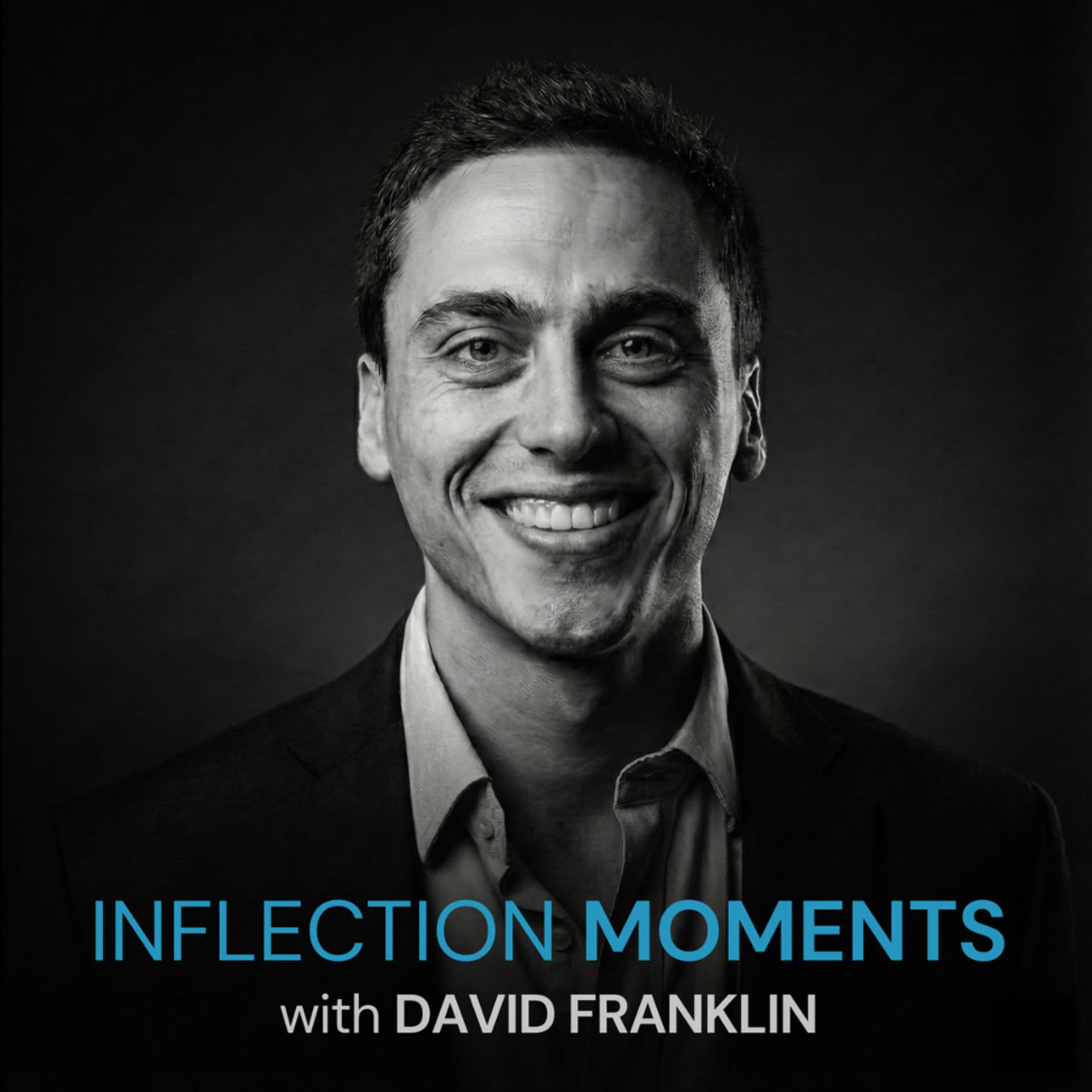

In short
Stephen Schwarzman’s “Go Big” story and five inflection points explaining how Blackstone helped turn private equity into a central force in global capitalism, emphasizing scale, timing, and building institutional decision-making.
Guest(s)
No guests are mentioned in the transcript; it’s hosted by David Franklin, discussing Schwarzman’s life and career.
Key claims
Schwarzman repeatedly rejects “default ceilings” (family business, Lehman culture, modest fund size). He pairs large upside bets with explicit downside protection (“don’t lose money”). Painful setbacks (fundraising rejections, Edgecombe losses, IPO/crisis backlash) are converted into formal processes (investment committees, pre-circulated memos, required dissent).
Notable examples
Turning down the family dry-goods store path; co-founding Blackstone (1985) with Pete Peterson on ~$400k; targeting a ~$1B first fund, going 0-for-18, then securing ~$100M from Prudential’s CIO; Edgecombe steel distribution buyout (~$330M) followed by steel downturn; Blackstone’s 2007 IPO and the ~$39B Equity Office Properties LBO, then de-risking via lower leverage and asset sales.
Written by AI. May contain mistakes. Listen to the episode to check what was said.
Chapters
Tap a time to open that second in VOInflection Point One: The Family Business Dilemma
2:20 to 8:47
Discover how Stephen's early ambitions clashed with his father's contentment.
“I'm David Franklin, and you and I are about to dive into something fascinating.”
Inflection Point Two: Leaving Lehman Brothers
8:47 to 14:00
Explore the factors leading Stephen to co-found Blackstone after Lehman.
“Inflection point number two, we're going to fast forward to New York in the seventies and early eighties.”
Understanding Inflection Points
14:00 to 14:26
Learn about the importance of recognizing the right moment to take risks.
“of building something enduring is to leave at the moment when he has maximum insight, but still enough runway to start over.”
The Birth of Blackstone
14:27 to 15:36
Discover the early struggles and ambitions of Blackstone's founders.
“It's Steve, Pete, a couple of employees, an office, some business cards, and that$400 ,000 in initial capital split between the founders.”
The Challenge of Fundraising
15:37 to 17:05
Explore the difficulties and lessons learned during early fundraising efforts.
“the internal systems they think the industry will need.”
Iteration and Persistence in Fundraising
17:06 to 20:04
Understand the role of iteration and persistence in overcoming fundraising challenges.
“Did I leave Lehman for an idea nobody actually wants to fund?”
The Edgecombe Decision
20:05 to 21:58
Learn about Blackstone's pivotal investment decision and its consequences.
“This is the pattern again, set an almost absurdly large target, get punched in the face by reality, then use that pain to upgrade the system instead of backing away from the ambition.”
Learning from Catastrophe
21:59 to 24:31
Discover how Blackstone transformed a major failure into a strength.
“The challenge here though is that the partnership is split and the business is more fragile than it looks.”
Becoming a Powerhouse
24:32 to 27:37
Examine Blackstone's growth into a leading private equity firm and its IPO decision.
“The immediate result of all this is that Blackstone survives Edgecombe, but only barely.”
The Risks of Going Public
27:38 to 28:00
Understand the challenges and potential pitfalls of Blackstone's public offering.
“You can almost hear the thought process.”
Show all 16 chapters
The Financial Crisis and Blackstone's Response
28:00 to 30:26
Learn how Blackstone navigated the financial crisis through strategic decisions.
“investment corporation, the Chinese sovereign wealth fund invest$3 billion for a non-voting stake in the firm.”
Schwarzman's Shift to Philanthropy
30:27 to 31:27
Understand how Stephen Schwarzman shifted focus to philanthropy post-crisis.
“The result of this inflection point is twofold.”
Balancing Boldness and Caution
31:28 to 31:58
Explore how Schwarzman combines audacity with risk management in decisions.
“Schwartzman College of Computing, aims at shaping the future of AI and its impact on society, and makes major gifts to Yale and the New York Public Library.”
Lessons from Painful Experiences
31:59 to 36:10
Discover how failures shaped Blackstone's institutional processes.
“Help more in the business, eventually take over, live a comfortable middle-class life.”
Networking as an Operating System
36:11 to 37:58
Learn the importance of building networks and relationships for success.
“From Yale and Skull and Bones to Lehman to Blackstone, Steve is constantly putting himself of environments, follow ambitious people, and then building long-term relationships with them.”
Leveraging Wealth for Impact
37:59 to 39:49
Understand how Schwarzman uses his wealth to influence societal systems.
“For most of us, the absolute numbers are smaller, but the question is the same.”
Transcript
Automatic transcript. May contain errors.0:00Today, we're focusing on Stephen Schwarzman's story, and here's why. Stephen is one of the clearest examples of a founder who helped to turn private equity from a niche corner of finance into a central force in global capitalism. As the co-founder, chairman, and CEO of Blackstone, he helped build a firm that expanded far beyond buyouts into real estate, credit, infrastructure, and alternatives more broadly, reshaping how institutional capital is deployed and how companies are financed, acquired, and transformed. For founders and investors, Stephen's story is not just about scale and finance. It's about pattern recognition, timing, and the ability to build an institution around disciplined decision making.
0:46His career is worth studying because it shows how capital allocation itself can become a form of entrepreneurship and how a founder can create enormous leverage, not by inventing a product, but by building a platform that spots mispriced assets, recruits exceptional talent and compounds trust over decades. And here's why Stephen's story matters right now. We're in a moment where the lines between operating companies, investment firms, and long duration capital pools are getting blurrier. Founders increasingly have to understand not just customers and products, but also how capital moves, what sophisticated investors look for, and how ownership structures has shaped the future of a business.
1:26Steven matters in this moment because his story helps explain the mindset of the modern capital allocator at the highest level. For founders, that means understanding how businesses are evaluated, scaled, and repositioned over time. For investors, it's a case study in how ambition, institutional design, and rigorous judgment can create influence far beyond any single deal. So here's what you and I are going to do today. We're going to walk through five key turning points in Stephen's life and career. Moments where his decisions have a disproportionate impact on everything that comes after. These are inflection points.
2:01Moments where one choice bends the entire trajectory. And then at the end, you and I are going to zoom out and pull out the common threads together. How he thinks about scale, risk, and preparation. And the ideas that you can actually steal for your own business. Even if you're nowhere near Wall Street. All right, let's get into it. Welcome to Inflection Moments. I'm David Franklin, and you and I are about to dive into something fascinating. You know that moment when everything changes for an entrepreneur? When one decision, one pivot, one breakthrough suddenly shifts their entire trajectory. That's what we're hunting for today.
2:35If you're building something, if you're that founder grinding it out, making those impossible decisions that keep you up at night, this episode is for you. Because today, we're going inside the mind of one of the most successful entrepreneurs in history to uncover the exact moments that transformed their journey from ordinary to extraordinary. Here's what we're doing. We're dissecting the five most pivotal inflection points in their career, but more importantly, we're uncovering the strategic thinking behind each decision, the kind of insight that separates the builders from the dreamers. Ready?
3:07Let's get started.
3:15okay inflection point number one and i want you to picture philadelphia in the 1950s and 1960s there's an elevated train rattling overhead on frankfurt avenue and tucked underneath it is the small neighborhood shop schwarzman's curtains and linens inside a kid is folding handkerchiefs for 10 cents an hour watching the stream of customers come through the door and quietly taking everything in. That kid is Stephen Schwartzman. This is not the story of inherited Wall Street money. He grows up in a Jewish middle-class family in a suburb of Philadelphia with a father who owns this modest dry goods store and a grandfather in the same line of work.
3:52From an early age, he's not just working, he's looking around and thinking, how do we make this bigger? How do you take that one store under the train and turn it into something that looks much more like a national chain? Outside the shop, he's hyper-competitive. He runs track, he's student council president, he wants to win at basically everything. You know the type, the kid who's allergic to doing anything halfway. That mix, a small, stable family business on one side, and his internal urge to push harder on the other is the backdrop for his first real inflection point. So what does Steve actually want here?
4:29He wants to scale. He's looking at the constant foot traffic, the shelves packed with merchandise, the fact that the store is always busy, and he's thinking, why can't this be a chain? In one later interview, he talks about pitching his father on expanding across the country, basically a proto Bed Bath & Beyond vision before Bed Bath & Beyond even exists. In his head, he's already playing a much bigger game, multiple locations, more employees, more customers, a real footprint. He wants growth, impact and a canvas that matches his ambition not just a comfortable contained life folding linens under an elevated train if you're listening to this and you've ever felt like your current environment is just too small for what you want to do you already know how he feels but the challenge here is that his father wants the exact opposite his dad is happy he's proud that he has a solid store a house in the suburbs two cars and enough money to send his kids to college in a business insider interview, Stephen remembers his father basically telling him, I'm happy running one store.
5:32I'm happy with our life. And that's all I aspire to. So you've got teenage Steve saying, let's go big. Let's roll this out all over the country. And his dad saying, why would I do that? This is enough. That's not just some disagreement. It's a clash of worldviews. One is optimizing for feeling safe and being content. And the other is optimizing for upside and scale. Steve is a much deeper, more personal layer to this. On the one hand, this is his family. On the other, he can feel that if he steps into the business and eventually runs it, he's not just inheriting the shop, he's inheriting his father's aspirations along with it.
6:10And that's the part that really sticks with him. The sense that if he joins the store, he's locking in a narrower life than the one he wants. It's not, is the store good or bad? It's, is this my ceiling? So what does Steve do to deal with this. He makes a conscious decision. He's not going into the family business. He studies how customers behave. He watches what it takes to keep the place running. He absorbs his father's decency and work ethic, but at the same time, he quietly resolves that he's going to operate on a much bigger stage. That decision shows up immediately in how he approaches school and early opportunities.
6:45He pushes himself academically and athletically and a spot at Yale and steps into an environment that looks nothing like the little store on the elevated train. At Yale, he gets exposed to elite networks, becomes part of the skull and bone society alongside people like future president George W. Bush, and starts to see how capital and power really move at scale. Internally, you can almost hear that dialogue. You know, Stephen's saying, if I stay in the shop, I know my life. I know I'll be safe and small. If I leave, I don't know the ceiling, but that's the point. He's effectively choosing that option value and scale over certainty.
7:23And once you and I see that frame, it becomes a pattern you can spot in almost everything he does later. The result of this vast inflection point is not a company or a deal, it's forming his identity. He stops seeing himself as the heir to a neighborhood shop and starts seeing himself as someone who's supposed to build something huge. That shift in identity is subtle at first, but it compounds over time. It's what drives him to Yale and then Harvard Business School instead of staying close to home and sliding into the family business. It's what later makes a blue chip job at Lehman feel like a step rather than the destination.
7:59And it's the origin of go big mentality he keeps coming back to in his book and interviews. This idea that it's just as hard to build something small as something enormous. So you might as well choose the thing that can actually move the world. For an entrepreneurial lens, this first turning point is about refusing to inherit someone else's ceiling. you might not have a literal family shop but you almost certainly have a default path what your environment quietly expects of you. Stephen's first big move is to honor what his father built and then deliberately walk away from that script and that's the pattern you and I are going to keep coming back to in the next inflection points seeing the default path clearly and then choosing something much bigger.
8:46Okay. Inflection point number two, we're going to fast forward to New York in the seventies and early eighties. Steve has done the full East coast elite circuit. Yale undergrad, a brief stint at Donaldson, Lufkin and Generate in Harvard business school. After that, he joins Lehman brothers. One of wall street's most storied investment banks. He gravitates towards corporate finance and M &A, and by the time he's 31, he's a managing director at Lehman Brothers, and he ends up chairing the firm's M &A committee. He's right at the center of the deal-making culture that defines that era, boardroom battles, takeovers, restructurings, all the classic Wall Street drama.
9:22At the same time, the internal politics at Lehman are getting toxic. His mentor, former US Commerce Secretary Pete Peterson, is co-CEO with Trader Lewis Glucksmann and their clash over the firm's direction explodes into a very public power struggle. So on the outside, it's prestige and big deals, but on the inside, it's knives out. So getting into Steve's mind at this point, what he wants is control over his destiny and the chance to build an institution that matches his ambitions. He spent years learning how to structure deals, how to negotiate, how to read CEOs and boards. He doesn't just want to do deals, he wants to design the machine that does them.
10:01He can also see where the industry is going. In the early 80s, private equity, then usually called leveraged buyouts, is starting to emerge as a powerful new model. From his seat at Lehman, he's already doing advisory work for some of the early buyout players and he tries to convince the firm to get into that business. But Lehman turns him down over perceived conflicts with existing clients. So what he wants becomes very clear. He wants to build a platform with advisory cashflow and ownership upside and do it inside a culture he actually wants to live in. In other words, he doesn't just want a great job, he wants a vehicle that reflects how he thinks the future should work.
10:38But the challenge here is both external and internal. Externally, Lehman is tearing itself apart. Peterson gets pushed out after his clash with Glucksmann and the board loses confidence in the new leadership. Inside the firm, Steve can feel the culture shifting away from the kind of institution he wants to help build. Then comes the sale of Lehman to Shearson and American Express. Steve helps manage the acquisition process, which means he is, in effect, helping to sell his own firm. On paper, it's a huge achievement. He's central to one of the defining Wall Street deals of the decade. But emotionally, it's a shock.
11:16if the place you've invested your career in can be sold out from under you how much control do you really have internally there's a quieter but equally brutal question if he stays at the combined sherson layman and american express merger he's opting back into a giant bureaucracy he knows he'll have status compensation and prestige but after watching his mentor get forced out and then helping close the sale he's asking himself is this actually how i want to spend the next 20 years. You might have had your own version of that moment where on paper, everything looks great, but in your gut, you know, the structure you're inside is never going to let you build what you really want.
11:56So what changes is that Steven decides to walk away and start something new with Pete Peterson. In 1985, shortly after the Lehman-Shearson deal closes, Steve and Pete co-found the Blackstone Group. They leave under strained circumstances, hang out at Shingle and Park Avenue with a tiny team, about$400 ,000 in seed capital, and a business plan that sounds both aggressive and almost disarmingly simple. They decide Blackstone will stand on three pillars. As Steve later summarizes it, first, an M &A advisory business that doesn't require capital and can generate cashflow. The second, a private equity business to actually invest in companies.
12:36And third, a willingness to back other managers they believe in. The advisory side is there to keep the lights on. The investing side is where the real leverage and upside sit. In that moment, he's doing something that will feel very familiar if you've ever left a big company to start your own thing. He's trading brand, infrastructure, and certainty for control of your culture, strategy, and the economics. He walks away from a blue chip job to build a machine of his own design. The immediate result is not glamorous. There are stories of him and Pete running Blackstone out of a mostly empty office, phones quiet, waiting for business to come in after they place an ad in the New York Times announcing the firm.
13:18Early on, they get this unexpected visitor in leather pants and a motorcycle jacket, real estate investor Sam Zell, who literally sits on the floor because they barely have any furniture. That's the level of startup mode that they're in. But structurally, the decision is massive. It takes D from being one senior partner among many at a legacy firm to being the co-architect of a new kind of financial institution, one that will eventually expand from M &A into corporate buyouts, real estate, credit, and more, ultimately managing over a trillion dollars in assets. For you and I, what really matters is the logic behind the move.
13:56He looks at a big, messy incumbent and decides his best shot of building something enduring is to leave at the moment when he has maximum insight, but still enough runway to start over. That's not just bravery, that is timing and pattern recognition. So if you're inside a big organization right now, the question to sit with is this, at what point does staying become the bigger risk than leaving?
14:26Okay, inflection point number three now, and we're now in the mid-1980s.
14:31Stephen Schwarzman:Blackstone exists, but just barely. It's Steve, Pete, a couple of employees, an office, some business cards, and that$400 ,000 in initial capital split between the founders. On the advisory side, they can sell the reputations as dealmakers from Lehman, but to build the firm they actually want, a true powerhouse in private equity and alternatives, they need to raise a dedicated fund, and not a small one. In his memoir and later interviews, Steve talks about setting a target of around a billion dollars for Blackstone's first private equity fund. That number would make it the largest first-time fund of its kind at the time.
15:08And people tell him this is basically impossible. They have no direct investing track record as Blackstone, and the market for LBO funds is still relatively small and specialized. So getting inside Steve's head, what he wants is credibility at scale. A billion dollar fund is not just about fees, it's a statement. It says this brand new firm that you barely heard of belongs in the same league as the established buyout houses. That kind of scale lets them do meaningful deals, attract top talent and build the internal systems they think the industry will need. He also wants to prove a deeper thesis about going big.
15:47Steve has this core belief that if you're going to pull your life into something, the effort to build a small business and a huge one is surprisingly similar. So you might as well aim for the version that can be truly consequential.
16:00Stephen Schwarzman:You and I are going to see this if you're going to do it, do it big theme again and again with him. But the challenge for Steve is that nobody wants to give the money, especially the people Steve's expects will back him. When they start fundraising, he makes what he later calls one of the classic entrepreneurial mistakes. He goes to his best prospects first. These are the institutions and individuals who know him personally from Lehman, the ones he assumes are the highest probability yeses, and he goes zero for 18. He tells the story at a conference, they pitch 18 of their top prospects, and every single one says no.
16:37Not only is that brutal for the fundraise, it's emotionally crushing because it means the people who know him best are effectively saying, we don't believe in this. At the same time, if you flip the perspective, raising a billion dollars for a first-time fund for a team with no investing track record is objectively a stretch. From the allocator's point of view, they're being asked to take a serious career risk on a story and a set of reputations, not on hard performance data. Internally, you can imagine the doubts kicking in. Did I misread the market? Am I just delusional here? Did I leave Lehman for an idea nobody actually wants to fund?
17:16Every founder listening to this has had some version of that moment. but what changes comes from two places it comes from iteration and persistence so first let's touch on iteration by the time he's been rejected by 18 prospects steve has heard every possible objection the pitch is sharper he knows what scares people where they think the risk is and how to reframe it and second let's go into persistence instead of giving up or dramatically shrinking the fun target he keeps going and crucially he stops burning his best prospects early. He later advises entrepreneurs to save their most important targets for later once they've refined the pitch and truly understand the objections.
17:58But to isolate the real turning point, we need to go into this lunch he has in Newark, New Jersey. Steve meets the chief investment officer of Prudential Insurance who's eating a tuna fish sandwich while listening to Steve's pitch. By this point, Steve has a much tighter narrative and he's internalized all the pain and feedback from that brutal first wave of rejections. At the end of the meeting, the CIO agrees to commit roughly$100 million to Blackstone's fund. It's a life-changing anchor commitment, especially coming right after being shut out by people that Steve thought were a lock. From there, momentum kicks in.
18:34Other institutions can point to Prudential and say, okay, if they're in, maybe this is real. The result of all this is that Blackstone closes what was then the largest first-time private equity fund in history. That gives the firm both capital and the credibility it needs to play in big deals and it becomes the foundation for Blackstone's growth into a global investment platform spanning private equity, real estate, credit, and more.
19:01Stephen Schwarzman:But the deeper result is psychological and methodological. Psychologically, Steve internalizes just how painful and non-linear the early stages of fundraising can be, even for someone with his resume. That shows up later in the way he talks to younger founders about perseverance and the emotional gap between where you are and where you're trying to go to. Methodologically, he learns to treat rejection as data. Again, a theme we've explored so many times on these episodes of Inflection Moments. Those first 18 no responses stop being verdicts and become data points. He has basically A-B tested his way into a compelling story.
19:40For a founder or investor listening to this, there are a few very practical
19:44Stephen Schwarzman:takeaways that he essentially lives out here. So to go through a few of them, don't burn your best prospects when you still don't know how your offer lands. Use early rejections to refine your pitch. There's a free focus group if you can stand the pain and understand that one credible anchor commitment can flip the psychology of a raise almost overnight. This is the pattern again, set an almost absurdly large target, get punched in the face by reality, then use that pain to upgrade the system instead of backing away from the ambition.
20:23Stephen Schwarzman:Okay, inflection point number four. Now let's move on to the late 1980s. Blackstone has gotten off the ground. It has a first fund, has done a few deals, it's starting to build a reputation, but it's still a young firm. The margin for error is slim. Then comes Edgecombe, a steel distribution business. In the mid to late 80s, Blackstone gets an exclusive early look at buying Edgecombe for around$330 million. On paper, the company looks great. Solid reported profits, clean story, the kind of business that at first glance feels like a classic buyout candidate. Inside Blackstone, the deal splits opinion.
21:02Stephen Schwarzman:One partner is enthusiastic, the relationship is there, the numbers look good, and it seems like a way to put serious capital to work. Another partner is wary, arguing that Edgecombe's profits are being driven by inventory gains that could evaporate fast if steel prices turn. So you've got excitement on one side and flashing warning lights on the other. So thinking about Steve Wants here, he wants to prove that Blackstone can be a real investor, not just an advisor. Writing a multi-hundred million dollar equity check into Edgecombe would be a statement. We can source, underwrite, and own complex industrial businesses.
21:39Stephen Schwarzman:He also wants to win the internal debate. Founders often get emotionally intertwined with the deals they back, and this one carries weight. If it works, it validates his judgment, his risk tolerance and accelerates the firm's trajectory in one stroke. You and I both know that feeling when a single decision feels like it represents whether you're for real or not. The challenge here though is that the partnership is split and the business is more fragile than it looks. One partner is essentially saying we're buying at the top of a cycle, pointing out that margins are being flattered by steel inventory profits that will reverse when prices fall.
22:17Stephen Schwarzman:Steve hears the warning and still decides to go ahead with the deal. So you can imagine this internal monologue. We've done the work. We see the numbers. If we pass on this, maybe we're too timid to build a great firm. So they close the transaction and then steel prices turn down hard. Within a few months, the company's performance starts to unravel. Revenues weaken, profits disappear, and Edgecombe begins to lose large amounts of money. Suddenly, Blackstone isn't looking at a solid cash flowing asset, it's looking at a company that can't cover its interest in principal payments. This is not a paper loss, it's a firm, threatening problem.
22:56Stephen Schwarzman:They've effectively torched a huge piece of their early capital base. For a young fund manager, this is the nightmare scenario. But the inflection point happens at an emotional breaking point. During the Edgecombe crisis, one of Blackstone's major investors summoned Steve to his office in Nyack, New York. Steve goes up there, sits down, and the investor just unloads on him. In later accounts, he describes being screamed at, told that he was one of the dumbest people the investor had ever met, and he felt like the tongue lashing went on forever. It's brutal, and instead of defending himself, Steve takes it.
Read the full transcript
23:34Stephen Schwarzman:He realizes this is fair. It was his money. I made the call. Walking away from that meeting, he has what he later calls a defining moment. He tells himself, this can never happen again. Not I hope this doesn't happen again. Not we'll try to be more careful. The internal language is clear. Out of that resolution, Steve redesigns Blackstone's entire investment process. He creates a formal investment committee structure where deals are debated rigorously before approval. He insists on detailed written memos circulated in advance so nobody can get swept up by a slick in-room performance. He pushes for a culture where people at all levels are expected to challenge assumptions.
24:16Stephen Schwarzman:Dissent isn't just tolerated, it's required. And he instills a core rule. Don't lose money. It sounds almost naive as a slogan, but inside Blackstone, it becomes a deep operating principle. In other words, he converts a single catastrophic mistake into an institutional immune system. The immediate result of all this is that Blackstone survives Edgecombe, but only barely. They lose their equity, they go through what Steve calls a miserable, grisly experience, and the emotional scar is real. The fury of investors, internal stress, and the sense of almost losing the firm. Over the long term though, this inflection point becomes one of the main reasons Blackstone is so durable.
24:59Stephen Schwarzman:The firm becomes synonymous with rigorous underwriting and risk management. It's don't lose money ethos and it's adversarial but respectful deal debates turn into a real competitive advantage, helping Blackstone avoid catastrophic blowups in later cycles, even as it scales into hundreds of billions and then more than a trillion in assets. From a founder's perspective, this is the painful, unglamorous version of learn from failure. The difference here is in how extreme he is about codifying the lesson. Most people tweak at the edges after a bad outcome. but steve basically says this nearly killed us so we're going to redesign the entire process so this type of mistake is almost impossible this meta lesson is powerful your worst mistake if you face it directly and turn it into a system can become the defining strength of your company
25:58Stephen Schwarzman:okay fine inflection point now now we're in the mid-2000s blackstone is no longer a scrappy startup it's grown into one of the most powerful pe firms in the world with tens of billions under management a string of high profile deals and a central place in the global financial ecosystem them. The environment is frothy, credit is cheap, leverage is everywhere, and PE firms are doing larger and larger buyouts. In 2007, Blackstone executes what is then the largest leverage buyout in history, acquiring equity office properties, a giant portfolio of office buildings for around $39 billion. At the very same time, Steve is contemplating a move that sounds almost contradictory for a firm built on private capital, taking Blackstone itself public.
26:46Stephen Schwarzman:So you've got this combination of record-breaking deals, peak euphoria in credit markets, and a founder who's about to change the structure of his entire business. So getting inside Steve's head for a moment, first what he wants is permanent capital and currency. A public listing gives Blackstone a more stable capital base, stock it can use as acquisition currency, and the ability to accelerate growth into new strategies and geographies. It's not just about cashing out, it's about arming the firm for the next few decades. Second, he wants durability beyond the founders. A public structure helps institutionalize Blackstone so it cannot last any individual, including Steve himself.
27:25Stephen Schwarzman:He's thinking about how this thing survives long after he's not in the chair. And he senses there's a strategic window. Being one of the first major PE firms to go public would position Blackstone as a category leader with a different level of visibility and access. You can almost hear the thought process. If we move first, we can define what this model looks like. The challenge though is that the timing looks insane in hindsight. Blackstone goes public in June 2007, selling a minority stake and raising more than$4 billion at$31 a share. Shortly before the IPO, China investment corporation, the Chinese sovereign wealth fund invest$3 billion for a non-voting stake in the firm.
28:07Stephen Schwarzman:A move that is celebrated at the time as a symbol of China diversifying away from US treasuries. And then the financial crisis hits within a year or two, Blackstone's share price collapses to a fraction of its IPO level. Critics in China argue their sovereign fund has been outsmarted by Wall Street. There's political blowback, media scrutiny of Steve's compensation and lifestyle and a rising wave of facility toward PE in the wake of the crisis. On top of that, the giant equity office properties deal is suddenly sitting in a collapsing real estate market. What looked like a triumph starts to look like a potential trap.
28:43Stephen Schwarzman:Internally, the questions are obvious. Did we go public at the absolute top? Did we overreach on real estate? Are we about to be the poster child for everything people hate about this industry? This is not a theoretical risk moment, this is, we might have just set ourselves up to be the villain in every headline territory. What changes though, comes from a mix of risk-sensitive structuring and stay on offense while everyone else panics. On the equity office deal, Steve and his team are worried, even as they're bidding, that the market is near a top. He's described sitting around a table with colleagues acknowledging that the deal is potentially dangerous because of its size, the leverage acquired and the hyper-competitive bidding environment.
29:24Stephen Schwarzman:Their response is to aggressively de-risk the transaction. In practice, what this looks like is that they push to lower the leverage on the deal so the capital structure is more resilient if the market turns. They quickly sell off large portions of the portfolio into a still hot market, crystallizing gains and reducing exposure to a downturn. So when the crisis hits and real estate values fall, Blackstone has already taken significant money off the table and reduced its risk. What could have been a catastrophic overreach becomes one of the firm's signature wins instead. On the corporate side, the public listing, while initially painful for IPO investors, ultimately gives Blackstone a platform to scale through and beyond the crisis.
30:03Stephen Schwarzman:The firm uses its permanent capital and brand to raise new funds, move into adjacent asset classes, and emerge from the downturn even more dominant. Over the following decade, Blackstone grows its AUM from tens of billions to more than a trillion dollars, expanding into real estate, credit, infrastructure, and more, and cementing Steve's status as one of the most influential figures in global finance. The result of this inflection point is twofold. First, it validates a central belief of Steve's that if you genuinely understand risk and structure the downside carefully, you can afford to be extremely bold on the upside.
30:40Stephen Schwarzman:Going public into a looming crisis and doing a record-breaking real estate deal sounds reckless from the outside. But underneath it though, is a deep obsession with scenario analysis and capital protection, lessons that trace directly back to the Edgecombe disaster. Second, it changes his platform of influence. Post-IPO and post-crisis, Steve becomes not just a dealmaker, but a global power broker and philanthropist. He advises US Treasury secretaries and presidents during the financial crisis, serves as a bridge to China in trade discussions, and starts deploying large chunks of his personal wealth into education and public institutions.
31:18Stephen Schwarzman:He funds the Schwartzman Scholars Program at Tsinghua University, modeled on the Rhodes Scholarship to educate future global leaders about China. He donates hundreds of millions to MIT to establish the Stephen A. Schwartzman College of Computing, aims at shaping the future of AI and its impact on society, and makes major gifts to Yale and the New York Public Library. The same instincts that led him to go big on Blackstone, you know, scale, leverage, and institutional design are now being applied to philanthropy. For a founder or investor listening, this final inflection point is about how you show up at scale under pressure.
31:53Stephen Schwarzman:Going big when everything is cheap is easy, but staying aggressive and playing offense when the world is turning against your category is the real test.
32:08Stephen Schwarzman:so what's really going on across these moments let's zoom out and pull the threads together because this is where you and i can actually steal some of the underlying playbook the first big through line is that steve is constantly refusing to accept other people's ceilings starting with his father's view of the store at the philadelphia shop the default path is obvious. Help more in the business, eventually take over, live a comfortable middle-class life. His father is not wrong to see that as success. But Steve can feel that. For him, that ceiling is too low. He respects his dad's choice and still says, that's not my life.
32:46Stephen Schwarzman:You see the same pattern at Lehman. He becomes head of M &A, one of the youngest managing directors, firmly in the inner circle of a storied Wall Street firm, what would be the end goal for a lot of people. Instead, he watches his mentor get pushed out, helps sell the firm and decides the ceiling on what he can build inside that structure is lower than what he might build on his own. Even with Blackstone's first fund, conventional wisdom says, start modest, prove yourself, don't show up asking for a billion dollars out the gate and look ridiculous. But he ignores that and sets a target that matches the institution he wants to build, not the level of comfort others have funding it.
33:24Stephen Schwarzman:For you, the practical question is, where are you living inside someone else's ceiling right now? It might be a job title, a narrow product vision, or just the expectations of peers and family. Steve's default move is to spot those ceilings early and then deliberately design his way out of them. The second thread is Steve's obsession with pairing big asymmetric upside bets with aggressive downside protection. On the upside, he's always pushing for scale. A billion dollar first fund, record-breaking LBOs, a global autonomous platform instead of a boutique shop, its philanthropy follows the same pattern.
34:00Stephen Schwarzman:Programs and institutions that aim to rewire entire fields like AI at MIT or global leadership at Singhua. But underneath that, especially after Edgecombe, is an almost paranoid fixation on not blowing up. The Edgecombe disaster teaches him that one bad deal can almost end the firm. So he builds multi-layered investment committees and a culture of challenge. On the equity office deal, which he suspects is happening near a market top, he pushes to reduce leverage and quickly sell off assets, front-loading the de-risking of a massive position. And then you have his don't lose money mantra, which isn't a catchy slogan.
34:39Stephen Schwarzman:It's a design principle for how Blackstone makes decisions. For founders and investors, this is a powerful combination. It's not play it safe and it's not swing for the fences and hope. It's make sure your downside is survivable and then go as big as you can justify on the upside. When you look at his story through that lens, a lot of the crazy moves suddenly look very calculated. The third thread is how he turns painful experiences into an institutional process. Getting rejected by 18 potential investors on the first fund isn't just emotionally rough, it becomes the basis for his advice on how to sequence a fundraise and design a pitch.
35:19Stephen Schwarzman:The edge can blow up, doesn't sit in his memory as a war story. It becomes the origin of Blackstone's formal investment committee and don't lose money culture. The post IPO criticism and share price collapse push him to double down on long-term capital formation and diversification, not retreat into a smaller, less scrutinized footprint. Most people experience pain and move on. But Steve experiences pain and then hard codes the lesson into systems. So the organization is permanently upgraded. There's a very practical prompt here for you and I. When something goes wrong in your company, especially something that hits your ego, ask what process would have prevented this and actually go and build it.
36:01Stephen Schwarzman:That's the difference between a painful memory and a permanent advantage. Another thread is how much leverage he gets from talent and networks. From Yale and Skull and Bones to Lehman to Blackstone, Steve is constantly putting himself of environments, follow ambitious people, and then building long-term relationships with them. Pete Peterson is not just a boss, he becomes a co-founder. Early hires like Liazel lead indirectly to relationships with people like Sam Zell, who brings Blackstone real estate opportunities. Later, funding Larry Fink's venture that becomes BlackRock and building connections with global leaders and sovereign funds amplifies Blackstone's reach far beyond what any single balance sheet could do.
36:44Stephen Schwarzman:For founders and investors, this reinforces a really important idea. Your network is not a social accessory, it's an operating system. The people you bring close and how you treat them show up years later as co-founders, anchor clients, key hires, or deal sources. Steve plays that long game extremely deliberately. And finally, there's a thread around how he uses wealth and status as levers, not endpoints. After the IPO and Blackstone's continued growth, Steve becomes extraordinarily wealthy. Instead of disappearing into a quiet private life, he uses that position to push on the systems he thinks matter most, education, AI, public institutions, and cross-cultural leadership.
37:30Stephen Schwarzman:Again, you have the Schwarzman Scholars at Tsinghua, which is dedicated to shape future global leaders' understanding of China. The MIT College of Computing is built to make MIT a truly AI-enabled university and to embed ethics and interdisciplinary thinking into how AI is developed. Major gifts to Yale and the New York Public Library are aimed at strengthening civic and cultural infrastructure. You don't have to agree with every aspect of his politics or his industry to see the pattern. Once he has leverage, he looks for systems where a relatively small number of decisions compound for decades.
38:04Stephen Schwarzman:For most of us, the absolute numbers are smaller, but the question is the same. As you accumulate capital, reputation, or expertise, where can you apply it so the impact is disproportionate to the input? In the outro, you and I are going to bring this all back to one central idea, what it actually looks like to combine audacious goals with ruthless honesty about risk and then design your way into extraordinary outcomes.
38:38Here's what keeps coming back to me about Stephen Schwartzman's story. It's not just that he builds a trillion dollar investment firm or that he pulls off some of the biggest deals in history. It's that over and over again in these inflection points, he combines really audacious goals with the almost ruthless honesty about where things can go wrong and then he builds systems to protect against those failures. He says no to a safe inherited life at the shop because he wants a bigger canvas. He walks away from Lehman when he realizes he can't control the culture or the destiny of the firm. He takes the humiliation of going zero for 18 on that first fundraise and the pain of the edgecombe debacle and he turns both into design inputs for how Blackstone will operate rather than excuses to pull back.
39:22And when he goes public into a looming crisis, he does it with structures and hedges that let him survive a once in a generation shock. So here's the meta insight for you. Extraordinary outcomes usually come from this pairing of huge ambition with extreme clarity about risk. It's not enough to just think big and it's not enough to just manage risk. The manage is in doing both at the same time, choosing a target that actually scares you a little and then being brutally honest about what could kill you on the way there and designing around that.
39:56Stephen Schwarzman:As you think about your own company, ask yourself a few questions that Steve's story forces on us. Where am I still living inside someone else's ceiling? If I'm honest, what is the Edgecombe style risk in my business? And what system would make that kind of mistake almost impossible? And if I really understood my downside, how much bigger could I afford to play on the upside. If you take nothing else from Steve's journey, take this. Your biggest leverage comes from the moments when you decide to step off the default path, go after something much larger than feels comfortable, and then do the unglamorous work of building the protections that let you survive long enough to see it through.
40:33Thank you for listening. We'll talk soon. Thank you for joining us on Inflection Moments. If today's story sparked a new perspective or challenged your thinking, be sure to share it with someone you know loves this stuff as much as you and I do. Maybe it's a college buddy, your water cooler buddy, or maybe even someone in the family group chat. If you enjoyed this deep dive, make sure to leave a five-star review and subscribe to our channels so you can be the first one to hear what we've got coming next. And if you're interested in insights, ideas, and lessons from some of the world's greatest entrepreneurs, sign up for our newsletter.
41:07The link is in the show notes. Until next time, Keep building and talk soon.
From the publisher
Stephen Schwarzman is the co-founder, chairman, and CEO of Blackstone, the world’s largest alternative asset manager, which pioneered private equity at scale and helped redefine how capital is deployed across industries globally. His episode on Inflection Moments explores how a disciplined, intensely competitive operator built a firm that not only executes deals, but shapes entire markets through strategy, timing, and access.
Schwarzman’s story runs from growing up in a family retail business to studying at Yale and Harvard, then cutting his teeth at Lehman Brothers before co-founding Blackstone in 1985 with Pete Peterson. Early on, the firm struggles to raise capital and credibility, but Schwarzman leans into relationship-building, rigorous analysis, and a willingness to pursue complex, high-stakes deals others avoid. Over time, Blackstone expands beyond private equity into real estate, credit, and infrastructure; turning scale, information, and network into a compounding moat.
This story is worth studying because it shows how elite capital allocators think: how they evaluate risk, structure deals, and play long-term games in environments defined by uncertainty and competition. For founders, the takeaways include how to think like an investor in your own business, how to negotiate from strength, and how to build leverage through relationships and reputation. For investors, Schwarzman’s arc is a masterclass in institutional excellence; in particular demonstrating how discipline, patience, and strategic ambition can turn capital into an enduring business.
Chapters
(00:00) Introduction
(03:08) Inflection Point #1: The Philadelphia Shop
(08:46) Inflection Point #2: Lehman Brothers
(14:27) Inflection Point #3: Founding Blackstone
(20:24) Inflection Point #4: The Edgcomb Disaster
(25:58) Inflection Point #5: Going Public
(32:08) Common Threads
(38:38) Closing Remarks
Connect
Follow our channels below if you're interested in insights, ideas, and lessons from the greatest entrepreneurs in history:
Newsletter: www.inflectionmoments.com
LinkedIn: linkedin.com/in/david-franklin8456/
Spotify: https://open.spotify.com/show/0aqoOm53QLcOgyOkXFXNkO?si=a6474541e17f4db7
Apple Podcasts: https://podcasts.apple.com/us/podcast/inflection-moments/id1841530808
YouTube: @InflectionMoments
If you're enjoying the episodes, make sure to like the video and subscribe to the channel so you never miss an episode.