
In short
Podcast Episode Summary: Insightful Investor - Episode #2 with Paul Podolsky
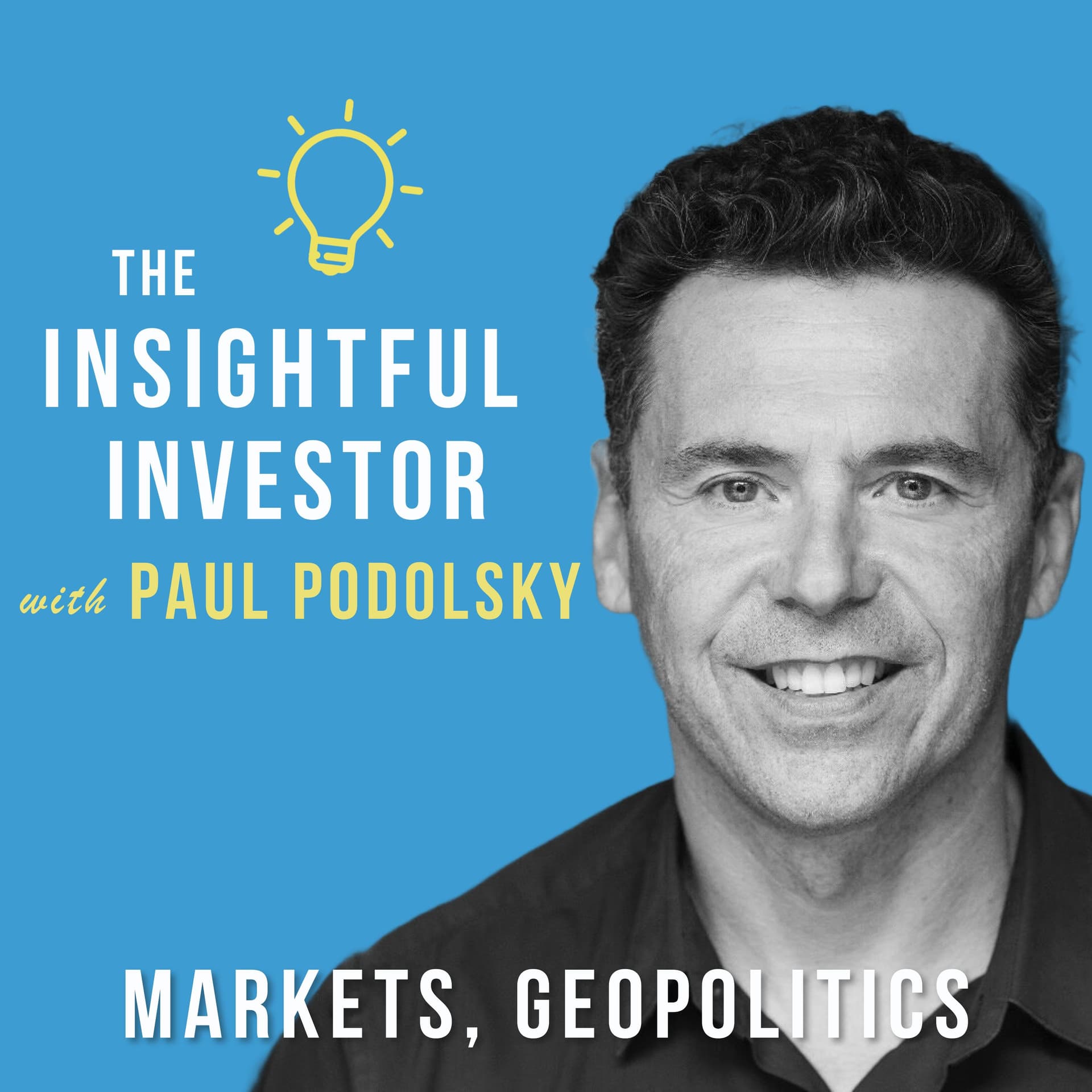
Overview In this episode of the Insightful Investor, hosted by Alex Shahidi, the conversation centers around insights from Paul Podolsky, a seasoned investor with a rich background in macroeconomics and geopolitics. Paul shares his unique investment philosophies honed from 15 years at Bridgewater and his recent endeavors in content creation.
Key Themes and Concepts
Introduction to Paul Podolsky
- Former Senior Portfolio Strategist at Bridgewater, the world's largest hedge fund.
- Founder of Still Press Media and Kate Capital.
- Transitioned from traditional portfolio management to content creation, including writing and podcasting.
The Importance of Frameworks in Investing
- Thinking in Frameworks: Paul emphasizes the necessity of adopting frameworks over siloed thinking in investment practices.
- Example: The traditional 60-40 portfolio is critiqued as a simplistic approach that may not serve investors well.
- Understanding the nature of money and investments is critical to making informed decisions.
The Role of Emotion in Investment Decisions
- Contrary to traditional beliefs, Paul argues that emotion can be an invaluable guide in investment.
- He suggests that emotions serve as early warning systems that can indicate potential problems.
Risk Management
- An investor's primary goal should be to avoid catastrophic losses.
- Paul discusses diversifying investments to mitigate risk using both macro (economic conditions) and micro (individual company) perspectives.
- He highlights the necessity of being adaptable and prepared for unexpected events (e.g., geopolitical conflicts, market shocks).
Geopolitics and Market Influence
- Paul discusses the impact of geopolitical instability on investment decisions.
- For example, the Ukraine conflict and its implications on global markets.
- Acknowledges the complexity of the current geopolitical landscape and emphasizes the importance of understanding these dynamics when investing.
Investment Philosophies and Styles
- Discussion of various investment 'religions' such as macro investing, value investing, technical trading, and algorithmic trading.
- Paul advocates for a merger of these methodologies, suggesting that an integrative approach might yield better insights and results.
Unique Insights from Experience
- The conversation includes reflections on the unpredictability of markets and the importance of historical context.
- Emphasizes the need for investors to remain open-minded and adaptable as the financial landscape evolves with technology and global events.
Key Takeaways
- Framework Thinking: Use frameworks rather than fixed rules for a more holistic understanding of investing.
- Emotions Matter: Emotions can serve as critical indicators of market conditions, not just distractions.
- Risk Awareness: Constantly evaluate risks, especially in the context of geopolitical factors that could impact investments.
- Integration of Approaches: Explore and merge different investment philosophies for a well-rounded strategy.
- Attention to History: Understand both historical outcomes and alternative scenarios to enhance forecasting.
Conclusion The conversation with Paul Podolsky provides deep insights into the complexities of investing in today's market, emphasizing a balanced approach that marries emotional intelligence with rigorous analytical frameworks. The episode invites listeners to rethink traditional investment strategies and consider a broader view of risk and opportunity.
For more insights, you can visit the [Insightful Investor website](https://insightfulinvestor.org/).
Disclaimer This podcast is for informational purposes only and should not be seen as investment advice. All opinions are personal and do not reflect those of Evoke Advisors or its affiliates.
Written by AI. May contain mistakes. Listen to the episode to check what was said.
Transcript
Automatic transcript. May contain errors.0:06Welcome to the Insightful Investor Podcast, a weekly series that seeks to share industry investment and market insights. We define insights as concepts that are counterintuitive, widely misunderstood, or underappreciated. In other words, unique ideas that you probably won't hear elsewhere. I'm Alex Shahidi, the host of the podcast and co-CIO of Evoke Advisors, one of the nation's leading investment advisory firms. Learn more about our show at insightfulinvestor.org.
0:43I'm excited to have Paul Podolsky with me today. Paul's background is fascinating. I first met Paul maybe 15 years ago or so. He was a senior portfolio strategist at Bridgewater, the largest hedge fund in the world for about 16 years. and in 2020, he left to pursue his lifelong passion of creating content. So he's written books, articles, blogs, started a podcast called Things I Didn't Learn in School. So I think it's going to be a really interesting conversation. Thanks for joining us today, Paul. Yeah, thanks for having me, Alex. Your background is fascinating. Would you spend some time walking us through all the experiences you've had that will inform some of the conversation we're going to have today?
1:29Sure. I grew up in Washington, D.C. My dad was a scientist. And for those of you who visited D.C., there's people from all over the world there. And I was always curious about where they came from. And in particular, that was during the height of the Cold War. I understood that some of them wanted to kill us. At least that's what we were being told. So when I graduated college, My requirements were somewhat unusual. I wasn't looking for the most lucrative work or a clear path. I wanted the most interesting work. And somebody offered me a job working in the Soviet Union, which was literally collapsing at the time they offered me this.
2:13That sounds interesting. That was interesting. That fit the bill. So I went there speaking very basic Russian, I'd take a year of Russian in school. I'd never lived abroad for any extended period of time. And went there and ended up spending three years there, worked as a reporter, saw coups uphand. And I arrived at the conclusion that much as I loved Russian literature and history, the Soviet Union collapsed for a very simple reason, which is that they had the wrong prices on things. And that spurred interest in macroeconomics, which led me to graduate school, and ultimately in investing where I spent over 20 years in these large organizations, most of the time, as you said, at Bridgewater, both doing the portfolio strategist job and also doing research and looking not only at Russia, but a lot of other countries, including China.
3:07Let's just spend one second on Bridgewater because it's well known. It's kind of, I guess, notorious for being a very difficult place to work. You know, you left three or four years ago. What's kind of the big takeaway in terms of, you know, what did you learn there? What has helped you in terms of your framework for thinking? You know, this whole notion of pain plus reflection equals progress, you know, the endless pursuit of truth. How do you think about all that? I really value my time there, and I'm also glad I moved on. Both things are true. And what I learned there was the power, I would describe it, of thinking in frameworks, and that continues the work I do now.
3:52A lot of what we're taught in school, I would describe it as thinking very much in terms of silos. You know, how does chemistry work? How does math work? You know, what are the key facts of the French Revolution? It's not really stepping back and thinking in frameworks. And by thinking of frameworks, what I mean is, you know, a lot of people, if they first get involved with investing, they're like, what stocks should I buy? Stepping back and thinking of a framework is first of all saying, well, wait a minute, what's the goal? And what's money? It's a much more step back and ask how it works. If you begin to ask that, you can apply it to so many different areas in your life.
4:29You know, say you're considering buying a home. You're like, what's the nature of real estate? What are the attributes of real estate? What's the history of it? How does it move? If you have a health problem, it's the same thing. You can apply it in a framework as opposed to narrowly how to step back and ask how it works. So Bridgewater did that. And that was like a real eye opener for me, because once you applied that framework, you arrived at all sorts of different conclusions than what you've been told about how to invest. A classic example of this that I know that is close to your heart too is the typical advice to retire, somebody saving will say, invest in a 60-40 portfolio.
5:06And people just accept it like, okay, that's what the experts told me to do. But if you actually think about what that is, it's terrible advice. It would be like, you know, it's the equivalent of like, get up and have a couple of beers for breakfast. Well, people do that, but that's really not an effective way to achieve the goal. So we can get into the reasons why that is. So that thinking in frameworks is really powerful. I spent a lot of time working with Ray. The other thing that impressed me, frankly, is just the work ethic. he works incredibly hard and a lot of people there work hard. And that combination of thinking in frameworks and hard work can generally lead to really good results.
5:45The thing why I'm happy that I've moved on is that I believe great investors, their investment style begins to reflect who they are very much as a person. And if you think about the panoply of great investors, and I have mine and you probably have yours, one thing that strikes me about them is they're all very different. And I'm very interested in writing as well, both for clarifying thoughts, but also just the beauty of it. And if you think about the great writers, you have much more sample size. You can go back to Cervantes and Shakespeare or the Bible and all the way up to contemporary stuff, Cormac McCarthy.
6:24There's a lot of great writers and they all write very differently, but you can recognize they're great. And I think what's going on there is there's a process of maturation where a great investor, their way of looking at the world has a fairly high degree of accuracy. It's not a perfect science, but that accuracy reflects who they are and how they're wired. And for me, I realized that continued developing as an investor, I need to step out of that environment and develop a way of investing that more reflected who I was than the founders of Bridgewater. Yeah, your podcast, Things I Didn't Learn in school.
6:58The part of that that I think is interesting is, you know, our education system, you come in, they tell you how things work, you memorize it, and you regurgitate it. And if you do that well, you're playing the game well, you get good grades, they pat you on the back, and then you advance, you get better teachers, and you go to a good college, and then you graduate, you go to work, and they say, this is how things work, and you do the way things work. And if you do it well, you get promoted. Or let me just interrupt you, or you blow up. Right. And the classic, the penultimate example of that is long-term capital management.
7:29I mean, these were the ultimate people who did great at school. They won Nobel Prizes, and they blew the entire thing up. That's right. But there isn't as much independent thought, right? And I feel like that's one of the things that is missing. And what ends up happening is you get a lot of people saying the exact same thing. And that might be down the completely wrong path. And it takes somebody who comes in and has the ability to zoom out, have a different framework and kind of look at it and say, yes, this is the way you've reached that conclusion. But does that really make sense? Let's take a step back.
8:02We've learned a lot since that framework was developed. And maybe there's a better framework. And then when you follow that framework, then you reach a completely different conclusion. And then when you go to those people and you say, no, the conclusion is B, not A, they'll say that makes no sense. And then you walk them through the framework and then they say, oh my God, it is B. And it's like eye-opening. So that whole process, I think, is pretty interesting. Yeah. And I think that you're right, that there is a lot of rewards for regurgitation as opposed to the more open-minded thinking. But I think the fields that deeply attract me are ones where basically weirdos get rewarded.
8:42And weirdos in certain periods of time are viewed as weirdos because they're a little bit off the beaten path. But investing is one of them, where people who, by definition, what's known in the conventional wisdom is in the price. And so it's seeing something outside of that that is going to lead to a different result. And I also think, by the way, the arts are the same thing too. In other words, if you're reading a really distinct piece of literature that resonates with you, this is not a formula a prepackaged thing. It's something that they're doing that is a little bit disruptive relative to your reality that really connects with you.
9:18And you go, oh my goodness, it's beautiful. And so I think those two things are interrelated. Absolutely. And there's a lot of, I think, importance of that in investing. And it can kind of lead you down a very different path from others, even though it may make perfect sense to you. It may be foreign to others until eventually it becomes more obvious. Yes, it's a weird profession where you can, you know, in the arts, you can actually only prove something is good through time. So many of the key measures of whether something good was created was after the creator is long dead. The fact that you can read Cervantes and burst out laughing now 500 years later, you know, it's pretty good.
9:55But little good does that do for Cervantes. Because investing is something where you can actually see that in real time because you can measure the quality of the decisions over time. And I think that there's something that's unbelievably beautiful about that in terms of having an accurate lens on the world. When I think about investing, and again, everybody does this a little bit differently. My image is literally you're getting up in the morning. It's of a painting. It's like you're painting a picture of the world and the portfolio, you're literally, you know, you're smudging something out, you're dabbing something here.
10:34And it's constantly shifting what that accurate view is because, of course, you're looking ahead and then the prices are already discounting what other people are thinking are ahead. So you're looking ahead of looking ahead and you're making that adjustment to the way it works out. And when it does work out, it's incredibly gratifying. And then when it doesn't, which is a part of the game too, it's really painful and humbling. And it's sort of like you can't be in that arena unless you're willing to experience that range of sensations. Yeah. Well, one of the attributes of a great investor that I've observed over the past couple of decades is they're brilliant, yet they're humble.
11:13They're not overconfident. They recognize that they probably know less about the future than that they should given their experience and their knowledge. And they know they're going to be wrong a lot. It's really, it's such an interesting field. It's unlike most other industries. Yeah. And it's also, it's never clear. It's never clear. So right now we're talking - And if you think it is, you better be careful. Yeah. And then when things work out, they typically, if you're sensitive to your own thought process, you should constantly have a degree of dissatisfaction because when things work out.
11:51They typically work out much better than you expected. And you said, geez, you know, I should have had three times the risk on that. And vice versa, when things go wrong, they really go wrong in ways that you were just blindsided by something. And you're like, how could I have been so stupid as to put that position on? And I think different people experience this different ways. But I certainly remember my losses more acutely than my wins as an investor. Those really stick with you. And it's the accumulation of that that I think does season investors in the same way you're sort of seasoning a great artist.
12:25Yeah. I mean, history has such an important influence on at least the way I think, and I think the way most people should think. And it's not just the history that actually happened. So there's world history, there's market history, but you also have to consider the things that easily could have happened but didn't, and the alternate history, and think of that as well, not just what actually happened and assume that's predictive of the future. A classic example of that is how much risk you take in a portfolio. Because we're here today with a certain range of outcomes that have happened, but there's a lot of things that could have gone different ways.
13:03And if you've been successful over time, the logical result is, oh, I should have taken much more risk because then I would have gotten higher returns. But with each one of those things, it's like, well, really? If you played that in this type of scenario, would you really have been happy with much more risk? And so the topic that I'm writing a lot about in the third book that comes out next year, Uncomfortable Truths About Money, is I think that we want something for money, which is stability and also the ability to grow, that it structurally is unable to provide. Money is structurally unstable.
13:38And so we're constantly in this push and pull that we need something for money that it just can't give. And the essence of the investor is sort of standing right at the epicenter of that discomfort literally every single day in making those decisions. Yeah. And then you have the role of emotion and the decision-making process and fear and greed and that whole thing. And I think the other part that makes it a pretty complex approach or complex venture to try to do well in the markets is return is easy to see, but risk is not. and risk is hidden until it shows up and it kind of, you know, punches you in the face.
14:18And then you realize, oh, that was risky. And so you can be overconfident that you took a lot of risk and, you know, the risk didn't show itself and you feel like that wasn't risky and that you, you know, take more risk. I think two really interesting points you raised there. First thing is on emotion that would turn to risk. The emotion thing, like when I initially started investing, the basic mantra of people was emotion is going to lead to bad decision making. You need to be hyper logical and write everything out. I've come to believe that actually for me, and again, different investors are different, that's not true, that emotion is an absolutely invaluable guide for me.
14:56And I think the way it works is that the emotion is an early warning system of something that is about to go wrong. And if you listen to it, at least in my track record that I've measured, it's been super helpful. And I didn't really understand this. There was a great essay, I mentioned before earlier in this podcast, Cormac McCarthy, he's, you know, he just recently passed away. He's probably one of America's greatest writers. He wrote one nonfiction essay called The Kikuli Problem that you can get just by going to the PDF. But it's about how the chemical compound for benzene was solved by the guy who came up with it in the 19th century.
15:36He was totally stuck on the problem. He was staring at a fire. He fell asleep. And then in the sleep, he had a dream of literally what the structure was, woke up and it turned out to be accurate. And I found that what Cormac McCarthy said about this is he says, the mind will solve pretty much any problem we give to it. We just don't understand exactly how that problem, how that process works. We give it something and it goes into the back. And I found that if you actually make time for that, it can be really helpful. And what I mean by making time for it is that you sleep a lot, that you take walks, and you think that you journal, all those types of things.
16:13And then you begin to access that stuff that can give you some idea about either opportunities or real warning systems. So I think emotion, actually, people look at it as a terrible thing. I think it can be a great thing, as long as you're trying to channel it in productive ways. It can obviously get scared, and that that can be really unproductive. And then on the managing the risk piece of it too, I think the key thing there is realize that's also a creative exercise. In other words, if you have a portfolio, you have to be creative in terms of all the different ways that things can happen. And when they really badly happen, it happens because something that nobody has ever conceived of.
16:55Like the pandemic is a classic example of that. Like you'd say, okay, what is the likelihood that the revenue on cruise ships is going to drop to zero? If you put that in a model, you know, you ran it back different periods of times, you'd say, I don't know, this is a less than 1 % probability. What's the credit? We'll lend them money, blah, blah, blah. Okay. In a pandemic, it drops to zero. And that happens. And that can happen. Those cash flows can happen to, you know, we have a really important political election coming up in the US next year. And, you know, what are the possibilities that we get a possible shift to bedrocks of the system?
17:32Well, they're not zero. And so how do you think about that? You know, treasuries and the risk-free rates are kind of building blocks to my portfolio, my outlook, but maybe I need to reassess that. That's something I've been wrestling with. Yeah, the one in a hundred year storm seems to happen more frequently than once every 100 years. And part of that is we don't really have enough data. The sample size is small when you think in terms of, yeah, it's nothing. So I think there's general overreliance on the past and assuming the future is going to resemble the past in some way. Yeah. If you think about basically, if you make a long-term chart of productivity, basically, it doesn't change much for about 30 ,000 years, very, very modestly.
18:19And then in the last 200 years, it begins to change at an unbelievable speed. And there's a couple of new technologies that, I mean, the big difference between us and say people 30 ,000 years ago is actually not in the quality of the creativity. It's interesting if If you look at, this is going to sound kind of out there, but it's true. If you look at cave paintings that were done 30 ,000 years ago and the work of Picasso, they're pretty darn similar, actually. So that aspect hasn't changed a lot. What's changed is the technology, particularly the use of energy. That's changed in the last couple hundred years, and now more recently, the use of information.
18:57And so the sample size on how that's going and how those things interact is very limited. You can count how many credit cycles we've had over the last 200 years. significant ones. It's not that money. And so extrapolating the future based on that is challenging. And then the strange thing about the financial system is the financial system isn't an abstract thing. It's us. We're staring at that history and everybody else is too. And that influences us, which then influences the price, which then influences us. So it's a far cry from physics. That's for sure. Well, why don't we transition to this notion of investment religion that we touched on briefly, but you've brought up in the past.
19:40Would you maybe talk about what you mean by that and what you've observed? So I think that because people want something for money that it can't give, they try a little bit like life, like people want life to be fair, but it's not fair and terrible things happen and unfair things happen. People develop an approach to make sense of reality to try to put that into a framework. And there's a lot of merit to that or an organizational principle. There's a lot of merit to that. So for instance, the world that I spent a lot of time in, macro investors, the basic outlook on that is that these huge forces that drive the pricing of all asset classes, typically growth, inflation, shifts in monetary policy, there's other things too, but those are the big things.
20:30And you really need to understand those top down because what's the use of betting on one stock or another? If the Fed is cutting rates, the stocks are going to go up, maybe one more than the other, but they're going to go up. If they're raising rates, they're going to go down. This is the big thing that you pay attention to. And there's certainly a lot of power in that perspective. It really does force you to look globally. It forces you to look at the interactions between countries because every country has an internal side, their own income and spending, but also as an external side, how they trade with others.
21:01And seeing that whole map together is a very rich picture. If you want to, for instance, understand why inflation was so low in the United States for, and we got this huge stock market rally in the 1980s now, a lot of it had to do with changes in China, with the introducing of more capitalism there, people entering into the labor market to press the prices of wages, etc. So that's macro. Another religion, if you will, I would describe it as value investing. And I'd say the high gurus of macro are Ray Dalio, where I used to work, George Soros, those types of people, maybe Lewis Bacon. The value investing says, no, no, no, you ignore all that stuff.
21:42It's total noise. Don't like, who cares what the Fed is going to do? Nobody can predict this stuff. Who can predict what inflation is? You just pick good companies. And if you pick good companies, it's sort of like you're getting an asset management within the asset management. Because if you pick the hot stock NVIDIA, and you say you own this, well, what you're really doing is you're betting on a group of people who themselves are betting about what the future of technology is. And you're saying, these people are so reliable, I don't even know what they're going to do three, four, five years from now.
22:11But I have faith that they will be able to make the changes that have happened that. And then if you do that, you can basically ignore all that noise for growth and inflation in China and all that stuff because it can affect. And then there's other religions that there are. There are technicians who say, no, no, all those people are wrong. You just look at market patterns. There are what I described as more algorithmic statistical traders, people like Renaissance, maybe Two Sigma, et cetera. And basically what they're saying is causality doesn't really matter. It doesn't really matter why A and B happens.
22:45If you just observe a relationship that is relatively probable. If the stock closes higher and then the next day it has 55 % odds of closing higher again, you just bet on that every single time across 10 ,000 times, who cares why it goes on? But there's good money in it and the goal is to make money. So these different religions. And for me, I find that a kind of limited way of looking at the world a little bit the way I find the academic stuff where you're sort of located it. Like, For me, investing, yes, I want to make money and I have an accurate picture and preserve and grow over time. Money is freedom and freedom is incredibly valuable.
23:23But for me, it's like an accurate understanding of reality. And I am more in the school of camp that you try to merge these different things and see the way the world looks that way. So I think macro has a lot of value, but I think if you understand the companies that are making up the growth on an intimate level, that's also fascinating. And so the two stories can interact in a way. And, you know, if there's sort of – if I think about what's shifted and evolved in my thinking since leaving Bridgewater, it's more trying to do both of those. I'm not so into technicals, but trying to merge those things and have the two sides of thought talk to each other.
24:04And I find they don't. Like I literally have friends that are macro and I have friends that are value investors. And there's very little overlap between them. Yeah. And I guess the reason that you've reached that conclusion is because you found merit in both approaches. There isn't necessarily one great way to make money. You can have different approaches and they go through different periods where it makes sense and it works and periods when it doesn't work and it's harder to do. And when you effectively diversify your investment religion, you probably can get more stable results over time. Yeah, I think that's right.
24:38And also, it's just a more – like I said, when I went to the Soviet Union, I was out of a notion that the argument was basically like, did you want to have communism or did you want to have capitalism? like it was very rooted in these abstract things. I was like, no, no, no, this is much simpler. If you have the wrong price on toilet paper, you will get chaos. Like there will not be enough toilet paper. People will get very angry. And it's sort of like, that's a fundamental truth. So I was like, what's the right prism to understand reality? And I think when it comes to accurately understanding investing, you really do need to understand these monetary policy cycles and how sensitive assets are to growth and inflation.
25:17But you really need to think carefully about the individual assets. I mean, a stock index is just a collection of stuff. And to trade a stock index, there's certain merits to doing that. But I just think about it sort of like, if you eat one of those candy bars, it's got a list of ingredients, it's like 30 things. You want to know what's in there. And so for me, opening it up and seeing what's in there and actually listening to the people that are running those leading companies and trying to imagine what the future looks like from their eyes is like it's rewarding, basically, because it's giving you that really accurate understanding of how things are changing.
Read the full transcript
25:52Yeah, no, the whole topic is fascinating. We can talk for hours about that whole thing. And then how do you think about risk across kind of the different religions and kind of how that fits into the big picture of how you invest, particularly the risk of really bad things happening. If you think about, you know, as an investor, your main goal is to avoid catastrophic loss. Yeah. I think that both being locked into either silo has a huge, has huge problems with it. And I'll give examples for each of those. So with the equity investors, it's obvious. And I've, you know, I've seen people through this, which is that they tend to get crushed when there's abrupt shifts in monetary policy or financial crises.
26:37It's like They're not even building the airplane so that it can withstand those types of things. So for me, I love having – I mean, there's periods of time in my own portfolio where I'll get both short bonds and long stocks at the same time. It's very, very scary to do. But that's my style of investing. I'll do that at times. not that long ago, I was in that sort of portfolio, but I'm generally much more comfortable being long stocks and long bonds at the same time because the bonds can basically cushion the stocks. And if something really unexpectedly terrible happens, I love having that protection there.
27:14So the value investors, I think they're right about the interest of picking good companies and even sometimes the value of concentration, but they terrify me with not thinking about that bigger cause-effect relationships. Another classic example of that would be the 1998 Asian financial crisis. It was basically around exchange rates being not properly backed up, and it led to a whole daisy chain of reactions. And if you weren't a macro investor, a lot of these people don't even understand how exchange rates work. And so it was an absolute bolt from the blue. So I think the case against value investors for not thinking about the risk factor is pretty obvious.
27:51The trick with the macro investors is that they can rely too much on history and not think about the way the economy itself is shifting, which I feel like great value investors know about much more clearly. And so an example of that is what we've gone through recently, which is that inflation collapsed without any rise in unemployment. Well, what was that due to? It literally had to do with how supply chains work, how global shipping works, how the technology stack was changing the nature of pricing of labor and all this arbitrage. That you have a much more clear view of if you're actually looking at individual companies and thinking about how they work.
28:34And I think that certain macro investors could get really beaten up by that because if you looked at a macro model, it wasn't supposed to happen. If you looked at a micro model, it was much more understandable. And so you really, you know, I used to say, I still believe this, that risk is anything that can take your money. And my goal over time is never to outperform an index or outperform a manager. I'm just trying to get the fastest line, the smoothest line to like 8 % or 9 % with minimum drawdowns. So I spend a lot of time thinking about terrible things that can happen, which generally don't happen, but it's been really helpful for me with controlling risk.
29:13And that's why I'm bringing up this issue with this election next year. One big thing I keep thinking about is, okay, what are the odds of that happening? What could happen to the treasury market? How many treasuries do I have in my portfolio? What should I do? How early should I move? It's a low probability event, but it would be so disruptive that it could just cause chaos. Yeah. And I guess there's a lot of things that fit that camp. And you can't really position for all those because you'll put your head in the sand and not earn anything for a long period of time. So how do you think about, in some ways, if you're blind to all those risks, over time, you actually do probably better than you would.
29:52Depends on the country. Right. Until you get wiped out. Yes. But you could look brilliant for 10 years, 20 years, a long time. And so how do you think about the risk of being too conservative or too scared or, you know, too pessimistic, you know, too paranoid versus, you know, maybe doing something that's kind of more in the middle that protects you against those catastrophic losses without overweighting them in your portfolio. Yeah, I think it's a great point. And obviously, you can miss out on unbelievable returns. I mean, there's beautiful things to being investing and what it works like you're just sitting back here, You know, it's not, you're just sort of thoughtfully looking there, pushing buttons on a computer.
30:33Your money is compounding it, you know, 5%, 10%, 15%. It's unbelievable over time, particularly if you avoid the drawdown. So taking risk is highly beneficial. And I think how you do it again, it very much comes back to who you are and how much time you have to allocate it to it. So for people who are not full-time investors, I think the much better thing is being in a truly diversified portfolio of passive assets. I like some of the ETFs that you guys have created. I use some of them in my own portfolio. I'm not paid to make those things. I'm just telling you that I like them. And being sufficiently global with that, so a truly global portfolio of stocks and bonds held and rebalanced in a certain amount of inflation protection, that is by far the best thing for the vast majority of people to do.
31:26In terms of what I actually do, it's much more thinking about sort of a multi-step process, which is I'm first thinking about what my target asset allocation will look like across assets, and I'm really making sure that that is global. Then I'm overlaying on it a macro framework, including what these risks are. And then I'm getting down to the individual company level. And I'm looking for different combinations of things to try to immunize myself out of these various different risks. And, you know, for me using short positions can, while it's very risky, for me personally, it's been essential being able to do that.
32:12You know, that's how I got through 2022, for instance, was, you know, taking most of my wealth and actually putting it in short positions. That's, by the way, not something you should try at home, but this is an investment advice, so do your own research, I should say. Yeah, I mean, it's, the whole thing is just, to me, it's fascinating and challenging at the same time. And the part about investing that I think is maybe more challenging in this industry than just about any other industry is you could be a complete idiot and look brilliant for a long period of time. And you could be a great investor and somebody looks at you and says, all your knowledge and experience and all the moves you've made.
32:51I would have been better off just owning the S &P the last 10 or 15 years. Like, where's the value in that? Yes. And I'm sorry, just because what you're saying is so important. And that gets back to, you know, be imaginative at what could have happened. And I think for me, that confidence that that's terrible, like I would never put all of my money in the S &P, ever, because of these other scenarios. And for me, the experience of working in Russia and spending a lot of time in China and also talking with a lot of people there is one of the things that has given me confidence that you really want to think outside the box.
33:34So I know a number of people in Russia who weren't related to the government at all. They ran good businesses who either lost 70%, 80 % of their wealth or were literally wiped out. Like the stories that you've heard about the Great Depression and stuff like that, those are happening now in Russia. And the reason is, is their framework of what the range of outcomes was, was wrong. Just like the LTCM guys. they said, listen, Putin is crazy, but there's no way we're going to have a full-scale hot war of Ukraine that is lasting years. Well, they were wrong. And that thing happened. One of these people, very successful businessmen, and not only has he been wiped out, he's literally down to selling artwork and cars and stuff like that to cover his bills.
34:20These are people who I know, who I've known for many years. And so it goes back to our frame of reference around, well, could the Great Depression happen or not? Again, one of the things Ray said to me once, he goes, you know, Muffet would have been wiped out in the Great Depression. And he would have been. Stocks fell 90%. And who's to say that those types of things can't happen again? And, you know, I recently, there was a very popular book that came out called The Psychology of Money that probably maybe some people are familiar with. But a lot of it is, listen, the buy and hold portfolio, you know, it's just offered these wonderful returns.
34:54And I'm like, in one country, in one country only. Doesn't work in Germany, doesn't work in France, doesn't work in Brazil, doesn't work in China, doesn't work in Russia. And you're convinced that this is like the perfect, like, who's to say, if people are the same, that the things that have happened there can't happen here. So that, I agree with you. When you're assessing somebody's results, you really need to think about them, about what your goal is, what the full range of outcomes is, and saying, you know, I think the S &P could do great for a long period of time, but you could also imagine scenarios where it'd just be absolutely toxic to wealth.
35:29Yeah. Our data set is during the, you know, the rise of the great American empire. Yes. You know, and even then, you know, companies within that index, you know, a lot of them just go out of business eventually. All of them do. So I wrote a post called All Companies Die, and it literally went through it and looked at who the index members are, have been for the Dow, you can get it back to the 19th century, they're dead. So all the companies that you're looking at, it's like a constant creative destruction process that's going on. And that's the nature of the gift of productivity, but it's also the nature of the disruption.
36:05And it's a very difficult thing for societies to manage well. Yeah. Yeah. And you can be skewed by whatever your data set is in terms of your expectation of future outcomes. That's right. And you see this a lot with, again, I think people asking something money that doesn't want to provide. So they try to approach those data sets to give you a sense of confidence, like, look, this thing is going to work. And it's like, maybe, maybe, you know, the recent, the thing that happened with commercial real estate recently is another example of that. Nobody could imagine that a pandemic could happen, which would literally obliterate, even though work from home has been possible for 10 plus years.
36:44Everyone was like, well, the office creates unique environments, wrong, wrong. And there goes, you know, you're marked down by significant amounts. And, you know, now you can think about the disruptions that are coming from global warming or from, you know, other political shifts. Yeah. And if you think about, you know, if you knew anybody who lived through the Great Depression, they never changed. It was such a devastating experience. They probably never borrowed money again. You know, their perception of risk is very different from somebody who's, you know, two generations removed. Right. That was my father.
37:18My father was a Great Depression child. He was an older father. And that's, again, when I speak with my Russian or Chinese friends, they have a much broader imagination for the range of possible things that could happen. Could one form of government give way to another form of government? Could there be hyperinflation? Could there be a mass banking? Could there be hunger? Different ones of them have experienced that firsthand, so these no longer seem improbable. improbable. I once gave a talk where I was talking about the currency hedging and the possibility that there could be hyperinflation.
37:54I said, you know, just because it hasn't happened in your life doesn't mean it hasn't happened. And somebody raised her, she was like, listen, I'm Venezuelan, you're acting like this is some big sort of revelation. And I said, well, clearly for you, it's not. But that happened recently. Right. Yeah. I mean, and then obviously, you got to balance all that versus what's most likely to happen, which is more of the same. You know, the future typically resembles the recent past until it deviates materially. And it doesn't happen often. Yeah, and the very exciting things that are happening. So, you know, this current change of, if you think about the big shifts in technology, so canals, steam engines, railroads, combustion engines, antibiotics, widespread use of electricity, computers, and then now AI, that basically sequence of, call it like eight major waves of innovation, we're clearly in the middle of something that is very new.
38:50And I think it's most likely to create great new forms of wealth, huge increases of productivity, and it's going to destroy a lot of models of business. Like that's what we're on the verge of right now. We're already in it. And so how do you navigate that one? What are the winners and losers? So I don't think you want to be sort of in gold and Bitcoin hiding out and away from those things, but it's the balance. And that's what's incredibly hard. To do all this, again, coming back to the painting, it's like you don't want a painting to be dire. You don't want it to be too optimistic. You just want it to be accurate.
39:27And it's very difficult to get it accurate. A great work of art is great because it's true. And a good portfolio is like that true as well. And it's about trying to get just that midpoint of those balance of those risks and those opportunities all together. And it's shifting a little bit every single day. And it's also, I think, having that catastrophic risk radar on all the time. And so you're kind of thinking about these things. You're not necessarily acting on them all the time, but you have the radar ready. And when there's red flags and you're like, you know, this is something I've been thinking about and I'm starting to see some things.
40:04And maybe I, you know, take more action now than I would in normal times. Yeah. And that's, I mean, it's happened to me. So first of all, I've gone in, I've taken like significant risk reducing actions more time than bad things have happened. But there have been times in my life where it's literally saved me. So a classic example that is actually Putin's invasion of Ukraine. So going into that, I owned Russian stocks and bonds. And the bonds were trading at a significantly higher real yield than you could get here at a period of time when inflation was low. They had pretty good inflation control.
40:40The currency they were denominated in was wildly depressed relative to the dollar. And the equities, you could literally do equity to equity. There were banks here that were good, solid, near monopolistic banks that were trading at 10 PEs. And virtually the same structure over there was trading at like a 5 PE. They're literally the exact same cash flows for a fraction of the price. And so I was like, well, you could put the two of these things together, put the stock and the bond together with the depressed currency, put a certain amount of my portfolio on that, and this is going to be a great return stream.
41:10And it was a pretty good return stream. And then Putin began to put these troops on the border. And I was like, he can't really be thinking he's going to do this. And I called up contacts that I had there. Everybody told me, including the guy who ultimately got crushed, that there was no chance that this happening was a bluff. And the way I looked at it is I said, well, probably it probably is a bluff. But if it happens, my money isn't going to decline in value, it's going to go to zero. I'm never going to get it out. And I was like, well, how comfortable am I with zero? And I was like, I'm not comfortable.
41:43And so I began selling in waves and waves. I got the last of it out in January of 2022. And then in February, they invaded and poof, there's people I know. I know a fund that has, that was a pretty significant EM fund that literally has hundreds of millions of dollars stranded in Russia. Such things happen. Yeah. Yeah. I mean, when you're analyzing a portfolio, just thinking about it from an analysis perspective, when something has the risk of going to zero, you can't really analyze that. Even if the risk is low, but the risk of, you think of like an asset class, it shouldn't go to zero. But when there are circumstances that are present that give you the risk of zero, then it's like almost not worth the risk return because that, yeah, because you don't bounce back.
42:30You can't just hold on or buy low and bounce back. Yeah. And if you look at, you know, you look at the example of investors in Europe in the first half of the 20th century, you know, there was a lot of wealth transfers of people being wiped out and you see it in Asia as well. Yeah. So you talked a little bit about Russia, Ukraine. I know you have a lot of insight there. And just geopolitics in general, there's obviously a lot at stake. It seems like tensions are rising globally. How do you think about that whole landscape? There are cycles. And one of the classic cycles you deal with in asset allocation is the monetary policy cycle that we're talking in the back.
43:13Are they tightening or they're easing? I think there's obviously seasonal cycles. There's our own life cycle. There's business cycles, expansion and contraction. There are also these big political cycles. And I think that at the very high level, you know, why is money unstable? At the most fundamental level, it's because we've never figured out how much to create of it ever. Like through thousands of years, people have been trying to figure out what's a good source of money and how much of it should we create and who should decide that unanswerable debate. Outside of gold, right? that has a finite supply.
43:49Yes, but it causes huge problems when you're a gold, you know, that's what caused the Great Depression, basically. And so there's no fixed solution to it. And Bitcoin is fitting into that. So that and technological progress is what I think the two core reasons that create the political instability. I mean, the financial instability. In terms of geopolitical instability, the basic issue is, we haven't really agreed what the optimal structure is to run a society. And so on the one hand, if you look over the last couple hundred years, you have more people than ever who are living within democracies, because population has grown and democracies.
44:31On the other hand, the ratio of people living in basically authoritarian systems, like think about like in the 16th century in Europe, it's kings, so it's basically all authoritarian. So if you look now at the modern system, it's roughly the same amount of people, the proportion of people in free versus authoritarian systems has remained unchanged. And if you're in those places in China or in Russia, there's a belief among the party stalwarts that that system is actually much more effective at solving problems in the system that you and I live in. So that's sort of the stage, that these political cycles is where are we in the political cycle.
45:08I tend to believe that the force of history is solidly on the side of democracy. And my measures for that are two things. A, look at what system creates more wealth. So look at where GDP per capita is higher. It's much higher in democratic systems. And B, watch the flow of people. People are literally willing to give their lives to leave those systems and get to a system like that. And so I'm like saying, okay, that's the - way. Not the other way. Right. And if you think about, in essence, what is the Ukraine battle is about, is the Ukrainians want to be part of the European Union. I was there, as you know, this summer, meeting with various different people and seeing things firsthand.
45:52And the right way for people to think about the European Union is it's sort of like McDonald's for government. Like if you open up a McDonald's franchise, you could do what you want, but there's certain standards for what an Egg McMuffin looks like and a Big Mac. And if you diverge from those, you're screwed. That's basically the way the European Union works. It's like government in a box. And what the Ukrainians are saying is we like the government in a box much more than we like the Kremlin model, the Putin model. And for that, Putin wants to kill them. And he wants to kill them because clearly if that thing touches the Kremlin, he's done.
46:27Like in the eyes of sort of modern democratic society, Putin is a war criminal and needs to be brought to The Hague and tried the way Milosevic was after the stuff that happened in Yugoslavia. According to the command and control system, he's like a hero. So there's this battle underway. And I think that the democratic system is going to win, but it creates an enormous amount of tension. And people need to see it as not like, well, we need to find it. You know, we can agree on global warming and stuff like that. Like these systems are in intense conflict because to the degree that the democratic system achieves inroads and those other systems, it doesn't lead to their adjustment.
47:10It leads to their collapse. And so that's the nature of the stakes. And I think that this creates a lot of tension, obviously, but I think you can read too much into the tension because the momentum, the cycle, I think, is gradually going in that direction of a democratic thing. because, again, because of those things of looking at what creates wealth and look at what draws people in. So it's a tension, but I think these places are dying more than they are a threat to take over the world. But it's a very slow-moving transition. It's slow-moving, but it can be quick. In other words, if Ukraine were to lose and the West doesn't provide them, I think that that thing can snowball.
47:51And the other key thing is what happens in Taiwan, where I was recently too, there's a key presidential election actually next month. And the big debate there is between people who want a starker division from China or more cooperation, how that election goes to can also have a big impact. So this is one of those situations where there's sort of a fight between modernity, which is the democratic systems, or the more medieval systems, which are Russia and China. I think that's a fair description. But when the medieval systems are threatened, they can be very hostile and lethal. And so that's what the risks are.
48:27That's big enough to disrupt wealth. So if there was the conflict in Taiwan was spent out of control, it affects the chips that run this conversation that we're having right now, which then would spill into automobile construction, air traffic control, water. I mean, literally the ripple of it is massive. So the stakes of these things are big. Just like this, you know, with the energy we were able to get around Russia, I think the tech is going to be harder. But again, the right framework, I think, is, you know, the medieval versus the modern, the democratic that is drawing people in versus these more authoritarian systems.
49:04Yeah, and significant implications across, you know, economic, social, political. I mean, there's just so much at stake. Yes. And, you know, if you're talking about fat tail risks, I think the thing, one of the reasons it's shaped all these crises is the risk of nuclear confrontation, which again, nothing has gone off for a long period of time, but the stakes there are non-zero. So you could end the war in Ukraine literally in what I'm told by military experts is within a couple of days. And the way you do it is you'd have the US Air Force take out the entire command and control system of Russia that's allowing them to target.
49:46But to do that, you have to have US bombers wiping out air traffic control systems all over Russia. What's the obvious thing that Putin would do back? Nuclear war. So basically, you're sort of fighting this battle there. But in the background of these two nuclear powers, they could get to that situation. And that has been the main thing the West is thinking about is how to stop Putin without triggering nuclear war. And again, just like your example with the S &P 500, because it hasn't happened, we're like, oh, it won't happen. But those risks are real. That's right. So given kind of all the geopolitical instability, how do you think about constructing a portfolio given that elevator risk right now?
50:31Yeah. It's basically, it's made me less enthusiastic about emerging markets, given my experience there. So if people look at emerging markets on a typical valuation basis, they'll say, oh my God, it's unbelievably cheap. And I'm fascinated by these places. I've spent a lot of time there. But in my mind, emerging market basically means lack of rule of law. Like at one time, Korea, South Korea used to say it's an emerging market country or Singapore, it's clearly these are not emerging market countries because the investor protections are very high. Hong Kong didn't used to be an emerging market country, but it's become one again because of what China has done there.
51:10So for me, the simplest steps to build a great portfolio are A, hold assets, not cash. B, be highly diversified. But C, hold assets in places that have good rule of law, even though they're quote unquote more expensive. So if you look at the PE of developed world, they tend to be higher. If you look at the real yields, they tend to be lower. I hold a little bit of emerging market assets. In my portfolio, I've been holding Brazilian bonds for about a year and I like that. They've got extraordinarily high real yields. But basically, these geopolitical tensions make me feel, combined with the AI thing, make me feel like there's plenty of investment opportunities without having to get involved with emerging markets heavily.
51:58And also I'd say, you know, over the period of time, you know, real interest rates in the United States have shot for minus one. They were not that long where they were two and a half percent. So I think that you could build a great portfolio without getting involved in that. And that's a shift in my thinking relative to what I held before. Yeah, so be global, but reduce, you know, a little bit more than you would otherwise given that elevated risk. Yes, and I think it's because you're worried about investor protections. What is going to be your protection there? So there's a lot of people who are very enthusiastic about investing in China.
52:38I ran China research for a while at Bridgewater. I don't have any money in China. And the reason I don't is because I think that the risk of what they're doing, a Ukraine-type situation developing there is low, but it's not low enough that I don't have confidence. You know what, if you own the bonds there and something like that happens, I don't think you can get your money out in an orderly way. And so for me, it's not worth doing it, even though macroeconomic, you know, look at the places of deflationary depression, bonds can be a fantastic asset class. They certainly were in Japan. But that's where I come out of it.
53:11So I sort of go through an investment criteria, you know, and the things that I've added to it since leaving Bridgewater, there's certainly a value momentum to it. There's a, you know, momentum of conditions. I look at flows is two things are the geopolitical risk and also the sensitivity to global climate change. Yeah, two things that don't seem to be diminishing in any way. Right. But if you think about like climate change, okay, you know, are the insurers in your portfolio adequately, you literally can bring this into every single asset if you're predicting what inflation is going to be. Do you think that that's, you'd at least have to make a calculation based on that.
53:48Yeah, this is a really interesting. Why don't we end it on one unique insight that you've learned throughout your career, you know, being kind of all over the world and the experiences that you've enjoyed, and maybe something you learned on your podcast, things I didn't learn in school. But maybe one unique insight that might be interesting to, you know, people that maybe they haven't heard it elsewhere. So I'd say, particularly for investors, matters intuition really matters so um you know investing there's a lot of it that comes from the left brain the numbers the calculations the scenarios that's really important but the intuition is valuable and it takes training to be able to be attentive to that and again that's something that you're not going to learn in school and it relates to you know if you're sitting down if you're investing with an outside manager what's your feel when you talk to the manager you feel like it's somebody you can trust.
54:42Now, this stuff isn't 100 % reliable, but nothing is. So, I'm just, add that to the mix. And then in terms of the podcast, at the end of each podcast, I ask a person, you know, what's the biggest thing I didn't learn in school? And I've had, you know, 60 plus guests on. Nobody has answered the question the same. And what I take away from that is our life is, you know, our life goes through stages, and it's relatively prescribed up to you're about age 25, which is the goal in high school for these people who are probably listening to this is to get into a college, getting into college is to get into a job.
55:19Boom. Okay, that's that first. From there though, the range of outcomes widens vastly and things happen to people in there. Some of them unbelievably good, some of them unbelievably hard. I've had people that have founded companies and become extraordinarily successful. I've also had people who have lost children through car accidents, who have gotten terrible diseases, who have had regulatory run-ins. So, life throws all sorts of challenges at people. And it's from those challenges that you learn these lessons. And I find it so interesting that when you ask those people what they are, what their takeaway is, everybody has these different lessons.
56:03And I absolutely adore hearing them. I'm fundamentally curious in those. And I think those two things, the intuition of those life lessons go away. Because that intuition is sort of your internal computer synthesizing all those teeny little information pieces you've got in the past about who you can trust, what's dangerous and not dangerous. When I was writing my second book, Master Minion, I shared it. It's like a political thriller. I never worked in this spy agency or anything, but I wanted some spies to check it before I put it out to say, hey, if a spy reads this, will it be believable? And so, I had invented this complicated app that allowed the hero to see what he was being followed.
56:43And one of the spies said to me is, he said, if you're being followed, you know it. And I said, how? He said, you can feel it. And that's interesting. That's intuition. So, we have a part of us that was hunted by wild animals. And if you're being hunted again, you'll feel it. In Ukraine, when I was there the summer, knowing that you were target, you felt it right away. And so that feeling is like a survival mechanism. And I think you can use it in investing. Yeah, that makes a lot of sense. Paul, this was a lot of fun. I appreciate you taking the time to share your insights and your experiences.
57:18I thought it was very fascinating, and I hope you enjoyed the conversation as well. That was awesome. Thanks for having me on. Thanks for listening. We hope you enjoyed this episode. Please visit our website at insightfulinvestor.org to access past shows and learn more about our podcast. If you have questions, feel free to email us at info at insightfulinvestor.org. And if you enjoyed the discussion, please subscribe to this podcast to ensure you don't miss future episodes. And don't forget to forward today's conversation to others you think would enjoy listening. This podcast is provided for informational purposes only and should not be relied upon as legal, business, investment, or tax advice.
58:00All opinions expressed by podcast participants are solely their own opinions and do not necessarily reflect the opinions of Evoke Advisors, their affiliates, or companies featured. Due to industry regulations, participants on this podcast are instructed not to make specific trade recommendations, nor reference past or potential profits. And listeners are reminded that securities trading, commodity trading, and alternative investments are complex and carry a risk of substantial losses. As such, they are not suitable for all investors.
From the publisher
Paul Podolsky, a prolific writer and investor, founded Still Press Media and Kate Capital. With 15 years as Senior Portfolio Strategist at Bridgewater, the world's largest hedge fund, he possesses a depth of expertise. Paul shares unique insights on investment philosophies, markets, and geopolitics.


