
In short
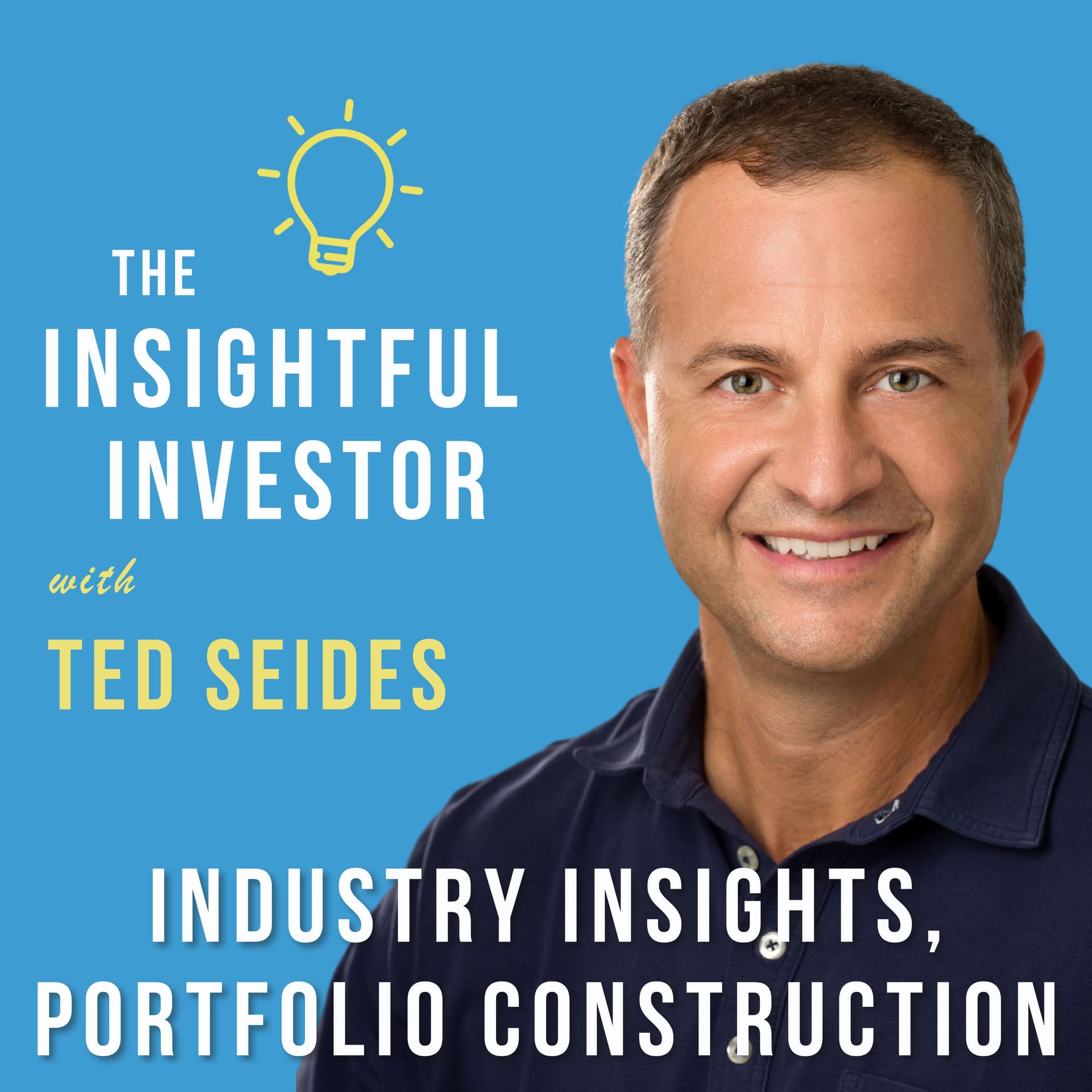
Podcast Summary: Insightful Investor - Episode #35 with Ted Seides
Podcast Overview Title: Insightful Investor Host: Alex Shahidi, Co-CIO of Evoke Advisors Description: A weekly podcast sharing unique market insights, focusing on counterintuitive and underappreciated concepts in investing.
Episode Details Episode Title: #35 - Ted Seides: Industry Insights, Portfolio Construction Guest: Ted Seides, podcaster and investment industry expert Background Info:
- Ted started his career with David Swensen at Yale Endowment.
- Launched the Capital Allocators Podcast in 2017, recently surpassing 400 episodes.
- Author of three investment books, with his latest titled "Private Equity Deals."
Key Discussions and Insights
- Influence of David Swensen
- Long-term Thinking: Working at Yale instilled a mindset focused on long-term capital management, which is critical for investment strategies.
- Example: Yale's perpetual capital view allowed for investment strategies that disregard short-term market fluctuations.
- Talent Selection: Ted learned the importance of identifying and collaborating with top-tier investment managers early in his career.
- Evolution of Investment Perspectives
- Unlearning Tenets: After leaving Yale, Ted realized that many investment strategies and governance structures are not replicable for most individuals or institutions.
- Real-World Application: Understanding that not all investors share the same time horizons or governance structures as Yale’s endowment.
- The Warren Buffett Bet
- Details of the Bet: Ted made a bet in 2008 against Warren Buffett that hedge funds would outperform the S&P 500 over a decade.
- Outcomes and Reflections:
- The bet highlighted the impact of fees and market conditions on returns.
- Ted’s conclusion: While he lost the bet, he believes it was a sound decision based on historical valuations.
- Importance of Relationships in Investment
- Ted emphasizes the value of relationships in investing that go beyond just performance.
- Optionality and Insight: Strong relationships with investment managers can lead to discovering unique opportunities and navigating risks.
- Portfolio Construction Frameworks
- Core Beliefs:
- Investment strategies must consider both absolute and relative performance.
- A focus on diversification across different asset classes to minimize risk.
- Two Frameworks:
- Conventional: Allocating to stocks and bonds.
- Sophisticated: Seeking low-correlation, high-return assets to build a robust portfolio.
- Behavioral Finance Insights
- Emotional Impacts: Acknowledging that investors often buy high and sell low due to behavioral biases.
- Decision-Making Processes: Advocating for structured approaches to decision-making that include considering long-term impacts and avoiding reactive changes.
- Endowment Model of Investing
- Key Principles:
- The endowment model encourages equity bias and diversification into alternative assets.
- Challenges during financial crises highlighted the need for improved risk management and planning.
- Opportunities for Improvement in the Investment Management Industry
- Knowledge Gaps: Investment managers often lack an understanding of clients' needs, leading to misalignments in expectations.
- Growth and Performance: Balancing growth in assets under management against the risk of diminishing returns.
Key Takeaways
- Simplicity in Investing: The foundational principles of investing remain simple: diversification, understanding risk, and maintaining a long-term perspective.
- Continuous Learning: The investment landscape is evolving; staying adaptable and informed is crucial.
- Holistic Approach: Combining financial planning with investment management can lead to better client outcomes.
Conclusion Ted Seides brings a wealth of experience and insights from his career within the investment landscape. His discussion with Alex Shahidi highlights the importance of long-term thinking, relationships in investment, and the continuous evolution of investment strategies.
Listeners are encouraged to reflect on their own investment strategies and consider the behavioral aspects influencing their decisions.
---
For more insights and to listen to the episode, visit [Insightful Investor](https://insightfulinvestor.org/).
Written by AI. May contain mistakes. Listen to the episode to check what was said.
Transcript
Automatic transcript. May contain errors.0:05Welcome to the Insightful Investor Podcast, a weekly series that seeks to share industry, investment, investment, and market insights. We define insights as concepts that are counterintuitive, widely misunderstood, or underappreciated. In other words, unique ideas that you probably won't hear elsewhere. I'm Alex Shahidi, the host of the podcast and co-CIO of Evoke Advisors, a leading investment advisory firm. Learn more about our show at insightfulinvestor.org.
0:38Today's guest is Ted Seides. Ted is a podcaster and investment industry expert. He started his career working with the famous David Swenson at the Yale Endowment and has spent the last over 30 years now studying, speaking, and writing about investing. He launched the Capital Allocators podcast in 2017 and recently reached 400 episodes. And his third book called Private Equity Deals comes out next month. Ted, thank you for joining me. Alex, thanks for having me. Great to be on the other side of the mic from you. Yes, I think I was a guest on your podcast a few years ago, so this should be fun. Let's start with your experience with David Swenson.
1:24You had the opportunity to work with him at Yale, and obviously he's the famous CIO and highly regarded CIO of the Yale Endowment. He did the five years that you spent with him shape your core investment tenants? Yeah. I guess for perspective, it's probably helpful to realize that in his 35 years, I was there from year seven to year 12. So it was quite a while ago, but it was my first job out of college. And so it shaped really everything that I came to learn about investing. I came in with very little prior knowledge, maybe a little bit. I think these days when kids come out of college, They really know a lot if they're interested in the markets and back in the 90s.
2:09I'm not so sure that was the case. So I really learned a lot of what David later taught the world. Now it's almost 25 years ago, he wrote his famous book, Pioneering Portfolio Management. And that shared how he thought about and implemented the investment strategy at Yale. And that was a lot of what I learned. I think some of the additional things that I felt like I benefited from being with him for five years are some of the principles that you can read are quite different from when you put them into practice. So the best example of that is long-term thinking. Yale is, they describe the endowment as a perpetual pool of capital.
2:49And perpetual is a really long time. There are a lot of pools like that. Many of your clients intend their capital to be around for a long time. That's very different from individuals than pursuing an investment strategy that's somewhat similar to that time horizon. And David was able to do that. And it's a little bit hard to describe other than you just, nothing mattered every day. Markets moved up, markets moved down. None of that matters for the long-term. And that was how he behaved every day. And there were jokes, there was language around the office, like, don't be so short-term. If someone was talking about something three or five years from now, Now they'd say, don't be so short term.
3:27So there was a whole way of thinking that he embodied every day that, of course, everyone in the office learned and adopted because that's how you learn the business. That was a big one. And I think the other huge one was he was such a phenomenal picker of talent that I was able to develop relationships with investment managers, external investment managers, very, very early in my career that were some of the best in the world and became that. But it was before I knew anybody else. So you sort of were able to calibrate what a really, really high bar looks like before you then, as I did later, went out in the world and said, wow, there's actually a lot of other investment managers that aren't quite as good as those.
4:06Yeah, it's a great way to start. You kind of start with the best. The bar is set extremely high and that becomes your reference point as opposed to starting somewhere else and having a lower bar and not realizing it's low until you start to meet the David Swenson's of the world. That's right. The way I used to describe it later in my career when we were investing in smaller hedge funds at Protege Partners, we were also at times seeding hedge funds. And I would say if someone was only looking at investments in managers that were willing to give you a piece of their economics, you're swimming in a murky pond.
4:45But after a while, you might think you can see. And that was that incredible clarity that I had from working with David really pervaded the rest of my career. So you left Yale in 1997, and obviously you've learned a lot since then. Are there any key tenets that you learned while at Yale that you feel differently about after learning on your own and through guests on your podcast? Yes, of course. Hopefully you learn a few things and continue to learn along the way. I think that one of the key things that I had to unlearn and then relearn is that Yale is in very rarefied company in that there are probably only back then a half a dozen and maybe now a dozen or two dozen pools of capital in the world that have a similar time horizon and a similar highly functioning governance structure that actually allow you to invest for that long term.
5:43For everybody else, and I mean everybody else, us as individuals, your clients, myself personally, when I was managing money for other institutions, the long-term is really only as long as people's behavioral time horizons, which for some, maybe it's three or five years. If you're really good, maybe it's a little bit longer than that. And the other reality that I saw outside of Yale was that all of investing really does tie investment strategies and businesses. And although the investment managers that Yale selected were in business, we weren't really exposed to that. David had a very pristine view of how to look at an investment strategy as the only thing that mattered were the returns you were getting.
6:28And that's true from the investor's perspective in the fund, but it's not true from the manager's perspective. They have to, in order to deliver the highest returns possible, they have to have a stable business. It doesn't have to be. Sometimes that's a big business. Sometimes it's a boutique business. But in every instance that you see an investment manager that delivers outstanding long-term returns, it's backed by the business behind it that is stable and long-term. And those two things that come together, the behavioral aspects of individuals and the reality that great investing is tied to a great business, were things I weren't really exposed to at Yale.
7:07and saw when I sat sort of as both call it an LP and a GP in my time at a fund of funds, you really started to see there are differences in the two that have to come together in an elegant way in order to achieve investment success. And we're definitely going to get into both of those a little bit later. But before we do, I just wanted to dig into your background a little bit more. Tell us about this famous bet that you made with Warren Buffett. You've probably been asked this question a million times, but this bet you made with Warren Buffett in January 2008. And I think most importantly, your thought process at the time.
7:44Yeah. So the bet was a non-part charitable bet that we made for 10 years. So it started at the beginning of 2008, lasted until the end of 2017, that effectively pitted hedge funds against the S &P 500. And in practice, it was a group of five hedge fund of funds against the Vanguard S &P 500 index fund. That was the bet. Got a lot of publicity, much more than I would have thought at the time, but that's because Warren's Warren. It wasn't really because of me. And the thinking was kind of interesting. So if you go back to 2007, when we formed the bet, we both wrote a little blurb about why we thought we would win the bet.
8:26And it got published. It's actually hard to make a legal bet for charity, but his lawyer found something called the Long Bets Foundation, and we funded this foundation. And so it was on their website. And his description of why he would win had everything to do with fees. And it makes sense, right? High fees of active managers and particularly hedge funds. So he said, well, you should bet on an index fund at low cost because the fees are a lot lower. And our description, it was almost like we were making two different bets. Our description was, well, hedge funds do something that's very, very different from the market, it's a little bit apples to oranges.
9:03And you have to think of the apples and the oranges very differently. And at the time, in January of 2008, you had interest rates, maybe where they are today are a little bit higher. So a normalized interest rate environment and valuations on the market at historical high levels. And anytime you'd look back through history, if you start with high valuations over a 10-year period, you end up with lower returns than if you started low valuations. When he's talking about fees, that's true all the time, but it's independent an evaluation. So you could look at the S &P and say, that doesn't look like a place you'd want to be for the next 10 years.
9:36And at least for the first year of the bet, that certainly looked like it was the case, right? The market crashed in 2008. On the hedge fund side, you would then say, okay, if we thought the bet was a referendum on the S &P and you don't want to be there, where else might you want to be? Now, we happen to be in the hedge fund business at the time, and so I had great conviction in that. But hedge funds are designed to have long-term equity-like expected returns with much less lower correlation and presumably less risk than the market. Seemed like a good place to be. And that was what we thought.
10:06A lot of things changed in those 10 years. The market crashed. Hedge funds didn't do well when Lehman went under, had been doing quite well in preserving capital until then. And actually, after 14 months of the bet, the hedge funds were ahead of the market by 50%. And you could have looked historically, you had never had a gap that wide in the 20-something years that there was hedge fund data up until that point in time in either one, outperforming. If it was a two-year bet, you would have won. It was a two-year bet. And then there was this little group called the Fed that came in and everybody knows what happened after that.
10:41So that was the thinking at the time. What was really fun is sort of think of, that's a premortem and you could think of a postmortem because I would look back and say, do I think that was a good decision? what was the probability of success? We know what the outcome was, lost the bet. And one of the pieces of data I had cited was the GMO data, if you look on just valuations and subsequent returns. And I had reached out to Ben Anker and I said, what was the probability of the S &P returning what it did for those 10 years, given the starting valuation? And based on their data, it was 15%. And so I said, okay, I still think that was a pretty good bet.
11:16And I asked Warren, you know, he talks about it as if it's now fade out complete. Fees are always going to be high in any circumstance, he was going to win that bet. And yet at the very beginning of the bet in an article Carol Loomis wrote, we both put our probability of winning and we had said 85%, which I think was probably too high, but he had said only 60%. And I asked him, what was he thinking? Like, was it, did it have to do with the valuation? And he didn't have any thoughts. He was like, I don't really remember. So you look back and I say, you know, I still think it was a good bet, it ended up being a losing bet.
11:47And if you look forward from this point, the S &P is, I believe, even more expensive than it was in January 2008. Would you make the same bet again? So I wouldn't make it publicly because I think you would only make a bet like that publicly if you thought you had a very high chance of winning, right? The expectancy of winning the bet was super high. And I still think it was super high in January 1, 2008. I'd say it's probably a wash today. And you're right in the assessment of, let's say, the apples. I think the market has been fully priced. There are different reasons why dominated by the success of the underlying businesses of the Mag-7 and so on.
12:27But if you roll forward hedge fund strategies 16 years, that market has changed a lot. The competition continues to increase. We've seen a significant concentration in the assets going to those firms that have been able to deliver those expected returns. But that also means that the more assets they have, the harder it is for them to continue to do that. So I think that the likelihood of hedge funds achieving that type of equity-like expected return for the next 10 years are lower than they were in those 10 years, even though it may be the case that hedge funds do it this time and didn't back then.
13:02So I wouldn't make that bet publicly, but I think it's probably a 50-50 toss-up now. Well, one of the benefits of the bet is you had an opportunity to meet Warren Buffett. What have you learned from him? Yeah, I was able to have dinner with him many times. There's a lot. Well, the first thing I would say, which is something I had heard before but really experienced, is in addition to his investing brilliance, he is unbelievably brilliant in how he communicates messages. And we all know that. My micro story was, how did he talk about the bet? When did he do it? And there's a whole sequence of things that I watched him do that were just astoundingly brilliant.
13:50And so there's an element of being able to tell a story about what you're doing that significantly impacts your ability to then implement kind of what we're talking about with some of the behavior aspects. So that's certainly one. The other thing I would say is I really believe the money would tell you this, the results would tell you this, but he is so deeply the real deal. He really is this Midwestern guy who happens to be an unbelievably brilliant thinker and investor who is still humble and insecure and very comfortable in his own skin, but just this sort of aw shucks kind of person. That's what he's really like.
14:33And that was really, really fun to see. The last thing I would say is, and you see this in lots of areas where people are very successful, he's an incredibly one-dimensional person. I remember trying to engage him in the conversation about his kids and his family, and it was as if he didn't have an interest in it at all. He cares so much about Berkshire Hathaway and businesses and thinking about how to make money from businesses. I came away from that saying, you know, you and I both have had the opportunity to meet incredibly successful people that have become billionaires. He may be the only one I know that if he were 20 years old again, and you put him in a box, I actually think there'd be a high probability he would become a billionaire again.
15:16He would just do it in a totally different way. Yeah. What you just described is so interesting because meeting a lot of people who've enjoyed tremendous success. The characteristics that you just described are somewhat common. Typically, there isn't great balance. They get an A plus in wealth creation and maybe a much lower grade in a lot of other aspects of life. That's part of what made them successful, maybe part of their DNA. The other thing you mentioned is being humble. I think what that comes down to is recognizing there was a material amount of luck involved in their success and not over-allocating their success to their skill and what they've been able to achieve.
16:02And the other part is having this ability to simplify complexity. Like when I think of somebody who's really brilliant, they can take something that's really complex and distill it down to its most important elements and be able to communicate that effectively. I think that's spot on, spot on all the way through. So why did you start a podcast? It's a huge undertaking and you've kept it going for seven years. What was the impetus and how has it evolved since then? Yeah. Well, the truth is the impetus was nothing but serendipity. I would joke, particularly now as it's become the hub of what I'm doing, that I can share a business proposition with you, Alex.
16:44Because you and I will share a conversation. We'll just have it. We'll share it for free. And that's the business model. But here's how you're going to make money. We'll make it up in volume. So it turns out free times a large volume doesn't really amount to anything. So what happened was when I had left my investment partnership, I really wasn't sure what I wanted to do. I didn't want to just stay investing in hedge funds. I assumed I would come and do another investment seat. and as I was doing some consulting and pursuing that, I kind of woke up one day and thought, wow, it'd be fun for me to run around and talk to my old endowment friends who I hadn't had a chance to catch up with and so I started doing that and it came out of my being on some other podcasts, most notably Invest Like the Best and Patrick O'Shaughnessy, who's a very good friend of mine and I just started it and I had time to keep doing it and I kept thinking, oh, I'm gonna have to drop this.
17:36I need to go actually work And after a few years where I was doing a few other things, one day someone at Northern Trust called and said, hey, do you take advertisers? And I said, well, why, yes, we do. And the we was me. And I said, okay. And I was really pursuing what I was going to do next in the investing world. And one day a dear friend of mine said to me, you know, sometimes you have to think about not what you think you want to do, but what people are asking of you. And right around that time, I was thinking of launching a fund. And I went to iConnections, one of the big capital introduction conferences.
18:12And I took a couple of meetings with managers I really liked. And I found that all they wanted to do was talk to me about the podcast. Like if I had billions of dollars to invest, they didn't care. So did everybody else who was there. They really just wanted to talk about the podcast. So I just started leaning into that. I hired a couple of people. We started getting advertisers. And then it just kept going. And what I found was that the main difference between what you do and what I used to do and investing through managers and what I'm doing now is you get to share the conversations. And I just love that.
18:43I love that you're able to contribute to other people's learnings. I happen to come from a family of teachers, so that fits in to that DNA. And I also love that you're able to be on the same side of the table as everybody. and I just, I love being on teams and it's sort of funny that I take great sort of intrinsic joy out of knowing that if an investment manager comes on our show, so many people will listen to it and tell them and of course, if they don't like the episode, they're not going to say anything to them but if they do like it, they'll get all these platitudes about it and that just keeps going and then it's turned into a whole bunch of other activities around it that I've pursued alongside the podcast.
19:26Yeah, it sounds similar to my motivation in starting a podcast. I feel that there's so much insight to share in our industry. And it is a unique industry in that so much of what we do is counterintuitive, underappreciated, widely misunderstood. And because we have access, and I know you do as well, to some of the top talents, it only seems right that we're able to share those conversations to shed light on some of these general misunderstandings. And so I think of it as we're trying to seek truth in having these conversations. And one of the challenges that I face, and I'm curious to hear your thoughts, is trying to not introduce our own biases and our own blind spots and picking the guests and the types of questions that are asked.
20:13How do you think about that? Oh, it's a great question. I'd say a few things. The first is because I'm not managing money for other people, I feel much more objective than I would. I don't have to assert my opinions about investment strategies to a client. I don't have to say, we believe in this and here's why. And so that really helps you stay objective. It's just, again, it's a behavioral thing. the more you have to describe to somebody what you're doing, the more it's easy to get anchored in that and harder to change your mind. So that's one. But the flip side of that is I actually think that part of what's made the podcast successful has been the selection of guests.
21:02It's clearly the guests that make the podcast. And maybe I have a little bit to do with it by understanding how to ask questions and stay out of the way. But it's really having a great roster of guests. And a lot of that does come from my judgment about what makes for a great allocator or a great investment manager. And there's a large stream of people that are constantly coming in the door asking to come on the podcast. And very similar to the seat that you're in where investment managers are constantly coming, hoping you'll allocate your client's money to them. most of the time you say no. Why is it that you say no?
21:37Because the ones you have you think are better than those and you'd rather figure out who's the best one to come on than the one that happens to be coming in the door. So there is a bias in terms of what I think will be interesting to the people listening, which are mostly professional investors. I mean, they're obviously open platforms. And you can be flexible. You're also much less committed to things. If I didn't have to know anything about crypto four or five years ago to try to get and did get some of the best experts in the space to describe why they think it's interesting. It doesn't mean I have to invest in it or not, but it's very similar to how you would go about research.
22:16You're not necessarily investing in everyone who comes in the door. You're just gathering information. So I think it's similar, but I hadn't really thought much about my biases. The ones that do come are when people ask about diversity, which is kind of the opposite of the bias. You have the bias and you're trying to make sure you don't have a bias. Unfortunately, because I do think the investment management community is very male-dominated, the allocator side is a little bit more balanced. So it's never really been a challenge for us, at least on gender diversity, to have great women coming on the show as well.
22:49And I guess you could think of the bias being, you could have a quality bias, and meaning you just want to let high quality on the air, as opposed to having a perspective bias. And so you let high quality in and have a diverse mix of perspectives and backgrounds and guests, and that can probably lead to a better outcome. I think that's right. I mean, there's a lot of ways to do it. You could have a podcast where you have a bias of how you like. There are podcasts for traders. There are podcasts for value investing. All of that's great. I imagine you'd be saying the same thing over and over again after a while if you're not a little broader in what you're willing to talk about.
23:31And so that's just how I've gone about it. Yeah, that makes sense. One of the goals of my podcast is to share insights about our unique industry and how it's set up, kind of like behind the scenes for people in our space. And I think of it as there's two groups. There are the allocators and there are the managers, the ones picking the securities. Your podcast is obviously called Capital Allocators. So let's start there. Would you share some perspectives about the allocator? And so either a CIO or if we broaden it to an investment advisor, how do these groups think and how are they incentivized to behave?
24:12Yeah. I would say to the extent that there's, just to narrow the funnel, I'm happy to talk about advisors as well, most of our content is the institutional market. So there's definitely increasing crossover in what was sort of investing for high net worth and the institution. There are common patterns in how most of these people think. And that really does start with David Swenson. It really does start with a certain way of thinking about first principles of investing. And as you said, what's true? If you have a pool of capital, what are the goals that that capital is trying to achieve and how do you go about doing it?
24:53Well, it turns out with a lot of the long-term pools, when you think about asset allocation, it's very heavy equity bias because they don't have a lot of liquidity needs and they can invest for the long term. And then within that, they want to achieve diversification. So you're not just investing in the S &P 500, even though it's been the best place to be for the last 15 years and who knows, maybe for the next 15, but probably not. Once you've established that basic policy, it's a question of how do you want to pursue that? And in David's model, it was you have a small group of people sitting in New Haven, Connecticut.
25:23You may not want to compete with the best in the world. I'd rather go out, try to find them and partner with them. And a lot of people have done that, particularly in the areas that are less efficient, like the private markets or hedge funds. A lot of that's been adopted. What you've seen is a continued evolution as really driven by the availability of data, availability of understanding what risks people can take at a more granular level, and trying to find the best way of addressing the highest risk-adjusted returns that you're trying to achieve. I think that's kind of the commonality on the investing side.
25:57Then there's a people side of it, which is all these organizations manage people. And most of the ways that people learn to manage others and lead others are trained really, really well in every field except for investing. So a lot of the basics of how a lot of your clients, as they build businesses, learn how to lead and manage people, they're not known in investing. And so the people are increasingly looking at that. I think to the second part of your question on the advisor side, one of the things that you see done extremely well in the advisor space, that's actually been done less well over years in institutional space, is first trying to address the need of the client as opposed to how can I compete for the best performance.
Read the full transcript
26:43And I think advisors have done a phenomenal job. Call that the financial planning piece of it. What are you really trying to achieve and what do you need to get there? then you can go ahead and invest the capital accordingly. Whereas on the institutional side, there's almost an assumption that there's going to be a horse race at the end of the year and you should have the highest returns, even if two pools of capital should have very different objectives. Sort of sounds like if you combine the two, then you could effectively get the best of both worlds. That's the goal. So let's imagine a world where the financial advisory industry didn't exist and you had the opportunity to whiteboard it.
27:19How would you set it up? I don't think it's that hard to figure out. I mean, I think the financial, the largest value add that I've seen, broadly speaking in the financial advisory community, is the financial advice piece. It's not the investment piece. We all know investing is really, really hard to outperform and it's really become really easy and cost-effective to just get the exposure you might need to get to your goals. So to the extent that if you were doing it from a whiteboard, you'd want to disaggregate the two. You'd want to have fee-for-service done the right way. My guess is the financial advice piece would be a far higher price ticket than people have historically thought it would be.
28:01And as we've learned over the years, the investment management piece probably was paid too high of a price for what it's been delivering. And the way the pricing model works is they're effectively commingled. And you basically charge for the investment portfolio and not charge for the advice. And what you're describing is it should almost be the opposite of that. That's how I would draw it up if it were today, because that's where the value gets, the real value gets created. Now, we all know why it's bundled, because historically, the asset management business has been a far more lucrative business than just giving the financial planning advice that, in theory, any accountant could give.
28:41But if you're drawing it up from a whiteboard, you'd want to see everyone's interests aligned the right way. People paid for the value that they're delivering. That makes sense. So let's talk about the investment management industry, the people picking the securities. So what is it about this industry that you feel clients and investors should be aware of that they may not know? My favorite one to talk about is the power of relationships. So if you read anywhere of the scrutiny of any type of investing, it's all about, goes back to what Warren was saying about fees. You should just go buy the S &P 500 index fund.
29:24And so people look at the investment management industry and say, are they delivering based on are they outperforming the index? And I actually think that's backwards. Yeah. If you told me I could get the return of an index or a net of fee return that's the same of an index, but have a relationship with a manager in the process, I would take that every day of the week. And the reason is, and we all know this from all of our endeavors, relationships bring optionality and options have value. And so when you're investing through a group of investment managers or firms or businesses or whatever it is, and you have relationships with people, those people help you find opportunities.
30:10They help you navigate risk. They help you learn about the world. They help you see around corners in a way that if you only bought index funds, you'd never know how to do. And I actually experienced this about seven or eight years ago with a wealth manager in Canada who only invested, they swore by index funds. And they happened to have had a bunch of employees of a technology company that exploded, who then the founder and a whole bunch of people had made billions of dollars. And they had interests. They had interest in the climate. They wanted to put their capital into things that weren't just an index fund because they didn't just care about the return.
30:46And the wealth advisor didn't know what to do because they had no relationships with anybody in the investment business that were engaged in anything but this little corner of the world. And it was the first lesson I had of, wow, even I could look at what capital allocators is today, and it's all the power of relationships. And so there's value beyond just the returns that are generated. Yeah, very much so. What do you think investment managers could do better if you're generalizing for the industry? It's a tough question to answer. I think investment managers in general are substantially better at doing what they do than they were when I got started in the business.
31:25There's always the question of what could they do better? Could they be more aligned with their clients? Sure. But most of the time when clients, say, are upset about private equity fees or something like that, fees as an example, the terms between a GP and LP are determined by supply and demand. They're not determined by a manager saying, we're going to get greedy and therefore this is what we're going to charge you. So if somebody chose to sign up for that because that's what the market demands for that service at that point in time, that is the right price. And so it's hard for people to go back afterwards and say, well, I didn't like that price.
32:01It's like, okay, we'll go do it differently with somebody else and pay them less. A friend of mine says, sometimes when you pay peanuts, you get monkeys. So, but I do think that there's a lot of knowledge gaps in between what investment managers understand about their clients' needs and what the clients understand about how the investment managers deliver their services that is missing. And I've increasingly found between our podcast and some of the gatherings that we're doing, that a big purpose of that is trying to bridge those knowledge gaps. Because many, it's true, investment managers, when they're really good, they mostly have their head down doing what they're doing.
32:41And they often don't have a deep appreciation for the challenges that their clients are facing. And how do you think about this potential conflict that investment managers face, which is if they grow their assets under management, you know, fees are based on those assets so they can effectively earn more versus controlling the growth in assets to try to generate the best returns they can for their investors? The investment managers will always face a challenge. And the challenge is if you start with a nice boutique strategy and you succeed, you'll have the opportunity to grow. And perhaps in that growth, you can make more money for yourself.
33:23And a lot of times that's what the clients see as, well, they're just growing because they're getting greedy. But it's not what happens. What actually happens is there's no guarantee of what's going to happen in the future. And so growth can allow a certain cadence of growth, an appropriate cadence of growth can allow a manager to bring in better resources, to try to navigate changes in market cycles, to try to put as much of that effort into research and delivering excess returns in the future than they had in the past. And if you take private equity as an example, 20 or 30 years ago, you'd have a little boutique private equity firm that had a bunch of financial guys who came off of Wall Street.
34:04Today, the large firms have armies of former CEOs of operating companies who can then go in and help add value and work very closely with the executives of the companies that they buy. And that requires resources. So I think that a lot of times when investors look at growth, they say growth in assets is bad for future returns. But what they miss is that growth in assets also leads to a higher probability that the investment manager will be able to sustain their strategy for a longer period of time. And if you want long-term excess returns, you have to be around for the long term. So one of the things that happens if somebody stays small is as soon as they have a tough period of performance, their entire business is in jeopardy.
34:54So somewhere in that trajectory, there is a cadence of growth that when looked at from the perspective of both the investor and the manager is optimal for both of them. And that growth is not zero. It's definitely above zero. Yeah. So in other words, if the conclusion is smaller is better, but that assumes all else is equal and all else is never equal. Correct. You've been deeply involved with hedge funds for a long time. How would you describe the state of this industry and its direction? Yeah, I think it's in a similar state of any mature industry, any commercial industry. And so what happens when an industry grows and matures is you have a more concentrated group of winners.
35:46And then you have a whole bunch of other people that try to find their niche in an ecosystem. So if you think of making beverages today, you still have kind of Coke and Pepsi, and there's a whole bunch of other people. And that's kind of what's happened in the hedge fund industry. The hotter names today are these platform hedge funds, Citadel and Millennium, who have delivered on this, I don't want to say promise, but this goal of equity-like returns with less risk for a longer period of time. And they have raised more and more money and they've continued to deliver. Lots of other firms say like a long, short equity, fundamentally driven hedge fund.
36:23Most of those investors look at and say, I'm not sure what they're going to deliver. And now I can disaggregate some of what they're doing because there are ETFs and there are lower cost ways of doing it. So there's still lots of strategies that are in that kind of boutique. You think of macro strategies, you think of risk parity strategies. There are a lot of strategies that still fit into that ecosystem. But by and large, it's quite a mature industry. And it's very, very hard to see, say, new entrants or startups, how they're going to succeed in that. At the same time, the assets and hedge funds are the highest they've ever been and they continue to grow.
36:55So it's a very strong and robust industry. It's just the complexion of it is quite different from what it was in years past. Do you view the main objective of hedge funds is to generate an equity-like or something in that regard return with less risk? Or is it to try to generate an equity-like return with low or no correlation equity so that it can be highly diversifying? So the answer to that question is yes. One of the things you find when you get into the hedge funds is it's really a catch-all for lots of different vehicles that can deliver lots of different types of return streams. So if you are looking at it, as Yale did, as diversification from equities, you probably want an equity-like expected return with less risk, and you can select strategies that go into that.
37:52There are other people who look at it as more of a bond substitute. And so then you'd be looking at something that has low correlation, but has a lower expected return. I should say lower volatility, but a lower expected return. And then you have a whole spectrum along the way. As you know, from portfolio construction, as long as you can deliver a similar return stream from your objective, and it has low correlation to what you have, that's going to add value and put you on a better place on a mini variance optimization risk efficient frontier. You mentioned portfolio construction. So let's talk about that.
38:30What I want to get into is how you should think investors should approach building a portfolio. And let's start with your core investment beliefs that you feel are relatively or that you're relatively confident are true. But what are those? Well, the funny thing about it is it hasn't really changed that much from what I learned from David. And so if you think about truths and first principles, you look at what are you trying to achieve with the pool of capital. And it's different for me today than it was when I was investing in hedge funds or working at Yale. But as an individual, I have a certain amount of capital.
39:08I'm still active as a worker in the economy. And so I say have a positive cash flow stream. And I believe in an equity bias just because it works for the types of goals that I have for that capital. Then in terms of a framework, I love finding niche things in inefficient areas. And so I probably have half my money in either things that look like an index or things that are very simple, but I think will do a little bit better than an index in the public markets and half in all kinds of different private strategies. When I think about frameworks, the way I think about it is along the spectrum. On one end, you have what I call the conventional framework, which is basically allocating to stocks and bonds.
39:57And the more return you're seeking, more stocks, and the more risk controlled you want to be, more bonds. And that's kind of one framework that is very common in the industry. And then on the other end of the spectrum, you have what I feel is a more sophisticated approach. You find a bunch of return streams that are individually attractive, but low correlated to one another. And you have investors all along that spectrum. Do you think about it similarly? And how would you describe those two different frameworks? Well, first of all, one of the things I always love about talking to you is you have this same elegant simplicity that you talked about and referring to how to think about investing.
40:37So I completely agree with those frameworks. Yeah. I would say I'm probably somewhere in the middle in that I do believe that I would like my assets exposed to the long-term tailwinds of global economies. And yeah, you could think of that as a certain amount of stock bond risk framework, but the driver of the return will be from the stock side of it, the equity side of that. And so there is a tailwind that I would like to be exposed to over time. And with the implementation of that is where I get into, I'd like things to be a little bit different and a little cute. So I don't really own bonds, but I do own some private credit instruments.
41:25And I do own some things that look like bond cash flow streams that don't have the volatility, a market-to-market volatility of a stock, but they have a bond-like characteristic to them. And that they are all different and they all are, I think, will earn a certain return that meets where I'm trying to get to. So I think it kind of bridges both of those. I'm not so sure it's an either or. I guess one way to think about it, if you view it from a different perspective, is we're obviously trying to get return and control risk and try to minimize risk. One way to minimize risk is to introduce bonds into your portfolio.
42:06That'll bring down the risk. But the cost of that is a lower return. Another way to do it is to add diversifying strategies that may have a higher return than bonds. And you can effectively reduce risk that way. It's interesting when you look at the biggest endowments, foundations, institutional portfolios, the larger they are, the more resource they are, the less they tend to own in traditional stocks, bonds, and the more they own in alternatives and other return streams. And I think it's largely because it's not easy to do and it takes a lot of resources and due diligence. But does that kind of mindset make sense?
42:44It does. there's always a question of how are you defining risk? And, you know, people look at it sophisticated and quantitatively. And I've always said, no, for me, risk is how much pain can I take and not have it shake me off of what I think my plan would be if I weren't taking that pain. And so, yes, I think you're right that you could look at it as bonds can reduce risk. There are also characteristics of bonds, like a deflation hedge, particularly with treasuries, that you often don't get in some of those other diversifying equity-like strategies. But when I look at it, and again, it just depends on the individual, I can take a lot of pain in terms of markets going down and without really changing what I would do.
43:38So I tend to bias towards the diversifying strategies, because as long as I understand them, and I believe I can have strong hands when things aren't going well, you put yourself in an even better situation when that happens. And a lot of that comes from just time and experience. And I kind of laugh at, you know, in 2021, and tech stocks start selling off, and people get panicky. And I lived through 2008 and it's like panic. Like this is managing expectations is as important as sort of what the composition of your assets is. And my expectations are we are so overdue for some significant type of market event that you just prepare for it both mentally and how you're constructing your portfolio without, as you say, giving up too much of the potential expected return.
44:29if, although I think that will happen, if it happens much, much longer out than I would have otherwise thought. Yeah, what you just said there, I think is really insightful. So the way I think about risk, and this is the quantitative side, is there's volatility, which is the one, the measure most people use. There's also drawdown, peak to trough, how much can it drop? And then I think the one that is least well appreciated is an extended period of underperformance. And I think that is in some ways related to what you just said, which is the behavioral side. Because if you go through, if you have a strategy and it underperforms for a long enough period where your patience runs out and then you change your strategy, then that wasn't a good strategy to begin with.
45:11Because if you change it after it does poorly, by definition, you're selling low. And then you're going to switch to a new strategy that looking backward did well. And if that's your discipline over time, you're probably not going to do that well. So that's exactly right. And it really gets back to exactly what I said about working with David, which is what you described. We know this through data. That's how most investors behave. Because we are people and we are not perfectly rational. And that's what happens. I had the benefit early on of working with someone who was never shaken by them, who, if he had the long-term plan, just kept the long-term plan.
45:54And it started, David joined Yale in 1985. He was 31 years old. And he had put some of these disciplines in place. And then two years later, at age 33, he had to go to the front of the investment committee when the stock market dropped 25 % or so in a day and tell them, no, now we buy. That's our strategy. and they did and it worked. Now it's an interesting question to say if it hadn't worked, would he have been in the job for 35 years? I don't know the answer to that. But having the discipline and the conviction to stay with a long-term plan, it's only shaken at difficult times. It's really easy to stick with a long-term plan when things are going well.
46:32So in that regard, how do you think about the balancing between developing a plan, having confidence in it and conviction, and then riding it through the ups and downs, particularly the downs. That relative to modifying the plan to make it a better plan. So how do you know that your plan isn't bad after it goes through a period of underperformance? How do you think about that side of it? Well, you never know, right? There's no certainty in the world's earned investing. I think that where it comes down to is very tied into effective decision-making. Yeah, you'll have to revise a plan over time.
47:14Markets change, new opportunities arise that don't exist when you first made the plan, new ways of thinking come up. So the question is, as you're thinking of revising the plan, why are you doing it? And how are you going about it? Are you doing it because you're panicking? Or are you doing it because you're thinking carefully about the future and see that you can improve things in the future? And then when you go about it, how does that decision-making body make the change? Is it done in an evidence-based way, considering all the positives and the negatives of it, including all the behavioral aspects of it?
47:50And when you go through a thoughtful decision process, you can get to the point where you make some changes. Now, part of a thoughtful decision process includes planning for that. So your original plan might consider what are the conditions you'd change the plan? What are the conditions you absolutely don't want to change the plan? And you won't know all those conditional probabilities and outcomes as they will come up in the future, but you can envision some of them. And so it's sort of a question of how deep and thoughtful is the original plan and does it include some of the things that you might want to change or that might cause you to go awry?
48:26Okay. And in my experience, one of the key factors in that analysis is your reference point. And so you can imagine you build a portfolio that you're targeting 8 % a year. And you look back in the last five years, it turned 8%. But the S &P 500 is up 20 % during that time. And if your reference point is the market, which for a lot of people it is, because that's what they read about, that's what they hear about, that's what their friends talk about. If that's your reference point, you may feel like even though we hit our number, we've underperformed, maybe we need a different plan. And so I think that is a large part of that analysis.
49:03Absolutely. And so it's both, I think of it more in terms of the drawdown or actual losses, and you're just talking about that's absolute losses, and you're talking about relative losses. We run into the same behavioral pitfalls, experiencing loss and how we deal with that, whether it's on an absolute basis or a relative basis. And by the way, it's not just individuals. I was on a board call last week with a couple of very well-regarded endowment CIOs, and they were talking about this challenge of how are we explaining really what's happening with the S &P 500. And my comment to them was, none of it matters because when you've been underperforming a market that's been up 20 % a year, everybody's winning.
49:47You're just not winning by as much. you should be more concerned about what happens if you're losing. And they all nodded their head and agreed. It was just a frame of reference none of them had thought about because you get so mired in that relative performance and making sure you're winning compared to something else. And then it's so easy to lose sight of, wait, what's the real objective over time? Yeah, and there's two other things that are often missing. One is hindsight is perfect. So you look backwards and it was obvious the S &P is going to go up a lot, but you don't know that's real time.
50:18And the second is you own the S &P. That's part of your portfolio, but it's not the majority of your portfolio. And that's not the case for a very good reason. Would you talk to us about the EL model or what's commonly referred to now as the endowment model? Yeah. It kind of goes back to what we were talking about at the beginning. When David first got to Yale in the mid-80s, a lot of the institutional approach was a, let's say a 60-40. You could pick your number, 60-40, 70-30, mostly bonds and stocks, and much more U.S. than global. And David looked at that and said, okay, their asset allocation was probably going to be something more like 90-10 because of the long duration of the liabilities.
50:59But it just didn't make any sense that U.S. equities are really one asset and you should be able to diversify and get the free lunch from diversification. So if people think about the Yale model, it became a thought process around alternatives and illiquidity and all these things. None of that is actually the base truth of how David came to it. He said, no, I want to have an equity bias and I want to be diversified. And it turns out if you're going to diversify away from US equities, the most liquid equity asset in the world, you will have to encumber some illiquidity. And so he turned from that to There were some international equities and emerging market equities and then hedge funds and private equity, venture capital and real estate and other real assets.
51:40And that became the asset allocation structure that Jeremy Grantham later dubbed the Yale model. David certainly didn't call it that. There were concerns during the global financial crisis that the endowment model may have been broken because a lot of the large college endowments suffered significant drawdowns. Was this concern unwarranted in your view? Mostly. I think most of that concern was an outside view, not an inside view. where it wasn't fully unwarranted on the inside was that back then if you had looked at the scenario analysis to assess risk conducted by most of those institutions they looked at long-term drawdowns so they looked at the long-term erosion and purchasing power like endowments experienced in the 1970s.
52:35They looked at the probability of losing 25 % or 50 % of purchasing power, but they didn't look at path dependency. And so at that point in time, they weren't really looking at, well, what is the impact if we take this hit all at once? So I wouldn't say there was any call into question of the endowment model if the endowment model was defined by those first principles that absolutely still hold true. There was just a little bit of a fine tuning of how should you be thinking about risk, not volatility in terms of sort of quantitatively measured volatility, but there are spending needs every year at these institutions.
53:16And if you take a drawdown and your spending goes up, how does that potentially erode the longer term purchasing power and what changes do you need to make? And so there was an aspect of the risk management back then that I think wasn't as deeply thought of as it has been since. But none of that did anything. I can speak to Yale somewhat, even though I wasn't there at the time, more than others. For the decades that Yale had been generating outstanding performance, you think about the 90s was another period where the U.S. equity market was really, really strong. Yale's diversification, for the most part, hurt returns.
53:53It didn't help returns. Much in the same way that's been the case the last 15 years. And generally speaking, capital market returns were very, very strong. David looked at that and did, and he would tell the committee, we don't expect this will continue. And now it turns out that, and he believed it, this wasn't like a posturing, but it turned out that if you tell people, we don't expect the returns will continue to be great, and then they do continue to be great, they're really happy. And then if something happens, they're prepared for it. And that's exactly what happened within Yale. The committee had very strong hands to continue to pursue that model because they had set their expectations that something like that could happen.
54:31I'm not sure that was the case from first principles at other institutions that followed a similar model. Many of them, I think it was, if they really understood the reason behind what they were doing. And then there were others where there might have been a panic. But for the most part, I would say no. Many people still pursue that model. And where there's been adaptation from that model comes from the fine-tuning of risk. So there are some other models now that people pursue that are a variation of a theme. Ultimately, you still have a 70-30 structure. And then you're filling it with assets.
55:05It's a question of how are you measuring what that risk is? What are you choosing to fill it with? And then it gets back to what you were saying. Is it just stock bonds? Or is it a bunch of things that are less correlated? But as data is more available, the ability to assimilate data is more available. Technology advances. People have gotten much, much better at understanding what they own so that they can fine-tune the risk side of the equation in the pursuit of returns. Risk is such an interesting and fascinating concept. We talked about it a little bit earlier, but it's one of those things that you can't see.
55:36You can see returns. You see returns every day, but risk you don't really see. And then the market comes and slaps you in the face. and all of a sudden you realize, oh, that's risk. And it keeps changing. And it's always the thing that you don't expect that is the most risky. And it's hard to model those things. So it's just such an interesting thing. I assume we'll keep evolving as new risks show themselves and we factor that in, but there's always new things that'll come up in the future. For sure. And I guess if you kind of go back to the very first principles, it's don't put all your eggs in one basket and buy low, sell high.
56:11I think of those as like the two core principles that have been true since the beginning of time. And yet, when you look at the average portfolio, in many cases, they violate both those roles. They're not that well diversified. They're basically putting all their eggs in the stock market basket. And not everybody, but many. And then they tend to buy high and sell low because of the behavioral aspect. So based on that, and given all your experience, what advice do you have for the average investor listening regarding how they should go about building their portfolio and the necessary steps they should take?
56:50Well, I would just follow your prescription as you just laid it out. I think that's spot on. It's simple, but not easy. Start with the set of beliefs you have about exactly what we've talked about, about how markets work and how you think you should be exposed to markets, how you want to implement on that. and then try to exercise pretty rigorous discipline about sticking to that plan. Yeah. So stay diversified and don't buy high and sell low. It really is as simple as that. Simple, but not easy. Well said. So let's talk about the investment managers. You spent a lot of time talking to them, working with them.
57:29What attributes would you say make the elite investment managers elite? Yeah. It's a funny question to answer because you can lay out this set of characteristics, and I'm happy to do that. They tend to be very intelligent, well-trained, intellectually curious, have to be humble because markets humble people, passionate, driven, good leaders, often great communicators. So it's not then they're pursuing markets, they're curious, they're looking for competitive advantages, they're rigorous in how they pursue that. that's not hard to say. The challenge is when you go out and meet a whole bunch of investment managers, many, many more people fit those characteristics than end up outperforming the market.
58:15In this business, there's a big mix of skill and luck. And someone to succeed, particularly in the public markets, needs both. And it's very difficult to distinguish between the two. It is over any reasonable length of time which usually spans someone's entire career. So yeah, I would say it's very challenging. We've talked about conceptually how to construct a portfolio and how to think about it and the spectrum between more conventional framework to a more diversified, possibly a more sophisticated approach. How do you factor in the behavioral science into the equation for managing money in practice in contrast to managing money on paper?
59:01We've talked about it a little bit. I think a lot of it comes to decision-making processes. And there's no better book or resource that I've seen in the application of how to think a little bit better about these behavioral obstacles we all face than Annie Duke's thinking in bets. So one of the challenges with all of the things that Danny Kahneman and Amos Dversky shared in their research about behavioral bias is that we're all hardwired to make bad decisions. It just comes from how the brain thinks from surviving in the wild. And so the easy example of that in that system one, system two thinking, we'd like to think you hear something, you think about it, you decide if it's true, and then you act.
59:49but that's not how our brains work. We hear something, we almost always immediately think it's true, and we're a little bit lazy, and occasionally we'll decide if we want to do our own work. So that causes all kinds of challenges. It comes from, if you heard a little, if hundreds of years ago you were in the wild and you heard a little rustling in a bush, you don't want to wait around and assess, is that a lion or not? Because if it is, you're going to be dead. And so evolution has caused our brains to think in a way that's not really set up for the modern world. So what good decision-making does is it creates frameworks to try to mitigate some of those biases, knowing all along you can't do it.
1:00:27Annie, who's written the book on this, can't do it. And so those are things like having the right-sized group together, trying to get all of the information that's available on the table before you make a decision, particularly within a group. Sometimes that comes from the most junior person who the most senior person might be normally saying, oh, you don't know anything. I don't care what you think. And then there's all kinds of different mechanisms and creating premortems and going through decision processes and having decision criteria and postmortems afterwards that you try to get better and better at decision making.
1:01:01And I think that that is one of the key things that people have learned and tried to apply in trying to mitigate the behavioral biases that we all have. And one of the lessons that I've taken away from our conversation today is recognize that bias and recognize, you know, we're hardwired that way and we're likely to react to those emotional impulses. So be aware of that so that when it happens in the future, you're aware of that bias and you can potentially try to offset it a little bit and maybe have greater success over time. Yeah, that's just right. So do you think, putting that all together, do you think investing is more art or more science?
1:01:48It depends on the type of investing. So Michael Mobison has this great, he wrote a book on skill and luck and said in any activity, you can determine whether there's more skill or luck by trying to figure out if you can lose on purpose. So think about investing in the public markets. If you threw a bunch of darts to pay stocks, it's not clear that you could necessarily underperform the markets. You could if you traded and traded and traded and traded, you know, purposely lost. But if you think about a game of poker, you know, there's definitely some luck involved. But if you really don't know what you're doing, you're going to lose over time.
1:02:29So it depends on, I think in the public markets, there's a real balance between skill and luck. Whereas in the private markets, it's very, very different. And if you think about private equity, the many levers that a private equity manager can pull on how they finance businesses, who they bring in to help operate businesses, the resources they have involved to figure out what are great opportunities, how to do maybe tech and acquisitions. There's a lot of skill in that activity, much more so than luck. There's luck because you're invested in a business that's subject to an economy and cycles and all those things that you can't control.
1:03:04But there are a lot more levers that you can in some of the private market activities. So all of that's part of investing. It's just a question of where you are in participating to try to figure out what is skill and what's luck. I think that's a really good framework. I appreciate that. Some contend that you are a proponent of active management over indexing because of your bet with Buffett. Is that true? Yeah, I think there's great use for both, depending on what people are trying to achieve. As I mentioned before, on the margin, I think active management comes with relationships that if you work with the right way, create additional value you can't from passive.
1:03:48So for me, an indexed approach has to beat active management for me to want to include it in a portfolio, not the other way around. I invest in both. I think almost always there's use for both. Also, as you get into diversifying strategies from just stocks and bonds, you get away from effective indexes. There aren't really effective indexes in private equity or venture capital or hedge funds. So as you start to diversify into things that you hope are less efficient and add value, you really can't index them and get at the types of returns you're trying to achieve. So kind of, again, depends on where you're going to play.
1:04:25And I suppose one way to look at it is there are certain markets that are more efficient where information is relatively available. In those areas, indexing probably makes more sense. And then there's areas where it's much less efficient. And as you described, there may not even be an index available. Yeah, exactly. Ted, this has been great. Is there any final insights that you feel is unique that you like to share with our listeners before we close? I don't know that there is. I guess I put this new book out talking all about private equity that's a little bit of an insider's look. It's a series of case studies that might be fun if people are interested.
1:05:04Both, I think, anywhere from novices to early seasoned professionals can get a lot out of it. So that's about it. And everything we're doing is at capitalallocators.com. That's great. Ted, I really appreciate you joining me, sharing your insights. It's I always learn something when I speak with you and I hope our listeners did as well. Thanks, Alex. Appreciate the time. Thanks for listening. We hope you enjoyed this episode. Please visit our website at insightfulinvestor.org to access past shows and learn more about our podcast. If you have questions, feel free to email us at info at insightfulinvestor.org.
1:05:41And if you enjoyed the discussion, please subscribe to this podcast to ensure you don't miss future episodes. And don't forget to forward today's conversation to others you think would enjoy listening. This podcast is provided for informational purposes only and should not be relied upon as legal, business, investment, or tax advice. All opinions expressed by podcast participants are solely their own opinions and do not necessarily reflect the opinions of Evoque Advisors, their affiliates, or companies featured. Due to industry regulations, participants on this podcast are instructed not to make specific trade recommendations, nor reference past or potential profits.
1:06:19And listeners are reminded that securities trading, commodity trading, and alternative investments are complex and carry a risk of substantial losses. As such, they are not suitable for all investors.
1:06:34Listeners should be aware that guests featured on the Insightful Investor may have current or past associations with Evoke Advisors or the host, including as an investment manager of a private fund opportunity by Evoke or access through an affiliated Evoke fund or as a client. Participation as a guest on the podcast should not be perceived as an endorsement or testimonial with respect to Evoke Advisors, the podcast host, or their services. Similarly, the inclusion of a guest on the podcast does not imply that Evoke Advisors or the host endorses the guest or any company with which they may be affiliated or employed.
1:07:13Evoke has neither paid nor received compensation from guests for their participation.
From the publisher
Ted is a podcaster and investment industry expert. He started his career working with David Swensen at the Yale Endowment and has spent the past 30+ years studying, speaking and writing about investing. He launched the Capital Allocators Podcast in 2017 and has published 3 books on investing. Ted shares insights on the investment industry, discusses his framework for constructing a portfolio, and explains the impact of behavioral finance.


