
In short
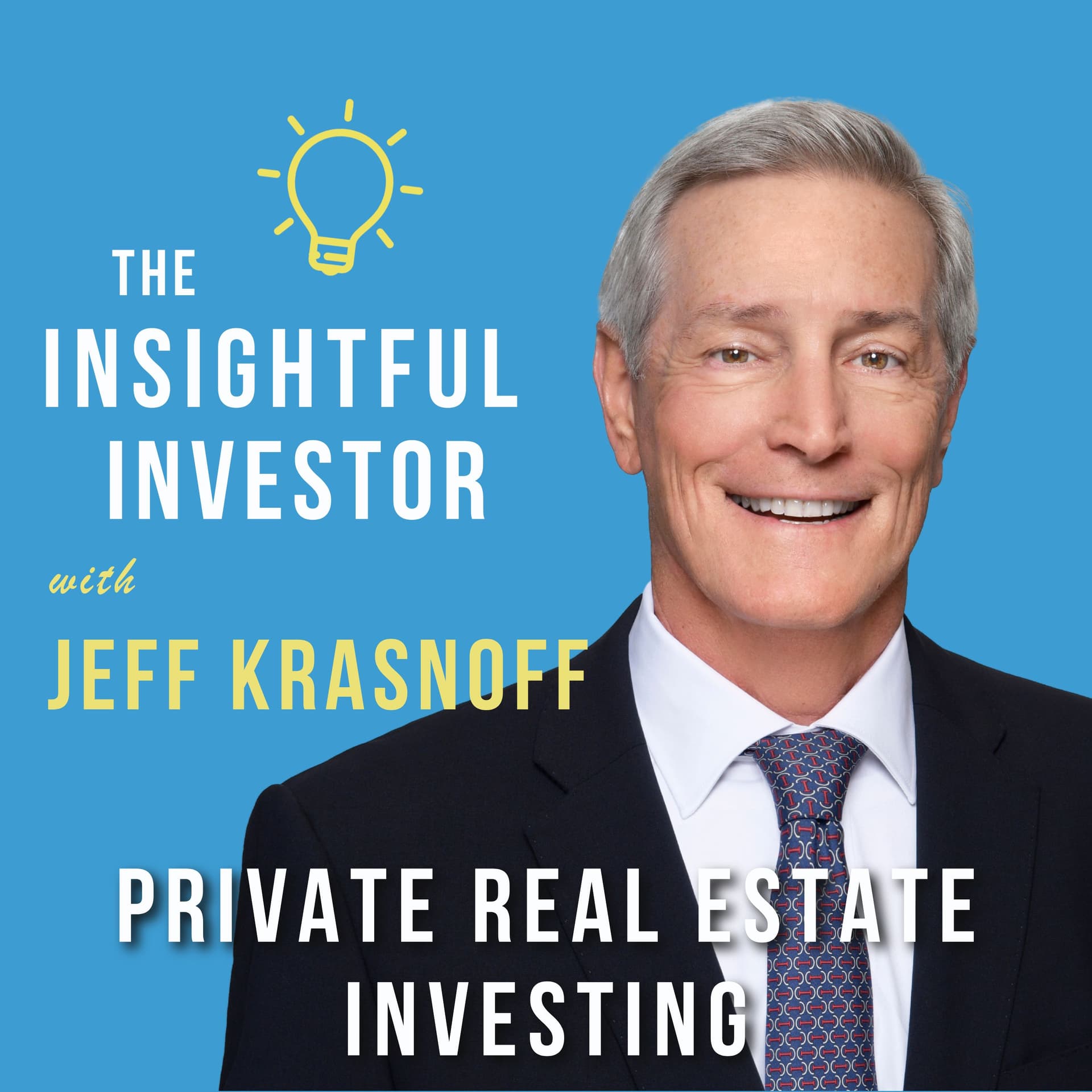
Insightful Investor Podcast - Episode #37: Jeff Krasnoff on Private Real Estate Investing
Podcast Overview The Insightful Investor is a weekly podcast hosted by Alex Shahidi, Co-CIO of Evoke Advisors. The show features in-depth conversations with prominent investors and business leaders to share unique insights on market trends and investment strategies that are often counterintuitive or underappreciated.
Episode Summary In this episode, Alex Shahidi interviews Jeff Krasnoff, the founder and CEO of Rialto Capital Management, which manages approximately $21 billion in commercial real estate assets. Jeff shares his extensive experience in real estate investing over the past four decades, discussing key lessons learned, current market conditions, and the future of real estate investing.
Key Highlights
Jeff's Background
- Jeff began his career in the real estate sector after earning an accounting degree. His initial exposure came from working with real estate firms in South Florida.
- He later joined Lenar, a major homebuilding firm, where he expanded his knowledge and experience in both residential and commercial real estate.
- In 2007, he founded Rialto Capital Management right before the global financial crisis, signaling a challenging yet opportunistic time to enter the market.
Major Investment Learnings
- Understanding Distress: Jeff emphasizes the importance of understanding how to handle distressed assets, stating that the discipline surrounding distress transcends market cycles.
- Risk Management: Strong risk management is crucial, advocating for diversification not only in property types but also in transaction numbers.
- Embracing Cycles: Jeff believes that market cycles should be seen as allies, suggesting that investors should focus on building a sustainable model that can weather downturns rather than trying to time the market.
Navigating Market Crises
- Jeff reflects on his experiences during various market crises, including the S&L crisis, dot-com bubble, and global financial crisis. He highlights how these painful experiences shaped his investment strategies and emphasized the significance of being prepared for downturns.
Current Market Perspectives
- Cyclical Nature of Real Estate: Jeff acknowledges the cyclical nature of real estate markets and the current challenges faced by the multifamily, retail, and office sectors.
- Distress in the Multifamily Sector: Despite a high demand for housing, rising interest rates have caused distress in the multifamily sector, leading to potential investment opportunities.
- Opportunities in Lending: With traditional lenders stepping back from the market, Jeff sees growing opportunities in real estate lending, particularly for direct lending to borrowers.
Sector-Specific Insights
- Office Space: The office market is still adjusting post-COVID, with many companies reducing their space needs. However, Jeff notes that some prime office assets continue to perform well.
- Retail and Industrial: The retail sector is seeing a divergence where 'fortress malls' are performing better than weaker properties. On the other hand, industrial properties are benefiting from the shift towards e-commerce.
- Future of Real Estate: Jeff expects that the demand for well-located real estate will persist, and believes that the current market presents unique investment opportunities for those willing to do their due diligence.
Conclusion Jeff Krasnoff provides valuable insights into the complexities of private real estate investing, emphasizing the importance of adaptability, risk management, and a thorough understanding of market cycles.
Key Takeaways
- Embrace Market Cycles: Understand that cycles are inevitable and can present opportunities if approached correctly.
- Focus on Risk Management: Diversify investments and maintain a solid risk management framework to navigate downturns effectively.
- Stay Informed and Adaptable: The real estate market is continually evolving, requiring investors to stay informed and adapt their strategies accordingly.
Further Information
- For more episodes and insights, visit [Insightful Investor](https://insightfulinvestor.org/).
- Email inquiries can be directed to info@insightfulinvestor.org.
Written by AI. May contain mistakes. Listen to the episode to check what was said.
Transcript
Automatic transcript. May contain errors.0:07Welcome to the insightful investor podcast, a weekly series that seeks to share industry, investment and market insights. We define insights as concepts that are counterintuitive, widely misunderstood, or underappreciated. In other words, unique ideas that you probably won't hear elsewhere. I'm Alex Shahidi, the host of the podcast and co-CIO of Evoke Advisors, a leading investment advisory firm. Learn more about our show at insightfulinvestor.org.
0:41Joining me today is Jeff Krasnoff. Jeff is founder and CEO of Rialto Capital Management, which manages about$21 billion in commercial real estate assets. Jeff, I'm so pleased that you're joining me today. Oh, thanks a lot, Alex. Really appreciate the invitation. Actually flattered by the invitation. And really look forward to spending a little bit of time with you. today. Yeah, same here. Well, Jeff, you've been in the real estate business and as an investor for over 40 years. Let's go back a few decades. What originally drew you into this asset class? You know, it's sort of, you know, it's one of those things when I was in college, right?
1:30But right before I graduated, I decided that I wanted to get an accounting degree. I wanted to be a bean counter, or at least I thought that I'd be able to be gainfully employed once I got my degree. And back then, they actually called the large firms, they called them the big eight. I think they're down to four at this stage of the game. So I figured that was a great way maybe to get some background and so on. And they were recruiting for their office in Miami for South Florida. So So I didn't love the cold. So it was an interesting opportunity. And with the business degree in accounting, I figured I'll do that for a couple of years and see sort of where that leads me.
2:14But South Florida, as you may have guessed, and this is during the, not to date myself here, but during the mid-70s, there weren't a lot of industries in South Florida. You basically had the tourism industry and you had the real estate industry. So I got assigned to a lot of or had clients that were basically in the real estate business. That was what I was fed on for at least those first couple of years that I thought that I was going to spend. I ended up really liking it. I was learning a lot. It was two-way with a lot of my clients and probably would have kept doing that had I not met some of the great local companies.
2:59One of which was Lenar, which is, as I'm sure you know, is one of the biggest home builders. These days, it's probably a$50 billion market cap company building across the country. And they had a commercial real estate arm. And in 1986, you can't do this anymore, but back then you were actually allowed to go to work for one of your clients. There were some rules about that with public companies. And I saw a great opportunity with them. They had really set themselves up for a lot of growth. They were both in the residential business as well as the commercial business, commercial real estate business, because that was an adjunct to building homes.
3:44You took a big piece of land, you carved it up, you put a little shopping center or office building on the corner parcel, and then you built homes. So it was sort of a symbiotic relationship in terms of building those communities. That was interesting. The financial side of it clearly was interesting. And although I loved what I was doing, about 10 years out from college, that two years ended up to be about 10. And I ended up jumping over to work at Lenar and never really looked back. It really was a great way to get a foundation and a base through the early part of my career with so many clients.
4:22And then, you know, fortunate enough to have, you know, met the folks at Lenar, which gave me a lot of the opportunity for going forward. And then you ultimately launched Rialto back in 2007. It happens to be right before the global financial crisis, not knowing that at the time. I was there was pressure, but go ahead. Sorry. Of course. What motivated you to go out on your own at that point? Yeah, there's a couple of pieces to the puzzle that may be worthwhile, at least just to show how that dotted line or crooked line or whatever sort of made it from point A to point B. We had done, and certainly we can talk about this as it relates to some of the things we're seeing today, we really grew the commercial side of the business, in particular during a number of the downturns.
5:16downturns. And I would say probably by 1996, 1997, remember now I sort of started with Lenar in 86. So for the next 10 years, we really grew the commercial side of the business to the point where the analyst community and the investment community basically said, we want pure play. We want a home builder. We don't want this other stuff you're doing. And we could talk about it a little bit. We've been an early pioneer in the commercial mortgage-backed securities business, things like that, that most of the investors in that segment, when you started talking about them, the eyes would roll back in the head because they're a company that are their home builders.
6:00So what we ended up doing in 1997 was spinning off what became known as L &R Property Corporation, which is a public New York Stock Exchange traded company for and ran that. I was president when we spun out and became CEO as well, you know, later in the game and ran it as a public company for eight years until we took it private in 2005. 2005. I stayed on really as CEO of the company for a couple of years for a transition, so on and so forth, and then had an opportunity to sell the remainder of my position in the company and quote unquote, retire or semi-retire. I knew my wife wouldn't be really excited about me hanging around the house.
6:56I maintained close contact with Stuart Miller, who's the chairman and CEO of the company. And, you know, he was battling the battle and really could see it coming, you know, on the residential side in terms of where the demand was, you know, what was going on with the lending market and so on and so forth. He says, Jeff, you better hurry on over here because in a couple of years, we're going to have a great opportunity again on the commercial side. He knew the exact button to push. And so in 2007, I sort of embarked and actually ended up in camping in Lennar's offices. Although I was on my own at that particular point in time, they did lend me some space and so on.
7:44And it was an opportunity sort of to pull out the playbook in advance of what we saw coming and sort of kind of get ready for another one of these downturns. So it's all sort of interconnected there. But, you know, I wasn't I was alone, but I wasn't alone. I was, you know, with a a known entity to me, somewhat exciting times. You know, I think depends on your perspective, obviously. But, you know, deep down, we're distressed guys. And, you know, that that's sort of, you know, is part of the river that runs through it, through it all. So that's how I ended up starting Rialto. And then just to add a footnote to that, and we could talk about whatever you'd like, we got that start.
8:38And then in 2010, I basically sold my interest in Rialto to Lennar and we embarked on growing it from there. and more to the story to tell. That's great. I wanted to focus on kind of the high level and then we'll dig into real estate more and property and debt and so on. But in terms of the last 40 plus years investing in real estate, would you share any major investment learnings that you've had in your career, particularly the ones that may be counterintuitive or unique that maybe listeners haven't thought about before? Yeah. We have no claim on any of these. This is a business with lots of competitors.
9:27You try to go where other guys aren't. But yes, I learned a lot. I learned a lot from those years that I was working at Pete Marwick, I guess it was called at the time. And certainly from what we had done at Lenar and then LNR, so on. So there are some things that I've found have been sort of, you know, invaluable, you know, during that. I don't know if it would qualify as 100 % unique, but one of the things we kind of preached is that, is that distress, that the disciplines around distress, you know, transcend market cycles, you know, how to, you know, how to fix something that's broken. Hopefully you can set it up right up front so it doesn't break.
10:11Or if it does break, you can push it back to where it was before. I think that's kind of been a critical part of the learning process. And sort of the watchword for all of this, we just say, the cycles are our ally. And I don't think it's any more true than that it is now. These are things that we used to pride ourselves on as part of the company, or still do. and you know along those lines you know we also know that you can't when you look at the real estate business it's cyclical you want to be in a position where you can take advantage of whichever cycle it is whether it's going up or whether it's going whether it's going down and around that you look you can't you can't sort of build the airplane while you're flying it Right.
11:05You know, so you need to have, you know, really strong, you know, risk management and and you need and you need the hands on. We are a bit of, you know, somewhat, you know, control freaks when it comes when it comes to that. We look to buy almost anything we do at a discount. Right. that gives you some cushion to start with, with cash flow so that you're getting your bait back so that you're reducing your risk every day. Diversification, I think we sort of mentioned that already. Diversification in terms of not just property type and location, but also as it relates to number of transactions that you're doing so that no one deal sort of pulls you down.
11:55You just try to be really cognizant and careful on that front. We also, on the leverage side, we're not huge users of leverage. And when we do use it, it's got to be match term. You know, very, very few sort of repo short term financings. We try to match our liabilities and assets, you know, something that I think kind of came to a lot of people's attention too late every time it happens. I don't know. People sort of, you know, kind of forget about it when, you know, money's free and so on. It turns out not to be so free and you end up on the short end of the stick trying to sell assets in order to pay your debt down.
12:41So that's always been, you know, part of, you know, sort of the way, you know, we've, you know, we've looked at it. It's also to control, you know, control as much of the process as we can internally. But we have 300, you know, associates in the company today. They're, you know, highly trained, they're cross-trained, dual-hatted in terms of things that they work out, you know, whether they work on doing underwriting and due diligence or they're the same folks that may be working on working out the loans to the same borrowers or similar properties around the corner from one another. These are all the kinds of things that we look to do that sort of were part of those learnings and it's part of the culture.
13:29So most of the team, when we start talking about this stuff, we can finish each other's sentences. they're somewhat, let's call it sacrosanct at the end of the day in terms of making sure that we can control it. You mentioned this appreciation that the real estate market is very cyclical. And I know a lot of investors try to time those turns. And when you're in a bull market, they put the pedal to the metal and try to anticipate the next bear market and try to pull back. What you described sounds like you, and then correct me if I'm wrong, but the timing of the turn is difficult to predict in advance.
14:12And so you need to build a sustainable model so that you can survive the downturn when it comes, knowing that it could be just around the corner. And so spend less time focusing on timing the turn and more time focusing on how do you mitigate risk so that when that inevitability occurs, you're well positioned to potentially take advantage of the opportunity. Well, you said that really well. I think that has a lot to do. We are not market timers. We don't pretend to be market timers. We really try to look at the fundamentals and to be in a position where we can take advantage, depending upon which way the market goes.
14:48There's a big word we use around, you know, around the office is pivot. You know, as with the cross train of individuals, they can pivot. We can pivot somewhere up and down the capital stack to where we feel comfortable. The risk and the returns, you know, match up. You know, if they don't, obviously, you know, I mean, we don't get it right at 100 percent of the time. I don't think anybody does. But but, you know, that's that's what we endeavor to do is be in that position where we can pivot to where the best risk adjusted returns are. When the market can't necessarily always fight the market, there's only so much that you can control yourself.
15:27And if you've got great fundamentals, you know, you're going in it, as I said, at a low enough number, you're buying at a discount, you've got cash flow that's reducing your risk, so on. Those fundamentals set you up for, you know, sort of this, you know, asymmetric upside at the end of the day, right? get your money back, and then play for the upside from that perspective on. So yes, if we were market timers, we wouldn't be working hard doing the stuff we're doing right now. And there are a lot of them out there that get it. And real estate sometimes has a fairly long gestation period too. So you got to make sure that you have the staying power to do that as well.
16:10So speaking of learnings, key learnings, I feel investors tend to learn the most during the most painful, painful experiences. Pain teaches you things. Would you walk us through some of the biggest market crises that you've lived through and what happened in those periods and the insight that you gained? You have to pinch, make sure I'm still alive. You know, been through a few. I mean, it is interesting when you see, you know, a lot of the, you know, the younger group coming through that really hadn't until more recently hadn't been through any kind of a downturn, you know, for their careers.
16:45years uh it's seems like you know and and i don't want to sound predatory or anything like that but you know sometimes the down times are really you know what the you know the most exciting for us because that's you know not necessarily uniquely there are others like us but that you know clearly is an important component of it uh you know as as we kind of talk about some of the some of these interesting moments in the markets over the years. I mean, my first real experience after sort of crossing over to the principal side from the consulting side, so to speak, was really about a year in, we hit the Black Friday.
17:30And is there a learning there? Yeah, I mean, the learning is that I think everybody thought that the sky was falling. The market went down 20 some odd percent in one day I still remember it. And there was fear. I mean, I never saw that kind of fear in people's eyes that they thought it was like the end of the world. And it was sort of getting over that. And we learned, make sure you've diversified your capital sources because you're not going to be able to go to the public markets and not able to go to the public markets. A lot of banks were sort of frozen in their tracks too, because nobody knew whether to flip or fly.
18:15And that was sort of like, you know, one of those first, you know, cathartic moments, you know, at least in my career, where, you know, I was so close to it. We were a public company. I was vice president of that company. And, you know, and was that going to have an impact on operations? Turns out, you know, pretty quickly it came back, wasn't as much of an issue. But in the meantime, what was going on in the background was in 1986, they basically changed the tax laws so that developing real estate, it was almost a pastime, right? Because people would build it in hopes that it would come, but if it didn't work out, they could take tax write-offs that exceeded the amount that they had invested.
19:01That got pulled. When that got pulled, there were a lot of buildings that were going up. And that really ended up being one of the major pushes to the S &L crisis because a lot of savings and loans had lent money to real estate developers and so on. That was the candy of choice at the time and was brought about really the worst real estate, the worst position, not just real estate, but in terms of the economy. It was the biggest downturn since the Great Depression. We've been able to beat that, I think, a few more times over time, but I never thought we would as we were going through it. We had been readying ourselves.
19:48We actually had, after the 87th scare, we're now talking about 89, 90, 91 in that timeframe. and buildings weren't getting, you know, they weren't getting completed. The S &Ls were basically insolvent. They formed the, the government formed the Resolution Trust Corporation to basically take down these, these savings and loans and then to sell off the assets one by one. And we said, that's what we want to do. We were working with a number of institutions already, you know, with that had issues on their balance sheet and, and needed to do something because we had capital, we had expertise. We were initially focused on the Southeast and Florida, but we felt that there were going to be some good things coming down the road, potentially from an investment perspective.
20:39Didn't have a lot of money. We had some that were at the same time, groups that were forming sort of the first funds. I think they called them at that time, they called them vulture funds. I think that the name sort of didn't stick because it wasn't a Wall Street friendly name. But these funds were raised basically to try to take advantage of opportunities and disruptions in the marketplace. That's before marketing stepped in and said, no, we need to rename this. Yes, to Opportunity Fund, which is all well and good. It's the same goal at the end of the day. how do you invest it? Pennies on the dollar and get a really nice return.
21:26The concept was you go out and you buy, and this is what we ended up doing, you buy pools of assets either from the government or directly from banks or other financial institutions, insurance companies, and non-bank financials and so on. You buy them in bulk at a discount. Here's our discount again. You buy them bulk at a discount and you work them out one by one sort of on a retail basis and then you monetize them for, you're going in at 40 cents, you're going out at 80 cents without leverage. And if you do some prudent leverage, you could really make nice returns. this is kind of what we sought to do.
22:12And what was interesting is that the planes coming down from New York with the Wall Streeters all looking for local partners who would invest with them, we were perfectly situated for that. We had capital, we had the presence and so on, and they ended up being our partners, whether it was we were the first investment. The first investment we made of that ilk was Merifers Savings and Loan, which was the largest savings and loan in Florida. And we did that one with the Morgan Stanley Real Estate Fund. That was the first. There's a good plug for Morgan Stanley. That was the first of its kind for us.
22:51It was the first investment for Morgan Stanley in real estate at the time. We went on to do, I don't know, maybe a couple dozen deals with them over time. Lehman Brothers, may they rest in peace. We did a number with them. But, you know, again, we put in our own capital coming from, and again, this at the time was, you know, was Lenar. So it was a lot of work. So I would say, you know, was it painful? At times it was painful. The end result was outstanding. We didn't know that this wasn't really a business that anybody was doing until the S &L crisis. It became a business, became an industry. And then one of the other things that we found working with our friends on the street was that we could take loans that were not performing.
23:37This goes back to the fact that we're using the cycles as our allies. We could take loans that were not performing, make them perform again, and then we were able to put them in. This was early in the early days. So this would be 1992, 1993 sort of timeframe. take the pool down to the rating agencies. And this was a whole new process to us. And then they come back with these triple A, double A, single A bonds. And voila, we're now starting a commercial real estate securitization program. So we were early pioneers in that because they came to us and said, hey, look, you're buying at 40, you're selling at 80.
24:26We love that. How would you like to sell? Not even for 100, but 110 % or 120%. We said, show us the alchemy. How does this work? And as part of that, we found, again, sort of marrying up the internal expertise with what we were working on, basically said, look, here's a pool of assets. They're performing assets. We felt really good about that. We said, let's put those into one of these securitizations or multiple securitizations on the theory that we are going to manage to ensure that all the dollars are collected. and that was sort of kind of gave birth to something was called special servicing which is is taking loans that that need to be paid back or should be paid back and working with the borrowers to ensure that that that did happen at the end of the day and as a result we started building what became at one point you know the largest you know one of the largest special servicers out there.
25:35And we were focused on making sure that our investors' money was well cared for. And that if we bought it at a discount, we get it resolved at a positive number at the end of the day. What's interesting about what you just described is you have this massive downturn. And I think in hindsight, you can look back and say, obviously, if you buy something at 40 cents and it's worth 80, 100, 120, that's a good deal. And let's step in and do that. But when you're living through it, it's not obvious that, you know, is this a falling knife that if you try to catch it, you'll get cut and it's going to zero.
26:16So that's number one is how do you have the confidence that this is gonna turn around? And then number two, I think it can be easily overlooked in that you have to have the capital in order to come in. You know, most people who are down, they can't just go and buy because they're suffering themselves. So you have to be in a position of financial strength and have the conviction to buy when most people are running the other way. Yes, I would agree with all that. You know, one of the things is, you know, in terms of our team, you know, train them pretty rigorously to, you know, understand, you know, how to do this.
26:55And I mentioned the word dual-hatted. you know they're they're at the same time they're working out assets sometimes with the same borrowers you know now you're looking at another pool or another securitization or whatever the case might be and you're you have to do this detailed underwriting you bring some of that expertise across you know again this is that that pivoting of your your team so that you know we get we get the best view. I mean, it's really kind of interesting from times. I've become, well, maybe I was from an early age, a bit of a real estate junkie, but you look at real estate, commercial real estate is like a$20 trillion market in the US today.
27:38There's a lot going on, you know, and no two assets are really identical. You know, they're different. It's very local has become even more micro-local over time. So you've got to do your homework and you're looking at, is it a shopping center? What is sales per square foot of each of the main tenants? Where's the infrastructure going in? Who's hiring in town? Who's firing? All of the stuff that you see on a day-to-day basis in terms of just the underlying tenants and the construction and the infrastructure that's going in and all that other stuff. It's fascinating how it's all interconnected at the end of the day.
28:22Yes, you have to do a lot of work. You got to make sure that you feel really comfortable with the cash flows at the end of the day, right? This isn't the trading mentality where we're going to buy something at X and sell it for Y. It's like, here's what it is. This is the value that we think we can add to it. here's what we think we can collect at the end of the day. And it's, you know, it's an asset by asset, you know, determination as opposed to, as opposed to something, you know, where you're necessarily putting a lot of eggs in one basket that, that, that, that falling knife is going to slice right through you.
29:02That's been an interesting, you know, interesting part of what, what, we do. But that lesson, for sure. Other lessons, just real quickly, 1998, you had long-term capital management go down, I guess work out a deal with Greenspan. But they had called the Russian debt crisis. That one probably exposed more than anything the issue of being match-term financed. So many people borrowed short with long-term assets and really got stuck. We went public as part of the spinoff in 1997. This occurred in 1998. It was, call it fortuitous again. I mean, we went out and refinanced all our short-term paper, all our short-term debt with long-term 10-year paper.
29:56So we were in a lot better position. It was still extremely painful. I mean, this was the second time I saw major fear in people's eyes. They thought that the world was ending. And this was going on, for those that remember, in 1998 or so. And people thought that it was kind of over. And we were running around, going from bank to bank to bank to make sure that we were still in reasonable shape at the end of the day. We were, I don't know if I'd call us lucky or whatever, but we were sort of following the mantra to make sure that you're not mismatched. It was still an issue. People really feared for their careers at that point in time.
Read the full transcript
30:47So we see that. GFC, we sort of still had the playbook from the S &L crisis. It's almost Like, OK, first thing you do is the government is the government's got to get involved. They're the only catalyst that's going to help bridge the bid-ask spread between the guys that need to sell but are going to go out of business if they do versus not. And so a lot of lessons learned there. That was a little bit painful, maybe not as much because we sort of had the playbook from the S &L crisis. But we latched on to the government. We became partners with both U.S. Treasury and the FDIC, which again, part of that playbook is now coming to fruition again today as we're back doing stuff with the FDIC again, because we've got probably a banking crisis in my mind anyway.
31:48on a comparative basis when you look at some of these past cycles. Then COVID, clearly a lot to be learned in COVID. There you're hearing sob stories. I mean, that was really an amazing time because we've never seen anything quite like that before. But within a short period of time, we have about$125 billion of loans that we oversee today with our team. And we had$26 billion of loans roll in the door where it was either a hotel or a shopping center that borrower just couldn't make the payments because they weren't getting any cash flow. You know, hotels. Nobody underwrites cash flows going to zero.
32:48Right. Nobody underwrites it. So it was unexpected. But not only was that unexpected, it was a health crisis. So, you know, so we're trying trying our best, you know, to figure out how can we how can we do this, you know, compassionately at the same time. So this compassionate capitalism, I don't know who termed that term. you know we sort of learned how to how we could do that unfortunately you know the way a lot of this stuff was set up we had in many cases reserves you know for other reasons that we were able to retask you know to keep keep these uh assets afloat and if they needed more that they needed more time or whatever you know we would try to work stuff out with with the borrowers and you know we did we did plow through that retail came back very strong the hotels i mean when they start talking about things like revenge travel, I guess, you know, the hotels have done well.
33:44You can look at the, you know, the card swipes for the TSA and, you know, people travel it again. And maybe that'll tail off a little bit. It doesn't mean that every single asset is doing well, but, you know, it's a much different, you know, time today. And we had to sort of navigate through that. So, you know, that kind of fits into the painful process. But, you know, at the end of the day, it felt pretty good. I mean, most people did what we asked of them. We did as much as we could. So it wasn't like one of these things where it was it was financially generated. It was it was, you know, health crisis oriented and you're trying to do your part.
34:26Not everybody would agree with that, but, you know, we certainly tried our best. So, you know, to, and, you know, where we are today, we're learning some more stuff, right? You know, this is, it's an interesting time today. I'm sure we'll probably get to that at some point here. Yeah. We just had the fastest interest rate increases in 40 years and there's the repercussions of that are still flowing through. Yeah. Yeah. So yeah, about that. There are a lot of repercussions in terms of where we are today. While the rest of the world is not in a recession, commercial real estate is to a large degree.
35:10And who would have thunk it? Probably the biggest leader in all of that. I mean, we'll put office aside for one second, is multifamily, multifamily rental. You had a period there where the government was giving out money, free money to the world. And as a result, You know, borrowing costs were so low that, you know, folks were very active buying three and four cap, you know, properties, you know, based on existing. And, you know, and you have a rising cost environment at the same time, taxes and insurance. Insurance has gone through the roof. And now you've got your interest costs going up by 500 basis points.
36:04if you're a floating rate and you don't have a cap or anything like that. And we've seen a lot of folks make it so far until their caps expire. And once their caps expire, the cost of carrying those assets is so high that it's actually causing distress. It's probably counterintuitive, but the fact that you've got distress for multifamily out there. And we don't have enough housing in this country. So it'll eventually get straightened out because the fundamentals are pretty good. But you've also got, I think, at the same time, and again, these are generalizations, you had to look at each asset on its own.
36:52At the same time, you've got multifamily assets that are coming online, whether they're apartments or single-family rental or whatever. And that absorption still has kind of taken place at the same time. So rents can't go up until that's absorbed. Once rates can go back up, you probably could see some of these assets potentially getting refinanced, whatever the case might be. But it's also an interesting opportunity because if you're going to look at the need for living, that sort of doesn't necessarily, if you need a place to live, the alternative is going to be, well, maybe I don't rent the apartment, but I move in with mom and dad, or I move in with my in-laws, or my in-laws move in with me.
37:44That's not a good thing necessarily. You got to really like your in-laws. Got to love your kids. But again, the demand is there. Supply, long-term is short. So there's an opportunity there. I think if you just look at it on its own, but each asset's individual. I wouldn't say that you got to look at each asset and each opportunity for what it's worth. But that's kind of been one of the drivers of when you look at what's happened with interest rates. With office, that's a whole nother... We could spend a lot of time on it. We'll get into that. But circling back to lessons over previous crises, what I think is pretty fascinating is you just walk through six major crises in the last 35, 40 years, and those may last multiple years.
38:39And so that's actually quite a lot. I think these things happen more frequently than people realize. So that's observation number one. And observation number two is that they're all pretty different for one another. The SNL crisis and GFC were somewhat related, but on the surface, these are pretty different types of shocks that have surprised investors. And it makes you think that what's the next one and when does it happen? What does it look like? And if history is a guide, it's probably unpredictable and maybe very different from what we've seen in the past. So it is really important to keep risk control in mind and try to be in a strong financial position so you can take advantage of those opportunities.
39:22Yes. I mean, definitely. We're not done with this one, right? Yeah. I think this one's still got, I still got maybe, you know, 18 months to two years, you know, to play out just because of at the speed at which it's going, a big issue is really the banks at this stage of the game. If you look at the commercial real estate debt that's outstanding out there today, it's somewhere between$5.5 and$6 trillion total. So it's a big universe of credit that's out there. That's on a$20 plus trillion total capitalization of the entire industry. But if you look at the stuff that is levered and at what percentage it's levered, it's an issue which somehow has got to, in each time over the last decade or so, it's been mentioned, but it hasn't really cleared itself up.
40:23And it really sort of needs to clear itself up for a lot of these institutions. Otherwise, they're going to be insolvent. I mean, we've already seen three of the five biggest bank failures ever in the last year or so, or I guess it was 23. It's been a little bit quiet, but the FDIC is kind of moving around a lot more behind the scenes. There really were no bank failures for some period of time, even though this was a brewing problem. And even though, as part of the Dodd-Frank regulations were lessened for, I guess, the banks that were under$100 billion, I think. I don't recall the exact level.
41:07And now they sit with a number of cases. I think the FDIC itself uses a three times tangible book equity invested in commercial real estate assets or loans. We're at a point where there's almost 2 ,000 banks that are over that number, which is three times that level that we saw in the GFC. So we look at GFC and what it took there in order to get assets cleared. And, you know, and again, we could kind of talk about, you know, some of the tools to get us there. But that's, you know, that's huge. And then just the number of banks that are over five times or six times is staggering. I mean, they're so, and if you adjust to where fair value is for these underlying assets today, you have a lot of insolvent institutions.
42:10So a number of them are out there. They're trying to be more aggressive and trying to figure out what to do. They're looking to lessen exposure right now. Right now, we're seeing banks basically, they're selling some of their best loans because that's a way for them to free up capital. But it also means they're concentrated in more loans that are problematic. so that all has to you know happen one way shape manner or form and while it does well that while that's going on it's also on the other side of the coin it's also a good thing for for you know the securitization market uh which was kind of down and out when rates went as they started going up i think you know last year it was a really a paltry amount that actually got you know you used the capital markets.
43:05Now the banks, because of their position today, they're sidelined. So that's one of the things that we have to see play out. And the other thing we have to see play out is the lending to borrowers. This excludes the big banks. The big money center banks, they're fine. 5 % of their book, maybe 4 % or 5 % of their book might be in commercial real estate lending and the regionals might be 30 to 40%, depending upon which one. So it's an interesting time. It will be interesting to see how this all plays out, but we suspect that there'll be some opportunity. I only mentioned it because it was in the press, the FDIC took over a signature your bank back in back in 23 a long time ago uh and they when they did they ended up with 30 billion dollars of loans without a home so they they put them up for sale uh and one bank 30 billion biggest deal i've ever seen before was maybe three billion this was one deal You know, and we took we took a run with Blackstone and CPP, Canadian Pension Fund, as our partner to buy about 17 billion dollars of loans that that the FDIC had seized.
44:46You know, there you don't have bid ask issues. Right. You know, government's going to sell. They're going to sell. and you may have to do a lot of work to figure it out. But nonetheless, if that is an indicator of what else is out there, I would say we may be in a position, as you sort of kind of compared and talked about the different, what are we going to remember the different cycles by? This one clearly, I think, has got banks. It's not an S &L. It's probably more banks. That doesn't mean that there aren't others that have lent into the market that have issues. Non-bank financials, REITs, and so on and so forth that may be paralyzed right now.
45:35But there's a lot yet to unfold, we think, in this current environment that we're in. Yeah, I feel like many investors are a little surprised that when you move interest rates that much that fast, that more damage wasn't caused. And I think what you're describing is the damage is there, but it takes time for it to surface because the longer rates stay high and don't drop back down to near where they were before, the more pain is felt. And that just takes time for it to percolate through the system. And what you're describing is by looking kind of under the hood that there are these ongoing issues that will likely come to the surface at some point in the future.
46:19And you just want to be ready to potentially take advantage of that. Yeah. And I think, again, this is maybe a Main Street and Wall Street kind of issue, too. I'm sure his pal was raising interest rates. I know pretty much, I'm sure he was communicated with or some way that the information was sort of passed along, look what you're doing to commercial real estate. And you kind of look at it and go, well, it's not residential real estate. So people got to have homes and all this. And by the way, the GFC was residential. If you remember, it was led by residential. It probably took about a year or two after that, the commercial was really.
47:00But if you look at it, you could understand by saying, well, let's see, it's commercial real estate. Who owns commercial real estate? Oh, these big institutions, these rich guys with the yachts and the whole bit. So from a political perspective, we'll fix that later. So it's not the most important thing. As an agenda item, just because of the banking system, I think it's going to have to, you know, get, you know, garner more attention. And I'm sure it is. I mean, you know, just, just from what I know, I mean, we are partners, we're partners in the signature deal with, with the FDIC and, you know, they've been, you know, really active there, by the way, great partner, great to, great to work with, you know, as, as was U.S.
47:45Treasury when, when we did that going, going way back. But usually it's the government that's got to pull out the paddles because they're really the only entity big enough when you end up with these kinds of major cyclical or secular, however you would look at it, changes. So what I'd like to do is split up the conversation from this point forward between property and debt because Rialto invests in both. You buy real estate properties and you also are one of the largest private lenders in the country. Would you just, from a high level, talk about these two business lines and how you generally think about each?
48:29I mean, we can start with properties real quickly. I mean, that's really sort of kind of how we got our start at Lenar, right? We were dealing with commercial real estate properties. We were a developer and manager and owner, they kind of gave us the background and the understanding and the confidence so that when we're sitting across the table on the debt side, just the connection between the two, when we're sitting across the table and the borrower says, I can't do this. I'm going to throw the keys over to the other side of the table, to our side of the table. We would go, well, okay, if that's really what you want to do.
49:10I mean, we always prefer that borrower, if they borrowed the money, get an opportunity to pay it back and, you know, much rather, much rather, let's say, have that. And, you know, we have a strong economy to do that in. And we're kind of informed, you know, it's sort of a, it's sort of sick, you know, there's sort of a cycle there where it kind of, that our information and what we're looking at on the debt side helps us on the property side and vice versa. You know, what we do on the property side helps us on that side. And so that's why it's a good fit for us. And again, it also has to do with the, I mentioned the word pivot, you're going up and down the capital stack, right?
50:00So you're looking at the equity or are you looking at the first mortgage loan or are you looking at something, or are you looking at a mezzanine or preferred equity, whatever the case might be. For the most part, we prefer when we're looking at debt that it's some kind of a first mortgage because that allows us the appropriate amount of control to collect what needs to be collected. That includes in commercial mortgage-backed securities. Commercial mortgage-backed securities are basically securities that are backed by the cash flows from underlying loans. So you want those loans to continue to pay and to pay off.
50:46And that component of it is something that I wanted to make sure that I mentioned because it's really all interconnected with the underlying, what's the underlying asset look like? What's the cash flow look like? And our thoughts are informed by our knowledge and our expertise on the property side. I think if you look at dollars invested, we've invested more on the debt side than we have on the property side overall. And that's where I think, because at least I believe we have a distinct advantage, particularly being able to look at larger transactions or portfolios and so on. And in the commercial mortgage-backed arena, it's a relatively small group of buyers of the bonds because most of the sellers, when they pool their loans together, want to ensure that when the bonds are sold that the buyer of the most junior piece, who gets to control the loans and the collection of the loans, that group that does that, it's really important for the loan sellers to know that we've been through our diligence.
52:08We have adjusted whatever the underlying loans are so that we like the pool and that we get the deal done and get it done in time so they're not stuck with the assets on their books. So it's almost a symbiotic relationship. We're not the only one that does it, but it's a relatively small group of maybe, at any one particular time, there's maybe four or five buyers out there. And you know, why aren't there more? Because it really, it's time intensive and the sellers need to ensure that at the end of the day, you're going to get a deal closed. So you're kind of working together. On the debt side, we think right now is an interesting point in time because with the banks being sidelined, things improve, rates come down, transactional activity.
53:04I mean, that's the biggest driver right now. Transactional activity is so low because the bid-ask spreads on a lot of these assets are so wide. We see some movement there and there's more loans to finance. The banks, not all of them, but a lot of the banks are sitting on the sidelines. So there's a real opportunity there with interest rates higher. We don't think, I mean, again, we're not market timers and we don't know where interest rates are going, but it doesn't seem like interest rates are going back to zero. Are short-term rates going to go to two and a half? one and a half, three and a half, they're not coming back to zero.
53:48When they do start moving in the volume of assets that have been sort of this pent up demand begin to move or loans get paid off, we think it's going to be a great opportunity on the lending side. That, the banks, the bank divestitures, so on, at least in the short run here, we're probably going to see more on that side or our pivot is going to be more on the debt side than the property side. I would also say a couple of years ago that maybe a year and a half, two years ago, it was probably the opposite. Coming out of COVID or during COVID, there was better opportunities with the lower interest rate, there were better opportunities on the property side.
54:40So just the mere fact that we're in both businesses, it allows us to kind of, as I said, move up and down the capitalist back, either as a lender or if it makes sense and there's a better risk-adjusted return, down the underlying asset. And if we look at it from the investor's perspective and we look at both debt and property. How much of the total return do you think comes from variables within your control versus those outside of your control? How do you think about that? Well, we wish we had control of them all, but we don't. Of course. So, you know, you've got things like interest rates, you've got stuff happening globally, which, you know, depending upon what day it is, can be somewhat scary when you think about them, right?
55:33You know, and a lot of the times we sort of ignore it, but I would say in a perfect world and ideally, right, we'll either we can control it enough that we feel comfortable or we don't do the deal. You know, we're right now, you know, I mentioned, you know, for instance, the and I don't mean this in a negative way at all. It's just we didn't feel that we could control. And we looked at when we looked at the signature portfolio, for instance. Right. This is all public information, by the way. There was a large percent of multifamily loans, but there were also a large percentage of multifamily loans that came with, in some cases, a little bit more esoteric rent controls, I guess I would call it, which were all for affordable housing and the whole bit.
56:26but we didn't understand it as well. And we didn't think we could necessarily control what the ultimate outcome would be on many of these. Now, you can price that, right? So it's a lot cheaper, but there was a decision that we made just to bid on the market rate assets because we felt that follows more normal... You don't necessarily have a regulator or determining what your outcome might be. Got no problem with regulators. As I said, we've been partnering with some in the past. But I think from a, depending upon what it is, we can have more influence or less. I would say a significant majority of it has to be controllable.
57:20I mean, anytime you go into litigation or whatever, or you're foreclosing on someone, anything can happen, but you kind of know what the odds are. We're staying very close to shore. Let's put it that way. And this goes back to sort of the risk management aspect of what we were talking about. We want to be in a safe position, but we also want to use the advantages that we have to pick the right spots to spend our time in terms of what you know, what's a worthwhile investment and where we can get the kind of returns that, you know, we hope to get for our investors, for our partners. And then I suppose part of it is also part of the risk management component in terms of the things you can't control.
58:12You may be able to hedge. So for example, you don't know where interest rates are going, so you can do longer term financing. You're not sure which way the economy is going to go so you can buy at a discount to have a margin of safety and so on. So why don't we dig into the property markets, which is very interesting at this time. You alluded to this earlier, but there are wide divergences across sectors. Industrial is enjoying secular tailwinds while office and retail have faced secular headwinds. Would you share your high-level perspectives about these areas and any others you find interesting right now?
58:50Yeah, I think we sort of talked about office, unless you want to put that in a category of it by itself. I mean, it's interesting. Office did really well through and until COVID because longer term leases, right? The leases weren't burning off. I think we were looking at our portfolio at the time. I think maybe there was 1 % of the portfolio that had any kind of default on payment. At that point in time, I think for the industry, it's multiples of that today. And some of it's still got to shake out because as those long-term leases turn, and a lot of companies are taking less space, even if they are leasing, they're taking less space.
59:40And depending upon where you are, you might be at a point where you're bumping along the bottom. But I think there's still more news that needs to come out. It doesn't necessarily mean it's not sort of already baked in. Surprisingly, there is interest in leasing. It may not be leasing as much. So you're going to have an obsolescence issue. It'll get worked through over time, most likely. Just like we saw, we'll talk about retail in a second. Here you've got these longer term leases. People are taking 20%, 30%, 40 % less space. Some are taking even less than that because their employees are actually working from home.
1:00:27They don't need to have them anywhere. But I think we're sort of getting to that just in general. And you got to look at every asset on its own. But I think we're sort of getting, and I think it's our belief, just from what we see every day, that it does look like we're starting to at least scrape. I think the knife is still falling, but I think we're beginning to scrape it a bit off the bottom. Because you've had a reset. And so what you're saying is it's kind of settling into its natural resting point. Well, it isn't quite there yet because the capital isn't all there, right? And the sellers don't want to sell or they're in the banks.
1:01:11So you got to get assets to clear. And that's still a challenge. This is in general. And we're really talking about the obsolete. And the obsolete stuff may have to get plowed under. But if you look at the top quarter or third of the market, there's a future there. There's no question. Some of it, there's a present there. If you look at some of your best assets in the Plaza District in New York, for instance, and I mean, we know because we just leased space, you know, in the GM building and it was eye popping for me, you know, the rents are going up. But I'm sitting here in Miami and sitting behind me is in the building we're in right now.
1:01:56The demand for space I never thought I would see, you know, rents over$100 a square foot. And, you know, there isn't that much space. There's more space that's going to be coming, but it's going to take a while for that to happen. So, you know, the Southeast and New York probably have done a little bit better just in generalization. San Francisco and Washington, D.C., not so much, right? There's really a lot of stuff that's got to really start clearing and you need more price discovery here to really understand. There is some, you're seeing some deals get done. And when people start to see deals get done, they think that we're getting close and they don't want to miss the opportunity.
1:02:47But you really got to know what you're looking at. And you really got to have the expertise to know which are the winners and which aren't. We see it clearly as an opportunity and it will be an opportunity. The better assets will get leased and will either do fine or get refinanced or get sold. And the ones that are in that bottom tier or whatever, they may not all make it. They're certainly not all going to convert to residential. I think that's going to be the exception because it's really expensive to do that. And in some cases, you may have to get somebody to write you a check in order to do that.
1:03:28So I think a lot of that will be up to some municipalities in terms of trying to save their downtown areas and things like that. But again, it's distress. So it's got our certainly we're spending a lot of time on that component. I think that retail take out the second tier malls and third tier malls. Forget the third tier malls, but they got the second tier malls for a second. The Fortress Malls seem to have been doing pretty good, I think. And if you follow some of the public REITs, whether it's Simon or Mesa Reacher or whatever, they've had some pretty good sales and have done pretty well. The community centers and the power centers and the food and drug and so on have done extremely well.
1:04:27and barring the consumers a bit stretched right now, that's kind of happening at the same time. But in general, we have way too much retail, way too much retail. And a lot of that sort of has washed through the system over the last 10 years. And we see it in the portfolio. Again, we manage$125 billion of loans that we oversee that are in commercial mortgage-backed securities. These are typically stabilized assets when they go in. And we've seen a lot of strength in that. And in a number of cases, when one retailer goes out of business and decides to shut its space, there's usually one or two or three sometimes behind that that want to get that box, which is not something we were seeing.
1:05:21certainly not seeing it during COVID, but even pre-COVID, you know, we weren't seeing that. It takes time for that to happen. That will be part of the story with office, we think. But, you know, there has been pretty good strength just in general. Again, it's S-F-I-S, and I have to keep saying that. I get a caveat that because someone's going to come back at me and say, but you said, you said this. So multi, I think we talked about multi is the demand is there. There's a little bit of not a little bit, but there's probably one of the biggest supplies yet to, you know, to sort of, you know, get absorbed.
1:06:06And that's going to have some probably, damping, in fact, on rising rates, rising apartment rents, but people need to live somewhere. And again, not necessarily with other family members or other members of other people's family. So you've got that. Hotels, I think, we've sort of mentioned that. That came back really, really strong. There's still some issues with some of your tertiary markets. There are some issues there, but it really depends on where, what, and how. The leisure component is done really well. The older big box stuff needs a lot of money. The franchisors want the owners to put a lot of capital in, and a lot of times the numbers don't make sense and won't work out.
1:06:59So we're seeing, at least again, this is anecdotal based upon our own portfolio in terms of I mean, by what I mean by our own portfolio, we're talking about the underlying loans in these securitizations. And in some cases, we're talking about loans that we've made, transitional loans that we've made, first mortgage loans to investors and borrowers. How about industrial? Are we still in the early innings of that boom? I think it's later. I think it's later. I don't have a specific, and it's not a double header, I don't think yet. But it's been a good counter to retail, right? Because particularly the last mile stuff, getting deliveries and so on.
1:07:52But it's had some incredible staying power over the last, actually the last couple of years probably that, you know, that we've seen. The other big one that, you know, I think was a big disappointment was that there was, you know, post-COVID, there was a rush to, you know, on the, you know, medical oriented, you know, investments, you know, life sciences. A lot of the life science spec stuff is still spec stuff. It's not leasing up. So I think that that's one place where people ran in. I think a lot of people are running in right now to data centers, artificial intelligence coming. By the way, and that's thinking long-term on office and so on, you got to think a little bit about what's going to happen with AI, what's going to happen with office jobs.
1:08:44Are you going to need anybody? Literally, you're going to need space for them. And fortunately for some components like multifamily, you got to have a place to live. So there are trends in all of them. We have not been that active on the buy side, on the property side, but we are seeing a good number of multifamily and in a lot of case, hotel assets that have done really well that are looking to refinance and likely will get refinanced across the country. Why don't we transition to the debt side of your business? Investing in property as a whole, you mentioned, has been challenged. However, real estate lending may be attractive.
1:09:35People don't want to sell at the price they've got. You've got that bid ask. That's why you're down 40, 50 % just in terms of volume versus prior to 23. We talked about property being challenged, but real estate lending, many argue, looks relatively attractive looking ahead because you mentioned earlier, many of the traditional lenders like the regional banks have stepped away and interest rates are much higher now than they've been for a long time. So would you share your general perspectives about lending today? Yeah, I mean, we're pretty bullish on it, you know, at this stage of the game. You know, I would say the one item that's sort of missing is this interplay between the distress and you have the distress side, and then you also have the bank side, right?
1:10:31You know, and I guess they're sort of about the same. But banks, as I said, aren't necessarily dealing with their distress on the loan side. They're trying to hold out and they're trying to keep the fires burning by selling their best assets. Eventually, those are going to need to be refinanced. And so we see a growing opportunity there on the finance side, particularly, I'm talking about direct lending to borrowers, because the banks are going to be sidelined for some period of time. So higher interest rates, further up the capital stack, safer place, getting paid more. So you're actually getting paid more for taking less risk.
1:11:20Now, you know, and if you look at it, you're buying the underlying asset, if you're buying less than what you're making, making a loan and you're further up in the capital stack. It's sort of like doesn't compute otherwise. So I mean, it's interesting because, you know, I can remember a lot of conversations going back over the last, you know, 15 years or so of, you know, of folks saying, well, why do you want to be in real estate debt? That's really risky. I said, that's risky. Okay, well, anything can be risky, but is it more risky than owning the underlying asset which you are really the first lost piece for at the end of the day.
1:12:02If it goes down in value, it's all coming out of your pocket. You may have what you think is more upside in it, but that's not the case. The other thing as far as we, which is critically part of the lending business is the commercial mortgage-backed securities business, CMBS. That's just, you know, instead of loans, it's you're talking about securities, but securities that are backed by the loans. So that in and of itself is also a very good place to, you know, we think is going to be a great opportunity because, again, banks are on the sidelines. Who and how is that going to be picked up? If we're not a bank, we're not getting deposits and so on and so forth that are going to fuel that.
1:12:54So how does that process work? And I think that you're going to need to have a vibrant lending market that's going to involve folks that are not your traditional lenders. And obviously, we'll raise our hand as part of that. We have been. We've been doing that. I think we're going to end up doing more as we go forward, just because it's a good dynamic from a lending perspective. We just need more. I mean, I think the market needs more transaction volume. More stuff has to start trading. The bid-ask spreads need to get to a point where then the floodgates will open. On the CNBS front right now, this year is already busier than it was last year.
1:13:50I mean, I think we already might be at, just in terms of number of deals that we've done or that we've seen, is just significantly higher than it was the year before. So we're already getting that volume to come through the marketplace. and you are getting a higher, you're getting a higher coupon, you know, from the underlying loan that you're making. And even if you're buying the securities that these loans are collateral for, we're finding that, you know, we're getting double digit, you know, kind of cash on cash, you know, just going in. And, you know, that gives us also the ability, you know, know, just sort of pick and choose the assets we want in those securitizations.
1:14:40So it's at a good place right now. And no matter which way we go, if there's no distress and the banks don't sell their distressed assets at, you know, at 40 or 50 or 60 cents on the dollar and things come back and the opportunity is wide open on the new lending side. Yeah. It seems like you've had a pretty interesting intersection of factors. So you You have the many of the regional banks have stepped away. And so there's a shortage of supply for of lenders. Yields are relatively high, which makes lending more attractive than when they're lower. And also, we're sort of late in the economic cycle.
1:15:22We talked about the real estate cycle, but the economic cycle, it's late cycle. So it seems that in that type of environment, it may make more sense to be a lender than an equity owner. And so you put all that together and I could see why you would feel that lending in this market is more attractive than potentially owning equity outside of the stress. I think you encapsulated it very well, much better than I did. Well, Jeff, you've been very generous with your time. You've given us a lot of insights, which I appreciate. I just wanted to see if you had any final insights about real estate investing that you'd like to share.
1:15:58No, look, it's been fun. It's an interesting business. You do get to see a lot of different components of not just real estate, but of the economy of the country and so on. And it involves a lot of different disciplines. We're sort of excited about where we are right now and are optimistic that over the next few years we'll see some more interesting transactions. That's for sure. I appreciate it, Jeff. Alex, thank you very much. This really is, I can't believe how much time went by so quickly. Thanks for listening. We hope you enjoyed this episode. Please visit our website at insightfulinvestor.org to access past shows and learn more about our podcast.
1:17:00If you have questions, feel free to email us at info at insightfulinvestor.org. And if you enjoyed the discussion, please subscribe to this podcast to ensure you don't miss future episodes. And don't forget to forward today's conversation to others you think would enjoy listening. This podcast is provided for informational purposes only and should not be relied upon as legal, business, investment, or tax advice. All opinions expressed by podcast participants are solely their own opinions and do not necessarily reflect the opinions of Evoque Advisors, their affiliates, or companies featured. Due to industry regulations, participants on this podcast are instructed not to make specific trade recommendations, nor reference past or potential profits.
1:17:44and listeners are reminded that securities trading, commodity trading, and alternative investments are complex and carry a risk of substantial losses. As such, they are not suitable for all investors.
1:17:58Listeners should be aware that guests featured on The Insightful Investor may have current or past associations with Evoke advisors or the host, including as an investment manager of a private fund opportunity by Evoke, or access through an affiliated Evoke fund, or as a client. Participation as a guest on the podcast should not be perceived as an endorsement or testimonial with respect to Evoke Advisors, the podcast host, or their services. Similarly, the inclusion of a guest on the podcast does not imply that Evoke Advisors or the host endorses the guest or any company with which they may be affiliated or employed.
1:18:38Evoke has neither paid nor received compensation from guests for their participation.
From the publisher
Jeff is the Founder and CEO of Rialto Capital Management, a firm that oversees $21B in commercial real estate assets as of 6/30/24. With his extensive experience over 4 decades, Jeff offers valuable perspectives on both private real estate property and debt investments. He also shares his outlook for various real estate markets.


