
In short
Insightful Investor Podcast Notes
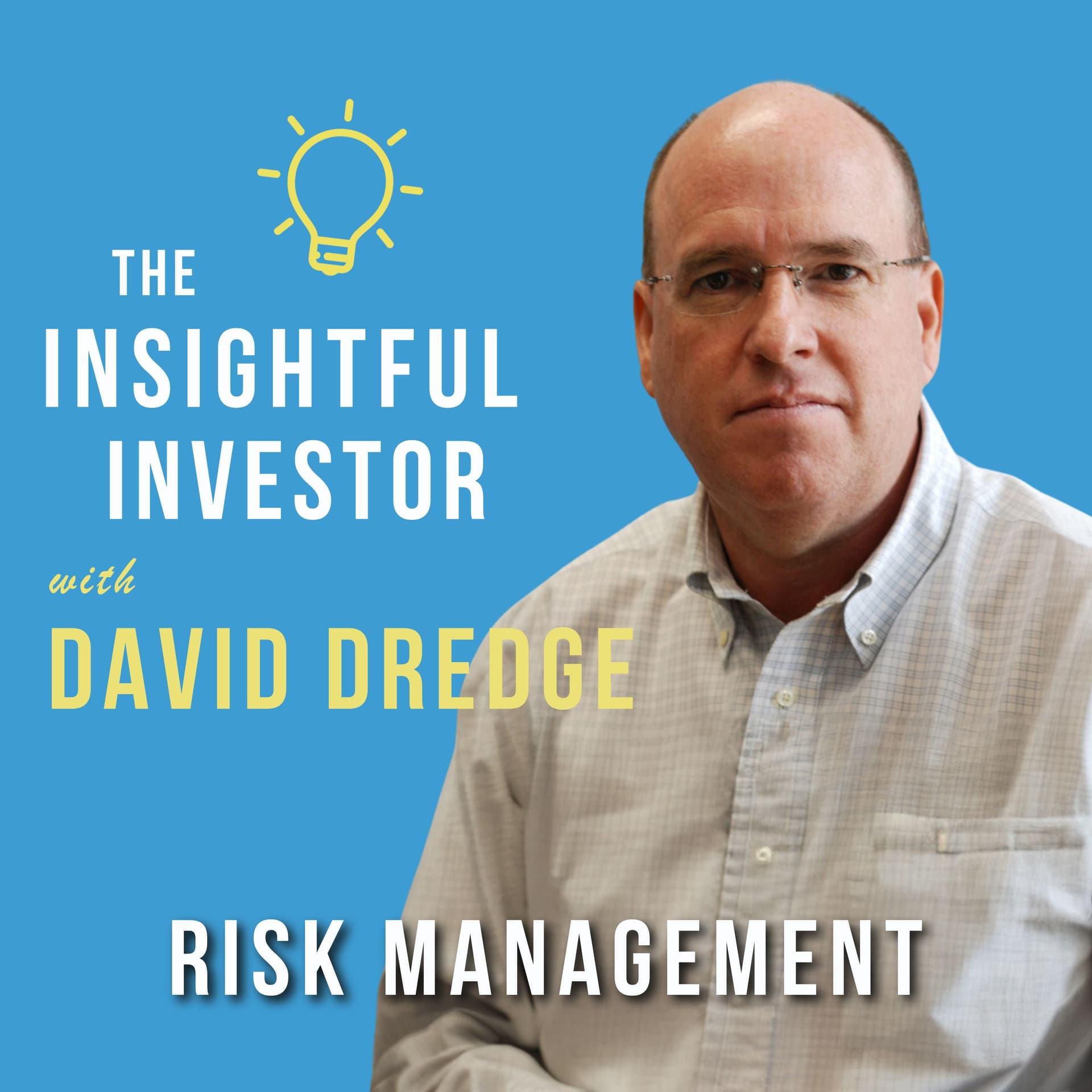
Episode #43 - David Dredge
Risk Management
Podcast Overview
The Insightful Investor is hosted by Alex Shahidi, Co-CIO of Evoke Advisors. The podcast features conversations with prominent investors and business leaders, focusing on unique and underappreciated market insights.
Guest Introduction
David Dredge
- Background: Founder and CIO of Convex Strategies in Singapore; over 30 years of experience managing risk across global markets.
- Previous Experience: Built and led emerging markets trading at major financial institutions including Fortress, RBS, Bankers Trust, and Bank of America.
---
Key Themes & Discussions
- Fascination with Risk
- Initial Interest: David's journey in risk management began with his experiences during significant market events, notably Black Monday in October 1987.
- Core Belief: Risk is not merely about predictability but understanding vulnerabilities and protecting against unanticipated outcomes.
- Understanding Risk
- Conventional Views: Most people equate risk with volatility; however, David argues that risk is fundamentally about loss and unpredictability.
- Nassim Taleb's Influence: David cites Taleb’s notion that "understanding is a poor substitute for convexity," emphasizing that true risk management is about preparing for the unexpected.
- Convexity in Investment Strategies
- Definition of Convexity: A mathematical concept where risks and rewards are asymmetrically distributed, allowing investors to maximize upside while mitigating downside.
- Portfolio Construction: Focus on embedding optionality into investments to create portfolios that can better handle volatility and unexpected market shifts.
- Challenges with Conventional Models
- Critique of Sharpe Ratio: David critiques the reliance on the Sharpe ratio for measuring risk-adjusted returns, arguing it fails to appreciate the importance of upside versus downside volatility.
- Volatility Misinterpretation: Traditional financial models often misrepresent risk as purely volatility, neglecting the broader scope of possibilities that could lead to significant losses.
- Importance of Tail Risk Management
- Tail Risk Strategies: David discusses how to build portfolios that include protection against extreme market movements (tail risks) without sacrificing potential gains.
- Cost Efficiency: The goal is to find low-cost insurance against market downturns, which can be achieved through strategic portfolio construction.
---
Key Takeaways
- Risk Management Philosophy: Protect against the unexpected rather than predict market outcomes; focus on creating portfolios with positive convexity.
- Market Behavior: Understanding market dynamics requires recognizing that past performance does not guarantee future results; adaptive strategies are essential.
- Skepticism of Predictions: Predicting market trends or economic shifts is often futile; instead, investors should focus on mitigating risks associated with their portfolios.
---
Economic Insights
- Central Bank Policies: Discussion on how central banks prioritize financial stability and the implications of their policies on markets.
- Current Market Environment: Analysis of the risks associated with rising interest rates and the fragility of financial systems reliant on high leverage.
Conclusion
- Final Thoughts: Emphasis on the necessity of robust risk management practices in navigating the complex, interconnected landscape of modern finance. Investors should aim for a balanced approach to risk that allows for aggressive participation in markets while safeguarding against potential downturns.
---
Additional Information For more insights and to access past episodes, visit [Insightful Investor](https://insightfulinvestor.org/).
Written by AI. May contain mistakes. Listen to the episode to check what was said.
Transcript
Automatic transcript. May contain errors.0:05Welcome to the Insightful Investor Podcast, a weekly series that seeks to share industry, investment, investment, investment, and market insights. We define insights as concepts that are counterintuitive, widely misunderstood, or underappreciated. In other words, unique ideas that you probably won't hear elsewhere. I'm Alex Shahidi, the host of the podcast and co-CIO of Evoke Advisors, a leading investment advisory firm. Learn more about our show at insightfulinvestor.org.
0:38Today's guest is David Dredge. Dave has over 30 years experience of managing risk across global markets. Dave is the founder and CIO of Convex Strategies, which is based in Singapore. He joins me today from Singapore. Previously, Dave had built and run emerging markets trading at Fortress, RBS, Bankers Trust, and Bank of America. Dave, I appreciate you joining me today. Thanks, Alex. It's really fun to be here. Let's kick it off with your background. Most investors focus on returns, yet you are fascinated by risk and the concept of risk. What originally sparked this unique interest? Well, thanks very much for having me.
1:20That's a bit of a long story, obviously, but I'll give you the short version. As you can see from the shirt I'm wearing, I'm a Utah boy through and through. I grew up in Utah, graduated from the University of Utah, got tired of how cold it was in the winter, and so went off to grad school in California, UC Berkeley. and had the great opportunity to study economics under Janet Yellen and financial derivatives under a guy named Mark Rubenstein. And I happened to graduate from Berkeley in spring of 1987 at the peak of Mr. Rubenstein's portfolio insurance business. I joined Bank of America, which was then run out of San Francisco with the main purpose of staying close to home.
2:07I didn't want to move to New York and get too far away from Salt Lake City. And three months later, the first Monday of October, 1987, Bank of America sent me to Singapore. So my ability to predict or manage the future was sort of laid clear very early on in my life. And I got here, like I said, the first Monday of October and the sort of senior trading guys here said, oh, you're so lucky, come to Asia and easiest markets to be a trader in the world. Own the currencies, ride the yield curves on the equity markets, nothing can go wrong. And two weeks later, in what was known as Black Monday in the US, known as Blacker Tuesday out here, when Hang Seng and Sydney stock indexes were down 50 % in a day, the bank lost significantly multiples of what their supposed loss limits were.
2:58And that's kind of when it first hit me that, geez, risk isn't what these guys think it is. And it's also, you know, I explained some of the questions you had in Professor Yellen's class about simplicity with which she looked at how the world would work in her laboratory formulas and models of linearity and normal distributions, equilibriums, and also some of the flaws in Mr. Rubenstein's assumptions around replicating options through future selling and assumptions about continuity of liquidity and volatility of volatility and lacks of assumptions around volatility smiles. And so that sort of started it.
3:37And then I had the good fortune of going around and helping set up emerging market businesses for Bank of America out here as they were all deregulating in the late 80s. And it became increasingly obvious that assumptions about what risk was were certainly not applicable to these markets where you had pegged currencies, restricted access, anything about historical volatility and correlation. And that led to this creation of the business of Bankers Trust, their EM business, which, of course, meant that to get that long convexity in emerging markets in 1991, there were no option markets. We had to construct them.
4:13And the most simple way of putting it, we constructed those by embedding optionality into yield-enhancing structured products to monetize the investor savings demand in the regimes of financial repression and mercantilist economic policies out here. And that has gone on ever since. And to this day, now that I'm in my retirement job, we just sit in that food chain of volatility supply and build portfolios of tremendous convexity and provide that convexity so that our clients, our investors can more aggressively participate in risk-taking in markets and free up so much of the capital that has forever been trapped in predominantly bonds and 60-40 type investment strategies.
5:03Had the fortune or misfortune of having really a front row seat at every major market dislocation since October 87. The Asian crisis and the LTCM and GFC and you name it, Japan's bubble. I was in Japan when that bubble burst starting up the yen interest rate derivative books. We're going to get into a lot of what you just covered, including convexity and what that means exactly. I'm not sure if everybody understands that. Before we do that, sticking with your background, obviously you've been in the business for 30 plus years. You've seen a lot happen. You just alluded to that. What would you say are some of the most interesting lessons you've learned over your history that have shaped your core investment beliefs?
5:49Well, I would use the Nassim Taleb, my former bankers trust, also former bankers trust alum, quote, which I, a paper he wrote that I quote all the time, understanding is a poor substitute for convexity. So what I've learned is it's uncertainty that is the problem, right? It's not what you think the risk is. It's all the things the risk could be. And that's what you're protecting against. I mean, every major event, every major occurrence, good or bad, occurred because it was unanticipated. Risk isn't about predictability. Risk is about vulnerability. It's a quote from my friend, Harry Krishna, in his book.
6:34And so when you're thinking about protecting risk. You're not protecting, you're not trying to protect a specific outcome that you're anticipating. You're trying to protect the things you're not anticipating. You're not trying to forecast the weather and then only do business when the weather is going to be good because there's so many other things that can sink your ship other than just the weather. That's why you buy insurance on your ship. In which case, you don't need to bother with forecasting the weather because you can sell your ship every day, even when the fees are the highest because everyone else is sitting in the port because their forecasters said the weather is going to be bad next week.
7:20And that's, you know, sort of that's really, I've gotten to the big story right at the beginning. And when we speak to pension funds and endowments and sovereign wealth funds, over the decades, the two biggest destroyers of compounding over time are bearishness and bad risk mitigation. And everyone's a sucker for the first one because they don't have the second one. And so everyone's, you know, the whole 60-40 model is simply driving without brakes, but betting that if you only drive at 60 % of speed, you probably won't run any curves that you'll crash on. But the correct answer is put good brakes on your car and drive fast.
8:05So the barbell is the path to compounding, the convexity, the acceleration and deceleration that you can create by having good stopping ability, which allows you to more safely drive fast. And that gives you the benefit of the performance in the wings, where the magnitude is what drives the geometric compounding, and gives you that acceleration and deceleration, convexity, that is sort of the magic dust in this compounding path. So let's dive into your risk framework. So you gave us some sense about how you think about risk. Would you try to be more specific about how that differs from the way most people think about risk?
8:50Yeah, I think, you know, most people have been educated and brought up in the industry in what I call sharp world, which is my sort of catch all framing for the meta fantasy land where all the assumptions of things like modern portfolio theory and efficient market hypothesis and neo-Keynesian economics come true. where there's linearity in normal distributions and time doesn't matter and arithmetic means are important. And in the real world, none of that stuff holds. And so measuring risk as, well, here's the simplest thing. Measuring risk as volatility is nonsense. Risk is loss. Risk is unpredictability.
9:40Risk is uncertainty. Risk is not a probability distribution. Risk is a possibility distribution. Risk is all the things that could have gone wrong, not just what actually happened. And in that effort for a compounding path, the objective isn't to reduce volatility. The objective is to push volatility into the good side of the distribution. Again, back to my first, my race car analogy. If you want a positive skewed race car, you want one with good brakes, so you're very safe in the unexpected curve, and you can drive really fast. You push the volatility to the good side. If you're probabilistically estimating unknown future curves, and you're going to try to target the average lap speed of 60%, well, then you're always going too slow in the best parts and too fast in the worst parts.
10:34That's a nonsensical way of managing risk. So you can think of everything in life, Alex, everything in life, convexity is the right answer. If you're going to learn to ski, I grew up in Utah, you're going to learn to ski. First thing you do is learn to stop. You go to any ski hill anywhere in the world, and they've got a bunch of little kids doing pizza and french fries, right? Learning how to stop. Once you learn how to stop, you get really good at stopping. You can go really fast. Going fast is easy, but it's really dangerous if you don't know how to stop. Same with a car. Driving fast is easy.
11:11It's just really dangerous if you don't know how to stop. And so you become naturally cautious. And again, you become susceptible to the siren song of bearishness because everyone's warning you, oh, there could be a really dangerous curve. You better drive slower. You better keep driving slower. There's a recession just around the corner. You better go slower. Because you don't have any brakes. And so, you know, you think about, you know, I see too much of this in my life. Portfolio managers, investment managers running people's retirement savings that, you know, have like a whole collection, a whole closet of bearish data that's coming to them from research and podcasts and all the doomsayers that they're collecting so that they can go out and justify how slowly they're driving.
11:59meanwhile i'm sure you've noticed that you know s &p is up 20 plus percent again this year nasdaq was up 55 last year it was up you know 30 in 2021 it was up 30 plus after the sell-off in q1 20 it was up 25 in 19 it's not up it may be on average up seven and a half percent a year or whatever the statistics tell you but that's not the way to compound the way to compound is to get the target, the potential of up and the risk of debt. In my experience, it seems that investors often try to create a science out of investing. And you mentioned sharp world, which is, and sharp ratio is the return to risk ratio, how much return you get per unit of risk.
12:47And it seems like there's just this desire to create a science out of this whole thing, when in reality, it's not really a science. Would you talk about that? Using one of Nassim's terms, Wittgenstein's ruler. Wittgenstein's ruler is a term that Nassim came up with based upon Ludwig Wittgenstein, who's a famous philosopher, that says if you're measuring a table with a faulty ruler, the table tells you more about the ruler than the ruler tells you about the table. Or more importantly, it tells you more about the person using the ruler. And the Sharpe ratio is the financial industry's greatest Wittgenstein ruler, because it is telling you that risk is volatility, that as you said, a unit of risk is volatility.
13:35It's telling you that upside volatility is the same as downside volatility. And it's rewarding investment managers to forego upside volatility, to drive slower as sort of their principal tool of reducing potential downside volatility. That is commonsensically, empirically, mathematically, obviously wrong if your objective is geometric compounding. Upside volatility is immensely good, certainly way better than downside volatility. And of course, again, in this investing path is geometric, which is, again, also too often ignored in the financial industry where we, in fact, I would say that the number one fundamental flaw in the financial industry is that we lack a benchmark, an incentive, a metric for geometric returns.
14:32and the system functions on an annual performance cycle and arithmetic returns and misses this point around volatility drag that when you lose 10%, you got to make 11 % to get back to break even. And when you lose 25%, you got to make 33 % to get back to break even. And when you lose 40%, you got to make 67 % to get back to break even. And so every time you're in the arithmetic world where you're adding those numbers together, you say, well, I'm down 25 and I'm up 25. That average is zero. But that's wrong. In the geometric world, you're still down and down more and more and more. And over time, each of those divergences from the expected mean is wealth destroying.
15:18We don't need to worry about the complication. We just need to be convex. We don't need to do the mathematics of it. We just need to control what we can control, which is our payout function. And so the correct answer to all this complexity and all the efforts of precision, as Frederick Hayek sort of would say in his Nobel Prize lecture, the effort to be precisely wrong, that economists have chosen to deem as important, that which they can measure. you don't need to try to predict x you just need to control your payout function your f of x and so again if you can introduce the positive convexity into your portfolio you can solve all of those problems by having more participation in good markets and less participation or more protection in bad markets and and it's not about predicting and it's not about forecasting and it's not about assumptions of probability distribution.
16:19It's about portfolio construction. So let's talk about convexity a little bit. The name of your firm is Convex Strategies. Would you explain the concept of convexity conceptually and then just conceptually how you can construct positive convexity? So convexity is obviously a mathematical term When we were kids in math, we learned that something that was convex was a smile. Something that was concave was a frown. The convex function holds water. The concave function spills water. Now, in particular, what we're trying to do for our investors is we're owning negatively correlating protection. So we're owning asymmetric potential payouts against bad market occurrences, against changes in correlation, rising correlation in the system.
17:15And that allows them to own things that have greater positive upside participation, most simple equities who participate in good markets have unbounded potential upside that they can accelerate higher. And you hope you can go out and capture and find the the NVIDIAs or Amazons that are the unicorns that are out there and participate in that and let that go. and have protection that cuts off the bad environments when those things, correlation rises and those things correct. And we do that through constructing optionality, volatility-based products where you're long the volatility, you're paying for the convexity that allows you to take more risk.
18:05The way you pay or the way you benefit from better breaks is that you can drive faster. the way back to your earlier question about numerators and denominators returns and risk the denominator is the risk if you can control that and manage and mitigate that then you can be more aggressive in how you pursue the numerator and that's that's the world we live in i would one of my biggest pet peeves alex in the industry is is the way the industry forgets what we learned in the third grade that before you could compare numerators and add them up first you had to equalize the denominator. And yet in the financial investment industry, people will say, well, the return of this versus the return of that, it's meaningless.
18:50If you've got different denominators, what's the risk? And then of course, the standard risk measure is volatility, getting back to the Sharpe ratio, which is a nonsensical risk measure and very, very badly utilized in the industry. So going back to this concept of convexity, is that the same as buying insurance. So imagine you have a portfolio where you're investing in stocks and because stocks have big negatives every now and then, oftentimes unpredictable, you can buy insurance to protect against that. Is that conceptually how you think about it or is it more involved in that? Correct. It's insurance.
19:29Now, in terms of what we do per se, we're not explicitly simply buying insurance on stocks. We're buying insurance on correlation on markets everywhere. And one of the big tricks with what tail risk guys do and what I think tail risk is, it's not about predicting what's going to happen. It's about finding what's priced efficiently for what may or may not be going to happen. If it's expected to happen, you're not going to find a good price for it. As I say all the time, no one's going to give you an asymmetric payout on what's expected. And so the trick in a sense for what we do is operating within the methodology of the financial industry, which utilizes, sharp world, utilizes pro-cyclical risk methodologies.
20:21Risk isn't the lightning strike that starts the fire. Only one tree catches on fire when lightning strikes it. The risk is the contagion of the fire that burns down the entire forest. It's the correlation as that spreads throughout the markets. And if you think about what value of risk or virtually all of the risk methodologies in the financial industry are, it's measuring the probability of a lightning strike. It's decided that lightning is the risk and it's trying to judge that. And it's literally telling you the longer you've gone without a fire, the less risk there is. But we know from an endogenous perspective, the risk is the interconnectedness of all the dry brush and the ever more crowded clogged trees because there's been no fires.
21:08And you can think of that dry brush as leverage in the financial system. As that leverage builds and builds, behind that leverage is less and less capital to absorb the losses of those positions. So obviously, sort of the mother of all uncapitalized tell risks were super senior tranches of subprime CDOs. at exactly the point they were priced the tightest to supposedly riskless US treasuries is exactly the point where they were the risk that would take out the entire banking system. So let me attempt an analogy to bring this to a very clear point. So you're investing in stocks, let's say, and you're taking risk with upside.
21:52You want to protect against the unexpected the downturns. And rather than just buying simple insurance on that, that might be expensive, you look for other types of insurance that may be a lot cheaper because it's covering risks that are not being properly priced by the market. Is that accurate? That's very good. That's very good. And that's in a sense. Now, yes, if you don't have the means of doing that or the know-how to do that, sure, you can change your risk profile by buying puts on equity markets that you're investing in. And the beautiful thing about convexity is even doing it poorly, even sort of inefficiently adding it to your portfolio will still make your returns better.
22:40And doing it well will make your returns much, much better. But the correct answer in a professional perspective is find ways, I'm obviously biased, hire professionals that can go out and really capably construct highly efficient, positively convex, negatively correlating asymmetric tail risk portfolios, and then be far more cost efficient how you go and take the participating risk. I always find it just mindless where people are paying hedge fund fees to guys taking positively correlated risk. Why are you giving away a big portion of the upside as a capital owner where all of the downside is yours?
23:26When you can get that participating upside very easily. I mean, if you don't have the sophistication to go and find whatever the best of it, you can buy an index. You could buy an ETF. You could buy stuff that's very cost efficient, where you get to keep all of the upside for the downside risk you're taking and concentrate your willingness to pay for professional help on people that can protect your capital, not people who are risking your capital. And the part of that that I think is really fascinating is when you're in the business of searching for cheap insurance, the part that I think really stands out is that The insurance is cheap because nothing bad has happened in that corner of the market.
24:11And as a result, people extrapolate that into the future. It's like your analogy of there hasn't been a fire for a long time, so fire insurance is cheap. And that's when it should be more expensive and vice versa. When it's expensive, that's the risk that everybody's expecting. And that's not the risk that really hurts. The risk that hurts is the one that nobody's thinking about. And that happens to be the cheapest insurance. You've given away my secret now. Now, the whole world knows. Some people ask me all the time, how do you find this stuff? I say, well, we find it. We sit in Asia, which is the center of all volatility supply because of this yield seeking, massive savings pools, histories of financial repression, structured product machinery.
24:54and we put a sign on the door that says we buy vault and all day a queue forms up and that queue is people who are recycling this vault supply that comes through the investment banking machinery and the beauty is it says that you know the the longer we've gone without a fire the cheaper the insurance is whereas we know the cheaper the insurance is the more fire risk there is so all we have to do is understand price and value and the complexity of supply and demand in those markets and how risk gets managed and accounted for and you know all the rules and requirements around basil 3 and dodd frank and uh ftrb trading book uh reviews and how that system operates and And again, we're partners with the banks because the banks have this coming in and they need to recycle it.
25:53They're hedging their exposures and we're helping them when nobody else will. because the dynamics of those flows, if the biggest players in a given market and throughout that whole food chain are allowed to account for the repackaged option premium as enhanced yield, as calendar year, compensation year revenue, but don't have to capitalize the tail risk because of the risk methodologies they're using over multiple years, well, not surprising, volatility supply will cross demand. And then it gets cheap. And the cheaper it gets, the more convex constructions we're able to create. And the trick for us is you just have to do it diligently, patience and discipline.
26:47We're not managing to a time horizon, a calendar year. We're on an infinite time cycle because nobody wants their insurance to decay to zero every 11 months. They want their insurance to be at least as much at the end of the year as it was at the start of the year, preferably more because the assets, the extra risk worth they're taking in a good year is compounded. So they'd like to have, you know, the price of your house is going up. So you'd like your house insurance to go up with it without necessarily having to pay more for it every year. And that's, you know, that's what guys like us or us anyway are trying to do.
27:22And the market naturally gives that to you because the higher the price of your house, the cheaper the insurance. Yeah. In the financial industry, that's exactly right. And we say all the time, our bank counterparties, we don't want to buy unless they want to sell it. We need them to want to sell it. We need them to have the supply. We're not trying to pick anybody off or trying to be more clever than somebody. we're just saying like any good value investor well there's good value with that there's good value in that structure at that price at that time for that duration they want to sell it we want to buy now that means being patient that means we can't we're not going to survive very long that going on 13 years we've survived if every time i'm bearish on a market we call them up and buy a bunch of puts because those won't be cheap those won't be good value it's an another Nassim saying, if you're buying an option for a reason, don't do it because it's probably priced correctly.
28:26There's only one reason to buy an option because the price is right. Yeah. And I guess you cover the cost of insurance and we're still talking at the conceptual level. You cover the cost of insurance because having those breaks in your portfolio allows you to take risk with the rest of your capital. And so when the insurance doesn't pay off, you've made more money because the risky side has done well. And so that covers that cost. And then when the insurance pays off and the risky side goes down, you've protected yourself. And that's where that convexity or asymmetry comes in. Correct. And this is one of the misperceptions.
28:59I wrote about it a couple of months ago and linked to a fantastic paper from the sort of father of ergodicity, a guy named Ollie Peters. And so Ollie's wrote a paper about insurance and the sort of misperception of how insurance works in the financial industry, because there's this perception that selling puts is profitable, so buying puts must be losing. But that's not the correct way to look at it, right? Selling puts and buying puts isn't a zero-sum game. Selling puts is providing insurance or providing non-recourse leverage. Buying puts is buying the insurance so that you can take the risk.
29:35So the comparison should be selling puts to buying puts and owning the market. And it turns out, obviously, if you buy puts and own the market, where for a fee, you get all of the upside and somebody else gets all of the downside. Well, guess which one compounds better over years of markets going up and down and up and down. Obviously, the buying puts and owning the market compounds way better than selling puts. Now, of course, selling puts looks like it has a really good sharp ratio because you forego all the upside has terrible compounding returns but all he wrote this fantastic paper about insurance and used as a great example why insurance markets work because in the sort of zero sum game mindset of the financial industry it's like well why would anybody buy insurance because it doesn't make any sense because you must lose money.
30:24But the point is, for those of us investing through a path, it's not a probability in a single slice of time, 200 parallel universes. So all these paper is about shipping. So if you're in the shipping industry, do you own a ship and your job is to ship stuff across the sea? and statistics say that five percent of ships sink every year but if your ship sinks you don't lose the expected value of five percent you lose a hundred percent now if there was one great big insurance company and he insured every single ship he's happy to do that based on the probability because 5 % of the ships he's insurers might sink.
Read the full transcript
31:12But it behooves you to pay his cost for the insurance and deliver goods every day. Whereas your competitors who don't buy insurance, they've gone out and hired weather forecasters, also known as economists, who tell them which weeks it's going to be safe to deliver ships based upon their forecast of the weather. Well, guess what? whenever they're forecasting bad weather is when the fees for shipping are the highest. The guy with the insurance is earning all of those fees because they're all sitting in the port. Meanwhile, guess what they find out eventually? The guys would, even if they have good forecasters, which, you know, these forecasters known as economists, I've not seen one of them that's good.
31:56But let's say hypothetically, they did have good forecasters. And these guys never once went out to sea without insurance when the weather turned out bad and was forecast as good. and they never once were sitting in the docks when the weather was forecast as bad and it turned out to be good and they could have been shipping at higher fees because the forecast was right what it turns out is there's a whole bunch of other ways to lose your ship too there's pirates there's exploding boiler rooms there's rocks there's all kinds of things which again is the perfect analogy for the financial markets i go to meetings and dinners and stuff conferences on risk every day, every week, every month, where some senior risk officer gets up and tells us about the risks they're worried about.
32:46And I, of course, always ask the same question, what about the risks you're not worried about? And they say, well, we're not worried about those. And I say, well, did you forecast COVID? Did you forecast the market rally after COVID in terms of having your ship out in the ocean? Did you forecast the breakdown and correlation between bonds and equities in 2022? Did you forecast the 55 % up year of NASDAQ in 2023? Did you forecast equities having their best first three quarters ever in 2024? I didn't forecast any of those things. So you consistently, your boat was sinking in things you didn't see coming, and your boat was sitting in the dock because you were afraid to take it out because your backward-looking thing said, well, the weather was bad last week.
33:38It'll probably be bad this week too. And this is what destroys wealth for end capital owners and arguably far too much transfers wealth to financial fiduciaries. It's really interesting. Whenever I turn on CNBC or read the paper, I often see somebody making a prediction about the future. Apparently, that's what people want to hear. Is your sense, and I'm assuming the answer is yes, that predicting what's going to happen next, a pointless exercise? Yeah. In fact, I wrote a, one of my notes is titled, The Pointlessness of Forecasting, one of my personal favorites, in July 2022. And again, it goes back to much of Hayek's work and guys like Frank Knight and GLS Shackle talking about uncertainty we don't know now of course i've become increasingly obsessed with a chap named stephen wolfram who's a physicist who's come up with this computational theory of the universe that says you know the only way to understand it is to do the computations and the computations are so immense to understand it the only way to do it is go through the time is you know actually live it.
34:48The only way to forecast the future is to get there. And that's true. And that's the whole point of, back to the quote, understanding is a poor substitute for convexity. We just don't know. And so the solution is to manage our payout and to optimize the geometric path that we're upon. It's pretty fascinating. It seems like if you ask the prognosticators what their track record is, almost all of them will over-attribute their success, meaning they remember the wins, they forget the losses, and there's no honest record keeping. And one of the things I find myself saying more and more, and one of the things that, I don't think of myself as a forecaster or a predictor, but we're pretty active observers.
35:40And given what we do, we get a pretty good window on the sort of structural risks and balances because we see where the leverage is because we're on the other side of it and the volatility we own. But one of the things I've kind of come to believe in the evolution of time and markets and economies is that much of what we talk about in terms of risk, geopolitics and politics, are actually downstream from economics. and that in reality, economics increasingly are downstream from markets. So one of the things that I talk to people, I have lots of friends in the industry, talk to people about a lot, particularly as this prediction of an imminent recession has been going on and on really since I blame the Bank of England for starting it in December 2021.
36:28First time they've ever forecast a recession in their history. And they've been forecasting it next quarter since Q4 2021. Still haven't gotten there. But, you know, people say, well, there's going to be a recession because of this, and therefore markets will go down. But my argument is that the purpose, in a sense, of the Greenspan put era, to a great extent, which evolved into inflation targeting, was to – actually, Greenspan said this at a breakfast I was at once after he'd retired – was to sort of break the dichotomy between their dual mandate. and that you could drive growth through the wealth effect of asset inflation and then not measure assets in your measure of price stability.
37:16And you could then do both. And if you think about really what's happened during the sort of low volatility of inflation era, that's exactly what was going on. The monetary policy, the low interest rates and QE was very much an asset inflation driven activity until the government joined in and the huge fiscal stimulus around the world in COVID. It didn't generate the CPI price inflation that they had defined as their price stability or what they call inflation measure. And so, so much of that wealth effect drives economic activity because the people who dominate that wealth also dominate consumption because they've got the dollars to spit.
38:03And economies that all logic says, oh, this economy should be slowing down or raising interest rates 500 basis points should slow the economy down. It doesn't happen because the wealth effect of continued inflated asset prices and greater income from those who own the majority of wealth of higher interest rates keeps the economy chugging around. And so the economy will go down when asset prices go down, not the other way around. And that wealth effect, which fuels the economy, also drives the wealth segregation as the rich get richer because they own all the assets that leads to the political and geopolitical instability and fragility in the system.
38:50And that's sort of, I don't know, that's a bit of an aside. I know we We weren't really talking about that, but that's increasingly how I sort of see the world and that fragility in the world as governments and central banks have created all this credit, true inflation, money and credit that has propped up these asset prices and the wealth of the top quartile of the world. There's something that I think is very unique about this industry. So obviously predicting the future in general is difficult. But it seems logical if you're an expert in an industry, you should have an edge in predicting what the future in your industry holds.
39:32But the challenge in the investment industry is much of that is in the price already. So there's another level beyond just actually predicting the future. It's predicting the future that's different from what the consensus views the future to be. Because even if you're right, and that's what everybody expects, it has no impact on the price. So that just makes it almost nearly impossible to predict the future. But we hear people who predicted X and Y and Z, and those are great stories. But what's often left out is the other 20 things they predicted that never happened. Yeah. And the fact, I know lots of people who could predict what an economic number is going to be or what a policy is going to be.
40:15But then they'll be wrong on what that means to the market. the market won't respond the way they thought they should there this is bad so market should this is bad for the economy so it should be bad for the market turns out it's not and so i'll agree with you alex i i say all the time the only thing that matters is positioning within that positioning in terms of the the return skew the fact the reason that returns are power law distributed not normally distributed is because of leverage it's very simple if if Everybody owned their house without a mortgage and house prices went down. Nobody would care.
40:54But once you introduce leverage and leverage in the bank that's providing the leverage to the homeowner, all of a sudden falling home prices become incredibly risky and power law driven falling asset prices. In my short career, all systemic risk issues have come out of the banking system because that's where all the leverage is. And when the banks get in trouble, then the system's in trouble because there's so much leverage and so little capital in the banking system and the turns and turns of moral hazard and the ever greater leverage created through regulatory guidelines, BIS regulatory capital.
41:41and you think you've learned your lesson and they impose a statutory leverage ratio. And then when it actually matters, they make everyone exempt from it and allow more leverage to go in. And I say all the time, you may have heard me say this on past, I think that's the first center on the Grant Williams podcast, Grant. Banks don't go out of business taking risk. Banks go out of business levering that which they can account for as riskless. it's similar to you're on a racetrack and you have a straightaway and no curves for a long enough period of time you go as fast as you can and and you feel like you don't even need brakes anymore and that's probably the time that the brakes are probably the most valuable that's exactly i mean exactly the way that the backward looking risk methodology of something like value at risk, you're always driving the slowest after the last sharp curve and driving the fastest at the end of the longest straightaway.
42:38The risk methodology is imposing a buy high sell low mentality. So this is the whole problem using Nassim's terminology is the lack of skin in the game. When you have skin in the game, that tacit knowledge, Pellagni's paradox, we can know more than we can tell. You create natural right skew distributions for yourself. You know that you can't recover from death. You know you can't recover from insolvency. You can't compound your way out of 100 % loss. So you don't take that kind of risk. So you're not using probabilistic decisions in things that can destroy you. And so you're trying to create a log distribution instead of a normal distribution of your outcomes.
43:27But when you get into a world of financial fiduciaries, and that skin in the game, tacit knowledge is no longer relevant, all of a sudden, you know, the academia and regulators come in with a short world. And they say, okay, we're going to function this way. And we're going to, you know, instead of putting brakes on the car, we're going to assign probabilities based upon past historical frequencies of what we think future curves might be, and then create this inverse logic around what risk is saying, well, there hasn't been a curve for a long time. So it's increasingly safe to go fast, which is exactly why you get the market dynamic of gradual ups and sharp downs.
44:09I think that's completely accurate in my experience. But there's also another level, which is even if you're aware of those things, there's a human condition at play where a lot of investing is counterintuitive because we can't see the returns of the future. We can only see the returns of the past. I think it's somewhat natural to extrapolate the past into the future as humans and flaws in that way. It seems like you have that added layer of challenge that humans face where they're extrapolating the past into the future, and that can cause you to crash. Right. Exactly that. I linked a paper from one of the sort of other leaders of chaos economics, a guy named Doin Farmer, who's just written a new book.
44:55But I think one of his papers last month, just building a computational model that shows that the power law distribution, the negatively skewed power law distribution of returns comes from leverage. And he builds a simple model that says there's two types of market participants. There's sort of market makers and there's fundamental investors. and the fundamental investors can use leverage. And the better they perform, the more money they attract and the worst performing ones, the less money. And the guy who performs the best during the good times is the guy using leverage. So he gets more money, so he uses more leverage.
45:29And so eventually the system, as you go through a good period, attracts more and more leverage. And all of a sudden the value investor who would be the buyer in falling prices because he sees better value becomes a forced seller because the leverage has made him vulnerable and thus creating the left-held return distributions that we're also familiar with. And that's exactly the point, is that that track record of the past rewards the risky behavior. And you get more leverage in the whole system, obviously, that again, probably the best analogy of how markets and economies function, again, going back to chaos theory, is sort of the specific field of self-organized criticality, which gives the forest fire, but the computer model of a sand pile.
46:16What causes the avalanche is the last grain of sand. It just becomes sufficiently fragile and the fingers of fragility woven in connectivity within the sand pile. It doesn't require some exogenous effect. It just needs one last grain of sand and it triggers the avalanche that triggers the connectivity of the next avalanche. And that's really the market. Eventually enough of that leverage builds up, particularly if you've got some market manipulator trying to prop up the sand pile, aka central banks, governments, and government moral hazard. And it gets more dangerous, preventing every fire until there's so much fire risk in the forest, you've got no choice to prevent fires, which creates more fires in the forest.
46:58And then eventually, all of Yellowstone National Park burns down, because you've created the GFC, and you destroyed the system. And then you start over again, and that risk builds again. Again, in terms of what we do for a living, our effort is to simply be on the other side of that risk building. So we say to people over time, in terms of how we talk about building tell-risk strategies, our objective is to grow the potential insurance that we could provide. And that's step one. Step two is to have it at the largest it's ever been right before you need it because we are just the inverse of the risk building in the market before it topples over.
47:41I've heard you talk about this concept of focusing on divergences rather than optimizing for the mean. Would you talk about that? And I've heard an example about the S &P 500's returns over a long period of time. Yeah. And so it turns out, again, in the geometric compounding, when you make that return path, a multiplicative path, and once it gets multiplicative, it becomes exponential. as opposed to an arithmetic path, you'll find out that the optimizer, if you ran some sort of optimizer, it's going to tell you you should be positively convex because what drives the compounding is divergences from the mean.
48:18If you're looking at the additive path of arithmetic returns, it's going to say target the mean because what happened this period doesn't matter next period, which is obviously wrong in capital growth between somebody's starting of savings and they're retiring. Now you can see that very clearly and we show examples just using the S &P. We do a 40-year monthly series of S &P returns and so 480 months and we look at if you miss the 10 best months or you miss the 10 worst months. What does that do to the compounding path? And so those 10 best months are roughly two percentiles of the months and the 10 worst months, the other wings, two percentiles.
49:01And over that 480 month, 40 year compounding path, the 10 best months contribute 30 % of the long-term compounded annual growth. And the 10 worst months contribute about 40%. The middle 460 months contribute the other 30%. They're almost meaningless. They basically just net off. I draw that picture and show that over a football pitch. So you think about the old traditional normal probability bell curve, you draw it on average in the middle, the soccer ball is in the middle of the pitch 50 % of the time. But none of what matters to the outcome happens at the average. All of the outcome is determined in the two percentiles of times that it spins in their respective penalty boxes and so again you come back to the same solution from a portfolio risk investment perspective hire a good goalkeeper and put more goal scores on the pitch and fight the incentive literally in the financial industry the incentive structure uh putting a bunch of midfielders on the pitch that pass the ball where the fans eyes are attracted to because that's where the ball spins most of the time because it actually has no impact on the outcome of the match.
50:22The outcome of the match is driven by preventing goals and scoring goals. So breaks and drive faster. So let's talk about some potential economic risks that you're seeing by looking at the hedges. Are there any risks or hedges that you find to be very cheap in today's market? There's a few things that we can still see in the market where we can still see uncapitalized risk. So in a sense, what we're looking for is that uncapitalized risk. Now, obviously the sort of mother of all uncapitalized risks in the system, everybody knows about because they know the losses are there. They're just not being accounted for.
50:58And so that's in duration, supposedly riskless government bonds. So, I mean, everybody knows that, I don't know where it is Now, last year, Bank of America had$138 billion of unrealized losses in their whole to maturity U.S. Treasury portfolio. Everybody knows that the Fed has a trillion dollar loss. Everybody knows that pension funds have massive unrecognized losses in Europe and insurance companies in Taiwan. So there's still, and you can see that in terms of the ball markets in our books, that there's still significant exposure in the system to long-end interest rates and to government debt.
51:41In general, whether that risk is because of rising interest rates again, arguably maybe that's the risk in the U.S. Treasury market, or to credit. But remember, Basel decided to treat all OECD sovereign bonds as zero risk weighted assets. So you have the particular issue in Europe. I would argue the risk is greater in Europe because no matter who you are in Europe, in the Eurozone, your bonds across the Eurozone get treated as zero risk weighted assets. So you see the problem previously was Italy, but now it's very much France, where there's no capital protecting not just the interest rate risk of those holdings and hold to maturity books, but also the credit risk.
52:22And so if the market wants to price credit risk into French bonds or Italian bonds or Greece bonds, it's immediately a problem because there's no capital supporting that risk. Now, it doesn't moustaticize because they don't have to account for it. They can just say it's unrealized losses and they're continuing to be underwritten and funded by their governments and funded by their respective central banks. So that's still a big deal. And this is why I've been saying for a long time now that central banks will keep the curve inverted until they get to the recession. Because if they let the curve un-invert and they lose control of the back end, it's a big problem.
53:00Which, again, the Fed cutting 50 basis points, you see the immediate risk of steepening in the back end is a problem. And that will continue to be a problem. So that's one. Obviously, what we've seen throughout this year and earlier this year, in particular, was some real compression of FX volatility. And in particular, major FX pairs. Now, of course, the one everyone talks about and everyone's cognizant of a Japanese yen, that FX volatility was super, super cheap in September of 2021. And has gotten bid up as dollar yen went from 100 to 160. and wasn't as cheap. But obviously the scale of the carry positions in yen are very significant.
53:45If you've read any of my stuff, you know I've been saying forever that Japan will be the trigger. Japan, after 30 decades of one of the greatest market manipulations in the history of the world, zero interest rates, QE on a scale that dwarfs anybody else, when they stop and go the other way, it has shock effects that is hard to fathom. In the realm of chaos theory and predictability, it's hard to figure out the emergence effect of this stuff. It's like a 30 year straight away, right? The insurance is going to be very, very cheap. It's going to be tricky to figure out how to go back the other way.
54:19But, you know, you know, and obviously China is another part of that factor. But Europe, in particular this year, in terms of cheap vol, you know, some of the cheapest vol. And again, we don't, we say vol, but most of what we live in is probably more accurate than third and fourth moment. So skew and vola vol, but got historically cheap. And some of the major currency pairs, euro, Swiss franc, sterling, Aussie dollar, New Zealand dollar had historical cheap convexity pricing. So sort of wing pricing, volatility and volatility that presented for guys like us, really, really super opportunities to build really highly convex, very cost efficient payout structures that, you know, the philosophy insurance is you want it to cost the least if you don't need it and pay off the most if you do.
55:14As it turns out, those things that have the most compressed convexity, where you can buy the most highly asymmetric products at the cheapest price are exactly that. The problem with the U.S. equity vol market from a dedicated tail risk perspective is it's the easiest place in the world to buy vault. And most people in the world, to the extent they measure risk, measure their risk as S &P beta, as their correlation to S &P in their overall portfolio. Now, in reality, their risk is their correlation assumptions, but they don't measure that, which is exactly why it's their risk. But because so many people measure their risk as their sort of correlation to S &P or to MSCI, mostly S &P, and then the easiest buying vol is generally fairly complicated and difficult with one notable exception.
56:03There's a future on the implied volatility of S &P index called the VIX future. And it's the easiest place in the whole world for somebody to go and buy pure vol. Now, the benefit of that is that it attracts so much of the demand for hedging that it's persistently expensive. And so there's a a premium that you have to pay to buy protection in S &P. Now, that premium doesn't necessarily exist in other markets where there's a better balance of volatility, supply, and demand. And that's where we tend to prefer to go fishing. But sometimes that skew creates other opportunities and other dynamics that are of interest to us.
56:46And another way to summarize what you just said is that if insurance is obvious and readily available, it's probably going to be expensive. And so you have to search for pockets where it's not as well known. That's where you get the value. Yeah, correct. Buying vol is like collecting liabilities. Selling vol is like collecting assets. The system has set it up so it's very simple for people to acquire assets. It's more complicated for people to acquire liabilities. It's easy to buy a stock or buy a bond. It's hard to issue a stock or issue a bond. It's hard to short them. So likewise with volatility, you can buy all sorts of products that embed short volatility.
57:32It's harder to find products that construct positive convexity and long volatility. And so in markets where there's this proliferation of products with embedded short volatility, that compresses it. And if it's a market where it's hard to buy the volatility, it's where you get the supply and demand imbalances. There's a lot of focus on the Fed and what they're going to do. They were raising rates, now they're starting to cut rates. And we know the Fed has the dual mandate to maintain reasonable growth and try to have price stability. But what about an implied third mandate that nobody really talks about, which is to do all that without increasing systemic risk?
58:12How do you think about that? Again, I've been around a long time and through my past sins, I know a lot of central bankers and I still speak to some of them regularly in formal or informal ways. I would argue their number one focus is on what they would call financial stability. Now, their stated priority in general is price stability. In many cases, the ECB and Bank of England, it's explicitly their priority. The Fed is actually somewhat unique where it's a dual mandate. Most of them have a primary mandate and growth or employment is a secondary mandate. But I would argue all of them, their number one focus is financial stability.
58:53And because they know that if they break the system again, they have to step in again and bail out the banks and buy all the assets. And they have to step in and do QE regardless of where their price stability mandate is to, you know, a la Silicon Valley Bank, right? They had to step in and provide the BTFP repo, which was in effect growing their balance sheet again, even as they're in the stated path of shrinking their balance sheet in their supposed effort to constrain rising price indices. So I think financial stability is probably the number one thing they actually care about. And all things eventually come down to protecting the banking system.
59:36Now, as long as they think the banking system can survive raising interest rates when price stability has gotten out of the quarter and they look bad for, well, they look stupid for creating something called average inflation targeting. Just before inflation explodes higher, they've said, we're going to let it run hot. And then, of course, when they let it run hot, it becomes highly reflexive. And then they call it transitory and they end up looking dumb. So they do what they do and they get away with it because they've set the rules up so the banks don't have to account for the losses. And yet, in a sense, they need to get to a recession or a slowdown so that people will continue to own the back-end bonds at what are now, if not necessarily higher levels of inflation indices, but certainly higher volatility of inflation indices and higher volatility of interest rates.
1:00:31And the big benefit that bonds presumably had in a 60-40 type portfolio was one, they had really low volatility. And two, they had this intermittent correlation benefit because central banks cut rates when equity prices fell. And they created that Greenspan put your this negative correlation. But that becomes a problem now, both in trying to manage the price stability mandate, the growth mandate, and the ultimate mandate, which is the financial stability mandate. And then you've got the throwing problem of what has become commonly talked about in terms of the fiscal dominance situation that the governments have put all of the central banks in by basically relinquishing any independence they supposedly had by running debt beyond 100 % of debt to GDP, where their ability to continue funding at interest rates that may or may not be necessary to suppress inflation raises question of the central bank's freedom and flexibility to do what they would need to do.
1:01:35Because governments, not just the US government, but the world over, Japan, obviously the biggest question mark, How does the government finance themselves at 260 % of debt to GDP if Bank of Japan had to go to positive real interest rates? It's hard to imagine. The math gets a bit scary. If you were elected the next Fed chair and you were truly independent, how would you approach getting us out of the current economic situation? That's a dangerous question. Well, the first thing I would do is solve exactly what we were just talking about. I would start breaking up the big banks, and I would force a lot more capital into the banks.
1:02:18And I would try to, if it was me, I would start a drive to reimpose Glass-Steagall and take the highly risky investment banking businesses back out of the regulatory umbrella and safety net, deposit insurance and implicit guarantees of banks, and go back to the market disciplining of high risk investment banking businesses, and partners capital and their capital at risk instead of governments and taxpayers at risk of that stuff being embedded in government. Well, in the case of GSIBs, globally systemic important banks, explicitly government-guaranteed entities. So I would try to reduce the financial stability emphasis that currently exists within central banks and their regulatory functions by, in effect, reimposing Plastiva and putting more discipline back in the market mechanism, less in the moral hazards realm.
1:03:21Once you've done that, then you become far more flexible in how you use interest rates. I would again advocate now, whether it's the right rule or not, I would advocate for something like the Taylor rule, where you take discretion away from these guys, because these guys don't know. They're no better. In fact, based on their track record, they're worse forecasters than what are generally bad forecasters, even in the private sector where the guy has some accountability. These guys are absolutely proliferately bad forecasters. So you don't want them to have discretion. You should never, I would, I would, firstly, I've said this a very long time, so I don't mind saying it.
1:03:58This may sound a little flippant, but nobody should ever have interest rates lower than 2%. It's just madness. Bank of England never went below 2 % during the Great Depression and World War II. Why did they go to zero after the GFC and COVID? Were those worse than the Great Depression and World War II? Somehow I doubt it. But it's just so dangerous when you get there. You create, as I say all the time, what did they think would happen? What did they think after years and decades of zero interest rates and QE and explicitly saying we're running these policies to incite inflation, that average inflation targeting, we're going to run hot to get the average back up.
1:04:44We're no longer going to treat 2 % as sort of a ceiling. we're going to treat it as a target and a floor we're going to go above it what did you think was going to happen obviously we're going to get to a point where you needed to raise interest rates at exactly the time the system's too sensitive to it the financial stability issue is so high because you've been at zero and and qe for so long big balance sheets and the government's inevitably at zero and qe are going to blow through what historically was you know well historically and structurally deemed the the limit of 60 percent under the maastricht treaty everyone's going to blow through it and so you just create this madness and this loop that we're caught in now very hard to get out of so uh break up the bank split up investment banking and i had this argument when they did tarp i said you've got everything in tarp tell everyone they can come out anytime they want no restrictions but they they lose the guarantee They go do any business they want.
1:05:44There's no more guarantee. And you sort of effectively reimpose Glass-Steagall and the banks that stay in TARP have the deposit insurance protection and no longer can do high risk, high compensation activities. That's what I do. So would you share your best guess about whether there's some master plan to try to navigate us to a soft landing? And I don't mean from high inflation and try to avoid a recession, but more about navigating from our massive debts that just seem to grow because we have these perpetual deficits. Or do you feel like these big issues aren't really that well understood and therefore an accident is more likely?
1:06:27Well, I think an accident is inevitable because there always will be self-organized criticality. You'll build up sufficient fragility and the system will reset. That will always be the case. Bifurcation maps and chaos theory. So it's inevitable. It's just a question of how long you can keep preventing forest fires until you get ever more fire risk. I don't see any plan coming from anywhere other than more debt. I don't see it. I mean, there's no indication from the current government, the competing parties for government in the U.S. or other places. um i've been as i was as i'm getting ready to write my note for tomorrow i'm sitting here reading mario draghi's a sanctioned report on the future of european competitiveness and his only solution for better competitiveness in europe is 800 billion dollars a year more borrowing at the central level to be spent i guess because blowing through 100 of debt to GDP at each state level apparently hasn't gotten enough competitive.
1:07:33So you need to do more borrowing at the central level to go get that competitiveness. And so I think personally, the biggest risk is still the same one. It's keeping up with the asset inflation. And asset inflation seems to me their only solution. It's their number one driver of growth. and it keeps the rich people happy, which seems to be a political positive. And so I think, you know, I go back to it from an investment perspective, you've got to participate, protect. You know, the failings that most people have made, certainly since GFC, is they've under-participated. They've under-protected themselves from the asset inflation drive.
1:08:18And then, you know, everyone thought, well, COVID, boom. And then, boom, off we go again. You know, NASDAQ doubles again and again. And so, you know, I come back to this sort of barbell philosophy. You've got to protect yourself from that right tail. But if you're going to play the right tail, you better have some good breaks. Because, you know, whatever the next GFC or COVID or Asian crisis or tequila crisis or European credit crisis or Japan bubble burst or the, you know, China bubble burst that we've been going through for the last two years. You know, it's probably a bad one. And so you'll want to have some protection against it while you're going out and taking risks.
1:08:55But the solution never has been and still is not owning things with bounded upside that don't provide downside protection. And obviously, the biggest one of those is bonds. And owning government bonds is though it has some sort of portfolio benefit. When the guy selling them to you has a stated policy of trying to debase his own debt, doesn't strike me that that's going to provide a good retirement 20, 30, 40 years down the road. It certainly hasn't for people retiring this year that own bonds. I mean, especially imagine since I was in Netherlands last week, you know, if you think 60, 40 has done bad, imagine what 20, 80 is doing in your pension funds.
1:09:36I mean, places like that, you know, when yields got to negative, you got 80 % bonds, you have, you have, you know, public sector pension funds in Europe that were down 40, 45 % in 2022. Good luck compounding back out of that at a 3 % yield. Disaster. You talked about a fragile system. So these are often exposed during a major shock. A couple of years ago, interest rates jumped 5 % unexpectedly in a relatively short period of time. Are you surprised by the lack of collateral damage following the recent interest rate increases, or do you think it just takes time to manifest itself? In a sense, nothing surprises me because I don't have any expectations of the future.
1:10:22Yeah. I think, again, I had this conversation with a friend last night. I think particularly in the US, but stock markets are up everywhere. Property markets are through the moon everywhere. the wealth effect is more than enough to sustain the economy. And people who are earning at the higher interest rates, it's a cash flow positive for them. People, particularly in the U.S., where you can take out 30-year mortgages and where corporates have access to the world's deepest capital markets for issuing long-dated bonds can borrow. So borrowers have had a significant benefit from these rising interest rates.
1:11:06And the people who would be heard and the people that if you thought about, oh, this is going to cause a crash, is the guy who owned the bonds. But the guys who own the bonds are central banks, banks, pension funds that don't account for the losses. So the gains, the benefits to the borrower of those mortgages, of those long dated bonds they issued, et cetera, is out there loving life, living large. The guys who should be bankrupt and blowing up, Silicon Valley Bank did, but everyone else, they're not reporting the losses. The Fed's not reporting the losses. The government's happy to keep spending.
1:11:45Yeah. So, yeah, I'm not surprised because I didn't expect the market to crash. I did, in a sense, expect interest rates would go up because I could see how all was priced in 2020 and 2021. want. But I don't think higher interest rates hurt economies the way we're told it does. I think most economies function pretty well at higher interest rates because savers benefit. And to the extent you could borrow long, which in the US you could, it's just the guy who owned the bonds and the guy who owns most of the bonds or sharp world regulated entities that don't account for it the way somebody would if it was their own money.
1:12:34And obviously it helps when the government runs massive deficits and throws money into the system to help buffer some of this. Yeah. The biggest borrower at these now higher rates is the government. But Janet Yellen shows you she doesn't mind borrowing short at the highest point the yield curve she's happy to do it she's not going out of business her negative cash flow isn't driving her to the poor house she doesn't care so you know she's happy to issue more five percent bills over and over and over and over again if a corporation had her funding structure they'd probably be in a bit of trouble but she's not in trouble she's the biggest borrower and the fed was the biggest owner so they have the biggest unrealized loss and they're I don't want to use the word, the Ponzi scheme just carries on.
1:13:25I recall back in 2011, I believe it was, when there was a view that treasuries are grossly overvalued, that the only buyer is the government, they're going to step away, they're not going to buy anymore. And just about everybody thought it was one of the worst investments you can make. Yet we had an unexpected recession and treasuries rallied massively. How do you think about the relationship between the demand for the bonds and then how that demand can suddenly shift when you have a recession and the market starts to discount falling interest rates? As I said earlier, I think in a sense, this is what the central banks decided they wanted.
1:14:03They wanted to invert that yield curve, get people to believe the recession is coming so they'd continue to hold on to the back end bonds. not let the back end blow through 5 % or whatever in the U.S. And so I think they would like, in a sense, a recession. Of course, they want a mild one. They don't want all a bunch of defaults because then the banks are back in trouble again. But I think they're playing exactly that game where certainly how many times, depending on how you measure them, there's been four to seven pivots by the Fed where they've come out and basically said, oh, you know, the recession's coming.
1:14:43Now, the Bank of England said it every quarter for three years. So there very much has been a narrative around, and you can see quite clearly, certainly with the Fed's actions recently, the asymmetry in their bias, right? They were holding rates at zero and still doing maximum QE when their measure of inflation, PCE, was at six. now they're cutting 50 basis points in their measures it just barely below three you know wait a minute you know i saw some note from somebody you know well now that inflation is sustainably below three the fed should normalize interest rates as though normal as well is the environment we've had post gfc which in fact is the greatest anomaly in all of interest rate history As I said, the Bank of England didn't even go below two during World War II.
1:15:35But when we were consistently above one, we threw the whole kitchen sink to get it back to two. We did ZERP and QE and everything, you know, FAIT and everything we possibly could do. You know, one and a half, 1.8, we still got to be at zero. But we're slightly below three, and so we need to cut rates down from five. there's an almost obvious asymmetry. And I quote all the time, Arthur Burns, sort of mea culpa speech, where he says exactly that, you know, in his failings in the 70s of squashing the inflation and then continuing to spike back up again, every time it started to come down saying, you know, there's an obvious sort of institutional asymmetry bias of how we think about it.
1:16:20We're very quick to respond to slowing economies and very slow to respond to heating economies. And I think the Fed's no different today. Well, Dave, this has been fascinating. I appreciate you sharing all your insights. I know it's late at night in Singapore, so I appreciate you staying up to discuss all your perspectives about risk with us. It's great. I was very extensive, very well-prepared, and I appreciate you invited me along. I'm very glad Matt introduced us, and it's been a lot of fun to talk to you. Please do stay in touch. Will do. Thank you. Thanks for listening. We hope you enjoyed this episode.
1:16:59Please visit our website at insightfulinvestor.org to access past shows and learn more about our podcast. If you have questions, feel free to email us at info at insightfulinvestor.org. And if you enjoyed the discussion, please subscribe to this podcast to ensure you don't miss future episodes. And don't forget to forward today's conversation to others you think would enjoy listening. This podcast is provided for informational purposes only and should not be relied upon as legal, business, investment, or tax advice. All opinions expressed by podcast participants are solely their own opinions and do not necessarily reflect the opinions of Evoque Advisors, their affiliates, or companies featured.
1:17:42Due to industry regulations, participants on this podcast are instructed not to make specific trade recommendations, nor reference past or potential profits. and listeners are reminded that securities trading, commodity trading, and alternative investments are complex and carry a risk of substantial losses. As such, they are not suitable for all investors.
1:18:05Listeners should be aware that guests featured on The Insightful Investor may have current or past associations with Evoke advisors or the host, including as an investment manager of a private fund opportunity by Evoke or access through an affiliated Evoke fund or as a client. Participation as a guest on the podcast should not be perceived as an endorsement or testimonial with respect to Evoke Advisors, the podcast host, or their services. Similarly, the inclusion of a guest on the podcast does not imply that Evoke Advisors or the host endorses the guest or any company with which they may be affiliated or employed.
1:18:44Listeners should be aware that guests featured on The Insightful Investor may have current or past associations.
From the publisher
Dave has over 30 years of experience managing risk across global markets. He is the founder and CIO of Convex Strategies, based in Singapore. Previously, he built and ran emerging markets trading at Fortress, RBS, Bankers Trust, and Bank of America. Dave shares insights about risk management, including identifying flaws in conventional risk frameworks.


