
In short
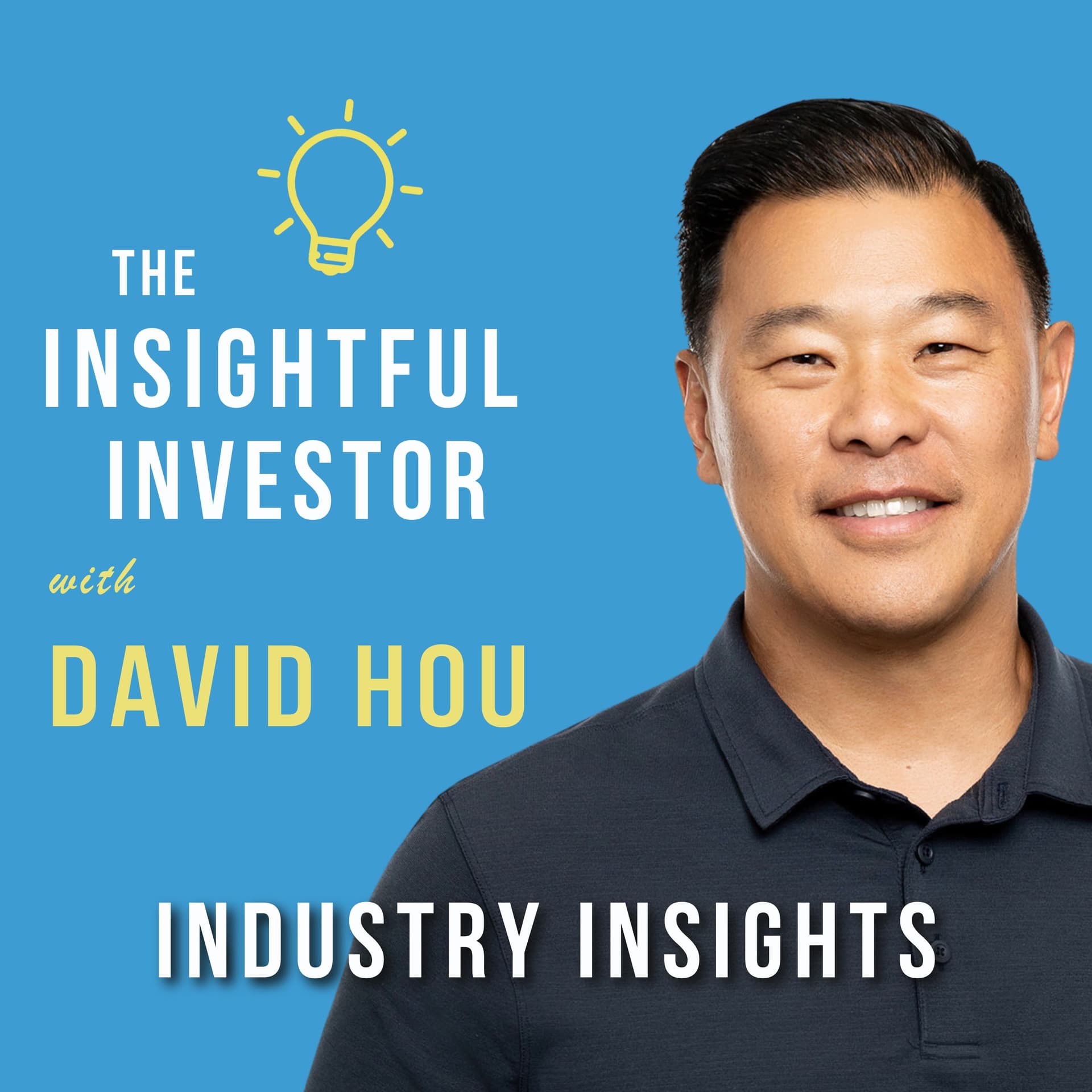
Insightful Investor Podcast Episode #46 - David Hou: Industry Insights
Episode Overview In this episode of the Insightful Investor, host Alex Shahidi engages in a detailed conversation with David Hou, co-founder and Managing Partner of Evoke Advisors. David shares insights from his extensive 32-year career in wealth management, provides a historical perspective on the industry's evolution, and discusses the importance of fiduciary responsibility in financial advising.
Key Themes and Discussions
David Hou's Background
- Early Life: Grew up on a chicken farm in Ontario, California. His mother owned a chicken ranch, instilling a strong work ethic and the value of education.
- Education: Attended UCLA, studying economics and business, leading to a career in investment banking at Houlihan Lokey.
- Transition to Wealth Management: Started at Goldman Sachs, moved through various firms, and ultimately co-founded Evoke Advisors.
Evolution of Wealth Management
- Historical Context: In the early 90s, the wealth management industry was primarily transactional, with a focus on brokerage rather than fiduciary advising.
- Fiduciary Responsibility: David emphasizes the shift towards fiduciary standards, allowing advisors to provide independent, objective advice without conflicts of interest.
- Regulatory Changes: The subprime mortgage crisis was a significant turning point that brought scrutiny to the industry and led to more regulations focused on client interests.
Insights on Financial Advisory
- Role of Advisors: Good advisors should be curious, question their clients' portfolios, and ensure alignment with clients' financial goals.
- Client Relationships: Importance of maintaining a low client-to-advisor ratio to ensure quality service and attention to detail.
- Risk Management: Advisors must continuously assess portfolios, especially in changing market conditions, to manage risk appropriately.
Investment Philosophy
- Active vs. Passive Investing: David advocates for a balanced approach, using passive funds for tax efficiency and cost-effectiveness while employing active managers for downside protection.
- Alternative Investments: Discusses the benefits and risks associated with alternative investments, particularly in the middle market. He believes these can offer uncorrelated returns and greater potential than larger, more scrutinized funds.
Challenges in the Advisory Industry
- Client Blind Spots: Many clients are unaware of the risks associated with their investments, particularly risk creep due to the push for higher commissions on riskier products.
- Transparency Issues: Calls for more transparency in financial advising, especially concerning fees and underlying motivations for product recommendations.
Conclusion David's insights highlight the complexities of the wealth management industry and the importance of aligning advisor incentives with client objectives. The discussion underscores the necessity for transparency, fiduciary responsibility, and continuous evaluation of client portfolios to navigate the evolving landscape of investing successfully.
Key Takeaways
- The evolution towards fiduciary standards is crucial in enhancing client trust and aligning interests.
- Advisors must be diligent, questioning, and proactive in managing client portfolios.
- Alternative investments can provide diversification but must be approached with caution and thorough understanding.
- The financial advisory landscape is still dominated by traditional brokerage models but is gradually shifting towards more independent and fiduciary-driven practices.
Additional Resources
- Visit [Insightful Investor](https://insightfulinvestor.org/) to explore past episodes and subscribe for future discussions.
- For inquiries or feedback, contact info@insightfulinvestor.org.
Disclaimer This podcast is for informational purposes only and should not be considered as legal, business, investment, or tax advice. Past performance is not indicative of future results, and listeners should seek professional guidance for their specific situations.
Written by AI. May contain mistakes. Listen to the episode to check what was said.
Transcript
Automatic transcript. May contain errors.0:05Welcome to the Insightful Investor Podcast, a weekly series that seeks to share industry investment and market insights. We define insights as concepts that are counterintuitive, widely misunderstood, or underappreciated. In other words, unique ideas that you probably won't hear elsewhere. I'm Alex Shahidi, the host of the podcast and co-CIO of Evoke Advisors, a leading investment advisory firm. Learn more about our show at insightfulinvestor.org.
0:38Joining me today is David Ho. David is a co-founder and managing partner of Evoke Advisors and one of my business partners at Evoke. Plus, he's a great friend. David has had a very long, successful career in the wealth management industry, starting at Goldman Sachs in the early 90s and then at Merrill Lynch, where we first met about 20 years ago. He then left to launched Luminous Capital in 2008, which was acquired by First Republic Bank in 2012. His final move was to start Evoke in 2019 and to very wisely merge his advisory firm with mine in 2020. Welcome, David. Thank you, Alex. Great to be here.
1:18I always like to start with people's background because it gives us a window into what made them who they are today. Would you share your journey from growing up on a chicken farm to going to business school, investment banking, and ultimately the wealth management business? Sure. So, well, I was first in my family to be born in the United States in the mid-60s, and my parents obviously were immigrants from Taiwan. And my mom was a very, very industrious individual. She always wanted to be in business. She had several businesses, small businesses. When we were growing up, my brother and I, just my brother and I growing up, and the chicken farm got started because my mom said one day, you know, I have a friend who's doing really well owning a chicken ranch here in Ontario, California, the beautiful Ontario, California.
2:05And she wanted to own a ranch herself. So when I was in early days of high school, junior high, my mom acquired this ranch and my brother and I started becoming familiar with the chicken ranch industry or chicken poultry industry. It's really for eggs. We were harvesting eggs and taking them to market. We had about 40 ,000 chickens. And so I think what happened though was really interesting for me was that I saw how hard it was to make a living. My mom was working her butt off. My dad was an engineer. He was working in aerospace engineering at the time, Southern California. So he was at work every day and my mom was running the ranch and my brother and I were basically free labor.
2:45So we were getting up early in the morning, doing work before school and then getting home from school and working after school and working on the weekends. And I got to tell you, it was tough. What I mean by that, it was a hard job. It's a labor job. Doesn't smell great out there in the chicken ranch. You're working hard. And I learned from my mom because she was out there every day and instilled in me the drive to work hard. Number one. Number two is that I realized, wow, you got to go to school, get an education because you don't want to be a laborer. So it made me work very hard in school to get a profession, basically, that you weren't going to be out there laboring all day, toiling away.
3:24It's a great motivator. It's a great motivator. My wife and I always kid around saying like, well, our kids, if they ever get too lackadaisical, we should buy a chicken ranch and put them to work on the chicken ranch. So it's a joke, obviously, but I've really thought about it sometimes. Okay. And then you went to business school and then investment banking. Talk about that path. Went to UCLA undergrad, studied economics and business, graduated in 1988, ended up working at an investment banking firm called Houlihan Loki. It was an interesting time there. They had just launched and started the restructuring group in 1988.
3:59I met some great friends I still have today, Erwin Gold, who ran the restructuring group for many years, and mentor in many ways and worked under him and others in Houlihan and really kind of learned investment banking, the restructuring business, learned a lot about valuations of companies and how companies get valued, of course. So it set me off on the finance side of the industry, worked there for a number of years, and then went back to business school at UCLA. And then what led you to wealth management? It started earlier than even working in finance. When I was at UCLA undergrad, my brother, we'd count cards, actually.
4:38We'd go to Vegas, and we would drive in the middle of the night to Vegas. On a Friday night, we'd go and play blackjack because we learned how to count cards. We bought some of these early books on card counting. And so the math of card counting really got me interested in the numbers and in the statistics of things. And as a young person who's learning about investing, in the 1987 stock market crash, my brother and I, we had some money that we saved up and we started pouring over some of the stock listings. And back then you looked in the newspaper or you watched this obscure channel before CNBC that had some business news on it.
5:14But basically, that's where I got interested. And my brother and I just started investing and finding companies to buy right after that 1987 stock market crash. We invested our few meager savings that we had into the market. Got me really interested. And then eventually, graduating from UCLA, it just kind of carried on while I was working at Huland Loki and going to business school. So was this interest in thinking about the world in probability terms and investing that led you to the industry? Yeah, I don't think that I consciously at the time really put two and two together. When you think of the market being statistically based, certainly mathematically based, I don't think I had a connection of the two.
5:54I just knew that I enjoyed the math side of statistics, especially as it pertained to gambling and hopefully having an edge when you were gambling and tying that into the finance or the capital markets and investing dovetailed together. I don't think there was a conscious process. Back then, we were just looking for ways to make money or to save money and to invest it optimally. Yeah, it's interesting. It's a question I ask a lot of guests. And it's hard to remember what you knew 30 plus years ago. And my guess is, is most people assume they knew a lot more than they did at the time. And I think what you're saying is right, which is growing up, you don't really know very much.
6:33You think you do, but you really don't. And you stumble into an industry and the people who've been in it for 30, 40 years look back and feel fortunate that they happened to stumble into the right place at the right time. Yeah. I look back on my stumbling into this industry. I'm like every day I have to pitch myself and say, wow, how the heck did I get here? And how the heck do we get to do this every day and have an amazing career and life and be able to support our families. It's just a great industry. So if you had to go back and you had a choice of running a chicken farm or doing this, I assume you would pick this.
7:07Yeah, for sure. There are some redeeming qualities of owning a chicken farm. That's for sure. I can tell you that when you're done at the end of the day, you're beat and tired. You do have a sense of accomplishment for sure. So let's transition into the wealth management industry. One of the goals of this podcast is provide insights for people who don't work in this space and maybe even for people who do work in the space. You started at Goldman Sachs in 1992 and you've witnessed a pretty significant evolution of the industry since that time. It would be helpful if you shared some of that perspective about how you've seen it evolve through time and potentially what direction you see it going.
7:48Yeah, sure. Well, back then in the early 90s, the industry had been around for a long time. But a lot of his experience of what you have, obviously, when you enter the industry and your experience, that's obviously what my biases are. I obviously entered through a brokerage firm, Goldman Sachs, asset management brokerage firm and investment bank. At that time, it was really more brokerage focused. Our division at that time, the private wealth division, really had no way to be a fiduciary advisor. We were managing money for clients on a transactional basis, believe it or not. Look back and you kind of go, oh my gosh, I can't believe we did that.
8:25But it was basically everything was on a transaction basis. You were essentially a stockbroker to your clients, giving them ideas and perhaps running a portfolio for them. But everything was done more transactionally based. It was a time where the industry was changing. More and more firms were adopting the ability to be a fiduciary and the ability to provide fee-based asset management, which Goldman eventually did, I think shortly after, probably in the mid-90s, right around that time that they started allowing some of their advisors to do that. So one of the reasons we left Goldman, my partners and I, was that that was not available to us.
9:02If even a client asked us, hey, could you manage this money for me in a fiduciary manner with fee-based, not transaction-based at all? At the time, we weren't able to do that. So my partners and I eventually left Goldman. One of the main reasons was to be able to pursue that more, I think, investor-friendly kind of platform. And the reason fiduciary is important is because you're providing independent and objective advice. Would you talk through how you think about that? Yeah. So as a fiduciary in the purest form, meaning that today I'm in an environment where we can't even make a recommendation to clients and get compensated, I mean, on a transaction basis.
9:43So as a fiduciary, it's been for me and for my partners, I think the ultimate structure where we're basically have very little conflict with our clients. At the end of the day, the clients compensate us on a fee basis, quarterly over time, of course, with no transaction bearing costs and fidelity. Even these days, our custodians don't even have a transaction costs for when you own most securities. So when you buy an ETF, there is no transaction charge. So that fiduciary structure really is the main tenet of what we do today. A lot of investors probably don't realize that you have these two different models.
10:22I think some do, some don't. And it really governs all of what we do today at Evoke Advisors and most RAAs that are not affiliated with a broker dealer. So do you feel like it's a fair description to say 30 plus years ago, it was mostly brokerage firms and it was more of a transaction model for the industry. And it's slowly, probably too slow for you and me, but slowly evolving to a model where it's more about providing independent and objective advice to the client. And so there are some legacy parts of the industry that are still kind of in the old model, but that's changing over time. Yeah.
11:02If you think about our industry in the early nineties or late eighties, I mean, there are a lot of things that changed over the last 30 years. Think about even the allocation of firm underwritings, let's say the brokerage firms, or if you think about distribution of special investments that that firm might have access to. There's much more oversight now than there used to be back when I was in the industry, in the brokerage industry. I would say that not only has the industry gotten better, the regulation's gotten better, everything's gotten better. When I say better, I mean more client-centric, more client-friendly.
11:35Goldman Sachs today, of course, all the big brokerage firms today have ability to be a fiduciary manager to their clients. That's a good thing. And that's transitioned over the last 30 years. It's gotten better and better, I think. And I think it will continue to get better. It just matures. The market matures, and I think that's a natural process. Is it a little surprising that it hasn't moved faster? Because when you say client-centric, to me, it seems like that should always be the case. Why is that a new concept? Yeah, I think there's a lot of legacy issues there, Alex. In the last 30 years, the biggest inflection point was probably the subprime mortgage crisis.
12:14That opened up a can of worms as far as regulators to the public about how did firms on one hand distribute subprime mortgage product to their investors, but yet on the other hand, they were shorting it for the big hedge fund clients. So I think there was some effort in Congress under the Obama administration to try and regulate the industry better when they made some good changes, I think, but some maybe they weren't as good as we had hoped. But the industry certainly has changed over that time. I think that was almost a watershed time because that would really put a microscope on the conflicts of interest when you're an underwriter of some kind of security and also the recommender of that investment to your client base.
12:58So it's getting better. I think there's more to go. And I think you're right. The speed at which things have changed has been probably less rapid than many of us would like. But I think that it's gotten so much better over the last 30 years. Okay. So imagine we're sitting here and the wealth management industry did not exist and you had the opportunity to design it from scratch. How would you set up the structure? How would you align incentives and prioritize client needs? So I'm biased, of course. My view of this is that everybody should be a fiduciary. There should not even be the other option.
13:36And that's probably unrealistic because the big brokerage firms, that's the definition. Brokerage firm is a distribution channel. The company goes public as an example. When a company goes public, there's an underwriter and that underwriter is selling those securities to their clients, not on a fiduciary basis, but on a brokerage basis. And that function in our industry and our culture has to, in our society has to exist. So if I was to redesign it, I would say the investment management side of things or the advisory side of things should be all fiduciary. The distribution function almost should be separate.
14:12It's almost like a different industry. Today we have that RIAs and brokerage firms, but the brokerage firms also do both. If it was cleaner, you might have to say, okay, you can either be one or the other. You can't be both, right? That would be interesting. I think it would be interesting way then you can identify, well, who's a fiduciary advisor and who's a pure play distribution firm. Is a simple way to draw the line by saying you're either selling advice or you're selling product? Yeah, I think that's one way to define it. Some people would say, well, wait a minute. If really hot tech company goes public and my brokerage firm can give that to me and they're advising me to own it, isn't that good advice?
14:51Potentially, but they're also underwriting as they're getting a very significant compensation from the issuer. So that's the conflict. It's complicated, but I think if you were to draw it all up again, just have it totally separated would, I think, be one solution. So basically, have clear lines in how incentives are set up. How the incentives are set up. Why are people recommending, obviously, certain investments to you as the investor public? What are the motivations? Obviously, when somebody buys a new issue or buys a structured product or something, all of that is disclosed. It's in the footnotes usually.
15:28It's very hard to figure out, obviously. We as professionals in the industry do this a lot. And I'm constantly amazed by how hard it is to understand where all the profit centers are created or they lie. But I think for the layman investor, it's really hard for them. So what I'm hearing is one thing you would redesign is to create more transparency. There's obviously been a move from almost no transparency 30 plus years ago to a lot more, but still it's probably overly complex. It could be simplified and transparency is important because clients should know how their money is working and what they're paying.
16:09Absolutely. I'll give you, it still exists today as an example, quite common when people buy bonds. A lot of times when people buy bonds today from an underwriter, there is some type of a spread paid and usually not disclosed. So I think there might be some broker terms out there that will disclose the markup potentially, but I think most don't disclose today. You can see online there's pricing services or bond services that have that spread. You can kind of see it, but it's not obvious. And so it's interesting because we still today get new clients that come to us and say, oh, I don't pay anything on bonds.
16:44My advisor or my broker does that for me for free. We have to look at them with a smirk on our face and say, are you sure? And the answer, yeah, they don't charge me anything. So we have to then go and show them how compensation is being accrued to the advisor to the broker, I guess. So it's shocking still today that that happens with a lot of our new clients that come in the door, but it does. Yeah, I suppose if you have an industry that's set up where there isn't great transparency, the incentives aren't well aligned, and you have smart people who are motivated to make money, and then you have clients who also want to make money, but they may not be that familiar with our industry and how it all works.
17:30And so if you just set that up that way, you could see why you would end up in a place where we are today. And so a lot of it in terms of improving the industry probably has to do with how the rules of the game are established. And it seems like it was not really in client's favor long time ago, and it's moving in that direction. And it just takes time because legacy is difficult to change. Yeah. And I think also, obviously, if you think about the big firms, you said legacy, big firms, they essentially support the regulators. Inherently, they're supporting them in a way. I don't know, maybe it's through fines and things like that.
18:09So the industry exists in a format that was created over many, many decades, and it's hard to change. Legacy structures are hard to change, but it's changing. Again, I think it's over my 33 years now, I think it's gotten a lot better. I think it's going to continue to get better, I hope. usually takes some kind of a crisis to be more of a spotlight on problems. You may recall years ago, there was an international mutual fund trading scandal. All those things put lights onto the problems and then they get fixed. So I think we're in a pretty good place today, industry-wise, but it could be better.
18:42You've been a financial advisor for over 30 years. What would you say are the essential elements of good financial advice? That's complicated. There's so many aspects of it. We obviously already beat to death this fiduciary kind of notion. So that's tenant number one. I think tenant number two might be having somebody who's very, very, I think, curious or questions everything in a way. I think the best advisors, I feel like I'm in this camp. When I see somebody's portfolio or see somebody's allocation, I really want to dig in and figure out, okay, what's going on here? Let's look at what they own.
19:21Why do they own it? I think asking good questions, it's like you're a detective basically or a psychologist. Your job is to go and decipher what the client is trying to achieve, of course, what they think they have, what do they actually have in their allocation, their portfolio, and then hopefully it all matches up. If somebody's done a good job, they've matched those elements up nicely. That being said, over time, things change. I can guarantee you when COVID hit in March of 2020, even the most steady hand investors I had clients who are professional investors, hedge fund managers, venture capitalists.
19:58Even those people were wondering, is this the end of the world? I was wondering if this is the end of the world. It's like, oh my gosh, this changes everything. People are dying and it's just a travesty. It's not static. It changes all the time. So you have to constantly answer the question of, okay, does the portfolio make sense today, given where we are? And there's always going to be risk creep. There's always going to be little things that happen where the portfolios change over time. What I mean by risk creep is that because the U.S. stock market, as an example, has done so well over the last 10 or 15 years, I think most investors today probably are very significantly overweight U.S.
20:32equities. And it's hard to reduce that. Do you really want to pay taxes? Do you really want to make a change even knowing that the U.S. is doing so well? Well, you probably should rebalance because history has told us that eventually it makes sense. But deciding when and how and how to do it tax efficiently is really hard. So when you say the elements, I think being thoughtful and advisor to your clients and always questioning, even yourself, even when you have a client for a long time, questioning yourself as to whether or not that allocation makes sense for where they are in their lives. Not to plug evoke too much, but we have 22 advisors in the firm.
21:09And based on the number of clients, there's about, I think it's numbers around 30 clients per advisor on average. And so those numbers I think are pretty good. I'd love to see that we have a lower client-to-advisor ratio over time. I think that would be really a good goal. Obviously, you have to make it work economically, but having a good low client-to-advisor ratio is probably a good idea. Because it gives you more time to think about each client and focus on the details. So you know on my team, I have four people who work with me on our clients now. So we have about that ratio, call it mid-20s or 30 clients per advisor.
21:46and my thinking is I probably should hire another one soon in the next year or two. And the reason why is because I want our advisors to be able to really think about their client's situation and to really put it into context. Most people in our industry are in the focus of gathering more and more assets, as you know. So the goal is to have a model that is very, very scalable and put more and more clients' dollars into that model and have thousands of clients. That's the most lucrative model for advisors. I don't care if you're at a brokerage firm or you're an independent RIA. That's the most lucrative model.
22:23What I would like to do more of is having that ratio lower. Again, we're around 25 to 30 clients per advisor. So the advisor has more time to think about what exactly is going on those client portfolios. Basically quality over quantity. That's goal. But you obviously have to have the quantity to make your business viable, of course, over time. Yeah, there's a sweet spot there because if you only have one client, then you lose out on a lot of things. You may not be able to support the right infrastructure, to have the right research group, administrative support. You may not be in the flow of all the different investment opportunities.
23:01There's a lot there. If you have too many clients, then you lose the time to spend with each client and to focus on the details. And there's some sweet spot there where it's not too much, not too little. Exactly. And I think to give you an example of where this plays out for me and what really drives it home, we had gotten a client recently a couple of years ago, and the client had come to us from a competitor of ours in the brokerage industry. And the client came in and she basically had this portfolio. We went through the portfolio and I was going through it with her in detail. And I asked her, I said, I see you have a lot of muni bonds.
23:41She had quite a significant amount of muni bonds percentage wise. This was in the initial meeting. And my question was, well, what's your marginal tax rate? And she said, I have no idea. So we said, oh, okay, well, who's your accountant? And she told me her name and I said, okay, great. Well, I know that accountant. Let's call her up. So we called her and said, hey, can you tell me what Mrs. X's tax rate is? And she said, oh, great. Yeah. Let me look it up. So she looks up, she comes back, she says, oh, it's zero. I said, well, zero? Yes, she has very little income. I've been very tired for a long time, very little income and very charitable.
24:16So she gives a lot of charitable donations. And so her marginal tax rate has been zero for the last 10 years, something like that. So my comment to when we hung up with the accountant was, we can close to double your income and reduce your risk just by buying treasuries. flipping the munis to treasuries. And I think what happens is when you've got a lot of clients and you've got a model and you just put money in the model and you just assume every wealthy person has a high tax rate, you just stuff that channel. And that's a model that I don't want to emulate at all. We want to basically ask these questions and dig into it and then structure the portfolios appropriately.
24:58Ideally, what I think you're saying is you want to have the right incentives. That's number one. And number two is you want to treat each client almost as if they're your only client and you work for them exclusively and you can devote all the time, attention and focus on details for that client. And you can scale to a point where there's diminishing returns in terms of the quality starts to diminish. And so at maybe 20 to 40 clients per advisor and somewhere in that range, beyond that, you start to lose some focus and the details start to fall away. Yeah, I think it depends a little bit on obviously your client's objectives and how complicated they are.
Read the full transcript
25:43But yes, I think you're right. I think there is a sweet spot and there is a optimal size. Okay, so we talked about what it should look like. So if you were to redesign it, how would you do it? now let's take a look at how it actually is. So there are about 300 ,000 financial advisors in the U.S. Would you describe what the landscape looks like for our audience so they have a sense of what that world looks like? Because a lot of people aren't that familiar with it. Even advisors may not have a good sense of the landscape. You know a lot of advisors, you know the industry, you've worked at different places.
26:18Would you just give us the lay of the land in terms of just high level so people have a sense of what it looks like? Well, I guess predominantly today, it's advisors that are at large brokerage firms. That's what dominates the industry. I think it has changed over the last 20 years because there have been more and more advisors or brokers from those companies going to be independent as we have, of course, or they may have gone into some of these channels. There are some companies out there that have channels where you can be an independent employee, but you can still custody your assets on their platforms.
26:51I think Wells Fargo has a platform like that. LPL has a platform like that. I'm not intimately familiar with them, but I believe that there's a hybrid model that you can go to. But the vast majority of the advisors in our industry are still in the brokerage firms. And there's good reasons for that. At the end of the day, we're independent, as you all know, we're independent advisors and Evoke advisors. We're independently owned by our partners. But a lot of people don't want to do that. Most people that I talk to are like, I don't really want to run my own business. I want to be inside of a firm that can help me with a lot of resources.
27:24And there are a lot of resources that these big firms have that we as an independent RA don't have. So there are advantages of being in a brokerage firm. And I think a lot of those people who are there are there for the right reasons. So that's the biggest slice of the industry. A smaller slice is going to be people like us in the RA independent channels. It's getting bigger. If you look at, obviously, years ago, there were none of these big RIAs that you see these really sizable large RIAs out there today, whether it be Fisher Investments or others that everybody knows. It's grown a lot. And I think it's going to continue to grow.
27:57I think we're in a really nice spot in the industry where a lot of growth will still continue to nurt to the independent RIA space. How would you describe the typical financial advisor and what they're good at and what they're not as good at? Well, obviously, most of them are really good salespeople. You have to be, I don't say salespeople in a negative bent. Sales is a part of every industry. It just is more so in our industry. Because you have to get clients. You have to get clients, yeah. Yeah. Everybody knows when you join a firm, you have to provide revenues or else you don't have a job in a few quarters.
28:36So yeah, it's a very sales oriented culture. And again, I don't mean that in a negative sense. It can be a negative, obviously. It can be very negative if you're just sales oriented, but it's a sales culture. It is a transactional culture in some ways in nature. So I think those would be two descriptions of sales, transactional. On the other side of the coin, it's also very relationship oriented. It's also very partnership oriented. I know many advisors, again, both on the brokerage community and RA community, that are unbelievably good people that do absolutely the right thing for their clients.
29:14And so those people are pervasive in our industry as well. It's a mixed bag in a way, but it's a great industry. I think of it as there are three key players in the industry. There's the advisor and their team. There is the client who has the assets. And then there's the investment managers, the professional investors that are picking securities. So we talked about the advisor side. Let's talk about the clients. What would you say are common blind spots that you've observed among clients? I think that one of the pitfalls that a lot of people don't see is that when you start working with an advisor, there's something called risk creep.
29:56And risk creep, essentially, if you're in a brokerage side of the industry, that riskier and riskier products pay more than low risk products. I doubt if many transactional advisors have called any clients to say, hey, you should buy this treasury bond. Maybe during a bear market. Maybe during a bear market. But you can see online everything, what a treasury yield is. So there's a real no incentive to go and sell somebody a treasury bond. But there is incentive to sell somebody a structured product. Or there is incentive to sell somebody a preferred underwriting. And there is incentive to sell somebody in the 2007, 6, 5 subprime mortgage CDOs.
30:39But let me ask you, isn't the greatest incentive to keep your clients and have a good reputation so you can grow your business? So how do you reconcile that with selling product and getting paid more? I don't necessarily think the advisors are doing this because they're not interested in their client's success in investing. I think sometimes the firms will tell them this is a really good product. It's not that they're trying to do something nefarious. It's say, hey, I've had all my training and my on-the-job training as well. They have continuing education, all the firms, and they have sales meetings where they say, hey, this is really interesting.
31:16This is a new development, whether it be an AI infrastructure build out or whether it be infrastructure, whether it be clean energy, whatever it is, the firms train advisors to adopt those things. So it's not necessarily the advisor not trying to do the right thing. It's just that risk creep is a subtle thing. What happens is products that are riskier pay more. So the firms are incentivized to create them. And that's what happened in the subprime mortgage crisis. At one point, I recall when we never bought any subprime mortgages, but I remember at the firm that we work at the time, I think there was a 5 % upfront commission to subprime mortgage CDOs.
31:56So that is risk creep. That is where a portfolio that started out very diversified, perhaps a client's portfolio over time got more and more risky because there is an incentive to do that. And so it can subtly happen over time. it'll probably happen even without the potential conflicts of interest because as markets go up investors and clients they see that and there's a natural tendency to want to buy the thing that's done the best right and sometimes if you bought something very risky early on in the process of that playing out let's say we have no idea today whether or not all these ai companies that are coming to market and opportunities that are coming to market is going to be highly successful in the next five or 10 years or not.
32:45But there's a strong belief that some of these are going to be huge winners. So you got to pick the right ones. But there's certainly whenever there's that kind of promise or speculation that's going to pay off, there's going to be a lot of product created. So it's just the way it works. Unfortunately, I think clients would benefit from taking a step back and just saying, okay, where are we in that process for this, whatever somebody's trying to encourage me to buy? Where are we in that process? And do I think I should invest in it or not? And maybe you do with a little bit, maybe you measure yourself, but I think the client has to be part of that discussion.
33:21A lot of this is challenging because it's not that clear. So you could have products that come out that have a compelling story and you invest in them and they go up a lot. And they could also go down a lot. There is no clear lines about what is a good investment, what's not a good investment. It's just a very fuzzy area. And so you could see that it would persist for a while. So I think your point of going back to what are the incentives? Are you a fiduciary? How are you thinking about the details? All those things are the core of where the advice comes from. And it's just difficult in an industry that is not that transparent.
34:00If you go to a surgeon and they're a bad surgeon, it becomes very obvious that they're very bad. In the world of investing and advising, it's not that obvious whether the advice is good or bad. It takes a long time to filter through that. And it can be subtle. So in this environment, again, as we've talked already, U.S. equities have done really well. And so I can tell you that when we talk with clients, nobody really wants to focus on reducing or diversifying their U.S. equities. And maybe they shouldn't. Maybe me as an advisor, I have been trying to tell clients today, hey, we should take a little bit off on the U.S.
34:38equity side, especially if it's in a tax-exempt vehicle. You don't have to worry about the taxes. And emphasize some areas that have been overlooked, whether it be non-U.S. equities, perhaps international, or it could be fixed income today, whatever, where people tend to have lower allocations than they have historically. And so I think just human instinct is a little bit hard to do that. The insight as an investor is to go and say, okay, let me take a step back. Let me just think about this big picture wise. Let's look at the data. The data over the last 10 years is X or the last hundred years, it's Y.
35:14And so there are these big long timeframes of significant outperformance and significant underperformance. So let's look at all the data so we can make an educated longer term decision. I think another way to say what you just described is that the investment industry is a little bit unique relative to the rest of the world. Because in the investment industry, cyclicality exists where there's these warnings. Past performance is not indicative of future results. Those warnings are oftentimes ignored by the advisors, investors, clients. And usually the best returns in the future can be found in the worst returns in the past.
35:52and nowhere else in the world does that really exist. If you have a high-performing employee, you don't assume they're gonna do poorly in the next cycle. There's correlation, past returns and future returns. Whereas in this world, it's very counterintuitive in that way. And that can be very difficult, especially because there aren't these clear lines, there's no clear inflection points. It can be very difficult for clients to see that because they're zoomed in, they're not zoomed out. And so you could see why those issues would persist. it's even deeper than that Alex in some ways think about like there have been investment managers out there Nobel laureates who have espoused that value outperforms growth for decades true and I think in the returns don't quote me on this but if you look at the returns over the last 10 or 15 years of growth it's caught up a lot to the value index I think it may be ahead now.
36:51Because the difference is so significant. Right. If you just take the pure, I would say, Russell 1000 growth, Russell 1000 value. And so it's interesting because you look back on a thesis that was true for 30 some odd years, maybe longer. And now it's maybe not true anymore, or it's certainly questionable. It's comparable. The indexes are about the same, I think, if you go back to. And so, wow, if that happens, think about that 30 some odd years gets dispelled. I'm not saying that value doesn't outproport growth or vice versa. I'm just saying that the differential is certainly not as big as it used to be, or maybe the opposite now.
37:32And so that's how hard investing is. Yeah. And it's complicated by two factors. One is that there's not really enough data to make a science out of this world. Data is very limited. It's very environment dependent. You could have a certain environment where certain data and connections exist, and then you change the environment and those connections are almost the opposite. So that's issue number one that's unique to this world. And issue number two is that you have investors and players who impact markets. So if something becomes known because a Nobel laureate said so, and the data supports it and sounds compelling, then it may cause it to be false going forward because it's already known and in the price.
38:14And so that complicates it even more. And so that's, I think, one of the reasons why, at least to me, it's such a fascinating industry because you're never going to learn it all because it's constantly changing. And at the same time, it makes it difficult to explain it to people, explain it to clients. And so it's just really challenging. It is very challenging. And then you throw into emotions into it. Then you throw in client emotions, advisor emotions, the manager's emotions, and it's that much more complicated. Well said. So we've talked about advisors, we've talked about clients. The last player in this game are investment managers, the people picking the securities.
38:51And typically the setup is client hires advisor, advisor recommends investment managers and the allocation. Would you give us some insight into what the investment management world looks like and maybe some common pitfalls that investors should think about? When I started in the industry at Goldman, they trained all the advisors to be essentially portfolio managers. So we went through intensive research classes. Picking stocks and bonds. Yeah, exactly. Being a portfolio manager. And I quickly realized that it's very hard to outperform the markets, just the indexes. It's not like rocket science.
39:32I mean, if you just go online, you'll see that outperforming the indexes is incredibly challenging. But then when you throw into it the taxes, the transparency, the additional transaction costs, fees, I believe it's virtually impossible for somebody to outperform. Now, you look at firms like Citadel and Millennium and all these other legends in investment management. Obviously, some of them have outperformed for very long periods of time. But I just think that for us to be able to identify those managers and to be able to catch them in their tenure of their outperformance is just extremely hard.
40:14Why do you think that is? Because the market is just so damn efficient. And what do you mean by that? Data is synthesized so quickly. It's just the ability to outperform really is just very hard. I think it's virtually impossible. But if you have a thousand investment managers, there's varying degree of skill among those managers, just like in any industry. So why wouldn't it be fair to assume that the smartest ones have some edge over the average ones, even if all of them are smart, but there's going to be the top 1%. why would you not think, assuming you can identify them, but the top 1 % should actually outperform?
40:53I think they could outperform and they have. Some of these managers, again, that we just named, they have outperformed, especially if you think about on a risk adjusted basis. But I just think it's very hard to perpetuate for long periods of time and to get access and to be able to access them is very difficult. When they become very successful, it's hard to access them. And then when large dollars are gathered into these firms, it gets that much harder. What's amazing about a couple of the banners I mentioned sitting on Millennium is that they've been able to do it even with large amounts of dollars.
41:25It's really interesting, but it's hard to access them. And they are certainly not as transparent as owning an index fund or something like that. Also, when you throw on the phenomenon of heartbeat trading on the efficiency of the ETFs with heartbeat training, which for the listeners, they should look up heartbeat trading online. You can read it on Investopedia. When you throw on that level of tax efficiency, I just think that you're better off using those passive ETFs that will capture the market beta of those returns. Now, we do use active managers for a portion of our portfolios. Now, why do we do that?
41:59I use them because I tell my clients, I don't think over time that this grouping of managers will necessarily outperform the markets, but in a down market, they will significantly protect you on the downside. So if you look at those managers of ours in 2022, when the market was down 18 % on the global indexes, those managers were far better that were net as a group, slightly positive. And in 2008, many of those managers that we mentioned, Millennium and Citadel, those managers were far better return performance than the index. So over time, I think the active managers can serve a role of protecting on the downside so that people say, well, not all of my dollars are in this beta basket that is dropping during COVID 40 % or 30 % during the month of March.
42:44And that's helpful because it goes back to what you said earlier, which is emotions are at play as well. It's not just math on a piece of paper. These are real dollars, real people who may work on a chicken farm and they worked really hard for that money and they see it disappear and it's going to incite some emotional response. It's not reasonable to expect them to tune it all out and say, oh, don't worry about it. It's a long-term investment. And so if you can protect on the downside, that has value beyond just the returns over time because the dollar returns may be better than what we see on paper.
43:20No doubt. That's the diversification factor that we always harp on, be very diversified. And so that would be the second bucket would be some of this active managers that do protect on the downside But we have to give up. What what do we give up? We give up the fact that it's less transparent It's expensive less tax efficient Less liquid But if you're willing to suffer those four or five negatives It can protect when the markets are very very turbulent We talked about the industry We talked about not having too many clients not having too few clients What about the size of a firm in terms of a wealth management firm?
43:57Is there a sweet spot there where you're not too small, not too big? How do you think about that? Yeah, it's interesting. So you have to be big enough to garner resources. So at the end of the day, if you're a small independent firm with a few hundred million dollars under management, it's hard to be able to have as much resources to do the research function to be able to afford a lot of software programs that we use and the compliance and other things that we need to spend money on. As a smaller firm, it's hard to do. I would say it's impossible to do adequately. On the smaller end, that's one of the limiting factors.
44:35On the higher end, as you get too big, you have too much money under management, it can be a hindrance. Performance, obviously, we all know that large amounts of dollars can be a negative to performance. And so there is kind of a range and I don't know exactly what size is ideal because it depends on what you're doing, what you're investing in. If you're only investing in the public markets, perhaps it could be a larger size. If you're incorporating into private markets, niche markets, size is going to be a limiting factor. So it depends on how your firm is constructed. For us at 25 billion today or so, I think it's a good size.
45:13I think we have enough resources to be able to support all the infrastructure and do a good job and also to incentivize very capable people to join us. As you know, we're going to hire another research person here coming up soon who is very seasoned and I'm amazed that he's willing to even come work with us. Those are the positives of having a large enough base to be able to afford the resources and then you can get to a certain size where obviously it becomes challenging to continue to perform well. We've talked about the industry and you have the advisors, you have the investment managers, and you have the clients, the people with the money.
45:49Some of those people with money bypass the system. So they don't use an advisor. They don't use investment managers. They may just manage money on their own. Do you have any advice for those people? Lots of high-level advice. I just spoke with somebody who was referred to as a physician who clearly has spent a lot of time analyzing the investment markets. This gentleman was knowledgeable about everything. He could be an advisor. He was that knowledgeable about it and very thoughtful, very opinionated. I forget what medical profession he was in, but clearly spending a lot of time reading about investing.
46:28But most people are not going to do that. They don't want to do that. They don't want to take the time. If it was my advice to those type of folks, I would say, try to really understand what you want to achieve, what you want to achieve, meaning your portfolio, what you're trying to accomplish. Really figure out what kind of risk you're taking in that portfolio, how much risk you're taking, what kind of risk you're taking. Are you comfortable with illiquid investments? I don't just mean on the illiquidity, but what is the objective of what you're investing in? They really have to spend a lot of time understanding what they own.
46:59I would look at this passive versus active debate and try to figure out whether or not they agree with one side or the other. Maybe the answer is like us, we see it both ways. We want to have elements of both. So I think there's a lot packed in there, but I would talk to advisors and just get people's views. Even though if you don't want to work with an advisor, you can talk to them so you can learn from them. Maybe it seems a little disingenuine, but to learn off of their dime, so to speak, but I think that's okay. You might learn something. I'm always open to talking to anybody about what we do, how we do it, what I think about the way we do it.
47:32Just gather data, get a lot of information and make sure you incorporate all that going forward. David, ever since I've known you, I've respected your approach to leadership and your intuition around managing people. Would you talk to us about how you approach leadership? I think I lead by example. It's very cliche to say that, but I think I really do that. What I mean by that is I work a lot of hours. My team works a lot of hours. Our people do. That's who I am. I want to lead by example. I think the most important thing is to be humble. What you do is what other people will see you doing it.
48:08They'll do it as well. So my leadership style has really been to roll your sleeves up, get involved. Some people here even want to say, I think to the negative, maybe too much in the weeds. Some of the people who work here probably would say, hey, you know, David, you don't have to get yourself into this side of the firm. But maybe occasionally it's okay. You're not going to do it all the time. but if occasionally you get in the weeds, it shows that you care, that you're focused on it, you're interested. And then it sets an example in that way. Yeah, I hope so. I mean, at the end of the day, my getting in the weeds is not to disturb or disrupt.
48:41It's really to help make it better and to help contribute. Culture is really important for me. I think it's paramount in our business to have the right culture. We have almost about a hundred employees here now. And I think that everybody feels that culture. I hope everybody feels that culture. We are a family, essentially. We're small enough still to be a family. And so we want to make sure we take care of everybody in the family. It's lead by example. It's being hands-on. It's really trying to have everybody have the similar rowing, the same direction in the boat. It's all those elements. How would you describe your North Star?
49:15What direction is the boat rowing? How do you define it for everybody? I would say very, very high on ethics. We always want to make sure we're doing the right thing for clients. Again, cliche, but I think it's hard for a lot of organizations that get bigger to do that. Every company that I've ever worked for, including our own company, their first tenant is always the client's interest comes first. But the reality is maybe not true everywhere. They say that, but it's a different thing to act that way. Yeah. And it's rare when you can find an organization that really does live that mantra. Client's interest comes first.
49:57I've been associated with a few, but I've also been associated with a few that didn't live that mantra. You learn and you course correct, hopefully in the right direction. Are there specific qualities you look for in partners and employees? All of those things we just discussed. I want my partners to be as passionate as I am about our business, as passionate as I am about our clients, to care about what's going into our portfolios and how we do it. The greatest compliment that a client can make to me is to say, hey, would you be the trustee of my kids' trust? Or when I pass, will you take over as trustee of my family's assets?
50:35Because you've gained that level of respect and trust. Yeah. That's the biggest compliment. And I've been fortunate in my life to have many people ask me that. And I've said to them, look, first of all, I can't do that for everybody. I want to be able to spend the time on it. And I will absolutely be there to help. I usually also tell them that your investment advisor should not be your trustee. So if you want me to do this, I will do it. But first thing I'll do is fire myself as the investment advisor. And we'll have to go find another firm to do that because you don't want to have your investment advisor as your trustee.
51:07That goes back to the conflict issue. Yeah, total conflict of interest. So I don't like to take that assignment on because obviously I'm in the business of advising families on their investments. So it's better if there's a trustee that's another confident trustee, a family member or a good solid institution who's very low confliction on handling those affairs. That's the biggest compliment a client can give us though. So let's close our discussion by covering just a couple investing topics. So we talked about active versus passive, and you believe in passive, generally speaking, because of the tax efficiency, low cost, and it's difficult to outperform over time.
51:47Would you talk to us about how you think about alternative investments? That's a big topic these days. And would you distinguish that from public markets? How do you think about that? let's define alternate investments, I guess, because the industry defines anything other than stocks and bonds as alternate investments, which could be gold as an example. I think of alternate investments as being more of the illiquid call down investment vehicles, the ones where you're locked up for multi-years. You could say private equity funds, but they might be private debt funds. They might be distressed debt funds or things like that.
52:22I look at it as the third leg of the stool where you have beta investments, where we talked about which is the very, very tax efficient indexing. You've got the active managers we talked about where they're hopefully protecting your downside years and hopefully give you a return that is comparable to the markets, but less volatility to get to the same place, not as tax efficiently. And then the third leg is the alternative side. And that to me is going to fall into categories of real estate, private real estate, private equity, private debt. And I think of it as another return stream that is somewhat uncorrelated to the other two.
53:01I say somewhat because everybody says, oh, it's totally uncorrelated. Well, it's not really totally uncorrelated. At the end of the day, you are subject to capital markets, you're subject to cap rates, you're subject to interest rates, you're subject to - The economy. The economy. All those things are still going to affect those private investments. But hopefully the managers have more leeway ability to manage around those issues. So you have a third leg of returns. And the more that we can find that are lower correlated to the public equity markets and the public debt markets, the better. So that's the way I think of those alternative investments.
53:35Now, that being said, it's not for everybody because giving up liquidity is precious. And so you don't want to go into alternatives without a lot of soul searching and thinking about them. Right now in our industry, everybody's A lot of groups are seeking out those alternative strategies. And I think a lot of people have put them into public vehicles. Some of them are probably going to work out, but some are going to probably not work out, in my opinion. I think that when you put inherently illiquid investment into a pseudo liquid format, there can be a higher degree of disappointment from your investors.
54:13There will be a higher degree of disappointment from your investors. So you have to really, really educate people. We want our clients to be very knowledgeable about what they own before they go into them. I personally have a very large percentage of my assets in those alternative investments. I feel that those are very, very attractive investments that have a place for the portfolio. Now, if you look in the last 10 or 15 years and you say that I'm comparing it to the stock market, even more so the U.S. stock market, even more so the S &P 500 or the Magnificent 7 to take it to a far extreme, then you're like, well, that was a terrible idea.
54:51But you can't really look at that comparison. You have to look at it over longer periods of time and in a more diversified manner. And I think that you'll find that those are very attractive ways to create returns over time. Is it fair to say that the reason you draw a distinction between prioritizing passive investing and public markets is it because that's a much more efficient space, information is widely available. Whereas when you move into the world of private investments, it's more fragmented. There's more opportunity to have an edge and it's potentially easier to underwrite from an advisor standpoint of who has that edge.
55:28Is that generally how you think about it? You say it always better than I do. Yes, absolutely. That's the information dissemination issue. It's also structurally different. If you're a real estate manager, there are structural elements, the debt and the way you structure the debt that you can take advantage of that perhaps in public markets, it's harder to do. There are other things in the private equity markets that people can do that are harder to do as a public company, as an example. When you're a private equity owner of a business, if you want to change some aspect of that company, you don't get the public blowback.
56:04There are advantages being private, there are advantages being public, and you just kind of have to find the managers that are really good in each of those spaces. David, the last question I'm going to ask you is related to alternative investments. I know you focus on middle markets as opposed to perhaps some of the large funds or even maybe the small funds. Why do you focus on that area? Several reasons. One, I think at the end of the day is we believe there's more opportunity in those middle markets than there are in the very large markets. Similar to the large cap companies are probably more covered than the small cap, mid cap companies that probably don't have a big following from research.
56:44So there is usually some kind of benefit from going to the markets that are less traversed. So middle market alternatives attract less interest from the very big pools of capital because it's hard to put the money to work and to do it if you're going to buy a, if you have a$10 billion fund, you're not going to go and spend time buying a$20 million,$10 million cashflow business. It's just not going to draw your attention. So by being in the middle markets is much more interesting, we think, from a return perspective. You also have an aspect of those middle market companies can be sold to the larger companies, to the larger, bigger firms as they grow.
57:21If they get bigger and bigger, you have an exit strategy. So there's a multitude of reasons why we spent our time there. I think also, if you think about the large pools of capital that are in the alternate markets, they're distributed pretty widely. So if you think about a very big XYZ firm, the 10, 15,$20 billion funds, you can probably buy them anywhere. You can probably go direct and access them. Well, that's how they got to be so big. Yeah. That's how they get to be. You can go direct. There's really no advantage for us to go and to leverage as many of those larger ones to provide them to our clients.
57:53We're trying to find those diamonds in the rough that are a little bit more unique. And I suppose similar to what we talked about in terms of the sweet spot for a wealth management business. You don't want to be too big because you have fewer opportunities and you don't want to be too small because you can't get all the resources that you need. So is that a fair comparison for middle markets, alternative investments? Yeah, I think it's a fair comparison. Again, we're all about that medium size opportunity market size of firm where there's still more opportunities in our opinion. Well, David, this has been great.
58:29I appreciate you sharing your insights. I've known you for 20 plus years and I feel like we covered a lot of what I've learned from you over that time. So thank you for sharing that with us. It was fun. Thanks so much for the opportunity. Thanks for listening. We hope you enjoyed this episode. Please visit our website at insightfulinvestor.org to access past shows and learn more about our podcast. If you have questions, feel free to email us at info at insightfulinvestor.org. And if you enjoyed the discussion, please subscribe to this podcast to ensure you don't miss future episodes. And don't forget to forward today's conversation to others you think would enjoy listening.
59:09This podcast is provided for informational purposes only and should not be relied upon as legal, business, investment, or tax advice. All opinions expressed by podcast participants are solely their own opinions and do not necessarily reflect the opinions of Evoke advisors, their affiliates, or companies featured. Due to industry regulations, participants on this podcast are instructed not to make specific trade recommendations, nor reference past or potential profits. And listeners are reminded that securities trading, commodity trading, and alternative investments are complex and carry a risk of substantial losses.
59:44As such, they are not suitable for all investors.
59:51Listeners should be aware that guests featured on The Insightful Investor may have current or past associations with Evoke Advisors or the host, including as an investment manager of a private fund opportunity by Evoke or access through an affiliated Evoke fund or as a client. Participation as a guest on the podcast should not be perceived as an endorsement or testimonial with respect to Evoke Advisors, the podcast host, or their services. Similarly, the inclusion of a guest on the podcast does not imply that Evoke Advisors or the host endorses the guest or any company with which they may be affiliated or employed.
1:00:30Evoke has neither paid nor received compensation from guests for their participation.
From the publisher
David is co-founder and Managing Partner of Evoke Advisors and widely recognized as an industry trailblazer with over 32 years in wealth management. Having witnessed and contributed to the evolution of the industry, David shares valuable insights from his extensive experience as a dedicated client advocate.


