
In short
Insightful Investor Podcast Episode #52 Notes
Episode Overview
- Host: Alex Shahidi, Co-CIO of Evoke Advisors
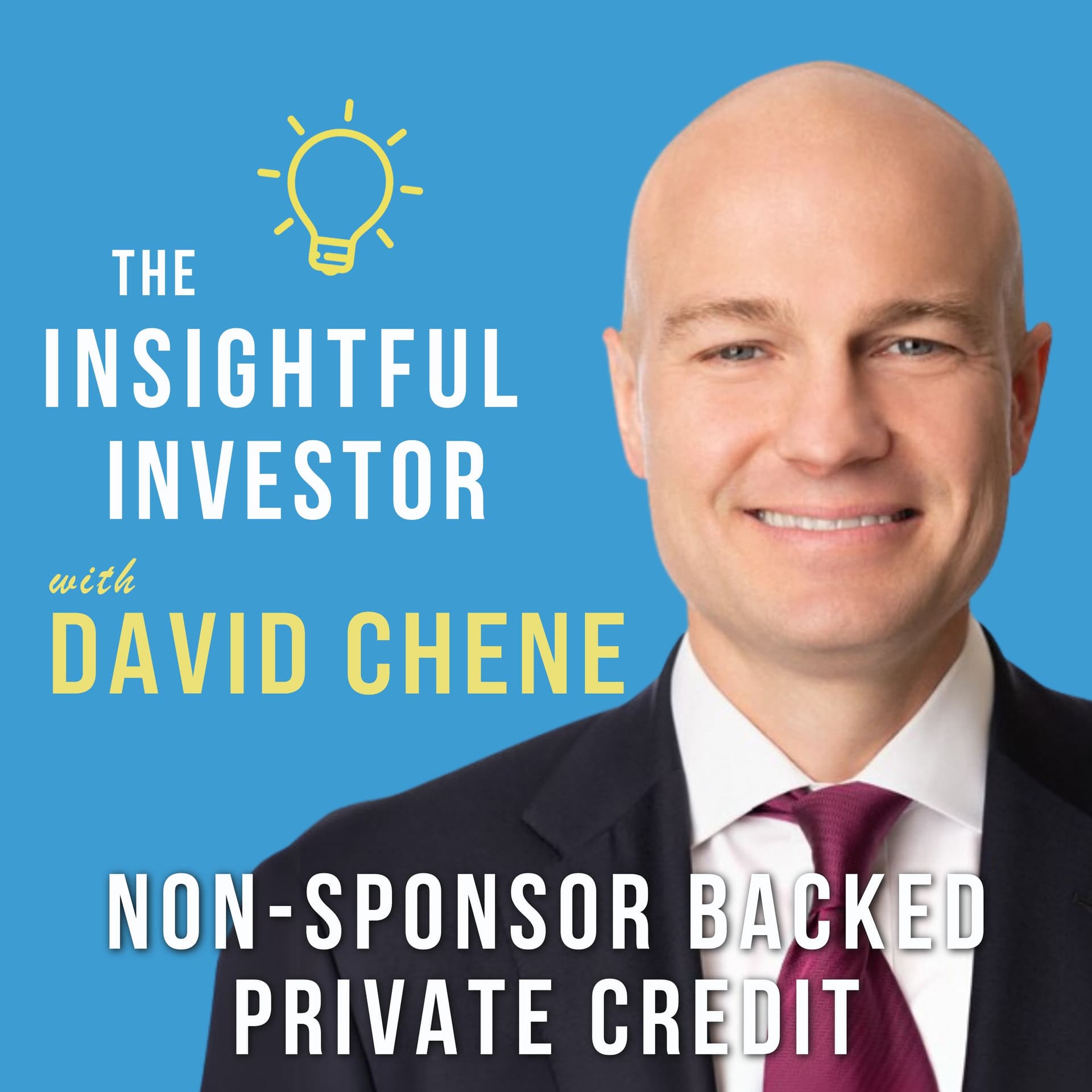
- Guest: David Chene, Co-Founder and Co-Portfolio Manager of Kennedy Lewis
- Topic: Non-sponsor backed private credit and the private credit landscape
- Date: Not specified in the transcript.
Key Themes and Discussions
- Introduction to David Chene
- Background:
- Co-founder of Kennedy Lewis, an alternative investment firm specializing in credit strategies with over $17 billion in AUM.
- Completed eight Ironman races, drawing parallels between the discipline required in racing and investing.
- The Ironman Experience
- Lessons Learned:
- Emphasis on patience, discipline, and adaptability in both Ironman and investing.
- Overcoming challenges parallels the journey of establishing a financial firm.
- Understanding Private Credit
- Definition: Private credit refers to loans provided by non-bank entities, typically to firms that do not have access to traditional bank financing.
- Market Dynamics:
- Post-GFC, banks have been less willing to backstop significant transactions, leading to increased reliance on private credit.
- Non-Sponsor vs. Sponsor-Backed Lending
- Non-Sponsor Lending:
- Focus on bespoke financing solutions for companies without private equity endorsements.
- Access to better covenant structures and terms compared to sponsor-backed scenarios.
- Sponsor-Backed Lending:
- Usually has more competition and lower yields due to institutional backing but may lead to potential risks if company performance falters.
- Investment Philosophy at Kennedy Lewis
- Opportunistic Approach:
- Flexibility to adapt investments based on market conditions and sector performance.
- Investment strategies include sectors like power, land banking, and healthcare, while remaining senior secured in the capital structure.
- The Appeal of Private Credit
- Yield Premium:
- Private credit presents a yield premium compared to public markets, with less volatility and predictable return profiles.
- Downside Protection:
- The senior secured position offers creditor protection, especially during market dislocations.
- Market Trends and Insights
- Growth in Private Credit:
- The industry has expanded significantly post-GFC, partly due to bank retrenchment and increased demand for alternative financing.
- Potential Risks:
- While private credit is booming, there are concerns about the potential for bubble conditions and adverse selection, especially with non-sponsor loans.
- Sourcing Strategy
- Proactive Approach:
- Kennedy Lewis emphasizes proactive sourcing of deals by identifying companies that could benefit from their capital.
- Partnership Dynamics:
- Building relationships with companies based on trust and shared interests; leveraging existing networks to find opportunities.
- Portfolio Diversification
- Sector Diversification:
- Non-sponsor backed loans may provide better diversification than traditional sponsor-backed portfolios, thereby reducing correlation with equity markets.
- All-Weather Investing:
- Maintaining a strategy that allows for a blend of public and private market opportunities, ensuring readiness for market dislocations.
- Economic Outlook
- Inflation and Interest Rates:
- Discussion of expected long-term inflation and its impact on credit strategies.
- Market Dislocations:
- Preparedness for capital deployment during public market dislocations, maintaining a flexible approach in response to economic conditions.
Conclusion
- The episode provides in-depth insights into private credit's evolving landscape, emphasizing the benefits of non-sponsor backed loans while discussing the strategic approach of Kennedy Lewis towards investment and risk management.
- The discussion underscores the importance of proactive engagement in sourcing deals and the value of adaptability and discipline in both athletics and investment management.
Key Takeaways
- Non-sponsor backed private credit presents unique opportunities and challenges, offering potentially better terms and returns.
- A proactive approach in identifying and building relationships with companies can yield more fruitful investment opportunities.
- Flexibility and adaptability are crucial in navigating the complexities of the financial landscape, especially in uncertain economic environments.
Additional Information
- For more episodes and insights, visit [Insightful Investor](https://insightfulinvestor.org/).
- Feedback and questions can be directed to info@insightfulinvestor.org.
Written by AI. May contain mistakes. Listen to the episode to check what was said.
Transcript
Automatic transcript. May contain errors.0:05Welcome to the Insightful Investor Podcast, a weekly series that seeks to share industry, investment, investment and market insights. We define insights as concepts that are counterintuitive, widely misunderstood, or underappreciated. In other words, unique ideas that you probably won't hear elsewhere. I'm Alex Shahidi, the host of the podcast and co-CIO of Evoke Advisors, a leading investment advisory firm. Learn more about our show at insightfulinvestor.org.
0:38Today's guest is David Shane. David is the co-founder and co-portfolio manager of Kennedy Lewis, which is an institutional alternative investment firm focused on credit strategies. And the firm has over$17 billion of assets under management. David launched the firm in 2017. David, I'm so pleased that you can join me today. Thank you so much for having me. It's great to be here. Well, before we bring on a guest, I always try to study their history to learn about who they are and often find interesting aspects of their background that I like to highlight on this podcast. You've completed eight Ironman races, including two times at the Ironman World Championships in Hawaii.
1:20And for those who don't know, that's a 2.4 mile swim, immediately followed by 112 mile bike ride. And then as if that's not enough, you do a full marathon at the very end. So tell us about the experience of putting your body through that, the training for it, and then any lessons you learned through the process, including any they may apply to investing. Bit of a crazy time in my life. I guess I did the last one in 2021 before my kids got to a point where they required a lot more time. So this whole thing started with a wager with a buddy. So that's kind of the funny background. And then I absolutely fell in love with the training, the discipline.
2:01getting up every day, feeling good by the time I get into the office after having a workout. And then it was kind of the spirit of the environment. These are such long days. You have to be patient with the day. You have to be focused on finishing and making sure that if you have to pivot, go to plan B, you do that in order to finish. and I think for me it was an outlet to get energy out. A lot of the racing was in the years prior to starting Canady Lewis, but also in the early years. And in those early years it was obviously very challenging to get off the ground and we had to be really patient with the evolution of the organization.
2:44And so this was a way for me to really burn a lot of stress. And then I sort of fell in love with understanding how technical it can be as a sport in terms of how you get faster and your weight, your sweat rate, your sodium intake, carbohydrates, all those things where you can, when you really get it right, you realize you can actually really perform better than you ever had expected. And finishing is just this amazing accomplishment. It feels incredible. And I always like to say at some point during the day, you would find hell. And if you can find your way through it, then, and that's really just a mental state of mind.
3:24And if you can find your way through it, you can really discover a lot of things about yourself more than what we probably knew before. And so I think there's a lot of actual similarities to investing. It's about preparedness and discipline and knowing that things aren't always going to go perfectly according to plan. When they don't, are you prepared for that? Do you think about other solutions, other ways to ultimately achieve the goal? And so, yeah, it was just an incredible experience. for a long time. Very fortunate to have started eight races, finished eight races, qualified for the world championships.
4:02And I'll look back on that and I'll know that a lot of the kind of the mental foundation for building Kennedy Lewis as a firm was doing those races and spending a lot of time in my head and really just thinking and was therapeutic in a lot of ways, as much as that sounds crazy, but really, really enjoyed it. And it's interesting, as you were describing that journey, if somebody had tuned in right after I asked your question, they may have thought you were describing the asset manager's journey because there were so many similarities as you were describing it. There's no question. I mean, when we were starting Kennedy Lewis and Fund One, we had multiple instances where you're getting right to the finish line with clients and something changes and extreme disappointment.
4:49and you just kind of have to go with it and know that the goal is still to get the fund raised. We have a commitment to some of our early investors to get that fund raised. A lot of our, obviously our employees and our partners are depending on us to believing in what we're creating. And it's not really a thing. You have to go and create it. And part of creating it is establishing some level of confidence on the people that are around you that you can actually get there and create an opportunity that everybody wants. And so no question, dealing with some of those challenges in the early days, I was much better mentally prepared.
5:25Obviously, I have a great business partner, Darren Richman, co-founded the firm with me. I mean, I've been basically best friends and colleagues for over 20 years and never had an argument. We debate things all the time, but that partnership, it's incredibly powerful when you can have somebody like that alongside you as we're bouncing ideas and trying to get to the right answer. And so I credit him a lot as well in terms of our, you know, some of our early success. What would you say originally led you to focus on private credit? So we've been managing risk in some way, shape or form for over 20 years.
5:58I think this wasn't just something that we had in terms of thinking about posture in the capital structure, thinking about the market dynamics changing. It really was, I think, post-GFC, where we could see the market changing from a volatility standpoint, from a liquidity standpoint, the proliferation of first-time high-yield issuers and some of the big asset managers that would get into those deals. There was a restructuring. I didn't say this yet, but we all came from distressed backgrounds. So I was a distressed analyst for 10 years before I became a trader and then a portfolio. manager at my prior firm.
6:39And so you could see things changing from a liquidity structure in the market where the banks weren't necessarily there to be the risk transfer sort of mechanism. And you'd have these bouts of volatility in the marketplace. Companies themselves that we want to finance had less certainty around public markets and the banks willing to backstop and underwrite deals. And for us, I think we felt like our experience managing risk through the GFC, understanding asset liability importance in a fund structure, to be able to have some term premium, take advantage of that illiquidity premium, have the recycling aspects of capital inside that fund structure, to take advantage of either public market opportunities or just continue lending.
7:27it gave us the most flexibility to take advantage of that market that was ever changing and becoming ever more private. And so we could kind of see that. And very fortunate to have had great relationships with some big institutional clients. And they were seeing it as well. And so I think the idea was obviously around fund structure and the opportunity to generate returns for clients. but a lot of it was also looking back on where we made money for clients, how we made money. Before we even put the flag up saying Kennedy Lewis is in business, Darren and I spent six months going back through all of our historical transactions trying to come up with a theme of what it was that we did right in those deals.
8:16What do we identify as a theme? What do we identify as an opportunity? Why? And try and synthesize that down into a message that we can then go out to clients with and say, we think this could be differentiated for your portfolios. And it worked. So that's really where it came from. It was a lot of our kind of non-sponsor focused deals, which wasn't a thing back then, but that's how we invested. Looked at sectors in transition, looked at whether it was a regulatory, a cyclical, a secular opportunity, non-sponsor deals, which could be public companies, could be family owned businesses. you get the types of protections and provide the type of solution to those companies that may not have had that same opportunity with a true traditional kind of sponsor-backed business.
8:59So that's really where it started. I assume that that was your vision when you launched Kennedy Lewis about eight years ago. Yeah, that was our vision. I mean, I think it became very clear to us very quickly that we were naive in thinking how easy it would be to maybe get off the ground. and some of that was first-time fund, drawdown, private equity style, more of an illiquid fund structure. Darren and I hadn't worked together in a number of years and so we're coming back together to work together. Some of those things, obviously, is all post-made-off, so the extra diligence and requirements for the operational side of the business.
9:42We used to say our main goal is let's be around in three years I remember we would sit in these capital formation meetings with the banks and there were hundreds of new emerging managers in the room and look around and start going, wow, this can be really hard. This can be really competitive. We have to be thinking ourselves as a differentiator in our client portfolios. And so how do we do that? And then just one foot in front of the other. So it was a goal of being around in three years, not being a telltale story of Darren, who had a great career at GSO. I had a great career at Carval Investors, and there was really no need to change anything in our personal lives because those were great opportunities with great firms.
10:23But we had this kind of entrepreneurial spirit. And so our biggest goal was, number one, create something that was differentiated for our clients, but also be around. And then the rest, you know, over time would take over itself. If we invested properly in the organization and got the alignment of interest right and attracted the right talent. And how has the firm evolved since you started it eight years ago? we got that theme right in terms of the market going ever more private. And I think through attracting great talent in terms of our partners, we have 11 partners in the firm. We're fortunate to have each and every one of them.
10:59They all come from different backgrounds, have different skill sets, different complementary networks. For us, we've had to keep the structure of the organization very simple in terms of compensation and long-term alignment with our clients. and that really creates, I think, the maximum amount of collaboration across the organization. And so we have ideas all the time that are, you know, people are willing to share. It's a very flat organization. There's no monopoly on good ideas. So the firm's evolved in a way where, okay, maybe a large client will come to us and say, you know, I have this that I'm trying to find a solution for that's maybe consistent with what you guys are already doing.
11:36Would you consider doing something along those lines. And that really kind of led to the BDC that we launched, really led to the land banking, you know, the dedicated land banking strategy. And then we always wanted to have the CLO business next to our opportunistic funds because the CLO business, which is the collateralized loan obligations, large pools of loans, leveraged loans. I think our team oversees about 400 different credits in the market today. through the CLO business. And it gives us incredible insights into trends, cashflow trends, margin trends, regulatory change, cyclical change that's coming in a particular industry.
12:20And it helps inform what we're doing on the opportunistic side to think through, okay, is there an opportunity there in that sector to do something that's a little bit juicier in terms of returns, still senior secured posture. But we see some of this coming because, you know, the leveraged loans in the CLO business, they typically have, you know, quarterly numbers and there's quarterly calls and you're getting just a tremendous amount of information flow into the organization that we can try and synthesize to help inform what we think the portfolio should look like for our clients on the opportunistic side.
12:51So there was an opportunity to bring on a CLO team. Darren and I had worked with this individual in the past and we're really proud of that team. It's really across the board, synergistic to what we're doing in the opportunistic funds and the other entities. So it's not overly complicated in terms of the evolution of the business, but these are the areas that we operate are large end markets. And so as much as we've been able to grow as an organization, we still feel like we have tremendous optionality and we can be disciplined and prudent in how we think about deploying capital. Would you describe your overall investment philosophy?
13:32And you touched on this a little bit in the opportunistic nature of your strategy at a high level. So opportunistic for us really, I would say, translates into flexibility. What we try and do as an organization is say, okay, here's what's going on in these parts of the leverage finance market, or here's what's going on in more growth oriented opportunities in healthcare, for example. and we think we've sort of created these kind of mini ecosystems around our particular sector focus. And so we're known for investing in power and energy transition, for example. We're known for investing in land banking.
14:11We're known for investing in medical device and tools and diagnostics businesses. And every situation is a little bit different, and what we always try and do is set these companies up for success. As much as we historically made money in more stress-to-stress situations, where we can utilize that skill set when we need to. But our strong preference every time we deploy capital is to have a solution that's going to be a positive catalyst for business, either to grow out of their debt stack or to do something opportunistic for their own business and use our capital to do that. But every situation is a little bit different and the timeframes on these things can be a little bit different.
14:52So for us, we like to be senior secured top of the capital structure, But there's been times where we've done structured convertible preferreds that have very tight covenants around them. There's no debt above us in the capital structure. And it effectively looks like a secured instrument because of just the protections that we have in that document. And so we will potentially offer things like that if we think it makes sense. And then on the public side, which is something that we did effectively during COVID, loans and bonds that trade publicly, when we see spreads hit a certain threshold and we think that's interesting, we'll look at opportunities in the public markets that are consistent with our themes that we're already addressing and focusing on in the private markets.
15:37And so that was a very effective strategy during COVID. It doesn't always happen, right? These are pretty episodic, as we know. But having the flexibility to do that inside the funds and grateful to our investors that they give us that flexibility. But it does allow us to be a bit more efficient with capital in those periods of dislocation through public market opportunities that as you see things normalize, you can recycle that capital back into private situations. And so it can, on the outside, appear to be a very complex strategy, but it's not. It's really kind of core lending to specific sectors that we've got a particular, what we think competitive advantage in.
16:19And then when public markets dislocate, we'll focus on those same sectors, but just with public companies that might have securities trading below, we think is fair value. Let's talk about private credit as an asset class. It's been very popular lately. Why does private credit make sense as an asset class for investors to consider as part of their diversified portfolio? Private credit in general has had, from a yield premium standpoint relative to public markets, there's definitely a yield pickup. There's a predictable kind of return profile, less volatility. Investors tend to like less volatility.
17:01and at least in our case where we are we try and take at a minimum kind of 51 percent the top of the stack we see it as controlling our own destiny through the secure portion of the of the capital structure and that way if there's a problem we're at the table immediately and we can help solve it before it becomes a big problem and because the world is getting ever more private and we think will continue that way, particularly as back on SVB and you look back on Signature Bank and First Republic. And those are levered business models with, you know, deposit flows that can be very, very unstable at times.
17:41And so as much as the large, you know, the regionals and super regionals want to maintain access to their customers are still looking for ways to optimize their capital, right? And so we do believe we'll continue to see opportunities that were otherwise maybe bank financed that will come our way. And so it's a good opportunity because we think unless you have a massive public market dislocation, generally speaking, from a yield profile and a security profile, you're going to have greater kind of creditor protections for the downside and a slightly increased yield premium relative to public market opportunities.
18:23We've seen a lot of money flowing into private credit and a lot of new funds launching. Do you see this as a potential bubble that investors should be cautious about, or is this more of the supply just filling the massive demand? I mean, if you go back to the GFC and you look at the number of issuers like in the high yield space versus today, I mean, the market's like two and a half times the size just in terms of number of issuers. So there's just a lot more credit opportunities broadly. And then I think when you factor in what we'll call kind of a bank deleveraging process that I think will continue for a long period of time because, you know, the smaller banks just don't have the same competitive advantages that maybe the big banks do.
19:09And so they're just going to continue to have to optimize. And on the margin, that means that there's more credit opportunities that will go from either traditionally bank financed or public to private market solutions. I can only speak from our experience in terms of the pipeline that we see, in terms of the themes that we identify. Our deployment pace has been really healthy. and we're able to be very disciplined, very picky. As much as we have this$17 billion or so under management, we don't feel pressure to be looking for ideas constantly. I was on an IC call this morning. There's five deals that we're looking at seriously.
19:54If we did all five of them, which we won't do, it's easily a billion plus of capital that we could deploy, which would be 25 % of our latest funds. So I think, you know, I don't, we certainly don't see the, feel the pressure and maybe that's a function of our model being different than a traditional kind of true sponsor back direct lending platform. Because we, you know, so we set the business up this way. We wanted to have diversified sourcing channels that were away from the traditional private equity sponsors. It doesn't mean that our model is better or worse. It's just different. and what that allows us to do is have i think a more diversified sourcing opportunity set that where where we feel like there's a more predictable deployment pace and it's not so levered to the kind of the capital markets and mna activity and sponsor activity and then i think from a portfolio standpoint it gives us an opportunity to have a differentiated portfolio versus just maybe you know whether it's tech or software or wherever it's kind of that big wave of M &A or sponsor activity a couple years ago.
21:03So no question that there's a lot of headlines around capital being raised in space, but we've seen a little bit of spread compression this year because the markets have been up the last couple months and things have kind of done well. But we're not seeing tremendous spread compression in the deal flow that we're seeing. And that would be a function, I think, about just a lot more dry powder than otherwise available for. So I think it's okay. And I also think that there's a lot of probably good managers out there that have more niche differentiated strategies that are good in their sectors that are, as much as they're raising capital, they're raising capital for more niche dedicated strategies that aren't necessarily just pure private credit, as it's kind of thrown around.
21:49Earlier, you mentioned non-sponsor backed private credit. So to set the stage for that conversation, would you walk us through how private credit came about in the typical process? In the typical process, and I guess this goes back to the mid-2000s, again, kind of right around the GFC, in a typical process, private equity sponsors would go to a bank and they'd say, we want to buy this company and we would like a backstop, which basically means the bank will look at the credit profile of that business, figure how much leverage they can put on it, backstop a revolver, a loan, or a high yield deal.
22:33And the bank would kind of take that risk, that syndication risk, if you will. Maybe they'll hold some of that risk, but a lot of that risk would also get syndicated to the market. Post-GFC, the number of times that the banks have come out and really backstopped big transactions, there's been a few that cost them a lot of money. There's been a few that cost them a lot of money. And so you've seen private equity sponsors wanting to have access to private lenders that weren't necessarily bank lenders. and that creates more certainty of execution for a deal getting done versus a bank saying, we changed our mind or something happens and creates process risk for the private equity sponsor.
23:21And so that's kind of when that started post-GFC because of the capital issues. And obviously you had the Eurozone crisis a couple of years later after that, and that created a lot of deleveraging for European banks. And so it was kind of a consistent theme between the US in Europe to really downsize the amount of capital, bank balance sheet capital is being allocated to, you know, to sponsor back deals. And so that's what created the, I think really the private credit space in the first place, which was sponsor backed, you know, direct lending. And obviously it's become a huge, you know, huge industry.
23:57Today it's getting, you know, it's, I'd say it's a much more mature. You have big players that have been in the business for a long time, great relationships. We never viewed ourselves as being traditional kind of sponsor backed. You know, for us, it was more about identifying themes. And it turns out in the early days, we were doing all our deals pre-Kennedy Lewis. You know, a lot of these actually weren't sponsor backed companies. These were like public companies that had a particular challenge that needed a bespoke financing or was a family owned business that didn't want to sell the private equity.
24:27And that's where we found better covenant structures and even better return profiles, better information rights, the ability to sit on boards, have influence management, etc. And that's kind of, again, going back to when we started the firm, that was kind of the approach. So it's evolved to a point where these direct lenders are still very high quality businesses. But there's also a large industry out there of companies that are always looking for interesting financing opportunities that aren't traditionally kind of sponsor backed. And even if they do have a sponsor, maybe it's a minority sponsor.
25:00So it's not like somebody doesn't own the equity, somebody owns the equity. It's just maybe it's just a little bit different than a traditional sponsor. So that's really how we define it, is sponsor versus non-sponsor. Sponsor is really just the true traditional control private equity platforms that are backing a particular company. And then there's everything else. And it seems the vast majority of private credit is going to be sponsor backed, where they're essentially partnering with a private equity firm. Why do you think that's so common? I mean, private equity as an asset class has grown substantially over the years.
25:38You see the number of private companies versus public companies today versus 20 years ago is dramatically in the favor of private equity. And when you look at that dynamic around how well they've done as an industry broadly, you can see why you know there was continued capital capital raising and the opportunity to deploy capital and quite frankly i think the private credit industry having grown up a little bit maybe it was you know it was a little bit late obviously relative to how prolific private equity was back in the even the you know 90s and early 2000s but as you've seen the private credit kind of the leveraged markets grow up with, you know, the continued growth of private equity, that's where you've seen that kind of hand in glove relationship.
26:30And so just those two dynamics broadly have created just a large market for investors to tap into. And I think that's why generally you've seen such scale at some of the large publicly traded credit platforms. and you've seen amazing growth stories for some of the other non-public credit platforms, many of which have been in the news recently. But if you go back five years, six years, seven years ago, in terms of their assets under management relative to today, you see multiples of growth. And that's just a function of more and more opportunities to deploy capital into private situations where, again, the banks are retrenching or private equity is doing more business or what have you.
27:17I guess in some ways it's similar to public equity, where you had public equity grow to massive scale and then public debt came along to support some of those companies. And then you move into private equity, where many of these companies find it better to be private rather than public. And you've had that massive growth, and then private credit is born to support those companies. That's exactly right. And I think the amazing thing, I mean, when you obviously, when you look at credit broadly relative to equity markets, credits is, you know, broadly speaking, if you look at treasuries down to, or even forgetting treasuries, investment grade down to distressed, I mean, the markets are wildly larger than, you know, your equity markets.
Read the full transcript
27:59And so you can see the scalability aspect here. So as much as you see a lot of headlines around fundraising, there's still a substantial number of U.S. institutional LPs as well as Middle Eastern LPs, Asian LPs that have very little exposure to private credit as an asset class. so i think you'll you'll continue to likely see even within the fixed income sort of allocation buckets for large institutional lps a more differentiated approach to credit which would be sponsor backed non-sponsor backed you know mezzanine distressed i mean it's getting much more sophisticated in terms of allocation approaches by large institutional lps And for us, that's good because it does show that there's a diversifying aspect to having a non-sponsor strategy in the portfolio.
28:54And LPs are always interested in relative value and how we can, again, create a differentiated return profile that's maybe a little bit more idiosyncratic or less correlated to what's going on in private equity. Yeah. And it's interesting going back to this boom in private credit. In some ways, it's playing catch up, right? Because there's a few things that have aligned that has allowed this growth to occur. One is banks are having a harder time and are facing some constraints in lending. There's obviously a need for lending. So private credit steps in to fill that gap. And then from an asset manager side or an asset allocator side, their returns have been pretty compelling.
29:40You have yields that are double digits. That asset class held up reasonably well in 2022 when public bonds were down pretty significantly. And so you could see why all eyes have turned into that. And at the same time as there is a need for it, you could see why you've had this big boom in asset growth. That's exactly right. Base rates, where they are today versus a couple of years ago, you know, has obviously helped the return profile a lot. It doesn't mean that there's not more risk. I would say that companies that were used to five, six times leverage at SOFR or LIBOR plus 350 in today's environment, that's a very different cost of capital.
30:27So I think below the surface, there's likely a little bit more stress in the system than maybe what meets the eye. But for sure, it's for fresh underwriting and for fresh deployment opportunities where you can see how the impact of higher rates has influenced a company's cash flow profile or position in their particular industry. There are good opportunities where you can get double-digit returns and still feel like your principal is really well protected. protected. Yeah, and you can look at that as an equity-like return, and obviously you're higher up in the capital structure. Now you're giving up some liquidity to get that, but from a return risk standpoint, it looks relatively attractive.
31:15That's exactly right. When we compared in the early days, and we still look at this as an organization, if you look at private credit as an industry and multiple investment capital for private credit relative to even private equity, okay, sure, it's a little bit lower, but it's not dramatically lower. And on a risk-adjusted basis, knowing that you're top of the capital structure, or if there's a problem, you have claims on collateral, et cetera, that's our pitch. Effectively, we think that's a good position to be in, and it's a good exposure to have if you're a large-scale allocator across multiple alternative asset classes.
31:50So why has Kennedy Lewis opted to search for opportunities outside of sponsored back lending? You've mentioned that a few times, but let's zoom in a little bit as to why you look there. In the early days, if one of the big banks was calling us for financing, it's because they got to the end of the phone book, right? I mean, you know, we were a small firm and we're constantly trying to think about how we can create a differentiated portfolio. And, you know, so we undertake this process of looking at, you know, the various sectors in leveraged finance and dynamics around venture and what those companies are doing.
32:28And broadly speaking, just getting away from your classic sort of box, if you will, in terms of the opportunity set in front of you, which is publicly traded opportunities or sponsor backed opportunities. And so it really started in the beginning with this idea that, okay, let's identify, okay, so we think there's a great opportunity in power because it's been underinvested in across the country, you know, supply dynamics are relatively constrained because of permitting, because of connections to the grids, okay? Like there's all these, you know, complications around in terms of getting new kind of reliable supply into a particular, you know, geographic area.
33:09And many of those companies or power generation plants are not necessarily sponsor-backed and have, So we look at that and say, okay, well, that's a huge opportunity because you look at the electrification of everything. You look at the impact of renewables and how that's creating volatility in power prices for certain regions. There's got to be a way to sort of wedge ourself into a few opportunities where we can see kind of supply demand coming into balance. We could see the market recognizing that there's more intrinsic value to those particular plants or in that particular area, just because you have electricity demand that continues to hit new all-time highs in virtually every market.
33:57Now you have the AI and data centers, which is a huge driver of long-term electricity demand. And so, again, that's just one theme, but it's kind of consistent with how we think about deploying capital. and you don't necessarily see a lot of sponsors in that space it's a very complex space we've been investing in it for over 20 years you know there's seven different markets all different regulatory regimes and it requires a real specialization to to identify opportunities where you know maybe the market's just not paying attention and there's a growth opportunity or there's a new lending opportunity or whatever what have you so that for us you know as we as we think about that being one sleeve of the portfolio, a lot of our investors, they like to have that kind of exposure.
34:46It's not, you know, it's not 30 % of the fund, but it's enough where it's like, okay, you know, if this theme is working, right, it's a good kind of ballasty return profile for the portfolio that we can depend on. And then relative to say, you know, healthcare or land banking or TMT, we have the flexibility to kind of change our allocations across those sectors, depending on kind of best relative value, best, you know, opportunity set, et cetera. So it's, again, it's not levered to sponsor activity in a way where we're going to have 30 % of our books going to be in one particular sector because that's what all the sponsors are doing.
35:27And then I think the biggest thing for us is, you know, when we, when every company has, like us, you know, we have situations that need extra work. We don't feel like if there's a covenant breach or there's something that happens, we don't feel pressured to do something that would be otherwise uneconomic for our clients. We can enforce, we can get extra economics, and then you're not necessarily biting the hand that feeds you. And I think that's maybe one of the challenges that, as much as it's maybe not popular to say, but it's one of those things that, you know, maybe to some of the direct lenders because there's so much deal flow is dependent upon the sponsors that when you actually have challenges in the portfolio, you might be a little reticent to really drive the best economic deal for clients.
36:15We have the flexibility to, you know, at times we've done sponsor deals when they call us and say, we need a bespoke solution and we'll structure our own document or our own kind of collateral package or what have you. But it's not something that we go out every day making phone calls. And a lot of that, so I think it really kind of, for us, it's more of a, it gives a lot more flexibility and making sure that no matter when, if there's ever a problem, we can really maximize our leverage to create a better solution for, hopefully for the company, but also for our clients. And then do you find when you are sourcing deals that are not sponsored back, that there's less competition, generally speaking, and as a result, you tend to get better terms?
36:58Yeah, for sure. They're not that easy to find. It's, you know, this has been years, we have, you know, 40, 45 investment professionals that we say part of their, part of their responsibilities day to day are, are sourcing deals and focusing on their sectors. I would say large, larger deals, you know, are always going to have maybe one or one or two other firms around it, but it's rare. I mean, for us, we probably just wouldn't even participate if we felt like this was an auction or something that was highly competitive and it was all just based on terms. We want access to management. We want access to monthly information.
37:40We want access, you know, we're going to be partners and we underwrite these like they're private equity positions. If they don't go right, you're going to own it. What are you going to do with it? Right. So we have to know that up front. What's our exit strategy before we put$1 in. We want to know that. So that is a much more iterative process than what you might get with a typical kind of sponsor process. And it gives us a level of comfort that we're actually lending to somebody who we feel like has a deep sense of responsibility to pay us back. And that's not to say other people don't, but I think for us, that's just that access to information is a key piece of what we do.
38:20So it's less competitive, but it's also, you know, you got to be careful as well. You know, I think we're pretty good at figuring out very quickly if the stars align, if you will, and what we can do in terms of greater credit protections, greater covenants, board level influence. We're not trying to micromanage, but we just want to make sure that we're up to speed on a monthly basis. And we have on the side, we have a team of operating executives that we have kind of on retainer. You know, so whenever there's an opportunity to either upgrade or take advantage of an opportunity, we're as a lender, we're pretty proactive about trying to offer resources that will, again, augment the profile of the business.
39:03I imagine a lender that's focused on sponsor backed companies is going to argue that it's a safer loan because they're ahead in line of the PE firm that has deep pockets. And as a result, maybe it justifies lower yields and weaker covenants. How do you think about that? Yeah, I would probably make that argument too. I think one of the things that also influenced our decision to create these non-sponsor focused kind of sourcing channels in the early days was a function of just the proliferation of Covenant Lite deals. the market. And so we know what that looks like. You know, you get quarterly information if you want access to management, kind of get in line.
39:51And when there's a problem, the documents are such that there's enough flexibility for the sponsors to, in some ways, allow for certain creditors that were otherwise peripassue with others to be treated worse. and so you never want to be on the outside looking in when that happens and because then you can have a binary a binary outcome and that's not really the intention obviously when you do a secured loan you know you think the odds of me not getting paid back are hopefully less than five percent and so i think for us we look at it and say yes there's there's there's truth to that statement around having true institutional private equity behind you and feeling good about it.
40:39But you definitely will get put in competition with other lenders that might be willing to do it for lower rates, for weaker covenants. And I think part of our risk mitigation strategy here at Kennedy Lewis is we want to take control of the top of the stack. And none of these games get played. and our intention is to again set a company up to succeed we'd love to get refinanced early we get some back-ended fees redeploy that capital and and then be viewed as a really a really high quality lending partner in the marketplace so that you know because in the non-sponsor world that really you know you need references you want people to to speak on your behalf and recommend us as an organization that's good to do business with.
41:28And that's really super important to us. So as we've kind of, this flywheel has sort of taken effect over the last eight years, I think the strategies, it's proving out, which is nice. But we certainly feel like, again, sponsor lending, not bad at all. There's a great place for it in everybody's portfolio. We haven't seen a cycle in a while. So maybe we're just, you know, because of our distressed backgrounds. We're always a little bit scared of what's coming. And so we just want to be well-positioned across the portfolio broadly that if we have a massive dislocation or, God forbid, something geopolitical happens, we're feeling okay about the deals that we're in.
42:12So tell me if this is a fair summary. So with the non-sponsor-backed loans, you may get a higher yield relative to the sponsor-backed loans. And maybe there's more risk, but you have more flexibility and you have potentially a greater ability to work out problems and more control to do so. That's right. And I think risk is all relative to what you think your LTVs are, your loan to values are, and relative to your information rights and your ability to step in. We have, in a lot of deals, we'll have kind of what we'll call creeping governance rights. They missed numbers one quarter, okay? They missed numbers the second quarter.
42:53We're parachuting people in to help operationally early, you know, before problems really exist. And, you know, what we have seen in our past from prior to KL days is that when things go wrong, sometimes sponsors can be even more aggressive about doing things, okay, to change the trajectory of the business that if it doesn't work, by the time you're left holding the keys, you're dealing with something that's actually worse than what it would have been if you kind of figured it out sooner. So I would say it's a much more active strategy to non-sponsor. We think it gives us the right setup in terms of really protecting capital, but generating a little bit better returns.
43:38Is there a risk of adverse selection with non-sponsor back loans since the borrowers we're not able to secure a PE sponsor? I think there's always a little bit of that risk. We're pretty good at identifying it. We can look for audited financials. We can look at how organized is something. I think for us, there's always a size threshold where we're not going to go below, right? So it's not like we're doing a$10 million EBITDA business. Those businesses, it's the same amount of work to structure a deal. And it's 10 times harder to figure out what to do with that if it goes wrong. and and so you know you want something that has real intrinsic enterprise value and so we can we can figure out very quickly how organized a particular company management team etc and what the story is because again we're focused on our sector so if we see a random deal with a random opportunity they want capital for some random you know you're like okay this isn't This isn't organized to execute on a particular strategy where that company is known to have a competitive advantage and it makes sense as to why they want capital.
44:45Again, most of our senior leadership here, you know, 11 partners will have 25 years experience investing. And you figure out very quickly if something has been shopped and now they're calling us. You know, sometimes there's opportunities there, though. We generally won't throw things out right away, but we'll figure out very quickly what the setup is. And so it's rare that something will end up in the portfolio that maybe shouldn't have. So you alluded to this a little bit earlier, but how can non-sponsored private credit help diversify a portfolio even within private credit? Well, I guess it's a couple of things.
45:25So I look at kind of correlation between credit portfolios and equity portfolios. Okay, so that's one. So if you have non-sponsor that is, they're doing deals across diversified set of sectors, you're going to get less correlation in your, you know, that non-sponsor portfolio than what you might get in your, you know, in your sponsor-backed direct lending portfolio. Just from the sector diversification. Correct. Right. So it's a kind of irregardless of what sponsors are doing at that point in time, there's deal flow happening in other sectors. So you get kind of that diversification. That's my opinion there.
46:02And some of the large cap, you're seeing a lot of overlap exposure between GPs, between managers, large, large scale managers. So there's 25 % to 30 % overlap. And what I mean by overlap is there's a large deal that comes to market. Your very large direct lending platforms all want exposure to it. And so they just carve it up across three or four different large cap. So, again, you're getting diversification away from that, right, because of, you know, the non-sponsor approach and because of the, you know, the more concentrated top of the stack, you know, kind of exposure and posture that we have.
46:47So again, it doesn't mean that either are bad, but it does give you a flavor for how to get some diversification with a yield profile that's going to be similar, if not a little bit, maybe a little bit better. So obviously, a big impact on future returns is how the economic environment transpires. And I know you kind of have a top-down view as well when you're sourcing deals. would you talk through your big picture expectations and how that impacts the sourcing yeah i think you know our house view so i want to say in late i think it was mid mid to late 21 we had a view that we were going to see very sticky and higher inflation for a long period of time.
47:38And so for us, anything that had relatively long duration, you know, where you're, maybe you're hoping spreads compress a little bit and you make a little bit more money on your return profile, we got rid of that. And we moved as much as we could in the portfolio to more floating rate risk. You know, because of our, kind of the target returns where we try and seek, we don't really have much what we'll call kind of rate risk. So if rates move up or down 50 basis points or 100 basis points, is it really going to change the return profile of what we're doing? Not really. But we certainly, in an environment where if rates do go dramatically lower, I think, number one, if they go lower in a rapid fashion, it's probably a bad sign for the economy.
48:27Something's happening when the Fed feels like they need to stimulate. But as you see a normalization through that process, you do want to be protected from getting refinanced out of everything much lower. And so we'll have call protection or we'll have features in these deals where if they're going to take us out early, we get extra fees for that. And so we're somewhat protected if the rates go down and then if rates kind of go up, we're already there. I don't think the, I think our house view is that rates are probably where they're going to stay for some period of time as much as maybe the Fed takes rates down.
49:04There's a lot of reshoring, unemployment's low, you know, the economy's doing fine right now. But there is a tremendous amount. And I think you saw it, you know, I guess yesterday, I mean, $100 billion plus commitment for, you know, infrastructure projects back in the US by, you know, by SoftBank. So the more that you see, and we've seen it through manufacturing capacity, utilization start to pick up. And so again, that will just continue to stimulate the market in a way where it could be inflationary, particularly with deficit spending and whatnot. So as diversification of supply chains, reshoring, fiscal stimulus, et cetera, it just feels to us like rates are going to continue to be kind of where they are for a while.
49:53So when we underwrite deals, we're certainly not underwriting anything where the return profile is dependent upon rates going down. If they do, great, we'll try and make sure we're protected. But if they don't, well, then we're not surprised. And how do you mitigate the risk that your predictions about the economic environment might be off? A lot of that's position sizes. When we underwrite deals, we generally, we like to take anywhere from like three to kind of 6 % position size, depending on what we think the downside protection is depending on the level of conviction we have in something. But if we're wrong, we're always calculating that this particular business might need a little bit more money.
50:36And we want to make sure that if we're asked to provide more money, number one, we're getting much better economic terms. We might get equity for that. We might get even better credit projections. We might get board seats. but we've had, I would say, half a dozen positions over the last seven or eight years where when those things occur and we've taken extra economics, having that flexibility to deploy that additional capital has created a very good outcome for the portfolio. So we look at it and kind of make sure that we always have the ability to deploy a little extra capital if we need to. We don't ever want to be full on a situation unless we feel like it's a 20 % LTV and we're getting mid-teens returns.
51:22And on a liquidation basis, we'll make a great return. Those are rare. And not to say they haven't happened, but they're very rare. So for us, it's a lot of position sizing and making sure, again, that up front we're positioned to be at the table. There's a disruption. Earlier, you mentioned a focus on industries that are in transition. Would you give us a couple examples of that? Power is definitely one of them, as I mentioned. It's a huge long-term opportunity. And I can go into more details on that. Another one is really, I would say, the home builder industry. So home builders have done very well post-GFC.
52:09They've all de-levered. And generally speaking, the larger builders have captured additional market share. When you look at the total home market in the U.S. between existing homes and new homes, the new home market, particularly with rates being where they are, has captured more market share in terms of home sales. And a lot of that is just existing homes. People have a 30-year fixed rate mortgage that's below 4%. And it's an asset now with rates where they are. So they don't want to move. They lose that. Otherwise, they get a 7 % mortgage. But the builders have become very, very high quality credit and equity stories.
52:50And what they're really trying to do now is become more asset light. And so builders historically were large land banks that had manufacturing companies sitting on top. And historically, they had land, capital tied up in land for a very long period of time. And so one of the transition sort of aspects of home builders is as much as they're in great shape from a credit and equity standpoint and generating good returns, they're still trying to become more asset light. So there's this part of the reason we got into the land banking. Darren, my co-founder, was a home builder analyst back at Goldman 25 years ago.
53:28So he's been very close to the space for a long time. But part of the reason we really got into, built kind of a franchise around land banking is because we could see that you have this, you know, this more, this opco-propco separation going on within the home builder space, which has never happened before. And it's not a risk transfer. It's that they're just trying to be more capital efficient. And they want to have, you know, financing counterparties that they trust, that know the business, that will be with them through thick and thin. they don't want to lose access to the land but they're willing to pay a fee for it to have as much as it might be a little bit of a degradation in their gross margins their return on equity in a lot of cases goes up substantially which allows them to trade better in the public markets and for us it's really just a financing vehicle and it's a you know long term you see all the builders now trying to get you know more asset like so that's that's a big transition and the way we've positioned ourselves with the builders, very trusted counterparty, but allows us to have real-time updates in terms of what's happening in the U.S.
54:33housing market and how that can inform opportunities for homebuilder suppliers and vendors and what have you. And so, again, there's kind of an ecosystem that's influencing how we're thinking about capital deployment in that space, and there'll be good opportunities to think there. Can you talk about your proactive approach to identifying lending opportunities rather than waiting for people to approach you, as is probably more common? It's more common now, but it was certainly for us, I guess. But in the early days, it was less common. I think that's where, you know, that's where, again, our DNA is, let's not wait for the phone to ring.
55:11When we look at these sectors, whether it's, you know, again, medical devices, diagnostics, tools, power, land banking, TMT, even in structure credit, where we have a sleeve that we focus on some cap relief trades, but also privately structured portfolio deals, whether it's consumer or what have you. Our view is, okay, we think the opportunity looks like this for that sector over the next five to 10 years. Let's go out and start talking to companies that we think actually could be well positioned. to take advantage of that growth or to take advantage of that disruption or that opportunity. And if you take, for example, what I talked about in homebuilders, we go to the homebuilders, we ask them, you know, who are your largest vendors?
56:05Are they, how are they doing? Labor inflation, okay, has impacted virtually every company. Do they need financing? knowing that they are a counterparty of yours helps us from a credit standpoint because we obviously understand the builders and how high quality they are in today's environment and so the sourcing approach is okay we do a deal with the business who are your top vendors do they need capital would you be a reference for us and again try and create that connectivity around a particular opportunity that will create more deal flow for us. And so it generally works pretty well, but it's totally separate and independent of what might be happening in the capital markets on a day-to-day basis.
56:58Would you elaborate on your all-weather approach to investing? So I think that's when we say all-weather, for us it's really in reference to the ability to take advantage of public market dislocations. And so when we think about the deployment, when we speak to our investors, they want capital deployed. They don't want to sit on a contingent liability to fund capital over time where they don't have at least some visibility on when that capital is going to get called from them and actually deployed in the market. And so we try and be very thoughtful about our deployment pace, certainly relative to the pipeline, but we also make sure we keep a little dry powder at all times for public market opportunities.
57:47and so if there's nothing to do you know spreads today are super tight you know the tightest they've been in a couple years not much to do in public markets well doesn't concern me i don't lose sleep over that because we have the you know the private pipeline where we're able to you know prudently in a disciplined way you know put capital work in the private opportunities knowing that we still have some dry powder if if we need to for a dislocation you know in 25 And as an extreme example, I'll say, you know, we raised our second fund. It was right when COVID started. And we had raised about half the fund, I guess, when COVID started.
58:28And 90 % of that capital was invested in public market securities in April of 2020. And so as much as we came out as this private credit firm and this is what we're doing, it was like, okay, you can't even price a private deal in that environment. because spreads are at 650, and you want a premium on top of that for the illiquidity in a private deal, and companies can't even afford that. At the top of the stack, you can't grow out of that cost of debt. So focused 100 % in public market opportunities. It was a great investing environment. We looked at the playbook that the Fed ran back in 08. It looked very similar, and as much as it was uncomfortable for that short period of time, it was a great opportunity.
59:18And by the end of 2020, we were 90 % back into private. It's not always easy if you're mostly in private to flip back to public, but that's why we keep a little dry powder. But to the extent that we have opportunities through an investment period in the public markets, we will definitely spend some time there. And again, it's not overly complicated. It's more, We know what private companies exist in that industry. We also know where public companies exist. And so we always have a watch list and we're always kind of paying attention. And, you know, if there's dislocations or opportunities, we'll spend some time there.
59:53But that way we're not all over the map and we're still consistent with our thematic approach, you know, which our investors have signed off on. Are there any particular sectors where you're currently finding disruption and potential lending opportunities? There's a lot going on in aerospace and defense, which between supply chains, post-COVID, between Boeing, obviously the geopolitical issues globally are having an impact on current inventory levels and how inventory levels need to kind of ramp back up. So there's working capital requirements. But yeah, that's a space that we're seeing more and more in.
1:00:39I would say, as it relates to LNG and midstream opportunities, we'll see what happens with this current administration. But for sure, gas is a transitionary fuel and will be helpful in terms of carbon footprint. Ultimately, the goal is to get to a complementary, reliable gas fire plus renewables. but there's just a tremendous amount of infrastructure that's required to get it there you know and in the meantime until there's large-scale economic battery storage it's going to be somewhat challenged so we're seeing a lot in energy transition energy infrastructure you know which you know will probably show up in the portfolio and then as i mentioned you know land banking you know where where there's that's just a you know when you look at the the size and scale of land on, you know, builder balance sheets, it's$150 to$200 billion kind of land opportunity over time.
1:01:41So it's, yeah, it's, it's put us in a position where we, we can be very selective about the areas that we actually want to own land and make sure it's entitled, zoned, permitted, et cetera, what's the best counterparties and allow the business to flourish from a sourcing standpoint as it relates to, you know, the kind of the housing complex broadly. That's great. Well, David, we've reached the finish line of our mini triathlon. And so I appreciate you spending some time with us and sharing your insights. Absolutely. No, I really appreciate being invited on. And thank you very much. If there's ever any time that I can clarify anything or be of service, please feel free.
1:02:20Thanks for listening. We hope you enjoyed this episode. Please visit our website at insightfulinvestor.org to access past shows and learn more about our podcast. If you have questions, feel free to email us at info at insightfulinvestor.org. And if you enjoyed the discussion, please subscribe to this podcast to ensure you don't miss future episodes. And don't forget to forward today's conversation to others you think would enjoy listening. This podcast is provided for informational purposes only and should not be relied upon as legal, business, investment, or tax advice. All opinions expressed by podcast participants are solely their own opinions and do not necessarily reflect the opinions of Evoque Advisors, their affiliates, or companies featured.
1:03:07Due to industry regulations, participants on this podcast are instructed not to make specific trade recommendations, nor reference past or potential profits. and listeners are reminded that securities trading, commodity trading, and alternative investments are complex and carry a risk of substantial losses. As such, they are not suitable for all investors.
1:03:30Listeners should be aware that guests featured on The Insightful Investor may have current or past associations with Evoke advisors or the host, including as an investment manager of a private fund opportunity by Evoke, or access through an affiliated Evoke fund, or as a client. Participation as a guest on the podcast should not be perceived as an endorsement or testimonial with respect to Evoke Advisors, the podcast host, or their services. Similarly, the inclusion of a guest on the podcast does not imply that Evoke Advisors or the host endorses the guest or any company with which they may be affiliated or employed.
1:04:09Evoke has neither paid nor received compensation from guests for their participation.
From the publisher
David is the co-founder and co-portfolio manager of Kennedy Lewis, an alternative investment firm specializing in credit strategies with over $17 billion in AUM (as of 11/13/24). David shares valuable insights into non-sponsor backed lending and provides an overview of the private credit landscape.


