
In short
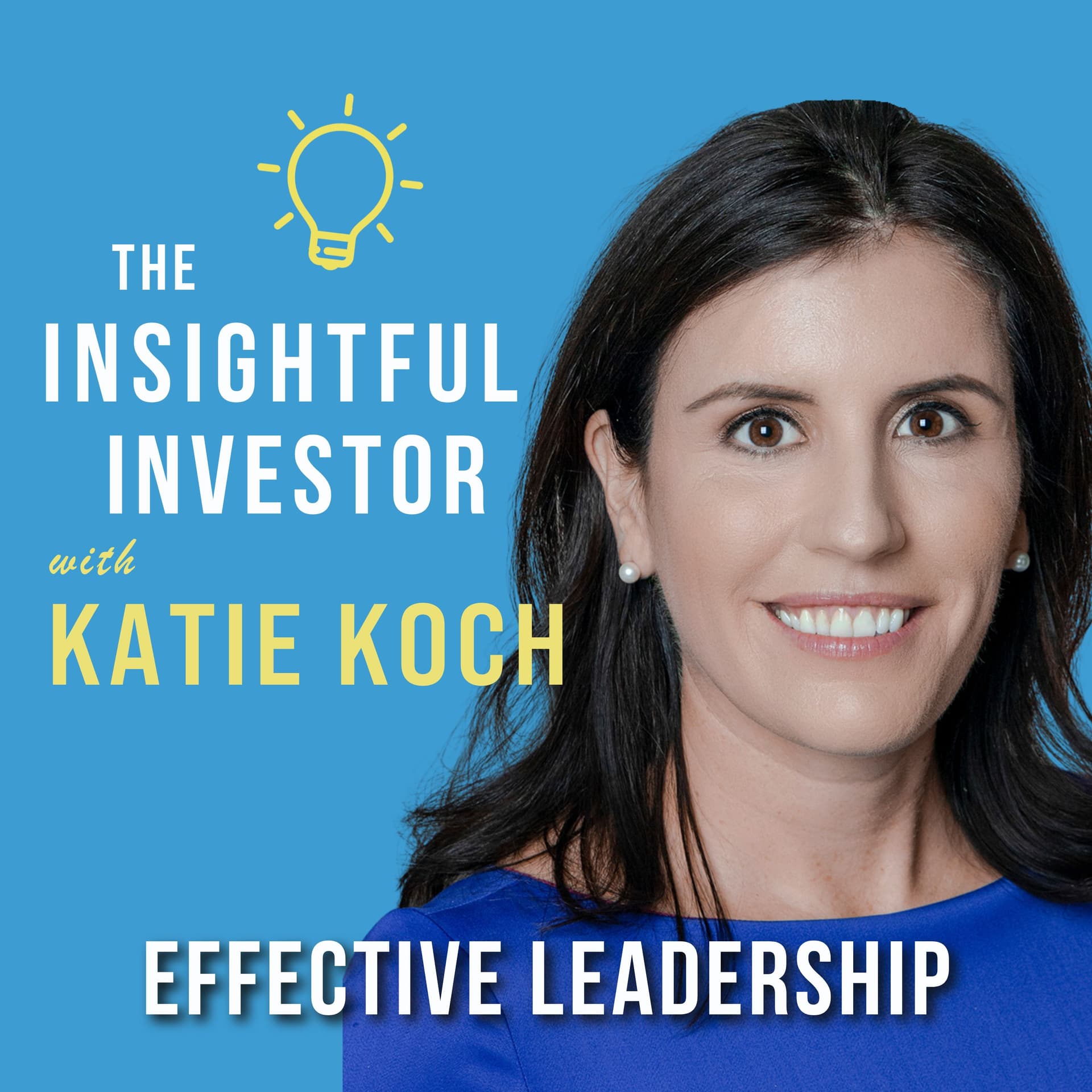
Insightful Investor Podcast - Episode #64: Katie Koch - Effective Leadership
Episode Overview In this episode of the Insightful Investor Podcast, host Alex Shahidi speaks with Katie Koch, the CEO and President of TCW, a global asset management firm. They discuss Katie’s journey from Goldman Sachs to leading a major investment firm, her insights on effective leadership, and her perspectives on investment strategies, particularly in alternative investments.
Key Themes and Insights
- Leadership Principles
- Influence of Family:
- Katie emphasizes the foundational principles instilled by her parents:
- Risk-taking: Encouraged by her mother to consider choices without the fear of failure.
- Integrity: Her father taught her the importance of doing the right thing, which influences her decision-making in leadership roles.
- Resilience: Recognizing that struggles and setbacks build resilience and are vital for long-term success.
- Balancing Ambition and Humanity:
- Leaders should push for high performance while recognizing the emotional and personal needs of their team members.
- Encouraging work-life balance is crucial to prevent burnout, fostering longevity and dedication in the workforce.
- Experience in Investment Management
- Career Path at Goldman Sachs:
- Katie reflects on her 20-year career, highlighting her diverse roles across different businesses and geographical locations. This experience helped her build a broad skill set and a network of valuable relationships.
- Role of Investing Experience in Leadership:
- Having investing experience is crucial for leading an asset management firm. It allows leaders to support their teams through challenging times and maintain a focus on long-term goals.
- Culture of Feedback and Communication
- Importance of Listening:
- Effective leaders prioritize listening and communicating clearly. Listening to dissenting opinions is vital for decision-making and foster a culture of open feedback within the organization.
- Building a Feedback Culture:
- Regular feedback helps maintain transparency and encourages continuous improvement. Feedback should be delivered in real-time to avoid difficult conversations piling up.
- Investment Strategies
- Active vs. Passive Investing:
- Katie believes both approaches have merit. While passive investing provides market exposure, active management can deliver excess returns when done correctly.
- Thematic Investing: Identifying and investing in transformative themes (e.g., AI) can yield significant benefits in the long term.
- Alternative Investments:
- Katie emphasizes the need for exposure to alternative investments, given that much productive capacity lies in the private markets.
- She discusses the evolving nature of credit markets and the importance of maintaining a conservative and disciplined approach to lending.
- Market Outlook and Economic Considerations
- Recent Election and Market Volatility:
- A new economic regime may be emerging with increased volatility, which presents opportunities for active management.
- Concerns about consumer behavior and potential risks in asset valuations are noted, particularly as consumer spending is crucial to economic health.
- Investment Philosophy in Uncertain Times:
- The importance of maintaining discipline while being adaptable is highlighted. Long-term investment philosophies should stay intact, but innovation in approaches is necessary as market conditions change.
Conclusion Throughout the episode, Katie Koch shares valuable insights on leadership, the importance of resilience, and the evolving landscape of investment management. By embracing both active and passive strategies and focusing on long-term client relationships, she positions TCW for success in a complex market environment.
For more insights and past episodes, visit [Insightful Investor](https://insightfulinvestor.org/).
Written by AI. May contain mistakes. Listen to the episode to check what was said.
Transcript
Automatic transcript. May contain errors.0:05Welcome to the Insightful Investor Podcast, a weekly series that seeks to share industry, investment, investment, and market insights. We define insights as concepts that are counterintuitive, widely misunderstood, or underappreciated. In other words, unique ideas that you probably won't hear elsewhere. I'm Alex Shahidi, the host of the podcast and co-CIO of Evoke Advisors, a leading investment advisory firm. Learn more about our show at insightfulinvestor.org.
0:38I'm so pleased to welcome Katie Koch to the podcast. Katie is the president and CEO of TCW, a global asset management firm that oversees$195 billion across fixed income equities and alternatives. That's as of December 2024. Before joining TCW two years ago, Katie spent 20 years at Goldman Sachs in the asset management division and most recently served as CIO of its$300 billion public equity business. Katie, thanks so much for joining us today. Thank you for having me, Alex. Let's start with your background. I think it's always helpful to hear more about who you are, how you think, and kind of how you grew up.
1:21So could you discuss the life principles your parents instilled in you and how they've influenced your leadership and management style? Thank you so much for asking me about my parents who are incredibly important to my life. And if I've achieved any modicum of success, it is because of them. And they both taught me something very different. My mom really pushed us around taking risk and trying new things. And she used to ask us this question that was very inspiring to me. And I still go back to and I think about a lot. And I push other people on this question, which is, what choice would you make if you knew you wouldn't fail?
2:01And that was an important way for me to frame decisions because for a long time, I was a naturally risk averse person. I only wanted to select into activities or experiences where I thought I could win or succeed. It really pushed me to try new things and to not be afraid of failure and to reframe the decision-making in a positive way. And so that's been very inspiring to me. And I've taken that forward in life. And my dad is a person who is very focused on doing the right thing. And that was a motto in our family. In this family, we do the right thing, not the expedient thing, not the easy thing.
2:36just do the right thing. And that served me well too, because as you grow up in life and you have your own family and you take senior roles in business, and now of course I have the privilege of running a company, you run into a lot of decisions. You make a lot of decisions every day and they impact people's lives. And instead of getting mired in the complexity of that, just the ability to frame things around that question of what's the right thing to do here has helped me very much. So I would say those two principles have really supported me in life. And the final observation I would make, which is kind of relevant to something my family is going through now, is that they both were people, we knew a lot of successful people growing up.
3:20And my parents both had observed to me that some of the most successful people you know in life actually have been through a lot of struggles and they have been through a lot of setbacks, my parents included, and it builds resilience and that reserve of resilience is so important for long-term durable success. And so that was something they were very focused on cultivating in their children. And my husband and I talk about that a lot as it relates to our kids. We have four kids ages four, six, eight, and 10. And they have more than I had, even I had growing up. I was on a previous podcast about a year ago.
4:01And I talked about the idea of making sure that we insert a little friction in their life because you don't want everything to be so easy for them because you know that doesn't set kids up for success because it turns out life is hard and a lot of things go wrong and you have to be able to deal with that. And you and I spoke about this when we had breakfast, but unfortunately, like many people in Los Angeles, we lost our home in the Palisades fire and my kids lost their, obviously their community. We were very fortunate to have lived in the Pacific Palisades and have so many great friendships and a great community.
4:35Their school was also impacted and that's been really tough. Now, of course I wouldn't wish this experience on anybody, but my husband, when it gets difficult and it does, it was difficult to go through and it's not something anyone recovers from immediately. He reminds me that this is one of those experiences, one of those setbacks that they're going to watch us navigate, that they're going to watch their community navigate, and they're going to realize that you can go through really difficult things, that you can come together with other people, and that you can overcome them. And so again, while I wouldn't wish it on anybody, I am hoping that's one of the byproducts of this challenging experience.
5:14And I'm glad that my parents really instilled in me the importance of resilience. And so I can focus on giving that gift to my children. Well, you started your career at Goldman Sachs. What do you feel enabled your ascension from entry level all the way to leading the$300 billion public equity business as CIO? I had such an extraordinary experience at Goldman. And I mean, I guess the easy answer to that would be I worked very hard, which I did. So hard work helps a lot. But I also going back to kind of the things my parents taught me, while I worked at the same place for 20 years, one observation I wanted to make about it is that I ran a lot of different businesses there.
5:57So while I was there for 20 years, this extraordinary organization, which as an aside, I think is the best place on the planet to get trained as an executive. And that's the greatest gift I got from Goldman was just the ability to learn how to run and manage businesses. I did move around, which not everybody does, because some people want to get into a business, be the expert and rise to the top of it. I just like learning new things and new parts of the market and new businesses. So I do think one of the reasons I was able to get senior there is that I was willing to move countries. So at one point I moved from the U.S.
6:30and I lived in London for 10 years. I moved cities around the U.S. I moved businesses from being in equities to the multi asset class business. At one point, I worked for the chief economist to back into the fundamental mental equities business to learning quant. So I moved around a lot, offices, countries, cities, and businesses. And that did two things. The first is that I got the opportunity repeatedly to be the least experienced person at something. And that's actually a good place to be because it makes you hungry and it makes you open to learning. And you're just constantly broadening your skillset and capability.
7:10And it gives you confidence that you can come in as the new person and apply some of the previous learnings and have success in whatever business that you go to lead. And so that first part about being the least experienced person and building confidence is an important part of what I think helped me become a partner and lead a big business. The second one is that as you move around an organization, the other thing that you accumulate a lot of is relationships. So I just knew a lot of people across a lot of different business verticals. And when I moved from the multi-asset class business back to equities, I was able to make the multi-asset class business one of the largest clients of the equities business.
7:53So they could become internal clients, but also you just meet lots of senior people doing interesting things in the firm. And those are the people that mentored me and supported me in my career. And in In fact, some of them were very relevant in getting me future board opportunities and, in fact, the opportunity to lead TCW. So it is, while you can add an organization like Goldman that's big and global, you can stay the same place for a long time and still build a portfolio career. And that's for sure one of the reasons I was able to lead a really big business is the variety of experience, the confidence of doing new things, and then, of course, these meaningful relationships that you build when you work across a firm.
8:33How would you say your background as an investor, how has that shaped your approach to leadership, particularly balancing investment culture versus a sales culture? I think you are much better at being the CEO of an asset management organization if you have some investing experience. Because investing, Alex, as you know, and you look at a lot of managers, is very hard. It's extremely demanding. It's predicting the future under conditions of extreme uncertainty. It requires you to have conviction and discipline and to come in every day and be positioned for something that the rest of the world is telling you is not going to happen or isn't happening.
9:19And it is psychologically demanding. And so one of the things that you have to do as a leader of an investment organization is to support people through those challenging periods. Because in investing, so we manage a lot of value-oriented portfolios, you usually are at the point of maximum pain right before you get to the inflection point of the other side. And it's critical to have an organizational structure, which we can talk more about because I think being private company versus public helps you a lot on that. And to have a leadership approach, which is long-term oriented and highly empathetic to support people through that drives better results for the clients and you achieve better retention of the investors.
10:00So I do think having investing experience gives you an edge at leading an investing company. And then you ask something about being an investing culture versus a sales-led culture. We are very aware and speak often about the fact that that's the business we're in. We're in the investing business. We're generating results for clients. And so that has primacy over everything else. And we'll talk more about it, but being a privately held company supports that because you're not focused on quarter to quarter results. You're focused on, are you executing your philosophy and process in the way that your clients expect you to?
10:36That will result in great long-term returns. You need the right company environment for that. And you need leadership that's supportive of that. Well, it sounds like you find running a private company more appealing than running a public company. But how does that perspective compare to investing in public companies versus private companies? I had the privilege, as you said before, to run a public equity business that's about $300 billion at GSIM. So one of the things I did in that role was I had the opportunity to meet CEOs of public companies around the world and across multiple sectors. And that was one of my favorite parts of that job.
11:14And actually, one of the questions I always ask them is, what would you do differently here if you were a private company? And they always really appreciated being asked that question. And I was always fascinated by the answer, whether it was consumer technology or industrials or financials, just across all sectors. People had really thoughtful, creative answers. And they were often things that would be a massive unlock to top line revenue, something that would allow them to disrupt themselves before they would get disrupted, a new revenue pool opportunity that might be much further out, but they could see better than other people could see.
11:50But their worry was that they'd have to make this CapEx investment up front and the public markets would punish them for that in the near term. And so it made them hesitant to do it. But there was always something that they would do differently if they were a private company. And I just took away from that, that there were some real benefits to running a company in a private manner. And as it relates to asset management, I can't really tell you which is better, public or private, because I've only been the CEO of a private company. But as it relates to asset management and TCW, I knew that as a private company, we would be able to think long-term.
12:23We would be able to evolve the platform and transform in ways that might not be possible in public markets. And the other benefit of it was that we have high levels of employee ownership, which obviously tie our interests with our clients. And then our shareholders, we have two outside shareholders, even though we're private. One is Carlyle Group, where we're owned in a long-term fund. And the other is Nippon Life, which is Japan's largest life insurance company. And that shareholder structure was really attractive to me. We can talk about it more, but I knew that there was a very meaningful relationship to build between asset managers and insurers.
13:00And Nippon Life would give us the opportunity to do that. So I was really attracted to this model, I thought it'd be a better environment to run the business in and make good business decisions. All of that has turned out to be true. What has been kind of, I didn't anticipate, but equally impactful is that I think it's just a much better way to run money. Because when you're not focused on quarter to quarter results, that is kind of the only environment in which you can have a highly differentiated philosophy and process that you will repeat and not be as focused on quarter to quarter flows because you know if you execute on what's worked over the long term, it will continue to work over the long term.
13:43And even in places like alternative credit where you're not dealing with that daily mark to market, we have to make a decision every day about whether to deploy capital. If you're a public company, you often feel pressure to sacrifice the discipline of underwriting for the need to deploy capital and have more fee generating assets. And we're just not under that pressure. And so what I didn't appreciate was that, yes, of course, being private helps us, I think, in many ways, run a more successful company for the industry that we're in. But I also, So it's amazing how much of a formidable competitive advantage I think it is in generating results and returns for clients.
14:25I'd like to ask you some questions about leadership. I've learned from experience that great leaders tend to be smart and work hard. Those are table stakes. But what really sets them apart is they tend to be great listeners and effective communicators. Do you agree? I agree with all of that. And something my parents used to say to me when we were growing up is that if you're talking, you're not learning, which is true because you're listening to yourself speak. And I always try and think about that and have the right balance of that when I'm meeting people. And one of the most powerful things that you can do as a leader is to ask good questions and give people the dignity of being heard in their responses and really be present in whatever they say to you.
15:16I get so much great information out of spending time with our employees and hopefully asking good questions and really hearing them on what they think is working, on what they think is not working, on what they think is happening in the markets. And I really use those conversations as an opportunity to learn. So I do think listening is an incredibly valuable skill. And not everybody appreciates that because sometimes people feel like the leader needs to be the one doing the talking. But you are right. Great leaders learn to listen. And by the way, that's a skill I continue to work on. It's something I've gotten better at over time, but it's a place where I really try and hold myself accountable, that I'm actively and intently listening to our clients, to our employees, to people on the board.
16:03And it's something you have to really cultivate and continue to get better at throughout your life. I'm certainly better now than I was 10 years ago, but it's something I really want to continue to focus on and improve on. So on communication, by the way, that, I mean, a big part of leading anything is that you have a vision and that you communicate that broadly throughout the organization. And so having a coherent, logical way of communicating where you're trying to take the organization, why and how you're going to get there is an extraordinarily powerful skill set of leaders. I think it's really tough to lead unless you're a skilled communicator.
16:41And really quickly on listening, one thing that I've learned through time is if you're trying to get a good sense of what the big picture looks like, You have to appreciate and realize that your perspective is only one angle of that picture. And so part of listening is hearing different people's perspectives of what they view the picture to be. And that helps build a more rounded perception of what is actually there, not just your narrowed view. Does that make sense? A hundred percent. I mean, I think society would be a lot better in general if we listened to each other and took in dissenting opinions, which as a country, we're not excelling at right now.
17:20But certainly in leading and running a company, like you have to be able to, it's a really good point that you make. You have to be able to listen. It's easy to listen to people agree with you. That's a beautiful place to be. It's very comfortable. You feel smart. You feel good because you're like, okay, I'm making the right choices. We're headed in the right direction. It's actually very difficult to sit with dissenting opinions because it puts tax on the mind. It makes you think that you might not be making all the right decisions. So it creates more work because you're having to rethink some of the things that you might've done or conclusions that you came to.
17:57It's harder work. It's hard work to listen to people who don't agree with you and have dissenting opinions. And so that's a massive competitive advantage as a leader. If you're able to actively listen to people and to sit with and really actually welcome in dissenting opinions. Have the humility to know that you're not right all the time and encourage people to disagree with you and do the hard work that it takes to listen to, not just listen to the dissenting opinion, but work through it and potentially come up with a different worldview or a different conclusion. This is very difficult work to do, but I think if you can do it well, it is an advantage.
18:37And I've been told that that is like good leaders are surrounded by people willing to give dissenting opinions. And I'm at times drowning in dissenting opinions here. So I guess, I guess I'm doing a good job, but truly like I feel good actually. I I've said this before to people, but I feel more comfortable or I over time through a lot of work, I've been able to start to feel more comfortable with dissenting views because I know I'm not right all the time. So if I'm surrounded by a group of people who are reinforcing my worldview of either the company or the markets or whatever it else, maybe that's actually when I start to get uncomfortable.
19:14Because consensus is listening to dissenting opinions and working through them is hard work. Consensus can be very dangerous. So I feel more comfortable actually being surrounded by people who are willing to disagree. And obviously, when you're going to disagree with someone, you have to kind of be able to do it in the right professional way, you can build a culture that embraces that. I think you're onto something very special. You touched on this earlier, but what would you say is the significance of empathy and truly appreciating others' perspectives? I think empathy is an incredibly important quality of any leader.
19:51And that's the ability to make people feel seen, make people feel heard. It is the ability to really connect with people. And it's a superpower that over time will allow you to earn their followership, which is obviously the goal of leadership. And I recently, last summer, one of the best books I read was by David Brooks. And I wrote it down here. So I'm looking at it. It's How to Know a Person, The Art of Seeing Others Deeply and Being Deeply Seen. It's a great book. And it touches exactly on this topic of empathy. And it gives actually concrete advice on how to cultivate that as a skill set.
20:32And I'd highly recommend that people read it. But this being empathetic and also being authentic, which we can talk about, these are really superpowers to earn people's followership. So part of great leadership is getting the most out of people. But how do you balance pushing people to their limits versus recognizing their humanity and the fact that they are people with emotions and biases as opposed to the machines? Yeah, it would be easier to manage machines. People, there's this challenge. And by the way, it's an emotionally demanding job to manage people. And investing, we do fundamental investing across the platform, whether it's public or private.
21:16So we are in the people business. It's a collection of people. That's what our clients are buying the people in the process. And we have over 600 people at TCW to manage. And you're asking the right question, which is like, yes, of course, I want to push the organization to be ambitious, to deliver for our clients, and to grow over time. But you can't drag people along on that journey. You can't push them past whatever their limits are. They need to have a source of renewal and a source of energy. And so you do have to balance those two things. And if you push people too hard, you will break them.
21:51That's true. And this is a business where actually you get rewarded for longevity. So you want people to be with you on the journey for multiple decades. And I think that actually most of the time for me, it's not that people, I'm usually encouraging people to take the break for, as it relates to our investors, like, and our senior people here, they are so ambitious. They are so pushing so hard. It's not them coming usually to me to ask for, it's usually me saying to them, you know what, like take a time out, whether it's like the afternoon or take your vacation or connect with your family, because that sort, whatever your source of renewal is, and you need to know that as a human, I know what mine is, which is to spend time with my family.
22:38If you don't have that, you are going to burn out. And then, then we're not doing anything right by our clients. So it is the right question to ask. And I think you don't, I think it's important that people know you don't need to sacrifice ambition or achievement in the pursuit of having balance and renewal. In fact, I don't think you can achieve success over the longterm without having that. And so it is about encouraging people to live a full life. And it's also about looking at things over the very long term. Because you cannot get it, the balance of those two things right every day, but you really do need to get it right over the long term.
23:26And I would say, you know, for me, the thing I'm thinking about a lot, as I said, my source of renewal is my family. And so I'm always trying to make sure that I am getting the time that I need to feel connected to my children and my husband and time with my family. And I know that if I'm not getting that time, it impacts my performance at work. So you have to be able to hold those two things. It doesn't have to be a family for people, like I said, whatever your source is of renewal, but you need to know what it is and you got to create the space for it. And it's not weakness. It's actually a formidable competitive advantage to know what that is and to be able to tap into it.
24:03In the beginning of our conversation, you talked about this mindset that you learned from your mom about what would you do if you knew you couldn't fail. But how do you take that philosophy as a leader when the risk of failure may impact more than just you? First of all, surrounding yourself by dissenting opinions is a good way to do that. So I come up with many good ideas and also lots of bad ideas. And so luckily, I've built a team of people both at the leadership level, and I get the privilege of working with these extraordinary investors who will give their opinions. And so it's not single-threaded to what I want to do.
24:46I come up with some ideas, but I socialize them with a super smart group of people that are willing to disagree or point out the faults in what the ideas are. So that's the first step to protecting yourself from a failure that would impact other people. The second thing I would say is that you try and take multiple, I'm going to say bets because I can't think of a better word right now, but when you're looking out over the next 10 years, what I know about this industry, and I can only speak to the one that I run a company in, is that it evolves very quickly. And there's a lot of disruptive power, whether it's asset classes, which maybe we'll talk more about, or vehicles.
25:23I know it's not standing still. I know it's changing. So therefore, I know that we need to hold on to what's really special about us, which is our investment culture, our investment edge, our philosophy and our process, but that we have to be willing to push the envelope on innovation about what asset classes we want to be in, about what vehicles we want to be in, about how we want to work with our clients. And in pushing for that innovation, we're not going to make a single bet, to use that word Again, we're going to try multiple vectors to deliver on that growth and we'll pursue more aggressively the ones that have momentum.
25:57And we may try some things in certain vehicles or in certain markets that aren't successful. And people have to be okay with that. And we'll say, you know what? We tried that. It didn't work and we'll move on. But that would be my answer. You first try and narrow it down to the good ideas by making sure it's not single threaded and you're getting a lot of input. And then second, when you are pushing for innovation, you don't sacrifice. You hold on to the things that make you special. In our case, investment culture, process philosophy, the edge. And then you try multiple things that can help you diversify or grow.
Read the full transcript
26:35We just talked about something you learned from your mom. Your dad taught you to always do the right thing. What does doing the right thing mean in investment management? In the investment management business, the clients are the business. And so what that principle means here is you put the clients first. And how does this decision impact the clients? It's that simple. You can make this business really complicated, the investment decisions, as well as the decisions about products and distribution. But you can also make it super simple, which is the client is the business. What's in the best interest of the client?
27:11We will go do that thing. I mean, you just have to have that North Star because a lot of decisions come across your plate and you need to be able to have that framework. And so when I think about my dad giving me that advice growing up, we do the right thing. The way I apply it to this business is what is in the best interest of the client. It can be complicated because revenues are generated by assets under management. That's how the fee structure works. How it works. Yeah. And so you could see a spectrum that I've noticed in the industry where on one end, you have people who are really in the business of generating returns for their clients.
27:48And on the other end of the spectrum, you have businesses that are in the business of generating revenues for the business. And everybody says they're in the business of generating returns for clients rather than gathering assets and generating revenues. So I always look at what are you doing? What does the evidence suggest? Not just what you're saying. And so I think it goes a lot deeper than that. You're right. And it's multivariate, actually, what allows you to truly focus on investing and differentiated results versus asset gathering. So I'll give you my thoughts on that. It was a main motivation to come to this platform was somewhere with a strong investment culture that was focused on great investment results.
28:29And yes, of course, we're ambitious people. We'd like to grow the business. But the primacy is on the people, the philosophy, the process, and the performance. So, you know, how do I evidence that to you and how do we preserve that and why are we able to do that? I alluded to it earlier, being private helps a lot. We're just not under the pressure for quarterly results, which allows us to apply our philosophy and process over the long term. So that would be number one. Number two, it has to be real in the way that you talk and interact with people and lead the company. So we had a town hall earlier this morning.
29:02The first slide up, the first conversation we have is performance. It's not about what products we launched, how we grew the business. It's what is the performance across all the verticals because that is the business. And so I am very conscious in saying to our people all the time, we are in the business of investing in performance for our clients. Full stop, that's the business. The clients are the business. And so we really put that as center of everything that I message out to our people. And if you came to our corporate board meeting or a mutual fund board meeting, that's where we start the conversation too, is around this performance centricity.
29:36The final thing I'll point out is that incentives matter a lot. Culture's more important, but incentives matter, financial and otherwise. And so in many of our strategies, we do have the, you know, there is a compensation component. Well, first of all, across the whole firm, compensation is tied to client performance if you're an investor. But then we also have alternative products where there is a component of carry, which simply means that they will only earn the bulk of the fee if they outperform the benchmark that they agree to with the client, which fully incents them to focus on performance over just scaling a business.
30:15So those are some ways that we think about it and control for it. Hard to do if you're not a private company. And again, one of the reasons that I came to this platform and one of the reasons that I would, and what I continue to think is an extreme competitive advantage for us. Yeah. So it sounds like a big part of it is instilling that culture and then at the same time, aligning everything else along with that culture. Yes. And then thinking long term, right? I don't want to mislead anyone that we're not, that we aren't ambitious to grow the business. Our investors have earned the right to grow these businesses by the results that they put up and we want to deliver for them on that.
30:56But we're able to think about it over the long term. So as a leader, do you agree that the most important decisions are often the simplest once the North star is clear, while complexity may lie one level down? I do believe 100 % that the biggest decisions that you make, you spend a lot of time on them, you deliberate over them a lot, but they usually are very simple. And they're usually about some core operating principles that you've applied it as a leader over and over again that have worked out for you, or even these lessons from parents, like doing the right thing, putting the clients first.
31:32And when you look at it through that lens, it's a very simple decision. I would differentiate being simple from being easy, because actually sometimes you have to make really difficult decisions about exiting a business, about parting ways with a valued member of the team, because they might not be the right person to take you forward over the next 10 years. It is simple and you have this framework to help you figure out what to do, but it doesn't make it easy. And actually part of the job of a leader is to make many, many, many difficult decisions. What are some of the greatest mistakes you've observed leaders make, perhaps including yourself?
32:15I would say avoiding the difficult conversations. Like I was just saying that you have to, you're constantly making difficult decisions and it often leads to difficult conversations. And as human beings, we just want to put that off. We don't want friction. We don't want to have to engage on a tough topic with another individual. And so we can delay them. And I will tell you, someone said to me before I took this job, and it's so true, like whenever you get to the end and you make that, like I said, it might be simple, but it's not easy to communicate it. everyone told me like, you're always going to wish that you had done it sooner.
32:53I don't know if you had that experience, Alex, of running a vote, but like that has turned out to be true to me. You figure out what you're going to do, but you prolong it because you may not want to deal with the friction of that situation. I think there's corollary to managing portfolios too, but in managing people, it's always the right thing. And I'm getting better at that, of doing it earlier, of engaging in difficult conversations for sure. The second thing related to that, because it can be a difficult conversation, is the willingness to give people feedback. And I'm very focused on building that at TCW, and everyone will use this word, we have a feedback culture.
33:29But giving people feedback real time on what's going well and what they can improve on, it just creates a much better culture. And it means that you don't have this one momentous, difficult conversation because people already know along the way your observations on what's working and what's not working. But that would be it, just like a reticence to engage in taking the tough decisions and having the difficult conversations. You asked a question before about empathy, and that is a superpower in being able to tackle those two things, because it is possible to take difficult decisions and to have difficult conversations and to do it in a highly empathetic way that is in line with what you want from the culture.
34:14Those things are all really related. One thing that I've learned is that you grow by pushing through those moments. And you talked about resiliency in the beginning, it's related. But the growth comes from learning from mistakes. And that is best done through somebody pointing it out to you. You have a conversation about it, and then you learn, and then you grow from that experience. 100 percent i mean that's been so really one of the reasons i've gotten the skill to do that to be empathetic to engage in difficult conversations to create a culture of feedback because that was done for me when i was growing up at goldman sachs like the most valuable thing that you can get is feedback so i would say that's something that leaders sometimes i've observed some leaders struggle to do writ large globally i would say from an employee perspective myself included that's an area that not everybody's skilled at either is accepting the feedback and the difficult conversation and to anyone listening to this that's growing you know early and building a career I would say that is like the most important thing to be able to do is first of all have a boss that's willing to engage in difficult conversations give you the feedback you need to hear and then your your ability to hear it is tough and I would say you you hire all these high performing people at TCW and elsewhere, and many of them haven't had tough feedback.
35:44They've excelled at everything ever in life, it would appear, through sports or academics at college. And you come somewhere and the reality is that this is going to be new and it's going to be hard and you're going to fail at things. And so it's really an advantage to be able to do one thing when people give you feedback. There's only one answer, which is thank you. And I would say very rarely is that the response that people get. So that would be my advice to people, to the employee too, is just to listen to it. And it doesn't even mean you need to agree to it, but you have to give it the space.
36:17You got to take it away. You have to reflect on it. And you'll really stand out when someone gives you difficult feedback. If you just say, thank you for that feedback. I really appreciate it. I'd like to ask you some questions about investing and your outlook. So a popular one is your thoughts about active versus passive investing, particularly in widely followed market segments like large cap stocks. I think there's a role for both. I know those groups of people like to fight with each other over what's better. And they're not very empathetic to the other side. Yeah, they're not very good. Good point, Alex.
36:51So I'm going to say answers to the high degree of empathy. I really do think there's room for both. And I think it's a great innovation that we have the ability for investors, individuals, and institutions to access market beta effectively for free. That's wonderful. It's great. I own some of it in my own portfolio. It can also be true, and it's true at TCW, that there is ways to extract excess return in those markets. And if you can find a manager that can do that repeatedly, net of fees, then it makes sense to add that exposure alongside passive exposure. And that's true in public markets. So I think there's room for both.
37:31You mentioned large cap. We have alpha statements in some of these large cap markets. It does require you to run a very concentrated portfolio. And so that creates volatility. And so I would recommend people thinking about owning passive alongside a highly concentrated portfolio in these large markets. The second type of active that we do, and I'm using public markets here, and then I'm going to end with something on alternatives, and I'm sticking with public equity markets, we do thematic investing. And so that's basically identifying a theme and saying, hey, this is going to disrupt and change the world a lot over the next decade.
38:08And it's underrepresented currently in the market index. So let's overweight this theme. I don't think it makes sense to implement those tactically. I think you need to hold it for multi years, but there are vehicles that will allow you to implement that. So at TCW, for example, we launched an AI dedicated strategy almost a decade ago. So way before everyone was talking about it, before chat GPT, but we did identify that theme. And obviously people who went along with us on that thesis have done very well because it did end up being a dominant market theme. And we think it's still in early stages.
38:43And we have one focused on energy transformation too. We have a few of them, but that's another form of active. It's active both to identify the theme and the way that you implement it is active because the beneficiaries and the drivers of that theme will change over time as well. And so you want to have active exposure to it. And then finally, in the alternative markets, and for us, that's mostly alternative credit, there's not really currently a good passive substitution to that. And so I am a believer in alternative investments, and those are by definition active. We are in the active investing business.
39:18You know, people who have been successful and passive have scaled to 10, 12 trillion dollars. That's just not the business that we're in, but it doesn't make it a bad business. Like I said, there's a place for it in people's portfolios. And, you know, we're going to work with people who want excess return on top of the beta in equity or credit markets. Why are you so passionate about alternative investments? I believe that clients, institutions, and individuals need to have exposure to alternative of investments in their portfolio. And the most simple reason to give that to you is that ultimately buying risk assets, credit or equity, you're really trying to buy a piece of GDP basically of America over the long term.
40:01You're saying, I believe in growth. I believe in capitalism. I want to compound with this over time. And the reality of the way that markets have changed to continue to change is that a lot of that productive capacity sits in the private markets. And so just like I think you can have active and passive, I also think that you need to have public and private in your portfolio to fully capture the opportunity set. In public equity markets, there are 50 % less listed companies than there were 20 years ago. And so that is an example of why and why is that the case? Of course, there's mergers and acquisitions.
40:38But a big part of it is that there's more perpetual availability of private capital. companies can scale for longer in the private markets, and clients should have exposure to some of that. As it relates to the credit markets, we're in the much earlier stages of that. But I am seeing that CFOs, right, who are the borrowers, they're the ones that work with the CEO to issue this debt that can go public or private, they want more flexibility in financing. They want to be able to issue corporate credit debt. They want to be able to issue securitized debt, securitized against some assets. Even a high-yield company can issue IG debt if they securitize it against the right group of assets.
41:18CFOs just want that maximum flexibility. And so in order for us to stay relevant to that CFO, we need to be able to lend across public and private markets. And why do we have to be relevant to that borrower, to that CFO? Because we need to be relevant to the client. And so I'm a big believer in that asset class. I think clients need to fully capture the opportunity set. And I think fixed income's in the early stages of evolving to a more complex public-private market. And we want our clients to have exposure to that in their portfolios. TCW has been investing in private credit for over 25 years, so early in.
41:56But there's a lot of attention on private credit and its democratization. And there's been material asset flows into the sector. Should investors be concerned or do you see tremendous investment opportunities in this area? It's probably not going to surprise people to say we see tremendous investment opportunities in this area. I don't think there's going to be a bubble in private credit, which would by definition be this large mismatch between demand and supply. We don't have that in private credit, but there are going to be some accidents. And in the last decade and a half, Rates have been low to declining to zero to slightly rising, just in a very contained territory.
42:41And so the asset class, 98 % of people launched post-global financial crisis. As you pointed out, we're very fortunate to have done this for a quarter century. So it hasn't really been tested for the more challenging macro environment that we're in now. And as rates stay elevated longer than people expect, there is starting to be stress in this market. That is true. The other thing that is true is that we talked about at TCW, we're very focused on discipline over deployment. If you were very focused on it the other way around, you would have been lending in markets and doing some underwriting that's not very rigid because people were competing for these loans.
43:24And so they allowed covenants to weaken or disappear entirely. documentation became weaker leverage became higher and this stuff exists out there now um and so if the macro environment gets a little more challenging and i would argue you know we're kind of there i'm not calling for something catastrophic but the operating environment has become more challenging you're going to start to see some of these problems surface and it will be again for the first time in the in the history of the young asset class where it's under that type of stress. And so you'll see some differentiated outcomes. Now for us, we are a highly conservative lender.
44:05We have strong covenants. We have extremely strong documentation. We say no most of the time. So we feel good about the loans that we've made. And if something goes wrong, which by the way, it will, because that's how life works and how investing works, we have the skillset to work out of it on behalf of our clients. So from a relative return perspective and a peer perspective, we're pretty excited about this environment for driving differentiated returns. But for the industry at large, we expect that there could be some accidents. So you talked about being a long-term investor and staying disciplined to your approach.
44:42But how do you balance the discipline versus being adaptable, particularly during those inevitable extended stretches of underperformance? Yeah, it's interesting. I think having been in the investing world for 23 years and managed a lot of investors, I've spent a lot of time thinking about what is the real competitive advantage in investing? and I think it's a question clients do and should ask of you, what is the advantage? One of the challenges is they want some magical, exciting, shiny answer, which I don't really think is the real reason. Like I don't think it's better systems or technology.
45:23I mean, there's a little bit of that that helps you around the edges or some miraculous model that other people don't have. There's a little bit of that, but actually the biggest competitive advantage is two things. and both are really tough to replicate, hence being good competitive advantages. The first one is just time and having been cycle tested, investing through different economic environments, different rate environments. And the reality is we've had a pretty one-way environment for the last 17 years. So by the way, that's something we worry about, think about a lot. It's a company because we look out on the trading floor.
45:59It's like how many of these people have actually invested through a protracted recession? How many of these people have invested through stagflation? How many of these people, it's not a lot. So we're lucky to have a good number of them, but it's not everybody. And that's something if I were a client, I would push on a lot because that experience gives you this pattern recognition that is hugely, hugely valuable in investing. And it allows you and gives you the stamina to push through to the other side, to have both the pattern recognition and the stamina. And the second thing is discipline, which doesn't sound exciting, but honestly, it's very rare.
46:36It's very rare that people will stick with their discipline process, to your point, even when you're coming in and for multiple days, maybe for months, maybe for quarters, maybe for an entire year, people will tell you that you're wrong. And so I'll tell you just being a value investor in parts of the fixed income market has been tough because we looked at the situation last year and we said credit spreads are at record tights. The market is pricing as if we're never going to need to cut rates. And that positioning persisted for a while, but the team stuck with their philosophy and process and discipline.
47:18And obviously this year is a different environment, but that is a tough thing to do, to have that discipline. And most, like I said, the people often capitulate out at the wrong time. And so if you can find someone who's willing to execute, first of all, has the environment, so has a company structure and a management team that's supportive of allowing them to persist with that discipline, and you can see them do it repeatedly, I think that's special. But how do you know whether the discipline is outdated or not? Meaning you may have an investment, what you thought was an investment truth, but it no longer is the case.
47:58So how do you differentiate between those two? To that, I would say, I think a value-oriented investing will always work, but it might take a while for it to work out. Why do I think that? It's just the center of gravity. Through the history of time, eventually prices matter again. It can dislocate widely for a while, but eventually cash flows, earnings, these things do matter. That's been true for a millennia and I think will continue to be true. But there are things that you can do to innovate around that. So, for example, take the securitized market. We've done securitized investing at DCW longer and deeper than most people in the marketplace.
48:38We have a lot of securitized assets in our portfolios, depending on our positioning, $70 to$90 billion of securitized assets. But there are new things happening in the securitized space. They're not all QSIP listed. Some of them are private. And so we need to be innovative to incorporate some of those ideas in our portfolios, which we do. So we can maintain a value position in saying cash flow, prices, solvency, like these things will matter over the long term. But then we can be more innovative in terms of the securities that we compete into the portfolio. And we can continue to push on our portfolio construction.
49:14So we had an underweight position in credit, probably the largest of any of our competitors in our core plus portfolio. That means that we would carry under the index. So we are we are pushing our portfolio construction to say, like, how do we compensate for that carrying under the index and what innovative security selection can we do on that? What sector positioning can we do to compensate for that? So I think there's you're right to say that, like the world evolves. We keep our value philosophy that has worked for a thousand years and will work for the next thousand years over the long term.
49:47But we can avail ourselves of more tools and more creative security selection to be more successful within that framework. By the way, I just want to say you have to have the right partners, too. That's just true. Most of our clients really understand who we are and what we do when we're playing a very specific role in their portfolio. I talked about liquid fixed income, but also on private credit. I mean, there are going to be some clients that wouldn't have been happy that their manager deployed less than the market last year because they want to get their allocation up to a certain point, right?
50:18But if they hire you and they know that you're disciplined and you're covenant heavy and you're document heavy and you're diligent heavy and you're just not going to say yes to everything, then they're going to give you the patience and the time to allow that philosophy and process to work. So we have to be disciplined in sticking to it. We have to innovate along the way, which is the good question you asked, which is that, yes, value can work, but be creative and innovate within that framework. And we're doing that. But then we have to be with the right partners that understand who we are and what we do and will give us the timeframe for the philosophy and process to work out.
50:53And that mutual selection of manager to client, I think, is very important. And we're fortunate to have a lot of enduring, strong partners who have invested with us over multiple decades. And that's just the greatest gift that you can have in this industry. And that followership of those clients allows us is actually one of the reasons that we can execute with such discipline. As an AI and technology enthusiast, how do you see the most recent tech boom playing out? We've been focused on AI as an investing opportunity for the better part of a decade here. And I still think we are in the very early innings of it.
51:34I do think that there's going to continue to be an enormous amount of capital needed to invest in this, that the hyperscalers are going to be the biggest drivers of that CapEx. So these big tech platforms that we all know, and they're going to invest in that regardless of the economic environment, big picture in my view, because they need to maintain the formidable competitive advantage that is AI. So of course, these stocks are going to go up and down. We can talk more about who owns the stock market and why it might be vulnerable from a valuation perspective, which I think it is a little bit.
52:12But if you ask me out long-term, I think the CapEx for this part of the market is going to continue to be there because these trillion-dollar-plus platforms have to be at the leading edge of this. It's not an optional technology for them. And then when I think about AI in our business, we announced publicly we have a partnership with Microsoft, who's looking to gain more knowledge in asset management, and we're looking to apply more technology. We're a client of Azure that's our cloud provider, and we're doing a lot of work with them in incorporating AI, both on the investment side, to the point around innovation, using AI to go through.
52:49For example, if you do a CLO loan, the document can be 800 pages. So there is good use to take AI and even the basic, not even just basic machine learning, the early versions of AI can actually be pretty impactful in going through those documents and helping you focus on the key issues. We use it there and then we use it through business development as well. So we're pushing our teams to make sure that we're being as efficient as we can in every task that we do. And wherever possible, we're trying to incorporate more AI into how we run the portfolios and how we run the business. Katie, I appreciate your time.
53:27I'm just going to ask you one last question. What are your thoughts on the economic and market impact of the recent US election and the major risks over the next few years? So I think that what we've done, we may be at a regime shift here, I think. I'm not going to comment on politics on this podcast. You and I can do that over a drink sometime. But I will say that we have a new environment in the sense that we had a long period of time of, with one exception during COVID, but kind of like low rates, low volatility, very one-sided environment consolidating in the equity markets amongst a small group of companies and the credit markets manifesting itself in record tight yields.
54:19And I do think I'm not going to take out the crystal ball and predict for you where GDP is going to be at the end of the year. And by the way, I'm not even going to predict what the policies are because they probably changed during this podcast. As you know, they're moving around a lot. But what I will say for you is that volatility is back. That's just quantitatively true. We know that by looking at the VIX and other measures of it in the credit markets. And that should be a really fertile environment for active management. So actually volatility, the unknown dispersion, these things are all really good for public and the private markets that we invest in.
54:55So this should be an excellent investing backdrop for us. And so far it has been. And I would say that the number one thing, if you ask me what I'm concerned about and what we're positioning around, is that while the uncertainty has risen and the volatility has risen and whether or not we're going to go into a recession, we know growth is moderating and we know the consumer is weakening, even if it's at the margins. Very little of that has been imputed yet into asset prices. So we still are at record valuations for equity and for parts of the credit market. And so if you ask me, again, I don't have the crystal ball, but I would say that we don't have a large margin of safety and we have a lot of uncertainty.
55:44And so I think those are two things that we really keep our eye on. The last comment I would make, at least something I think about a lot as it relates to the U.S. economy. So in order for us to have real protracted weakness in the U.S. economy or to have a recession, we need to have a weak consumer because the consumer is, I don't know, someone will Google it and get me a better answer, but let's call it 75 % of GDP. The low-end consumer is already in many cases in a recession. It's been under a lot of pressure. The high-end consumer has held up. And 50 % of consumption in this country is driven by the top 10 % of consumers.
56:24And that consumer, that top 10%, is pretty much the exact cohort and demographic that owns most of the equity market in the U.S. And one of them, we know that one of the wealthiest demographics out there is baby boomers, right? So my mom loves it when I talk about her publicly. So I'll talk about her here. She's a retired teacher. She has a pension. She has a portfolio, which does great because I manage it for her. Um, but, um, on a serious note in that portfolio, you know, she's the equity markets. I mean, you probably know this from your clients too. They go down 5%. They go down 10%. My mom feels, feels that she talks to me about it.
57:04She feels less wealthy, even though I can show her a chart of how much that's compounded wealth over time. It impacts the psyche of that consumer really quickly. And people listening to this probably realize that because now we can all look at our phones and see on a real time basis, how much money we have. And so my point of saying that to you is that we've had some weakness in equity markets. It hasn't been pronounced. We're still at record valuations in the event or close to them in the event that we get a real fracture in equity markets. I think the pull through of that to consumption could be quite severe and more so in the past because of the greater concentration of that equity market in this group of people and also the greatest greater concentration within the equity market.
57:47So that is something that we think about a lot. And it's a reason to just observe and be cautious and be aware around the consumer. They could roll over very quickly. And so we're looking a lot. We know the lower end consumer has been in stress. I wouldn't say it's broad based yet for the higher end consumer, but that's something that we're remaining hyper vigilant around. And I'll just end again by saying no one knows exactly where we're going to go from here. If anyone makes you a prediction at the end of the year, it's hard to do. So the idea is not take binary risks, have a lot of different things lined up in the portfolio that might work, but be taking enough risk for us at least to outperform markets and outperform peers.
58:30build a portfolio in a way where you can survive being wrong. And the way that you make money, for sure, the best way to make money, time-tested in big, big ways, is to step up and be a liquidity provider when other people can or won't. And that's what we're trying to do in all these portfolios, make sure that we have the liquidity and the conservative positioning, that we've had some breaks and some opportunities. My guess is the volatility will give us more ahead, regardless of where the exact GDP ends. And we want to have that liquidity to step up and provide that liquidity when others can't or won't as a way to deliver results for our clients.
59:06We've done an extraordinary job of that over the 50 years that TCW has been around. And that's something we think this environment is going to give us an exceptional opportunity to do. This was great, Katie. I appreciate you sharing your insights. Thank you for joining us. Thank you so much for having me on, Alex. And I want to say again that I thought these were great questions. very thoughtful. And your interest in leadership and your investment acumen in the markets is a real gift to your clients. So thank you. Thank you. Thanks for listening. We hope you enjoyed this episode. Please visit our website at insightfulinvestor.org to access past shows and learn more about our podcast.
59:51If you have questions, feel free to email us at info at insightfulinvestor.org. And if you enjoyed the discussion, please subscribe to this podcast to ensure you don't miss future episodes. And don't forget to forward today's conversation to others you think would enjoy listening. This podcast is provided for informational purposes only and should not be relied upon as legal, business, investment, or tax advice. All opinions expressed by podcast participants are solely their own opinions and do not necessarily reflect the opinions of Evoke Advisors, their affiliates, or companies featured. Due to industry regulations, participants on this podcast are instructed not to make specific trade recommendations, nor reference past or potential profits.
1:00:35And listeners are reminded that securities trading, commodity trading, and alternative investments are complex and carry a risk of substantial losses. As such, they are not suitable for all investors.
1:00:50Listeners should be aware that guests featured on The Insightful Investor may have current or past associations with Evoke Advisors or the host, including as an investment manager of a private fund opportunity by Evoke or access through an affiliated Evoke fund or as a client. Participation as a guest on the podcast should not be perceived as an endorsement or testimonial with respect to Evoke Advisors, the podcast host, or their services. Similarly, the inclusion of a guest on the podcast does not imply that Evoke Advisors or the host endorses the guest or any company with which they may be affiliated or employed.
1:01:29Evoke has neither paid nor received compensation from guests for their participation.
From the publisher
Katie, CEO and President of TCW, shares her journey from Goldman Sachs to leading a major investment firm. She offers insights on leadership, balancing career and family, and her perspectives on investing, including alternative investments.
No testimonial or endorsement was intended by means of this material, and no compensation was paid for this appearance.
This material is for general information purposes only and does not constitute an offer to sell, or a solicitation of an offer to buy, any security. TCW, its officers, directors, employees, or clients may have positions in securities or investments mentioned in this publication, which positions may change at any time, without notice. While the information and statistical data contained herein are based on sources believed to be reliable, we do not represent that it is accurate and should not be relied on as such or be the basis for an investment decision. The information contained herein may include preliminary information and/or "forward-looking statements." Due to numerous factors, actual events may differ substantially from those presented. TCW assumes no duty to update any forward-looking statements or opinions in this document. Any opinions expressed herein are current only as of the time made and are subject to change without notice. Past performance is no guarantee of future results. © 2025 TCW


