
In short
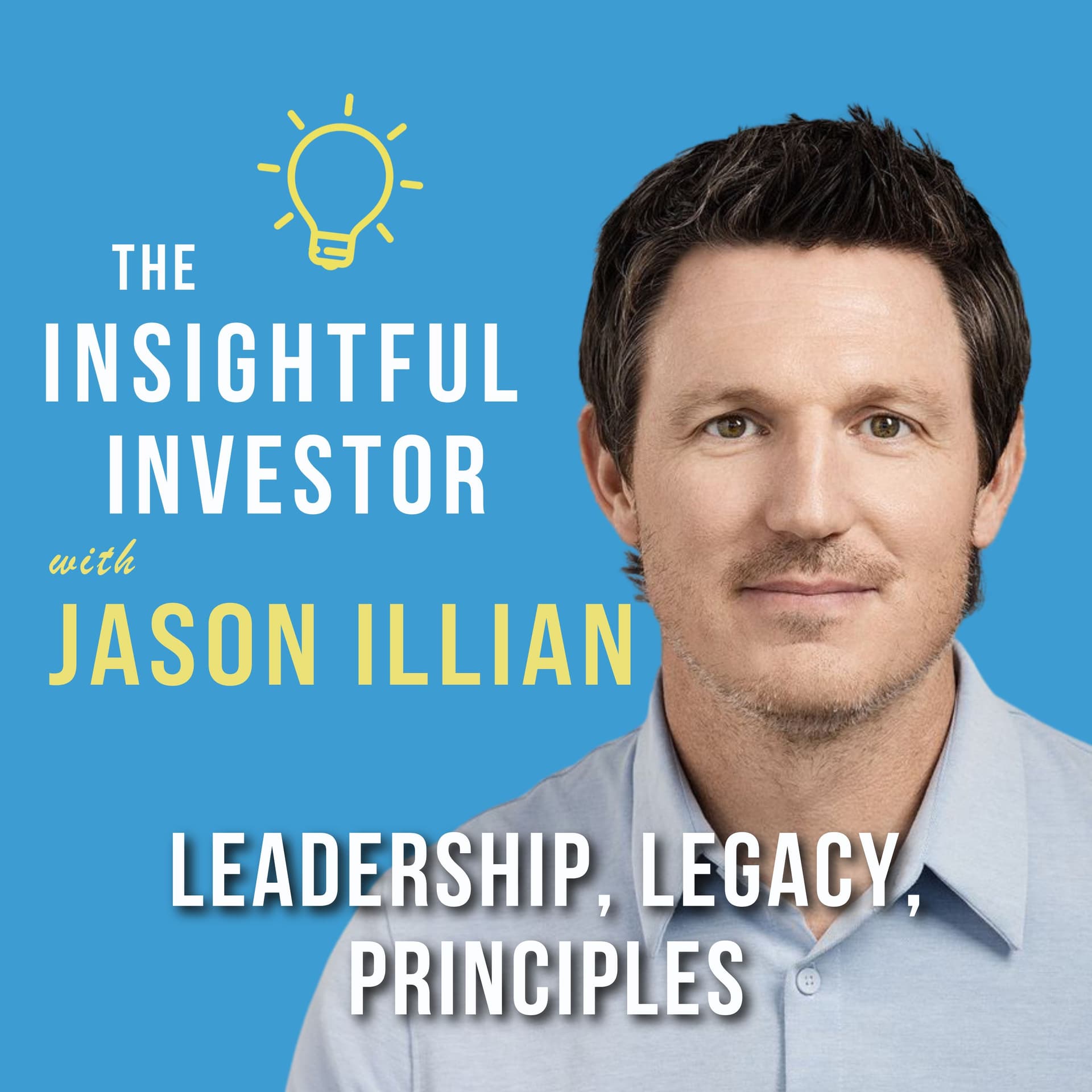
Insightful Investor Podcast - Episode #66 Notes: Jason Illian: Leadership, Legacy, Principles
Episode Overview
- Host: Alex Shahidi, Co-CIO of Evoke Advisors
- Guest: Jason Illian, Co-founder of Highmount Capital and former Managing Director of Koch Disruptive Technologies
- Theme: Discusses principles of leadership, legacy, and innovative growth equity investing.
Key Themes and Discussions
- Key Learnings from Early Career
- Building Companies is Challenging:
- Emphasis on the difficulty of establishing a profitable, value-added business.
- Reflection on the challenges during a period of relatively easy capital access.
- Importance of recognizing the necessary sacrifices to build successful companies.
- Investment Philosophy
- Opportunity vs. Guarantee:
- Focus on providing opportunities to entrepreneurs rather than guarantees of success.
- Importance of supporting bold entrepreneurs who acknowledge their failures.
- Experience at Koch Industries
- Capabilities over Industries:
- Charles Koch’s investment philosophy: focus on capabilities rather than industry-specific investments.
- Flexibility in applying engineering and operational skills across various sectors.
- Optionality in Investments:
- Importance of building companies with the potential for multiple exit strategies (IPO, private sale, etc.).
- Legacy vs. Empire
- Building a Legacy:
- Distinction between creating a lasting legacy that transcends individual success versus building an empire that is susceptible to collapse.
- Encouragement of collaborative growth instead of competition for limited resources.
- Core Principles for Business Relationships
- Shared Vision and Values:
- Necessity of aligning vision and values among partners to ensure cohesive progress.
- Importance of complementary capabilities within teams to achieve greater success.
- Incentive Alignment:
- Need to align incentives to avoid conflicts of interest and promote collective success.
- The Importance of Curiosity
- Mindset of Learning:
- Being in the "curiosity business"—understanding the value of learning continuously and engaging with diverse opportunities.
- The role of curiosity in discovering new potential investments and industries.
- Failure and Humility
- Learning from Mistakes:
- Emphasis on humility as a necessary trait for successful entrepreneurship and investing.
- The value of acknowledging when one is wrong and adapting based on those insights.
- Building Meaningful Relationships
- Give First Mentality:
- Importance of helping others without expecting immediate returns can lead to fruitful long-term relationships.
- Three-Tier Network Framework:
- Community: Close-knit group with whom you have strong trust.
- Network: Broader acquaintances that are still developing.
- Ecosystem: Wider contacts encountered through various interactions.
- Investment Characteristics
- Looking Beyond Industry Labels:
- Identification of unique opportunities that do not fit neatly into predefined categories.
- Focus on the quality and integrity of the leadership behind the investment.
- Case Study: Dude Perfect
- Investment Overview:
- Discussed a $100 million investment in Dude Perfect, a sports entertainment brand.
- Emphasized the growth potential within the creator economy and their established trust with audiences.
- Future of the Brand:
- Potential for expansion into various media and product lines akin to Disney.
- The necessity for brands to connect with younger audiences in a digital-first environment.
Key Takeaways
- Building a successful business requires hard work, sacrifice, and a commitment to creating value that lasts beyond personal achievements.
- The importance of humility and continuous learning cannot be overstated in both professional and personal growth.
- Strong relationships, rooted in trust and mutual benefit, are essential for long-term success in investing and business.
- Legacy-oriented approaches in business can lead to more sustainable growth compared to empire-focused strategies.
Conclusion Jason Illian's insights on leadership, investment strategies, and the importance of relationships underscore a holistic approach to business. His experiences illustrate the need for adaptability, curiosity, and a commitment to building lasting value through meaningful partnerships.
Written by AI. May contain mistakes. Listen to the episode to check what was said.
Transcript
Automatic transcript. May contain errors.0:05Welcome to the Insightful Investor Podcast, a weekly series that seeks to share industry, investment, investment, and market insights. We define insights as concepts that are counterintuitive, widely misunderstood, or underappreciated. In other words, unique ideas that you probably won't hear elsewhere. I'm Alex Shahidi, the host of the podcast and co-CIO of Evoke Advisors, a leading investment advisory firm. Learn more about our show at insightfulinvestor.org.
0:38Today, we're joined by Jason Illion, a prominent technology executive and investor. Jason is one of the founders of Highmount Capital, a private investment firm focused on growth stage and middle markets, investments in transformative technology and tech-enabled companies, which we'll get into. Prior to this, Jason served as the managing director of Koch Disruptive Technologies, the venture arm of Koch Industries. And for those not familiar, Koch is the second largest privately held company in America. Jason, thank you for joining us. Alex, great to see you. Thanks for having me on the show. So let's go back to prior to your current career, you successfully launched and sold a couple of tech companies early in your career.
1:23What were some of the key learnings from that experience? Yeah. When you say key learnings, I often start by saying, what are the key scars? I think one of the things that we've noticed in today's environment, it's back to a time where building companies is hard again. We had 13 years of just the run-up where money was, I don't want to say free, but pretty free. And so people were getting funding for all sorts of ideas. And I think the first key learning is that building a profitable value-added business is really hard. And I don't care if you're building a tech company or you're building a delivery of a porta potty service.
2:01The reality is doing something well and doing it in such a way that not only can you make money, but you're adding value and people think about you. It's really hard because there's many talented people out there. And I think when money was free for a while and valuations were going up, we all looked really smart. And the reality is that we forgot that it takes real sacrifice to build the company. And as I look back at some of the ones that I built early in my career, it's not for the faint of heart, right? We talk about the fun tech crunch articles or when you got to do that great pitch, but they don't show you the 18-hour days or the guys that are sleeping, five guys to one apartment to try to make the rent work.
2:44It's really hard to get something off the ground. And then once it is off the ground, building in such a way that you can have a successful exit, especially if it could take a decade, it cobbles up a lot of your life. And so people need to realize this sacrifice to build great companies. And the people that do that are doing it in such a way that it affects their personal life and their public-facing life as well. And there are no guarantees. You could be the hardest working person and many of those businesses just don't make it. That's right. Well, and I think it's interesting because you You said something that we often look for as investors.
3:19We're looking for great entrepreneurs, visionaries that want an opportunity, not a guarantee. We want to help give them a great opportunity that does not guarantee success, but we want to help bring capital and our expertise and connections to give you a better chance at it. And I think that's what you want when you're an entrepreneur, but that's also what you want if you're a great athlete. Just throw me the ball. Give me a chance to make the great catch. right? It doesn't mean I will, but give me the chance. And we look for those entrepreneurs that are willing to be bold. And then if they drop the ball or whatever, are willing to own and say, this is why we dropped it.
3:55This is what we could have done or should have done. Would you share your experience at Coke and how that shaped your core investment beliefs? Yeah. I mean, Coke's a tremendous place. I mean, most people don't know Coke well because it is a privately held company, right? But whether it's the clothes we're wearing right now or the building we're in, there's a lot of materials and things across the domestic US that Coke has their hand in. I think one of the things I learned early on from Charles Coke is if you look at the core holdings of Coke, they don't really make any sense. They're not industry specific.
4:32So there's oil and gas, and then there's building products, and there's toilet paper. And you're like, wait a minute, these things don't all vibe. But the underlying key thread that's pulled throughout them is Coke was built by capabilities, not by industry. So when you hear somebody in the investing world say, well, what industry do you invest in? Or what industry do you focus on? That's not how Charles Coke thought about it at all. He said, hey, if I can be good at oil and gas engineering, can I be good at electrical engineering? Can I be good at a different type of engineering. So he took a capability and pulled it across different industries.
5:07And I think there's something really important to be learned here that if you're good at one thing, like one capability, if you can run really fast, right, that could work in football, it could work in track, it could work across sports, right? And the same thing can happen in industries. And so as investors, one of the things I took away is we don't have to be just industry specific. In fact, industries are going to change by cycles. They're going to change just based on the time. There's a lot of things that can affect them. But if we're good at understanding capabilities and spotting talent and really understanding what capabilities can we help put around them, then to your earlier point, it gives us a better opportunity for success.
5:48And so I would say the first thing we learned at Coke was just build things by capabilities. I think another thing that I think is very different at Coke versus some other places is when you sat in the IC and talked to Charles or any of the other guys, a lot of investors are talking about, how do we take this company from here to public? Or how do we take this company from here to sell it to a private equity group? And they often challenge us to think like, hey, we want to look at the optionality, Meaning, can we run it profitably? Can we sell it now? Can we hold it long-term? Can we take it public?
6:26What's the optionality around a company? And I think that's important because as we noticed the last two years, the IPO market has been locked up. So if your goal is to take it to an IPO, you got a problem. Or what happens when private equity is not buying companies? So really building a company that has the fortitude to withstand different types of environments where you can hold it long-term if you want, or you can sell a piece of it, or you can sell all of it. Creating optionality is something that we do at Highmount too, is to say, hey, we want options. We may take it public. We may sell it.
7:02We may hold it long-term. We want the optionality around that. I think more investors are starting to realize that that's important because the environment can change on you. I suppose that also reorients It's the priority to creating value that's sustainable through time. Yes. I mean, you have to figure out how to create value that's sustainable over the long term, but that's difficult to do. I mean, I'll just use this example that everybody sees up front was like, hey, chat GPT has got such a running start on everybody, right? And then we're like, wait a minute, what about Grok? And what about the other ones that feel like they caught them in no time at all?
7:38And so then you start to say, well, then why is that different? It was just first. And so I think as a company and as an entrepreneur, we often say, you got to be willing to take the gun out and shoot yourself in the foot before the market takes a gun and shoots you in the chest, right? And so what are you willing to sacrifice? And what are you willing to innovate, disrupt on your own before the market disrupts you? And so every good company is thinking about disrupting themselves continuously, because if they don't, there's somebody that's going to come around the corner and surprise them. What motivated you to launch High Mount Capital?
8:16And what is your vision for the company? The motivation was, is, you know, myself and two other partners had been investing, you know, some of us have been entrepreneurs, we've been investing for a long period of time. And we said, we've seen, we're seeing all these tremendous opportunities that maybe don't fit at our current firms. For me, didn't fit for Coke and didn't fit for my partner's firm. And we said, these are tremendous opportunities where we can not only add capital, but we can help them succeed. I mean, it doesn't matter whether you're Coke or Tiger or SoftBank or whatever. All of our money is green.
8:50That's not differentiated. So then differentiation becomes what else can you bring to the table? And by the way, everybody says they can. This isn't every investment deck I've ever seen. It's like we're value-added investors. If you really believe that, go talk to the entrepreneurs. They'll tell you which ones are actually valuable. They'll tell you which ones are actually doing real work on your behalf. And that's hard. It's easy to write the check. It's hard to go help somebody be successful in such a way that you're being collaborative. And so we're working every day to disrupt ourselves and do a better job at that so that we can add value, whether that's an intro, rebuilding a model, introducing them to a big client, getting in the trenches and getting our hands dirty with them.
9:34Whatever those pieces may be, we want to be differentiated. And to our points earlier, we want to be flexible capital. We've written checks as small as 5 to 10 million. We've written checks over 100 million. And so then the question becomes is look at each deal on a very bespoke basis, but then build scalable processes and people around them to help those companies. But no two deals are the same. And if you run everything with a venture playbook or run everything with a private equity playbook, then I think you're missing the ability to really, you know, flex your muscles and help companies in a way that they need to be helped the best.
10:11In our prior conversation, something that really stood out is you have some highly insightful core principles that I like to dig into. Let's start at a high level. Would you describe the lens through which you view the world, business, and even life? Yeah, well, so there's a couple lenses. So I had a couple of them. One lens we often talk about is like, you can either build a legacy or you can build an empire, but you can't build both. And so we talk about how do we get to invest with legacy builders. And what I mean by that is empires are typically built about a small set of people, a family, whatever it is.
10:50But it's about a few people and it's about a few people controlling a lot. But empires always fall. It doesn't matter where it falls and just generation or next, but even the Roman Empire, as great as it was, imploded because it came from the inside, right? Legacies are different. It's about building something for the long term and it goes beyond you. And so too many times we think about things as like the pie is, you know, it's this big. How big of my chunk can I take of the pie versus saying, what if we grow the pie? My slice of NFP is big because the pie itself grows and that's legacy-minded thinking.
11:26And so one of the first views we always look through is like, are we helping build a legacy and empire? Because you don't get to do both. The second piece that we often say is like, what are the core principles that have helped build our firm and will help build other firms? And I think there are some fundamental foundational things you can think about. And one is shared vision and values. Like if you're going to have partners in your investing firm or you're building a company and you need key executives, they have to have the same shared vision and values, which basically means we got to be pointed the same way.
12:01If you're even one degree off from sailing from New York to London, you're going to end up somewhere in Africa. You can't be at one degree off. You got to be going the same direction. So that same vision and values has to be the same. But with that comes very different complementary capabilities, meaning if I'm a quarterback, I can't have a team of full quarterbacks. I need wide receivers and I need running backs and I need alignment. I need complementary capabilities. And I think early in my career, I think it's easy for people to attract themselves to people like them and want to work with people like them versus surround yourself with people that are different than you.
12:42They're the same vision and values, different capabilities. And then the third piece of that is just the line incentives, meaning how do we incentivize all of us to run the same direction at the same speed with different capabilities to be successful. But if we either succeed together or we fail together, what happens as you start building companies and investing in companies and doing things is the incentives become misaligned, meaning I succeed when you fail or it can happen. And I think that's a bad model. And so I think you have to really continuously look at your incentive model because people do what they're incentivize the deal.
13:21It's pretty simple, right? You tell a kid that you're going to pay him a hundred bucks to mow the lawn, probably go mow the lawn. It's going to make a hundred bucks, right? If you pay him five bucks, he may go do something else. And so you got to incentivize people to go and work on the same things together and understand that that pie gets bigger if we all succeed. And all of that sounds to be oriented towards building a legacy, not an empire. Is that right? Yeah, very much so. I think it's easy to become short-sighted because short-sighted is cool and fun and newsworthy. If I go sell something to Mar, you're going to see it in TechCrunch and the Wall Street Journal and you'll be like, wow, look at Highmount, they just sold this versus saying, hey, how do we add value to this company long-term?
14:05It may not be as sexy, but it's sticky and it actually builds more of that long-term legacy. And it also comes down to like, when we do sell something, do I care whether it's my name on it, like Jason Ilian, or does my partner David get to put his name on it instead? And I'm of the mindset that I don't really care whether it's my name or David's. If his name's on it, that's great. Because, you know, we're building something bigger than me. At least I hope we are. because I want all of us to be successful. And I want all of us to have our day in the light based on where we're most gifted, right?
14:42On our most capabilities. If I'm really good at that, then maybe it's my time to shine. If David is, then it's his time to shine. And I think great companies do the same thing. Their CEOs aren't sitting there in the biggest corner office saying, hey, look at me. Really what they're saying is like, hey, how do I point to my key players and help them out? It's pretty fascinating the way you describe it because it is a different focus than what most people, maybe they don't even say it, but that's effectively how they act and how they manage themselves. Yeah, I think this comes back down to, you know this, in our world it often says like, well, here's your personal life and then here's your professional life and they're two separate things.
15:26They're really not two separate things. that your personal life and your professional life are intricately mixed together. And if you're not on a daily basis thinking like, how did those two things affect one another, then you're really missing the entire point. Because I'll give a perfect example. We recently looked at a company. I love the financials of the company. I love the space that they were in. We were doing our diligence and we found out that the CEO is sleeping with the secretary. we killed the deal on the spot and a couple of the other investors at the table were like i mean the numbers are great and we told them why and they still seem shocked that we were killing the deal and i said if he's willing to do that what makes you think he's not willing to lie on that deck he sent us or you know you know send money over in an offshore account like how do i know because he's willing to cheat on his own wife but doesn't mean he's not cheating on his taxes or anything else.
16:23And so I think that thread pulls through your personal life and your professional life. And so I want to see people that are incredibly good people in their families and their lives as well as their business. You've mentioned being in the curiosity business. What do you mean by that? And how does that mindset influence how you operate? I think great entrepreneurs and great investors, they just show up. And what I mean by that is you have to kind of show up in situations and take calls that you don't really know what you're going to get out of it. And sometimes that means you're only there to give first, like give advice or help.
17:05But what I've found is the more of that kind of stuff that you do, you show up at an event that you're not really sure why you're there, or you take this call because your friend just said, hey, you should really get to know this gentleman. It always unpacks something. Even if it's not an investable opportunity, it's teaching you something, right? It's giving you another node in your network. And the older you get, then you start to realize after thousands of nodes, thousands of places of contact, and it gives you a better surface area. More surface area just gives you a better chance to succeed.
17:36And so I think we're in the curiosity business of, you know, I'm often doing diligence on one company and then I get sidetracked because something else comes up and says like, wow, what's that? There's another business around here. What's that business do? And now we're learning about two sets of businesses. And sometimes it's the second one. That's actually the better part. Right. And so I just think that's how life works. I don't think you can just set yourself on a path of saying, Hey, we're only going to go do it this and we're going to do it this way. I think that's kind of a recipe for failure.
18:07And that's why I think you need to have not rules, but frameworks on how you think about things because frameworks give you latitude to operate within it. A big part of successful investing and successfully building a business is how the future transpires relative to what you had expected. And the future, as we know, is often unpredictable, making humility important. Can you share some insights on this from your experiences at Coke? Yeah. What you said is spot on from a perspective. Like none of us can predict where the future is going to go. If any of us could have predicted COVID, right? Or any of us could have predicted when AI hit, when we've been talking about it for 50 years, like none of us could predict any of this.
18:51And so what that means is if you can't predict it, you better be active in the game every single day, being able to react to it, right? And so if we can't predict it, we can only prepare ourselves to be ready when something comes. And so I tell this to my kids all the time. It's like, you don't know when coach is going to put you in the big game. So you should train every day that the very next day is when they're going to put you in that game. And so it's more about the preparation than it is about when the time actually comes. And so we don't rise to the level of our expectations. We fall to the level of our training.
19:30and so you really are preparing yourself every single day as an investor as a dad as an athlete whatever you train for and if you've trained yourself well then you can be prepared when that moment comes around or you get that chance to do it and you can be proactive with it and if you know it you just won't be prepared when the moment comes because you can't predict it and that just comes up time and time again where you know how many times have vcs or growth firms talk about this wonderful company that's went to billions of dollars of value and then went bankrupt. We couldn't predict it. And so you have to be prepared to be able to react in those unexpected moments.
20:11And one thing that's interesting that I've observed talking to a lot of successful investors is that the ones who have been around a very long time tend to have greater humility than the ones that are newer in the business because they've failed so many times. Yeah. I mean, listen, at the end of the day, if you're in a curiosity business and you're going to be proactive, you're going to miss things, right? And if you miss things and you're willing to be self-reflective about it, then it's going to, it's good. It should, I shouldn't say it's going to, it should create a sense of humility to say like, I just don't have all the answers.
20:48And, you know, I often get on phone calls with great entrepreneurs and say things like, Like, hey, I need you to explain this to me like I'm a kindergartner. Can you start at the very beginning? Or say, and I say things like, I'm going to ask a lot of dumb questions on this call. Please forgive me. And I don't mean that for just some self-deprecating thing. I mean it because I'm truly trying to learn. And as an investor, you can't be on a call about AI or machine learning or biotech or any of those things and think you couldn't possibly know enough to span all those areas, right? And so I think it does develop or should develop a sense of humility, but it also should develop a sense of like, how do I build a great team around me, other great people around me that are really good at what they do?
21:39And I shouldn't feel bad, once again, if they get credit. It's legacy, right? When I'm building empire, it's legacy. So if they get credit, that's awesome. We still get to the same outcome, even if it wasn't all because of me. It may have involved me. Maybe it's just not because of me. And how do you define winning in the context of your business and investments? And has that definition evolved throughout your career? It's interesting because I think, you know, if you were to look at all the, the X posts or LinkedIn, we define winning when our companies are like doing really well, or they sell or something, right?
22:14I'm not sure that is the definition that we use. Like, I think that's great, but I think it's also very short-sighted from a perspective of like, you're going to have moments in time where a company sells or you do really well. And that's great. And I think those are good data points to have. But I think what we're really aiming for is more, how do we create significance, not just success? Like how do we build significance? And significance is not only the success of the company, like the impact that they're having to create value in culture, in society, but also the value that's created from the individuals, right?
22:54Because each one of those, not only executives, but mid-level and lower level people, like if they're truly adding value and they're becoming better dads and better moms and better school teachers and better Sunday school teachers and doing all that, you're creating significance, right? That's having a a bigger lasting impact. And so I'm not saying we don't want financial success as well. We do. That's a piece of it, but it's only a piece. It's not the end all be all. And I think if that is your end all be all, you're willing to, you're going to compromise on all sorts of things just to get the financial success versus if you're willing to say we're going for significance, you're willing to, I guess the best way to say it is when you're charging up the hill, We still want to get to the top of the hill, but you're going to worry more about the body count.
23:42You're not going to kill everybody on the way up the hill. You're going to try to take as many of them with you. And I think that's part of really building a great team, being humble and having a legacy mindset. And if your focus is on creating value and have growth across the company and the people that are involved in building the company, than the financial success, which is the byproduct of the success of the underlying components. Yeah. I mean, there's two key phrases I often look for when we're talking to great leaders. And I hear it from some of the ones I respect the most. The first phrase is, I don't know.
24:22And the other one was, I was wrong. Like when somebody can say in a board meeting, I was wrong, I'm often shocked because you just don't hear that right it's often of like well this did this and this did this and I was kind of right But just in a different way versus saying I was just wrong and here's what we're going to do next I can get behind that person because they're willing to just own Whatever's happening in their world right and and Say that hey, here's how here's how we're going to take the next step. I think one of them you often hear this with relationships. People often say, what's the hardest part of our relationships?
25:00And they say it's communication, right? Men and women communicate differently. I communicate differently with my boss communication. That is not the hardest part about business. The hardest part about business is conflict resolution. Meaning once communication breaks down, then what happens, right? What do you do when the game plan that you put in place and what you told the board doesn't work, then how do you own, we often say draw a circle around yourself and own everything in that circle. How do you own your piece? And then how do you put the next plan in place that you can be successful in as a team?
25:38And I think that's much, much harder because that means you have to have enough humility to go to the board and say, I was wrong. You have to have enough to say to your team, we were wrong. And you have to be willing to own that. But when you do, it frees you up to now make a new move. And that's the problem is like, when people don't set themselves free, they're not really, it can't put a new strategy in place because they're still partially holding onto the old strategy. So the humility of it all and the ownership of it really is what cuts you loose to go try it again. And you know, this is where I give people like Elon Musk a lot of credit is even when he was starting SpaceX, like he was running out of money, right?
Read the full transcript
26:16Like the rockets were exploding and he couldn't figure out why. And he's like, I'm just going to keep going. We've not figured this out. We've been wrong. We're going to figure it out. But he kept owning it right until at the end, he finally figured it out. And so that, you know, you gotta, you gotta give credit to people like that or that are willing to say, Hey, I'm just gonna, I'm gonna keep owning this and we're wrong. We're wrong. We're wrong. And we're going to figure it out. And, you know, in business, sometimes it's just do you get enough cycles, enough turns to figure it out before you run out of capital or before the idea just kills, it just dies.
26:51So you mentioned being able to say I was wrong is an important quality that you look for in leaders. Are there others that you also try to emphasize and are there some common pitfalls you try to avoid? Yeah, that's a good question. I think one of the things we often look for for leaders or like when we're talking to a current company that we made I've invested in our new one is when we sit down with the executive team, we don't really want to hear them all agree on every subject, right? Like if you're sitting there and everybody in the room is agreeing, it makes me very suspicious of what's actually going on there because I can't get my whole family to agree on where to go out to dinner.
27:33So you're telling me that you guys are going to put$50 million and you all agree on every aspect of this, right? What's healthier is when you sit there at a table and you can hear different voices chiming in and they're agreeing on the vision, but they're also respectfully disagreeing at times on how to get there. You can see that it's like iron sharpening iron, right? There's a friction happening where they're trying to create something great. And so when you see the different people at the table really trying to refine one another, you know that there's something special happening in that room now that being said that means that there can be if you have iron sharpening iron it creates sparks right so that the leaders have to have enough um wisdom and discernment you know how to guide that in such a way that it becomes productive and that's just that's what we look for the leadership teams is like how are you guiding your best people and how are you taking the sparks to create a flame that is actually passion for the entire company moving in the right direction versus burning the place to the ground.
28:43And it's the same thing. It's like, you have fire, it's in your fireplace, it's great, it warms the house, gives you light. Take that same fire, drop it in the middle of the living room, burns your place to the ground, right? And so that's what we're looking for is that kind of healthy iron sharpening iron and respectful, disagreeable conversations that's still running the same direction with a passion and a leadership team guiding it so that they're going someplace that can have a true impact. And I think that's related to where we started our conversation, which is if you have shared values and you have complementary skills, meaning your strengths may coincide with somebody else's weaknesses, then you should have some friction.
29:24Otherwise, maybe your skills are not complementary. That's right. Yeah, and I mean, if you go back and you study early battle, techniques of the Roman culture or the Spartan culture, right? They would march in such a way that the shield was on their left hand, the sword was on their right. And they all did that the same because they could protect the person next to them, right? Their weak spot, their offensive area was an area that they're exposed, but the person next to you has that shield. And so if you're truly marching, then there's not an impenetrable spot in the failings to attack. track and i think it's the same thing in business it's like you you you have strengths alex in areas that i i i don't and i probably have so many areas that you don't and so then the question is can we both be um have enough self-realization to know that humble enough to own that and then willing to walk alongside each other to go be successful together because clearly we're going to be more successful with two of us marching than one, if we can be humble enough to understand that we're sharing in that credit versus you getting all of it or I getting all of it.
30:39In our prior conversations, you've emphasized the importance of relationships. How do you build and leverage relationships to expand your network and grow your business? Yeah. So there's a couple of things here that have always been kind of core and close to my heart on this is One is just the whole idea of giving first. So Brad Feld, who is, in my opinion, just kind of a legend in the venture space. When I was a young, dumb entrepreneur versus an old, dumb investor today, you know, Brad stepped in at one of my first companies and was willing to just give advice and guidance and be a sounding board for me.
31:20he wasn't an investor you know he didn't have any direct connection to me except through some mutual friends who introduced us and he just basically said you know he listened to me and said here here's where here's what I'm thinking call me if you need me I'm happy to help his whole mentality was give first and that really rooted in me early on in my career to see like I need to be like that too like how do I give first to companies to investors to families and in such a way that I'm not expecting anything in return. Because Brad wasn't getting anything by helping me. He was spending his time, his valuable time helping me.
31:59And so what I found in my career is the same as like, how do I pour into other people? Not because I'm expecting something, but hopefully that I'm just accelerating their life, making their lives better. Now, what I found is the unintended consequences of that is by when you start helping people, they want to help you over time too, right? They come out of their way. And so there's been multiple times in my career where I've helped somebody in five years, 10 years, 12 years, somebody else has come back and said, Hey, you should take a look at this. And those have led to great opportunities, right?
32:32So I think that the give first mentality is really important to Highmount, to our firm, and to me in particular. I also think the second piece is you can't have a thousand close friends, That just doesn't work. So you have to build some type of framework about how you think about your network and where you spend your time. And so we think about it in such a way that's kind of like a three-tier network is like you have your community, your network, and your ecosystem. And your community is really like your close-knit group of friends. This is the closest 20 to 40 people in your life. But if they call, you call them back that day.
33:12If they text you, you text them back. They're people you like, trust, and respect. You trade Christmas cards with. You try to see them when you're in that city. You build relationships with that because you trust them. And in the business world, these are all the people that if they send you a deal, you still have to do your homework, but you don't have to vet whether it's going to be a good deal or not because you're trading Christmas cards and you'll drive over to their house and smash them if they're giving you bad stuff because they're friends. So you don't worry about, is this going to be a good deal?
33:40The question is how good a deal is. The second piece is your network. And this is your growing set of friends that are, you know, maybe it's 100 people, maybe it's 200 that you're getting to know, but you just don't know them well enough yet to be in your close network. And then there's the ecosystem. It's everybody else that you're getting to know, whether you meet them at a conference or an event. And people move in and out of them in different phases of life. But you have to have some type of framework for how do you manage your closest set of friends and your community and your growing set of friends in your network.
34:13because that's where you add value. You add value just in the same way a company adds value to the people it serves. You add value to the people in your life. And the only way you do that is by putting time and effort and your own energy into it. How would you say a strong foundation helps contribute to building trust with partners, investors, and customers? I look at it as if you don't have core principles, if you don't have some type of foundation and where you're starting from, then how are you accountable to anything, right? Like if my, if I say I'm going right, and then later I tell you that I don't believe in right, I only believe in left, but you haven't heard of any core principles, you can't even argue that, right?
34:59You're just saying like, oh, I guess he just changed his mind. And that's impossible. It's impossible to kind of, you know, catch that moving car. And so you have to, I'm always looking at friends, partners, investors, how do they have some core principles that I can agree with and relate to so that we can do business together? And the ones that don't, I don't even know where to start, right? Because it's always trying to catch a moving object that's always changing positions. And so those core principles, the ones that we talked about, whether they're legacy versus empire, align vision and values.
35:40Those things have to be there. And then they have to be with characteristics of high integrity, my yes being yes, my no being no, the ability to follow through on promises, the ability to own your own stuff, whether it goes right or wrong. To me, those are what you're really flushing out when you're doing diligence. They may come through numbers, but they're really just coming back to how do those reflect on those core principles that that that leadership team and that firm hold dear to their hearts. I'd like to ask you a few questions about investing. Are there any specific characteristics that you look for in a great investment opportunity?
36:21Yeah, there are a few. I think some of the best investment opportunities don't fit nicely in buckets or industries, right? By the time somebody already says, like, this is an industrial automation bucket, that means you could already be behind the curve, right? Before somebody says this is an AI bucket. Now that it's out there, it kind of feels like you're a little behind the curve. And so I think some of the best opportunities don't fit nicely. They're kind of special opportunities, right? They're companies that you're like, well, I don't know where this fits exactly. And what you hear from the great investors is when they find a great opportunity, they rarely start by saying, here's the industry it's in.
37:03They usually start by saying, I talked to this founder and their team and I was just blown away by these people. I was blown away by how they were thinking about adding value. So it wasn't industry specific. We try to dumb it down to that in hindsight, but it really started with the people. And so I think we're looking for special opportunities that don't fit nicely. And then we're looking for incredible people that are able to execute upon those. And when I say incredible people, those aren't just talented people. There's a lot of talented people that I wouldn't do business with. And I say that because they're talented, but they're not principled.
37:39Now, when you can find a talented, principled person who can communicate well and really believes in all these core characteristics and principles you're talking about, then you have something special. And that's why when you're an investor, you're looking at hundreds of thousands of deals just to go do one or two, because it's hard to find those types of people. And when I say it's hard to find it, I don't mean that there's not more people out there. People are in different phases of life and they're with different companies. And so you have to find all of that has to align to make it work. Sometimes there's really good people, but I just don't believe in what they're pursuing or I don't understand it.
38:20Maybe they understand it and I don't. So you've created a different mental model from many other growth equity firms. Would you elaborate on this approach? Yeah, it's funny. We have some people say that we're kind of a growth equity firm. Some people say we're a private equity firm. And really what we just say is like, hey, we're the best way to explain it using, I guess, current terminology is we're probably somewhere between a growth equity and private equity firm that is looking for unique growth opportunities in tech enabled and in other special businesses. And what I mean by that is we're looking for companies that already are growing typically 10 to 20 million in revenue, where we can write either a smaller five to$10 million check, or like our recent investment in Dude Perfect, we can write over$100 million check.
39:11And so it could be a minority check, it could be a majority check. We're looking at each one on a case-by-case basis. Because I think that it's easy to get caught in these buckets of like, here's how venture and growth, and we're just going to do it in these lanes no matter what. And then, oh, by the way, on the other side, here's these large private equity groups. And I think there's a space in between where it's a company that we don't know what it's going to become just yet, but it's growing. It's got great people. And maybe we should come on at a big check. Maybe we should come on in a small check.
39:43We kind of have to flush that out. And so iMount is a little unique in that way. One, because I'm an ex-entrepreneur who built things from scratch in a software safe. My partner is more of a trained investment banker who came down to the top. And so we look at these things very differently in a complementary way of saying, hey, what are those opportunities that are out there? And so if you looked at our pipeline today, it probably wouldn't make sense to the average firm because there are some of those that are smaller checks or some that's much larger checks. But a couple of the common threads are probably 80 % of our pipeline is not actively raising, meaning we're talking to companies long before they're actively raising.
40:28And we're looking for great companies that maybe don't even need the money but need the help. And so I think that's a common thread. I think another common thread is Almost all of these companies have tremendous leadership teams and are in spaces that people maybe don't completely understand or they haven't seen it coming yet. But their companies are growing and they may be helping define a category or growing into a leadership in that category. So there's commonalities, but they're also very different on a case-by-case basis. You mentioned tech-enabled. How do you define tech-enabled? Tech enabled, what it meant 10 years ago is probably something different now because technology has infiltrated so many aspects of our lives, right?
41:14I mean, you could make an argument that the hortipotty business that you're selling is tech enabled because of the software they're using to sell and move them around the country, right? And so there's flexibility in that, but we also put boundaries around like, there's certain things we as a firm won't do, meaning we're not investing in real estate. We don't invest in biotech. So there's frameworks around that. But we do give ourselves some latitude around that tech enablement to say, hey, that tech enablement could come with the software around it, or it could come in how it's deployed in that specific vertical, right?
41:47And so, you know, more companies are falling into that. But there's also a lot of great companies. We often hear and read about the TechCrunch articles about like all the amazing things happening in Silicon Valley, in New York and everything. And they are. There's truly transformative things happening. But there's also the flyover states and everything in between. There's amazing billion-dollar businesses that help us run our everyday lives that are still just early in the tech cycle. And so they're becoming more tech-enabled. And so, I mean, I sat down with a gentleman the other day that started a business, and his business was building 18-wheeler car washes, right?
42:27And they're all over the country. Like, well, yeah, I guess these 18-wheelers do have to wash their cars somewhere, right? And I was learning about his business. I was reading about it. And I was like, who would have guessed that you could be doing that? But that's a big business because we're all ordering Amazon and Walmart and everything else. They got to ship them in something. Those things are driving all over the country. These trucks have to be taken care of. And so those businesses are really interesting. And the more we get to learn about those, we realize there's tech enablement. There's more of it happening every day so they can become more efficient, create better margins, build bigger businesses.
43:08So it's a very interesting and, like you said earlier, curious business to be in. Yeah, it is fascinating in that you would have never guessed that you'd be looking at something like that five years ago. And I think that's one of the fun parts of this industry is you're constantly learning, there's new opportunities, and you'd never know what the future holds. Yeah. And once again, there's a lot of businesses that I won't get a chance to invest in for whatever reason, different timing. They don't need the capital, whatever. But I was visiting with a gentleman the other day that his family is basically one of the frozen food conglomerates where if you get a frozen taquito or taco or whatever, and then you get it from Costco or Quick Trip or anywhere, that's from his family, right?
43:56and it's a massively great business. It does incredibly well and they're growing in all sorts of food categories and trying to make foods healthier all the time. And what they really built is this amazing distribution network and the ability to create it in such a way that the food still is very good when you get it even if it's two weeks from now. And so I don't think there's ever gonna be a way to invest in what he's doing. He doesn't need capital, but I was just fascinated to have dinner and just learn about what they're doing. and I think that's the part of our job that's so fun is like when you have those dinners or coffees or zoom calls like this you're learning about businesses that you didn't even really think about you know when you were in college thinking about hey what am I going to do when I grow up I've heard you discuss a mindset of suck less every day yeah how do you implement this philosophy in your daily routine and company culture yeah yeah so that I would love to say that I came up with the idea, but I think it actually originated in college when I was playing college football.
44:59And we were watching game film one time and coach just kept rewinding this one play that I, that I missed. Like I missed this tackling, just kept rewinding it. Like, and he said something along the line. He's like, Ileon, I need you just to suck less. Right. Like, and we started joking about it, but really what he meant is like, I need you to get better a little bit every day. Right. And as you get, we often want to make these grand jumps to excellence. That's not how it works, right? Like every day we're getting a little bit better by being a little bit more sleep. I'm eating a little bit cleaner.
45:34You know, I'm lifting a little bit harder. And what happens is you're taking these incremental steps to greatness. And that's what we talk about in our job too, is like, I just want to suck less today, meaning I want to be a little more disciplined on prioritizing my meetings. I want to be a little that every day, we're more likely going to get to better opportunities sooner, which then adds more value faster. And so suck less. If you suck less every day, you're probably going to get better faster. Earlier, you talked about focusing on capability rather than industry. But it seems like if you do that, you're going to have a relatively steep learning curve to catch up as you go from industry to industry?
46:21How do you think about that? Yeah, so you're hitting on one of the challenges, but you're also hitting on one of the opportunities. And so there is a steep learning curve if you have to learn 100 % of anything. Now, if you have to learn 60%, if you have to learn the fundamentals and the foundation and you're bringing somebody else in that's an expert for the other 20 to 40%, then it changes, it's transformative. And so when we're looking at something that may be outside of our area of expertise, we're not going to go do the deal unless we can find somebody that's an expert in that area that's willing to ask the questions we don't even know what to ask, right?
47:00So there's lots of industries. If I get on a call, I can ask the good 60, good 70 % questions, but there's 30 % that I just don't even know to ask because I haven't been in that industry. And that's where you're bringing, that's where your community and network's so important, right? You're bringing people to the table. that says, I've built that business. Like I've been there. I can tell you where the potholes in. I know where the bodies are buried. In fact, I still have the shovel, right? Like they just, they know that. And so we build our capabilities by understanding how that capability pulls 60 or 70 % across industries.
47:35We bring in others that are complimentary capabilities to help us fill in that 30 to 40%. And that's what allows us to keep learning. And as you keep learning, you may choose to then do a deeper dive on one of those areas if you're really passionate about it. But if not, that's why you have somebody else that's wonderful at automotive or wonderful at machine learning or wonderful at mobile technologies. If they're great at that, I don't need to learn 100%. I need him to know 100%. And I just need to pull him in at the appropriate times to help me underwrite and understand the questions that I'm not asking.
48:10And I guess you would also have an independent, fresh perspective being relatively new to an industry when you're moving up that learning curve? Yeah, I think there's actually something very healthy and refreshing about coming with a clean perspective, right? Like you have to know enough about it to know where the potholes and challenges are, but you also have to have enough of a fresh perspective to know there's opportunity there, right? And you can be jaded if you've been in any industry long enough to say like, I've been here. This has been hard. It hasn't worked. It hasn't worked. And you can miss an opportunity because you've seen it not work a lot of times.
48:49That's why bringing somebody fresh in sometimes and they don't even know they're willing to try something because they don't have all the scars. And I think every industry gets disrupted. Every industry is getting disrupted right now, whether we believe it or not. And it's typically by people that don't know 100 % because they're willing to try stuff that shouldn't make sense and they're making it work. And we just want to come alongside those people. And that means we're going to have times where we hopefully have wonderful successes and we're going to have some times where we have wonderful failures, where it just didn't work.
49:27Now, hopefully there's fewer of those, obviously, but you're going to have those things in life and it's okay. Failure doesn't kill you unless you just stop and give up. And so we're willing to continue to push past that just like an entrepreneur or executive is. And I think it's like life too. You're going to make mistakes on what you're teaching your kids and how. You're going to make mistakes on being a great husband or wife all the time. They don't have to kill you. You can learn from them. And I think it's the same part as what we do on a day-to-day basis with our firm. One of your first investments at Highmount has made a big splash.
50:08And you alluded to this earlier, but$100 million investment in Dude Perfect. Would you tell us about this company, why you invested and its potential? So Dude Perfect is actually hitting on a number of things that we've talked about so far on sewing up and being bold and decision-making and showing a sense of humility. And so I'll unpack a few of those for us. So the first one was, is Dude Perfect was already out raising, already had term sheets from some private equity groups. And we got a call from one of their advisors saying, would you be willing to talk to the dues and just help them understand what they're going through?
50:47And so we took our first call, not because we were wanting to invest, but because we were wanting to help. And so we jumped on the call and I thought, if nothing else, I'll get great street cred from my kids because they love Dude Perfect. So I'm like, Hey, look, I can tell them I talked to Dude Perfect today. But when we got to know their business and more importantly, got to know the dudes, we realized that they were onto something really special. And so we just showed up, gave first, and then that provided this opportunity. And what we also saw was the creator economy in the last nine months, a year has become a big deal.
51:25And Mr. Beast is out there raising capital right now at$5 billion valuation. And there's all this noise. But we were looking at this beforehand. We were looking at this almost a year and a half, two years ago, because we believed in kind of the flywheel effect around, hey, if you have a great content platform, you can also look at products and experiences and merchandise and all these sorts of things around it that have now become popular. And so we were kind of on the front edge of seeing some of this. And when I say us, I want to give more credit to the dudes than to us. We were just discovering what they kind of already knew, right?
52:06And they were trying to learn how to articulate. Our belief was, is like, we believe that, you know, sports media entertainment is changing. We believe that when you have the largest sports platform on YouTube and the ability to shoot one thing with the NFL and the next with Steph Curry and do all this fun stuff and do it in a family-friendly way, you actually have a lot of surface area to be successful. And they already have been and they've already built a great business. And now the real question is, can we accelerate that? And I think we've done some great things by like we hired Andrew Yaffe, who was head of digital and strategy at the NBA to come be the CEO.
52:45So we've started taking steps to help them in this new space, which they now call the creator economy. And I think in the future, they're just going to call media. I know they have many millions of followers and subscribers and many billions of downloads. But for our audience that's not familiar with Dude Perfect, would you just quickly describe what they do? Yeah, yeah. Well, so I always say it's, if you have kind of kids that are probably eight to 16, you probably already know them. And if you have some that are earlier, you will. And if you have some that are later, they probably grew up on them.
53:19But the Dude Perfect guys, they basically started when they were at Texas A &M doing trick shots. And trick shots into basketball, football, sorts of fun stuff. They've now grown to, I think, over 115 million subscribers and followers across different channels. And they not only do trick shots, but they do sports battles. They bring on celebrities. They do things around all the major sporting events. And they do it in a family-friendly way. So you're never going to see things around alcohol or cursing or anything else. They've done it in such a way that they want to pull sports and family and fun together.
53:53And that's only thrived in a small screen first environment. So if you have kids now, they typically don't come in and watch your TV. They're looking at their phone and they're consuming media on Insta, on Snap, on YouTube. That is their primary source. And that's where these guys live. and so you know we shot a video recently with steph curry as an example and we did some fun things around basketball but they also did a golf battle with them right like a putt putt golf battle to their the arena and they also talked to him about i didn't know steph was like a popcorn aficionado so he likes different types of popcorn so they were like doing this contest with him which popcorn is your favorite and so they're bringing out the real side of people and also realizing that we're not all Steph Curry.
54:44It's like, that's something we aspire to. But the average person like us, like we love sports, but we're not that good. And so they make these sports, whether it's lacrosse or cricket or basketball real. And they've done a great job with it. And they just continue to grow. And so there's a handful of like, really prominent, large creators and Dude Perfect is one of them. And just to give everyone a window into the potential opportunity here? How do you think about long-term evolving of the brand and the expansion? Yeah. I mean, one of the media outlets recently said, you know, Dude Perfect's building the next Disney.
55:26And I don't think they're that far off. I mean, I think there really is an opportunity for this next generation that you got to remember the kids here are digital natives. So their live experiences and their digital worlds are colliding. It used to be, hey, you go to Disney and that was wonderful. End of story. Or maybe you watched a movie once it came out every year or two. Now people are experiencing stuff on a daily basis on their phones and they're having a Dude Perfect smoothie at Smoothie King and they're working with Muya and it's an ongoing experience. And Dude Perfect is one of very few that is learning how to unlock that because your most valuable asset's your attention.
56:09It's your time. And they've figured out a way to connect with kids. And by the way, not only do kids love them, but the families love them. Because if you're a dad like myself, there's so much junk and crap out there that if you can find something that you can give to your kids and just let them watch and you know it's safe. I mean, the Do Perfect guys, if they pulled my kids to go buy something, I wouldn't even blink because I know it's been safe because they've proved it over 15 years. So the number one thing that the dudes have done in addition to the sports and media and fun is they've built trust.
56:42They've built trust with families. And I think that just when you've built that kind of trust, you can do all sorts of stuff, to building theme parks, to selling cheeseburgers, to whatever you want to do. And I'm very excited about the progress that they're making and don't want to steal their thunder because they got all sorts of announcements coming up. But I think there's a tremendous amount of upside for them. And when you see a sports team like the Boston Celtics this week sold for$6 billion, right? They have a smaller audience than Dude Perfect. So you tell me what Dude Perfect can become.
57:19It's pretty fascinating. Jason, I appreciate you sharing your perspectives and your insights with me and our audience. So thank you so much for joining us. Alex, you're great. I really appreciate the time and look forward to doing it again. Thanks for listening. We hope you enjoyed this episode. Please visit our website at insightfulinvestor.org to access past shows and learn more about our podcast. If you have questions, feel free to email us at info at insightfulinvestor.org. And if you enjoyed the discussion, please subscribe to this podcast to ensure you don't miss future episodes. And don't forget to forward today's conversation to others you think would enjoy listening.
58:00This podcast is provided for informational purposes only and should not be relied upon as legal, business, investment, or tax advice. All opinions expressed by podcast participants are solely their own opinions and do not necessarily reflect the opinions of Evoque advisors, their affiliates, or companies featured. Due to industry regulations, participants on this podcast are instructed not to make specific trade recommendations, nor reference past or potential profits. And listeners are reminded that securities trading, commodity trading, and alternative investments are complex and carry a risk of substantial losses.
58:35As such, they are not suitable for all investors.
58:42Listeners should be aware that guests featured on the Insightful Investor may have current or past associations with Evoke Advisors or the host, including as an investment manager of a private fund opportunity by Evoke or access through an affiliated Evoke fund or as a client. Participation as a guest on the podcast should not be perceived as an endorsement or testimonial with respect to Evoke Advisors, the podcast host, or their services. Similarly, the inclusion of a guest on the podcast does not imply that Evoke Advisors or the host endorses the guest or any company with which they may be affiliated or employed.
59:21Evoke has neither paid nor received compensation from guests for their participation.
From the publisher
Jason is co-founder of Highmount Capital and former Managing Director of Koch Disruptive Technologies. He discusses core principles like legacy, integrity and curiosity, his innovative approach to growth equity investing, and the importance of building meaningful relationships.


