
In short
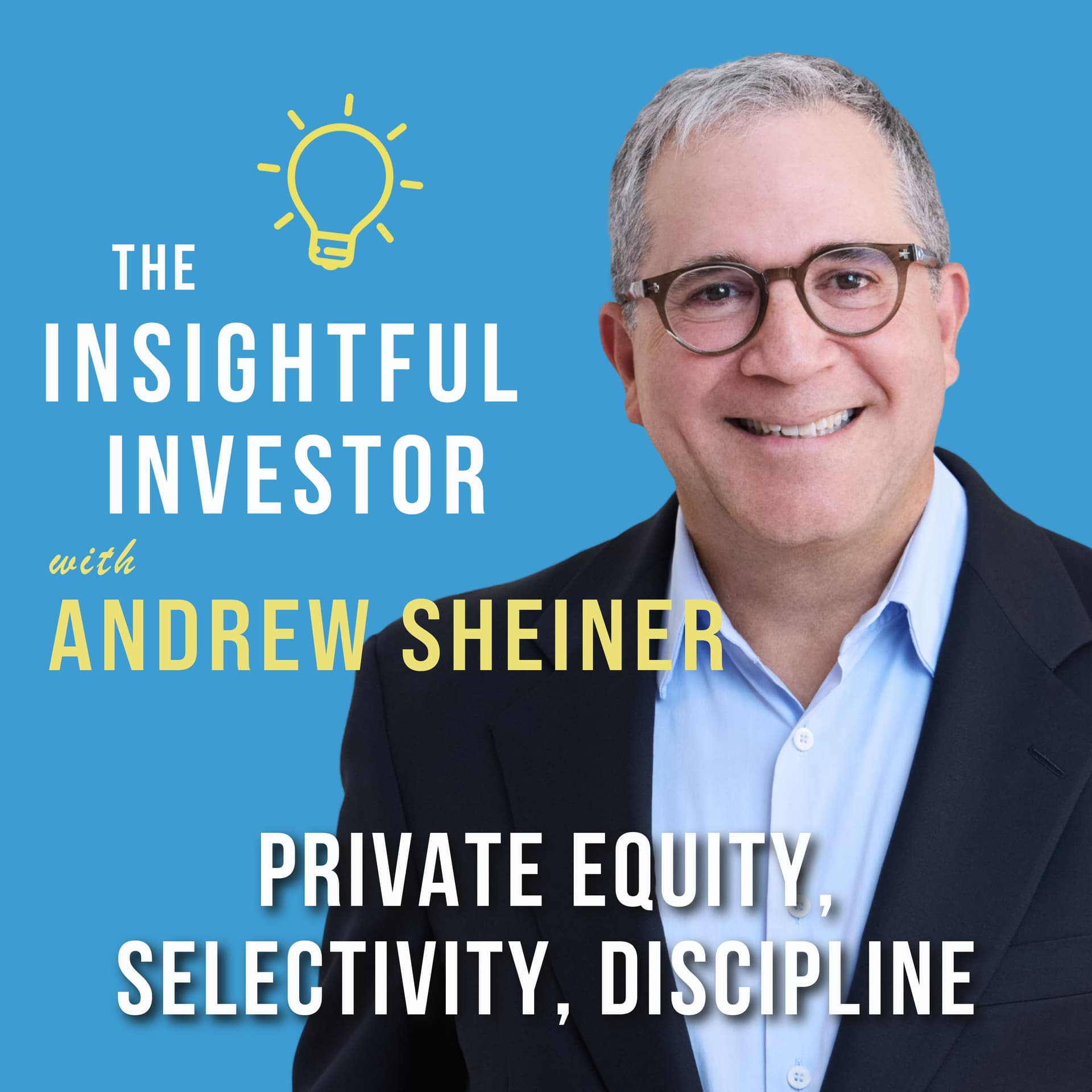
Podcast Notes: Insightful Investor - Episode #68 with Andrew Sheiner
Summary In Episode #68 of the Insightful Investor podcast, host Alex Shahidi interviews Andrew Sheiner, Founder and CEO of Altas Partners, a Toronto-based private equity firm. The discussion revolves around Sheiner's investment philosophy, the dynamics of private equity, and the importance of selectivity and discipline in investing. Key insights include the value of concentrating on high-quality investments, understanding market dynamics, and effectively managing risk.
---
Key Themes and Concepts
- Understanding Private Equity
- Background of Andrew Sheiner
- 17 years at Onyx Corporation before founding Altas Partners.
- Emphasis on intellectual curiosity and relationship-building in investment.
- Altas Partners
- Founded about 13 years ago with a focus on long-term, quality-driven investments in private equity.
- Manages over $10 billion in assets as of March 2025.
- Investment Philosophy
- Quality-Focused Approach
- Concentrated investments rather than diversified portfolios.
- Aim to generate strong returns while minimizing risk.
- Discipline in Investment
- Altas seeks to invest in a few high-quality businesses each year (1-2), rather than a broader range.
- The firm evaluates approximately 300 companies annually but only invests in a select few that meet strict criteria.
- Risk Management
- Patient Capital and Risk Awareness
- Emphasis on thorough due diligence and understanding cash flow durability.
- Importance of adapting strategies in response to macroeconomic shifts.
- Managing Concentrated Portfolios
- Altas mitigates risks by selecting businesses with diverse sensitivities to economic factors.
- Regular evaluation of portfolio companies to identify and address risks.
- Value Creation Post-Investment
- Role of Leadership
- The selection of the right CEO is critical for the success of portfolio companies.
- Focus on building strong relationships and aligning goals with leadership teams.
- Enhancing Capabilities
- Altas implements a Portfolio Solutions Group (PSG) to support management teams in improving operations and driving growth.
- Market Outlook and Economic Considerations
- Micro vs. Macro Investing
- Altas emphasizes micro-level investments while being aware of macroeconomic trends that could affect businesses.
- Discussions on the importance of cash flow stability in uncertain economic times.
---
Leadership Insights
- Qualities of Effective Leaders
- Clear vision and ability to inspire trust.
- Judiciousness in character assessment and accountability.
- Counterintuitive Traits
- Presence is less critical than knowledge and thoughtfulness in leadership.
---
Philanthropic Efforts
- Wolf Scholars Program
- Founded in memory of Sheiner's grandfather, aimed at nurturing critical thinkers and leaders in Canada.
- Focus on multidisciplinary education rather than narrow career paths.
---
Conclusion Andrew Sheiner's insights reflect a disciplined and deliberate approach to private equity investing, highlighting the complexities and challenges of the market. His emphasis on quality, leadership, and risk management resonates as essential tenets for achieving long-term success in the industry.
---
Additional Notes
- Vision for the Private Equity Industry
- Sheiner expresses a desire for improved investor flexibility and liquidity in private equity investments.
- Cautionary Outlook
- Continuous awareness of potential disruptions (e.g., technology) and the importance of adapting to emerging trends.
---
For more insights, visit the [Insightful Investor Podcast](https://insightfulinvestor.org/) and check out past episodes.
Written by AI. May contain mistakes. Listen to the episode to check what was said.
Transcript
Automatic transcript. May contain errors.0:05Welcome to the Insightful Investor Podcast, a weekly series that seeks to share industry, investment, investment, and market insights. We define insights as concepts that are counterintuitive, widely misunderstood, or underappreciated. In other words, unique ideas that you probably won't hear elsewhere. I'm Alex Shahidi, the host of the podcast and co-CIO of Evoke Advisors, a leading investment advisory firm. Learn more about our show at insightfulinvestor.org.
0:38Andrew Scheiner joins us today. Andrew is founder and CEO of Altus Partners, which is a$10 billion private equity firm based in Toronto. Before launching Altus, Andrew spent 17 years at Onyx Corporation. Today, he leads Altus with a distinctive approach to long-term investing. Andrew, you and I have known each other for a long time. I'm so excited we're able to sit down and have this conversation. Thanks, Alex. Nice to be here and thank you for the invitation. Let me start with your background. Why did you choose to dedicate your career to investing in private companies? I've always believed, Alex, that this is the kind of business that would attract people that are more than anything intellectually curious.
1:24The neat thing about what we do is that we have the opportunity to look at different businesses and they're all distinctive, they're all unique. And so if you are curious about how different businesses operate, how they're organized, how they're developed to deliver whatever product or services their established offer, it's an interesting job. And that's what certainly attracted me to this type of career early on. My first job out of undergrad was with McKinsey & Company, and I just had the opportunity to work on lots of different projects. The other thing that young people probably don't appreciate is that this is very much a people business.
2:20you know it's about cultivating trusting and deep relationships because we're not simply investing in the equity of a company we have the responsibility of owning and governing these businesses and that involves developing and cultivating strong relationships with the ceos and the management teams that that lead them we we've always viewed these as as partnerships. And so it's a job in many respects that requires interesting combination of both IQ and EQ. And I think as I came to appreciate that more and more, it is what attracted me to this particular part of the investing ecosystem. Well, you spent 17 years at Onyx.
3:14Would you share your experience there and any key lessons that you learned? I was very lucky. I was hired by the founder of Onyx when it was a small firm and I was a kid. So this was 30 years and three months ago. I just had my 30th anniversary, in fact, in private equity. I joked that I got that job because there was no formal recruiting process. I pestered the founder of Onyx, who was my mentor for many years, for months until I finally was able to get a job. It was a small firm. Onyx was unusual in that it was established with permanent capital. The founder, Jerry Schwartz, convinced investors to put a small wheel.
3:59What was then a lot of money was$250 million in a holding company. And the idea was to use that capital for private equity investing. When I joined, it was a small team of six. I was the only associate. I was there for the next 17 years. So what I really learned working for Jerry was how to build a high-quality private equity firm. And I was there in a very good era for that firm because we developed it essentially from scratch. and had to put all the pieces in place that are required to build and run a very high quality investing and ownership enterprise. So it was a wonderful apprenticeship in many ways, and a great opportunity to learn this business working for a very talented founder and CEO.
4:53And what motivated you to launch Altus Partners about 13 years ago? And how did that transition shape your approach? I had been with Onyx for 17 years. It had grown from six to 120 people. I joke simply by virtue of time. I was one of the three or four senior people running the firm reporting to Jerry. I knew him so well. He was 70. I was 48. I always knew his birthday as precise age because we were the same birthday. And I was approaching 50. It wasn't obvious when succession would happen at the firm. It might skip a generation. And my view was that if I ever wanted to really have the opportunity to leave a firm and run it, or rather have the opportunity to run a firm, that it was probably the right time to think about leaving and starting one because succession at Onyx might not happen for quite some time.
5:58And I always thought it would be an interesting challenge and exciting opportunity to run a firm, truly lead it with a group of partners. I also felt that if I didn't do it then and I crossed into my 50s, I might never leave because I knew how much energy would take to start something from scratch. I also had a real vision for what I thought would be interesting to build. and when I left in the middle of 2012, my last day was June 30th of that year, I established Altus with a small number of colleagues with quite, I think, a clear understanding of where the industry was, how it evolved, and having worked at another firm for 17 years where I was sort of keen to position our new firm within this big, complicated ecosystem.
6:58And I'd had the benefit of being involved in a lot of businesses over many years and was able to take some of the positive lessons with me to leave some of the things that I wasn't interested in, including sort of behind. And we started, Alex, really by articulating an objective of what we were looking to achieve for our partners. And when you establish a new enterprise, always good, as I'm sure you did when you started your firm, by articulating an objective, which in many respects becomes your North Star. And for us, that objective, which I often say is easy to say but hard to do, is to generate strong private equity returns and to do that with the least amount of risk over the long term for our partners.
7:49And so with that sort of clearly articulated and understood, we set out to build our firm. And so everything that we've done in the last 13 years, the strategy we pursue, the kinds of businesses we look to acquire, the type of people we attract to the firm, the norms and values and culture that we've created, how we approach ownership are all designed to give us the best chance of achieving that singular objective. objective. And it hasn't changed since day one. I think I had the benefit of having worked for a founder while we built a firm and then was able to establish a new one with a sort of a clearly articulated objective.
8:33And the last thing I'd say is I was very lucky in that I didn't feel as if I needed to figure it out as I went along. I understood very clearly, having done it once before in a sense what the pieces were that we needed to put in place to build a firm. You know, the metaphor I use, it's very much like assembling a jigsaw puzzle. And what you need is for every piece of that puzzle to knit together as neatly as possible to give yourself the best chance of achieving whatever it is you're setting up to achieve. And I suppose when you're building a business, you have to make sure you have all the right pieces to begin with.
9:12I don't believe you have all the right pieces when you begin. I think you have, hopefully, an understanding of what those pieces are that you need to assemble. We started out in a rented Regis office. We were three people with no capital, a computer, an idea, and I joke, a poodle in the corner. We did not have many of the component pieces at the outset, but I did understand what those pieces were that we needed to put in place. And not surprisingly, to get it right takes a long time because, you know, you don't build a high-quality enterprise overnight. It's one component at a time with a vision of what those need to be.
9:57and a slow progression of building something durable and sustainable. One of the topics I'd like to cover today is leadership. So let me ask you this. What habits or routines have been most critical to your success as a leader in private equity? One that I really believe in is repetition. I'm a great believer in repeating myself. And what I mean by that is there are a few philosophical approaches, perspectives, that I think are very important for us to keep in mind as we go about the day-to-day activity of what we do. And one, for example, stems from the fact that I believe that this job is very hard.
10:58That finding businesses that fit one's framework, whatever the framework may be, and there's lots of different ways to invest, is difficult and challenging. And in many respects, to do that well just naturally involves saying no to a lot of things. and you know our our approach as you know is to try to find one or two businesses each year that fit our framework and where we have high conviction and then on the front end what we hope to do is see a large number of opportunities to hopefully give us the opportunity to get to that that small number that makes sense to us where the intersection of the prospect of the business the price we need to pay really, really makes sense.
11:47And just to put that into context, the sourcing math at our firm today
11:57really involves seeing at the top of the funnel 300 or so businesses a year. We go deep into certain subsectors, et cetera. We see about six businesses a week. Top of the funnel are 300 companies that's irrelevant in many respects because many of them don't fit. And then we work that down to, you know, somewhere around one and a half a month on average where we're going to go very, very deep, doing deep commercial diligence to assess these businesses. And the interesting thing of that small handful of companies that we look at each year, you know, 15 or 18 annually, the interesting thing about our firm culturally is that we expect that 90 % of those won't hold up to scrutiny, that when we get under the covers, we do our work, that they're either not what we had hoped or imagined, or we come to conclude that the price we're going to have to pay is too high.
12:59And that's difficult, right? Because it means that we're going to look at a lot of businesses but not acquire a lot of them. And so that requires a compensation system and a type of person that is interested in the process of really getting to know companies, in going very deep and understands that we're not going to buy a lot. that requires for me to you know be reminding the team constantly that our job in a sense is not to buy a company it's very easy to buy a company sign the purchase agreement send a wire our job is to figure these out and we have a norm at our firm that if we go deep in assessing a business and we ultimately don't get to the finish line.
13:53The team is expected to go out for a celebratory dinner. And they're not celebrating buying the company, obviously, because we didn't. They're celebrating solving the puzzle, figuring it out. And so I find it's important for me to, you know, just over time be reinforcing these messages so that people are always reminded of what it is we're trying to accomplish, especially because, you know, we hire four or five or six young people each year and we're trying to inculcate, in a sense, in them the values of the firm and what we're trying to accomplish. So, you know, staying, in a sense, on message with people and, you know, working hard to develop every aspect of what we do around learning and development, how we train people and how we promote people and how we reward people that reinforces what we're trying to accomplish is very, very important.
14:57And that goes back to your first days at Altus with three or four people in a Regis office and having that vision and the North Star that you can refer back to and continuing that discipline and the culture, setting the right incentives to reinforce that objective as you scale the business. You talk about incentives, they're so important. One, I believe that compensation comes in many forms. Compensation is beyond the money that people earn. Compensation relates to the experience that they have. The people that one has the opportunity to work with and interact with, the values at the firm that you're at.
15:46So how people are compensated comes in sort of, you know, there are many elements to that. And back to your earlier question, one of the things I often say is that you're rewarded at our firm for doing great work. And again, great work isn't defined as buying a company. The decision to buy a company will be the collective decision in many respects. The great work at our firm is defined as really coming to know the subsectors that you're focused on, developing real insight into those sectors, cultivating deep relationships with the management teams and owners of the businesses in those sectors that we might be interested in.
16:35There are businesses within these subsectors that we covet. And then putting ourselves in a position to be in the conversation at a moment in time where there's an opportunity to buy one of these businesses. So that's very much the upfront work. That can take years, the way we do it. And then once we make the decision to buy a company, being a great owner of it. Because our model involves being a very engaged owner of the businesses that we buy. We buy them to meaningfully build them and take them very much to a different level. And we do do that by being very engaged with them. So that's, you know, for us, what we're trying to establish from a cultural standpoint.
17:21And then the reward system needs to reinforce all of that, right? There are firms where individual partners get extra or differentiated economics in the businesses they're involved with. And that makes sense for some firms. It wouldn't make sense for ours. Because investment committees in these businesses are funny little petri dishes. In some, you have partners competing with one another for capital. and the dynamic can be I scratch your back, you scratch more, you get more economics in your deal, I get more in mine, so I'm not going to trouble you on yours, I'm not going to give you a hard time, or they're competing for capital.
18:04Both of those would be challenging for a firm like ours, where we're looking at a large number of opportunities to find a small number each year. we want to create a culture where everybody is interested and focused on finding that right small number each year that it makes sense for us to buy. So we establish the carried interest allocation for our team at the beginning of the year, and it's fixed for the next 12 months. And one's interest is fixed and set regardless of who works on a transaction. Because what gets through our process. What gets over the finish line is going to be a function of the work that we do assessing the company.
18:51And that decision is very much a collective decision. We want to get them right. And we don't want people's judgment to be influenced by whether they're working on it or they sourced it or originated it or somebody else did. And that requires a certain type of human being. So attracting the right type of people to our firm culturally is critically important as well. Well, we're going to get into investing in private equity in a moment, but before we do that, I wanted to ask your general outlook on the market and the economy. I don't think I personally have a distinctive or any particular insight into the economy that would be much more thoughtful, for example, than yours.
19:43We're all living through challenging times, but over the last 30 years, there have been lots of areas that have been difficult and challenging. The way we approach the question of market environment and economic outlook really is in two ways. The first is by remembering and recognizing that we are micro investors, right? We are investing in a business that in our case has been built, built over many years, typically has history, typically has a strong market leadership position. There's data, which is very helpful and valuable to us. You know, we are as far away from venture capital as one can get in our world, right?
20:34We're not investing in backing people. We're investing in companies that have been built over long periods of time that have real distinctive capabilities based on, you know, the services of the products that they provide. And so our work is around assessing those enterprises. The metaphor that I often use with young people is that a business is a machine that generates cash flow. And our job is to peel back the onion so that we can stare at its machinery. And our job, through the diligence process, is to assess the quality of that machinery, the durability of that machinery, as it relates to its ability to generate cash and develop a thoughtful perspective on the opportunity to enhance cash flow over time.
21:23And while we're doing that, there's no question that we are thinking about and considering the broader economic forces that can impact one of these businesses. And we're influenced for sure by what is happening at a moment in time in terms of the broader economy. And then what we do, Alex, is we're creating a set of projections based on history and where the business is, its competitive environment, and what we think the opportunity is with it that creates and generates an array of outcomes. And so we're really not building our models based on a base case point set of projections. We're building it based on an array of outcomes that stems from a series of assumptions based on the potential for how a company may perform over the coming few years.
22:28And we're assessing that array to make ultimately a decision and use investing judgment whether to acquire a business and what price to pay. And the simple way I often describe it to investors is that we try to land on a base case ultimately within that array that we think is highly achievable, being intellectually honest and very rigorous in our work. We believe there's an opportunity if we do our job well as an owner, we can outperform that base case with a likelihood of
23:11doing worse than that is low considerably worse than that is very low and importantly given our approach where the risk of impairing and losing capital is extremely remote and that's critical for us since one of the things that makes our job hard is finding businesses where we feel that's the case. And we typically have a more cautious conservative bent in terms of how we model these businesses and certainly as it relates to economic growth, exit multiples, etc. And then there's always a risk of, you know, that you buy a business just before COVID, right? And you've got to, you know, we've got to think about, you know, some of the external factors that could impact the business in constructing a portfolio.
23:59And so I didn't really answer your question because your question is, do I have a particular perspective on where we're heading? I'm cautious in terms of where we're heading, but I'm constitutionally cautious. I've always been cautious. I live in a constant state of paranoia. As do I. Let me ask it a little bit different. My sense is that we live in a highly uncertain environment, and there's a wide range of potential outcomes and there's probably heightened risk of extreme outcomes. So when you're investing for the long term, does that just generally mean that, and if you agree, does that generally mean that you're looking for even a larger margin of safety given that backdrop?
24:43Yes, it is. And that margin of safety comes in a few different forms, but it starts with the very nature of what we're buying. So I'll give you a very, very simple example. We own a company that is, and my kids always find our businesses very boring. We own a company that is the largest commercial roofing contractor in America. We tend to like businesses that have been built, they've been developed. And what this business does, Alex, is it provides principally re-roofing services. And what that means is, you know, if you look across the country, there's a large number of industrial and commercial buildings that have been built, and their roofs wear out over time, typically every 20 or 25 years.
25:31So you can imagine that one-twentieth of the stock of roofs in the country needs to be re-roofed. And the way we run our firm is you've got four verticals. and within those we look at sub-sectors that we're intrigued with. In our services, vertical and industrial services, we've spent a lot of time looking at facility services and that ultimately led us to this sector. And what we were intrigued about with this company is that it had been built over 20 years. And what's interesting about the roofing industry in America is there's a greater demand for those re-roofing services each year then there are roofers.
26:13And what we came to appreciate is that if you own one roofer in one market, that's a tough position to be in because you start the year with a bit of anxiety about whether you'll be able to keep your crews busy enough to do this work. But when we bought this business, it had 60 locations across the US. The CEO likes to boast, it operated within 100 miles of every rooftop in America. One of their core competencies was crew mobility. So if one market is busy and another market is slower, they can move crews. And so if you think about that activity, over time, these roofs will need to be re-roofed.
26:53And you're right that there's lots of uncertainty in the economy, in the global economy. There's tail risk. The financial system can be at risk. There's lots of uncertainty. But if you go down to the micro level. And you can defer this for a period of time, but ultimately, if there's a hole in the roof, the roof needs to be roofed. We got comfortable that this business was particularly well positioned. They've grown through small strategic acquisitions with a wonderful demonstrated ability to enhance the post-acquisition operating margins meaningfully. And despite their size, when we bought the company, they had a 1 % market share, 99 % to go, hundreds and hundreds of little roofers in a business that we thought could really be taken to the next level.
27:42So in assessing that company, yes, in the back of our minds, there's lots of macro forces shaping the US economy, the global economy, the financial system. But we were able to get comfortable that this business in its market would be well positioned to grow over time, despite all of that. And that's how we operate. You know, we spent three years looking at the optical sector. And as we put in that string that led us to a woman who was building this remarkable business that had figured out how to acquire small independent optometry practices, pull a bunch of levers and take their four-wall unit economics to a different level.
28:26And that opportunity was going to exist in a sense, regardless of whether the economy grew at 2%, grew at 5%, shrank for a little while. So we are looking at micro businesses, businesses that are operating particular domains. And then we for sure are thinking about how the macro environment could impact them. But we're looking for businesses that we think do something particularly well. And the question is, can we enable them and help them do that at a different level? Is that helpful? Yeah. And I guess part of that margin of safety that we discussed earlier could also be investing companies that are, in effect, less economically sensitive and have competitive advantages that can sustain economic downturns.
29:18Yeah, precisely. So, for example, we don't own a business. I don't think we've ever owned a business. that is reliant, in a sense, on the consumer. So businesses that manufacture products that they sell to Walmart can be wonderful businesses, but wouldn't have quite the margin of safety that you described that we would look for in a business. Because if you go back to first principles, what we're looking at is durability of cash flow, quality of cash flow as a way to protect our capital. because we're not investing higher up the capital structure. We're not debt investors. We look to protect capital in the risk part of our framework is buying businesses that we think are very durable and very resilient in terms of what they do from a cash flow standpoint.
30:08And then the question is, can we enhance it, right? Because the only way we're going to be able to generate good returns for our investors is by meanfully taking that cash flow to a different level. But to your point, we are immensely focused on the quality, durability, and stability of the cash flow of the business that we buy. And that durability is so important. We are very privileged to be a very significant shareholder of a company called Hub International, which is one of the leading insurance brokers in America. And that business is very, very durable. Right. You know, the, you know, people in businesses that have insurance, they're going to pay their premiums each year.
30:57Right. Because the others. Because they know the moment they don't, something bad is going to happen. Right. So when we look back at history over 20 years, at what has happened to premium payments in the time of economic decline, they've remained quite stable, right? So the volume of business, the number of businesses could fall, and that will reduce premiums. But historically, the premium income within the insurance industry in periods of recession where economic activity has fallen, that this business has fared better. And then the way they've grown this business is by building a capability to acquire small brokers, roll them into the family where one plus one is much more than two.
31:57And this is a company that has tripled its equity value every five years for more than a quarter century because they have created a mousetrap that is durable and very repetitive. repetitive. Well, one observation that I've had over the years talking to a lot of public equity and private equity investors that tend to be micro, like you described, where they're looking at companies, is that oftentimes what happens is they're investing in things that are more economically sensitive. And because they're micro, they don't pay much attention to the macro. And every once in a while, the macro is the only thing that matters.
Read the full transcript
32:33And they can make great micro calls, but get wiped out by the macro. And so I guess part of what you're describing is just an appreciation of that and recognizing that the macro is very difficult to predict. And you want to have much greater predictability with your selection of companies to invest in. For sure. I think I'm fortunate to have been at this for a long time. Right. Having started in 1995, I've had the good fortune to have looked at lots of businesses, acquired and invested in a significant number. And there's muscle memory, in a sense, with this business. So you're constantly refining that understanding of durability, risk.
33:27And for us, you're absolutely right that the macro overlay is something that we have to be mindful of. Always understanding we're investing in a dedicated, unique business. We have to be very mindful of the macro overlay. And given that we're not looking to find 10 or 15 businesses a year, but one or two, in 2018, we bought three. The bar is very high for us. But because we don't have the pressure of having to deploy capital, of having to buy a large number, it allows us to take the time to think about these things. and to try to be mindful of the various forces at play that can impact these businesses that perhaps are lower probability.
34:25You obviously take a very highly selective approach to private equity, acquiring only one or two companies per year. Many of your peers tend to have broader diversification. What are the advantages of this concentrated strategy and why do you believe it's a better approach for Altus and having a more diversified approach? Most fundamentally, I just don't think over the long term we will perform as well if we try to buy five companies a year. The likelihood of us finding a larger number of businesses that fit our framework and where we have equally high conviction, I think is just very low. And so I think we will be well served to continue to remain selective and disciplined.
35:14And my view is that if we can generate mid-teens or better, which is what we set out to do, and then we work hard to exceed that, over the long term, and we can keep impairments low and our loss ratio low, then we're delivering on our end of the bargain. We see our job, Alex is investing a dollar and turning that into two, three, four, five dollars time and time again, and limiting the number of times that there's an impairment of capital. And for us, the way to do that isn't to buy a lot of companies, because I think then you end up with inevitably a portfolio whose returns are somewhere around, you know, centered around the mean, right?
36:04Or, or, or the median in the industry. If we want to do better than that, I think being more disciplined and more selective will serve us well. And, and that has been our approach when we started and we were five people and it's approached today. And now we're 75 people still looking for this small number of businesses each year. And the other thing that I think our investors understand is that they are well diversified. Many of our investors would be invested with 20 managers. If you look through the funds, down to the line items of the individual companies, they own a lot of businesses. And so I've always believed that they don't need us for more diversification.
36:50They're well diversified. We are in the rifle shop business. and we're in the business of finding one company at a time small number each year where over time we'll build a portfolio of businesses where we have very high conviction we think can collectively generate returns that achieve our objective because our objective is to generate strong private equity returns with the least amount of risk and private equity returns need to exceed the public markets over the long term. Otherwise, you shouldn't do it. Because we're giving up liquidity, and liquidity is very precious. So if we're going to give up liquidity as an investor and owner of a company, my goodness, we better achieve better returns.
37:36Otherwise, nobody should give us their capital. So understanding what that objective was, and the strategy flowed from the objective. So that's how I think about it. And how do you manage risk with a concentrated portfolio, especially given the potential impact of one bad investment on the entire fund? We manage that risk by being incredibly careful around the nature of the businesses that we acquire. And today, by putting six, seven, or eight businesses in a portfolio where we think the risk of losing all of our capital in any one of those is extraordinarily remote. We can withstand a body blow, an unexpected body blow in our portfolio.
38:34But when I look at the combination of businesses that we're acquiring, the likelihood of some number of them taken together, being impaired to cause the return on the entire portfolio to be poor is very, very low. So I suppose one way to create diversification is to have a bunch of holdings. Another way is to have fewer holdings, but each of those have different sensitivities to different factors, and you can diversify by those, especially if they're not all economically sensitive. Then you can effectively have sufficient diversification with fewer number of holdings that are higher conviction.
39:20is exactly right because we're not we don't invest in one sector right so our businesses aren't subject to the same economic forces to the same risks because each one is independent and subject to the forces that are impacting their unique subsectors the interesting thing is there are many similarities between our businesses from an attribute perspective characteristically. We know what we like in terms of the nature of the machine, using the analogy that a business is a machine that generates cash flow. However, each machine is different, right? And the ecosystem that they're involved with are different and the forces that impact them are different.
40:09So to your point, they're each subject to different macro considerations. And that form of diversification is what gives me comfort to invest in this manner. What are the key ways you add value post-acquisition and help portfolio companies create long-term value? So I think that's one of the genuinely interesting things about the way we're able to invest as compared to investing in a widely held public company, which is that we're looking to invest in businesses where we have the responsibility of ownership, the responsibility of governing these businesses. And we buy businesses where we have a clear perspective and thesis on what is required to be put in place to take this wonderful enterprise and take it to the next level.
41:25and philosophically our view is that the most important decision that we make and it's our responsibility is who the ceo will be that will run this business because we're you know in venture capital they often talk about backing a team in a sense we're not backing a team we're buying a business that has real capabilities that we can underwrite and assess. And then the most important job is who the CEO will be that runs this company. Often the CEO is in place, but from time to time will acquire a business where the plan is to either elevate somebody to that job or bring somebody new in. And that's the most important decision because they're going to be running the business day to day.
42:12And we need to understand that. With that CEO, we then need to align on the vision for the business so that we're very clear together on where we want to take it. And with that understood, Alex, we then are focused with the CEO on three things. right what are the key priorities from one year to the next that we want and the co agrees it's important for the the senior leadership to need to focus on over the course of the next 12 months and those are going to evolve over time so what are the key priorities and then they're going to cascade priorities throughout the organization what are the capabilities that are required to execute on those priorities?
43:01And I'll come back to capabilities in a moment. And then lastly, who are the people that we need within the organization to achieve all of that? Of those three, in many respects, I believe the most important is the team, the talent agenda. Because if we get the right team in place, then we're going to land on the right priorities and we're going to put the capabilities in place. to execute on all of that. If we have the wrong team, we're going to sub-optimize for sure. So where we're very focused is on the question of what capabilities are required. And those can be built internally. Those can be brought to bear externally.
43:48Or we can deliver those capabilities at our firm. And we have built over the course of the last many years a group at Altus, which we refer to as PSG, which is not a very famous French soccer team. It's our portfolio solutions group. And that team is focused on working with our management teams on very important key needle-moving initiatives that can really make a big difference at the company. And we built a team that sort of knows how to do that well. And we are extraordinarily focused with our businesses on the effort to upgrade their executive teams to give us the best chance of accelerating the development of the company.
44:42So our head of talent at Altus is a woman. Her name is Lisa Diamond. and she started her career as an organizational assessment effectiveness consultant at BCG, ended up running all of BCG's talent enterprise at BCG Canada and joined us to both focus on the talent at our team, but very much to be focused with our CEOs and the heads of talent of our companies on the talent agenda at our businesses. So our philosophy is let's put the various key pieces in place at the businesses. Let's add value on the talent side and on key capabilities and then make sure we're well aligned. And the other thing that's important is it goes back to one of your very first questions, which is why I always found this job interesting.
45:39which is that the decisions that we make on who the leaders will be these businesses are critically important because we need to develop effective and trusting relationships with them and what i often explain to young people is that yes while we control these businesses from a practical standpoint we are in the moral suasion business right we're in the business of having to develop these trusted relationships so that we can align on what we're trying to accomplish. It's no different than a sports team, right? You know, it starts with the owner, down to the GM, down to the president, the coach and the players.
46:17Let's all get aligned. We're the team owner in many respects. If you look across sports, there's some great owners, there's some less good owners and teams that have great owners tend to do well over time and teams that, you know, have bad owners, they make bad decisions. and you end up with bad outcomes. So that's the analogy for how I think about this. And it's one of the things that makes the job interesting. The last thing I'd say is, one of the things that we've worked hard to be good at is to really be able to assess what is required to really take these businesses to the next level. around people, systems, processes, capabilities, which is different for each company.
47:09And then how effectively and at what pace can we put those in place to really start to see outcomes? Because the businesses that we buy, we buy them not to simply hold them for two years, but four or five, six, seven years, because it takes time to really grow the operating income of these companies, which ultimately is the surest way to create equity value. And I guess going back to how we began our conversation, if you're trying to help these companies solve the puzzle to take it to the next level, you have to make sure they have all the right pieces to solve that puzzle. Right. My mental math is very simple.
47:53We buy these businesses where we have conviction that there's an opportunity to grow their EBIT. And the way to generate financial returns in our business is to do two things. One, we want to grow operating income well above the rate of inflation organically. And then we look for businesses, Alex, because we're very focused. We typically buy services companies. They're not terribly capital intensive. They tend to be highly cash flow generative. And we're interested also in businesses that not only generate strong cash flow, but have the ability to reinvest that cash flow on an ongoing basis at an attractive unlevered rate of return.
48:49And if we can do that, very powerful way to grow equity value. So we're looking to grow operating income and to enhance that rate of growth organically, well above the rate of inflation, and then to be able to hopefully have the opportunity to reinvest cash flow inorganically in an attractive rate of return. And it's very important to us that our management teams understand that and understand what we're trying to accomplish. We're very aligned with that. And then we set about enhancing team, people, system processes. but it's all in the service of that objective, right? How do we take this machine that's been built, it's a wonderful, durable machine, but we need to have a conviction that there's levers that we can pull either because it's not being optimized or it's underperforming relative to its potential that can allow us to accelerate that and drive operating income organically and inorganically.
49:45And that's ultimately how you're able to make money over time and generate strong returns over time in this activity, in my view. What are the types of things that can go wrong with the approach? You're saying with a particular company? Just in terms of when you're thinking about investing in these companies and adding value, what types of things can derail that success that either is unpredictable or maybe it's bad underwriting or what are the types of things? Sure. So one of the big areas of risk and uncertainty these days that we are determined to hopefully get right, but it certainly is an area where things can go wrong, is around how technology can disintermediate a business that has had a durable history, right, based on how it's been built and how its ecosystem has operated to this point.
51:07And certainly with the advent of generative AI,
51:16industries are going to be disrupted. And so it is incredibly important for us when we look at a company to be thoughtful around the question of whether that capability, this emerging technology, for lack of a better term will be something that enables the company or imposes risk on it. And we're very lucky we have in our orbit and on our advisory board an old friend you may know named David Lowey, who was early a team member at Google, ran a lot of marketing for Google-led business development for many years and then left around the same time we founded the firm to create something called Capital.
52:09We were originally Google Capital and then Capital G, which is Google's sort of growth equity investing arm. Retired last year and is spending a fascinating year just learning about AI at Stanford. And David is in our orbit. So whenever we look at a business and there's this question, you know, we're spending time with him and people in his world asking ourselves this question about whether AI will pose a threat for the company in this business or will enable it and allow us to, in fact, grow it. You could get that wrong, for sure. But it's something we're very focused on trying to get right. I think of that as an area of risk these days when we're looking at a business.
52:58The way we try to mitigate these types of things after we own a company, which we've made the decision, is we believe in the importance of trying to return capital along the way as a way to de-risk our investments. Back to the earlier conversation, we own a small number. It is not uncommon for us two or three years in, and we've done this three or four times now, where we have sold 25 or 30 % of the company and returned 50 % or 100 % or more of the capital. And some of our investors said, well, why did you do that? You're giving away a bunch of upside. And my view is if I can sell 30 % and return more than 100 % of our basis, I will do that all day long.
53:45Back to my natural state of paranoia. We did a homework project in education that led us unexpectedly to ultimately have the opportunity to acquire the leading international medical school in the world. A remarkable business that I didn't know existed. We did several years in this subsector that had been built from 1 to 115 of EBIT in 38 years. And we were very fortunate to take it from 115 to 240 with a new team we put in place over six years. But along the way, again, we sold a 30 % stake to another private equity firm that allowed us to return. I think it was two times our capital. It kept 70 % and continued to build it.
54:28We've done that with our insurance brokerage company. It's one of the things that we like to do as a way to mitigate risk. Because to your point, there are known risks. There's unknown risks. And if we can reduce those, the best way to reduce risk is to return everybody their money. The best way. Then the risk of capital loss is removed. Hope that's helpful. Private companies, especially successful ones, oftentimes have a choice of PE firms to partner with. How does your long-term orientation position you as an owner of choice for private companies? Let me describe how I think about Time Horizon, which is that we're buying businesses not to simply own for one or two years.
55:21And that's because we buy businesses to really take their operating income to a different level that takes time. From a practical standpoint, I think we will own most businesses for four or five, six, seven years. And that's because we buy them. We have a clear thesis. we set out to execute on a plan, the orientation in a sense, Alex, is long-term because we're looking to build these into more durable, more valuable businesses that can be built for the long-term. Our part of the journey will typically, in my mind, be four, five, six, seven years. That said, when we set out on this journey, my hope was that if we're lucky, once or perhaps twice a decade we might find ourselves owning a remarkable business that is sort of the gift that keeps on giving where the first chapter leads to a second chapter and could lead to a third chapter and we might own it longer which would be wonderful and we want to have that orientation and the flexibility to do that but we understand that those are very few and far between understanding that most businesses we're going to have a thesis and that second chapter may not emerge or somebody may come along.
56:41You know, one of our businesses in the first few years, a strategic came along and offered what we thought was a very high price that allowed us to pull forward several years of work. Or where we think that the industry landscape is changing, you know, a bit of our job is to look down the road and around the corner. And you have to be willing, as willing to sell things as to hold them. Every year, beginning of the second year, we do this thorough re-underwriting of each business. Because a decision to hold it is, as it is often said, a reinvestment decision. So it's going to be rare that we own a company longer.
57:26To answer your question, if somebody's just interested in the highest price, they don't care about who the next owner is, we're typically not the right partner. But if there's a stakeholder that cares, a management team, a shareholder that's going to continue to own an interest in the business, and they're looking for an owner or a partner or investor that can add value and has this orientation of really meaningfully building a business, and that's what they care about when they pass the baton, we're a good choice. because also we don't own 50 companies you know today we own eight and uh each one is like a child which means you care you know we're caring we care about them we're nurturing them you know the you know we're carefully feeding and watering them and so you know because that involvement is a little different uh we're often attracted its owners and management teams that are interested in that type of engagement that attracted to us.
58:37You discussed investing in CEOs. Are there any qualities of great leaders that are counterintuitive or broadly underappreciated? So I don't know if these are underappreciated, but I think great CEOs are ones that can articulate a very clear vision to their teams and throughout their organizations are great judges of character, right? Because businesses are built and run by teams of people, not by single individuals. So if a CO is a great judge of character, can express clear vision that they can articulate, and that can inspire trust and confidence, that in my view consistently is what makes a wonderful leader and the ability to both inspire trust and confidence in your team and also hold them accountable at the same time is difficult and hugely valuable and i think of you know mark cone who's the ceo of Hub International.
59:53He started as an insurance broker in an office 30 years ago. And he is as detail-oriented as anyone I've ever met as a CEO, which means that he really understands every element of the business and can hold his team accountable. But he also has the ability to inspire them based on a clear vision for where the business is going and what they're trying to accomplish. that dual ability, right, to be detail-oriented in a way that allows you to hold people accountable because you really know the business and at the same time be able to inspire them and to develop trusting relationships, I think is, you know, an element of traits or a combination of traits that I often see in great CEOs.
1:01:02Conversely, are there characteristics of great leaders that are often viewed as important that you don't value as much? Probably presence. Oftentimes, people think of CEOs as the leading man in a Western movie. I don't think that presence is anywhere near as important as knowledge and thoughtfulness. And I've worked with CEOs that are quite soft-spoken but are still remarkably talented CEOs. they can be even keeled and soft spoken but because they engender trust and confidence they can be very effective so that's probably one attribute that people may overestimate you know the ability to walk into a room and command a room less necessary I'd say not unnecessary but less necessary you've demonstrated a strong commitment to giving back, particularly through your efforts to educate and mentor the next generation of leaders.
1:02:25Would you share what motivates this passion and how you hope programs like Wolf Scholars will make an impact? The Wolf Scholars Program is a program that was named after my grandfather, my late maternal grandfather, Wolf Cooper, who came to this country as an immigrant and was incredibly grateful for what North America could offer and for the system that had been built. And because he fled Europe after the Second World War, having survived the war, he had a great appreciation for the value of a free society and liberal democratic system. And the program, which we've established in partnership with the University of Toronto, is really focused on creating a generation of innovators, builders, and leaders in Canada.
1:03:30And I live in Canada. Our firm, we operate from Toronto no different than if we're in Boston, New York, or San Francisco, and we have an office in New York, but home for me is Toronto. And so many young college, high school seniors these days feel immense pressure to go to study commerce in undergrad, certainly in Canada, as a way to hopefully create a path to an interesting job. and I think that we'll be better served to train kids that have a bit of a more multidisciplinary approach to thinking about the world and that can learn how to be critical thinkers and thoughtful problem solvers. And for that, I'd like them to have the opportunity to learn about history, how the world has evolved over time, to be exposed to leaders in business and otherwise.
1:04:30In an era where critical thinking isn't as valued as perhaps it has been in times past, and so we've created this program that is determined to hopefully train a generation of young people that will tackle the opportunities facing their generation with both a multidisciplinary understanding of the world, an appreciation for history, and a framework that will allow them to tackle problems thoughtfully. And this is something that's been in the works for many years that we actually just launched a few weeks ago that will be fun to build. And I like building stuff. I've enjoyed building the firm and I'm excited to build this and hopefully, you know, we'll wake up 20 years from now and have graduated some pretty interesting leaders.
1:05:35We'll see. That's great. So, Andrew, I have good news for you. You have been appointed private equity king for a day. And the power that you have is you can change one thing about the private equity industry. What would that be and why? Thank you for the appointment. So one day, it would be fantastic, Alex, if investors would have the ability to invest in and out of private equity portfolios in an easy way at NAV. so that for folks like us, we wouldn't have to spend a massive amount of time every three or four years trying to raise the next fund. It is a, it's part of my job, right? So every few years we have to go raise a pool of capital that provides us with committed capital for us to then go invest.
1:06:48And I don't know if we'll get there. But if we could simply go about our job of buying businesses at the right time, selling them, reinvesting that capital without having every few years to take this detour, in a sense, to have to go, you know, raise a whole bunch of capital to do it again. And that would certainly free up a whole bunch of energy and time to allow us to simply do our job of researching industries, underwriting businesses, and owning them. For that to happen, the industry needs to create a mechanism to give investors confidence that they can invest in and then get liquidity from in a reasonable time frame and at net asset value, their interest in those portfolios.
1:07:49If you can buy into and get out of a portfolio of private equity at NAV and you could trust that and trust that when you want your money back within reason, you can get it, that would be fantastic for this industry. It hasn't really been created. I can leave that to you to figure out. If folks could figure that out, it would certainly make my life a lot easier because I could focus on doing my job well. So that would be great for this industry. I don't know if we'll ever get there. I know people are thinking about it, sort of beyond my pay grade, but that would be super interesting. Well, Andrew, I've had a lot of fun with this conversation.
1:08:30I learned a lot. I hope our listeners did as well. Thank you so much for joining us. Thank you. Great to see you. Appreciate the opportunity. Thanks for listening. We hope you enjoyed this episode. Please visit our website at insightfulinvestor.org to access past shows and learn more about our podcast. If you have questions, feel free to email us at info at insightfulinvestor.org. And if you enjoyed the discussion, please subscribe to this podcast to ensure you don't miss future episodes. And don't forget to forward today's conversation to others you think would enjoy listening. This podcast is provided for informational purposes only and should not be relied upon as legal, business, investment, or tax advice.
1:09:14All opinions expressed by podcast participants are solely their own opinions and do not necessarily reflect the opinions of Evoque advisors, their affiliates, or companies featured. Due to industry regulations, participants on this podcast are instructed not to make specific trade recommendations, nor reference past or potential profits. And listeners are reminded that securities trading, commodity trading, and alternative investments are complex and carry a risk of substantial losses. As such, they are not suitable for all investors.
1:09:47Listeners should be aware that guests featured on The Insightful Investor may have current or past associations with Evoke advisors or the host, including as an investment manager of a private fund opportunity by Evoke, or access through an affiliated Evoke fund, or as a client. Participation as a guest on the podcast should not be perceived as an endorsement or testimonial with respect to Evoke Advisors, the podcast host, or their services. Similarly, the inclusion of a guest on the podcast does not imply that Evoke Advisors or the host endorses the guest or any company with which they may be affiliated or employed.
1:10:27Evoke has neither paid nor received compensation from guests for their participation.
From the publisher
Andrew is Founder and CEO of Altas Partners, which is a Toronto-based private equity firm that manages over $10B (as of 3/31/25). Andrew shares insights about why a concentrated, quality-focused approach can deliver superior results in private equity, how disciplined risk management and patient capital drive value, and the significance of partnering closely with management teams.


