
In short
Insightful Investor Podcast Episode #70 Notes
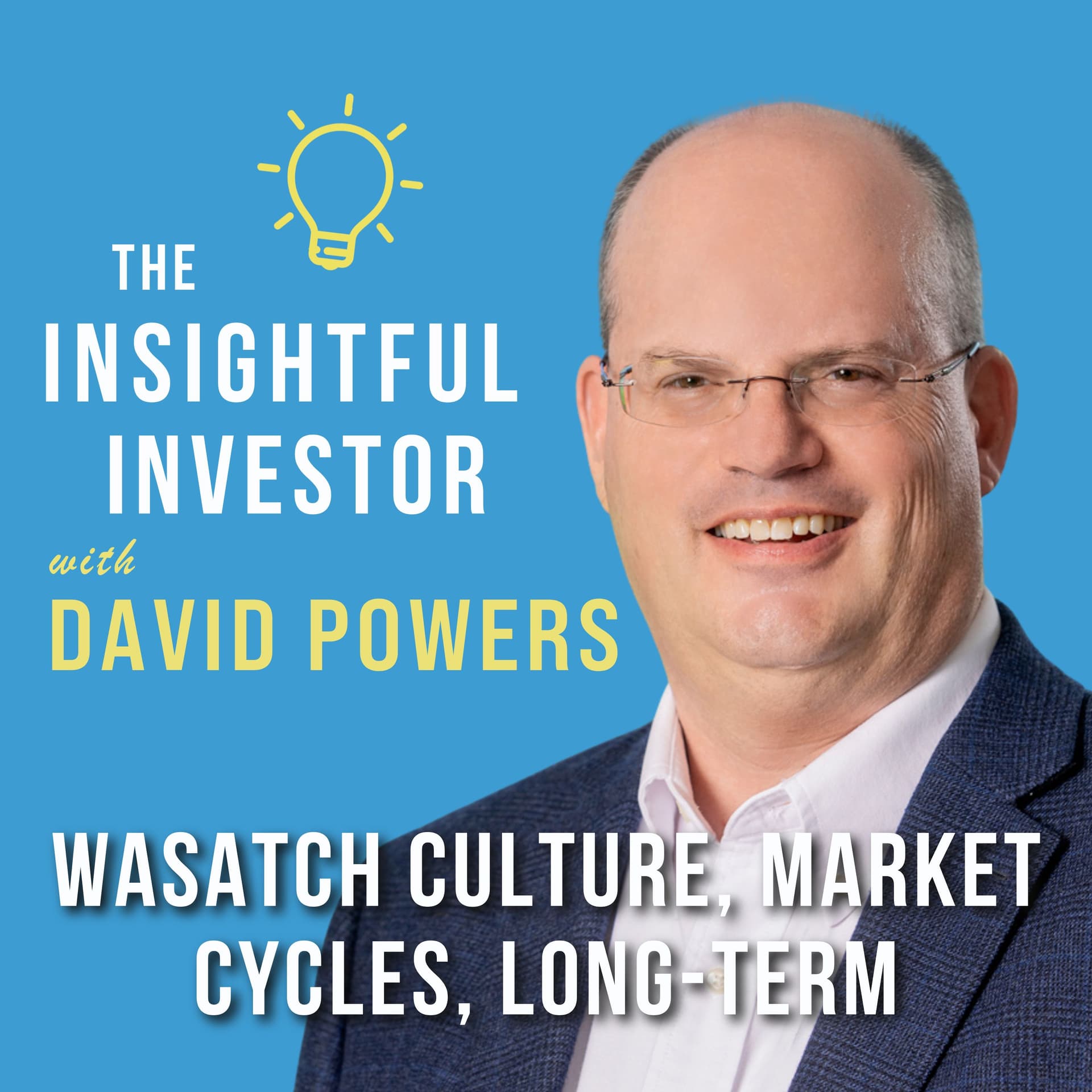
Episode Overview Title: #70 - David Powers: Wasatch Culture, Market Cycles, Long-Term Description: David Powers, Senior Portfolio Manager at Wasatch Global Investors, shares insights on collaborative culture, market cycles, and a long-term investment approach.
Key Participants
- Host: Alex Shahidi - Co-CIO of Evoke Advisors
- Guest: David Powers - Senior Portfolio Manager at Wasatch Global Investors
---
Episode Highlights
- David Powers' Background
- Grew up in a family that valued games and investing.
- First exposure to investing through family discussions and a computer game mimicking stock trading.
- Experience as a college pitcher shaped his contrarian thinking and mental preparation.
- Investing Philosophy
- Importance of Learning: Advocates for continuous learning and adaptability in investing; suggests that the learning curve in investing never flattens.
- Contrarian Thinking: Emphasizes the need to think differently and strategically, much like pitching where unexpected moves can lead to success.
- Balancing Principles: Stresses the need to be both dogmatic regarding core investment principles and adaptable to changing market conditions.
- Wasatch Culture
- Employee-Owned Structure: The independence of Wasatch (100% employee-owned) allows for a long-term focus without the pressure of asset gathering.
- Collaboration and Teamwork: Emphasizes a culture of teamwork and diverse perspectives over the superstar PM model, fostering better investment decisions.
- Investment Strategy
- Long-Term Focus: Emphasis on long-term investment horizons, with the understanding that short-term volatility creates opportunities.
- Market Efficiency: Identifies inefficiencies in the market, particularly in less-covered sectors, which provide hidden opportunities.
- Combining Analysis: Utilizes both bottom-up stock picking and top-down macro analysis to inform investment strategies.
- Market Insights
- Current Market Conditions: David discusses the current economic cycle, noting it is in the later stages with potential for slowdown.
- Sector Performance: Recognizes that different sectors perform well in different phases of the investment cycle, advising to anticipate these shifts.
- Risks and Opportunities
- Inflation Concerns: Discusses the implications of rising inflation and the importance of companies' ability to pass through costs.
- Global Market Dynamics: Highlights the potential of international markets offering better opportunities compared to the U.S., particularly in the context of valuation disparities.
- Future Outlook
- Economic Predictions: Predicts potential slowdowns in growth due to policy uncertainty and inflation pressures.
- Investment Philosophy Alignment: Maintains a patient approach, focusing on long-term strategies and waiting for optimal market conditions to buy undervalued stocks.
---
Key Takeaways
- Continuous Learning: Investing is a lifelong learning process that requires adaptability and openness to new ideas.
- Team Collaboration: A strong team culture enhances decision-making processes and investment outcomes.
- Market Inefficiencies: Long-term investors can find value in overlooked opportunities due to emotional market behaviors.
- Cyclical Awareness: Understanding where we are in the economic and investment cycles is crucial for effective investment strategies.
- Patience and Discipline: Focus on long-term value over short-term results to navigate a volatile market effectively.
Conclusion David Powers' insights on investing emphasize the importance of adaptability, team collaboration, and a long-term focus in navigating market complexities. His approach to combining thorough analysis, understanding market cycles, and recognizing inefficiencies presents a thoughtful strategy for successful investing.
For more insights, visit [Insightful Investor](https://insightfulinvestor.org/).
Written by AI. May contain mistakes. Listen to the episode to check what was said.
Transcript
Automatic transcript. May contain errors.0:05Welcome to the Insightful Investor Podcast, a weekly series that seeks to share industry, investment, investment, and market insights. We define insights as concepts that are counterintuitive, widely misunderstood, or underappreciated. In other words, unique ideas that you probably won't hear elsewhere. I'm Alex Shahidi, the host of the podcast and co-CIO of Evoke Advisors, a leading investment advisory firm. Learn more about our show at insightfulinvestor.org.
0:38Joining me today on the podcast is David Powers. Dave is a senior portfolio manager and team leader of global value at Wasatch Global Investors, which is a$25 billion equity manager based in Salt Lake City that just hit its 50-year anniversary. And Dave has been at Wasatch for about a dozen years, but he's been managing value equities since 1997. Welcome, Dave. Thank you. Let's go back to the early years. What originally attracted you to investing? I've actually thought about this many times over the years. I think it all sort of went back years and years ago. Growing up, I had a very close family and we played a lot of card games, board games, sports.
1:25And I kind of believe that those experiences in some way laid a groundwork for the interest in investing. Every Sunday, my dad would go through the business section of the newspaper, record prices of stocks that your mom owned, and he would teach my brother and I a little bit about investing. I'm not sure I got it all at that point or it all registered, but I think it started to grow a bit when we bought our first Commodore 64, to date myself a bit here, computer game, which was essentially called the stock market game, or I think something close to that. I played the game for hours and tried to amass as much of a fortune as I could.
2:08And frankly, I got a bit hooked. And so that's kind of, I think, how I got going. Well, were you good at that game? I learned how to manipulate it. So I would say that versus skill. Got it. It was fun. Interesting. Now, you were a college pitcher. And how would you say that experience helped shape your approach to investing, especially regarding mental preparation and maybe even contrarian thinking? I loved sports as a kid and baseball and pitching in particular. When you're young, you can kind of get by with maybe some raw skill and throw a fastball by someone or a curveball, especially kids that are sort of not into the sport as much as maybe you are.
2:58But as you get older and players get bigger and stronger and you need to kind of develop a strategy. and my towel was pretty good but it wasn't enough I had to start to think like a contrarian had to throw pitches where the batters weren't expecting them you know either off speed outside inside fastball curveball just something they weren't expecting so so the mental preparation of the strategy particularly kind of as a contrarian became a bigger part of the game my career in summer leagues in college was good but it didn't last too long but I did develop skills that I think I use in investing today, including the willingness to take a chance and to be a contrarian.
3:45And I sort of think of sports as a whole taught me a lot about how to win and lose and how to bounce back the next day. And in investing, you have down days. It's a very humbling business, but you have to bounce back and say tomorrow's a new day and forget yesterday and sort of unemotionally, what is the rational thing to do from here? And I think a lot of that kind of started from baseball and pitching. That's interesting. And I guess part of sports and investing is you live through this learning curve. and is your sense that the learning curve in investing is always steep or does it flatten over time?
4:32I don't think it ever flattens and I hope it never does because I really love this business and part of that is just learning every day. However, I think I would take a little bit different tilt on this in the context of I think learning comes in these step changes. So sometimes like there's big changes in learning. You learn a lot. And that is sort of like you tackle a new company, you tackle a new industry, you put together a new portfolio. And those big aha moments are great, but they're usually followed by sort of a gradual learning. I think in the beginning of my career, I would say that a lot of it, you start out with the science, the math, what you kind of learned in school, and then it later becomes the art.
5:18and that becomes more important and that is what sort of continually involves. Being open-minded is the only way to succeed. I'm often telling this to young people. They just learn, listen, learn and be open-minded to changes. I mean, through almost 30 years of investing, I've had my shares of ups and downs and it's a humbling business. And a lot of what you learn and you grow from is your mistakes. Recognizing the blind spots, understanding what you know and maybe what you don't know becomes more important. But I think also you have to learn how to curb your ego. That's not always easy because that's why we kind of like what we do.
5:58But you also have to surround yourself with really good people and that helps maintain and be very adaptable. So one thing that I've learned is through time, you invest for decades, there's certain principles that are timeless. And then there are other aspects of investing that change with time. So how do you balance being dogmatic with those principles you feel are timeless and being adaptable with areas that may change with time? I think being dogmatic and adhering to the big objectives is really important. For instance, we are large cap value managers. We deliver large cap value portfolios and we never drift ever.
6:45And so that's one thing I think dogmatic is important. Another example might be that you have to develop and have a disciplined process and sort of consistently apply that. How we find ideas, how we perform the work, build our portfolios and retaining the structure, a structured framework increases performance repeatability. However, the business is constantly evolving and as such, we have to remain adaptable. The world is getting more competitive and so sort of the day-to-day adaptability of pushing us to high grade and improve our process is also a place where you have to be adaptable and maybe not so much dogmatic and flexible.
7:36You're flexible in your day-to-day kind of activities and how you do research, what technology you use, how you communicate with the team. I think those things are sort of more the day-to-day flexibility and where you don't want to be as dogmatic. But the big pieces, I think you do. I've noticed there aren't a lot of firms that have been around 50 plus years, as Wasatch has. And a lot of those come and go because they have a certain belief and that belief becomes dated and they fall out of favor and eventually they go out of business. It's really interesting how that has happened over time. I think you just have to be mature enough to sort of say, where are we going?
8:18What's been working for us? How do we understand a changing environment and really make sure that you're willing to be open-minded and persistent in learning and adapt with the times. You don't know it all. You want to get better. You want to do what you have to do. And you have to be organized and understanding that the world is changing, and you have to change a bit with it. So it's a bit of a blend. But that's kind of what makes it fun. That's right. Well, Wasatch has a very interesting culture. I'd like to ask you a few questions about your organization. You've been around for 50 years, just celebrating its anniversary.
8:58But what do you believe is the secret to the firm's longevity and success beyond being adaptable? Well, I think a big piece of it is the firm is independent. It's 100 % employee-owned, and I think this allows management and research to invest long-term. So Wasatch is a very good place to be a portfolio manager. I get management support. I get resources. I, too, have a long-term investment horizon, and this is very consistent, and I can consistently apply the philosophy and the process. And that is, I think, a real differentiator. It's very nice. You come in every day and you're sort of in line with how the firm sort of operates and it gives you the best chance to do well for your clients.
9:55As an advisor, one of the key questions I often seek to answer when evaluating investor managers is, it's a very basic one, is what business are they in? Everyone says they're in the business of generating returns for their clients, but their actions often suggest that they're actually in the business of gathering assets. How does Wasatch and you think about this seemingly inherent conflict? Wasatch never emphasizes asset gathering. Matter of fact, for some of the funds we close because that's the right thing to do for the clients. It helps performance. It's the right thing to do. from that context.
10:38And performance always comes first. There's no pressure to raise assets. And I think it goes back to Wasatch being 100 % employee-owned, which is sort of the emphasis is on focusing on performance and doing the best that we can for clients. And so there's no pressure to just go out and gather assets. And that's related to being long-term, I suppose, because if you're, perhaps if you're owned by a public company or you're more short-term focused on the revenues per quarter or per year, obviously gathering assets is the quickest way to increase revenues. But long-term, it's probably not the best for performance.
11:21I think the view is that if we can perform, it'll all come together. And not to sort of cloud the issue. And so there isn't any forcing on how there's no pressure to meet something quarterly. There's no pressure from management to say, hey, you need to improve your returns today. There's a belief and a support that with a long-term investing profile, and if we consistently apply our process, good returns will happen, investors will be happy, and the assets will grow naturally over time. And so it really goes back to a core belief of the long-term investments, staying independent, and good things will happen long-term.
12:05Would you describe the culture there, particularly the ethos that I've read about disagreeing without being disagreeable, and this approach you call multiple eyes, and how all of this fosters better investment outcomes over time? I'll put this sort of in short, broad terms. I think there's a belief that if we bring bright people together, we're going to have better decision making through a more thorough vetting process. So we believe in discussing the issues, the stocks, the facts, whatever the case may be, the interest in very professional manner. And we really try to encourage input from all others.
12:52You get great ideas that way. So sort of, I guess, directly answering the question, we emphasize team over any single individual. and this really isn't the place for a superstar. We don't really believe in the superstar PM model. So it's really all about team and trying to get different inputs with people with different experiences and skill sets in trying to get to the best answer, but do it in a way that's professional and enjoyable. And I suppose ultimately what you're seeking is whatever the truth is. And that, I think you can reach easier if you approach it from multiple perspectives rather than one angle at the problem.
13:37And you do that by having collaboration and learning from one another. Well said. You're 100 % correct and well said. Thank you. So given that, is there a risk that if you have too many inputs or a process that's more consensus-driven that you can dilute the alpha and dilute the unique insights? Well, Wasatch is known for small cap growth, but it's actually a great place to be a value investor where the patience and the discipline is rewarded. I've been doing this for more than 10 years at Wasatch and I've been able to apply the process consistently the whole time. So the inputs, we're able to manage that quite well.
14:25I have a really good team that I work with. And there isn't a lot of bureaucracy here as a whole. So almost all the time, I am able to focus on the research and portfolio performance. I'm not distracted. So I'm not sure you can say that everywhere. So there's a lot of other stakeholders and bureaucracy in places. We're fortunate enough that we're just generally straightforward and almost all the time. just sitting there working on the portfolios and really trying to get the best performance. There's not a lot of undue distractions. So we're able to consistently apply the philosophy and the process.
15:10It's great. Starting at a very high level, is your sense that public equity markets are relatively efficient or do you feel like there are corners of the market that are less efficient? Yeah. Yeah, so there are definitely corners of the market that are less efficient. I think over the long term, very long term, large cap equities can be somewhat efficient as there's an awful lot of research coverage. There's a lot of eyes looking and a lot of information and it's regurgitated. And so there's a lot of efficiency long, long term. However, the nice thing is that human behavior can be very emotional and drive stock price movements with a tendency to overact, providing great opportunities.
16:03And what I've also noticed over time is that the holding periods among investors, on average, have shortened. This is good for us. we truly are long-term where there is less efficiency. So essentially, we are looking for undiscovered long-term value. Said another way, as a traditional value manager, we seek mispriced opportunities due to excessive pessimism and low expectations. And these opportunities are usually found in parts of the market or corners of the market that are less efficient. So for us, we embrace the inefficiency of the market. So we think they're particularly thinking long-term, we can find stocks that aren't fully priced, which is great.
16:54It sounds a little counterintuitive what you said. So I'd like to ask it in a different way. The part about the inefficiency lies in being a long-term investor. And the reason I say it sounds counterintuitive is because we're all taught to be a long-term investor. That's the way people have been investing for a long time. And I agree that the time horizon for most people has gotten shorter. And it's really interesting. Maybe it's not counterintuitive, but it's, I think, interesting that being a long-term investor is where the inefficiency lies because so much focus is on short-term results. Would you elaborate on that?
17:29Yeah, great question. Great pickup too. So what I think happens is there's always sort of concerns that sort of get extrapolated into the short term. Investors kind of walk away, they leave it, they kind of oversell it. Our advantage is to sort of look out, okay, what's going on today, but what kind of effect does that have on the stock idea long-term? And it's usually sort of looking out long-term is where we can find that value that's being mispriced because of issues today. I sort of think about the short-term oversell, overreaction, ignored, we're not looking here, we're looking somewhere else, and sort of looking and saying, okay, that's what's being discounted today.
18:16But there is value in sort of a turn or those issues going away that the long-term is really where sort of looking past that is where the opportunity is. So when I talk and thinking long term, that's kind of the philosophy of the mindset of being able to take advantage of some short term over corrections. It seems like if you're investing in large cap value, that's a reasonable approach because large cap tends to be more efficient than small cap. You have more people following the companies. And then as a value oriented investor, you're focused on buying something at a discount, which oftentimes comes when there's an overreaction to some negative news.
18:56Yes, that's correct. That's exactly it. We sit and patiently sort of wait for those opportunities, which is sometimes out of favor, sometimes unsexy, but is actually where we can find a lot of good value. And that's where we go to work. Would you also talk about how you combine, you can talk about at a high level, how you combine both bottom up and top down analysis in your investment process? So my philosophy has been formed by almost 30 years of experience. And I started out as an analyst and then as a portfolio manager running several different value strategies and even as a director of research one year.
19:38And from all of those experiences, my investment philosophy, I would say, has generally remained consistent. But the investment process has evolved and grown. Now, philosophically, I'm a fundamentally driven traditional value manager. I seek opportunities where future inflection, improvement, and or risk reduction are not discounted in the current price. So essentially, what I'm looking for is what can go right that isn't discounted in the current price. So the stock picking is a big piece of the backbone of the process. But the macro awareness is also important and I think adds to success. Let me explain here.
20:29So cyclicals are heavily macro influenced and are big parts of the opportunity set and big parts of value indexes. So we have to have a bit of a top-down view, and it's important. We're not forecasters. We do not believe that we're very good at getting that exactly correct, but we do believe in sort of combining the bottoms up and the tops down. And that sort of leads me into sort of the investment cycle as a whole and understanding styles and regimes. And we try to understand where we are and where we're going, which helps us position for potential opportunities. So essentially, we're trying to anticipate where the puck is going and get into the right stocks ahead of time.
21:22So it's a combination of both the bottoms up and the top down. And we think that combination kind of helps us in performance and portfolio construction. And are there times or environments where the macro perspective and the determining what regime you're in takes precedence over the bottom up analysis and vice versa? They typically work in tandem. We don't really walk in and say today we're going to focus on bottoms up or top down, but it's a continual process. So how you sort of find ideas can be through the stock ideas or they can be through as we're sort of noticing what's going on in the macro world, the top down.
22:16We have a lot of experience of sort of looking at cycles. And so we really try to leverage the combination of the cycle and then also where we are from the stocks. That being said, there are days where we're sort of saying, hey, we think we're kind of going in this direction. Let's get ahead and let's start looking for stocks there. And there's times when we'll start to look at stocks and say, hey, this is a good idea. We can find something better than what we already own within a space. But generally, we're doing this in tandem. And we're talking about this in tandem as a team. And we're thinking about portfolio construction.
22:53And we're thinking about where we want to invest geographically in our size position. And the combination of this is sort of spewing ideas from sometimes on the bottom up and sometimes from the top down. But it's kind of in the conversations that brings it all together. When you're doing the bottom up analysis, it's obviously informed by your top down views as well, because you're thinking about where earnings may be in the future. You're thinking about how the company may be changing its vision or maybe changing a strategy. So it's all, I guess, all encompassing. Yeah, I mean, all the stocks generally have that you're searching when you kind of get into a stock, you're looking for those idiosocratic opportunities that maybe aren't well understood in the rest of the market.
23:37But we have to combine sort of the external environment. And is it a cyclical stock? Where are we in the cycle? Is it just this sort of a steady Eddie growth stock? What's going on, but it's cheaply priced. So we have to combine the two and understand. So a lot of the work is on the company individually, but it's also trying to combine and understand how the external market affects that company and then how that company fits into the overall portfolio. So, again, it's kind of a back and forth. We don't really believe you can sort of do one without the other. And we find value in being able to do both.
24:14We generally had success in sort of thinking more broadly in sort of the top down and the bottom up and sort of position better within portfolios. One thing interesting that I've observed the last couple of decades as an allocator is there are certain investment managers who only focus on bottom up and they might do well for a time and then the environment completely shifts and it's a new regime. And then they have a hard time understanding why they're not doing as well as they were for a decade or longer. And so you can see that blind spot that comes from not even looking at the macro at all, particularly when you go through those major inflection points.
24:53Exactly. And so I think you have to be aware of both of those. And you really can reward your client by making those turns well. So strictly looking at either one or the other, you could look at top down, but then you've got to find the really good ideas that aren't priced or discounted correctly. You could look at just the bottom up, but those turns are fairly sizable. And so the inflections, as the way we sort of talk about it, can be very meaningful. And if you're sort of not aware that you might be moving in that direction, you could miss quite a lot. So we would totally agree with that. It's sort of believed that a combination of the two is really what helps long term, particularly in portfolio construction.
25:40Is there anything specific that you look for in, I think the way you term it is low expectation, excessively discounted stocks, anything that maybe others tend to miss? Yeah, I mean, I guess, succinctly, again, we kind of look for what can go right. So we're sort of looking at a stock that's kind of down out of favor and sort of maybe ignored. And I was trained as an accountant, I build big, deep models, including detailed segment analysis, I don't think I or we are any better at forecasting anybody else. But the exercise helps us get insights into the company's growth and profitability drivers.
26:23We also get a view into intrinsic value. It's usually a range where we kind of think this is what the stock is worth. We get a view into discounted expectations and where we're different. And what we're trying to do is identify stocks where the market is underappreciating long-term growth, profitability, risk reduction, or maybe some combination of the three. An example, so AT &T back in 2023, mid-2023, the stock had a big pullback. The market was concerned about industry competition, their ability to generate free cash flow, and lead sheet cable liabilities. Well, we viewed all those concerns were fully priced into the stock.
27:14And we also believed that the industry was fundamentally better and stronger than what was estimated. and that the company's strategic vision or execution, I should say, would be better than the market expected. Well, we ended up being correct. The company continued to surprise the market with better fundamentals and increased cash flows, which led to better margins and better growth. And that excess free cash flow was also used to pay down debt, which we sort of view as reducing risk. So that example has just sort of hit everything, but that's kind of what we're looking for. We're looking for something that will go right, that's sort of better than expected, it's not priced in, and there's the opportunity.
28:05One concept that you've described a few times is being a long-term holder of equities. But how do you navigate the challenges of maintaining a long-term investment perspective in a world that's, as you mentioned earlier, is increasingly focused on short-term results, especially when dealing with investors? Wasatch as a firm may give you a long leash, but many investors may have less patience or operate under shorter time horizons. So how do you deal with that disparity? First of all, the long-term oriented, again, that's kind of where our edge lies. We have that long-term mindset. Even though I think a lot of people talk about it, I do really believe it's increasingly rare and gives us a bit of a competitive advantage.
28:50We are comfortable in only businesses that appear unattractive in the short term. Do this usually matters that don't, things that don't matter long-term. So the emotion kind of gives a shot at some stocks that we wouldn't normally be able to get a look at. So in some ways we're sort of attracted by, as I like to sort of say, the ugly or the uncool at times. The second part of that, though, ties into the first, is what we do is we spend time communicating to our clients exactly who we are, our philosophy, our process, our hope that we are aligned with that mandate so that we're all coming together and understanding what we do, what we think we do well, and then we do it, and then we don't drift.
29:41So I think part of that is applying your process and philosophy, communicating to clients, this is what we do and how we do it. And then hope that you're on the same page and that there's an understanding with that and that we attempt to earn that and we never style drift. We stay with it. This is what we tell clients. This is what we do. So when you meet with company management, are there any types of questions that you ask to uncover what the market misunderstands about their business? Because you're trying to find things that are not properly discounted. Yes. So I consistently try to focus on capital allocation, particularly where is management investing?
Read the full transcript
30:26What are the expectations for that investment? Do you expect an improvement in growth? returns? Will this investment increase stability or is it just maintenance? Other questions are, what's the priority of excess cash? Are you going to give it back in dividend? Are you going to share buybacks? Is it really going to be invested to growth? Will it be used to, I would say, reduce risk, pay down debt? That's always important to ask. I also like to ask about which elements of their strategy are misunderstood by investors? What positives aren't being discounted by investors or in the stock place? That's kind of a little bit, try to find out where there's something that's different from what the market expects.
31:19And then I think the last thing that I kind of consistently like to ask is, what about potential risks? What risks do you see? What are you doing to prevent them? So it's a lot of capital allocation. It's a lot of trying to understand where they think expectations aren't aligned with what they're doing and their strategy. And then sort of like risk. Tell me about what kind of risk you see and what are you trying to do to prevent them? So that's generally, you know, every company has a different sort of set of questions to ask. But those are consistently kind of the way we orient our questioning of management teams.
31:58Well, we live in very interesting times today. You talked about part of your process being top-down macro analysis, and you've been investing in equities for nearly 30 years, and we've experienced several major cycles over that span. Are there any specific insights you can share about market cycles and your views of them? Yeah, I've spent a lot of time sort of thinking about this and attempting to get better. I think you have to sort of break it down into two different cycles. The first is economic cycles. They're inevitable. They're not always easy to time. And then investment cycles. And investment cycles actually, what I've seen, tend to act somewhat rationally, consistently, but the characteristics of those cycles can be awfully different.
32:55And so they're never the same. But the important thing with the investment cycle is always ahead of the economic cycle. The difficulty in all that is to know where you are and the different phases that are part of the cycle. In that context, we have sort of thought about this enough about the investment cycle that we've sort of put it into five different phases. And they kind of blur a bit. So they're just a way to sort of start to think about it. But sort of the capitulation stage, the end of the cycle, stocks are coming down. Again, this is sort of seeing the economy slow. And then there's the recovery cycle.
33:37We can see that the economic cycle is bottoming. And then sort of the bull market, a late bull market stage, and then a peak sell-off stage. So we sort of use those as benchmarks of how to think about the cycle itself and then kind of where we are. because within an investment cycle, different sectors and industries perform well at different stages. And that's really why we spend the time thinking about this. And so we try to figure out where we are today and then anticipate kind of where we're going, maybe several months from now. Then we slowly move money into those industries that tend to perform best in the next phase of that investment cycle.
34:23So I guess I would say essentially what we're trying to do is anticipate where the puck is going. And if we can get it right, sector rotation adds to our stock picking returns. So if we can get it right, it turbocharges hopefully good stock picking. So we think about the investment cycles quite a bit. We don't always get them right, but we certainly, it's a big part of how we think about it and how we think about the portfolio as a whole. And where do you think we are today in that cycle? And also, do you feel like we're near or at a major inflection point? Perfect question. For the economic cycle, I think we're in the later stages.
35:08The economy is slowing, but we're not in recession. Earlier this year, I did expect we'd have a pickup, maybe late in the year. But I think that's kind of reversed a bit. Policy uncertainty is adding confusion and recession calls have picked up and have increased. I think the Fed's in a tough position. There's a real risk of a growth slowdown and potentially increased inflation, tight labor market and tariffs, etc. As for the investment cycle, I also believe we're late stages, maybe late bull market, possibly nearing the peak. We'll see what happens. Probably closer to the peak if we sort of get towards an economic recession or a real slowdown.
36:01And early in the year, I would have expected that we would see a pickup in anticipation of the economy starting to pick up due to interest rate declines or interest rate cuts from the Fed last year. So I sort of expected we'd probably have a bit of a boost. And even though valuations came into the year quite elevated, I thought they might be reasonably well supported after the Fed cuts at the end of last year. Now, I'm not so sure we're going to grow. So I think we're kind of stuck in both the economic cycle, possibly, and the investment cycle, sort of in the late innings of that investment cycle.
36:45And you have indicators that can kind of help you tell a little bit about where you are, particularly in the investment cycle. Large cap stocks are still outperforming small cap stocks. And as a reminder, small cap stocks generally need an economic recovery to sort of really start to pick up and bounce. And so that's not happening yet, which is sort of an indicator that we're still late in the cycle. large cap growth is holding on and have actually picked up a little bit though i don't know the last 10 days or so and they've held in pretty well because there's uncertainty about growth and and so safety and growth tends to be paid for and uncertain times and and even though growth stocks tend to be susceptible to higher inflation higher interest rates the willingness to pay up for growth and good companies is sort of taking the day.
37:46And that kind of tells us we're late in the cycle. Again, as we look out, what the turn will be is the market will have that inflection, which it isn't seen yet, will have that inflection, inflection, particularly in recovery mode, when the market feels like it can see the bottom of the economic cycle, and it'll start to price in anticipation for that. And again, historically, coming out of that end, value does well because it tends to have beaten up stocks, out of favor stocks, and then small caps, which often do the same way. So you need to sort of see that recovery. That's in the US. Internationally, in Europe, and several of the emerging markets, we've seen central bank cuts that have started well before ours.
38:41And a lot of those cuts should start to sort of have an effect, you know, throughout the year. And so you could see a better economic recovery in places outside the U.S. if it's just left up to central bank cuts and where we are in the U.S. The political part of this and the uncertainty over the U.S. economy will affect anybody. But in theory, you know, you'll start to see more of an inflection internationally as those central bank cuts work their way through the system a bit faster than the U.S., or at least that's our view. And you also have a relatively new major input into all of this, which is policy uncertainty.
39:23And if you're business planning for the next multiple years of the direction you want to take, it's very reasonable to pause right now until there's some clarity in where policy is headed because you don't want to make the wrong decision to be stuck with that. Yes, I think we're seeing that. So investment has slowed. Supply chains are getting kind of out of whack. And what it is is just uncertainty about where we're going. So as particularly U.S.-oriented companies and probably Chinese, et cetera, et cetera, in particular, you're sort of waiting to see what happens and you're trying to not sort of go one way or the other too far quite yet because you're just not sure where we're going.
40:11And so there's a bit of a pause here and that can create a slowdown by itself. And so we're looking for clarity and maybe we get more of that going forward. And the market is certainly looking for that. But right now, you're probably smart or to be conservative is probably a better way of putting it, of just holding tight, sticking pat and just waiting until you get a little bit more clarity, particularly if you're a company or even as an investor. The other major input today that we haven't had for decades until very recently is where inflation is headed. For a long time, since probably the 80s until recent time, inflation has been relatively low and stable.
40:57and now it's higher than it's been for a while and uncertain where the path goes. And that, as you mentioned earlier, the Fed is on pause and that's part of the reason. How do you think about the volatility of inflation as you're analyzing the economic cycle? I think the Fed is on pause. You're caught between their dual mandate and slowdown in growth and inflation. Pricing power becomes a bigger piece of how you sort of think about it. it's not always easy to identify. But companies that can pass through prices is very important in your analysis. It always is. It's probably even more so now. In theory, if inflation is sort of outpacing and growth is still okay, then you'd like to be in maybe high fixed cost businesses and value companies that can sort of pass that along.
41:50So it's not easy to tell exactly where you are at the moment, because you do sort of have this constraint of sort of saying, okay, how do I think about inflation? Where is that coming from? We have tight labor markets, we have potential effects from the tariff. But also, what does that mean to growth? And how do I want to position in the companies and a lot of companies these days, in their earnings calls are very understandably saying, we don't know where things are going. So it's making it a bit cloudy everywhere. But it's sort of focusing a little bit heavier on is pricing going to help you versus hurt you, your input costs versus your ability to price your products.
42:28So I just, inflation creates a bigger focus in those areas than it has for a lot of years. Yeah, it sounds like an environment where having a well-informed top-down perspective is very valuable because so much of it can influence the individual companies looking at it from a bottom-up perspective. I would agree. And so you don't get a perfect, but when you're not getting information from companies because they don't really know, then sort of finding a way to step back and maybe some clarity as you think about portfolio construction, the macro awareness top-down, I think, does help. It adds maybe a bit more context than it normally would when you were getting more company-specific information.
43:23One of the regimes, if you want to call it that, that has come into focus recently is U.S. exceptionalism. How do you view the risk of continued U.S. exceptionalism, And do you think we're in the late innings of that cycle? I do think we're in the late innings of that cycle. In some ways, it's sort of like, how did we get here? And kind of like, why would the exceptionalism change? And I think when I sort of think about that, the U.S. earned that exceptionalism the past, you know, 10, 15 years, just some context. The U.S. right now is approximately 67-68 % of the global market cap. And that has increased from the low 40s, maybe mid 40 percentage in 2008-2009 or the global financial crisis.
44:25And in the further context, the U.S. is about 28-29 % of GDP. So why the improvement? I mean, how did we get there and how did it get earned is really the question. And so globalization, you had improved margins. The U.S. also over that period of time experienced declines in interest rates and tax rates. You had high fixed costs absorption, which is really revenues outpacing wages. And then you had the fourth, which is a big driver, is you had a lot, the emergence of, I would say probably, of capital light businesses. So the high returns from those big tech firms, which could argue some of them may be pseudo monopolies.
45:10So you really benefit from that. So the concerns that we have high federal deficits and the slowing federal stimulus, at least it won't be as powerful of a driver. And you got some pretty tough decisions with tax and social reforms. I mean, all of this should be a drag on growth. Before we get too negative, I think the U.S. still has the deepest markets by a lot around the world, and access to capital and rule of law and, I would say, somewhat less onerous regulations are still at advantage. When I put all that together, though, I still expect that capital will slowly exit the U.S. as investors seek maybe better returns in other places.
46:02And there are many opportunities for that outside the U.S. And part of that is that the valuation disparity is still quite wide. For example, particularly after, let's say, the last 10 days here, it's March, I mean, sorry, it's May 5th, you know, we've seen a big sort of move back up. And in the U.S., S &P 500 large caps are back to being priced at about 20 times forward earnings compared to Europe is 13 or 14 times. Japan is 13 or 14 times. And that's generally wider than it used to be. Not that there'll be a difference, but the gap is big. As I've mentioned before, there's also, you know, a lot of central banks are further along in cutting or stimulating their economies than the U.S., which could create better cyclical growth outside of the U.S.
47:00And then, of course, I think the last kind of part of that, which is the hardest part at the moment, is increased political uncertainty, which I think is encouraging and reminding, is probably a better word of it, for diversification. So I expect the flows are going to be volatile and back and forth between U.S. and international, but I suspect international opportunities will be good enough to reduce U.S. exceptionalism, at least for now. A quick way to summarize what you just said is, and it goes back to your point earlier about what is the market discounting. 15 years ago, the market wasn't discounting U.S.
47:40exceptionalism. And you had this tailwind of factors that helped get us to this point today. And you look forward from this point 10, 15 years from now, it is certainly discounting U.S. exceptionalism. And so the upside is probably more limited than the opportunity on the downside. Well said. I think another way of putting that is that the way the U.S. is priced, that expectations kind of have to be delivered. Where if you are looking at particularly, let's say, Europe, Japan, a lot of the emerging market indexes, that all you need is expectations are so low. all you need is them to sort of hit that or even be slightly better, where your returns could be much better than here in the US.
48:32So as far as what's being priced, the US is priced really well. It has to happen. Everywhere else, anything good can happen. And you should get better relative returns. And at the same time, if you ignore the pricing, you just look at the fundamentals and the trends, those seem to be reversing as we speak. I agree. We're seeing that, particularly in Europe and certainly Japan, the last several years has been going through that too. Are there any particular risks that are most concerning to you right now? I'm probably going to sound an awful lot like others.
49:15The administration's economic plan is often unclear and quickly changing. And as we talked about, this has led to, you know, the uncertainty has led to stagnation of investment. And that investment's either being delayed or canceled and supply chains are being put under severe pressure. So I am concerned that we're going to see a slowdown in global growth. certainly could be here, but could spread internationally. And then I'm also concerned about higher inflation. We're still positioned defensively. We're holding positions in defensive sectors and in large companies. And we're well diversified.
49:59We sort of stayed with all that. So we're well diversified among regions and countries. I think where I'm coming from is I I think President Trump's plan may work, but it might most likely it'll take longer than most expect. And the tough part is at the same time, I think the market is is hoping for a quicker resolution than I think will occur. All of this sort of creates risk. And we like our portfolio at this point. But, you know, what I can tell you is we will remain sort of patient and looking for the opportunities that may or may not happen if and when prices fall. So I'm worried about the slowdown.
50:44I'm worried about inflation. And we're trying to we're not really paid to go in one direction or another. So we're quite patient in staying in defense of stocks and just seeing what opportunities fall out. And oftentimes the best opportunities fall out when you get these downturns that may be unexpected to many. Yes. Broadly, I think before the last 10-day bounce in the U.S. stocks, some of the stock action was so severe, we were starting to see potential opportunities in some of those very overly concentrated areas of the market, specifically industrials and technology. Our view is we were still quite early there, but after the large drops, we did notice it.
51:40And structurally, some of those stocks hold appeal, but kind of only at the right prices. There's other places that are sort of interesting. Not too far along in some of this, we're sort of noticing those areas too. But internationally, Japanese stocks, some of those, particularly those affected by the tariff concerns, you know, have gotten beaten up and they could be interesting and look to be overly discounted. And I've mentioned before that emerging market stocks, they're inexpensive, they're beaten up, they should benefit from a weaker dollar. And several of those countries have gone through central bank stimulus, you know, for quite some time.
52:23And so they could look interesting. But you do need to feel like you're going to turn. And then sort of like what we've talked about before is the Europe still looks attractive and growth there might be better than expected and actually better than the U.S., particularly maybe next year. And some of that surrounds, you know, the German fiscal spending that probably takes time and picks up later in the year, but is a bit of a stimulus to the continent itself. And so we can still find pretty good ideas there, too. This has been great, Dave. I appreciate you taking the time to share your insights with our audience.
53:02Thanks for joining me. My absolute pleasure. Thank you very much. It's been great. Thanks for listening. We hope you enjoyed this episode. Please visit our website at insightfulinvestor.org to access past shows and learn more about our podcast. If you have questions, feel free to email us at info at insightfulinvestor.org. And if you enjoyed the discussion, please subscribe to this podcast to ensure you don't miss future episodes. And don't forget to forward today's conversation to others you think would enjoy listening. This podcast is provided for informational purposes only and should not be relied upon as legal, business, investment, or tax advice.
53:43All opinions expressed by podcast participants are solely their own opinions and do not necessarily reflect the opinions of Evoke Advisors, their affiliates, or companies featured. Due to industry regulations, participants on this podcast are instructed not to make specific trade recommendations, nor reference past or potential profits. And listeners are reminded that securities trading, commodity trading, and alternative investments are complex and carry a risk of substantial losses. As such, they are not suitable for all investors.
54:16Listeners should be aware that guests featured on the Insightful Investor may have current or past associations with Evoke Advisors or the host, including as an investment manager of a private fund opportunity by Evoke or access through an affiliated Evoke fund or as a client. Participation as a guest on the podcast should not be perceived as an endorsement or testimonial with respect to Evoke Advisors, the podcast host, or their services. Similarly, the inclusion of a guest on the podcast does not imply that Evoke Advisors or the host endorses the guest or any company with which they may be affiliated or employed.
54:56Evoke has neither paid nor received compensation from guests for their participation.
From the publisher
Dave is Senior Portfolio Manager at Wasatch Global Investors, a $25B equity manager based in Salt Lake City (as of 3/31/25). He discusses Wasatch’s collaborative culture, lessons learned from navigating market cycles, and the discipline behind a long-term investment approach.


