
In short
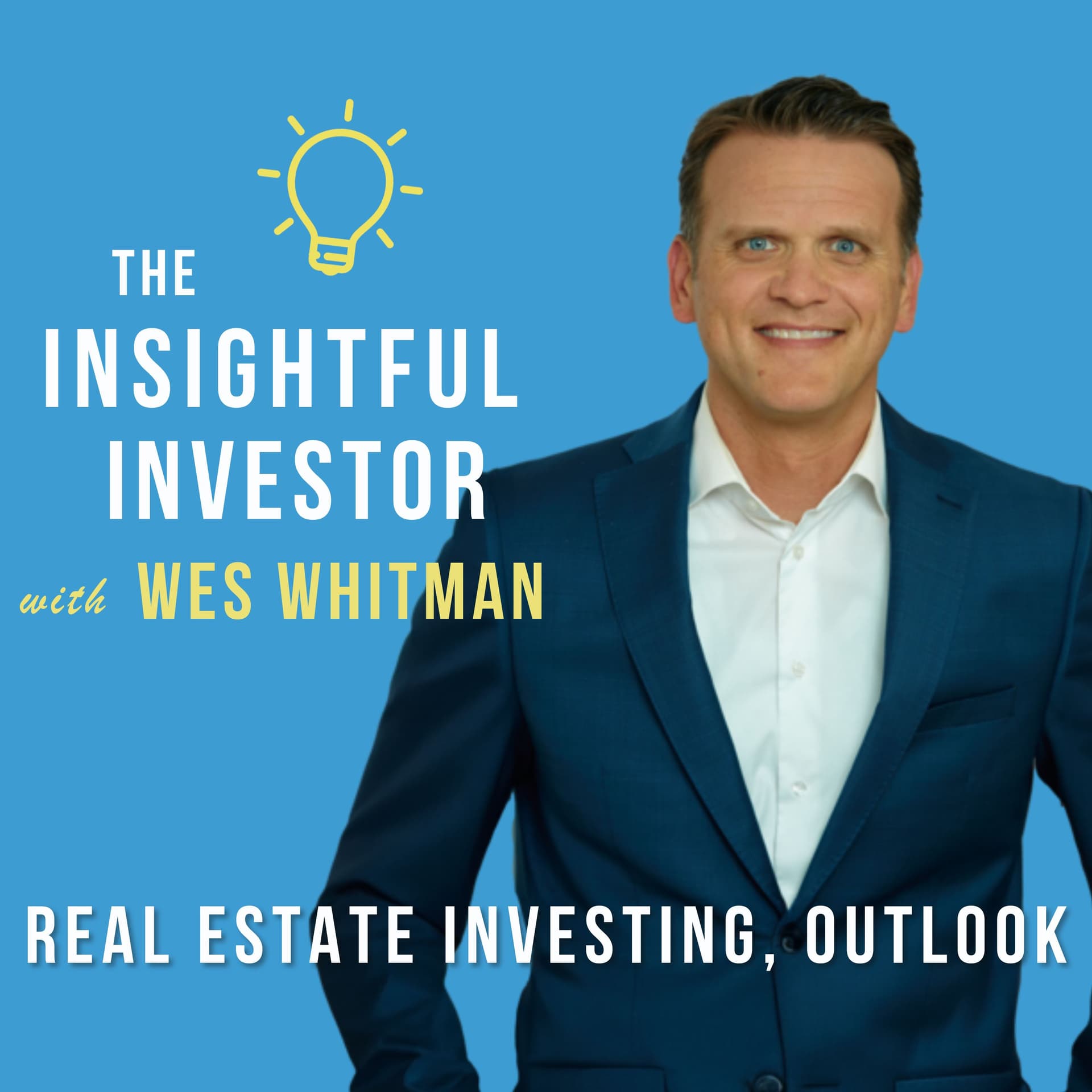
Insightful Investor Podcast - Episode #9: Wes Whitman on Real Estate Investing and Outlook
Episode Overview Host: Alex Shahidi Guest: Wes Whitman, Co-Founder of Whitman Peterson Date: [Insert Date] Episode Link: [Insightful Investor](https://insightfulinvestor.org/)
Episode Description Wes Whitman shares insights into the real estate landscape, discussing market inefficiencies, investment strategies, and his outlook on the future of real estate investing.
Key Themes and Discussions
Introduction
- Alex Shahidi introduces the podcast and guest Wes Whitman, co-founder of Whitman Peterson, a $2 billion private real estate manager.
- Wes shares his background and journey into real estate, including his experiences in tech startups and subsequent shift to real estate.
Wes Whitman's Journey
- Started in finance and web startups during the early 2000s.
- Transitioned to real estate at Graystar Real Estate Partners, helping grow the company from $300 million to $3 billion in assets under management (AUM).
- Founded Whitman Peterson in 2010, focusing on opportunistic real estate investments.
Real Estate Investment Challenges
- Wes discusses challenges faced as a business owner, emphasizing the unpredictability of the market and the need for a defensive investment strategy.
- Importance of maintaining optionality in investments and being prepared for market shifts.
Attraction to Real Estate
- Wes expresses his passion for real estate due to its tangible nature, entrepreneurial opportunities, and diverse investment strategies.
- Highlights the ability to impact communities positively through real estate development.
Understanding the Real Estate Landscape
- Discussion on different real estate sectors: office, industrial, multifamily, retail, and more niche markets like active adult housing and last-mile delivery warehouses.
- The importance of identifying trends and understanding risk profiles in various sectors.
Core vs. Opportunistic Investments
- Wes contrasts core investment strategies (stable, income-producing assets) with opportunistic investments (higher risk, potential for significant returns).
- Discusses the private vs. public market dynamics, highlighting inefficiencies in private markets that can lead to better returns.
Economics of Real Estate Investment
- Overview of typical fee structures in private market investments, including the common 2% management fee and 20% performance carry.
- Discussion on the impact of double-layer fees on investor returns and the importance of asset-level performance.
Current Market Outlook
- Wes presents a cautious but optimistic outlook for real estate, emphasizing the importance of sector selection and timing.
- Acknowledges recent market disruptions (COVID-19, rising interest rates) and the potential for opportunities amidst uncertainty.
Insights on Market Inefficiencies
- Describes how local market knowledge and operational efficiencies can create opportunities not visible to larger investors.
- Importance of maintaining strong partnerships and being a value-add partner in real estate investments.
Unique Insights
- Wes shares a key insight regarding the necessity of a services business within real estate companies for sustainability and resilience during downturns.
- Emphasizes the value of operational expertise in driving returns and the importance of maintaining a balanced business model.
Key Takeaways
- Prepare for Uncertainty: Investors must prepare for market shocks and maintain flexibility in their strategies.
- Focus on Tangibility: Real estate offers tangible investments that can have lasting impacts on communities.
- Understand Market Dynamics: Investors should be aware of sector-specific risks and opportunities, particularly in the wake of significant economic shifts.
- Operational Efficiency Matters: A strong operational foundation can provide advantages in both good and bad market conditions.
- Cautious Optimism: Despite uncertainty, opportunities may arise from market inefficiencies and changing consumer demands.
Conclusion Wes Whitman’s insights into the real estate market offer valuable perspectives for both seasoned investors and those new to the field. His journey, experiences, and learned lessons emphasize the importance of strategic preparedness, operational excellence, and an understanding of market dynamics.
For additional insights and discussions, tune into previous episodes of the Insightful Investor podcast.
Written by AI. May contain mistakes. Listen to the episode to check what was said.
Transcript
Automatic transcript. May contain errors.0:06Welcome to the Insightful Investor Podcast, a weekly series that seeks to share industry, investment, investment, and market insights. We define insights as concepts that are counterintuitive, widely misunderstood, or underappreciated. In other words, unique ideas that you probably won't hear elsewhere. I'm Alex Shahidi, the host of the podcast and co-CIO of Evoke Advisors, one of the nation's leading investment advisory firms. Learn more about our show at insightfulinvestor.org.
0:43Today's guest is Wes Whitman, co-founder and co-managing partner of Whitman Peterson, a leading opportunistic private real estate firm. Since launching the firm in 2010, Whitman Peterson has raised about$2 billion of equity and been involved in transactions totaling over $25 billion. Wes, thank you for joining me. And also thank you for inviting me to your office. This is our first in-person podcast. So I'm excited about that. Thank you. I'm delighted and honored to be here, Alex. Thanks so much for giving me the opportunity to speak with you. I appreciate that. We've had a lot of fun conversations and hopefully this will be another one and others will get to sit in on this one.
1:27Wonderful. Why don't we kick it off with your background? I'd love to share my background. I have not always been in real estate. When I was in college, I was studying finance at Brigham Young University and had a chance to do a web startup, providing software to the newspaper industry at a time where they were making a big change from print media to digital. So think about this as 2001. So this was early days, early days. Newspapers had usually one person in their web department and were vastly understaffed and we were helping them sort of get into the digital media space. And so I did that. It was actually a great experience.
2:02We're in college. I was young. We didn't really know what we were doing, but we were working like crazy, built a product from scratch, actually had paying customers. And I'll never forget the feeling after two years of product development of getting that first check where it actually had our company name on it with like$1 ,000 coming from a customer. But it was an amazing feeling to have done that. And I actually keep that check framed in my office and actually just pulled it off my office desk here. So that's the check right there. It was for$1 ,150 was the first monthly payment. So it was a great experience.
2:36And so my partners and I, we ran that for about three years. And then we actually decided our future was not in the newspaper web software business. Two of us ended up going to business school at Harvard Business School. One went to University of Texas, and then we've all had careers in investing actually since then. But when I was at business school, you go to a lot of information sessions and you see all these companies on campus, but one company caught my eye called Graystar Real Estate Partners. Today, a lot of people have heard of Graystar. If you're in real estate, they've become the largest multifamily company in the country.
3:07Back then, they had 18 employees at their corporate office in Charleston, South Carolina, and it was not a well-known company, at least amongst the business school circles yet. They just started recruiting. What year was this? This was 05, actually 03, apologize. So 2003 was when I first was exposed to them. Bob Faith, who had co-founded Starwood Capital with Barry Sternlicht, was the CEO of Graystar and still is, founded the company. And their pitch was quite compelling to somebody who was young and hungry. They shared that there was no middle management, that we would come down to Charleston, South Carolina, work directly with the CEO and COO and CFO.
3:44They would put us on planes for a couple of years, teach us the business. And then they said, and then we're going to give you something big to do. My heart was sort of pounding watching these guys. I'm like, wow, you get to learn from great people and they're going to give you something big to do. Like sign me up. They could have been selling widgets for all I cared, but they were in real estate. And I really, really thought these are people that I would love to go work with and be partners with. So they didn't allow me to have a summer internship. They didn't have an internship program. So I found an internship in real estate and then went and was lucky enough to be able to get a job there in 2005.
4:16At the time, Graystar had 300 million with an M under management. They now have$75 billion. But over about a five-year period, a group of about five of us were on the investment team. And the CEO came to us and said, guys, listen, I can hire you a boss, or you all can come up with a business plan on how we're going to grow this business. And the guy who had been there the longest, Wes Fuller, who runs GraceSource Investment Group nationally today, or globally, I should say, he became the team leader. And we said, absolutely, do not hire us a boss. Wes will be the team captain and let's go. And so So we grew from 300 million to about 3 billion of AUM in about five years.
4:53Their big thing to do that they gave me was to come out and help open up the West Coast for the company. At the time, there was two assets on the whole West Coast, no corporate employees. And I had a chance to really come and help build the business out here. We bought assets. We bought actually operating companies, had my first experience of actually trying to convince somebody who owned their own business to come and be part of what we were doing at Graystar. And I remember the first employees we hired out here, I'd say our first holiday party is going to be at Denny's and then we'll graduate to IHOP.
5:23But we never did Denny's or IHOP. But by the third year, we actually filled the ballroom of the Roosevelt Hotel where we had about 250 people. And I had all the original people come up and talk about what it was like to come in at the ground floor. And it was just an amazing experience. We were building that business. And I got a call from my father, whose name is Bob. And of course, you know Bob Alex. But Bob and I are now partners. We had never planned to do that together, but he called me and said that one of his largest investors from the 80s and 90s, when he was the CFO of the Trammell Crow Company in Dallas, and he was also the co-CEO of a group called the Hampstead Group, which was backed by some of the country's largest endowments.
6:00One of his anchor investors from those days had called and said, hey, it's 2009. The market is in turmoil again. There's some opportunities in real estate, and they asked him if he was going to get back into the real estate business. And he called me just to tell me how humbled he was to have gotten this call that they had over$100 million they'd be willing to back him with. And at the time at Graystar, we were going through a really interesting phase where we were growing very quickly. We were set up after the great financial crisis to probably be one of the largest developers in the country.
6:31But interestingly enough, and we'll talk about this maybe a little bit later, one of the most counterintuitive things in investing in real estate is the companies who are best positioned to raise massive amounts of LP equity, of sort of the joint venture equity, end up attracting so much outside capital that they strain their ability to fund their inside capital that's required to go alongside it. And that was the position that Graystar found itself in at that time was the growth was so substantial that it was just stressing the company's balance sheets. The founders had continued to put large amounts of money in.
7:05And so it actually created an opportunity for us and it laid the foundation for a business model that we've been perpetuating here at Whitman Peterson was for me to join Bob and have us come together, provide internal capital or GP capital to Graystar, and then to replicate that with other platforms who also found themselves in the same position. And so the way that I got into doing what we're doing now is a little nonlinear web software leading to real estate, really real estate acquisitions and asset management and operating company sort of career to then becoming on the principal investment side as an investment manager.
7:41So that's sort of the path. Really interesting. I'm curious, before we get into investing in real estate and your perspectives on that, what are some of the challenges you face as a business owner? Because you basically wear two hats, right? You're an investor and you're also a business owner. Let's start with some of the challenges you faced and how you've come through that. Yeah, it's a great question. As you think about the different environments that I've been in when I've had a chance to be part of helping build businesses, the first one was coming right after the tech bust and right before 9-11.
8:10That was our web software company. The second was while I was at Graystar from 05 to 010. We had the great financial crisis right in the middle of that. And then the third here at Whitman-Peterson, really from 2010 to 2020, it was fairly smooth sailing in terms of market growth. But of course, we've hit a global pandemic and now the biggest reset in interest rates in the last 30 to 40 years. So in each of those cases, I think what that's helped me to learn over the last 25 years is the Howard Marks quote that you can't predict, but you can prepare. And I think that actually is one of the biggest challenges, right?
8:42Is how do you prepare to grow the business and to grow the team and to give those opportunities to everyone, knowing that probably at some point over a seven to 10 year period of time, circumstances are going to change. It could be a shock. It could be a dip. It could be a variety of different things. And so what we try to do is have more of a defensive approach to how we run the business and also how we invest. And that defensive approach sort of looks at, OK, well, when things do go wrong, when something doesn't go as well as we think it's going to go, you'd like to believe that, A, you've picked the right sectors that you should be in, that generally you've picked sectors with a big demand tailwind, that you've picked the right types of markets in the country that are likely to get even during tough times, a disproportionate share of the demand, that you're in cities that you think also within those broader geographic areas that are going to get their disproportionate share of demand, and then in products that capital and customers are really going to want.
9:37So sort of on the strategic side, there's a lot of individual investment decisions we make, but some of those big systematic decisions are really important for us to prepare. And then the other thing we do sort of more from an execution perspective is we recognize that we try to maintain a lot of optionality in what we do, even during the pandemic. We're raising our fifth fund right now. We were in our third fund, and we had about a third of the capital left when we started the pandemic. And we're really grateful that we had maintained optionality on a lot of the land that we owned, a lot of the buildings that we bought.
10:11And so this idea for us of maintaining optionality, not having too concentrated a bet on any individual asset, making sure that we structure things without too much debt. And then we're also in sort of a unique position in the capital stack, which we can talk about later. Those are things that for us, I think impact us both on the investment side, but also just as a business owner. So we don't get over our skis. We try to be thoughtful in how we approach our staffing. And over the last 13 years, we really have 24 people that are here at the company. So we're a small firm playing in sort of the mid-market real estate private equity world.
10:45So I think one thing is just continue to learn that you can't predict the future, so you better prepare well. Right. You can't predict the timing, but you know bad times are ahead at some point. So you can prepare by being defensive and basically being ready for those periods so that you're not surprised and maybe you make bad decisions in response. That's exactly right. That's exactly right. So what is it about real estate that you find so attractive? That was your first job out of school. You got into real estate. You've been in it since. What is it that keeps you here? And what is it that drew you to it in the first place?
11:18On the personal side, you hear this a lot when you talk about people who are in real estate, but the tangibility of what you're doing is actually going to impact a city, a town, a community for decades to come. You can drive by the properties. I grew up around the real estate business and I loved sort of that tangibility factor of it. I also love the entrepreneurial nature of it. I drive down the 101 here in Los Angeles with my kids and I'll say, guys, look at every single building was somebody's entrepreneurial dream, Whether it's an apartment building, it could be a retail store, it could be an office building, a hospital, whatever it is, somebody either saw that building or saw that land and thought, I can fill a need here.
11:57And to me, that's actually quite inspiring. I really like that about real estate. This is different from financial assets, stocks, bonds, etc. I mean, stocks represent companies, but it's not the same as real estate. You can go touch and feel and see that it was built and constructed and managed. And quite different also from the software business. And there's a lot that I love about this. I like how fast the software business moves, but I also recognize that within two years, your entire platform that you built your software on might be obsolete. And here it's different. And so I really like that.
12:27I love the entrepreneurial nature. I love the combination of the different types of cashflow from an investment perspective that you can have. You can invest in things that have current cash. You can invest in things where you're manufacturing stabilized cash flows. There's just a broad diversity of product, income, appreciation gain. There's a lot of ways to win in real estate is the other thing that I really like. So those are the things that really drew me to it. That combination of sort of this entrepreneurial spirit, doing something that really is going to mean something for the community.
12:57And I would say also, I have both the financial side of my brain and a creative side. And it really does provide an opportunity, even in the seat that we sit in here where we're not necessarily designing all the projects, except there's a lot of creativity. There's creativity in the assets and what we can do to reposition those assets. There's also creativity in the deal structuring of how do you actually pull something together and make it work when a situation is complicated. And so it really provides for me an exciting career. And also you can choose to have your whole career in one local geography, or you can do it on a very broad based national or global scale.
13:33So a lot of different reasons why I get excited about being in this business. Well, your passion really shows. So I appreciate that. It seems like you have a long career ahead of you in real estate. I hope to. I hope to. Would you walk us through the landscape for real estate? So you have the average real estate investor. What is it about this world that they should understand in terms of just laying the background for most people? I sort of look at the landscape with a few different lenses. One is what are the sectors that you can access? So there's all sorts of different sectors from your core sectors that people have focused on for years, from office, industrial, multifamily, retail.
14:13Those tend to be sort of the big four that people focus on. So also adjacencies though to those sectors. Within residential housing, as an example, rental housing, you have single family for rent homes, active adult apartments, student housing, different types of seniors housing. And even within seniors, there's multiple different stratifications of what service levels are provided. So even within one segment of the market, there's actually quite a broad base of service levels, product offerings, et cetera. And then you take industrial or moving into industrial outdoor storage or self-storage or cold storage.
14:48I mean, there's just all these different types of applications that you can focus on. And so one is sort of understanding as an investor, where do you see and where do you think there might be trends that are interesting across and where are things going to maybe be challenging? So that's sort of the sector level. The next thing would be what type of strategies within those sectors does somebody want to look at? Do you want to buy just income producing real estate that's stabilized assets that are sort of more core from a return perspective in nature? Or are you looking to do some renovations and reposition an asset or start from scratch with a piece of raw land and manufacture something that has never existed before.
15:23I think that's really important for people to understand what their risk thresholds and tolerances are as they're looking across sector, because those sectors have varying levels of risk, across the life cycle of an asset, whether you want to come in early or be once all the work's been done, it's now just more of a stabilized opportunity. And then really, how are you going to access the opportunity, So if you're a big institution or you're a ultra high net worth family who has access to the private markets, we'll talk through that. I mean, there's a variety of ways you can access the private markets or the average investor in the country can access the market through the public markets, through real estate investment trusts that are public.
16:03And you can actually access quite a diversified base of public REITs where you can get a lot of different sector exposure and so forth on the public side. But I would say the average investor generally does not have great access to the private side. And on the private side is where over time, we find a better basis. Generally, by definition, if you're buying in the public markets, you're buying at whatever the market price is. You can argue whether that market price is a really good price or a bad price, but you're buying at market. On the private side, we're trying to buy assets where we're buying well below what we believe the market value of those assets is.
16:37In other words, it's a less efficient market. It is a less efficient market. And it's more difficult to access. And you can access things in a much more targeted way. So you think about it, you buy a public stock. Generally, you're buying a nationally diversified portfolio across a given asset class with a very specific strategy. Generally, in the private markets, and Alex, you're the absolute expert in how the average investor accesses these markets. We have spent most of our career working in the institutional space. And of course, with what you do, you're sort of providing institutional access, which I think is super unique.
17:10to be able to provide people a chance to invest where normally they would never have the opportunity to invest. But historically, institutions have been able to really get into these private markets. They'll back diversified funds. They might actually back people on individual assets. So if you're thinking about sort of the public markets versus private, and then you dig into the private, now your question is, do I access funds or am I going to do asset level transactions? I think historically, if you're a private investor, you might know a friend or family member who has a local asset that they're trying to raise capital for.
17:43And so I don't think it would be an overstatement to say that the vast majority of the average investor's opportunity to invest in real estate is actually within a relatively small circle of influence, people that they know, friends and family, friends of friends, and they have a chance to invest. We'll talk about the structures of those in a minute. But I don't think that the average investor has very good access to a broad base of strategies, sectors, subsectors, etc. So I think actually, really where you guys come in is a very interesting spot because now there is a institutionalization of the retail market.
18:20And I think we're a ways off from having the fat part of the bell curve, if you will, have the same access that some investors have. But you've seen it with the formation of the private REITs created by Blackstone and Starwood and KKR and others. And you've also seen it in advisors who are able to plug their clients into unique opportunities. That's how I sort of think about the framework. From an economics perspective, the fund model is a pretty simple one to understand. This idea of a 2 % fee, a 20 % carry above a base level preferred return is pretty standard. Arguably, those fees for institutional deals are not quite two.
18:58Say they're somewhere between one and two. But the carry or the promote being 20%, pretty standard. And that's across sectors, across geographies. In the US, that's a very standard structure. At the asset level, though, the structure can vary dramatically. It really depends on where the capital is coming from, if it's high net worth capital coming in to a well-established sponsor who's putting the deal together. Outside of a fund structure on the asset level, the structures can vary dramatically. Even institutional deals, the institutions will start to segment by product class. So the structure for a multifamily deal can be very different than the structure for a lodging deal.
19:36How much risk the developer is taking on, whether they're taking on guarantee risk and cost overrun risk and things. There's a lot more variables that play into how that structure ends up settling out. And then whether it's high net worth capital or institutional capital, institutional capital tends to drive, because it's generally available at a broader scale, tends to drive lower fees, lower carry relative to some of the private structures in the high net worth market where there might be higher fees and a little bit higher carry over lower hurdles. So there's a broad base of structures, a broad base of ways to access it.
20:12I think over the next 10 years, though, because the retail market is so big, even relative to the institutional market, you're going to see different ways that people start to access and that your big funds start to continue to tap into this broad base of sort of high net worth capital, but getting to lower thresholds. people that have 100 million plus of liquidity, they have the same access that all institutional investors have. People with 20 million plus, more and more are gaining similar access to the institutions. And so it's sort of in that 5 to 20 million or below 5 million where the vast majority of people are sort of a question of how does institutional grade sponsors provide access to their deals to those investors?
20:55I think that will be some of the innovation that we'll see over the next five to 10 years, that'll really be an interesting part of the landscape. One of the interesting things about real estate, in my experience, and it's different from a lot of other asset classes, is there are multiple layers of fees. And a lot of them aren't fully transparent. So when somebody sees a fund and it has a two and 20 structure, that's not necessarily all the fees that they're paying. But when you look at it relative to the assets, would you walk us through just some of those layers just so that it's obvious? Absolutely.
21:23You'll hear the phrase, double fees, double promotes. And for those who may not be as familiar with real estate, but maybe they're familiar with private equity or venture capital, promote and carry are synonymous terms. Sweat equity, promote, carry, profit sharing. There's a lot of different ways we can say the same thing. And what you'll find is investing in most funds, those funds are then investing with operators. And so we call that sort of the allocator model, right, where institutions or individuals are putting their capital with a large investment manager. Those investment managers are then finding the gray stars or the cardinals or the concords of the world who are some of our partners.
22:03And then at the asset level, like we mentioned before, there are fee structures and promote structures with those partners. Let's say that you take one property and as you underwrite the cash flows of that property, you believe it's going to generate a 20 % return at the investment level. At the asset level, there's going to be 300 to 400 basis points of, I'll call it leakage, but a 300 to 400 basis point grows to net at the asset level. So an investor who's coming through a fund, who at the asset level would have generated a 20 % return if there were no fees or carry, they might be generating a 16 % to 17 % return at that level, at the asset.
22:43But then their investors in the fund are also paying fees and carry. So that might net that down to say a 12 % return after they pay their 2 and 20 at the fund level. And so what started out as a 20 % return might end up being an 11 % or 12 % return when it's all said and done at that level. And so you're exactly right. It's not only about the fees that you're paying at the fund level. It's a question of, okay, well, what's that fund doing with the capital? But if you sort of think about it, I mean, I think there's another lens on that though, which is, okay, well, what if you don't like that structure?
23:15What are your options? Well, the reason most investors go through that structure is they don't want to build up the personnel internally. They would have to build massive teams internally. So let's just say you're a huge pension fund and you are trying to access asset level real estate across the whole country and across multiple sectors. You then have to staff up with the team that can have that asset level insight, knowledge, et cetera, to source it. And so there is a trade-off there, right? It's a trade-off of how much am I paying to access that real estate and what are my alternatives? And if you're an individual, your alternative is to probably do something just in your very local geographic area, or maybe a regional area where you can actually get out, see the real estate.
Read the full transcript
23:57If you're trying to access something on a more broad base, then you are leveraging. There is value being created at each level of that structure. And so there's just trade-offs there. And if we go back to where we started, one of the things that you love about real estate is it's a hard asset. It's something you can touch and feel, and it requires somebody to operate that asset. So as an investor, if you want to come in, there's layers of expenses associated with accessing that asset because it's something that has to be managed. And you can effectively outsource those expenses to an operator, and then you can outsource the allocation decision to an allocator.
24:32And your choice as a passive investor is, I'm going to get that real estate and I'm paying fees. But the alternative is I could go do it myself. It's not going to be as diversified as a fund. And I have to go hire all these people. And do I really know what I'm doing and the value add of those layers? So I think that's one of the reasons it exists and it persists. That's right. Because it's a necessary part of the structure. I think that's exactly right. People would prefer to not have two layers of fees. I mean, like anybody would. But then you go look at the biggest allocator funds out there and they're continuing to raise capital at the highest rates they've ever done.
25:06And so it is fulfilling a need. Our business model is a little different in that we're accessing a part of the capital stack that doesn't have double fees and promotes. We can go into that later. So we're trying to differentiate ourselves within the industry and there's trade-offs we make to do that as well. So each person has their unique model. But I will say this, for people who are investing in allocator funds, and I can say this, I believe, without being biased because we sort of deem ourselves to not be a typical allocator fund, but we work alongside a lot of them. And there are some incredibly smart, disciplined people at those funds who are really taking good thought and preparation and diligence as to what sectors they're going into, what partners they're partnering with, what assets they're going to invest in.
25:50And then those operators that they're investing with are also, as you mentioned, at the asset level, I mean, it is a real blocking and tackling business. You take the full-time equivalents to operate, say, a self-storage facility, right? Where that probably has the fewest full-time equivalents of any asset classes. And then you take something like memory care in seniors housing, where you might have 90 full-time equivalents per hundred rooms. There is a vast difference in sort of operational intensity, but even at the self-storage business, there's revenue management decisions that need to be made.
26:22There's where are we marketing? There's a lot of decisions that even are made in the least operating intensive side of it. And so you can imagine how those decisions trickle through as you kind of go up from there to multifamily, to lodging, to seniors housing. And so there is a lot of value. I think having been at Graystar really helped me see that. Think about this, even the scale of the platform who's doing the operations, if they have a broad-based national scale, the cost to repaint an apartment building, the cost for insurance across all of the, which insurance costs have been one of our biggest costs that have gone up over the last two or three years.
26:56There's other economies of scale that come, technology costs others, that can actually drive more profit per room, more profit per key or per bed or whatever the metric is, depending on the sector you're in. And so those operating decisions actually do matter. So I think everybody's playing a role. And there are structures where people can access it more efficiently. It's just that you've got to look at that trade-off of how much did I have to staff up internally to access and manage those opportunities as well as the other structure does. Right. And because it's a relatively inefficient market, there's more potential for value add at each of those levels.
27:30And if you have expertise and experience, you're more likely to make good decisions. And if you do it really well, maybe you even offset your costs at that level. And so the investor who has these multiple layers of fees may actually benefit from that, assuming they do a good job of picking which allocator to go with. I think that's right. And over the last 10 years to 12 years, those funds have actually produced quite good returns and mid-teens net returns for a lot of them. And so on an absolute basis, you can sort of look at, okay, well, how would I have done in the public markets? And each person might have their own unique access point, right?
28:05But I think talking on a broad base, the private funds have done quite well. And I should clarify, I'm talking about opportunistic funds that are really out seeking properties that are in need of some sort of repositioning, either operationally or from a renovation perspective. That's sort of the world that I'm really talking about. And I should clarify that because, I mean, look, if you're investing in a core fund that's managed by an institution, I think you do have to ask the question of, okay, what is the alpha I'm getting relative to the public markets? or is there some unique access point that those folks are getting?
28:38And again, the folks managing the core funds, we know a lot of them, as I said before, all very smart, very thoughtful. They're out trying to do a really good job. And there is still operations that happen even for stabilized assets. So who they have as operators, all those things really matter. It's just, if you look at the absolute return targets relative to historical averages in the public markets, I think it provides you a chance to sort of say, okay, well, if I'm looking at stabilized assets, core real estate, where do I find more value? And we're really focused on that sort of value add to opportunistic part of the sector.
29:09So a lot of my comments are sort of more applicable toward that part of the risk spectrum. Yeah. That core area, you can think of it as less risk. Would you talk about the riskier segments of the market, not just opportunistic, but just the sectors and how you think about those areas and avoiding taking undue risk? Yeah. Certainly as you get into the more operations intensive real estate, there's just more opportunities to fumble, right? I mean, the more touch points you have with the customer, the more parts there are in the value chain, just like any business, there's just greater chance for higher standard deviation of outcomes on the returns.
29:46And so the way that we think about investing in those sectors is really a basis focused approach because there are a lot of unknowns. The standard deviation of outcomes can be wider. And so you better have a basis and be buying at a time in the cycle where your basis allows for tremendous volatility. Now, I say tremendous. We wouldn't be investing in something if we thought it was tremendous volatility. But if you understand how that band of outcomes works, having a great basis can really solve that. I think that where people start to make mistakes is where they continue to allow the basis to creep up at a time where the operational risk isn't necessarily going down.
30:23And so that means that the more you pay for that asset, the tighter the band of outcomes needs to be in order to hit your return. And if you're relying on a tighter band of outcomes than is likely, then you're more than likely going to be disappointed in those returns. And so we tend to invest in those types of segments of the market at a time where your basis allows for a lot of things to go wrong and you'd still end up earning really high returns. We have a higher threshold of what we think we should expect in those types of investments. And we have a broader distribution curve. we do a probability weighted analysis for each investment.
31:00And we have a higher probability weighting on those that things might not turn out how we thought they were going to turn out. So Bob taught a class at Stanford Business School once, and the title of it was Why I Hate Hotels and Why We're About to Buy a Lot of Them. And this was sort of at a time in the market where you could buy them for pennies on the dollar. And so there's an opportunity there. I think right now for us, though, Alex, we're in a period of time where the demand side of some of these sectors has really changed, in our opinion, with the pandemic. So you take office, which we historically just haven't been focused on office, but there's no argument that office from a demand side is different than it was three to four years ago.
31:40Arguably hotels as well. I mean, hotels went to very, very low occupancy. And business hotels today, even though in some markets in the Sunbelt they've recovered, there's other markets and there's even sub markets within certain cities where people just have not come back to the office. People are doing Zoom meetings. They're not traveling for business as often as they were before. Exactly. We're not taking as many meetings, right? I mean, you think about even for us, as we meet with our investors or new investors, usually the first meeting is a Zoom meeting. It used to be the first meeting was in person.
32:10So things are changing there. And in seniors during the pandemic, as an example, people had to get creative on home healthcare and how do they help service their mom and dad or their grandma and grandpa when things were changing and they didn't want to take him to a senior's facility. So for us, where the demand side of the equation has had a fundamental shift and where it's difficult for us, at least at Woodman-Peterson, to predict what's going to happen, there's almost not a basis that's low enough for us, and I say almost, to be able to really understand how that distribution of outcomes may come.
32:43How wide is it going to be? Because we used to be able to predict that, hey, look, we've seen the hotel cycles go. We can come in. As long as we have 10 million of office space that's occupied around us. If we go into a downturn, we can unleash our salespeople. We can fill the hotel, at least stay fully occupied. In today's market, it's different. That's not the same. So I think wrapping up the answer to that question, I think as you look at the different asset classes within real estate, it's very important to sort of say, is there something that's changed on the demand side relative to how things used to be?
33:14Because as you sort of look back to historical averages and historical trends, when there's been a shock, like we just saw with the pandemic, to certain sectors, things are just different. And so you have to be really, really cautious on how you approach it. I'm curious, when I look at public markets and my experience with investors, oftentimes what happens is public markets go down, most investors look backwards, and they see downturn and they want to sell. And then when you get a big rally, they look back and say, oh, great returns, I want to buy, which oftentimes is the wrong decision. I'm curious, do you see the same thing in the private real estate world?
33:47You hear people talking about it a lot today, like, is it time to get into office? And I think there's going to be companies that do really well doing it. But I think that the great financial crisis and the pandemic, they're so recent in terms of our memories that I think institutional capital is still going to be very cautious. I don't think you're going to see just a huge upswing in office transactions. And I was talking to somebody even in San Francisco where office transactions, the basis has gone down by probably 75 % or call it 65 % to 75%. If you talk to the people on the ground there who really know what's going on, most of the buildings that have traded have not been the buildings that historically have been the buildings people wanted to own.
34:29And so it is really idiosyncratic as to where this stress is being seen, at least today, might become more systematic as we get a little further down. But for the best assets in great markets, lenders have been willing to continue to give people time. You know, you've had to pay down a little bit of the loan, put reserves in to make sure they feel comfortable that you're going to meet your debt covenants. But that, I would say, is slowing the idea that there's just going to be this fire sale across the board. I was actually quite impressed having gone into the great financial crisis and you see how institutions underwrote real estate then.
35:02I would say there actually was a tremendous amount of discipline going into, and I'll talk about where the discipline maybe came sort of off the rails a little bit in 2021, two and three. But leading up to that, we're involved in a lot of transactions where the biggest allocator funds, insurance companies, pension funds are on the other side of our transactions, where we're in the GP position with a lot of these best in class operators. And the discipline that they exhibited in terms of not allowing a lot of MES debt or PREF equity to come in on top of them, underwriting in a way that you feel like there's very reasonable underpinnings on sort of the underwriting metrics.
35:37We observed that throughout. Now, what did end up happening in 21, 2, and 3 is with interest rates being so low and people having raised so much capital, the market got very, very hot. And you saw cap rates coming into - It was very tempting. The 4s, then the 3.5s, then the 3s. In LA, even sub 3 for industrial in some locations. And then this is what you saw going into the great financial crisis. You saw a lack of discipline in terms of where the assets are located. So Minneapolis is being priced the same as Dallas or Phoenix. And so you start to see certain markets being priced also at a four cap or at a three and a half cap.
36:15And that's when you sort of step back and you say, okay, obviously we're reaching a peak here in pricing. Our model for what it's worth, we saw that frenzy happening and really decided we just weren't going to be part of that. And so, A, we were never on the acquisition side of that bet. So we were developing into that. But B, we just never believed that cap rates got as low as they were. And so when we were under a new development deals, we were looking at our spreads relative to a much higher spot cap rate than was actually happening in the market and transacting. And that having been through a couple of cycles, my partners hadn't been through four or five cycles.
36:49That was very helpful as we started to see what was happening in 2001, two and three in that. Yeah, the challenge in those periods that I've experienced is it lasts longer than you feel that it should. And then eventually you capitulate and say, OK, this is the way it's going to be for a while. The market's reset. Yeah. Yeah. And it always corrects. You just don't know how long. So I think you do have to be extremely disciplined to avoid getting sucked into that. You do. What we did was there were a lot of people who were disciplined. And so not trying to pat ourselves on the back here. But what we did is we just said, look, now is a time to keep optionality, to take time to push out closings, to reassess.
37:27We let go of a lot of deals. We restructured a lot of deals. We tried as good as we could to hold on to the best real estate and see if we couldn't restructure those. And we did in a lot of cases. And a lot of others did that, too. I think those who were willing to do that and not feel like, oh, I have to do this because the seller is telling me. There's a phrase that Bob Faith says. He's the CEO of Graystar. says there is always, always, always another deal. And having that mentality is very liberating. If you think about, I don't have to do anything right now. My investors will not be disappointed if we get on the sidelines, assess, reassess, let's wait.
38:04And there's always, always, always another deal. And sometimes when you're the deal person, and that deal means you're putting food on the table or whatever, there can be in certain circumstances, a bit of a misalignment, right? Because that person, they want to get the deal done. They want to put those points on the board. They want to help get the deal. And I think they really do have a fiduciary mindset in most cases, but there is the potential for what we say here is a fiduciary mindset, which is, hey, I need to keep this business going. And the best operating partners will actually call it as it is.
38:36They'll say, hey, listen, it's okay. If we have a capital partner as a lower cost of capital, and they want to get this deal done, that may not be the best for our opportunistic investors. It'll be great for our fee business. It'll be a lower return for somebody. And our partners, really, they're all focused on the fiduciary deals. But you can see how there's a chance for incentives to be misaligned there. And so for us, it's really important to have sort of that nomenclature that way to approach things. Say, hey, guys, listen, is this a fiduciary deal? Is it a fiduciary deal? If it's a fiduciary deal, that's great.
39:04You guys can do it with your balance sheet. And maybe that's the right thing for the company, not the right thing for the fund. It really is liberating because we've all felt it. You've all felt there's a deal that you think, gosh, we've worked so hard on this thing. We're almost there. Our band of outcomes looks like things will go right. But then having the discipline to say, you know what, it's okay. There's always another deal. That goes back to the cost basis, what you're paying for a deal. That's one of the most important things. One of the challenges is that in order to get that margin of safety and buy the asset at a lower price, you need some inefficiency in the market because everybody would rather pay lower price.
39:39But if you're always going in there with the low offer and you never get a deal done, then you don't really get anywhere. Would you talk about some of the inefficiencies that you've experienced and why you think some of those may persist? First of all, this is where the operating partners really play a key role. When you have a national organization that is tied in with every local broker, a bunch of local landowners across the market who really know their local markets well, they're going to see the opportunities on the front end of them coming even before they'll go to a broad marketed process.
40:12But they're also able to create opportunities where they don't exist. So take the San Fernando Valley as an example. One of our partners has been extremely skilled at taking what would otherwise be smaller parcels where you wouldn't have the land, the acreage to do a 200 ,000 square foot industrial last mile warehouse. And they've effectively negotiated with three or four different landowners, and they'll negotiate independently with those landowners to assemble a parcel where they can then combine them together and build a 200 ,000 square foot last mile box. That is extremely valuable. The ability to create something, create an opportunity where it doesn't exist.
40:51You can pay each of those building owners a very good value for what they individually own and have a nice arbitrage when you can kind of aggregate and combine that together. The same thing can happen in other parts of real estate, where there's a lot of deals that we'll do that are sort of below the threshold of the largest private equity firms in the country. So there's inefficiencies at certain amounts of capital, deal sizes, if you will. So something that might be a 10 to$20 million total capitalization for the deal, there's just less competition there. So both in the idea to manufacture cashflow or opportunities where they don't exist, to maybe target parts of the market where they might be less efficient, to maybe repurpose that land to something that might make it a lot more valuable than it currently is.
41:36For example, we have this outdoor lodging business where we'll buy existing RV parks and we'll completely repurpose them into sort of boutique hotels through an Airstream hotel concept. So there's a lot of interesting strategies, Alex, that you can do that really is idiosyncratic to a given sector, maybe to a geography, but where both the sourcing of that site, how it's sourced, where it's sourced, and the creative way that you program it can really create value. So those are a couple of the inefficiencies that we've found. And then also where you play in the capital structure. I mean, I think today you're seeing a lot of funds coming in and playing on the credit side of the business because there's a lot of inefficiencies there.
42:16A lot of the big banks are out, especially for regional operators. They may have a deal that they think is going to work and they want to get it done. And so they're going to alternative sources for debt. And people are getting equity-like returns in many cases for providing debt. You think about debt funds usually coming in, if your first mortgage would get you to 65 % or 70%, the debt funds used to come in. In the hot times, debt funds will come in and go from 70 % to 80 % or 70 % to 85 % in the capital structure. And they might charge low teens returns to get you there. Today, the first mortgage might get you to 50 % or 55%.
42:51And so the debt funds are stepping up. And I think very smartly for certain assets, I say smartly, depending on what the overall basis of the assets were, getting between 55 % and 65 % or 55 % to 70%. And they're in the mid-teens for that capital, low to mid-teens for that capital. And so I think there are interesting opportunities that different people are taking advantage of because the market is inefficient. We are coming and filling an inefficiency where if you're an owner of a big operating business and you thought you were going to be selling a bunch of assets and getting a bunch of capital back that was coming back to the house that you could then use to invest in your technology, into your teams, into co-investment capital for your investments, those distributions haven't come back.
43:34We've had a huge bid-ask spread in the market the last year and a half. And so those distributions aren't there. And these operating companies are saying, gosh, I have a big opportunity now. I'm so well positioned to take advantage of the opportunities that are coming and they need a partner. So we've come in and we've done a few different operating company investments in the last 12 months. They're a relatively small portion of our overall fund, less than 10%, but those are unlevered. We don't have to have any debt on those. They're unlevered deals where we see high growth and good returns. And so that's another inefficiency in the market today, which is sort of opco deals that may not have been as available the last few years.
44:09Would you talk about the whole GP side, that part of your business and how that structure works and how the economics work? Most real estate is not acquired in a fund structure. You think about all the local deals that get done all over the country. They're generally done in a joint venture structure where 90 % of the equity is coming from an outside investor and 10 % of the equity is coming from the person putting the deal together, the deal sponsor. and that's done in a single purpose venture. There's an LLC that's created and that 90 % equity might come from a high net worth family. It might come from an insurance company or it might come from an allocator fund as we were talking about before.
44:49Depending on the level of sophistication of the sponsor and the amount of capital they need to execute on their pipeline, they might choose different sources. If somebody generally has a relatively small pipeline of say three to five deals a year, which by the way, I say small, That might be a fantastic pipeline for the size of the business that person has, and they can do very well. But relative to the national operators with whom we're partnered, our partners are doing 30 to 40 to 50, in one case, 90 deals a year. If you think about the capital that is required at the asset level to do 20 to 30 deals a year, that could require hundreds of millions of LP or JV equity.
45:28and alongside that hundreds of millions can be 10 millions of GP equity that's required that that sponsor put in. And that's required because the LPs who are investing in the deal, they want the people managing the properties and involved in that same deal to have skin in the game. That's exactly right. Right, and so that's just standard, is that 90-10 split. That 90-10 structure is very standard in the market and for exactly the reason you mentioned. What's happening though, or what has happened is as these companies get bigger and bigger, there's actually an acknowledgement by the 90 % partners that, hey, we recognize this is now tens of millions, hundreds of millions of dollars, in some cases, billions, literally billions of dollars of GP capital.
46:09And the largest institutional investors out there acknowledge that that is just a huge amount of capital for any operating company. And they want that operating company to keep building their systems, to keep investing in the technology and other things. And so they'd be using 100 % and more of all their balance sheet capital to just put it into the real estate and not into the operating companies in order to grow the businesses. And so a lot of operating companies have started to look to external sources to help supplement that GP capital. And you could look at it and say, well, how did the LPs feel about it?
46:40Well, I think generally, obviously an LP would rather have the GPs put in as much as they can. But when the GPs can explain the absolute dollars they're investing across all their deals, like I mentioned, there's an acknowledgement that they're putting in very substantial, both on a nominal basis and on a percentage basis in the deal, still putting up a lot of capital. So the dollars are large enough where that box of skin in the game is checked. Yeah, absolutely. And so what's happened is we sort of saw this 13 years ago from the inside out when I was at an operating company to sort of say, wow, I mean, we're investing a huge amount in technology, a huge amount in expanding the platform, building the right teams, et cetera.
47:16And so by doing that, you can't use all your balance sheet capital, just put it in the real estate. And so what we will do at the Whitman Peterson side is we will come in and find those operators. Counterintuitively, people will say, well, if they can raise billions of dollars, why the heck do they need you guys? It is a counterintuitive idea that the companies raising the largest amounts of LP equity, the companies that are the most proficient at sourcing and executing on deals who can then attract that capital are actually the ones that find the greatest need for - Because the dollars are so large.
47:48The dollars are so large. So we have come in and essentially filled that gap for some of the nation's largest platforms in our target sectors. And what they're looking for is not just capital. They're looking for somebody who can really be a partner in there. At least that's what we hope they would say is that we might be viewed as sort of a Sherpa team that can carry a lot of heavy weight, maybe help them avoid some crevasses along the way. Maybe there's even some mountains that we've climbed in our careers that maybe they haven't climbed yet. Or maybe we're both tackling something together that neither of us have done, but they feel like we'd be a good partner on that journey.
48:22And that's important, right? Because if you're going to be on the GP side of the house, the integration that's required for somebody to bring you in on their side of the house, where you have a preferred economic structure, you have preferred access to their deals. It's a very unique partnership. They take a long time to form. And there is a tremendous amount of work that goes into it on both sides. And I think that there's over the years been a lot. In fact, we've had people that we've gone to raise money from who sort of said, hey, I really like that idea. Maybe we'll just do it. And they've come back five years later saying, you know what, that was way harder than we thought.
48:54Because we're actually in the details of every joint venture agreement that they have with each partner, right? We're making sure that our GP equity isn't subordinated, that we're protected, that if there's anything we need to do at the next level up in the structure, we're thinking about that. We're bringing in our asset management, we're bringing, in many cases, lender relationships. We've got teams in some of our platforms that are actually helping source property level transactions and think through product creation, other things. And so it's a very involved process from our perspective. But since we started that way, we've sort of staffed to do that.
49:27So that's where we play. You're a partner that is an expert in the space. You're not just providing capital. And that adds value in addition to the capital that you provide. We hope our partners would say that. They're nice enough to say that. we have to earn the right every day with our investors and our partners to be what we say partners for life. We're not solving a temporary need for them. And the structures we create with them are really to say, if they keep growing the way that we think they can, that we will become a permanent part of their capital structure. And so the way that we integrate our teams, the way that we look at the economics that we share with them and so forth, it's with this lens of we are going to be a long-term, decades-long partner.
50:08And for the last 13 years, all of our partners, they've all re-upped. And the latest one we just did was a future 12-year partnership where we have exclusive rights to provide that GP capital for 12 years. And so as we do more together, that idea of sort of a tight integration over long duration is something that we really value. We value those partnerships. We hope our investors do as well. And that kind of circles back to what you found so attractive about real estate is it's hard asset, things you can touch, but it also is relatively inefficient. And so you just described a pocket of inefficiency and you can be very creative.
50:42That was the other thing that attracted you. And this is a very creative solution to an inefficiency that you saw that maybe many others haven't. And you found a really interesting niche within this. And it would be helpful to understand how does that advantage the end investor? So somebody invests, traditionally they get the asset return minus maybe a couple layers of fees. So what happens in this setup? So in our GP investments, what happens is since we don't pay fees or carry at the asset level, and then we share in some of the fees and carry that are paid at the asset level by the outside investors, our investors end up actually paying on the RGP investments a little bit less than a full fee or carry.
51:24And so our goal is to essentially have our net returns be at or above the gross returns of other funds that are in that double fee, double promote situation. And so for our GP only investments, that's sort of what our goal is for each of those. And over time that has happened. And then we also, what's been interesting is, and I would say it's been consistent since fund one, but it's been more prevalent in our later funds is our investors who are putting their money with a lot of different people are sort of saying, hey, if you guys are already in the GP position and you're underwriting those deals as if you were going to buy the whole thing, could we leverage the platform to put more capital to work, whether through co-investments or sidecars or other things?
52:09And so that's something that we've been doing is providing access points. Since we do see every deal that comes across the platforms, it's also helpful to our platform partners because it provides a little bit more of a single source of capital for them as well. So we're finding that we can start to provide a little bit of a diversity of opportunities for our investors across the risk spectrum, because they may say, hey, look, I'm investing in core real estate in multifamily. Could you leverage one of your platforms to get us priority access to do that? Or could we do the same thing in student or storage or other things?
52:40And so it's providing us a little bit of a unique view, we think, to be able to start to at least make available to our investors a broader base of investments. That makes sense. Why don't we talk about your real estate outlook for a second? Obviously, the real estate market typically goes through long stretches of good returns, and then there are these infrequent, potentially devastating downturns. And all of that can be magnified by the leverage that is inherent in typical real estate deals. And recently, we've had a lot of shockwaves. You had COVID that you alluded to earlier, the rapid rise in interest rates.
53:12You had this big dislocation in retail, office. You have the regional banks that you talked about as well that are typically the big lenders to commercial real estate. A lot of them are stepping away. How do you take all this information in and what's the outlook given this backdrop? There's a lot of uncertainty, Alex, out there right now. We haven't done very many new deals in the last 12 to 15 months because we're not sure our investors get paid for us to step out in a time where it's very uncertain to step out and sort of take that first leap into a given space. And so what you're seeing us do is try to be really cautious.
53:46I think you're seeing others do that too. You hear about all the dry powder that's out there. Well, it's dry for a reason. People are a little cautious to put it to work. You want to see when are we going to hit the trough. We'd rather miss the trough and catch it a little bit after you hit the trough and you can really say, okay, we really believe we have hit the trough and now we're on the upswing. We're okay to give away some of that upside to sort of play for the long haul. And so I think in this backdrop, being thoughtful, being cautious, being patient is, we think, a smart idea. Does that mean that we're not going to do deals?
54:16No. I mean, there's certain sectors where the fundamentals continue to be strong, where we can earn yields on costs that are well above our debt rate. There's not very many, by the way, but there are a couple. And those are the sectors where we are getting things done, but at a much slower pace than maybe we used to. So I think our view is if we find a great piece of land, we find a great asset, let's tie it up at a basis that we feel good about. Let's push out closing. Let's spend some pursuit potentially to see if this thing could work so that we're ready when we may have better visibility, but very limited pursuit dollars, very limited exposure, put some non-refundable money down to get it tied up, et cetera.
54:53And so that's where we are today. I think where you're going to see cracks in the system is when people acquired real estate at very low cap rates. I'm going to contrast that to developing real estate, even at lower cap rates than we're at today. But if you acquired real estate at a three and a half or four cap, and you put at the time 65 % debt on that real estate, there is a good chance that depending on the market, depending on the asset, depending on the sector, most of that equity, if not all that equity could be gone. Because asset values reset, equity values reset. Like the perfect storm.
55:28It's a perfect storm for that scenario. If you developed real estate though, okay, and let's say that cap rates got down to three and a half or four in a given sector, but you were developing to a five and a half. That's too low to develop to today, by the way. Let's say that's a six and a half today or even a seven. But even at a five and a half yield, if you put 65 % leverage, which going into this is actually more like 55 % to 60 % leverage, that's on loan to cost, not loan to value. If you believe that you're developing to 65 % of cost, but your cost represents a reasonable discount to where value would be once you're stabilized and built, which is the only reason you'd ever develop something versus acquire it, right?
56:10Is if you can develop to a nice spread to what you think you could acquire the assets for, then your loan to cost or your loan to value, even with reset values, is that you have an equity cushion. You have a couple layers of cushion. You've got some cushion there. And so for us, I think what we're starting to see is you're starting to see in certain sectors that the person who put three-year debt on an acquisition loan that they thought they were going to just fix and flip quickly, they're staring at a very substantial loan pay down or loan pay off to extend their runway. That's going to get tricky.
56:45They're going to have a hard time refinancing that. They will. And a lot of these lenders, while they don't like to take back assets, in asset classes that are less operationally intensive, they're more likely to do that. Especially with regional developers versus the national developers where they're saying, wait a second, I want to be lending to this institution for the next 15 to 20 years. They have a bunch of deposits with me. I got to be somewhat cautious as to like how heavy my hand is on this extension. I think you're going to start to see that. So as we sort of think about the landscape, you sort of look at, well, how do you even underwrite in today's environment?
57:18Well, first of all, go back to what I said before of the idea that you have to prepare. If you can't predict, you got to prepare as Howard Marks shared. For us, it is sector selection. That is a really key part. I mean, we have taken full advantage of distressed investing over time. In our fund one, like 40 % of deals we did were distressed hotels that we bought and those all turned out very well. But I think that having gone through the pandemic, this reset of interest rates, there are certain sectors where, like I said, the basis is going to look phenomenal, but it's just so difficult to predict that demand pattern that I think we're just going to probably not do very much in those.
57:56And we'll probably watch some of our peers do great. And we'll be cheering them on all along the way. And we'll probably say we wish we, gosh, that would have been great had we taken full advantage of that. But I think our sentiment now is why invest in something where the standard deviation of outcomes is uncertain. Let's continue to focus on the sectors where we believe we have high conviction, where there's demand tailwinds, where the supply side, and that's something we haven't talked about today, Alex, the supply side dynamics are quite different than going into the great financial crisis or than going into other.
58:26I mean, usually the supply side is what ruins the party for real estate. And in this case, even though the levels of supply have been higher than they've been on an absolute basis in like multifamily or industrial, the levels of demand have also been a lot higher than they've ever been as well. And we didn't see a dramatic overhang of stock. Like if you look at sort of percentage of stock, we're seeing some overhang certainly, and vacancy rates might go from 95 or 96 down to 93 or 94. But those occupancy rates are very similar to long-term historical averages. And so that overhang probably brings us back to sort of a long-term historical average occupancy level.
59:01But what's interesting, though, is that if you look at like multifamily development starts today, they're down 60 % because of lack of availability of debt and bid-ask spreads between land sellers and buyers. Industrial down, in some reports, as much as 70%. So the question is, what happens two to three years from now? if you believe in the demand side of that, and you believe we continue to have a housing shortage, you believe that people are going to continue to order products and want it faster and faster and faster. I remember it used to be five days was amazing. Then it was like, wait, I can get this in two days.
59:34And now it's like, if it doesn't come this afternoon, you're frustrated. So depending on where you are investing, being in the development business today, if you can get deals done in great locations where that demand tailwind is with operators who we believe are going to you still be able to get things done, you can make a pretty good argument that investing in development today will reap benefits two to three years from now when you're opening up and leasing up against half or even less competition than you've ever had. And so there are a lot of interesting dynamics out there. And you can play the other side of that bet and say, well, yeah, but why would you ever develop if you could acquire below replacement costs?
1:00:10And I think one answer may be, certainly if you can acquire assets, new assets at a discount to what those new assets cost to build, there is no argument to build. What we're focused on and some others are focused on though, is that we're building things that don't otherwise exist either in the locations or sector wide. So active adult apartments, new active adult apartments don't exist at scale across the United States. We can't just go acquire old distressed active adult. A, it's not distressed and B, there's not enough product. This auto camp outdoor lodging stuff we're doing. It doesn't exist.
1:00:45We're creating that from scratch. Last mile warehouses in these new suburban locations that will allow for that same day delivery of goods, you can't just go acquire an existing building. So as you talk about inefficiencies, nuances by sector, by geography, by return thresholds, there are a lot of ways that you can play in the real estate business. And so I think focusing on those areas where you're creating differentiated product that that consumers really want, that capital really wants once it's built, in sectors that have a demand tailwind, in geographies that are likely to get more than their fair share of demand, and being patient and investing in a place in the capital stack where hopefully your investors get an advantageous fee structure.
1:01:29That's how we're viewing the world. So a long answer to your short question there. No, and you just had a couple major shockwaves. And some people will view that as a bad environment, others will see the opportunity in that. And I think you're being patient in letting the opportunity come up and doing all the other things you just described, but also maybe an opportunity to get things at a much better price given the dislocation we've experienced. Absolutely. And we've already seen a reset in land values. I think this is also a time where construction costs that were just escalating and really difficult to predict.
1:02:02It's hard to say that construction costs are coming down, but not escalating as much as they used to, for sure. And I believe they will come down. I mean, if you have a lot less construction going on, you have more general contractors, more subcontractors that need work, and there's going to be more labor available to do that. So there's other dynamics here that are at play. In addition, just being able to buy cheaper is to say, okay, great. What are all those inputs on your cost basis? What does that look like? And I think that we're going into a time that is very interesting. So we're optimistic.
1:02:34We're cautiously optimistic though. So that's usually a good approach. Why don't we end it with a unique insight that you've learned in your nearly 20 years in the real estate business? Is there something that you've seen maybe major mistakes people make in this space or anything that you feel is unique that maybe most don't think about? My experience has been greatly informed by where I started at Graystar. And I think that Bob Faith and the Graystar team had an insight that not a lot of people have in real estate, which was if you have a services business that can be an evergreen business, meaning no matter what the seasons are, no matter what the cyclicality is, that services business not only keeps the lights on, but can build up reserves to allow in difficult times to keep your best people, to attract the people that others had to let go because they didn't have that business.
1:03:26That was an insight that he didn't need to have because he'd had this big win co-founding Starwood Capital, they could have just gone and said, look, we're in the more attractive parts of the business. We're doing acquisitions. It's the high-flying part of the world. It's what all the people coming out of business school want to go do. But he had this insight to say, wait a second, I want to have a services business. Maybe that's not the glitzy part of the place to be, but that's where all the blocking and tackling happens. Not only does it have sort of the component of smoothing out the income streams, but the information that comes from that.
1:03:58Sourcing deals, figuring out what's really happening with the operations, being able to actually drive more NOI per door because of the scale, et cetera, is just such an insight. And I think that a lot of investors in real estate don't think that way. A lot of platforms even as they're building their companies, they're thinking about how do I put more acquisition people, more development people out there. And what happens is when the market turns, those are the companies that have to lay a bunch of people off and they don't have the balance sheets or the income statement to actually support that growth.
1:04:26And so as I was thinking about that question, that's something that comes to mind. It's a little different. I mean, we're investing with those companies, but I share that not to provide it as a Whitman Peterson, but we do own pieces of those operating businesses. We are partnered with those platforms who are vertically integrated, and we just see the advantages of that on a daily basis. And it is a little counterintuitive. And Bob here always points out that if you look back over the last 30 or 40 years, there are not that many national real estate platforms who have survived for decades. There's just not that many of them.
1:04:59And the ones who have, have actually had that services business that has been part of it. It could be investment management services. It could be property management services, but there's some services component. So that's something that I would share and that I share with a lot of people. Like when I visit like universities or talk to students or something, sort of think about guys, think about the company you're joining. What happens in bad times? Do they have the ability to keep the lights on? Do they have the ability to acquire their competitors to do those other things. And I think that that is not something that is intuitive to a lot of people when they think about the real estate business.
1:05:30They think about the more glitzy parts of it. But the operating side of this business can also be highly valuable and can drive a lot of value. And so that would be maybe one thing I would share with you there. That's great. Your love of real estate and your passion really comes through. So I appreciate you spending some time with me today. And I look forward to continuing our friendship and our long-term relationship. Thank you, Alex. And I would look forward to flipping this the other way and sitting down with you for an hour and asking all these questions because we always learn a ton when we talk with you.
1:05:59So thanks. We'll do it. All right. Thanks for listening. We hope you enjoyed this episode. Please visit our website at insightfulinvestor.org to access past shows and learn more about our podcast. If you have questions, feel free to email us at info at insightfulinvestor.org. And if you enjoyed the discussion, please subscribe to this podcast to ensure you don't miss future episodes. And don't forget to forward today's conversation to others you think would enjoy listening. This podcast is provided for informational purposes only and should not be relied upon as legal, business, investment, or tax advice.
1:06:37All opinions expressed by podcast participants are solely their own opinions and do not necessarily reflect the opinions of Evoke Advisors, their affiliates, or companies featured. Due to industry regulations, participants on this podcast are instructed not to make specific trade recommendations, nor reference past or potential profits. And listeners are reminded that securities trading, commodity trading, and alternative investments are complex and carry a risk of substantial losses. As such, they are not suitable for all investors.
1:07:14Thank you.
From the publisher
Wes Whitman is the Co-Founder of Whitman Peterson, a $2B opportunistic private real estate manager. Wes shares insights about the real estate landscape, inefficiencies in real estate investing and his market outlook.


