In short
Podcast Notes: Joe Lonsdale: American Optimist - Episode 100: Why AI Is Underhyped with Elad Gil
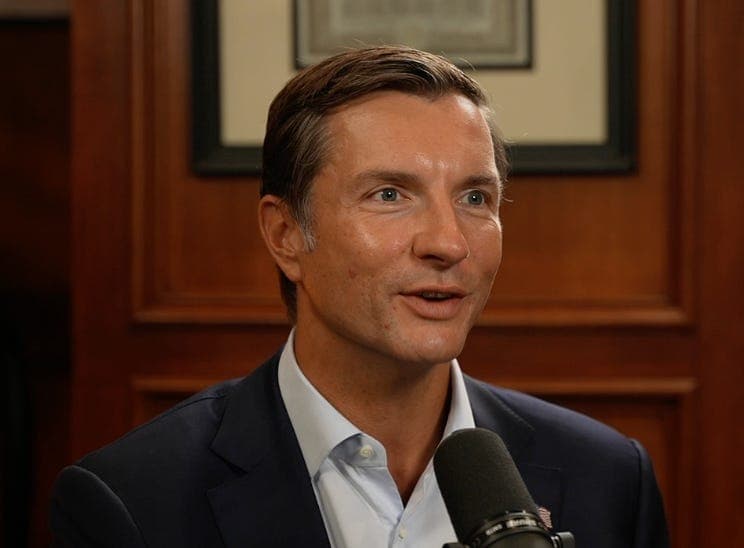
Episode Overview In this milestone 100th episode of *American Optimist*, host Joe Lonsdale engages with Elad Gil, a prominent figure in Silicon Valley known for his insight into technology and investment. The discussion revolves around the potential of artificial intelligence (AI), the evolution of Silicon Valley, and the transformative impact of technology on various sectors.
Key Themes and Discussions
- Elad Gil's Background
- Career Journey:
- Early experience in a startup during the dot-com bust.
- Transitioned to Google, where he contributed to building the mobile team and worked on AI for ad targeting.
- Co-founded MixerLabs, acquired by Twitter, and later founded Color Health, focusing on genetic testing.
- Evolution of Silicon Valley
- Culture Shift:
- Early experiences shaped a deeper understanding of the tech ecosystem.
- Discussion of how Silicon Valley has absorbed talent during economic downturns and how this affects company culture and innovation.
- Investment Philosophy
- Exceptional Founders:
- Gil categorizes successful founders into three archetypes:
- Polymathic Intellectuals: Deep knowledge across fields; e.g., Patrick and John from Stripe.
- Intense Focused Founders: Highly driven and singularly focused; e.g., Travis from Uber.
- Network Effect Founders: Companies that leverage existing networks for growth.
- The State and Future of AI
- AI's Underhyped Potential:
- Gil argues that AI, particularly generative models, is vastly underappreciated.
- Revenue and impact from AI products are growing without widespread adoption yet.
- Discussion about the transformative nature of AI on industries, particularly in customer service and legal sectors.
- The Future of Work with AI
- Workforce Transformation:
- Gil suggests a shift in how businesses hire, with AI potentially allowing firms to reduce the number of employees while increasing efficiency.
- The potential for AI to serve as personal tutors or assistants in education.
- Investment in AI Value Stack
- Investment Layers:
- Discussion of five layers of AI value, which includes:
- Hardware and chips (e.g., NVIDIA)
- Data centers
- AI models
- Deployment tools
- Workflow services
- Bullish on Top Layers: Gil is particularly focused on investment opportunities in the top three layers.
- Societal Impact and Values
- Education and Values for Future Generations:
- Emphasis on the importance of resilience, math, writing, and philosophical education for youth.
- Discussion about the potential for custom AI tutors to transform learning experiences.
- Vision for Future Innovations
- Building Lasting Monuments:
- Gil's belief in creating inspiring monuments that celebrate human achievement and innovation.
- Importance of beauty and truth in society as reflected in architecture and public art.
Conclusion The episode encapsulates a vision of optimism rooted in technological advancement, particularly in AI, and its potential to transform societal structures and individual lives. Elad Gil's insights provide a roadmap for investors and innovators looking to navigate the future landscape of technology and its impact on humanity.
Key Takeaways
- AI is on the brink of transformative capabilities, potentially reshaping industries and societal structures.
- Understanding the types of successful founders can inform better investment strategies and company building.
- Education systems may need to adapt to include AI as a central tool for learning and development.
- The cultural significance of inspiring monuments and art can enhance societal values and aspirations.
For more insights and content, visit [Joe Lonsdale's Blog](https://blog.joelonsdale.com?utm_medium=podcast).
Written by AI. May contain mistakes. Listen to the episode to check what was said.
Transcript
Automatic transcript. May contain errors.0:00Are LLMs going to exponentially keep getting better to the point that it totally changes and improves it? Or are they hitting some kind of local maximum? Yeah, they're not even close to an asymptote as far as I can tell. And I've talked to a lot of the main researchers in the field. The way I think about it is almost like LLM steps, right? And when you had GPT 3.5 and you went to 4, suddenly legal opened up as a vertical. I backed a company called Harvey and they showed me side by side, 3.5 versus 4. 3.5 doesn't work. Otherwise, yeah. It just doesn't work, right? You had a model update, suddenly you could do legal.
0:28What's the next step? Podcast hosts. Yeah. I think that one you could do with like GPT 1. Oh. But, you know, you have these steps. And so it's this ladder that you're climbing. And eventually you're going to hit a point where it can do all of human services.
0:47We have something special for episode 100 of American Optimist. Elad Gill has been a friend for a long time. He's one of the great thinkers, great investors in Silicon Valley. We go really deep on AI, on history of the tech world, on what's coming up next in the next 10, 20 years. You know, Elad's Funds is one of the funds I am the most bullish on. He's just involved in so many of the best companies over the last 20 years and already probably involved in things that will become the most famous companies the next decade. Excited for you to meet him. I'm Joe Lonsdale. Welcome to American Optimist.
1:16I have my friend Elad Gill with us here today. I'm really glad you're here. Thanks for coming. Ah, thanks for having me. It's great to see you. So Elad, I want to start with your background. Tell us a little bit about your upbringing. How'd you make it to Silicon Valley? Sure. Yeah, I moved out to the Bay Area originally for a job. I joined a startup sort of right at the end of the telecom or the dot-com boom and sort of bust. And unfortunately, I had perfectly bad timing and I showed up right as everything was collapsing. And I worked at a telecom equipment startup and that went through a series of layoffs.
1:43I was kind of laid off in the fifth round. This is like right at the end of the bubble then? It was right at the end of the bubble and we grew from 120 to 150 people and then shrank to 13 people. Wow. And you were still there? You were one of the 13 that kept? No, I got cut around 50 or so. So I was in the third round. There you go. So I made it through two rounds. intact. But it was a pretty brutal environment. Everything was kind of collapsing. It was actually very good. It was very formative, right? Because if you've been through a layoff and a really tough time like that, and I was straight out of school, so I didn't have any money.
2:08And so I remember even as that company was ramping up, I was like, this is not sustainable. I don't know how this thing is going to survive. And so I remember me and a friend of mine used to go to the grocery store every week, once a week, and we'd buy a loaf of bread and a thing of cheese. And I'd just eat cheese sandwiches for every meal like all week because it was like i was saving money because i thought this layoff was coming and i'm like how am i gonna live right wow so you knew it was coming you're saving this much the math yeah you just looked at their burn and you looked at their cash and you're like they have to do layout how do you know most engineers aren't like aware of those financial things how do you know to be aware uh it just felt like math to me honestly like it's just you start thinking about it and you're like huh these things seem off and then you do the math and you're like okay we're gonna have the money in 12 months or whatever if they don't do something so they have to do something and you know it's it's kind of funny how if you just look at certain things from first principles or just look at data, you're like, oh, of course this thing is this way.
2:57Did you become an entrepreneur after you got laid off? No, I ended up eventually making my way to Google. Google at the time was sort of scaling and it was soaking in all the talent in Silicon Valley, or at least all the entrepreneurial talent. And so I joined there and I ended up working on two things. One is I helped buy in the Android team and start a lot of the early mobile efforts. And then second, I worked on some early AI and machine learning for ads targeting related products. I worked more on the product side. And then after that, I left to start a company and sold that to Twitter. And then I worked at Twitter for a bunch of years and then started another company.
3:31So what were the lessons from building a team at Google on the mobile side? Like what do you guys, that was obviously a pretty important team for Google. What would you do? Yeah. You know, at the time, Larry Page was still very active at Google and he decided to get rid of all middle managers. And so when I joined, he removed like three management layers and suddenly every director or VP level person had 50 to 100 people working directly for them. And so they had no ability to actually meet with the team that worked for them, right? Because how can you meet with 100 people? Would you bring them together or what'd you do?
4:00No, basically you had this giant gray market for talent where you could go do whatever you want because nobody's paying attention, right? So it was actually, for me, it was great. And so I recruited a lot of the early mobile team without their managers knowing because their managers didn't know what they were doing. So they just come and start working with me on mobile. And so we kind of organically built this, I don't want to call it like this, this team of pirates or something. I mean, it's kind of insane. Is this because the Google is making so much money? I like to think of Google as like, there's like this gusher, gusher of money and then there's people like all around it.
4:27And it's just kind of a mess and it's really, she'll do stuff. I mean, it was basically a golden era where Silicon Valley had just gone through a major depression, huge layoffs had happened. A bunch of companies had blown up. Founders were sort of out in the street and Google just soaked in all the very, very best talent of that era. But then also just let it do whatever it wanted. Um, up to a point. Yeah. I mean, eventually they put back in middle management and you know, they did a bunch of reorgs and realigned everything, but it was a very, um, if you want to go try, start something, if you can convince one of a handful of people, then you could go do it.
4:59So you're kind of like an entrepreneur inside of Google basically. Yeah. And I, you know, I never think that you see how hard it is to really be an entrepreneur and you're like, well, no big company really has entrepreneurs, but, um, but yeah, it was basically, you had this great market for talent. People could just start all sorts of things. And that's when you had this big expansion. And Google used to have this webpage up that was like, here's all the things we're never going to do. And it said, we're never going to do IM or chat. We're never going to do a browser. We're never going to end up doing all those things, right?
5:26We're never going to do satellites. It was supposed to be like this exaggerated, funny thing. That's funny. So I had this thing we're never going to do and they did all of them. They ended up doing basically everything. Even the dopey evil. I'm just kidding. Yeah. So it was a very dynamic time. And I feel like at any given moment in time, there's one or two companies that are going through this kind of golden age period where you're expanding rapidly, you're soaking in all the best talent, you're launching multiple product lines, you have this diversity of stuff happening. And then often those cohorts of people go off to then do amazing things in Silicon Valley later.
5:54And so maybe right now that's OpenAI, maybe that's Stripe. There's a handful of companies that are probably these... Ramp seems a little bit like that too in some ways. But going back again, so why'd you leave to start a company after Google? Yeah, I always wanted to start a company. It's just because I had worked at a startup that failed, I had no money, right? I was just out of school. So you made enough money at Google, go do it. Yeah. And I think before, before the current era is actually really hard to start companies, right? There weren't that many people funding it. There wasn't Y Combinator or these accelerator programs where you could just go and people would give you some money to get going.
6:23There weren't very many angel investors. There wasn't information online about how to do it. You had to eat cheese sandwiches for months to save the money. No, seriously. Right. Like I was literally paying off school debt. Yeah. And so you're very constrained and I feel we're in a much less constrained environment now because seed capital is much easier to raise, which means that, you know, really smart people can just show up, get some money and start doing things at a very young age. In some ways though, if to be an entrepreneur back then, there was a higher bar, wasn't there? For most, for a lot of people.
6:48It was, it was, it definitely seems like it was harder. And I don't know if that's just me being an old person now and saying, you know, it's always harder when I was younger. We had to walk both ways uphill in the snow. Yeah, but it was dramatically, it was, it was really hard to get something up and running back then or even convince people to quit and go do it because there weren't that many startup successes until the, you know, especially after the dot-com bubble where everything collapsed, people took away the lesson of, oh, all these things are kind of fake companies and I want to go somewhere that's stable.
7:15Yeah, no, totally. I remember when hiring for Palantir, it was like a lot of hire bar to convince people for a while. What was the company you started? Yeah, the first company I started was called Mixer Labs. It basically ended up being a data infra platform company before there was a lot of those mainly for developers to use or for engineers to basically build different applications. We ended up selling it to Twitter when Twitter was about 90 people. Twitter really needed some help back then is my recollection. Twitter was a mess, right? And it's kind of funny because as you see multiple companies go from, you know, 50 or a hundred people to thousands of people, you see that almost all of them have these phases where there are, where there are a mess or something really bad was happening or, you know, serial things or problems had to be dealt with.
7:56Twitter was especially bad. Yeah. Twitter seems uniquely bad for me. The thing I've heard, and you could tell me maybe it's too mean, but, but it's like, I mean, I think Mark Zuckerberg, by the way, called it a clown car that fell into a gold mine, which is a little, that's pretty mean, but it's pretty funny. The thing I heard is that I like to say that you don't get billion dollar companies without really top tech cultures, except for Twitter's like the exception that proves a rule. I can think of a couple others. So I think my big lesson over the last couple of years is that product market fit matters above everything else.
8:25In other words, if there's an active market that really wants to use what you're doing, it'll put up with a lot of stuff unless there's a very clear alternative. The fail whale. The fail whale was up constantly and the thing kept growing, right? And there'd be articles about the fail whale and that would just boost growth. And so Twitter was in this magic moment where what it was doing was very unique and defensible. And honestly, I mean, it survived to this day as now X under Musk, but, you know, it survived for 20 years is something that wasn't very well run for much of that history. When you came in, did you guys fix some things there at least?
8:52We fixed so much stuff. So Twitter was in a state where you mentioned the fail whale days. Basically what that was is the site kept going down and they put up a picture of a very cute whale, like a graphic. and that was their product because you couldn't log in or anything because the site was down because they couldn't deal with the traffic. At the same time, when we were bought, they couldn't, what's known as deploy code, they couldn't update the website. And they hadn't been updating it for weeks. They just didn't know how to update the code. And so we went in and we fixed that deploy queue.
9:17And that was the first, my team was supposed to go and build all this stuff for the ecosystem and developers. You said to fix the basics first. We just had to come in and fix the basics, yeah. Wow. How long did you stay there? I was there two and a half years full-time and then another year as an advisor. And my job was basically eventually I became one of the fixers in the company. What year was that? We got bought in 2009. And I started off running like Search and Geo and some other kind of AI-centric teams. And then I morphed into this fixer role. We basically had a big reorg internally. And basically what happened is we did kind of a slow motion reorg, which you usually don't want to do, right?
9:52So it took like a month to reorg the product org. And Dick asked each person what they want to be doing. and most people said, I want this job or I want that job. And I showed up and I said, well, just tell me what you need me to do, right? Like, it's not about me. It's about helping this company thrive. And so half the team got fired. I got promoted for saying that slash acting that way. And then I got kind of pulled into this fixer role. And so I ended up getting involved with M &A, with internationalization. There's a problem. We just need a smart guy to work hard and help the company. Yeah, just jump in, help fix something, maybe help hire in the exec and then go on and do the next thing.
10:23And I want to ask just because it's got to be on a lot of people's minds. and I don't want to focus too much on this culture war stuff, but like when Elon bought Twitter and became X, my friends went in there and there were accounts like mine that were like turned down and it was all this crazy politics. And it was very clear, it was very politicized. And it felt like that might've started more 2014, 2015. Was that going on a little bit when you were there? No, when I was there, it was actually viewed more as a platform for helping disseminate information for freedom. So it was like free speech was more on the ascent.
10:51Oh yeah, because it was, the Arab Spring was happening on top of Twitter. Yep. It was starting to be used as like a news media where, I don't know if you remember, there was that famous landing of the plane in the river. Yeah, yeah, that was a cool captain. The first photo for that ended up on Twitter. Wow. And so it was just emerging as a sort of real-time news media. Captain Sully, I think he was called. Yeah, yeah, that's right. And so in that era, there was also a lot of ex-Google people at Twitter, particularly on the legal team, and they came from this mindset of what's fair use and how do you create more access to information.
11:22It's very much the old kind of like classical liberal Silicon Valley or freedom and free speech and everything. So that's fascinating. So you never experienced any of that other mess. You were just all aligned. Yeah. What did you leave there? What did you leave to build something? Yeah, I wanted to start a company. So I started a company called Color, which you thankfully helped back. So I really appreciate all your support over the years on that. And it was basically a really early cancer genomics and digital health company that was focused on helping people get really key information about their health, particularly around genetic risk of cancer and related areas.
11:54You actually have a background both in math and biology. So this is an area you know really well. I guess obviously right around 2011, 2012, there were a lot of new possibilities coming up with genomics and whatnot. What inspired you to do it? Yeah, there was sort of three points of inspiration. I think the biggest one was just my co-founder, Altman, who's now still running the company. He had a familial history of breast cancer. His mother had breast cancer twice. He had multiple family members die of it. And so the real driving force for us was just how do we help people get really important information that's key to their health?
12:23Yeah. And so that's the reason we started the company is we wanted to help people. And you probably know this story. It was something really inspiring for us as my now wife. We were dating at the time. And I think somehow I'd like bought a couple extra tests that you guys had given us like low cost. And she took one and all of a sudden she had this like crazy risk. And 23andMe had told her she had no risk. But now all of a sudden she knows she has this crazy cancer risk. So just in case, her family took the test. And then her mother was 61 at the time. and it came back and they said 80 % chance of cancer by the time you're 60 based on the based on the results and this the doctor said oh don't worry about it but that's really strange you would know that I've never seen that before just in case probably at the age we should do a nephrectomy take out your ovaries and so three or four months later no rush they took them out and they found stage three cancer oh yeah and so fortunately they were able to treat it and help her she probably would have only lived a couple years because they found it she lived like six or seven more years she got to meet a couple of few of her grandkids yeah uh which you know which It was really wonderful that at least you gave her another five years of life thanks to a$100 test.
13:19It's shocking to me health care is like that where a$100 thing could just prolong someone's life a lot. Yeah, it's amazing how little actual preventative care helps. And by the way, the reason, like what you just said is the reason we started the company. No, thank you. Right? So it's one of those things that I'm never going to regret anything about color simply because we were able to help people in those ways. What didn't go well? Did any of the lessons learned from it? I mean, it's just that health care is really hard as an industry. And there's a regulatory part of it. But honestly, people just don't want to pay out of pocket for their health.
13:48So to your point, you could pay$100,$200 and get information that may be life-saving. People don't want to do that, right? They're used to their employer paying for it or the government paying for it. And most of health care is chronic versus preventative. In other words, you wait for somebody to get really sick and then you try and treat them versus saying, how do we just prevent all these things from happening to begin with? A hundred percent. One of my neighbors who I've had on here back in Texas is Peter Atiyah, who's the health care guy. He gave me these frameworks where it's like the average doctor will say your cholesterol is like, you know, 60th percentile like bad, but like it's not 90 percentiles.
14:22You don't need to do anything. Whereas a really good doctor is like, let's get it to be the very best. Let's not just leave it like okay to mediocre. Like keep pushing your health, which is I think it's a better framework, right? Yeah. Keep getting healthy. There's very basic stuff you can be doing and people just don't know about or don't know what to do. I mean, the other part of it is when you look at it, a lot of our focus from a biopharmaceutical perspective, like the new drugs we develop and things like that, often aren't going to move the needle that much actually. And they're very important for specific diseases.
14:48But if you got rid of all of cancer and all of heart disease, I think you add something like five to seven years to the average person's life. Is it really only five to seven years? It's a very small amount on a relative basis. And so you're like, okay, what's everything else? And how should we actually be thinking about extending lifespan and healthspan? How do you keep people healthy for longer? and we're not really doing much to develop drugs in that direction. And so I think, I think there's big gaps in the market. Other things you're doing today, actually in bio, since we're on the topic that you're passionate about, like what are types of things?
15:14There's one company that I backed called BioAge that just went public, which I'm very excited about. I've been involved with them since the very early days. I think they may still be in their quiet period. So I don't know that there's much I can say about it. I think at a very high level, they're working on different types of drugs to help with aspects of aging. And I think that's a very exciting area overall. And they've already announced certain things. So it's worth, you know, I think checking them out. Totally. While I'm in town, I'm seeing my friend Rick Klausner, who's built a bunch of these companies and the latest stuff they're doing with epigenetics and aging.
15:43It's just, it's really, it's like sci-fi. It's really hopeful for helping people. Yeah, it's very cool stuff. I want to ask in general about your success as an investor. So you, you, obviously we talked a little bit about these companies you built and you did really well at them, but I think you're probably most famous these days is for someone who's invested in, I think maybe dozens of unicorns. You've, you've backed some really top companies from the beginning. Uh, you mentioned Stripe earlier. I think one of the, one of the famous ones, you kind of invested them really early on and had been a mentor to those guys.
16:07Like, like, like, how did you find guys like that? How, how are you able to keep winning again and again and again with, with these early stage investments? Yeah, I think I've been super lucky on that stuff. Um, you know, I think a lot of the companies that I got involved with quite early, uh, was just cause I was helping out people in the ecosystem. Like I was, I was starting a company myself and people just started coming to me either for advice or I was a couple of months ahead of them, or we would help each other. You just happened to help the really talented ones. Yeah. Just fell into it.
16:33I just fell into the, uh, I'm the clown car and the gold mine or whatever. I don't think that's the right announcement for you. I got very lucky. So, you know, I helped out, um, uh, a lot of these early teams and they just happened to be some of the biggest companies, you know, it's Airbnb, it's Stripe, you know, eventually ended up helping out Coinbase and Figma and Instacart and all, and it's been a great ride. Like, what is it about teams, for example, like Stripe that differentiate them from others? Like what, what about what guys running that, that company made them special? Yeah. You know, I've been, I've been kind of noodling on this.
17:02I had a conversation with some folks on my team yesterday where I was just trying to brainstorm on what are there specific signs of truly outside successful outcomes in terms of the types of founders. And I think a lot of it is just like, do you end up in the right product market? Is the market big enough? Is it growing? Is it dynamic in the right way? And so I think half of it is just, you find the right market and some of that could be luck and some of that couldn't. But those guys are like, Like, I mean, obviously, I know you agree they're special, but they seem like they're like some of the leading kind of intellectuals in our world right now.
17:29No matter what, you need the market, right? Yeah. Now, within that, there's tons and tons of people who enter these markets and do it horribly, right? And so what's different? And so I almost view it as there being three types of founders that become hyper successful. And I'm just testing this out or spitballing it, right? I don't know if this is correct. The first one is kind of the polymathic, hyper intellectual, yet very competitive person. And that's probably Patrick and John from Stripe. Honestly, that was Larry and Sergey. When I worked at Google, they were very polymathic, very deep on everything.
17:55They'd go down into the weeds on the data. And so I think one almost like super founder archetype is that. I think the second one is the super hardcore, extremely focused, really, really driven Overdrive founder. That may be Travis from Uber. That reminds me of Peter at Wish back in the day, but maybe he was doing well. Yeah, Peter was just super focused. And I think there's almost signals of those because a lot of people in our ecosystem now, for example, are doing angel investing. or they're involved with lots of other companies while they're running their company. And that second class of founders don't do any of that.
18:26They're just, they actually say no to everything and they're just all in on one thing in a really good way. Travis is definitely that way, yeah. Yeah. So I think that's another archetype. And there's a few people I can think of who just had massive success that I just view as incredibly focused, right? I feel like Elon used to be more that way because he really would say no to everything. Yeah. Yeah. Some of the best founders are just, like Parker at Rippling is incredibly judicious with his time. And he's just like, this is, you know, he's really focused. And then I think there's a third type of founder, which is just like the network effect business.
18:53And it's just, you have something that has network effects, you're going to do well. Even if, even if you're a clown car. You could be, well, you could be Zuck and then you take it to the next level, right? And you start doing things like Llama and things like that. So Zuck maybe has a network effect plus maybe some of the polymath side or something like that. Yeah. Or just, I don't know. I'm sad enough if he's on the intense focus or the polymathic side or whatever. But I'm just saying like maybe he's sort of an overlapping archetype of like one of those things. Plus, you now have a network effect business.
19:20So it's a default defensible. Have you seen a lot of more network effect businesses recently? Because network effect is a thing we always talked about a lot in consumer, obviously. Those are giant companies in our world. And there's some enterprise. But what are you seeing in network effects these days that are exciting? Yeah, I'm seeing less network effects and more scale effects, which are related or overlapping. As you get more scale, you end up with cost advantages that then allow you to get more scale. You could argue maybe Stripe is in that basket, but there's also more modern versions of that, particularly in energy and other related markets.
Read the full transcript
19:49So it's back to a broader question of how do you create defensibility in a business? And there's almost like five or six common patterns of defensibility. Scale affects is one. Network affects is another. Creating an ecosystem on top of your platform, like what Salesforce has done is one. There may be long-term contracts and durability of those contracts, which happens, for example, in the medical distribution world. So, you know, there's in the world of business, there's like five ways or six ways to create defensibility and roughly everything falls into those. Yeah. At Palantra, we always try to create network effects and we did get a few of them going.
20:18So we got a lot of countries working over it with dozens of countries. We kind of had to be on it. I think, you know, we were really proud to sell to Israel. And it was a big deal that they bought because they never buy anything from anyone. But I think it was probably that network effect. I'd like to think we're just good enough. But I think that kind of helps, you know. And then we had like Airbus using it with all the suppliers and everyone had to be on it. So I think there are enterprise network effects you can do, but they do seem to be more rare these days. Yeah, I think so. And then there's also just the scale effects we mentioned.
20:45Like I know we were both involved with Andrel really early. And that's a good example where they now have such a broad portfolio of products. They have the deep customer relationships. And that allows a flywheel in terms of the ability to continue to cross sell different types of products. I think you get big enough to you get a reputation in D.C. You can like do things in D.C. You know what's crazy on Andrel one? So we have this company, Sironic. I think you're also just invested in them that we help build. And it's growing really fast for the Navy. And the people, they asked us to weaponize some of the autonomous vessels.
21:11And so we reached out to a few different primes. And Andruil was so good that like within three days, literally three days, we had the NDA, signed with all the models, all the data, exactly how it works, sent it back to the Navy. And it was like, it took multiple weeks even to get the NDA signed with like the other guys. And so it's kind of cool because Andruil is now this thing that you can use as a prime. It's then making it grow even faster because everyone wants to work with it because it's the best. Yeah, yeah. No, you definitely, that is one of those sort of feedback loops. It's very positive for some of these businesses.
21:38And so I think everybody always underestimates the degree to which these feedback loops end up mattering and the way that it changes the velocity and trajectory of a business. And if you end up on a positive track, it keeps going. And that's also true for hiring, right? There's certain networks that you tap into that keep the flywheel going. Somebody on my team actually went back and asked, what are all, are there common schools that all the founders of the biggest companies went to or the last decade, for example, right? And there's basically three schools that are like a huge chunk of the overall value created.
22:05and then there's maybe five more and that's very dispersed. What are the schools? It's kind of what you'd expect at least for entrepreneurship. It's Stanford, it's MIT, it's Harvard. And then there's sort of the next set, which is like Duke, it's Carnegie Mellon. You know, it's a handful of places. Did Berkeley make it? Berkeley's on there particularly for AI and blockchain. I'm Stanford, but this is my rival school, so I'm curious. Oh yeah, no, Berkeley, actually it's really interesting. Berkeley has a lot of PhDs in AI who've started interesting companies. I actually have hired quite a few PhDs in AI from Berkeley.
22:35Yeah, they're very good. And Databricks. So all the data, AI, et cetera, is like basically PhDs from Berkeley. And so there are these weird clusters or pockets of talent that go on to do interesting things. And that's actually been true throughout history, right? You go back and you look at the Renaissance or you look at Paris in the late 1800s. Some small town in Hungary will have like 10 of the most important mathematicians. It's crazy. Yeah, exactly. And that's true for art movements. That's true for literary movements. And it's true for technology movements. That's amazing. You know, a lot of the success you've talked about just right now is still in your, you have a really popular high growth handbook, right?
23:08So as you publish this, that came out like in the last year or two? It came out a couple of years ago, yeah. What are a few lessons and frameworks from that? Can you tell us? What do you remember from that? I mean, the high growth handbook is basically a book that says, say that your company starts working, how do you scale it? I saw this New York Times article today where Colin Kaepernick listed the book sitter by his bedside right now. And my book was the first one listed. And I was like, wow, that's amazing that it's kind of spreading more broadly beyond just the tech ecosystem. That's really cool.
23:33So that was really neat. Yeah. Are some of the high growth strategies relevant for other areas maybe as well? Yeah. It's all about just scaling organizations, dealing with change in your organization. And then it has a lot of very tactical stuff like how to raise money or how to deal with a bad board member or different aspects of really building out an organization. And the organization could be a technology company. It could be a nonprofit. It could be a variety of things. It's funny. When the book came out, I actually had people from all over the world reach out around different types of organizations they were scaling.
24:01I had a nonprofit in Indonesia reach out to me. I had different technology companies. So it's been a really fun ride. That's really cool. So I guess a lot of what we're doing does apply to a lot of other fields. Is that your experience? Definitely in common patterns. And then I think the only good generic startup advice is that there's no good generic startup advice. And so I think a lot of things for any organization is situational and who's involved and who are the people and how do you want to structure it and everything else. That makes sense. Another thing I wanted to ask you about is I think recently you interviewed Lina Khan.
24:28Yeah. She's not my favorite government leader. I think you were very polite to her. I think you asked her a little bit about really aggressive M &A enforcement. And in my experience, there's been things in biotech that are being really hurt and set back. And things are not being cured because she's being so aggressive and blocking things. What do you think of her answer about when you talked about that? I think you talked about blocking Meta from acquiring a 30-person company, which seemed a little crazy to me. Do you wish you'd pushed her harder? Where are you on this? Yeah, so we had a reasonably short interview.
24:56I mean, she was generous with her time to do this, right? We had about 30 minutes. And I think there's a lot of standard questions that we asked around M &A and AI and open source and all these topics. And we just didn't have a lot of time to go deep on a lot of things. And honestly, the things I was most interested in, because I actually feel that her stance on small M &A by big tech is very well understood and known, right? It's not like we would have uncovered something new. And I almost viewed those things as the warmup. The things I wanted to ask about were things like, why aren't there young people in government anymore?
25:24Right. Lena Khan got appointed at, I don't remember, 31, 32. Yeah. Yeah. Um, JFK, I think was, what was he? 27, 29 when he first became a Senator? Late twenties. Yeah. Late twenties. Um, the Hoover dam was built by a 25 year old, like throughout history. America was founded by a bunch of people mostly in their twenties and thirties. So where have all the young people in government gone? Right. And why is there no longer any sort of empowerment about that? I asked her in the, in the podcast and, um, I think it caught her a little bit off guard because that's the type of question nobody ever asked, but I think it's super interesting.
25:52Right. The other question I wanted to ask was, um, And she had an answer around millennials, I mean, about generational change and all this stuff. But like, I would have loved to keep digging on that. I would have loved to keep digging on. And I didn't have a chance to ask these questions. Right. But I think they're really interesting. Like, how do you run a government agency? Like, what's important? What do you think about? What do you consider? What would you do differently next time? And so to me, the really interesting stuff is the stuff that she and others like her are uniquely positioned to provide insights on that just nobody asks.
26:20Right. Because everybody keeps asking her about M &A. So that's the stuff I wanted to get to. And if I ever have the chance to talk with her more, I'd love to get into those sorts of topics because I think they're fascinating. Yeah, the young versus old thing is really interesting to me. One of my favorite cancer nonprofits, you might know Damon Runyon, which what they do is they take the people who made the breakthroughs when they were young, and then they let them help choose the new young people who should get a lot of money. And by all accounts, it's like 100 times more effective per dollar than what the NIH does in these areas.
26:45And I know you're not supposed to say that. It's like it's like sacred cow. You're not allowed to attack in government. But the NIH, as you know, is packing more and more and more older and older people. Sure. And I think that means it just I think it's tied to unfortunately it's not having as many breakthroughs. By the way, there are labs run by 40, 50, 60 year olds that deserve to be packed that are amazing labs. But I think we need to have a little bit more of the money going towards people in their 20s and 30s. It seems like maybe government in general, I think it becomes more institutionalized, more credentialed.
27:09Is this like more careful? I think there's two things going on. By the way, the first head of the NIH was in his late 20s. Amazing. So again, when was that? That must have been like 1800, late 1800s. Yeah, that's great. But again, like it's this point of why societally has that changed? And actually, if you look at startup founders, the same thing has happened, right? Patrick Collison has this good point of like, we're all the young startup founders. And there's some again. Alexander at scale, maybe. Yeah, he's the only one, right? Like generationally, you go back 10 years and it was Patrick and it was Zuck and it was Dylan from Figma.
27:39And you can kind of come up with a list. Today, there's many fewer. And I'm starting to see some of them in AI emerge again, right? Which I think is interesting. Scott Wu, I guess, is pretty young still. Scott Wu is pretty young, but it's kind of like, where are the people who have very clear outside success really early? And those are the people that do amazing things for 20 years after that, right? That's actually a platform then to have enormous impact. It was very useful to build Palantir as a founder when I was 21, getting into my 20s. And then, yeah, we can build lots of other things. Yeah, exactly.
28:05Right. And so where did all those people go? It is interesting. I'm seeing a lot more of my favorite companies built by people who are second, third, fourth time entrepreneurs. Are you seeing that too? I'm seeing a bunch of that. And that's almost a negative sign, right? It's a negative sign. Because it's always been that case. But where are all the young people for the first time who are really succeeding? And it's not about starting, it's about succeeding. And I think those are different things. Do you think it's a cultural thing where there's like different level of risk aversion or something in the culture?
28:28I have like three or four theories. I don't think any of them are right. Do you know what I mean? It's kind of like one theory could be, it's a cultural shift where we have so much helicopter or parenting that people are less resilient or they don't take risks or you could make an argument around how suddenly there's all these jobs at big tech that are incredibly lucrative when you're really young. And so that distracts you. Yeah. It would have been tough if someone offered me half a million dollars a year when I was 21, I probably wouldn't have gone to start Pound. You have to be honest. And so that's maybe you would have ended up at Google or Meta or whatever.
28:59At least for a few years or something. Because who knows? Yeah. Yeah. And then it puts you on a very different trajectory. You think about the world differently. Right. And so there's this really interesting question of missing young people societally. And I just, I don't know what the driver is. And again, Patrick, I think has brought this up in a really crisp way and he's probably thought about it much more. It's probably correlated with progress in important ways. You probably need to figure it out. Yeah. It's correlated with progress in important ways. And again, I think it's about this arc of impact that some people have over their lifetime.
29:24Like, look at what Musk has done, but his first success was Zip2 in the nineties, right? And that money then went into x.com slash PayPal. And then that money went into rockets and cars and compounds. Saving civilization with politics. Just kidding. Yeah, yeah, yeah. But so it's stuff like that, right? And so, and you see these other arcs, right? Marc Andreessen was a phenom, right? With Netscape. And he was on the cover of Time Magazine and he was what, 22, 23? Yeah. And then he had two decades to do more stuff. And so the question is, you need those early successes, I think, to have massive societal change because then you can stick around long enough to do stuff.
29:58No, it's true. It's true. A lot of the impact that we're having right now is because we were able to do stuff when we were younger. I want to talk about AI with you. I know it's like the most trite thing, but, but, uh, you've been involved, I guess, in machine learning and in generative AI since it's very, very early on. You were doing AI Google early on. Um, first of all, like give us some perspective on like the investment landscape in AI right now. I'm still seeing, I'm still seeing like lots of mega rounds, I mean, a hyped bubble. I hear the costs of H one hundreds or two hundreds or whatever are coming, coming way down right now.
30:27So like, like what's, what's going on? Where are we in this, in this trend? Yeah. I mean, AI is, um, in my opinion, dramatically under hyped right now. I love it. And I think part of that is, number one, we're seeing massive actual revenue and impact without that much adoption, right? So Azure's last quarter, they did like$28 billion in the quarter. I think they said 10 % to 15 % of that lift or growth was from AI products. So that would be, what,$2.5 billion or something. Amazing. Quarterly, right? Amazing. But that's the infrastructure people are building on. People are paying them. So are the things on top of it profitable or are those things just raising money and building on it?
30:58Well, some things on top of it are doing extremely well, right? Mid-Journey is rumored to be doing extremely well financially. There's a variety of companies that are scaling very rapidly, but it's very early days, right? ChatGPT came out less than two years ago, and that was a starting gun for a lot of people to realize. GPT-3 was only two years, huh? Yeah, it's amazing. ChatGPT. GPT-4 came out 18 months ago. GPT-3 came out in, I can't remember, it was 21. Yeah, this feels more like about three years, I think. 20 or something, yeah. Yeah, okay. Three years. But three, you could kind of see things kind of working, but three and a half, four is when you really saw this heat change in terms of capabilities, and then ChatGPT got slapped on top of that.
31:30is sort of a post-training thing. So on the one hand, I think it's dramatically under hype because very little adoption is still creating these massive revenue streams, but also Klarna, the fintech company, mentioned that they reduced their customer success team by 700 people by adopting AI. And they suddenly had 24-7 availability in 30 languages with a higher net promoter score, faster response time, higher customer success. We've seen already like a lot more money go into this wave than anything else in a very long time. It used to be like, how much money is right? Like what would it be? Not under hyped.
32:01Yeah. I think what people are really misunderstanding is what is going to be the end product. And I think the end product is units of cognition, right? You're going to be effectively paying for or renting something that's going to think or do things on your behalf. And that could be legal documents. That could be a customer success team. Effectively, it could be a software engineering team, which is basically bots writing code for you. And so really this is a revolution in terms of units of cognition, right? and i think that's very under thought about it's actually what the product is going to it's interesting because they're pulling it right now for example in the services area i'm really a bunch of companies in that area and it's not pure cognition it's like right now it's like it's doing things to save people tons of time and make each person able to do like three times or four times as much work too right so it's like so it's like for example like an auditor like you can bring up right away there's 10 screens are most likely to look at all around and that way they go right away they see it and that way they save them just like five minutes each time, you know, so saving them like it's making them three times as fast.
33:00So that's, so it's interesting because right now that's more machine symbiosis. Do you see that? Yeah. That staying is machine symbiosis or do you see the auditor eventually? I mean, in the long run, I, I, you know, a couple of years ago, um, I wrote this blog post that I never published. Um, I just never got around to polishing. I just put it out. I wrote this maybe five, six years ago, which is basically positing that there'd be like three eras of mankind in terms of, or three eras of intelligence. Right. And the first era is basically people in the second era is some hybrid era where it's a uh you know if you look at the number of intelligence units or whatever you want to call it the relative brain power you'd have a mix of you know humankind and machines and then eventually it's going to be mainly dominated by machines in terms of sheer number of brain equivalents that'll exist out there just because it's just easy to build like so many more of these things you can scale it fast with um with a bunch of uh chips and software but the idea is these are like serving us and they're like work for us or is the idea that at some point they're not doing that i don't know what the very long run looks like but in the short run um you know my team actually looked at this if you look at for example the services world in the u.s uh or if you look at sas and enterprise software in the u.s is about half trillion dollars a year yep um if you look at the areas of ai or the areas of services that ai can transform it's probably five trillion dollars in headcount right costs it's just paying employees well it's five trillion in all services in the u.s our best estimates about 40 of that right now could be transformed by AI.
34:21And then you take a cut of that and you take 10 to 20 % of that. But our math was basically, if you say, take a 10 % cut and transform employee headcount costs into SaaS software, you're back to half a trillion and you've recreated the entire enterprise software market cap. No, it's true. I think in the 2.1 trillion that we think could be addressed right now, stuff like healthcare billing, logistics billing, auditing, whatever, some legal stuff, we think already you can at least double the productivity, which would be a kind of a trillion dollars pull out, which is huge. Yeah. And then you capture some subset of that, right?
34:50No. So people should definitely give money to all of our funds. That's a big thing. It's just, again, the unit of work that we're selling is different from... We're selling... We'll eventually be selling units of productive intelligence. And that's a new type of skew that nobody's ever thought about or had before. Because the prior waves of machine learning, I think where people misunderstand AI right now is we've been talking about AI for 20 years. and that's because we had these prior waves of machine learning and convolutional learning networks and you know rnns and gans and all these other types of networks but they were very different fundamental both architecture but also type of product really what those things used to be good at or still are good at is pulling out statistical associations between large data sets and so they're really good at stats is basically that prior wave the current wave is really powerful and that it's actually understanding and generating language and images and other things associated with that.
35:45It's basically, and this is based on this new architecture called the transformer architecture, which was invented at Google in 2017. And that's been the big transformation. So it's actually a different technology curve from what we had before, but people call both of them AI. But I think we need almost like a segmentation of these things because we're on a different trajectory right now. When you say curve like this, to me, it seems like the curve is more like this, but I could be totally wrong. You actually, you think it's going to, I mean, is there going to be a GBT five and six or whatever from someone else too?
36:12It's going to just be exponentially better than what we have right now. It's not only exponentially better, it's impacting other fields. So you look at what Waymo is doing for self-driving or Tesla for self-driving. They've moved over to a transformer backbone and suddenly they see dramatic improvements. No, I mean, Elon said he got rid of all the lines of AI just by using AI. He got rid of 300 ,000 lines of juristics basically in Tesla's AI. Yeah. You just go to end-to-end AI instead of having all these little edge cases hard-coded in. And that's happening in every single field. I want to push back because I agree it's like dramatically affecting all these fields.
36:43I agree. Like I said, we're using it for services already, tripling the productivity in many cases. But that's stuff you could do with like where LLMs are today. Sure. And so the question is, when you go like this, the question is like, are LLMs going to exponentially keep getting better to the point that it like totally changes and improves it? Or are they hitting some kind of local maximum? Yeah, they're not even close to an asymptote as far as I can tell. And I've talked to a lot of the main researchers in the field. the way I think about it is almost like a, um, LLM steps, right? And when you had GPT 3.5 and you went to four, suddenly legal opened up as a vertical.
37:14Um, I backed a company called Harvey and they showed me side by side, 3.5 versus four, 3.5 doesn't work. Otherwise it just doesn't work. Right. You had a model update, suddenly you could do legal. What's the next step? Podcasts. Yeah. I think that one you could do with like GPT one, but you know, you have these steps and so it's this ladder that you're climbing and eventually you're going to hit a point where can do all of human services, right? Yeah. And I don't know if that's GPT-7 equivalent or 8 or 6 or 10 or whatever, but we're going to get there. So you really don't think of it in terms of man-machine symbiosis stuff.
37:43Like stuff we're building now to do these services and when, will those companies still be valuable in five years? Because they can replace it with AI as it goes along? Or is it going to be some new, is it going to be OpenAI itself that just owns all of those things? You know, it's interesting. When I, when I diligence Harvey, I called a bunch of big law firms and I asked them, how do you think about this? And law firms traditionally are some of the worst software buyers in the world, right? They don't really innovate. They're locked down because of security and privacy and other very legitimate reasons.
38:07But they tend to be very bad buyers, but they were adopting Harvey really quickly. And so I asked them, like, how do you view the future of AI or what do you think is going to happen? And I was surprised by how thoughtful and forward thinking they were on this, where they said, look, we think the nature of a law firm will change. Because right now we hire, I'm making it up, 50 associates every year and five of them will make it to partner. But we now think that in a couple of years we can just hire five associates to begin with. But then who becomes our partners? What do they learn along the way?
38:33How do we teach them? How do we screen them? How do we have a portfolio of people so that some work out and some don't? And so they're thinking about the legacy of their law firms. And they're like, we don't know how to think about this future world. But it also means maybe you have one senior partner and two associates and 30 bots. Yeah. You know, and so the whole thing kind of shifts. But it's also interesting. So with Harvey, you have the model where you're selling to a law firm. A lot of my companies, when we call them AI services, we're literally replacing like the healthcare billing firm.
38:59Like we're competing and we're doing it all ourselves. but we're doing it way better for a fraction of the costs. Like, are you seeing a lot of those companies right now as well? Yeah, it's both. And, and, and I guess what's your intuition? Let's say, let's just say for the sake of argument to scare people that, that you're right and it's going to get way better with GPT 5, 6, 7 or their equivalents. Yeah. And is it the case that by GPT 7, maybe they just like do it out of their company themselves, even better than our services company. And all of a sudden they're competing with us directly or if they wanted, if they wanted to, or, you know.
39:30It's always possible, but I think it comes down to like, what is the other tooling that's needed around what you're doing or what you're providing? And so the things that I'm bullish on are where you own a workflow for a vertical. Yep. And so everybody in that vertical is using that workflow. So you own the workflow directly. Yeah. And so if you upgrade the model, it just makes that workflow better. Yep. And so it doesn't matter what the model is. That's how I see it. Maybe challenge this model for me just really briefly. I talk about five layers for the AI value stocks. The bottom layer is like NVIDIA and chips and everything.
39:58The next one is the data centers that all of our friends, family, officers. putting tons of money into and then it's like the models whether it's elon's x or an anthropic then it's like level four would be the tools for deploying ai which there's a bunch of interesting ones infrastructure data infrastructure pounter trying to do things there are a lot of interesting things there and then level five is actually owning the workflow services company or this that's where i'm building like probably a dozen things right now uh which you're doing a lot too um so which so which of those five are you most bullish on which are you spending time on you know yeah i'm mainly spending time on the top three and is that the right way to talk about it i mean i I have a slide that literally has that and sort of presentations I give and stuff.
40:35The bottom side of it, the chip side, I actually invested in two companies seven, eight years ago thinking that there would be NVIDIA competitors. And I was totally wrong. Yeah, that was really hard. It was really hard. It was just so good. They were just very good. And there's still room for other players. I'm just saying like they've really executed well. But yeah, you know, I've mainly been focused on the top three of those layers. The other thing I've been doing is actually been backing. I've now backed to AI-driven buyouts, where the idea is you buy the asset itself, and you can radically change the cost structure or increase the leverage of our organization by putting in AI in a deep way.
41:13And then that entity can go and roll up other companies in its vertical. And so I think that's very exciting. This is what we're doing, too, like with the healthcare billing and the logistics billing and other ones like that, is we'll grow organically at first, but then we'll go inorganically. And there's principles for organic growth with AI that are pretty crazy right now, which is what we're buying. A couple more things while we have you on AI. And, you know, you have children, as do I. The world's going to probably be very different in 10 or 20 years. Like, what are you paying attention to for them?
41:43What do we do differently with education? How does this affect how I raise our kids? Yeah, you know, I wonder about that a lot. And I don't have a good answer. And I've asked some of the world's top researchers about this, right? Because I talk to many of them with some regularity and I'm like, what should my kids study? What do we do? What's a good thing to know in the future? So the positive of this AI wave for this kind of stuff is that eventually each person will have a custom tutor, which is helping them learn really deeply at their own pace. And I think AI is perfectly suited for that. And it's going to be a very exciting world where you have AI really going deep with your kid on different topics.
42:20and there's all sorts of research from the 80s that shows that kids that receive one-on-one tutoring learn dramatically faster. It's the Aristotle Alexander the Great framework. It really is, right? I mean, a lot of things that happened thousands of years ago, it turns out make a lot of sense. And teaching kids one-on-one increases their performance by, I think I can't remember, one or two orders of magnitude, right? I mean, one or two standard deviations. Yeah, I think it's one or two standard deviations. No, I agree. A lot of the great minds of the Enlightenment and of the scientific revolution did get private tutoring, something maybe we should be doing more of today, which is kind of interesting because back then it was very aristocratic.
42:55Now, anyone - AI should make it democratized. Anybody should be able to get it because it should be so cheap because it's just a machine learning system running in the background or an AI system running in the background. So I think that part of it is extremely exciting. The other question I've been thinking about is just, is there anything that, if you can afford it, that you can buy for your kids now so that it's durable into the future? Because if you imagine that AI is gonna upend a lot of industries and a lot of type of jobs. And is it like land that is useful? Like what's, what's actually worth something in the future?
43:24Elad Gill's fun. Come on. It's like, yeah, it's, it's crazy to think like what, what's valuable 20 years from now. We do have a lot of land around Austin. Maybe it's Bitcoin. It's by Bitcoin. That's what it all comes down to. I think it's Bitcoin. I think it's like high growth areas. The land is not so bad. I think, I think, I think top companies that are attracting talent, right? I don't know. I feel like, I don't know. I feel like companies with great talent that are good at AI has to be... I have no predictive value of what companies will exist in 20 years. Maybe railroads, right? You could say, okay, the railroads are basically localized monopolies, right?
43:54They own the tracks. You're not going to build out the new tracks. Warren Buffett agrees with you. Yeah, you know, seriously, it's stuff like that that's really durable. So maybe buy railroad stocks. Just go along, America. That's right. This is American Optimist. Yeah, exactly. But nothing now to teach kids in particular? Is it anything in particular? I think it's math, computer science, resilience. physical fitness. Like, I feel like it's kind of that same, that same, you know, how to write, how to think, how to express oneself creatively. Philosophy, maybe a little bit. Some of it. Yeah. Yeah.
44:27Depending on which part. There's a lot of philosophy out there. So teaching my kids the values of liberty and order and all this stuff. Yeah, no, it's like, what is the moral fabric and framework that you want your kids to be part of? And then also, So I feel that some form of religious upbringing is useful, if only to protect them from fake religions sort of coming in or modern religions. We need to inoculate them against the modern fake religious stuff. You need to fill up that hole, right? That's probably part of it. The reason our kids do it is we think the tradition is really important to have that support.
44:58So, you know, you're doing obviously really important work on AI and biotech and other frontiers. One of the things you're passionate about, I believe, is building inspiring new monuments, right? You think you invested in monuments? Yeah, I'm just starting on that. And I'm looking to bring on somebody to help me drive that. I love it. I don't have time to do it. But I think if you look at every society at its peak, or at least on its way up, you'd always have these large scale inspiring monuments. You'd celebrate wins and you'd celebrate greatness. You'd celebrate wins, but you also inspire the future.
45:25You'd inspire the next generation of people. It's like watching a SpaceX rocket launch, right? It's so inspiring. My friend, Rodney Cook in Georgia is the head of the National Monument Foundation. And I've helped him build a bunch of monuments, actually. That's amazing. I agree. It's really important. It's something it's that he's more, he's a neoclassical architect, which is like, I love that style. And there's a lot of, a lot of, a lot of beauty and truth in that, but is this something where you'd want to do it in traditional ways or do you want to do it in entirely new ways or both? Or how do you think about it?
45:49Yeah, it's a little bit of both. I mean, if you look at a lot of the really important historical ones, or, you know, there's obviously the seven wonders of the ancient world and all this stuff, but also more in more recent times, you look at things like the statue of Liberty and people coming into Ellis Island as sort of a major entry point for immigration and you'd see this inspiring statue right and the inscriptions and everything else around it that that helps motivate people to do amazing things right or you look at the eiffel tower and that was built for the world fair that was held in paris in the late 1800s and it was supposed to be a testament to french steel making right and so that was supposed to show technology progress it was look at how we can do stuff with steel isn't that amazing you're showing it off do you believe in these things like the golden ratio and like ideas of beauty and stuff that there's other other things.
46:32I mean, we've kind of lost some form of beauty or sense of beauty in society, right? We don't aspire to make giant, beautiful artifacts. I think our culture rejects it as well. It's like a mocks it, right? It mocks it. And the question is why, and why would you mock something that's inspiring and creates a sense of light, a sense of hope, a sense of purpose. Um, and I think that large scale monuments do that. Right. And so, um, and that's true in every society throughout history. Well, I love that monumental is doing a lot of things around like neoclassical and those traditions as well as trying to be inspiring.
47:03I'm totally with you on that. You know, we actually started the American Optimist to try to push back on a lot of the pessimism in our country. What areas of innovation are you most excited about right now in terms of like positive outcomes for the world? What could the world look like in 10 or 20 years with these positive technologies? Yeah, I think there's so much exciting stuff coming. By the way, one could argue that the sphere in Las Vegas is a good example of almost like a really interesting modern artifact, right? It's beautiful to look at when you're there. It's amazing. It's fascinating.
47:27So even stuff like that, right, could be really neat. If you think about how do you make that a public artwork or something else? Let's build and inspire more people. I agree. And then in terms of the future, I mean, obviously there's so much coming that can be incredibly positive for the world. There's sort of stuff in AI, stuff in health, stuff in education. You know, there's a lot of different areas that we can transform society in a really positive way. I think fundamentally, we already talked about the education side and how I think AI is actually going to have huge impact there. I think from a health equity perspective, AI can be transformative there.
48:01Google released a model, I think two years ago, called MedPalm2, where if you compare the answers from that model relative to physician experts, it outperformed them. In other words, if you use physicians to train the model, the model will get worse. Yeah, the physicians are way behind now what you can do with AI, which they don't seem to acknowledge when they do their work, though. Well, I think it can be very additive physicians, right? It can be a tool for them. But also imagine if anywhere in the world, if you had a device, right? And, you know, billions of people now have smartphones or equivalents.
48:28If you could take a photo of something, upload it, add some text or speak into it, and then get out a medical answer that potentially is actionable. And it's the equivalent of, you know, Stanford Medical Care or MD Anderson or whatever. That's incredibly empowering for the world, right? If anybody anywhere in the world can do that. So I think that's very exciting. If you don't have scope of practice laws, you could do a lot of cool things with that. Yeah. So one side project that I'm working on with Strayan, who's on my team, is we're going to take a thousand great works that are off copyright and we're going to translate them into 100 languages using AI.
49:05And then we're going to do an audio book for all of them in AI. And then we're actually going to build a module where you can interact with and chat with the book in a way where it has the intelligence of a full foundation model, but it sort of represents the book in its persona. That's cool. And so, you know, we think it's almost like a modern library of Alexandria, right? Because if you look at throughout history, public libraries have been massive public goods. And there's two threads of that. One is how do you create access for anyone in the world through any modality? They should be able to hear it.
49:34They can read it, whatever it is. They can interact with it to gain new knowledge, right? Help summarize this chapter for me and let's talk about it, right? This would be cool for kids and everyone though. I just think it's really exciting. Um, so that's one thing, and it could be religious works like the Bhagavad Gita or the Bible or whatever. It could be philosophical treaties. It could be works of mathematics. It could be great books, Shakespeare, et cetera. And so we think there's a broad swath of stuff that, you know, we can incorporate as part of it. So, um, that's another example of where I just think we have these amazing ways of technology coming and they can be used in all sorts of ways that people aren't doing yet.
50:07And they could be incredibly powerful and empowering. So I think there's a lot to do. Health, art, inspiration. And we, uh, we, we have a, we have a bright future. There's a lot to do. All right. Well, Elon, thanks for joining us. Ah, thanks for having me.
From the publisher
For Episode 100, we have a special conversation with Elad Gil, one of Silicon Valley's great thinkers, builders, and investors. Elad has been involved with many of the leading technology companies of the past 20 years — and likely the next 20 years. Learn how he's backed dozens of unicorns, why he thinks AI is underhyped, and where he sees investment opportunities amid this new wave of disruption.
An early leader at Google, Elad helped build the initial mobile team, before founding MixerLabs, which was acquired by Twitter in 2009. Elad stayed on as VP of Corporate Strategy and became a key "fixer" during Twitter's hypergrowth phase. Later, he co-founded Color Health, a genetic testing company specializing in cancer detection. Over the past decade, he's backed nearly 40 unicorns, including Airbnb, Coinbase, Figma, Instacart, and Stripe. He's also invested in Harvey, Mistral, Perplexity, Pika, and other leading AI startups.
In this episode, Elad takes us behind the scenes of the early days of Google and Twitter, and how Silicon Valley culture has evolved. He explains his three categories of exceptional founders and how he positioned himself to become one of the top angel investors. We also dive deep into AI, from the trajectory of LLMs to frameworks for investing in the AI value stack. Finally, we discuss AI's impact on education and the most exciting possibilities for the decade ahead.
00:00 Episode intro
01:16 Building Google’s mobile team
06:01 Early days at Twitter
11:37 Building Color Health
15:57 How he’s backed dozens of unicorns
21:52 How small clusters of talent change the world
25:20 Where are the young people in government?
27:25 Where are the young startup founders?
30:17 Why AI is underhyped
36:40 Will LLMs get exponentially better?
39:10 Investing in the AI value stack
41:33 AI and the future of education
This is a public episode. If you would like to discuss this with other subscribers or get access to bonus episodes, visit blog.joelonsdale.com