In short
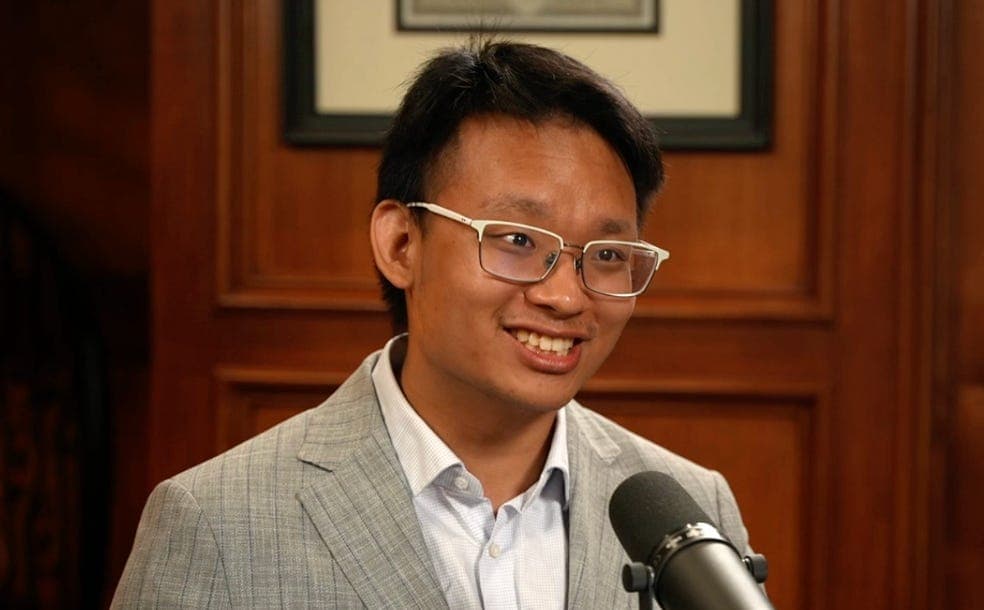
Brian Chow (Effort.News) explains using AI to query long-running U.S. Medicare/Medicaid and other government databases to uncover fraud and misconduct, then discusses three investigations: (1) HEI Health Equity Incentives creating a claimed $21B “racial wealth transfer” by paying providers to reduce disparities via incentives that he says amount to race-based denial/granting of care; (2) the UK’s counterterrorism Prevent/CT expansion, which he claims disproportionately targets Islamist terrorism in attacks (97%) but enforcement focuses on “extreme right” targets (including figures he cites like Douglas Murray) and even books (e.g., 1984) as suspect; (3) astroturfing/anti-AI media influence tied to Effective Altruism funders and Guardian coverage.
Guest backgrounds
Brian Chow—born San Jose; magnet school in Canada (Wolburn Collegiate Institute); youngest North American IOI gold medalist at 15; studied machine learning at University of Waterloo; worked on AI policy in DC; founded Effort.News.
Key claims
AI-enabled “effort” can exhaustively search messy public records; many news stories are source-solicited; HEI incentives are illegal under Civil Rights Act text; DOJ could enforce; EA/related funders paid for Guardian article production and experts; UK enforcement targets politically defined “extreme right.”
Notable examples
$21B HEI pool; DOJ guidance shift in 2025/2026; UK “extreme right” includes mainstream authors; Guardian article funded by Open Philanthropy/Coefficient Giving and Survival and Flourishing Fund; “Time 100” profiles allegedly bought.
Written by AI. May contain mistakes. Listen to the episode to check what was said.
Chapters
Tap a time to open that second in VOBrian Chau's Background
0:35 to 1:24
Brian discusses his early achievements and journey into journalism.
“Let's highlight a few other recent investigations.”
Shift to Investigative Journalism
1:24 to 3:22
Brian explains his transition from AI policy to investigative journalism.
“They can look at government data, can look at what's going on in our society and find all sorts of crazy stories, tens of billions of dollars of grift, all sorts of schemes none of us have heard about.”
The Role of AI in Uncovering Fraud
3:22 to 5:06
Brian describes how AI is used to query government databases for stories.
“and I ended up being in a place where I was talking a lot increasingly about machine learning and what was happening and this increasing wave of pre-censorship that was happening in DC.”
Discovering Hidden Stories
5:06 to 7:20
Brian shares how Effort News uncovers newsworthy items from grants.
“It's not entirely fake, but it distorts what people see.”
Challenges in Journalism and AI
7:20 to 9:11
Discussion on the technical and creative challenges in journalism today.
“They were saying like, I have no idea what this is.”
Effort News: Nonpartisan Investigations
9:11 to 11:28
Brian discusses the nonpartisan approach of Effort News and current investigations.
“Nationals with, some of them founded, you know,$20 billion companies.”
Uncovering Racial Wealth Transfer
11:28 to 14:00
Brian unveils findings on financial incentives related to health equity.
“And I think we're excited to tell our listeners, we're actually going to break some news with you today.”
Discrimination in Federal Programs
14:00 to 15:05
Explore how federal funding programs may support racial discrimination.
“who are discriminated against from any race.”
Investigating Racial Incentive Programs
15:05 to 16:34
Learn how racial incentive programs were strategically developed over the years.
“I have a question for you on this, Brian, because you've been studying these things.”
Counterterrorism Failures in the UK
16:34 to 17:41
Examine the focus of UK counterterrorism efforts and their inefficacy.
“We just asked for racial discrimination in Medicare and Medicaid grant tables.”
Show all 23 chapters
Targeting the Political Canon
17:41 to 18:33
Discuss the UK government's classification of classical thinkers as extremist.
“But in practice, that enforcement is done completely differently because there are multiple reports now of of these programs that were focused on targeting what they would call the extreme right wing terrorism.”
The Parody of Banned Literature
18:33 to 19:38
Dive into the absurdity of banning classic literature in counterterrorism efforts.
“Douglas Murray is like a mainstream figure who's mocking them.”
Statistics of Terrorism Enforcement
19:38 to 21:28
Explore the disparities in enforcement between Islamic and right-wing terrorism.
“I got this prize for a speech I gave like some years ago.”
Effective Altruism and Media Influence
21:28 to 22:36
Investigate the impact of effective altruism on media narratives about AI.
“Two people motivated to commit terrorism or have terrorist charges who are motivated by Islamic terror compared to what they would call extreme right terror.”
Astroturfing and Media Manipulation
22:36 to 24:08
Learn about the coordinated funding behind media articles and influencers.
“So there's two foundations, Open Philanthropy or Coefficient Giving.”
The Rise of Newspeak
24:08 to 25:06
Examine the creation of an NGO reminiscent of Orwell's '1984'.
“So this is what's called astroturfing, right?”
The Concept of Info Hazards
25:06 to 27:30
Discuss the philosophical implications of 'info hazards' in today's society.
“circle do you know what's the name of the ngo what's the call the name of the ngo is unironically called Newspeak.”
Authoritarian Mindsets and Knowledge
27:30 to 28:00
Explore the shift from openness to a fear of knowledge in governance.
The Shift in Media Mindset
28:00 to 30:40
Discussion on the changing perceptions of media, technology, and reporting methods.
“But when this idea really started flipping in people's heads, that was really the start of this turn from actually, you know, Bill Clinton was, I think, really good on the internet.”
Challenges in Investigative Reporting
30:40 to 36:40
Exploring the difficulties of reporting on corporate and government misconduct.
“Actually pushing media back in a healthy direction, having good impact.”
Building a Sustainable Media Business
36:40 to 40:50
Strategies for financing a media company while maintaining high standards.
“who are not telling the truth, are not even like trying to prove their claims.”
The Future of Media Trust
40:50 to 42:00
Envisioning the future landscape of media and the quest for trust.
“A friend of mine, Alex Shea, founded a company that does this.”
The Transformation of Information Verification
42:00 to 44:43
Learn how emerging AI technologies are reshaping data verification and trust in media.
“These could be things that eventually get monetized.”
Transcript
Automatic transcript. May contain errors.0:00I'm exposing government spending. I'm exposing misconduct. I'm exposing possible fraud. The crazy exanthropic guy, he was part of this left-wing NGO. They're going from one version of Doom to another. We run these long-running AI queries, 24, 48, 72 hours, connecting the dots between all of these financial payments. You won an IOI gold medal as a competitive programmer. The people that I did, I allied with. Some of them founded billion-dollar companies. Some of them made a theoretical breakthrough. And here I am in the dirty news business. We're excited to have you here to break your latest story.
0:36Brian, what did you uncover? Let's highlight a few other recent investigations. They funded the journalist writing the article, the publisher, the subject of the article, and all three experts quoted in the article. There are people who will complain about this, but I think this kind of transparency will be embraced as just like a fixture of reality.
1:04Brian Chow is the youngest American to win an IOI gold medal, one of the top programmers in the world at a young age. A lot of his friends have gone on to build companies worth tens of billions of dollars, have solved important math and physics problems. He's taken a different direction. He's an investigative journalist who started Effort.News. Why is he doing investigative journalism? Well, it turns out there's new possibilities with AI. They can look at government data, can look at what's going on in our society and find all sorts of crazy stories, tens of billions of dollars of grift, all sorts of schemes none of us have heard about.
1:35Brian's getting a huge amount of attention for his journalism, which you hear about the one we're going to break today on the episode. Really excited to have with us today, Brian Chow of Effort.News. Brian, thanks for joining us. Thank you for having me. Brian, you won an IOI gold medal as a competitive programmer. You were in forbidden courses at UATX a while ago. That's how we originally met you, our university's program a few years ago. Welcome to the show. Tell us a bit about your background. Where are you from? Yeah. So it's always interesting when people ask me this because I have very few memories of my childhood, but I was born in San Jose.
2:07When I went to high school, my parents moved me to this magnet school in Canada called Wolburn Collegiate Institute, which was known for two things. It It was known for producing something like 20 % of Canada's IOI medalists, this like big international programming contest. And it was known for doing something similar with robotics. So I did that. I did that program, ended up being the youngest person in North America to win an IOI gold medal. How old were you when you won? I was 15. Very good. Wow. And then you went to the University of Waterloo for a bit in machine learning, but then you left to work on AI policy in DC.
2:45Tell us about that. Yeah, it was this very crazy time because when I was studying and then going into machine learning, it was not a political issue at all. It was just like, oh, it's just something you did. It was kind of like, you know, writing software. It was like, you know, writing like Postgres, something like that. And it was not a particularly political issue. But then around 2023, it really went into the spotlight or 2022, I think, really went into the spotlight first with Biden's AI executive order, which all sorts of crazy stuff. And then with ChatGPT and that entire release into the public sphere.
3:24And at the time, I had just been writing like a political theory blog about like Leo Strauss and Carl Schmitt and all these like all these thinkers that people have that people read about in theory that like went viral for all sorts of other reasons. and I ended up being in a place where I was talking a lot increasingly about machine learning and what was happening and this increasing wave of pre-censorship that was happening in DC. And at one point, I was just getting really frustrated and I wrote out like my entire plan of how I think an organization in DC to fight against this stuff would work.
4:05And fortunately, some people actually offered me money to run this organization. And what was that called? wildly successful. The organization was called Alliance for the Future. We ended up doing a lot of work in repealing the Biden executive order, but also putting together the directives that would make sure that that entire apparatus that it created in the executive branch would end up being repealed and the equity mandates being removed and all these other mandates being removed. And what did you learn about journalism when you were running Alliance for the Future that led to Effort News?
4:37Because right now you're doing just amazing work we're going to talk about today in investigative journalism. How did that come about? Yeah, I think the biggest takeaway was from the other side of the desk was that more than 80 % of news stories are solicited. A source comes to you, they say, I want you to run this story. And I actually don't blame most journalists for doing that. That's like a lot of the time, that's a real newsworthy story, right? That's a real source. That's a real document. It's not entirely fake, but it distorts what people see. And what we ended up doing now with Effort News is querying all of these massive government databases using AI.
5:18Because there was this promise since the Nixon era, basically, that sunlight would be the best disinfectant. That you would have all of these public disclosures, legal requirements, and that would push all the information to the public. and then the people would know. But it didn't happen because people didn't have the effort. People didn't have the time. People didn't really look into these documents. So no one's putting in the effort to take in all these like messy PDFs and databases that are public. So you're putting in the effort. That's why the name, huh? Yeah. Yeah. That's why it's effort news.
5:50And we run these long running AI queries, 24, 48, 72 hours, putting together, connecting the dots between all of these financial payments. So there are large government databases in HHS, with Medicare and Medicaid, with defense spending, all of these large central databases of how the U.S. spends its money. And when we queried these records, it was originally the original idea was that we were ramping up to something like audit preparation that we'd be able to have these big aggregate statistics. And that would really teach us something about how the government works. But what we found was actually a lot more extreme than that.
6:34I started out by just looking for some wild cases. I essentially put the prompt. I had done some optimizations for the search process, both in terms of cost and in terms of how much it was searching. But the question that I asked it was essentially, find me newsworthy items from the HHS grant table. find grants that expanded a lot in terms of absolute or relative value. And then it found all of these stories that I started asking around to a lot of journalists on areas like immigration or DEI, like the biggest news areas, basically in the entire country, in the world. And it found brand new stories that no one had ever heard of.
7:18So people were getting back to me. They were saying like, I have no idea what this is. And at that point, my job was just on the floor. I thought, oh, the crown is totally in the gutter. I just need to do this 24-7. I love it. And why was this not possible a few years ago? I mean, it seems like this is something that AI has just gotten better, right? Like what's AI able to do now that it wasn't before? Yes. Part of it is the long context breakthroughs. Part of it is that you can just run the LLMs in these, what are called, you know, long time window tasks. Something like, you know, two or three days or even longer.
7:53And that's been useful in all sorts of areas, right? That's been useful in proving these open problems in math. That's been useful in doing drug discovery. And it's also useful here. But actually, it's interesting to me, I theorized that this kind of company would exist for basically like three or four years from now. So I thought this would materialize a lot sooner than it actually did. And I think the reason why it didn't is that the skill sets to pull off this kind of thing, they just very rarely come together where, I don't know, it just seems like that a lot of people who are good at the technical side are kind of okay with slop writing.
8:38And a lot of the people who are good at writing don't really get the technicals. That's right. It's two very different circles as well, in my experience, of people who can win an IOI gold medal and then people who care about HHS, wasting tens of billions of dollars on some griff scheme that the Biden administration set up. For whatever reason in my life, you're probably the only person, actually, in those two specific diagrams, which is great. And so I think we all have kind of unique interests and passions. And because you have both, you can do something that no one else in the country is doing, it seems.
9:10Yeah. The people that I did IOI or U.S. Nationals with, some of them founded, you know,$20 billion companies. Some of them, you know, made a theoretical breakthrough in how fast you can run Dijkstra's algorithm. And here I am, you know, in the dirty news business. I love it. I love it. And I want to ask you, Brian, do you think of effort news as nonpartisan? I mean, media is so tribal today. Obviously, you found probably more things that the left did recently. They were the ones in charge you're watching recently. Are you going to look into things the right's doing as well? Like, how do you handle this?
9:47Yeah, we publish everything that's fit to print. And we published an investigation, for example, on Freedom Fuel, which was this like Trump connected set of gas stations. I think that we broke a lot more stuff than was previously reported on that. But it just kind of didn't really go anywhere. In general, our philosophy is that there's all this information hiding in plain sight, and what might come out of it might just be that reality has a bias. There was this phrase that became popular around the Vietnam War of there's no such thing as a pro-war war documentary. The idea was you show people the footage and everyone, or at least 99 % of people are going to be like, oh, I don't want to be in the Vietnam War anymore.
10:35This is not going well for us. And I think it's the same thing where if you actually show people the financials, if you show people the documents that the government mandates itself to publish, actually very, very few people would agree with this. And then there are people who are benefiting from it, or there are people who have disproportionately succeeded in the old media system who will complain about this. But I think we are actually shifting into a completely new equilibrium where this kind of thing will be, this kind of transparency will be embraced as just like a fixture of reality. It will no longer, it will maybe be considered partisan in the short term, but will not be considered partisan in the long term.
11:21I love it. Well, somebody who thinks there's massive amounts of waste in defense spending and HHS and so many other areas and so much script. I love this. And I think we're excited to tell our listeners, we're actually going to break some news with you today. So let's do it. All right. We're excited to have you here to break your latest story on HEI health equity incentives. It's called how COVID era financial engineering created a$21 billion racial wealth transfer. Brian, what did you uncover? What is this? Yeah, this is this fascinating story about how health policy or policy more broadly works, because it was this sweeping wave around the era of COVID and BLM that came together, right?
12:05It was the medical and it was the racial stuff. And the net output of that is that there are these programs across the country, including in many red States, which was totally surprising to me, that pay providers to reduce the health disparities. And what that means is essentially that the more providers provide disproportionate care to Black and Hispanic people and implicitly less care to White and Asian people, the more they get paid by these incentives. And that's a total of a$21 billion pool across all these state programs, almost all of which are taking federal Medicaid and Medicare dollars and using them to create these incentives for providers to selectively deny or grant care based on race.
12:55And this is absolutely crazy. So they're focusing on race. I mean, I think we were in a healthy place, I think 20 or 30 years ago, where we were focusing less on race and you treat people based on their character and who they are and you don't focus on their race. And they went all the way back the opposite direction so far as to say we're going to give you more money if you treat more people of a certain race and less people of another race is blatantly illegal, isn't it? Yes. So under the plain text of the Civil Rights Act, this is illegal. Actually, at the time, this was a debate that came up because there were critics of the Civil Rights Act who thought, well, this could be used preferentially.
13:32This could be used against white people, especially. And the authors of the bill insisted that actually this applied in every direction. You could totally sue for anti-white discrimination. And in practice, that wasn't enforced for a long time. In 2025, that changed. The DOJ announced a revision to its guidance, which included that for basically the first time, they would begin enforcing these judgments and enforcing the letter of the law in favor of people who are discriminated against from any race. And in 2025 and 2026, they had settlements in two cases like this, or they had reviews in two cases like this, where they dealt with a health program in Minnesota and a loan program in Illinois.
14:22They opened up a review and forced those programs to remove the racial requirements. So I think something like that could happen here, where DOJ Civil Rights Division under Harmeet Dillon could step in, could open a review with all of these programs, and could, first of all, impose these requirements. And if those requirements aren't met, actually work with the Center for Medicare and Medicaid services to cut off the federal funding, because all of these programs are receiving Medicare and Medicaid funding, and then using this to create these incentives for what is in effect racial discrimination.
15:04This is great. Well, we're friends with Dr. Oz, who runs CMS. We should talk to him about this. I have a question for you on this, Brian, because you've been studying these things. Why does it seem like the left is so much more competent at setting up these kind of grift schemes than the right? Is it stopping them? Is it in balance? Is it just my impression being on the right that I see the left doing them more? Are they actually doing them a lot more? It was really competent. And that's the history that we dive into in this article where these programs, even though it seemed like at the time they were all springing up around COVID and BLM and this was It's like sudden, like big paranoia, you know, social cascade.
15:44In fact, the groundwork and the reports have been laid for more than 10 years. Obamacare created these funding programs for health incentive research, which, of course, they put out these grants. They paid, for example, the Rand Corporation, they paid a bunch of other NGOs to put out these reports of like, oh, this is how you should do racial incentive programs. And then those reports then paid the salaries of a bunch of activists who all advocated for those things. And Massachusetts actually brought in an organization of 100 different of these NGOs sort of advocate for these programs, which eventually passed and became the second largest of these programs next to California in the country.
16:30It's like a massive activist scheme where they planned it for years is what you're saying. And how did you uncover this to write about it when no one else has been talking about this? We just asked for racial discrimination in Medicare and Medicaid grant tables. So there's a federal Medicare and Medicaid reimbursement centralized database. And we had the infrastructure open and we just launched these like big open queries. And that's something where I think investigative journalism will completely change. because with the total amount of effort that humans can put in, even the maximum amount, even if you're working 24 hours a day, you could not go through the entire table.
17:13But for us, we can have thousands of misses. The AIs will pass over the misses and all of the hits are manually reviewed, but we can have like a thousand misses for every hit and we can exhaustively search the table. And this is what we found. I love it. Let's highlight a few other recent investigations. You recently published an investigation into the United Kingdom's rapidly expanding counterterrorism program, but it's not actually going after actual terrorists. What's going on in the UK? Yeah, this was fascinating. So the thing that we really added is that, so we found that of the identifiable motivation, so of the terrorist attacks where a motive was identified, 97 % were some form of Islamist terrorism and 3 % would be, even by the most expansive definition, some form of far right or right wing terror.
18:08But in practice, that enforcement is done completely differently because there are multiple reports now of of these programs that were focused on targeting what they would call the extreme right wing terrorism. And we can actually go into what they would consider extreme right. I think it's very different than what you or I would consider. They consider Douglas Murray extreme right. Douglas Murray is like a mainstream figure who's mocking them. So that's what they don't like. Yeah, it's funny because now he's seen as like the sort of centrist guy, right? He's now in the conflict of people who are more right.
18:45I still don't think, you know, those people are terrorists. But, you know, now in conflict with people who, you know, many people would consider to the right of Douglass in the US. Of course. But he's like, honestly, like I'm a pre-moderate figure. And they're also going after, interestingly, parts of the political canon, including John Locke, Thomas Hobbes and George Orwell. They literally put 1984 on the list of books that made you a suspect for terrorism. It's like this parody of themselves that they're saying that if you if you read 1984, you're a suspect. It's like the ultimate big brother.
19:22And by the way, John. Don't read 1984. for my first time i ever got a b in a class was at stanford uh and it was i i wrote a defense of john lock and the teacher was so angry that i would defend the man by the way who's the core of the enlightenment life liberty and property like a big part of how our civilization works is john lock the fact that's considered for i mean she didn't like it either she was far left but the fact that's considered officially now tied to the extreme right it's crazy yeah and And it is this incredibly disproportionate. I have to interrupt. I got this. I got this prize for a speech I gave like some years ago.
19:57This is John Locke in Latin right here. So I guess by having his picture here. Oh, no, you're part of that extreme right terror. Yeah. They're going to send you to the prevent to prevent. They got to come. They got to come watch me here. Yeah. Oh, my goodness. They'll lock you in the gulags with Douglas. That's actually hilarious. I mean, he's considered extreme, man. Yeah. And it showed this clear policy evolution because originally it started as a counter-Islamic group. And it started that way because that was who was committing the terrorism. And that didn't change. And even with the massive disparity in enforcement and how they're looking into these people, we had these amazing statistics in the article.
20:53if you take the ratio of deaths the ratio of deaths caused by you know what they would call the extreme right but you know some some form of right-wing you know vaguely right-wing terror those three people compared to 97 caused by islamic terror but they were very offended by the right-wing people which to them is almost like dying when they read it and they get angry maybe So that's 32 to 1. And on the other hand, the arrests were around 2 to 1. So two terrorist arrests for Islamic terror compared to, or sorry, these are people who are currently still in jail. Two people motivated to commit terrorism or have terrorist charges who are motivated by Islamic terror compared to what they would call extreme right terror.
21:43Which I'm picturing like a guy in Tweed reading an 18th century book. We can get that up on the screen. So UK is losing its mind. The West is in a rough place right now. Let's do one more of this story. Speaking of the crazy stuff going on in the West, I think one of your biggest stories to date that I've seen a lot over the last week online is how effective altruism bought the media. So effective altruism is something that's been funded by a lot of people, especially Dustin Moskowitz, who's a big character on the left, a former friend of mine. And AI doomers, it seems you're finding. These are people who want people to be very afraid, want people to be against AI or to be scared of it.
22:22They're funding fake anti-AI articles. Tell us about how you uncovered this. Yeah, this is a fascinating story, the extent to which they fake it. Because there was this Guardian article where, first of all, they pay the Guardian. So there's two foundations, Open Philanthropy or Coefficient Giving. They renamed the NGO because it got so unpopular from Open Philanthropy to Coefficient Giving. But that's Dustin's NGO and then Jan Tollen's NGO, Survival and Flourishing Fund. And they're kind of downstream grantees. They funded the journalist writing the article, the publisher, the Guardian, who published the article, the subject of the article and all three fake experts quoted in the article.
23:09So they had six people involved in the production of the article, all every single one of whom was funded by the same ecosystem. And there is this total of$40 million being spent so far that we know of. It's probably much more being spent to pay off influencers, to pay off all sorts of YouTube channels, Curse Gazette to pay off like TikTok creators, things like that, in addition to the salaries of all these journalists. And one other big thing that you might have seen was the Time 100. So the Time 100 is really the Time 42 because 58 of the 100 profiles were bought by one of these open philanthropy funded programs.
23:54Yikes. Yikes. I think that's the one that left out a bunch of famous people. Yeah, yeah. Jensen's not in the top 100 most important people in AI. Yeah, the creator on video who's running the most important company there is not. It's totally crazy. So this is what's called astroturfing, right? Because they're just trying to create a movement. Did you want to get into the crazy like ex-anthropic guy too? Yeah, this is the most recent thing that just came out recently where he went to work for there for like six weeks. And then he seems like he's, and then he said, oh, these companies are going to destroy the world.
24:25And then all the politicians are all at once like saying, OK, we have to regulate this. Tell us about this guy. What do you found out? Yeah. So he was part of this left wing NGO, which whose organizers were like ex-Hillary Clinton staffers, ex-Extinction Rebellion, which is like big like climate doom version. Right. So they're going from one version of doom to another. Was this big prison abolition person in the UK. um so there and and very funny there was a sympathetic profile of them in the guardian where they said uh they were this ngo was trying to hack democracy this was this was this was a positive thing um this is a wild time oh and you know this this actually takes everything full circle do you know what's the name of the ngo what's the call the name of the ngo is unironically called Newspeak.
25:18Oh gosh. Yeah. At long last, we have invented Newspeak from Orwell's 1984. We finally done it. We finally actually created it. Do these people see themselves as somehow they're just like, know better for the world what we're going to do and they're just going to trick us and like astroturf us and push us in a direction? What's going on here? Yeah. I mean, it's hard to project yourselves into their mind but i had a really weird experience with the eas um i remember in 2022 uh tyler cowen recommended i go to one of these ea conferences just to just kind of like know know what the space is right i don't think he was necessarily like endorsing them in any way so you know not not blaming him but um he recommended that i go to these conferences just to just see what what was happening and there was such a strange culture of like saying one thing to me and then like admitting they were lying and then like going on to say another thing as if i should absolutely trust them there was this big term that went around over and over which is this term called info hazard and an info hazard um it sort of morphed into the term malinformation um but it's basically something that's true that would be bad if the public found out.
26:35This is definitely what the Biden White House believed as well, right? Because you saw them pushing Facebook to censor things that were true, but they didn't want the public to know. It's a very kind of dangerous, sick thing in my mind that there's rather than stand for truth and beauty and good, which is like the classical foundation of our civilization, it's like actually they want to push society in some way. So therefore they want to hide certain truths and distort things. Yes, it's the replacement of the classical liberal conception of the Leviathan, which goes back to Hobbes, with the Lovecraftian conception of the Leviathan or Lovecraftian conception of the cosmic horror, which is forbidden knowledge.
27:13Actually, if you know this information, it is a curse upon you. You will turn into a fishman or something like that. I don't think Biden unironically believes that you will turn into a fishman. But that was the implicit message was that if you had this forbidden information, if people were able to know, both in the context of social media and in the context of Biden's executive order, which mandated things like equity or diversity representation in AI, if you knew what was really going on with scientific information, other types of information, if you had access to the truth, that would somehow turn you into some kind of racist or some kind of fascist, that was their metaphysics.
Read the full transcript
27:57And it was the start of this big turn, or I guess by then it was more than the start. But when this idea really started flipping in people's heads, that was really the start of this turn from actually, you know, Bill Clinton was, I think, really good on the internet. He was really open. He was like pro open source, pro proliferation of the internet. It was this big turn from the optimist, like kind of pro classically liberal, pro-free speech, pro-information mindset to this really closed and almost Lovecraftian mindset in which you're afraid of the forbidden knowledge. Very much authoritarian, big brother-esque.
28:35I mean, that really is what these people seem to believe and what these powerful, very hard-left billionaires are spending money on, which is terrifying. So thank you for disrupting and uncovering that. Brian, has there been any pushback on your reporting, your methods? What's been the reactions so far? What would your critics say? Because obviously, I'm a huge fan of this. A lot of people are listening. I'd be huge fans. What are the critics complaining about? Yeah. It's actually something close to what you asked near the beginning. So I guess you're doing a good job, but they would say that it's too partisan, right?
29:03They would say that you're digging into these money trails and I've already told you, and there's probably a way to verify this. Maybe I should do it live on stream where I'm literally asking, you know, find me, you know, grants that massively exploded. And that's how I get the stories. But they will say that, you know, A lot of these stories are right coded because I'm exposing government spending, I'm exposing misconduct, I'm exposing possible fraud. Those are stories right now, I think this will change in the future, but those are stories right now that are considered right of center. There's a lot of criticism on that front.
29:39I think inevitably we will first get to a position where I think we'll have reactions that are kind of like some right-wing reactions to the New York Times, where they'll say, like, you know, I think it's totally unfair. It's totally biased, but I have to read it because they break real stories. You know, and when they, you know, leak the Pentagon group chat, that's like the real Pentagon group chat, right? They're not making that up. And I think that's the first stage. But I actually think this is, I think, a very contrarian take at this time. I actually think the media ecosystem will come together.
30:11People are hungering for quality. And also the quality is there. the better data presentation, just the more effort and respect for the reader is there. It's possible with the technology. And I think you always see these cycles where the media landscape fragments and then comes back together and then fragments and then comes back together. And I actually think it's waiting to come back together and where a lot of the things that we consider like partisan right now will no longer be partisan at all. I hope so. That's a very optimistic take from American Optimist. So thank you. Yeah, that's American Optimist.
30:41Yes, there we go. Actually pushing media back in a healthy direction, having good impact. And, you know, I guess another question on the bias part, like how would you account for bias? Otherwise, you're not reporting. I mean, I obviously believe it if you just ask the databases and follow the money. It happens to be the left stealing more. OK, fine. But are there ways AI can help you measure and assess your own biases of how you're presenting things? Is that worth trying to do? Like, how do you think about that? Yeah. One thing that we do is we publish null results. So we'll publish investigations that we take to completion and where we basically find nothing.
31:14And so if we are doing all of these like partisan phishing expeditions, I guess you would still have to trust us to publish them. But, you know, we do publish them. And there's actually an interesting pattern that shows up when we do publish them, which is that it's very hard to break stories of companies committing crimes. Actually, we did a lot of investigations. We spent a ton of tokens looking into insider trading, either on Polymarket or with other stocks. I'm not sure if you looked at this big stock spike in Micron, which is a memory stock related to computer hardware, kind of related to AI.
31:49And we were really looking for people who profited off of insider trading or market manipulation there. And we just didn't find anything. It's hard. And yeah, it's hard to find that kind of story based on pure financial data as well. So that's another sort of intervening factor. But in general, it's been very hard to find corporate misconduct stories, or especially corporations that are overtly breaking the law in the same way that we've seen some government programs overtly break the letter of the law. That's interesting. And as long as if our society is watching corporations more closely than it's watching government already, do you think?
32:28Yes. This is something that actually the foundation of Effort News, the foundation of the technology was a lot of financial auditing. So I actually worked on this on several startups that I was a part of audit preparation, diligence. I mean, you're an investor, you know, the standard. And I think one of the greatest failures of Doge was that they didn't have the theory of mind of how different the standards were. They went into treasury. They thought if I were doing this in my own company, I would go to jail. And then they took that to Congress and said, send these people to jail. And they didn't realize that the standard was totally different, that no one expected the Pentagon to pass their audits.
33:12They've literally never passed a single audit. We don't know where the money is going. This drives me totally crazy that we can't audit the Pentagon. We can't actually get to pass an audit. It's just so unacceptable. But that is government right now. Yes. And that's number one, a different legal standard. It is actually the case that they are, to my knowledge, not breaking the law, at least not based on the information we know now, right? That you actually can have a totally different two-tier standard for the kind of poor finances that are allowed, the kind of financial misconduct or crimes that are allowed in one context, in a private context versus in the government context.
33:46But also that the political coalition isn't there. And that's something that I see changing. That's something that I see to go full circle and think about the point that there's no such thing as a pro-war war documentary or that there's no such thing as a kind of pro-spending financial investigation. I think the political coalition is shifting where I think there are even some Democrats, I think there's some, especially some governors that are taking interest. And of course, they have their understandable, like practical reasons for that. They want to save money on their budget and then they can redirect that money to other programs that they would prefer.
34:28And I think that this has the potential to be the next big bipartisan issue. Awesome. And so let's talk about the future of media a little bit while we have you here. There's a lot of new media startups. Very few of them seem to be deeply substantive. I guess it's no surprise that someone who can win an IOI gold is going to be deeply substantive. why is there so little substance in other new media? Why are they not doing these investigations? I think they just don't care enough. I think there's this like mind fake that's gone on where people have tricked themselves into thinking that breaking news doesn't matter.
35:02It's totally this crazy thing because they're like constantly covering breaking news, right? There's all these commentary channels that are like these big new companies. They're covering breaking news. And I'm like friends with these people. They're like not bad people, but they'll say publicly like, oh, I don't care about breaking stories. I'm not a journalist. I don't care about breaking news on the channel. Something that we've piloted, we're actually doing something to change this, that I think has been right, is that actually, if you give people the offer, they will come. If you say, let's break a news story together, they'll change their mind just like that and think, actually, it's great to break news stories.
35:39It is clearly a higher order substantive thing to do. It's just hard work. And it's hard work. It's easier now. It's a lot easier now with the AI models. And so the technology is also helping us. But I also think what people want is changing, where for a long time, it was just distrust. And it wasn't a unjustified distrust. The distrust was totally justified, where there were all these extremely politically biased stories, especially around COVID and the kind of George Floyd era. That was, you know, what many people would call, like, quote unquote, peak woke, right? Where at least like totally unempirical theories about police defunding or COVID, things that in practice just hurt people became policy and became policy largely with the support of legacy media.
36:31And the reaction to that was the scattering, the scattering to podcasts. And I think we can all admit now that that's kind of gone too far. where there's a lot of people who are on the podcast circuit who just make stuff up, who are not telling the truth, are not even like trying to prove their claims. And people are looking back to high ground. People are looking for, well, they've lost the trust, so they're not going to take what you say for granted. But they realize that just like pure conspiracy and pure speculation doesn't work. Just making lots of implications about the Jews and complaining about using letters and math.
37:05Maybe it's a little too far with some of these cackling guys. It's a little silly. So am I the baddies? Am I like, you know, doing math? Am I Jewish? Oh, man. So how do you build a new media business that is sustainable? Like, how do you finance it in a way that doesn't break your incentives? How are you going to make money on this to keep hiring people? You have four people right now, right? So how are you going to make money and hire people and keep going? Yeah. So right now we take subscribers. That's at effort.news slash subscribe. But I think there's all sorts of other interesting things that we can do with private data.
37:39And there's always conflict of interest questions. Let me tell you the clear alignment of interests, which is that we provide the most high quality, high effort information out there. And that happens in two ways. Number one, the best ground truth, audit standard valuations of financial and legal records. You get that in every Effort News article that you read. You can go all the way to the bottom where we'll have every financial record linked and you can verify all of that for yourself. It's super interesting, too. We manually verify with me or my staff all of the financial transactions and actually with our updated pipeline.
38:16When it comes to an objective fact, like, you know, how much money did X pay Y? That's something where the AI models will get literally 100 percent of the time. Even every single thing that we've evaluated, it gets that right. but you can have that ground truth financial record and you can have that in a better cleaner data presentation with the beautiful graphs visualization that I think media has not caught up to I think that you see like series a series b startups was just way better data presentation than like the New York Times and it's something where the technology has totally evolved and it hasn't caught up so I think that one of the main things that I do one of the main things that I think about when it comes to building a company culture, when it comes to thinking things through is how do I keep standards high, right?
39:04Give ground begrudgingly, like Ben Horowitz says, how do I make it so that every single employee in effort wants to do it, cares about doing a good job, cares about having something pristine, cares about something ornate, cares about having the highest standard of we have thoroughly checked this, we have thoroughly backed this, we've gone through everything, dotted all of our I's, crossed all of our T's, and have really produced like the highest grade information that you can trust. I think once you can do that, you become, it's interesting, you become not only a reliable public source of information, but actually for a lot of organizations, you become the most reliable source of presenting information that they already have.
39:49And I'm sure you've experienced this a ton, right? where a lot of the time you'll go into a fortune 500 and they will not know what information they have or even if they have access to it they will not know which what if it is clean how do i even evaluate this how do i turn this into some kind of ontology and that's his own you know circle right that's his own rabbit hole that allows me to decide and act what is going on here that's something that's incredibly valuable to everyone yes that's exactly what palantir works exactly as that's the value you described it well so you've described the substance really well it's a very noble mission uh hopefully people can subscribe at effort.news one other monetization question for you just because it's been on my mind some people have mentioned it it seems like if you're breaking absolutely new stories about government malfeasance you could also make money by having an ai driven law firm that's like very affordably sues the government for doing illegal things because it turns out you can get paid for that.
40:46Have you thought about that at all? Is that too distracting? Does someone be doing that with you? Yeah. A friend of mine, Alex Shea, founded a company that does this. I think that operationally, there's a different standard for newsworthiness and for fraud, right? And there's also non-fraud crimes. There's all sorts of other crimes out there that we're breaking. So I think that it's interesting. I'm open to exploring it, especially as we become a more mature business. But I also think that there's, if anything, that's not ambitious enough. I think the anti-fraud company, it's a good company, good founders.
41:25It's not ambitious enough. We're the crown in the gutter at this moment. I realized this when I broke the first story, is that people are looking for high ground. Information is looking to re-centralize. People are trying to figure out what is something that I can actually trust. And I think that's not a small business opportunity. I think in terms of money and in terms of the total impact that you'll have for the world, people kind of crossed the first river, crossed the first canyon of funding media companies that actually these could be things that are valuable. These could be things that eventually get monetized.
42:06But I think they have not taken it far enough where when you become the ground source of truth, you become the ground source of truth for all sorts of other business processes and all sorts of other economic processes that become incredibly valuable and incredibly valuable in this positive some way where if you can have more reliable information as a business, that's something that you would pay massive amounts for. Makes sense. It's a very valuable business. It's also very important for our society, trusting media is at all time lows. And you're optimistic that it's possible. You're saying for data wants to be re-centralized, people want something they can trust.
42:41If you're successful, how does media itself change in the next decade? I think number one, it becomes a lot more about the provable record because everyone can check this and actually everyone has the AIs to check this as well. And of course, there are flaws with the base versions there will be sometimes it's interesting sometimes people will come in my comments and they will uh have some ai model um do do like an independent search and it will miss some of the things that we'll found and they'll like complain like oh what about you know these numbers are off and then i will just link them to the data table in the article and a lot of the time i'll like pass it to the same ai and i'll ask it you know which one of these is right um you know, follow all of the links and it'll find the right verification.
43:27But I think the size and scale of what we can verify is completely changing. It's already changed. I mean, that's my day-to-day life. It's just amazing. And that means that a lot more of the information that we'll consume on net will be things that you can actually prove to be either true, provably true or provably false. And I think that's the main driver for the re-centralization. I think that there's all sorts of knock-on political effects. It's really difficult to see these implications like five or ten steps into the future where I do think the financial stuff, it just does not survive sunlight.
44:13It just does not survive being completely sustainably described. But what are the run-on effects that has on, for example, crime policy, right? Or other kinds of social issues or geopolitics? I don't fully know, but I think it will be a much better place. So it's a very optimistic vision of the future where if we can expose this stuff, we can put reasoning around it. Everyone has access to more intelligence, more reasoning. We're going to create a version of the truth that lets us be more intelligent, more successful as a society. Yes. All right. Well, that's a great optimistic note to end it on.
44:45Thank you, Brian. Thank you for having me.
From the publisher
Brian Chau is an investigative journalist using AI to uncover widespread corruption and billions in fraud. He recently revealed how the Effective Altruism movement bought and planted AI doomer articles, and he exposed the firm behind the frontier lab hack that's fueling AI hysteria. Now he's breaking his newest story: a $21 billion racial wealth transfer in healthcare payments across 35 states. How is he using AI to uncover stories that no other journalist could find? Why does he believe that AI is ultimately on the side of liberty and transparency? And can AI-powered accountability rebuild trust in media?
We discuss these timely issues and more with Brian, founder of Effort News. At 15 years old, Brian was the youngest person in North America to win an IOI gold medal in competitive programming. He went on to study at Waterloo University before leading Alliance for the Future, an AI policy organization in DC. There he encountered the broken state of media firsthand and decided to build Effort News.
We begin with Brian’s path from competitive programming to the “dirty news business,” and how he saw a generational opportunity to save journalism by applying AI to uncover massive fraud and corruption. Next, we break his latest news: an investigation into Health Equity Incentives — a $21 billion discriminatory transfer of Medicaid and Medicare dollars away from White and Asian people to Black and Hispanic. Then, we discuss his recent investigation into the UK counterterrorism program that flagged the writings of Douglas Murray and George Orwell as terrorist threats, and how Effective Altruism NGOs are funding AI doomer articles. Despite the splintered, tribal nature of journalism today, Brian believes that provable, AI-verified reporting will become the standard and rebuild confidence in our key institutions.
00:00 Episode intro
01:40 Youngest American to win IOI gold
04:30 AI journalism; uncovering what legacy media can't
09:30 Is Effort News nonpartisan? Answering the critiques
11:25 Breaking news: $21 Billion Racial Wealth Transfer
17:30 Exposing the UK's counterterror incompetence
22:00 How Effective Altruism & AI doomers bought the media
24:00 Anthropic "whistleblower" connection to left-wing NGOs
28:50 How do you account for bias in your reporting?
34:30 How to build a media business in 2026
42:30 AI for liberty and accountability; optimistic vision for the future
This is a public episode. If you would like to discuss this with other subscribers or get access to bonus episodes, visit blog.joelonsdale.com